Minimalist Home Office Looks That Actually Help You Work Better
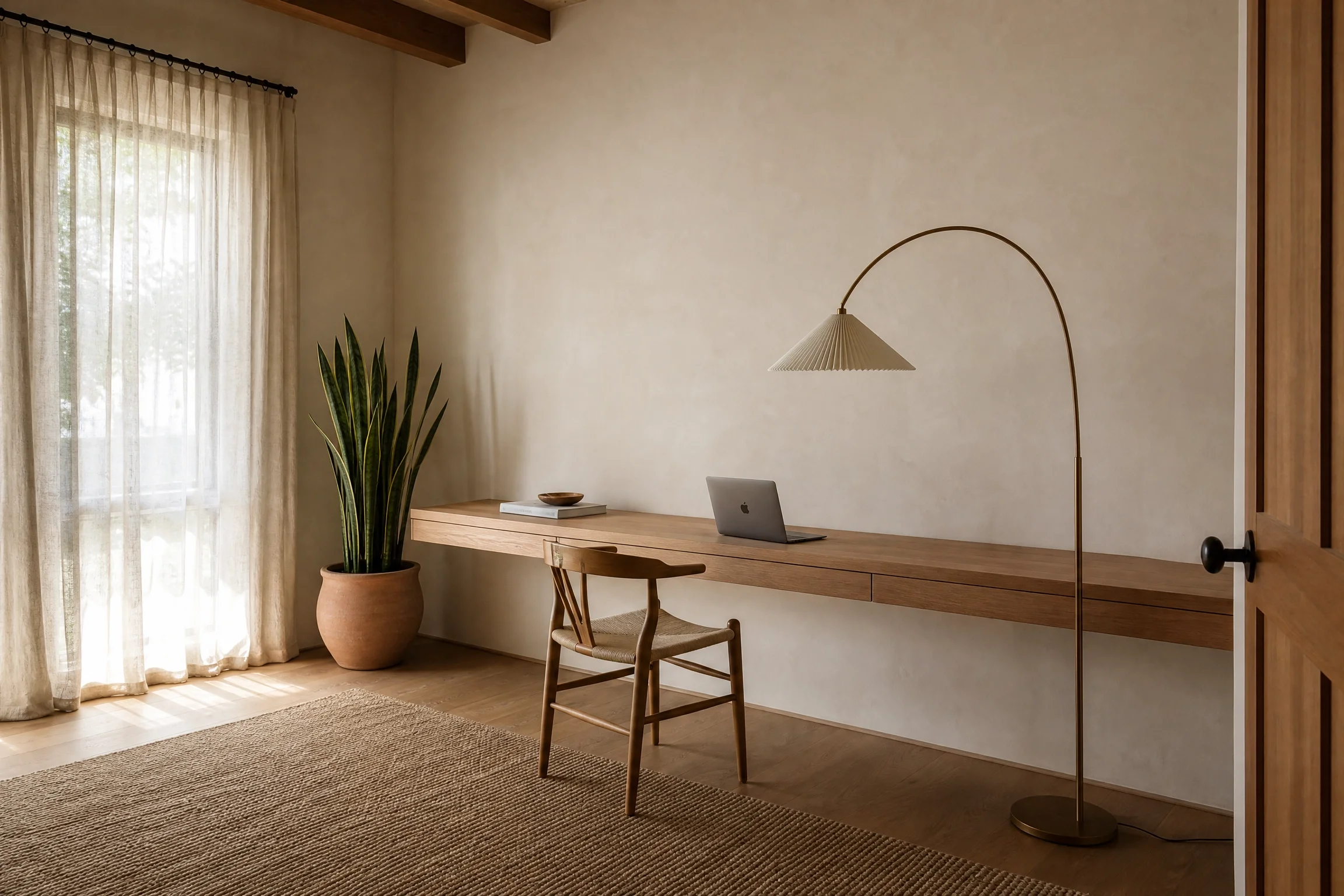
There is something genuinely freeing about sitting down at a desk that has nothing on it except what you need. No stack of random papers, no tangle of cables, no knick-knack you forgot why you bought. If you have ever tried working in a cluttered room and then moved to a clean, quiet space, you already know the difference it makes. The research backs it up too: a visually quiet environment reduces cognitive load and helps you focus for longer stretches. But pulling off a minimalist home office that feels warm and livable rather than cold and sterile takes a bit more thought than just clearing off your desk.
This guide covers 23 genuinely different approaches to minimalist home office design, from Japandi-inspired oak setups to clever corner alcoves and soft monochromatic palettes. Each idea is something you can actually use in a real room, not just something that looks good in a magazine. Whether you are starting from scratch or refining a space you already have, there is something here for every budget, room size, and working style.
1. The Floating Desk Wall
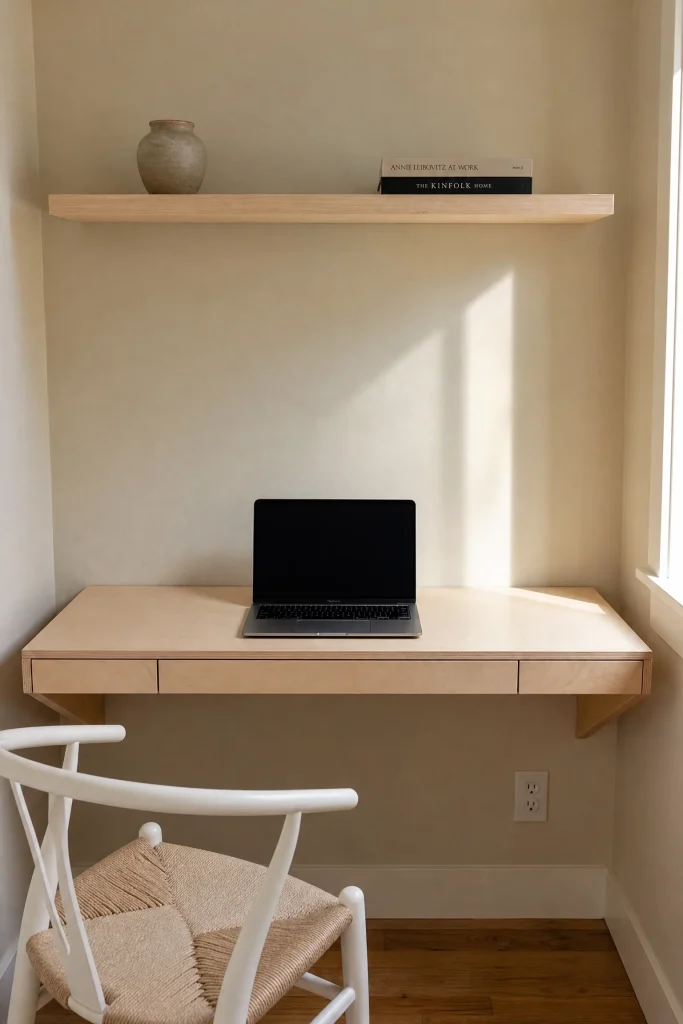
One of the most common mistakes people make when setting up a home office is buying a full desk with legs and drawers when a wall-mounted floating surface does the job in a fraction of the footprint. In practice, a floating desk works best when it runs wall to wall, giving you generous surface area without the visual weight of a freestanding piece. Pair it with a slim open shelf mounted about a foot above for your monitor, a small plant, and one or two reference books. Keep the wall color a soft warm white or pale putty tone so the shelf appears to float naturally. Use a simple wishbone or tulip chair in a matching neutral for seating. The real advantage here is that when you step back, the whole wall reads as intentional and composed, not like office furniture happened to land there. This setup works especially well in small rooms where every inch counts, and the budget is approachable since floating shelves from most flat-pack retailers are well under $100.
Designer Note: Mount the desk at standing-desk height and pair it with a tall stool so you can alternate between sitting and standing without buying a motorized desk.
2. The All-Linen Corner
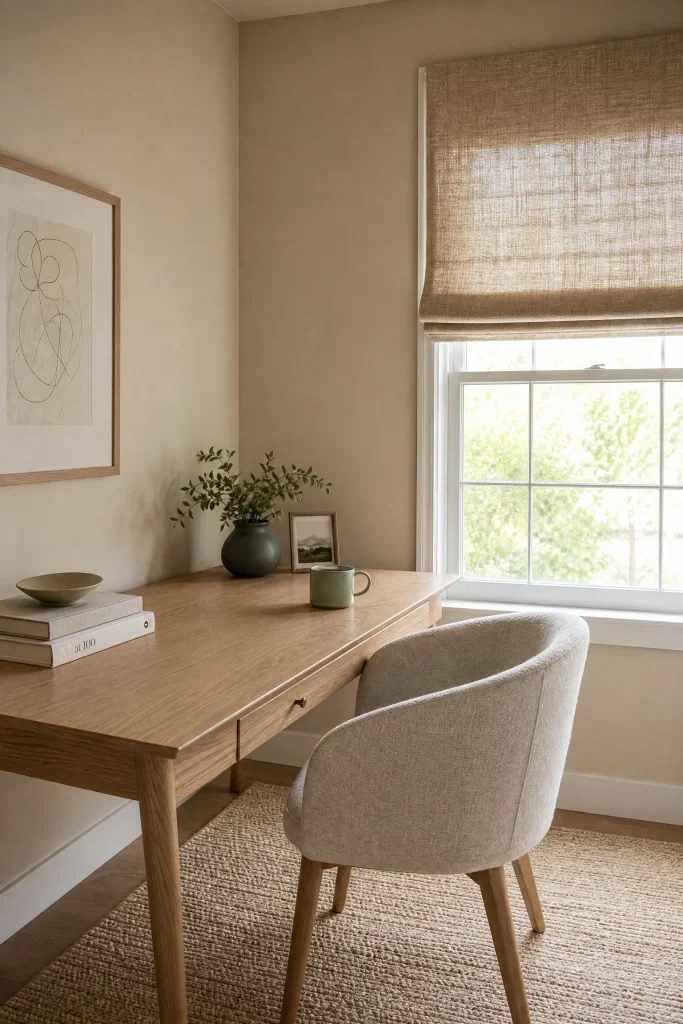
Soft furnishings are often the last thing people think about in a home office, but a linen-forward corner setup is one of the most effective ways to make a workspace feel genuinely pleasant to be in for long hours. Start with a natural linen Roman blind on the window rather than a roller blind or curtain, since it hangs flat and reads as clean without blocking light. Add a linen-upholstered chair with a low, tight back and wooden legs in natural oak or ash. The desk itself can be a simple light oak rectangle with tapered legs. Layer a flat-weave wool or jute rug in cream or oatmeal underneath. The palette here stays within warm neutrals: flax, sand, undyed linen, and natural wood. One thing that works really well in this setup is keeping the only color contrast a single stoneware mug or ceramic pot in a muted sage or terracotta. It is affordable to pull together if you shop second-hand for the chair, and the linen blind can be made from fabric you source yourself.
Designer Note: Linen wrinkles easily and some people find that distracting on a video call. If you work on camera often, keep a clip-based garment steamer nearby.
3. Japandi Meets Function
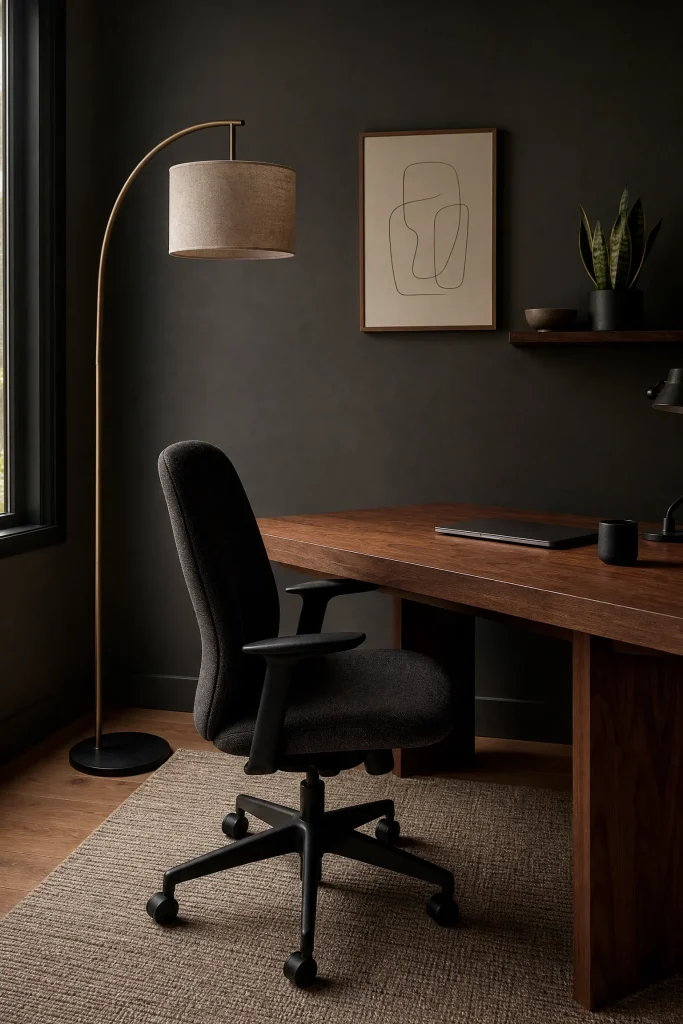
Japandi is a design movement that blends Japanese minimalism with Scandinavian functionality, and it translates exceptionally well to home offices because both traditions prioritize calm, purposeful environments. The foundation is a solid oak or walnut desk with clean straight lines and no decorative detail. The chair should be ergonomic but visually light, something in a warm charcoal fabric on a slim metal or wooden base. Paint the walls in a deep, muted tone like a warm charcoal gray or complex dark green, which are both having a strong moment in Japandi interiors right now, and let the natural wood of the desk create warmth against it. Lighting should come from a simple arc floor lamp with a linen shade and a small task lamp with a black or brass base. Keep the shelf display to three or four objects maximum: a small ceramic bowl, a single architectural plant like a snake plant, and perhaps one framed piece of line-art. The honest limitation here is cost since genuine solid wood Japandi furniture sits at the mid to upper price range. Look for IKEA pieces with natural wood veneer as an accessible entry point.
Designer Note: In Japandi design, negative space is considered part of the room. Resist the urge to fill every shelf and surface.
4. The Single-Wall Built-In
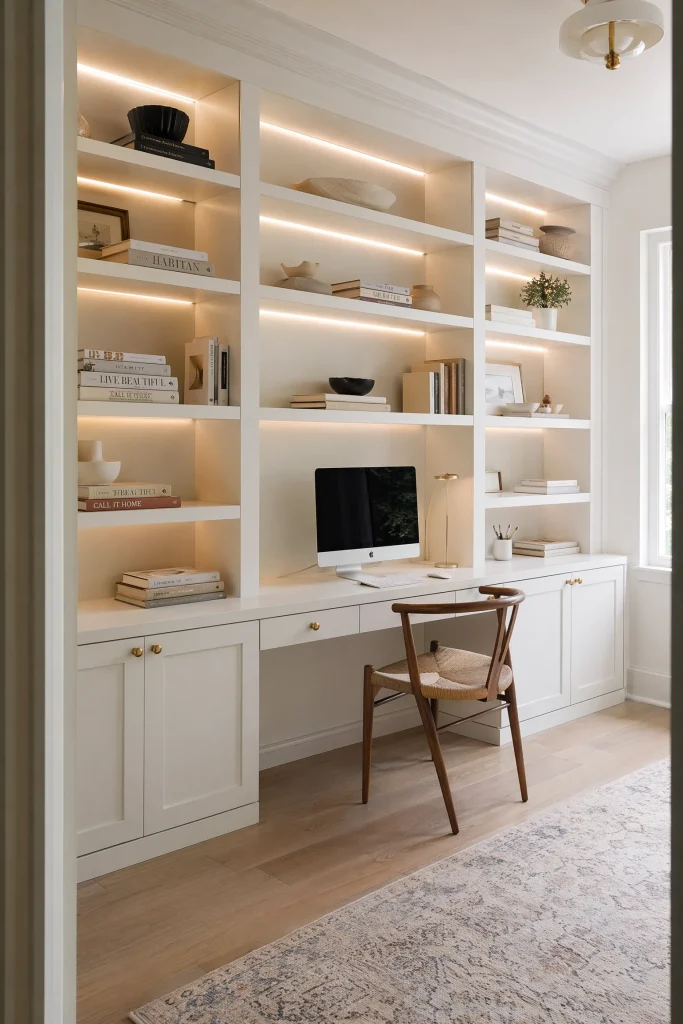
If you have one wall in a spare room, a bedroom, or even a wide hallway that could be dedicated to work, a single-wall built-in is the most polished way to use it. The idea is to design the full wall as one unit: base cabinets at desk height, open shelving above, and everything in the same painted finish so it reads as architecture rather than furniture. White or soft off-white is the classic choice and the one that makes the space look largest, but a warm putty or soft sage reads beautifully too, especially in a north-facing room that needs warmth. In practice, the biggest benefit of this approach is storage. You can keep all your work equipment, files, and supplies behind closed doors so the only things visible are the things you choose to display on the open shelves. IKEA’s BESTA system is the standard budget route and takes paint well. Custom joinery is the investment option and does genuinely look significantly better if you plan to stay in the space long-term.
Designer Note: Run LED strip lighting inside the open shelving bays pointing downward. It adds a layer of ambient light and makes the shelves look intentional rather than improvised.
5. Wabi-Sabi With Warmth
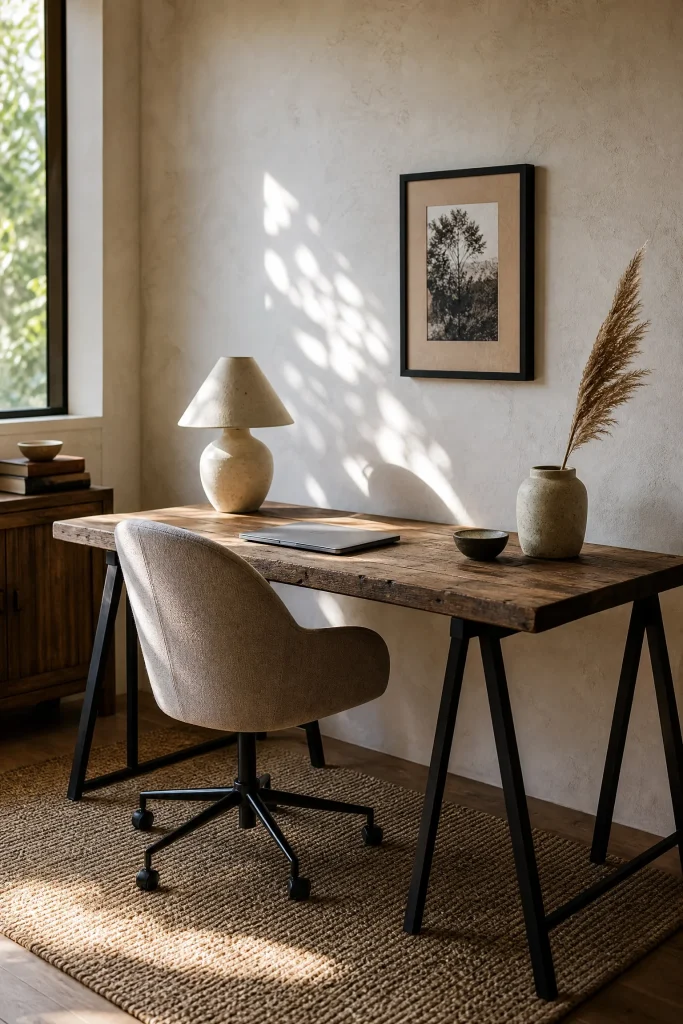
Wabi-sabi is the Japanese philosophy of finding beauty in imperfection and impermanence, and in a home office context it translates to a space that feels genuinely lived-in rather than showroom-perfect. Start with a reclaimed wood desk, something with a slightly uneven edge, visible grain, or a few knots. Keep the legs or trestle in black powder-coated steel for contrast. The walls benefit from a textured finish, either a limewash paint in a warm cream or a plaster effect in pale terracotta. Add a handwoven jute rug with an irregular weave and a ceramic desk lamp whose glaze is deliberately uneven. The key to this approach is that nothing should match exactly. Objects should look like they were gathered over time, each one chosen because it meant something, not because it coordinated. This is actually one of the more budget-friendly looks if you shop vintage markets or thrift stores for furniture. The honest caveat is that it requires a genuine eye for curation: done poorly, it just looks messy.
Designer Note: A single branch of dried pampas grass or eucalyptus in a chunky stoneware vase adds height and organic texture without any maintenance.
6. The Monochromatic Gray Study
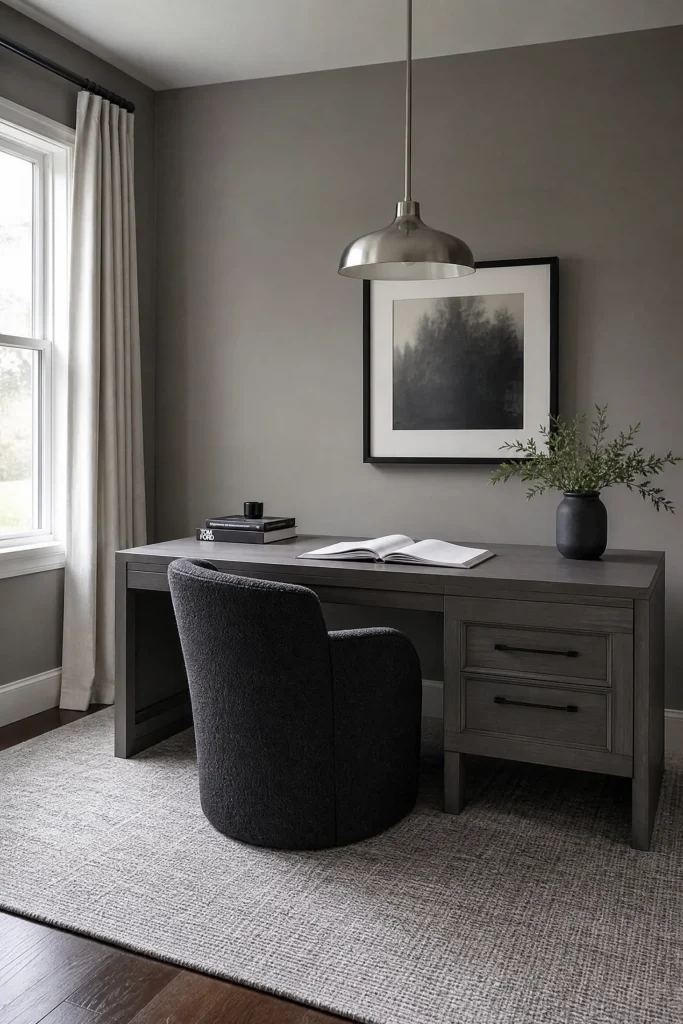
An all-gray office sounds risky, but when done well with careful attention to tone and texture, it is one of the most sophisticated and focus-friendly palettes you can use. The trick is to work in at least four different shades of gray across the wall, furniture, rug, and textiles, and to vary the materials significantly so the room has depth. Start with a warm mid-gray on the walls, something with a slightly taupe undertone rather than a cool blue-gray, which can feel clinical. The desk can be in a light pewter-painted wood finish, the chair in a charcoal boucle or tweed, and the rug in a flat-woven pale silver-gray. For lighting, a pendant in brushed steel or aged pewter adds a metallic element that breaks the monotony without introducing color. One small piece of art in a thin black frame with a white mat is all the contrast you need. This palette genuinely supports long focus sessions because there is nothing competing for your visual attention. It works best in rooms with natural light since artificial light alone can make gray feel flat.
Designer Note: Use a matte finish on walls and a semi-sheen or satin on woodwork. The finish contrast adds visual interest within the same color family.
7. The Corner Alcove Desk
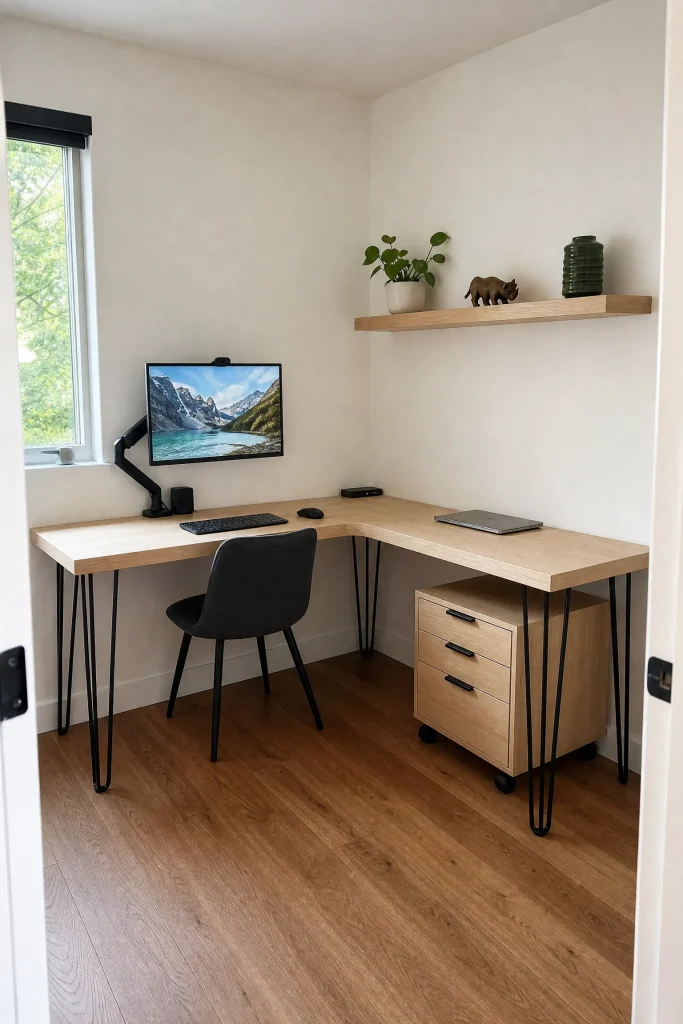
Most rooms have at least one corner that sits unused, and a well-fitted corner desk setup is one of the most space-efficient home office configurations available. The setup that works best in a minimalist context is an L-shaped surface in a single material, ideally solid wood or a thick laminate in a wood tone, with no cabinet bulk underneath. Keep the legs or supports minimal, either hairpin legs in black steel or wall-mounted brackets. The corner itself becomes the focal point of the wall arrangement, so the two walls meeting should be treated consistently, the same paint color and ideally with a single shelf running along one side at eye level. A small monitor arm keeps the screen at the right height without a monitor stand cluttering the surface. This setup is practical for people who need dual screens or like to keep reference materials alongside the main workspace without things piling up. The corner location also naturally cocoons you slightly, which some people find helpful for focus.
Designer Note: Fit a small under-desk drawer unit on castors. It slides under when you are working and out when you need access, and adds zero visual weight.
8. Soft Black and Natural Wood
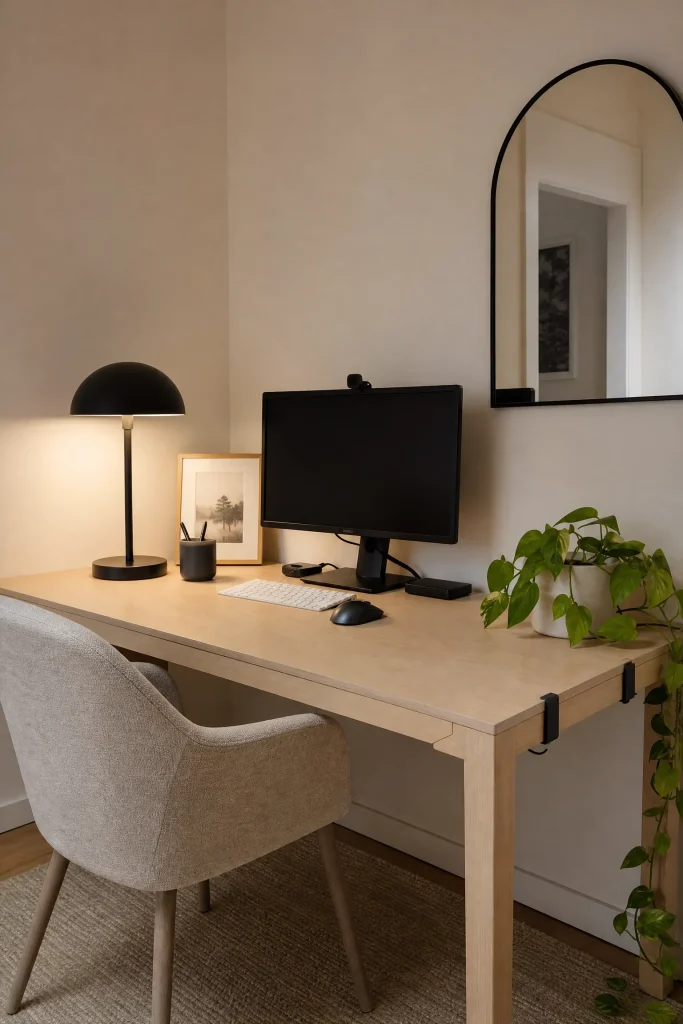
Black in a home office context often feels heavy or oppressive when it is used on walls, but paired with pale natural wood and kept to one accent surface, it has a grounding quality that works really well for focused work. The approach here is to keep the desk in a light oak or birch finish, the chair in natural linen or oatmeal boucle, and use matte black only for the hardware: drawer pulls if there are any, the lamp base, monitor arm, and cable management clips. A single black-framed window or wall mirror amplifies the effect without adding more furniture. The walls stay in a warm off-white or pale sand so the black elements read as intentional punctuation rather than decor. In practice, this palette feels both warm and purposeful, a combination that supports the kind of calm alertness you want when you are working. It is also a look that photographs exceptionally well if you work on video calls regularly.
Designer Note: Matte black scratches and shows fingerprints more than satin finishes. If you touch your lamp base or desk hardware often, choose satin black instead.
9. The Scandi White-and-Pine Setup
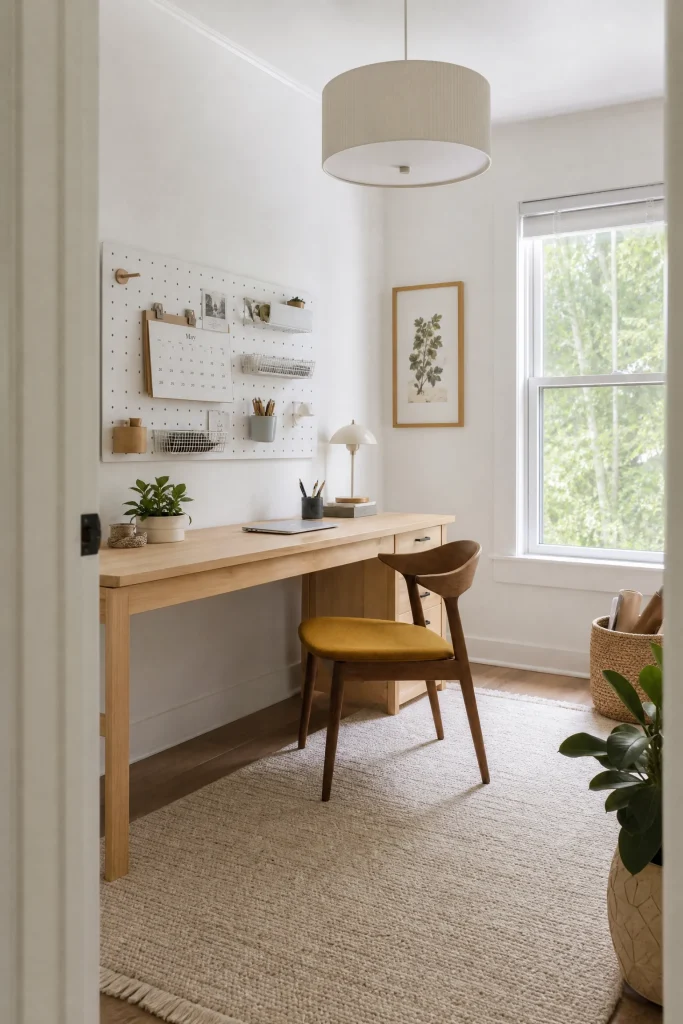
Scandinavian design is perhaps the most accessible entry point into minimalist home office style because the furniture is widely available at accessible price points and the principles are straightforward: light colors, natural materials, and no unnecessary decoration. A white or light gray wall with a pine or birch desk is the classic combination. Add a simple white pegboard above the desk for tool storage that doubles as display, hanging small baskets, a calendar, and a few lightweight shelves. The chair works best in a soft curved shape, something like a mid-century inspired form in a warm wood with a thin seat pad in mustard or dusty blue, the only color accent in the room. Use a simple white drum pendant or a bare-bulb pendant with a textile cable above the desk for ambient light. This is one of the most budget-conscious approaches on this list because IKEA, Kmart, and flat-pack retailers do Scandi very well. The limitation is that if your home already leans traditional or bohemian in other rooms, the contrast can feel jarring.
Designer Note: Replace factory hardware on flat-pack furniture with solid brass or black steel knobs. It is a $20 upgrade that makes $100 furniture look like $400 furniture.
10. The Textured Neutral Wall
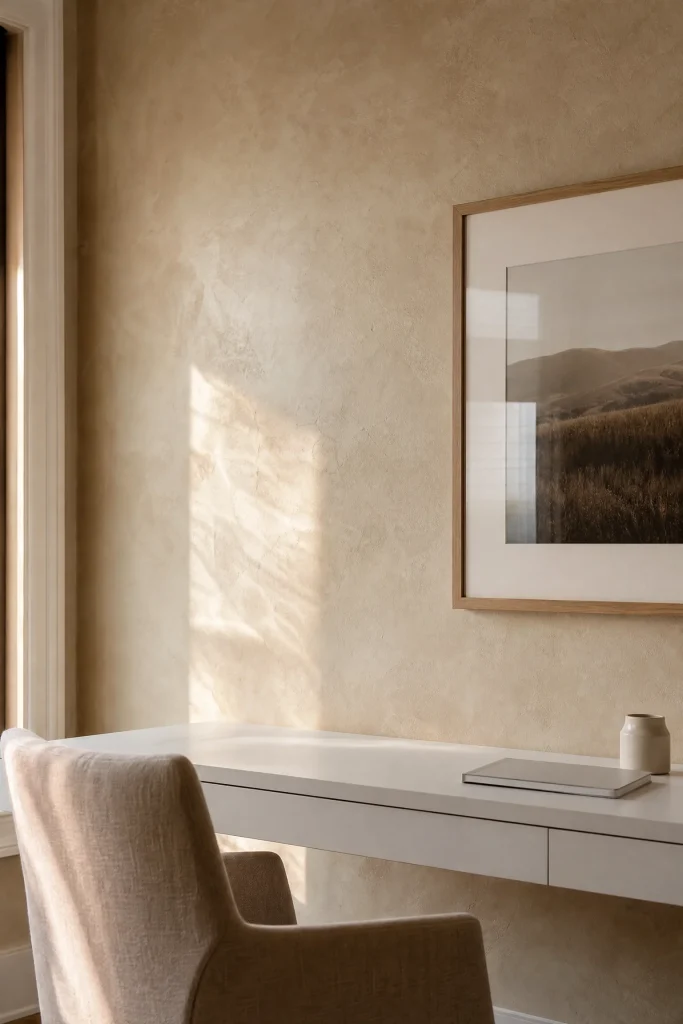
Most minimalist home offices live or die on the wall behind the desk, and one of the most effective ways to add interest without introducing color or pattern is to use a textured wall treatment. Limewash paint is the most popular option right now among professional designers because it creates a soft, layered depth that changes subtly with the direction of light throughout the day. Apply it in a warm ivory, aged parchment, or pale stone tone. The texture means the wall reads as considered and complete even with minimal art or shelving on it. This approach works especially well when paired with very clean, simple furniture since the wall does the decorative work. One large-scale framed print in a thin natural wood frame is enough. In terms of cost, limewash paint is slightly more expensive than standard emulsion but significantly cheaper than wallpaper or paneling. The application takes some practice, so doing a test section first is genuinely advisable.
Designer Note: Limewash paint is harder to clean than standard paint. Avoid using it directly behind a chair that will rub against the wall.
11. The Standing Desk Minimalist
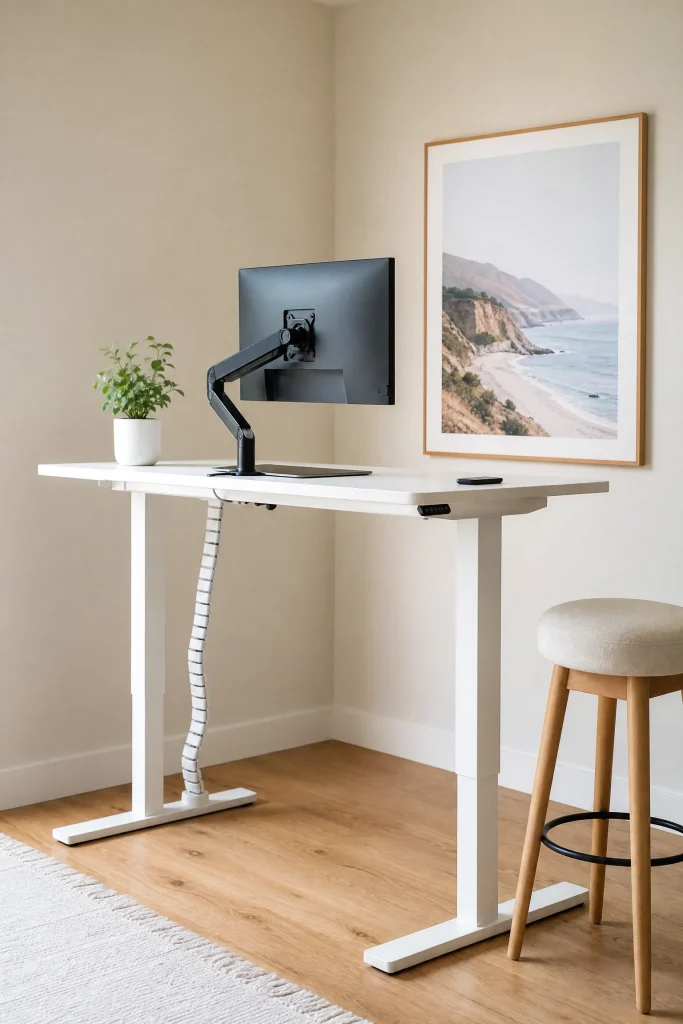
Standing desks have moved fully into mainstream home office design, and the cleanest version of a standing desk setup from a minimalist perspective is one where the height-adjustable mechanism is invisible or at least unobtrusive. Look for electric sit-stand desks with clean rectangular tops in a wood tone or white, without the industrial-looking crossbar bases that some models feature. Keep the top completely clear except for a monitor on an arm, a small potted plant, and the essentials. Cable management is non-negotiable here since a standing desk tends to have more cables than a static desk. A cable spine or raceway in the same color as the desk base handles this cleanly. The walls around a standing desk setup benefit from something at standing eye level, a small gallery arrangement or a single large print works well. The real benefit of this setup beyond the obvious health reasons is that standing desks tend to encourage a tidy surface because you interact with the desk more actively.
Designer Note: Program your standing desk to preset heights so you switch positions without thinking about it. The benefit disappears if adjusting it feels like a task.
12. The Gallery-Free Wall
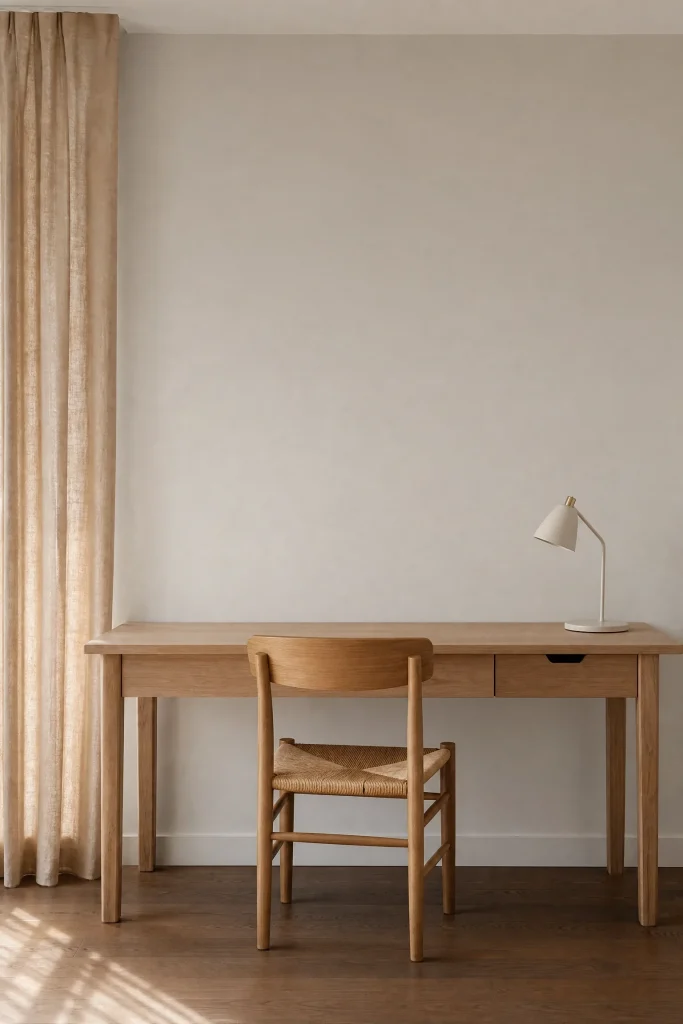
Every home office design article tells you to put art above your desk, and plenty of people follow that advice and end up with a wall that feels busy and distracting. There is a strong case for a completely bare wall behind the desk, and in practice it is one of the most effective things you can do for focus. The key is to make sure the wall finish and color are doing enough visual work on their own. A complex paint color, a textured finish, or even a full-height curtain panel hung as a backdrop can make a bare wall feel like a deliberate choice rather than a blank canvas waiting to be filled. Some designers go one step further and hang a single oversized architectural element: a large raw-edge wooden shelf with nothing on it, or a simple rod with a single piece of linen fabric. This is a very low-cost approach if you already have paint, and it suits people who find visual stimulation genuinely distracting while they work.
Designer Note: This works best in rooms where the view through a window, if there is one, provides the visual interest. A bare wall in a windowless room can feel oppressive.
13. The Bookshelf Backdrop
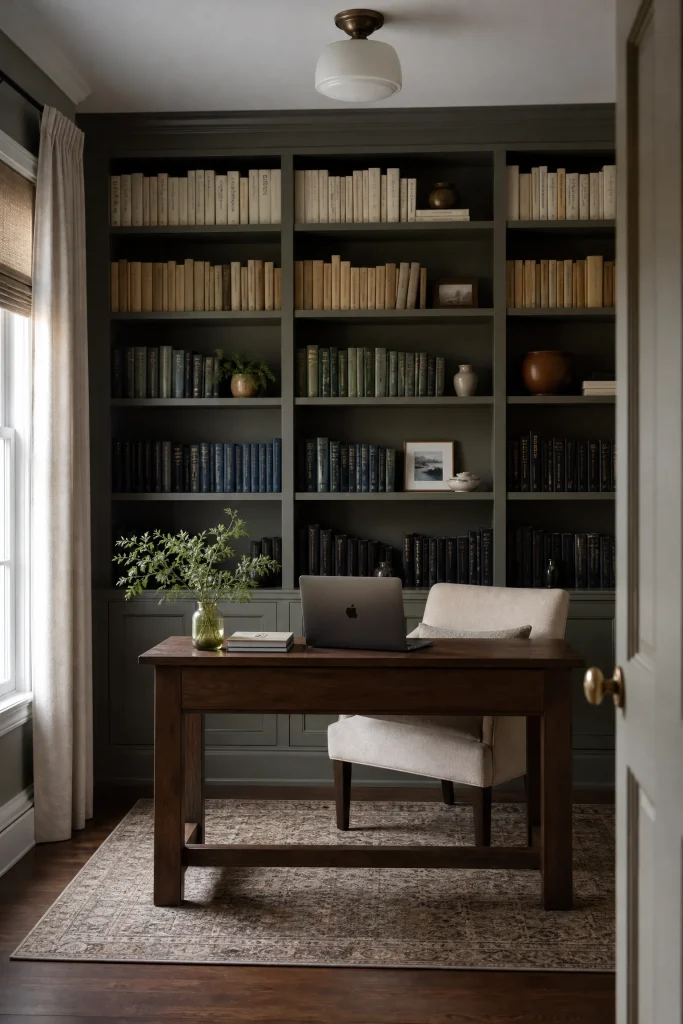
A floor-to-ceiling bookshelf behind a desk is one of the most classic work-from-home backdrops, but the minimalist version of it is carefully edited and arranged with deliberate intention rather than just filled with books. The shelves themselves should be in a painted finish that matches or closely relates to the wall color so they blend into the architecture rather than standing out as furniture. Arrange books by color within broad groups, for example a section of all-white or cream spines, a section of darker tones, with a few objects placed in between. A small ceramic, a single framed photo, or a sculptural object works well as a shelf accessory. The arrangement should look considered but not precious. In practice this type of backdrop photographs exceptionally well for video calls and gives any room an immediate sense of warmth and intellect. The limitation is that it requires ongoing editing: a bookshelf that accumulates randomly over time loses the minimalist quality quickly.
Designer Note: Face some books spine-in for a tonal, textured effect if you have books with unattractive spines. It sounds counterintuitive but works beautifully.
14. The Two-Tone Room
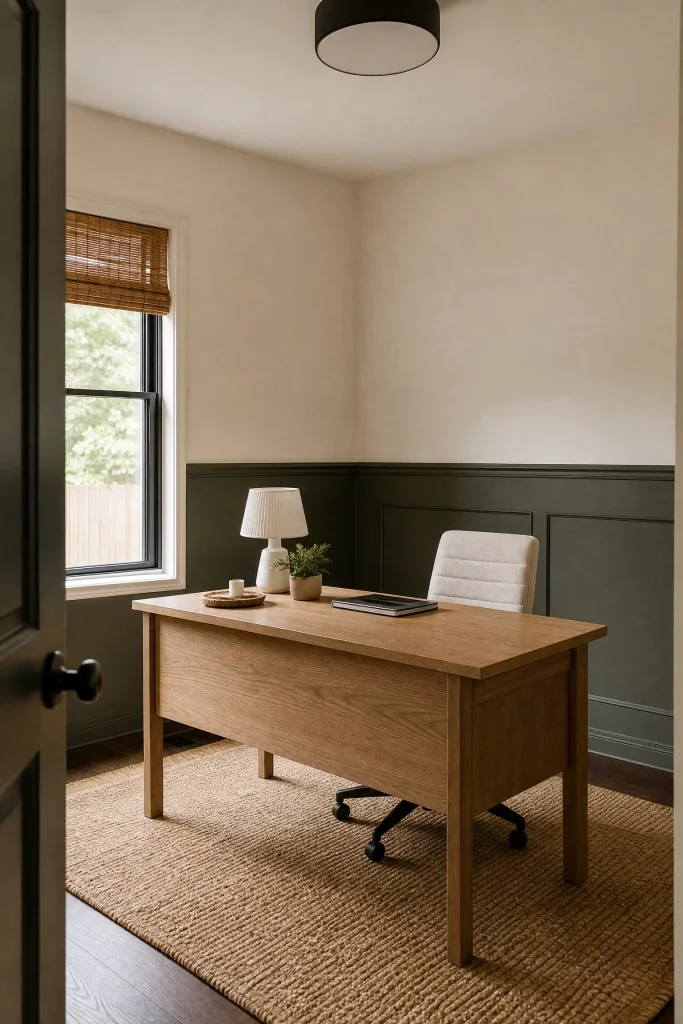
A two-tone paint treatment, where the lower portion of the wall is painted in a deeper or contrasting color and the upper portion in a lighter shade, is an underused trick in home office design that adds architectural interest to plain box rooms without any additional decoration. The split point is typically at chair rail height, around 90cm from the floor, though in a home office context it sometimes works better at desk height so the desk surface sits within the darker band. Try a combination like a warm dark sage below with a pale warm white above, or a deep terracotta below with the same warm white above. The desk and chair can stay neutral since the wall treatment provides the interest. This is one of the lowest-cost ways to make a plain room feel designed, and it works in both natural and artificial light. The one caution is that cooler two-tone combinations such as navy and white can feel more corporate than domestic, which suits some people and not others.
Designer Note: Use a laser level to mark your dividing line before taping. Freehand or string-measured lines rarely look perfectly straight once the tape comes off.
15. The Natural Light Office
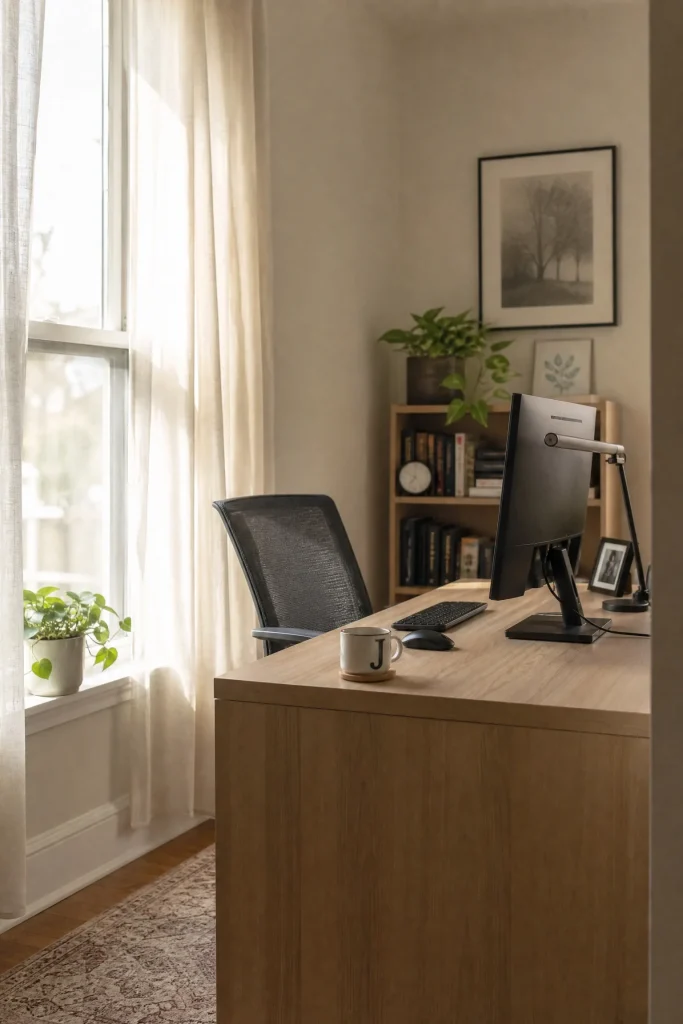
Orienting a home office around a window rather than treating the window as an afterthought is one of the most impactful decisions you can make. Position the desk perpendicular to the window rather than facing it, since direct light on a screen creates glare and facing away from it means you lose the benefit entirely. Side lighting is ideal because it illuminates the workspace evenly and gives a pleasing quality of light for video calls. Keep window treatments minimal: a sheer linen panel that filters without blocking, or nothing at all if privacy allows. A simple trailing plant on the windowsill like pothos or a philodendron brings in an element of living green without requiring a dedicated plant corner. In a south or west-facing room, you may need a simple UV-filtering window film to reduce glare in the afternoon. This is arguably the most important thing on this list because good natural light genuinely changes how long you can work comfortably and how good the space feels hour to hour.
Designer Note: Track where the direct sun falls at different times of day before committing to a desk position. A spot that is perfect at 9am may be unusable at 2pm.
16. The Concealed Office
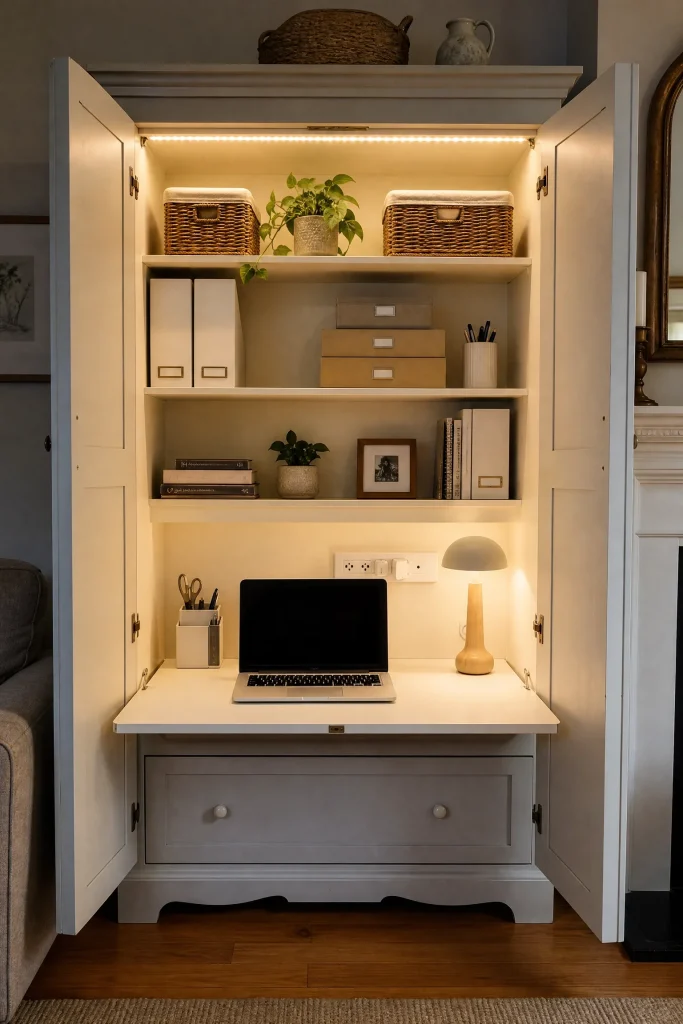
For people who live in smaller homes or who want a strict boundary between work and personal time, a concealed office setup that disappears at the end of the day is genuinely worth considering. The most elegant versions are built into a large wardrobe or armoire where the doors close over the entire setup at 5pm. Fit the inside of the wardrobe with a pull-out or fold-down desk surface, a power strip with cable management, and a few small shelves for work equipment. When the doors are open during work hours, the interior can be styled just as thoughtfully as an open home office since it only needs to work visually from the front. Choose an armoire in a painted finish that blends with the room rather than announcing itself. This approach is particularly well suited to studio apartments, spare bedrooms that double as guest rooms, or living spaces where a visible office would feel intrusive.
Designer Note: Fit a small LED strip inside the cabinet on a motion sensor so the interior lights up automatically when you open the doors.
17. The Earthy Terracotta Setup
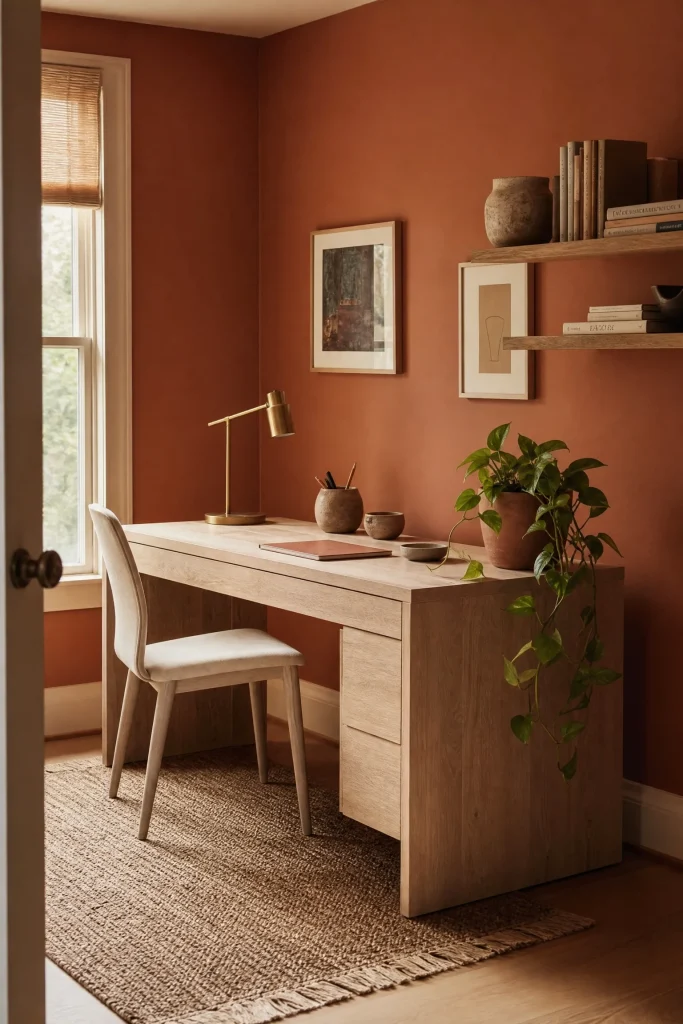
Terracotta as a wall color has had a sustained moment in interior design over the last few years, and it works particularly well in a home office because it has a warmth that counteracts the cold-screen fatigue of long working days. Pair terracotta walls with a desk in pale bleached oak, a simple white or cream chair, and a jute rug with a natural weave. Keep accessories in raw ceramic, unglazed clay, and matte brass. The palette is warm without being overwhelming, especially if you choose a dusty or muted terracotta rather than a bright orange-red. This combination sits comfortably within wabi-sabi and Mediterranean-influenced design movements, both of which are influential in 2025 home office trends. The honest note here is that terracotta is a commitment as a wall color because it shifts significantly under different light conditions. Test it in your specific room and light situation before painting all four walls.
Designer Note: A single large trailing plant like a pothos in a raw clay pot is the perfect companion to terracotta walls and costs almost nothing.
18. The Micro Office Nook
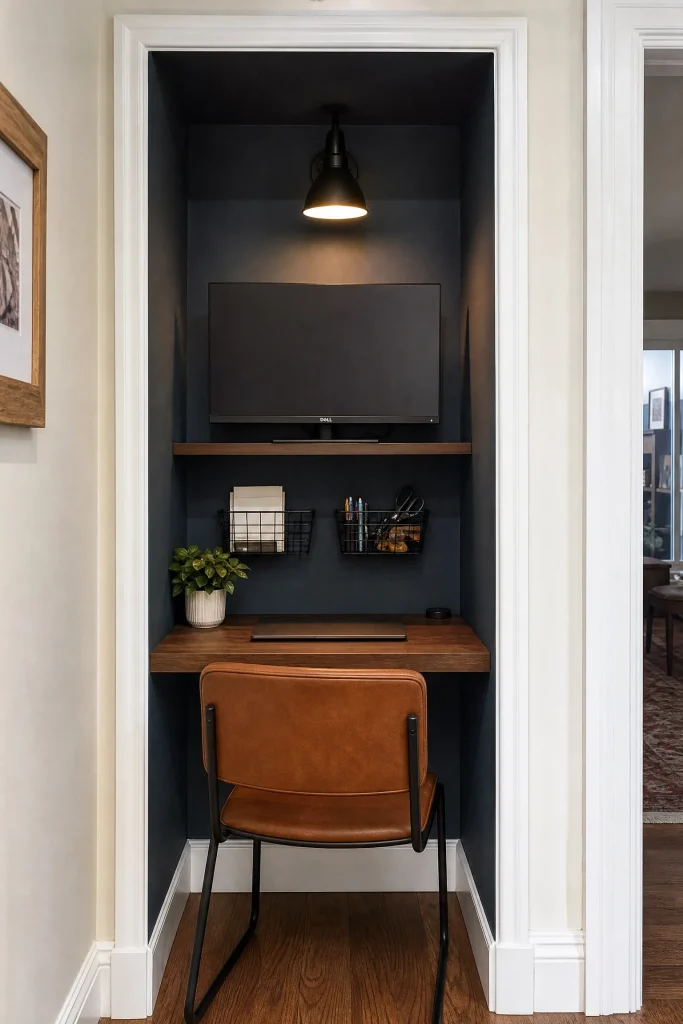
Not everyone has a dedicated room for a home office, and the micro nook setup is one of the most clever solutions for working in tight spaces. A deep alcove, the space under a staircase, or even a generous closet with the doors removed can become a fully functional and genuinely attractive workspace. The key principles are: keep everything at the same level as the opening, use every inch of vertical space for storage, and choose a color for the interior that reads as intentional. Painting the interior of an alcove in a contrasting or deeper color than the surrounding room immediately makes it feel like a designed feature rather than a makeshift arrangement. Fit a slim fixed shelf as the desk surface, add a narrow floating shelf above for a monitor, and fit small baskets or boxes on the walls for supplies. Task lighting mounted at the top of the nook keeps the space bright without requiring floor or desk space for a lamp.
Designer Note: Measure the clearance height carefully before buying a monitor. Many nook setups end up with a monitor that hits the shelf above.
19. The Dark and Moody Workspace
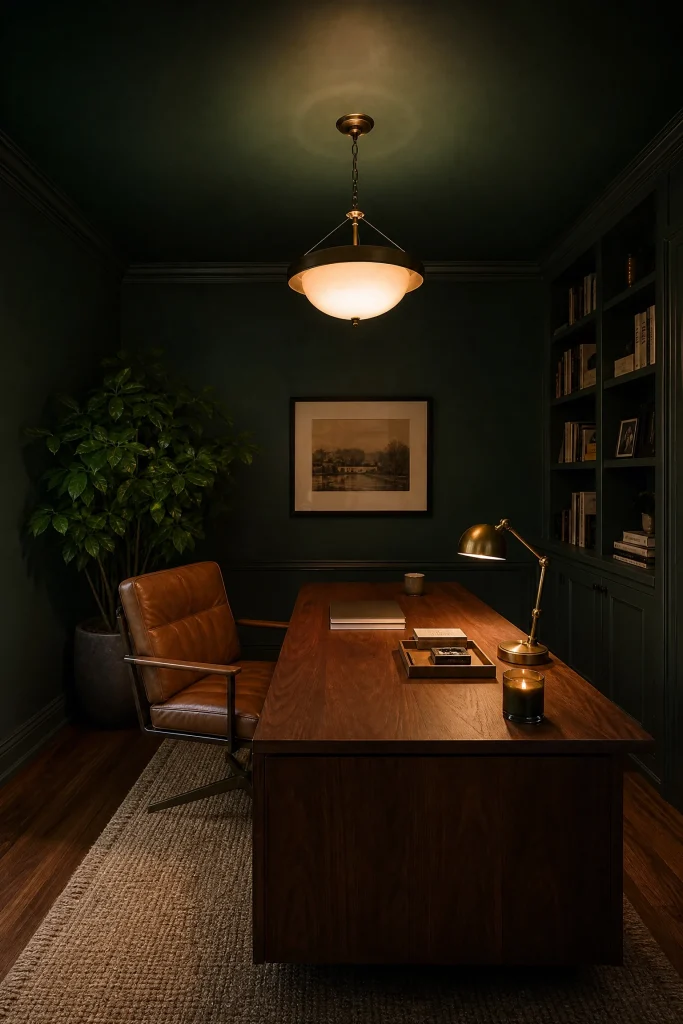
Dark home offices are underrepresented in minimalist design guides because the instinct is always to add light and airiness. But a dark, moody workspace can actually support deep focus work better than a bright one, since the reduced visual stimulation outside the immediate task area helps concentration. Deep forest green, ink blue, and charcoal are the three most liveable options for a dark home office. Choose one for all four walls and the ceiling for maximum effect, which designers call going five walls and it genuinely works. The desk and shelving should be in warm wood tones like walnut or teak to prevent the room from feeling cave-like. Lighting becomes the most important element: a warm-toned pendant directly above the desk, a small task lamp at the workspace, and a floor lamp in one corner for ambient fill. Plants respond well in this context visually even if they need a grow light to survive in darker rooms.
Designer Note: Dark rooms make dust and fingerprints on surfaces more visible. A matte paint finish and regular light dusting keep the room looking as intended.
20. The Rattan and White Combo
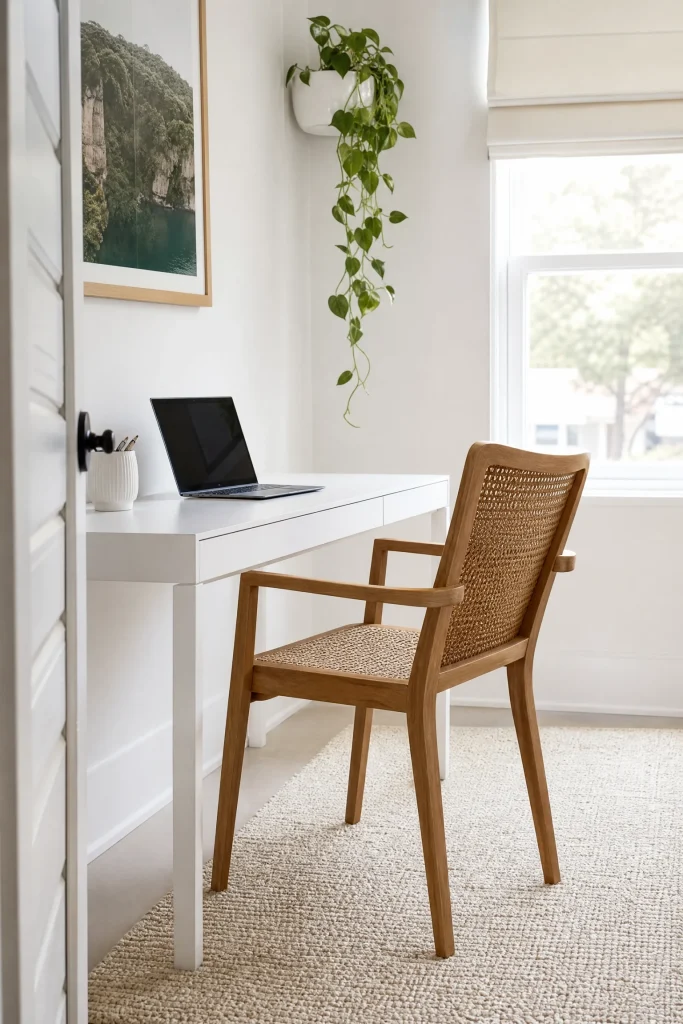
Rattan as a material in home office design brings a texture and warmth that most smooth contemporary furniture lacks, and it sits naturally in a minimalist context because it reads as organic and simple rather than decorative or fussy. The setup here is a simple white painted desk, white or off-white walls, and a rattan or cane-back chair in natural. The chair is the statement piece and it earns that position without competing with anything else. Add a simple white or cream Roman blind, a flat-weave rug in pale sand, and a single trailing plant in a white ceramic pot. Keep the desk surface very clean: a laptop, a ceramic cup for pens, and one small object. This look sits within a broadly coastal or organic modern design direction that has been consistently popular in home offices over the last three years and shows no sign of fading. It is accessible at almost any budget since rattan chairs are available from a wide range of retailers at every price point.
Designer Note: Rattan can creak with movement. If this is likely to distract you or be audible on calls, add a thin foam seat pad which reduces both sound and movement.
21. The Work Bedroom Balance
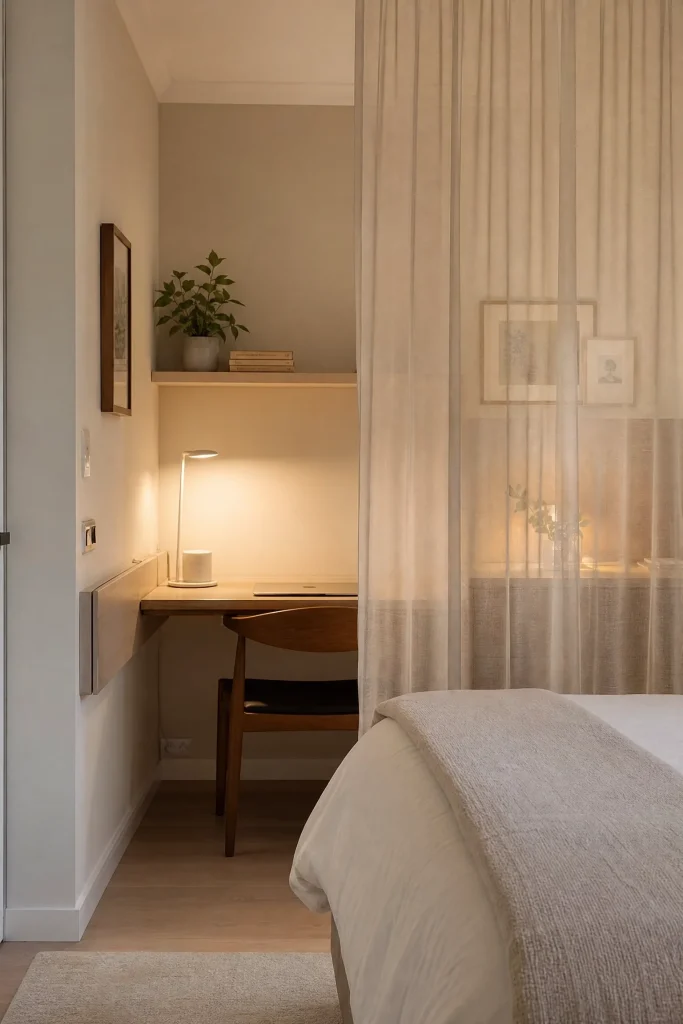
Working in a bedroom is one of the most psychologically complex home office situations because sleep research consistently suggests that blurring the boundary between work and rest spaces affects sleep quality. The minimalist approach to this challenge is to design the office zone so it visually disappears when not in use. A small desk that folds flat against the wall, a desk that doubles as a dressing table, or a desk tucked behind a sheer curtain panel that can be drawn closed are all viable options. The palette of the desk area should match the bedroom rather than contrasting with it, so it blends in rather than standing out. Use the same color, the same material language, and the same decorative approach in both zones. Cable management is especially important here since a tangle of work cables next to a bed has a disproportionately large effect on how relaxing the room feels.
Designer Note: A physical boundary, even something as simple as a sheer curtain or a low open shelf unit used as a room divider, can make a meaningful difference to sleep quality.
22. The Green Wall Anchor
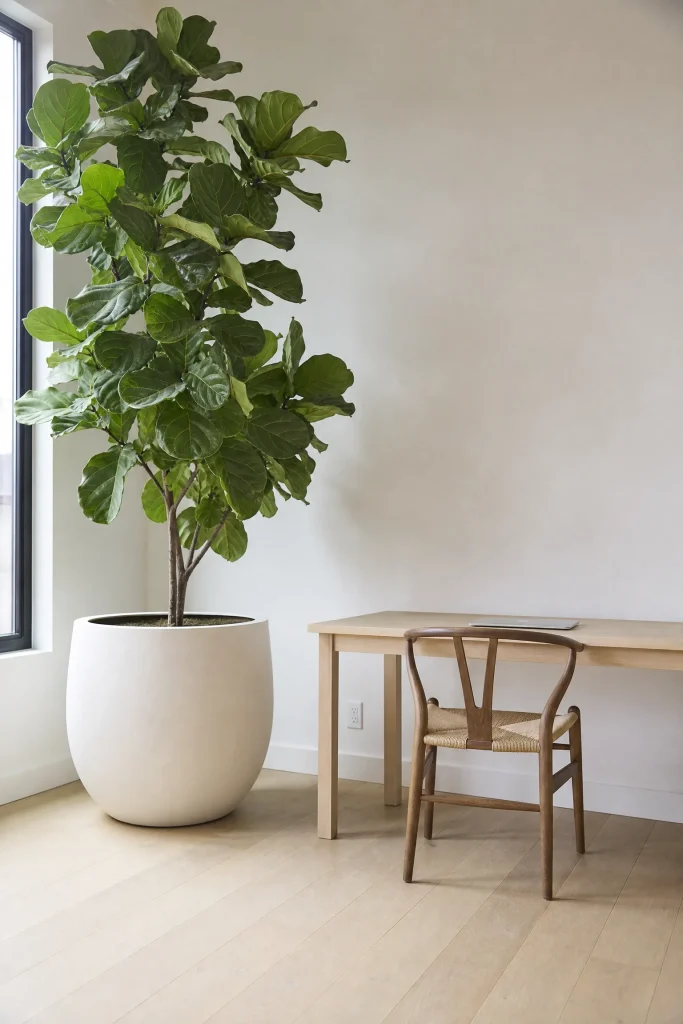
A single large plant or a small grouping of plants used as the primary visual anchor of a home office is one of the most effective and genuinely enjoyable approaches to minimal decor in a workspace. The principle is that the plant does all the decorative work, so the desk, chair, and walls stay very plain. Choose a plant with architectural presence: a large fiddle-leaf fig, a monstera deliciosa, a rubber plant in deep burgundy, or a tall snake plant. Place it in a simple oversized pot in terracotta, matte white, or a dark concrete finish. The surrounding space should be almost empty by comparison: a plain desk, a simple chair, pale walls. In practice, working alongside a large plant has a measurable positive effect on mood and perceived air quality, and it gives the room a living quality that no decor object can replicate. The honest caveat is that large architectural plants can be expensive and require specific care. Research care requirements honestly before buying.
Designer Note: If your home office has limited natural light, choose a low-light tolerant plant like a ZZ plant or pothos rather than a fiddle-leaf fig, which needs strong indirect light to thrive.
23. The Functional Art Desk
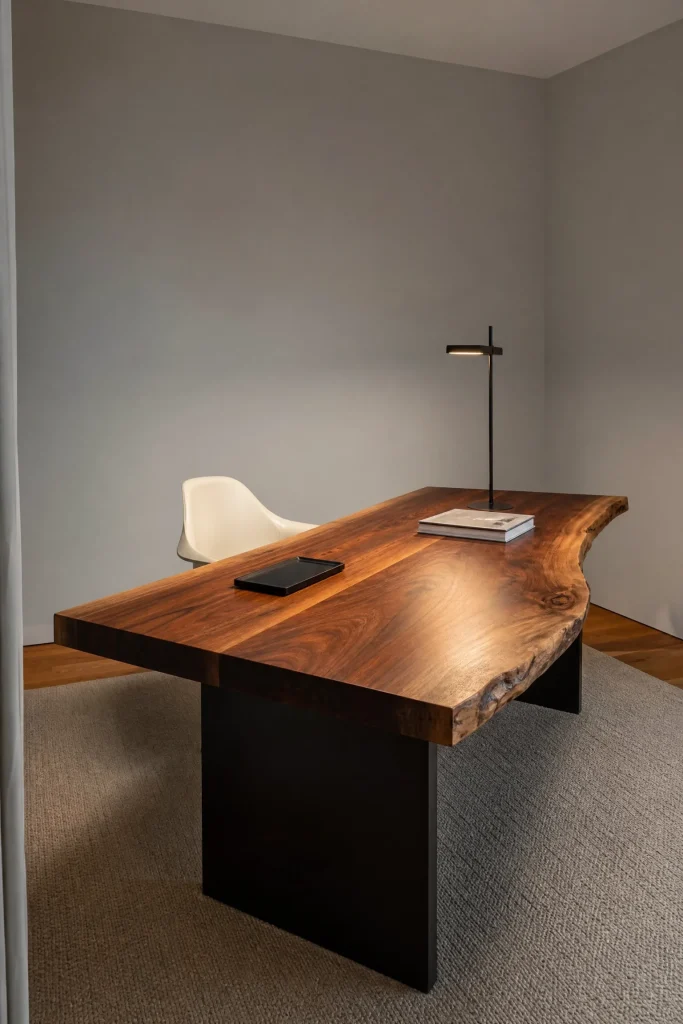
The most advanced version of minimalist home office design is the one where the workspace itself is treated as a composed object, essentially a piece of functional art that looks as considered from across the room as it does up close. This approach requires a desk with genuine material and design quality, something in solid marble, a beautiful slab of live-edge walnut, or a designer piece with an architectural base. The chair should be equally chosen: an Eames-style shell chair, a classic Panton chair, or a designer piece in an unexpected material. Keep everything else in the room in deep retreat: plain walls, minimal or no shelving, one lamp, and nothing else on the desk. The result is a workspace that feels like it belongs in a curated space rather than a home office, and that quality genuinely affects how motivated you feel to sit down and work. This is the investment option on this list, the furniture costs real money, but it pays back in longevity and in the daily experience of working in a beautiful space.
Designer Note: Quality furniture at this level requires proper care. Use appropriate cleaning products for the specific materials and avoid placing hot or wet items directly on surfaces.
Finding the Approach That Works for You
A minimalist home office is not about buying the least amount of furniture or stripping everything back to nothing. It is about being deliberate, choosing things that earn their place, and arranging them so the room supports the kind of work you are actually trying to do. The ideas in this guide cover a wide range of styles, budgets, and room sizes, and none of them require starting from zero or spending a fortune.
The most important thing is to start with what you already have. Clear the surface, edit the shelves, and see how the room feels. Most people find that the act of clearing is half the battle, and that once the clutter is gone, the room needs far less work than they expected. From there, small targeted additions: a better lamp, a rug that grounds the space, one quality plant, can have an outsized impact on how the office looks and how it feels to spend eight hours in it.
Whichever direction you take, keep coming back to the same question: does this thing help me work, or does it just sit there? If an object cannot answer that question convincingly, it probably does not belong in a minimalist home office. That sounds strict, but in practice it is a genuinely liberating way to design a space, and the results tend to last much longer than trend-driven decorating.
Frequently Asked Questions
What is the most important element of a minimalist home office?
Surface clarity is the single most important element. A clear desk surface with only what you need in the moment in front of you reduces visual noise and cognitive load more effectively than any paint color or furniture choice. If you can only do one thing, clear the desk and keep it clear.
How do I add warmth to a minimalist office without cluttering it?
Natural materials are the most reliable way to add warmth without clutter. A wood desk, a jute or wool rug, a linen chair cushion, and a single ceramic pot with a plant all add warmth through texture and material rather than through volume. You get the warmth without the visual noise.
Can I use color in a minimalist home office?
Absolutely, and in fact a single bold color used consistently is often more effective than a neutral palette with lots of different elements. A room painted entirely in deep forest green with simple wood furniture is more minimalist in practice than a white room crowded with accessories. Minimalism is about reduction of elements, not reduction of color.
What lighting works best in a minimalist home office?
Layered lighting works best: natural light as the primary source, a good-quality task lamp at the desk for focused work, and one ambient source such as a floor lamp or pendant to fill the room in the evening. Overhead ceiling lights alone tend to be too flat and harsh for long working sessions.
How do I manage cables in a minimalist home office?
Cable management is genuinely one of the most important practical details in a minimalist workspace because cables undermine the whole effect of a clean setup. A cable raceway or spine in the same color as your desk legs, a power strip mounted under the desk surface, and magnetic cable clips on the back of the desk handle most situations. Wireless peripherals where possible help significantly.
Is a minimalist home office suitable for creative work?
Yes, and arguably more so than for any other type of work. The idea that creatives need stimulating, eclectic environments to produce good work is largely a myth. Many professional designers, writers, and artists deliberately keep their working spaces very plain precisely because external visual stimulation competes with internal imaginative work. A quiet, considered room tends to support creativity better than a busy one.