Coastal Bedroom Looks That Actually Make You Feel Calmer
There is something about a well-done coastal bedroom that genuinely slows you down. Not because it is decorated with anchors and rope knots, but because it uses color, light, and texture in a way that just feels easy to live in. In practice, the rooms that pull this off best are not the ones that shout beach house. They are the ones that let natural materials breathe, keep the palette grounded, and resist the urge to fill every corner. If you have been trying to figure out how to get that feeling without it looking like a themed hotel room, these ideas are a good starting point.
What follows is a grouped look at twenty coastal bedroom decor ideas, organized by the kind of mood and aesthetic each one creates. Some lean into soft neutrals and natural textures, some go a bit bolder with color, and a few are practical enough for smaller spaces or tighter budgets. Every idea here comes with specific detail on color, furniture, lighting, and materials, because vague inspiration is not actually that useful when you are standing in a room trying to make decisions. Whether you are doing a full refresh or just adding a few pieces, there is something here you can work with.
Light, Airy, and Neutral
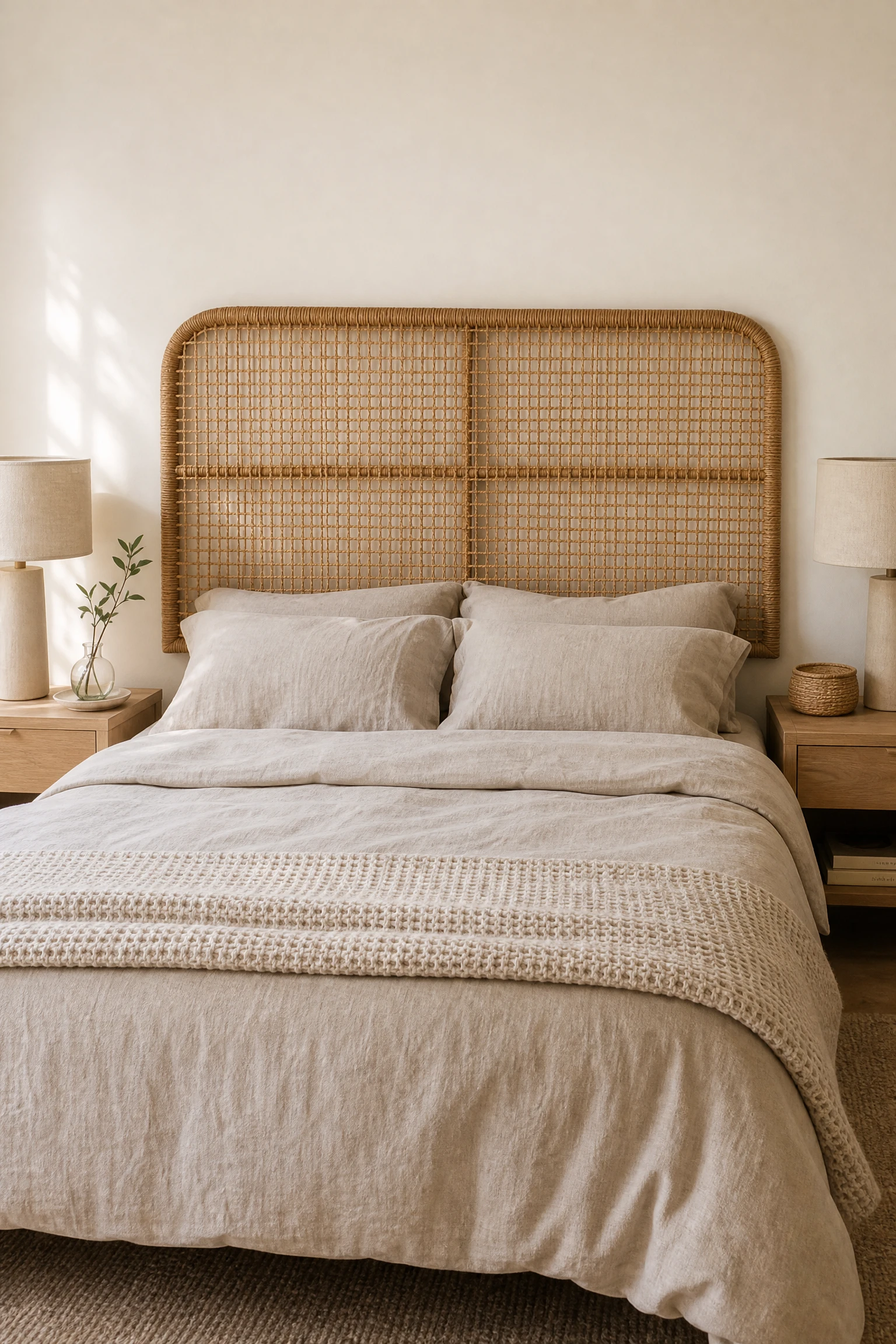
1. White Linen Walls with a Warm Rattan Headboard
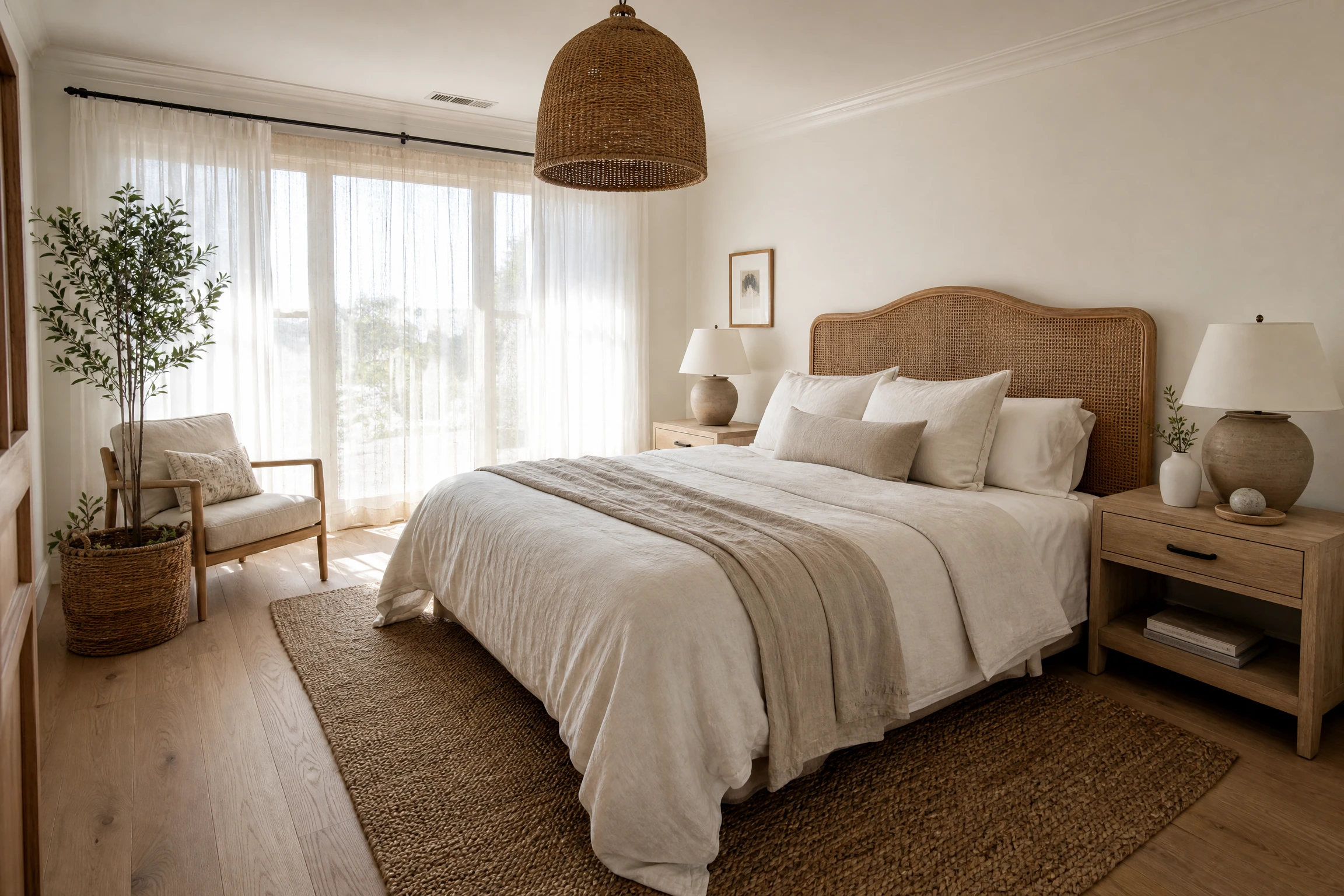
This combination works because it solves one of the most common problems in coastal decor: white rooms that feel cold instead of calm. Painting walls in a warm white, something like Benjamin Moore’s White Dove or Sherwin-Williams Alabaster, immediately sets a softer tone than a stark true white. Pair that with a natural rattan or woven seagrass headboard and the room picks up organic warmth without any color commitment. Layer the bed with unbleached linen duvet covers and a chunky cotton waffle throw at the foot. For lighting, a linen drum shade table lamp on each nightstand keeps the warmth consistent. The honest limitation here is that all-neutral rooms can start to feel flat if you do not vary your textures aggressively, so make sure you are mixing matte finishes, woven surfaces, and a slightly glossy ceramic or glass piece somewhere on the nightstand.
Designer Advice: Choose a headboard with open weave rather than tightly woven rush matting. The open texture catches light better and reads as more refined in a bedroom setting.
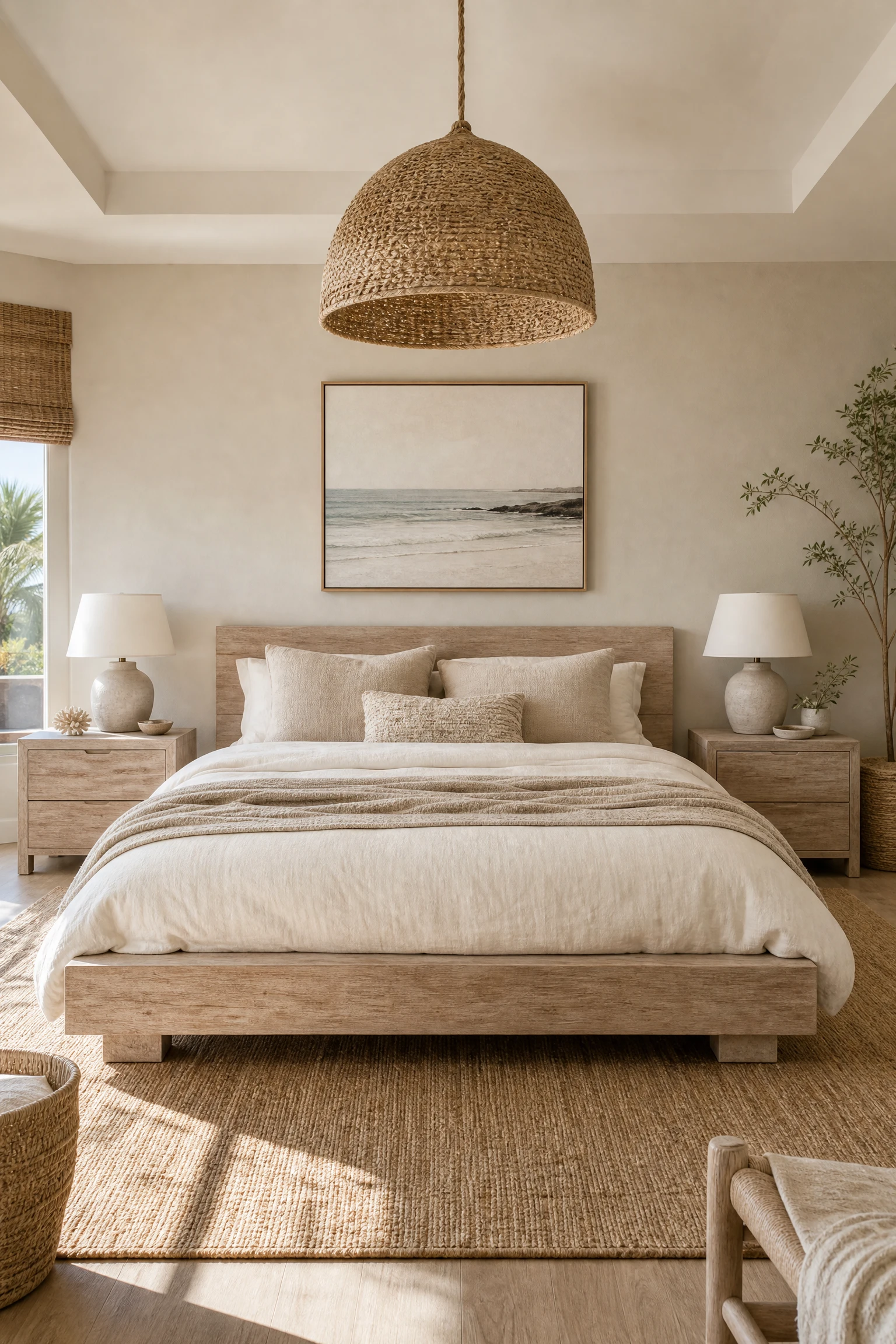
2. Sandy Beige with Driftwood Tones
A palette built around sandy beige, warm greige, and driftwood brown gives a coastal bedroom the feel of low tide without a single piece of nautical decor anywhere in sight. This color story works particularly well in rooms that do not get a lot of natural light, because the warm undertones stop the space from feeling murky. Use a low platform bed in bleached oak or a light ash finish, and keep the bedding in layered tones of ivory and oat. Nightstands in a slightly darker driftwood finish add visual depth without breaking the palette. For the floor, a jute or sisal area rug grounds the room with texture, and a simple woven pendant light above or a pair of ceramic-base lamps on the nightstands completes the look. This is one of the more budget-friendly approaches since many of these pieces are widely available at mid-range retailers.
Designer Advice: Avoid beige walls AND beige bedding in the same room. One of them needs to read slightly warmer or cooler to create enough contrast for the palette to feel layered rather than flat.
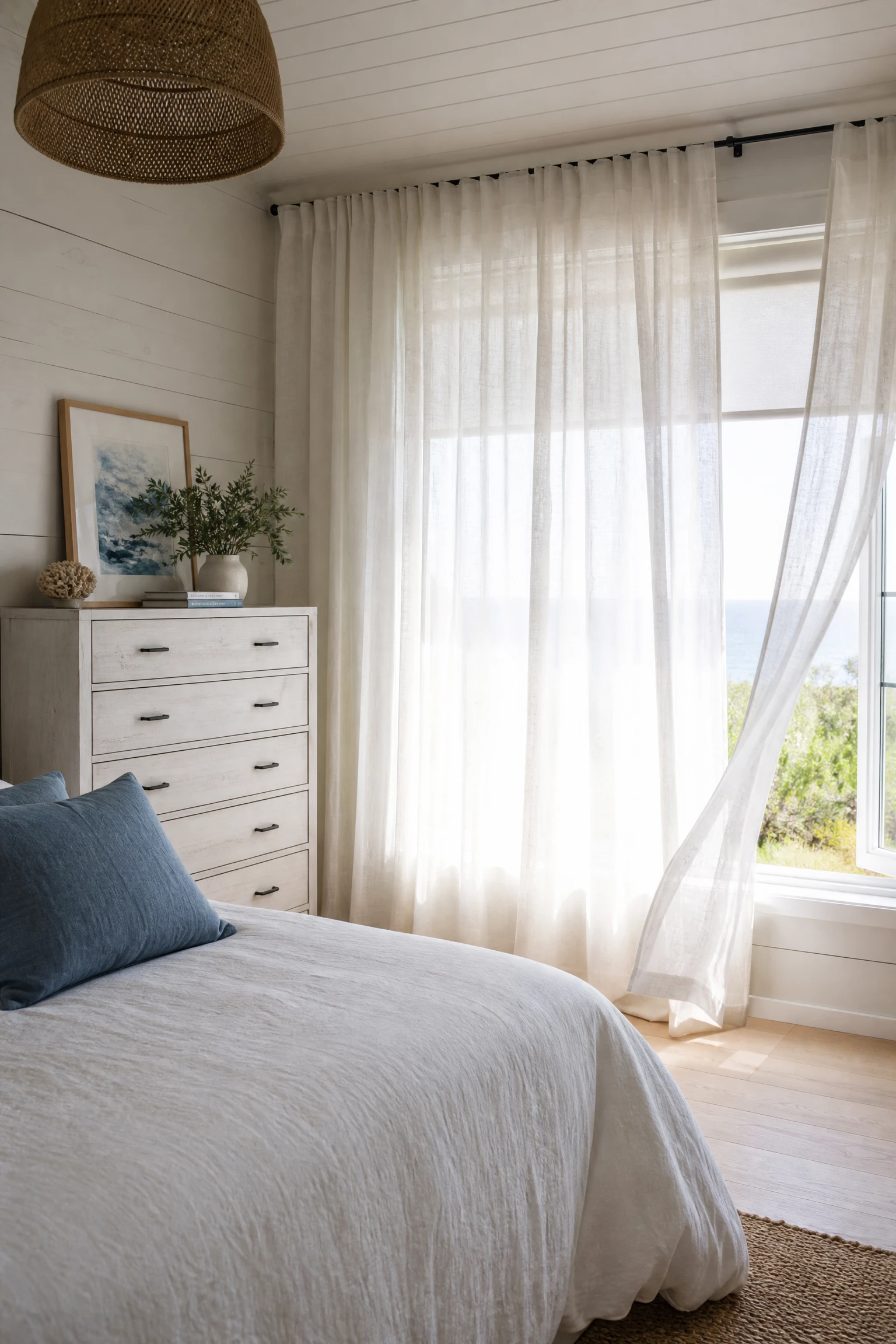
3. Sheer White Curtains with Weathered Wood Accents
Floor-to-ceiling sheer white linen curtains are one of the most underrated moves in coastal bedroom design. They filter natural light in a way that makes the room glow during the day without blocking any views, and they move slightly with a breeze if your windows are open, which adds to the whole atmosphere. Pair them with weathered or whitewashed wood furniture, specifically a dresser or wardrobe in a pale washed finish, and the room starts to feel like a beach cottage even if it is in the middle of a city. Keep bedding simple: a white coverlet with a single textured throw and two or three pillows in faded blue or natural linen. One honest note: sheer curtains offer very little privacy and almost no blackout, so in a bedroom you may want to layer them over a simple white roller blind behind them.
Designer Advice: Hang sheer curtains from a rod mounted close to the ceiling, not just above the window frame. The extra height draws the eye up and makes the room feel significantly taller.
Color-Forward Coastal
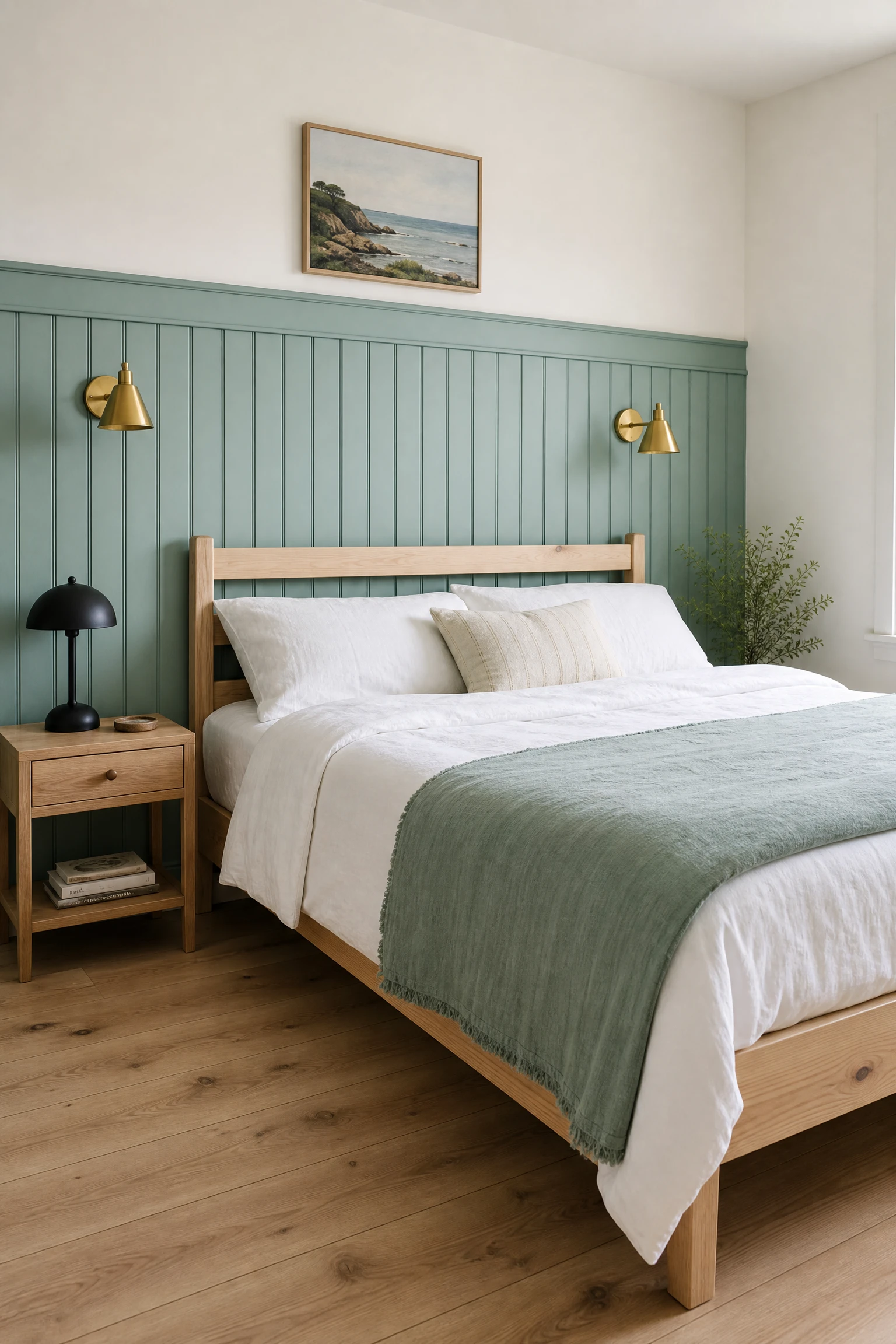
4. Soft Seafoam Green with White Bead Board
Seafoam green is having a real moment in coastal interiors right now, and it is easy to see why. It sits right at the edge of blue and green in a way that reads both fresh and calm, without being as obvious as navy or as flat as sage. For a bedroom, use seafoam as an accent wall behind the bed, either in paint or in simple painted bead board paneling, which adds texture and a very classic coastal character. Keep the rest of the room white, and bring in furniture in natural oak or pale pine. Bedding in white with a single seafoam or celadon throw keeps the color balanced. Task lighting in brushed brass or matte black adds a small modern edge that stops the room from looking too country cottage. This works well in medium to large bedrooms; in a very small room, the accent wall can feel heavy.
Designer Advice: Use bead board paneling at roughly two-thirds wall height rather than full height. It is a classic wainscoting proportion that looks intentional and polished rather than budget-driven.
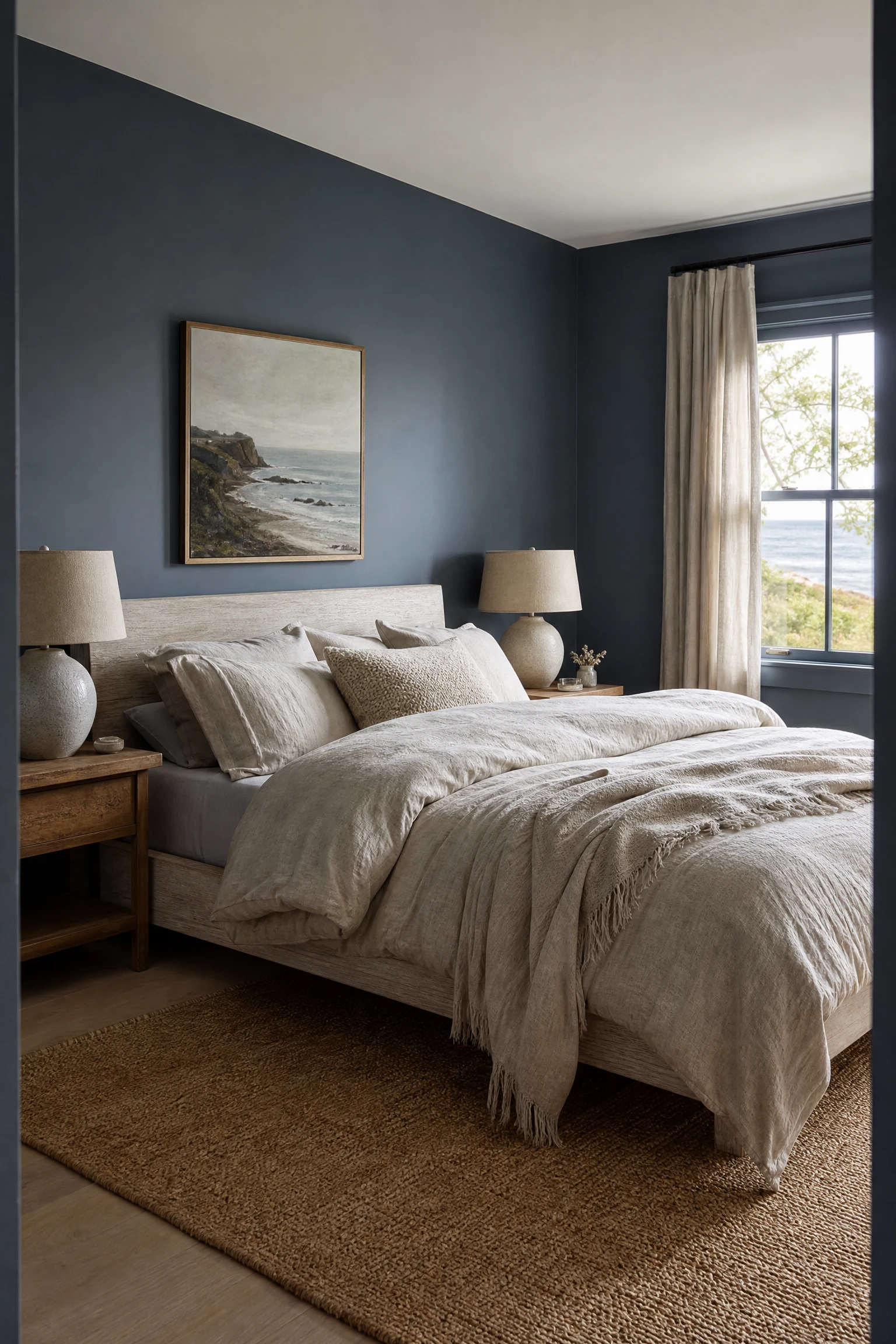
5. Muted Blue-Gray with Natural Linen Bedding
Blue-gray is a much more livable version of navy for a bedroom because it reads as a neutral in low light while still giving the space real color character during the day. Think of shades like Farrow and Ball’s Mizzle or a muted slate blue from any good paint range. This works best on all four walls rather than just as an accent, because the full wrap creates that cocooning, immersive quality that makes a bedroom feel restful. Against blue-gray walls, natural linen bedding in oatmeal or stone looks genuinely beautiful, almost like the room was designed by someone who has spent a lot of time by the water. Add a simple whitewashed wood bed frame, ceramic lamps with linen shades, and a jute rug to keep the coastal connection grounded in texture rather than themed accessories.
Designer Advice: Blue-gray paint can shift dramatically between daylight and artificial light. Always check your chosen shade in both conditions before committing, because some reads purple under incandescent bulbs.
6. Dusty Terracotta with Ocean Blue Accents
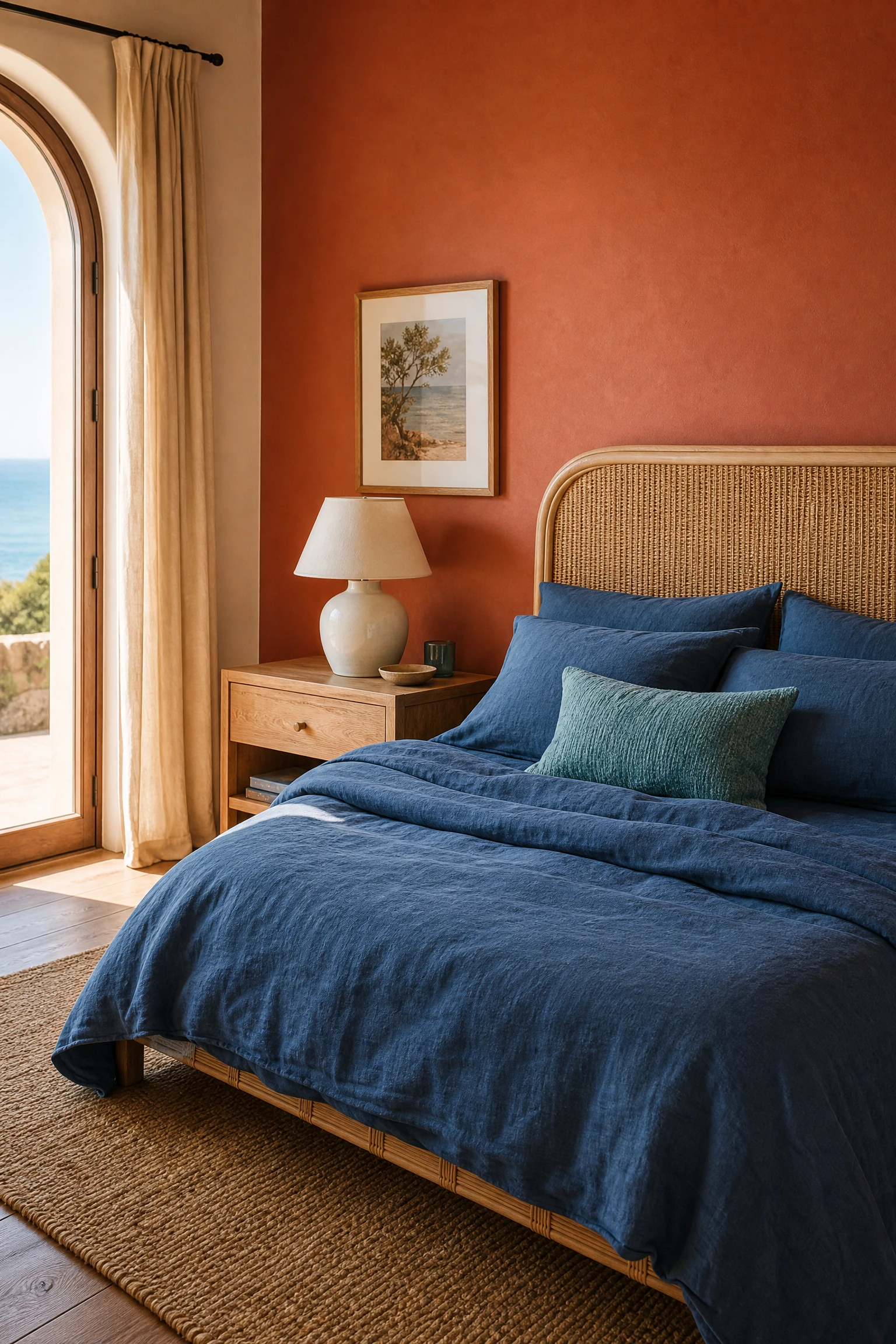
This one surprises people, but terracotta and ocean blue is actually a very old coastal color combination that you see in Mediterranean and Greek island interiors all the time. The warmth of terracotta on the walls or in the bedding stops the blue from feeling cold, and the blue keeps the terracotta from reading as purely rustic. In a bedroom, use terracotta as an accent wall color in a matte finish, and bring in ocean blue through the bedding, specifically a linen duvet in a washed indigo or faded teal. Furniture in natural rattan or pale wood keeps the palette feeling light rather than heavy. A simple ceramic table lamp in a creamy white and a sisal rug round the room out nicely. This approach works particularly well in rooms with warm afternoon light.
Designer Advice: Use a matte, chalky paint finish for terracotta walls rather than eggshell or satin. The low sheen gives the color a sun-baked, aged quality that feels much more authentic to the coastal Mediterranean look.
7. Pale Sage and Cream with Bleached Wood
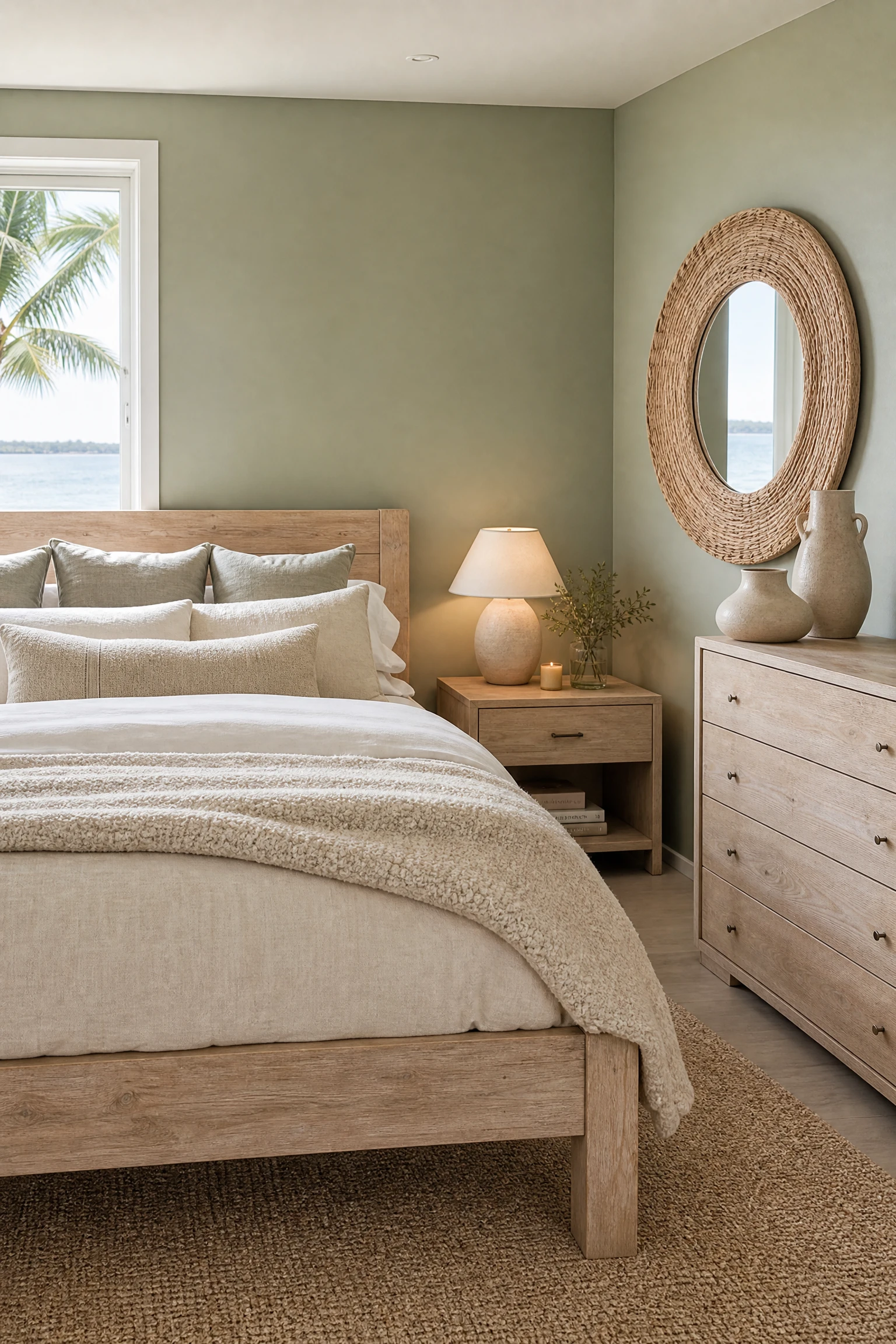
Sage green is softer than seafoam and less assertive than deeper greens, which makes it one of the most calming wall colors you can use in a bedroom. Combined with cream bedding and bleached or lime-washed wood furniture, it creates a palette that is coastal without being obvious about it. The color story references sea grass, dune plants, and sunlight through pale curtains rather than the ocean itself, which gives the room a more subtle, lived-in coastal quality. Layer in textures through a boucle throw, a woven rattan mirror above the bed, and a pair of sculptural ceramic vases on the dresser. This palette photographs beautifully and works in bedrooms of almost any size, which makes it one of the most versatile options on this list.
Designer Advice: When working with sage green walls, warm your light bulbs slightly (aim for 2700K to 3000K color temperature). Cool bulbs push sage toward gray-green, which can feel clinical rather than calm.
Texture-Led Coastal
8. Rope and Woven Details Throughout
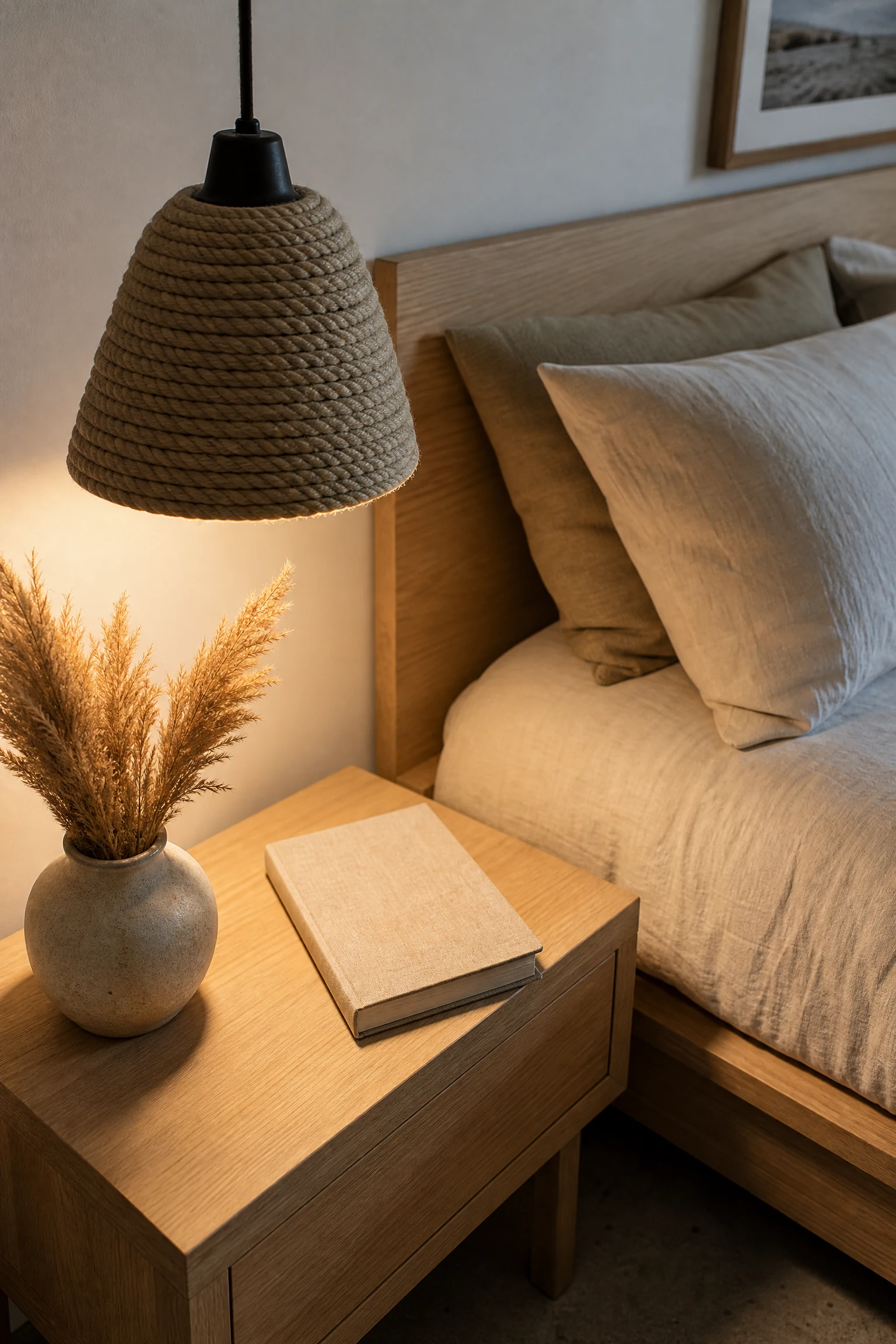
Rope is one of those materials that is currently being used in a far more refined way than the old knotted-anchor aesthetic. In 2026, rope shows up as bedside pendant shades wound tightly around a drum frame, as a tactile detail on a headboard edge, or as the base material for a sculptural bedside lamp. The effect is architectural and interesting rather than thematic. In practice, the best way to use rope in a bedroom is to limit it to one or two pieces, specifically the lighting, and let the rest of the room be calmer. A rope pendant above each bedside table paired with simple white walls and natural linen bedding is genuinely striking. Keep the furniture clean-lined and in a pale wood so the rope details have space to read. This approach sits at the mid to higher end of the budget depending on how custom the lighting pieces are.
Designer Advice: Avoid rope or macrame wall hangings if you are already using rope lighting. One rope element reads as intentional; two or more starts to feel themed and cluttered.
9. Chunky Knit and Waffle Weave Layering
One of the easiest ways to make a coastal bedroom feel genuinely inviting rather than just pretty is to focus on bedding texture. A combination of a waffle-weave coverlet as a base layer, a chunky knit throw folded loosely across the foot of the bed, and a mix of linen and cotton pillowcases creates a layered look that feels like a high-end beach rental. The key is keeping the color palette very contained, typically whites, creams, and one or two muted naturals, so the texture carries all the visual interest. This works in any budget range since good quality waffle coverlets and chunky throws are widely available at accessible price points. The honest limitation is that chunky knit throws are not the most practical if you run warm at night; they are more decorative than functional for sleeping.
Designer Advice: Layer your pillows from largest to smallest front to back, not the other way around. Euro shams at the back, standard pillows in the middle, and one or two textured accent cushions in front creates the hotel-style layered look that is hardest to replicate otherwise.
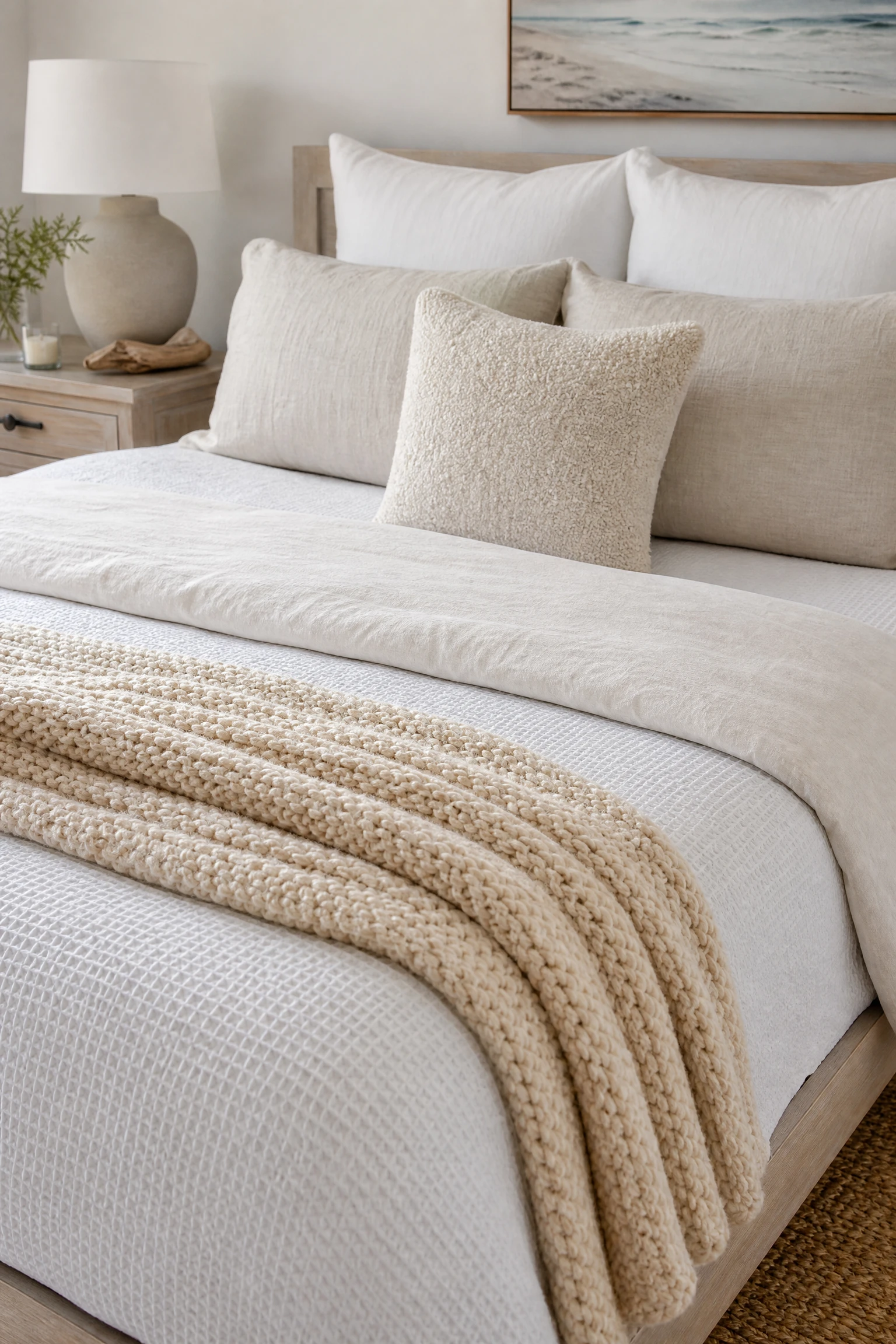
10. Wicker, Cane, and Bamboo Accents
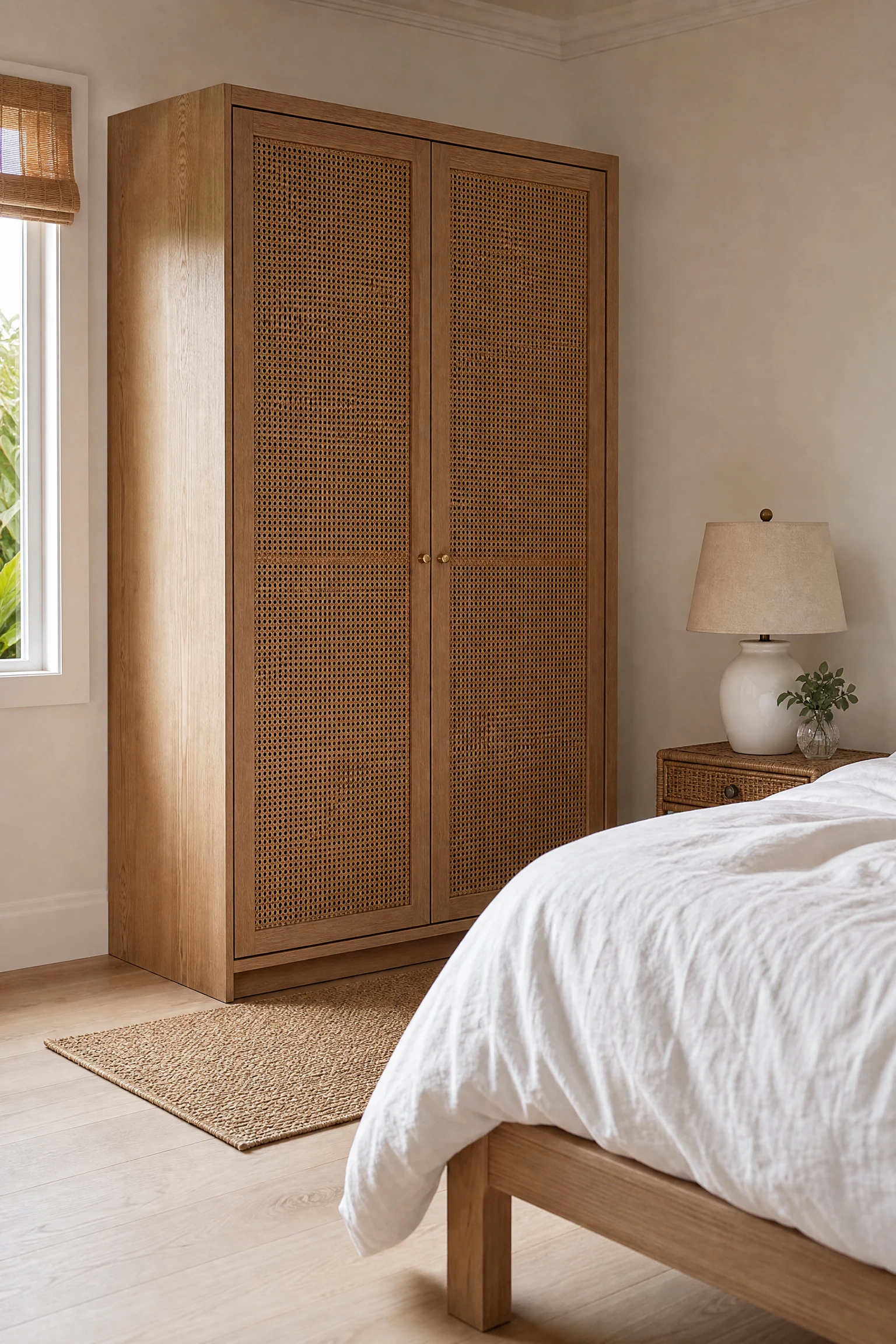
Natural cane and wicker furniture has been central to coastal style for decades, and the reason it keeps coming back is that it genuinely works. A cane-panel wardrobe or a pair of wicker bedside tables bring an organic, handmade quality to a bedroom that no flat-pack furniture can replicate. The material also ages well, developing a slightly darker, richer tone over time that adds character rather than looking worn out. For a modern coastal bedroom in 2026, the key is to choose cane pieces with cleaner lines, specifically frames with visible joinery and simple profiles rather than the ornate Victorian rattan of previous decades. Pair cane furniture with white or pale linen walls and simple cotton bedding. If your budget is limited, a single cane-panel headboard can deliver the same textural impact as a full set of wicker furniture.
Designer Advice: In humid climates, avoid placing wicker or cane furniture in direct sunlight near windows for extended periods. Prolonged UV exposure can dry out and crack the natural fibres faster than normal aging.
11. Stone, Shell, and Sea Glass as Decorative Accents
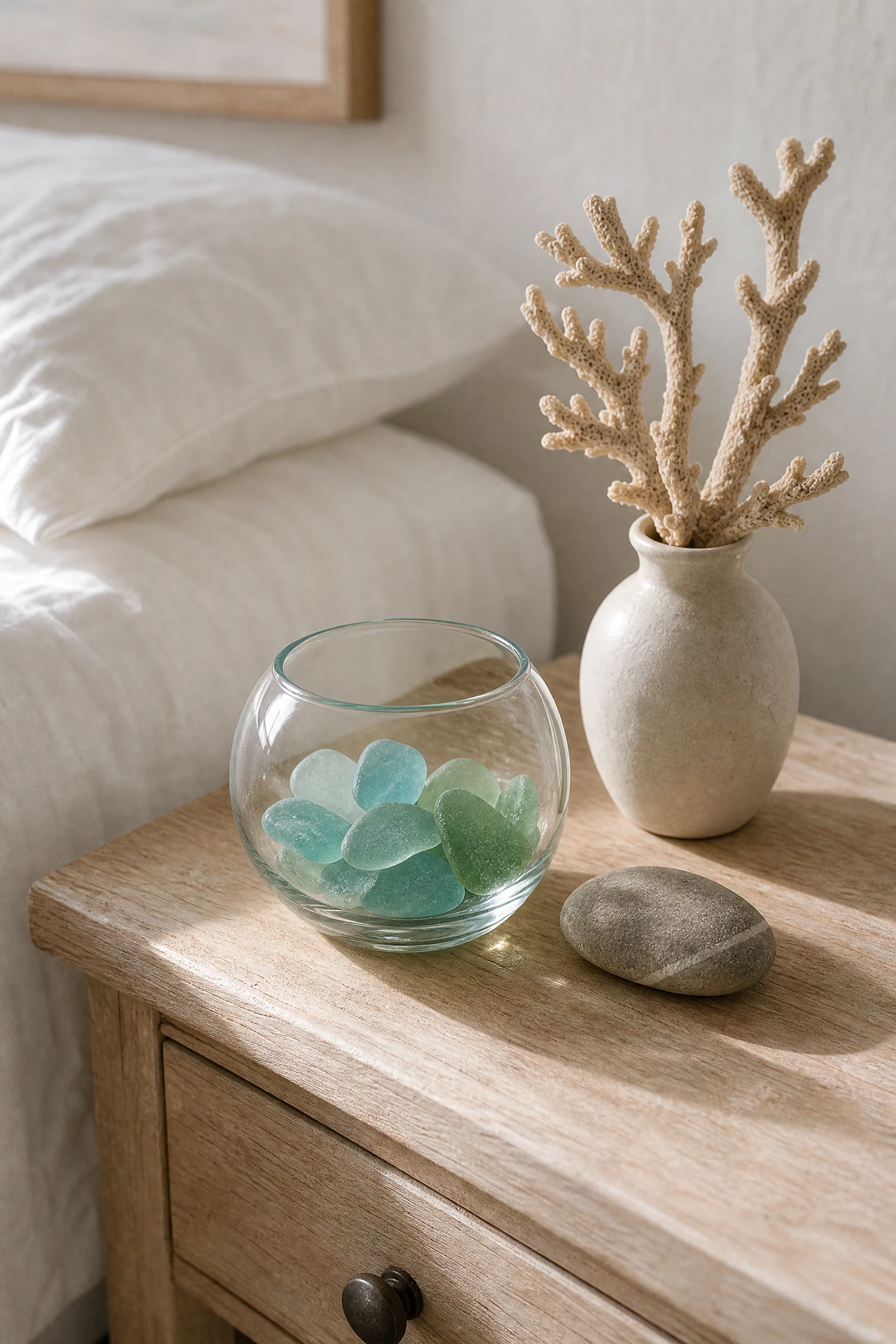
In practice, the most common mistake people make in coastal bedrooms is overdoing the themed accessories. A single shelf of seashells, a framed piece of sea glass art, or a small bowl of smooth pebbles on the nightstand is genuinely enough to bring the coastal reference in without making the room look like a beach souvenir shop. The best approach is to treat these pieces the way you would any collected objects: grouped in threes, varied in scale, and placed where they interact with other materials like natural wood or linen. Sea glass in particular works beautifully displayed in a simple glass vessel where light can pass through it. This is the most budget-friendly category on this list since many of these pieces can be collected rather than purchased.
Designer Advice: Limit your themed coastal accessories to one or two points in the room, ideally the nightstand and one dresser surface. Every other surface should feel like it could belong in a non-coastal bedroom.
Modern and Minimal Coastal
12. Clean-Lined Furniture with a Single Bold Blue Wall
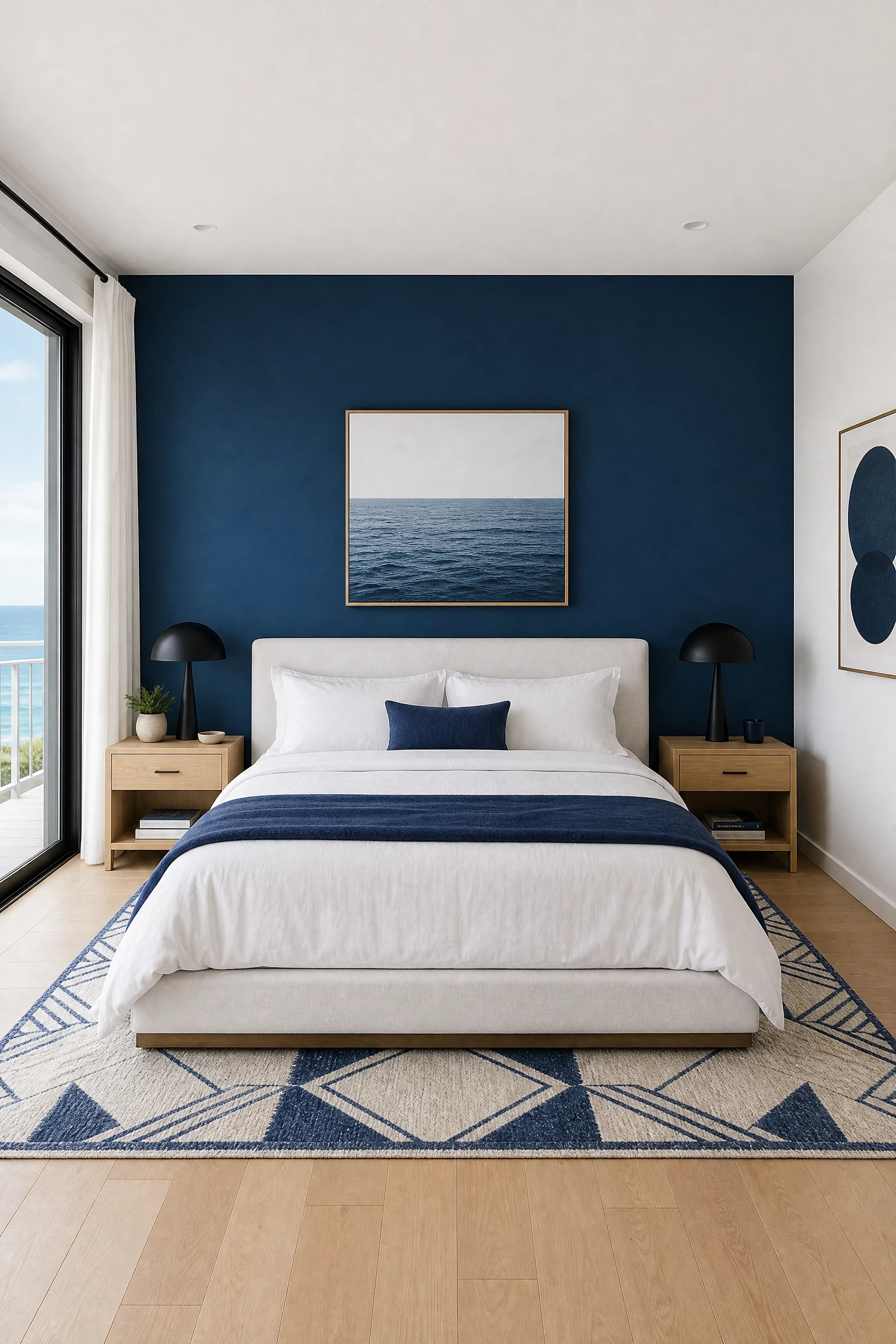
This is a much more modern take on coastal that avoids any rustic or cottage associations. The idea is to keep all the furniture in a clean, contemporary profile, specifically a low platform bed with a simple upholstered headboard, paired nightstands with minimal hardware, and a streamlined dresser, and then anchor the room with a single deep blue accent wall behind the bed. The blue does the coastal storytelling while the furniture keeps things modern and sophisticated. Coastal blue in this context is not navy and not turquoise; it is closer to a deep ocean blue or a darkened slate, something like Farrow and Ball’s Hague Blue or Dulux’s Midnight Teal. White ceiling and trim keep the room from feeling enclosed, and a simple geometric rug in white and blue grounds the floor without adding clutter.
Designer Advice: If you choose a very dark accent wall, make sure your bedhead furniture or artwork does not disappear against it. Light-colored bedding and pale wood nightstands create enough contrast to keep the focal point readable.
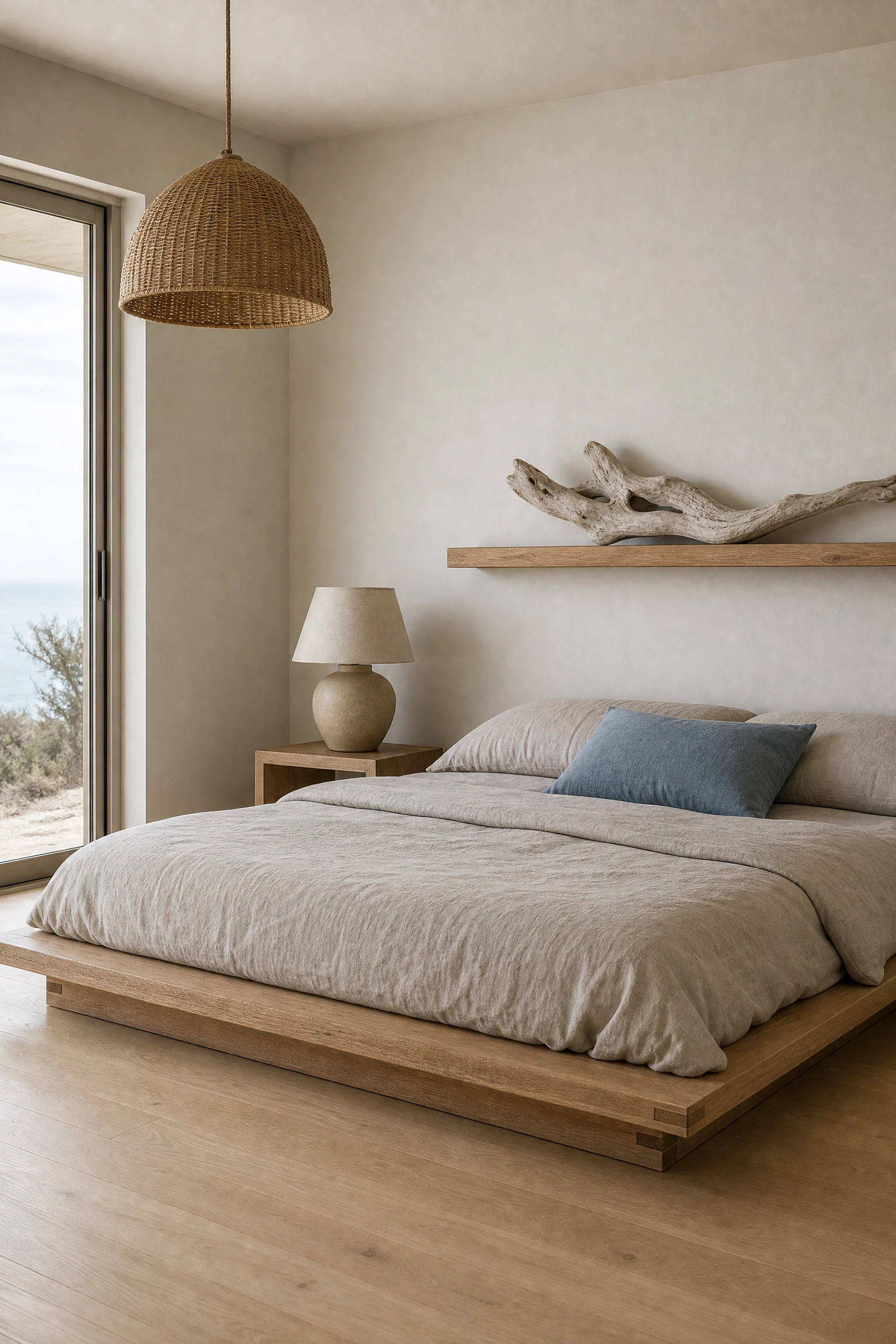
13. Japandi Coastal with Organic Lines
Japandi, the design movement that blends Japanese minimalism with Scandinavian warmth, translates surprisingly well into coastal style when you use the right palette and materials. The shared values of natural materials, functional simplicity, and a quiet color story make the two aesthetics genuinely compatible. For a Japandi coastal bedroom, start with walls in a very pale warm gray or off-white, choose a low-profile bed frame in natural oak with simple joinery, and add bedding in muted blues and stone tones in heavy cotton or linen. The coastal reference comes through in the color palette and the use of organic textures, specifically a sculptural piece of driftwood as a decorative object, a simple woven grass pendant light, and a ceramic bedside lamp in a soft sand color. Avoid clutter obsessively; in a Japandi room, negative space is a design element, not something to fill.
Designer Advice: Japandi coastal works best when every object in the room has a reason to be there. Before adding anything decorative, ask whether it serves a purpose, whether that is visual balance, texture, or function.
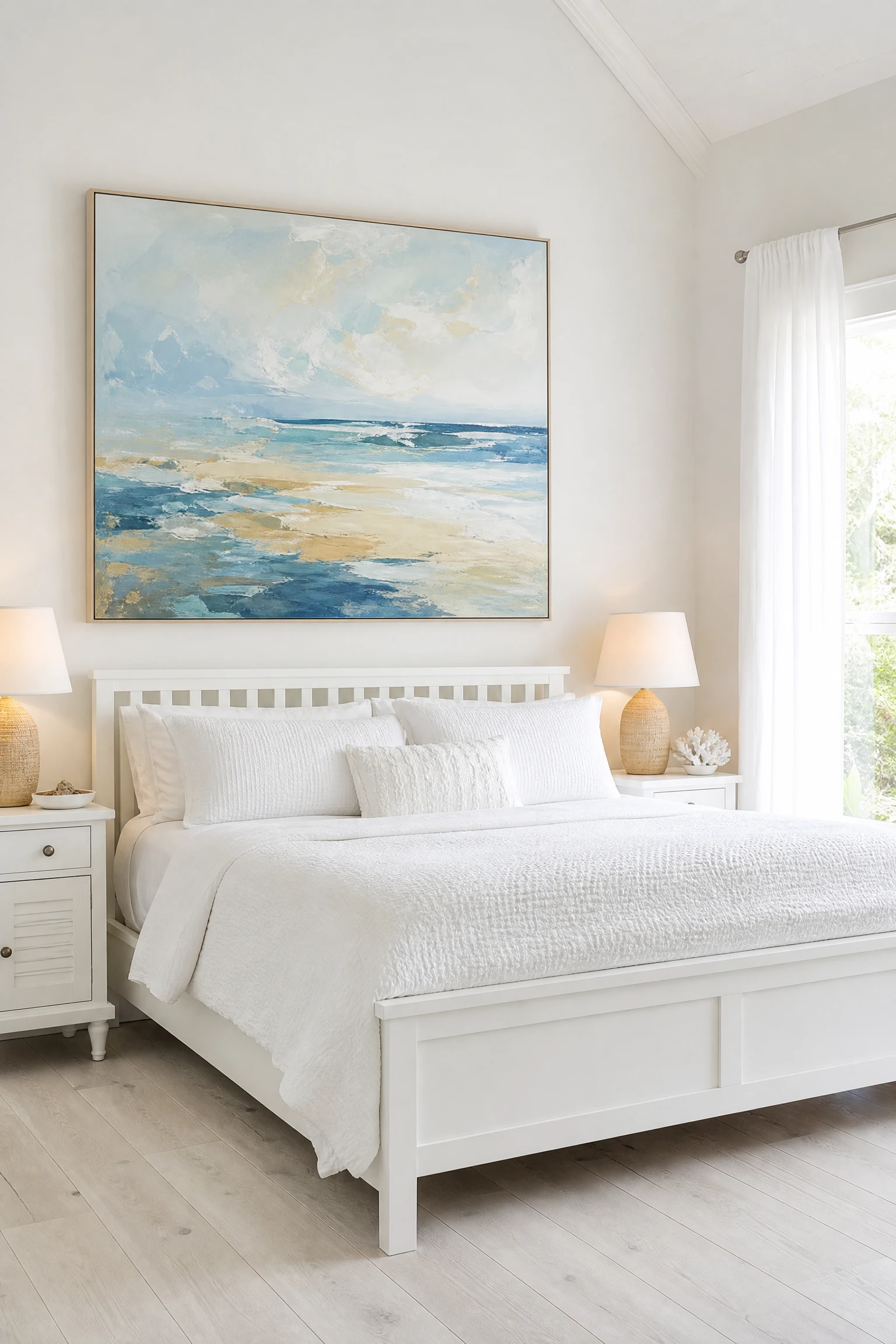
14. All-White with Bold Coastal Art
An all-white coastal bedroom sounds like it could be boring, but when you get the textures right and hang genuinely good coastal art, the effect is quietly spectacular. The art does all the color work, specifically an oversized abstract seascape in blues and sandy tones, or a series of botanical coastal prints arranged in a clean grid, while the room itself stays calm and uncomplicated. All-white does not mean flat-white; use a combination of matte white walls, a textured white bedspread, white sheer curtains, and a white-painted timber bed frame with subtle grain showing through for a room that reads as layered and considered rather than empty. The lighting matters enormously here; a warm-toned lamp on each side of the bed and ideally some dimmable overhead lighting keeps the room from feeling clinical in the evenings.
Designer Advice: For an all-white room, invest in your bedding quality above everything else. In a room with no color distraction, thread count, fabric weight, and how the linen drapes becomes the most visible detail.
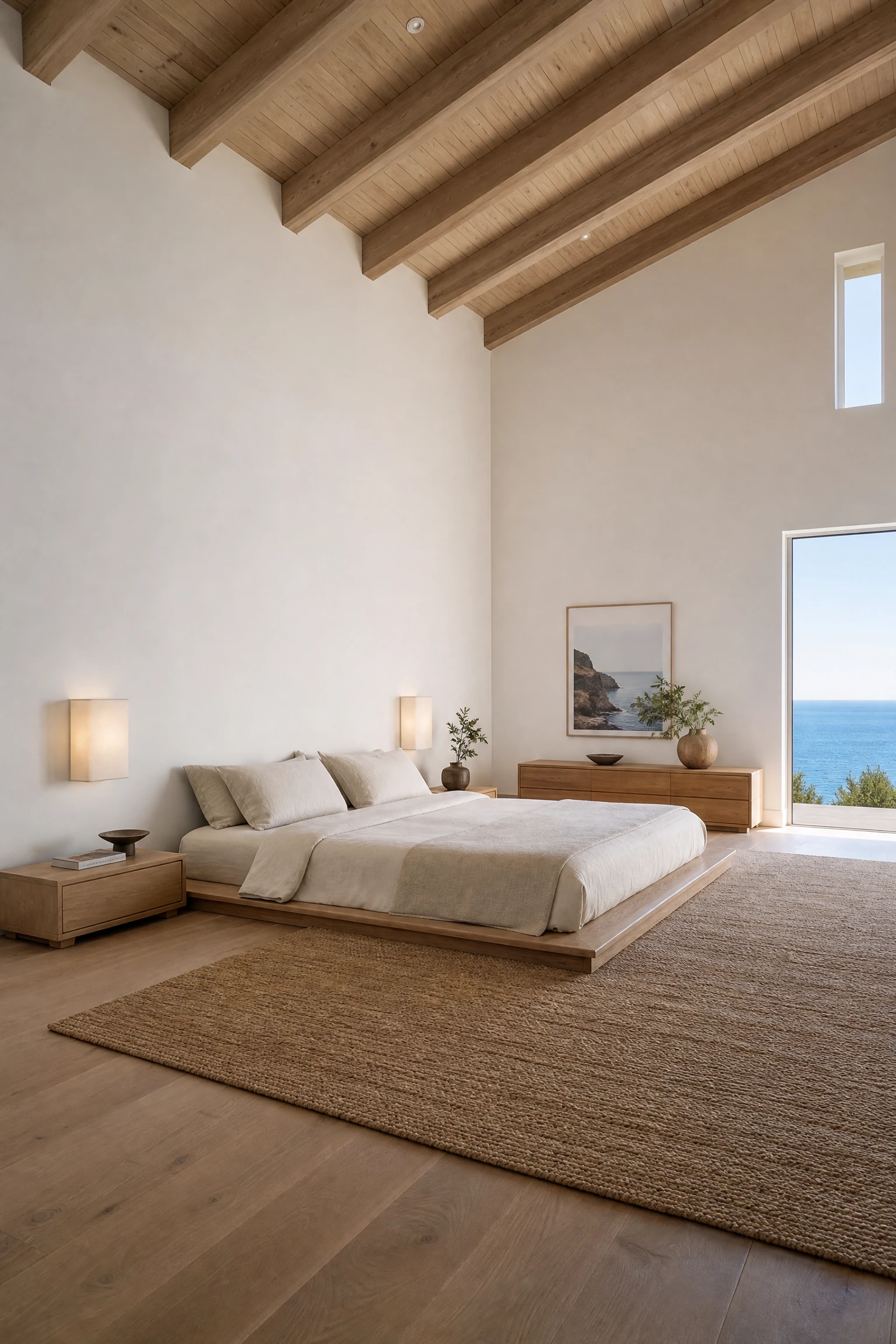
15. Low-Profile Furniture with Raised Ceilings
One of the most effective but least discussed techniques in coastal bedroom design is the deliberate use of visual weight through furniture height. Low-profile furniture, specifically a platform bed sitting close to the floor, paired with low nightstands and a low-slung dresser, makes a bedroom ceiling feel dramatically higher and the room feel larger and more open. This open, airy quality is central to the coastal aesthetic, which is why you see it in almost every well-designed beach house. In practice, choose a bed that sits no higher than 18 inches from floor to mattress top, and select nightstands that sit at or just below mattress height. Keep the upper walls bare or use very simple, light artwork to draw the eye up toward the ceiling. This idea works especially well in rooms with actual high ceilings, but it makes a real difference in standard-height ceilings too.
Designer Advice: If your ceiling is lower than 9 feet, avoid large pendant lights above the bed. They visually lower the ceiling. Instead, use wall-mounted sconces at nightstand height to keep the upper space clear.
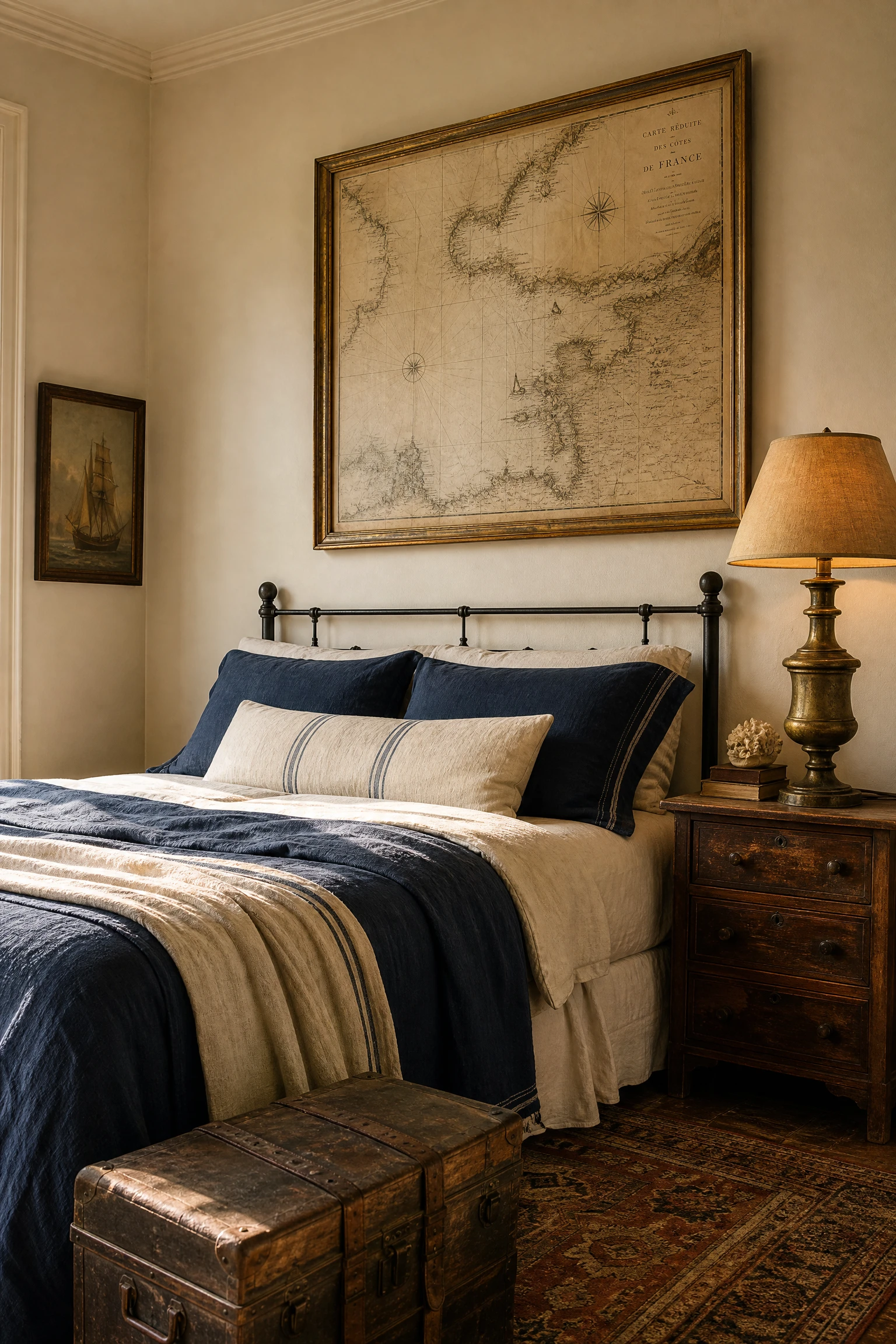
Coastal with Character
16. Vintage Coastal with Aged Brass and Weathered Maps
Not every coastal bedroom needs to feel brand new. A vintage-leaning approach brings a kind of worn-in, well-traveled quality that is much harder to replicate with new furniture than people expect. The key pieces for this look are an aged brass table lamp with a linen shade, a large framed antique map or vintage coastal print above the bed, and furniture with genuine patina rather than faux distressing. A brass-framed mirror, a wooden chest at the foot of the bed that has actually been used, and bedding in washed linen tones of navy and ivory complete the picture. This look requires patience since you are better off sourcing pieces from vintage markets and antique shops than buying new items made to look old. The investment is time rather than money, which often makes it the most affordable direction on this list.
Designer Advice: Mix aged brass hardware with chrome or nickel only intentionally. If you mix metals, limit yourself to two and repeat each one at least twice in the room so the combination reads as a choice rather than an accident.
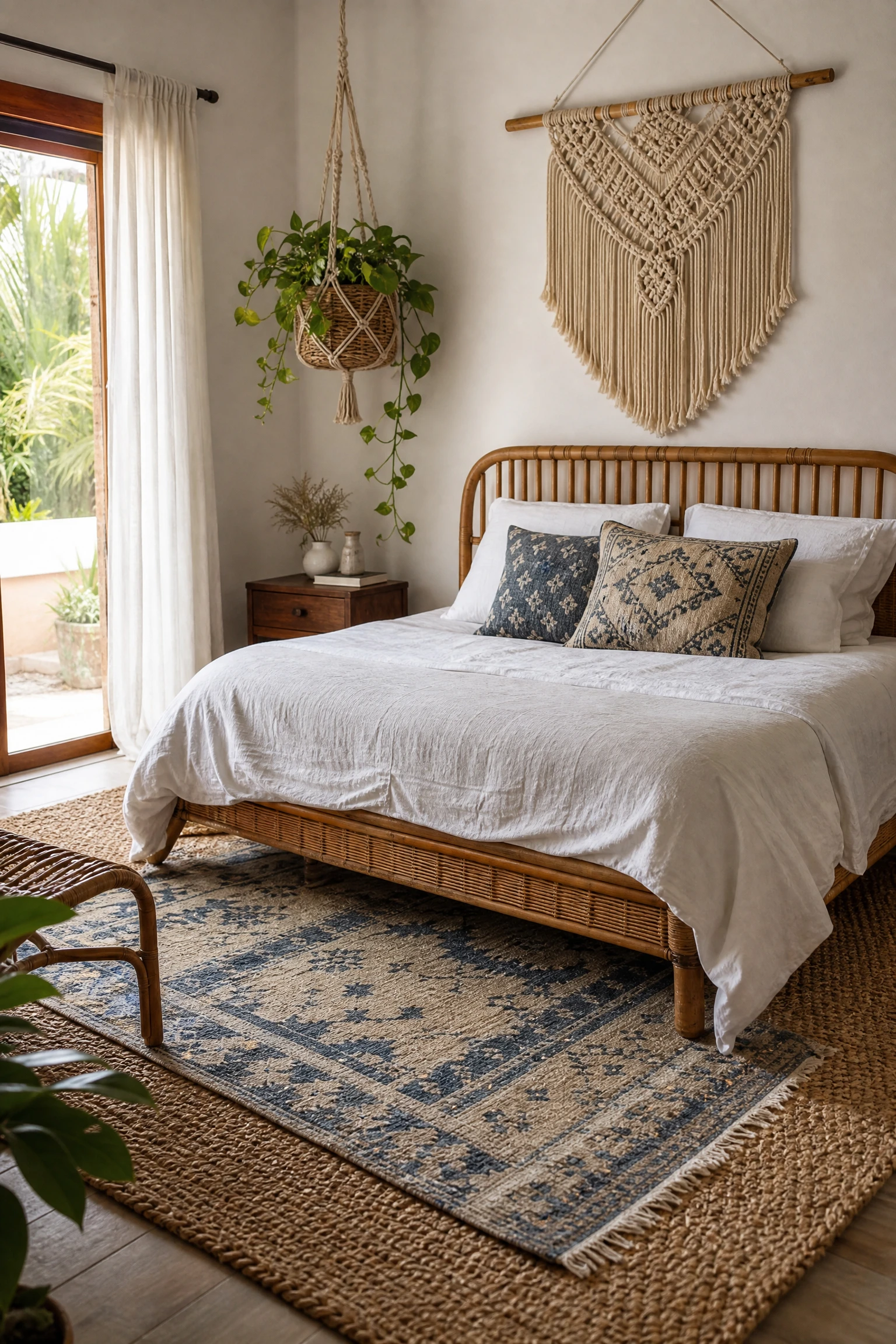
17. Coastal Boho with Macrame and Layered Rugs
Coastal boho is a distinct aesthetic that pulls together the relaxed quality of beach style with the layered, textural richness of bohemian decor. It can look spectacular when done with restraint, and overwhelmingly busy when done without it. The non-negotiable pieces are a woven macrame wall hanging, kept to a reasonable scale above the bed, a layered rug situation where a natural jute rug sits as the base layer and a smaller Moroccan-style flatweave sits on top, and bedding in white or off-white linen with a few patterned throw cushions. Hanging plants in woven baskets from the ceiling add height and life. The furniture works best in natural rattan or pale wood so it does not compete with the textile-heavy walls and floor. The honest note here is that this style requires consistent editing; it tips easily from layered to chaotic.
Designer Advice: Before adding any new piece to a boho coastal room, remove something first. The style only works when the layering feels curated, and that requires discipline about what comes in and what comes out.
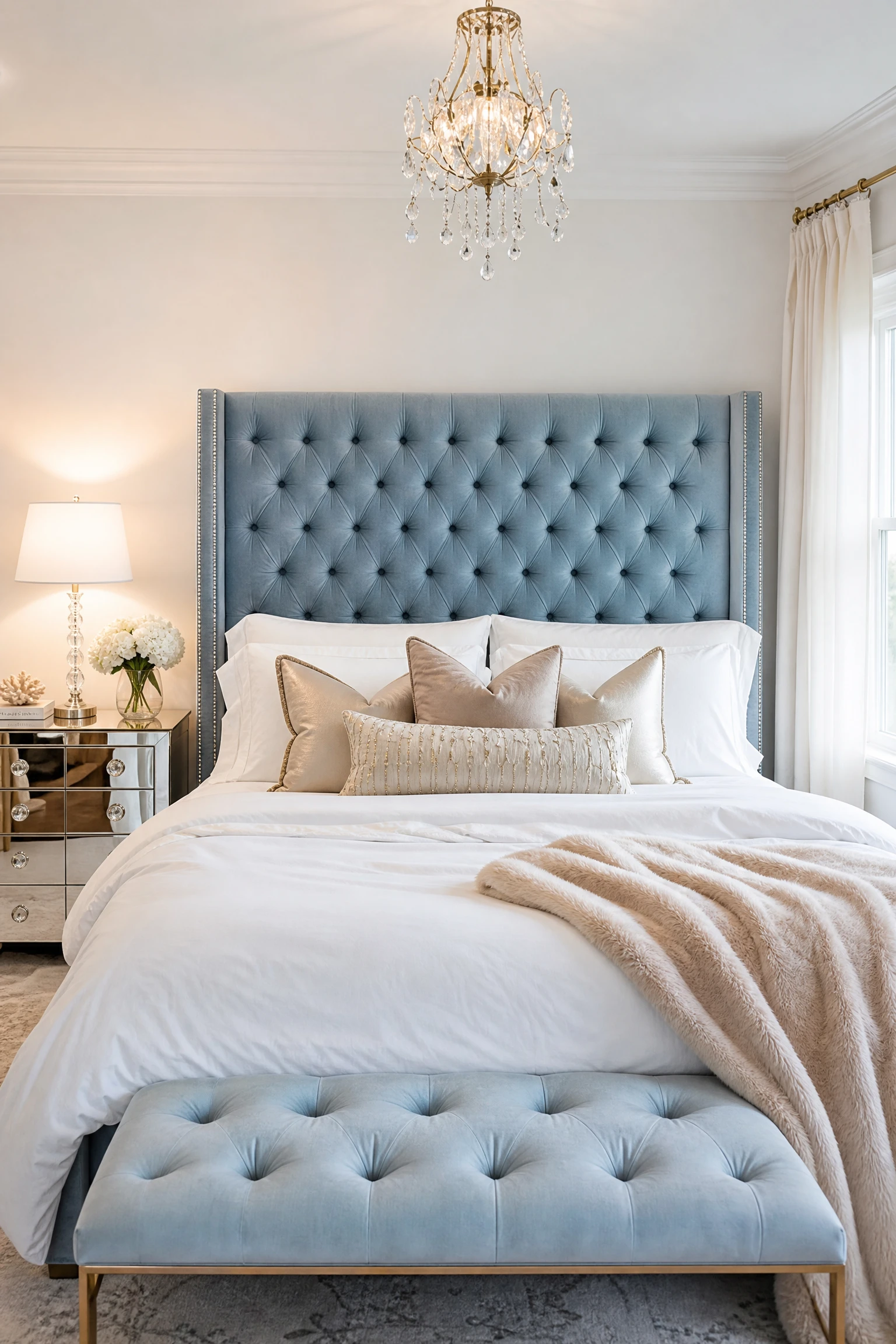
18. Coastal Glam with Soft Blues and Metallic Touches
If you love the coastal aesthetic but find pure natural materials a bit too raw for your taste, coastal glam is a genuinely elegant middle ground. The idea is to keep the coastal palette, soft blues, sandy neutrals, white, and then introduce a level of polish through velvet upholstery, mirrored surfaces, and metallic accents. A tufted velvet headboard in dusty blue is the anchor piece, paired with white bedding in a high thread count cotton and nightstands with a mirrored or lacquered finish. A crystal or glass chandelier above provides glamorous lighting, while sheer silk or faux silk curtains add a luxurious movement that linen cannot match. This approach sits at the higher end of the budget range and works best in master bedrooms where you have enough space for the furniture to breathe.
Designer Advice: In a glam coastal bedroom, limit your metallic accent to one finish, either gold, silver, or chrome. Mixing too many metallic tones undermines the polished effect you are trying to achieve.
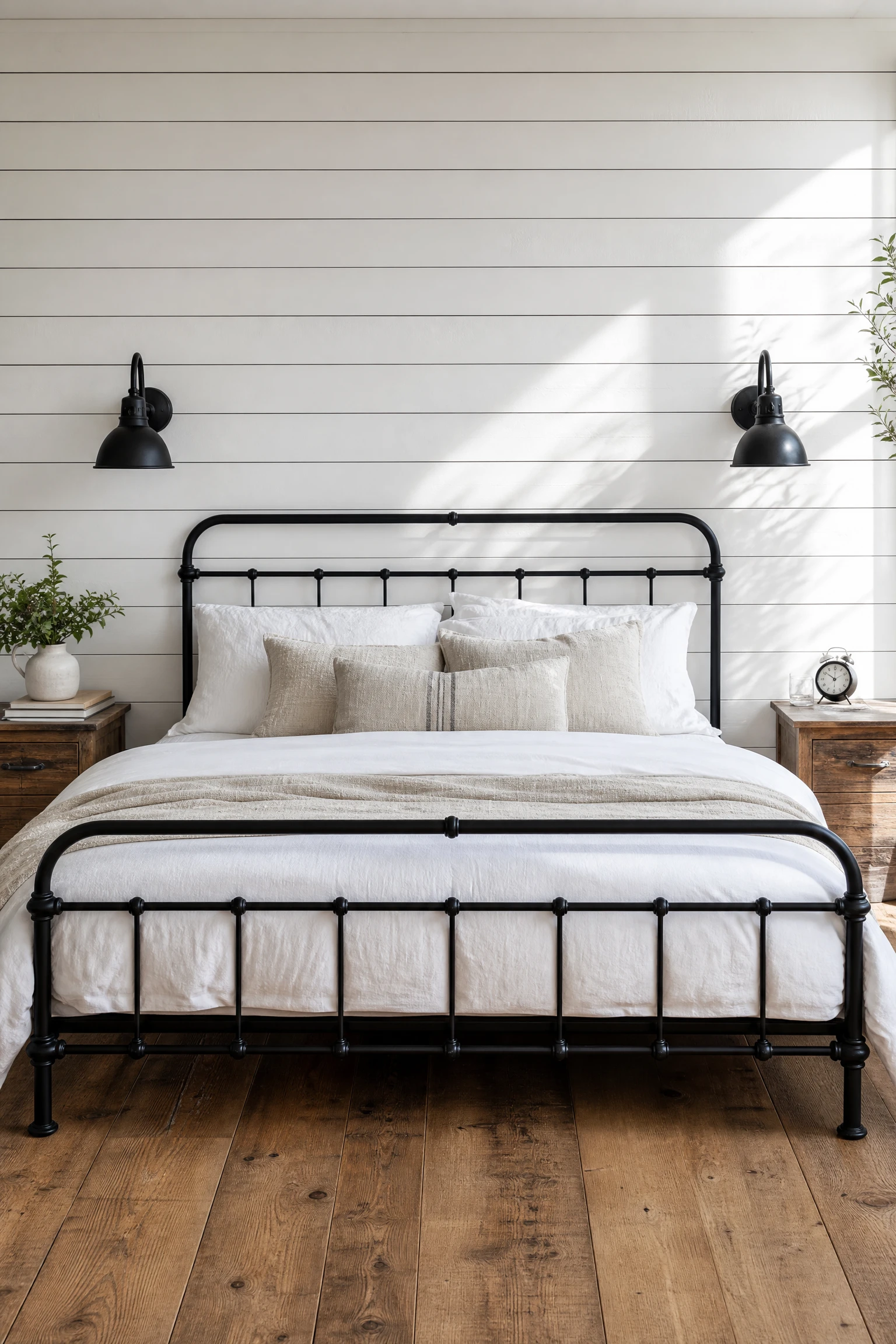
19. Coastal Farmhouse with Shiplap and Linen
Shiplap paneling and coastal style are a natural pairing because both aesthetics value honest, durable materials and a relaxed approach to decoration. A shiplap accent wall behind the bed, painted in a crisp white or a pale warm gray, gives a bedroom a strong architectural feature without expensive construction work. Against shiplap, simple linen bedding in whites and naturals looks genuinely at home, and a wrought-iron or matte black bed frame adds just enough contrast to stop the room from being too soft. For lighting, industrial-style wall sconces in black or aged brass mounted directly onto the shiplap wall are both practical and stylish. This is a good approach for bedrooms where you want to add character but are working with standard builder-grade finishes everywhere else.
Designer Advice: If you are painting shiplap, use a semi-gloss finish rather than matte. The slight sheen catches light and emphasizes the shadow lines between planks, which is what gives the texture its visual character.
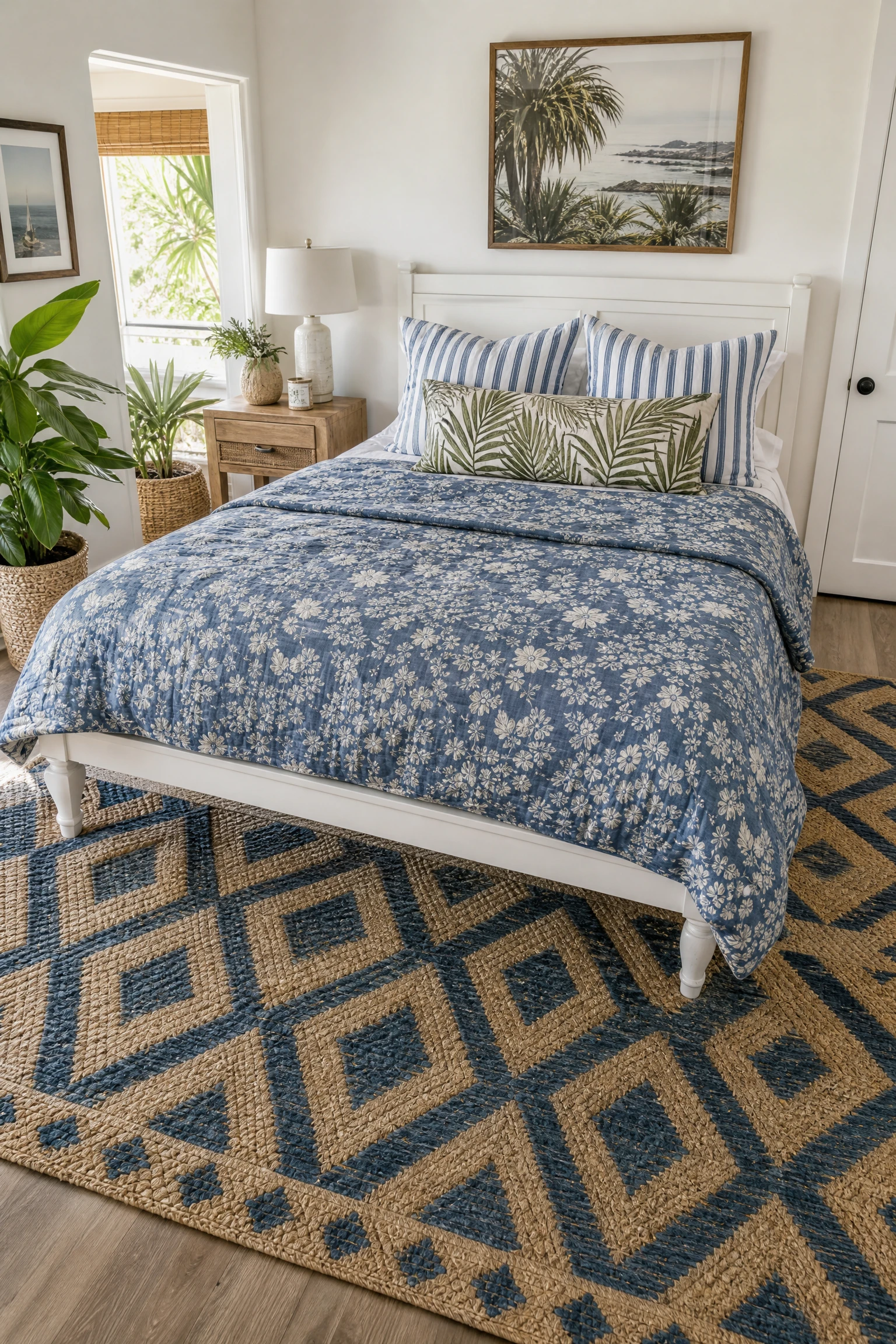
20. Soft Coastal Maximalism with Layered Prints and Patterns
Coastal maximalism sounds contradictory given how much coastal style leans on restraint, but the version that works in bedrooms is less about more stuff and more about more pattern and color used within a consistent coastal palette. Think layered prints in blues, greens, and sandy tones: a floral duvet in faded indigo, stripe euro shams, a palm leaf or botanical throw cushion, and a geometric jute rug. The key is that every pattern shares the same color family so the layers feel cohesive rather than chaotic. Furniture stays simple and in natural wood or white so it does not compete with the bedding. This approach works well for people who find all-neutral rooms too quiet, and it is surprisingly achievable on a mid-range budget since you are investing in bedding and textiles rather than furniture.
Designer Advice: When mixing patterns in a maximalist coastal bedroom, vary the scale of each print deliberately. One large-scale pattern, one medium, and one small-scale creates a layering logic that the eye accepts as intentional rather than random.
Final Thoughts
Getting a coastal bedroom right is less about buying a specific set of pieces and more about making a series of connected decisions that all point in the same direction. The rooms that feel genuinely coastal, rather than just beach-themed, are the ones where the color, the materials, and the light all work together. A sandy beige wall paired with the wrong furniture can feel muddy. The same wall with the right linen bedding and a rattan headboard suddenly makes sense.
The best starting point is usually the palette. Decide whether you want your room to lean neutral, color-forward, or somewhere in the middle, and then build your furniture and textile choices around that decision. From there, let the textures carry the coastal detail rather than relying on accessories with obvious seaside references. A jute rug, a woven pendant light, and a ceramic lamp will always say more about good taste than a cluster of seashells on a shelf.
Most of the ideas here can be achieved without a full renovation. A new headboard, different bedding, and a couple of considered lighting changes can shift the atmosphere of a bedroom significantly. Start with whichever idea feels most aligned with what you already have, and work from there. The goal is a room that makes you want to slow down when you walk into it, and that is completely achievable regardless of your budget or your distance from the nearest shoreline.
Frequently Asked Questions
What colors work best in a coastal bedroom?
The most reliable coastal bedroom palettes are built around soft blues, sandy neutrals, warm whites, and muted greens. In practice, the colors that work best are the ones with warm or slightly greyed undertones rather than bright, saturated versions of these hues. Think washed indigo rather than royal blue, warm white rather than cool bright white. Pale sage greens and seafoam tones are also consistently strong choices because they read calm in almost any lighting condition.
Do I need to live near the coast to use this style?
Not at all. Coastal bedroom style is about a feeling, not a location. The elements that create that atmosphere, natural textures, light filtering materials, a calm palette, and honest furniture, work in any climate and any home. Some of the best coastal-inspired bedrooms are in landlocked cities. What matters is how the room feels, not where it is.
What is the difference between coastal style and nautical style?
Nautical style is a subset of coastal that leans heavily on maritime references: rope, anchors, navy and white stripes, captain’s wheels, and so on. Coastal style is broader and more lifestyle-focused. It draws from the atmosphere of being near water, specifically the light, the natural materials, the relaxed pace, without necessarily referencing the sea directly. Modern coastal bedrooms in 2026 are almost entirely themed-accessory-free; the coastal quality comes from texture and palette rather than decor motifs.
How do I make a small bedroom feel coastal without it feeling cluttered?
In a small bedroom, the coastal moves that have the most impact are paint color, bedding, and one or two well-chosen accessories. A warm white or very pale sandy paint on all four walls opens the room up significantly. Simple linen bedding in naturals or soft blues adds the coastal texture without taking up any floor space. A woven pendant light above the nightstand area and a small jute rug are usually enough to complete the look. Avoid wall hangings, large decorative objects, and anything that competes for visual space in a small room.
What furniture materials work best in a coastal bedroom?
Natural rattan, cane, wicker, and light-toned woods like oak, ash, and pine are the most consistently used materials in coastal bedrooms, and for good reason: they have an organic, slightly imperfect quality that feels genuinely at home in a style rooted in the natural world. Painted or whitewashed wood furniture also works well, especially in more farmhouse-leaning coastal rooms. What tends to feel out of place is furniture with very dark, heavy finishes or high-gloss lacquered surfaces, since they add visual weight that works against the light, airy quality coastal style aims for.
Is coastal bedroom decor expensive to achieve?
It does not have to be. Some of the most effective coastal bedrooms are built around simple, affordable choices. Good linen-look bedding, a jute rug, and a rattan mirror can be sourced at accessible price points and together they create a strong coastal base. Where costs rise is when you move into custom lighting, vintage or handmade furniture, and high-end natural textiles. The key is to invest in the pieces you interact with most, specifically the bedding, the rug, and the lighting, and keep the rest simple.