Minimalist Bedroom Decor Ideas That Actually Feel Like Home
There is a version of minimalism that looks incredible in a magazine and feels cold the moment you walk into it. Everything is white, the surfaces are bare, and somehow you feel less like a person and more like a guest. That is not the kind of minimalism this article is about. The ideas here are rooted in a different philosophy: that a bedroom with fewer things can actually feel warmer, calmer, and more personal, as long as every choice is made with intention. Whether you are starting from scratch or slowly editing what you already have, these ideas are meant to be genuinely useful, not just pretty to look at.
What makes minimalist bedroom decor work in real life is the layering: the right textures against the right colors, lighting that shifts with the time of day, and furniture that earns its place by being both beautiful and functional. Over the years, designers have refined these ideas into something that goes well beyond “get rid of stuff.” The 24 ideas below are grouped by theme so you can jump to what matters most for your space right now. Each one covers specific materials, furniture, colors, and lighting, because that level of detail is what actually helps when you are standing in a room trying to figure out what to change.
Color and Palette Ideas
1. A Single Warm White Throughout
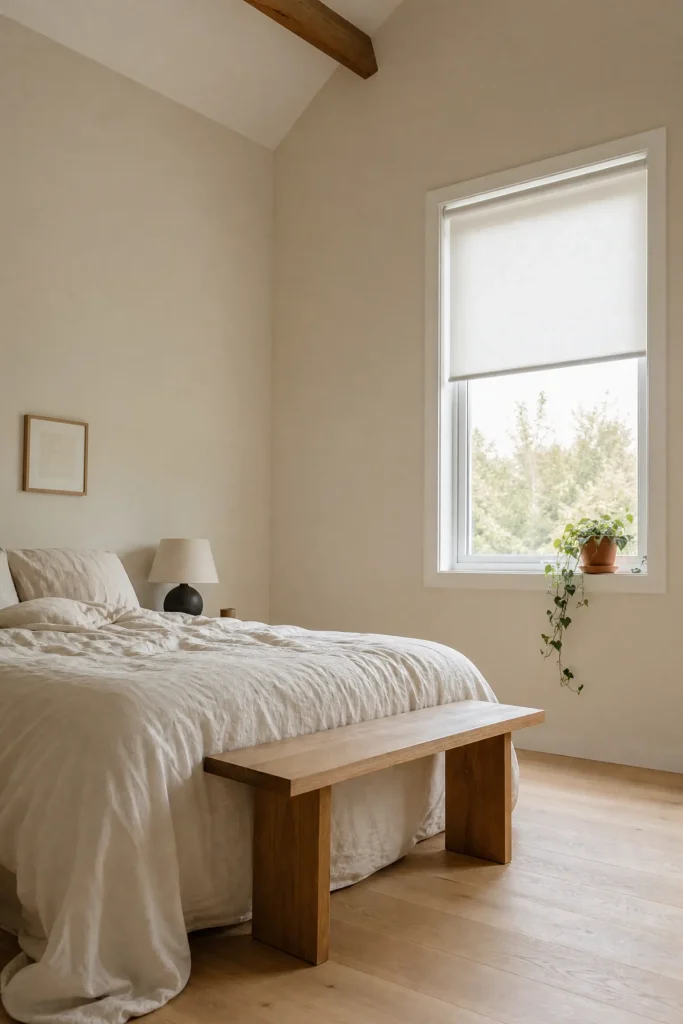
One of the most effective things you can do in a minimalist bedroom is commit to a single warm white across all four walls, the ceiling, and even the trim. Not a stark, blue-toned white, but something with a hint of cream or yellow, like Benjamin Moore White Dove or Farrow and Ball Pointing. In practice, this works best because the eye has nowhere to snag, which creates a genuine sense of calm rather than emptiness. Pair it with linen bedding in an almost-matching tone and let the textures do all the visual work. Add a single piece of warm-toned wood furniture, a nightstand or a small bench at the foot of the bed, and the room immediately feels grounded rather than clinical. This approach is mid-range in cost since the investment is mostly in quality paint and bedding rather than furniture.
Designer Note: Avoid cool whites like Chantilly Lace in north-facing rooms. They can read as bluish and cold without direct sunlight.
2. Warm Greige as a Base
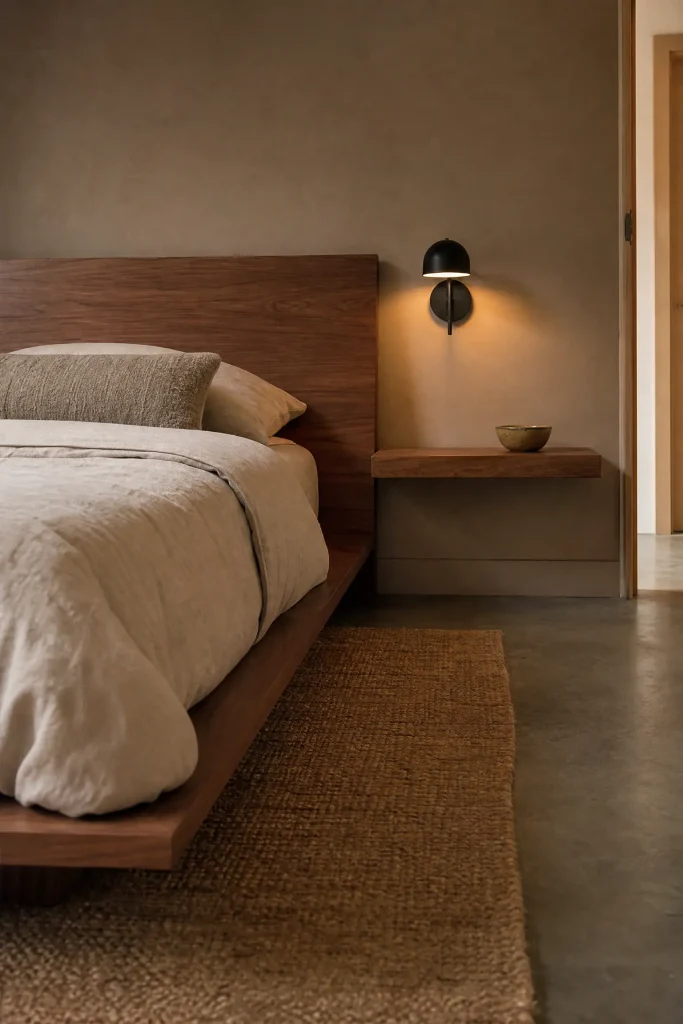
Greige, the blend of gray and beige, has been a staple of professional interior design for good reason: it is genuinely neutral without the starkness of pure gray and the yellow undertones of standard beige. A warm greige like Sherwin-Williams Accessible Beige or Agreeable Gray makes a bedroom feel cohesive and settled, especially when you bring in natural materials like jute, unfinished oak, and cotton canvas. In terms of furniture, low-profile pieces in matte black or brushed walnut work very well against a greige backdrop because they add definition without creating visual noise. Layer in a cream-colored duvet with a single textured throw in oatmeal or warm taupe, and you have a room that looks curated without looking try-hard. This palette is honest in that it works in most lighting conditions, though rooms with very limited natural light may want to test it first.
Designer Note: Greige reads differently under warm versus cool lighting. Always check your paint sample under the same bulb type you plan to use in the room.
3. Soft Sage Green Accent Wall
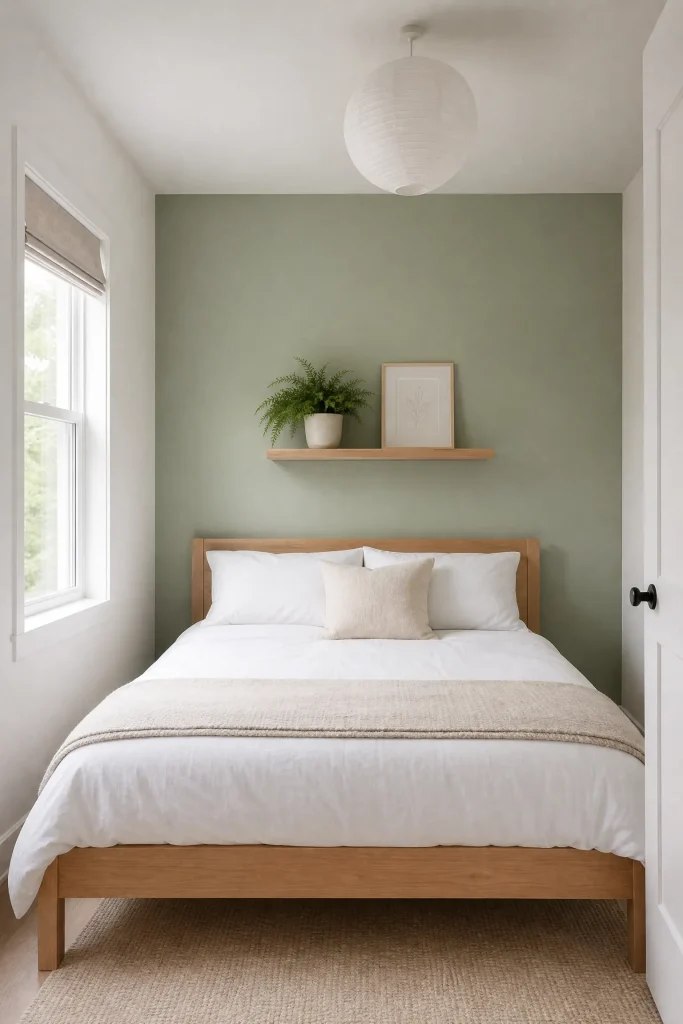
If you want color without breaking the minimalist feel, a single sage green accent wall behind the bed is one of the most approachable options available right now. Sage is muted enough to read as a neutral in lower light while still giving the room a distinct personality. Colors like Farrow and Ball Mizzle or Behr Dusty Miller work particularly well. The key to keeping this minimalist is restraint: the other three walls stay white or off-white, the bedding stays in creams and warm whites, and the only accessories are one or two simple pieces, maybe a small ceramic lamp and a linen cushion in a slightly deeper green. On the furniture side, natural oak or light beech wood frames pair with sage in a way that feels almost Scandinavian, which is one of the most referenced aesthetics in minimalist bedroom design.
Designer Note: Sage green can look muddy under warm yellow light. Use a cooler 3000K bulb on the accent wall side to keep the color clean.
4. Tonal Charcoal for a Moodier Take
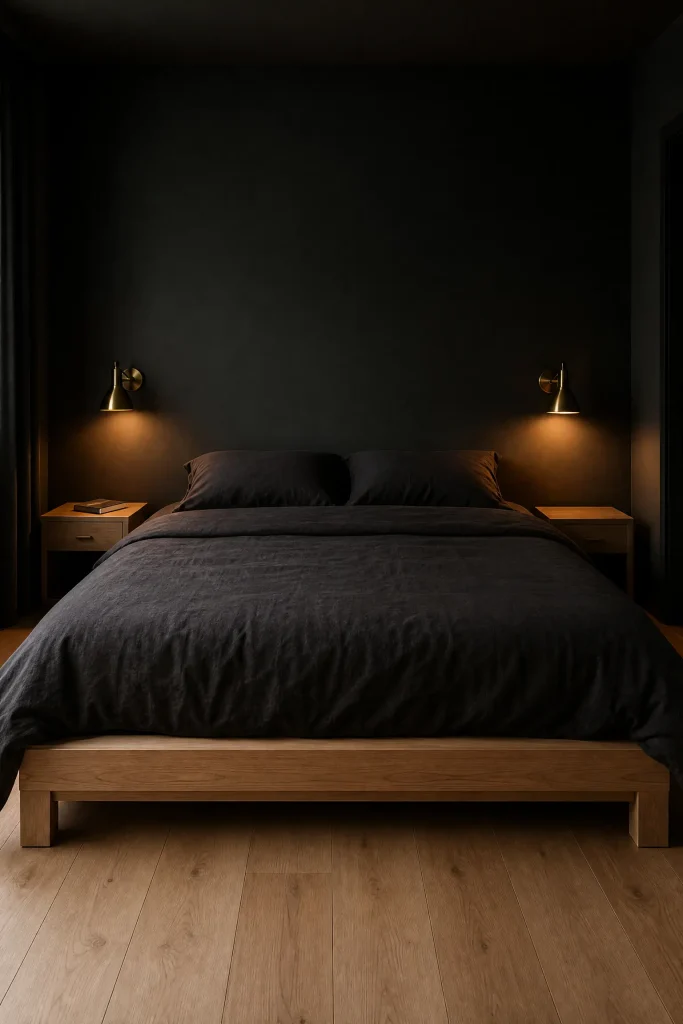
Minimalism does not have to mean light. A deep charcoal bedroom, done correctly, can feel just as calm and edited as a white one. The trick is to keep the tonal range tight: charcoal walls, dark linen bedding in a similar depth, and very few accessories. What breaks the look is mixing too many different darks, so stick to one or two tones at most. Furniture in this kind of room works best when it is also dark or in a very light contrast, like natural pale pine against near-black walls. Lighting becomes especially important here: wall sconces with a warm amber glow rather than overhead lighting make a charcoal bedroom feel genuinely cozy rather than cave-like. This is more of an investment look because the walls will need multiple coats of quality paint and the lighting setup matters more than usual.
Designer Note: This look works best in bedrooms with reasonable ceiling height. In a low-ceiling room, deep charcoal walls can feel heavy and compressive.
Furniture and Layout Ideas
5. The Low Platform Bed as Focal Point
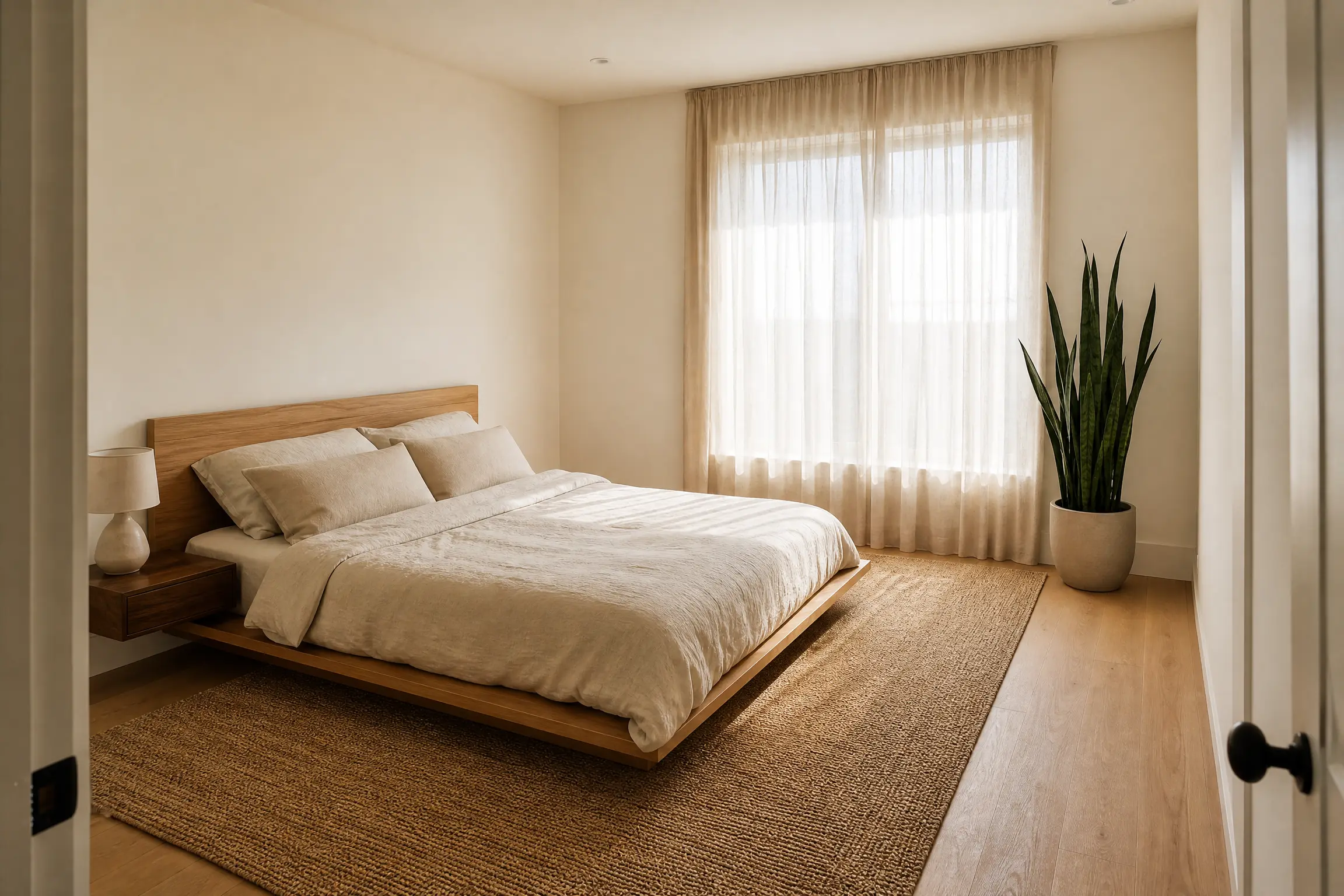
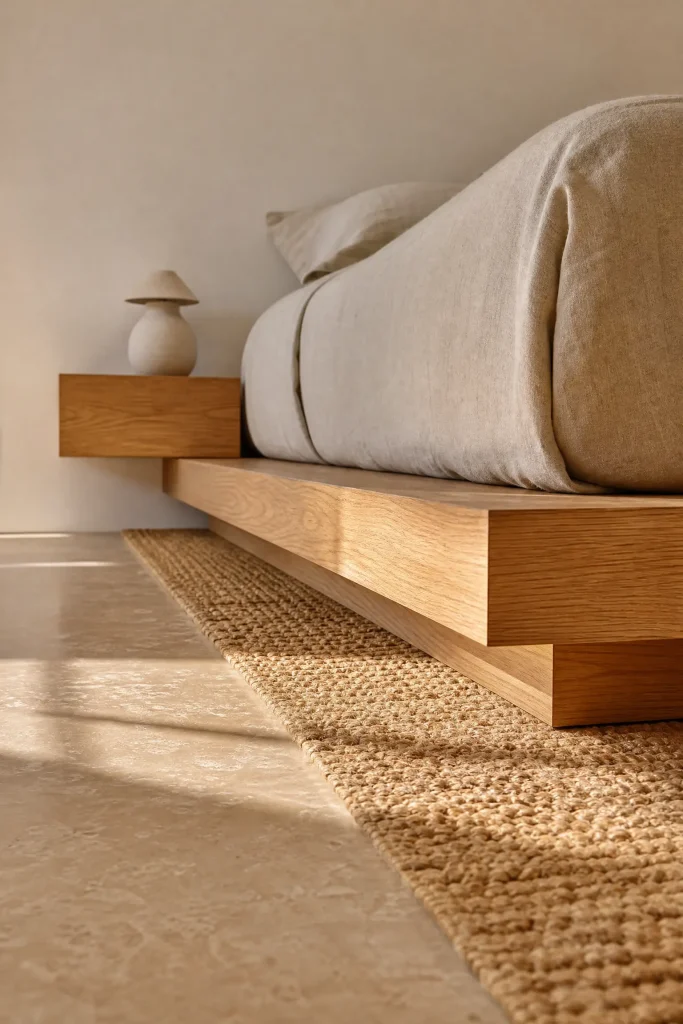
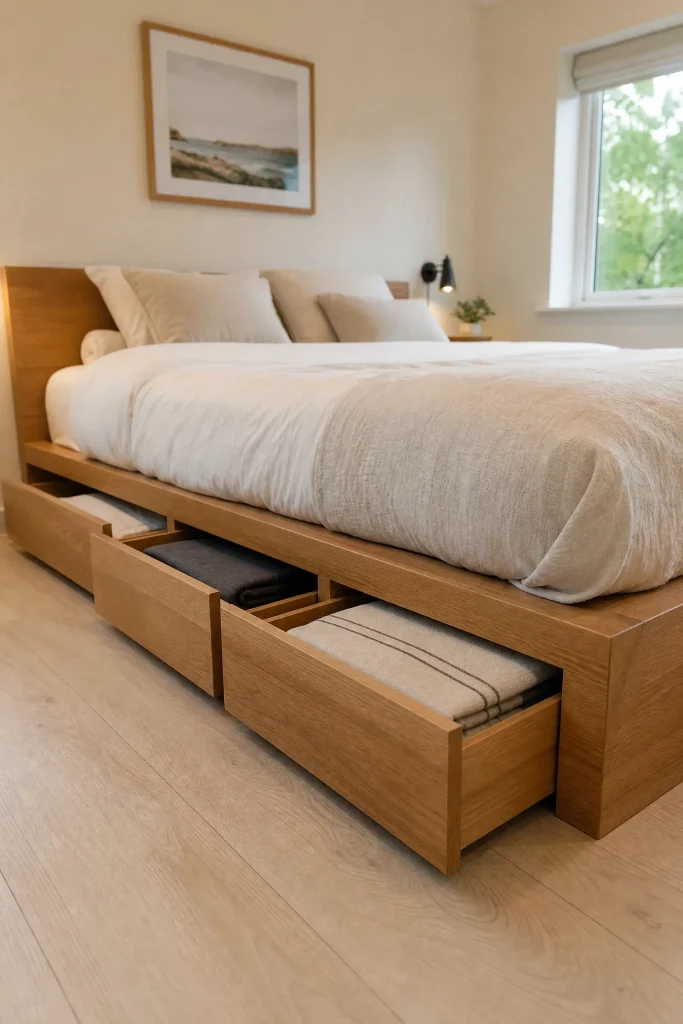
A low platform bed, sitting close to the floor with no visible legs and a simple upholstered or wood frame, is the foundation of most well-executed minimalist bedrooms. It reduces visual weight immediately and makes the ceiling feel taller than it actually is. In terms of materials, a solid ash or walnut platform frame in a matte finish reads as natural and grounded. Keep the bedding simple: a single fitted sheet, a plain duvet cover in cotton percale or linen, and two pillows maximum. The visual weight of the room drops significantly when you take away the boxspring height and the ornate headboard. In smaller rooms, this approach also creates more usable floor space visually, even without changing the square footage. This is a mid-range to investment-level piece, but it does the job of multiple accessories when done well.
Designer Note: If you choose a low bed, make sure your bedside lighting comes from wall-mounted sconces rather than floor lamps. The proportions matter more than most people realize.
6. Built-In Storage Instead of a Wardrobe
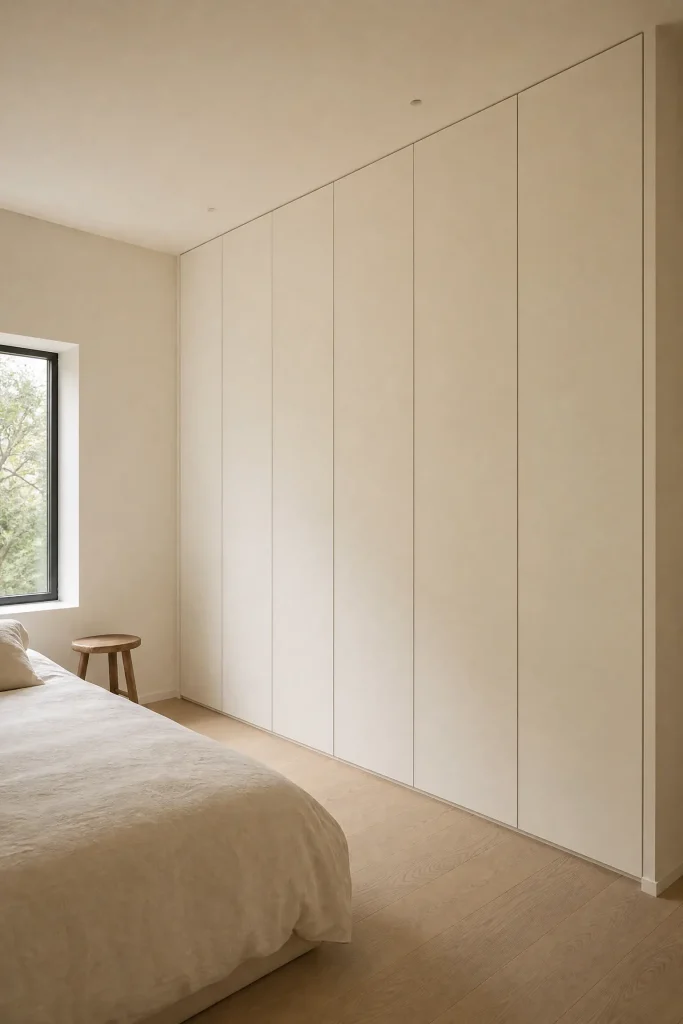
One of the biggest visual differences between a cluttered bedroom and a truly minimalist one is how storage is handled. Freestanding wardrobes, even stylish ones, create visual mass and take up floor space in a way that built-in storage does not. Floor-to-ceiling built-ins painted in the same color as the wall essentially disappear, making the room feel larger and more resolved. In practice, this works best with push-to-open mechanisms rather than visible handles, which removes another layer of visual noise. If a full built-in renovation is outside your budget right now, a more affordable alternative is to use IKEA PAX wardrobes with custom fronts from companies like Superfront, which can achieve a very similar effect at a fraction of the cost.
Designer Note: When painting built-ins the same color as the wall, use the same finish on both to avoid the door frames catching the light differently.
7. A Floating Nightstand for Visual Space
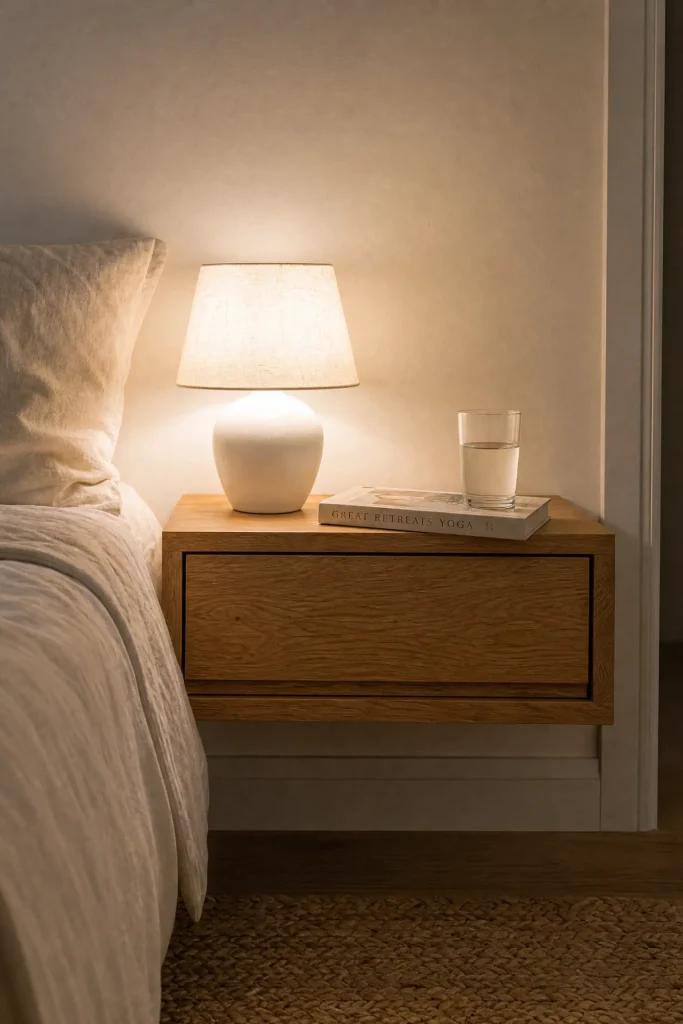
Wall-mounted floating nightstands are one of the easiest swaps that makes an immediate difference in a minimalist bedroom. They free up the floor plane, which makes cleaning easier and the room look airier, and they can be set at exactly the right height for your bed rather than whatever a standard nightstand dictates. In terms of material, solid oak or walnut with a simple shelf and one small drawer is all you need. Keep the surface to a maximum of three items: a lamp, a book, and maybe a small glass of water. The moment a nightstand becomes a catch-all for chargers and receipts and whatever was in your pockets, the whole room loses its calm. This is a genuinely budget-friendly upgrade when you factor in that a floating shelf with a bracket can cost far less than a furniture-store nightstand.
Designer Note: Mount your floating nightstand at mattress height plus two inches. This is the sweet spot for arm reach without having to lift your head from the pillow.
8. A Single Accent Chair, Nothing More
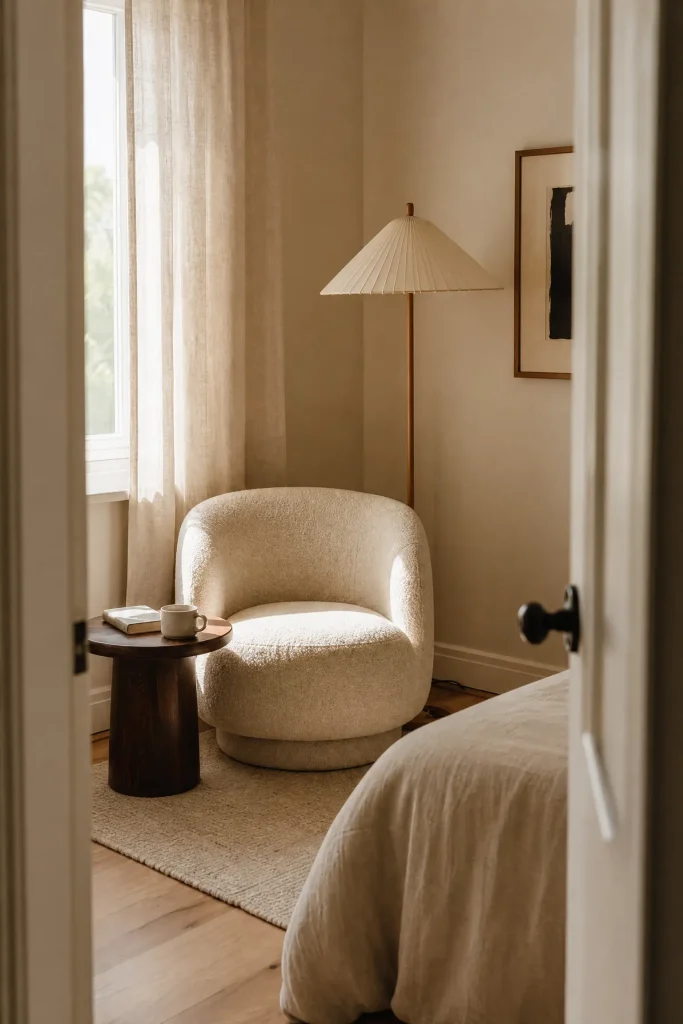
If your bedroom has the space for a seating area, resist the urge to add a full arrangement. One well-chosen chair is all a minimalist bedroom needs, and it should earn its place by being both beautiful and genuinely used. A boucle armchair in off-white or warm gray, a simple rattan occasional chair, or a leather reading chair in tan all work well depending on the overall palette. Position it near a window with a small floor lamp beside it and that corner becomes a fully functioning reading spot without adding clutter. What does not work in this context is a chair that becomes a surface for clothes. If that happens in your space regularly, consider whether the chair is actually serving a purpose or just occupying space out of habit.
Designer Note: Scale matters here. A chair that is too large for the room will dominate the space. Measure the area carefully and aim for a chair with a footprint no larger than 28 by 28 inches for most bedrooms.
9. The Japandi Dresser
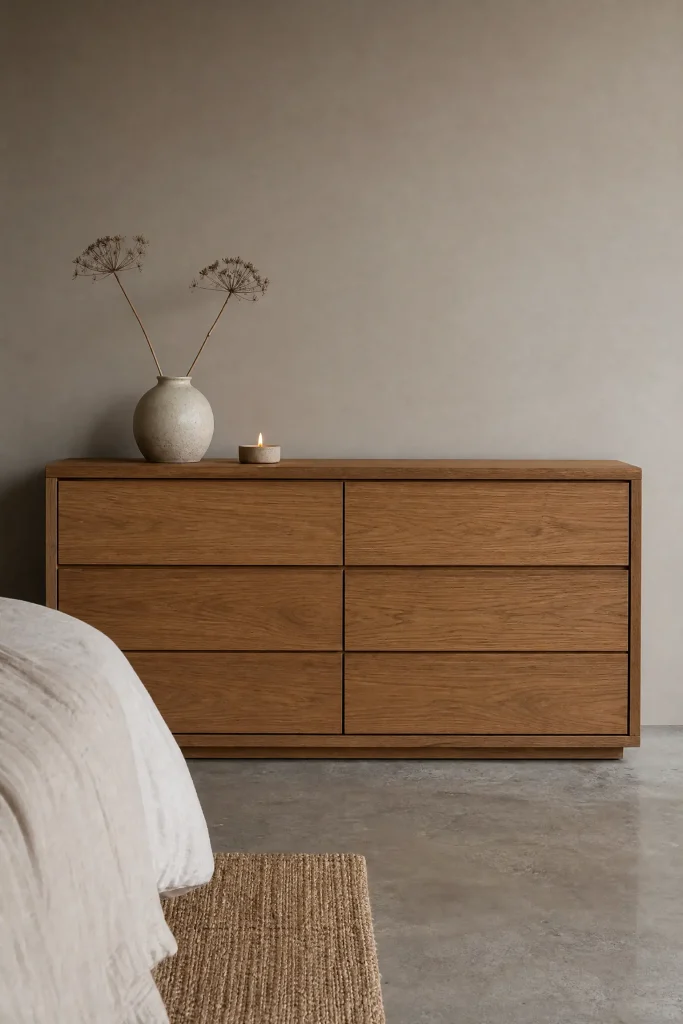
Japandi, the blend of Japanese and Scandinavian design principles, has become one of the most consistently referenced styles in minimalist interior design over the past few years, and for good reason: it is functional, warm, and honest about materials. A Japandi-style dresser is typically low, wide, and made from solid wood with simple bar handles or no handles at all. Brands like Article, HAY, and Muuto make versions that translate well into real home bedrooms rather than just editorial shoots. The appeal in a minimalist context is that a single piece like this can serve as both storage and a display surface for one or two meaningful objects, a small plant, a candle, a ceramic bowl, without the surface feeling busy.
Designer Note: Keep the dresser surface to a maximum of three objects. Once you cross that threshold, the visual calm of the piece starts to work against you.
Lighting Ideas
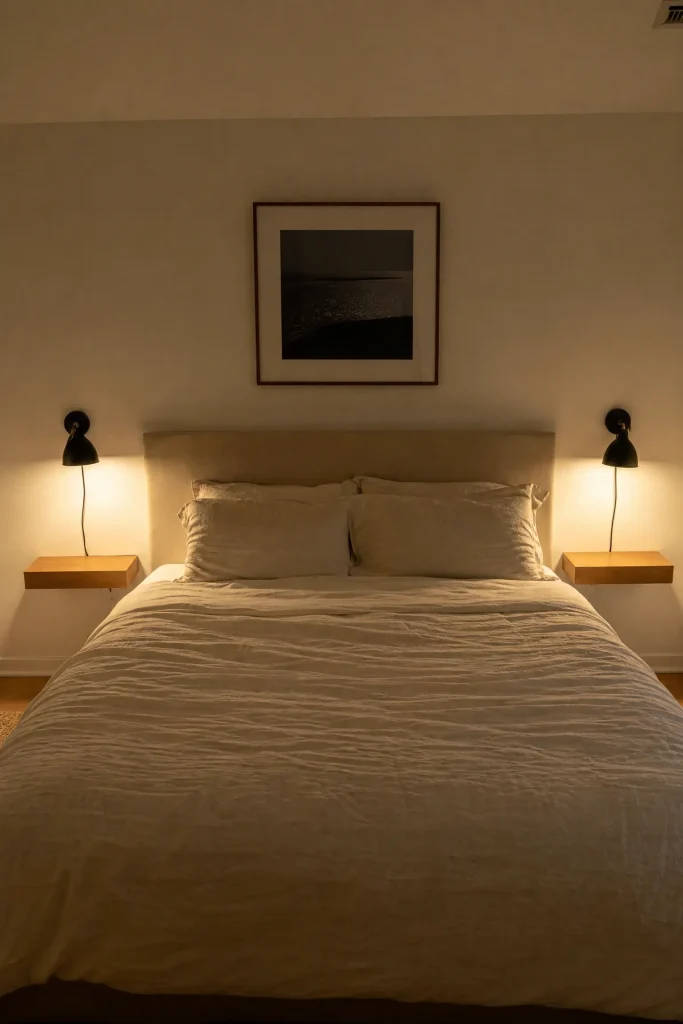
10. Wall Sconces Instead of Table Lamps
Swapping bedside table lamps for wall-mounted sconces is one of the single most effective changes you can make to a minimalist bedroom. It frees up the nightstand surface, removes cords from the visual field, and gives you better task lighting for reading because the light source is closer to your eye level when you are propped up in bed. In terms of style, simple brass or matte black plug-in sconces work well and do not require an electrician, making them a genuinely accessible option. Brands like Rejuvenation and Schoolhouse Electric offer clean, minimal versions that are well-proportioned for a bedroom context. For the bulb, go with a 2700K warm white at around 40 watts equivalent, which gives off the kind of glow that feels amber and relaxed rather than sharp.
Designer Note: Position sconces so the center of the shade sits roughly at shoulder height when you are sitting up in bed. Too high and they will glare; too low and they will not provide enough reading light.
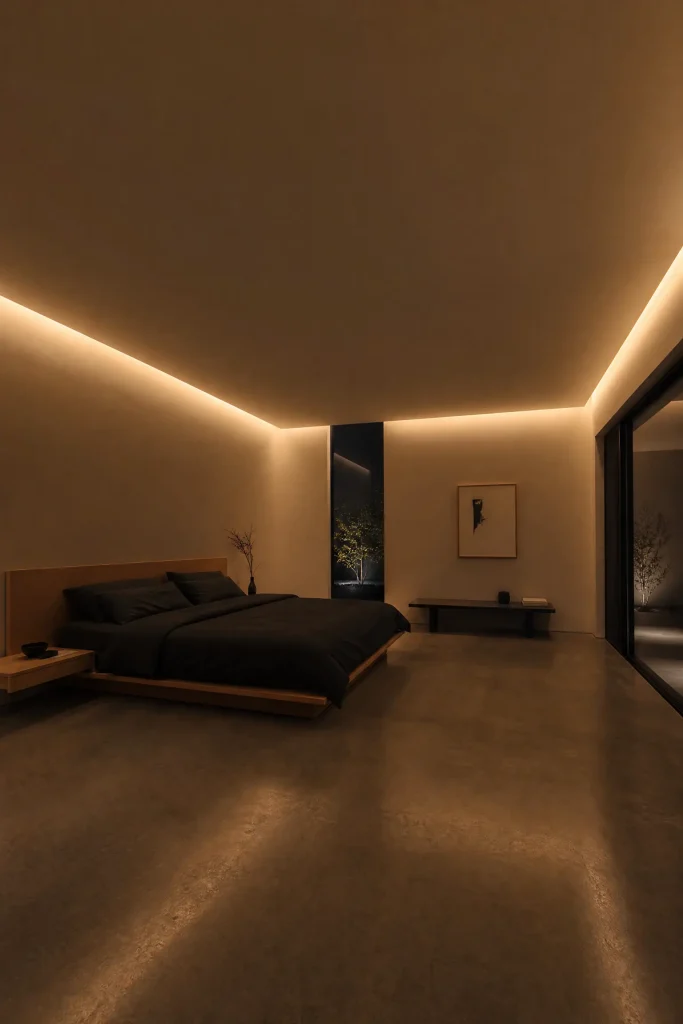
11. Cove Lighting for Soft Ambiance
Cove lighting, where LED strip lights are tucked into a recessed ledge near the ceiling and the light washes up rather than pointing downward, is something you see frequently in professionally designed minimalist bedrooms because it creates a glow around the perimeter of the room without any visible light source. It removes the harshness of overhead fixtures entirely and makes the ceiling feel like it is floating. In practice, this is more of a renovation-level upgrade since it requires a dedicated channel built into the ceiling or upper wall. However, a more affordable version is to run LED strips along the top inside edge of a bed frame or headboard, which gives a similar ambient glow at a fraction of the cost. Use a 2700K or 3000K strip and connect it to a dimmer.
Designer Note: Avoid LED strips with a yellow-orange tint. Stick to 2700K to 3000K for a clean warm glow that does not look cheap.
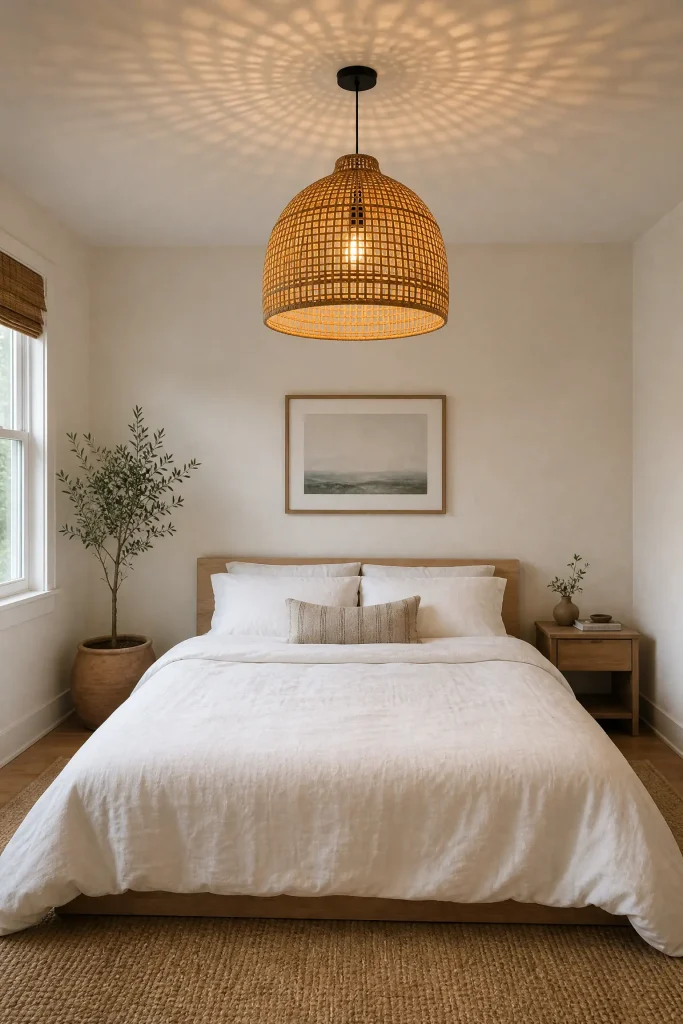
12. A Statement Pendant Over the Bed
When the rest of a minimalist bedroom is quiet and edited, a single pendant light hung above the center of the bed becomes a genuine focal point. This works particularly well with a low platform bed because the pendant can drop lower without feeling overwhelming. Woven rattan pendants, matte black dome lights, and simple blown glass orbs all work in different ways: rattan adds texture and warmth, matte black adds definition, and glass keeps things light and airy. The key is to hang a single pendant, not two smaller ones, because symmetry in minimalist spaces can tip into something that feels too deliberate. One pendant hung slightly off-center is actually more interesting visually and feels more natural.
Designer Note: Hang the pendant so the bottom of the shade is at least 7 feet from the floor if you tend to sit up or move around in bed. Lower is fine for decorative purposes only if you know you will not be hitting it.
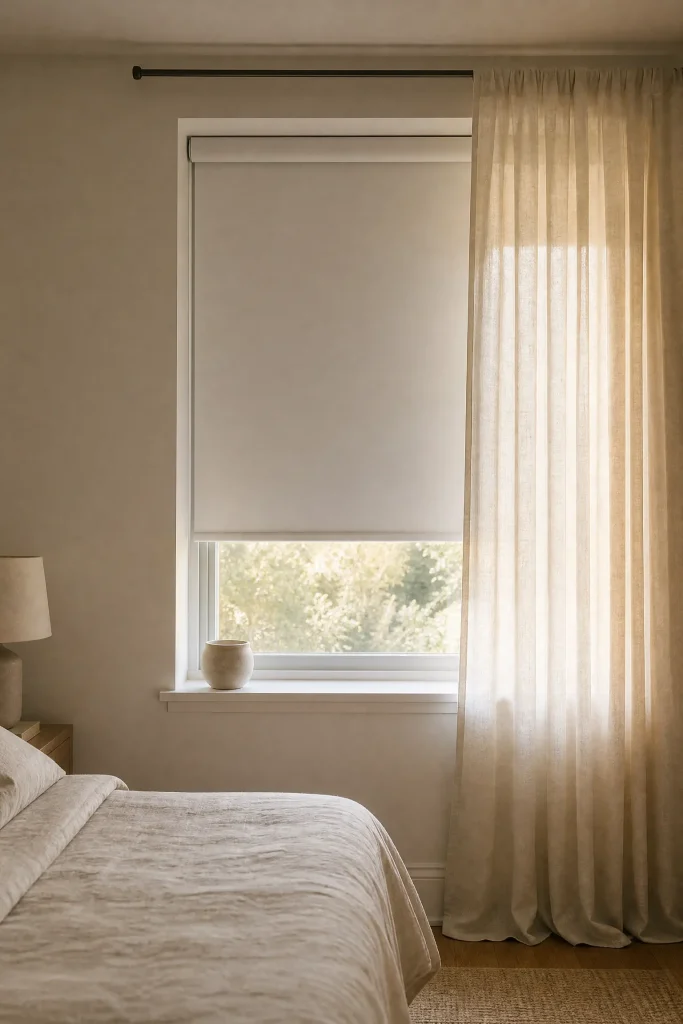
13. Blackout Blinds with Sheer Layers
Layered window treatments are not usually the first thing people think of in a minimalist context, but done correctly they are one of the most functional upgrades a bedroom can have. The idea is a roller blackout blind fitted inside the window recess for complete light control, paired with a simple sheer linen panel that hangs outside the recess. During the day the blind goes up and the linen panel softens the incoming light. At night the blind comes down for complete darkness. This setup eliminates the need for heavy curtain fabric, bulky hardware, and elaborate rod systems. Keeping both layers in a similar tone, usually off-white or warm cream, means the window does not become a visual disruption in the room.
Designer Note: Order your blackout blinds about 5mm narrower than the window recess on each side to prevent light gaps at the edges.
Texture and Materials Ideas
14. Linen Bedding as the Main Texture
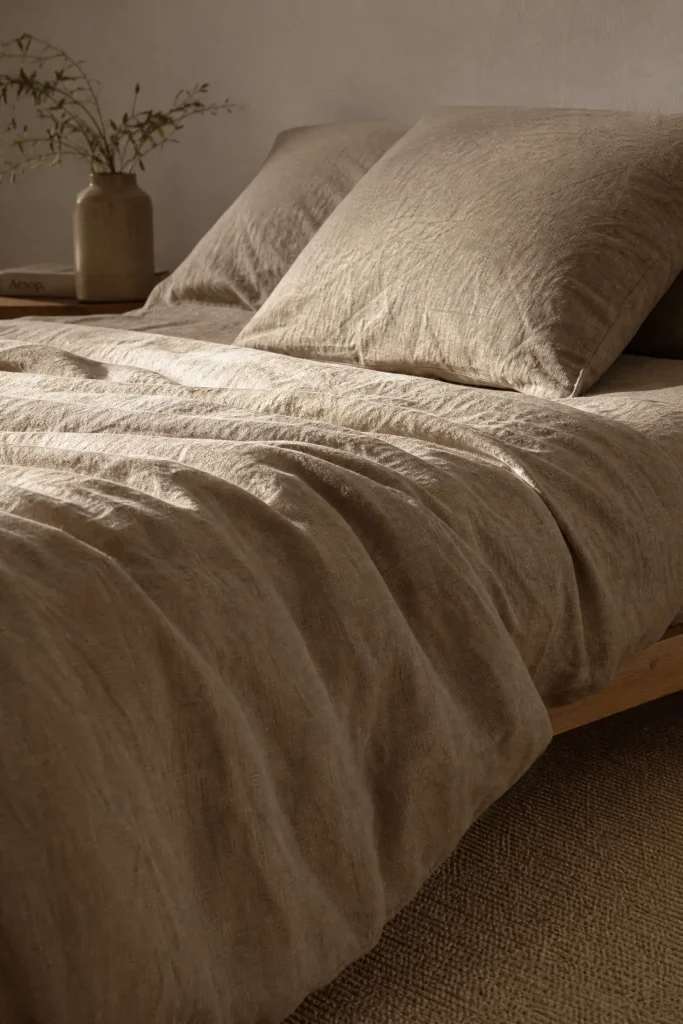
Linen is one of those materials that does the heavy lifting in a minimalist bedroom because it adds texture, warmth, and a kind of casual elegance without requiring any effort. Unlike smooth cotton percale, which can look slightly sterile in a minimal room, linen has a natural rumpled quality that makes a made bed look inviting rather than stiff. Go for a single duvet cover in a warm neutral, stone, oat, or pale clay, and skip the decorative pillows entirely or limit yourself to two sleeping pillows in matching shams. One of the things that works really well here is choosing a linen brand that offers a stone-washed finish, since this gives the fabric a softer, more lived-in feel from the first wash. Brands like Cultiver, Parachute, and Rough Linen are worth looking at in the mid-range to premium category.
Designer Note: Linen wrinkles are part of the appeal. Resist the urge to iron it. The natural creases are what make it feel warm rather than showroom-perfect.
15. A Wool or Jute Area Rug
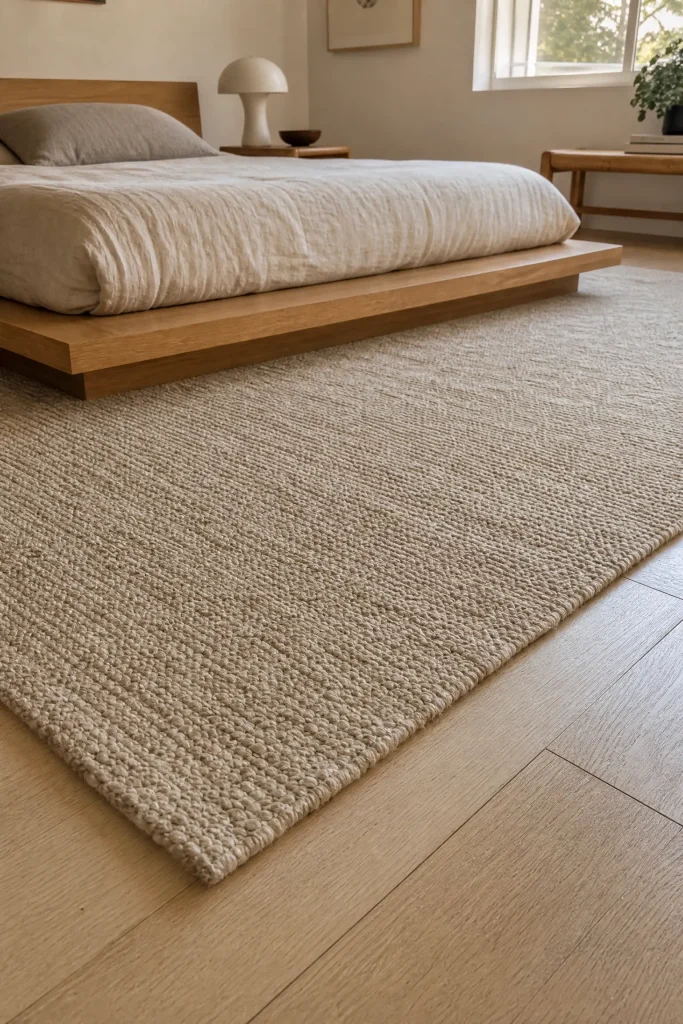
A rug is one of the most powerful tools in a bedroom for creating warmth and defining the space without adding furniture. In a minimalist bedroom, the rug should be large enough to extend at least 18 inches beyond the sides and foot of the bed, which is a common mistake people make when they go too small. A natural fiber rug in jute, sisal, or a woven wool blend adds texture that a hard floor simply cannot provide, and it softens the acoustic quality of the room as well. For a truly minimal look, go for a flat-weave or low-pile option in a single tone rather than a patterned rug. A hand-knotted wool rug in natural undyed fibers, often called an organic or natural rug, is an investment but it gets more beautiful over time and never really dates.
Designer Note: Jute and sisal are honest materials but they can feel rough underfoot if your rug is very low quality. Try before you buy if possible, or go for a wool flat-weave if softness matters more.
16. Wabi-Sabi Ceramics as Decor
The Japanese concept of wabi-sabi, which finds beauty in imperfection and impermanence, translates beautifully into minimalist bedroom decor because it gives you permission to use natural, handmade objects without the room feeling precious or over-curated. A small handthrown ceramic vase on the dresser, a rough-edged stone dish on the nightstand for holding rings and small items, or a simple terracotta pot with a single stem plant are all examples of this approach. The key is that each piece should feel like it was chosen because it genuinely means something or works in some practical way, not because it fills a visual gap. In practice, three handmade ceramic pieces in a bedroom are almost always too many. One or two is usually the right number.
Designer Note: Look for ceramics at local pottery markets or on Etsy rather than mass-produced versions from home stores. The irregularity of handmade pieces is what makes them feel right in a wabi-sabi context.
17. Raw Wood Details
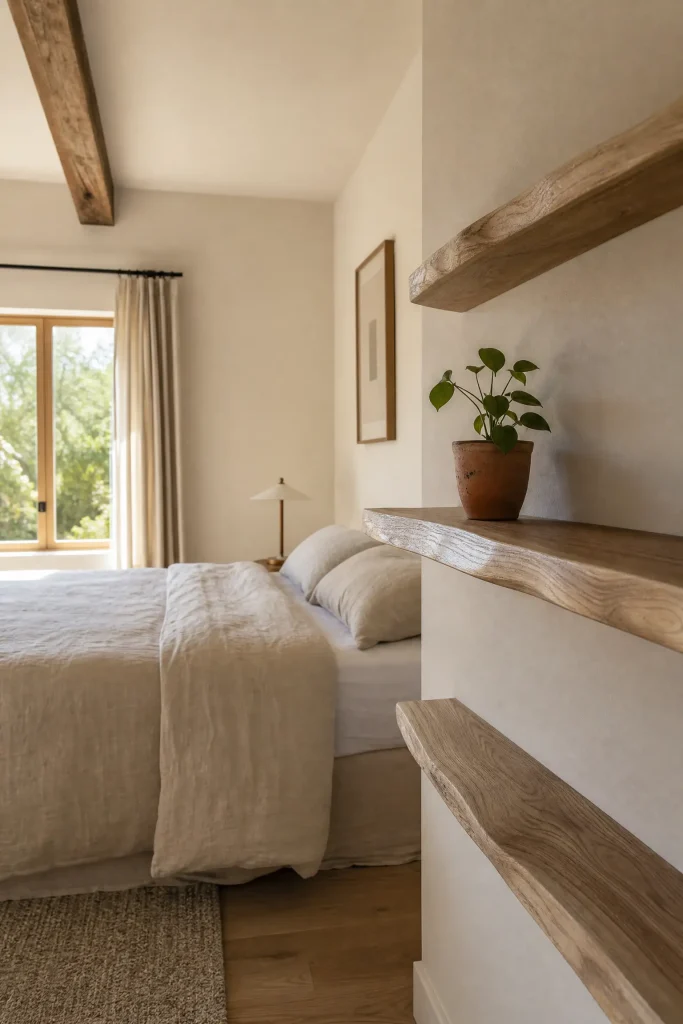
Wood is almost always the material that stops a minimalist bedroom from feeling cold, and the way it is finished matters as much as the species. Raw or lightly oiled wood, where you can still see the grain texture and the knots, reads as natural and warm in a way that lacquered or highly polished wood does not. In a bedroom context, this might be a simple oak bed frame with a matte oil finish, floating shelves in unfinished pine, or a turned wood lamp base on the nightstand. Lighter wood tones like ash, beech, and light oak work best in smaller rooms because they reflect light rather than absorb it. Darker woods like walnut and smoked oak are rich and beautiful but tend to work better in larger rooms where the visual weight can be balanced.
Designer Note: Avoid mixing more than two different wood tones in one room. The eye needs consistency to feel calm, and too many wood types create a kind of visual busyness that is hard to define but easy to feel.
Smart Storage and Organization Ideas
18. Under-Bed Storage Done Cleanly
Under-bed storage is one of the most underused resources in a bedroom, but the way it is implemented makes all the difference between a tidy space and one that looks chaotic the moment you glance at floor level. The cleanest version is a platform bed with integrated pull-out drawers, which keep everything hidden and allow for smooth access without needing to bend down and reach. If your current bed does not have built-in storage, low-profile fabric storage boxes in a neutral linen or canvas can work well as long as they are sized to stay within the shadow line of the bed frame. Avoid clear plastic bins here, since the contents become visible and create visual noise even from a standing position. Under-bed storage is best used for seasonal items: extra bedding, out-of-season clothing, or rarely used accessories.
Designer Note: Measure the clearance under your bed before buying storage solutions. Many platform beds have less than 6 inches of clearance, which rules out most standard under-bed boxes.
19. A Pegboard or Hidden Hook System
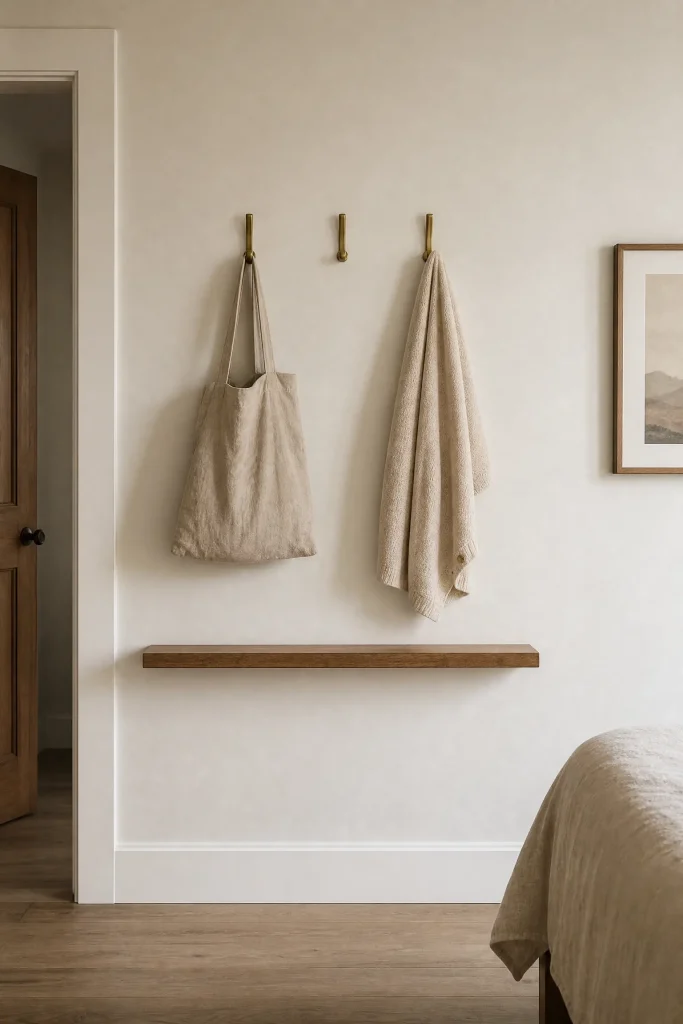
A minimal pegboard or a recessed hook panel installed inside a closet door or on a narrow wall section can eliminate the common problem of items ending up on chairs, door handles, and floor corners. In a minimalist bedroom, the goal is that every surface looks intentional, which means common items like bags, belts, and tomorrow’s outfit need a designated home that is out of sight. A painted pegboard in the same color as the wall it is mounted on is nearly invisible while being highly functional. For a cleaner version, individual matte black or brass coat hooks mounted in a simple horizontal line serve the same purpose with a more considered look. This is genuinely one of the most affordable upgrades on this list.
Designer Note: Limit your hook system to items you actually use daily. A hook that collects rarely worn items is just a more vertical pile.
20. A Minimal Desk Nook with Hidden Cables
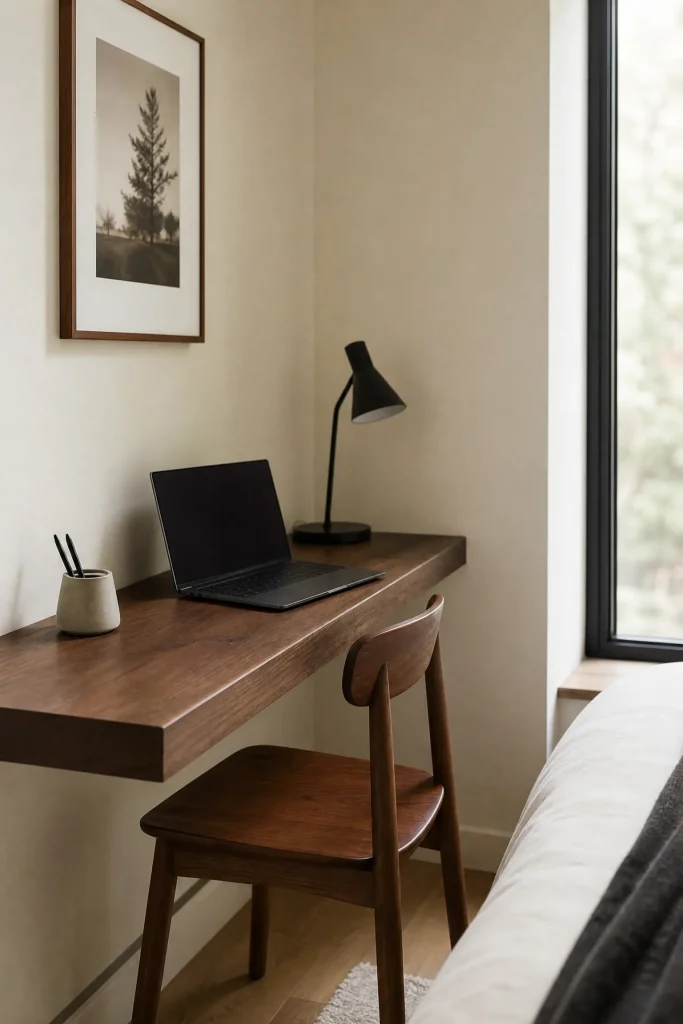
If your bedroom doubles as a workspace, the desk area is usually where the minimalist ideal breaks down fastest. Cables, chargers, notebooks, and small accessories accumulate quickly and are hard to manage without a deliberate system. The cleanest approach is a simple floating desk shelf in the same material as your other wooden elements, paired with a cable management box that sits on the floor and hides the power strip and cords entirely. A single monitor or laptop, one pen holder with no more than three or four items, and a small task lamp are all the surface needs. If you find yourself regularly having more than this on the desk, it is a sign that the desk is being used as storage, which requires a different solution rather than a bigger desk.
Designer Note: A wireless keyboard, mouse, and charger remove about 80% of visible cable clutter from a desk. It is one of the highest-impact low-cost changes for a minimalist workspace.
Plants and Nature Ideas
21. A Single Statement Plant
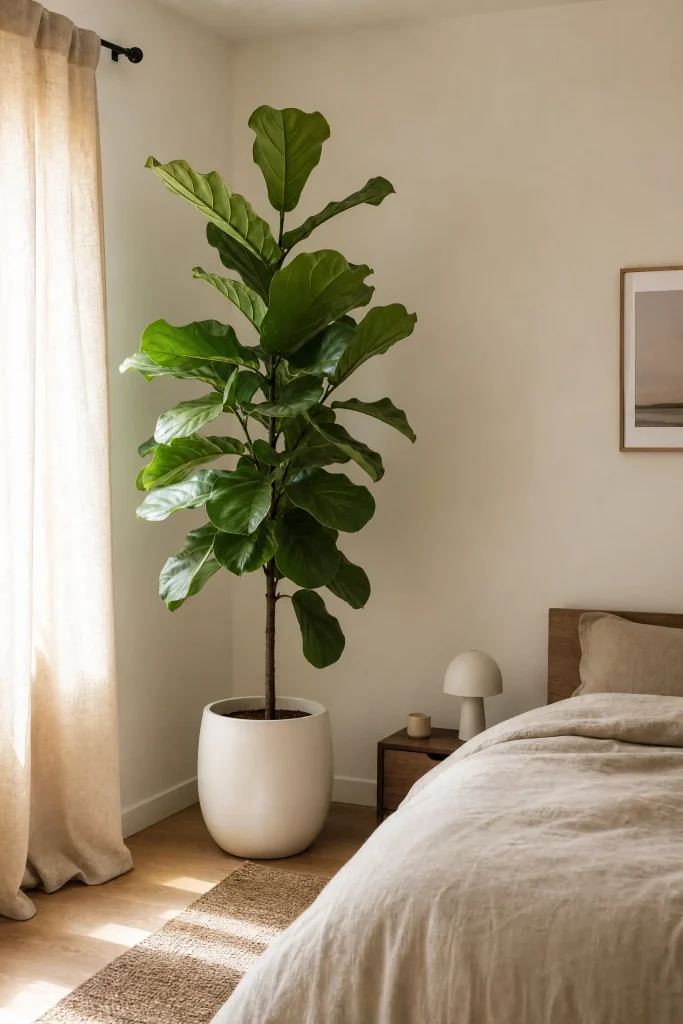
In a minimalist bedroom, one well-chosen plant does more than five smaller ones. A large fiddle-leaf fig in the corner, a tall snake plant beside the wardrobe, or a trailing pothos on a high shelf all command enough presence to make a real difference to the feeling of the room without requiring ongoing management of a collection. The pot matters as much as the plant: a simple terracotta pot, a matte black ceramic, or a woven basket planter all work well. Avoid decorative pots with patterns or bright colors since they pull attention away from the plant itself. From a practical standpoint, snake plants and ZZ plants are the most honest choices for a bedroom because they tolerate low light and infrequent watering without sulking.
Designer Note: Resist the temptation to add multiple plants once one is thriving. A single healthy plant is more impactful than several struggling ones.
22. Dried Botanicals for Low-Maintenance Texture
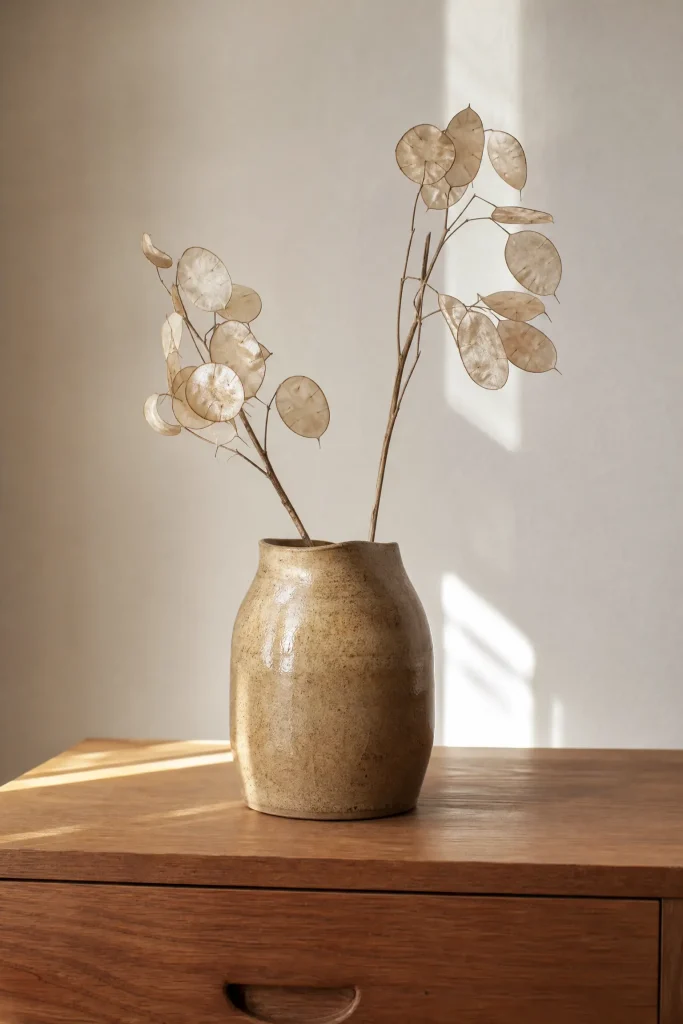
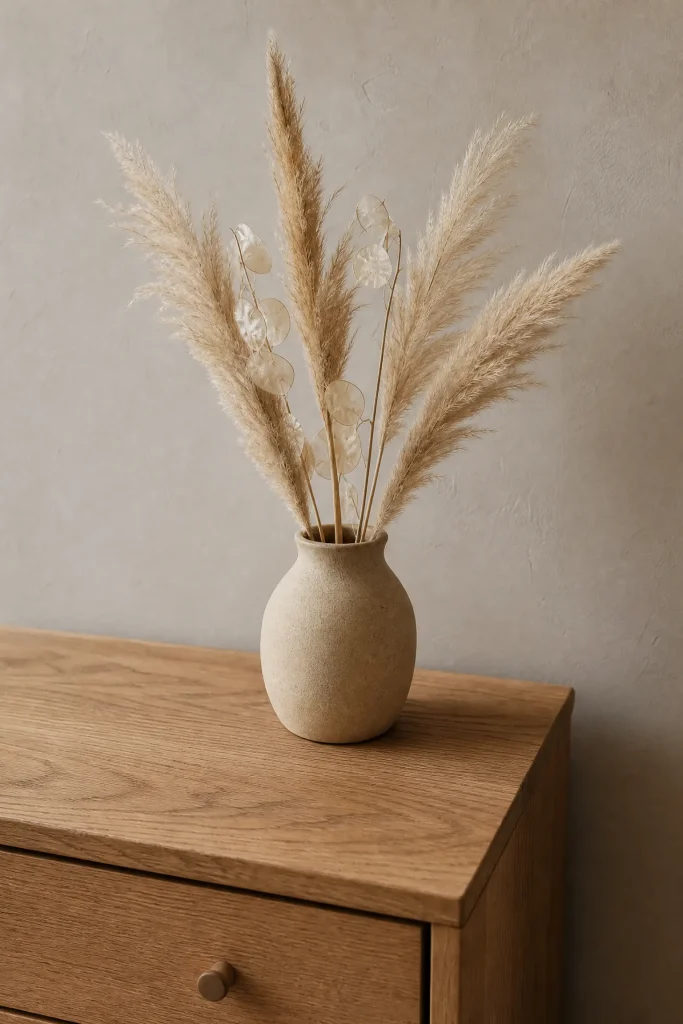
Dried botanicals have become a genuinely well-designed alternative to fresh flowers in minimalist bedrooms because they last indefinitely, require no maintenance, and add texture and warmth in a way that feels natural rather than artificial. A small bundle of dried pampas grass in a simple ceramic vase, a few stems of dried lunaria (honesty plant) on the dresser, or a single branch of dried eucalyptus hung above the bed frame all work in this context. The color palette of dried botanicals, dusty rose, warm beige, pale wheat, and muted sage, tends to complement the neutral tones of a minimalist bedroom very naturally. This is one of the most affordable options on this list, especially if you source botanicals from a local market or dry them yourself.
Designer Note: Avoid overcrowding a vase with dried flowers. Three to five stems in a narrow-necked vessel tends to look more intentional than a full bunch.
23. A Moss Wall Panel as Art
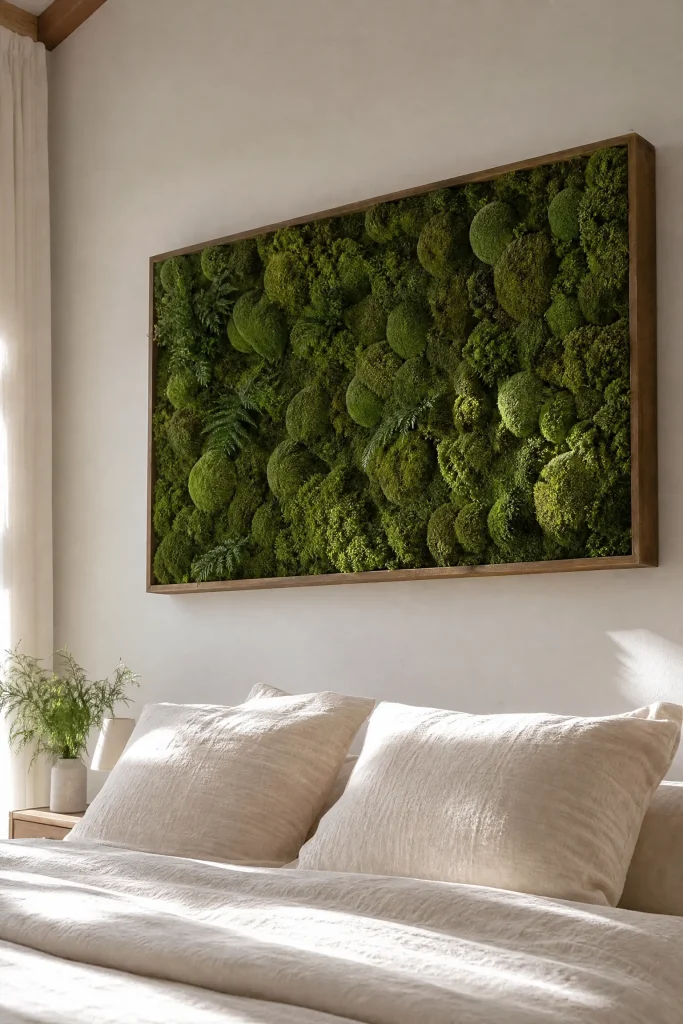
Preserved moss panels are one of the more unexpected ideas in minimalist bedroom decor, and they work because they solve two problems at once: the need for wall art and the desire to bring nature indoors, without requiring any maintenance at all. Preserved moss is treated so it retains its color and texture without water, soil, or light, which makes it genuinely practical for a bedroom. A simple rectangular panel in flat reindeer moss or a mix of textures can be mounted on the wall in the same spot where you might otherwise hang a print. In terms of color, natural green moss tones pair well with warm whites and greige walls, while sheet moss in a more golden-green tone works well against sage or clay-colored walls.
Designer Note: Preserved moss does best in moderate humidity. Very dry rooms can cause the moss to become brittle over time. A light misting once or twice a year helps maintain the texture.
24. Stone and Pebble Accents on the Nightstand
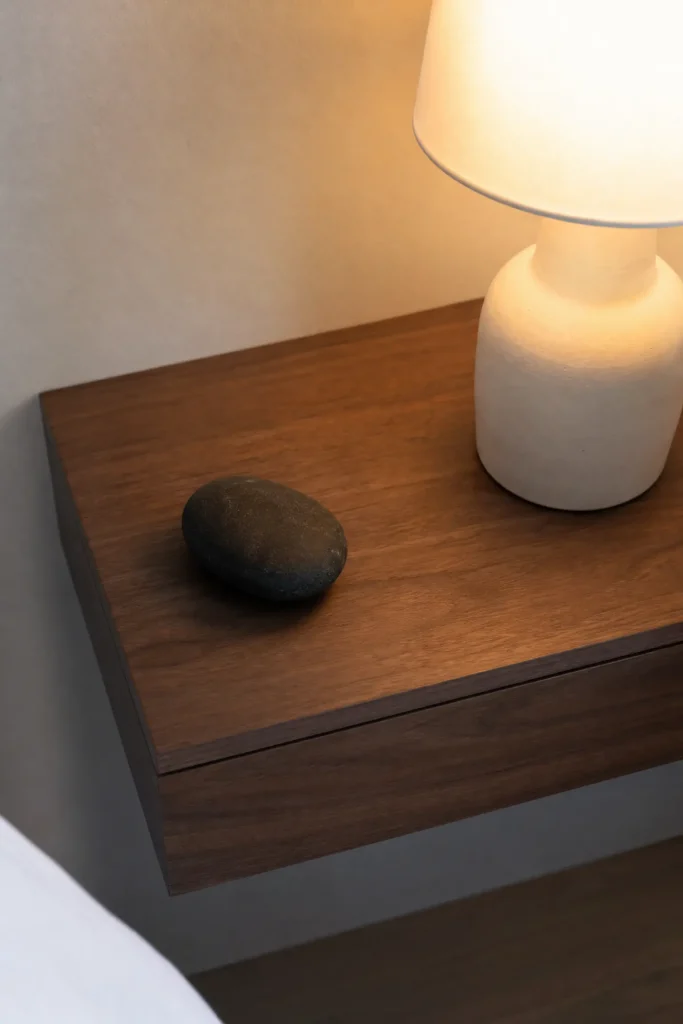
This is the smallest idea on the list but it is one of the most underestimated: a small collection of smooth river stones or a single piece of raw mineral on the nightstand creates a grounding, natural element that costs almost nothing and takes up almost no space. In wabi-sabi and Japanese-influenced interiors, natural objects like stones, seed pods, and driftwood are used specifically because they are honest and unprocessed, which aligns with the minimalist value of removing anything that feels performative. The key is to keep it to one or two pieces maximum. A single piece of quartz crystal, a smooth black river stone, or a small slice of agate in a neutral tone all work as quiet accents that add nature to the space without announcing themselves.
Designer Note: Treat your stone accent like a reset object. Some people find that placing it where they will see it first thing in the morning, alongside their lamp or phone, gives the nightstand area a more grounded, intentional feeling.
Pulling It All Together
The thing about minimalist bedroom decor is that it is less about having fewer things and more about being specific about what stays. Every idea in this article works on its own, but the ones that tend to make the most difference in real bedrooms are the ones that address multiple problems at once: a floating nightstand that frees up floor space and surface clutter, linen bedding that adds texture and warmth without requiring accessories, wall sconces that improve lighting and reduce cord mess. When you start thinking about your bedroom that way, through the lens of what each element actually does rather than how it looks in a product photo, the choices become much easier to make.
Start with one category, whichever feels most out of alignment with how you want the room to feel. Get that right before moving to the next. A minimalist bedroom is not built in a weekend; it is refined over time as you get clearer on what the space actually needs from you and what you need from it. The goal is a room that feels genuinely restful, the kind where you walk in and immediately exhale. That is entirely achievable, and these 24 ideas are a solid place to begin.
Frequently Asked Questions
What is the most important first step in creating a minimalist bedroom?
Before you buy anything or repaint anything, do a clear-out. Go through your bedroom and remove everything that does not belong there or that you genuinely do not use. Most minimalist bedrooms look better not because of what was added but because of what was taken away. Once the room is stripped back to the basics, you will have a much clearer sense of what actually needs attention.
Do minimalist bedrooms have to be white?
Not at all. White is popular in minimalist design because it reflects light and creates a sense of space, but warm greige, deep charcoal, soft sage green, and earthy clay tones all work just as well. The principle is a limited color palette, usually two or three tones at most, rather than a requirement for white specifically.
How do I add warmth to a minimalist bedroom without creating clutter?
Texture is the answer here. Layered textiles like a linen duvet, a wool throw, and a jute rug add warmth through material rather than through objects. Natural wood elements, even small ones like a wooden lamp base or a floating shelf, also do a lot of work. The warmth comes from the quality of the materials rather than the quantity of items.
What kind of lighting works best in a minimalist bedroom?
Layered lighting with separate controls is the professional standard. You want ambient light for the overall room, task lighting for reading, and some form of accent or mood lighting like a dimmer or LED strip for evenings. Wall sconces are particularly effective in minimalist bedrooms because they free up surfaces and provide better reading light than table lamps typically do.
How many decorative items should a minimalist bedroom have?
As a general rule, three to five meaningful objects in a minimalist bedroom is a comfortable range. This might be one plant, one piece of wall art, a ceramic vase, and a stack of two or three books. The moment surfaces start to look full, it is usually a sign that storage has not been fully addressed rather than that you have too many decorative items.
Can a minimalist bedroom work in a small space?
Minimalism actually works better in small spaces than in large ones because every square foot matters more. Low-profile furniture like a platform bed, wall-mounted storage, floating nightstands, and a single large mirror to reflect light are all particularly effective in compact rooms. The key principle is to keep the floor as clear as possible, since floor visibility is what makes a small room feel larger.