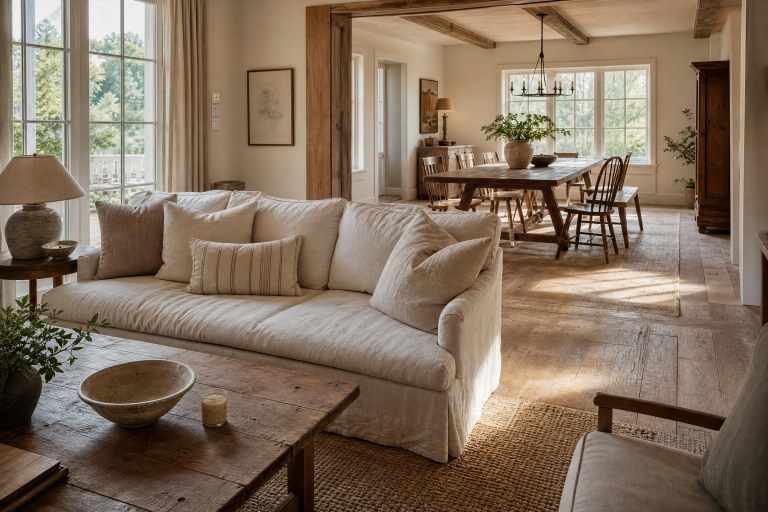
Farmhouse Living Room Looks That Feel Like Home
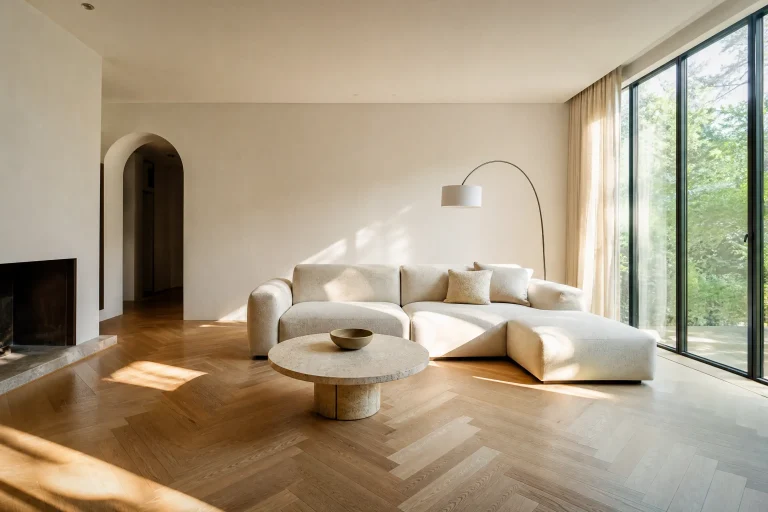
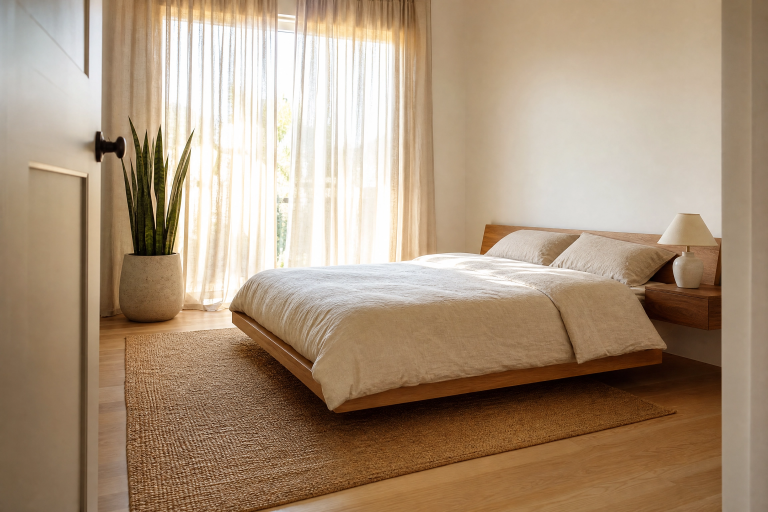
There is something about a well-done farmhouse living room that makes you want to kick off your shoes and stay a while. It is not about perfectly matched furniture sets or overly polished decor. It is about rooms that feel lived-in and layered, rooms that carry a little history while still being completely functional for everyday life. Farmhouse style has come a long way from the purely rustic aesthetic most people picture, and in recent years it has taken on a much broader range of expressions, from bright and breezy coastal farmhouse to moody dark farmhouse and the ever-popular Japandi-farmhouse hybrid that balances raw textures with clean lines.
Whether you are starting from scratch or just looking to refresh what you already have, the ideas in this guide cover every part of the room, from the walls and floors all the way through to the finishing details on your shelves. The goal is not to replicate a look you saw on a Pinterest board but to understand what makes farmhouse style actually work in a real home, so you can pick the elements that fit your space and your life. Some of these ideas are genuinely affordable; others are more of an investment. Either way, there is something here worth stealing.
The Foundation: Walls, Floors, and Ceilings
1. Shiplap Walls Done Right
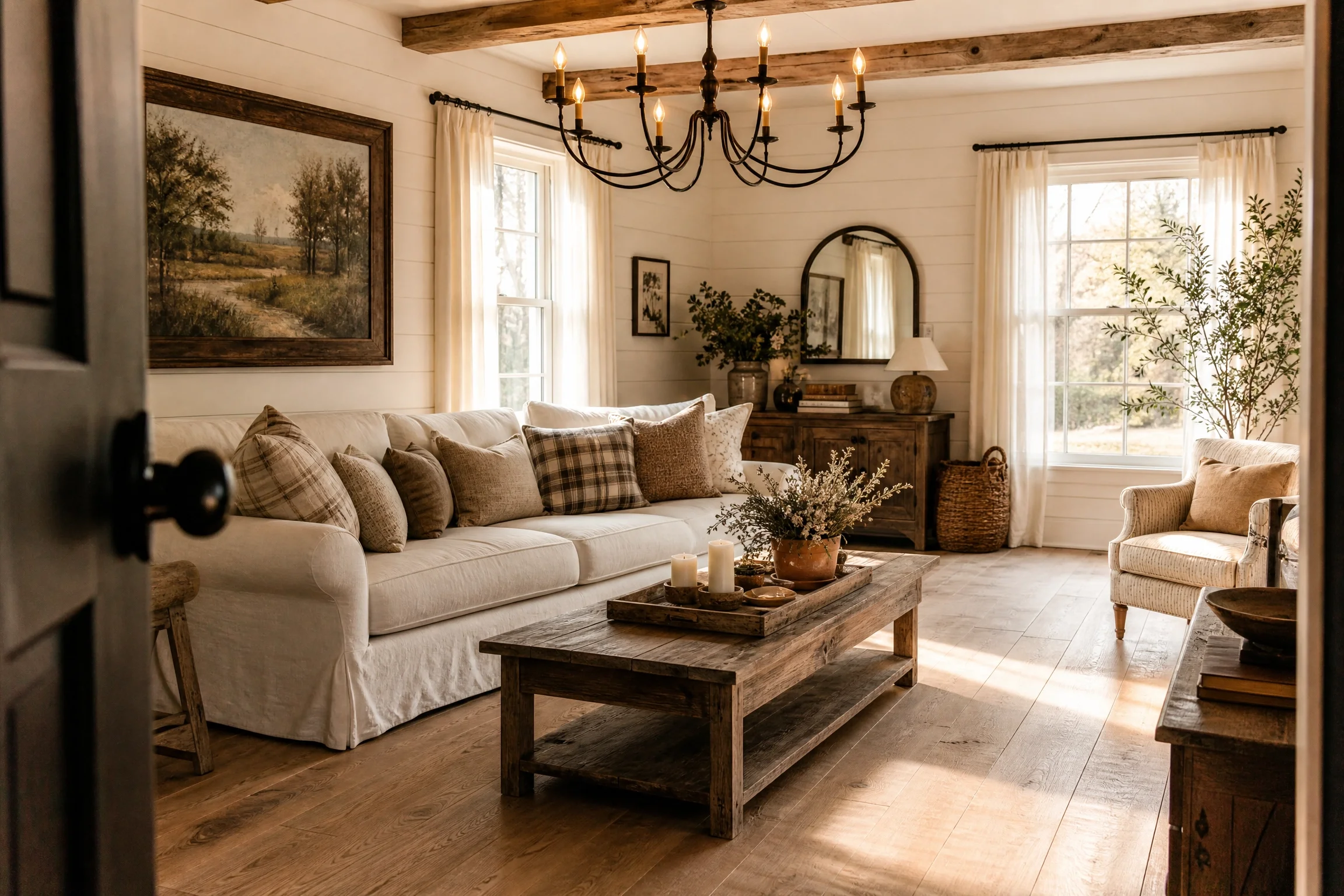
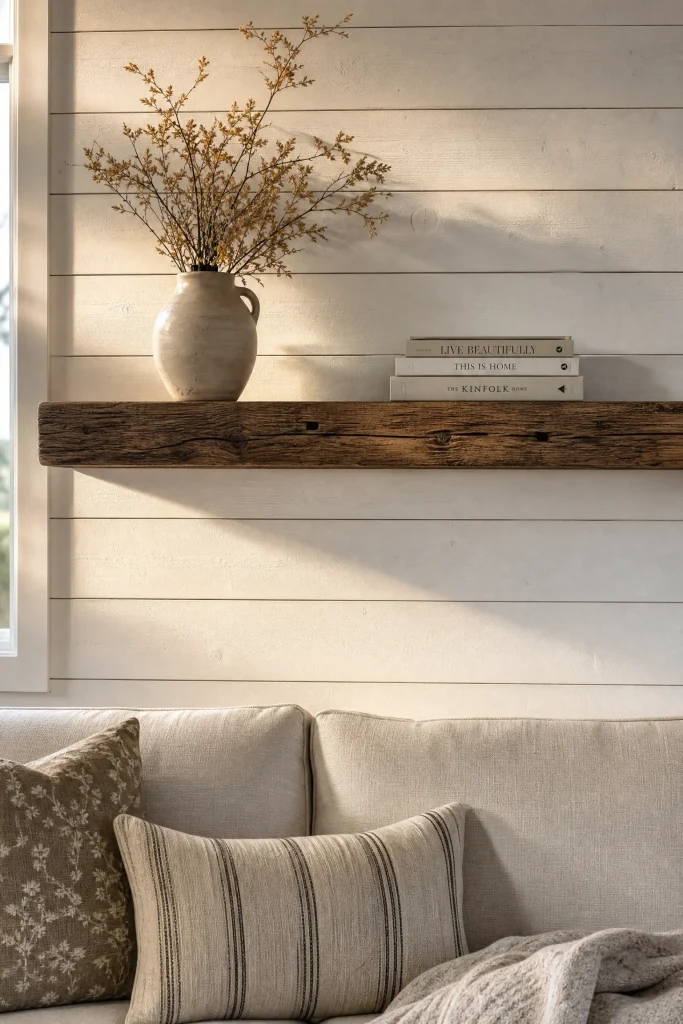
Shiplap is probably the most recognized element in farmhouse design, and it earns that reputation because it works so well at adding texture and visual interest without requiring much furniture or decor to feel complete. The key thing most people get wrong is covering every wall in a room, which can quickly make the space feel like a log cabin rather than a thoughtfully styled home. In practice, one shiplap accent wall behind a sofa or around a fireplace is almost always the stronger choice. White-painted shiplap paired with warm oak floors and linen upholstery creates a clean, airy look; if you want something moodier, try leaving shiplap in its natural wood tone or painting it a deep sage green for a more contemporary farmhouse feel. Budget-wise, real wood shiplap can run $2 to $7 per square foot, but MDF shiplap boards from home improvement stores cut that cost significantly. One honest note: shiplap requires properly leveled walls to install cleanly, so factor in prep work if your walls have any imperfections.
Designer Advice: Don’t feel pressure to paint shiplap white. A warm cream or greige tone reads as softer and more lived-in than a stark white, especially in rooms that get a lot of natural light throughout the day.
2. Exposed Wood Beam Ceilings
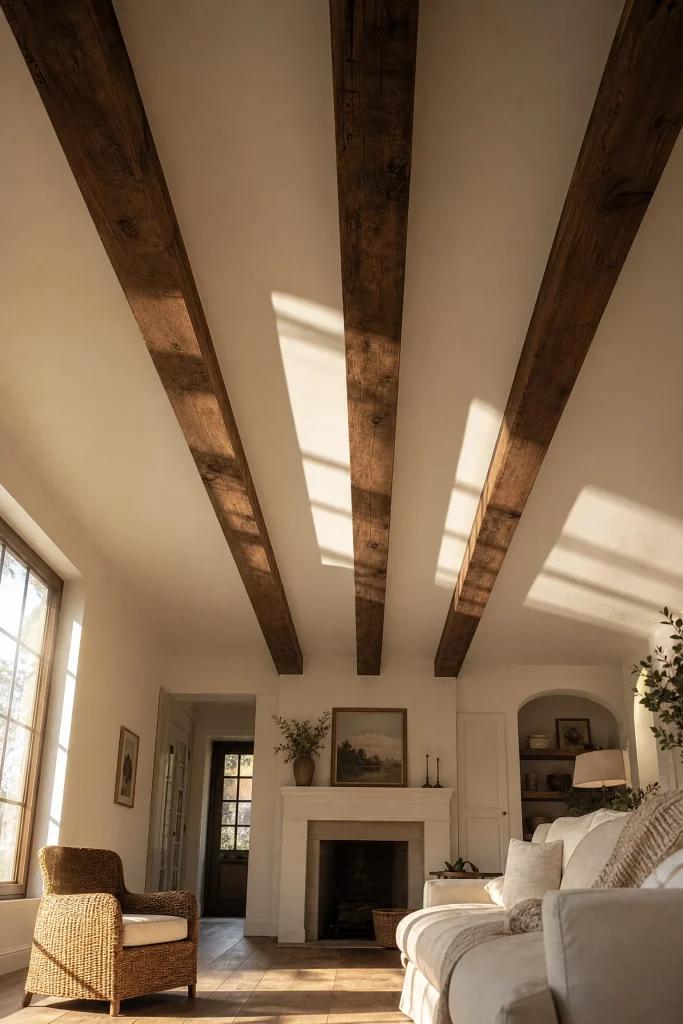
Nothing changes the scale of a living room quite like adding ceiling beams, and in farmhouse design they serve both a structural-looking and aesthetic purpose by drawing the eye upward and making the ceiling itself feel like a design element rather than just the top of a box. Real reclaimed timber beams carry the most authenticity and character, particularly beams with visible saw marks, knots, and natural weathering, but they are also heavy and expensive, often running $15 to $30 per linear foot installed. A more accessible approach that designers use regularly is hollow faux wood beams, which mount with simple ledger boards and are nearly indistinguishable from real beams once painted or stained. For color, match beam stain to your flooring tone for a cohesive feel, or go a shade darker for contrast. In rooms with lower ceilings under nine feet, keep beams narrower and space them wider apart so they add character without visually compressing the space.
Designer Advice: Run beams parallel to your longest wall rather than across the room’s width. This elongates the visual space and feels more architecturally intentional.
3. Wide-Plank Wood Floors
Wide-plank flooring, typically anything five inches wide or more, is a hallmark of authentic farmhouse interiors because it references the original broad-cut timber boards used in historic American homes. The visual weight of wider boards makes a room feel more grounded and less busy than narrow strip flooring, which matters especially in open-plan spaces where the floor is one of the largest surfaces the eye lands on. White oak is the go-to choice for farmhouse interiors right now because its straight grain and neutral undertone work with virtually every wall color, from warm cream to charcoal gray. A wire-brushed or hand-scraped finish adds texture and hides everyday scratches far better than a smooth high-gloss surface. If real hardwood is outside your budget, luxury vinyl plank in a wide-plank format has genuinely improved in quality and can look convincing at a fraction of the cost, though it lacks the warmth underfoot that wood provides.
Designer Advice: Lay wide-plank floors lengthwise along your longest room dimension to maximize the elongating effect. Running them perpendicular to the main entry is a common mistake that makes rooms feel shorter.

4. Board and Batten Accent Walls
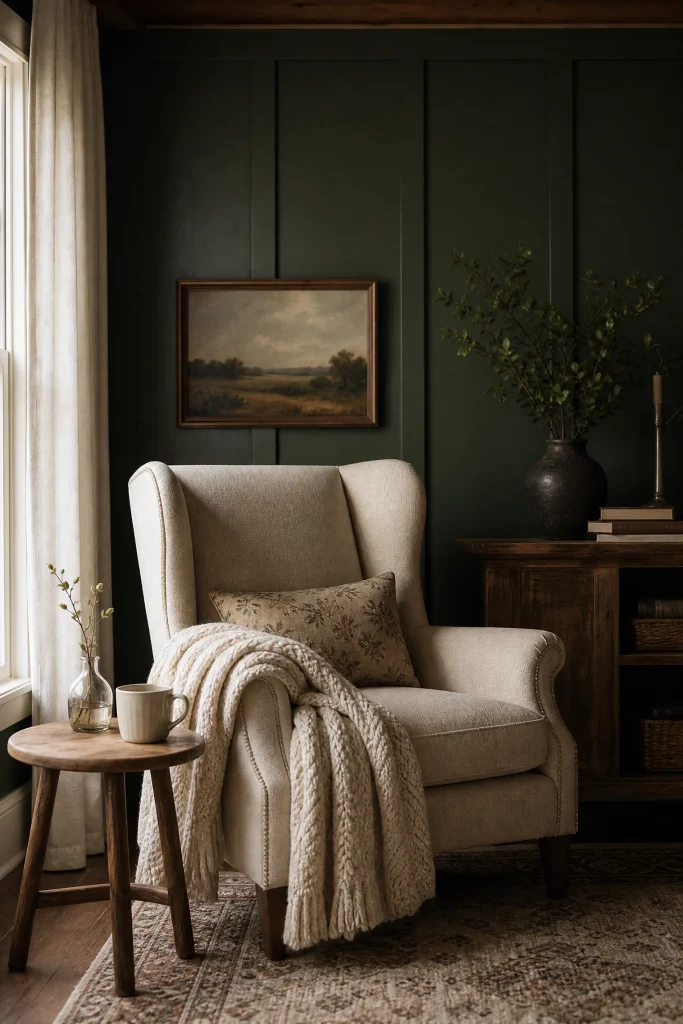
Board and batten is a more formal, paneled version of farmhouse wall treatment that works especially well in living rooms that want a slightly elevated look while still keeping that handcrafted, American-heritage quality. The construction is simple: vertical boards spaced evenly with a horizontal rail running through the middle, all painted in the same color as the wall behind them so the texture reads as shadow and dimension rather than contrast. Classic farmhouse board and batten uses white on white, but a growing trend among interior designers is to paint the entire treatment in a deep color like navy, forest green, or charcoal for a dramatic feature wall. This works particularly well behind a built-in bookcase or framing a large sectional sofa. The materials are inexpensive since you are working with basic MDF or pine trim, and most DIY-capable homeowners can install a full wall in a weekend for under $200 in materials.
Designer Advice: Keep the spacing between vertical boards proportional to the wall height. A common ratio that looks balanced is one board width of spacing for every board width. Wider gaps make rooms feel taller; tighter spacing reads as more formal.
Color and Palette: Setting the Farmhouse Mood
5. Warm White and Natural Wood
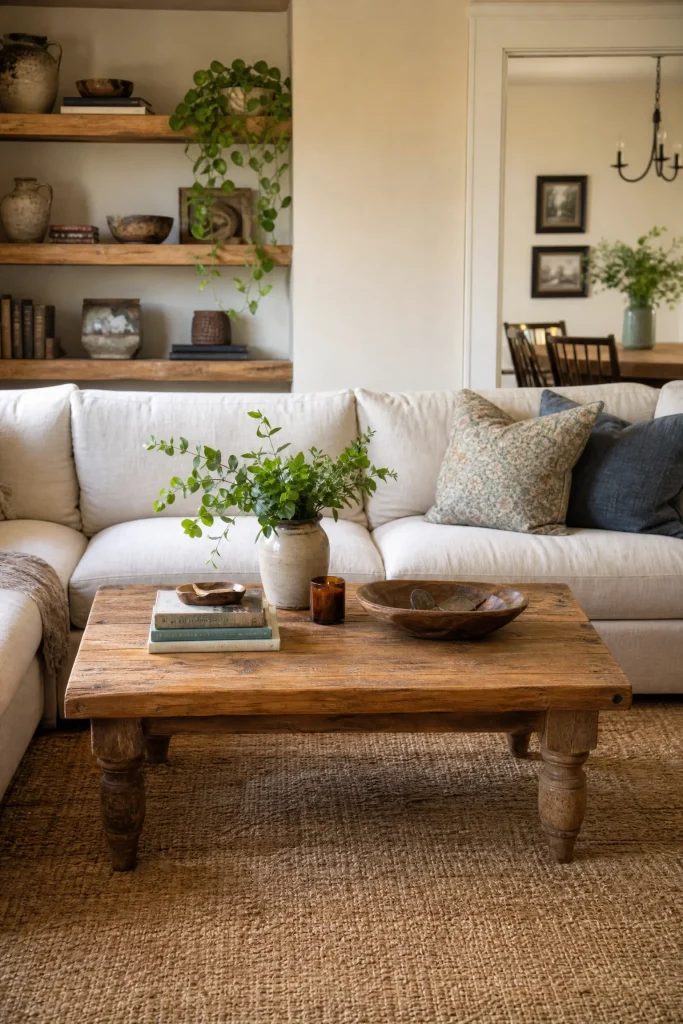
This is the foundational farmhouse color pairing and for good reason: warm white walls act as a neutral backdrop that allows natural materials to do the visual heavy lifting. The important word here is warm, because a cool, blue-toned white on the walls will fight against the honey and amber tones in wood furniture and floors. Look for whites with creamy or greige undertones, such as Benjamin Moore’s White Dove or Sherwin-Williams Alabaster, both of which consistently perform well in farmhouse interiors. Against warm white walls, bring in natural wood through a coffee table, open shelving, a wood-framed mirror, or exposed beams, and let the variation in wood tones add depth rather than trying to match everything to one specific stain color. A jute or sisal area rug, a linen sofa, and some dried botanicals in a terracotta pot complete this palette without needing anything that costs more than a trip to a craft store.
Designer Advice: Test your white paint in the actual room at different times of day before committing. Farmhouse whites look completely different under morning light versus evening lamplight, and getting this wrong is one of the most expensive mistakes to fix after the fact.
6. Sage Green With Cream and Clay
Sage green has settled in as one of the strongest farmhouse color choices available right now, and it works because it bridges the gap between nature-inspired and genuinely stylish without tipping into overly trendy territory. In a living room, sage works best as a wall color paired with cream upholstery, warm clay-toned textiles, and natural rattan or cane furniture. The combination reads as soft and organic rather than cold or clinical. For paint, Farrow and Ball’s Mizzle and Sherwin-Williams’ Clary Sage both deliver that muted, dusty quality that keeps the color feeling sophisticated rather than flat. Pair sage walls with creamy linen curtains that pool slightly on the floor, a worn leather armchair in a caramel tone, and a collection of clay or ceramic vessels on the coffee table or shelving. This palette works particularly well in rooms that face east or west and catch warm light during parts of the day.
Designer Advice: If full sage walls feel like too much of a commitment, paint just the lower half of the wall below a chair rail and leave the upper portion white. This two-tone approach gives you all the color impact with significantly less risk.
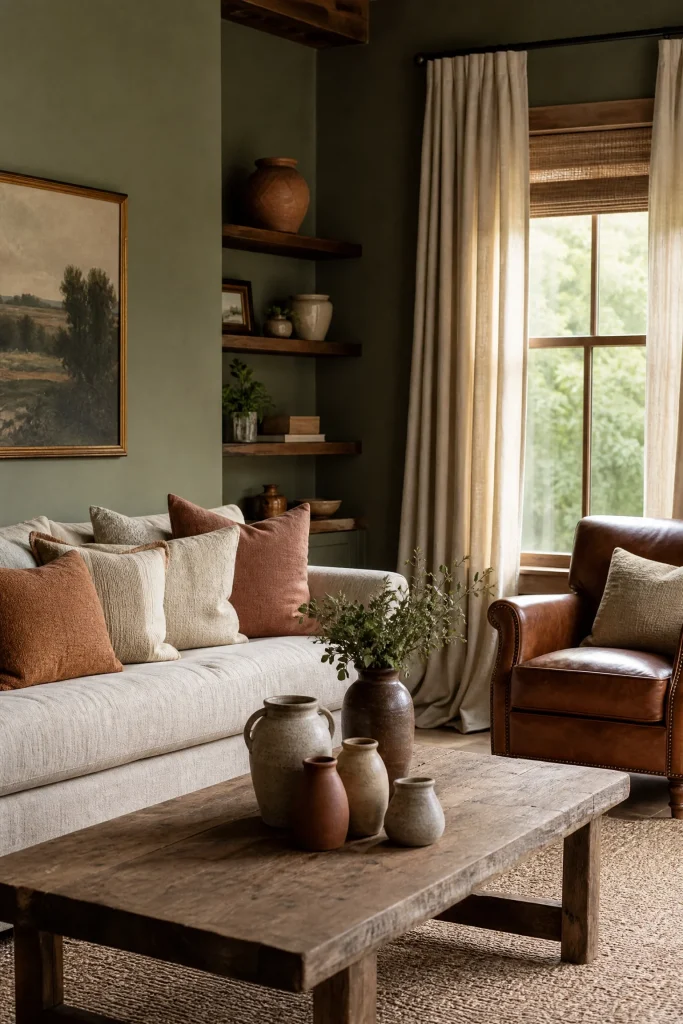
7. Moody Dark Farmhouse
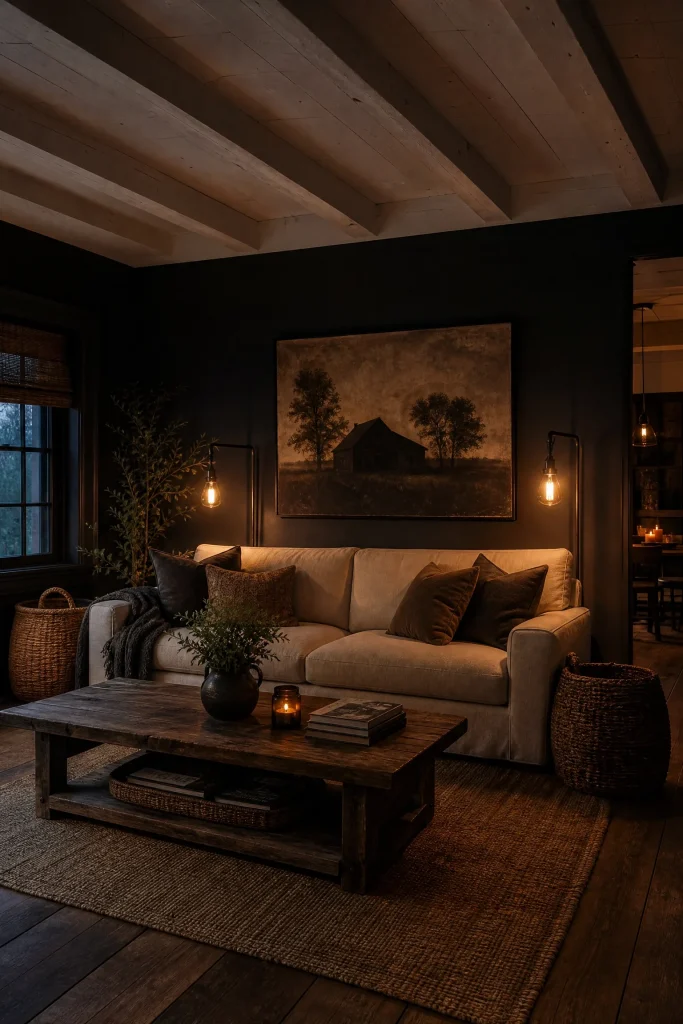
The moody dark farmhouse look has grown considerably in popularity among designers who want to push farmhouse style past its typically light-and-airy reputation. In this version of the aesthetic, walls are painted in deep, rich tones like charcoal, dark navy, slate blue, or even a near-black forest green, and the rest of the room is built around warming those walls up with natural materials, candlelight, and layered textiles. This approach works best in rooms with at least one large window, because the contrast between dark walls and bright natural light is actually what makes the space feel dramatic rather than just gloomy. Pair dark walls with a cream or oatmeal sofa, a reclaimed wood coffee table, woven baskets, and Edison-style bulb fixtures. Lamps with warm 2700K bulbs are non-negotiable in this palette; cool lighting in a dark room will make it feel cold and unlivable.
Designer Advice: Dark farmhouse works better in rooms you use in the evening, like a den or secondary sitting room. In a main living space used heavily during the day, do a dark feature wall rather than four dark walls to keep the room from feeling oppressive.
Furniture and Layout: Building the Room Around Real Life
8. The Oversized Linen Sofa
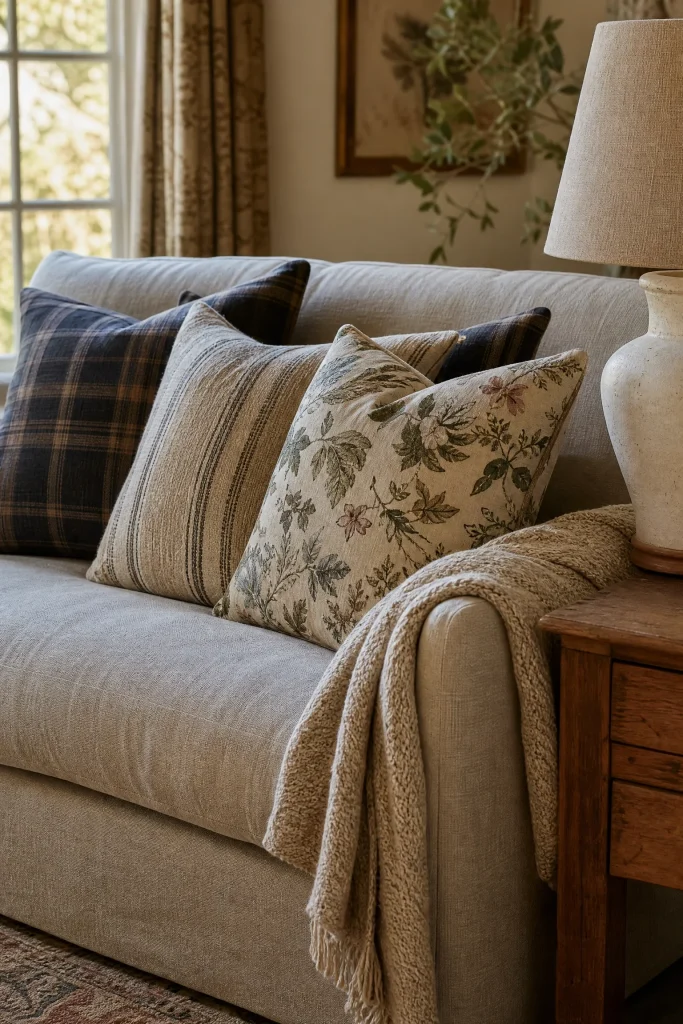
The anchor piece in almost every successful farmhouse living room is a large, generously proportioned sofa in a natural linen or cotton fabric, and the reason comes down to both aesthetics and function. Linen upholstery softens over time, wrinkles in a way that looks intentional rather than neglected, and carries a texture that synthetic fabrics simply cannot replicate. In terms of color, an oatmeal, natural, or warm ivory linen works across virtually every farmhouse palette, making it one of the most versatile investments you can make. Keep the sofa legs visible and close to the floor in a turned or tapered wood style rather than a contemporary block leg, which can look too modern against rustic surroundings. Layer the sofa with throw pillows in mixed patterns, plaids, stripes, and botanicals in muted tones, and always add at least one chunky knit or linen throw draped over the arm or back cushion for texture. This piece is an investment-level purchase, often $1,500 or more for quality construction, but a well-made linen sofa can last 15 to 20 years.
Designer Advice: When choosing sofa scale, err larger rather than smaller for farmhouse rooms. A too-small sofa floating in a large space looks uncertain. A generously sized sofa anchors the room and signals that this is a space built for real living.
9. A Reclaimed Wood Coffee Table
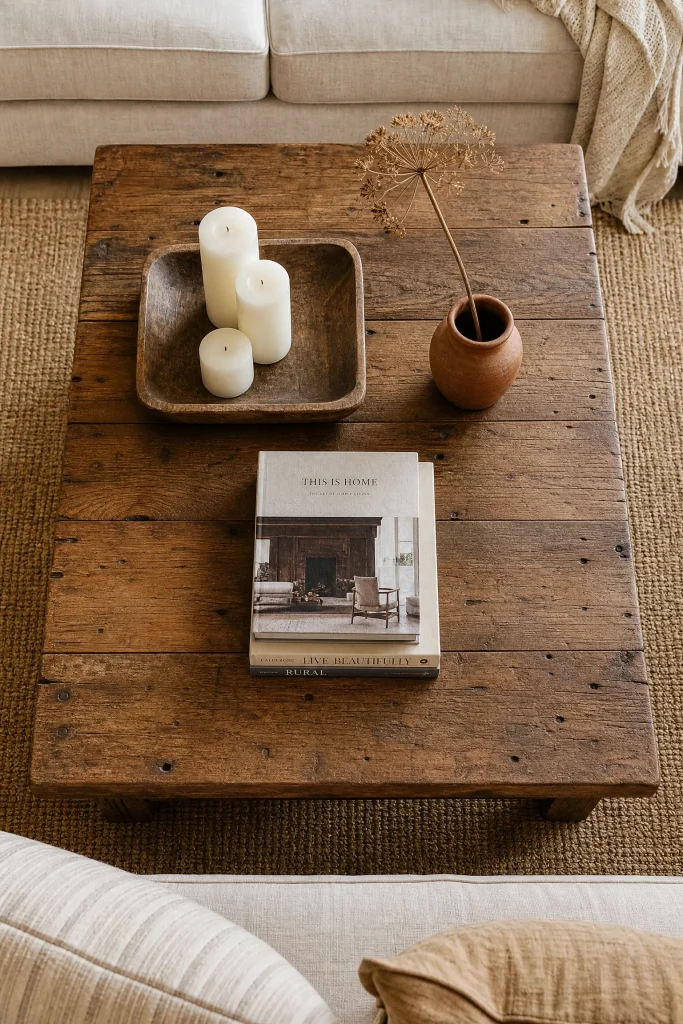
The coffee table is often the piece that tells you whether a farmhouse living room is thoughtfully put together or just a collection of things that look vaguely rustic. A reclaimed wood coffee table, particularly one made from salvaged barn wood or old-growth timber, brings genuine character that you genuinely cannot fake with a factory-finished piece. The natural imperfections, including old nail holes, varying grain patterns, and uneven edges, are precisely what make it interesting. A thick, chunky slab-style table works well with a low linen sofa because the visual weight is balanced; a more refined turned-leg version reads as slightly elevated farmhouse. Style the surface with a mix of heights: a wooden tray with a candle cluster, a small stack of design books, and a single low-growing plant or dried botanical arrangement. One practical note: reclaimed wood tables need to be sealed properly or they will absorb spills easily, so confirm the finish before purchasing.
Designer Advice: Look for reclaimed wood tables at estate sales, architectural salvage shops, or Etsy sellers who work with reclaimed timber. You will almost always get more character for less money than buying a reproduction from a chain retailer.
10. Mixing Seating: Wingback Chairs and Woven Accent Chairs
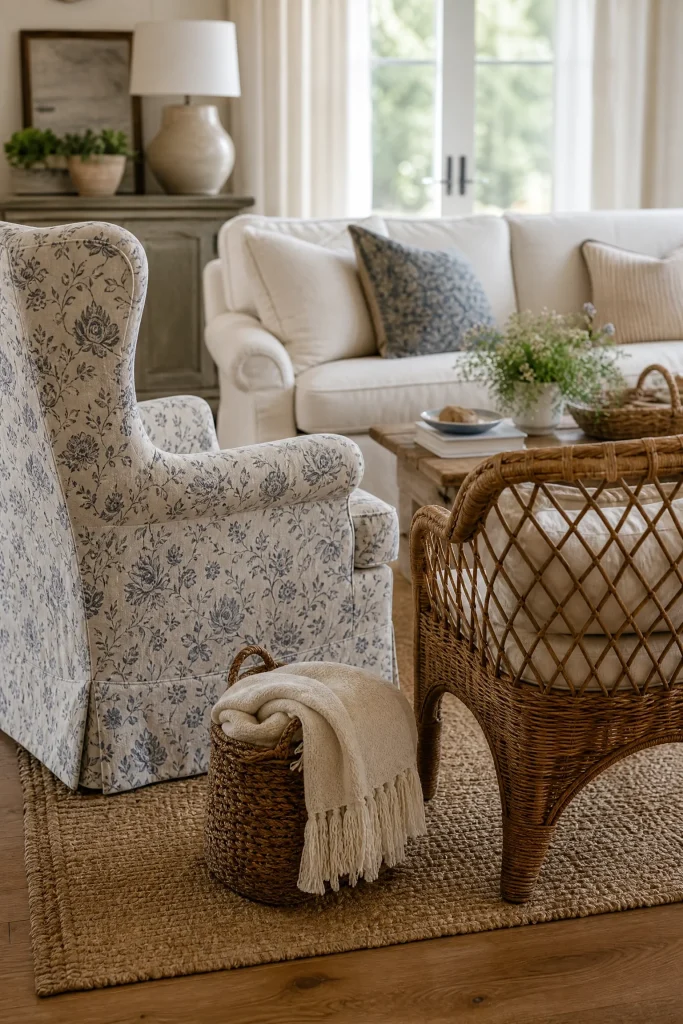
One of the most common mistakes in farmhouse living rooms is buying a full matching sofa and chair set, which tends to make the space feel like a showroom rather than a home that has grown organically over time. The more interesting and more authentic approach is mixing seating types, anchoring the room with a large sofa and then bringing in one or two accent chairs in different materials and silhouettes. A linen wingback chair in a patterned fabric, such as a subtle plaid or faded stripe, brings a slightly formal English farmhouse sensibility. A woven rattan or cane armchair introduces natural texture and global influence, which aligns well with the current Japandi-farmhouse direction many designers are taking. Keep the scale in mind when mixing: chairs that are too small relative to the sofa will look like afterthoughts, while chairs that are too tall can compete with the sofa for visual dominance.
Designer Advice: Pull accent chairs slightly off the wall and angle them toward the sofa at about a 30-degree angle rather than positioning them perfectly parallel. This creates a more conversational grouping and makes the seating arrangement feel less rigid and more inviting.
11. Open Shelving With Intention
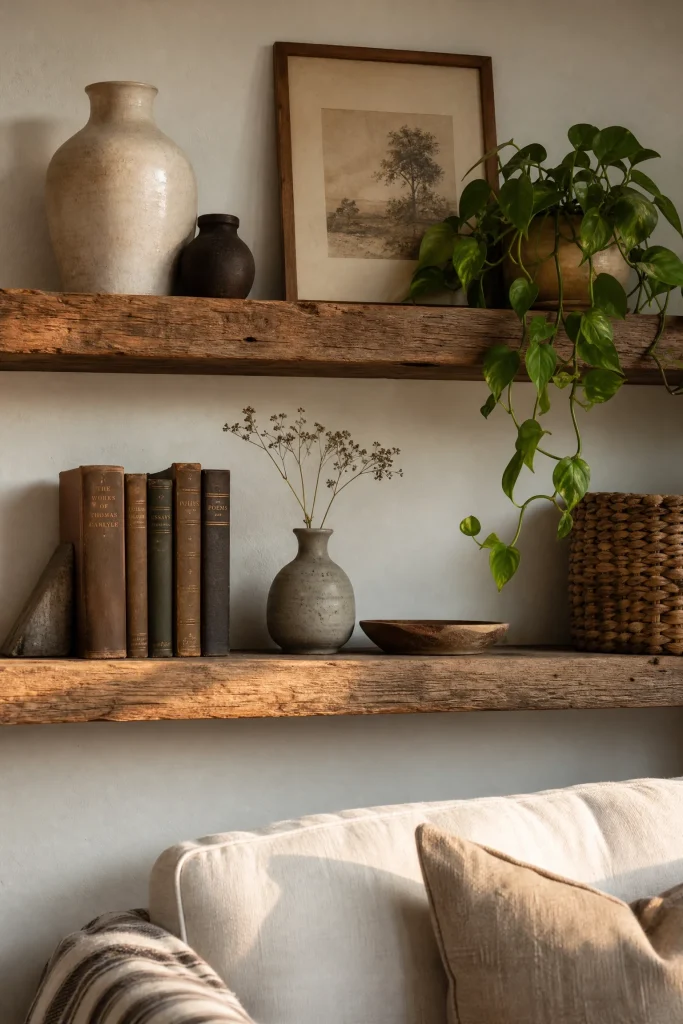
Open shelving is one of those farmhouse elements that looks effortless in magazine photos and chaotic in real life if you approach it without a plan. The spaces that get it right treat each shelf as a layered composition rather than a storage solution, alternating between objects of different heights, mixing functional pieces like baskets and books with purely decorative items like pottery and botanicals, and leaving deliberate negative space so the shelf can breathe visually. In a farmhouse living room, floating shelves in reclaimed wood or painted white MDF are the most common choice. Style them with a mix of textures: a ceramic vase, a small framed print leaned against the back, a few old hardback books, a trailing pothos or small succulent, and a woven basket tucked at the end. Limit your color palette on the shelves to two or three tones so the overall display reads as cohesive rather than cluttered.
Designer Advice: The rule that consistently works in shelf styling is the triangle method: arrange three objects of varying heights in a loose triangle shape, with the tallest piece in the back and lower items in front. Repeat this grouping across the shelf rather than spacing items evenly.
Texture and Materials: The Sensory Side of Farmhouse
12. Layered Rugs for Warmth and Depth
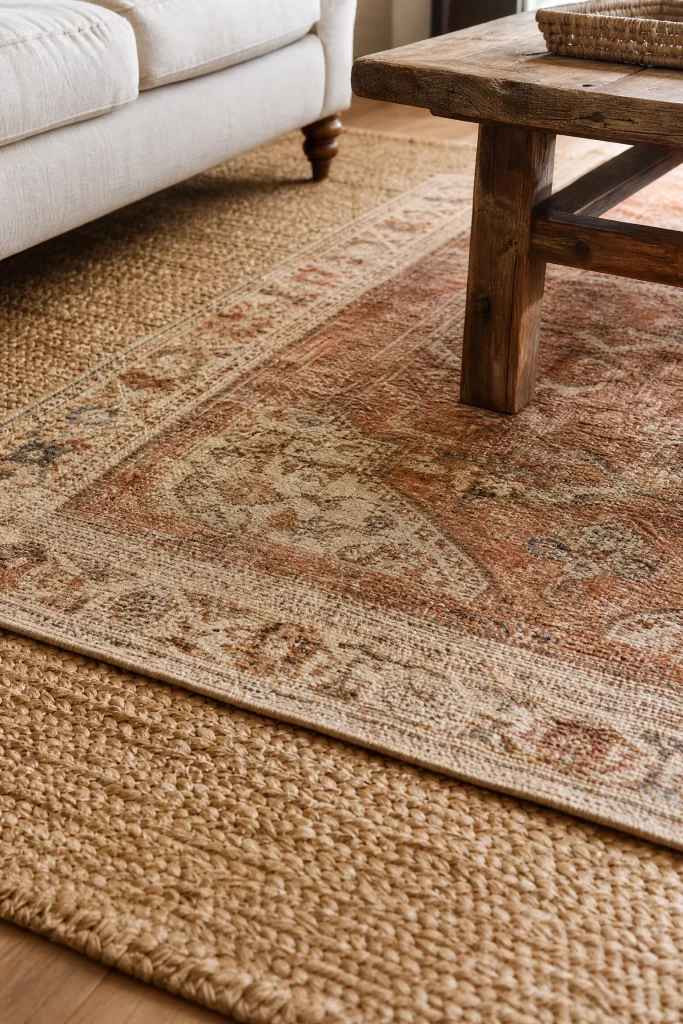
A single area rug under a coffee table is fine, but layered rugs are what give farmhouse living rooms that genuinely cozy, been-here-for-years quality that is so hard to articulate and so easy to feel. The classic approach is to start with a large, neutral natural fiber rug such as jute or sisal as the base layer, then layer a smaller, softer rug on top in a print or pattern. A faded Persian-style rug in muted terracotta, cream, and blue over a natural jute base is practically a farmhouse cliche at this point, but it works because the visual and tactile contrast is genuinely appealing. More contemporary farmhouse rooms are layering a flat-woven kilim rug over a chunky wool base for a less expected combination. Size the base rug generously so that all four sofa legs sit on it, and let the top rug float freely so both layers remain visible at the edges.
Designer Advice: Natural fiber rugs like jute and sisal feel scratchy underfoot when used alone, which is why layering a softer rug on top serves both a practical and aesthetic purpose. If budget is tight, a large jute rug as the base layer is very affordable and forms an excellent foundation.
13. Linen and Cotton Curtains That Pool Slightly
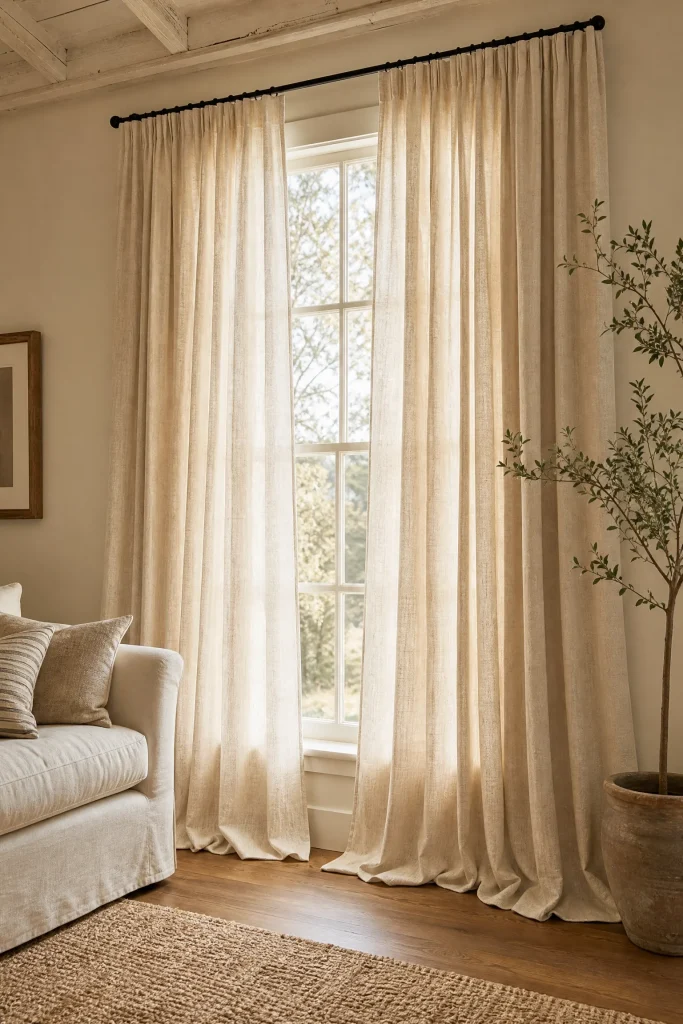
Window treatments in farmhouse rooms almost always look better when they are slightly relaxed and unfussy, which means avoiding stiff, heavily lined drapes in favor of lighter fabrics that move with the air and soften the architecture of the room. Linen and cotton curtains in natural, cream, or warm white tones are the strongest choices because they filter light beautifully without blocking it and they carry a casual elegance that synthetic fabrics cannot match. Hang the curtain rod as high and wide as possible, ideally a few inches below the ceiling and extending beyond the window frame by at least six to eight inches on either side, to make the windows look larger and the ceilings feel taller. A slight puddle on the floor of two to three inches adds a romantic, relaxed quality that reads as farmhouse without looking sloppy. This is one area where budget matters less because even inexpensive linen-look curtains from IKEA look genuinely beautiful when hung correctly.
Designer Advice: The width of your curtain panels matters as much as the length. Each panel should be at least 1.5 times the width of the space it covers when closed, so the fabric looks full and generous rather than stretched thin.
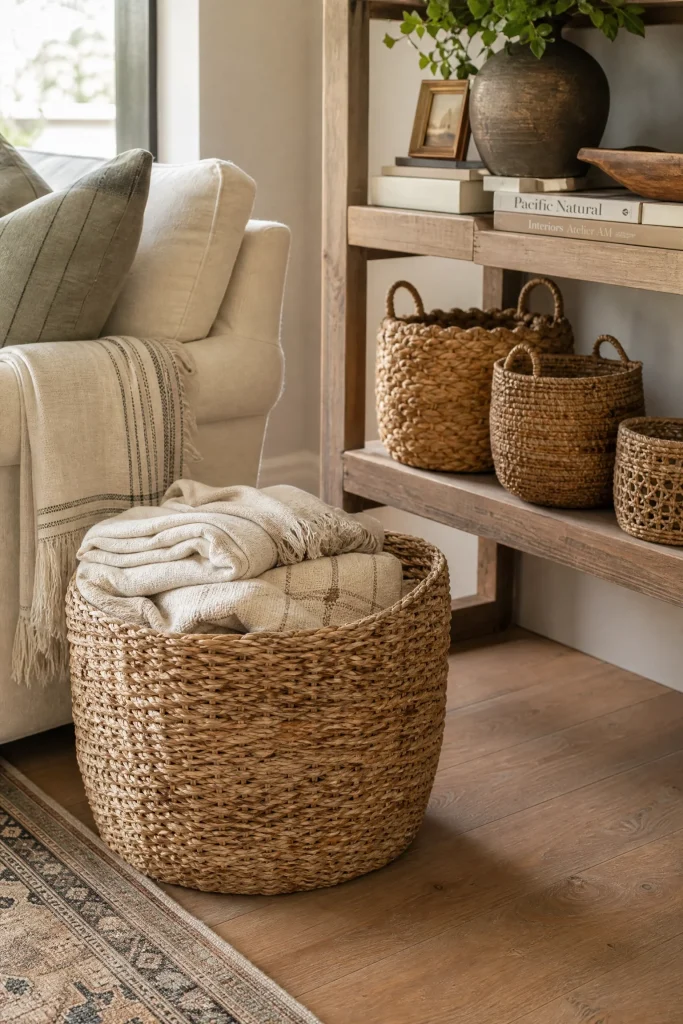
14. Woven Baskets as Functional Decor
Woven baskets are a farmhouse staple because they solve the real problem of storage in a living room without resorting to closed cabinetry or plastic bins, and they add texture and warmth at the same time. Large seagrass or wicker floor baskets are excellent for blanket storage beside a sofa or next to a fireplace. Medium-sized baskets work well on lower shelves for corralling remote controls, magazines, and the assorted small items that accumulate in any room that gets regular use. Smaller baskets displayed in clusters on open shelves add rhythm and organic texture alongside pottery and books. The variety of weave patterns, from tight seagrass to loose rattan to chunky macrame-style woven baskets, creates an interesting textural dialogue when you mix them in the same room. One budget note: baskets are one of the best home decor investments per dollar because they are inexpensive, completely neutral, and actually improve with age as the natural fibers develop a patina.
Designer Advice: Group baskets in odd numbers, three or five, rather than pairs. Odd-number groupings look more natural and less symmetrical, which aligns with the slightly imperfect, organic quality that farmhouse rooms do best.
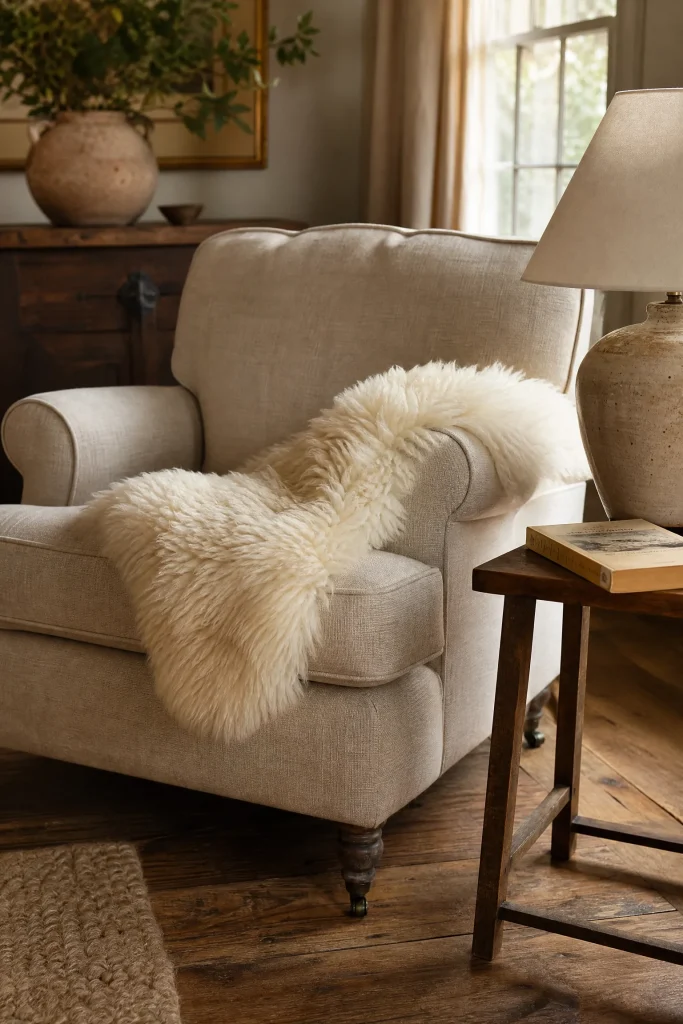
15. Cowhide or Sheepskin Accents
Natural animal hides, whether genuine or ethically sourced alternatives, have long been associated with farmhouse and ranch-style interiors, and they continue to work because the texture and tonal variation is something no woven fabric can replicate. A cowhide rug layered over wide-plank floors adds a layer of organic pattern and brings a slight Western-farmhouse or European-farmhouse sensibility depending on how the rest of the room is styled. A smaller sheepskin draped over an armchair or footstool adds softness and an irresistible tactile quality that is particularly welcome in living rooms used for relaxing in the evenings. For those who prefer not to use real hides, faux sheepskin and cowhide options have improved considerably in quality and are often indistinguishable from a few feet away. Use these pieces as accents rather than the primary textile in the room, since too much hide at once can make the space feel like a hunting lodge.
Designer Advice: A single cowhide draped over the back of a wooden bench at the base of a sofa or layered under a coffee table is one of the most affordable ways to add a premium-feeling material to the room. Budget around $200 to $400 for a quality genuine cowhide.
Lighting: Setting the Farmhouse Atmosphere
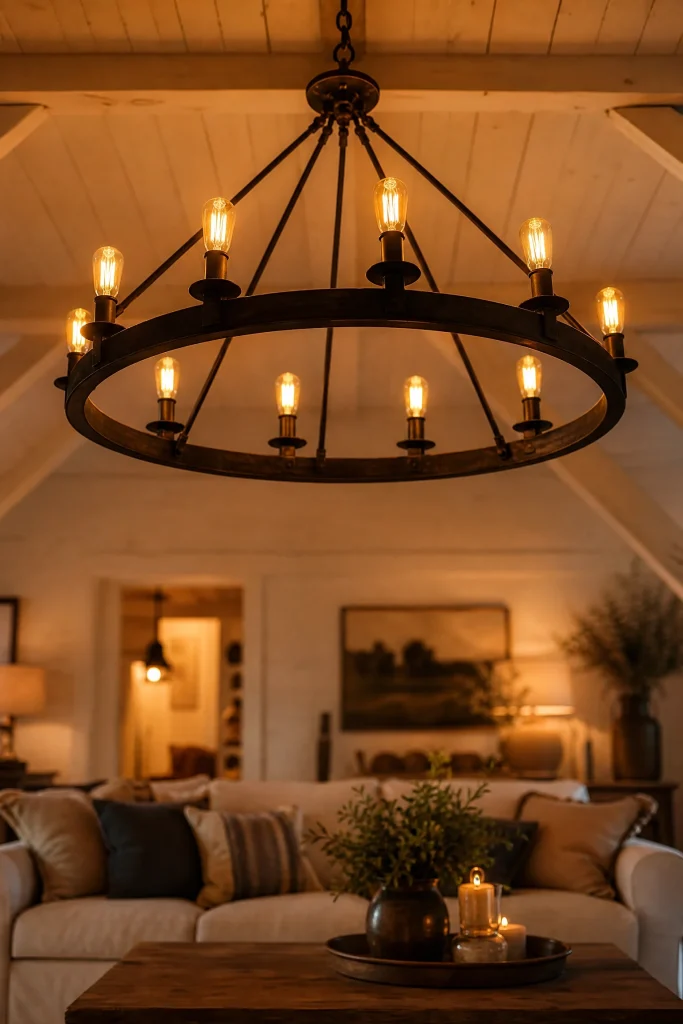
16. A Statement Chandelier
Lighting in farmhouse rooms does more atmospheric work than almost any other design element, and the chandelier is where you get to make the boldest statement. The most iconic farmhouse chandelier style is the wagon wheel or candle-ring chandelier, made from wrought iron or dark-stained wood with exposed candelabra bulbs, but contemporary farmhouse rooms have expanded well beyond this to include woven rattan pendants, antler-style fixtures, and cage-style iron chandeliers that blend industrial and rustic influences. For scale, the chandelier should be roughly half to two-thirds the width of the coffee table in a living room so it commands attention without overwhelming the space. Choose bulbs with a warm color temperature of 2200K to 2700K, which produce the amber, candlelit quality that makes farmhouse rooms feel genuinely inviting rather than harshly lit. Hang the fixture lower than you might instinctively think to increase intimacy, typically around seven feet from the floor in a standard room.
Designer Advice: A dark iron chandelier with amber Edison bulbs is the single fastest way to shift a room’s atmosphere toward farmhouse character. If a full electrical installation is not in your current budget, look for plug-in pendant options that can be ceiling-mounted with a simple hook.
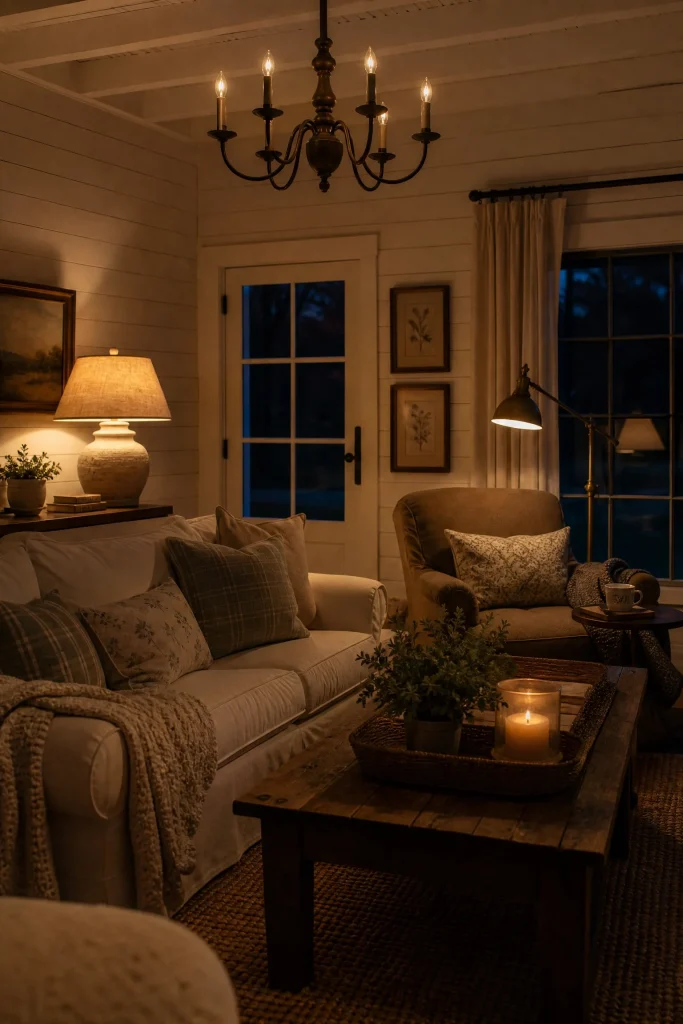
17. Layered Lighting With Floor and Table Lamps
One overhead light source, even a beautiful chandelier, is rarely enough to make a farmhouse living room feel warm and dimensional at night. The principle of layered lighting, combining ambient overhead light with task and accent lamps at lower levels, is what separates rooms that photograph beautifully from rooms that actually feel good to be in. In a farmhouse room, floor lamps in an aged brass, oil-rubbed bronze, or matte black finish work well beside armchairs and at the ends of sofas. Ceramic table lamps with linen shades placed on side tables and shelving add pools of warm light that create visual depth and make the room feel more intimate in the evenings. A good rule that works in practice is to have at least four separate light sources active in the room at any given time, positioned at different heights around the space. This eliminates the flat, institutional feeling that a single overhead light always creates.
Designer Advice: Dimmers are non-negotiable in a farmhouse living room. The difference between full-brightness overhead lighting and a dimmed chandelier paired with two lamps is the difference between a grocery store and a cozy farmhouse inn, and dimmers cost about $20 to install.
18. Candlelight and Decorative Lanterns
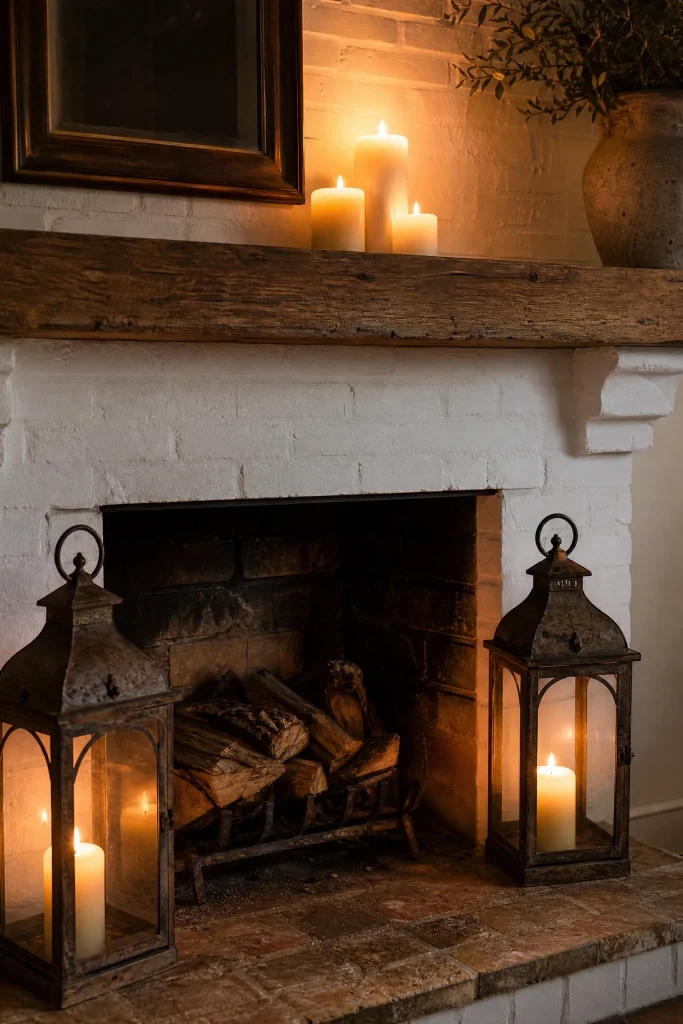
Real candles and decorative lanterns are one of the most underrated elements in farmhouse living rooms, not because they provide significant illumination but because the quality of their light is unlike anything an electric bulb produces. A cluster of pillar candles at varying heights on the coffee table, fireplace mantel, or floating shelf creates a warmth and flicker that makes the room feel genuinely alive in a way that is hard to achieve with fixed lighting alone. Aged iron or wooden lanterns placed on the floor beside a fireplace or flanking a sofa add visual weight and rustic character even when unlit. For a no-maintenance version, flameless LED candles with a realistic flicker setting are a genuinely good alternative that most guests cannot distinguish from real candles and that you can leave on safely when leaving the room. Beeswax or soy candles in earthy or botanical scents, like cedar, vetiver, dried herbs, or woodsmoke, add a sensory layer to the farmhouse atmosphere that contributes more than most decorative objects.
Designer Advice: Group candles in clusters of three or five at different heights rather than spacing them evenly in a line. Clustered arrangements look more intentional and create a focal point, while evenly spaced candles read more like a hotel lobby than a home.
Finishing Touches: The Details That Pull It Together
19. A Stone or Brick Fireplace as the Room’s Focal Point
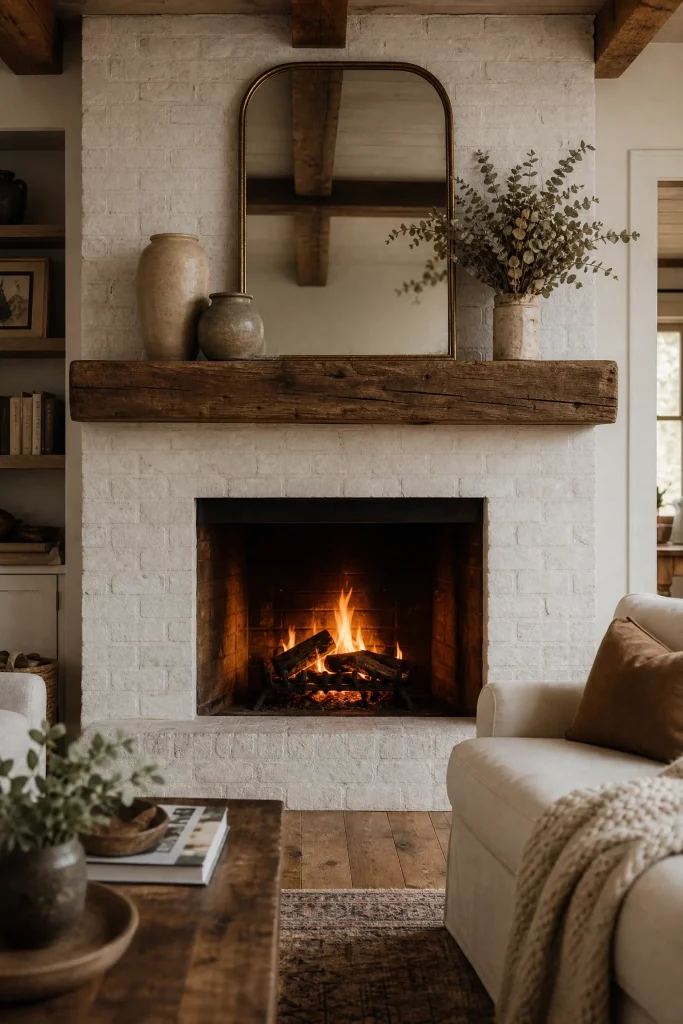
A fireplace in a farmhouse living room is not just a heating element; it is the architectural anchor around which the entire room is organized, and the material you choose for the surround has enormous influence on the room’s overall character. Natural fieldstone creates the most authentically rustic, organic farmhouse feel and works particularly well in older or more traditionally styled homes. Brick, whether original or white-washed, carries a slightly more refined farmhouse quality that bridges traditional and contemporary easily. For newer construction without an existing fireplace, a floor-to-ceiling shiplap fireplace surround with a rough-hewn wood mantel is an accessible and genuinely beautiful alternative that costs far less than masonry work. Style the mantel with restraint: a large aged mirror, a few ceramic vessels of varying heights, and some dried botanical stems are usually all you need. Resist the temptation to overload the mantel with too many objects, as this is one of the most common mistakes that makes farmhouse rooms feel cluttered.
Designer Advice: If you have a brick fireplace that feels too orange or too dated, a limewash paint treatment is a budget-friendly way to modernize it without losing the texture. The result looks like aged, Mediterranean-influenced brick and takes a standard farmhouse fireplace in a much more refined direction.
20. Gallery Wall With Vintage Frames
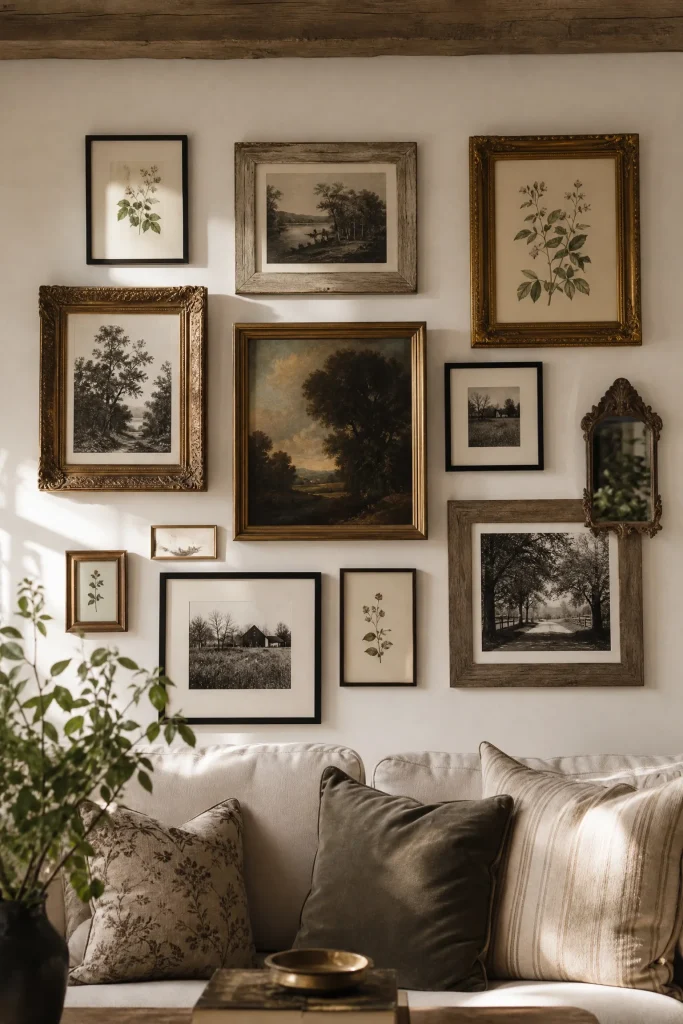
A gallery wall in a farmhouse living room is most interesting when it mixes periods and media rather than presenting a uniform grid of matching frames, and the most successful ones tend to look as though they have been gathered over years of intentional collecting rather than purchased as a set. Combine antique oil painting reproductions with black-and-white photography, botanical prints, hand-lettered quotes, and small mirrors in frames that range from ornate gilt to simple black to distressed wood. The frames themselves do not need to match; what unites them is a consistent tonal palette in the artwork, usually working within warm neutrals, muted greens, and soft blues. Arrange the grouping so the center of the wall installation sits at eye level, around 57 to 60 inches from the floor, and let the arrangement sprawl organically rather than forcing it into a perfect rectangle. Thrift stores and estate sales are genuinely the best source for the vintage frames that give this type of gallery wall its character, and finding them takes time but costs very little.
Designer Advice: Before hanging anything, lay the entire gallery wall arrangement on the floor to test the composition. Trace each frame onto paper, cut out the shapes, and tape them to the wall to finalize placement without leaving unnecessary holes. This extra step saves significant frustration.
21. Botanicals, Dried Stems, and House Plants
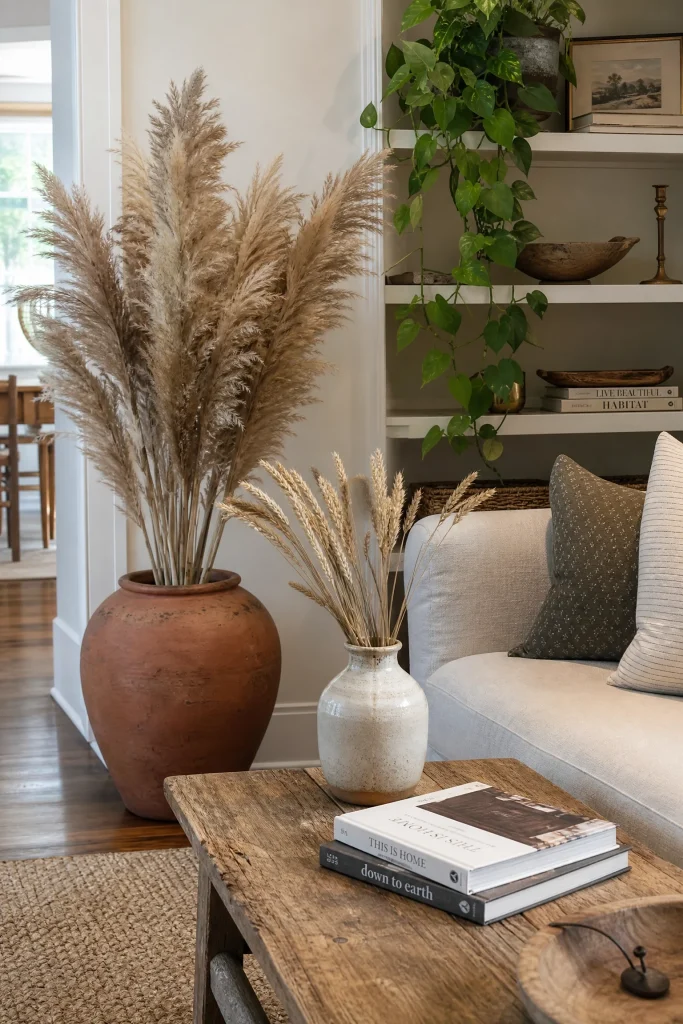
Greenery in farmhouse rooms follows a specific logic: the plants and botanical elements that feel most at home are those that carry an organic, slightly unrefined quality rather than the graphic, sculptural plants associated with contemporary or minimalist interiors. Dried botanicals, including pampas grass, dried wheat, eucalyptus, lavender bundles, and cotton stems, are a farmhouse staple because they last indefinitely and they carry the muted, earthy tones that work so well within the farmhouse palette. Fresh plants that thrive in farmhouse rooms include fiddle-leaf figs (though these require consistent care), trailing pothos and ivy, olive trees, and small succulents in terracotta pots. Display them in ceramic vessels, wire baskets, wooden crates, or galvanized metal containers rather than standard plastic nursery pots. One genuine limitation to mention: dried botanicals collect dust over time and need to be refreshed every couple of years, and some varieties, like pampas grass, shed if not properly sealed.
Designer Advice: An inexpensive galvanized metal bucket or an aged terracotta pot transforms even a basic grocery store plant into a farmhouse-ready display piece. The container you choose is often more important than the plant inside it.
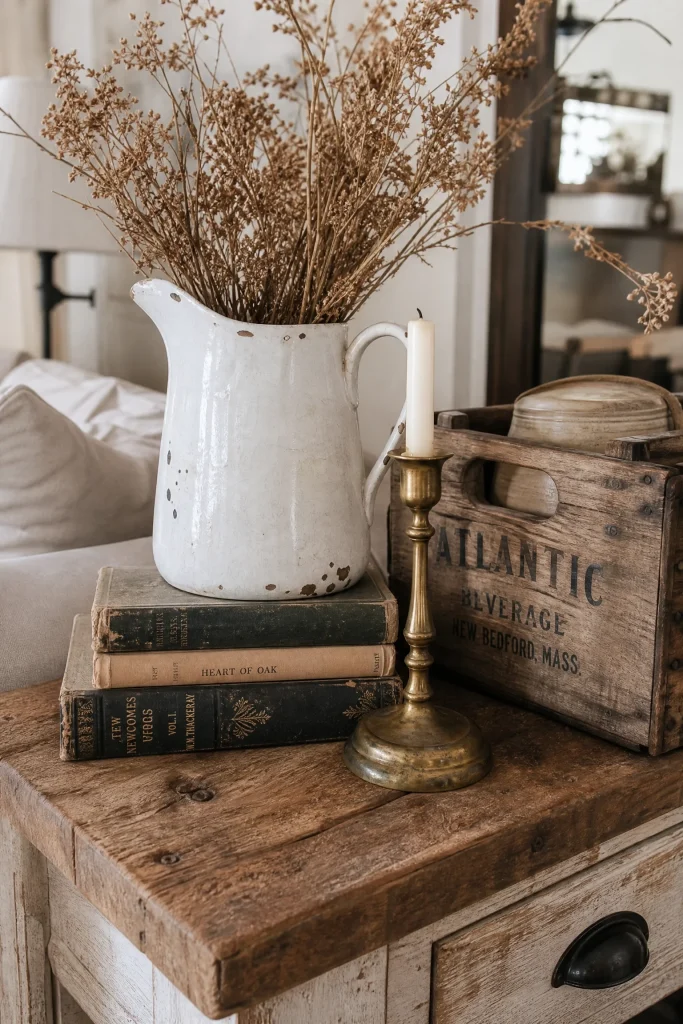
22. Vintage and Antique Accessories
The finishing accessories in a farmhouse room are where the style really separates itself from a generic Pinterest inspiration board and starts to feel like an actual place with a history. Vintage and antique objects, including old ironstone pitchers, enamelware, wooden dough bowls, antique clocks, aged wood signs, old books, and worn metal lanterns, provide the lived-in quality that no amount of new-but-rustic-looking decor can replicate. You do not need to fill the room with antiques; even a handful of genuinely old pieces mixed with newer, simpler items gives the whole space more credibility and warmth. Look for these pieces at estate sales, flea markets, antique malls, and online on platforms like eBay and Etsy, where you can often find more interesting objects for less money than reproduction versions at chain home stores. One caveat: be selective and resist the urge to fill every surface, because the impact of a few beautiful vintage pieces gets lost when they are surrounded by too many other objects competing for attention.
Designer Advice: When shopping for vintage farmhouse accessories, prioritize objects that show evidence of actual use: worn paint on a crate, a dented pitcher, a patinated mirror frame. These marks of age are the whole point and cannot be successfully faked by manufacturers.
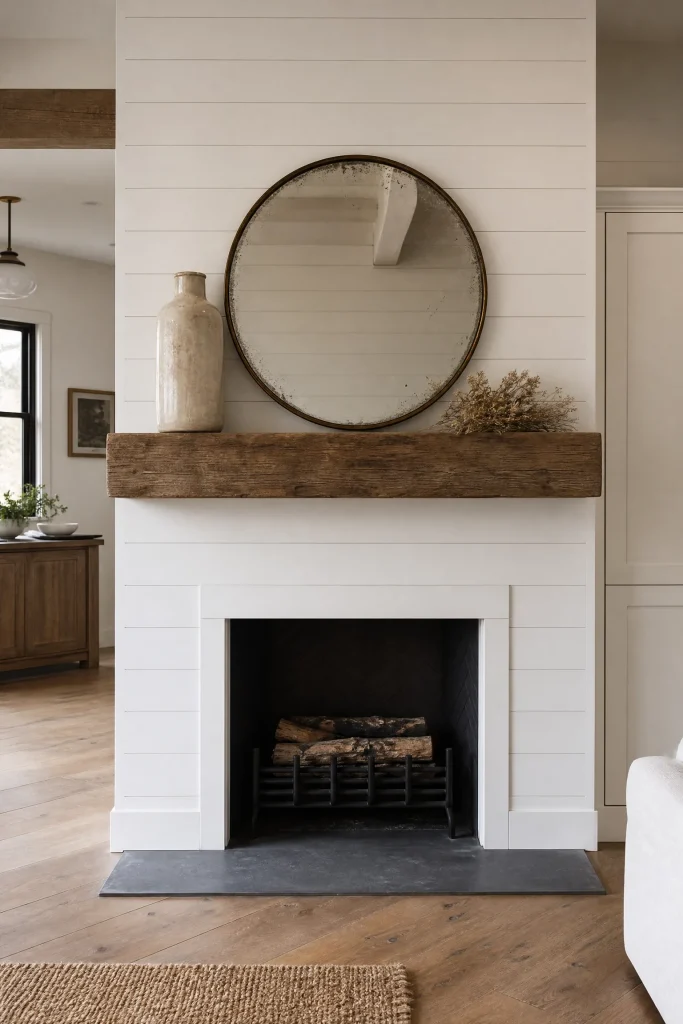
23. A Shiplap or Reclaimed Wood Fireplace Mantel
The mantel in a farmhouse living room serves as the room’s primary display surface and deserves more thought than most people give it at the design stage. A reclaimed wood beam used as a floating mantel shelf is one of the most impactful and relatively affordable ways to add authentic farmhouse character to a fireplace surround, whether you have a traditional masonry fireplace, a gas insert, or an electric unit. The rough, natural character of old-growth timber against white or painted shiplap creates a contrast that looks genuinely beautiful and anchors the whole wall. For mantel styling, work in layers: start with one large anchor piece at the back, usually a mirror, large piece of art, or an architectural fragment, then build outward with objects of varying heights. Keep the color palette on the mantel tight, working in two or three tones that connect to the rest of the room, and leave at least 30 percent of the mantel surface empty to let the arrangement breathe.
Designer Advice: A single large-scale vintage mirror above the mantel is almost always a stronger design choice than a collection of small pieces. The mirror reflects light into the room, makes the fireplace wall feel larger, and creates an instant focal point without requiring a carefully curated arrangement.
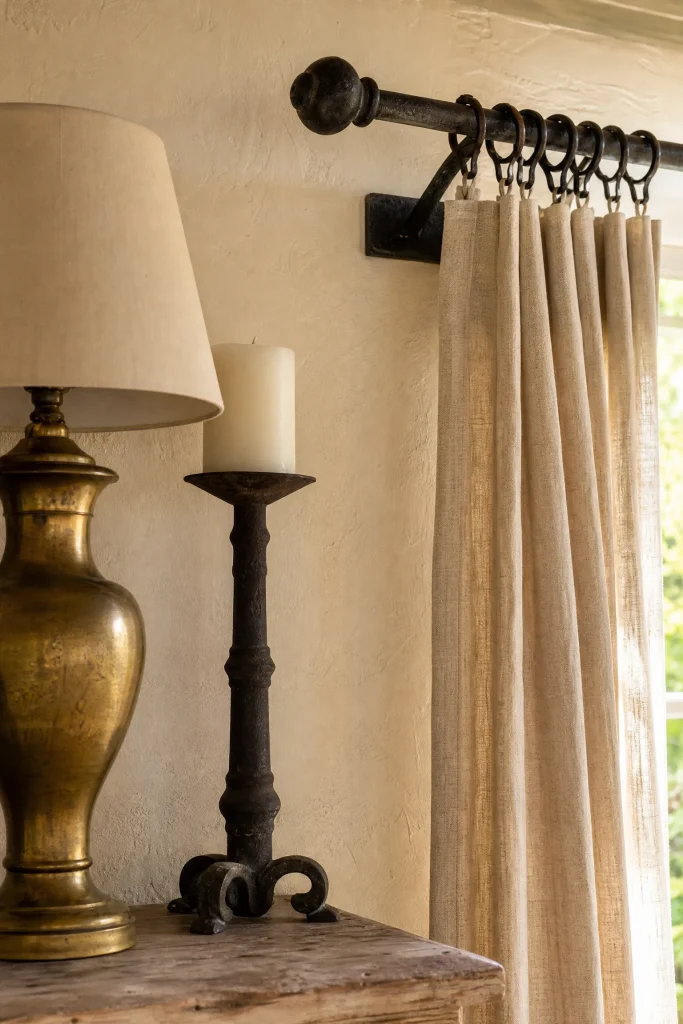
24. Wrought Iron and Aged Brass Hardware and Accents
The metal finishes you choose for light fixtures, curtain rods, cabinet hardware, and decorative accents tie the room together in a way that is subtle but immediately noticeable when it is done right or when it is not. In farmhouse rooms, wrought iron and aged brass are the two most useful metal finishes because they both carry an antique, handcrafted quality that feels appropriate to the aesthetic. Wrought iron reads as more rugged and rustic, works particularly well in darker or moodier farmhouse rooms, and pairs naturally with dark wood tones. Aged or unlacquered brass is warmer and slightly more refined, working beautifully in cream-and-natural-wood farmhouse rooms and developing an attractive patina over time. The important rule is to keep your metal finishes reasonably consistent throughout the room rather than mixing four or five different metals, which fragments the room visually. You can mix iron and brass intentionally if both are warm-toned, but avoid introducing cool chrome or stainless steel into a farmhouse living room palette.
Designer Advice: Curtain rods in a matching metal finish to your light fixtures create an immediate sense of intentionality in a room. This small detail is one of the most affordable ways to make a room feel designed rather than assembled.
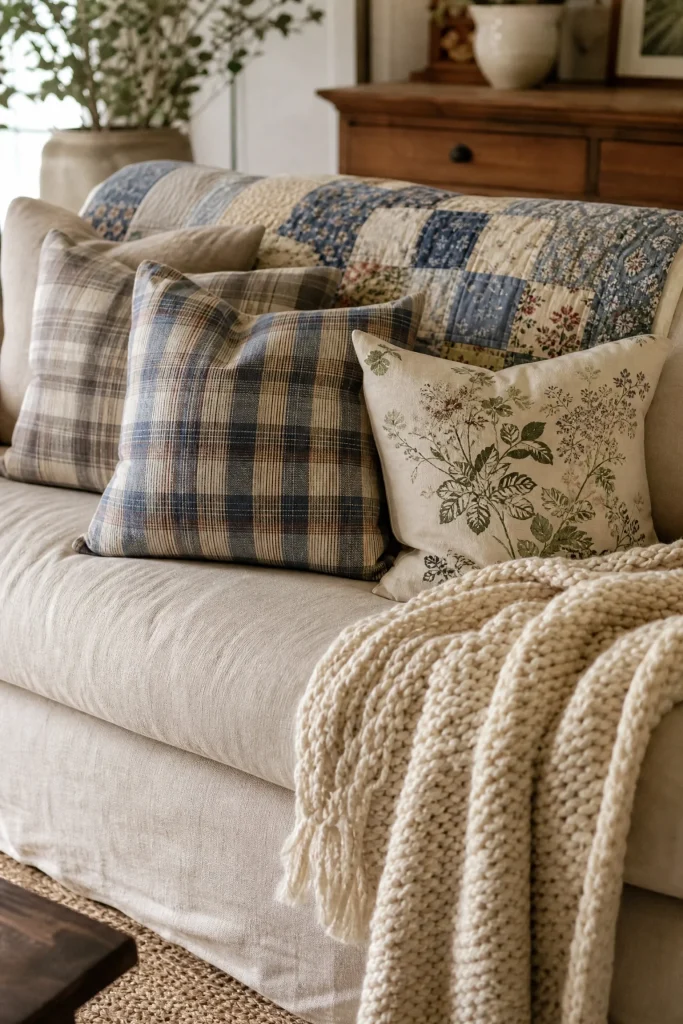
25. Personalized Textile Layers: Quilts, Throws, and Pillows
The textile layers in a farmhouse living room are where the space truly starts to feel personal and lived-in rather than like a catalog page, and getting this right means thinking about tactility as much as visual appeal. A vintage or vintage-inspired quilt in a patchwork or log-cabin pattern draped over the back of a sofa or folded over an ottoman brings pattern, history, and softness in one piece. Chunky knit throws in cream, oatmeal, or warm gray add texture and warmth during cooler months, while lighter cotton gauze throws work beautifully in spring and summer without overheating the room visually. For pillows, mix patterns deliberately: a plaid paired with a stripe paired with a botanical print in a shared color palette creates that layered, collected-over-time quality that distinguishes genuinely cozy rooms. The rule that works consistently is to keep all the patterns in the same tonal family, warm and muted or cool and muted, rather than mixing warm and cool tones, which creates visual discord. This is also one of the most budget-friendly areas of the room to update seasonally.
Designer Advice: The number of throw pillows on a sofa should feel generous but not absurd. A rough formula that works: two large square pillows at the back corners, two medium lumbar or square pillows in front, and one smaller accent pillow in the center. This creates layering without chaos.
Bringing It All Together
A farmhouse living room at its best is not a style exercise. It is a room that reflects the real texture of daily life, one where the materials have been chosen because they feel good and last well, where the furniture arrangement actually works for conversation and relaxing, and where the finishing details carry enough personal history to make the space feel genuinely yours rather than borrowed from a design trend. The ideas in this guide range from structural choices like shiplap walls and exposed beams all the way through to the small details of candle clusters and vintage accessories, and you certainly do not need all of them to create a room that works.
The most important thing to remember is that farmhouse style rewards restraint and patience more than most interiors. A room that has been assembled gradually, with pieces added thoughtfully over time as you find the right vintage mirror or the perfect reclaimed wood coffee table, will almost always feel more authentic than a room that was decorated all at once from a single retailer. Start with the bones, get the lighting right, invest in one or two quality anchor pieces, and then let the room grow from there. The worn, layered, lived-in quality that makes farmhouse rooms so appealing is something that develops naturally when you give it time and make choices that are driven by what you love rather than what you think you should have.
Frequently Asked Questions
What colors work best in a farmhouse living room?
Warm whites, creams, and greige tones are the most versatile farmhouse base colors because they work with almost every natural material and accent color. Beyond the basics, sage green, dusty blue, and warm terracotta are strong accent choices that feel current without being trendy. The key is keeping your palette warm-toned throughout, which means avoiding cool grays, stark whites with blue undertones, or anything that fights against the natural warmth of wood and linen.
How do I make a small living room feel farmhouse without making it feel cramped?
The most important thing in a small farmhouse room is to resist overcrowding. Choose one or two signature farmhouse elements rather than trying to layer everything, opt for furniture with visible legs to keep the floor visible and the space feeling open, and use light-colored walls with natural wood accents rather than dark tones. A large mirror is your best friend in a small farmhouse room because it reflects light, makes the space feel larger, and adds visual interest without taking up floor space.
What is the difference between farmhouse style and modern farmhouse style?
Traditional farmhouse style leans into more overtly rustic elements: heavier furniture, darker woods, and a lot of vintage and antique pieces throughout. Modern farmhouse style, which became widely popular through designers like Joanna Gaines, takes those same natural materials and rustic references but pairs them with cleaner lines, a lighter and more neutral palette, and a more edited approach to accessories. Modern farmhouse rooms tend to feel airier and less cluttered than their more traditional counterparts while still carrying all the warmth and character of the style.
How much does it cost to decorate a farmhouse living room?
The cost range is genuinely broad depending on how you approach it. A complete farmhouse living room starting from scratch with quality furniture can easily run $5,000 to $15,000 or more. However, farmhouse style is actually one of the most budget-friendly decorating aesthetics because so many of its signature elements, vintage pieces, natural baskets, second-hand frames, thrift store accessories, and DIY shiplap walls, are either inexpensive or actively rewarded for showing age and wear. A thoughtfully styled farmhouse room put together primarily through estate sales, thrift stores, and a few targeted new purchases can look genuinely beautiful for well under $2,000.
Do farmhouse living rooms have to have a fireplace?
Not at all, though a fireplace certainly helps establish the cozy, gathered-around quality that farmhouse rooms do so well. If you do not have a fireplace, you can create a similar focal point with a large piece of art or a styled console table flanked by floor plants, an architectural element like a built-in bookcase, or even a dramatic board and batten or shiplap feature wall. The key is giving the room one clear anchor point that organizes the furniture arrangement around it.
What furniture should I avoid in a farmhouse living room?
Highly polished or lacquered furniture finishes tend to feel at odds with the matte, organic quality of farmhouse rooms. Ultra-contemporary furniture with very angular lines or chrome and glass elements will similarly fight against the warmth of the style. Matching furniture sets that look like they came from a single retailer tend to make farmhouse rooms feel staged rather than curated. And finally, avoid plastic storage solutions and anything that looks too utilitarian without also being attractive, since farmhouse style is fundamentally about finding beauty in functional objects.