Farmhouse Furniture Looks Worth Bringing Home Right Now
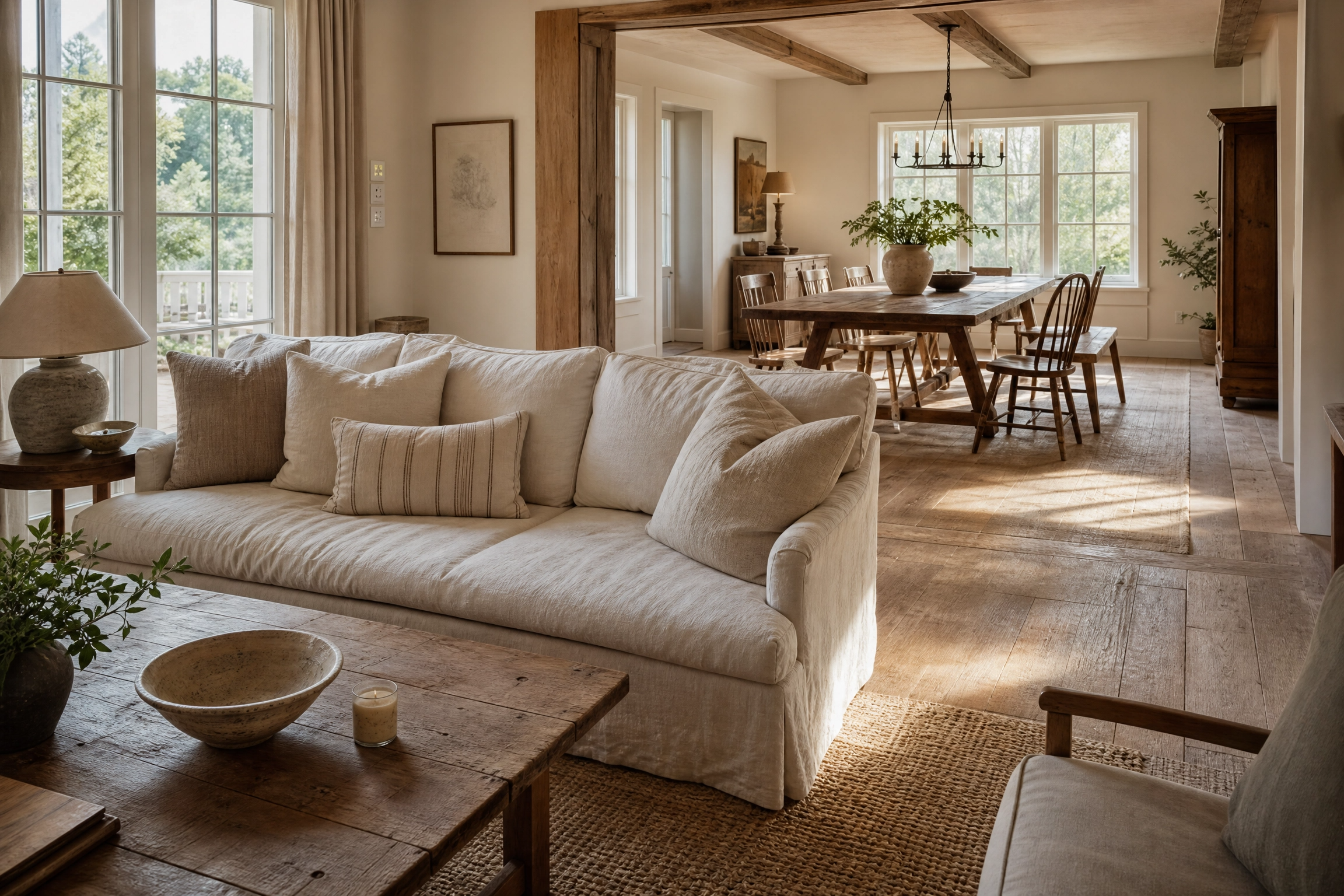
There is something genuinely comfortable about a home furnished in the farmhouse style. It does not try too hard. It does not demand that you admire it from a distance. It pulls you in, invites you to sit down, and makes you feel like staying. What makes this style so enduring is that it is built around furniture with real presence, pieces made from honest materials like solid wood, aged iron, woven rattan, and worn linen, each one chosen for how it feels to live with every day, not just how it photographs. Whether you are starting fresh in a new space or layering warmth into a home you have lived in for years, farmhouse furniture gives you so much to work with.
The ideas in this article cover every room in the house, from living room anchors to bedroom statement pieces to dining room setups that make gathering feel easy. Each idea has been chosen because it works in practice, not just in theory. Some are budget-friendly starting points, others are worth the investment, and a few fall somewhere in between. All of them reflect the core of what farmhouse style actually is: furniture that is functional, character-rich, and built to be lived in.
Living Room Furniture Ideas
1. The Slipcovered Linen Sofa
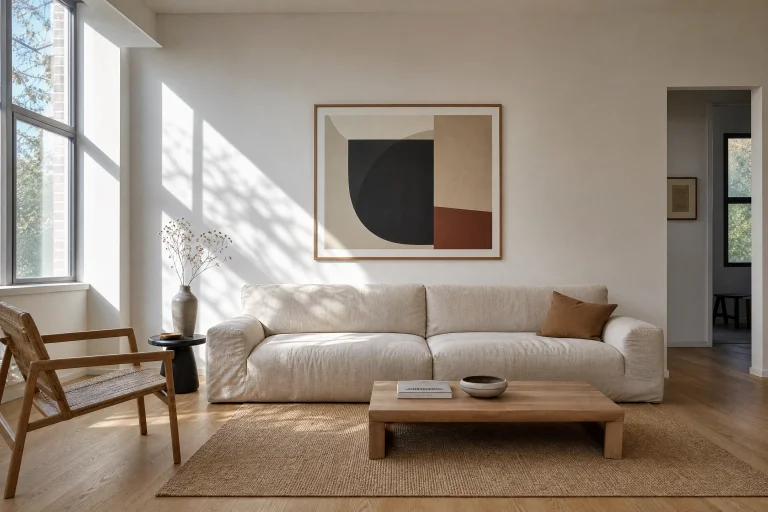
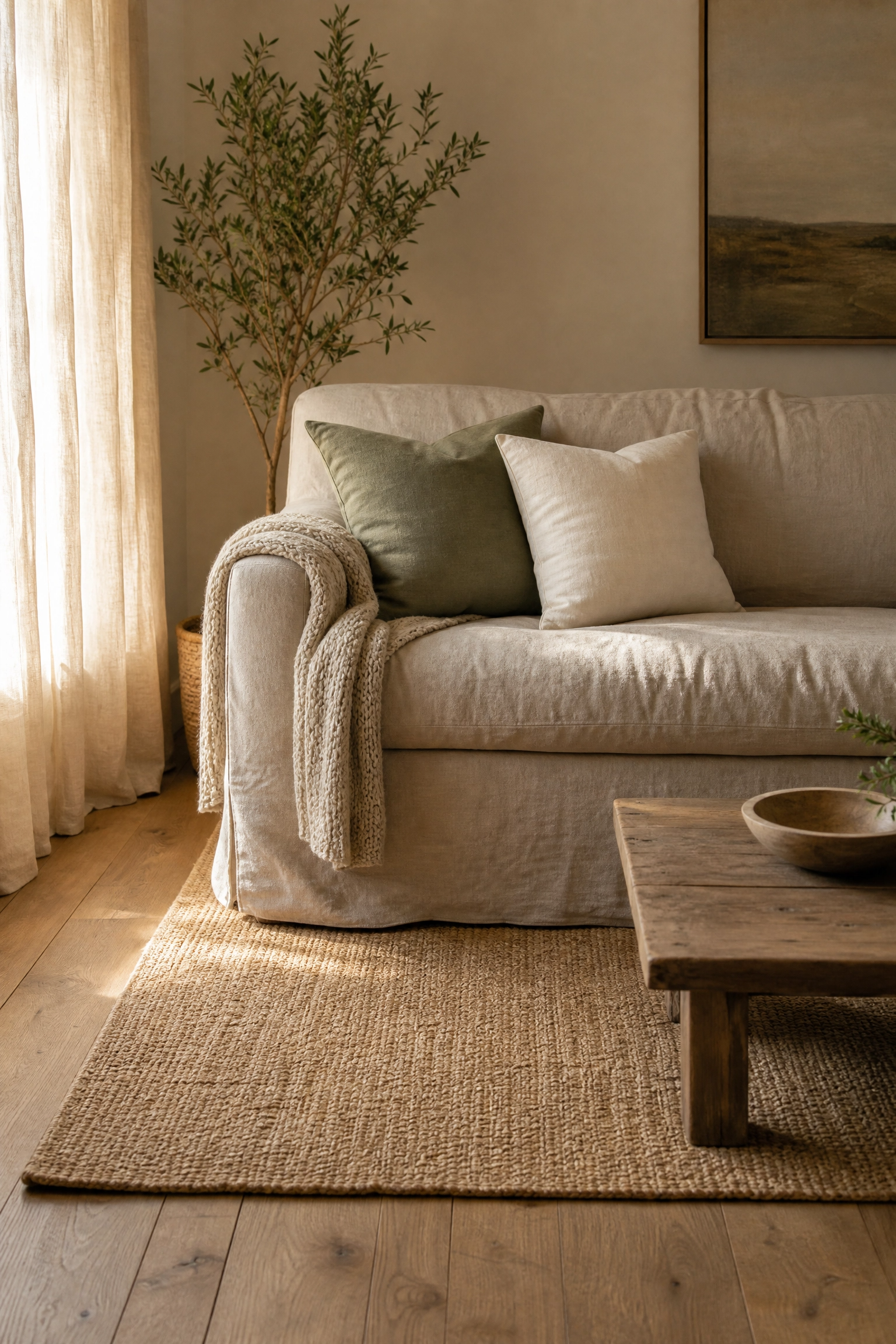
A slipcovered sofa in natural linen or heavyweight cotton is one of the most practical and visually honest pieces you can bring into a farmhouse living room. The loose, slightly relaxed fit of a slipcover is part of the look, it signals comfort before anyone has even sat down. Choose a color in warm white, oatmeal, or soft flax, and pair it with a chunky knit throw and a few square cushions in muted sage or faded terracotta. The slipcover also has a real functional benefit: most are machine washable, which makes this a genuinely family-friendly option. For the frame, look for deep seats with cushion heights that allow you to sink in rather than perch. One thing that works really well here is placing the sofa on a jute or wool rug rather than a synthetic one, because the natural fibers ground the whole setup and stop it from feeling too polished.
Designer Advice: Avoid slipcovers that are too fitted or too crisp. The slight rumple is intentional and part of the farmhouse charm. If yours looks too stiff, run it through the dryer with a damp cloth before putting it back on.
2. The Reclaimed Wood Coffee Table
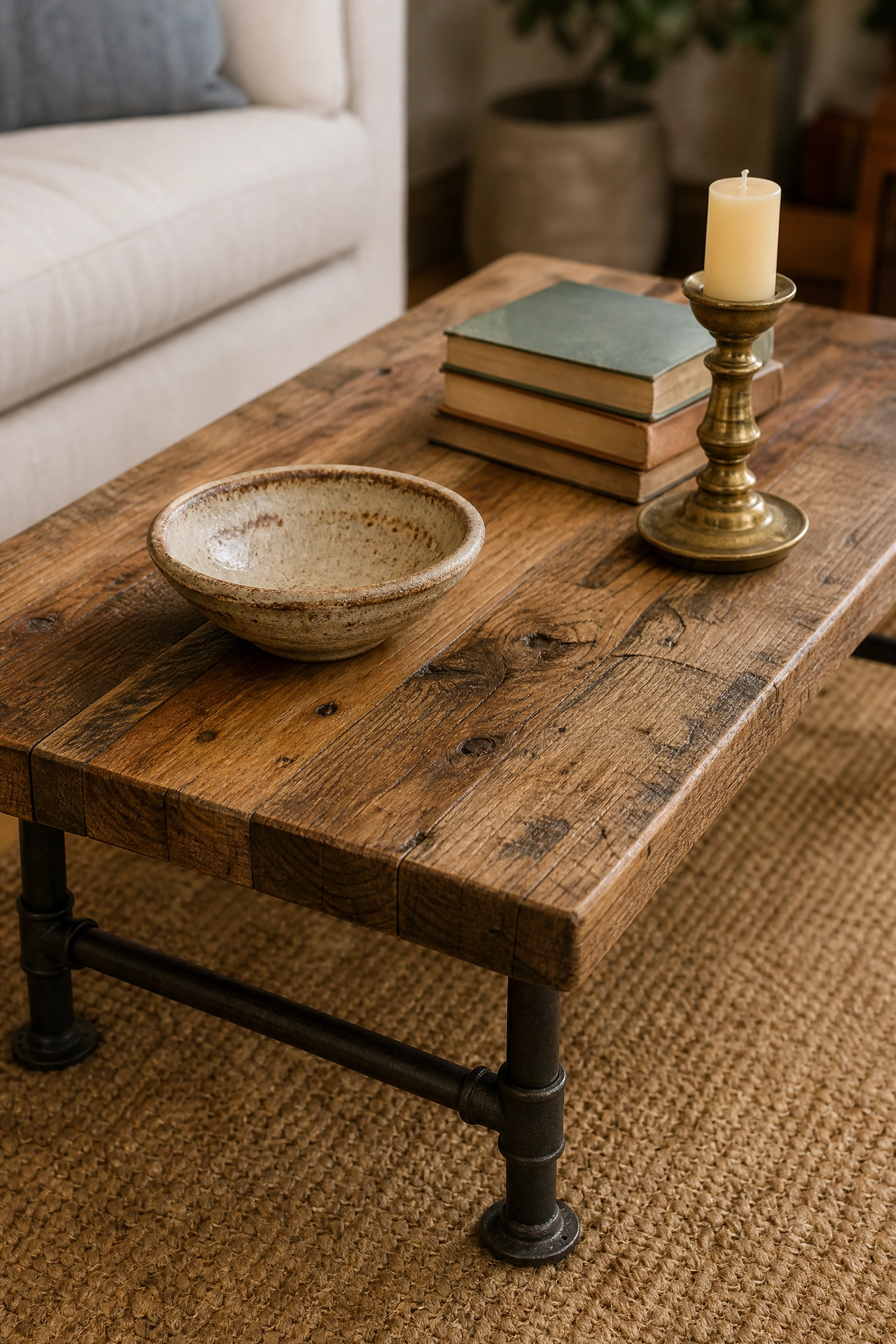
A coffee table made from reclaimed or heavily distressed solid wood is one of the most character-defining pieces in a farmhouse living room. The grain tells a story, the knots and variations in color give depth that no factory-fresh piece can replicate, and in practice it is nearly impossible to damage in a way that looks out of place. Look for tables with iron pipe legs or hand-forged metal bases, which add an industrial-farmhouse edge without tipping into full industrial territory. Style the surface simply: a vintage ceramic bowl, a small stack of coffee table books with muted covers, and a candle in an aged brass holder. In terms of scale, go bigger than you think you need. A generous table at a lower height, around 16 to 18 inches, anchors the seating arrangement and makes the whole room feel more considered. Budget note: reclaimed wood tables from smaller makers or antique markets are often more affordable than big-box versions and significantly more interesting.
Designer Advice: If you find a solid wood table with bones you love but a finish that feels too orange or too glossy, sand it lightly and apply a coat of dark wax. It takes about an afternoon and completely changes the feeling of the piece.
3. The Spindle-Back Accent Chair
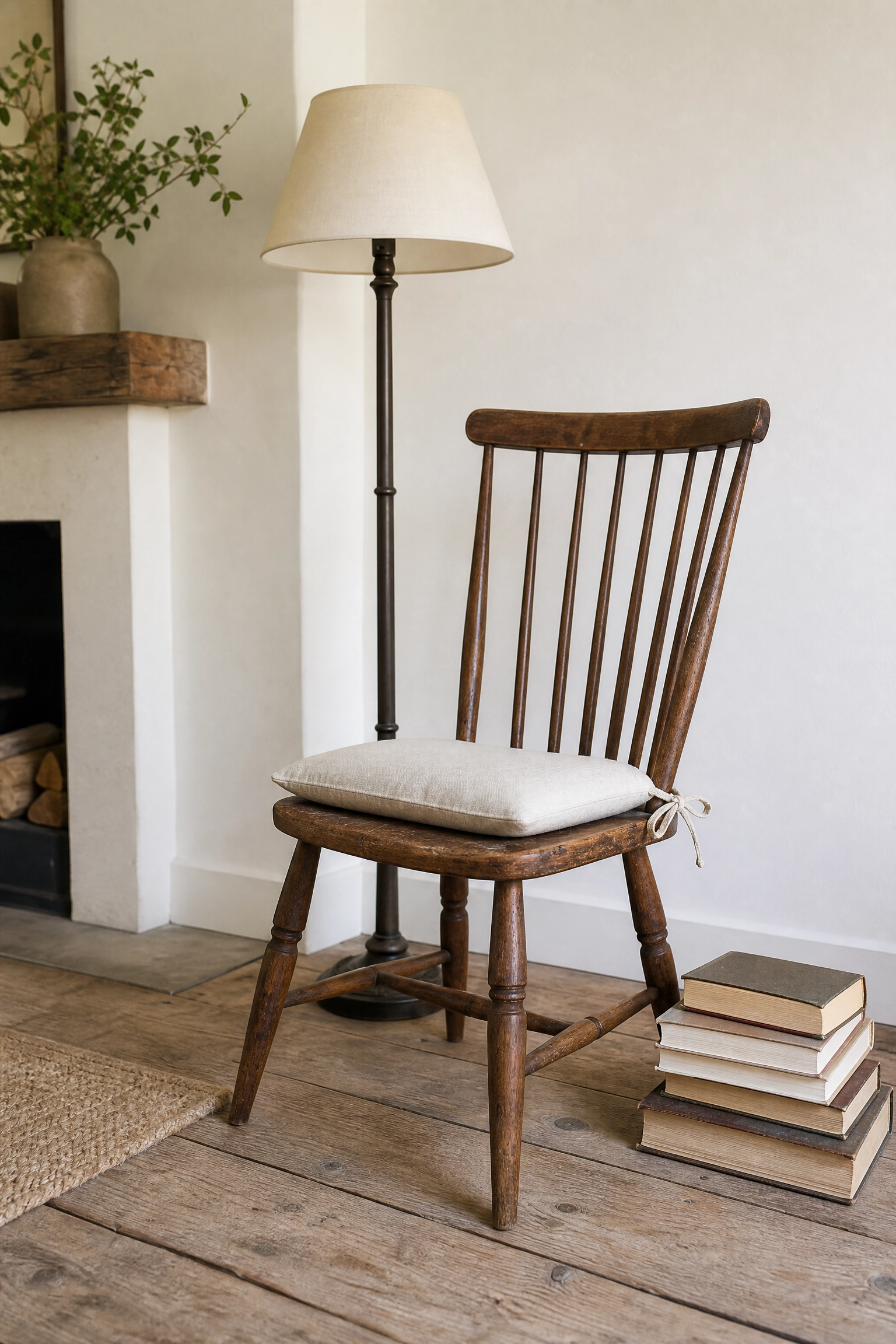
The spindle-back chair, with its turned wooden uprights and gently curved seat, is one of those pieces that reads as quietly traditional without being stuffy. It works beautifully as a reading corner anchor, a fireside companion, or a visual counterpoint to a more modern sofa in a transitional farmhouse room. Choose one in natural oak or painted in a soft off-white if you want it to feel airy, or go with a darker walnut finish if you want more contrast. Add a linen or woven cotton seat cushion tied with simple fabric strings. What makes this chair a practical farmhouse pick is that it brings visual lightness to a room. Unlike a bulky armchair, a spindle-back takes up very little visual weight while still providing a proper seat. It also layers beautifully with other styles, which means it works just as well in a more eclectic space as it does in a pure farmhouse room.
Designer Advice: Place a spindle-back chair at a slight angle to the room rather than flush against a wall. It reads more intentional that way, like a seat that is waiting to be used rather than a piece pushed out of the way.
4. The Vintage Trunk as a Coffee Table Alternative
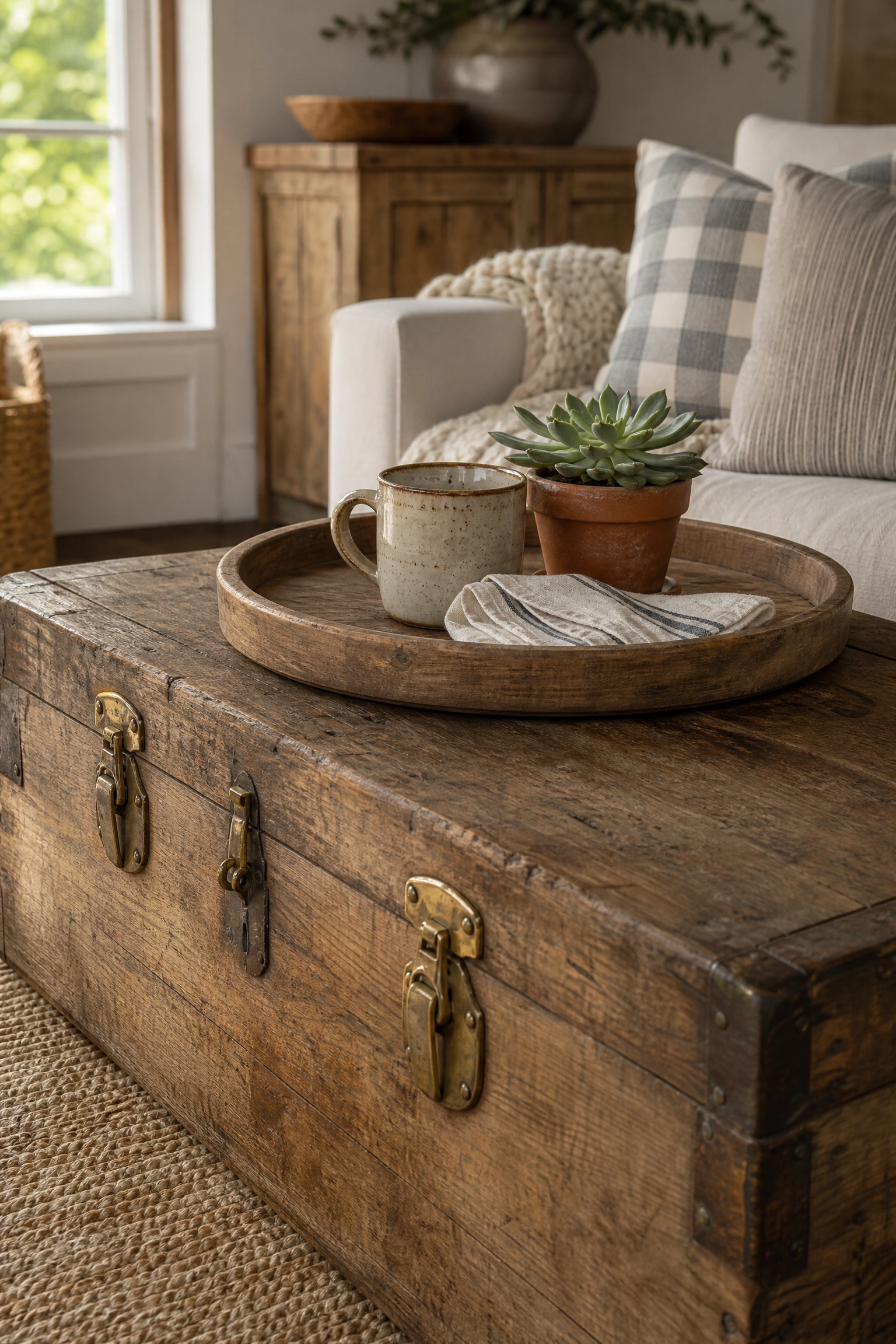
A large wooden trunk or blanket chest used as a coffee table is a farmhouse living room idea that comes with built-in storage, which makes it genuinely useful in smaller spaces. Look for trunks with original hardware, whether that is aged brass clasps, wrought iron hinges, or hand-painted lettering, because those details are what give the piece personality. Stack a few books or a large round tray on top to make the surface more functional and to prevent the lid from looking like it belongs in a hotel lobby. Inside, you can store extra throws, board games, or seasonal cushion covers. In practice, the height of most vintage trunks, typically 18 to 20 inches, is just slightly taller than a standard coffee table, so it is worth checking this before committing. This is a budget-friendly idea if you shop at estate sales, thrift shops, or online marketplaces, where well-worn trunks can often be found for a fraction of retail prices.
Designer Advice: If the trunk lid is too curved to hold objects flat, place a large round wooden serving board on top. It solves the surface problem and adds another layer of farmhouse texture.
5. The Shaker-Style Media Console
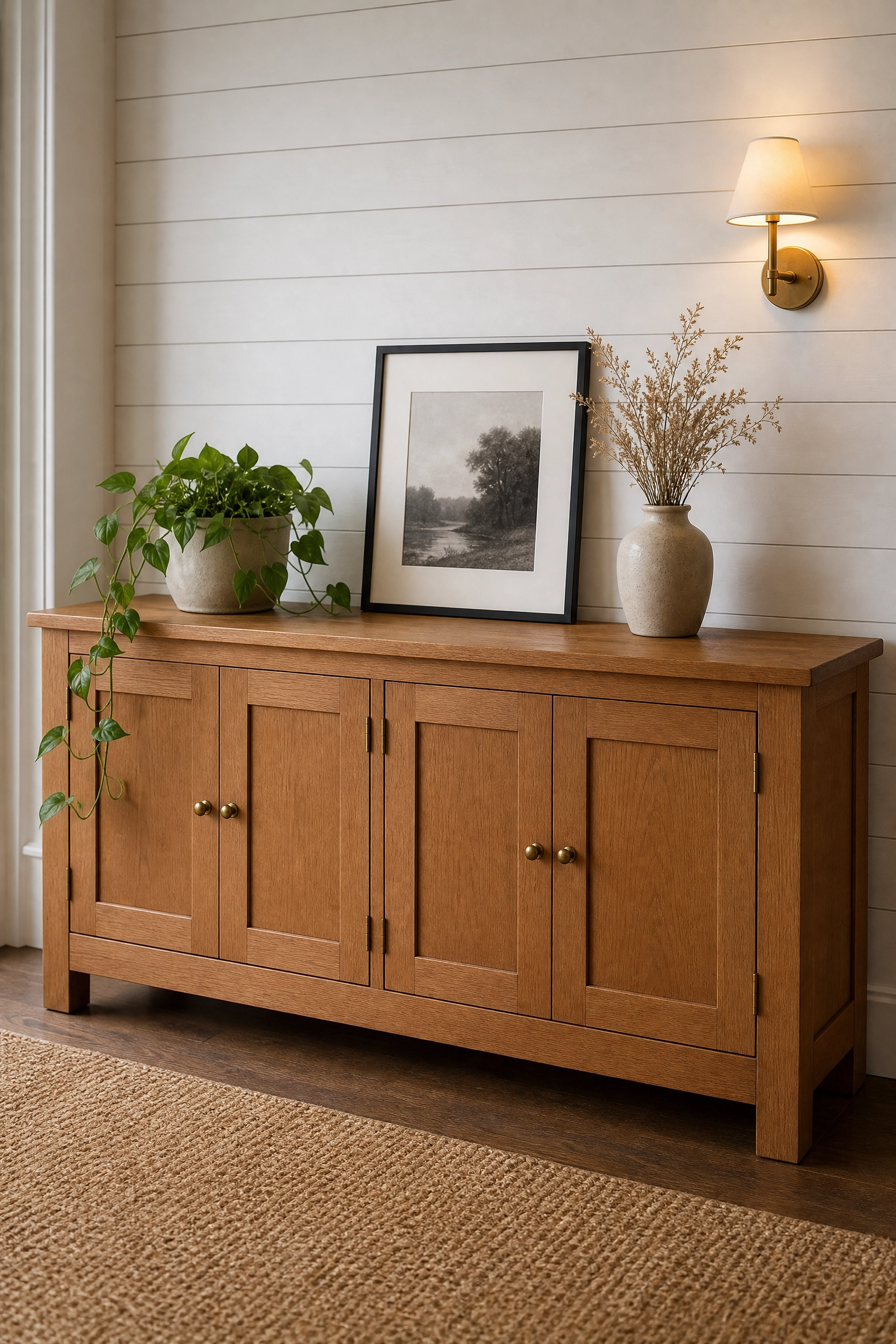
Media furniture is one of the places where farmhouse style most often goes wrong, mostly because flat-screen televisions look naturally at odds with aged wood and handcrafted finishes. The solution is to choose a Shaker-style media console in solid wood, something with flat-panel doors, simple hardware in matte black or aged brass, and enough closed storage to hide cable boxes and streaming devices. The clean lines of Shaker design fit into a farmhouse room without looking too rustic, and the closed doors mean the console works as a piece of furniture even when the TV is off. Pair it with a large round mirror above it if there is no television, or frame the TV symmetrically with two simple wall sconces on either side to integrate the screen into the overall wall composition. Pine, poplar, and oak are all good material choices, and painted versions in creamy white or soft sage are especially versatile.
Designer Advice: If your media console has open shelving, resist the urge to fill it with too many objects. Three to five carefully chosen items, a ceramic vase, a small framed photo, and a trailing plant, will always look better than a crowded shelf.
Dining Room Furniture Ideas
6. The Long Plank Dining Table
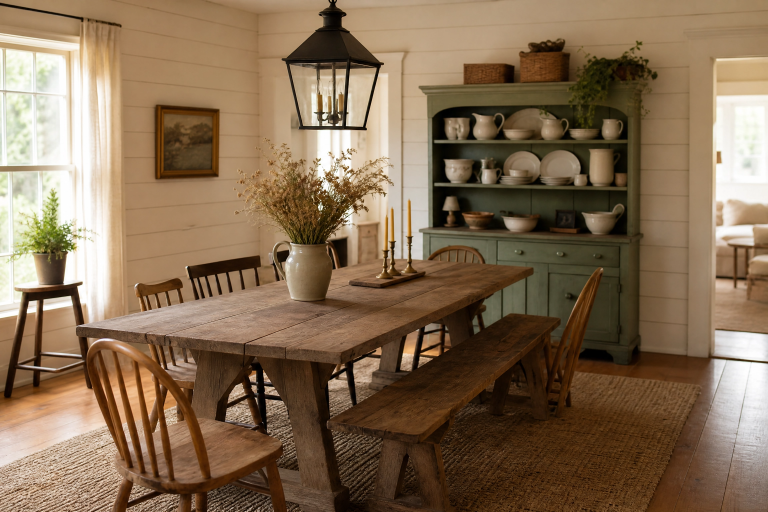
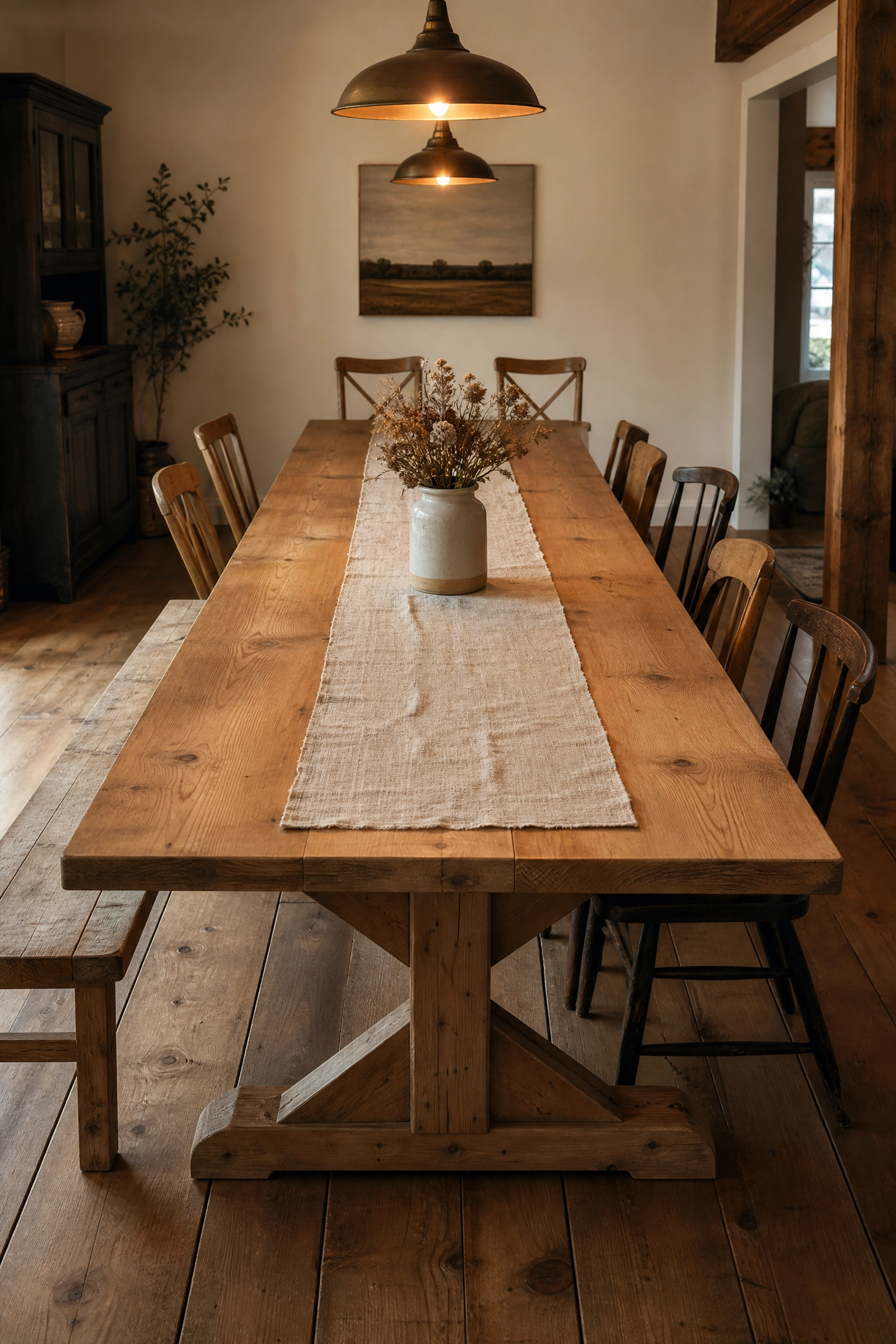
The long plank dining table is the true centerpiece of a farmhouse dining room. It is the piece that sets the tone for everything around it, and when done well, it is the kind of table that gets better the more it is used. Look for tables made from solid pine, oak, or poplar, ideally with visible grain and slight variations in tone across the surface. The trestle base is the most traditional farmhouse choice and adds a lot of visual interest without overwhelming the room. In terms of size, go as long as your space can comfortably handle, because a farmhouse table that feels generously sized is part of the whole atmosphere. Seat it with a mix of chairs rather than a matching set: upholstered dining chairs at the heads, simple ladder-back or crossback chairs along the sides, and a raw wood bench on one side for a looser, more gathered feel. This kind of mismatched seating is very much in keeping with how farmhouse dining rooms are meant to feel, like a table that has collected its chairs over time.
Designer Advice: Leave the table surface lightly oiled rather than heavily lacquered. A matte or satin finish shows the wood’s natural beauty and ages gracefully with use, while high-gloss finishes tend to show every scratch and mark in an unflattering way.
7. The Cross-Back Dining Chair
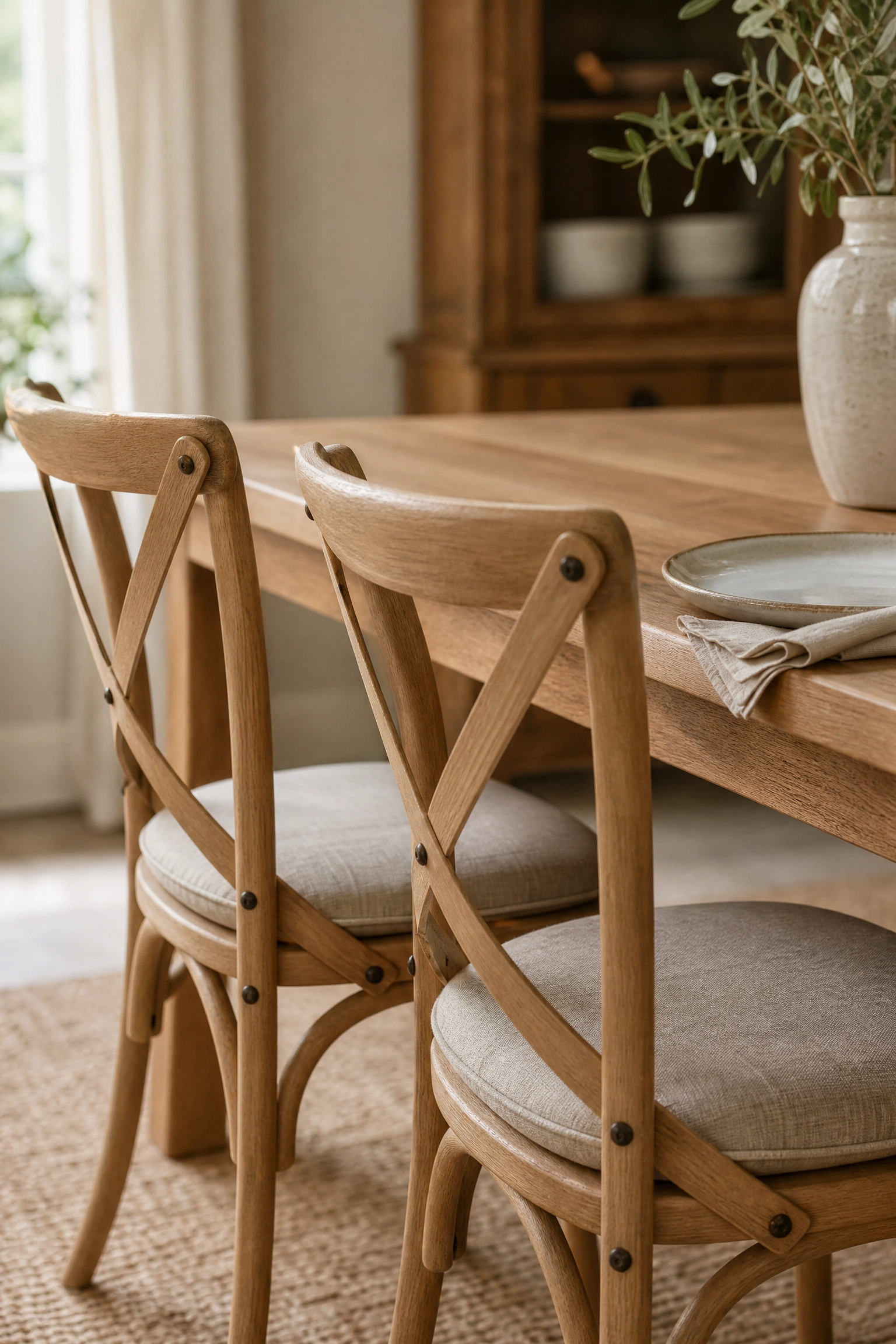
Cross-back chairs, also called Xavier chairs in some design circles, are one of the most versatile and genuinely farmhouse-authentic seating options available. The X-shaped cross brace on the back is a structural element borrowed from traditional European country furniture, and it gives the chair visual interest without adding decorative ornamentation. They stack easily, which makes them practical for larger gatherings, and they work in solid wood finishes or in painted versions. For a farmhouse dining room, natural oak or whitewashed ash are the most fitting finishes. Add a simple linen or cotton seat pad in a neutral tone for comfort during longer meals. These chairs are available at a wide range of price points, and even more affordable versions tend to look appropriate in a farmhouse setting because the design is inherently unfussy. They pair especially well with a long plank table and work just as well in a kitchen eating area as they do in a dedicated dining room.
Designer Advice: Mix cross-back chairs with a wooden bench on one side of the table. It creates a more relaxed, informal energy and makes the table feel more like a gathering spot and less like a formal dining arrangement.
8. The Antique or Vintage Hutch
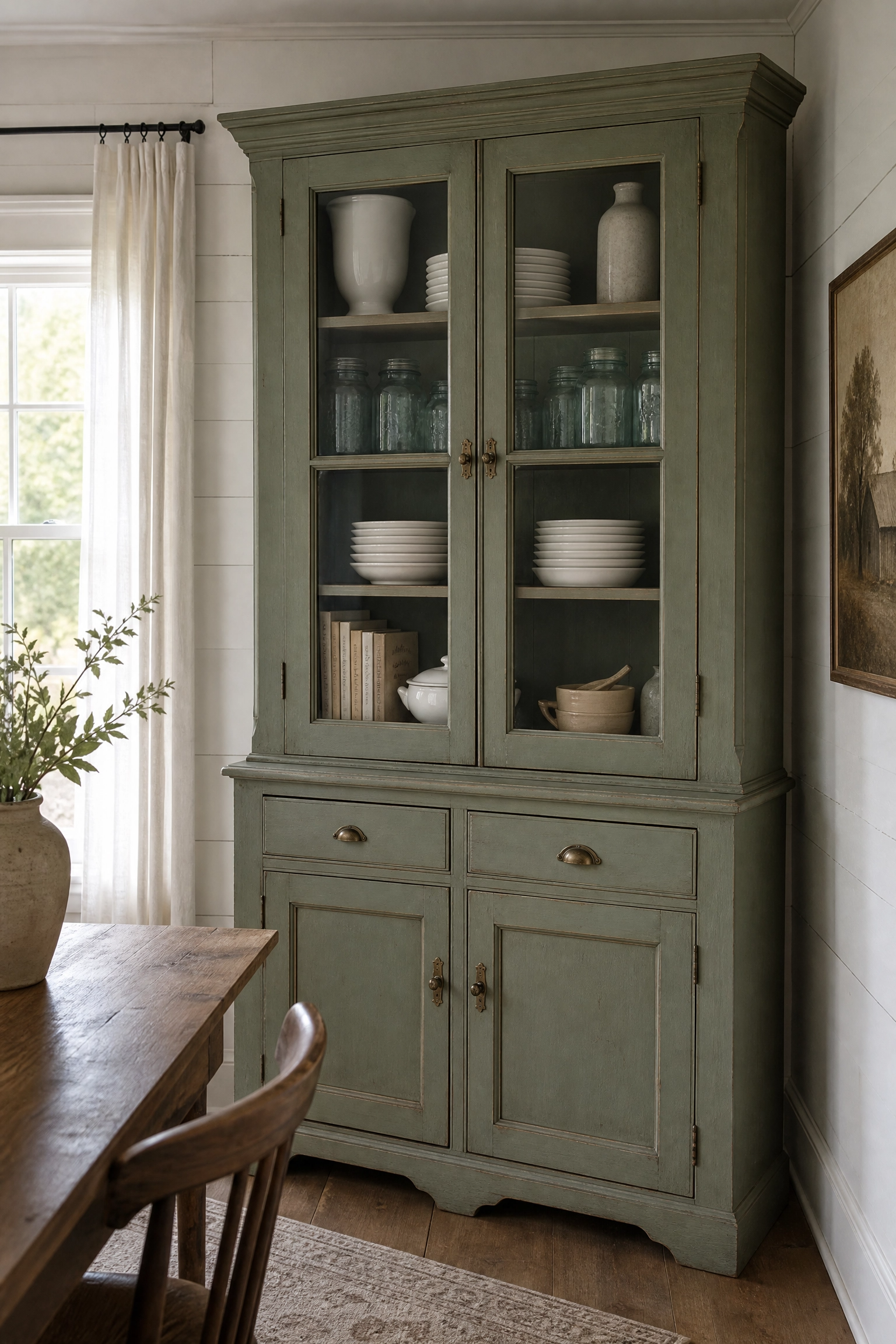
A painted or natural wood hutch brings enormous character to a farmhouse dining room and solves the very practical problem of where to store and display dishes, glassware, and serving pieces. Look for hutches with glass-fronted upper cabinets and solid lower doors, ideally with original hardware that shows some age. A painted hutch in sage green, dusty blue, or warm cream can become the most visually interesting piece in the room. Style the upper shelves with a mix of vintage ceramic plates, simple glass jars, a few cookbooks with interesting spines, and something with height like a tall ceramic vase or a bundle of dried pampas grass. The lower cabinet keeps less attractive but necessary items hidden. In practice, a hutch also adds vertical interest to a room, which matters in dining spaces that can sometimes feel flat. This is an investment-level piece if bought new, but antique markets and estate sales regularly produce beautiful originals at very reasonable prices.
Designer Advice: Do not style a hutch symmetrically. Farmhouse design is about collected, organic arrangements, so vary the heights, mix textures, and leave a little breathing room between objects so each one can be seen.
9. The Farmhouse Bench
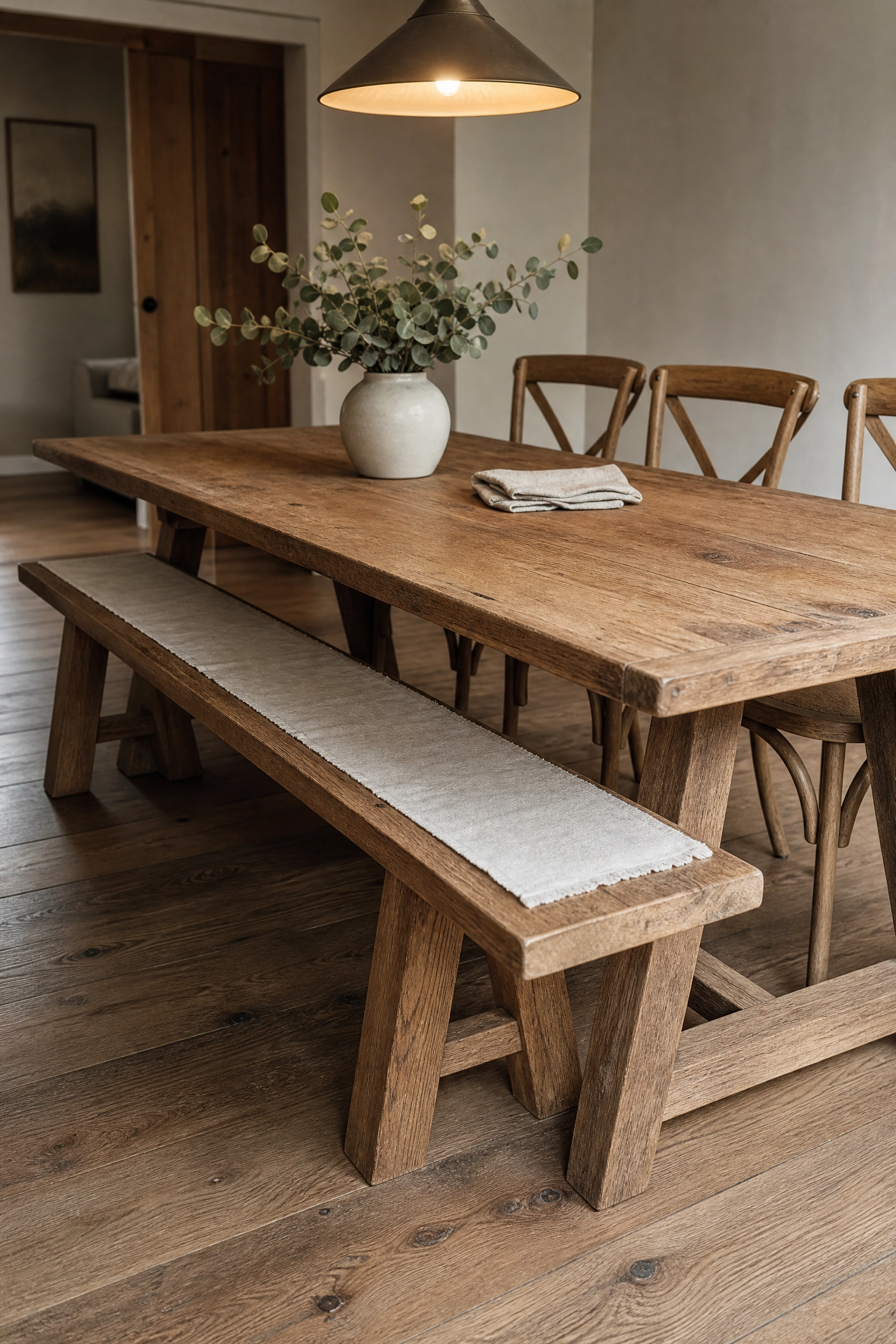
A solid wood bench along one side of a dining table is one of the most practical pieces of furniture in the farmhouse repertoire. It creates flexible seating, since three people can comfortably fit where two chairs would normally go, and it brings a casual, unpretentious energy to the dining room that feels completely in keeping with the style. Look for benches made from solid pine or oak with simple turned legs or angled Shaker-style legs. Leave the top unfinished or lightly waxed so it develops a natural patina with use. A bench also works beautifully at the foot of a bed, along an entryway wall, or as additional seating in a living room, which makes it one of the most versatile pieces you can own. Budget-conscious shoppers should note that a simple wooden bench is one of the more affordable solid wood furniture purchases available, and a well-made one from a local woodworker will last for decades.
Designer Advice: Add a long linen or cotton runner along the bench seat if you want to make it more comfortable for longer meals without the effort of individual cushions. It also adds a soft texture that balances the hard wood.
10. The Ladder-Back Chair
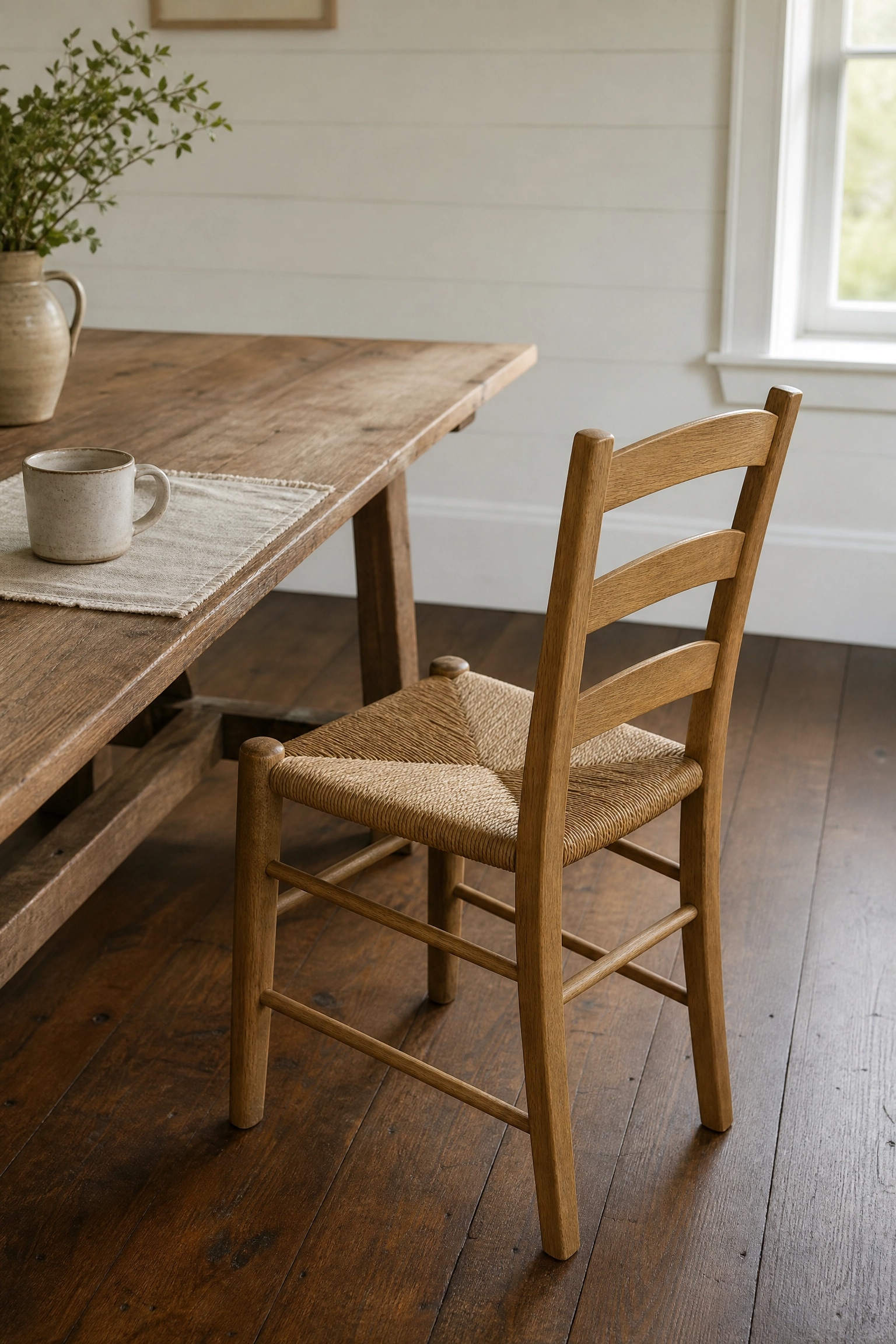
The ladder-back chair is one of the oldest and most recognizable forms in American furniture making, and it fits into a farmhouse dining room with an ease that more decorative chairs simply cannot match. The horizontal slats that give the chair its name are a practical design feature borrowed from colonial furniture traditions, and in a farmhouse context they read as both functional and quietly handsome. Choose ladder-backs in natural wood finishes for a warmer, more traditional feel, or painted in black or deep navy if you want a slightly more graphic, modern-farmhouse look. Woven rush or cane seats are the most authentic material choice and add a texture that works beautifully alongside linen napkins and wooden tableware. These chairs are widely available at antique markets and vintage shops, often in sets, which makes them a great find for a room that needs character without the budget for custom furniture.
Designer Advice: If you find ladder-back chairs with tired or broken rush seats, replace the seats with a woven seagrass or a simple drop-in upholstered cushion in a neutral linen. It refreshes the piece for a fraction of what a new chair would cost.
Bedroom Furniture Ideas
11. The Shiplap-Inspired Panel Bed
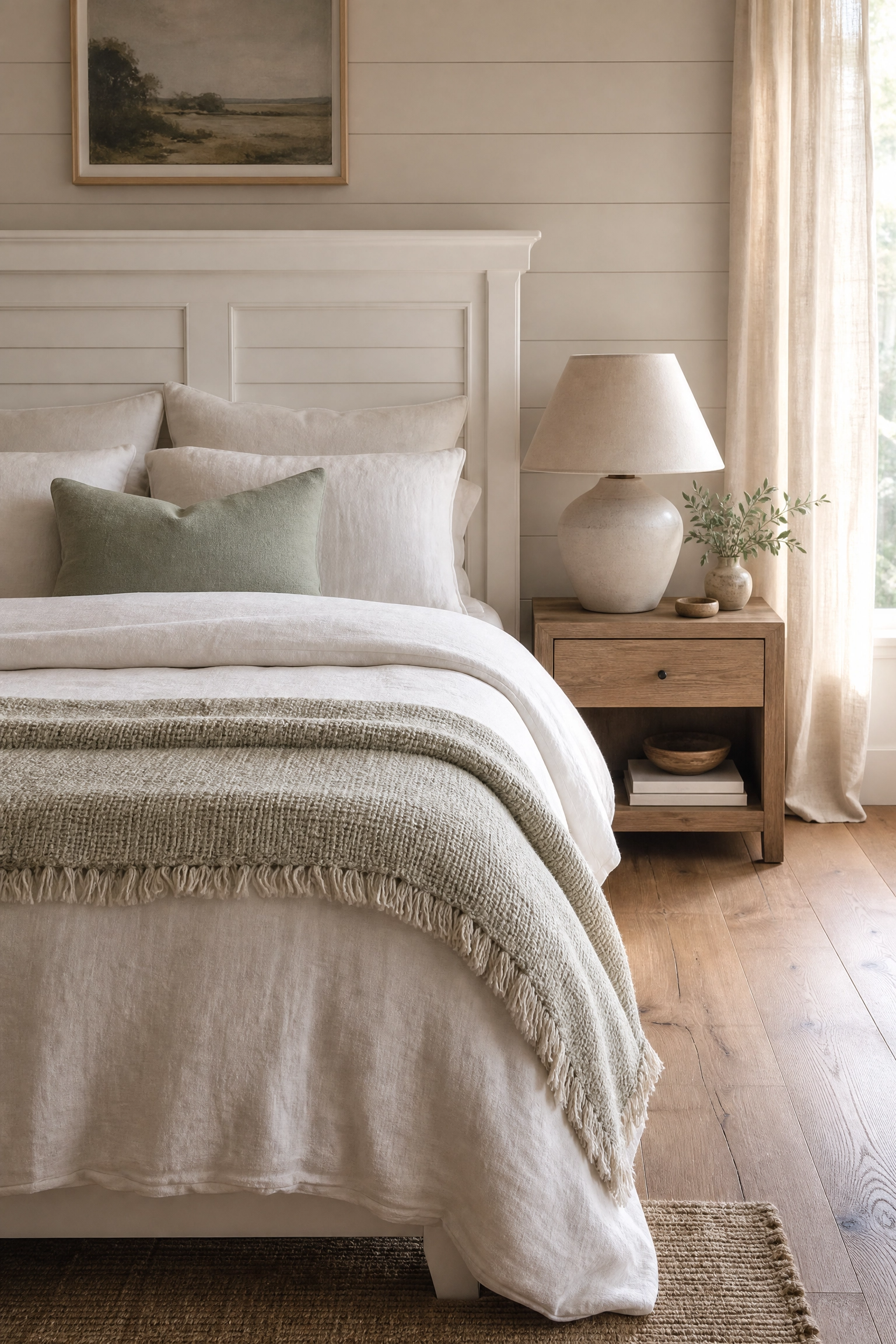
A bed frame with a paneled or shiplap-inspired headboard is one of the most effective ways to anchor a farmhouse bedroom without introducing anything heavy or ornate. The horizontal paneling echoes the architectural detail most associated with farmhouse interiors and creates a strong visual focal point behind the bed. Choose one in natural pine for a warm, rustic effect, or in painted white for a cleaner, brighter look that pairs well with soft linen bedding in tones of warm white, dusty rose, or sage. The frame itself should be kept simple, ideally with straight lines and minimal embellishment, so the texture of the paneling does the work. Layer the bed with a mix of textures: a linen duvet, a woven cotton blanket folded at the foot, and a combination of euro shams and standard pillows in complementary neutral tones. This type of bed is available at a range of price points and is also a very manageable DIY project for anyone comfortable with basic woodworking.
Designer Advice: Keep bedside tables simple when using a paneled headboard. The headboard is the statement; everything around it should support rather than compete with it.
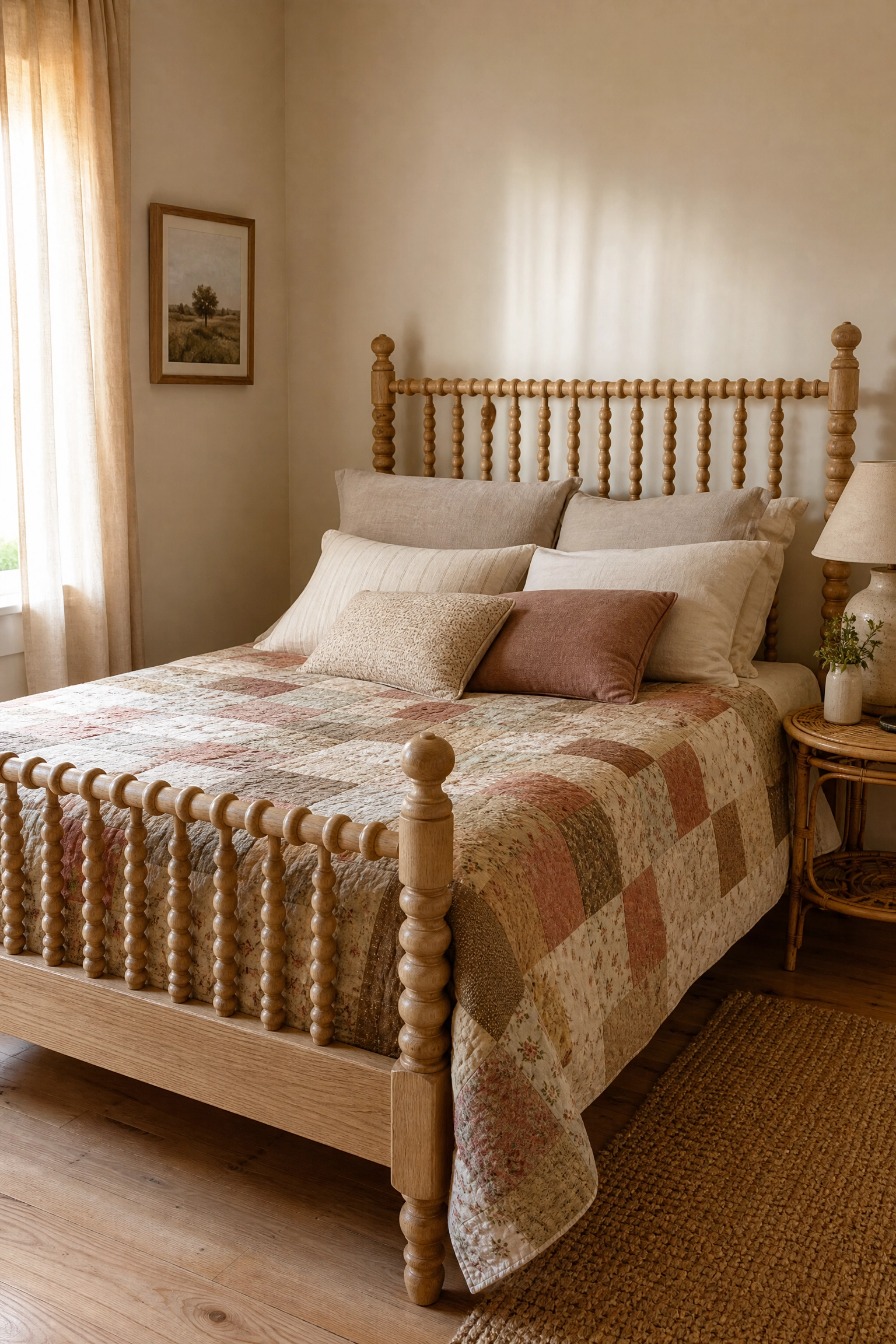
12. The Spindle Bed
The spindle bed, with its rows of turned wooden posts running along the headboard and often the footboard as well, is one of the most distinctly farmhouse furniture forms available. It references the craft traditions of rural New England and early American furniture making, and in a modern bedroom it brings an immediate sense of warmth and character. Look for spindle beds in natural oak or maple for a light, airy feel, or in painted white for a cottage-farmhouse aesthetic. The footboard is optional depending on your room size, but including one creates a more complete, finished look. Pair the bed with simple wood nightstands, a handmade quilt in a patchwork or solid pattern, and linen curtains that let morning light filter softly into the room. Honest limitation: spindle beds can be harder to make without catching the bedding on the posts, so if that is a practical concern, look for versions with wider spindle spacing or without a footboard.
Designer Advice: A spindle bed in white paint paired with warm wood floors and natural linen bedding is one of the most effortlessly farmhouse bedroom combinations available. The contrast between the painted frame and the organic textures around it does most of the work for you.
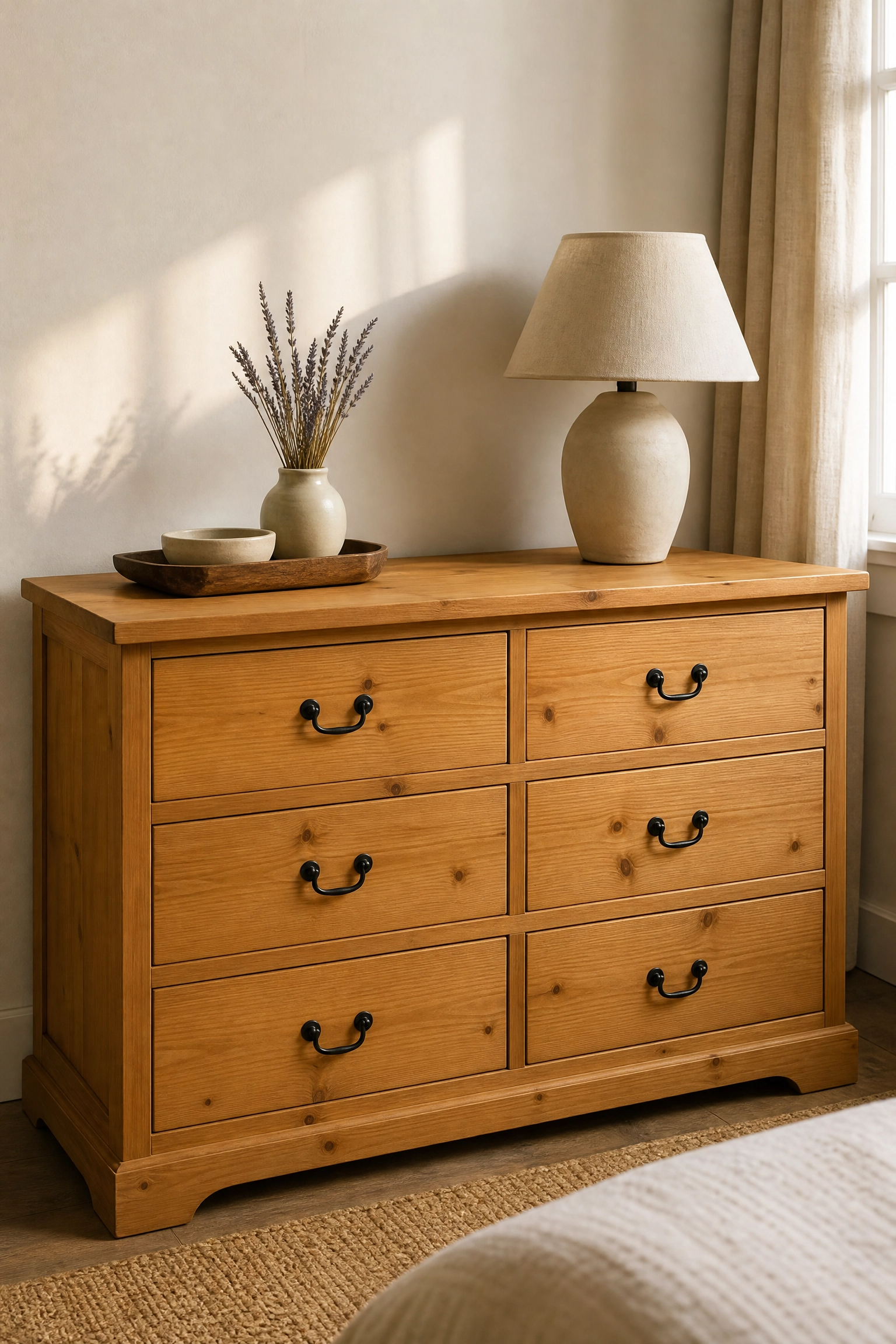
13. The Solid Wood Dresser with Simple Hardware
A solid wood dresser in a farmhouse bedroom should feel like a piece that has been in the family for years, whether it was or not. Look for clean, unfussy silhouettes with flat or slightly raised panel drawer fronts and hardware in matte black, aged brass, or simple bail pulls. Pine and poplar are common and affordable choices; oak and maple are more durable and worth the additional investment if you are buying for the long term. The color can be natural wood, painted in a neutral like warm white or dusty blue, or stained in a medium walnut tone if you want something that feels a little richer and more grounded. Style the top surface simply: a tray to hold small items, a table lamp for ambient evening light, and one or two decorative objects like a small ceramic dish and a bud vase with dried flowers. Avoid overcrowding the top surface, because negative space is just as important in a farmhouse bedroom as the objects themselves.
Designer Advice: If you find a solid wood dresser at an estate sale with dated hardware, replace the hardware before anything else. New matte black or aged brass pulls can change the personality of the piece completely for under 30 dollars.
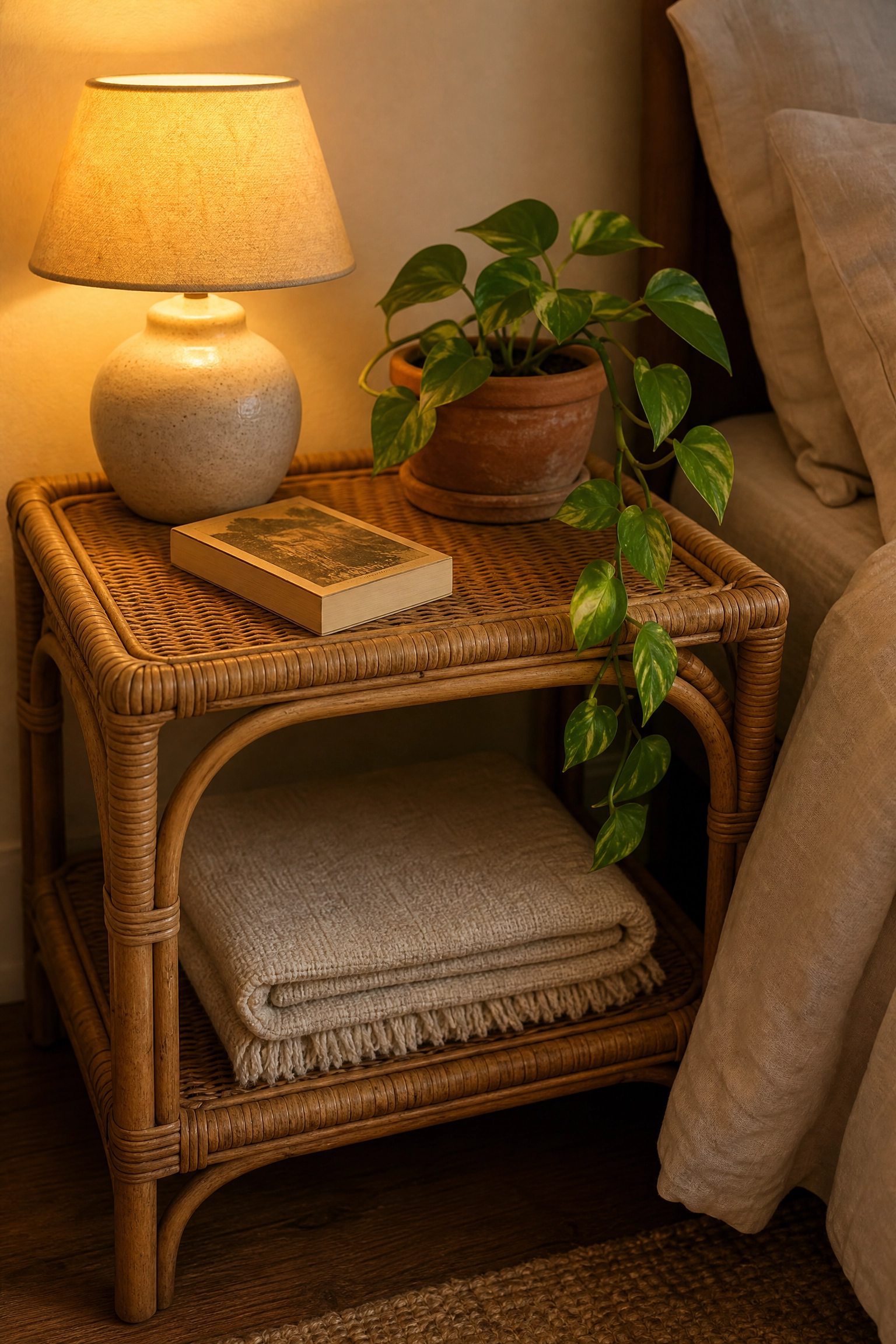
14. The Rattan or Wicker Bedside Table
A rattan or wicker bedside table brings natural texture and a lighter visual weight to a farmhouse bedroom, and it pairs beautifully with heavier wood pieces like a solid bed frame or a dark dresser. The woven material references traditional craftsmanship and connects the bedroom to the organic material palette that defines farmhouse interiors. Look for styles with a simple shelf below the top surface for extra storage, and choose a height that aligns with your mattress, generally around 24 to 28 inches. Style the top with a simple ceramic lamp, a small plant in a terracotta pot, and whatever you actually use at night: a book, a glass of water, a phone charger neatly tucked away. In terms of budget, rattan and wicker furniture tends to be more affordable than solid wood equivalents, making this an accessible way to add texture without a significant investment. Keep in mind that wicker can be more delicate than wood and is not ideal for households with small children who might pull on it.
Designer Advice: Pair one rattan bedside table with one solid wood one on the other side for an intentionally mismatched look. It reads as more considered and personal than two matching pieces and is a very common approach in well-styled farmhouse bedrooms.
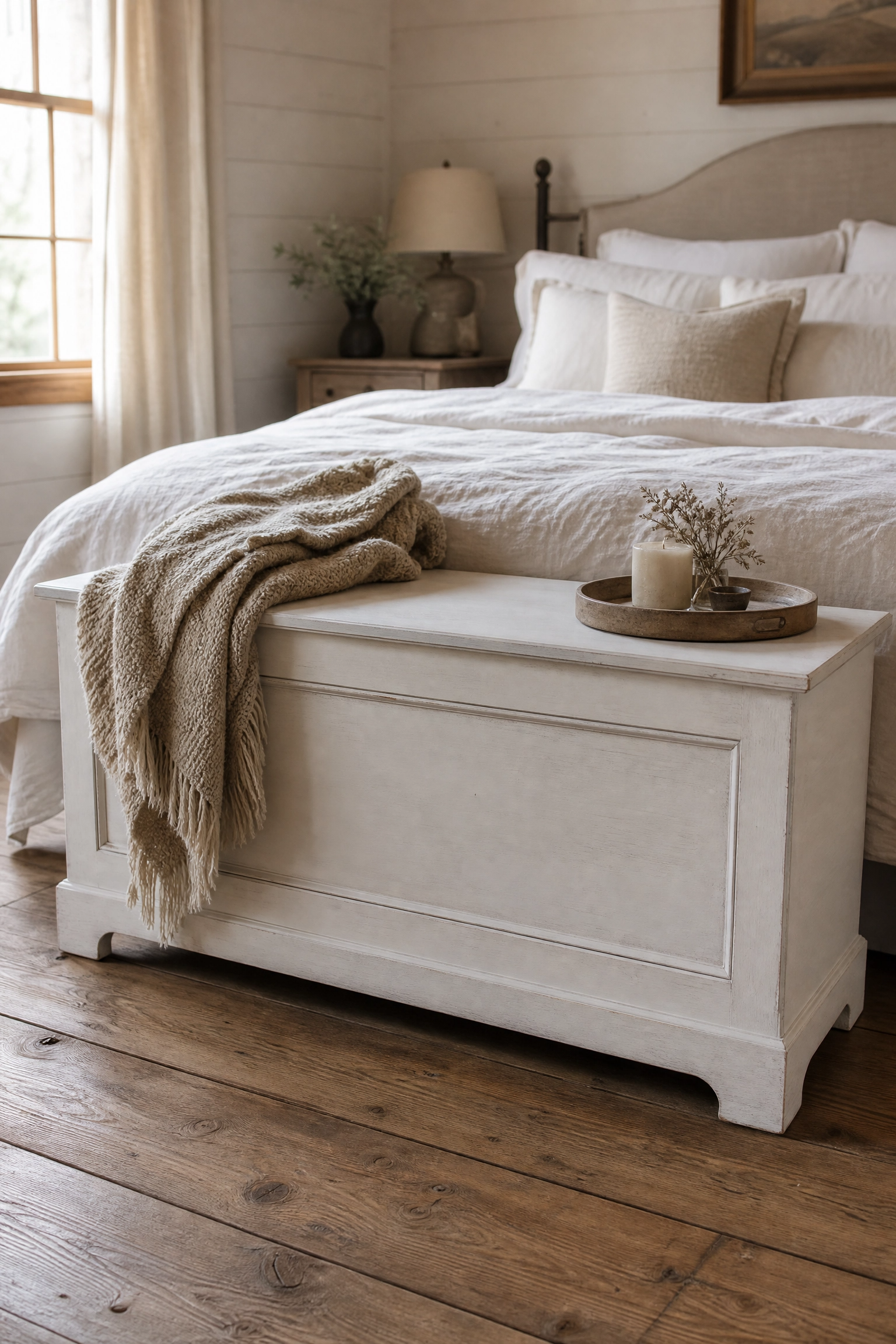
15. The Blanket Chest at the Foot of the Bed
A painted or natural wood blanket chest placed at the foot of the bed is one of those farmhouse pieces that earns its place completely, because it is both beautiful and genuinely useful. It stores extra bedding, seasonal clothing, or anything else that needs a home but not a drawer, and its flat lid doubles as a surface for a folded quilt or a tray with decorative objects. Look for chests with dovetail joinery if you want something built to last, or simpler tongue-and-groove construction for a more affordable option. A painted chest in chalky white or a muted sage green adds a soft color note to the room without competing with the bed. The proportions matter: the chest should be slightly narrower than the bed and low enough that it does not block the view of the headboard. This is an investment piece when bought new from quality makers, but antique and vintage versions are widely available and often come with more character built in.
Designer Advice: Drape a textured throw or a folded quilt over one corner of the blanket chest rather than leaving the lid completely bare. It softens the silhouette of the piece and adds warmth to the foot of the bed.
Entryway and Utility Room Furniture Ideas
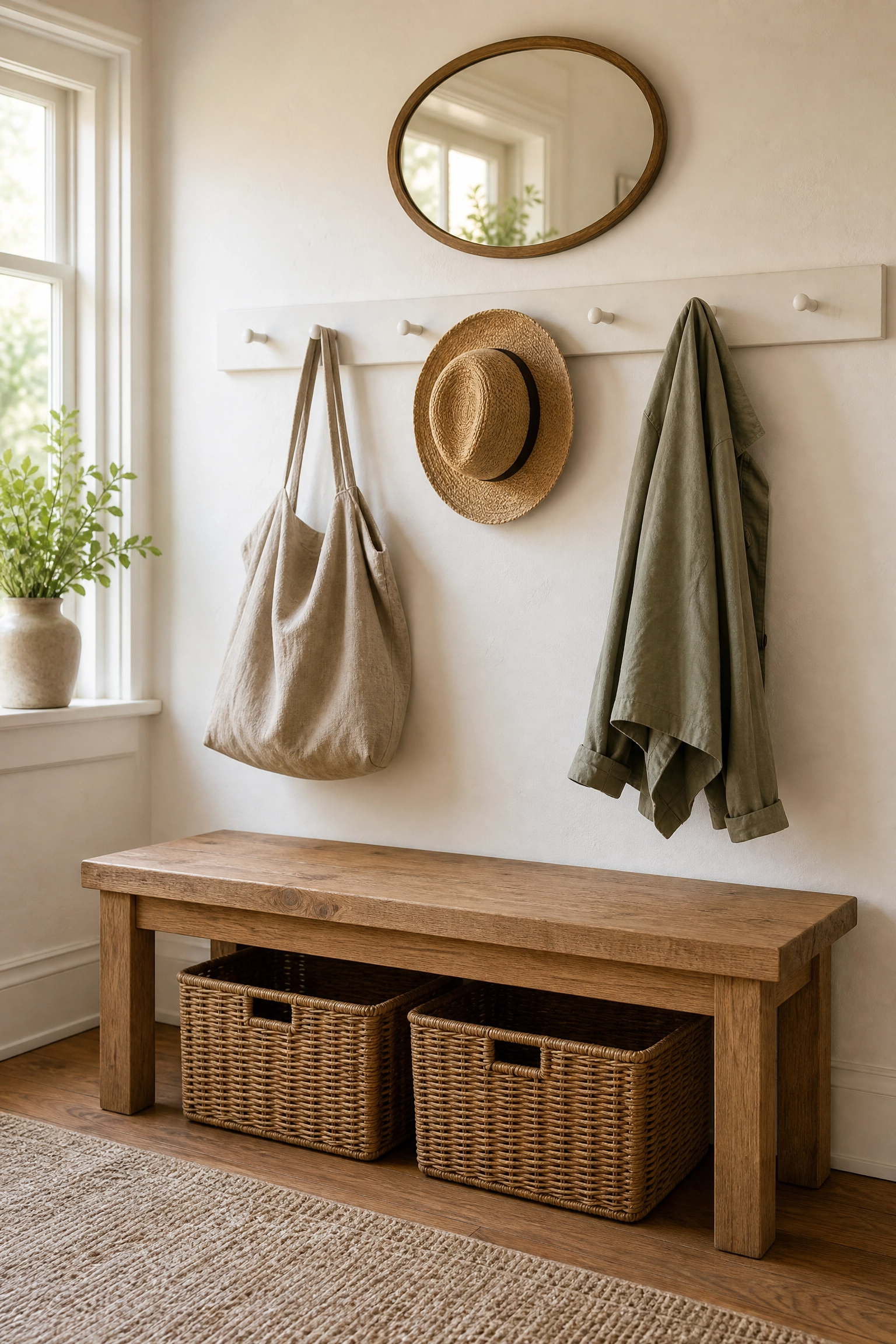
16. The Shaker Peg Rail with a Simple Bench Below
A Shaker peg rail mounted along an entryway wall, paired with a simple solid wood bench beneath it, is one of the most functional and visually cohesive farmhouse furniture combinations available. The peg rail keeps bags, coats, hats, and scarves organized and visible, which makes it genuinely practical in a way that a conventional coat closet often is not. The bench below provides a seat for putting on and taking off shoes and can tuck a row of wicker baskets underneath for additional shoe storage. Choose both pieces in the same wood species or finish for a unified look: natural oak or maple for warmth, or painted white if your entryway is small and needs to feel more open. Add a simple mirror above the peg rail to bring light into the space and make the area feel larger. This setup works in narrow entryways as well as larger halls and is one of the most genuinely useful furniture arrangements in the farmhouse home.
Designer Advice: Limit what you hang on the peg rail to what you actually use every day. A handful of hooks with real items on them looks intentional; a peg rail crowded with rarely used coats and bags looks like a storage problem.
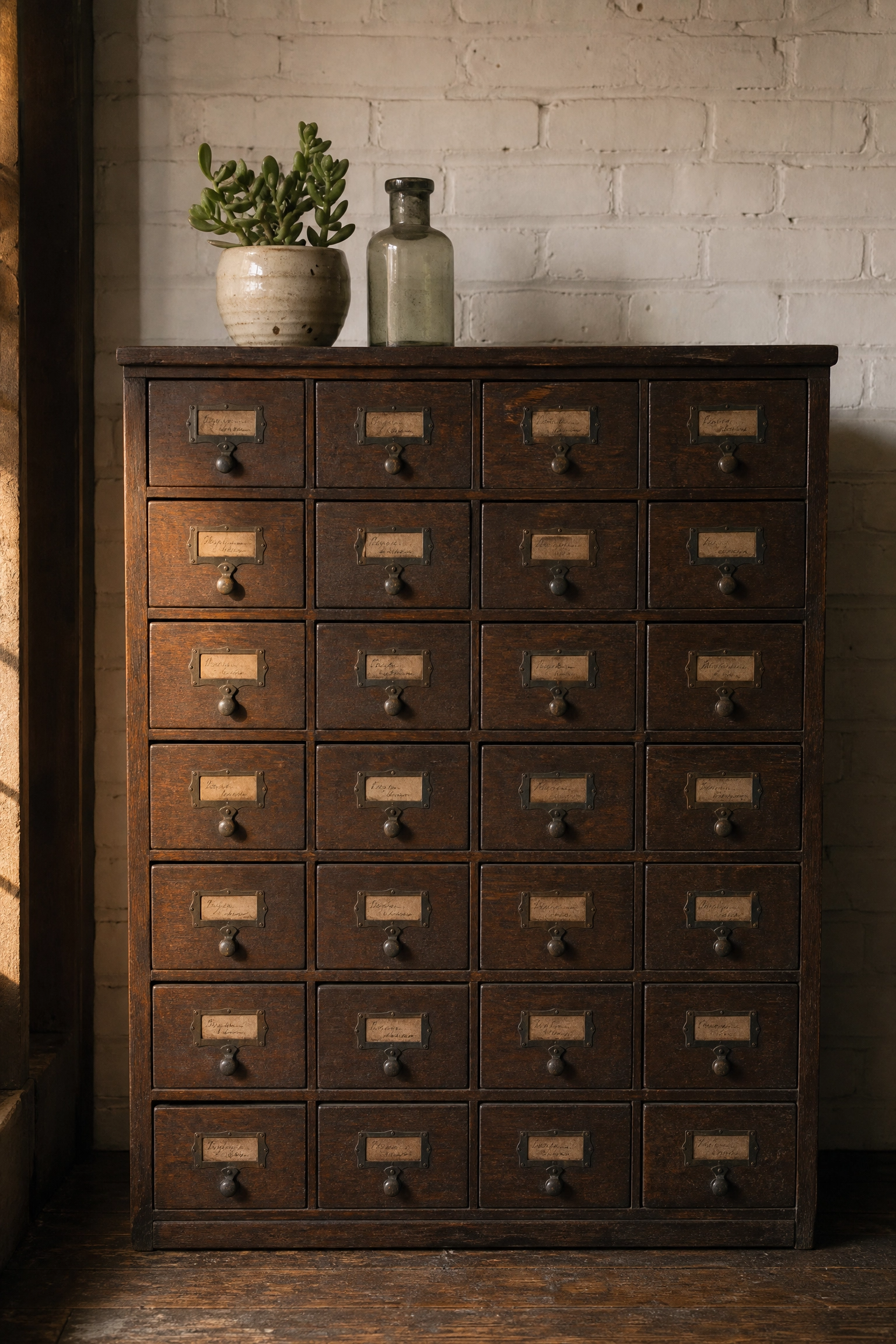
17. The Vintage Apothecary Cabinet
A vintage or reproduction apothecary cabinet, with its rows of small labeled drawers, brings an enormous amount of character to an entryway, home office, or utility room. In a farmhouse home, it reads as a piece with real history and purpose, originally used in pharmacies and general stores to organize herbs, seeds, and small goods. As a piece of furniture, it serves beautifully as an organizational tool: use the small drawers for batteries, keys, stationery, craft supplies, or any of the small items that tend to accumulate without a proper home. Look for cabinets in solid wood with aged metal hardware and original labeling if possible. A reproduction version in dark walnut or pine with matte black iron hardware will work just as well in practice. This is a mid-range to investment-level piece depending on whether you buy vintage or new, but its combination of function and visual interest makes it one of the more rewarding furniture finds in the farmhouse style.
Designer Advice: Do not worry about what the original drawer labels say. Leave them as they are, or replace them with small handwritten cards that reflect what you actually store inside. The patina and history of the piece are what matter.
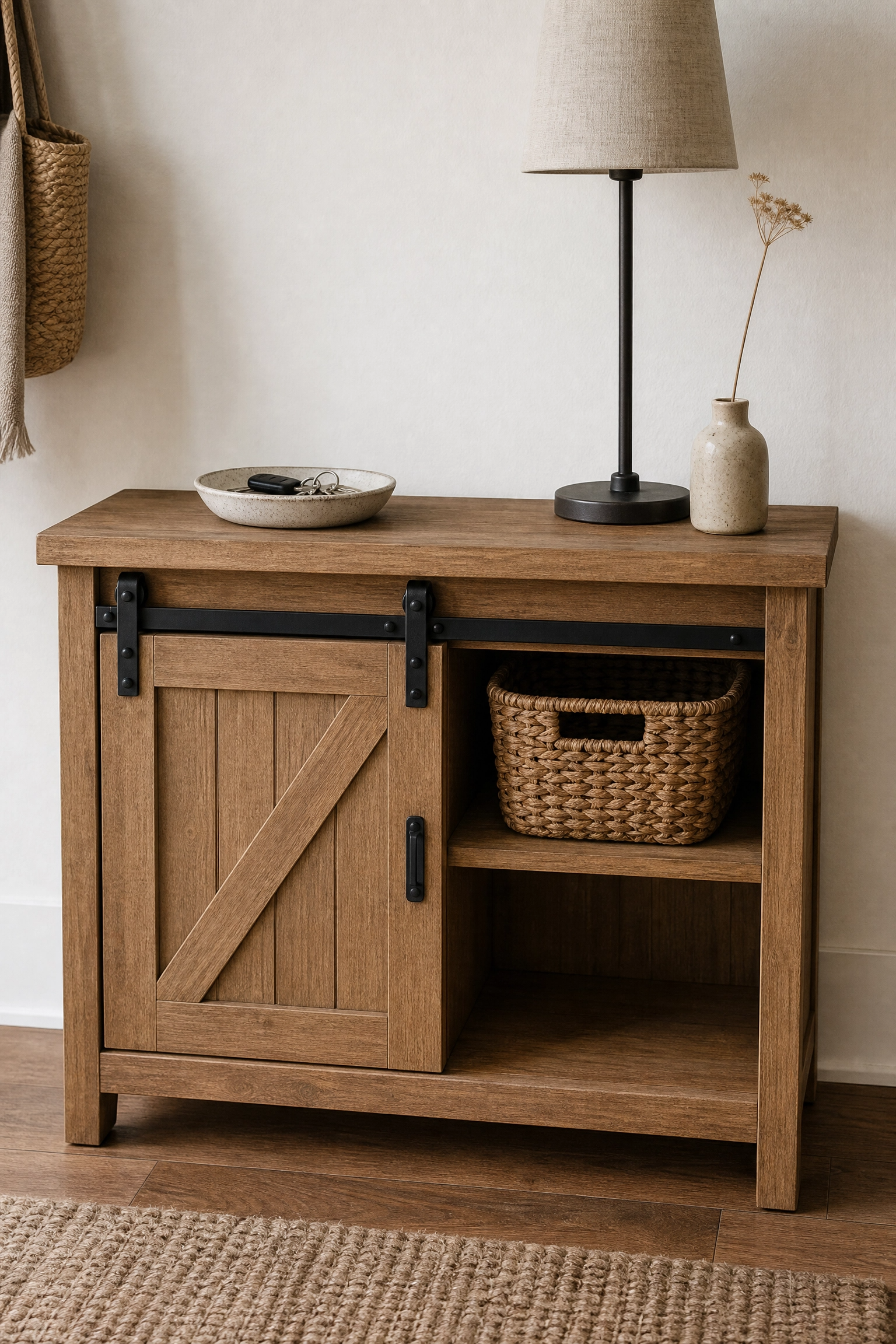
18. The Barn-Style Sliding Door Console
A console table or sideboard fitted with a small sliding barn door panel is a compact but visually striking farmhouse furniture idea for an entryway or hallway. The barn door element introduces one of the most recognizable farmhouse architectural details in furniture form, and it brings texture, movement, and warmth to a space that can easily feel like an afterthought. Look for consoles in solid wood with a single sliding door on one side to conceal storage, and open shelving on the other for baskets or books. The door hardware should be in matte black for the most authentic look, with a simple flat track rail above. Style the top surface with a small lamp, a ceramic dish for keys, and a single framed print or small mirror leaning against the wall above it. This type of piece works especially well in narrow entryways where a wider piece of furniture is not practical, because the sliding door does not need clearance to swing open.
Designer Advice: Mount a small hook or two on the wall just above the console for keys and a daily bag. It extends the functionality of the piece without adding more furniture to the space.
Home Office and Additional Ideas
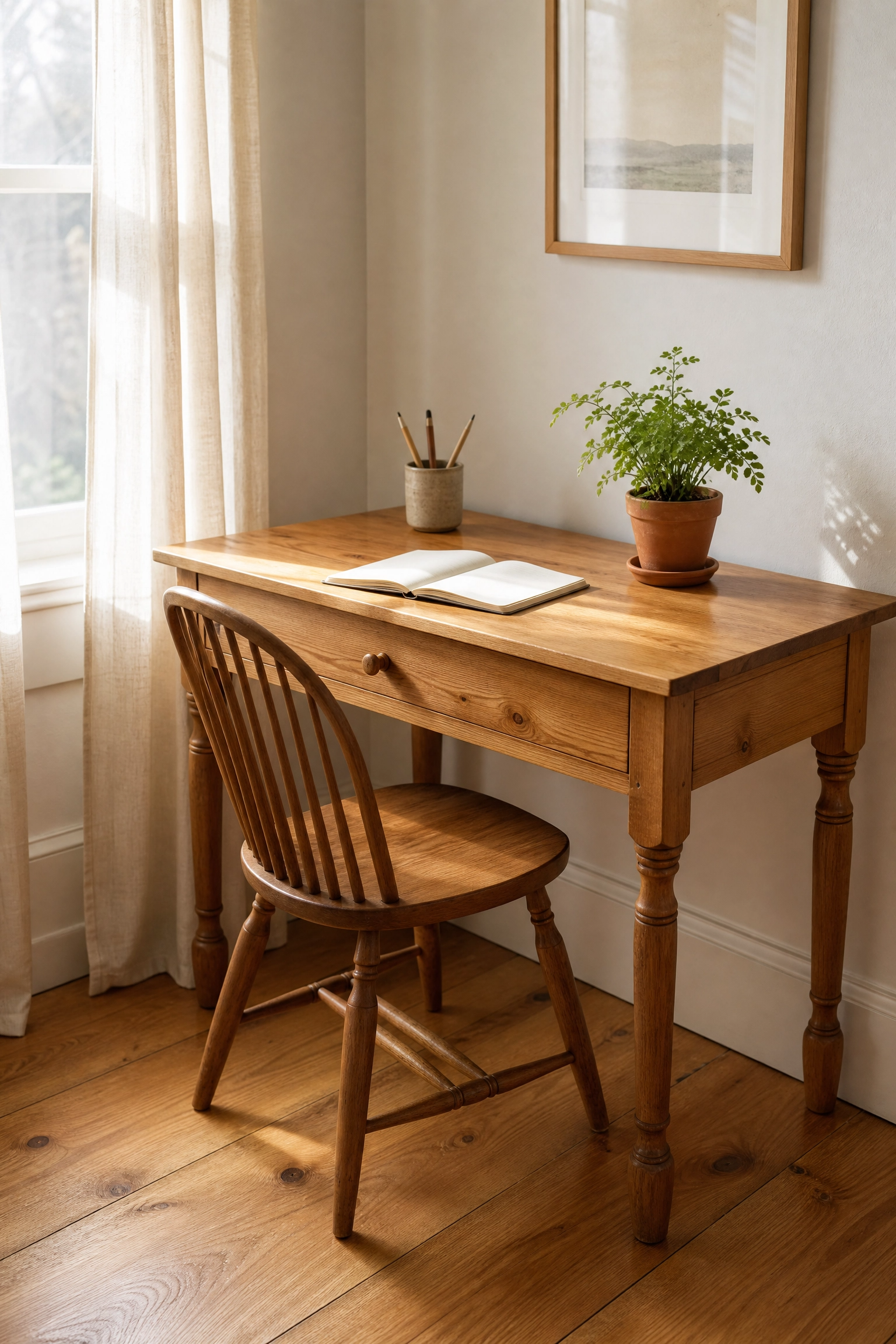
19. The Farmhouse Writing Desk
A solid wood writing desk with simple Shaker-inspired lines is one of the most versatile pieces of furniture you can place in a farmhouse home. It works in a dedicated home office, in a bedroom corner, or in a living room alcove, and its honest construction means it reads as intentional rather than incidental in any setting. Look for desks in natural pine, oak, or maple with a single drawer or a small set of drawers on one side. Avoid desks with too many compartments or ornate details, because simplicity is what gives a farmhouse desk its character. Pair it with a spindle-back or ladder-back chair, and keep the desk surface clear of everything except what you actually use: a small lamp with a warm bulb, a ceramic cup holding pens, and a notebook. Natural lighting matters here too, so position the desk near a window if possible. This is a piece where buying solid wood rather than veneer or MDF is worth the extra cost, because a well-made wood desk can last for many decades.
Designer Advice: A small potted plant on the corner of a writing desk brings life to a home office without taking up much space. A trailing pothos or a small eucalyptus plant in a simple terracotta pot is all you need.
20. The Open Bookcase in Natural Wood
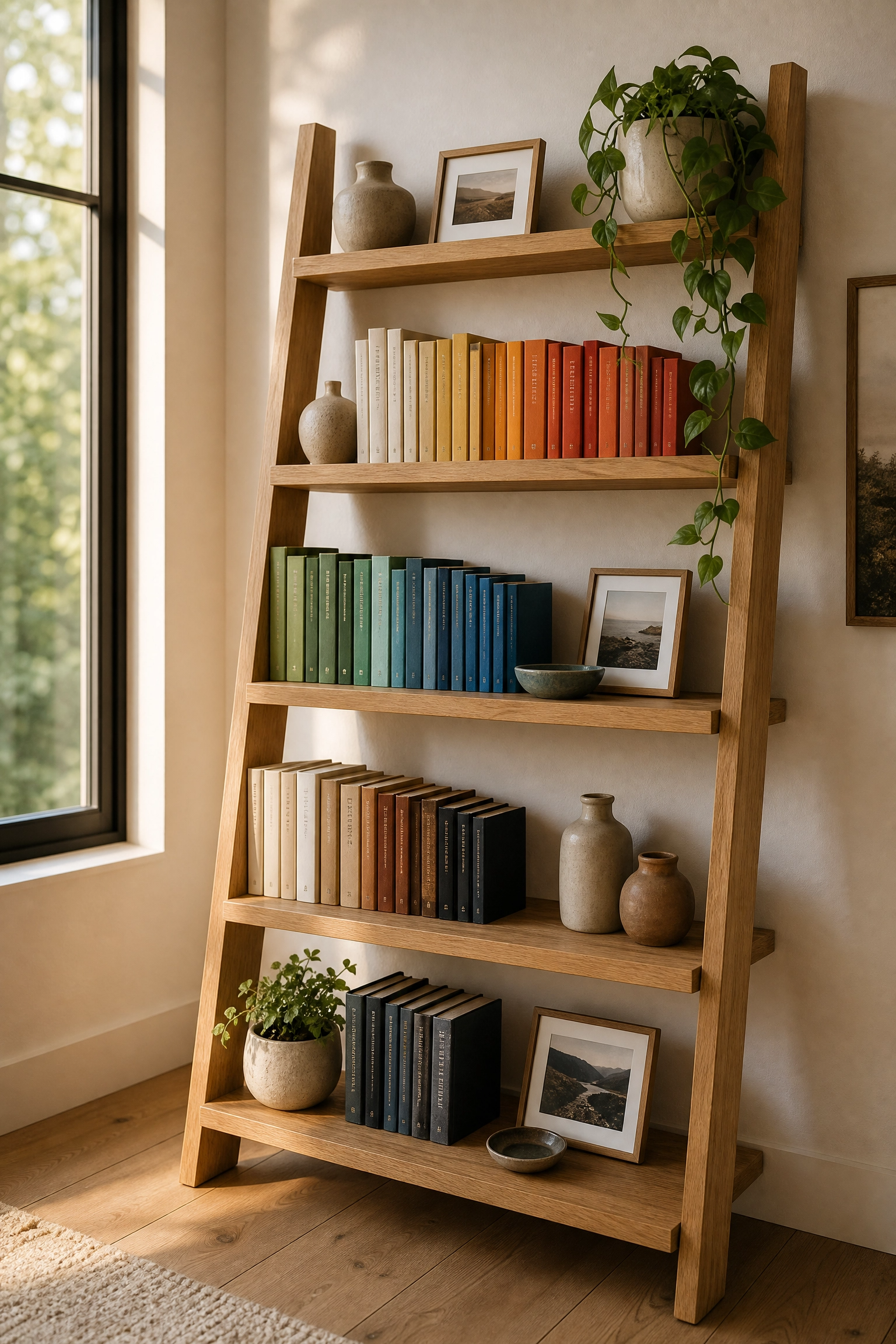
An open bookcase in solid wood, particularly one with a simple ladder or A-frame silhouette, fits into a farmhouse home in a way that a closed cabinet often does not, because farmhouse design favors visible, accessible, and honest storage over concealed organization. Look for bookcases in natural oak, pine, or reclaimed wood with adjustable shelves so you can accommodate books of different heights, baskets, and decorative objects. Style the shelves with a mix of books arranged by color or spine-out, small ceramic objects, framed photos, and a trailing plant or two. The key to making an open bookcase look intentional rather than cluttered is to leave breathing room between groupings and to vary the arrangement of objects so that no two shelves look identical. A leaning ladder bookcase is a particularly farmhouse-friendly silhouette and works well in bedrooms and living rooms where floor space is limited.
Designer Advice: Group objects on shelves in odd numbers, typically threes or fives. It reads more naturally than even groupings and is one of the simplest ways to make a bookcase look styled rather than just stacked.
21. The Farmhouse Kitchen Island on Wheels
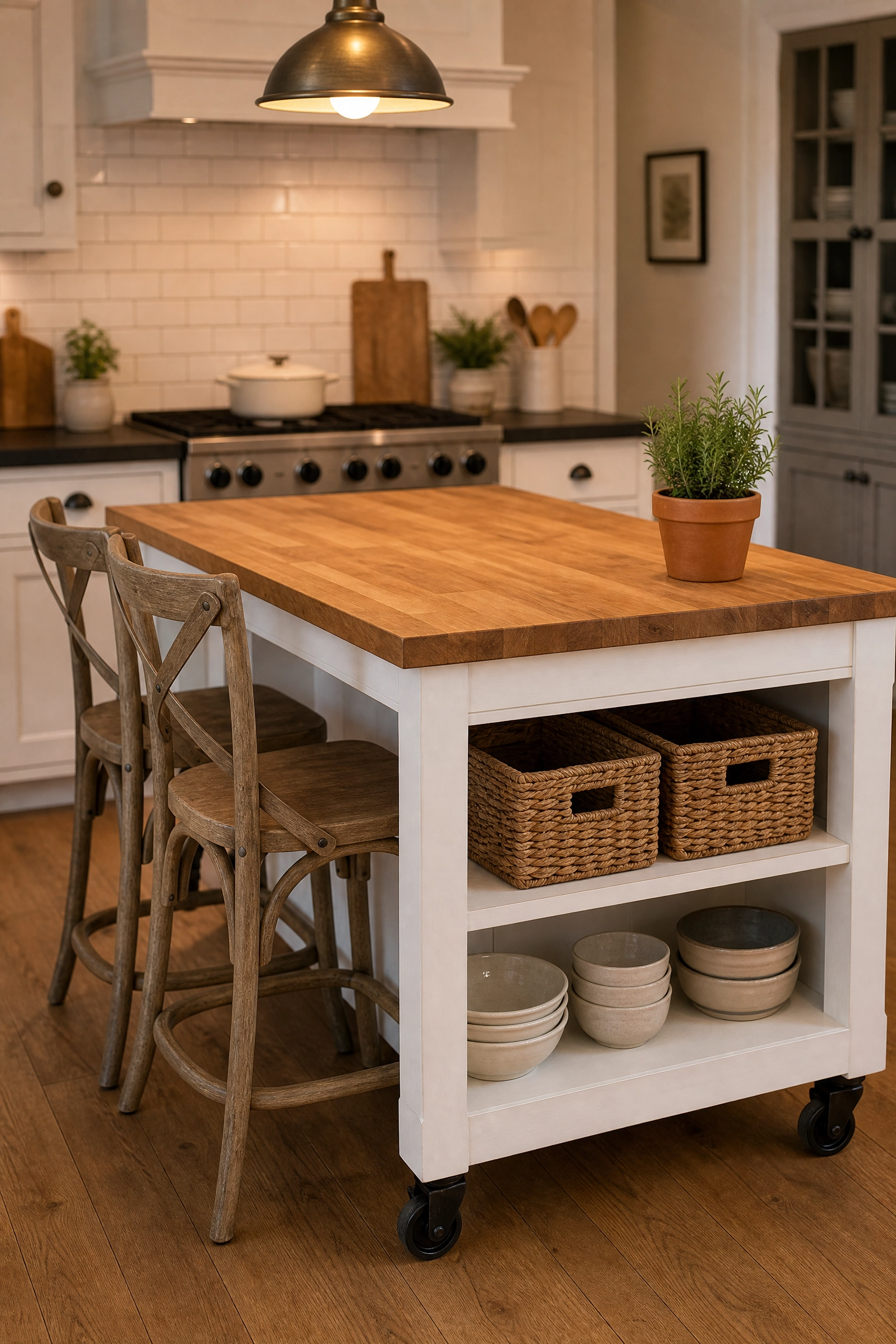
A butcher-block-top kitchen island on casters is one of the most genuinely practical farmhouse furniture ideas for a kitchen that lacks built-in counter space or seating. The butcher block surface is warm, food-safe, and develops a natural patina with use that makes it look better over time rather than showing wear. Look for islands in natural pine or maple with painted bases in white, black, or sage green, and open shelving or drawers below the work surface. The casters make it movable, which is especially useful in smaller kitchens where the island occasionally needs to shift to allow for a party, a delivery, or a deep clean of the floor. Add bar stools in a farmhouse-friendly style, whether that is a simple wood stool or a crossback bar chair, and the island immediately becomes a casual eating spot as well as a workspace. This is a mid-range purchase when bought new, but vintage kitchen carts and islands with butcher block tops turn up regularly at estate sales and are worth seeking out.
Designer Advice: Treat the butcher block surface with food-safe mineral oil when you first bring it home, and repeat every few months. It prevents cracking, keeps the wood from drying out, and deepens the natural color of the grain beautifully.
Final Thoughts
Farmhouse furniture is not about recreating a look you saw in a magazine. It is about choosing pieces that are honest in their materials, useful in their function, and comfortable in the most real sense of the word. The ideas in this article span every room in the home and every price point from budget finds at estate sales to worthwhile long-term investments, because farmhouse style has always been about working with what you have and choosing well rather than spending more.
What makes this approach to furnishing a home so satisfying is that the pieces tend to get better with time. A solid wood table develops a richer patina the more it is used. A linen slipcover softens further with every wash. A painted hutch takes on more personality as the paint wears gently at the edges. These are not pieces you have to protect from your life. They are built to be part of it. Start with one room, choose one piece that you genuinely love the feel of, and build from there. Farmhouse style has a way of coming together naturally when you let the furniture lead.
Frequently Asked Questions
What is the difference between modern farmhouse and traditional farmhouse furniture?
Traditional farmhouse furniture leans into heavier, more rustic forms with visible distressing, raw wood, and a rougher, more hand-hewn quality. Modern farmhouse takes the same core materials but applies cleaner lines, a more neutral color palette, and a slightly more refined finish. Modern farmhouse often mixes in industrial accents like black metal hardware and pipe legs, while traditional farmhouse stays closer to all-wood, more country-influenced pieces. Both styles work well together, and many well-designed farmhouse rooms include elements of both.
What wood types are best for farmhouse furniture?
Pine is the most historically authentic choice and is affordable and widely available, though it does dent and scratch more easily than harder species. Oak is more durable, has a beautiful open grain that suits farmhouse finishes well, and ages gracefully. Maple and poplar are good middle-ground options, particularly for painted pieces. Reclaimed wood from any species brings the most character and is a genuinely sustainable choice, though it can be harder to source and may require more finishing work before use.
Can farmhouse furniture work in a modern apartment?
Yes, and it often works better than people expect. The key is to introduce farmhouse pieces selectively rather than all at once. A reclaimed wood coffee table in a minimalist living room creates an immediate warmth without overwhelming the space. A spindle-back chair in a sleek bedroom adds texture and character. The contrast between farmhouse furniture and clean modern lines can actually make both elements look more interesting. Avoid using too many distressed or heavily rustic pieces in a contemporary space, as that is when the combination can start to feel forced.
Is farmhouse furniture expensive?
It does not have to be. The farmhouse style is genuinely well-suited to budget shopping because its aesthetic values worn, aged, and imperfect pieces over pristine ones. Estate sales, thrift shops, antique markets, and online resale platforms are all excellent sources for authentic farmhouse furniture at a fraction of retail prices. Even pieces that need some work, a new coat of paint, a hardware swap, or a light sanding, can be transformed for very little money. When buying new, pine furniture tends to be the most affordable solid wood option and still delivers that farmhouse character you are looking for.
How do I stop a farmhouse room from looking too cluttered or theme-heavy?
The biggest risk in farmhouse decorating is overdoing it, particularly with accessories. The furniture itself should do most of the work, which means choosing pieces with real character and then being selective about what sits on top of and around them. Stick to a consistent material palette of wood, natural fiber, ceramic, and iron, and limit your color palette to two or three tones that work together. Leave negative space on shelves and surfaces. A room with fewer, better-chosen objects almost always reads as more intentional and more comfortable than one filled with farmhouse-themed accessories from end to end.
What lighting works best with farmhouse furniture?
Farmhouse furniture is shown at its best under warm, layered lighting rather than bright overhead lighting. Pendant lights in aged brass, matte black, or wrought iron with Edison-style filament bulbs are the most fitting choice for dining rooms and kitchen islands. Floor lamps with linen or cream shades work well beside sofas and reading chairs. Table lamps in ceramic or hammered metal bases add warmth to bedside tables and consoles. The goal is to avoid anything that feels cold or overly modern in its light quality. Warm white bulbs in the 2700K to 3000K color temperature range are almost always the right choice for a farmhouse interior.