Farmhouse Bathroom Looks That Actually Feel Like Home
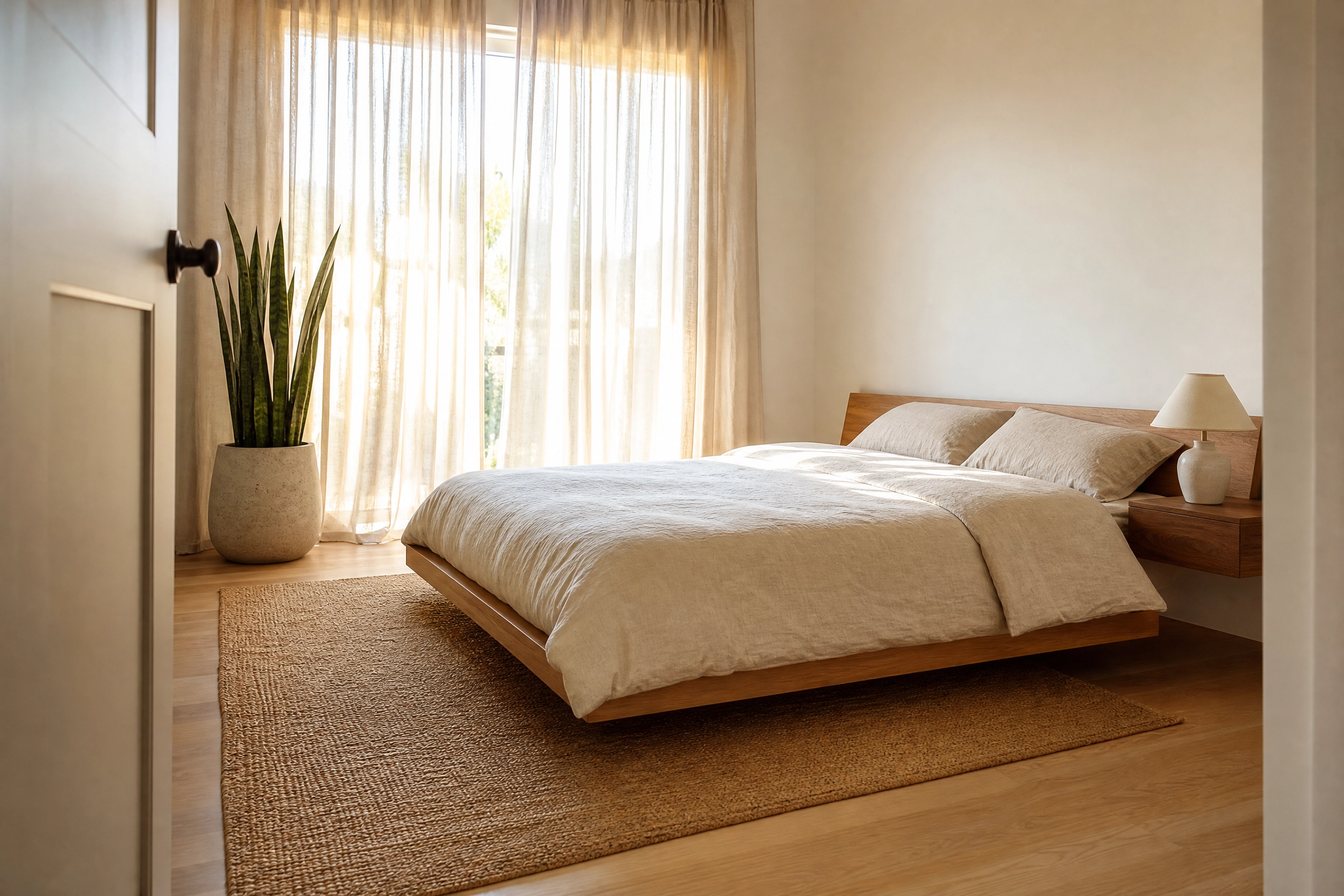
There is something about a farmhouse bathroom that just makes you want to slow down. Maybe it is the warm wood tones, the soft whites, or the way every detail feels a little worn in and honest. Whatever the reason, this style keeps pulling people in, and for good reason. It is one of the few design approaches that manages to feel cozy, practical, and genuinely good-looking all at the same time, without requiring a full gut renovation or a huge budget.
What you will find below are 24 real, actionable farmhouse bathroom decor ideas organized by theme, from wall treatments and fixtures to storage, lighting, and those finishing touches that tie everything together. Each idea covers color, materials, furniture, and specific tips you can actually use. Whether you are working with a tiny powder room or a full master bath, there is something here for every space and every budget. Let’s get into it.
Wall Treatments That Set the Farmhouse Mood
1. Classic White Shiplap from Floor to Ceiling
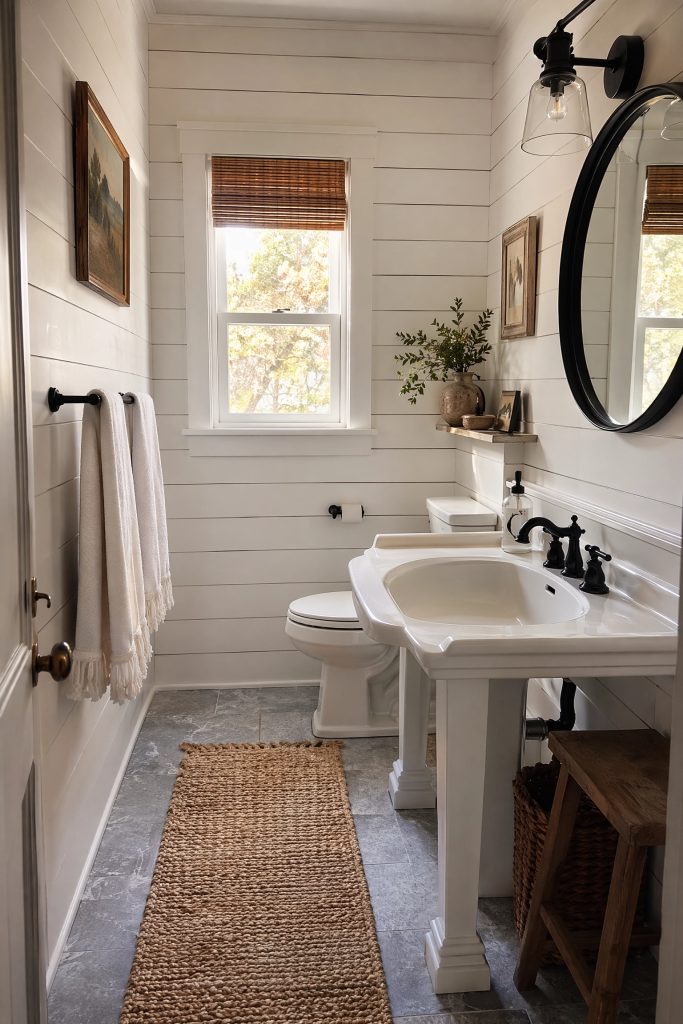
If there is one wall treatment that defines the farmhouse bathroom more than anything else, it is shiplap. Running it all the way from floor to ceiling creates a sense of height and wraps the room in a texture that immediately feels warm and intentional. Painted in a soft white like Benjamin Moore’s White Dove or Sherwin-Williams Alabaster, it reflects light beautifully without feeling cold. Pair it with matte black or oil-rubbed bronze hardware and fixtures for contrast, and lay a natural jute runner on the floor to keep things grounded. In practice, this combination works best in bathrooms with at least one window, because the horizontal lines can feel a little compressed in very dark, enclosed spaces. Budget-wise, you can install shiplap yourself using primed pine boards from a hardware store for a fraction of the cost of premade panels.
Designer Tip: Use a nail gun and construction adhesive together for a tight, professional-looking install, and make sure to leave a small gap between boards so seasonal wood movement does not cause warping or buckling.
2. Beadboard Wainscoting with a Painted Upper Wall
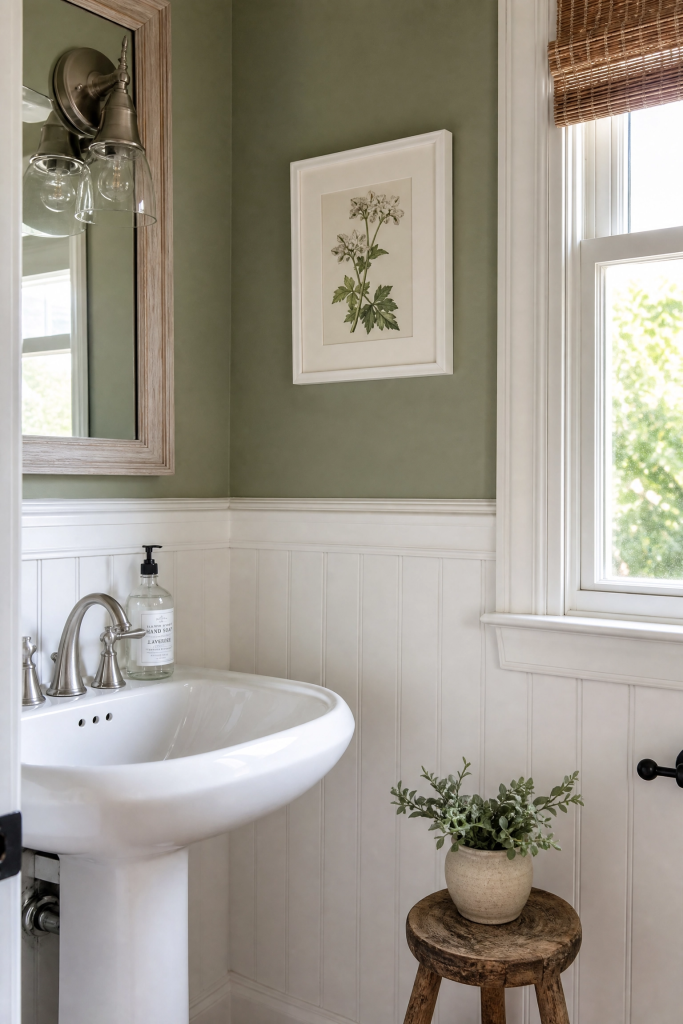
Beadboard wainscoting is a classic move in farmhouse bathrooms, and it works because it adds visual texture at the lower half of the wall without making the room feel heavy. Install it at about 42 to 48 inches high, then paint the upper portion in a soft sage green or dusty blue, which are both really popular right now among designers who want to push farmhouse style into something a bit more interesting than all-white. The two-tone look gives the room a defined, considered feel, and it photographs beautifully if you ever want to share it. Use a high-gloss or semi-gloss paint on the beadboard itself since bathrooms are humid and flat paint will not hold up well over time. This is a mid-range project, honestly, as beadboard tongue-and-groove panels are affordable, but hiring a painter or carpenter to do the install cleanly can add to the cost.
Designer Tip: Cap the beadboard with a simple chair rail molding painted in bright white for a finished, polished edge that makes the whole wall look more custom and intentional.
3. Whitewashed Brick Accent Wall
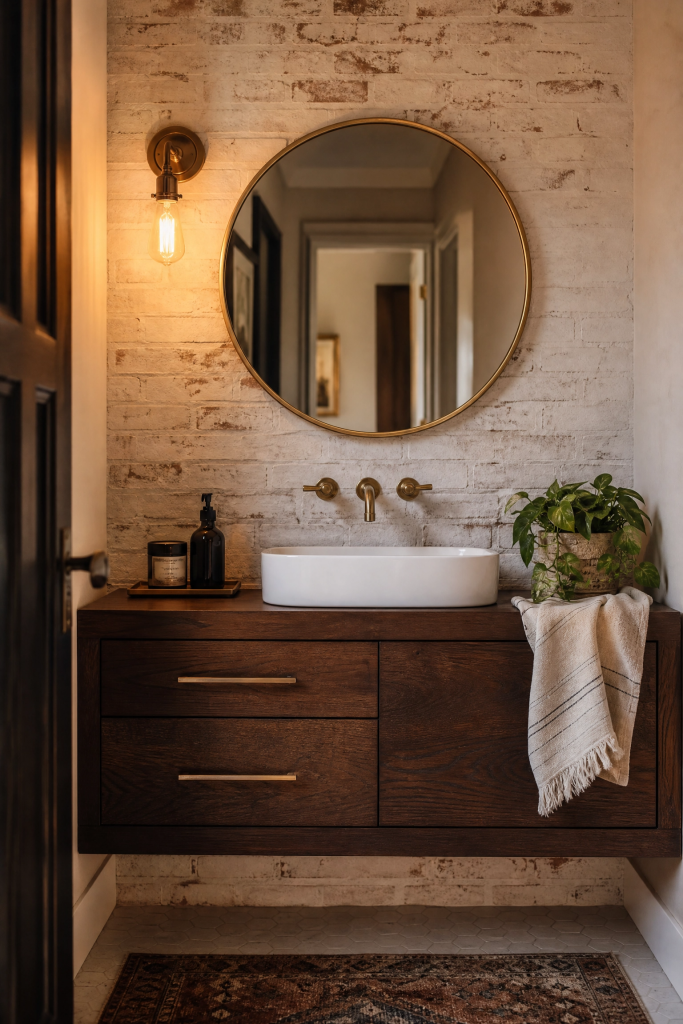
If you want a farmhouse bathroom wall treatment that has a bit more visual weight and raw character, a whitewashed brick accent wall behind the vanity is a genuinely good option. Real brick is obviously ideal, but brick veneer panels work just as well visually and are far easier to install in a bathroom setting. Apply a diluted white wash using one part white latex paint to two or three parts water, brush it on, and wipe back immediately for a translucent, aged look that lets the brick texture breathe through. This pairs particularly well with a dark walnut wood vanity, unlacquered brass fixtures, and a round mirror with a simple black frame. The honest limitation here is that raw brick, even sealed, can trap moisture over time, so always apply at least two coats of a penetrating masonry sealer before painting.
Designer Tip: Rather than whitewashing the entire wall, consider leaving a small section in the original red or gray brick tone as a deliberate detail. It makes the wall look more authentic and less like a wallpaper.
4. Moody Board and Batten in a Deep Neutral
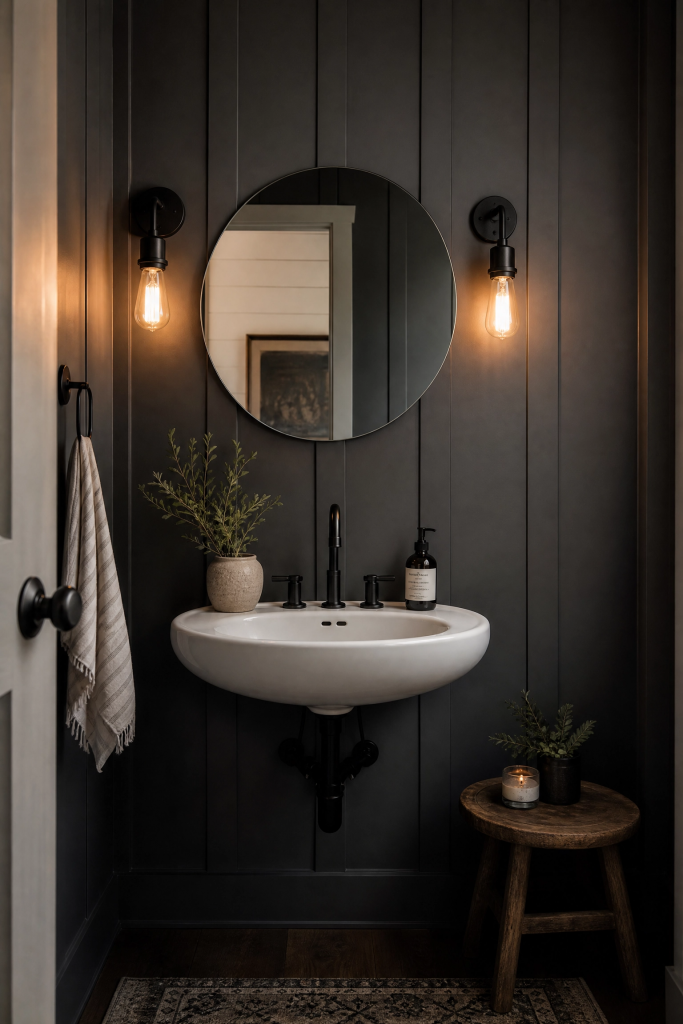
Board and batten is having a real moment right now, and when painted in a deep neutral like charcoal, slate gray, or even a very dark navy, it gives the farmhouse bathroom a more dramatic and sophisticated edge. This works especially well in powder rooms, where a bold choice feels more manageable in a smaller footprint. Install the battens vertically at about 16-inch intervals, keep the top cap clean and straight, and finish with a simple frameless mirror and exposed Edison bulb sconces on either side. The vertical lines pull the eye upward, which helps low-ceiling bathrooms feel taller. This is an affordable DIY-friendly project since all you need is MDF strips, a nail gun, and a good trim paint.
Designer Tip: Paint the wall, the boards, and even the ceiling the same dark color for a fully wrapped, cozy effect that designers sometimes call ‘color drenching.’ It sounds counterintuitive but it actually makes smaller rooms feel bigger and more deliberate.
Fixtures and Hardware That Do the Heavy Lifting
5. Freestanding Clawfoot Tub as the Focal Point
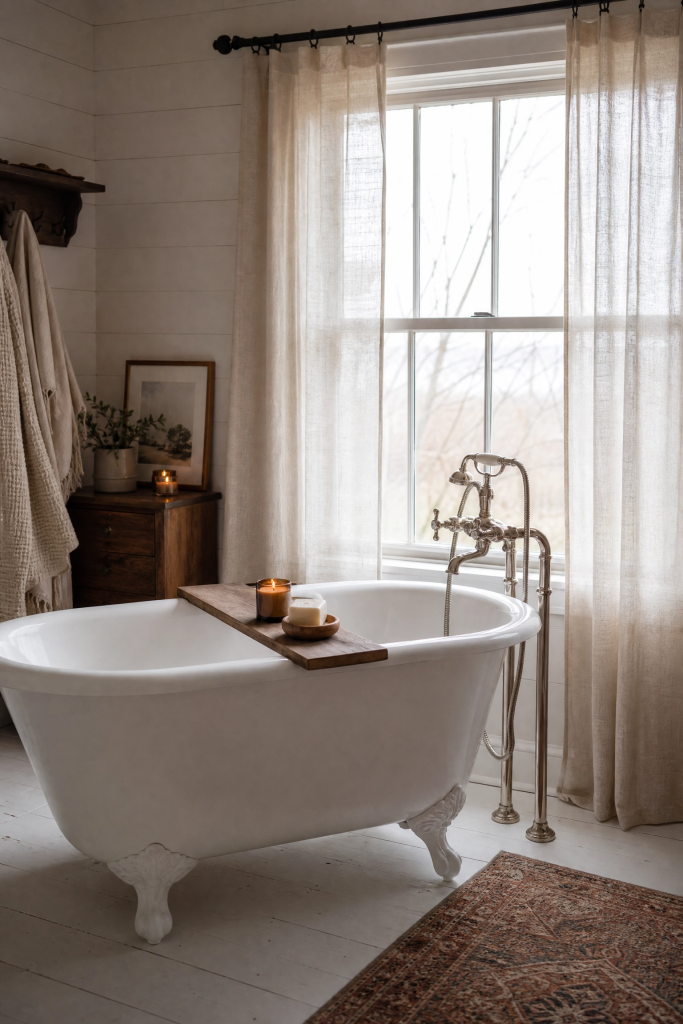
A clawfoot tub is one of the most recognizable farmhouse bathroom elements, and when it is positioned well, it becomes the entire room. The key is treating it like a piece of furniture rather than just plumbing. Position it under a window if you have one, or along the longest wall of the room so it has visual breathing room. Classic white porcelain is the safest choice, but a matte black or navy exterior paired with a white interior is a really strong look that professional designers are recommending more often now. Finish the look with a vintage-style floor-mounted filler faucet in polished nickel or unlacquered brass, and add a simple wooden bath tray across the tub for candles, a book, or a glass. This is an investment purchase, as freestanding tubs range from around $600 for entry-level acrylic models to several thousand for cast iron, but even the affordable options look impressive in person.
Designer Tip: If your bathroom floor is not level, clawfoot tubs will rock noticeably. Always have a plumber check the floor slope before installation and use adjustable leveling feet if needed.
6. Apron Front Sink Instead of a Standard Pedestal
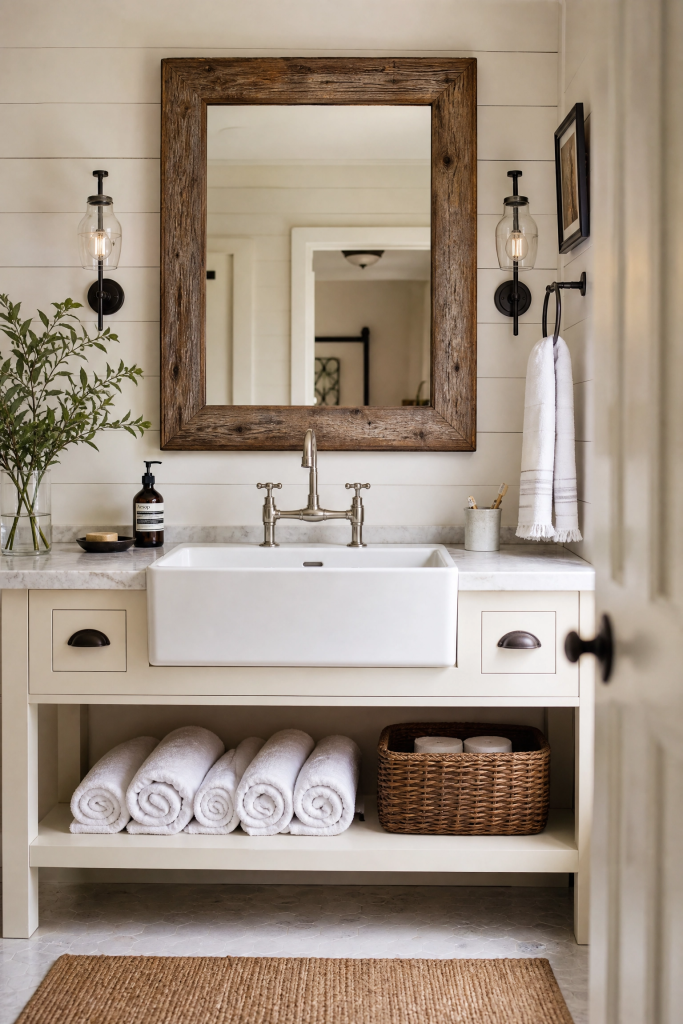
The apron front, or farmhouse sink, works beautifully in bathroom vanities just as it does in kitchens. It has a generous, open front that makes a real statement, and its deep basin is genuinely practical for washing hair, soaking towels, or just general use. A white fireclay apron sink mounted into a simple open-base vanity made from reclaimed wood or painted shaker-style cabinetry in a warm cream is a combination that photographs like a page out of a design magazine. Pair it with a bridge-style faucet in brushed nickel or matte black, and keep the cabinet hardware minimal so the sink itself stays the hero. One honest note is that apron sinks are heavy, and the cabinet beneath needs to be structurally reinforced to support the weight properly.
Designer Tip: Leave the shelving below the sink open rather than adding cabinet doors. Stack folded white towels, a few wicker baskets, and a small plant for a look that is both functional and genuinely charming.
7. Exposed Pipe Fixtures in Matte Black
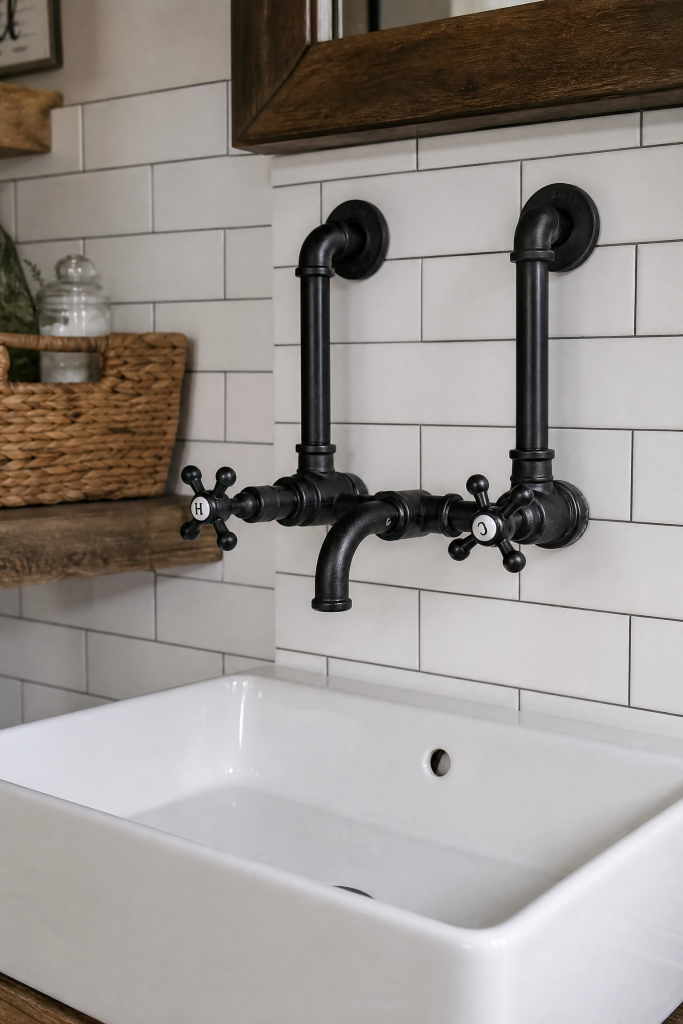
Exposed plumbing used to feel like an unfinished mistake. Now, in farmhouse and industrial-farmhouse bathrooms, it is a deliberate design choice that adds a lot of personality. Wall-mounted exposed pipe faucets, cross-handle valves, and visible supply lines in matte black or oil-rubbed bronze have a raw, industrial quality that works surprisingly well alongside softer farmhouse elements like linen curtains, wicker baskets, and shiplap walls. The contrast between the hard metal and the soft organic textures is exactly what makes this style feel layered and interesting rather than one-note. This is obviously a more involved plumbing project and is best handled by a licensed plumber, but the visual payoff is significant.
Designer Tip: If you want the exposed pipe look without major plumbing work, look for wall-mounted sink faucets with decorative pipe-style extensions. Many come as complete kits that mount to standard supply lines behind the wall.
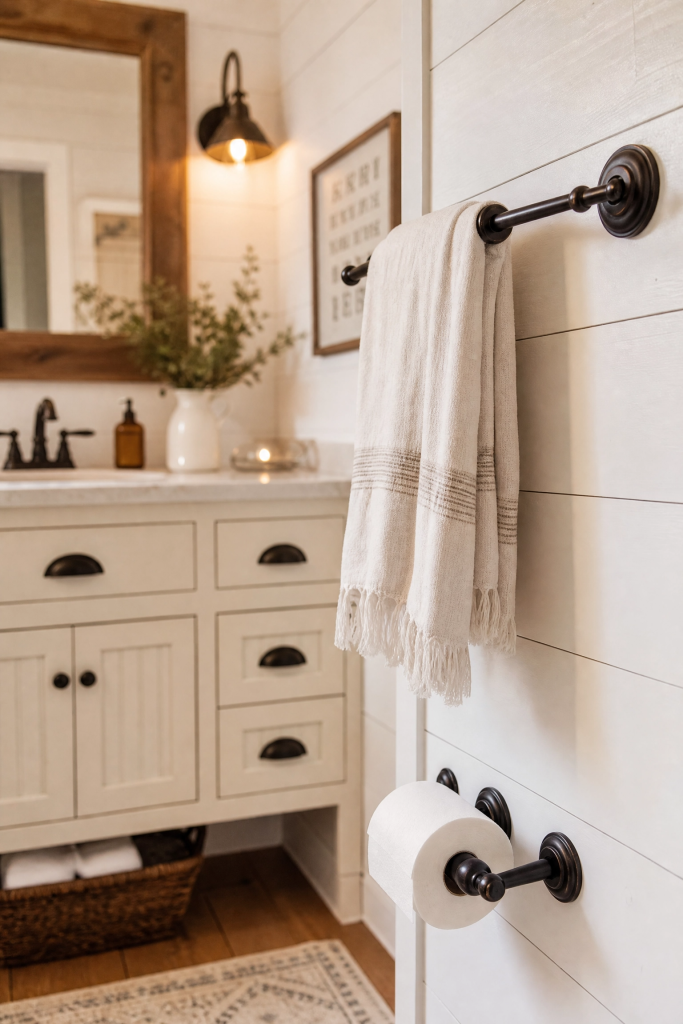
8. Oil-Rubbed Bronze Hardware Throughout
One of the fastest and most affordable ways to shift a bathroom toward a farmhouse feel is to swap out all the hardware for a matching set in oil-rubbed bronze. This finish has a warm, slightly aged tone that reads as genuinely old-world without being precious or overdone. Replace towel bars, toilet paper holders, robe hooks, cabinet pulls, and even the faucet if budget allows. The key is consistency: mixing metals in a farmhouse bathroom can work, but it requires a careful eye. When everything is the same finish, the room feels cohesive and considered without much additional effort. Oil-rubbed bronze hardware sets are broadly available and quite affordable, with full bathroom sets often available for under $100 at most home improvement stores.
Designer Tip: Over time, oil-rubbed bronze can lighten in areas of frequent contact. Treat the hardware once or twice a year with a small amount of dark paste wax to preserve the depth of the finish and prevent it from looking washed out.
Vanity and Storage Ideas That Are Actually Useful
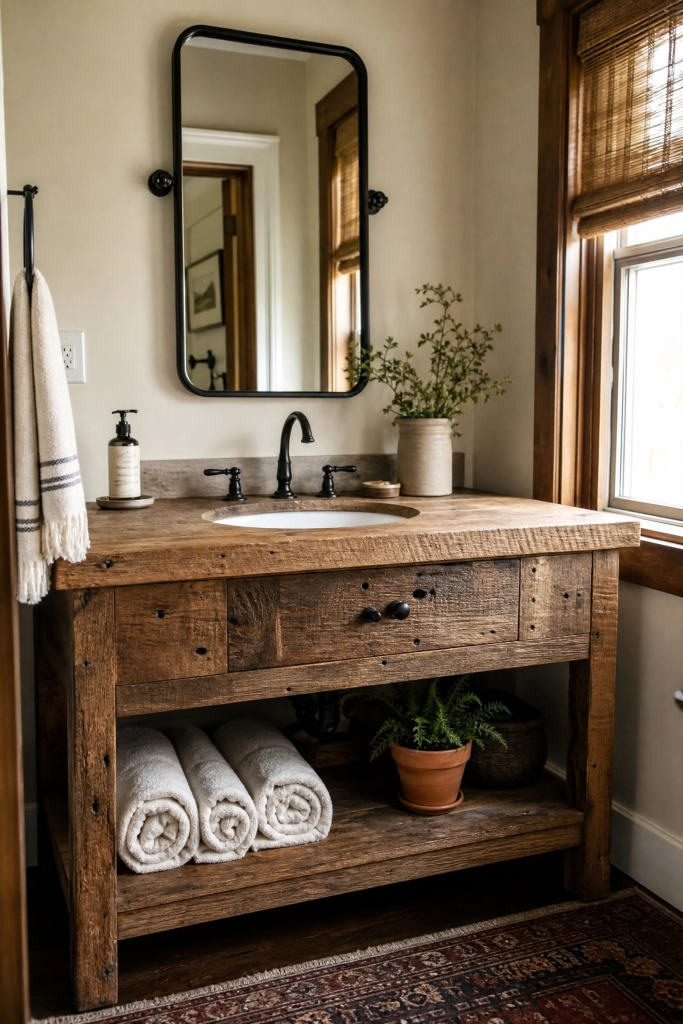
9. Reclaimed Wood Vanity with Open Shelving
A vanity built from reclaimed or heavily distressed wood is one of the most distinctive things you can put in a farmhouse bathroom. The grain patterns, nail holes, and slight color variation that come from truly reclaimed material make every piece completely unique. For a functional setup, combine a reclaimed wood cabinet with open shelving on one side, fitted with a simple undermount or vessel sink in white ceramic. The open shelf becomes a display spot for rolled cotton towels, amber glass apothecary jars, and a trailing pothos or small succulent. Seal the wood thoroughly with a water-resistant polyurethane finish to protect it from bathroom moisture. This type of vanity is best found at architectural salvage yards, specialty furniture makers, or online marketplaces like Etsy and Chairish.
Designer Tip: Avoid using raw, unsealed reclaimed wood in a bathroom with poor ventilation. Without proper airflow and sealing, even treated wood will develop mold inside joints and at the back of shelves within a couple of years.
10. Converted Antique Dresser as a Double Vanity
Converting a vintage dresser into a bathroom vanity is a genuinely clever way to get a one-of-a-kind look, and it is a project that is more manageable than most people think. Find a solid wood dresser at an estate sale, thrift store, or antique market, have a plumber route supply lines through the back, and cut holes in the top surface for undermount sinks. Paint the dresser in a matte or chalky finish in a color like dusty sage, warm cream, or soft black, and replace the original drawer pulls with ceramic knobs or hammered metal hardware. Add a matching pair of round or arched mirrors above, and the whole vanity setup looks both personal and high-end. This works best in larger bathrooms, as a dresser vanity needs some clearance on all sides to feel intentional rather than cramped.
Designer Tip: Keep the top two drawers functional for storage by routing the plumbing through the bottom section only. Most standard bathroom plumbing can be configured to leave the upper drawers fully usable.

11. Floating Wooden Shelves Above the Toilet
The space above the toilet is one of the most underused areas in any bathroom, and floating wooden shelves are one of the best ways to make it work. Use shelves cut from solid oak, pine, or walnut, finished with a light oil or a whitewash to match the rest of the room. Install two or three shelves at staggered heights and style them with a mix of practical and decorative items: a stack of rolled hand towels, a small ceramic tray holding candles, a trailing plant in a terracotta pot, and maybe a framed botanical print propped against the wall. The layered styling makes the whole area feel curated without being fussy. Floating shelves are one of the most budget-friendly storage upgrades you can make, and the hardware is easy to install with basic tools.
Designer Tip: Keep the heaviest or most-used items on the lowest shelf. Items stored high above a toilet are harder to reach and tend to stay there unused, which ends up making the space feel cluttered over time.

12. Built-In Niche with Shiplap Backing
A built-in shower niche lined with shiplap on the back wall is a small detail that makes a farmhouse bathroom feel genuinely custom. Instead of the standard tiled niche, frame the opening with simple white wood trim, back it with painted shiplap or beadboard, and add a small wooden shelf inside for soap, shampoo, and a candle. The contrast of the white wood against the surrounding tile or stone gives the niche a warm, architectural quality that really reads well in person. This is a more involved renovation project and needs to be properly waterproofed, so it is worth having a tile contractor handle the build-out even if you plan to do the shiplap styling yourself.
Designer Tip: Use a small piece of marble or a single large slab of stone as the niche shelf rather than wood, because wood in a constantly wet shower environment will warp and deteriorate relatively quickly even with sealant.

Lighting That Makes the Room Feel Warm and Inviting
13. Edison Bulb Vanity Sconces on Either Side of the Mirror
Side-mounted sconces are almost always better than a bar light above the mirror in terms of how they illuminate a face, and in a farmhouse bathroom, Edison bulb sconces in a simple cage or exposed socket design are the perfect choice. Position them at about eye level, roughly 60 to 65 inches from the floor, and space them about 28 to 36 inches apart for balanced light coverage. Use warm white LED Edison bulbs rather than incandescent ones since they produce the same warm glow but use far less energy and last much longer. This kind of layered lighting, where you have task lighting at the vanity and a separate overhead light, is a principle that designers almost universally recommend for bathrooms because it makes everyday grooming significantly easier.
Designer Tip: If you only have one electrical box above the mirror and cannot easily add side boxes, consider plug-in wall sconces with fabric-wrapped cords. Many look completely intentional when the cord is tucked neatly along the edge of a mirror frame.

14. A Lantern-Style Pendant Over the Tub
Hanging a pendant light over a freestanding tub is a detail that feels genuinely luxurious and works especially well in farmhouse bathrooms. A black iron lantern-style pendant with a clear glass panel and an Edison bulb inside hits every note of the aesthetic perfectly. It adds warmth, visual height, and a slightly dramatic quality that makes the tub area feel like its own little destination in the room. The important thing to check is your local electrical code, as there are specific clearance requirements for hanging lights in bathroom wet zones. In most cases, a pendant over a tub needs to be at least 8 feet above the water line, so this works best in rooms with higher ceilings.
Designer Tip: Add a dimmer switch to this pendant. Soaking in a tub under a dimmed warm lantern light is a genuinely different experience than harsh overhead illumination, and it costs almost nothing extra to install during the wiring stage.

15. Rustic Wood and Metal Flush-Mount for Small Spaces
Not every bathroom has the ceiling height or square footage for pendants and sconces. In smaller farmhouse bathrooms, a flush-mount ceiling light with a wooden or metal frame is a smarter choice that still delivers on style. Look for fixtures with a wrought iron or antiqued bronze frame and a fabric or amber glass shade, as these tend to read as farmhouse without being literal about it. One thing that makes a real difference in small bathrooms is bulb color temperature. Use bulbs in the 2700K to 3000K range for that warm, golden light that makes a small space feel cozy rather than clinical. Flush-mount fixtures are broadly available in a farmhouse style at most home improvement stores starting around $40 to $60.
Designer Tip: In a really small bathroom, consider a flush-mount fixture with a built-in exhaust fan. They are widely available now in farmhouse-style finishes and they solve two problems at once without requiring two separate ceiling penetrations.

Textiles and Soft Goods That Add the Right Texture
16. Linen Shower Curtain with Simple Grommet Top
A natural linen shower curtain is one of the easiest and most affordable ways to bring farmhouse texture into a bathroom. Linen has a beautiful weight to it, it hangs with gentle folds rather than stiff creases, and its natural beige and off-white tones pair perfectly with white walls, wood accents, and neutral tile. Go for a grommet-top curtain on a simple black iron rod, and choose a length that just grazes the floor for a relaxed, lived-in look. Avoid polyester shower curtain liners in beige or ivory as they tend to look cheap and discolor quickly. Instead, use a clear PEVA liner behind the linen panel so the fabric is protected from splash without looking clinical.
Designer Tip: Linen wrinkles easily when stored or washed. Rather than ironing it, hang it damp and let it air dry in place. The slight wrinkle that remains actually looks more relaxed and intentional in a farmhouse bathroom setting.

17. Layered Rugs for Warmth and Texture
Layering rugs in a bathroom is a trick that interior designers use often, and it works particularly well in farmhouse spaces. Start with a large, flat-weave cotton runner in a simple stripe as the base, then layer a smaller woven jute or kilim rug on top in front of the vanity or tub. The combination adds visual depth and warmth to the floor in a way that a single bath mat simply cannot. Avoid synthetic bath mats in farmhouse bathrooms since they tend to look out of place and do not photograph well. Cotton and jute options are also more breathable and less likely to trap moisture against the floor, which is a practical consideration in any bathroom.
Designer Tip: Place a thin non-slip pad under both rugs to keep them from shifting. Layered rugs without grip can move independently of each other on tile floors, which becomes a trip hazard.

18. Chunky Knit or Waffle-Weave Towels Displayed on Open Hooks
Towels are decor in a farmhouse bathroom, not an afterthought. Thick, textured towels in warm white, soft gray, or natural linen tones folded neatly or rolled and displayed on open hooks or a wooden ladder immediately upgrade the look of the entire room. Waffle-weave cotton towels are particularly popular right now because they have a beautiful textured surface, dry quickly, and look great even when slightly rumpled. Hang a wooden or iron Shaker-style hook rail on the wall beside the shower or tub and use it for both everyday towels and decorative ones. It is a functional choice that also gives the room that warm, gathered-over-time feeling that farmhouse style is really about.
Designer Tip: Buy towels in sets of at least six so you always have clean ones on display. Farmhouse bathrooms look best when the towels look fresh and full rather than thin or mismatched from different sets.
Decor Accessories That Tie Everything Together
19. Vintage Botanical Prints in Simple Frames
Framed botanical prints are a farmhouse bathroom staple, and they work because they bring color, softness, and a slightly nostalgic quality to what is otherwise a pretty utilitarian space. Look for antique-style prints featuring ferns, herbs, wildflowers, or vegetables, and frame them in simple black, white, or natural wood frames. Hang them as a small gallery grouping on one wall, or prop one or two on a shelf for a more casual look. Black and white engravings from the 18th and 19th centuries are actually very easy to find through online print marketplaces, often for just a few dollars each, which makes this one of the most affordable farmhouse decor updates you can do.
Designer Tip: Use a consistent mat size across all your prints even if the prints themselves are different sizes. Matching mats create visual cohesion and make a varied collection look like a deliberate, curated set.

20. A Wooden Ladder as a Towel Rack
A leaning wooden ladder used as a towel rack is a farmhouse bathroom idea that has staying power because it genuinely works. It stores multiple towels at once, it adds a vertical element that draws the eye upward in a small room, and it looks good in almost any corner without requiring any installation or wall damage. Choose a ladder made from natural wood like pine, oak, or bamboo, left raw or lightly stained rather than painted, so it brings genuine warmth to the space. Style it with neatly folded towels on the rungs and maybe a small basket hooked on the side for washcloths or extra toiletries. This is an investment of about $30 to $80 for most options, making it one of the best value farmhouse decor additions out there.
Designer Tip: Lean the ladder at a consistent 15 to 20 degree angle from the wall. A shallower angle makes it look like it is about to fall, and a steeper one makes the towels bunch awkwardly together on the rungs.

21. Amber Glass Apothecary Jars for Toiletry Storage
Replacing plastic pump bottles and mismatched shampoo containers with amber glass apothecary jars is a small change that makes a big visual difference. Use them to store cotton balls, cotton swabs, bath salts, and small soaps on an open vanity shelf or a tray on the counter. The warm amber tones of the glass work beautifully with wood, linen, and white surfaces, and they give the vanity area a cohesive, intentional look that no amount of organizing can achieve with the original packaging. Decant your liquid soap and lotion into matching dispensers in the same glass or ceramic finish to keep the counter looking clean. Glass apothecary jars are affordable at most home goods stores and even dollar stores often carry decent versions.
Designer Tip: Label your jars with small chalk labels or simple tie-on tags. It looks intentional and prevents you from opening the wrong jar when you are half awake in the morning.

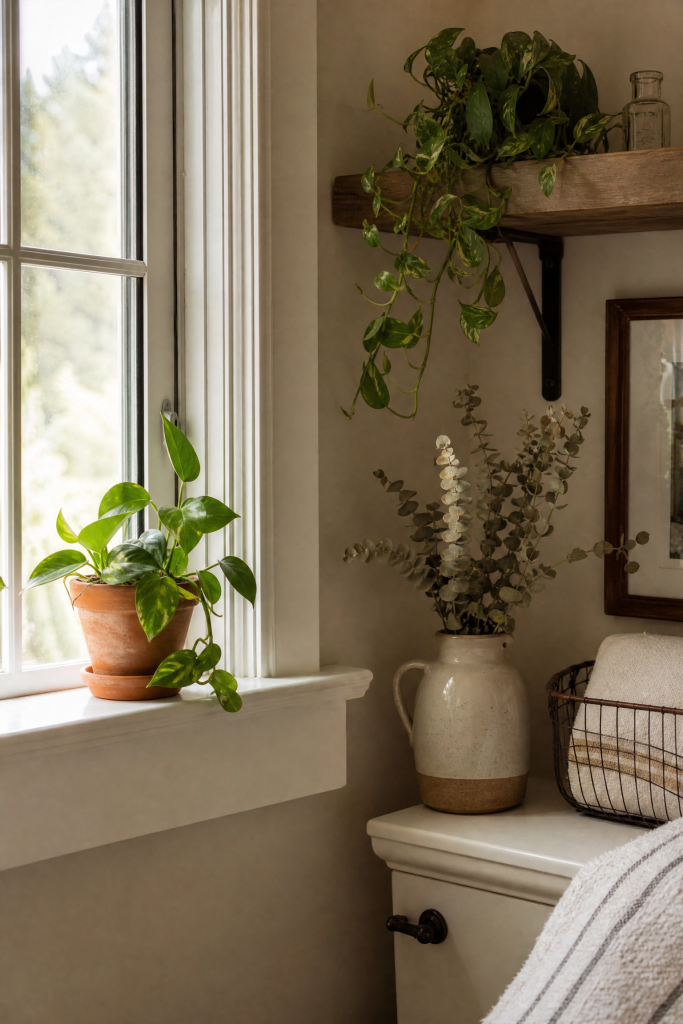
22. Potted Greenery and Dried Botanicals
Plants bring life to a farmhouse bathroom in a way that nothing else really can. The best low-maintenance options for bathroom environments include pothos, which thrive in low light and humidity, small ferns, air plants that need no soil at all, and snake plants for drier conditions. Place them in simple terracotta pots, woven baskets, or ceramic planters in natural tones and arrange them at different heights on shelves, the windowsill, or the corner of the tub deck. If your bathroom does not get enough natural light for live plants, high-quality dried botanicals like pampas grass, eucalyptus stems, or dried lavender bunches are a genuinely beautiful and long-lasting alternative that looks even better photographically.
Designer Tip: Avoid large, sprawling plants in very small bathrooms as they can make an already tight space feel chaotic. In small spaces, one or two well-chosen plants in the right containers are far more effective than a collection of smaller ones crowding every surface.
23. A Chalkboard or Painted Wood Sign as Wall Decor
Word art and signs are a signature farmhouse bathroom element when done with restraint. A single well-placed wooden sign or small chalkboard frame above a toilet, on a shelf, or beside a mirror adds personality without overcrowding the walls. Keep the wording simple, warm, and personal rather than going for generic phrases you have seen everywhere. A chalkboard frame lets you change the message seasonally, which gives the room a fresh feel throughout the year without any actual redecorating. Look for signs made from real wood rather than MDF with a vinyl print, as the latter tend to look cheap and the edges wear poorly over time. Handmade options from small makers on Etsy are often the best quality for the price.
Designer Tip: Limit wall signage to one piece per bathroom. More than one sign starts to compete for attention and the room begins to feel cluttered rather than charming.
24. A Galvanized Metal Tray as a Vanity Organizer
A galvanized metal tray on the bathroom counter is a small farmhouse detail that pulls together the whole vanity area. Use it to corral a hand soap dispenser, a small candle, a bud vase with a single dried flower stem, and a few decorative stones or shells. The metal finish adds an industrial-farmhouse edge that grounds the softer elements around it, and the tray itself keeps the counter organized and easy to wipe down. Round trays work well on single-sink vanities, while longer rectangular ones suit double-sink setups. Galvanized metal trays are one of the most inexpensive farmhouse decor purchases you can make, often available at dollar stores, craft stores, or hardware stores for under $15.
Designer Tip: Line the bottom of the tray with a small piece of cotton or linen fabric cut to fit. It softens the look, protects the metal from soap residue, and makes the whole setup feel more personal and considered.

Bringing It All Together
The best farmhouse bathrooms do not happen all at once. They develop over time as you make thoughtful choices, add a shelf here, swap out a fixture there, and slowly build a space that feels genuinely yours. What makes this style so enduring is that it is not really about following a rigid aesthetic. It is about choosing things that feel honest, warm, and a little imperfect in all the right ways.
Start with the elements that will have the biggest visual impact in your specific space. If your walls are plain, a shiplap treatment or a coat of board and batten paint will change the room immediately. If the hardware is dated, an afternoon swapping out faucets and towel bars can shift the whole feel of the space. Then layer in the softer things: the linen curtain, the botanical prints, the wooden ladder, the amber jars. Each piece builds on the last, and before long the bathroom starts to feel less like a utility room and more like a room you actually want to spend time in. That is what farmhouse decor does at its best. It makes ordinary spaces feel worth returning to.
Frequently Asked Questions
What colors work best in a farmhouse bathroom?
The most reliable farmhouse bathroom palette centers on whites, off-whites, and warm neutrals like cream, greige, and warm beige. From there, popular accent colors include soft sage green, dusty blue, muted terracotta, and charcoal gray. The key is to keep the overall palette calm and natural-feeling rather than bright or saturated. If you want to add color, do it in small doses through towels, plants, or a painted vanity rather than committing the walls to a bold tone you might tire of quickly.
Can farmhouse style work in a small bathroom?
Yes, and in many ways small bathrooms are actually ideal for farmhouse decor because the style relies on carefully chosen individual pieces rather than large furniture groupings. Focus on vertical storage like floating shelves and a leaning ladder, keep the color palette light to make the space feel open, and choose one or two statement pieces like an apron sink or a distinctive mirror rather than trying to include everything. A few well-placed farmhouse elements in a small space will read more clearly than a room packed with too many details.
What flooring suits a farmhouse bathroom best?
Wood-look tile is one of the most practical farmhouse flooring choices because it gives you the warmth and grain of real wood without the moisture sensitivity. Wide-plank formats in a light oak or warm gray tone work particularly well. If you prefer real wood, engineered hardwood with a waterproof core is a better choice than solid hardwood in a bathroom. Alternatively, encaustic cement tiles in simple geometric patterns or neutral tones add farmhouse character and are extremely durable, though they do require sealing and occasional resealing to prevent staining.
How do I make a farmhouse bathroom look less cluttered?
The key is intentional editing. Every item in a farmhouse bathroom should earn its spot, either through function or through genuine visual contribution. Go through everything on your counters and shelves and remove anything that is purely practical with no visual appeal, then store those items in closed cabinets or baskets. Replace mismatched plastic bottles and containers with cohesive glass or ceramic dispensers. Limit wall art to one or two pieces per wall, and make sure every shelf has some negative space so the eye has room to rest. A few beautiful things displayed well will always look better than many mediocre things crammed together.
Is farmhouse style expensive to achieve?
Not at all. Farmhouse style is actually one of the more budget-friendly aesthetics in interior design because it celebrates imperfection, age, and natural materials that are often available secondhand. Some of the most impactful farmhouse bathroom updates, like painting board and batten, swapping hardware, adding a wooden ladder, or framing some botanical prints, cost very little and can be done over a weekend. The more expensive elements like a freestanding tub, a reclaimed wood vanity, or new tile are investments, but the style still works beautifully when those elements are treated as long-term additions rather than immediate must-haves.
What is the difference between classic farmhouse and modern farmhouse bathroom style?
Classic farmhouse bathroom style leans heavily into rustic textures, aged finishes, antique-style fixtures, and a warmer, more layered look with visible wood grain, vintage hardware, and natural fiber textiles. Modern farmhouse, on the other hand, keeps the warmth and natural materials but pairs them with cleaner lines, simpler silhouettes, and often a more restrained color palette of whites, blacks, and warm grays. Modern farmhouse bathrooms tend to have less clutter, more negative space, and fixtures with a contemporary shape even if they are in a traditional finish. Both approaches work well, and many of the best farmhouse bathrooms borrow from both.