Minimalist Furniture Looks That Actually Make a Room Feel Better
There is a version of minimalism that feels cold and barely livable, all stark white walls, a single chair, and a rug that looks like it arrived by mistake. That is not what this article is about. The minimalist furniture ideas here are about making real rooms feel calmer, more intentional, and genuinely easier to be in. Not sparse for the sake of it. Not empty to be impressive. Just rooms where every piece of furniture earns its spot and the whole space feels like it has room to breathe.
What makes minimalist furniture work in practice is not about owning less. It is about choosing better. The right low-profile sofa in a living room changes how large the space feels. The right bed frame in a bedroom changes how restful the room feels before you even lie down. This guide breaks things down room by room and idea by idea, with specific details on color, materials, proportions, and lighting so you can actually use what you read here.
Living Room Minimalist Furniture Ideas
1. The Low-Profile Sofa Setup
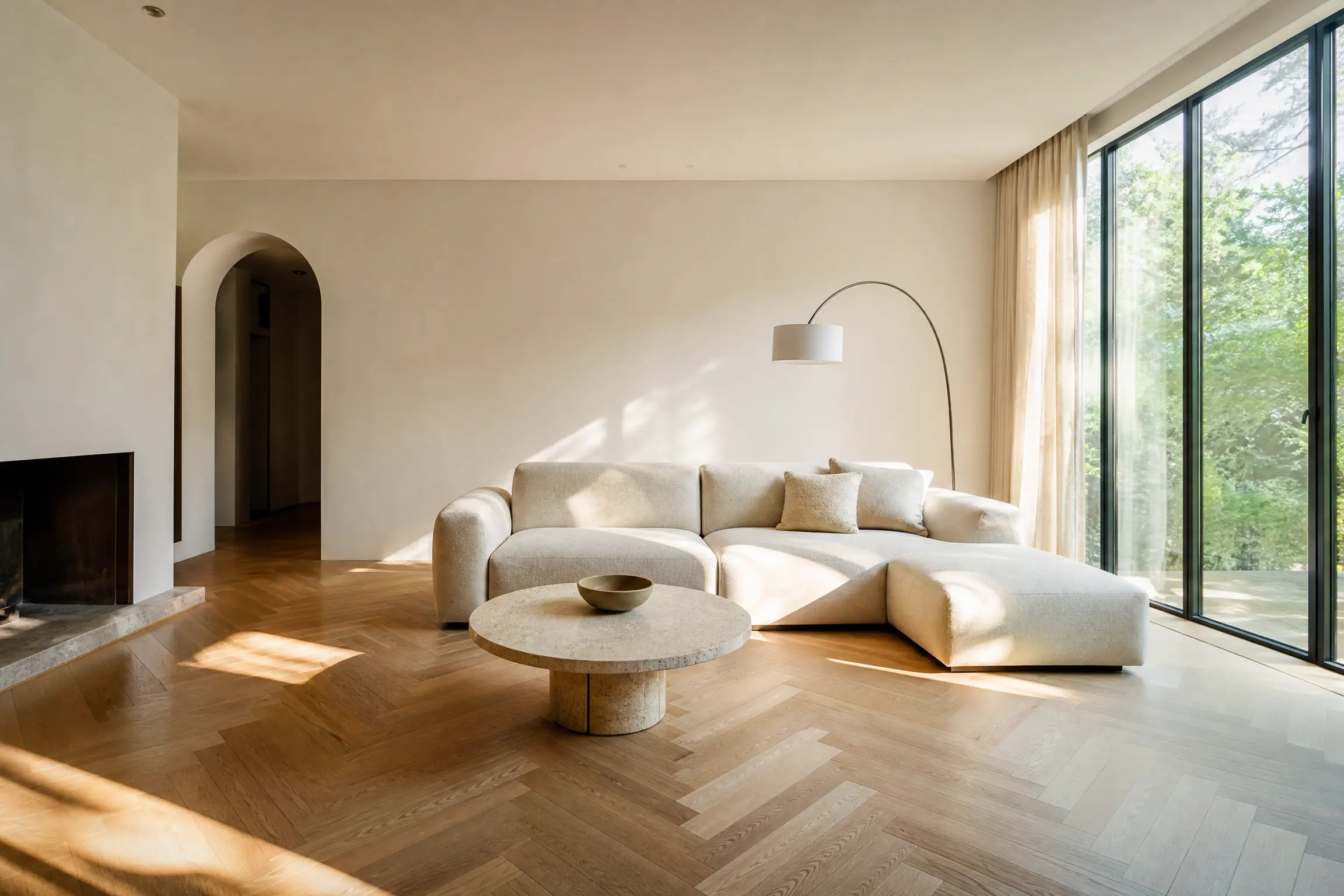
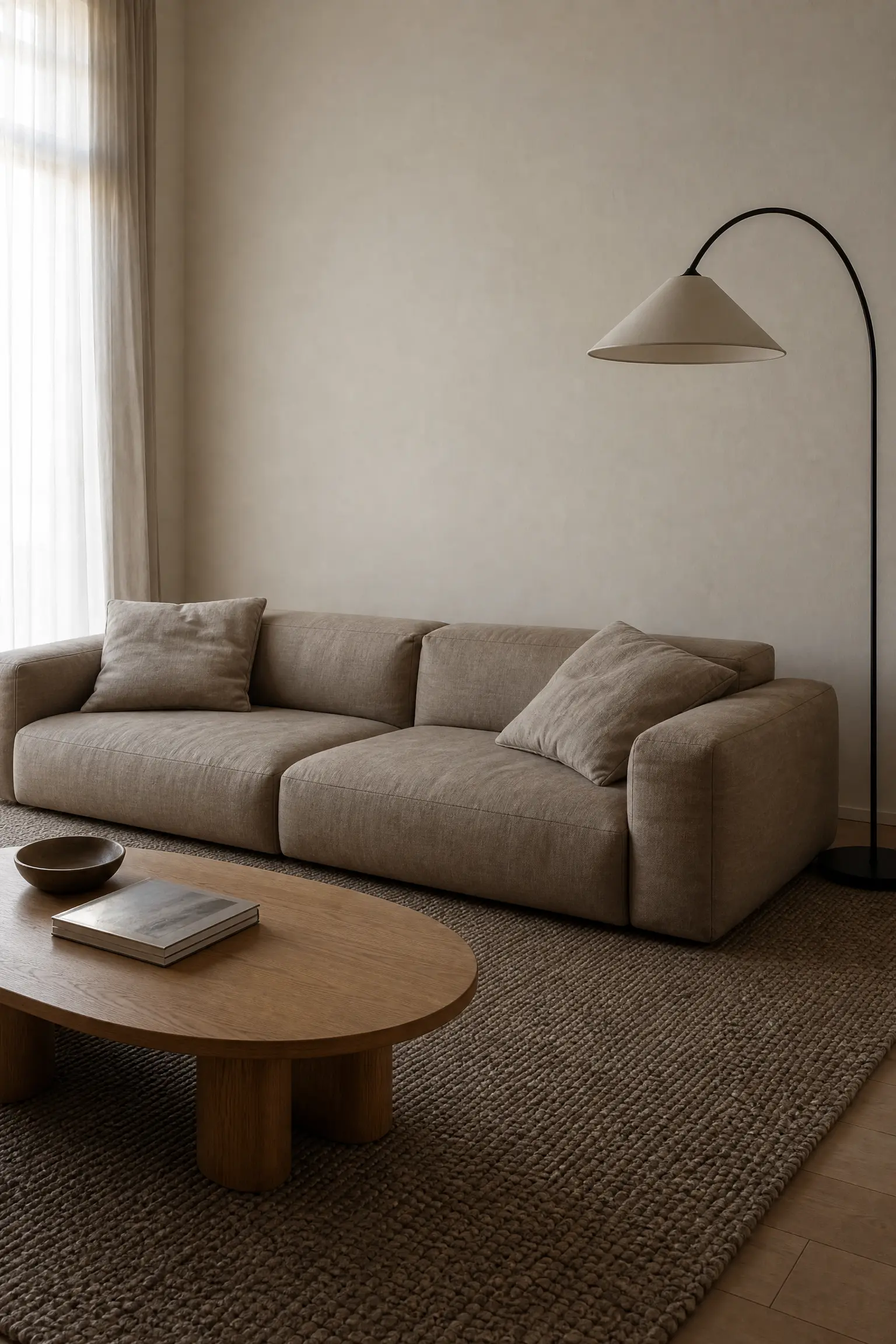
One of the most impactful swaps you can make in any living room is trading a bulky, high-backed sofa for a low-profile one. In practice, this single change lowers the visual weight of the room dramatically, making ceilings feel taller and the floor plan more open. Look for sofas in the 28 to 32 inch height range, upholstered in oatmeal, warm taupe, or soft sage linen. Pair it with a simple rectangular coffee table in light oak or bleached walnut, keeping the table low to match the sofa’s proportions. For lighting, a slim arc floor lamp positioned behind one end of the sofa adds height back into the space without cluttering the floor. This setup works best in rooms that are at least 12 feet wide; in very narrow spaces, the low silhouette can feel more cramped than calming.
Designer Note: If your room has low ceilings to begin with, a low-profile sofa can actually work against you. In that case, stick with a standard height sofa but keep the legs slender and the arms narrow.
2. The Single Statement Armchair
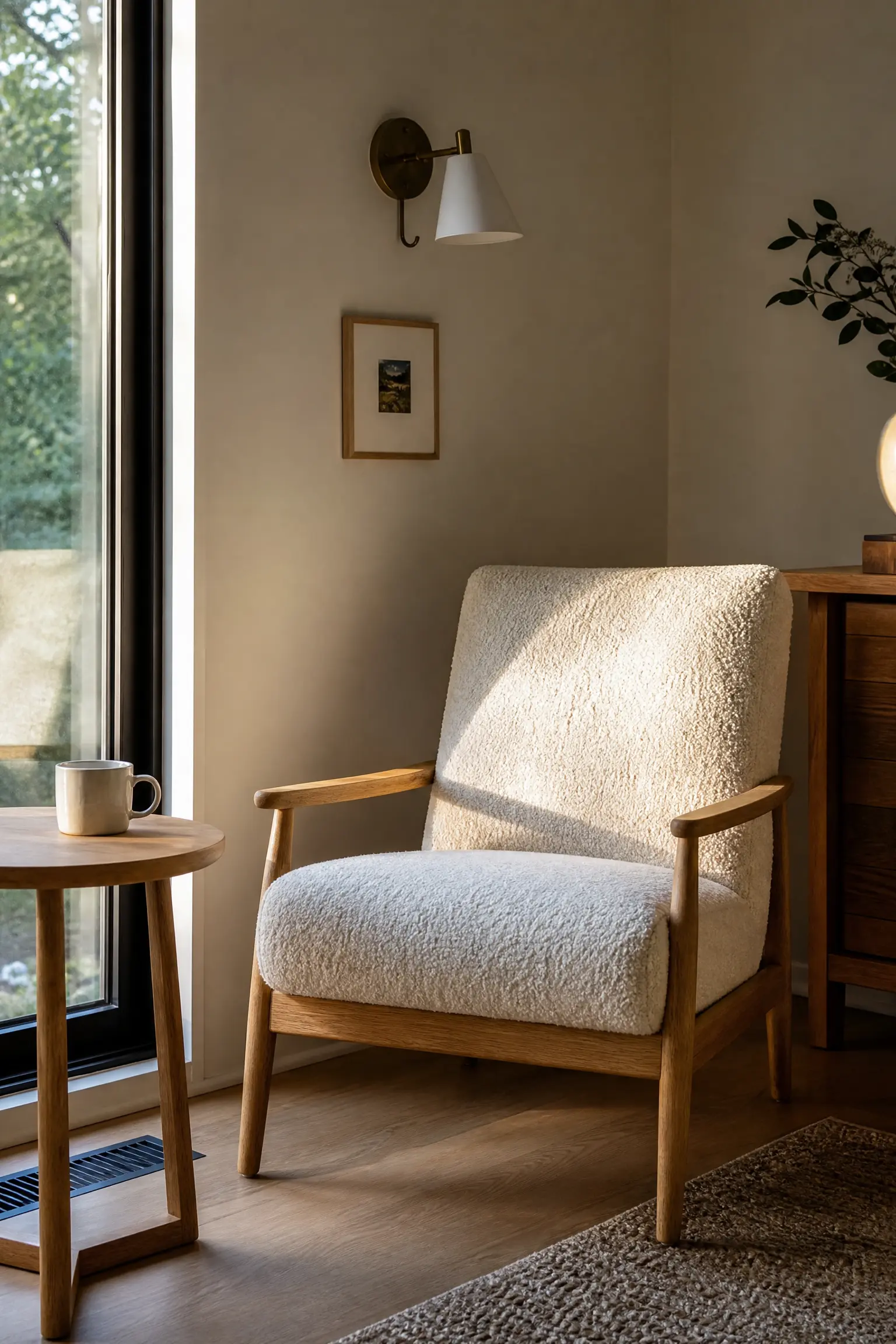
Rather than filling every corner of a living room with seating, one well-chosen armchair placed deliberately near a window or in an underused corner does more for the room’s feel than two mediocre ones ever could. Look for chairs with clean sculpted lines, like a contemporary club chair or a Japandi-influenced armchair with a solid oak frame and boucle or cotton upholstery in cream, charcoal, or dusty terracotta. The chair should feel inviting enough to actually sit in, not just look at. Add a small side table at elbow height in a matching wood tone and a single pendant or wall-mounted reading light above. This setup is mid-range in budget, with good options available from brands like Article, Muuto, or HAY, typically in the 400 to 800 dollar range for the chair alone.
Designer Note: Avoid placing the armchair at an awkward diagonal unless the room genuinely calls for it. Parallel or perpendicular to the sofa almost always reads cleaner.
3. The Floating Media Console
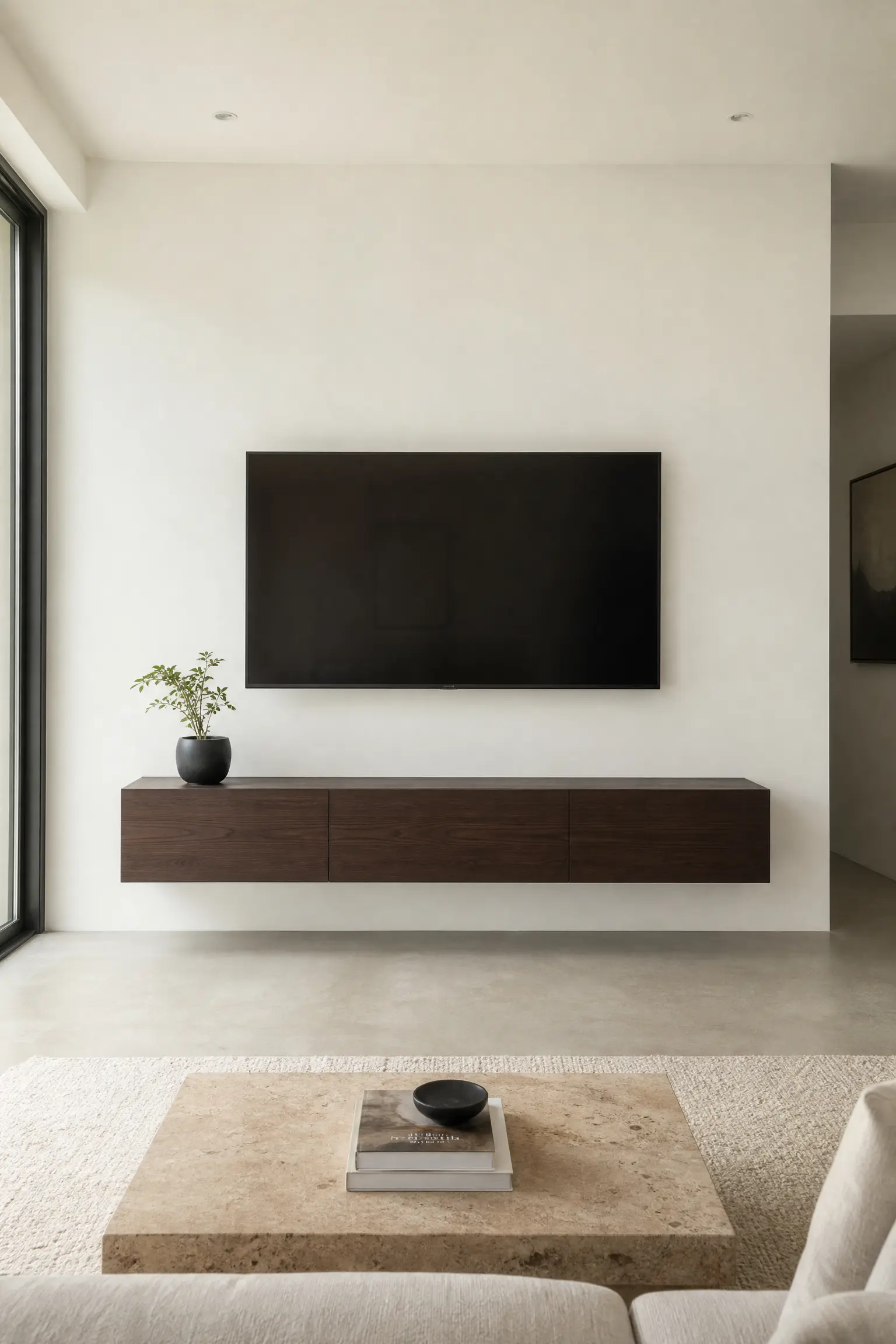
Wall-mounted media consoles are one of those minimalist furniture solutions that people discover and immediately wonder why they waited so long. By lifting the TV unit off the floor, you free up several feet of visual floor space, which makes even a modest living room feel noticeably more open. Choose a console with flat-front doors and no visible hardware in a matte walnut or dark charcoal finish, mounted at seated eye level. Keep the surface of the console completely clear except for one or two intentional objects, like a small ceramic vase or a slim table lamp. The cables should be routed through the wall if possible, or gathered neatly in a cable management box. This is an investment-level upgrade for most rooms but pays back in both function and the way the room feels daily.
Designer Note: Mount the console so the bottom edge sits about 18 inches from the floor. That proportion tends to look the most intentional across different room heights.
4. The Negative Space Coffee Table
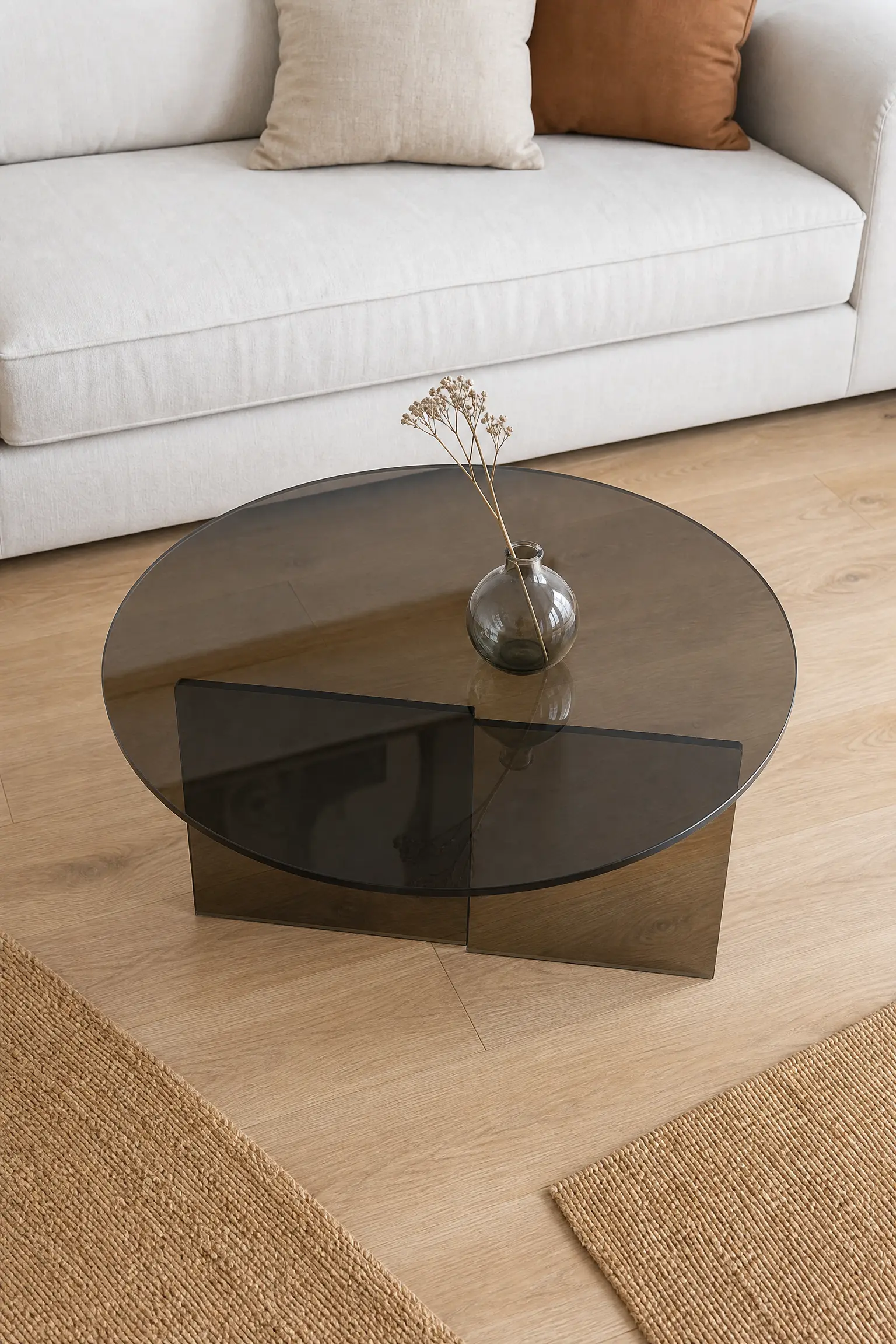
Most coffee tables are too big for the rooms they end up in. A minimalist approach is to choose a coffee table that is actually smaller than you think you need, and then use negative space around it deliberately. A round table in smoked glass, light travertine, or solid white oak in the 28 to 36 inch diameter range works well in most living rooms without dominating the center of the space. The transparency of glass or the light tone of natural stone keeps the floor reading as open. Style it with one object only, a single stem in a bud vase, a small tray, or a single design book. This idea is particularly effective in apartments or smaller living rooms where a standard rectangular coffee table would feel like it takes over. Budget-friendly versions are available at IKEA and H&M Home; investment versions in travertine can run higher.
Designer Note: Round tables also eliminate the shin problem. If you have kids or tend to move around your living room a lot, the lack of sharp corners is a real practical bonus.
5. Modular Shelving Over Bulky Bookcases
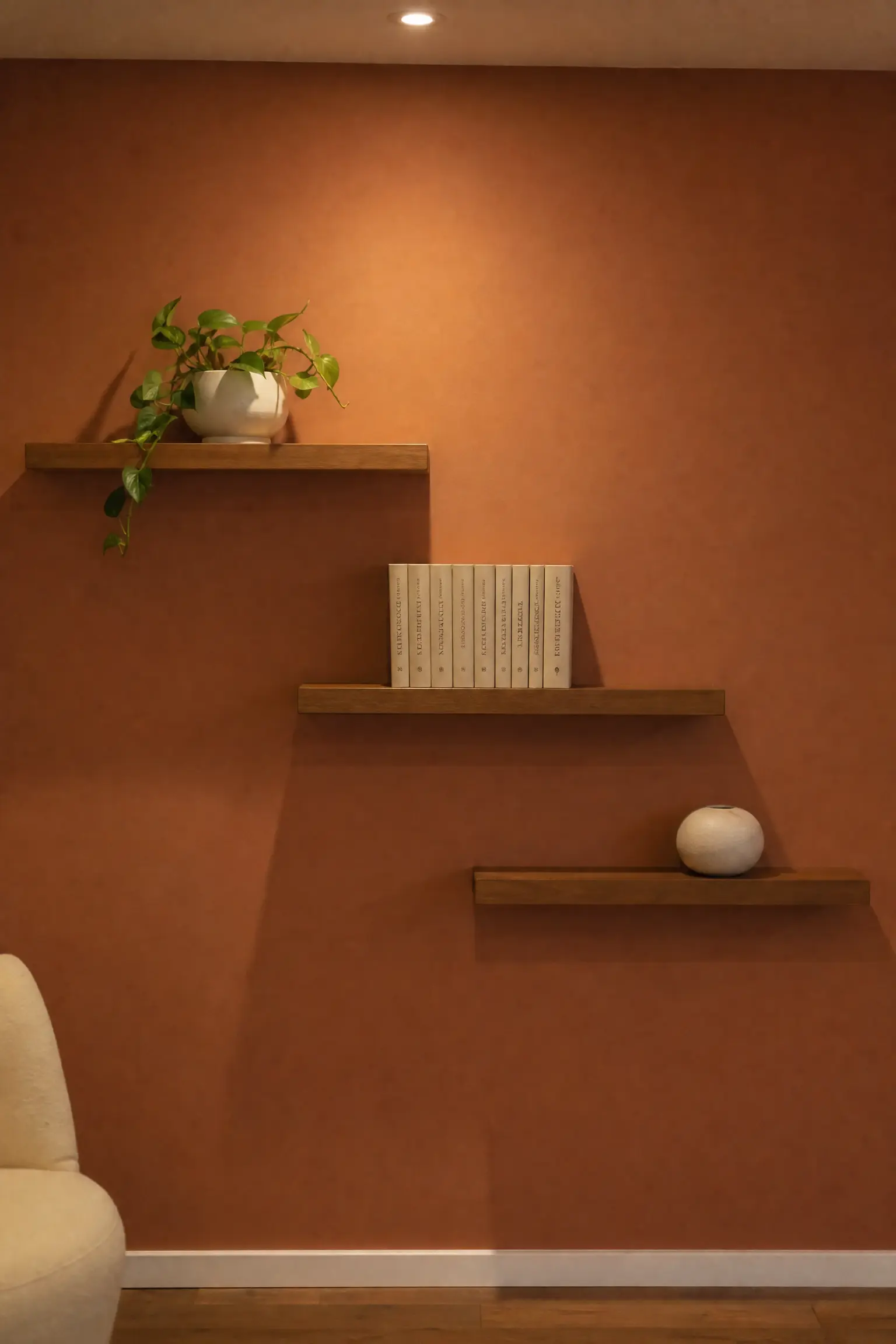
A wall of heavy built-in bookcases reads as storage-heavy in a minimalist space. An alternative that works far better is a modular shelving system with visible wall space between the shelves, like the IKEA Ivar system, String shelving from Sweden, or a simple floating ledge approach. Mount three to four staggered shelves at different heights rather than filling an entire wall. Use each shelf to hold one or two carefully chosen objects, a plant, a sculptural object, a single row of books with their spines facing out in coordinating colors. The wall itself becomes part of the composition. This works especially well in living rooms with a feature wall, where a neutral tone like warm white, greige, or muted clay lets the shelving arrangement stand out without competing with everything else.
Designer Note: Resist the urge to fill every shelf. Empty shelf space is not wasted space in a minimalist room. It is part of the design.
Bedroom Minimalist Furniture Ideas
6. The Platform Bed with No Headboard
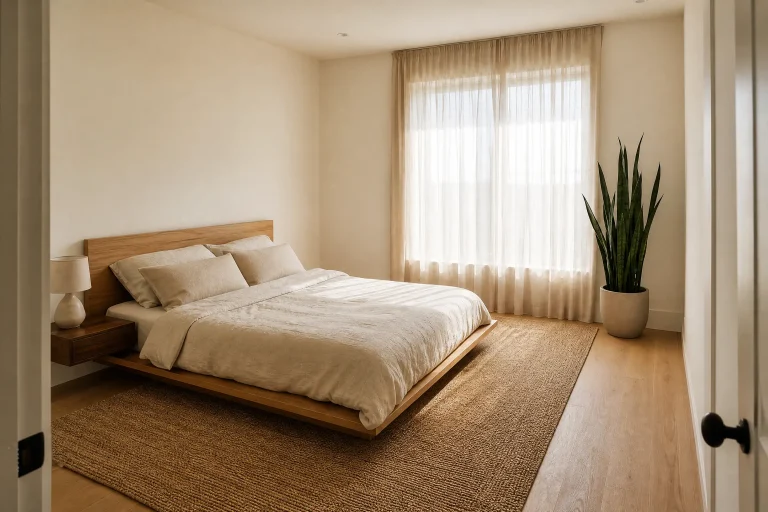
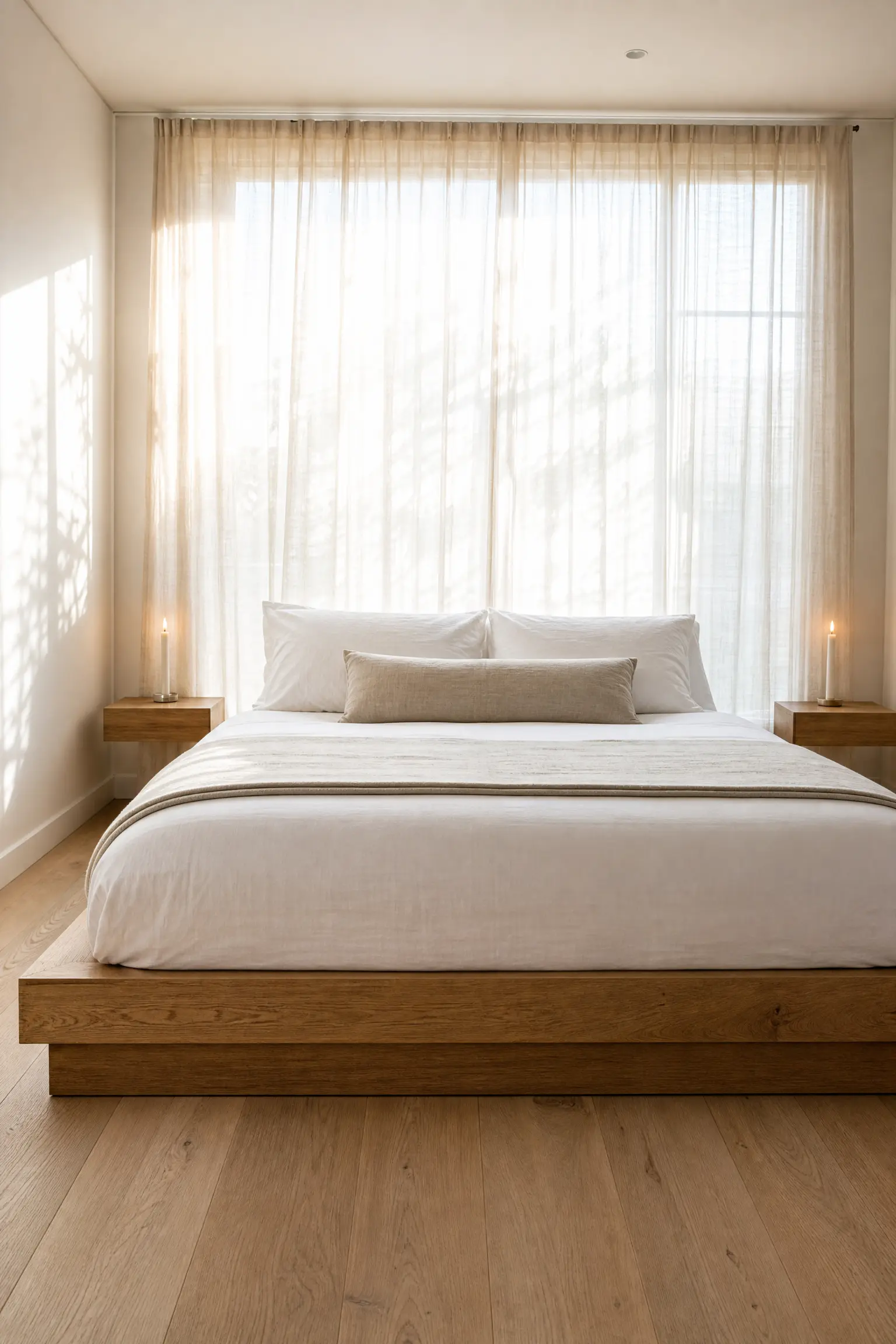
Platform beds with no headboard are one of the cleaner looks in minimalist bedroom design, and in practice they work best in rooms with strong architectural detail behind the bed, like a textured wall, a large piece of art, or a horizontal band of color. The bed frame itself should sit low to the ground, ideally 12 to 16 inches in height, in solid oak, walnut, or a simple powder-coated steel in matte black or warm grey. Pair it with high-quality linen bedding in white, off-white, or stone to let the frame speak for itself. Bedside tables should be minimal, either floating wall-mounted shelves or small drum tables in a complementary material. This setup is particularly effective in rooms where you want to emphasize ceiling height or a great view through the window.
Designer Note: No-headboard beds work best when the bed is made well every day. If you tend to leave the bed unmade, a simple upholstered headboard in linen or velvet actually looks more intentional.
7. The Japandi Bed Frame
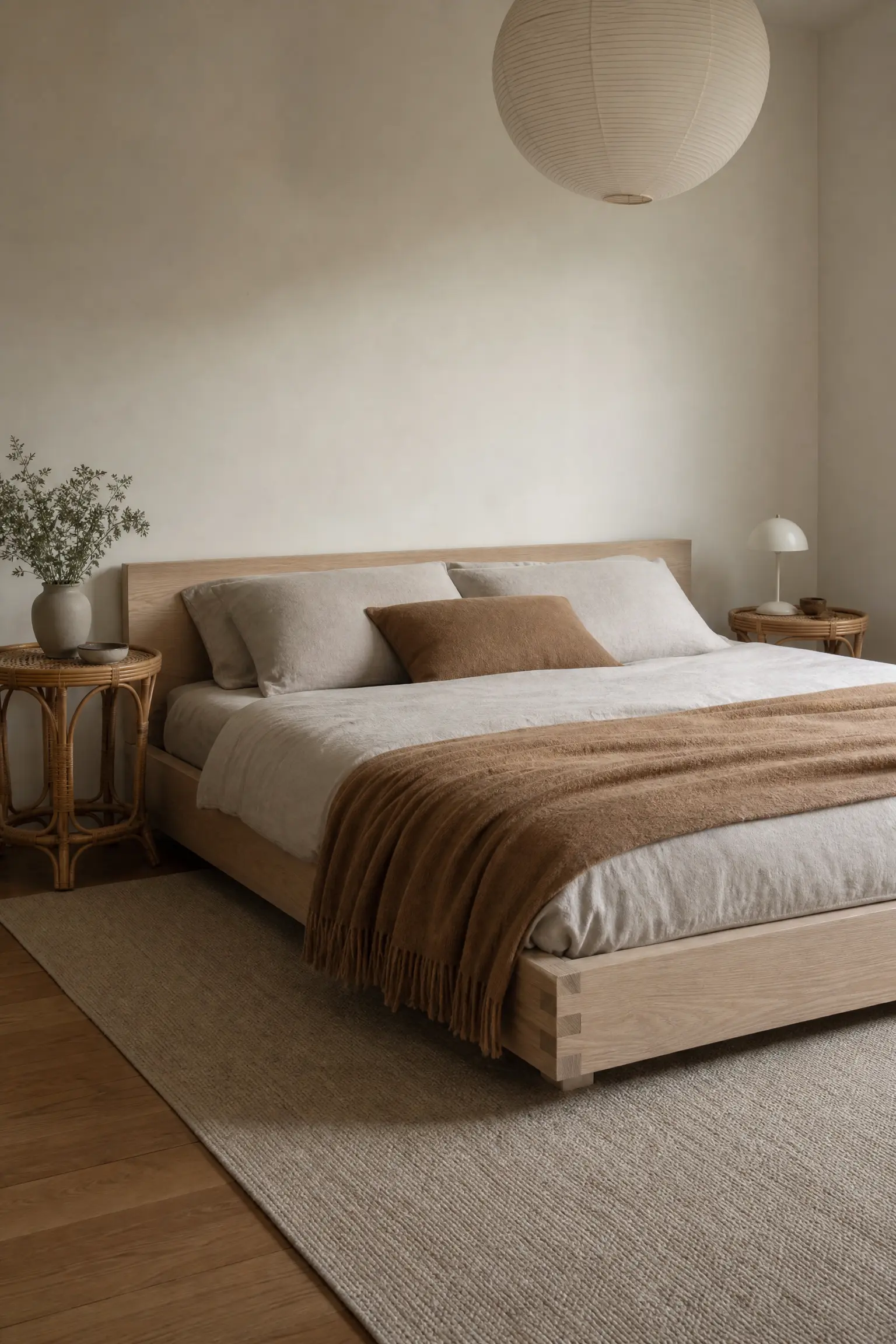
The Japandi aesthetic, a blend of Japanese minimalism and Scandinavian functionality, has produced some of the most liveable bed frame designs available right now. Look for frames with low wooden platforms, visible joinery, and a warm natural finish in ash, oak, or bamboo. The proportions tend to be wide and grounded, which works well in rooms with lower ceilings. Keep the color palette around the bed in warm neutrals: natural linen, cotton in warm white, and a single wool throw in camel or terracotta. Side tables in rattan or light wood add to the layered natural material story without introducing visual clutter. Lighting in a Japandi bedroom typically comes from a simple paper pendant above the bed or low-wattage wall sconces mounted on either side, with warm bulbs in the 2700K range.
Designer Note: Japandi works best when every material in the room feels natural. Avoid synthetic textiles or anything glossy. Matte, textured, and organic surfaces are what make the style feel authentic.
8. The Hidden Storage Dresser
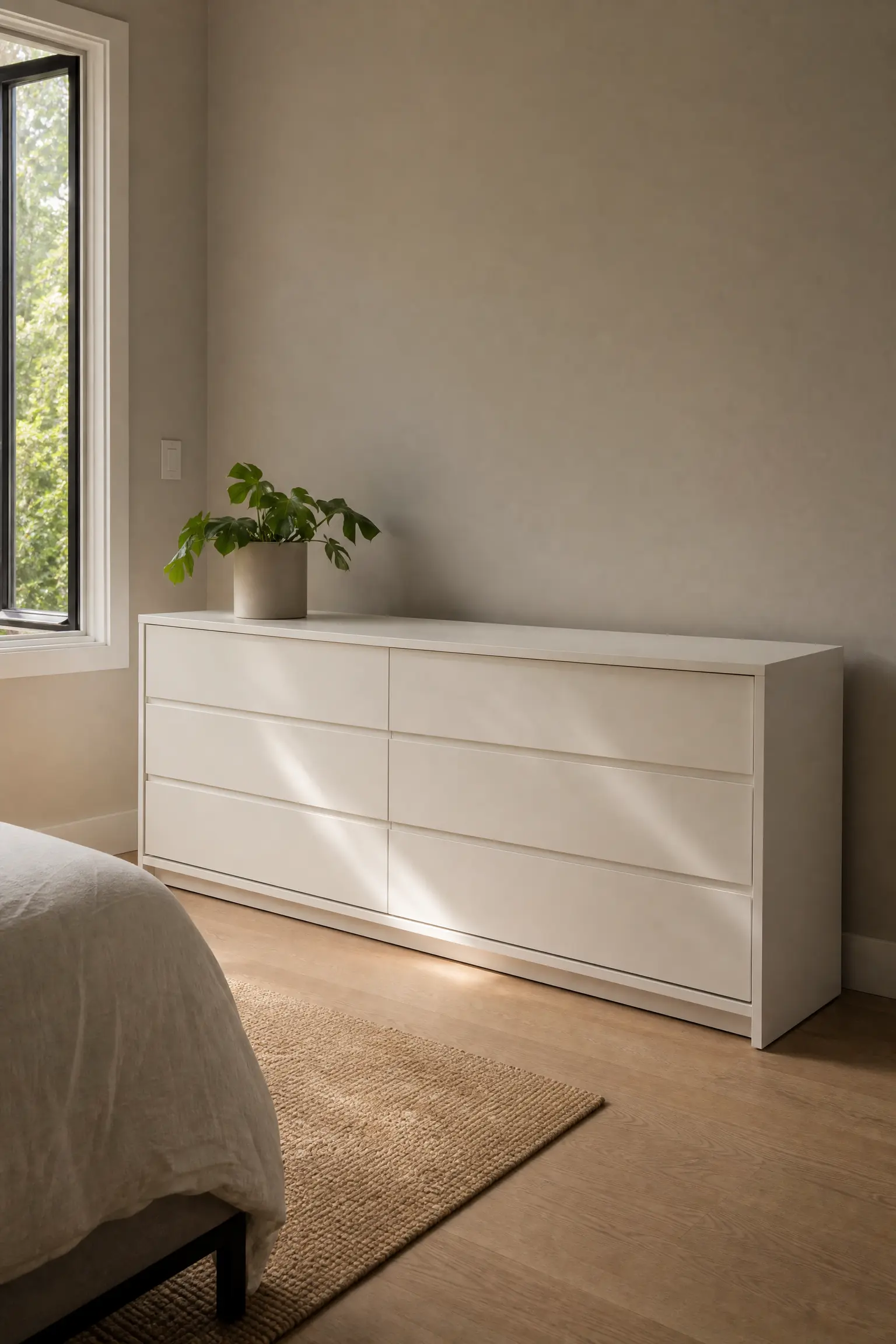
In a minimalist bedroom, visible clutter is the enemy of the whole concept, and a dresser that hides everything well is one of the most functional pieces of furniture you can invest in. Look for dressers with flush-front drawers and recessed handles, or push-to-open drawer mechanisms with no hardware at all. A finish in matte white, light concrete grey, or warm ash gives the piece a clean presence without drawing too much attention. Position it against a wall where it reads as part of the architecture rather than a piece of furniture dropped into the room. A single object on top, one small plant or a single candle, is all it needs. This is a mid-range to investment-level piece, but it is one where quality matters because poorly built dressers with drawers that stick undermine the whole calm you are trying to create.
Designer Note: Push-to-open mechanisms are worth the upgrade. Hardware-free furniture feels dramatically cleaner in a minimalist space and holds up well over time.
9. The Floating Nightstand
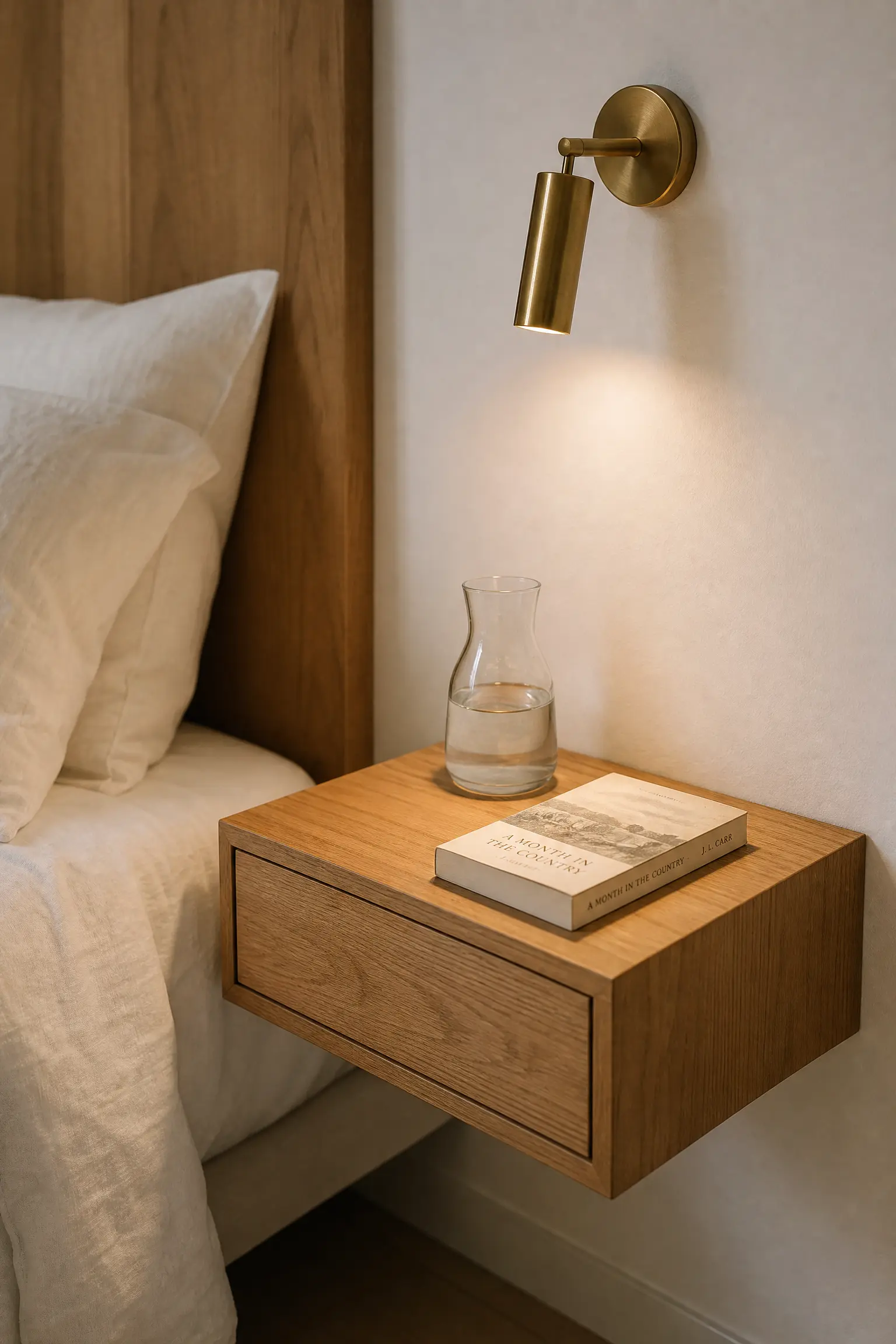
Wall-mounted floating nightstands are a small change with an outsized visual impact in a minimalist bedroom. Mounted at the right height, typically 24 to 26 inches from the floor depending on mattress height, they eliminate the bulk of traditional bedside tables and let the floor run unbroken beneath them. Look for versions in solid oak or walnut with a single drawer or open shelf below. A slim LED reading light mounted just above the nightstand on the wall completes the setup without adding another surface object. This works well in any bedroom size but is particularly valuable in smaller rooms where floor space is premium. Floating nightstands are typically mid-range in price, with good options available from West Elm, IKEA, and smaller Scandinavian furniture makers.
Designer Note: The height of the nightstand relative to the mattress top matters more than most people realize. Aim for the surface to sit 2 to 4 inches above the mattress for the most comfortable reach.
10. The Upholstered Bench at the Foot of the Bed
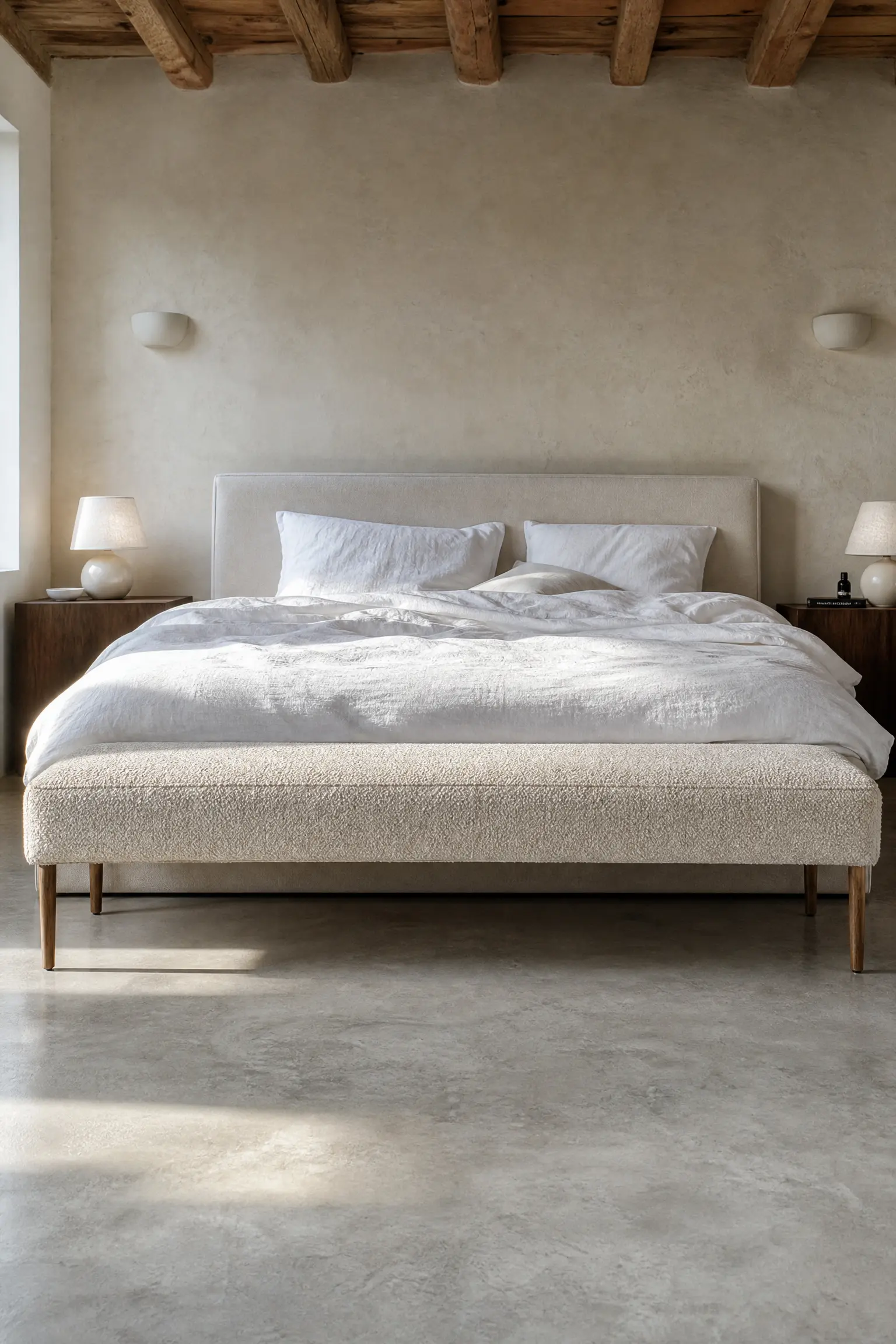
An upholstered bench at the foot of the bed is one of those pieces that looks effortless in a minimalist bedroom but requires a bit of thought to pull off correctly. The bench should be narrow, no more than 18 inches deep, and the length should ideally match the width of the bed frame exactly for a proportional, intentional look. Upholster it in a texture that echoes something else in the room, boucle if the headboard is linen, smooth cotton velvet if the bedding is linen. Keep the legs slim in solid wood or thin metal. The bench is also genuinely useful for setting out clothes the night before or as a landing spot when getting dressed. This is a detail that designers often add to bedroom projects because it finishes the room without adding visual noise.
Designer Note: Avoid benches that are too thick or padded. A slim profile reads as intentional; a puffy oversized bench tips into a different aesthetic entirely.
Dining Room Minimalist Furniture Ideas
11. The Solid Wood Dining Table with No Extension
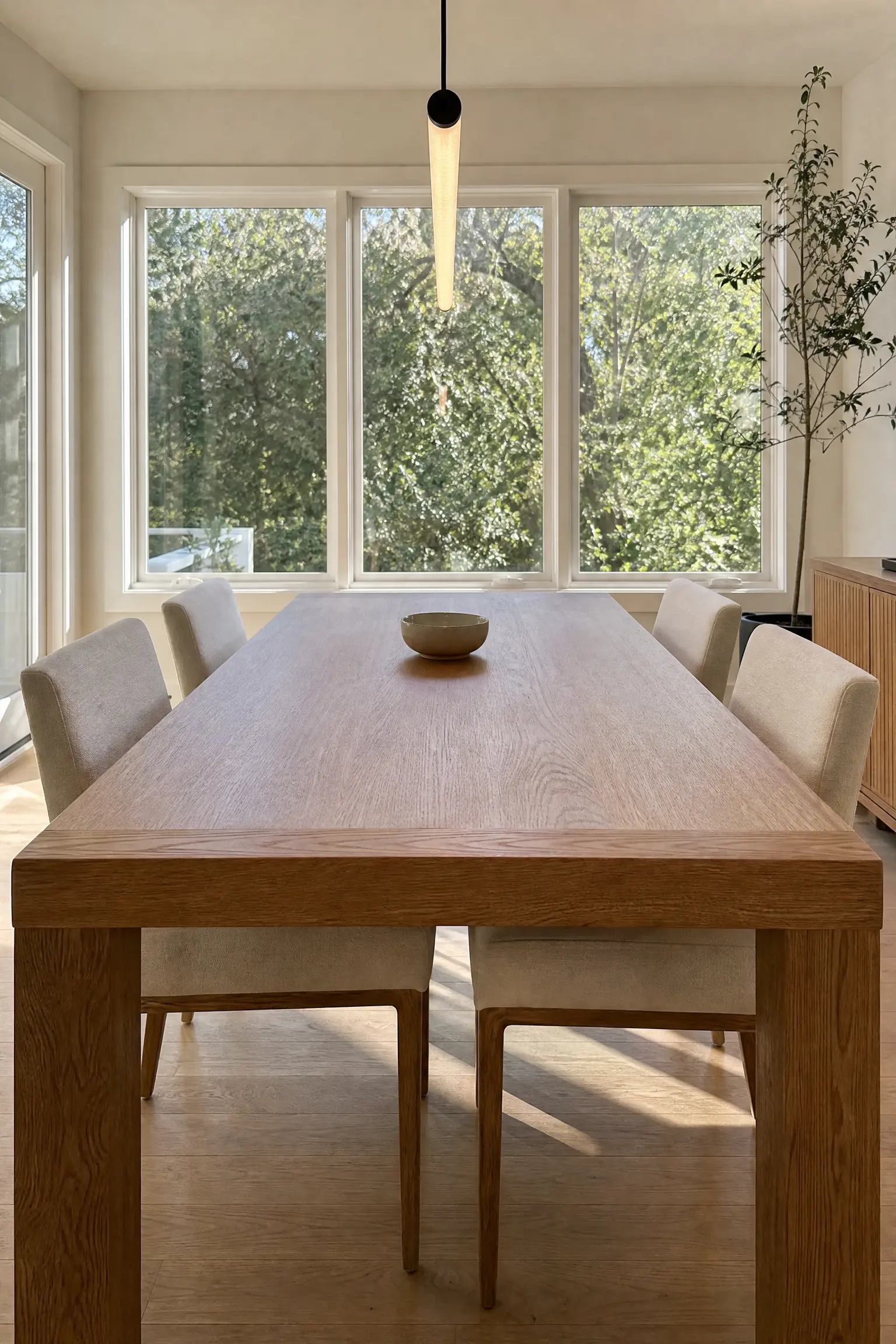
Extension tables are practical, but in a minimalist dining room they rarely look as clean as a solid, fixed-size table. Choose a dining table in solid oak or walnut with a simple rectangular or oval top and tapered legs, sized to fit your actual dining needs rather than hypothetical large gatherings. The grain of the wood does the decorative work; no centerpiece is needed beyond a single low ceramic bowl or a small potted plant. In terms of proportion, the table should leave at least 36 inches between the edge and the nearest wall for comfortable circulation. Pair it with four to six matching dining chairs in a complementary wood tone or natural linen upholstery. This is an investment piece worth spending on because a well-made solid wood table lasts decades and improves with age.
Designer Note: Oval tables are underrated in minimalist dining rooms. The curved edges soften the space and make the room feel less rigid, which is especially useful if the rest of the furniture is quite linear.
12. The Bench Dining Setup
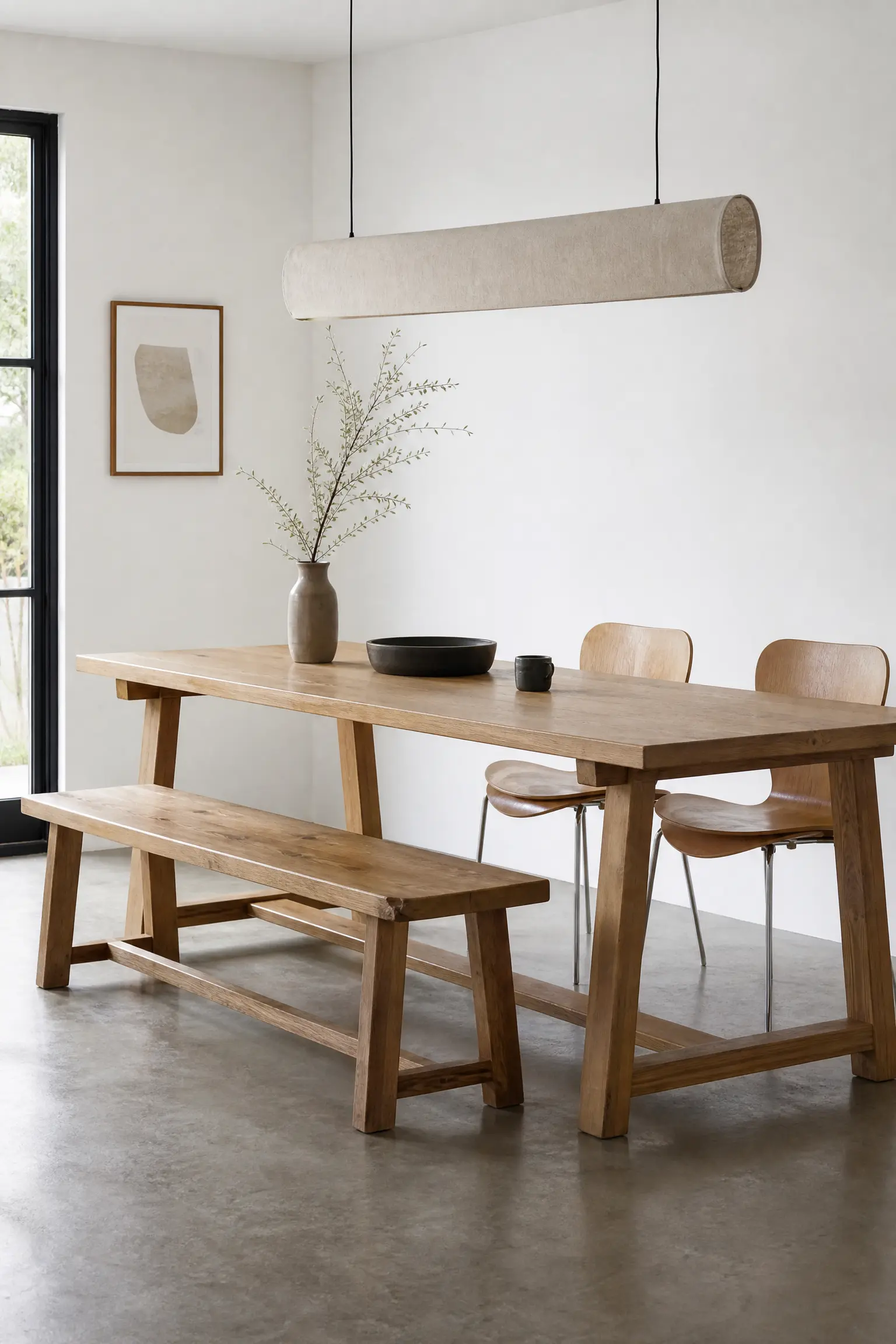
Replacing two of the four dining chairs with a single bench along one side of the table is a simple change that immediately makes a dining room feel more relaxed and more modern at the same time. The bench should be in the same wood as the table, either matching grain or the same species in a slightly different finish for gentle contrast. Keep it backless for a cleaner silhouette. On the opposite side of the table, use two individual chairs in a complementary material, linen upholstered, rattan wrapped, or simple molded plywood. The mix of bench and chair introduces visual variety without visual clutter. Overhead, a single elongated pendant light centered over the table length ties the whole composition together. This is a budget-friendly shift since good benches are significantly less expensive than a full set of chairs.
Designer Note: Cushions on the bench are optional but add warmth. If you add them, keep the covers in a single plain linen or cotton fabric without pattern to preserve the minimalist quality.
13. The Minimal Sideboard
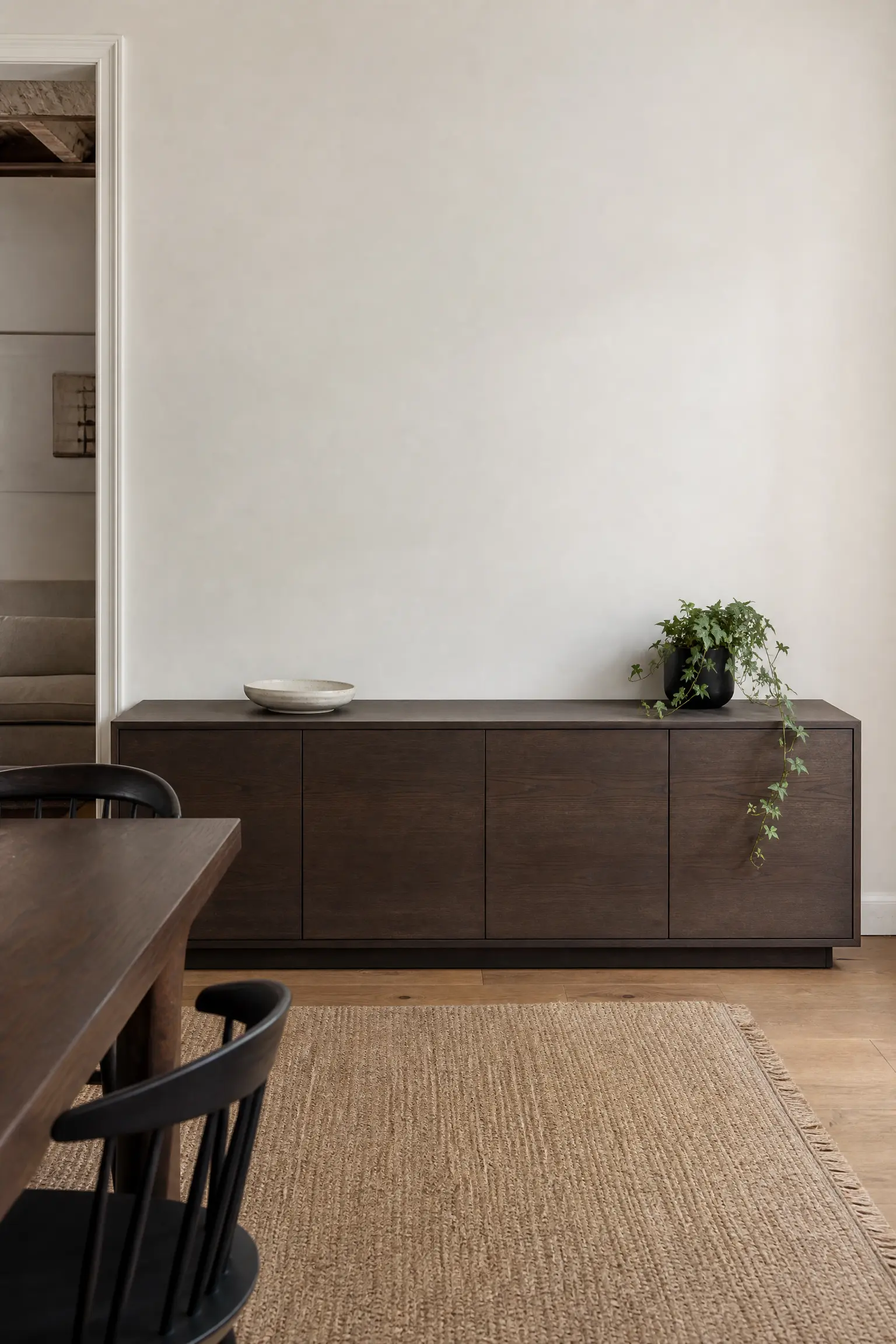
A sideboard in a dining room serves multiple functions and in a minimalist space it should do its job invisibly. Look for a low-profile sideboard, no taller than 32 inches, with flat-front doors in matte finish and no visible hardware. Wood species that work particularly well include ash, light oak, and smoked oak for a slightly moodier look. Position it against the wall opposite the windows so it does not block natural light. The top surface can hold one or two items of real intent, a ceramic serving dish, a single bottle of wine, a small succulent in a stone pot. Inside, it stores linens, extra tableware, and whatever else the dining room tends to accumulate. A sideboard at this scale is mid-range in cost, with options across a wide price range.
Designer Note: Avoid sideboards with too many compartments or visible divisions. The cleaner the front face, the more it reads as architectural rather than just storage furniture.
Home Office Minimalist Furniture Ideas
14. The Wall-Mounted Desk
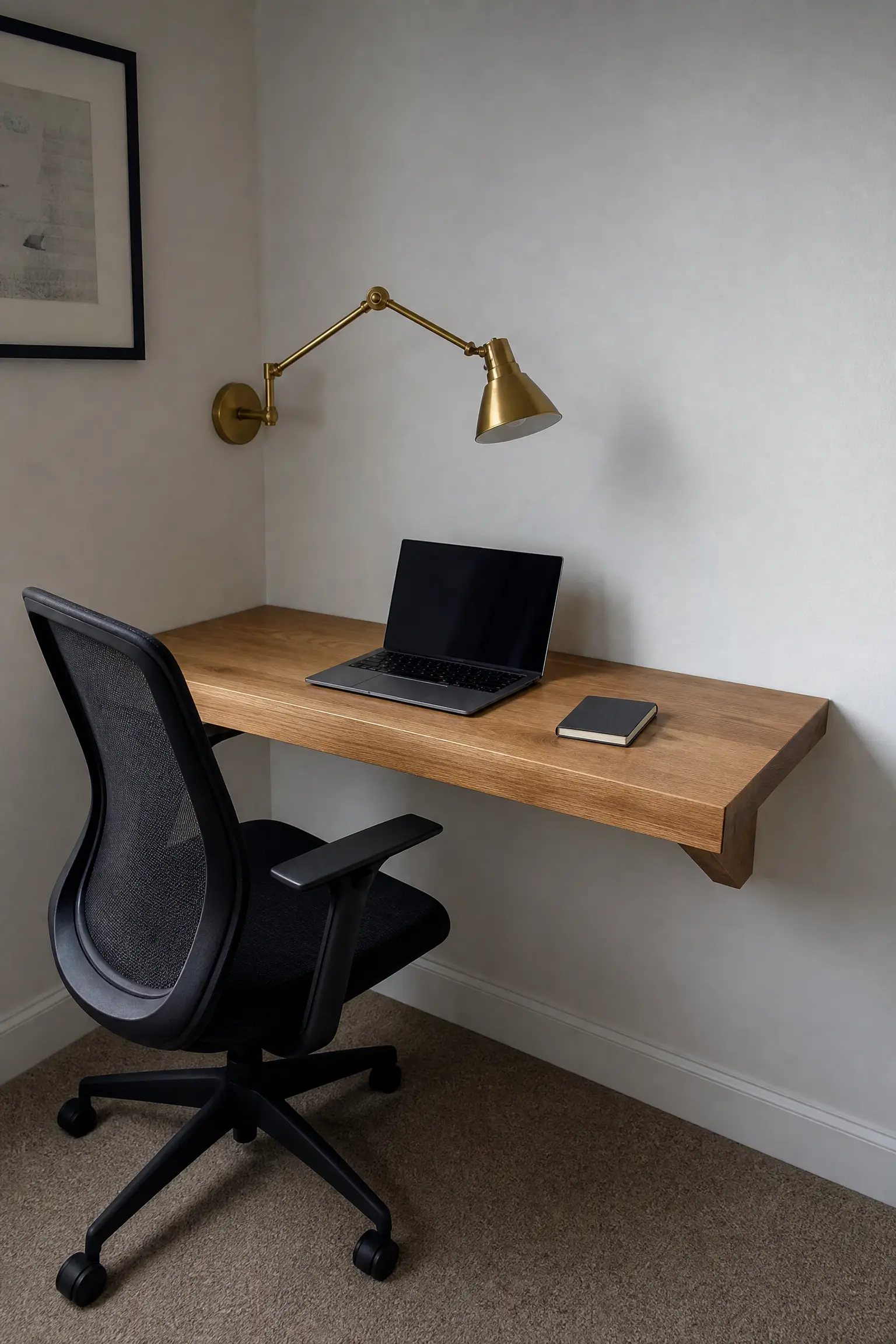
In a home office that shares space with another room, a wall-mounted fold-down or fixed desk is one of the cleanest minimalist furniture solutions available. When mounted properly, it becomes part of the wall architecture during work hours and nearly disappears when the work day ends. Look for a version in solid oak or a lacquered MDF in matte white, sized to give you enough working surface without jutting too far into the room, typically 20 to 24 inches deep. A single drawer or small shelf beneath keeps essentials within reach. Pair it with a slim task chair in mesh or moulded plywood that can be pushed completely under the desk surface when not in use. For lighting, a wall-mounted adjustable arm lamp above the desk keeps the desk surface clear and provides task-appropriate light.
Designer Note: The chair is just as important as the desk in a minimal home office. A chair that does not tuck completely under the desk undermines the whole concept.
15. The Single Deep Work Table
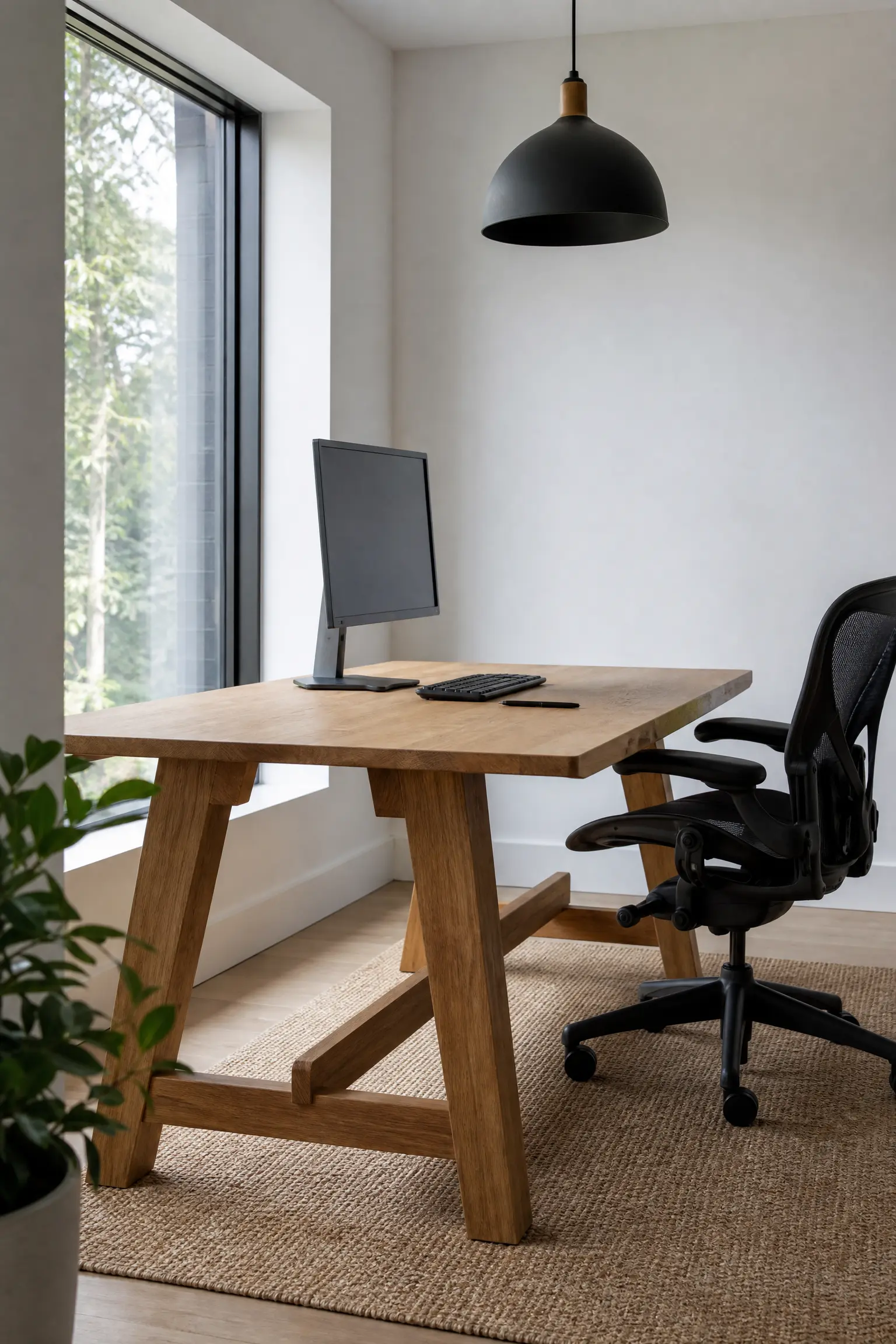
For home offices that are dedicated rooms rather than shared spaces, a large single work table with nothing on it except what is actively in use is the most effective minimalist furniture approach for productivity. Choose a simple trestle table or a solid-top desk in natural oak or concrete-look laminate, wide enough for a monitor, keyboard, and one notebook. Keep cables managed either through a cable tray under the desk or routed neatly along the wall. The desk should sit near the window for natural light, and overhead lighting, if needed, should be a single pendant or a ceiling-mounted fixture rather than a desk lamp that competes for surface space. Storage should happen behind closed doors in a separate cabinet or built-in, not on the desk itself.
Designer Note: A concrete-effect laminate desk gives a more industrial minimal feel at a fraction of the cost of real concrete, and it does not require sealing or maintenance.
16. The Open Shelving Office System
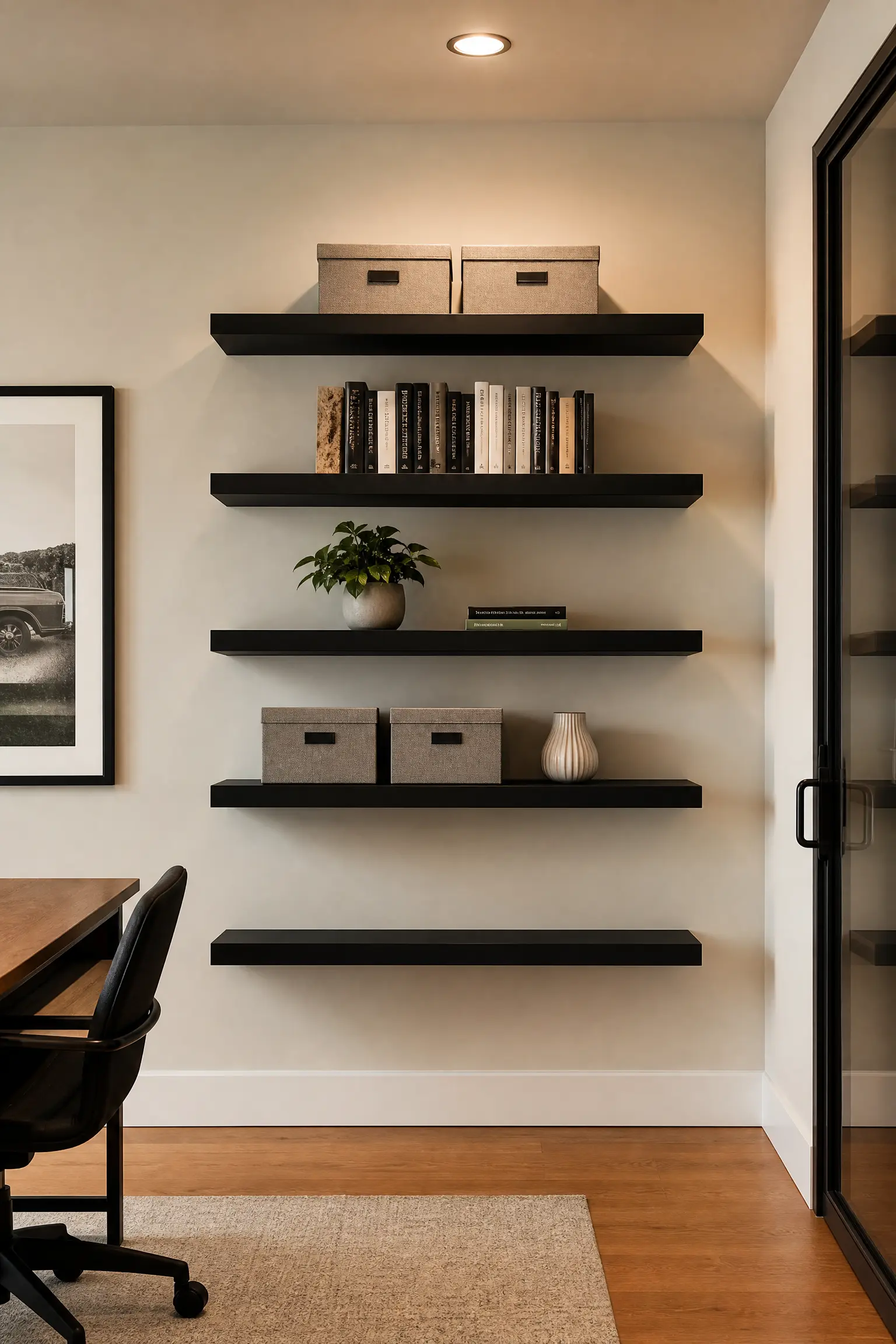
Open shelving in a home office sounds counterintuitive to minimalism, but done right it is one of the most functional and visually honest approaches to a work space. The key is discipline in what goes on each shelf. Mount three to five shelves at consistent spacing in a solid wood or powder-coated steel system, and use matching storage boxes or bins in a single color for anything that would otherwise create visual noise. Books can be grouped by spine color or kept in a single tonal range. Leave at least one shelf intentionally spare to avoid the shelves reading as packed. In terms of color, keeping the wall behind the shelving the same tone as the rest of the room makes the system feel integrated rather than added on.
Designer Note: Matching boxes and bins are worth the effort. A shelf with mismatched containers in random colors fights the minimalist aesthetic regardless of how few objects are on it.
Entryway and Hallway Minimalist Furniture Ideas
17. The Slim Console Table
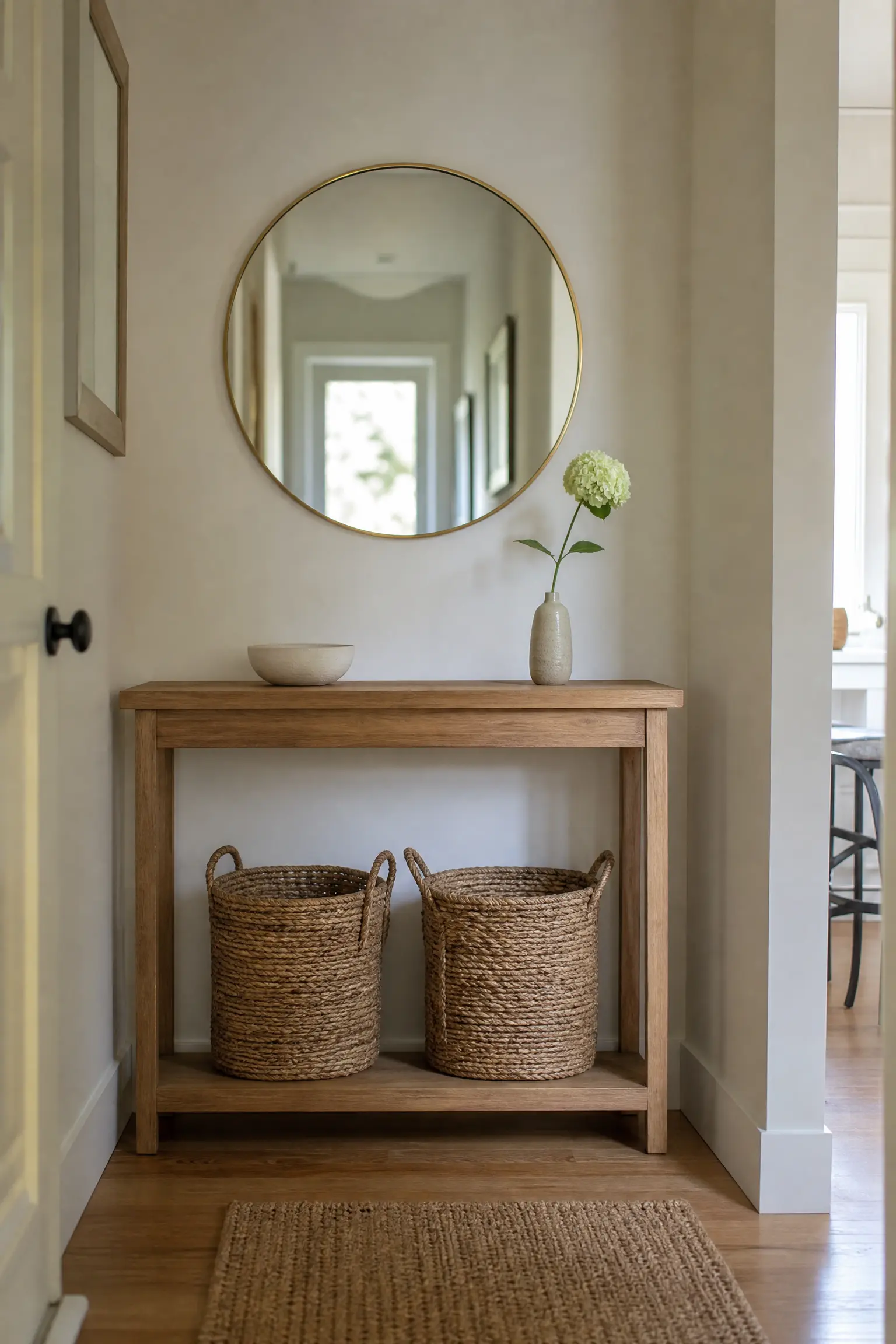
Entryways are often narrow, and the wrong furniture makes them feel like an obstacle course. A slim console table, no deeper than 12 inches, in a light wood or powder-coated metal frame gives the entry a moment of intentional design without eating into the walkable space. Use the surface for one practical item, a small bowl for keys, a single plant, or a candle, and resist adding anything else. A mirror hung above the console reflects light and makes the entry feel larger; choose one with a simple frame in the same material as the table. Under the table, a low bench or a pair of wicker baskets for shoes keeps things off the floor without adding furniture bulk. This is one of the most affordable minimalist furniture upgrades in the entire home.
Designer Note: A console table that is too deep in a narrow hallway is worse than no console at all. Measure first: 10 to 12 inches is the sweet spot for most hallways.
18. The Floating Coat Hooks
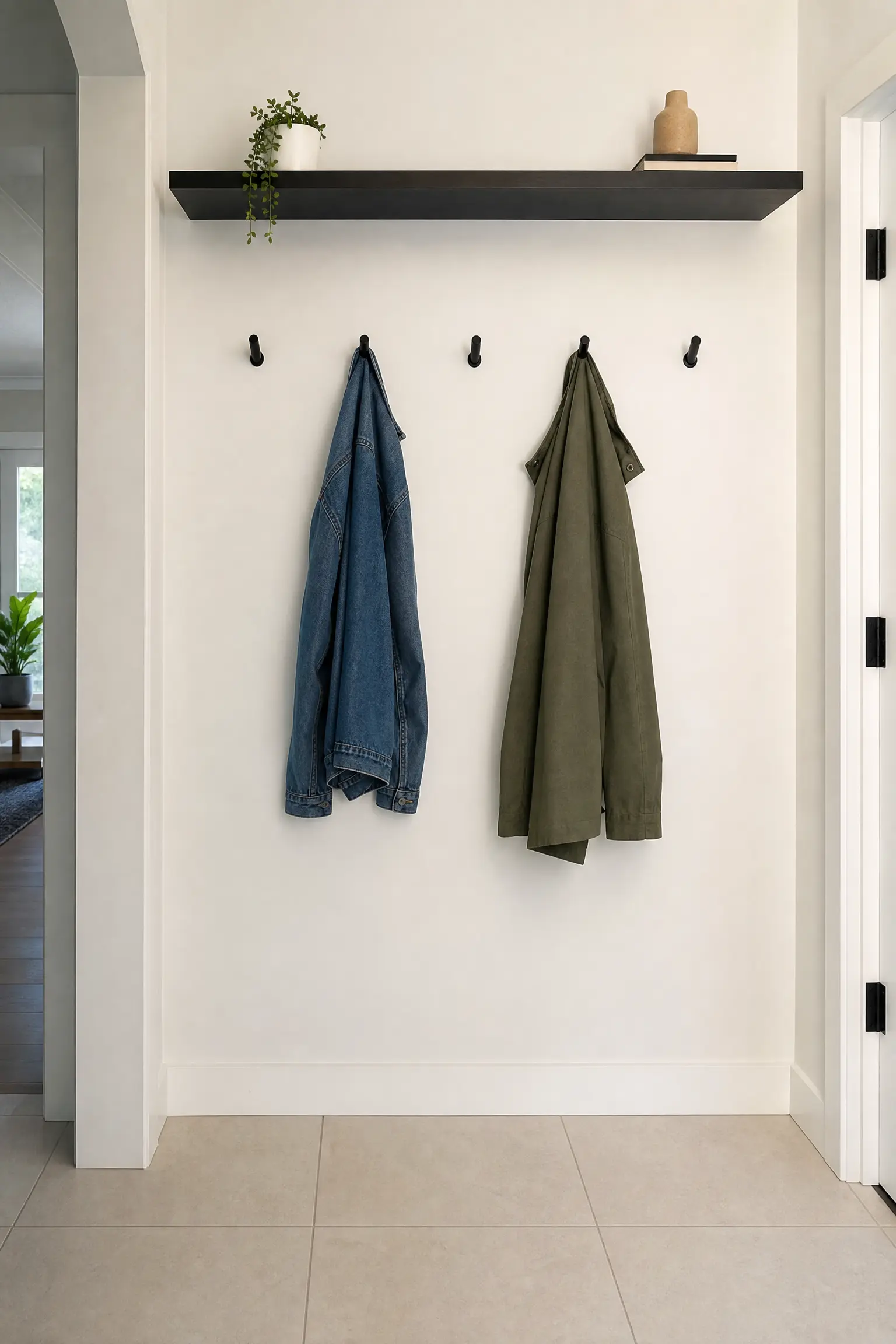
A row of hooks on a wall is the most functional storage solution for an entryway, and in a minimalist home the design of those hooks matters. Choose hooks in solid brass, matte black, or natural wood with a simple cylindrical or angled form, mounted at consistent spacing along a single horizontal line. Five hooks is usually the right number for a family entry; three for a single-person or couple household. Mount them at a height that works for everyone in the home, typically 66 to 68 inches from the floor. A single shelf above the hooks, flush with the wall and in the same finish, adds useful surface space without the visual bulk of a full coat rack or entryway unit. This is one of the lowest-cost minimalist furniture moves with a high visual payoff.
Designer Note: Brass hooks patina naturally over time and actually get more attractive with age. Matte black is lower maintenance but slightly less warm in feel.
19. The Minimalist Shoe Storage Bench
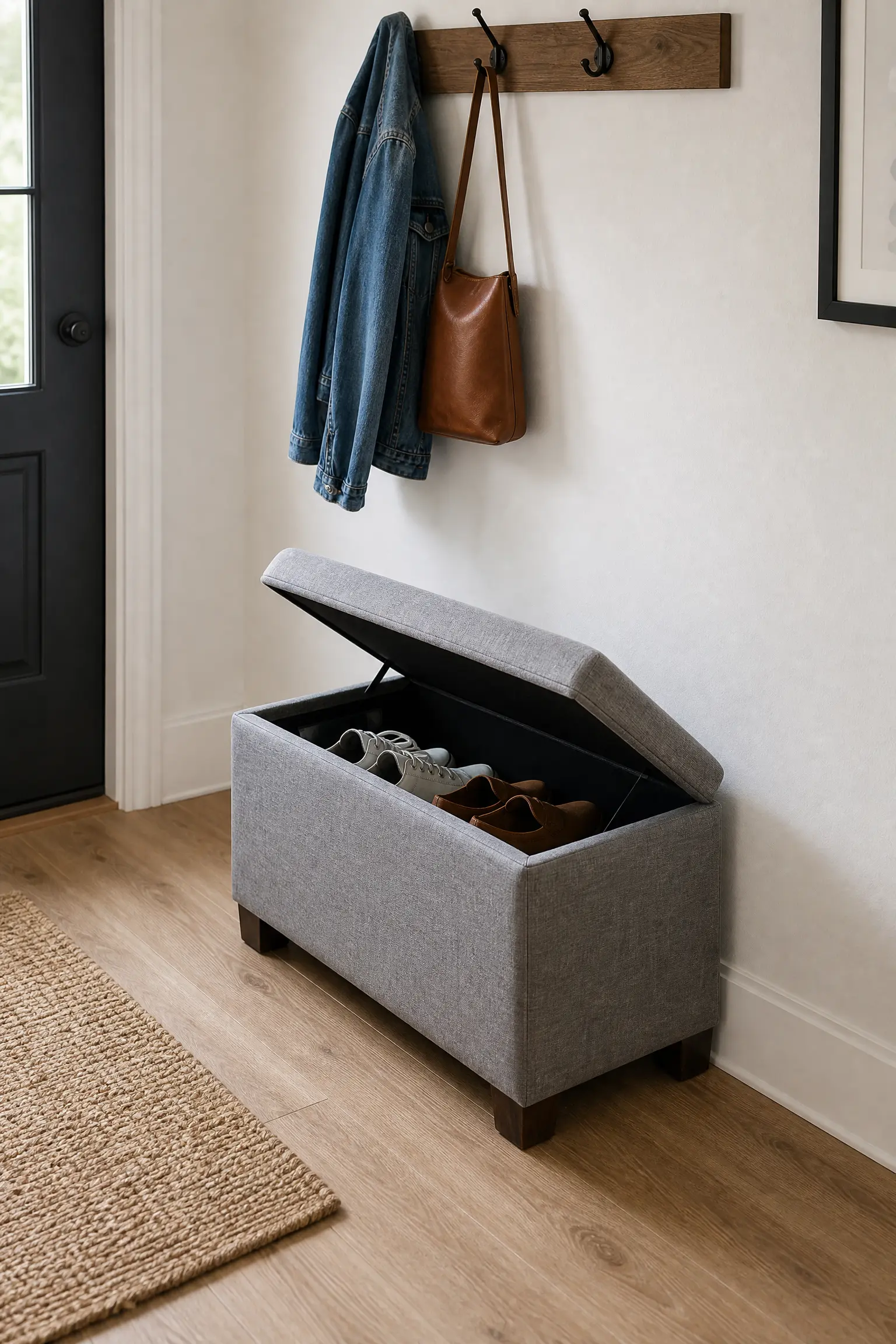
A bench with closed shoe storage underneath is one of the hardest-working pieces of furniture in a minimalist entryway. It solves the shoes-by-the-door problem and gives people a place to sit when taking shoes off, both of which are very real daily quality-of-life improvements. Look for versions with a clean upholstered seat in a stain-resistant fabric and flat-front doors or a simple flip-top compartment below. Dimensions should be proportional to the space; a 36 inch wide bench is a good starting point for most entryways. Finish it in a matte color that coordinates with the wall: white, light grey, or natural wood all work well. This is a mid-range purchase but one that typically lasts well because the use case is straightforward.
Designer Note: Flip-top storage benches are easier to use day to day than those with side doors, especially when you are in a hurry. The lid stays open while you put shoes away.
Multi-Purpose and Accent Minimalist Furniture Ideas
20. The Nesting Side Tables
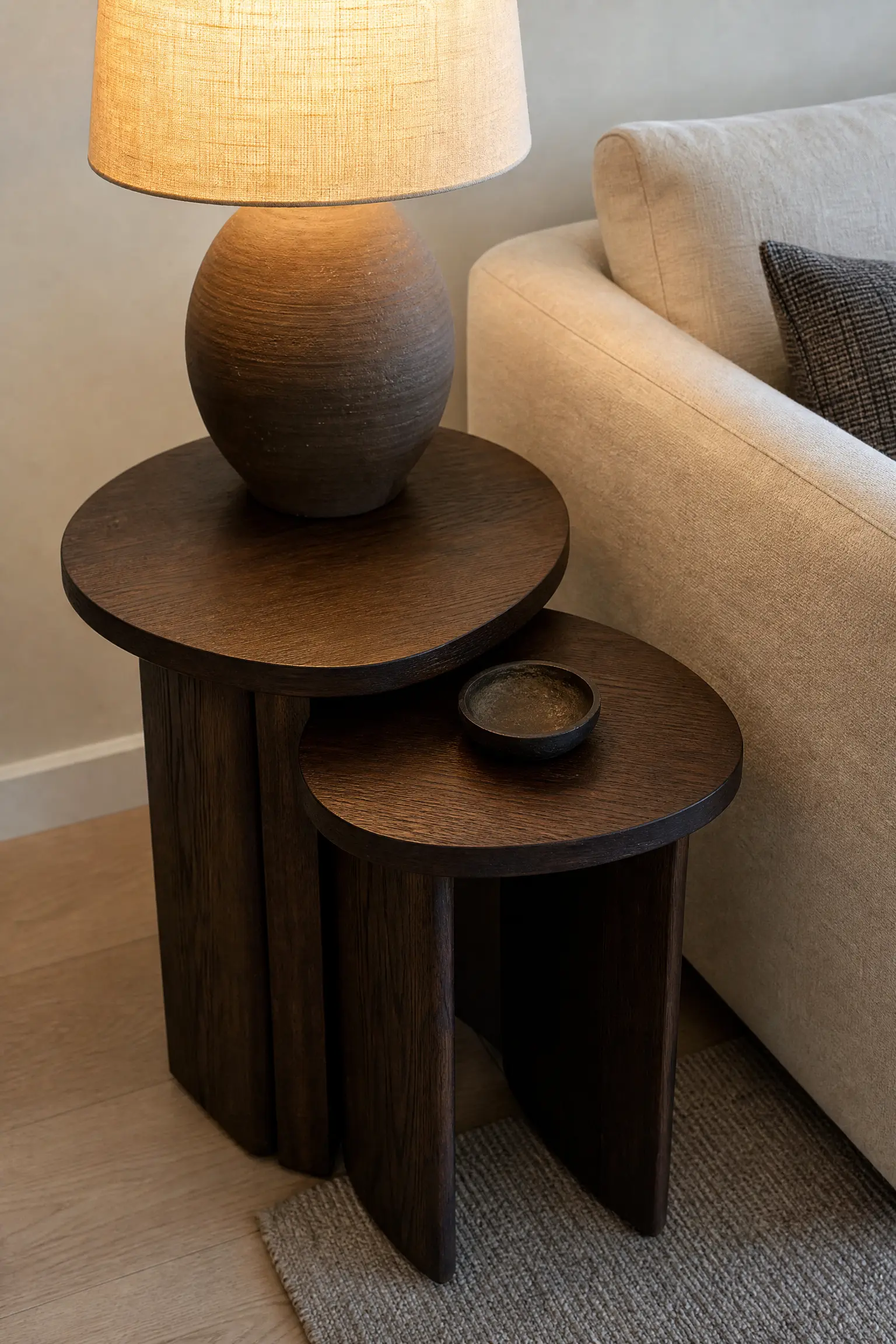
Nesting side tables are a minimalist furniture idea that earns its place in almost any room because of how much flexibility they offer for the footprint they take up. When nested together, they look like a single sculptural object. Pulled apart, they serve as side table, footstool surface, or extra serving surface when you have people over. Look for sets in smoked oak, marble-effect stone, or matte powder-coated steel in two complementary sizes. The smaller of the two should tuck completely beneath the larger when stored. This is a particularly smart choice for smaller apartments or living rooms that need to adapt to different uses throughout the day. Nesting tables span a wide price range, from budget versions at IKEA to higher-end sets in real marble or solid brass.
Designer Note: When buying nesting tables, check that the smaller table slides under cleanly without needing to be angled or forced. A tight fit defeats the purpose of the design.
21. The Multifunctional Ottoman
An ottoman that functions as a coffee table, extra seat, and hidden storage is one of the most practical pieces of minimalist furniture you can own, particularly in open-plan living spaces or smaller apartments. Choose a square or rectangular shape in a performance fabric like indoor-outdoor linen or a tightly woven boucle that handles daily use well. A flat-top surface means you can place a tray on it for use as a coffee table surface, keeping the ottoman flexible. Size it to suit the sofa: a good rule of thumb is that the ottoman should be about two-thirds the length of the sofa at maximum. Storage inside is best for blankets, remote controls, and anything else that tends to drift around the living room. This is a mid-range to affordable purchase with wide availability.
Designer Note: Avoid ottomans with tufted or heavily textured tops if you plan to use a tray on them. A smooth or lightly textured surface is far more practical as a flat working surface.
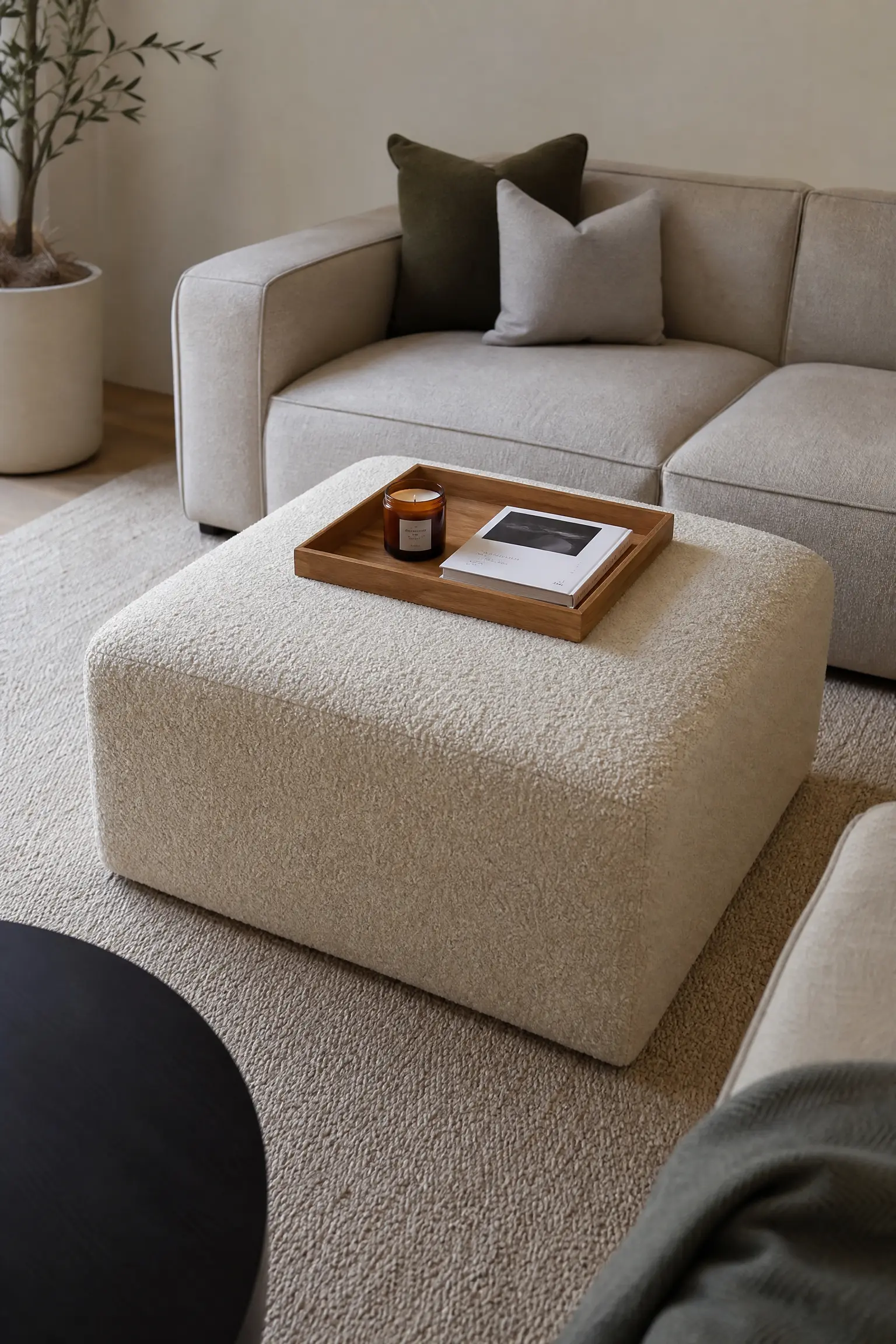
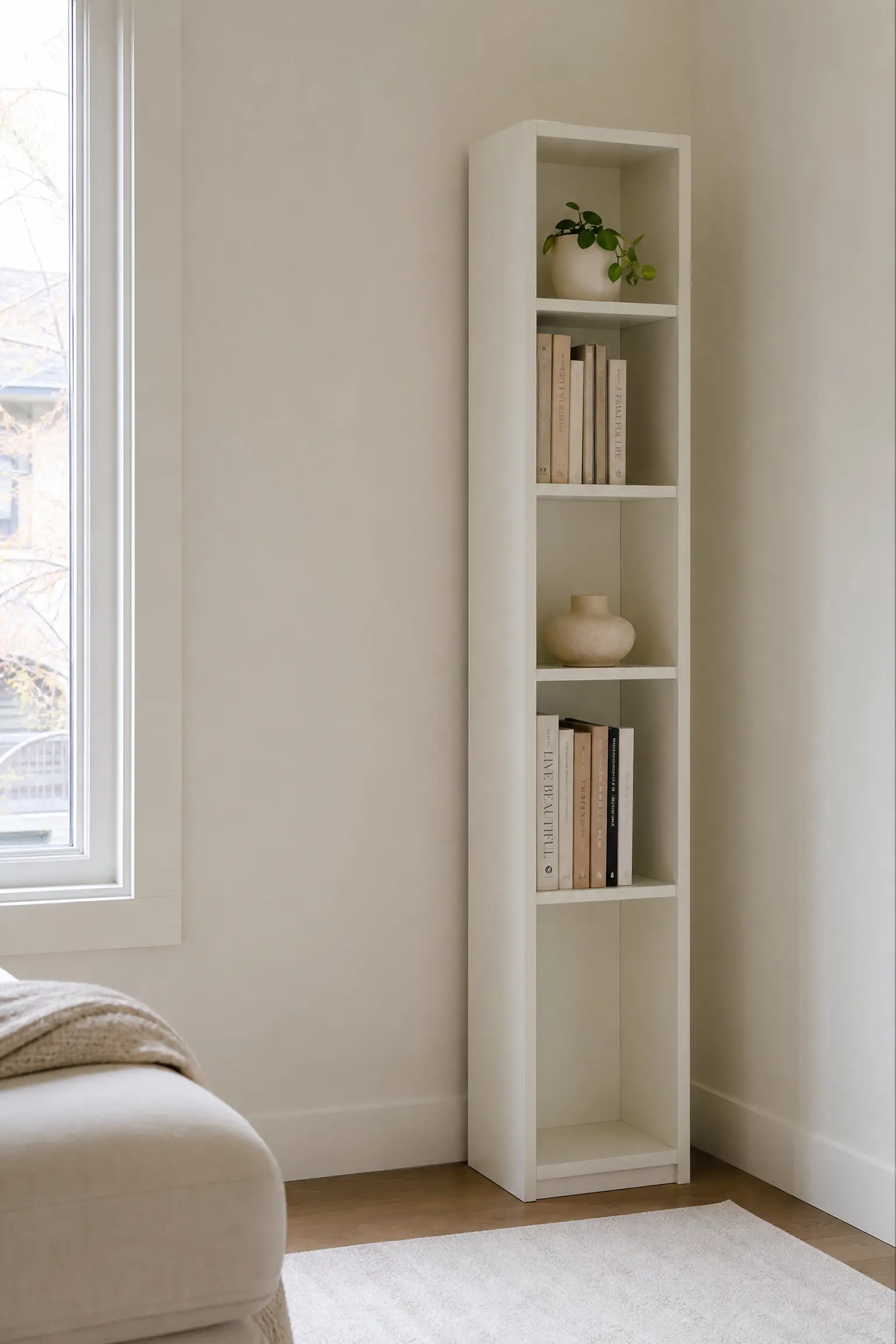
22. The Slender Bookshelf
A tall, narrow bookshelf in a minimalist room is a completely different proposition from a wide, low one. The vertical emphasis draws the eye upward and uses wall space efficiently without spreading furniture across the floor plan. Look for a design with adjustable shelves and a minimal frame in powder-coated steel or solid wood, no deeper than 10 to 12 inches. Use the shelves sparingly: a mix of books, a plant at the top shelf, and one or two objects at eye level. Keep the bottom shelf empty or use it for a large basket. In terms of color, a shelf in the same color as the wall it stands against makes it feel almost architectural, which is a particularly effective minimalist trick in narrow rooms or awkward corners.
Designer Note: Painting a freestanding bookshelf the same color as the wall behind it is a classic designer move that makes the furniture feel like it belongs rather than being placed there as an afterthought.
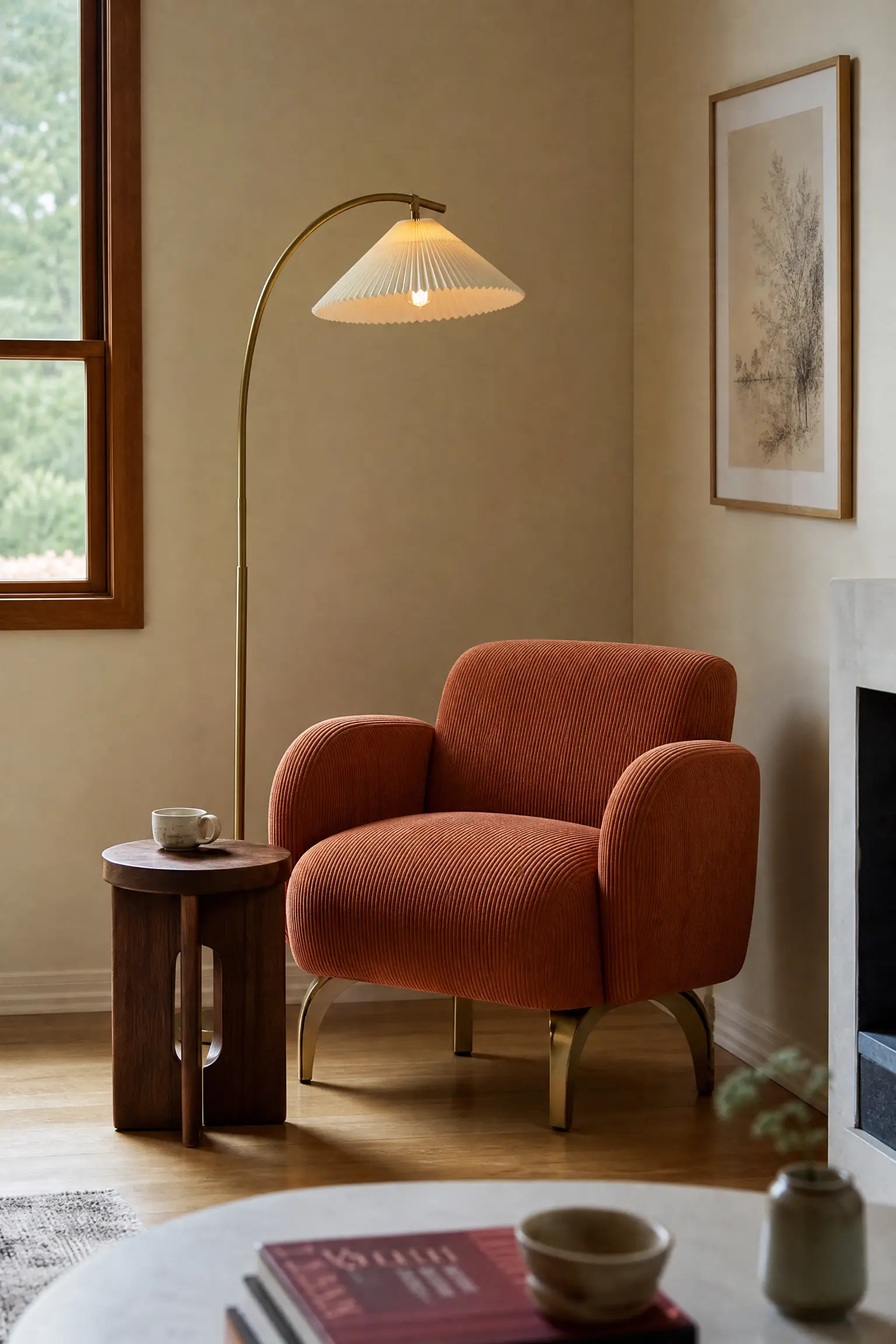
23. The Accent Chair That Does Double Duty
A single accent chair that works as both occasional seating and a visual anchor in a room is one of the most useful minimalist furniture investments you can make. The chair should have enough presence to hold attention on its own, whether through an interesting silhouette, a tactile upholstery like boucle or ribbed cotton, or a warm material like natural rattan or bent wood. Position it near a window or in a corner with a floor lamp behind it so the arrangement reads as a complete vignette. The key difference from a standard chair is that this one should work in multiple contexts: reading, as extra seating when people visit, and as a design object in the room’s composition even when unoccupied. Budget varies widely, from affordable rattan chairs at smaller retailers to investment-level pieces from designers like HAY or Ferm Living.
Designer Note: The accent chair works best when it introduces one material or texture that does not appear elsewhere in the room. That contrast is what gives it visual weight without adding visual clutter.
Final Thoughts
Minimalist furniture is not about creating a room that looks good in a photograph and feels uncomfortable to live in. The best minimalist spaces are the ones where every piece has been chosen with genuine intention, where there is enough breathing room that the furniture you kept actually gets appreciated, and where the whole room feels calmer than any single piece could achieve on its own. The ideas in this article work across budgets and room sizes, and none of them require starting from scratch.
If you are approaching a room with minimalism in mind for the first time, the most useful thing you can do is start with one category, maybe the bedroom or the living room, and get it right before moving on. A room with two or three furniture pieces chosen well will always feel better than a room full of compromises. Take your time with the choices, be honest about what your room actually needs versus what you think it should have, and trust that negative space is doing real design work even when it feels like nothing is there. That is the part that takes the most getting used to, and it is also the part that, once you see it, you cannot unsee.
Frequently Asked Questions
What makes furniture minimalist?
Minimalist furniture is defined by clean lines, a limited color palette, an absence of decorative ornamentation, and a clear functional purpose. The emphasis is on quality of material and honesty of construction. You can see how a minimalist piece is built because there is nothing hiding the joinery or structure. It tends to use natural materials like solid wood, stone, leather, and linen, and it avoids hardware, embellishment, and fussy detail.
Does minimalist furniture work in small rooms?
Yes, and in fact small rooms often benefit the most from a minimalist furniture approach. Choosing fewer, better-proportioned pieces keeps the floor plan open and the room feeling larger than it is. Low-profile furniture, floating shelves, and wall-mounted pieces are particularly effective in small spaces because they free up floor area and give the eye somewhere to rest.
Is minimalist furniture expensive?
It does not have to be. There are genuinely good minimalist furniture options at every price point, from IKEA and H&M Home at the budget end, to Article and West Elm in the mid-range, to Muuto, HAY, and Ferm Living at the investment level. The principle of buying fewer, better things often means that the overall spend is similar to buying more lower-quality pieces, and the result lasts much longer.
What colors work best with minimalist furniture?
Neutral palettes work best: white, warm white, off-white, light grey, greige, taupe, natural linen tones, and warm wood tones. In 2025, the trend has moved away from cool grey minimalism toward warmer earthy neutrals like mocha, clay, and soft terracotta, which give minimalist rooms more personality without abandoning the clean aesthetic. Accent colors, if used at all, tend to be muted: sage green, dusty blue, or burnt sienna rather than bright primaries.
How do I keep a minimalist room from feeling cold or sterile?
Texture is the answer. A room with clean lines and minimal furniture becomes warm and liveable when you layer in textural variety: a chunky wool throw, a jute rug, a linen cushion, a wooden bowl, a ceramic vase. Warm lighting, particularly bulbs in the 2700K range, also makes a significant difference. And plants, even a single well-placed one, add life to a minimalist room in a way that no other object quite replicates.
How many pieces of furniture should a minimalist room have?
There is no fixed number, but a useful principle is to include only what the room genuinely needs for daily function plus one or two pieces that add character. A minimalist living room might have a sofa, one armchair, a coffee table, a media unit, and a single shelf. A minimalist bedroom might have a bed frame, two nightstands, a dresser, and a bench. The goal is intentionality, not a specific count.