Farmhouse Entryway Decor Ideas That Actually Feel Like Home
There is something about a farmhouse entryway that makes you want to slow down the moment you step through the door. It is not about perfection or matching every single piece to a catalog page. It is about a space that feels lived in and genuinely welcoming, where a wooden bench sits next to a hand-woven basket and a lantern throws warm light across a plank-wood floor. Over the years I have decorated, styled, and restyled more entryways than I can count, and the ones that work best always share the same quality: they feel like someone actually lives there and loves it.
Whether you are working with a grand double-door foyer or a narrow hall that barely fits a coat hook, farmhouse style has a way of making any entryway feel warmer and more grounded. The ideas below are organized by theme so you can zero in on the look that fits your space. Each one covers the specific details that make it work in practice, from the right color on the walls to the exact type of lighting that pulls the whole thing together. Let’s get into it.
Classic Farmhouse Entryway Looks
1. The Shiplap Accent Wall With a Wooden Bench
A shiplap accent wall is the backbone of classic farmhouse style, and in an entryway it works especially well because the space is small enough that a single wall makes a real visual impact without overwhelming the room. Paint the shiplap in a warm white such as Benjamin Moore Chantilly Lace or Sherwin-Williams Alabaster, and pair it with a solid pine or white oak bench sitting directly below. Add a rectangular jute runner on the floor in a natural tan or cream tone to ground the furniture and bring in organic texture. For lighting, a wrought-iron wall sconce on either side of the bench creates balanced warmth, and in practice the warm bulb color temperature of around 2700K is what makes the wood tones feel cozy rather than clinical. Hang a few vintage-style iron hooks above the bench for coats, and tuck a pair of wicker baskets underneath for shoes and scarves. This look works well in entryways of any size, though it shines most in hallways that are at least five feet wide. Investment level: moderate, mostly due to the cost of shiplap installation.
Designer Advice: Do not paint your shiplap bright white. A slightly warm off-white reads as more authentically farmhouse and photographs much better if you ever share your space online.
2. The Barn Door Entry Statement
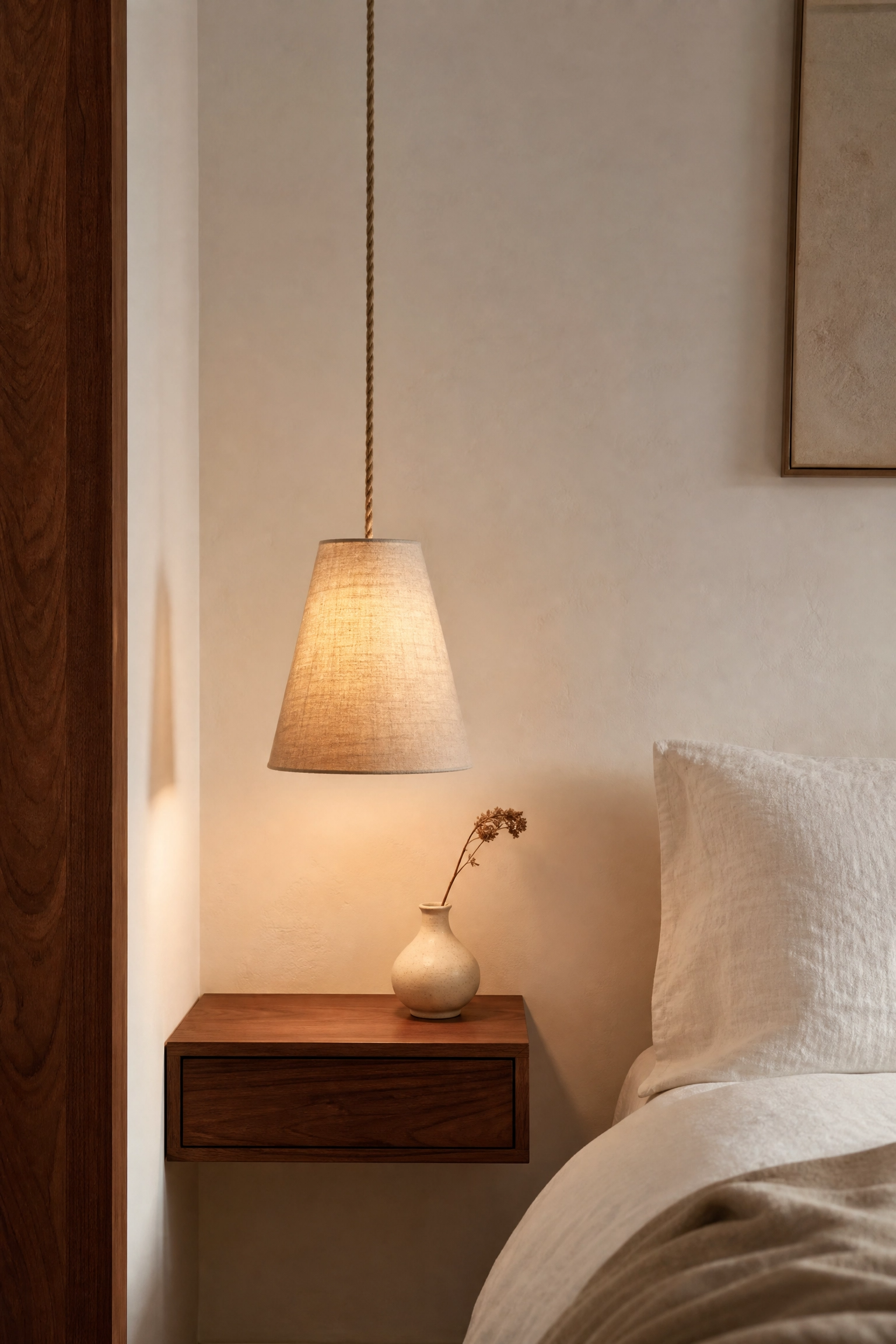
A sliding barn door inside the entryway, used to close off a coat closet or a mudroom space behind the entry hall, is one of those ideas that looks impressive but also solves a very practical problem. The sliding hardware in matte black, paired with a door in a weathered gray or reclaimed-looking wood finish, immediately sets a farmhouse tone that carries through the rest of the home. Keep the surrounding walls in a neutral greige, something in the range of Sherwin-Williams Accessible Beige or Benjamin Moore Pale Oak, so the barn door reads as a focal point rather than competing with the wall color. A round braided rug in charcoal and cream works well in front of the door, and a single black iron pendant light overhead ties the hardware finish together. One honest note: barn doors do not seal as well as traditional hinged doors, so if noise or privacy is a concern between the entryway and the closet behind it, you may want to consider a different approach. Budget level: moderate to high depending on whether you DIY the installation.
Designer Advice: Choose a barn door with some visible wood grain rather than a fully painted one. The grain is what gives it that authentic farmhouse character that a solid painted door simply cannot replicate.
3. Galvanized Metal and Wood Combination
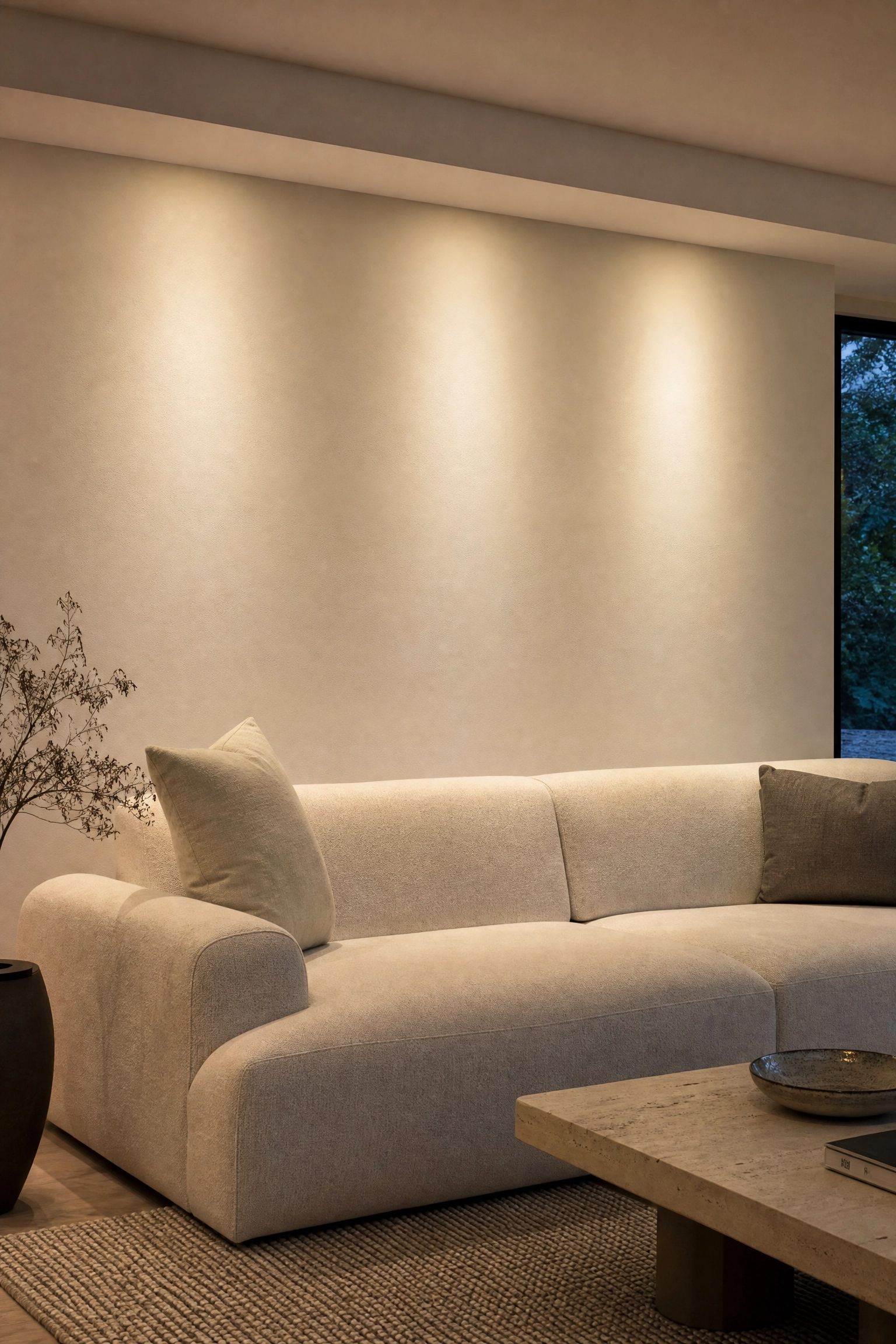
Galvanized metal is a classic farmhouse material, and in an entryway it reads best when balanced with plenty of warm wood so the space does not feel industrial or cold. A galvanized metal umbrella stand, a metal-and-wood console table, or a set of galvanized wall buckets used as planters for small greenery all bring in that signature farmhouse texture without overdoing it. The walls work best in a soft sage green or a warm cream, both of which contrast beautifully with the silvery tone of the metal and the warmth of natural wood. A schoolhouse pendant light in a dark bronze or black finish overhead adds just enough polish to keep the look from feeling too rustic. In practice, this combination works especially well in homes with a craftsman or cottage exterior, where the material palette on the outside already hints at the kind of character you are bringing inside. Budget level: affordable to moderate since galvanized pieces are widely available at home improvement stores and vintage markets.
Designer Advice: Limit galvanized metal to two or three pieces maximum. More than that and the space starts to feel like a toolshed rather than a welcoming entry.
Modern Farmhouse Entryway Ideas
4. Black and White With Raw Wood Accents
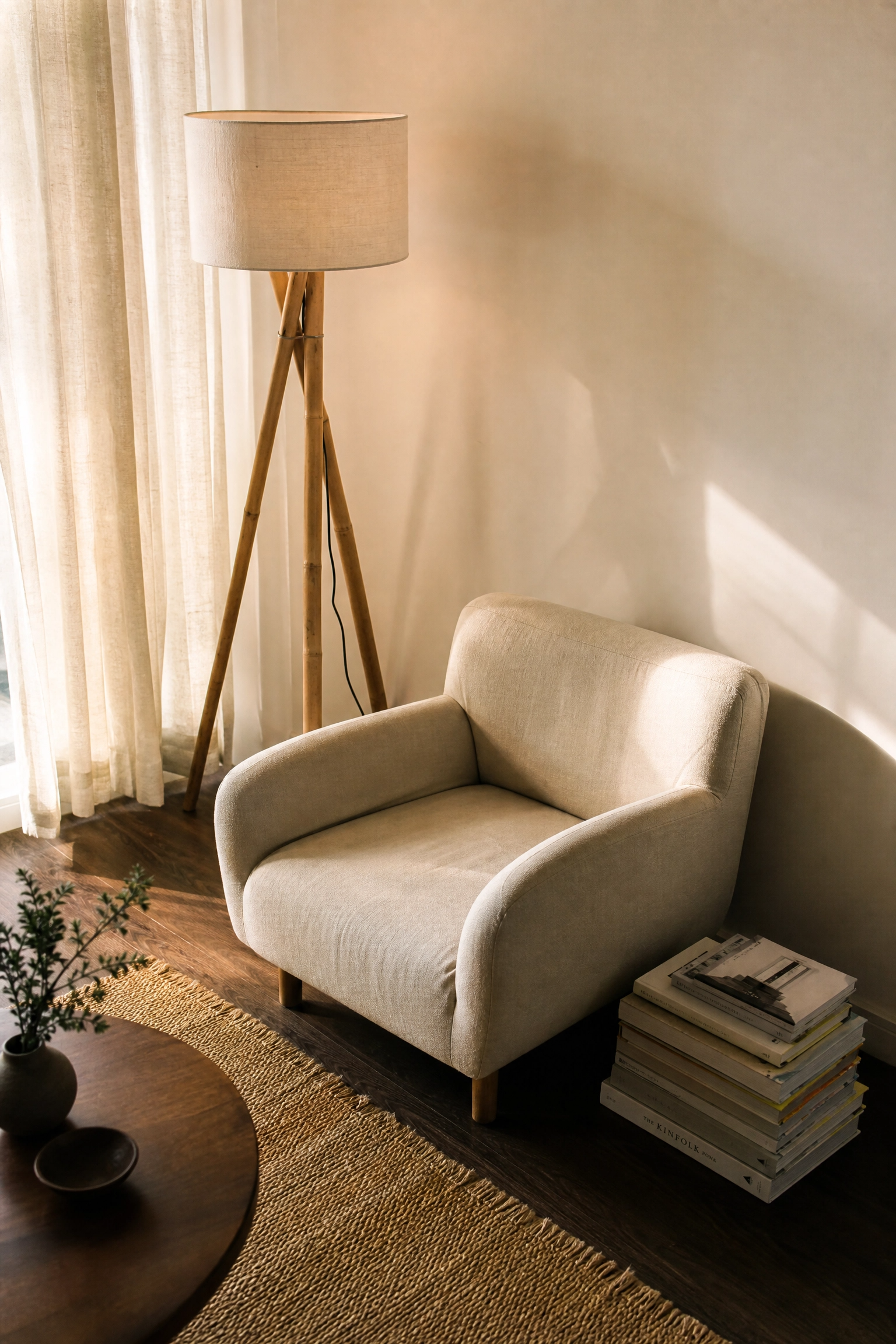
Modern farmhouse style leans into contrast, and few combinations are more effective in an entryway than crisp black and white with raw or lightly finished wood. Paint the walls in a pure white such as Simply White by Benjamin Moore, then bring in black through the hardware, a matte black mirror frame, and a black iron console table. A chunky live-edge wood shelf mounted at eye level ties the organic element in and keeps the look grounded so it does not feel too graphic or harsh. For the floor, either dark-stained oak planks or a black and cream buffalo check rug will reinforce the palette without repeating it too literally. Lighting matters a lot here: a matte black cage pendant or a simple drum shade in black linen completes the look. One thing that works really well in practice is adding a single warm natural element, such as a small potted olive tree or a linen-covered storage basket, to keep the contrast from feeling sterile. Investment level: affordable if you already have white walls and just need to swap out hardware and accessories.
Designer Advice: The key to making this look feel farmhouse rather than Scandinavian is texture. Add a chunky knit throw draped over the bench, a woven basket, or a raw-edge wood piece somewhere in the space.
5. Whitewashed Brick With Warm Brass Fixtures
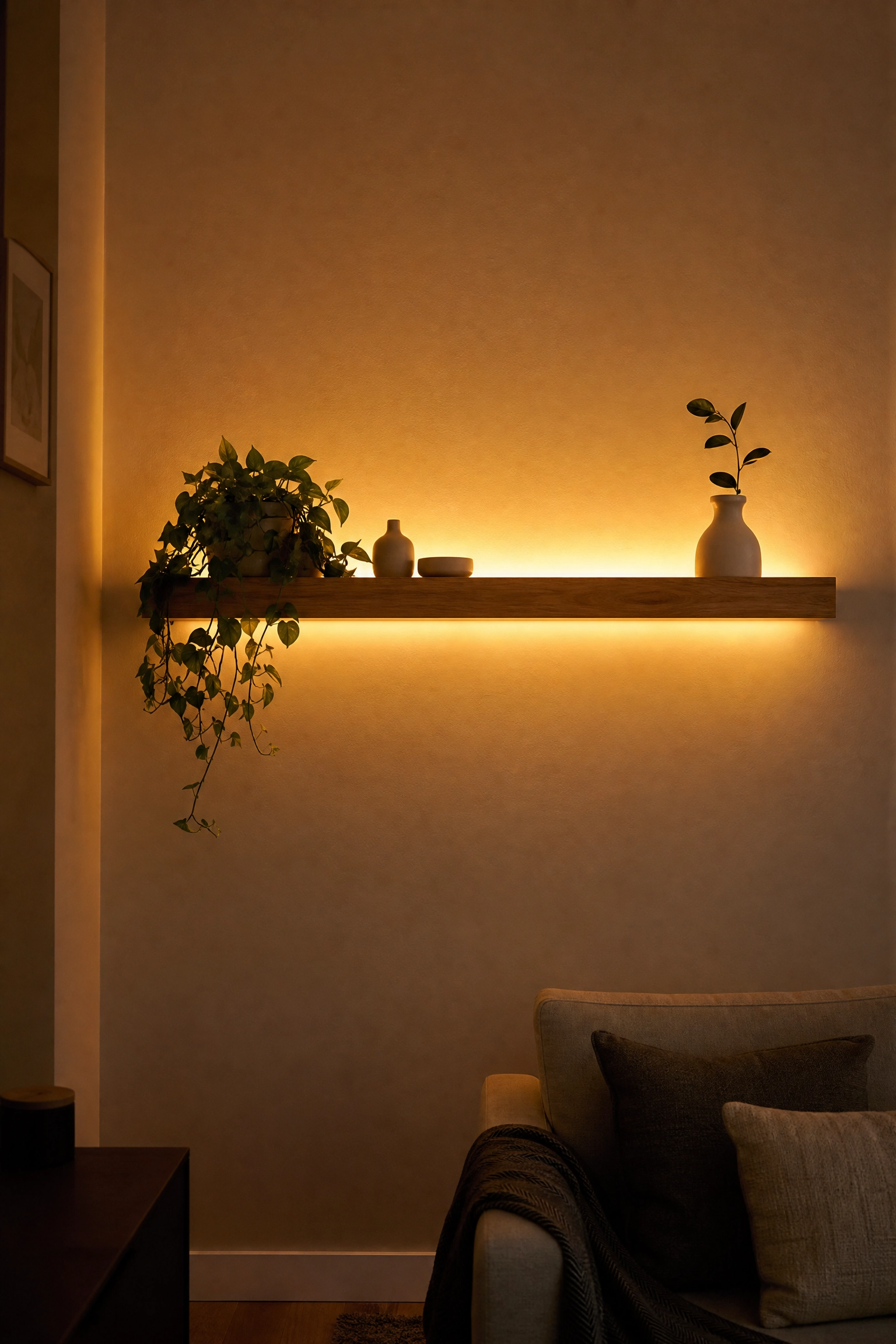
If your entryway has an original brick wall or a fireplace surround near the front of the house, whitewashing it rather than painting it fully solid is one of the best decisions you can make for a modern farmhouse look. Whitewashing preserves the natural texture of the brick while softening the color to a pale, airy tone that pairs beautifully with warm brass fixtures and natural linen. Swap out any existing overhead fixture for a brass schoolhouse or globe pendant, and add a brass-framed oval or arched mirror above a slim console table. A linen-upholstered bench in warm cream or oatmeal completes the seating, and a textured jute rug with a subtle geometric border adds pattern without loudness. The wall color surrounding the brick works best in a warm white or a very pale blush, which reflects warmth back into the space and plays off the brass tones. This look suits older homes with original character especially well, and it is actually one of the more affordable entry updates because whitewashing brick is a DIY-friendly project using a diluted paint mixture.
Designer Advice: If you do not have real brick, whitewashed brick wallpaper has improved dramatically in quality and is nearly indistinguishable in photographs. It is a genuinely good option for renters or anyone who wants the look without the commitment.
6. Shaker-Style Built-Ins With Open Shelving
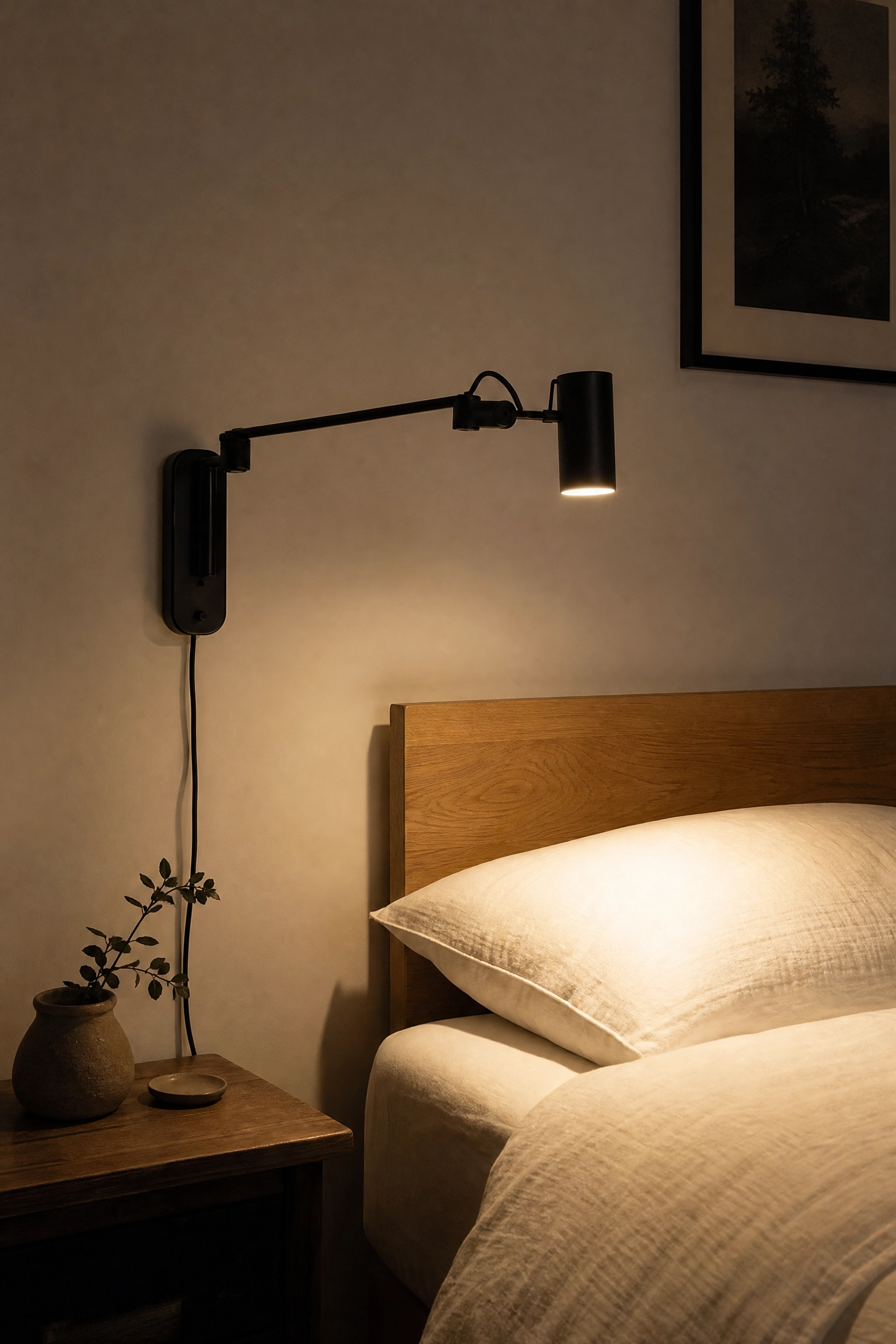
Shaker-style built-in cabinetry in an entryway gives you the clean lines of modern farmhouse design alongside the serious storage function that busy households actually need. Paint the cabinetry in a soft navy, deep forest green, or classic warm white, and pair it with simple flat-bar hardware in matte black or brushed nickel. The open upper shelves above the cabinet doors are where the decorating happens: a mix of framed prints, a small vintage crock, a trailing pothos plant, and a pair of hurricane lanterns creates a layered, intentional look that still feels relaxed. The lower cabinet doors hide the less attractive entryway clutter, which is honestly what makes this idea work so well in real life rather than just in staged photos. A flush-mount ceiling light in a brushed nickel or matte black finish keeps the ceiling from competing with the built-ins. This is an investment-level idea if you are having cabinets custom built, but IKEA’s SEKTION or HEMNES systems can approximate the look at a much lower cost with some DIY modifications.
Designer Advice: Leave some negative space on the open shelves. The temptation is to fill every inch, but a few breathing spaces between objects is what makes the styling look intentional rather than cluttered.
Rustic and Vintage-Inspired Entryway Ideas
7. Reclaimed Wood Console Table With Vintage Finds
A reclaimed wood console table with visible knots, grain variation, and maybe even some old nail holes is the kind of piece that immediately tells a story in an entryway. Pair it with a mix of vintage finds rather than matching decor: an old crock or ceramic pitcher holding dried stems, a stack of antique books, a small framed landscape print with a simple wood frame, and a worn leather tray for keys and mail. The walls work best in a warm putty or aged linen tone, something that looks like it has been in the house for decades without being obviously old-fashioned. Underfoot, a vintage-style washable rug in faded blues and reds is both practical and beautiful, and one of the more honest tips I can offer is that washable rugs near the front door are worth every penny because entryways take a beating. A schoolhouse pendant light or an antique-inspired lantern above completes the space. Budget level: varies widely depending on whether you source the console new or vintage, but thrift stores and Facebook Marketplace regularly have reclaimed wood pieces for under $100.
Designer Advice: Mix textures rather than matching materials. A ceramic vase next to a leather tray next to a wood frame reads as curated; three matching ceramic pieces just reads as a collection.
8. The Ladder Shelf Entryway
A wooden ladder shelf leaning against the wall of an entryway is one of the most versatile and budget-friendly farmhouse ideas for small spaces, because it provides vertical storage and display without taking up floor space the way a console table does. Style the rungs with a folded throw blanket on the bottom, a woven basket on the next rung for umbrellas or rolled scarves, a small framed print leaning against the wall on the middle shelf, and a small potted plant or trailing greenery at the top. The ladder itself looks best in natural wood tones or painted in a matte black for a more modern farmhouse feel. Keep the surrounding walls neutral so the ladder and its styling become the visual focus. A small round jute rug underneath anchors the piece to the floor. One practical note: make sure the ladder is secured to the wall with a simple hook or brace at the top, especially in homes with children or pets. This is genuinely one of the most affordable entryway ideas available, with decent ladder shelves available for under $60.
Designer Advice: The most common mistake with ladder shelves is overcrowding every rung. Treat every other rung as a display space and leave the alternating rungs clear. This gives the eye somewhere to rest.
9. Antique Mirror Gallery Wall
A gallery wall of mismatched antique or vintage-style mirrors above a narrow console table is a farmhouse entryway idea that feels genuinely collected over time rather than decorated in an afternoon. Choose mirrors with frames in a mix of worn gold, aged brown, and raw wood tones, varying the shapes between round, rectangular, and arched to keep the arrangement interesting. Group them tightly so the edges nearly touch, which creates a cohesive wall installation rather than a scattered look. Below them, the console table should be simple so the mirrors are the star: a distressed white or natural wood surface with just a small lamp, a ceramic vase, and a single framed photo or small art print. The walls themselves work best in a very deep warm neutral, such as Benjamin Moore’s Revere Pewter or even a soft sage green, so the mirrors pop without the background competing. Functionally, this is a clever idea because the mirrors also bounce light around a dark entryway. Investment level: moderate, but sourcing mirrors from thrift stores and estate sales keeps costs low.
Designer Advice: Before hanging, lay all your mirrors on the floor and arrange them until the grouping feels right. Then photograph the arrangement and use it as your guide when you go to the wall. It saves enormous frustration.
10. Repurposed Vintage Crates for Entryway Storage
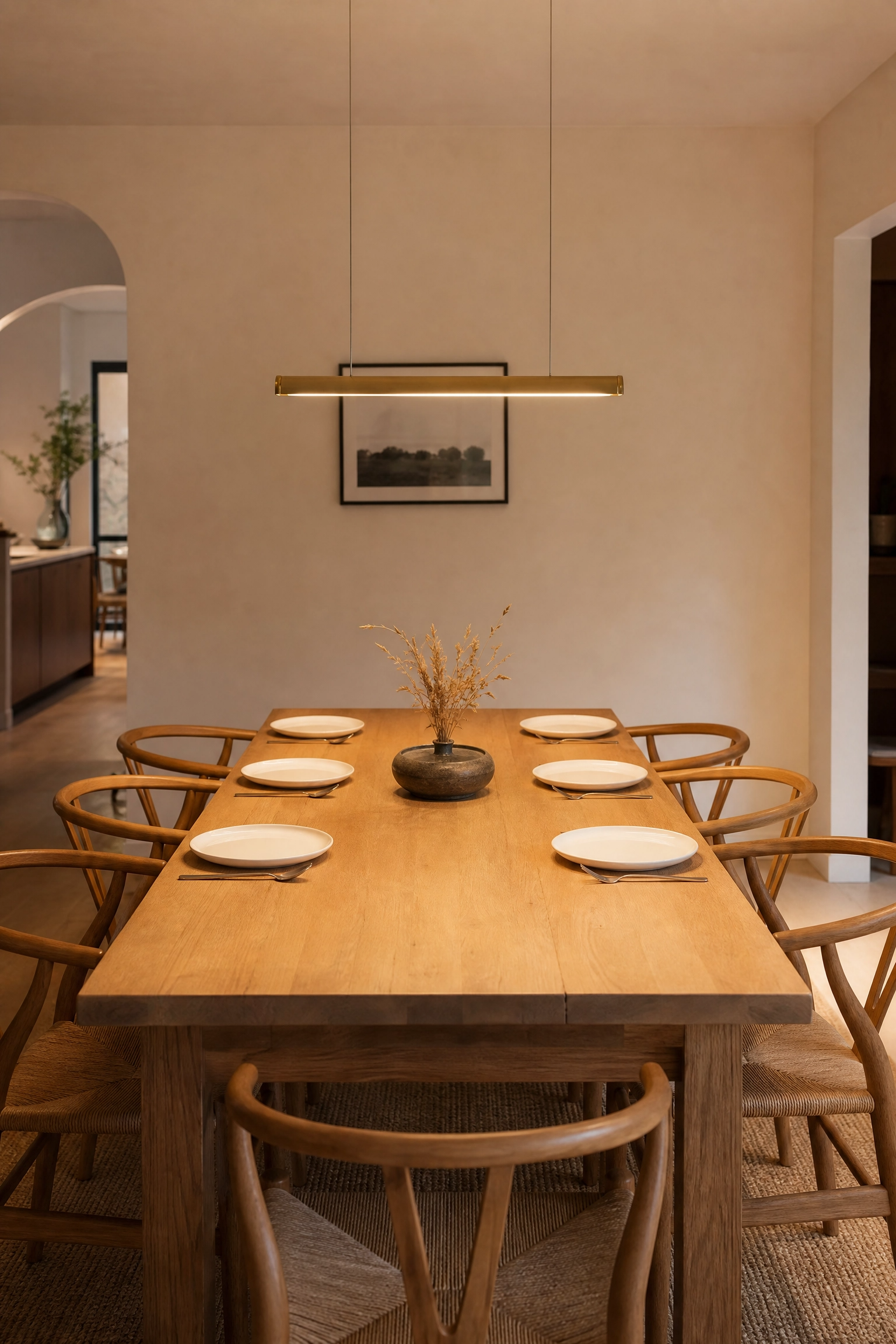
Old wooden crates, whether they are original vintage produce crates or reproduction versions, make fantastic entryway storage pieces that carry real farmhouse character. Stack two or three of different depths on their sides to create a makeshift shelving unit, or mount one horizontally on the wall as a single floating shelf. Inside the crates you can store rolled umbrellas, dog leashes, reusable shopping bags, or a basket for mail, making the storage as functional as it is decorative. The surrounding palette works best in warm neutrals, soft whites, or even a muted brick red if you want to lean into the agricultural heritage of the crate aesthetic. A simple pendant light or clip-on wall sconce nearby provides focused light over the storage area. One thing to keep in mind: if you are sourcing real vintage crates, check for rough edges and sand them down before installation, especially if there are children in the home. Budget level: very affordable, with vintage crates often available for a few dollars at flea markets.
Designer Advice: Stencil the name of a fictional or real farm onto the front of your crates for added authenticity. This simple DIY touch takes about 20 minutes and makes the piece look like it was inherited rather than purchased.
Small Farmhouse Entryway Ideas
11. The Wall-Mounted Hall Tree
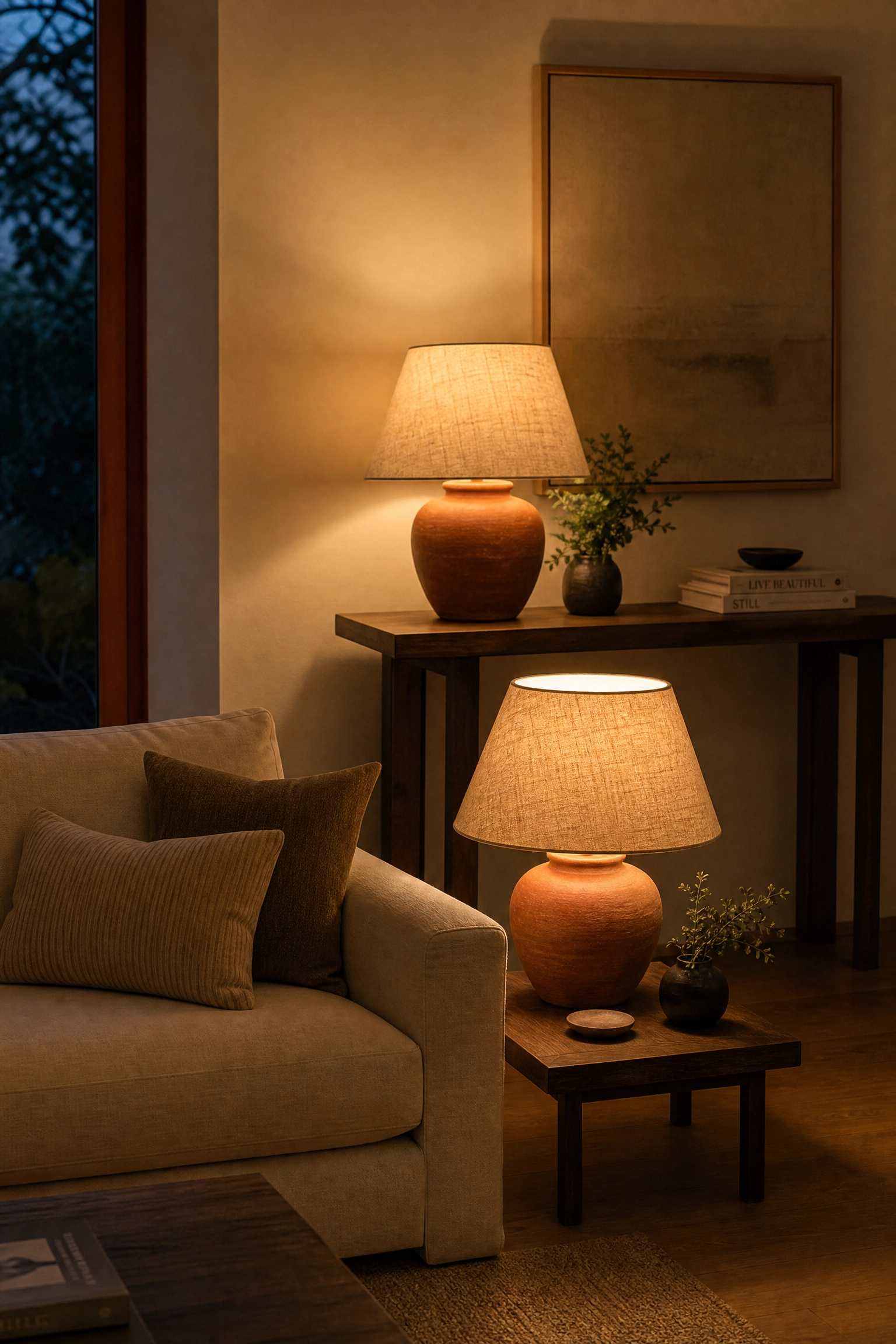
In a small entryway where floor space is scarce, a wall-mounted hall tree solves the organization problem without taking up a single square inch of the floor. Choose one in a white or natural wood finish with a row of iron or wood hooks, a small shelf at the top for hats and small items, and a lower shelf or pocket for shoes and boots. The beauty of this approach is that the floor remains completely clear, which makes the entryway feel larger and easier to move through. Pair it with a small round jute or sisal rug directly below the hooks to anchor the zone visually, and add a narrow floating shelf nearby at console height if you need a surface for keys or mail. For walls, a light warm white makes a small entryway feel more open, and a simple oval mirror hung beside the hall tree gives the space a focal point and a practical function. One honest note: wall-mounted hall trees need to be anchored into studs, so if your wall does not cooperate this may require a bit more installation effort. Budget level: affordable to moderate.
Designer Advice: Resist the temptation to hang everything on every hook. Limit active hooks to the number of people in your household and reserve one hook for guests. A sparse hall tree always looks more intentional than a packed one.
12. Floating Shelves Above a Narrow Bench
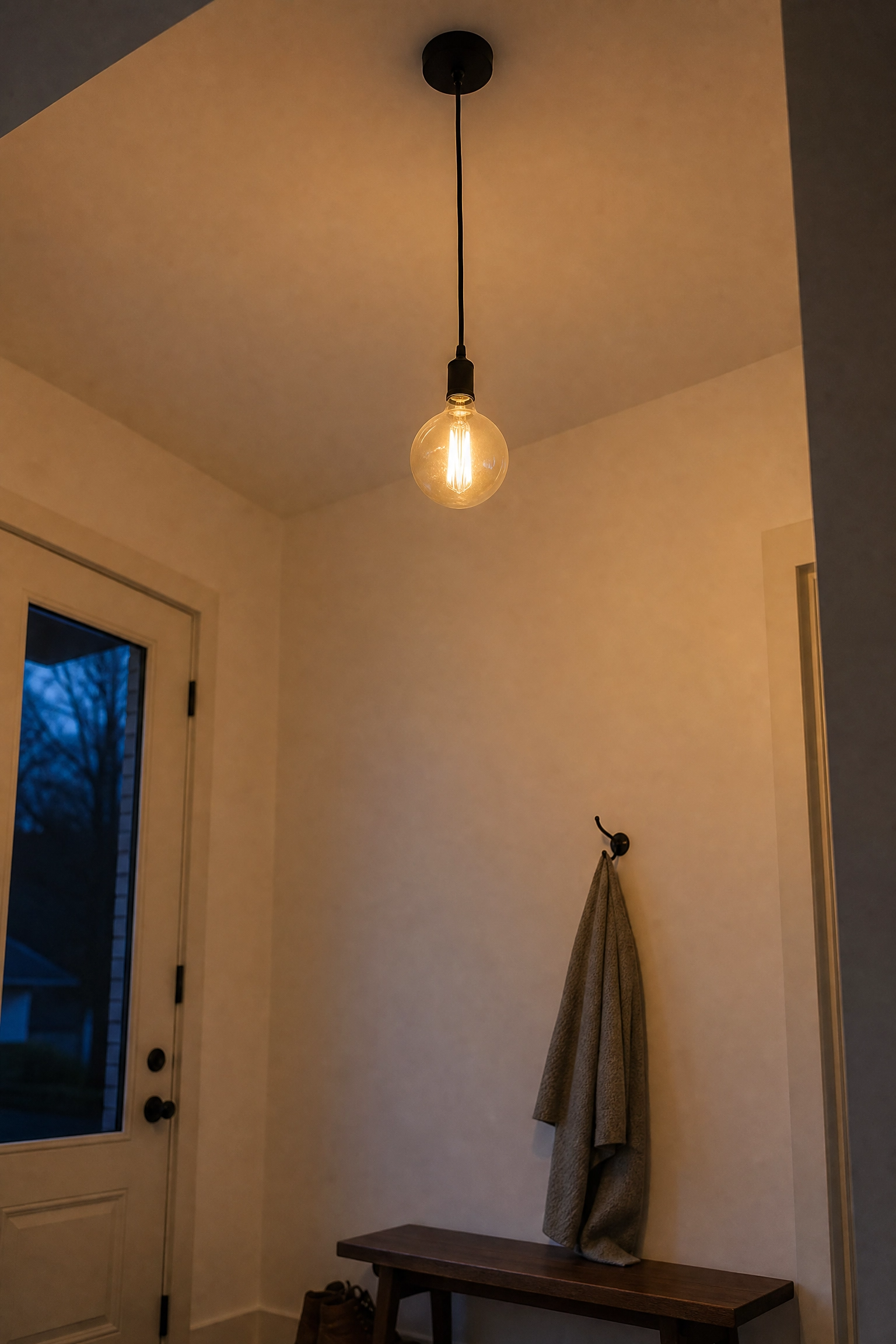
When the entryway is too narrow for a full console table but you still need both storage and a surface, a combination of floating shelves above a narrow upholstered bench is the most practical small-space solution in the farmhouse toolkit. Use a bench that is no more than 14 to 16 inches deep, ideally in a white or natural linen finish, and mount two or three floating shelves directly above it spaced about 12 inches apart. Style the shelves with small framed prints, a trailing plant, a ceramic candle holder, and a small woven basket for sunglasses or small accessories. The limited depth of the bench means even a tight hallway can accommodate this setup without feeling blocked. Paint the wall behind the shelves in a slightly deeper shade than the rest of the entryway, something like a warm greige against white walls, to create a subtle accent that frames the arrangement. Budget level: very affordable, especially if you choose IKEA floating shelves or DIY with pine boards and simple bracket hardware.
Designer Advice: Make sure the bottom shelf sits at least 18 inches above the bench seat so there is enough clearance to sit comfortably without hitting your head on the shelf above.
13. The Corner Entry Nook
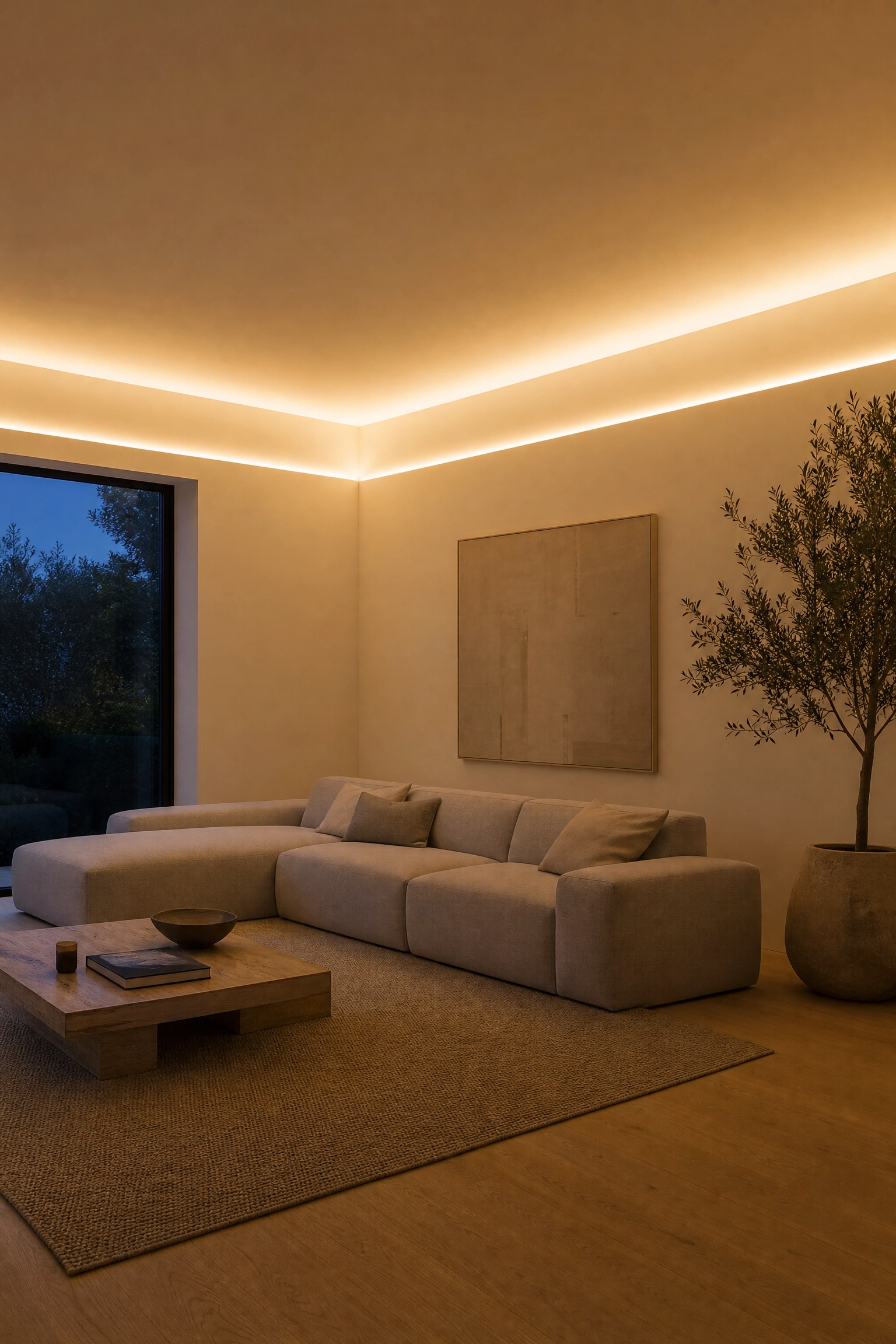
If your front door opens into a corner rather than a traditional entry hall, lean into it rather than fighting it by creating a dedicated corner nook. A corner-angled bench or a small L-shaped shelf unit fits perfectly into the 90-degree space and turns what is often an awkward transition zone into a charming, functional nook. Add a few corner hooks on the adjacent wall for coats and bags, a small pendant or wall sconce in the corner above to provide focused light, and a round rug to define the zone and soften the hard angle. The color palette works best in a warm cream or soft gray that unifies the two walls meeting at the corner, making the nook feel intentional rather than like an afterthought. In practice, corner entryway setups benefit from keeping furniture low and lean, since bulky pieces emphasize the tightness of the space rather than the coziness. Budget level: affordable to moderate depending on whether you custom-build or find a ready-made corner shelf unit.
Designer Advice: Hang a small round mirror in the corner where the two walls meet rather than a flat piece. The curve of the round shape softens the hard corner angle beautifully.
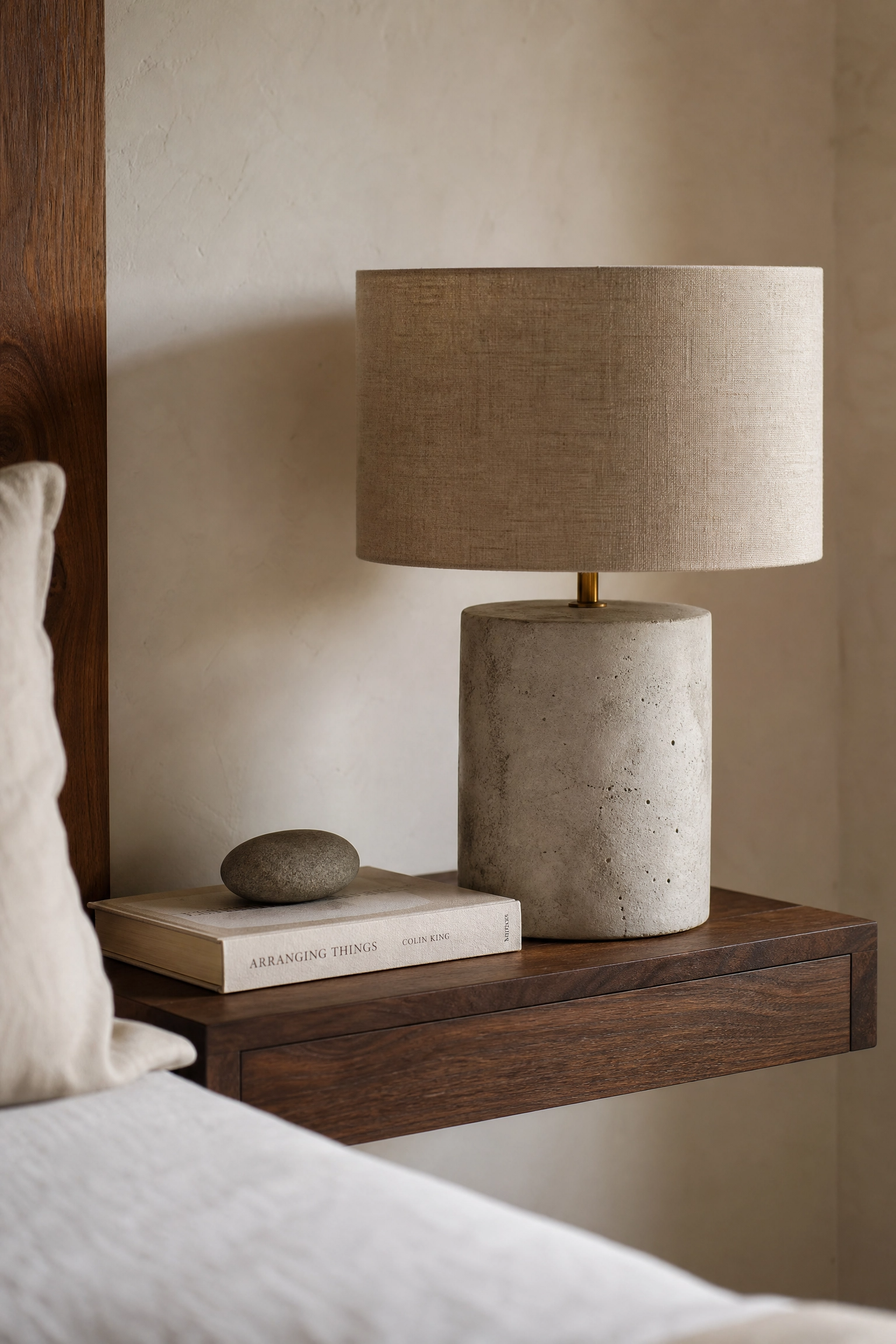
Farmhouse Entryway Lighting and Ceiling Ideas
14. The Woven Pendant Light
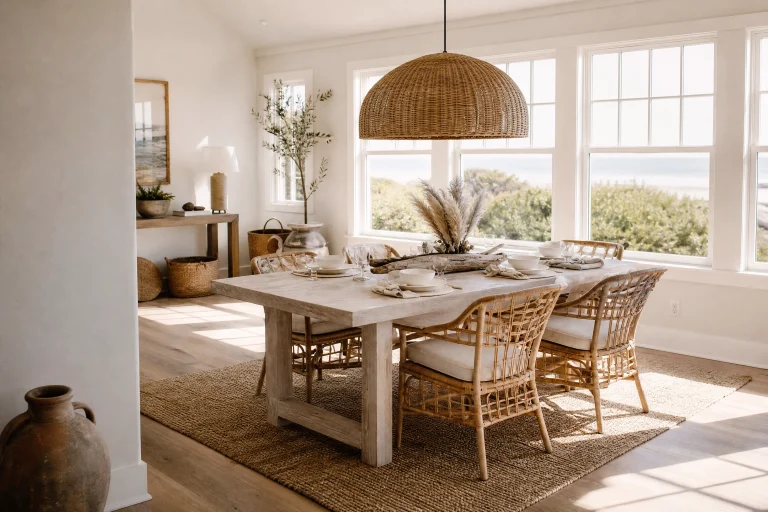
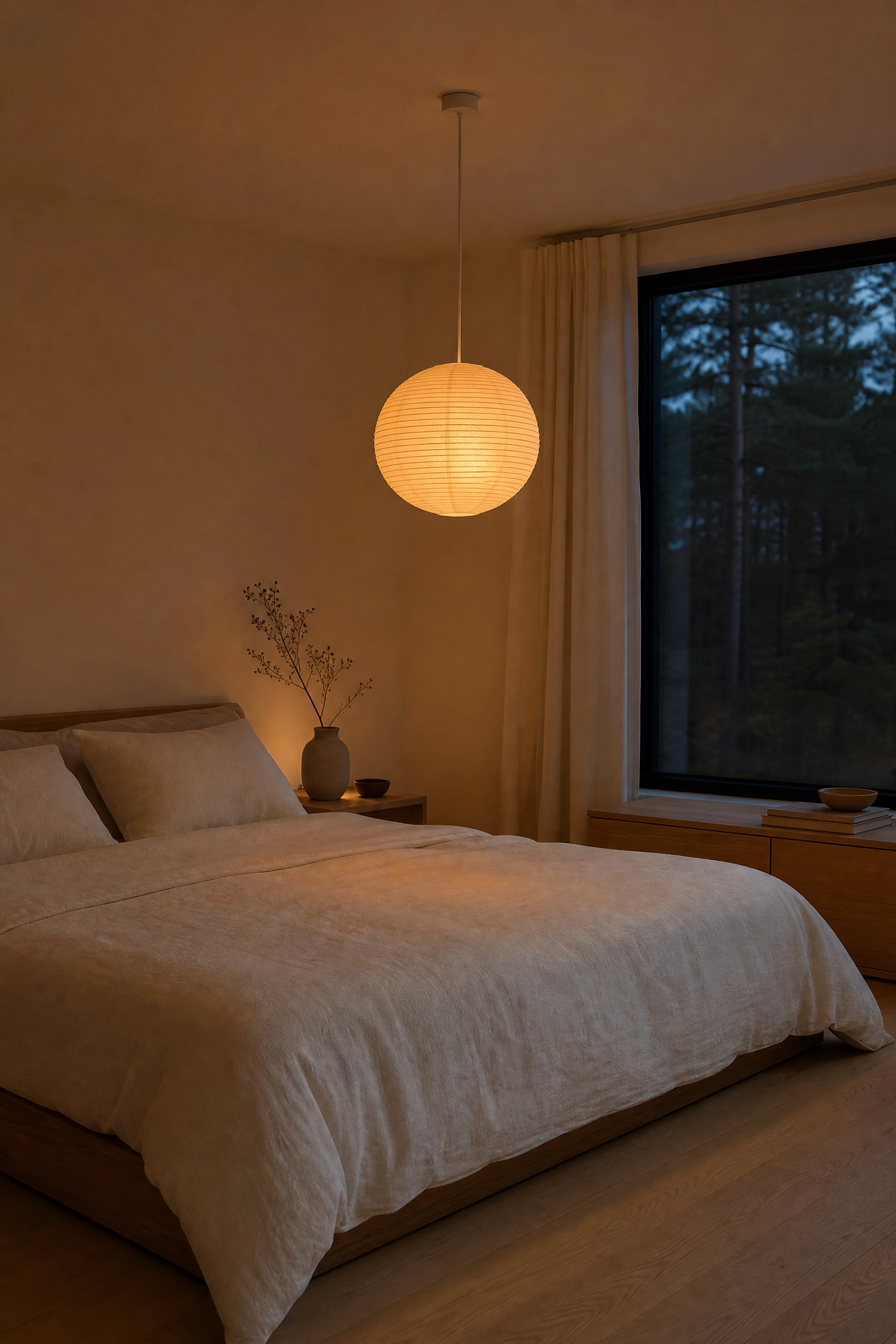
A woven rattan or seagrass pendant light is one of the most affordable ways to add farmhouse character to an entryway, especially in spaces where the existing ceiling fixture is a basic flat flush mount that contributes nothing to the room. Woven pendants in natural tones create a warm, dappled light effect through the weave that is genuinely lovely and completely different from the flat light a standard ceiling fixture produces. Pair the pendant with walls in a warm white or aged cream, and choose a shade that hangs at a height that does not visually cut the space in half, generally at least 7 feet from the floor in a standard 8-foot ceiling. The natural fiber material pairs beautifully with wood furniture, linen textiles, and the organic elements that define farmhouse style. One practical consideration: woven pendants let light escape through the weave, which means they work best with a medium-wattage bulb since the light spreads widely and can feel harsh if the bulb is too bright. Budget level: very affordable, with quality options available from $40 to $150.
Designer Advice: Choose a pendant that is at least 12 to 16 inches in diameter in an average entryway. Smaller pendants look skimpy in a real room even if they look perfect in the product photo.
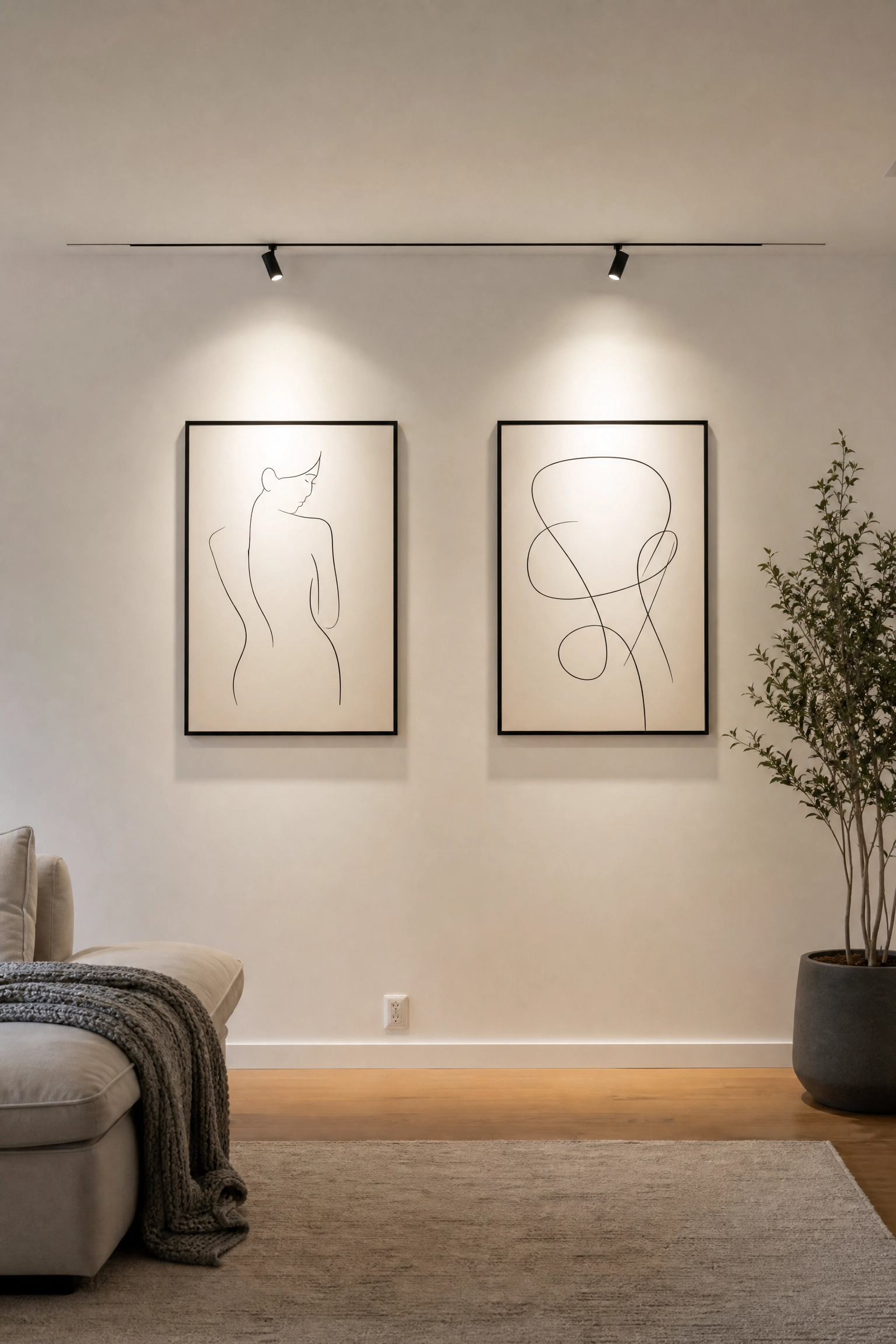
15. Lantern-Style Wall Sconces
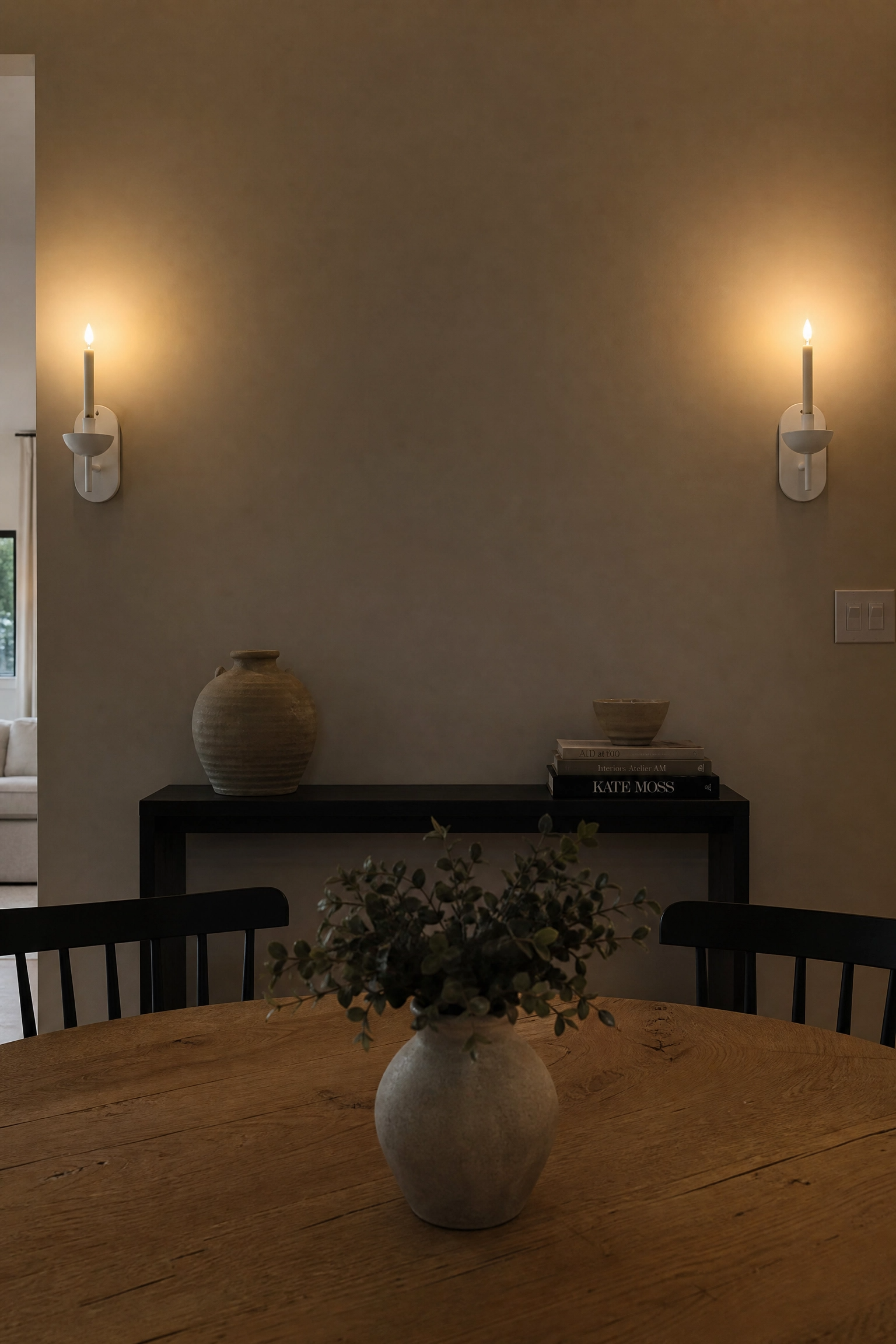
Wall-mounted lantern sconces flanking a console table or a mirror give a farmhouse entryway an immediate sense of architectural character that a single overhead light simply cannot replicate. The visual weight of two flanking fixtures creates symmetry and a focal point, drawing the eye to the console below and framing the mirror or artwork above. Choose sconces in matte black, oil-rubbed bronze, or an aged brass finish depending on whether your overall palette leans cooler or warmer. Seeded glass panels in the lantern give the light a slight diffusion that feels more welcoming than clear glass, and in practice the warm light bouncing off the seeded glass at eye level does more for the feeling of the space than a bright overhead fixture ever could. Make sure the sconces are wired rather than battery-operated if possible, since the look of a real flame-style bulb inside a properly wired lantern is significantly more convincing than a battery pack. Investment level: moderate, primarily due to electrician costs if new wiring is required.
Designer Advice: Hang sconces at approximately 60 to 66 inches from the floor for ideal eye-level placement. This is the sweet spot where the light is flattering and the fixture reads as part of the architecture rather than an afterthought.
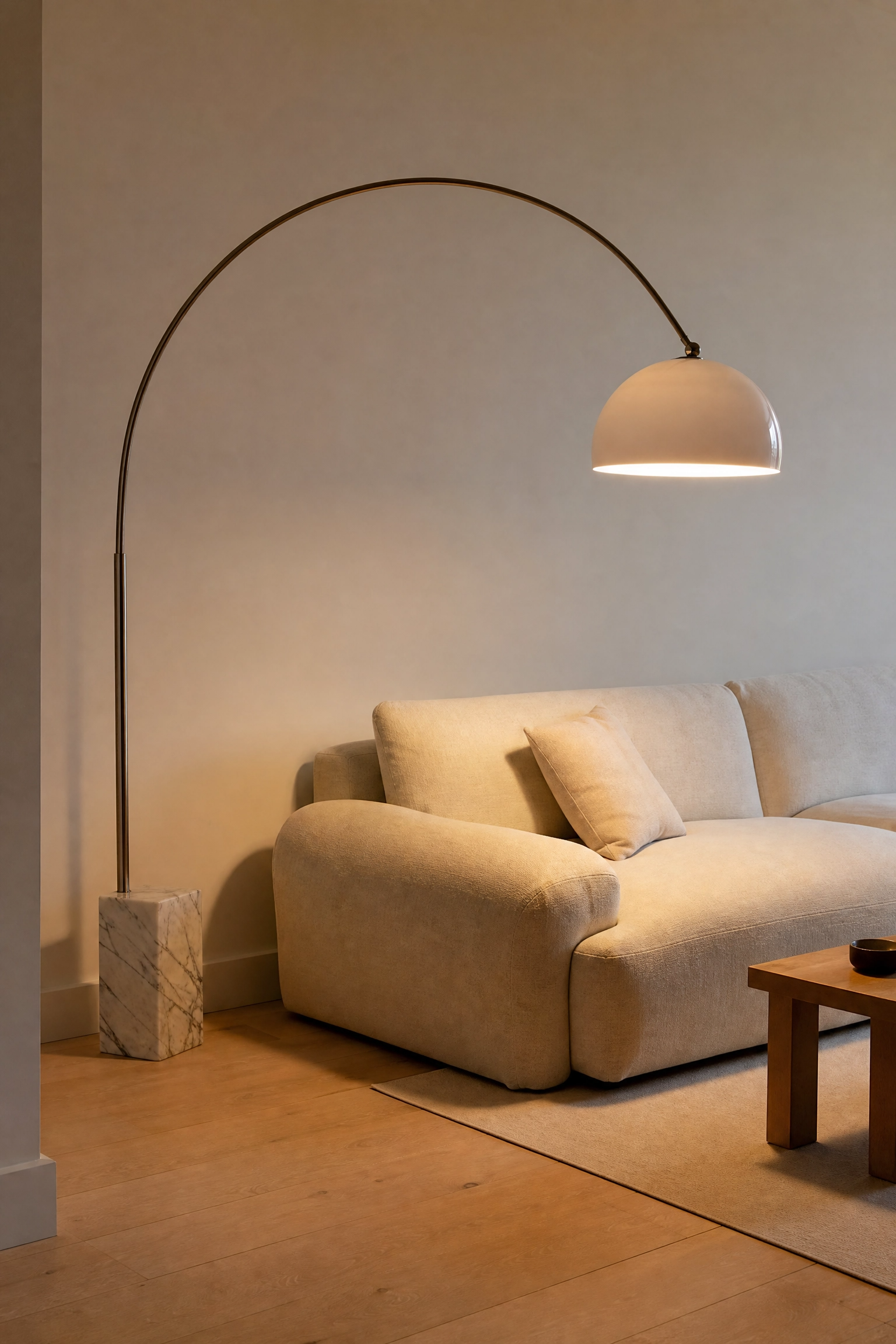
16. Exposed Beam Ceiling With a Simple Flush Mount
If your entryway has exposed wooden ceiling beams, the best lighting approach is actually the simplest: let the beams be the architectural statement and choose an understated flush-mount or semi-flush fixture that does not compete. A simple white ceramic or aged brass flush mount allows the beams to read clearly without visual noise above. The walls in this type of entryway should stay neutral, warm white or soft cream, so the ceiling beams are the feature that draws the eye upward. Underfoot, a patterned wool or jute rug in warm tones of tan, rust, and cream completes the color palette and ties the ceiling warmth down to the floor level. In practice, entryways with exposed beams almost never need additional wall decor because the ceiling itself provides so much visual interest. One honest limitation: if your beams are purely decorative and lightweight, they can sometimes look noticeably fake at close range, so consider a faux-finish painting technique to add grain and shadow that makes them read as more dimensional. Investment level: low if beams are existing; high if you are adding decorative beams for the first time.
Designer Advice: Stain exposed beams in a tone that is two to three shades darker than your floor, not matching it. This contrast helps the ceiling read as intentional rather than accidental.
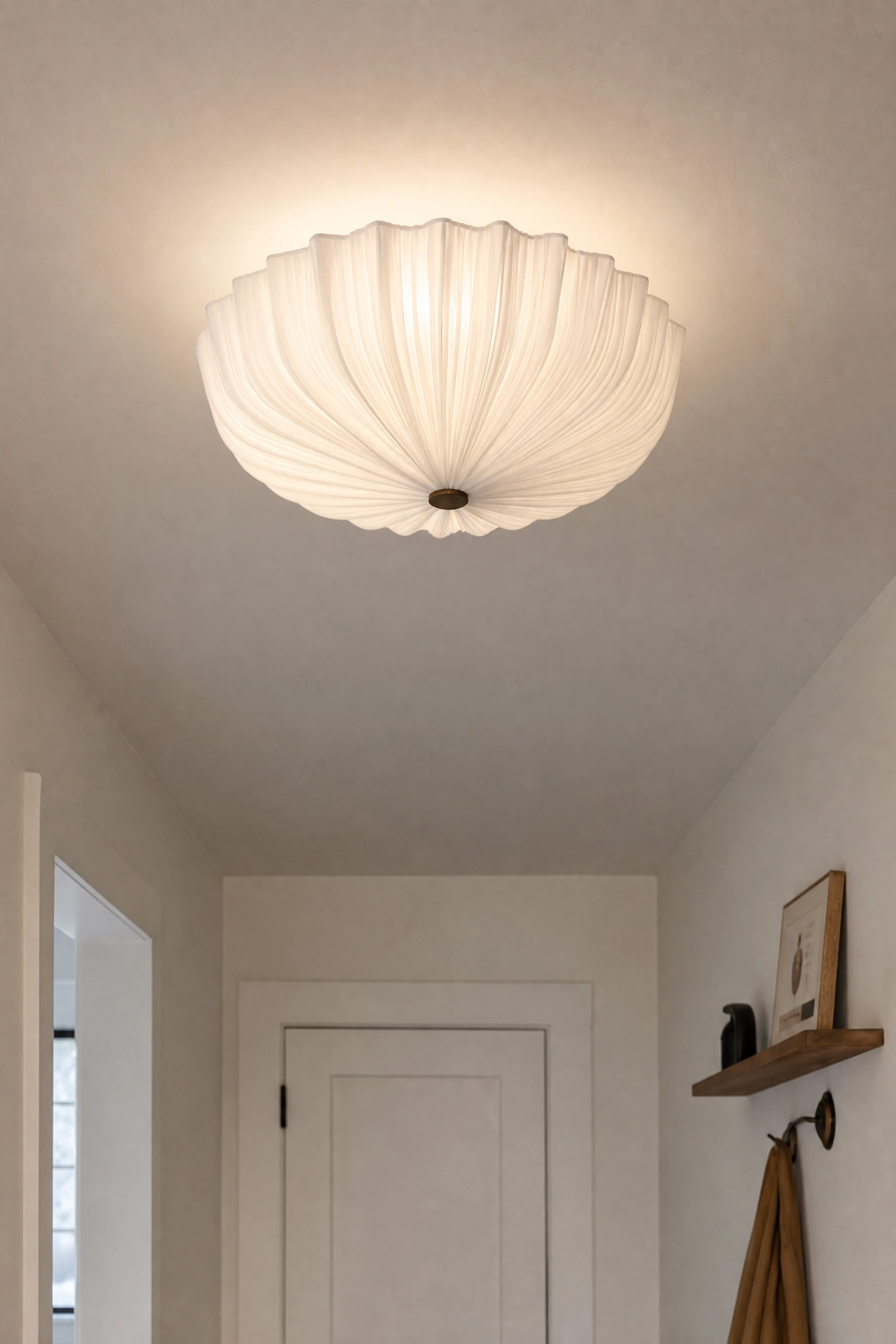
Farmhouse Entryway Color and Wall Decor Ideas
17. Sage Green Walls With White Trim
Sage green is having a significant moment in farmhouse interiors right now, and it works particularly well in entryways because it reads as calming and natural without the coldness that some gray-greens can carry. Choose a tone that leans slightly yellow-green rather than blue-green, such as Sherwin-Williams Evergreen Fog or Benjamin Moore’s Aganthus Green, and pair it with bright white trim for a clean contrast that still feels warm. Wood furniture in natural or honey tones connects beautifully to the green, and aged brass hardware in amber tones plays off the yellow undertone in the wall color. A white ceramic vase with eucalyptus or cotton stems on the console table echoes the botanical quality of the wall color in a subtle way that feels very considered. One practical note: sage green shows light variation dramatically throughout the day, appearing quite light in morning sun and noticeably deeper in the evening, so look at a large paint sample on your actual wall at multiple times of day before committing. Budget level: a paint job is one of the most affordable entryway updates available.
Designer Advice: Paint only one wall in sage green if you are unsure about a full commitment. The wall behind the console table or bench is the perfect candidate for a single accent wall in this color.
18. Wainscoting and Wallpaper Upper Half
Combining wainscoting on the lower half of an entryway wall with a pattern wallpaper on the upper half is a classic technique that works beautifully in farmhouse-style homes because it adds architectural interest and pattern without requiring structural changes. Choose a simple raised-panel wainscoting painted in crisp white and pair it with a wallpaper above the chair rail in a pattern like a small floral, a ticking stripe, or a vintage botanical print in warm tones of cream, blush, and sage. The visual weight of the wainscoting grounds the space, while the wallpaper adds warmth and personality above. A simple picture rail or decorative molding at the transition between wainscoting and wallpaper gives the installation a finished, intentional look. This combination works especially well in hallway-style entryways where the long wall benefits from pattern to prevent the space from feeling like a corridor. One honest consideration: wallpaper installation is not beginner-friendly, and hiring a professional paperhanger is worth the cost for a hallway since crooked seams are visible every time you walk past. Investment level: moderate to high.
Designer Advice: Match the wainscoting paint color to the main background color of the wallpaper rather than using pure white. This creates a subtle blending effect at the chair rail that looks much more intentional.
19. The Botanical Print Gallery Wall
A gallery wall of framed botanical prints is one of the most reliably beautiful and budget-friendly ways to decorate a farmhouse entryway wall, because the organic subject matter is always appropriate for the style and the black-and-white or muted watercolor versions available for free digital download are stunning at any price point. Choose frames in a consistent finish, either all white, all natural wood, or all matte black, but vary the sizes to keep the arrangement dynamic. Arrange the prints in a grid for a more modern farmhouse feel, or in an organic salon-wall arrangement for something that reads as more casual and collected. A botanical gallery wall works on any background color, but it looks especially good against a warm white, soft sage, or even a deep navy accent wall. In practice, this is one of the few wall decor ideas where going larger is almost always better than going smaller: a gallery wall that covers most of the available wall space feels intentional, while a small cluster on a large wall feels like it is waiting for more company. Budget level: very affordable, often under $50 for the entire wall using digital print downloads and inexpensive frames.
Designer Advice: Print your botanicals at the same resolution but in two or three different sizes for a more dynamic arrangement. A mix of 5×7, 8×10, and 11×14 frames creates visual rhythm within a consistent style.
20. Chalkboard or Magnetic Chalkboard Wall Panel
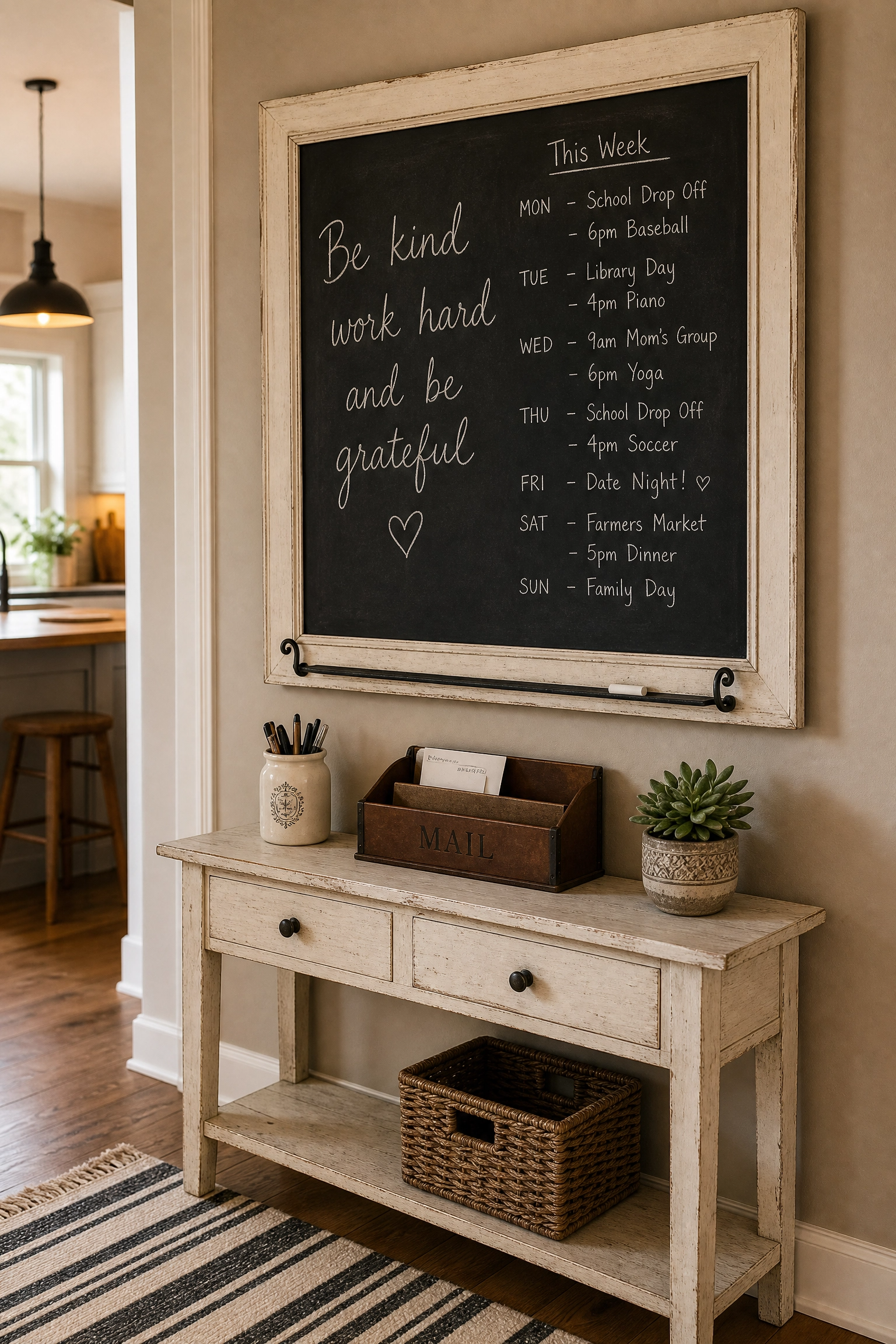
A chalkboard panel in a farmhouse entryway serves the double purpose of being genuinely functional and deeply on-theme with the agricultural, schoolhouse aesthetic that defines farmhouse style. You can use it to write the week’s schedule, a welcome message, a grocery list, or simply leave it with a piece of chalk resting in a small ledge tray below. Install the panel in a simple wood frame painted white or left in a natural stain, and hang it above a narrow console table or a row of hooks. The chalkboard works best on a wall that you pass daily so the practical function is actually used rather than just decorative. A small iron hook beside the panel for a chalk eraser, and a small wooden tray below for chalk pieces, are the finishing details that make the installation look polished rather than improvised. One honest note: liquid chalk markers write more smoothly than traditional chalk but are harder to erase fully, so standard chalk is actually the better practical choice for a frequently updated board. Budget level: very affordable.
Designer Advice: Season your chalkboard by rubbing the side of a full stick of chalk across the entire surface and wiping it with a dry cloth before first use. This conditions the surface so writing erases cleanly without ghost marks.
Functional Farmhouse Entryway Organization Ideas
21. The Mudroom-Style Entry With Cubbies
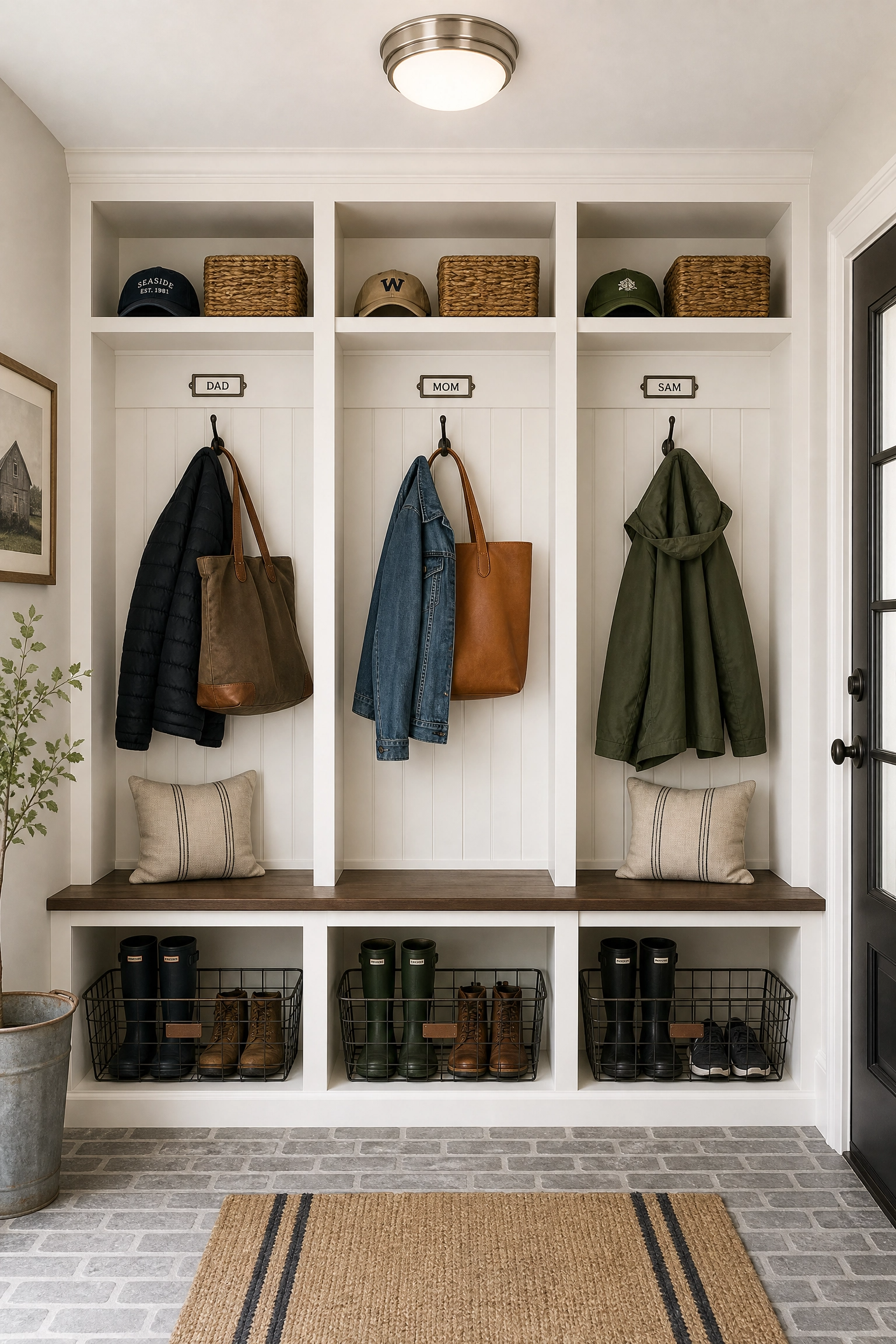
A mudroom-style entryway with individual cubbies for each family member is the gold standard of farmhouse entryway organization, and the reason it works so well in practice is that it gives every person in the household a dedicated zone so coats, bags, and shoes do not end up piled on a single bench or hook. Built-in cubbies with a bench seat below, open storage above, and either an open or louvered cabinet door on each section keep the space organized without the permanent wall commitment of fully enclosed cabinetry. Paint the whole built-in unit in a single color, either a warm white, a soft navy, or a deep forest green, and add matching iron hooks and simple brushed nickel hardware throughout. A natural fiber basket or wire bin inside each lower cubby holds shoes neatly, and a small label holder with each family member’s name adds a charming personalized touch. The flooring in this zone benefits from something durable and easy to clean: brick-look porcelain tile, painted hardwood, or a commercial-grade vinyl plank all work well and suit the farmhouse aesthetic. Investment level: moderate to high for built-ins; affordable if using freestanding cubby units.
Designer Advice: Make the cubbies slightly deeper than you think you need. Standard mudroom cubbies are 16 to 18 inches deep, but 20 to 24 inches accommodates bulky winter coats and large backpacks far more comfortably.
22. A Key and Mail Station
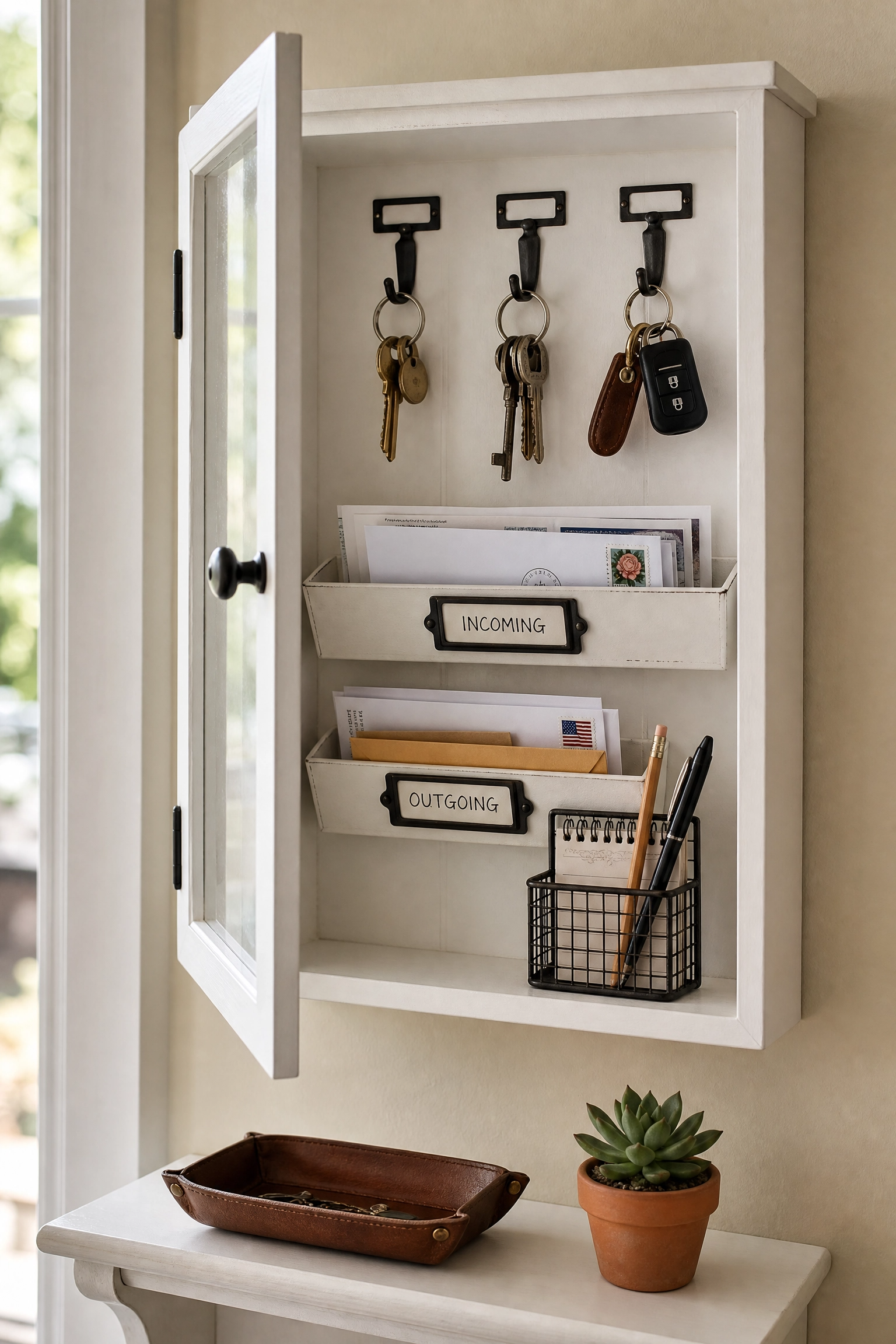
A dedicated key and mail station in the entryway is one of those small organizational upgrades that quietly improves daily life in a significant way once you actually commit to using it. Mount a shallow shadow box or a small open-face cabinet with a glass door on the wall near the front door, and outfit it with a row of small iron hooks for keys, a slim mail slot or two labeled trays for incoming and outgoing mail, and a small pencil cup for a pen and notepad. The box or cabinet should be painted or finished to match the rest of the entryway woodwork, and a small farmhouse-style label or engraved plaque identifying the station adds a charming finishing touch. Keep a small ceramic dish or a leather catchall tray on the console below for sunglasses, lip balm, or other pocket items. In practice, the key to making this system actually work is keeping it simple: too many compartments and categories leads to abandonment. Two hooks, two trays, one pen. That is genuinely all you need. Budget level: affordable.
Designer Advice: Mount the key station at exactly the height where your natural hand falls when you walk through the door. This small ergonomic detail makes the habit of actually hanging your keys easy enough that you will actually do it.
23. The Boot Tray and Umbrella Stand Setup
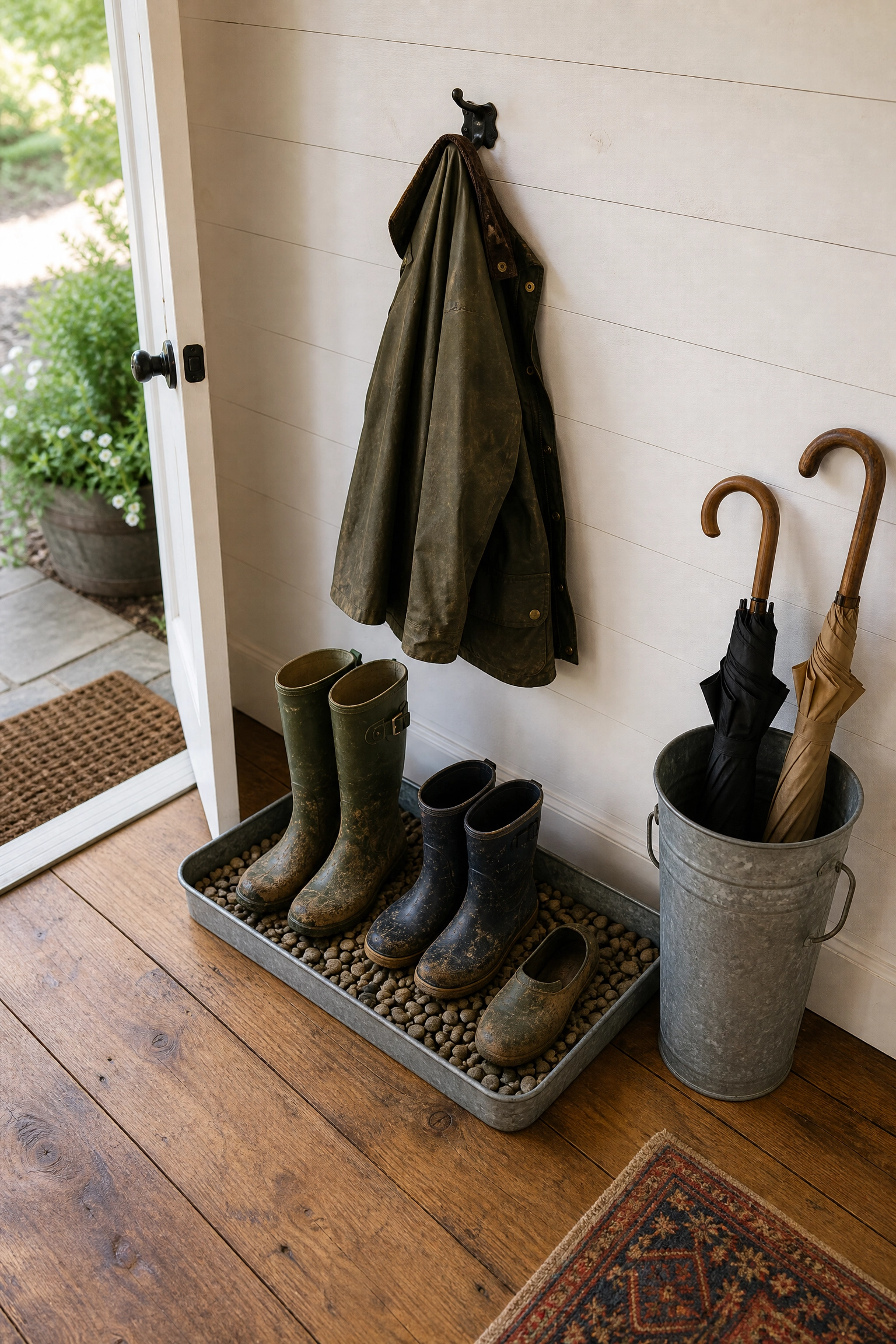
A well-styled boot tray and umbrella stand near the front door is a genuinely practical farmhouse pairing that keeps wet and muddy items contained without making the entryway feel like a utility room. Choose a boot tray in galvanized metal, a dark iron, or a painted wood frame with a mesh bottom, and pair it with an umbrella stand in matching material: a galvanized bucket, a ceramic crock, or a wire umbrella holder all suit the farmhouse aesthetic. Place both pieces directly to one side of the front door, ideally on a stone or tile section of the floor if you have one, or on a durable rubber-backed rug if the floor is wood. Keep a small scraper mat outside the door as the first line of defense so the boot tray catches what gets through rather than serving as the primary mud barrier. The surrounding area should stay simple: a single hook above for an everyday coat, a small wicker basket on a shelf above for gloves and hats, and nothing more. This is a budget-level update that has an outsized impact on day-to-day cleanliness.
Designer Advice: Line your galvanized boot tray with a thin layer of pea gravel or decorative river stones. The water drains through and the stones add a natural, finished look that elevates the whole setup.
24. The Console Table With Full Storage Baskets
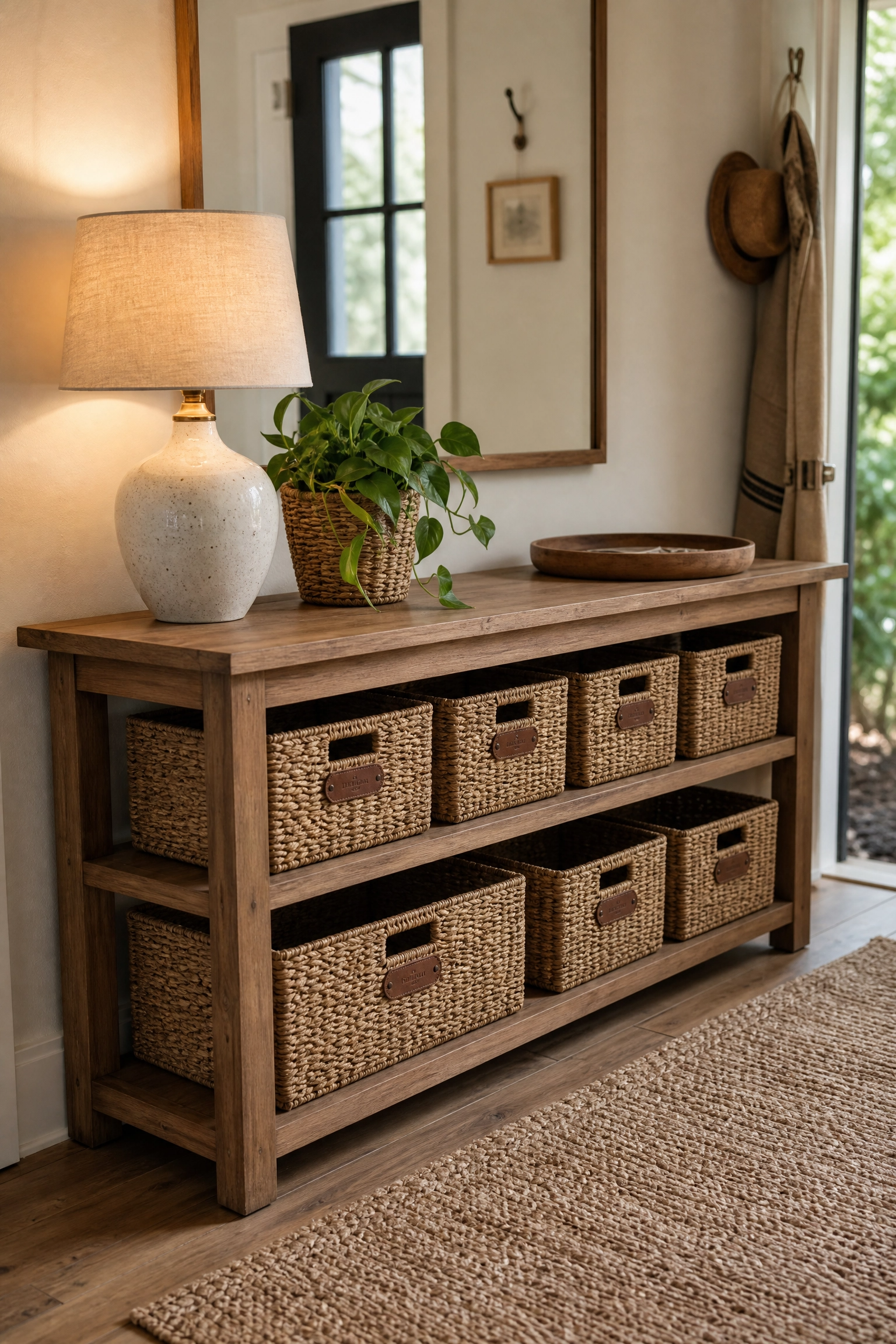
A console table with open lower shelves styled entirely with woven storage baskets is one of the most functional and visually satisfying farmhouse entryway setups because it hides everyday clutter in containers that are beautiful enough to leave completely visible. Choose baskets in a consistent natural material, seagrass, rattan, water hyacinth, or jute, and in a tight range of sizes so the arrangement looks curated rather than collected. Label each basket with a simple leather tag or a small wooden sign: one for shoes, one for dog accessories, one for scarves and gloves, one for miscellaneous. On the tabletop, keep styling minimal: a lamp if there is an outlet nearby, a small plant, and a catchall tray. The console table itself works best in a natural wood finish or a painted white, and the wall behind it benefits from a large-scale artwork or mirror to give the setup vertical presence. Budget level: affordable to moderate depending on the console table source.
Designer Advice: Buy one extra basket beyond what you think you need and keep it empty. It gives the arrangement room to breathe visually and gives you overflow storage when life gets busy.
25. Seasonal Vignette Styling on the Entry Table
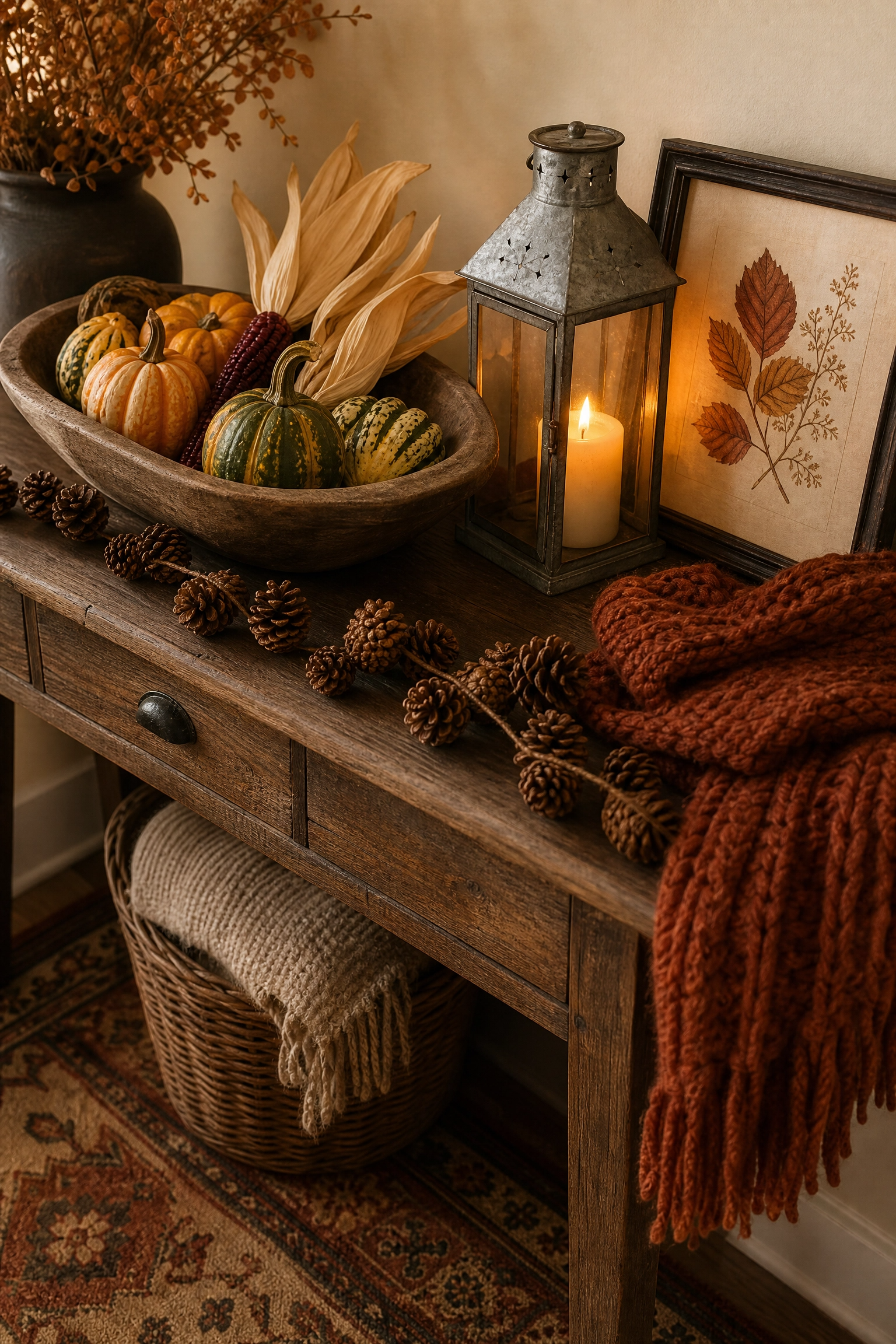
One of the things that makes a farmhouse entryway feel alive and genuinely inhabited rather than staged is a seasonally updated vignette on the entry table that changes throughout the year. In spring, a ceramic pitcher with fresh tulips and a small nest with faux eggs; in summer, a galvanized bucket with sunflowers and a linen runner; in autumn, a wooden bowl of gourds, a pinecone garland, and a chunky knit throw; in winter, a hurricane lantern with a pillar candle, a small bottle-brush tree, and some greenery. The key to making this feel intentional rather than cluttered is keeping the permanent backdrop elements, the table itself, the mirror or art above, and the lighting, consistent year-round and only swapping out the decorative objects on the surface. This approach is especially well-suited to farmhouse style because the agricultural calendar has always shaped how farm families decorated their homes, marking seasons with whatever was growing, harvesting, or resting at the time. Budget level: very affordable since each seasonal vignette only requires a handful of small, inexpensive pieces.
Designer Advice: Keep a small basket or bin in the hall closet labeled ‘entry table seasonals’ where you store off-season vignette pieces. This makes the seasonal swap a 10-minute process instead of a half-day search through storage.
Wrapping It Up
A farmhouse entryway does not have to be perfect to work. In fact, the rooms that feel the most authentically farmhouse are the ones that have a little bit of wear, a few objects that clearly belong to real life, and a color palette that feels warm rather than calculated. The ideas in this article cover a wide range of budgets, styles, and space sizes, but they all share the same underlying quality: they start with function and layer beauty on top rather than the other way around.
If you are starting from scratch, pick one category from this list that resonates with your home’s existing personality and build from there. If you are updating an existing entryway, look at what you already have and ask which single change would have the biggest impact: a new lighting fixture, a differently styled console table, or a fresh coat of paint in a warmer tone. Most of the best farmhouse entryways I have ever seen were not expensive or complicated. They were just thoughtful. Start with one good piece, give it the right backdrop, and the rest of the space will follow.
Frequently Asked Questions
What colors work best for a farmhouse entryway?
Warm whites, soft creams, aged linens, sage greens, and warm greiges are the most reliable choices. The key is avoiding colors that read as bright or cool, since farmhouse style relies on warmth. Benjamin Moore White Dove, Sherwin-Williams Accessible Beige, and Sherwin-Williams Evergreen Fog are three that consistently perform well in entryway spaces.
How do I make a small farmhouse entryway feel larger?
Keep the color palette light and unified, choose furniture that is appropriately scaled rather than oversized, and use a mirror to reflect light and create the illusion of more depth. Wall-mounted solutions like floating shelves and hall trees free up floor space which makes even a narrow entry feel more open.
What is the most important piece of furniture in a farmhouse entryway?
A bench with storage function is generally the most useful single piece, because it solves the sitting-to-put-on-shoes problem while also providing a surface for decor and, if it has open shelving or cubbies below, storage for shoes and baskets. That said, in very narrow spaces a wall-mounted hall tree or a slim console table serves the display and hook function more efficiently.
How do I add farmhouse character to a rental entryway without permanent changes?
Removable wallpaper, freestanding furniture, battery-operated wall sconces, peel-and-stick hooks rated for plaster walls, and a generous layered rug can transform a rental entryway significantly without touching the walls. Lean mirrors and leaning ladder shelves also work beautifully in rental spaces because they require no installation at all.
What type of rug is best for a farmhouse entryway?
Jute and sisal rugs are the most authentic farmhouse choices and hold up well in high-traffic areas, though they can be rough underfoot and are difficult to clean if heavily soiled. Washable cotton rugs in a buffalo check, a simple stripe, or a faded vintage pattern are a more practical alternative that cleans easily and still suits the farmhouse aesthetic perfectly.
How often should I update my entryway vignette?
Changing the small decorative objects on your entry table with the seasons, four times a year, keeps the space feeling fresh without requiring significant effort or expense. The larger elements like furniture, lighting, and wall color can remain constant for years while the seasonal styling gives the entryway a sense of life and personality that a static arrangement never quite achieves.