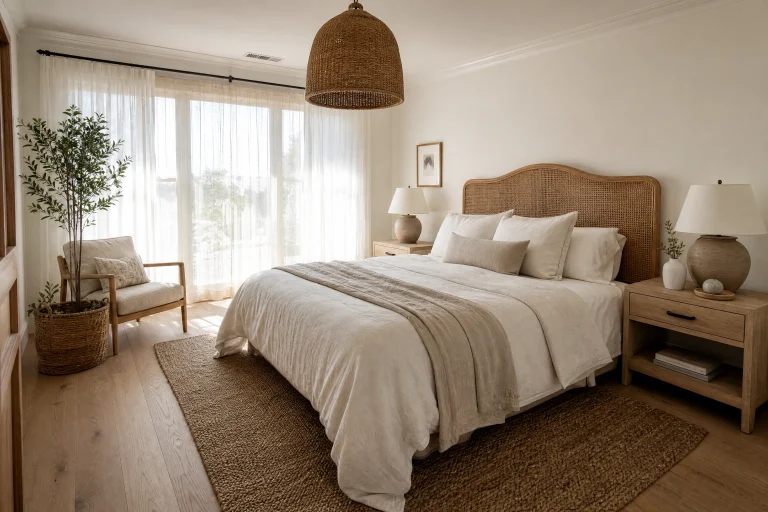
Scandinavian Bathroom Looks That Are Worth Trying Right Now

There is something genuinely calming about stepping into a Scandinavian bathroom, and it is not just the white walls or the absence of clutter. It is the way the whole room feels considered, like every tile, every wood detail, and every light fixture was chosen with a clear reason in mind. Nordic interior design has always been rooted in the idea that a space should serve you well and look good doing it, and nowhere is that philosophy more obvious than in the bathroom, where function and daily ritual meet. Whether you are planning a full renovation or just looking to refresh what you already have, the Scandinavian approach gives you a reliable framework to work from.
What makes these ideas genuinely useful, rather than just pretty pictures, is that they work across a range of budgets, room sizes, and skill levels. Some require a full remodel; others are as simple as swapping out a bath mat or adding a wooden stool. What they all have in common is an attention to material quality, light, and the kind of honest simplicity that never feels cold or sterile when it is done right. Below you will find 24 distinct directions you can take your bathroom, grouped by theme so you can find what fits your space most naturally.
Texture and Materials
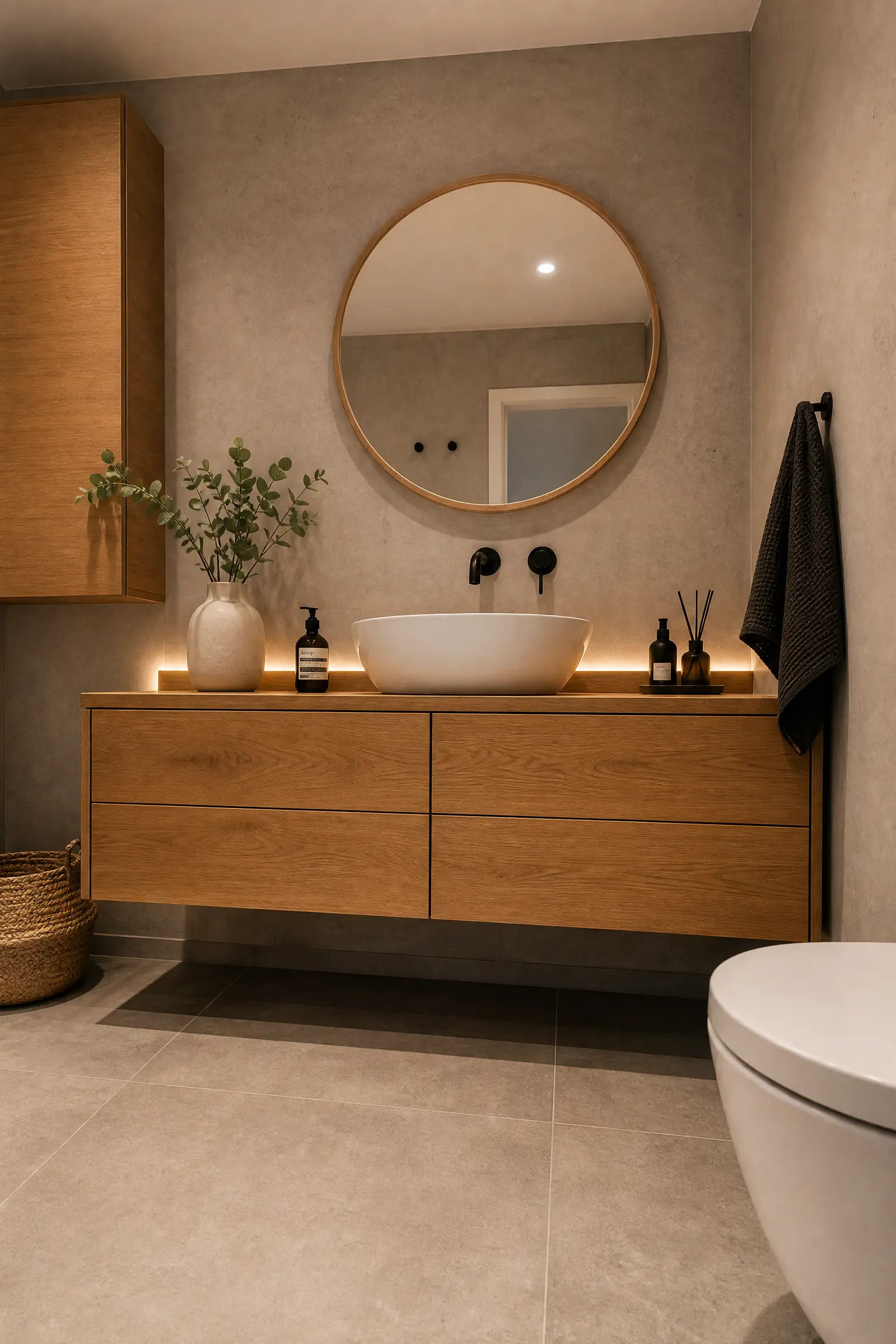
1. Raw Concrete Walls With Warm Oak Accents
Poured or poured-effect concrete walls are a strong choice for a bathroom that wants to feel grown-up and undecorated, and in practice this look comes together best when you balance the cool, industrial weight of the concrete with something warmer and more organic. Oak is the natural partner here: a floating oak vanity unit, an oak-framed mirror, or even a simple oak bath caddy introduces visual warmth and prevents the space from feeling like a car park. The color palette stays tight, anchored by medium grey, creamy white grout, and the honey tones of untreated or lightly oiled wood. Light the space with a warm-white LED strip concealed above the vanity for a soft, upward glow, and add matte black tapware to give the design its edge. One thing that works really well here is a concrete-effect large-format tile rather than real concrete, since it eliminates the sealing and maintenance that real poured concrete demands in a wet room.
Designer Note: Real concrete requires professional sealing every one to two years in bathroom conditions. Concrete-effect porcelain is a budget-friendly alternative starting around $3 to $6 per square foot that delivers the same visual result.
2. Zellige Tile Feature Wall
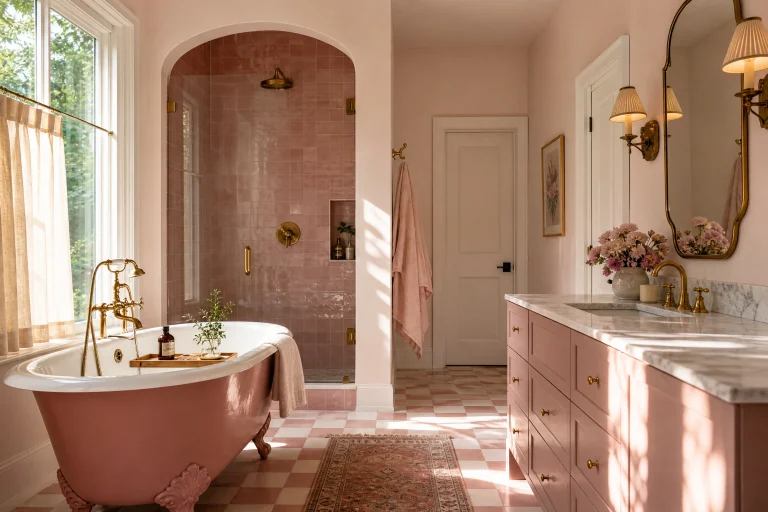
Zellige tiles, the handmade Moroccan clay tiles with their irregular glaze and slight surface variation, have been appearing in Scandinavian-influenced interiors for a few years now, and they work particularly well because they bring texture and quiet color into a space without breaking the rule of simplicity. A single feature wall behind the bathtub or shower alcove in a pale sage, dusty rose, or chalk white lets the tiles do all the visual work without competing with anything else in the room. Pair with a floating white vanity, linen window dressing, and a round mirror with a thin brass frame. The imperfections in the glaze catch light differently throughout the day, which is one of the things that makes this material genuinely special and worth the cost. Zellige does sit at the higher end of tile pricing, typically $20 to $40 per square foot, so applying it to one wall rather than the whole room keeps the budget more manageable.
Designer Note: The irregular surface of zellige tiles means grout lines will not be perfectly even. This is intentional and part of the material’s character, not a fitting error.

3. Fluted Glass Shower Screen
Replacing a standard clear-glass shower screen with a fluted or reeded glass panel is one of the most effective single upgrades you can make to a Nordic-style bathroom, and it costs less than most people expect. The vertical grooves in the glass diffuse light rather than transmitting it directly, which softens the interior of the shower and adds a layer of privacy without needing a blind or curtain. In design terms, fluted glass adds vertical rhythm to the room and sits beautifully alongside white subway tiles, stone floors, and brushed nickel or matte black hardware. It works in both small and large bathrooms: in a compact space it draws the eye upward and makes the ceiling feel higher; in a larger room it creates a defined zone within the wet area. This is a mid-range investment, typically $400 to $900 for a standard panel, but the visual return is significant.
Designer Note: Fluted glass still requires regular cleaning to prevent soap film build-up in the grooves. A squeegee used after every shower keeps maintenance minimal.

4. Limewash Paint on Bathroom Walls
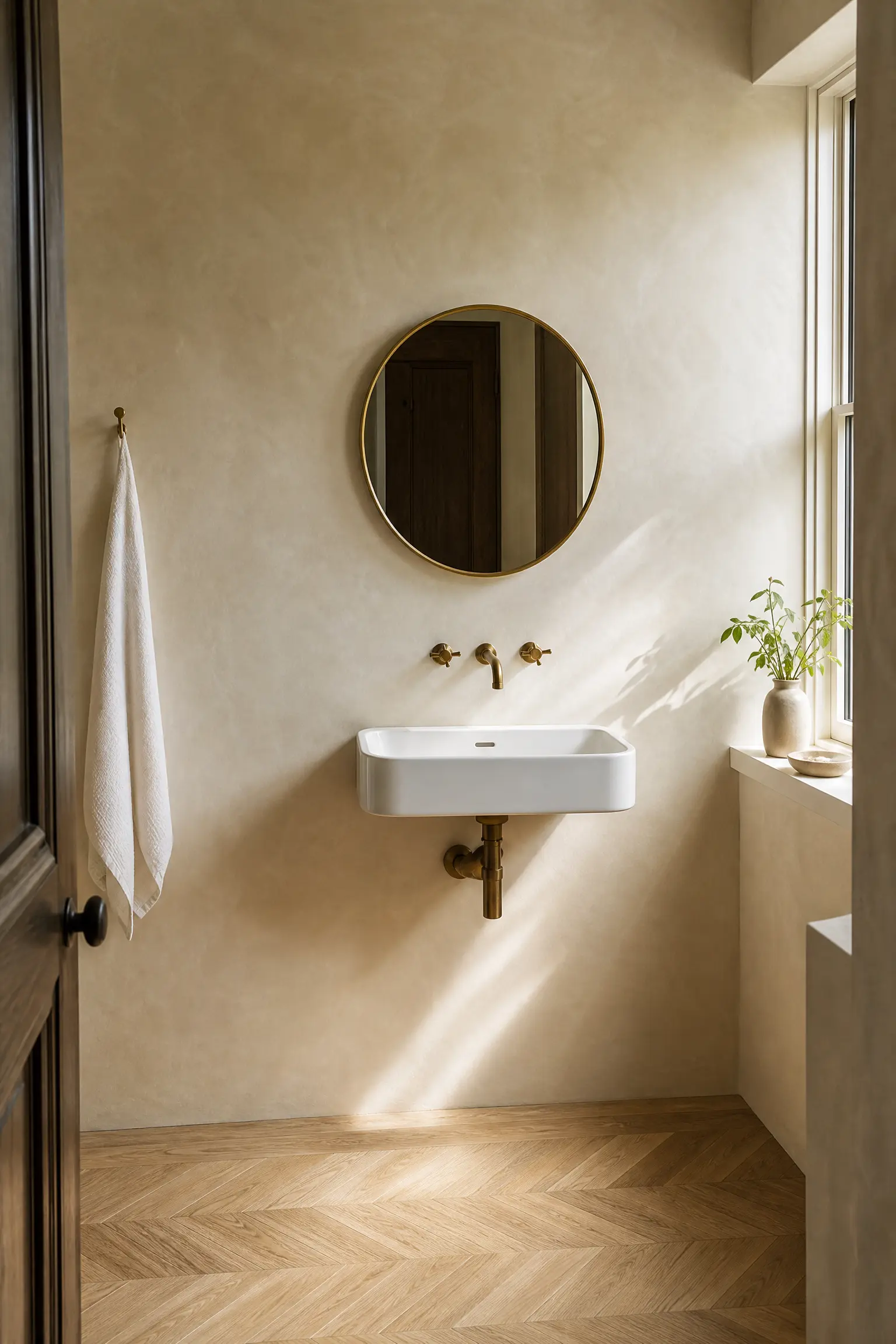
Limewash paint has a long history in European interiors and it is having a strong moment right now in Scandinavian-inspired spaces, largely because it does something flat paint simply cannot: it creates a layered, almost weathered surface that looks genuinely aged and artisan without being fussy. Applied in soft whites, muted terracotta, or pale greige, limewash paint gives bathroom walls a depth and warmth that photographs beautifully and feels even better in person. The slight variation in coverage is the point, not a flaw, and each wall looks slightly different depending on the direction of the light. Use it on the walls only, keep the floor simple with large-format stone-effect tiles, and choose white or stone-colored fittings to let the paint surface breathe. Limewash paints formulated for bathroom use are now widely available from brands like Portola Paints and Annie Sloan, and the application is something a confident DIYer can tackle over a weekend.
Designer Note: Not all limewash paints are moisture-resistant. Always choose a formula explicitly rated for wet rooms or apply a breathable sealant after curing.
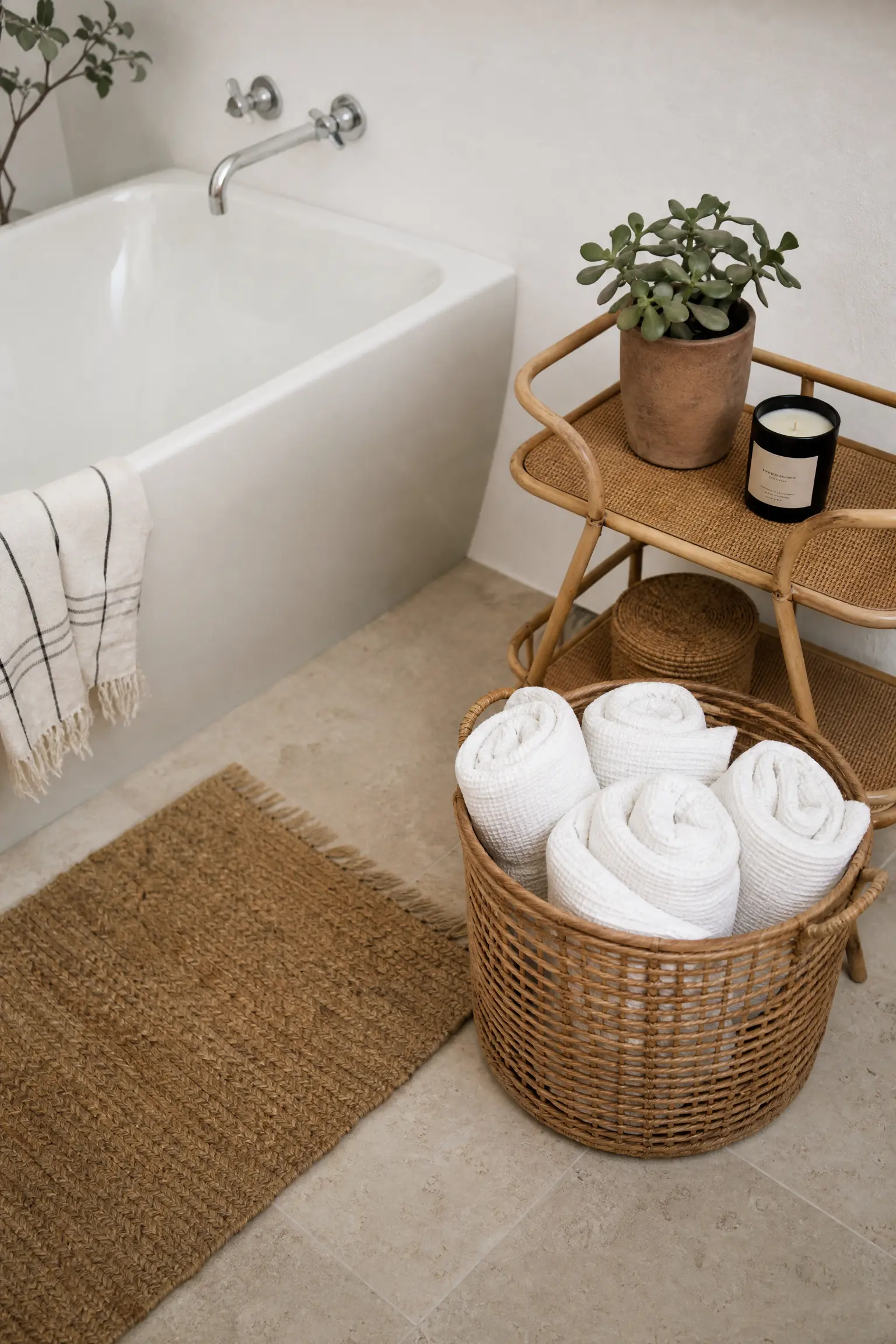
5. Woven Rattan and Natural Fiber Accessories
You do not need to retile or replumb anything to shift a bathroom noticeably toward a Scandinavian aesthetic. Sometimes the most effective changes are the smallest, and swapping out plastic accessories for natural fiber alternatives is a clear example of that. Woven rattan baskets under the sink for towel storage, a jute bath mat, a seagrass laundry basket, and a small rattan shelf unit all contribute to the texture-layering that Nordic interiors rely on to feel warm rather than sterile. The materials themselves reference the Scandinavian relationship with nature and craft, and they contrast beautifully with the cool surfaces typical of a bathroom, such as ceramic, glass, and chrome. This is one of the most budget-friendly approaches on this list: a full set of natural fiber accessories can be sourced for under $150 and replaced easily when tastes change.
Designer Note: Natural fibers in a high-humidity bathroom will degrade faster than synthetic alternatives. Ensure good ventilation and dry mats between uses to extend their life.
6. Tadelakt Plaster Wet Room
Tadelakt is a traditional Moroccan lime plaster that has been used for centuries in hammams and wet rooms because of its natural water resistance, and it has found a devoted following among Scandinavian interior designers who want a seamless, almost sculptural wet room without the visual interruption of grout lines. The surface is polished with a river stone and treated with black soap to create a water-resistant finish that develops a soft sheen over time. Colors range from off-white and pale sand to charcoal and terracotta, and the material works equally well as a shower surround, a full wet room wall treatment, or a decorative basin surround. In practice, tadelakt does require a skilled artisan to apply correctly, which makes it an investment-level choice, typically $80 to $150 per square foot installed. However, when it is done well, it is one of the most beautiful and long-lasting finishes available.
Designer Note: Tadelakt requires professional application and must be resealed periodically with black soap. It is not a DIY material and works best applied by a craftsperson with specific experience in the technique.

Color and Light
7. All-White With Warm Undertones
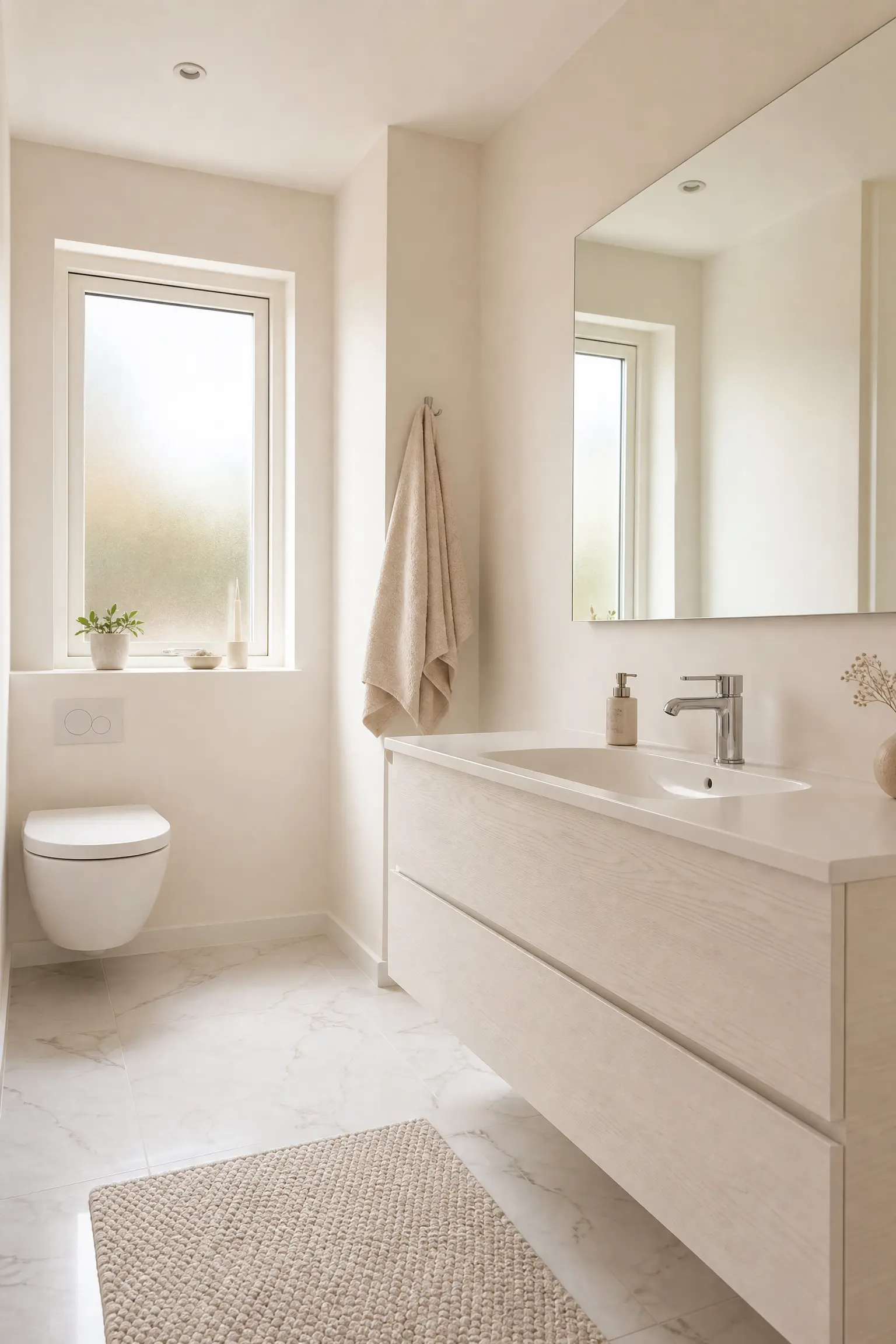
A truly white bathroom done in the Scandinavian way is not the stark, clinical white of a hospital corridor. It is a warmer, more layered take on white that uses variations in finish and subtle undertones to create depth without color. Think warm white walls with a slight cream or yellow undertone, white marble or stone-effect tiles with natural veining, white cotton towels with textured weaves, and a white floating vanity with grain-visible wood doors. The key is finish variation: matte walls, satin tiles, glossy ceramics, and natural wood surfaces all read differently in the same room, and that contrast is what stops an all-white bathroom from feeling flat. Layer lighting carefully, with a warm overhead fitting, a task light at the mirror, and a small table lamp or candle ledge if the room allows.
Designer Note: Pure white with a blue or grey undertone can feel cold in bathrooms that receive little natural light. If your bathroom faces north, choose whites with a warm or neutral undertone instead.
8. Soft Sage Green Throughout
Sage green has become one of the most requested colors in Scandinavian bathroom design over the past two years, and in practice it earns that reputation because it is one of the few colors that genuinely works well across wall paint, cabinetry, and tile without becoming overwhelming. A sage-green vanity unit paired with sage-green wall paint in a slightly different shade creates a tonal, enveloping effect that feels very current and very calm at the same time. Ground the look with warm white ceiling paint, a natural stone floor in beige or warm grey, and brass hardware throughout. Plants such as trailing pothos or small ferns respond to the color sympathetically and add another layer of the natural world into the space. This palette photographs extremely well and tends to suit both small and generously sized bathrooms.
Designer Note: Sage green reads differently in different light conditions. It can appear more blue in cool light and more grey-green in warm light. Always test a paint sample across a full day before committing.

9. Deep Forest Green Cabinetry
Where sage green is gentle and tonal, deep forest green cabinetry makes a much more deliberate statement, and it is a direction that a growing number of Scandinavian designers are taking as a counterpoint to the pale, neutral dominance that has characterized the style for decades. A tall floor-to-ceiling storage unit or a pair of vanity cabinets in a deep bottle green or hunter green creates a strong focal point and anchors the room with a sense of permanence and confidence. Keep everything else restrained: white or pale grey walls, a simple white ceramic basin, warm brass or antique brass tapware, and a large rectangular mirror without a heavy frame. The contrast between the dark cabinetry and the light surroundings is what makes this look work, so resist the temptation to add too many other elements.
Designer Note: Dark cabinetry in a small bathroom can feel oppressive if the rest of the room is also dark. This look works best when the walls, ceiling, and floor remain light.
10. Maximizing Natural Light With Skylights
Nordic design is, at its core, a response to the reality of long, dark winters, and the philosophy of bringing as much natural light into the home as possible is baked into everything from window proportions to the choice of pale, reflective surfaces. In a bathroom, a skylight is one of the most impactful investments you can make, particularly in ground-floor or interior rooms where a standard window would overlook a neighbor. A skylight floods the room with changing natural light throughout the day, makes the ceiling feel higher, and reduces the need for artificial lighting during daylight hours. If a structural skylight is not possible, a sun tunnel or solar tube can achieve a similar effect at a much lower cost and with minimal structural disruption. Pair with pale, reflective surfaces and a large mirror to make the most of the incoming light.
Designer Note: Skylights in bathrooms must be adequately ventilated to prevent condensation. Look for models with integrated ventilation or pair with a good extraction fan.

11. Charcoal and Warm Wood
This is a darker, more dramatic take on Scandinavian minimalism that works especially well in larger bathrooms or in spaces that receive a lot of natural light. Charcoal grey walls, whether painted or tiled, pair with warm-toned wood in a way that feels moody and grounded rather than heavy or oppressive. A teak or walnut vanity unit against charcoal walls, combined with matte black tapware and a simple round mirror in a black or dark metal frame, creates a cohesive, masculine palette that reads as contemporary Scandi rather than industrial. The wood provides the warmth that prevents the dark tones from becoming uncomfortable, and adding a single large plant in a concrete or ceramic pot introduces a natural element that softens the scheme further. Lighting is critical here: warm-white bulbs only, and enough layers to prevent shadowy corners.
Designer Note: In a bathroom smaller than 50 square feet, a full charcoal wall treatment can make the space feel very enclosed. Consider limiting the dark tone to one feature wall and keeping the remaining walls lighter.

12. Soft Terracotta and Cream
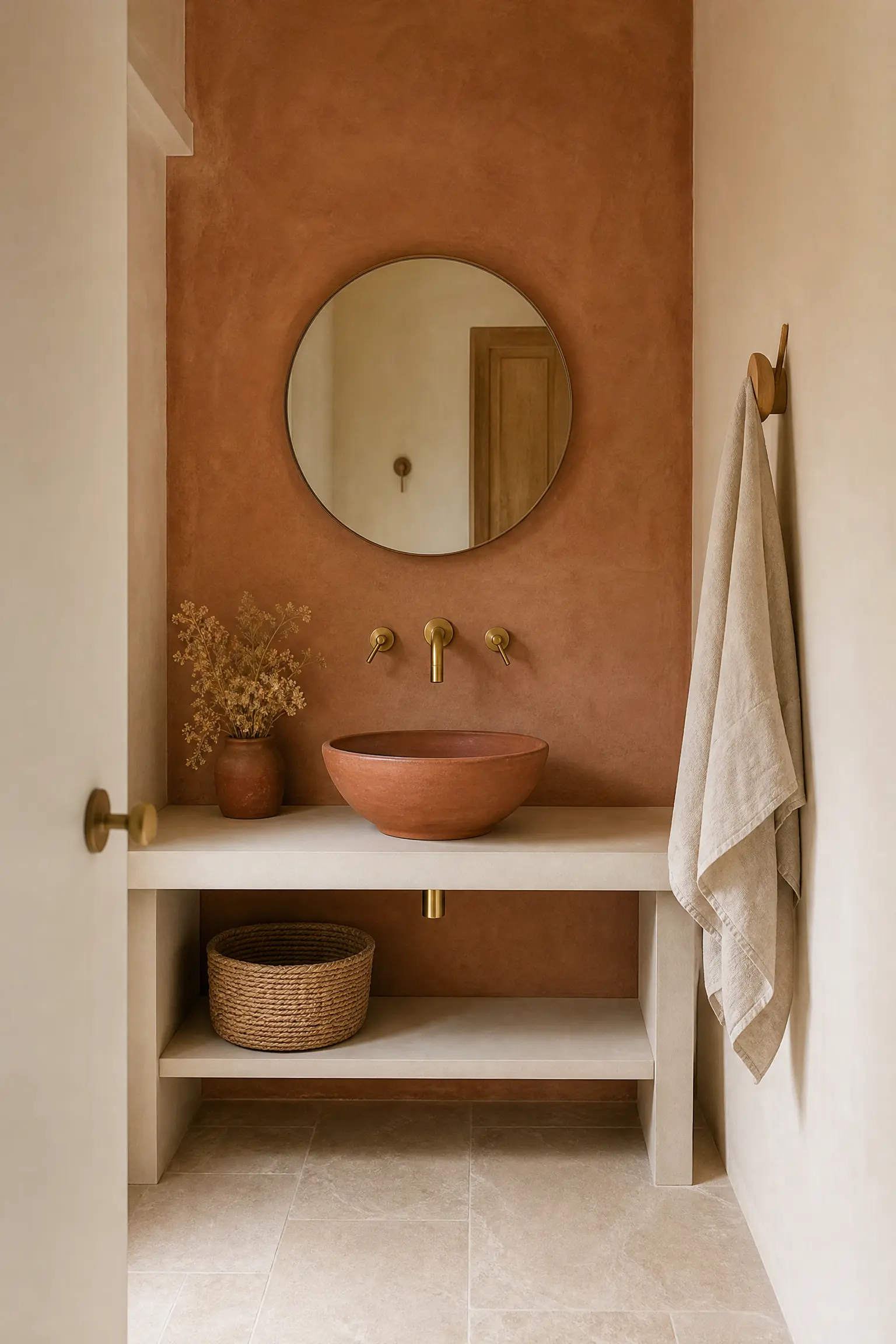
Terracotta has moved well beyond its 1990s iteration and the modern Scandinavian use of the color is something considerably more refined: a dusty, sun-faded terracotta that reads closer to blush or warm clay than anything orange. Combined with cream, off-white, and natural linen tones, terracotta in a bathroom creates a warmth that feels almost Mediterranean but with the restraint and material quality of Nordic design. Use terracotta on one wall only, in a limewash or matte paint, and keep tiles, fittings, and accessories in complementary warm neutrals. A round terracotta ceramic vessel sink is a particularly beautiful way to introduce the color as a functional feature rather than purely decorative. Towels in cream and warm white complete the look without adding visual noise.
Designer Note: Terracotta can read as orange under some artificial light temperatures. Test the paint color under the specific bulbs you plan to use in the finished bathroom.
Storage and Functionality
13. Recessed Niche Shelving in the Shower
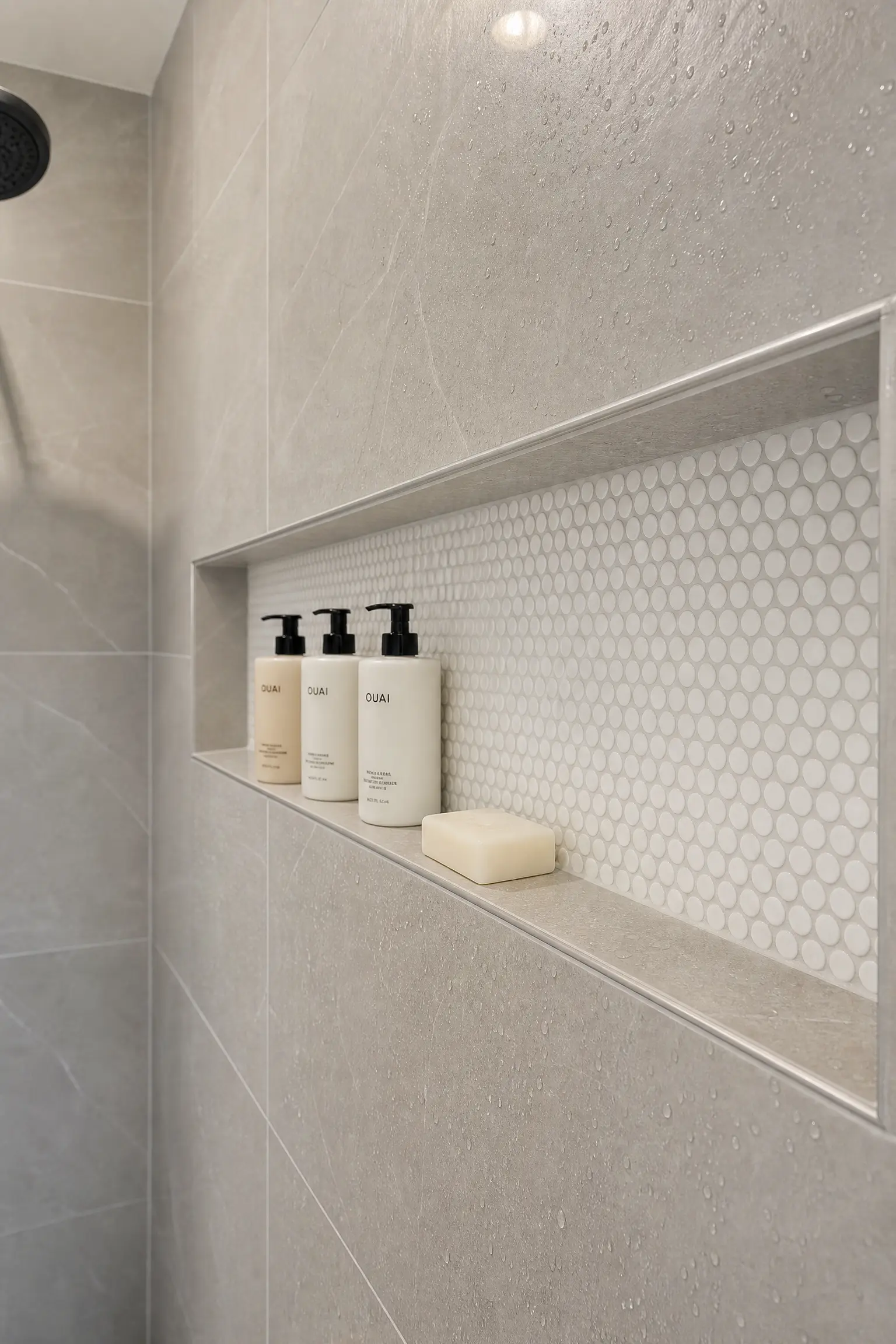
A recessed niche built into the shower wall is one of those things that every interior designer recommends and many homeowners wish they had included during their renovation. The niche sits flush with the wall surface, which means it adds storage without taking up any floor space or creating a protrusion that disrupts the clean lines of the shower enclosure. In a Scandinavian bathroom, a single long horizontal niche tiled in a contrasting material, such as a small mosaic or a different grout color, becomes a design detail as much as a practical feature. Alternatively, a series of smaller square niches stacked vertically on one shower wall creates a geometric pattern that is both functional and visually interesting. The key is to plan the niche location before tiling begins, as retrofitting requires cutting into a finished wall.
Designer Note: Position shower niches at a comfortable reaching height, typically 48 to 54 inches from the floor, and away from the direct water spray to reduce water pooling on the shelves.
14. Floating Vanity With Hidden Plumbing
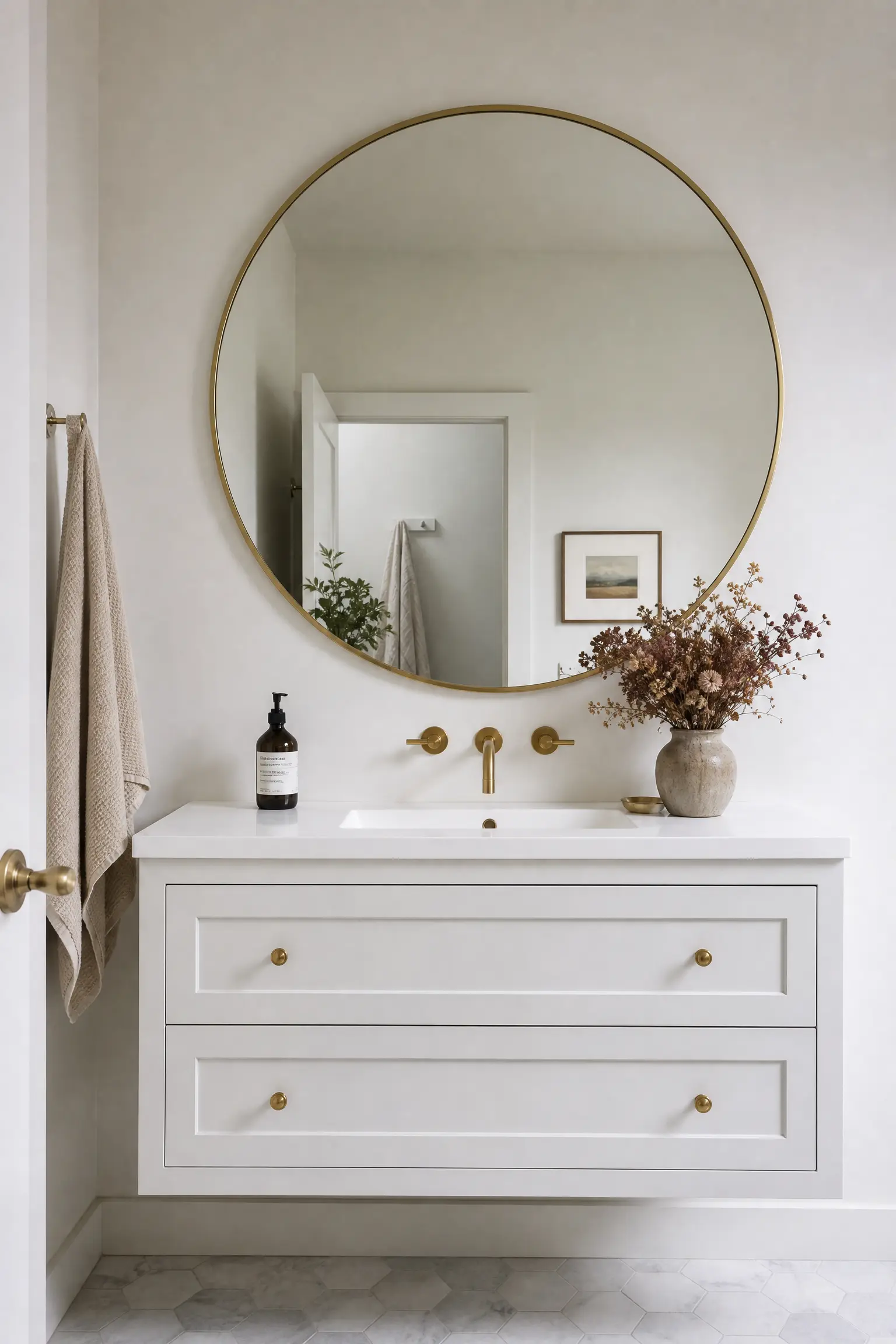
A wall-hung or floating vanity is a cornerstone of Scandinavian bathroom design for a reason: it lifts the cabinet off the floor, which makes the room feel larger, allows easier floor cleaning, and gives the plumbing somewhere to disappear behind the wall rather than sitting exposed in a pedestal. In practice, the difference a floating vanity makes to a small bathroom is significant, often more so than a full color change or new tile. Choose a vanity in a warm wood tone such as oak or walnut for a natural, organic feeling, or go painted in white or sage green for a cleaner, more minimal look. A single drawer unit works well in compact bathrooms; a double unit with integrated basin offers more storage for family bathrooms. Wall-hanging does require the plumbing to be set at the correct height during the rough-in stage of renovation, so it is worth planning early.
Designer Note: Floating vanities require a solid wall for secure mounting. Plasterboard alone is not sufficient; blocking or a reinforced substrate must be installed during the build phase.

15. Tall Ladder Shelf for Towels and Toiletries
A leaning ladder shelf is one of the quickest and most affordable ways to add both storage and visual character to a Scandinavian bathroom without any drilling or structural work. Placed in a corner or alongside the bath, a slim ladder shelf in light oak, pine, or painted white holds rolled towels on its lower rungs and small plants, candles, or toiletry bottles on its upper shelves. It adds vertical interest to a room that might otherwise feel flat, and because it leans rather than mounts, it can be repositioned or removed without leaving marks. The key is to keep it edited: two or three items per shelf maximum, with nothing that feels cluttered or out of place. This is a budget-friendly option, with decent quality ladder shelves available for $40 to $120 depending on the material and size.
Designer Note: Leaning shelves are not stable in high-traffic households with children. In those situations, a wall-mounted version of the same form achieves a very similar look with much greater safety.

16. Built-In Banquette Seating With Storage Below
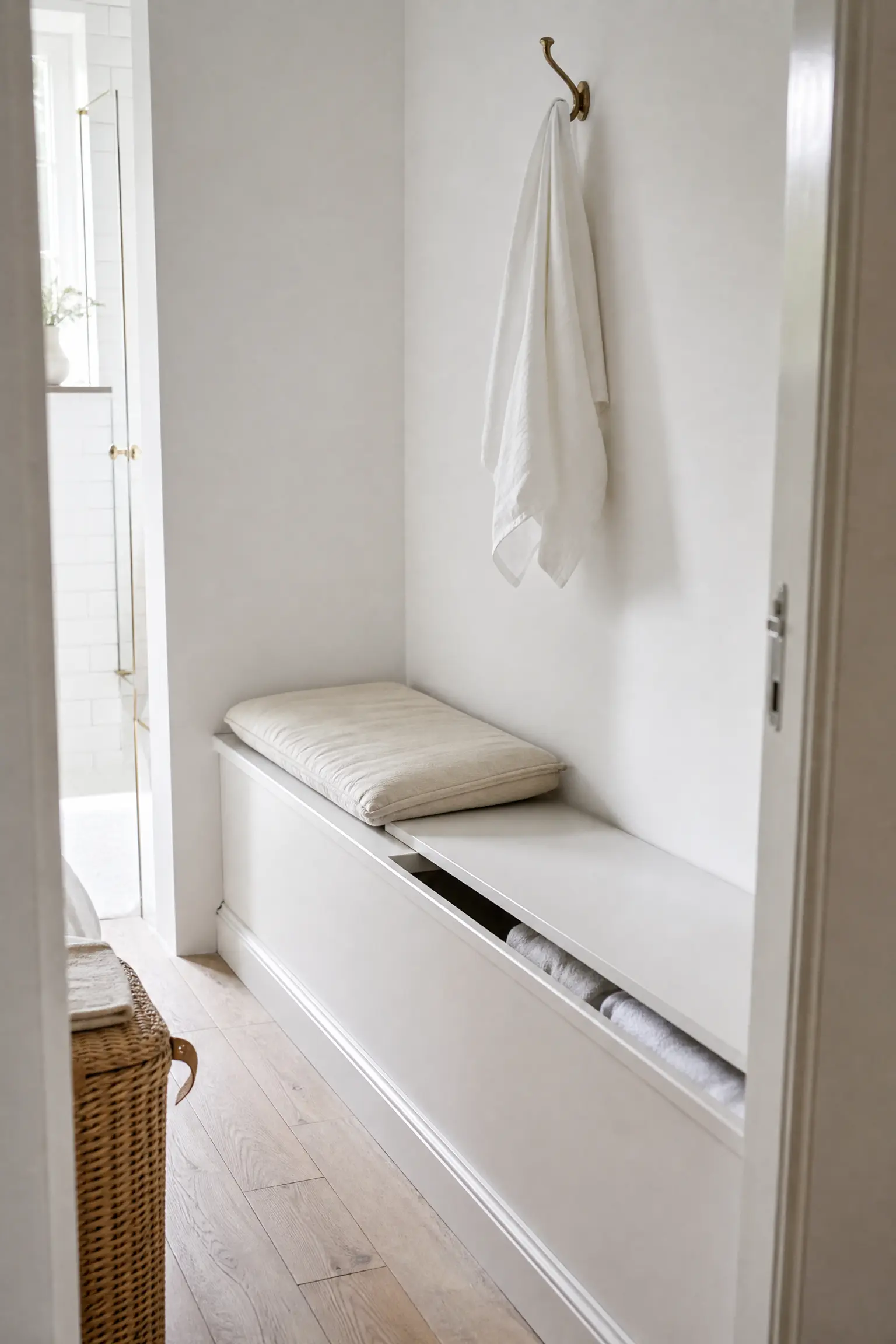
This is a feature more commonly found in Scandinavian spa-style bathrooms or in generously sized family bathrooms, but it is worth including because it solves two problems at once: the need for somewhere to sit while dressing or applying skincare, and the perennial shortage of bathroom storage. A low built-in bench, typically 18 inches high and 14 to 16 inches deep, can be built against one wall of the bathroom with lift-up lids or pull-out drawers below to store spare towels, cleaning supplies, or seasonal items. Upholster the seat in a moisture-resistant fabric or cover with a folded linen cushion for comfort. In design terms, a painted bench in white or a muted neutral becomes part of the architecture of the room rather than a piece of furniture sitting in it, which is very consistent with the Scandinavian preference for built-in, considered storage.
Designer Note: Upholstered seating in a bathroom requires fabric that can handle humidity. Look for outdoor-grade or moisture-resistant textiles, or opt for a simple wooden top with a removable cushion.
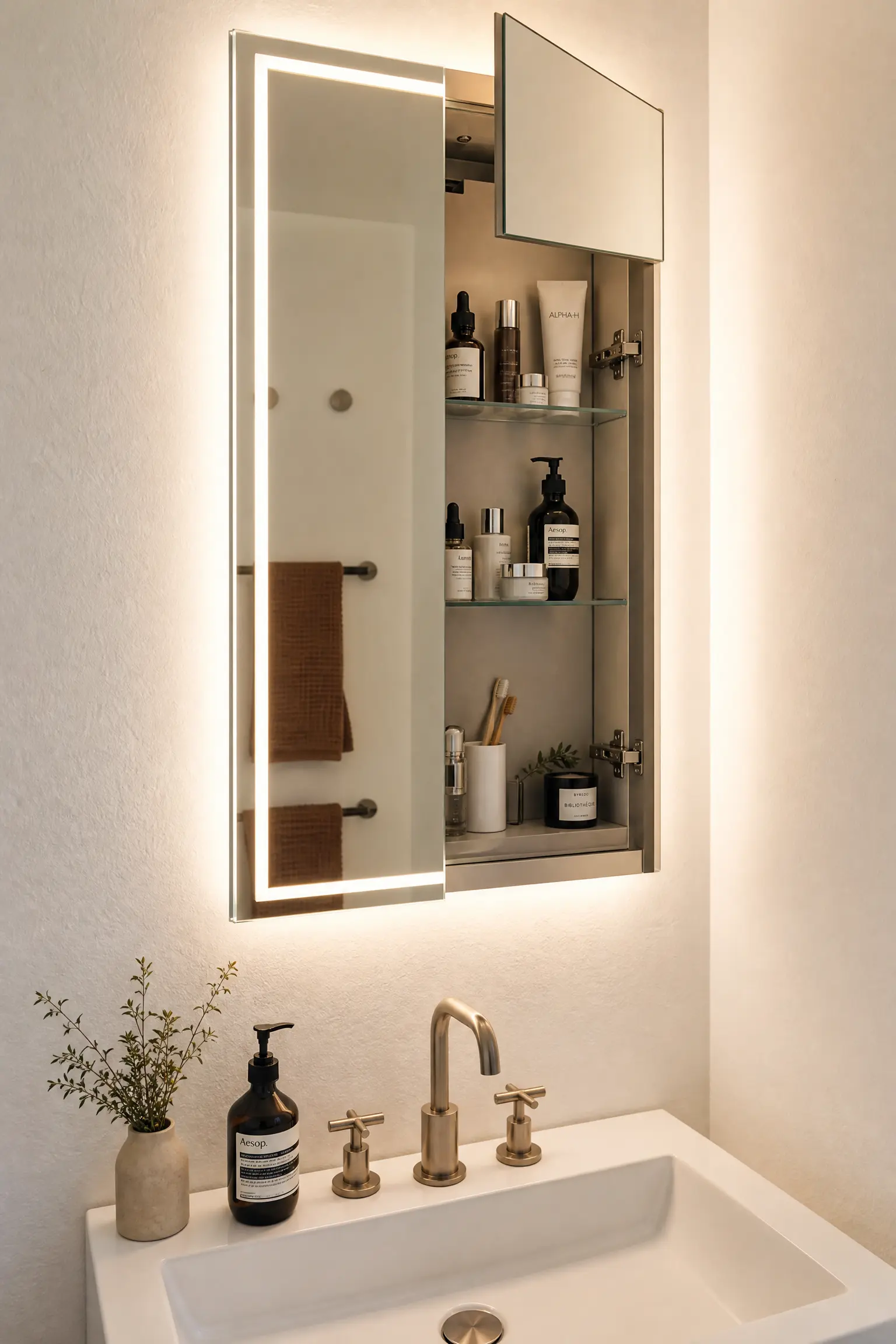
17. Medicine Cabinet With Integrated Mirror
The medicine cabinet is making a genuine comeback in Scandinavian bathroom design, but in a considerably more considered form than the plastic-framed versions of the past. A flush-mounted, frameless medicine cabinet with a mirrored door sits entirely within the wall thickness, meaning it adds zero visual bulk to the room while providing a generous amount of concealed storage for medications, skincare products, and daily essentials. Some models include integrated LED lighting around the mirror edge, which provides excellent task lighting for grooming. Choose a model with an adjustable interior shelf so the storage can be tailored to what you actually keep in the bathroom, rather than being fixed at a height that does not work for your products. This is one of the most practical investments in a Scandinavian bathroom remodel.
Designer Note: Recessing a medicine cabinet into the wall requires checking for electrical wiring and pipes within the wall cavity before cutting. In some cases, a surface-mounted version achieves a similar aesthetic with far less structural work.
Focal Points and Details
18. Freestanding Bathtub as the Room’s Centerpiece
A freestanding bathtub is one of the most aspirational features in Scandinavian bathroom design, and when a room has the space for one, it almost always becomes the defining element of the entire scheme. The clean, sculptural form of a modern freestanding tub, whether oval, rectangular, or asymmetric, gives the room a focal point that is both functional and genuinely beautiful. In a Nordic context, the most sympathetic choices tend to be cast iron tubs in matte white, stone-effect composite resin tubs, or simple acrylic tubs with flat, angular profiles rather than elaborate curved detailing. Position the tub away from the wall if the room allows, ideally centered under a window or skylight, with a floor-mounted tap and a simple tray or wooden board across the tub for candles and a book. This is an investment piece, typically $800 to $4,000 depending on material, but it anchors the room in a way that little else can.
Designer Note: Cast iron tubs are extremely heavy and may require structural floor reinforcement, particularly in older buildings. Always check floor load capacity before purchasing.

19. Oversized Round Mirror
Mirrors do a lot of work in a Scandinavian bathroom: they reflect light, visually expand the space, and provide the proportional balance that the style relies on. An oversized round mirror, ideally 28 to 36 inches in diameter, does all three things while also introducing a soft, circular form that counters the straight lines typical of Nordic cabinetry and tile. In terms of framing, the most current choices are a thin brass or brushed gold frame for warmth, a raw oak frame for an organic touch, or a completely frameless version for the cleanest possible look. Position the mirror high enough to reflect light from the window opposite, and consider pairing two round mirrors of slightly different sizes on a double vanity wall for an asymmetric arrangement that feels considered rather than matched. A round mirror is one of the most affordable ways to update a bathroom, with good options available from $60 to $300.
Designer Note: In a bathroom with low ceilings, a vertically oriented oval or rectangular mirror will do more to give the illusion of height than a round one.
20. Pampas Grass and Dried Botanicals
Dried botanicals have been a staple of Scandinavian interior styling for years and they earn their place in the bathroom because they require no watering, thrive in any light condition, and add an airy, organic texture that no synthetic decor item can replicate. Pampas grass in a tall ceramic or concrete vase placed in a corner of the bathroom, a bundle of dried eucalyptus hung from the shower head, or a small arrangement of dried seed heads on the vanity shelf all communicate the Nordic closeness to nature without requiring a green thumb. The palette of dried botanicals, ranging from warm cream to pale gold and dusty pink, fits naturally within the warm neutral tones that Scandinavian bathrooms favor. Replace the arrangements every six to twelve months as dust accumulates and the color fades.
Designer Note: Dried pampas grass sheds fluffy fibers over time, particularly in a room with ventilation airflow. Place it away from the toilet and towel area to avoid fiber transfer.

21. Statement Pendant Light Over the Bath
Bathroom pendant lighting is still something many people hesitate over, usually because of safety concerns, but in a properly designed space with correctly zoned electrical installations, a pendant over the bathtub is both safe and genuinely impactful. Scandinavian pendant designs tend to favor simple paper lanterns, woven rattan pendants, or minimal glass globe shades in amber or smoked tones, all of which cast a diffused, warm light that feels very different from the flat overhead lighting typical of most bathrooms. The pendant creates a focal point above the tub, draws the eye upward, and gives the bathing area the intimacy of a separate zone within the larger room. Always use an IP-rated bathroom pendant in the correct safety zone, and consult a licensed electrician to ensure the installation meets local building codes.
Designer Note: Pendant lights must be IP44-rated at minimum when positioned above or near the bath. Always check zone regulations for bathroom lighting in your country or region before installation.

22. Black-Framed Steel Window Partition
Interior steel or aluminum frame windows and partitions with black profiles have become a signature element of the modern Scandinavian bathroom, particularly in open-plan or loft-style homes where the bathroom is partially visible from the bedroom or dressing area. A black-framed glass partition between the shower and the rest of the bathroom, or between the bathroom and an adjacent dressing room, creates visual connection while maintaining function separation. The strong graphic quality of the black frames against white walls or pale tile is one of the most effective design contrasts available, and it photographs exceptionally well. This is a bespoke or semi-bespoke element and requires a structural assessment if it is to replace a solid wall, but the visual impact justifies the investment for bathrooms where the budget allows.
Designer Note: Black-framed partitions require regular wiping down to prevent water spots on the glass and oxidation on the frame profiles. Powder-coated aluminum frames are more durable than steel in humid conditions.

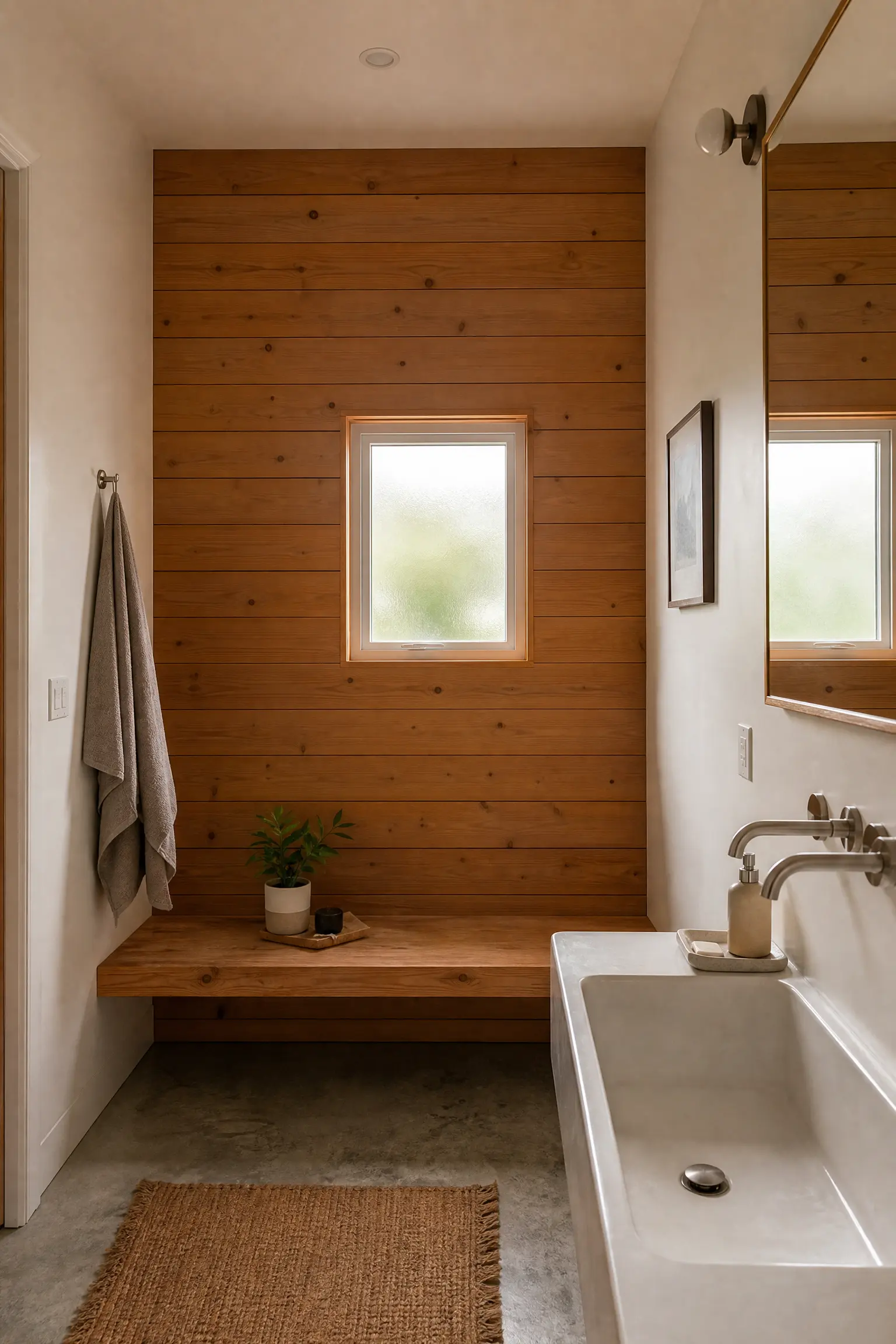
23. Sauna-Inspired Wood-Paneled Bathroom
The Finnish sauna is arguably the most iconic expression of Nordic culture and its influence on bathroom design is significant, particularly as more homeowners look to bring a spa-like quality into their daily bathing experience. Wood paneling, traditionally associated with the sauna interior, translates beautifully to a bathroom wall or ceiling treatment when the timber is correctly treated for moisture resistance. Thermo-treated pine, cedar, or heat-treated spruce in horizontal or vertical panel arrangements gives a bathroom an immediate warmth and organic quality that no paint color alone can achieve. Combine with stone or concrete floors, a wall-hung teak or cedar bench, and minimal fittings in brushed nickel or natural bronze. The overall effect is unmistakably Nordic and deeply calming.
Designer Note: Only use timber that has been specifically treated or naturally suited for high-humidity environments. Untreated pine will warp, stain, and degrade quickly in a bathroom. Thermo-treated or kiln-dried timber is the reliable choice.
24. Japandi Bathroom: Where Scandinavian Meets Japanese
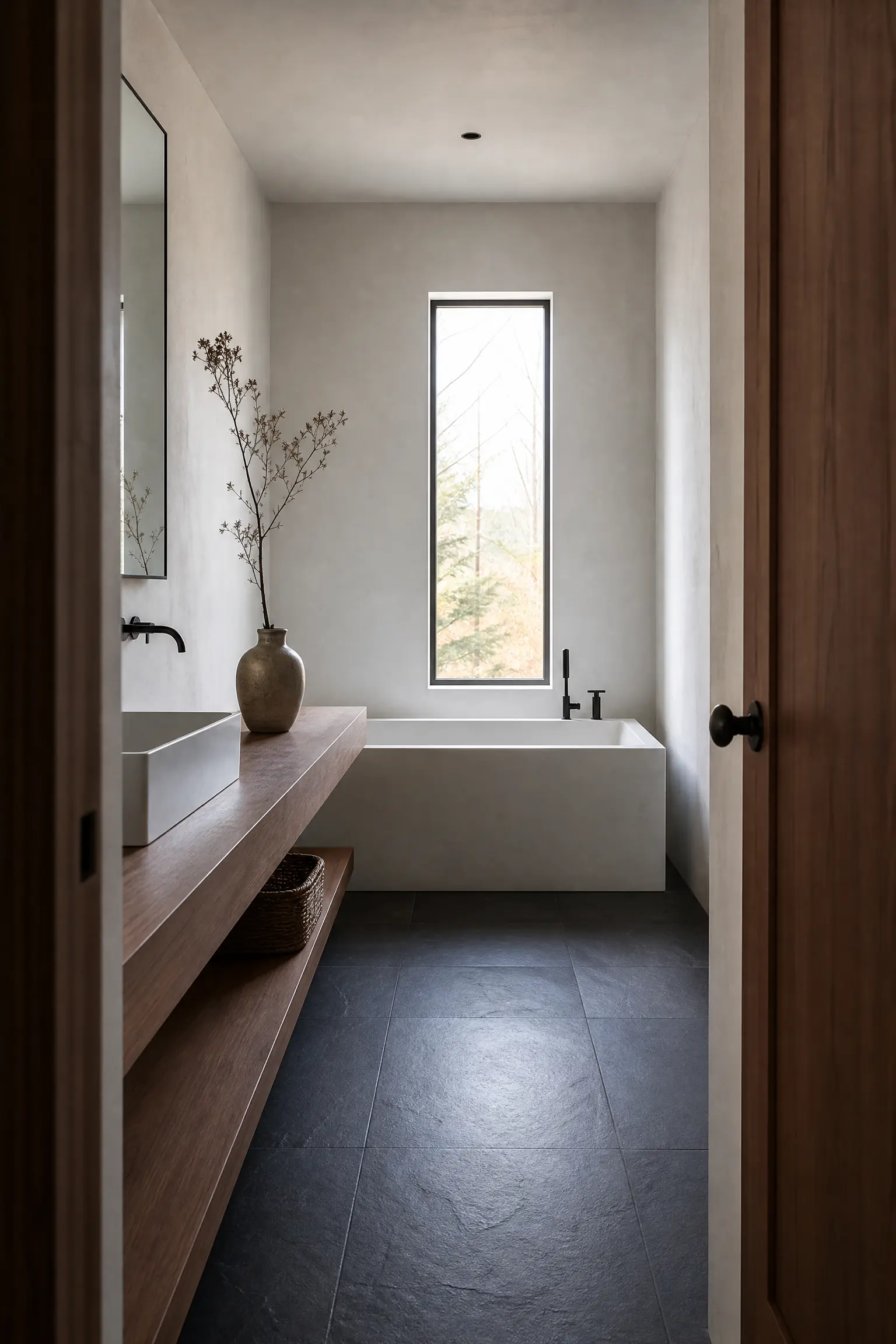
Japandi, the design language that merges Japanese wabi-sabi philosophy with Scandinavian minimalism, has become one of the most discussed aesthetics in interior design over the past few years, and the bathroom is one of the rooms where it finds its most natural expression. Both traditions share a respect for natural materials, a preference for restraint over excess, and a belief that the objects and surfaces in a space should be honest about what they are and what they do. In a Japandi bathroom, you might find a white plaster wall alongside a walnut wood vanity, a deep soaking tub with clean architectural lines, handmade ceramic accessories in earthy glazes, and a single carefully chosen plant in a simple pot. The color palette tends toward warm whites, mushroom, raw linen, and deep charcoal, with nothing bright or synthetic. It is, in practice, one of the most serene bathroom environments you can create.
Designer Note: The Japandi aesthetic is particularly unforgiving of clutter. The look depends on restraint in accessorizing. If you tend toward collecting lots of bathroom products and decor items, a more storage-rich design approach might serve you better.
Final Thoughts
Scandinavian bathroom design is not a rigid set of rules. It is more of a way of thinking about a space: what does it need to do, what materials are honest and good, and how can light, texture, and simplicity work together to make the room feel like a genuine place of rest rather than just a utility. The 24 ideas here cover a wide range of budgets, room sizes, and personal styles, and they are intended to show how broad and flexible the Nordic approach actually is when you look past the stereotypes of white walls and pampas grass.
The ideas that tend to work best in real homes are the ones that combine practical thinking with material honesty. Choose the flooring that will actually hold up to your household. Choose the storage that reflects how you genuinely use the room. Choose the color that suits your natural light, not just the one that looked good in a magazine shot taken in a south-facing Swedish summer. When those decisions are made with care, the result tends to look and feel exactly like the kind of calm, useful, beautiful space that Scandinavian design has always promised.
Start with one or two changes and see how they shift the room before committing to a full renovation. Sometimes the most significant difference comes from the simplest edit.
Frequently Asked Questions
What are the key features of a Scandinavian bathroom?
Scandinavian bathrooms are typically defined by a light color palette, natural materials such as wood and stone, clean and functional layouts, layered lighting, and a strong emphasis on removing visual clutter. The overall goal is a space that feels calm, purposeful, and well-made rather than decorative for its own sake.
Can I achieve a Scandinavian bathroom on a small budget?
Yes, and often more easily than people expect. Some of the most effective Nordic bathroom updates involve replacing accessories with natural fiber alternatives, adding a round mirror, introducing a wooden ladder shelf, or repainting in a warm white or sage green. None of these changes require significant investment or structural work.
What colors are most common in Scandinavian bathroom design?
The most common palette centers on warm whites, soft greys, and natural wood tones. More recently, sage green, deep forest green, charcoal, and dusty terracotta have become popular as accent colors or full room treatments. The common thread is that colors tend to be muted, warm-toned, and grounded in nature rather than bright or synthetic.
What kind of lighting works best in a Scandinavian bathroom?
Layered lighting is the goal: a warm overhead fitting for general illumination, a task light at mirror height for grooming, and a softer ambient source such as a pendant or wall sconce for evenings. Warm-white bulbs in the 2700K to 3000K range are the standard choice because they complement wood tones and skin tones much more flatteringly than cool or daylight bulbs.
Is Scandinavian bathroom design suitable for small bathrooms?
It is arguably better suited to small bathrooms than most other styles because the emphasis on decluttering, reflective surfaces, pale colors, and wall-hung fixtures all work to make a compact space feel larger and more functional. Floating vanities, large mirrors, and recessed niche shelving are particularly effective in small rooms.
What plants work well in a Scandinavian bathroom?
For live plants, trailing pothos, small-leafed ferns, snake plants, and peace lilies all tolerate the humidity and lower light conditions common in bathrooms. For a lower-maintenance option, dried botanicals such as pampas grass, dried eucalyptus, and dried seed heads are a popular and very Nordic choice that requires no care beyond occasional dusting.