Plants That Survive Even When You Forget About Them
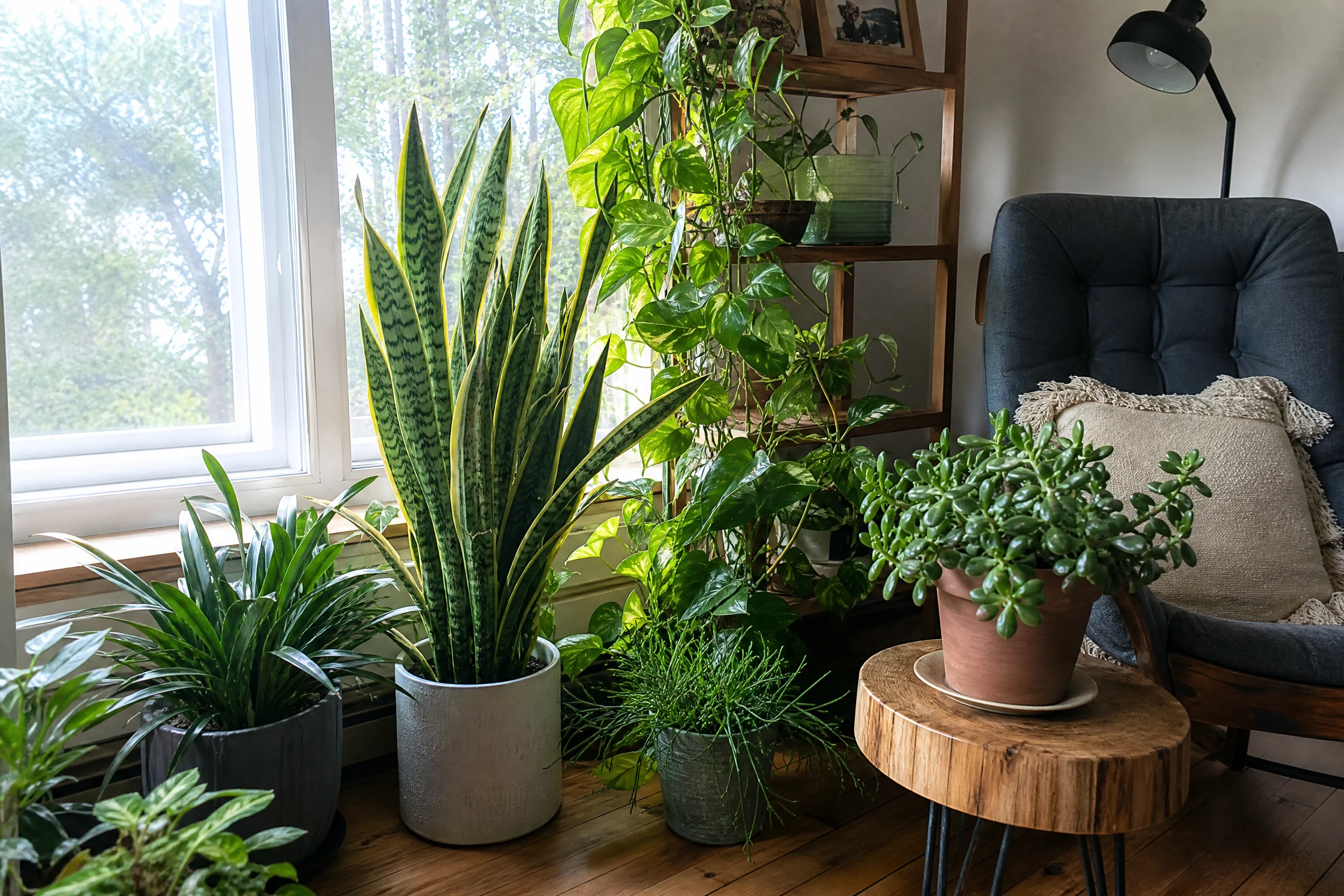
I used to think I just had a black thumb. I bought a fiddle leaf fig because it looked good in every magazine, killed it in six weeks, then tried a fern, then an orchid, then something I can’t even remember the name of anymore. The problem wasn’t me, it was that I kept buying plants that needed attention I genuinely did not have time to give. Once I started building my collection around plants that actually tolerate a missed watering or a dim corner, my home finally started to feel green and alive instead of like a graveyard of good intentions.
This list is organized by what actually matters when you’re choosing plants for a real home, not a plant store fantasy. You’ll find options for dark hallways, sunny windowsills you always forget exist, homes with curious pets, and people who want a big leafy statement without the stress that usually comes with one. Every plant here has earned its spot because it has survived something in my own home or in the home of someone I trust, not because it photographed well. Pull up a chair and let’s get your place looking like you actually know what you’re doing in there.
The Low-Light Champions Who Never Complain
Snake Plant
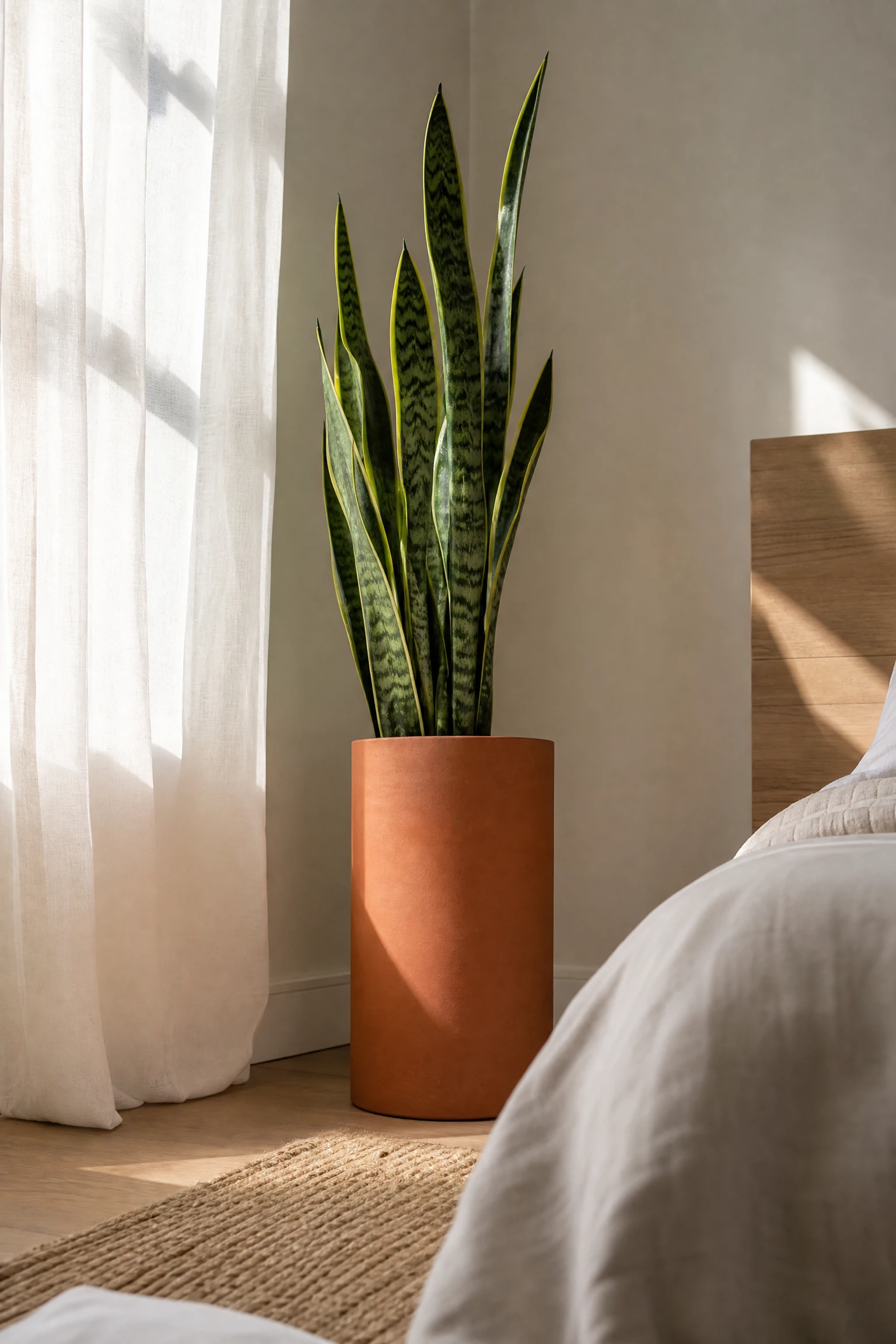
Snake plant, also called Sansevieria, is the plant I recommend first to anyone who tells me they kill everything. Its upright, sword-shaped leaves come in deep green or variegated yellow-edged varieties, and a cluster of three in a tall ceramic cylinder pot reads as intentional, sculptural decor rather than an afterthought. It tolerates almost any light condition from a north-facing bathroom to a bright living room, and it genuinely prefers you forget to water it for two or three weeks over fussing with it daily. One thing that works really well here is grouping different heights together near a sofa to add vertical interest without crowding the floor. The only real risk is overwatering, which causes root rot, so a terracotta pot with real drainage is worth the extra few dollars.
ZZ Plant
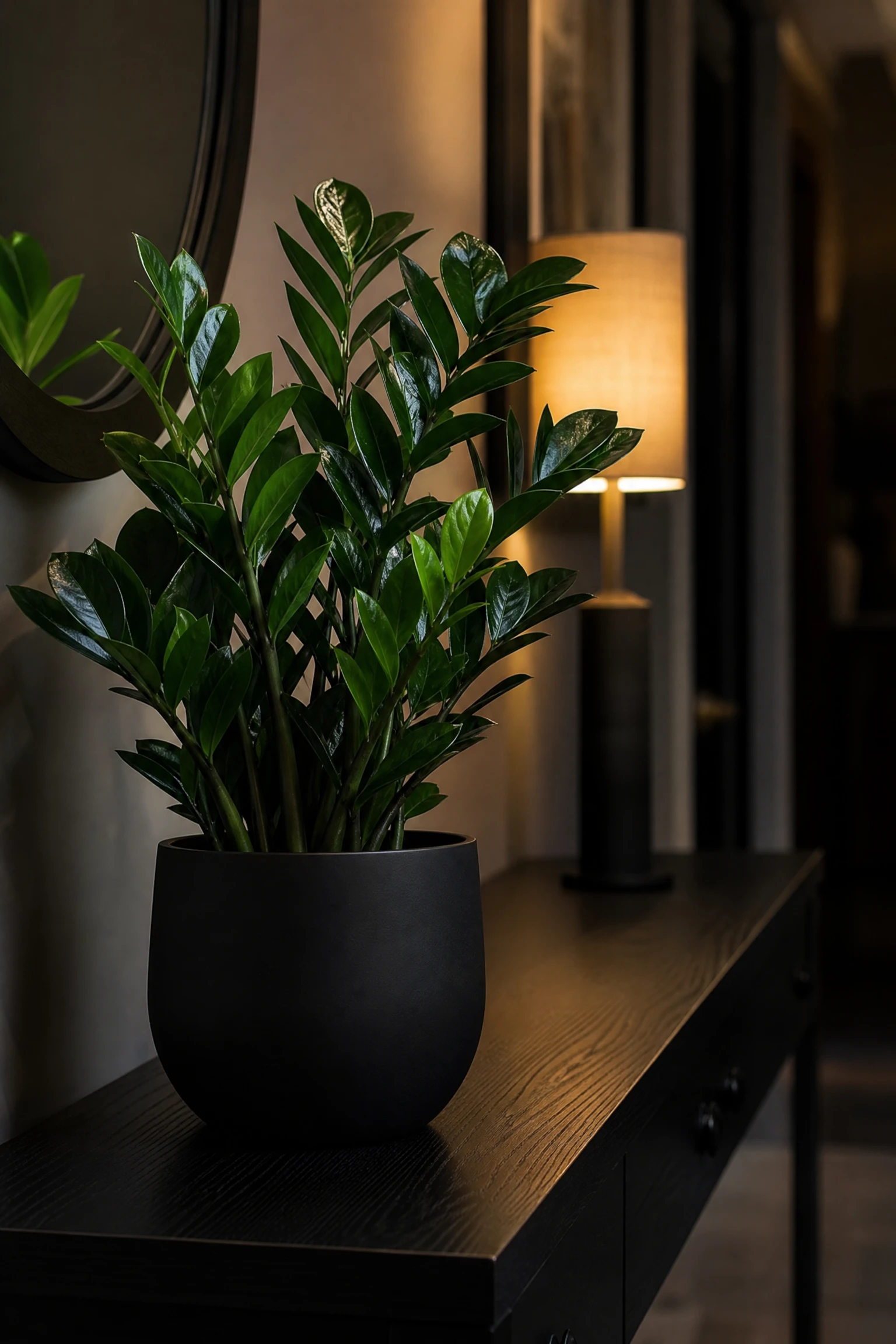
The ZZ plant has glossy, almost plastic-looking leaves that bounce light around a room, which makes it one of the best options for a dark corner that needs some visual energy. It grows from a thick rhizome that stores water, so in practice this plant comes together best when you treat watering as a once-a-month task rather than a weekly ritual. Pair it with a matte black or warm terracotta pot to play up the contrast between the leaves and the container, since the glossy foliage already does a lot of visual work on its own. It’s a favorite in offices and lobbies for a reason, professional designers lean on it constantly for low-maintenance greenery in commercial spaces. Just know that every part of this plant is mildly toxic if chewed, so keep it away from pets or curious toddlers.
Pothos
Pothos is the plant equivalent of a reliable friend, heart-shaped leaves in green, golden, or marble patterns that tolerate low light, irregular watering, and a fair amount of neglect. I like training it along a shelf edge or up a small trellis instead of letting it dangle, since the climbing look adds height and visual weight to an empty wall without taking up floor space. It thrives in medium light but will hang on in dimmer spots, just expect slower growth and less variegation the further it sits from a window. A common mistake people make is overwatering out of guilt, when in reality letting the top two inches of soil dry out between waterings is exactly what this plant wants. Budget-wise, pothos cuttings root easily in a glass of water, so one plant can become five for free over a few months.

Cast Iron Plant
Cast iron plant earns its name honestly, it tolerates dust, dim light, temperature swings, and irregular care better than almost anything else you can bring indoors. The deep green, slightly glossy leaves have a classic, almost old-world look that suits traditional and Japandi spaces equally well, especially in a simple stoneware pot with no pattern to compete with the foliage. This is a slow grower, so don’t expect dramatic change month to month, but that also means it rarely outgrows its spot the way a monstera or rubber plant eventually will. It’s an honest pick for anyone who wants greenery in a stairwell or hallway with almost no natural light at all. The tradeoff is that it’s not a fast or showy plant, so if you want quick visual payoff, this isn’t the one.

Peace Lily
Peace lily gives you something most hard-to-kill plants don’t, an actual flower, with elegant white blooms rising above dark, glossy leaves that thrive in low to medium indirect light. What makes it especially forgiving is that it tells you exactly when it’s thirsty by drooping dramatically, then perks back up within hours of watering, which takes the guesswork out completely. It also does real work cleaning indoor air, which is a nice bonus if you’re styling a bedroom or home office where air quality actually matters. Place it in a simple white or stone-colored planter to let the white blooms be the visual focal point in a neutral room. One honest caveat, the leaves and flowers are toxic if ingested, so this one is best kept away from homes with plant-chewing pets.

Drought-Proof Survivors for People Who Forget to Water
Aloe Vera
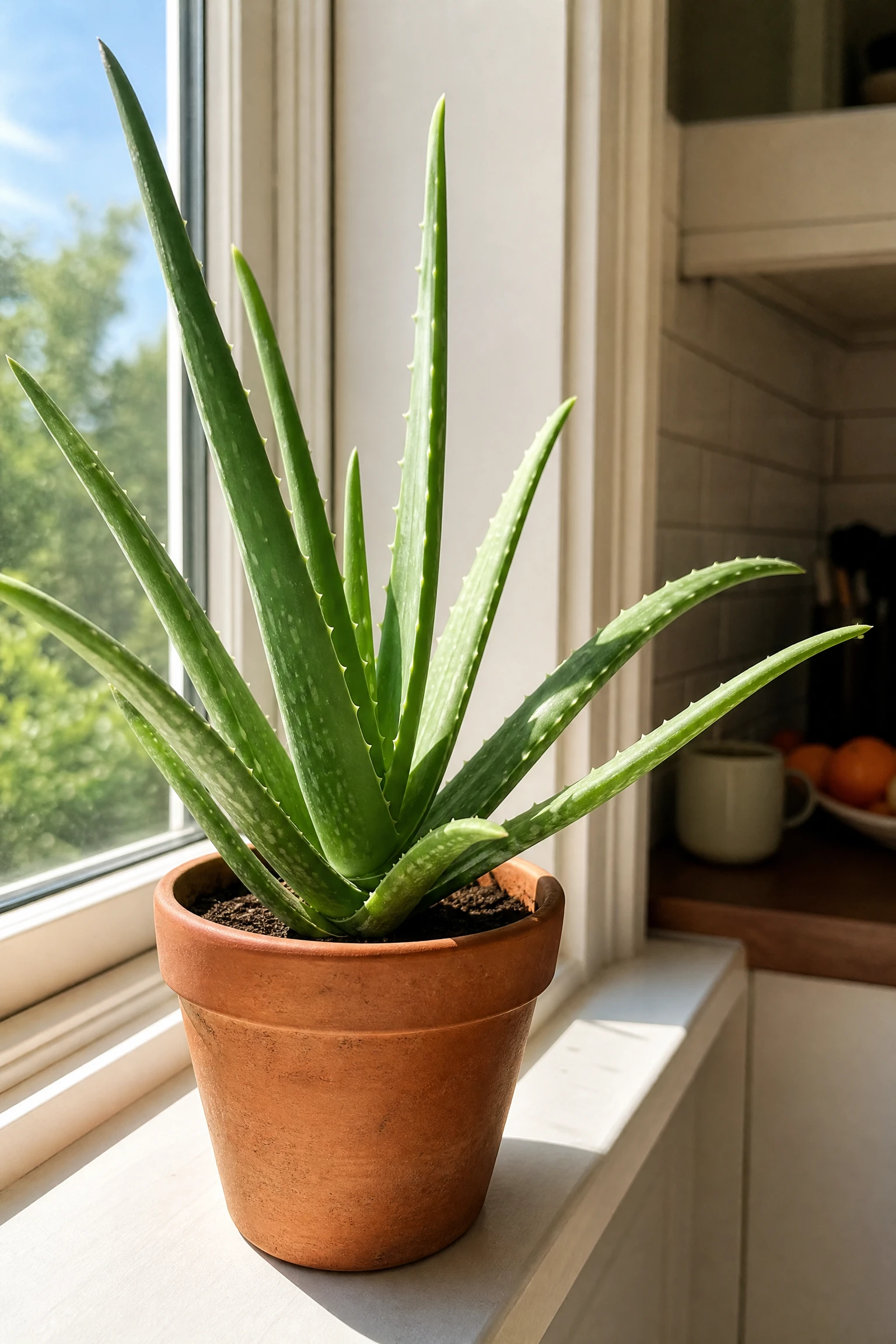
Aloe vera stores water in its thick, fleshy leaves, which means it can go two to three weeks between waterings without any visible stress, making it ideal for a sunny kitchen windowsill that often gets ignored. The structural, spiky silhouette adds texture to a room full of softer, rounder furniture, and it looks especially good in a simple unglazed terracotta pot that lets excess moisture evaporate. Beyond looking good, it’s genuinely useful, you can snap off a leaf and use the gel inside for minor burns or dry skin, which is a nice bit of function alongside the decor. It needs a south or west-facing window with several hours of direct sun daily to really thrive and avoid getting leggy. The biggest mistake people make is keeping it in a decorative pot with no drainage hole, which traps water and rots the roots within weeks.
Jade Plant
Jade plant has thick, rounded, almost coin-shaped leaves on woody stems that genuinely look more like a small sculpture than a houseplant, especially as it matures into a tree-like shape over several years. It’s a succulent at heart, so it wants bright light and very infrequent watering, think every two to three weeks depending on the season. In practice, this look comes together best on a sunny desk or console table where its slow, deliberate growth can be appreciated up close rather than lost in a busy plant grouping. Many cultures also treat jade plant as a symbol of good luck and prosperity, which makes it a popular gift for new homeowners. It’s an affordable, widely available plant, so it’s an easy low-cost way to add a sculptural element without spending much at all.

String of Pearls
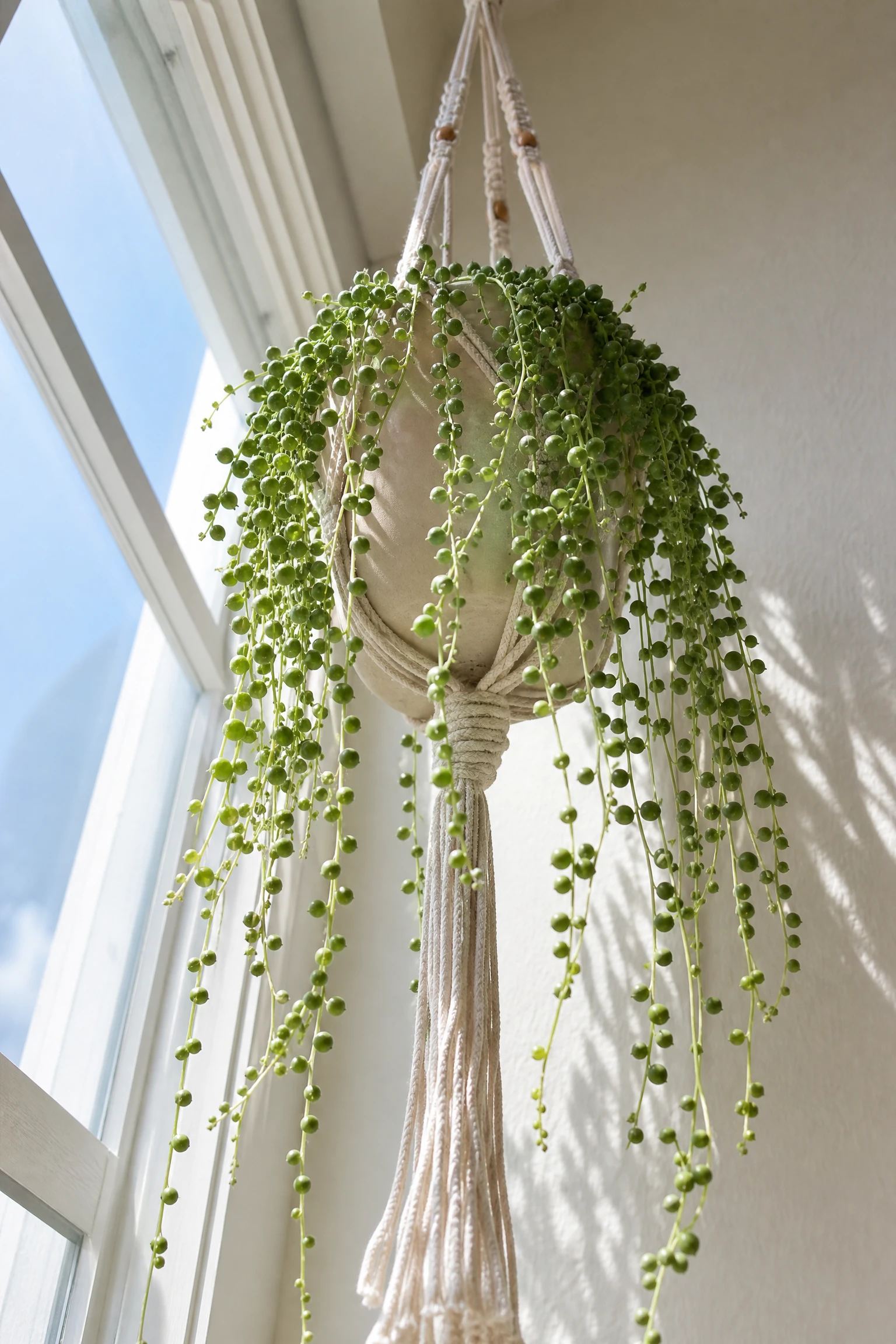
String of pearls has round, bead-like leaves that cascade over the edge of a pot, creating a textural, almost whimsical look that works beautifully on a high shelf or in a hanging macrame holder near a bright window. It needs cactus or succulent soil with excellent drainage and should dry out completely between waterings, since these plants are far more likely to die from too much water than too little. This is a trend that’s become hugely popular on design blogs and shelfie photos over the past few years, though it does require more humidity stability than some of the other plants on this list and can struggle in very dry, overheated apartments in winter. A quick tip that helps here is to keep it away from heating vents, which dry it out faster than expected. It’s an investment-level plant if you buy a large, mature one, but easy to propagate cheaply from cuttings.
Ponytail Palm
Despite the name, ponytail palm isn’t a true palm at all, it’s part of the agave family with a bulbous trunk that stores water and long, fountain-like leaves that spill outward in a dramatic arc. It thrives in bright, indirect light and is genuinely forgiving if you forget to water it for two to three weeks, suffering far more from overwatering than from neglect. The sculptural trunk and cascading leaves give it real visual weight, so it works well as a single statement piece in a reading nook rather than getting lost among other plants. One thing I’ve noticed firsthand is that these plants are remarkably long-lived, often outliving the furniture around them by decades with almost no real maintenance. Keep direct, scorching afternoon sun off the leaf tips though, since they can burn if the light is too intense for too long.

Haworthia
Haworthia is a small succulent with thick, striped or translucent leaves arranged in a tight rosette, and it’s perfectly sized for a windowsill, bathroom shelf, or desk where larger plants simply wouldn’t fit. It tolerates bright indirect light better than harsh direct sun, which actually makes it more flexible indoors than some other succulents that demand a full south-facing window. Watering once every two to three weeks is plenty, and letting the soil dry out completely between waterings mimics its native rocky, arid habitat closely. Grouped in odd numbers in small matching pots, haworthia creates a tidy, collected look on a narrow ledge without taking up much visual or physical space. It’s an affordable, beginner-friendly succulent, and its compact size makes it one of the easiest plants on this list to fit into a small apartment.

Pet-Friendly Plants That Still Don’t Need Babying
Calathea
Calathea is grown for its leaves rather than flowers, with bold patterns in green, pink, and cream that fold up at night in a movement called nyctinasty, which is a fun detail to point out to guests. It’s non-toxic to cats and dogs, making it a safe choice for a living room where pets roam freely, though it does ask for more consistent humidity and moisture than most plants on this list. A common mistake is letting the soil dry out completely, which causes the dramatic leaves to curl and brown at the edges fairly quickly. Misting a few times a week or placing it near a humidifier helps it hold onto that crisp, painted look that makes it such a popular feature plant in styled interiors. It’s a slightly higher-maintenance pick here, so go in knowing it needs a bit more attention than the others on this list.

Boston Fern
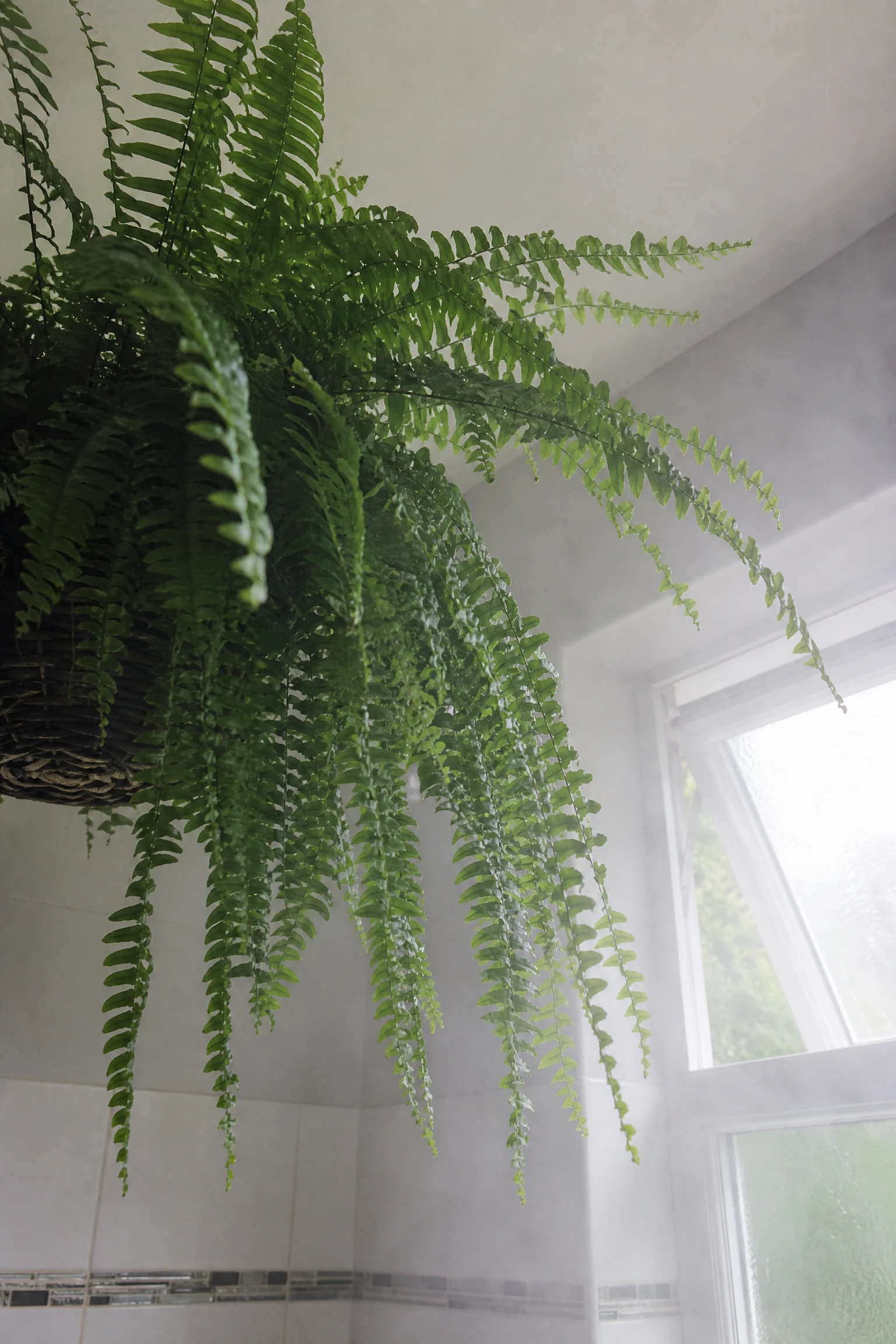
Boston fern brings a soft, lacy texture that balances out a room full of hard furniture lines, and despite its delicate appearance, it’s genuinely tougher than people expect once it’s settled into the right spot. It’s non-toxic to pets and prefers medium, indirect light with consistently moist but not soggy soil, which makes a bathroom with a window an almost perfect home for it. The humidity from regular showers does a lot of the work for you, In a real home this is one of the lowest-effort ferns you can grow if you place it correctly from the start. A hanging basket lets the fronds drape naturally, softening a hard corner near a window in a way that structural plants simply can’t replicate. The honest tradeoff is that it dislikes dry indoor heat in winter, so it may need occasional misting during colder months.
Areca Palm
Areca palm has feathery, arching fronds that bring a relaxed, almost resort-like feel to a room, and it’s one of the few larger statement plants that’s completely safe for homes with cats and dogs. It wants bright, indirect light and regular watering, letting the top inch of soil dry between sessions, and it rewards consistency with genuinely fast growth compared to other plants its size. Placed in a corner near a large window, it does a great job softening hard architectural lines and filling empty vertical space that would otherwise feel bare. One practical note, areca palm can be a bit fussy about water quality, browning at the leaf tips if your tap water is heavy with minerals, so filtered or rain water helps if you notice that happening. It’s a mid-range investment compared to the smaller plants on this list, but it delivers a lot of visual presence for the price.

Spider Plant
Spider plant is about as forgiving as houseplants get, tolerating a wide range of light conditions and irregular watering while still producing long, arching leaves and little plantlets called spiderettes that dangle like decorations on their own. It’s non-toxic to pets, which combined with its toughness makes it a frequent recommendation for first-time plant owners with curious cats. The only real things to watch for are overwatering, which causes root rot, and letting it dry out completely too often, which browns the leaf tips. A hanging basket near a bright window lets the spiderettes cascade dramatically, and you can snip them off to propagate new plants for free, which is a genuinely satisfying, budget-friendly way to fill out a room over time. It’s hard to find a more reliable beginner plant anywhere on this entire list.

Big, Bold Statement Plants That Forgive a Lot
Rubber Plant
Rubber plant has large, glossy, deep green or burgundy leaves that catch light beautifully, and a single well-placed specimen can act as the focal point of an entire room without any other decor needed. It tolerates a range of light from medium to bright indirect, and it can handle a missed watering or two since its thick leaves store some moisture, though it does prefer a more consistent schedule than a true succulent. Wiping the leaves down with a damp cloth every few weeks keeps that signature glossy look and also helps the plant photosynthesize more efficiently, a small habit that genuinely pays off over time. It works particularly well in mid-century modern or minimalist spaces where its bold, simple leaf shape doesn’t compete with busy patterns elsewhere. Be aware it can grow quite tall over the years, so give it room to stretch before it ends up crowding a doorway.

Monstera Deliciosa
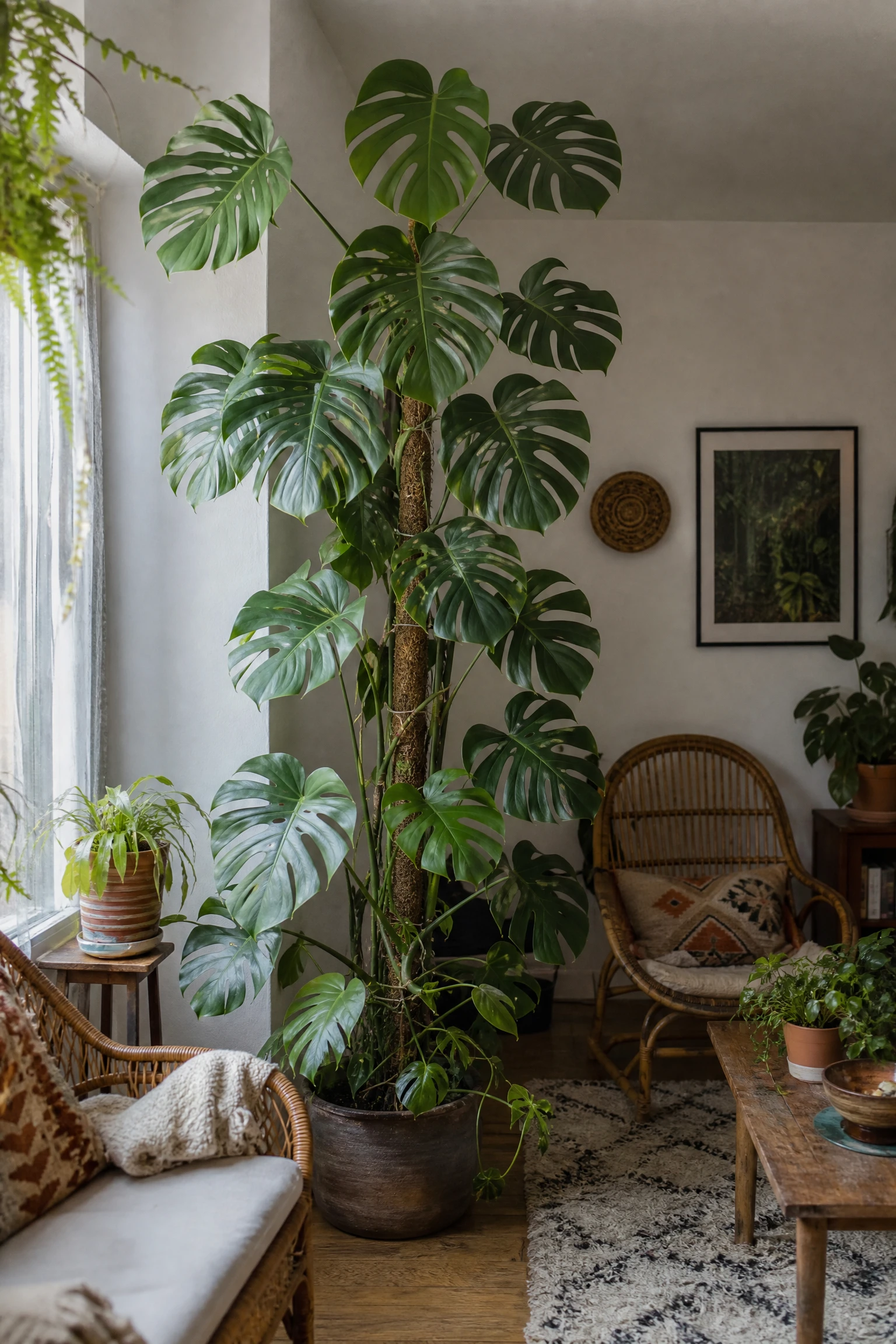
Monstera deliciosa, with its iconic split leaves, has become something of a design world icon over the past decade, featured constantly in interior magazines and on design blogs for good reason. It wants bright, indirect light and regular watering once the top couple inches of soil dry out, and while it’s more demanding than a snake plant, it’s still remarkably tolerant of an occasional missed week. One thing that works really well here is giving it a moss pole to climb, since the plant develops larger, more dramatically split leaves when it has vertical support to grow against. It pairs beautifully with rattan or wood furniture in a Japandi or bohemian-leaning room, where its organic shape softens cleaner architectural lines. The honest limitation is size, a mature monstera needs real floor space and a fairly tall ceiling, so it’s not the right pick for a small studio apartment.
Bird of Paradise
Bird of paradise brings dramatic, banana-like leaves on tall stems that genuinely transform a room into something resembling a boutique hotel lobby, and it’s a favorite among professional designers for exactly that reason. It needs the brightest light you can offer indoors, ideally a south-facing window with several hours of direct sun, and it will tell you when it’s unhappy by producing smaller, less impressive leaves. Watering once the top inch or two of soil dries out works well, and this plant can tolerate a missed watering here and there without major drama once it’s established. In practice, this plant comes together best as a true solo statement piece, since its scale and visual weight tend to overpower a room if combined with too many other large plants. Be honest with yourself about your light situation before buying one, it’s the one plant on this list that genuinely won’t thrive in a dim room no matter how forgiving you try to be with everything else.

Fiddle Leaf Fig
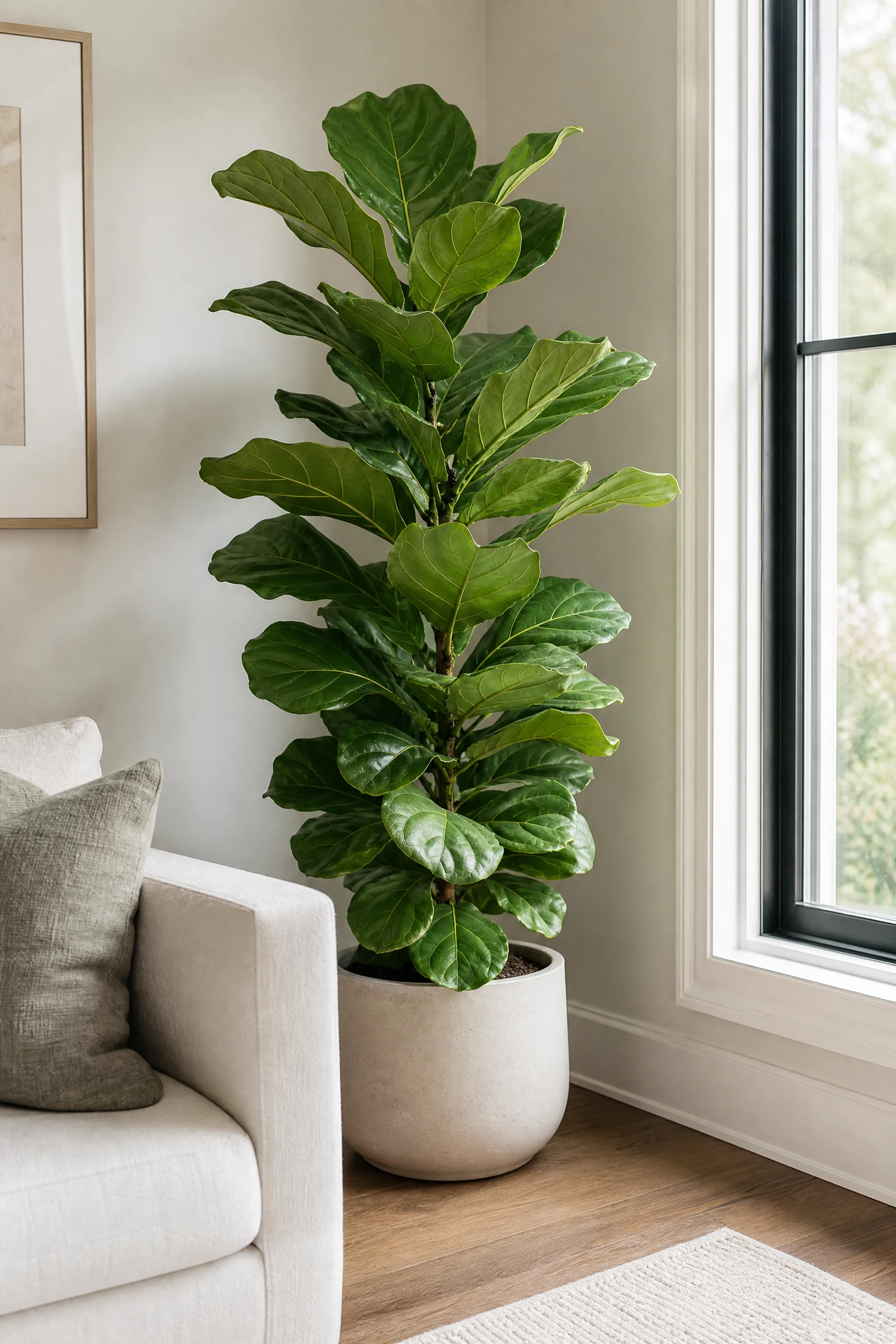
Fiddle leaf fig has a reputation for being finicky, and I won’t pretend otherwise, but once you understand what it actually wants, it becomes far more manageable than its reputation suggests. It needs bright, consistent indirect light and dislikes being moved or rotated frequently, so once you find a good spot near a window, leave it there rather than chasing the best angle for photos. Watering when the top two inches of soil are dry, then giving it a thorough soak, mimics its natural rainfall pattern far better than frequent light sprinkles ever could. Its large, violin-shaped leaves give a room serious visual height and impact, which is exactly why it shows up in nearly every high-end interior design feature you’ve ever scrolled past. I’ll be honest, this is the riskiest pick on this entire list, so only choose it if you’re genuinely willing to learn its specific quirks rather than treating it like the other truly hands-off plants here.
Trailing and Hanging Plants for Effortless Greenery
Heartleaf Philodendron
Heartleaf philodendron has small, glossy, heart-shaped leaves on vines that grow quickly and tolerate a wide range of light, from medium indirect to slightly dimmer corners further from a window. It’s one of the fastest-growing plants on this list, so a hanging basket fills out impressively within just a few months, giving you a lush look without years of patient waiting. Letting the soil dry out between waterings actually encourages healthier growth than keeping it constantly moist, which is a common mistake new owners make out of overcaring. Draped over a bookshelf or trailing down from a high mounted shelf, it softens hard edges and adds movement to an otherwise static wall. It’s an affordable plant that propagates easily in water, so a single starter plant can multiply into several more for free within a year.

String of Hearts
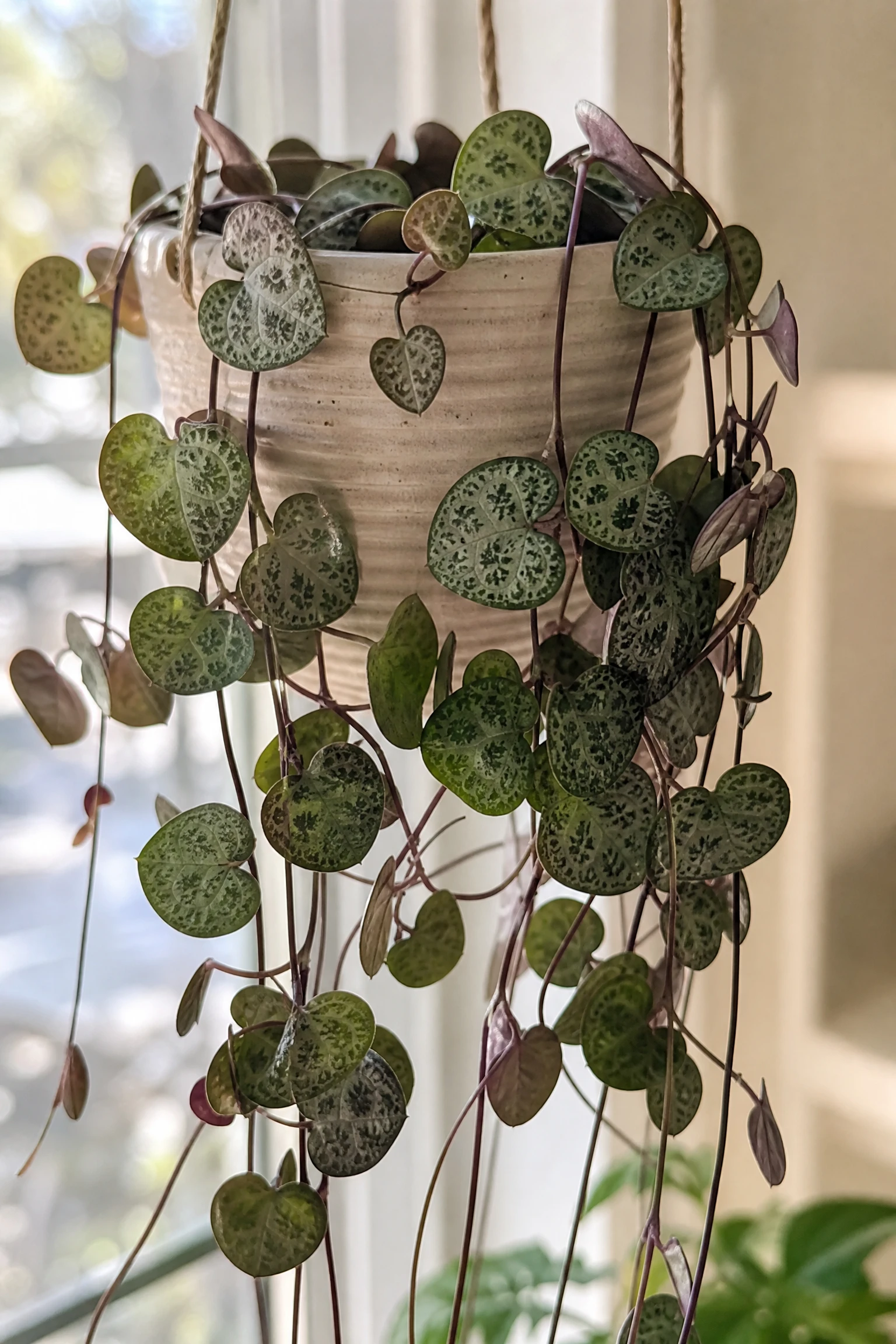
String of hearts has delicate, heart-shaped leaves with a marbled, almost painted pattern strung along thin trailing vines that can grow several feet long over time. It’s a true succulent, so it wants bright light and infrequent watering, drying out completely between sessions, which makes it perfect for someone who travels often and can’t water weekly. A quick tip that makes a real difference here is potting it in a hanging container at eye level or above, since the delicate vines are easy to overlook and even easier to accidentally snap if placed somewhere people brush past. It’s become a favorite among plant stylists for its romantic, slightly whimsical look in boho and eclectic spaces. The investment is fairly low for a starter plant, though larger, fuller specimens with long established vines do command a higher price.
English Ivy
English ivy has classic lobed leaves, sometimes solid green and sometimes variegated with cream edges, that create a romantic, old-world look as they trail down a shelf or climb a small trellis indoors. It does genuine work purifying indoor air and can reduce airborne particles when grown in enough quantity, which is a nice practical bonus alongside the visual appeal. It prefers medium to bright indirect light and consistently moist soil, watering more frequently than most plants on this list, though it will tell you it’s thirsty through drooping leaves well before any real damage occurs. One honest limitation, English ivy is toxic if ingested and considered invasive outdoors in many regions, so it should stay potted indoors and kept away from pets that like to chew on greenery. It’s an affordable, widely available plant that propagates easily from cuttings rooted directly in water.

Grape Ivy
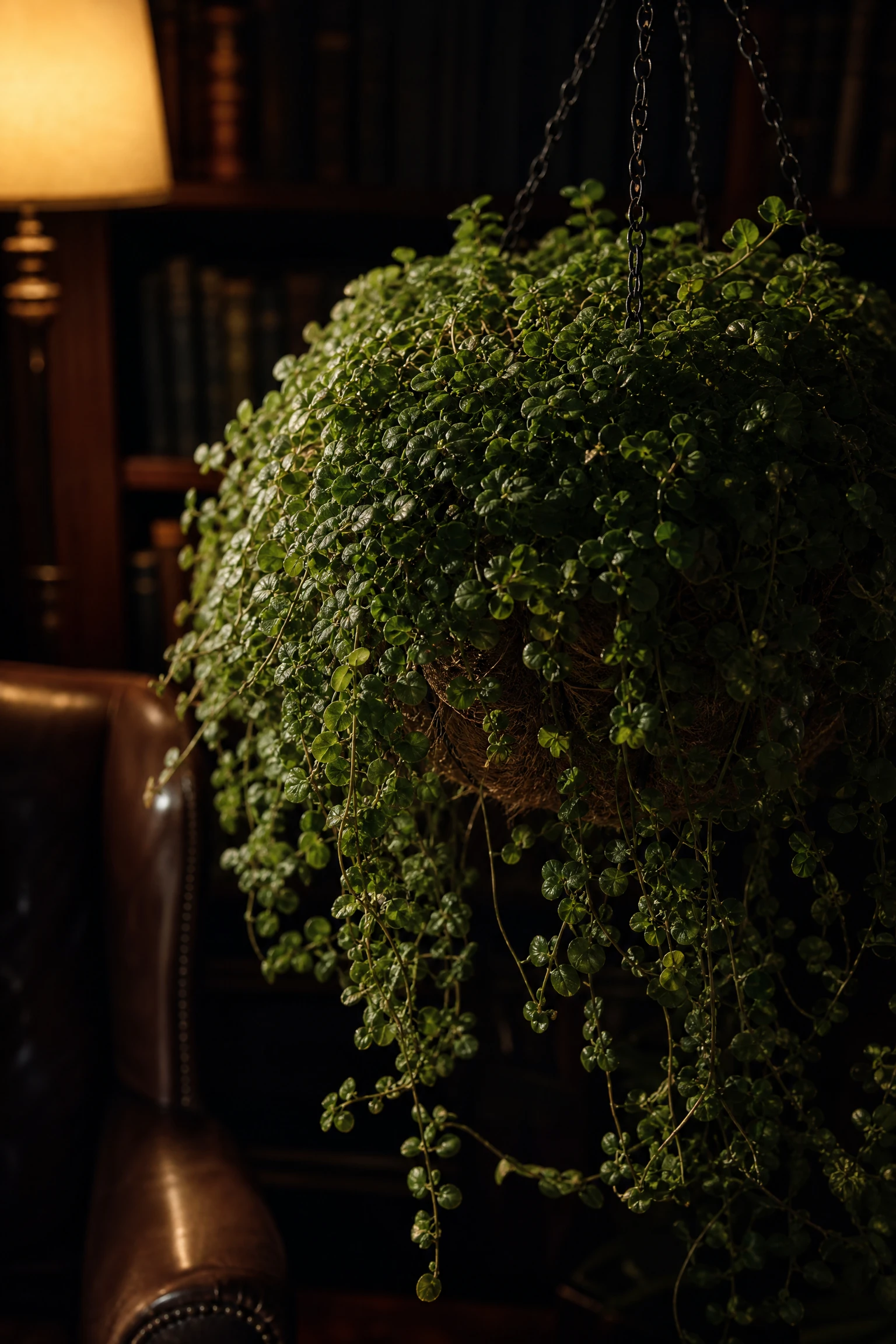
Grape ivy has glossy, slightly serrated leaflets that grow in a lush, mounded shape when trained in a hanging basket, and it tolerates lower light better than true ivy varieties, making it a smart pick for a moodier, dimmer room. Letting the soil dry out between waterings suits it well, and it’s genuinely difficult to kill once it’s settled into a stable spot away from cold drafts. Occasional pruning keeps the vines, which can stretch several feet long, looking neat and tidy rather than sprawling out of control across a shelf. It’s not as common in nurseries as pothos or philodendron, so it may take a bit more searching to track one down, but the slightly different texture is worth the hunt for anyone wanting something a touch less expected. It’s a budget-friendly plant once you find it, with no special soil or fertilizer requirements beyond what you’d already have for a typical houseplant.
Marble Queen Pothos
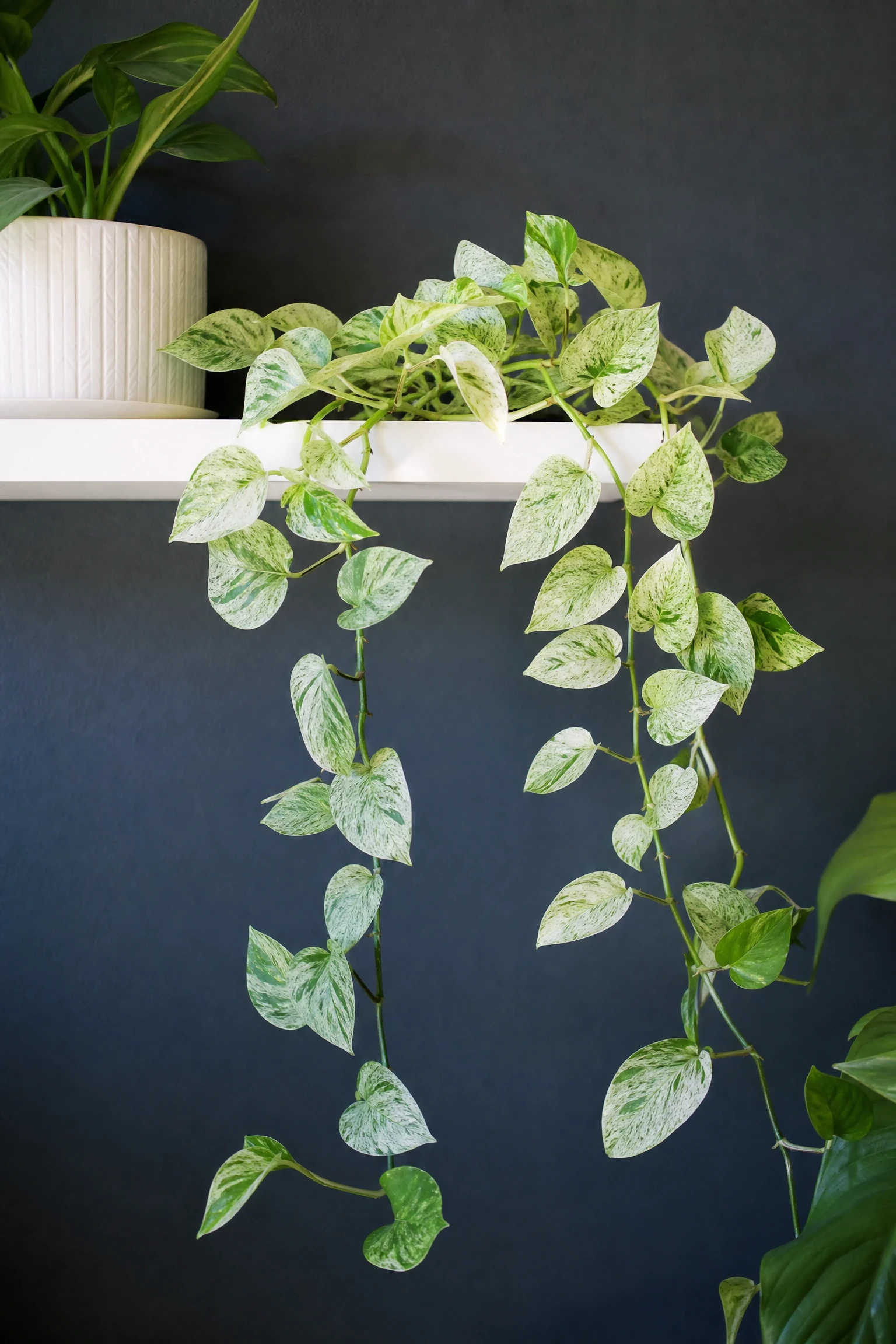
Marble Queen pothos deserves its own spot separate from standard pothos because the white and green marbled variegation genuinely changes how it reads in a space, feeling brighter and more decorative against a dark wall or moody paint color. It needs slightly more light than solid green pothos to maintain that strong variegation, since low light causes the white patches to fade back toward solid green over time. In actual use, this plant comes together best in a bright room with a hanging planter or a shelf where the vines can trail freely without obstruction. It tolerates missed waterings just as well as its plainer cousin, letting the soil dry out between sessions without any real drama. A small investment in a more mature, fuller plant pays off quickly, since the dramatic variegated trail makes a noticeable visual impact even from across the room.
Conclusion
Building a home full of plants doesn’t require a green thumb, it requires picking the right plants for your actual light, your actual schedule, and your actual pets, rather than whatever looked good on someone else’s shelf. Start with two or three from this list based on the room you’re decorating first, a snake plant for that dark hallway, an aloe for the sunny kitchen sill, a pothos trailing off a bookshelf. Once those settle in and you see how forgiving they really are, it becomes much easier to expand without the anxiety that usually comes with bringing more greenery into a home. None of these plants demand perfection, they just want a reasonably consistent environment and a little patience while they adjust . Give them that, and you’ll end up with a home that feels genuinely alive and lived-in, without spending every weekend worrying about which plant is about to die on you next.
Frequently Asked Questions
What is the easiest indoor plant to keep alive?
Snake plant and ZZ plant are usually the top picks for true beginners, since both tolerate low light, irregular watering, and general neglect better than almost anything else available. They’re also widely available and inexpensive, so the stakes of experimenting feel lower.
How often should I water hard-to-kill houseplants?
Most of the plants on this list want their soil to dry out at least partially, often completely, between waterings, which usually works out to once every one to three weeks depending on the plant and the season. Overwatering is the more common killer than underwatering, so when in doubt, wait a few extra days.
Which of these plants are safe for homes with cats and dogs?
Calathea, Boston fern, areca palm, spider plant, and haworthia are all considered non-toxic to cats and dogs. Snake plant, pothos, ZZ plant, peace lily, and English ivy are mildly to moderately toxic if chewed, so keep those out of reach in pet households.
Can hard-to-kill plants still die from too much care?
Yes, and it’s actually the most common way people lose these particular plants. Overwatering causes root rot in nearly every plant on this list, so resisting the urge to water on a strict schedule and instead checking the soil first will keep them healthier longer.
Do low-maintenance plants still need fertilizer?
A light feeding once or twice during the growing season, roughly spring through early fall, is usually enough for most of these plants. They’re forgiving enough that skipping fertilizer entirely won’t kill them, it just may slow down new growth a bit.
What’s the best plant for a room with almost no natural light?
Cast iron plant and ZZ plant are the two most tolerant of genuinely dim conditions, including windowless hallways or interior bathrooms. Snake plant comes in a close third and adds more visual texture if you want something a bit more sculptural than the other two.