Farmhouse Dining Room Looks That Actually Feel Like Home
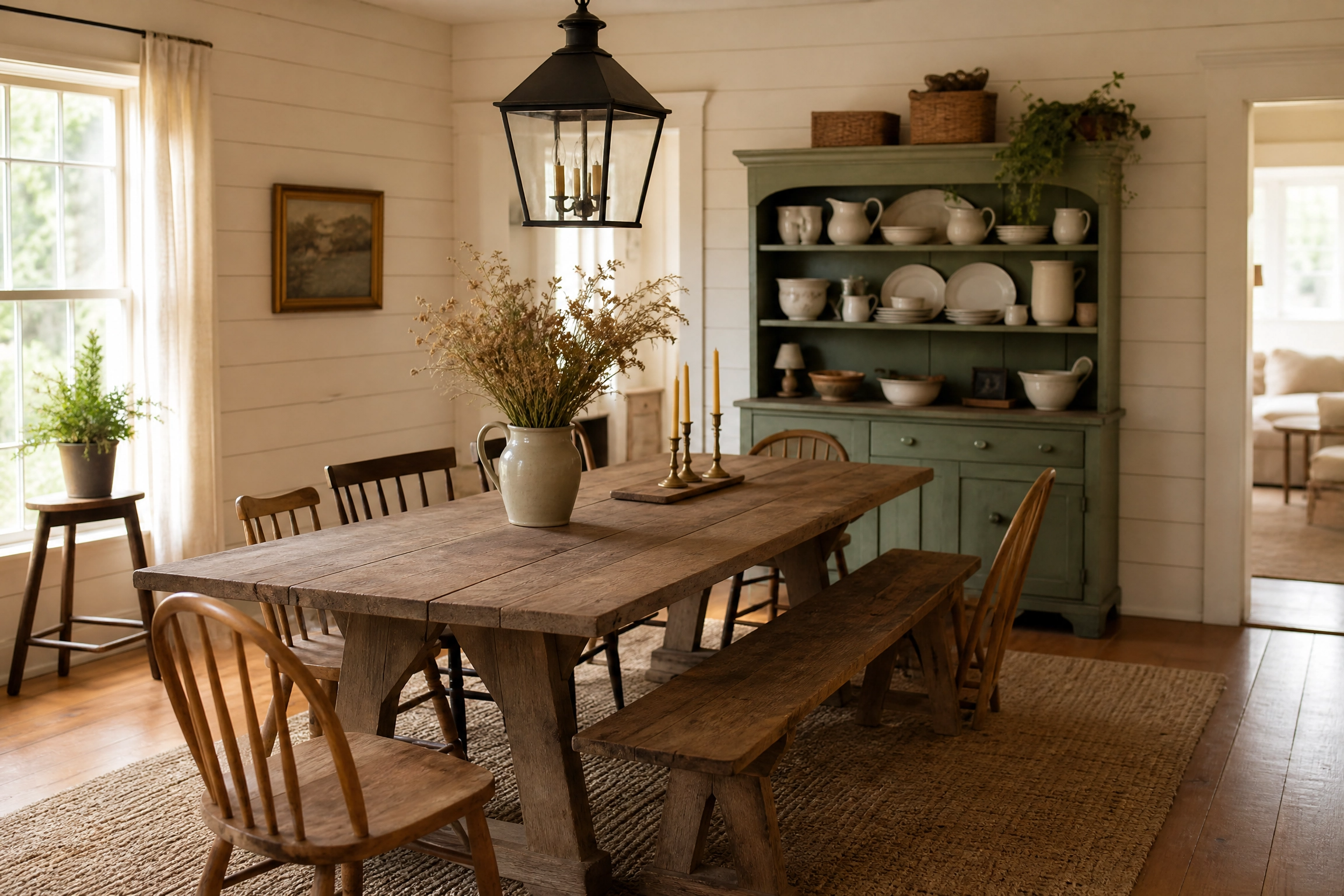
There is something really honest about a farmhouse dining room. It does not try to impress you with matched sets or pristine surfaces. Instead it pulls you in with worn wood, honest textures, and a table that looks like it has seen a hundred good meals. If you have been scrolling through images wondering how to get that warm, unpretentious look without it feeling like a catalog shoot, you are in the right place. The ideas here are grounded in how real people actually decorate and live, not just how rooms photograph.
Whether you are working with a small eat-in kitchen or a proper separate dining room, farmhouse style is one of the most flexible approaches you can take. It welcomes imperfection, rewards mixing old with new, and works with a surprisingly wide range of budgets. What follows are 23 distinct ideas organized by category so you can focus on the parts of your room you actually want to change first. Each one is specific enough to act on and honest enough to tell you when it works best and when it might not.
The Table and Seating: Where Farmhouse Style Starts
1. A Reclaimed Wood Trestle Table as the Room’s Anchor
The trestle table is probably the most recognized piece in farmhouse dining, and for good reason. Its heavy, plank-style top and open base feel rooted and purposeful without being fussy. When sourced from reclaimed wood, you get natural variations in grain, old nail holes, and slight color differences across the planks that give the table a story no new piece can replicate. Pair it with mismatched chairs in linen or natural cotton for seats, keep the walls light, and let the table carry the visual weight of the room. In practice, this look comes together best when you resist the urge to refinish or sand too aggressively. A light oiling preserves the patina while keeping the surface food-safe. This is an investment-level piece, often ranging from $800 to over $2,000, but it genuinely anchors every other decision you make in the room.
Designer Advice: Leave some of the natural imperfections in a reclaimed table. Knots, saw marks, and small cracks are what make it feel authentic rather than like a furniture store replica.
2. Mixed Seating: Bench on One Side, Chairs on the Other
One thing that works really well in a farmhouse dining room is the combination of a wooden bench on one long side of the table with proper chairs on the other. It reads as casual and communal, which is exactly the spirit of farmhouse style, and it is also deeply practical for families because a bench fits more people than individual chairs ever will. Stick to a bench in natural oak or pine and choose chairs in a contrasting material like cane, metal, or linen-upholstered wood to keep it from feeling too matchy. Honest limitation here: benches without backs can be uncomfortable for long dinners, so consider a bench with a low back if your meals tend to run long. Budget-wise, benches are often more affordable than full chair sets, making this a smart choice for those watching costs.
Designer Advice: Keep the bench on the window or wall side of the table if possible. That way, seated guests have something to lean toward, and the open chair side gets the better light.

3. Windsor Chairs in a Dark Stain or Black Finish
Windsor chairs have been a staple of American farmhouse interiors since the 18th century, so their presence here is genuinely rooted in tradition rather than trend. Their spindle backs create a visual lightness that stops a dining room from feeling heavy, even when you have six or eight of them around the table. A dark walnut stain or painted black finish gives them modern contrast when placed against a white or off-white wall. One thing that works particularly well is mixing a black Windsor chair with a natural wood table because the contrast defines each piece without competing. These chairs are widely available and range from very affordable painted versions around $80 each to more considered solid wood options closer to $250. They also stack if storage is a concern.
Designer Advice: Avoid buying Windsor chairs in the same finish as your table. The contrast is the point. A black chair against a honey-toned oak table is far more interesting than a matching set.

4. Upholstered Host Chairs at the Table Heads
A subtle way to add warmth and a touch of considered design is to place upholstered chairs only at the two ends of the table while keeping the sides open to wooden or metal seating. In interior design this is often called defining the host position, and it gives the room a quiet hierarchy without feeling formal. For a farmhouse space, look for host chairs in natural linen, oatmeal cotton, or a simple stripe. The upholstery adds a soft texture that balances the harder surfaces of a wood table and stone or tile floors. One honest note: pale upholstery in a dining room where children eat regularly will require slipcovers or frequent spot cleaning. Washable cotton slipcovers are a practical solution and easy to find.
Designer Advice: If the host chairs feel too prominent at first, bring them together without the table and see how the fabric reads in your room’s light before committing. Dining chairs can rarely be returned once used.
Walls and Architectural Details That Do the Heavy Lifting
5. Shiplap Walls in a Warm White or Soft Cream
Shiplap has become so associated with modern farmhouse style that it is worth being clear about when it actually works well and when it tips into cliche. In a dining room, a single shiplap accent wall behind the table or buffet is genuinely effective because it adds texture and depth without consuming the whole room. Painting it in a warm white like Benjamin Moore White Dove or a soft cream rather than a stark bright white keeps it feeling like part of a real home rather than a set. The horizontal lines also make a narrow room feel wider, which is a practical bonus. Installation costs vary widely, from a DIY weekend project using pine boards and a nail gun to a professional installation that could run $1,500 or more. It is a worthwhile investment for a dining room that lacks any real architectural interest.
Designer Advice: Don’t shiplap every wall in the room. One well-chosen wall, especially the one your dining table sits in front of when photographed, creates a focal point. Four shiplap walls just feel like a log cabin.

6. Exposed Wood Ceiling Beams
Ceiling beams in a dining room do something no wall treatment can: they draw the eye up and make the room feel taller while also grounding the space with a sense of age and structure. In older homes these beams are often original and just need exposing, which can be done by a contractor who knows how to assess load-bearing versus decorative elements. In newer construction, faux beams made from lightweight polyurethane are a surprisingly convincing and affordable alternative, usually running $200 to $600 for a set. From a design standpoint, the beams work best when their tone connects to something else in the room, such as the table, a sideboard, or the floor. Going too dark with the beams in an already dark room can make the ceiling feel low, so keep that in mind if your ceilings are under nine feet.
Designer Advice: Stain or paint beams to match the warmest wood tone already present in your room. That visual connection is what makes them feel intentional rather than like an afterthought.

7. A Barn Door Leading Into the Dining Room
A sliding barn door on a black steel track is one of those elements that genuinely changes how a dining room feels because it introduces both texture and movement. In practice, it works best when the door itself is made from real reclaimed wood or at least a convincing wood-look finish, and the hardware is properly sized for the door weight. Barn doors are also a practical choice in homes where a swinging door takes up floor space that the dining table needs. One limitation worth knowing: a sliding barn door does not seal as completely as a hinged door, so if sound separation between the kitchen and dining room matters to you, it may not fully deliver. Budget-wise, a solid wood barn door with hardware typically starts around $400 and can climb well above $1,000 for custom pieces.
Designer Advice: Hang the door about two inches higher than the opening so the header hardware clears the frame cleanly. This small detail makes the installation look professional rather than DIY.

8. Board and Batten Wainscoting on the Lower Half of the Walls
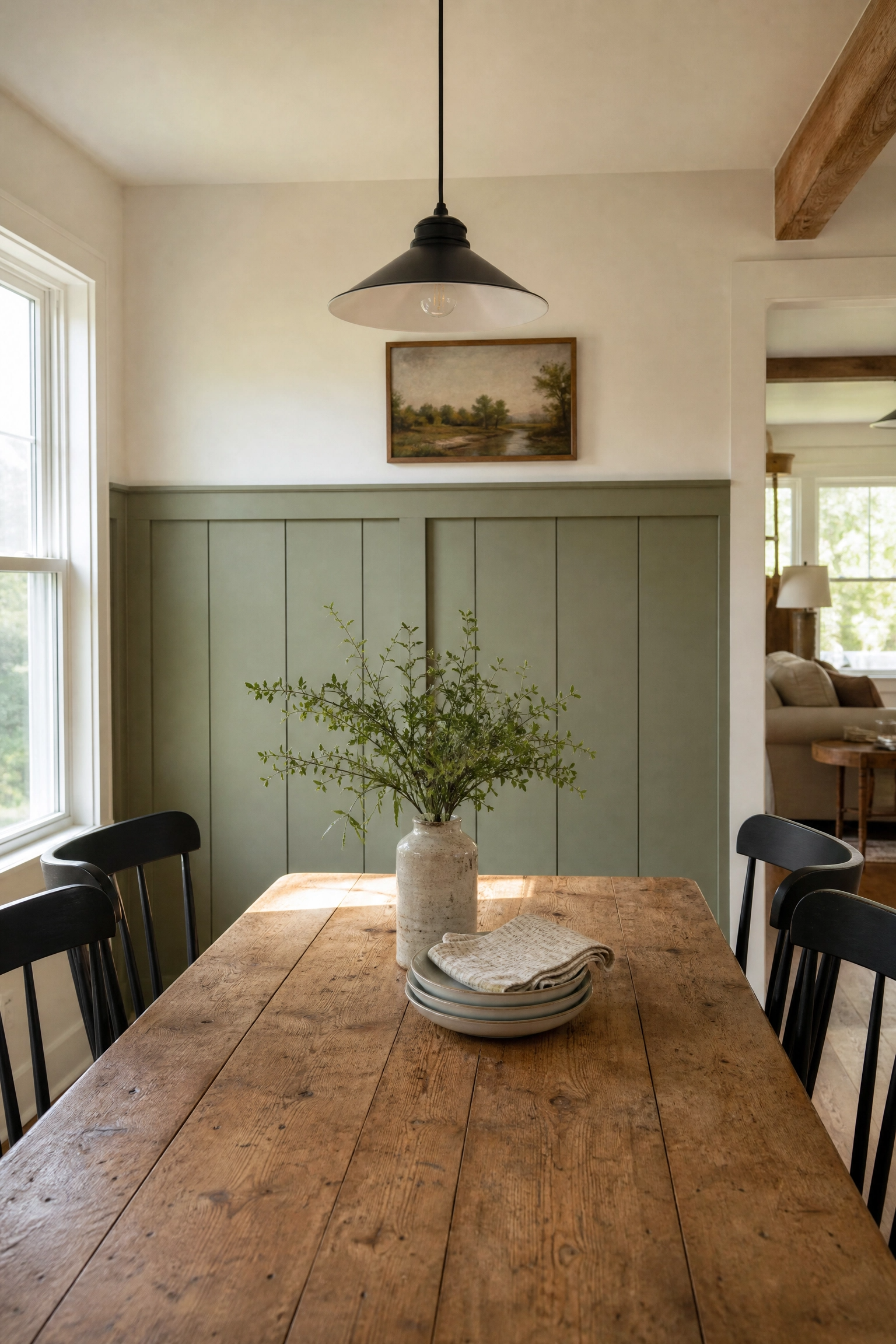
Board and batten is one of those architectural treatments that makes a dining room feel as though it has always had good bones, even if the house is a 1990s tract home. It adds depth to flat drywall walls, creates a natural visual break at chair rail height, and gives you a reason to use two tones in the room without it looking like an accident. A common approach is to paint the board and batten a soft sage, warm gray, or muted navy, then continue the wall above it in a lighter neutral. This color-blocked effect adds a grounded, layered quality that single-tone walls simply cannot achieve. The materials are inexpensive, mostly pine lattice strips and wood glue, and the project is manageable for a confident DIYer over a weekend.
Designer Advice: Keep the batten itself at 42 to 48 inches high rather than the standard 32-inch chair rail height. The taller proportion feels more considered and suits dining rooms with standard eight-foot ceilings well.
Lighting That Changes the Whole Mood
9. A Large Lantern-Style Pendant Over the Table
The pendant light over a farmhouse dining table is probably the single most impactful decision you make in the room, and the lantern style, specifically a black metal cage lantern, is one that consistently reads as both authentic and current. It references the iron and glass lanterns historically used in farmhouse entryways and kitchens, but scaled up it becomes a genuine statement piece. In practice, hang it so the bottom of the fixture sits about 30 to 34 inches above the tabletop when measured from the surface. Going too high makes it feel disconnected from the table; going too low interrupts sightlines during conversation. These pendants are widely available at a range of price points, from $150 at big box retailers to over $600 from specialty lighting brands.
Designer Advice: If you have an 8-foot ceiling, stick to a pendant no taller than 20 inches to avoid the fixture dominating the room. For 9-foot and higher ceilings, you have much more flexibility with oversized designs.

10. A Wrought Iron Chandelier with Candelabra Bulbs
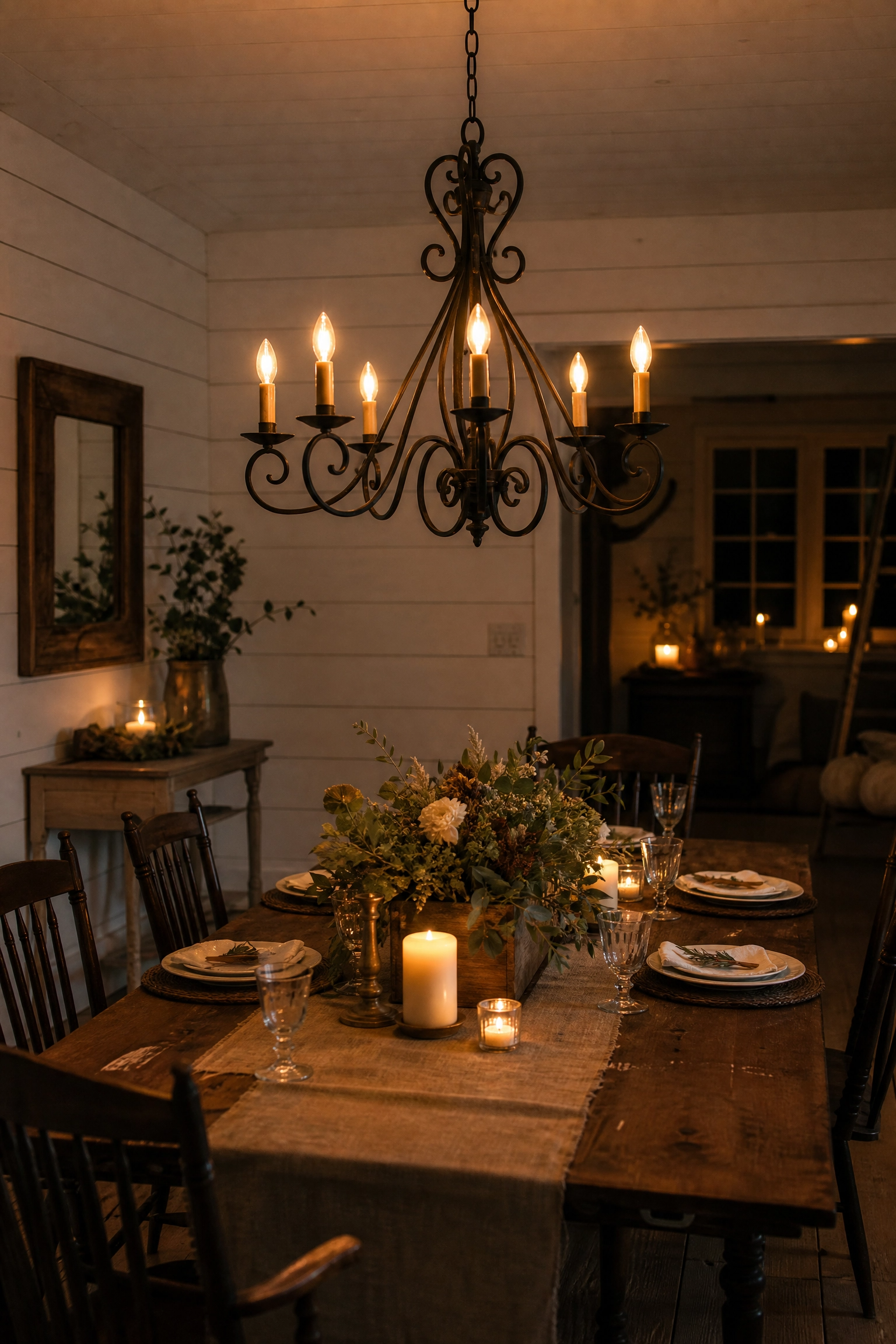
A wrought iron or blackened steel chandelier fitted with candelabra-style bulbs adds a layer of drama that a single pendant rarely achieves. This is one of those lighting choices that professional designers often recommend for farmhouse dining rooms because it introduces layered light rather than a single point source, meaning the room feels more dynamic and naturally lit. The candelabra bulbs, particularly warm Edison-style options around 2200K, produce a glow that makes every meal feel a little more considered. When choosing a chandelier for this style, look for clean, angular ironwork without scrolled or overly ornate details, which can push the look toward Mediterranean or gothic rather than true farmhouse. Be honest about size: a chandelier that is too small for the table looks timid, so aim for a fixture that is roughly two-thirds the width of your table.
Designer Advice: Swap standard bulbs for warm-toned LED candelabra bulbs around 2200K to 2700K. They cut energy use without sacrificing that soft, amber farmhouse glow that makes the room feel welcoming after dark.
11. Wall Sconces for Ambient Layering
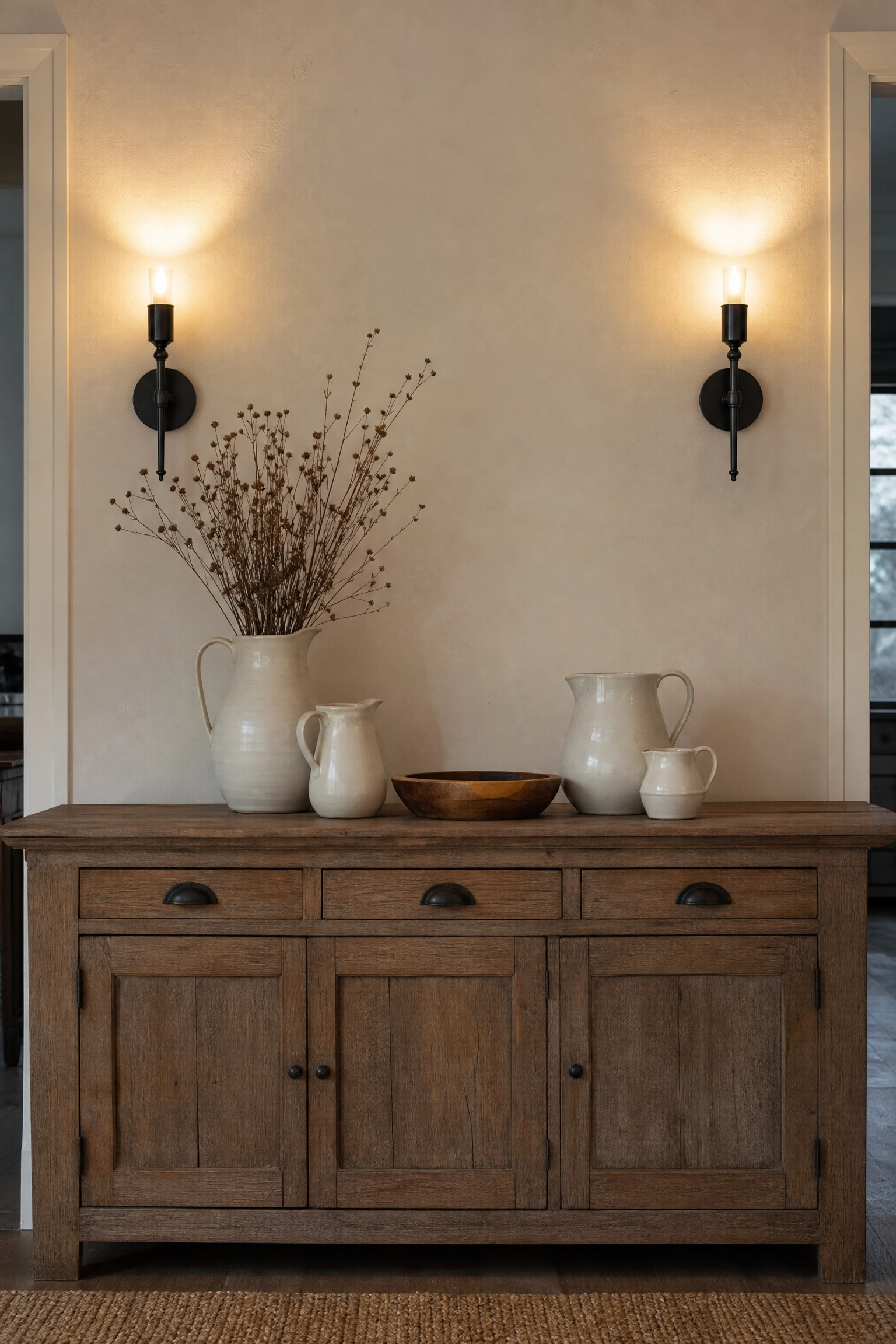
One thing that separates a truly considered dining room from one that just has a nice overhead fixture is the use of supplemental wall lighting. Sconces on either side of a buffet, hutch, or window add ambient light that softens the edges of the room and reduces the harsh contrast between a bright overhead fixture and dark corners. For a farmhouse dining room, look for sconces in a brushed black or aged bronze finish with a simple geometric shade or exposed bulb design. These do not need to be hardwired if you are renting or not ready for an electrician. Plug-in sconces with cord covers are widely available and genuinely convincing once installed. Budget-wise, a good pair of sconces typically runs $80 to $250, and the difference they make to the evening atmosphere in the room is meaningful.
Designer Advice: Mount sconces at about 60 to 66 inches from the floor, which places them at or just above seated eye level when guests are at the table. This keeps the light soft and flattering rather than glaring.
Storage, Display, and Functional Pieces
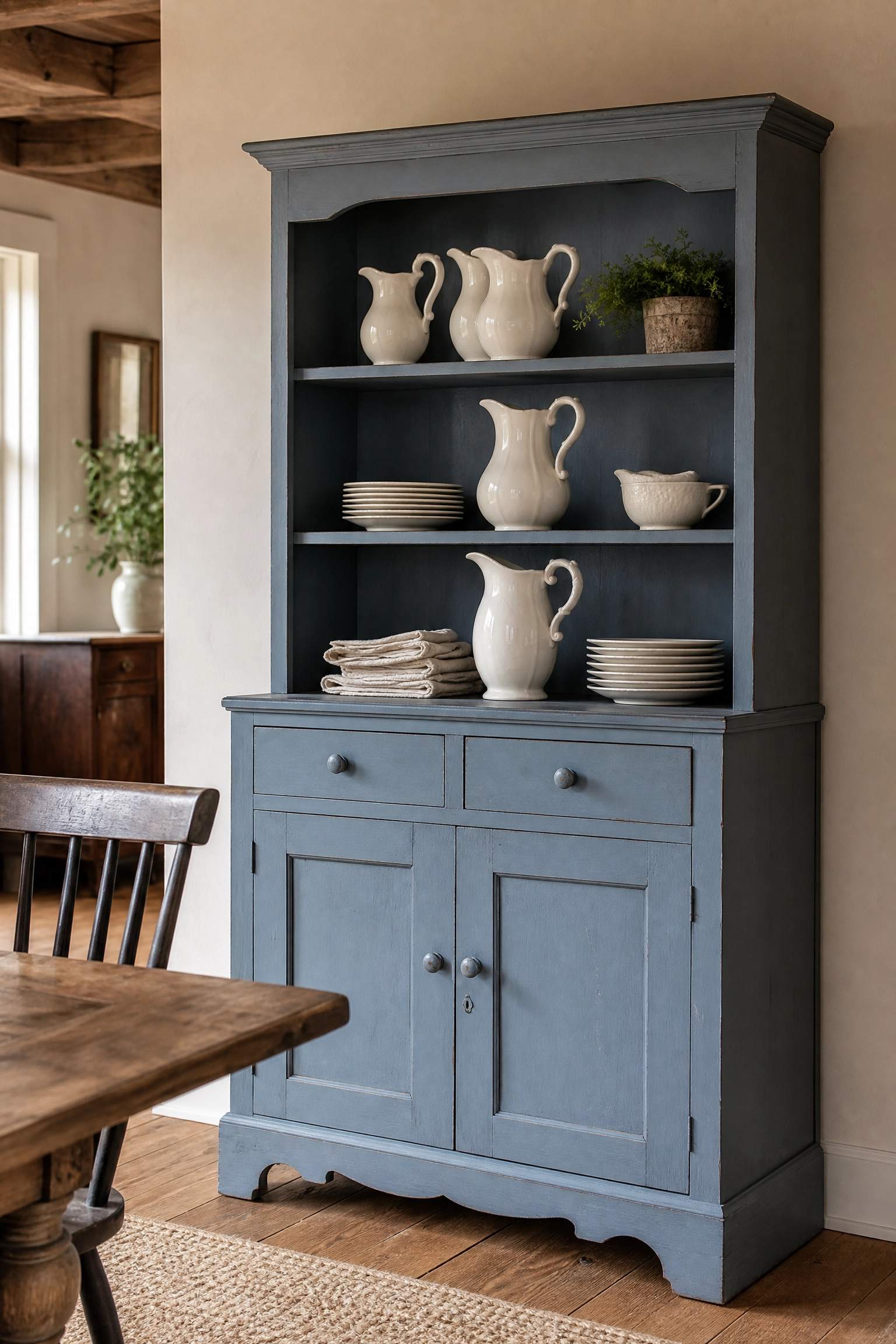
12. A Painted Hutch or China Cabinet in a Muted Color
A hutch or china cabinet is one of the most practical pieces you can bring into a farmhouse dining room, and it is also one of the easiest ways to introduce a secondary color without painting a whole wall. In practice, a hutch painted in a muted sage green, dusty blue, or warm terracotta becomes the room’s personality anchor. You can display everyday dishes, vintage pitchers, small plants, or a collection of ironstone without it looking cluttered as long as you leave some breathing room on each shelf. Honest note: if you are buying a hutch to paint, look for solid wood pieces at estate sales or thrift stores rather than particle board, which does not hold paint or hardware well over time. The combination of good bones and a fresh coat of chalk paint is one of the best budget moves in farmhouse decor.
Designer Advice: Style hutch shelves in odd numbers. A grouping of three pitchers, five small plates, or seven jars has a more natural, collected look than even pairs, which tend to read as staged.
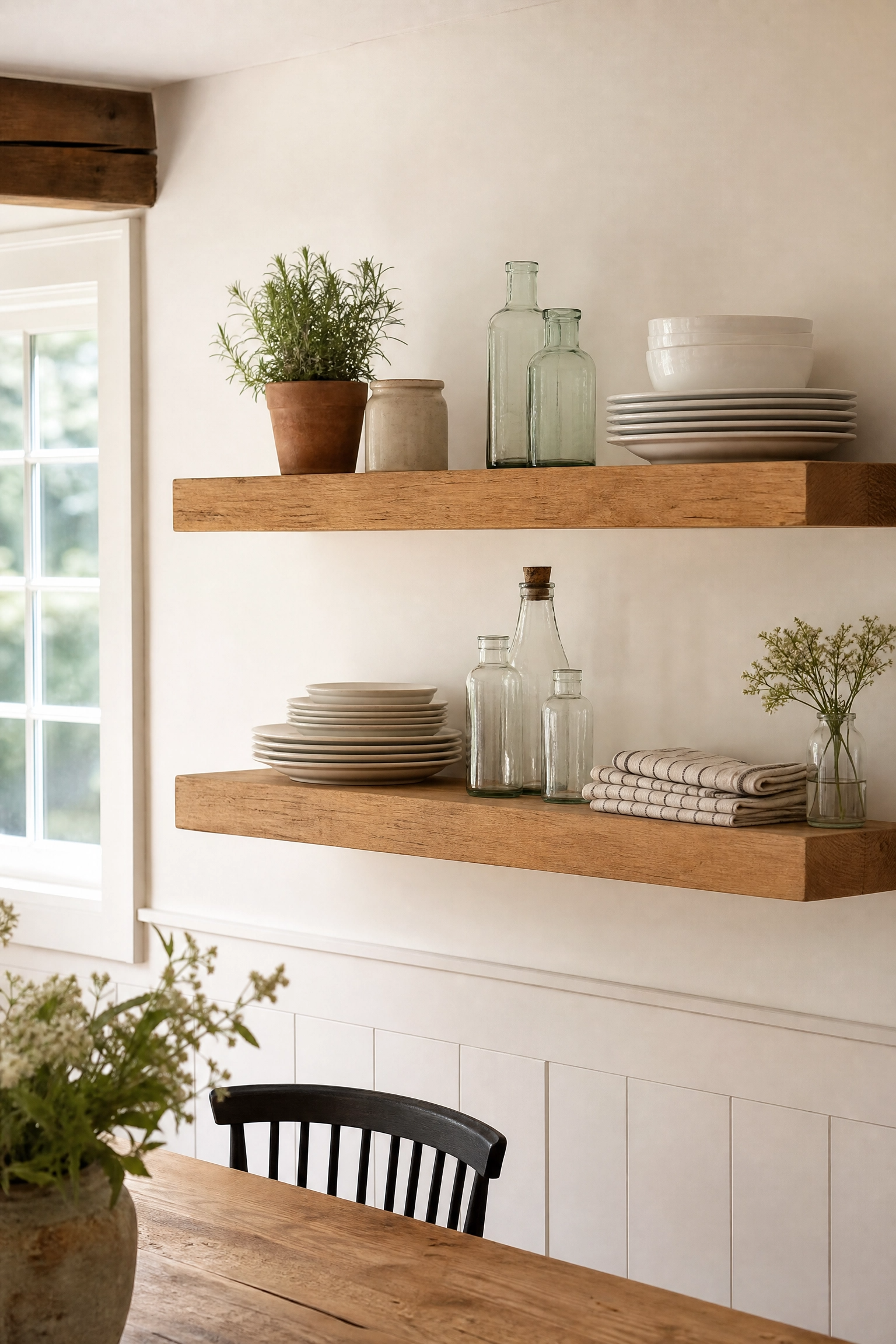
13. Open Floating Shelves With Curated Everyday Items
Open shelving in a dining room is a commitment because everything on those shelves is always on display, but when done with intention it adds a layer of warmth that no closed cabinet can match. For a farmhouse dining room, mount two or three solid wood shelves, ideally in oak, walnut, or pine, at staggered heights on one wall and use them to hold a genuine rotation of items: stacked linen napkins, ceramic pitchers, small potted herbs, and a few meaningful vintage pieces. The key thing that works really well here is mixing heights and textures rather than lining everything up uniformly. One row of stacked white dinner plates, a short row of small canning jars, and a trailing plant changes the visual rhythm in a way that feels lived-in. If wall studs are not where you need them, use a French cleat system hidden behind the shelf for a clean installation.
Designer Advice: Edit your open shelves every season. Swapping out one or two items regularly keeps the display feeling current and prevents it from becoming invisible background clutter.
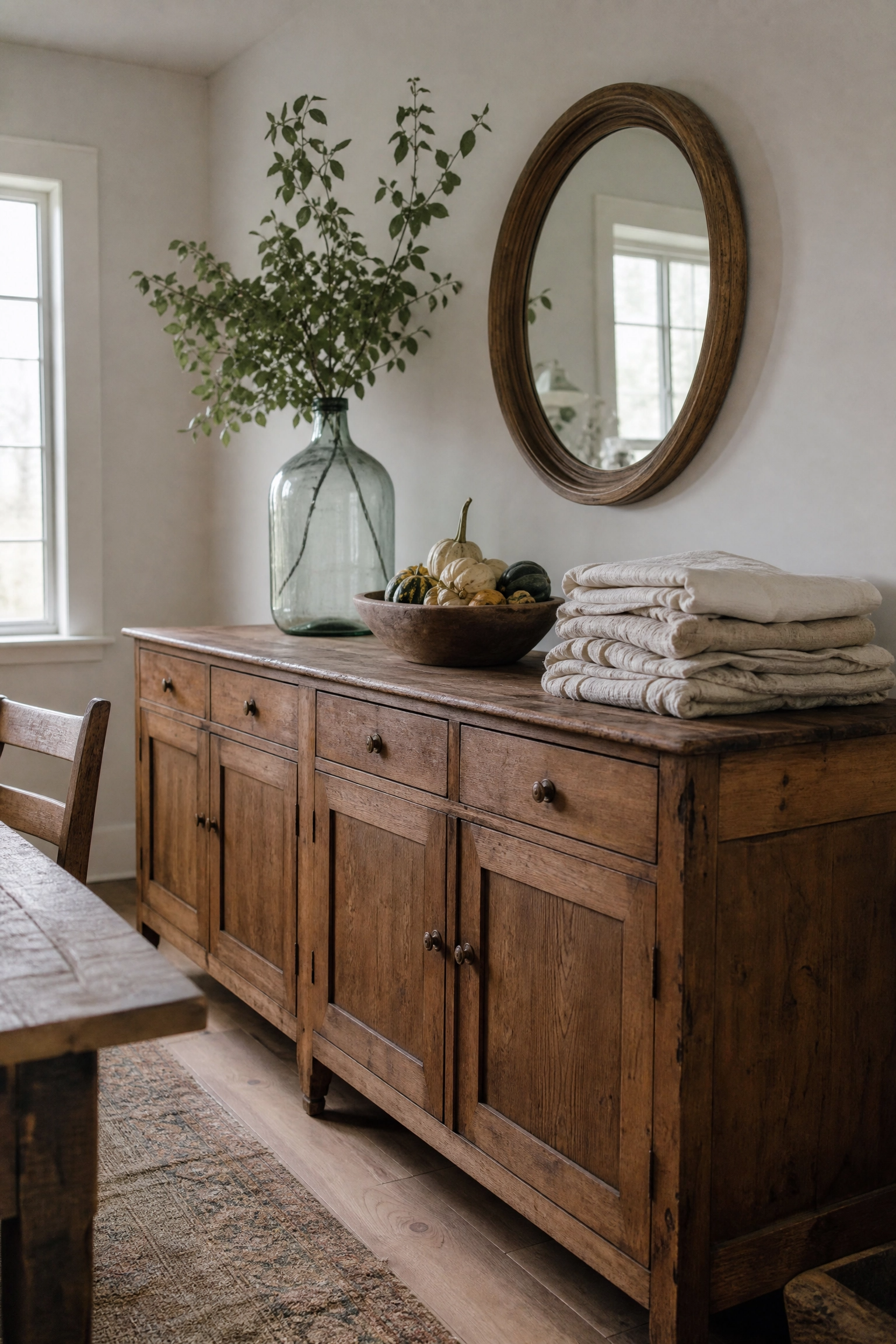
14. A Vintage or Antique Sideboard as a Buffet
A sideboard running along one wall of the dining room serves both a practical and aesthetic function that is hard to replicate with any other piece. Practically it holds extra dishes, serving platters, linens, and candles. Aesthetically it grounds the wall it sits against and gives you a surface for seasonal styling. In a farmhouse dining room, look for a sideboard with simple lines, either a genuine antique or a new piece in solid oak or painted wood, and avoid anything with heavy ornate carvings, which tend to read as Victorian rather than farmhouse. A good sideboard from an estate sale or auction often runs $100 to $400 and will outlast most new furniture. Style the top with a mix of heights: a tall glass bottle, a low wooden bowl, and a stack of books or vintage linens create a genuinely interesting still life.
Designer Advice: Hang a large simple mirror directly above the sideboard. It reflects light, makes the room feel larger, and gives the wall a finished quality without requiring any art decisions.
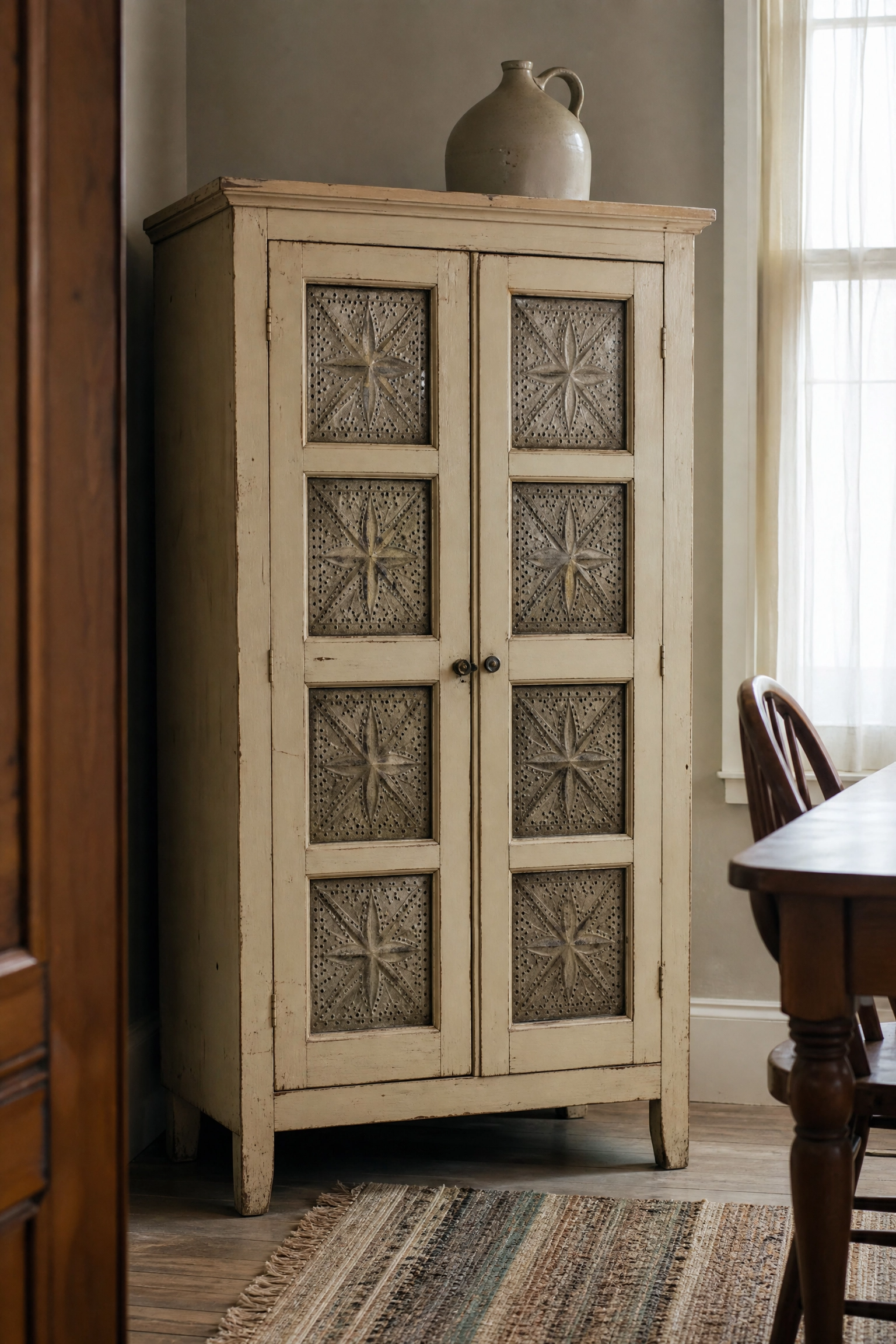
15. A Freestanding Pie Safe or Dry Goods Cabinet
A pie safe, that classic American farmhouse piece with punched tin or screen panels on the doors, is one of the more specific storage choices you can make in a dining room, and it is also one of the most character-rich. Originally used to store cooling pies away from insects, today a pie safe functions beautifully as a drinks cabinet, linen storage, or pantry overflow. The punched tin panels add incredible visual texture and the piece tends to become a genuine conversation starter. Authentic antique pie safes can be found at farm auctions, antique malls, and online marketplaces for anywhere from $150 to over $800 depending on condition and provenance. Reproductions are also widely available. One practical note: these pieces are tall and narrow, so measure your wall height carefully before buying.
Designer Advice: If the tin panels on an antique pie safe are dented or damaged, consider replacing them with new punched tin cut to size. It is an affordable repair that restores the piece’s integrity without diminishing its charm.
Textiles, Rugs, and Soft Layers
16. A Jute or Sisal Rug Under the Dining Table
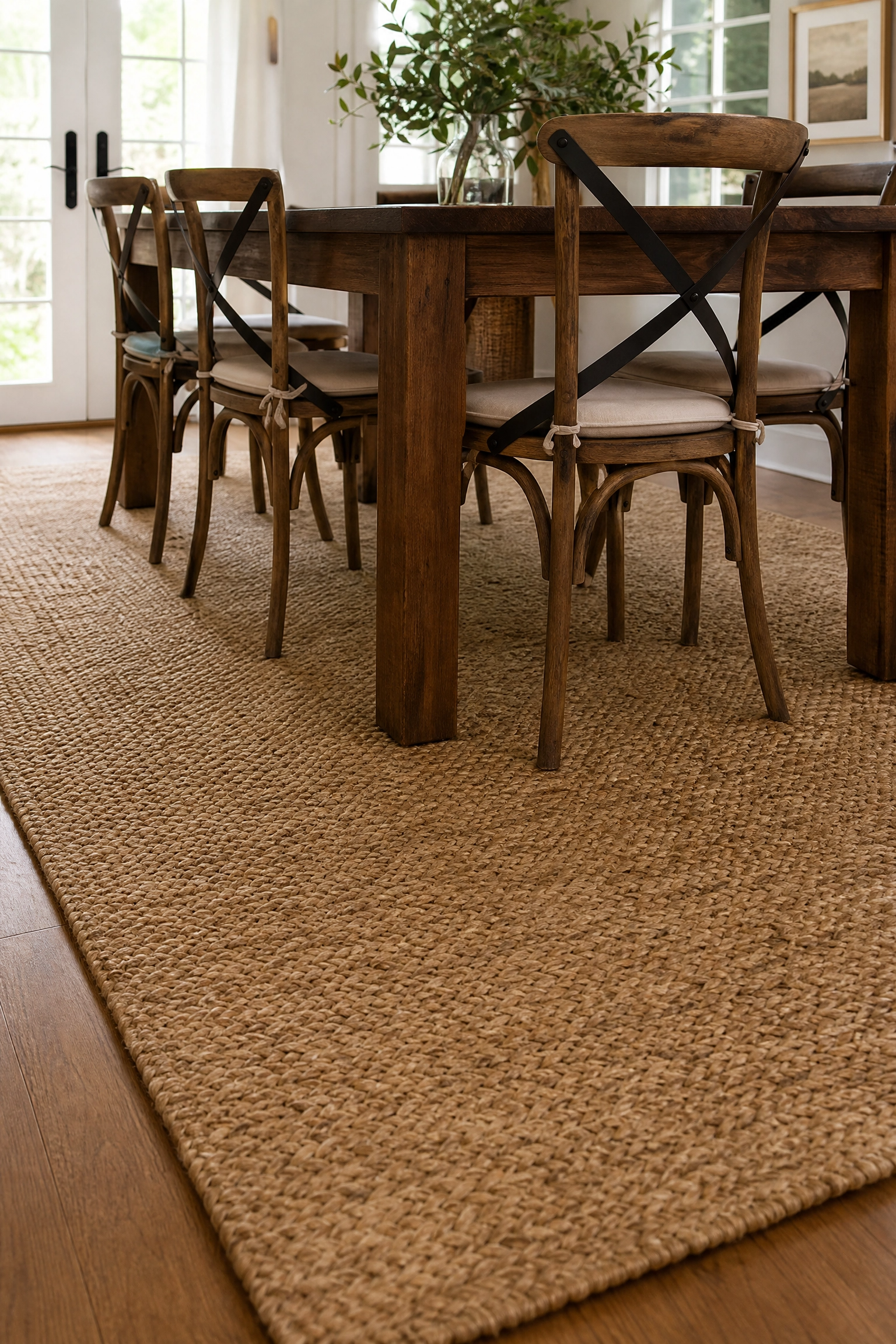
A natural fiber rug, whether jute, sisal, or seagrass, is one of the most reliable anchors for a farmhouse dining table because it adds warmth, defines the dining zone in an open plan space, and brings in texture at the floor level where the room can often feel bare. In practice, size matters enormously here. The rug should extend at least 24 inches beyond each end of the table and 18 inches on each side so that chairs remain on the rug even when pulled out. A rug that is too small makes the table look stranded. One real limitation to be upfront about: jute and sisal are not easy to clean, and they do not respond well to moisture. If you have young children or spill-prone guests, a washable cotton flat-weave rug in a similar natural tone is a more practical choice that still reads farmhouse.
Designer Advice: For a dining room, never go smaller than 8×10 feet for a table that seats six or more. If budget is the concern, a solid natural fiber rug at a lower price point is a better choice than a smaller, pricier option.
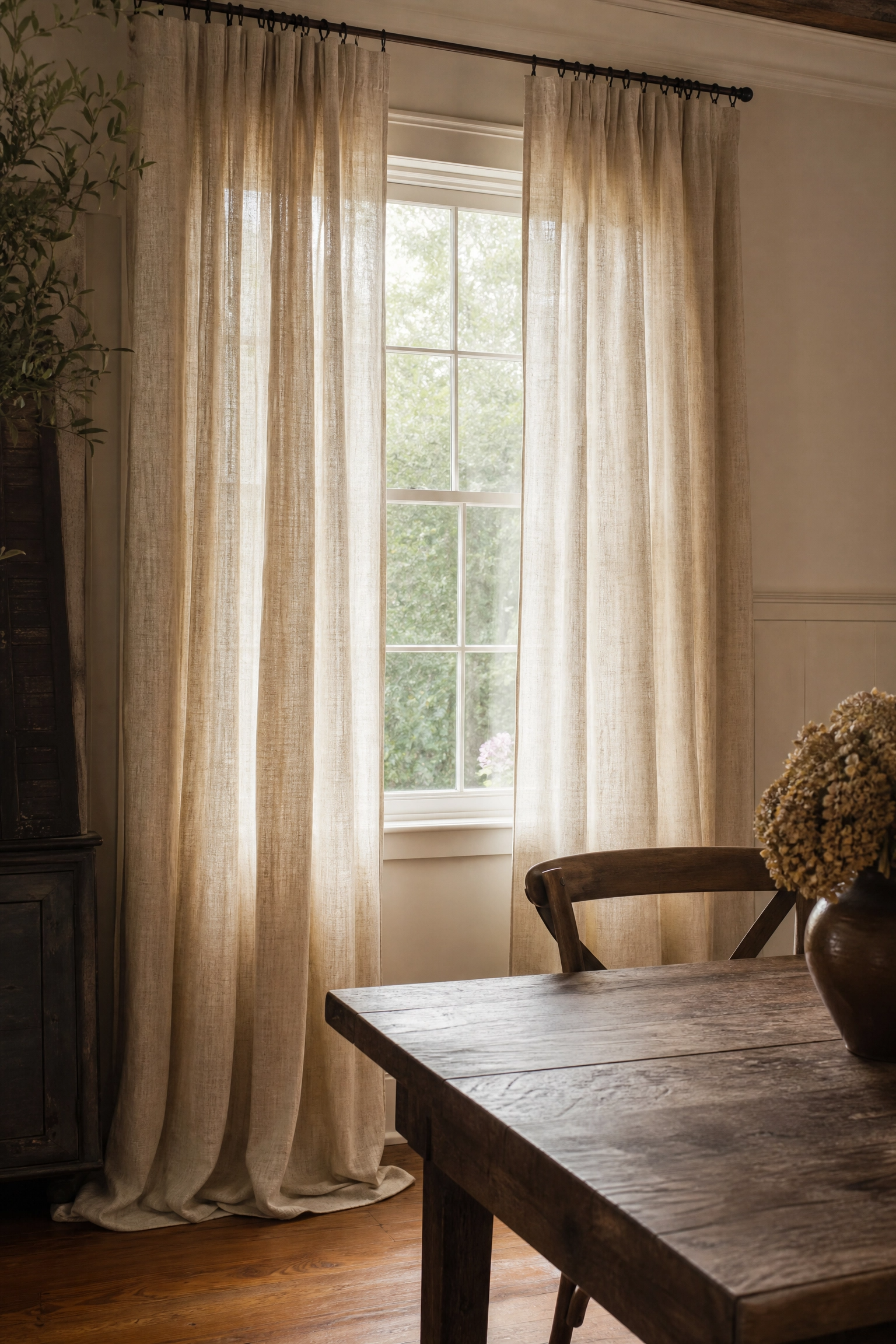
17. Linen Curtains That Pool Slightly on the Floor
Curtains in a farmhouse dining room work hardest when they frame the window rather than cover it, so the goal is to hang them wide and high to maximize natural light while adding softness to what might otherwise be a very hard-surfaced room. Natural linen in a warm white, flax, or pale sage is the go-to choice because it filters light beautifully, wrinkles gracefully, and does not compete with the other textures in the space. Allowing the curtains to pool lightly on the floor, just an inch or two, gives them a relaxed and unhurried quality that is very much in keeping with the farmhouse aesthetic. Honest limitation: linen is not a high-performance fabric and will show wear around the hem if it sits on the floor in a high-traffic room. If that concerns you, puddle-style hanging is best reserved for low-traffic dining rooms.
Designer Advice: Hang curtain rods at least 4 to 6 inches above the window frame and as close to the ceiling as looks proportional. This simple move makes windows appear larger and rooms feel taller.
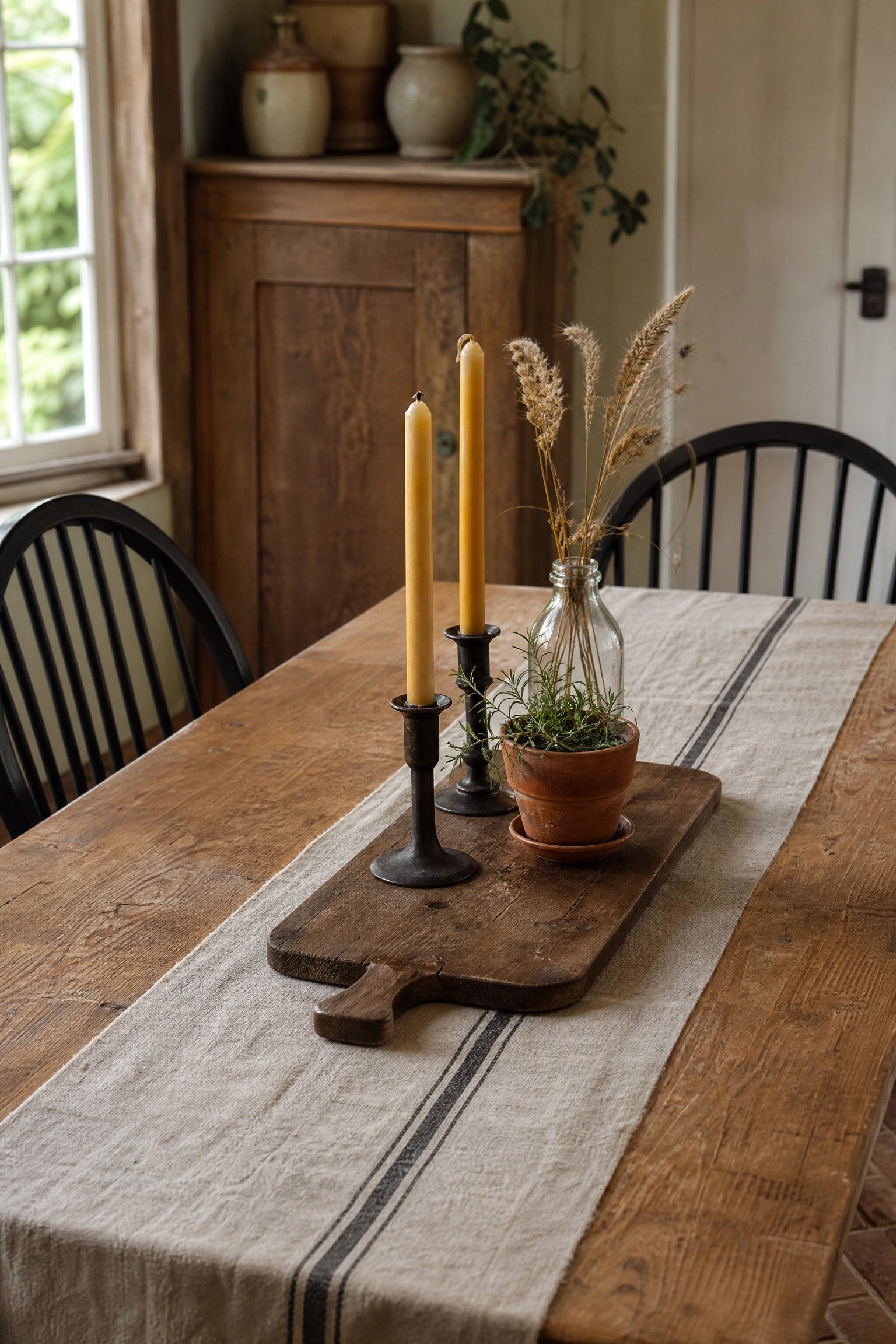
18. A Layered Centerpiece Using Linen, Wood, and Botanicals
The dining table centerpiece in a farmhouse room works best when it is low enough to see over, long enough to feel intentional, and composed of natural materials that reinforce the room’s overall palette. A practical approach that works really well is to run a simple linen table runner down the center, then layer on top of it a wooden serving board or tray holding a collection of varying elements: a small terracotta pot with an herb, two or three tapered candles in simple holders, and a short glass bottle with a few stems of dried grass or eucalyptus. The tray or board acts as a visual container for the grouping so it does not look scattered. Dried botanicals are a particularly good choice for a dining room because they do not need water, they age gracefully, and they hold up to candlelight heat better than fresh flowers.
Designer Advice: Change your centerpiece seasonally rather than monthly. Autumn gourds and dried wheat in September, pine branches and candles in December, fresh herbs and simple pottery in spring. The rhythm keeps the room feeling alive.
Decor Accents and Finishing Details
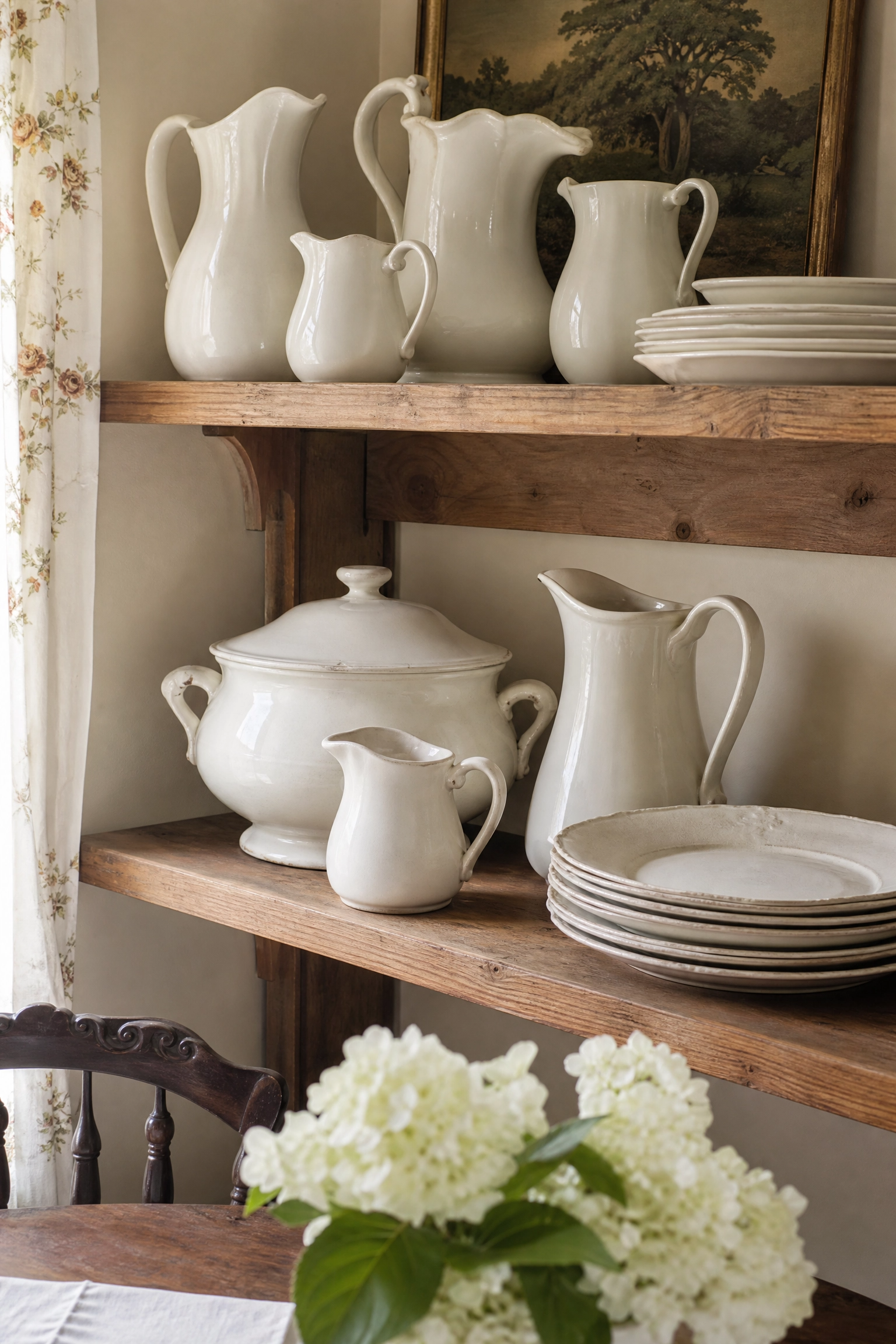
19. Vintage Ironstone or White Ceramic Displayed on a Shelf or Hutch
Ironstone is a thick, durable, off-white stoneware that was produced widely in the 19th and early 20th centuries, and it has become one of the signature collecting categories in farmhouse interior design for a very good reason: it is beautiful, affordable, and endlessly versatile. A collection of ironstone pitchers, platters, soup tureens, and bowls arranged on an open shelf or inside a hutch gives a farmhouse dining room exactly the kind of layered, collected quality that you cannot fake with new decor. In practice, you do not need a large collection to make it work. Even six to eight pieces in varying heights and sizes, grouped together, read as a genuine display. Ironstone is widely available at thrift stores, antique malls, and estate sales, usually for a few dollars per piece, making it one of the most budget-friendly ways to add farmhouse character.
Designer Advice: Look for pieces with visible stamp marks on the bottom. Marked ironstone, whether Meakin, Johnson Brothers, or other manufacturers, tends to be more durable and slightly more collectible than unmarked pieces.
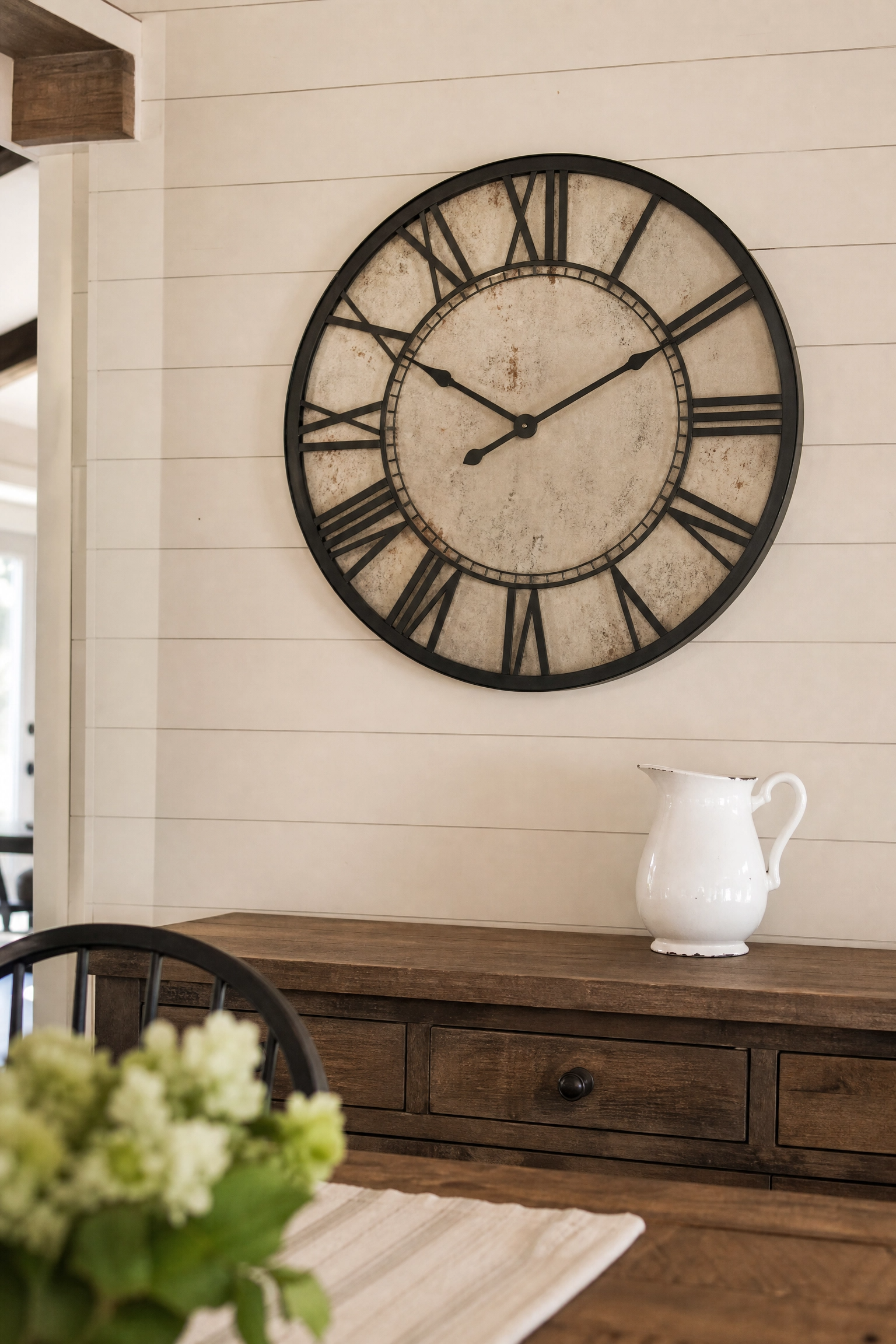
20. A Large Vintage-Style Wall Clock as Functional Art
A large wall clock, particularly one with a simple black frame, Roman numerals, and an aged face, does something interesting in a farmhouse dining room: it functions as art without requiring you to commit to a painting or print, and it adds a vertical element that balances horizontal furniture lines. In practice, a clock with a diameter of 24 to 36 inches works well on most dining room walls without feeling out of proportion. The style to look for is clean and functional rather than ornate. Reproduction farmhouse clocks that reference the Schoolhouse or Regulator style are widely available at home goods stores and online for $60 to $200. They also offer an honest nod to the working, practical roots of farmhouse design where every object in a room had a purpose.
Designer Advice: If the clock hands are all the same color as the face, consider painting them in matte black for better readability. It is a small change that makes the clock feel more deliberate and easier to actually use.
21. Galvanized Metal Accents and Vessels
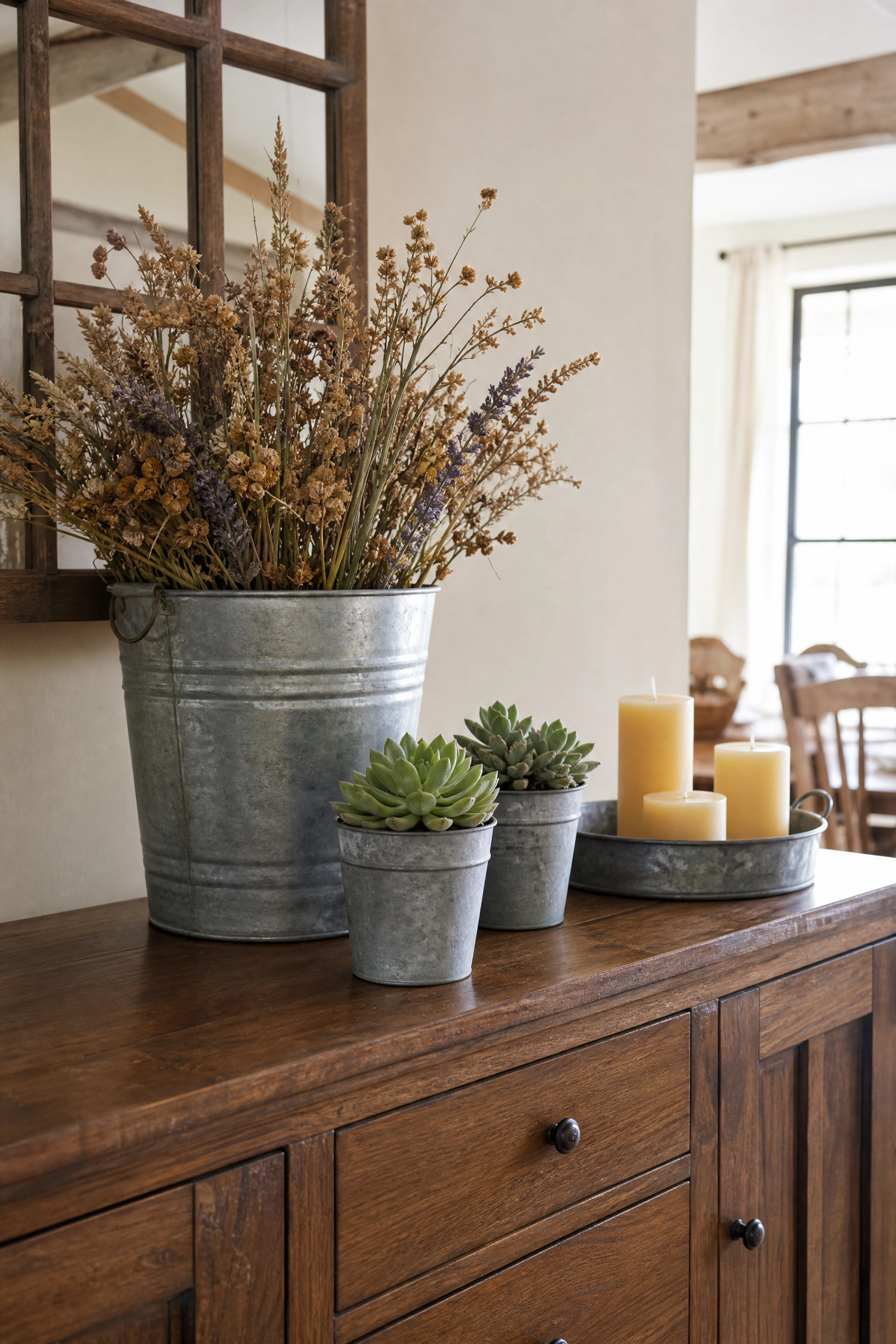
Galvanized metal, that silvery zinc-coated steel historically used for farm buckets, watering cans, and wash tubs, brings an authentic working-farm texture to a dining room without requiring any period-specific furniture. A large galvanized bucket used as a vase, a row of small galvanized pots holding succulents on a shelf, or a galvanized serving tray on the sideboard all contribute to this effect without being heavy-handed. The material is particularly effective because it contrasts beautifully with warm wood tones and soft linen, providing a cool metallic note that keeps the room from becoming too warm and monochromatic. Galvanized pieces are inexpensive and widely available, and a genuine vintage bucket from a farm supply auction costs about the same as a new reproduction.
Designer Advice: Mix galvanized with one warm metal tone, like aged brass on cabinet hardware or candlesticks, to prevent the room from feeling cold. The combination of cool galvanized and warm brass is a reliable farmhouse pairing.
22. Candles and Candleholders as Everyday Decor
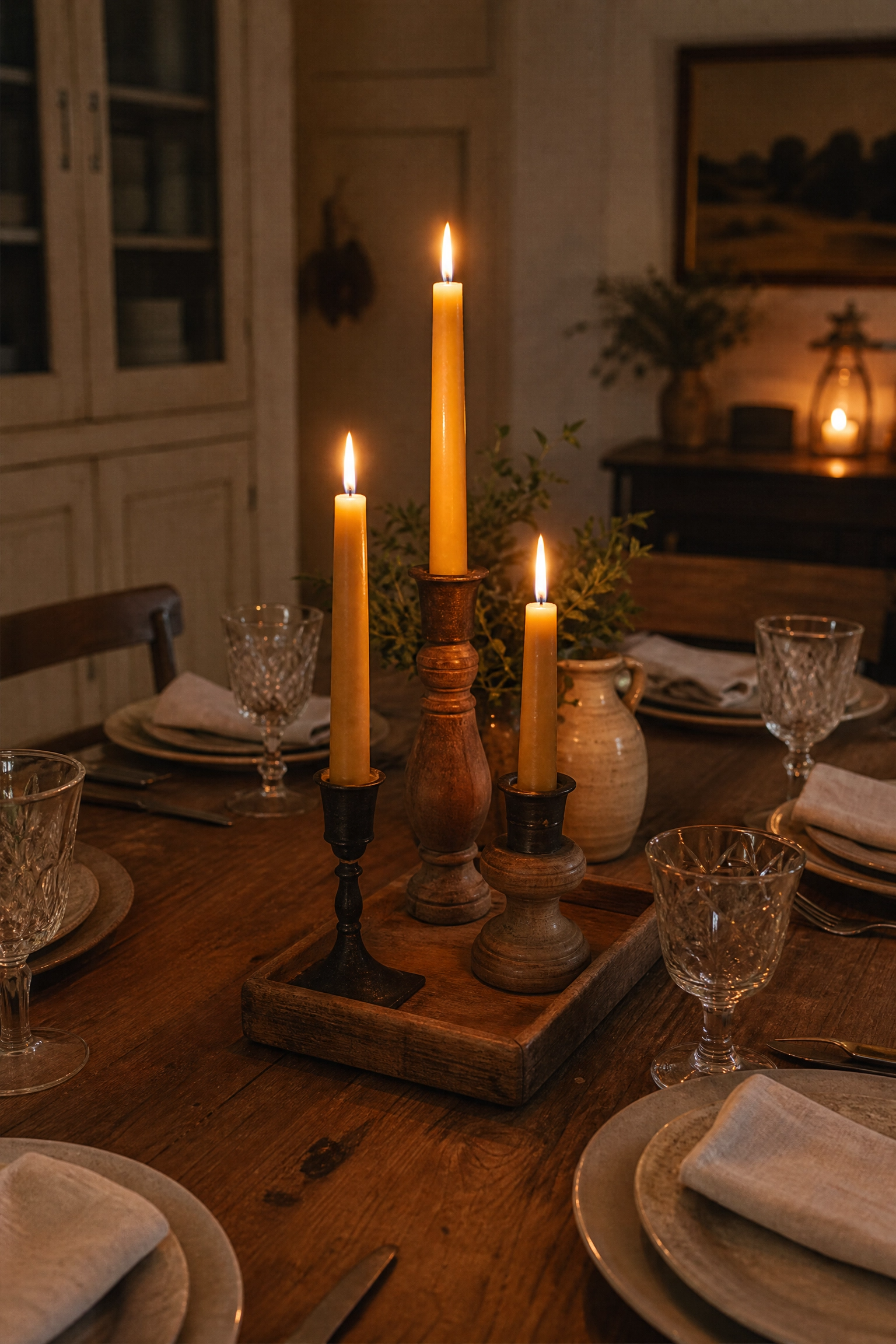
Candles do more for a farmhouse dining room than almost any other single element because they shift the quality of light in a way that no fixture can replicate after dark. The choices here matter: look for taper candles in natural beeswax or cream rather than stark white, and place them in candleholders that reference the farmhouse palette, whether turned wood, hammered iron, or simple terracotta. A grouping of three tapered candles at varying heights on the table, combined with one or two votive candles on the sideboard, creates a layered warmth that makes dinner feel like an occasion without any effort. One practical note: if you are using candles regularly, keep a small tray beneath them to catch wax drips. A pretty wooden or ceramic tray under the candleholders protects the table and becomes part of the styling.
Designer Advice: Burn candles during dinner even on regular weeknights. The habit of lighting candles is the single easiest way to make a farmhouse dining room feel like the welcoming space you want it to be.
23. A Gathered Wildflower Arrangement in a Simple Vessel
One of the most genuinely farmhouse things you can do for a dining room is to stop buying formal flower arrangements and start gathering whatever is growing, whether from your garden, a local farmers market, or even a roadside stand. Wildflowers, seasonal branches, dried grasses, and herbs in a simple vessel, whether a canning jar, a ceramic pitcher, or a plain glass bottle, have a looseness and naturalness that formal bouquets do not. The vessel is almost as important as what goes inside it: a wide-mouthed mason jar, a squat terracotta pot, or a generous stoneware pitcher all reinforce the farmhouse palette in a way a glass vase often does not. One completely honest note: this approach requires a little more effort than buying a grocery store bouquet, but the results consistently look more personal and more connected to the season.
Designer Advice: Keep the arrangement loose and asymmetrical. Resist the urge to trim everything to the same height. A few stems that extend well above the others give the whole arrangement a natural, just-picked quality.

Bringing It All Together
A farmhouse dining room does not come together in a single shopping trip, and that is actually part of what makes it work. The best versions of this style are assembled over time, with pieces collected from different places and different moments, each one chosen because it felt right rather than because it completed a set. If you take anything from these ideas, let it be this: start with the table, because everything else responds to it. Get the lighting right, because nothing shapes atmosphere in a dining room more than how it is lit. And resist the pull toward the perfectly coordinated. A mismatched chair that has a good story, a pitcher with a small chip, a rug that shows a little wear. Those are the things that make a farmhouse dining room feel genuinely lived in rather than staged for a photograph. Work with what you already have, add pieces gradually, and trust that the room will find its own character as you spend time in it.
Frequently Asked Questions
What colors work best in a farmhouse dining room?
Warm neutrals are the backbone of farmhouse color palettes: creamy whites, warm grays, soft beige, and earthy terracotta all work well. For accent colors, dusty sage green, muted navy, and aged blue are popular choices that add personality without disrupting the relaxed feel. The goal is warmth and softness rather than high contrast or bold saturation.
How do I make a small dining room feel farmhouse without it feeling cramped?
In a small space, prioritize open shelving over closed cabinets, choose a bench instead of chairs on one side of the table to reduce visual bulk, keep the color palette light and consistent, and hang curtains close to the ceiling rather than at the window frame. Mirrors also help enormously in small dining rooms by bouncing light and creating the impression of depth.
Do I need to have old or antique furniture for farmhouse style to work?
Not at all. Farmhouse style is as much about texture, tone, and the spirit of collected simplicity as it is about genuine antiques. Mixing affordable new pieces with a few vintage or secondhand finds usually produces the most believable result. The key is to avoid anything that looks too perfect, too matched, or too polished.
What kind of rug works under a farmhouse dining table?
Natural fiber rugs in jute, sisal, or seagrass are the most common choices and genuinely reinforce the farmhouse aesthetic. If you need something more practical for a family with children, a washable cotton flat-weave in a natural tone or simple stripe is an excellent alternative. Whatever you choose, size up rather than down. The rug should extend far enough that chair legs stay on it even when chairs are pulled out.
How do I light a farmhouse dining room properly?
Start with a good pendant or chandelier positioned directly over the table at the right height, which is 30 to 34 inches above the table surface. Then layer in wall sconces for ambient light and candles for evening warmth. The goal is to avoid relying on a single overhead source, which tends to flatten the room and make it feel more like a kitchen than a dining space.
Is farmhouse style going out of fashion?
The core principles of farmhouse design, natural materials, honest textures, functional furniture, and a warm unpretentious atmosphere, are not trend-dependent. What has shifted is that the all-white shiplap version that dominated around 2016 to 2020 has given way to warmer, more layered interpretations that incorporate color, global influences, and genuinely aged pieces. If you build your dining room around quality materials and things you genuinely like rather than what is trending, it will feel relevant for a very long time.