How to Refresh a Boring Bedroom With Just Accessories
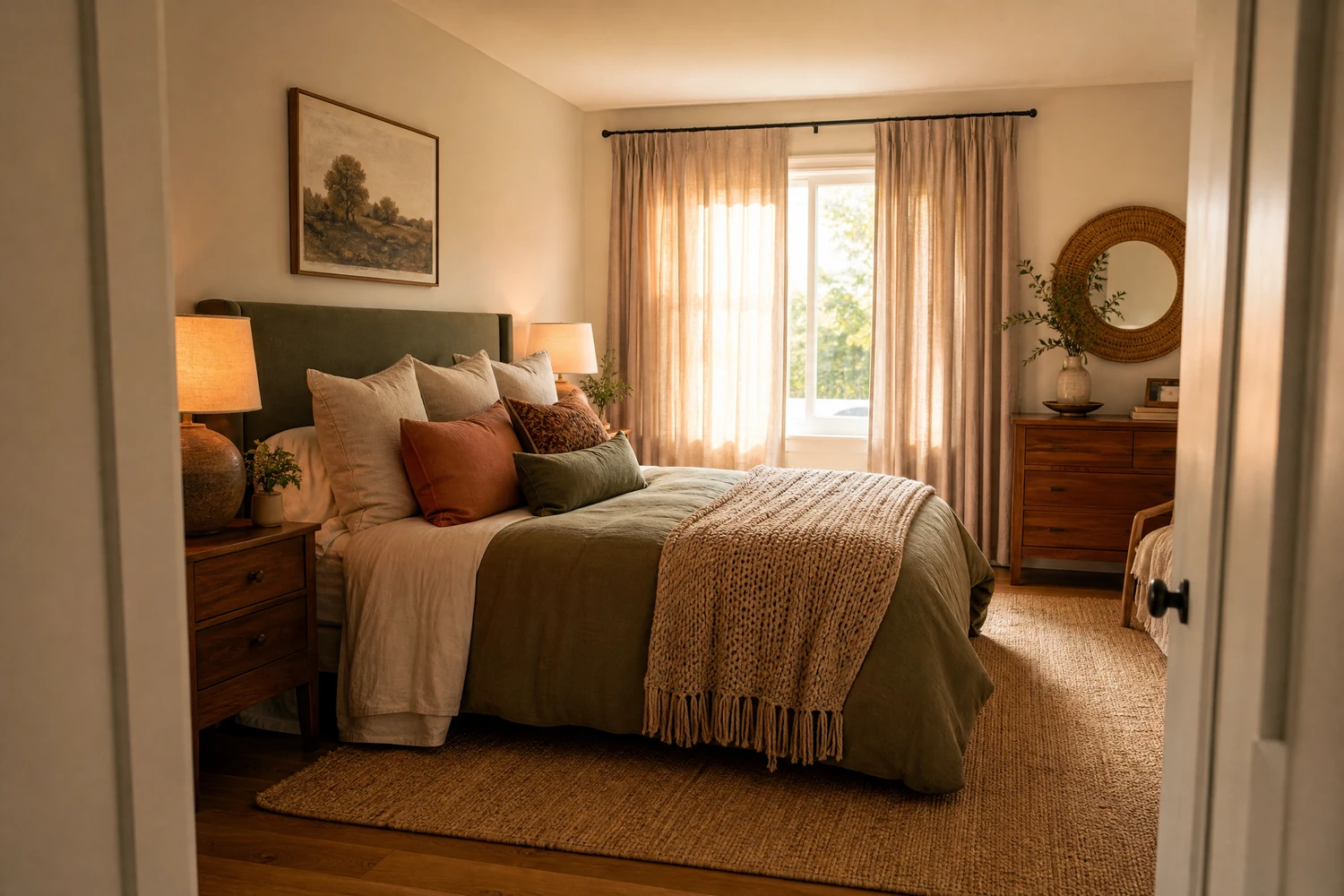
A boring bedroom is almost never the result of bad furniture. It is the result of nothing happening in the right places. The bed is bare, the nightstands are functional but lifeless, the dresser top is a dumping ground, the walls have one piece of art hung slightly too high, and there is nothing on the floor and nothing at the window. Adding accessories randomly does not fix this. What fixes it is knowing which zone of the room is doing the least work and addressing it with intention. This guide moves through every key zone of a bedroom and tells you exactly what it needs, what to avoid, and why each change makes the room feel more finished. The sequence matters too — some changes only show properly after others are in place.
Zone 1: The Bed Itself
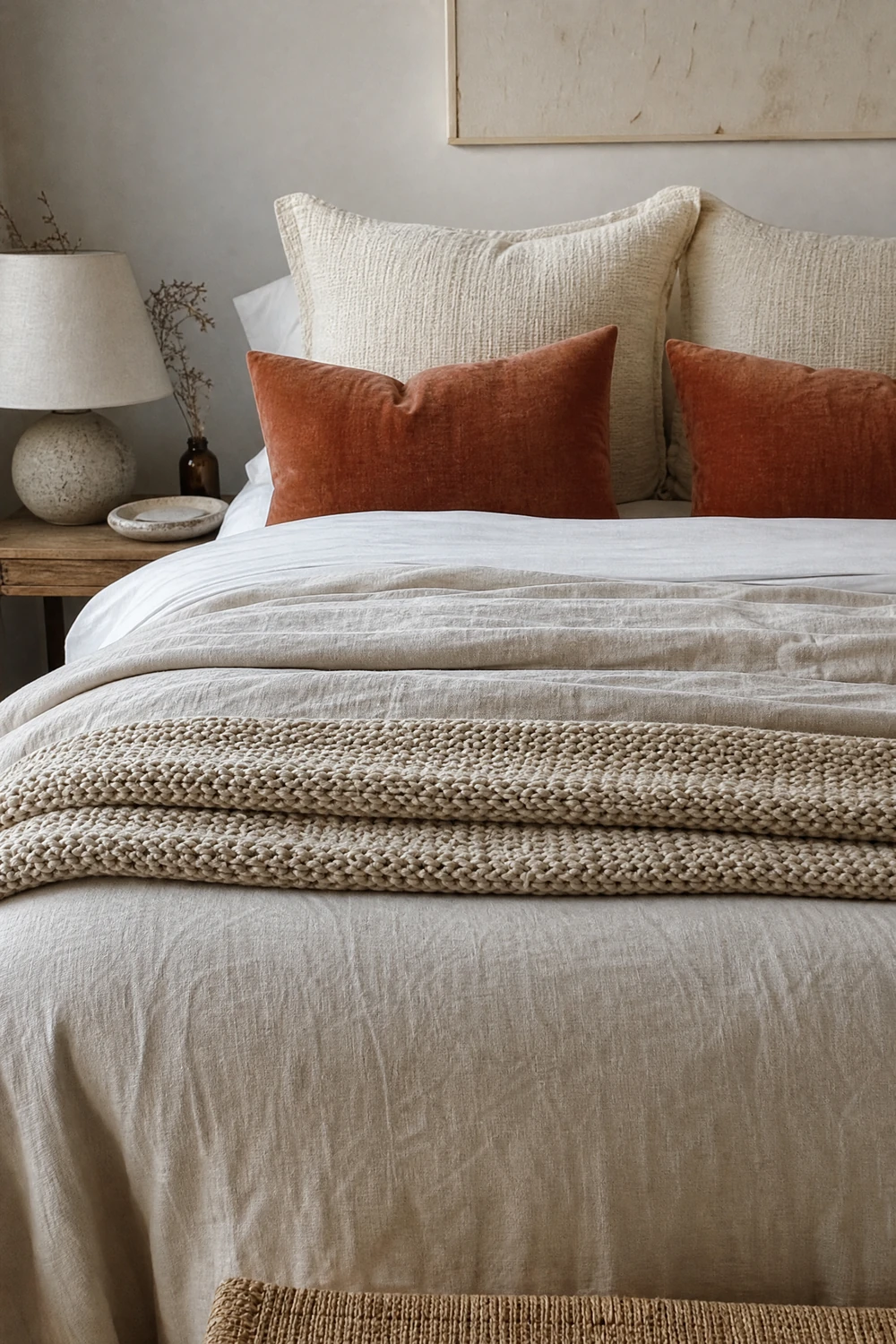
The bed is the largest surface in the bedroom and the first thing anyone sees when they walk in, which makes it the highest-use place to start. A boring bed is almost always a flat bed: one duvet, two matching pillows, nothing layered on top of or at the foot of it. The fix is to add depth through layers rather than more of the same. Start with a duvet or quilt in a texture that is different from the fitted sheet beneath it, such as a waffle-weave cotton, a washed linen, or a lightweight knit. Then add a throw folded horizontally across the lower third of the bed. This single addition, a throw at the foot, is what makes a bed look like it was styled rather than just made.
Pillows are where most people go wrong, either by having too few in a matching set or too many in a chaotic pile. The sweet spot for a queen or king bed is two sleeping pillows in cases that match the sheets, two larger Euro squares behind them in a textured cover, and one or two accent cushions in front in a contrasting material such as velvet, boucle, or embroidered linen. The accent cushions are where you introduce the color or pattern that gives the room personality, so they are worth spending time on. Odd numbers of accent pillows almost always look more natural than even numbers, and mixing two different textures reads as far more considered than buying a matching set.
Designer Advice: Fold your throw in thirds lengthwise and drape it across the foot of the bed rather than laying it flat. It adds visual weight to the bottom of the bed and makes the whole arrangement look intentionally styled rather than casually thrown together.
Zone 2: The Nightstands
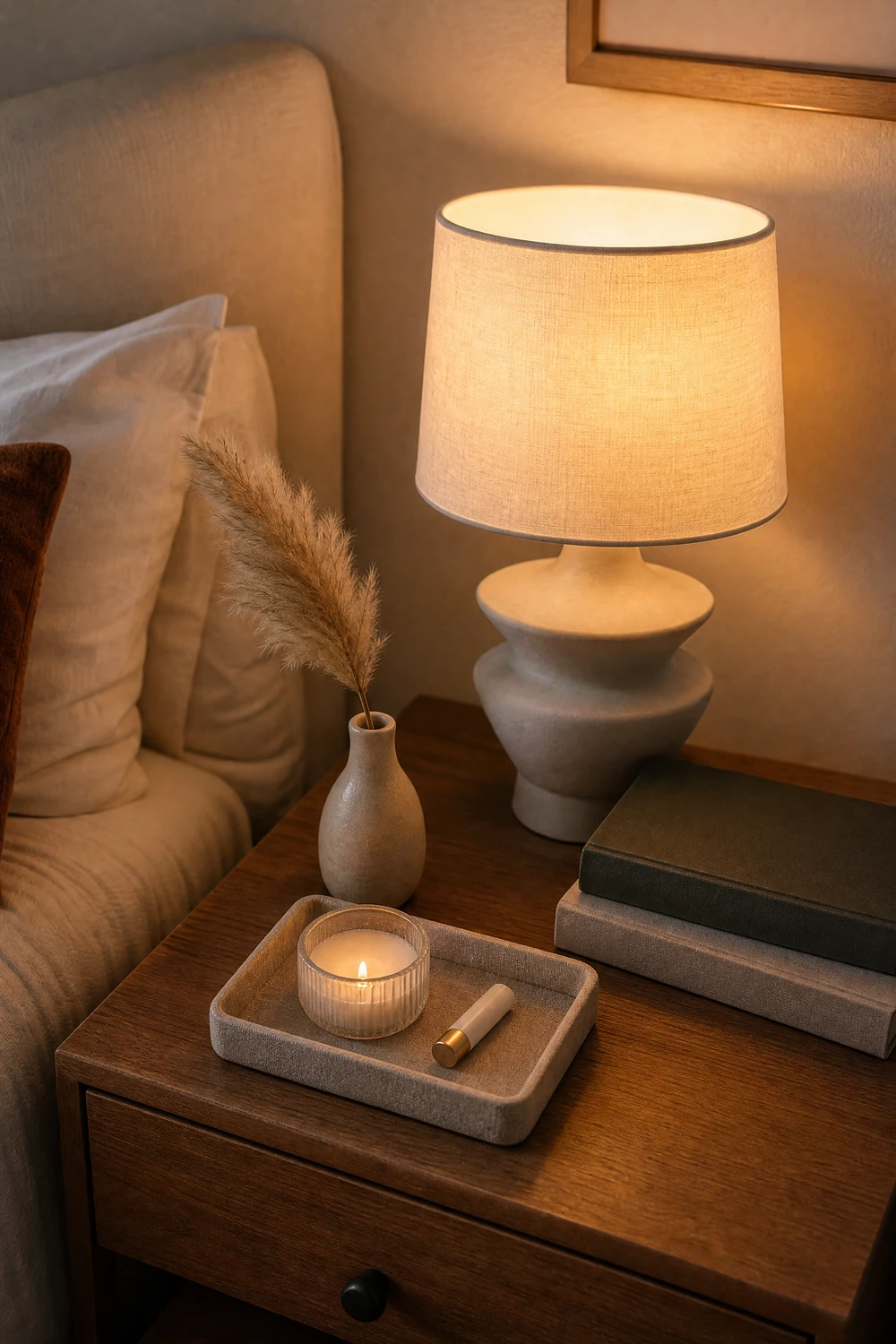
Nightstands are the most consistently understyled surface in the average bedroom. Most people have a lamp, a phone charger, and whatever accumulated there over the past few weeks. In a well-styled room, the nightstand is treated as a small, considered vignette with three to four objects maximum, each chosen for its shape, texture, or function. The lamp is the anchor and it should have a base with some visual interest, whether that is a ceramic glaze, a sculptural silhouette, a rattan weave, or a marble column. A purely functional lamp with a plain base makes the nightstand look temporary even when everything else in the room is considered.
Beyond the lamp, a nightstand works best when it has one object of each type: something tall, something low, and something living. A tall object might be the lamp itself or a bud vase with a single dried stem. Something low could be a small stack of two books with attractive spines, a small tray corralling a candle and a lip balm, or a decorative dish. Something living means a small plant, a fresh flower stem in a narrow vase, or even a sprig of eucalyptus in a glass. This three-layer approach, tall, low, living, gives the nightstand visual rhythm without making it feel cluttered.
Quick Tip: Hide your phone charger inside a small woven basket or behind the lamp. A cable snaking across a nightstand is the single fastest way to undo careful styling, and tucking it takes about thirty seconds.
Zone 3: The Dresser Top

The dresser top is the surface most people treat as a landing zone and then feel vaguely guilty about every time they look at it. In a styled bedroom, it is treated as the room’s secondary focal point, the place where personality lives. The key is to clear it completely first, then add back with intention rather than letting things drift back organically. A large mirror leaning against the wall above the dresser, or a collection of smaller mirrors grouped together, immediately elevates the entire piece of furniture and makes the room feel larger. Without a mirror, the dresser top tends to read as just a surface. With one, it reads as a moment.
What goes on the dresser top should follow the same principle as the nightstand but with more room to work with. A perfume or cologne collection arranged on a small mirrored or marble tray looks deliberate and beautiful. A ceramic bowl for jewelry, a small sculptural object in an interesting material, and one plant, ideally something trailing like a pothos or something architectural like a small succulent arrangement, give the surface enough variety to hold the eye without tipping into clutter. The rule is that every object on the dresser top should either be beautiful, functional, or both. Anything that is neither goes in a drawer.
Reality Check: A tray on the dresser top is not optional. It is what separates a styled surface from a cluttered one. The tray creates a contained zone that the eye reads as intentional, and it means that the objects inside it are grouped rather than scattered.
Zone 4: The Walls
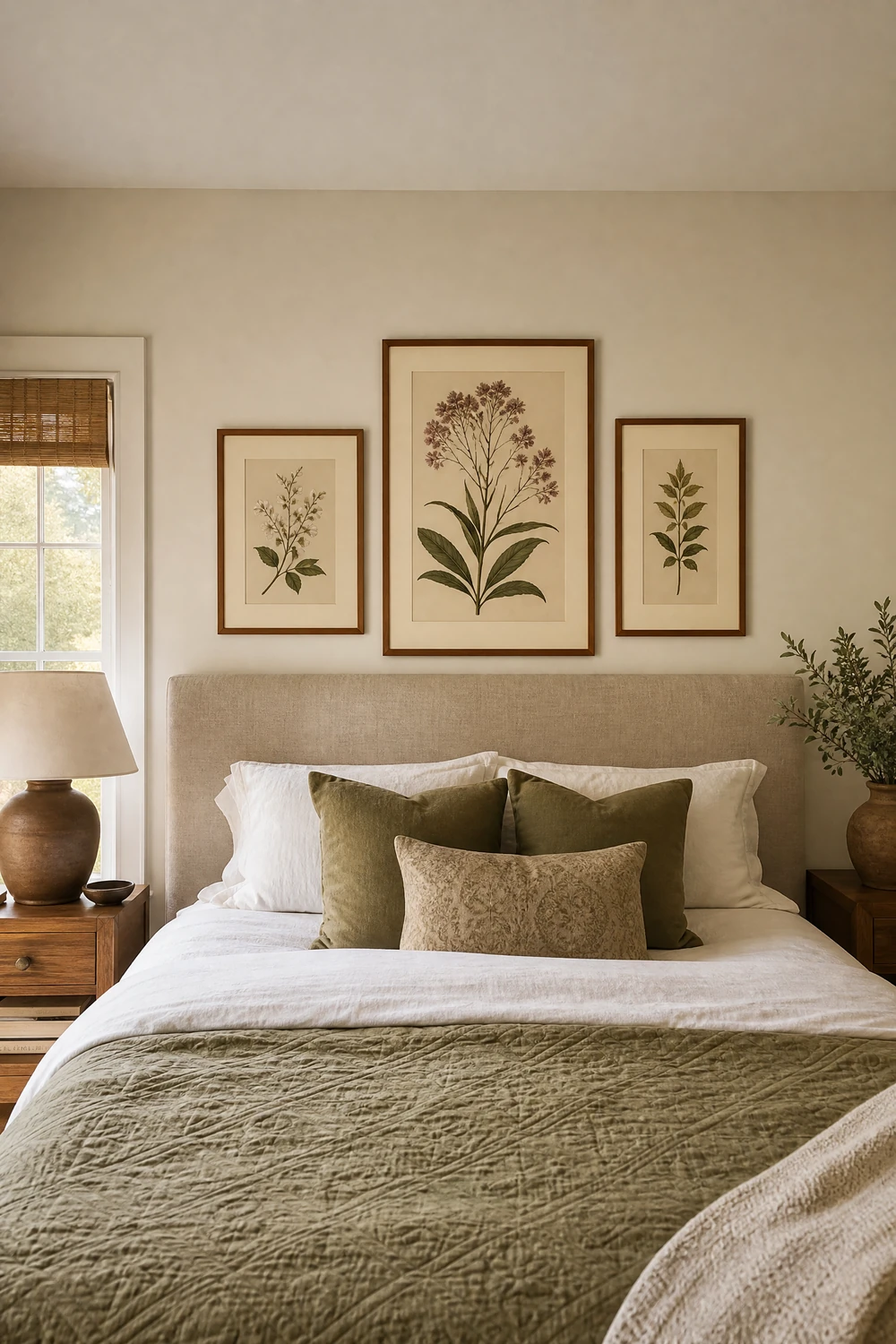
Blank walls are the most obvious symptom of a boring bedroom, but the solution is not simply to add art. It is to add art in the right place, at the right height, and in the right proportion to the furniture beneath it. The most common mistake is hanging pieces too high, which disconnects the art from the room and makes the walls feel stretched rather than decorated. The center of any artwork should sit at approximately 57 to 60 inches from the floor. Above the bed specifically, the bottom of the frame or the lowest piece in a grouping should sit 6 to 8 inches above the top of the headboard. Closer than that and the art competes with the headboard. Further and it floats.
The proportion of art to wall is just as important as placement. A single small piece on a large wall above the bed is one of the most common mistakes in bedroom styling, and it makes the wall look more bare rather than less. Either go large with one statement piece, at least 24 by 36 inches for most beds, or create a gallery grouping of three to five pieces that together fill the wall in a way that reads as a collection rather than a scattering. Leaning art against the wall on a shelf or on the floor is a valid and increasingly popular alternative that avoids the commitment of nail holes and reads as deliberately casual rather than unfinished.
Pro Move: Before hanging anything, cut paper templates the exact size of each frame and tape them to the wall. Arrange them until the grouping feels right, then use the templates to mark the exact nail positions. It saves multiple holes and takes the guesswork out of spacing.
Zone 5: The Floor

Most bedrooms either have no rug or one that is too small, and both options make the room feel harder and less finished than it should. A bedroom rug does not need to cover the entire floor. It needs to appear from under the bed on both sides and at the foot, which means going larger than most people expect. For a queen bed, the minimum rug size is 8 by 10 feet. For a king, go to 9 by 12. A rug that only sits in front of the bed, with nothing extending on the sides, reads as a bath mat rather than a design choice and makes the room feel proportionally off in a way that is hard to identify but immediately felt.
Material matters in a bedroom more than in any other room because bare feet are involved. Natural fiber rugs like wool or cotton are the most comfortable underfoot and the most visually rich, with textures that catch the light and add depth to the floor plane. A flatweave or low-pile rug in a warm neutral, an ivory, a warm grey, a dusty sage, or a faded terracotta, works in almost any bedroom without fighting the other colors in the room. If the bedroom already has patterned bedding or curtains, the rug should be solid or very subtly textured. If everything else is solid, the rug is where a gentle pattern, a stripe, a diamond weave, or a soft geometric, earns its place.
Heads Up: Place the rug before finalizing the furniture arrangement. The rug determines the visual boundaries of the sleeping zone, and moving furniture onto it after the fact almost always reveals that the rug is smaller than you thought it would be in the space.
Zone 6: The Window
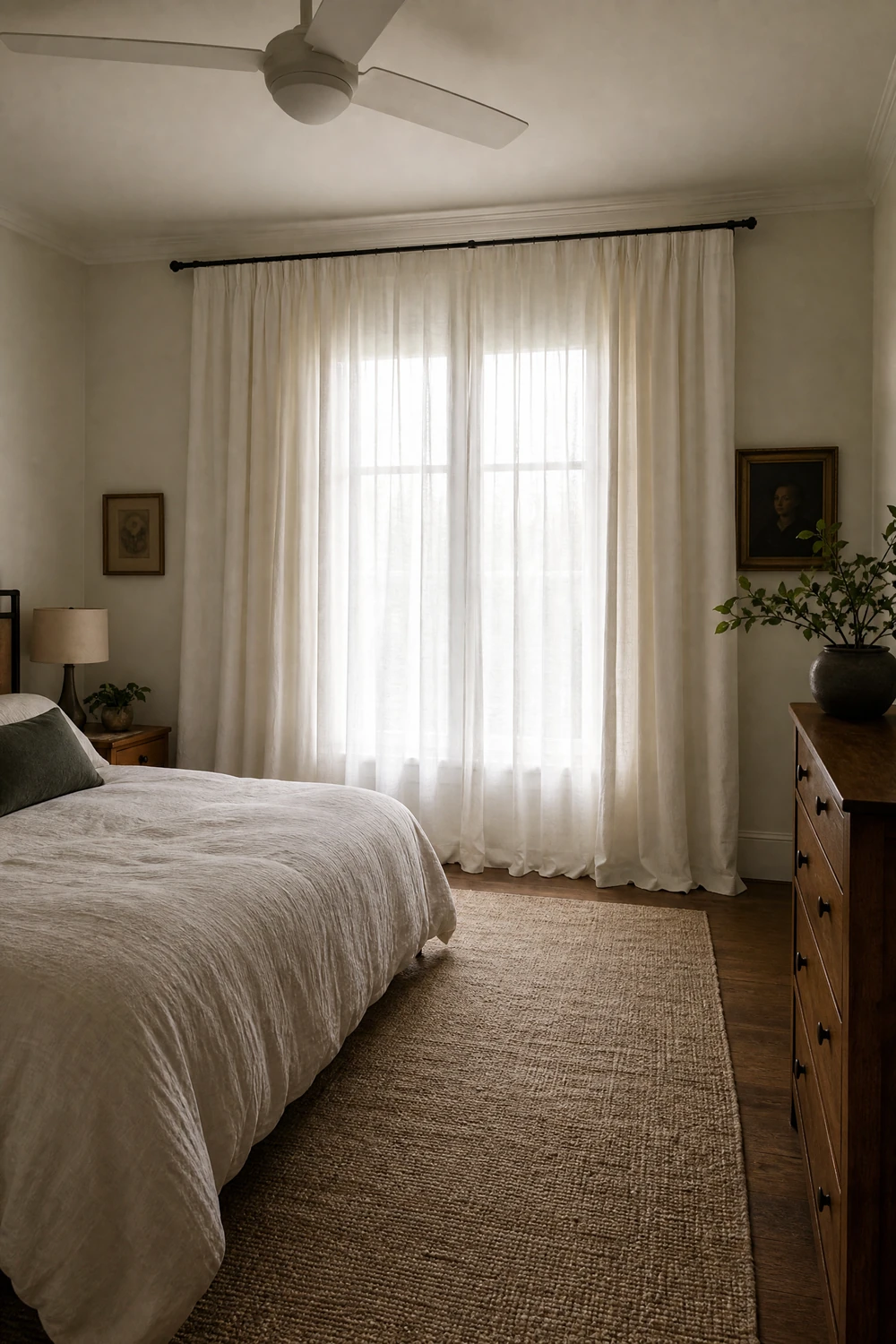
Windows in bedrooms are almost always underdressed. A single roller blind or a pair of curtains that stop just below the windowsill make the room feel low and the window feel small. The fix is the same as in any room: hang the rod as close to the ceiling as possible and extend it well beyond the window frame on each side. In a bedroom specifically, this matters even more because the window is usually adjacent to or visible from the bed, which means it is in the sightline for a significant portion of the time spent in the room. A window that is properly dressed with floor-length curtains framing it generously becomes a design feature. An underdressed window is just a gap in the wall.
Blackout lining is worth investing in for bedroom curtains even if the outer fabric is light and breezy. A linen or cotton curtain with a blackout lining looks identical from the front but gives the room complete darkness for sleeping, which is both a practical and a perceived quality upgrade. In terms of fabric, bedroom curtains benefit from something with softness and weight, linen, velvet, or a heavy cotton weave, because these fabrics hang in gentle folds that add warmth and movement to the room in a way that polyester or thin cotton panels never quite achieve. The curtains do not need to be expensive. They need to be long, properly hung, and in a fabric with some body to it.
Designer Advice: Velvet curtains in a bedroom are worth considering even if velvet feels too bold. A dusty blush, a deep teal, or a forest green velvet panel adds enormous warmth and richness to a room at night and reads as far more luxurious than its price suggests.
Zone 7: The Bedside Lighting
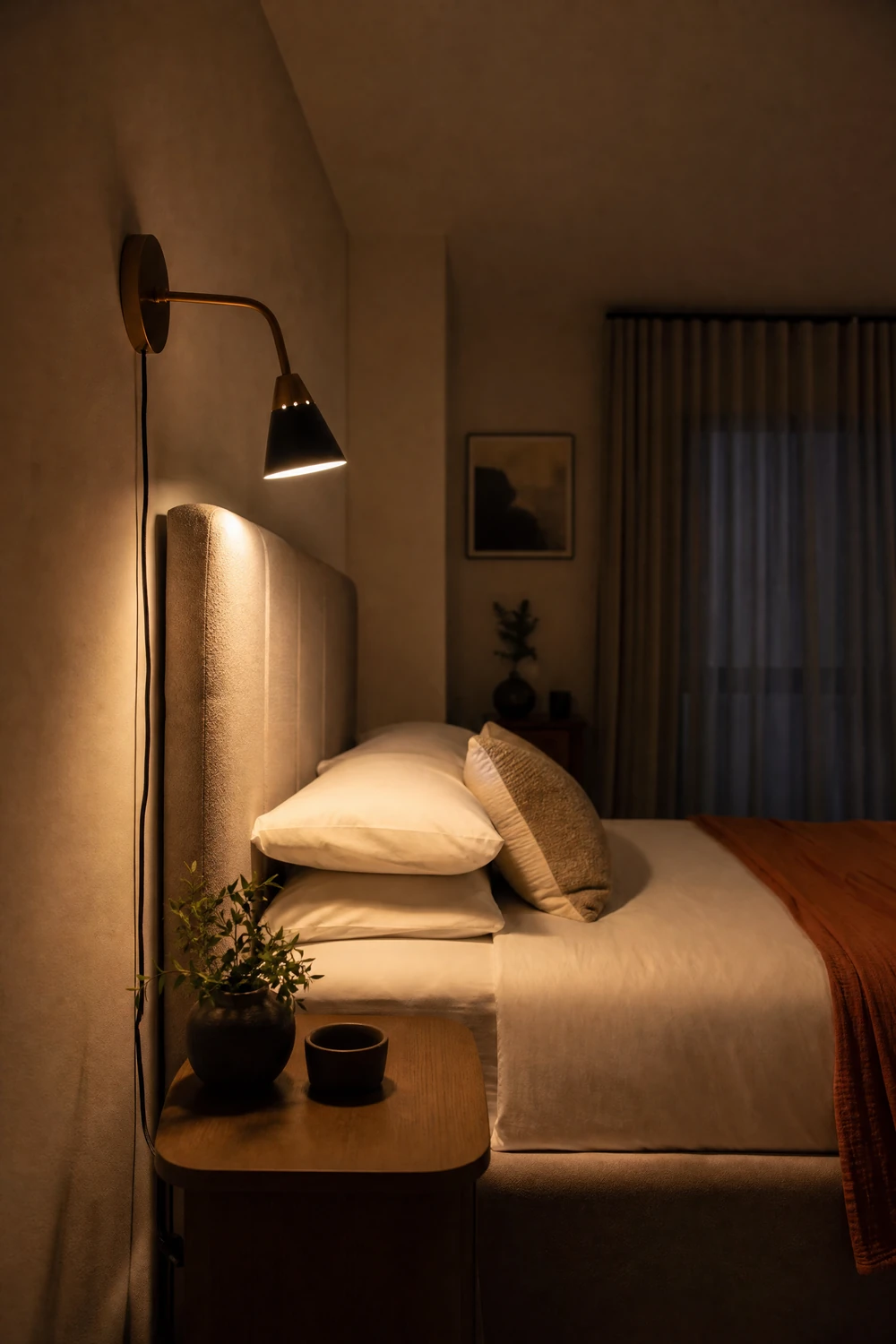
Overhead lighting in a bedroom should be used for getting dressed and nothing else. The rest of the time, the room should be lit entirely from the nightstand level downward, which means bedside lamps or plug-in wall sconces are not optional accessories but the primary light source for the room. A bedroom with no bedside lighting, or with overhead lighting as the only evening option, will never feel relaxing or designed regardless of what else is in it. This is the single accessory change that makes the biggest difference to how a bedroom feels ultimately, which is when most people are actually in it.
The lamp base is where most of the visual work happens, and it is worth investing in something with a shape or material that contributes to the room. A ceramic base with a hand-painted glaze, a sculptural plaster column, a twisted rattan form, or a turned wood base all add character at nightstand height that no other accessory can replicate. The shade should be slightly warm in color, either a cream or a natural linen rather than white, because a white shade with a warm bulb reads as dingy, while a cream shade reads as intentionally warm. Pair with a bulb no higher than 2700K and the bedside light becomes the kind of glow that makes a bedroom feel genuinely restorative.
Quick Tip: If your nightstands have no room for lamps or you want to free up the surface entirely, plug-in wall sconces mounted on either side of the bed at about 60 inches from the floor give the same warm bedside light with zero surface space used.
Zone 8: Plants and Organic Texture
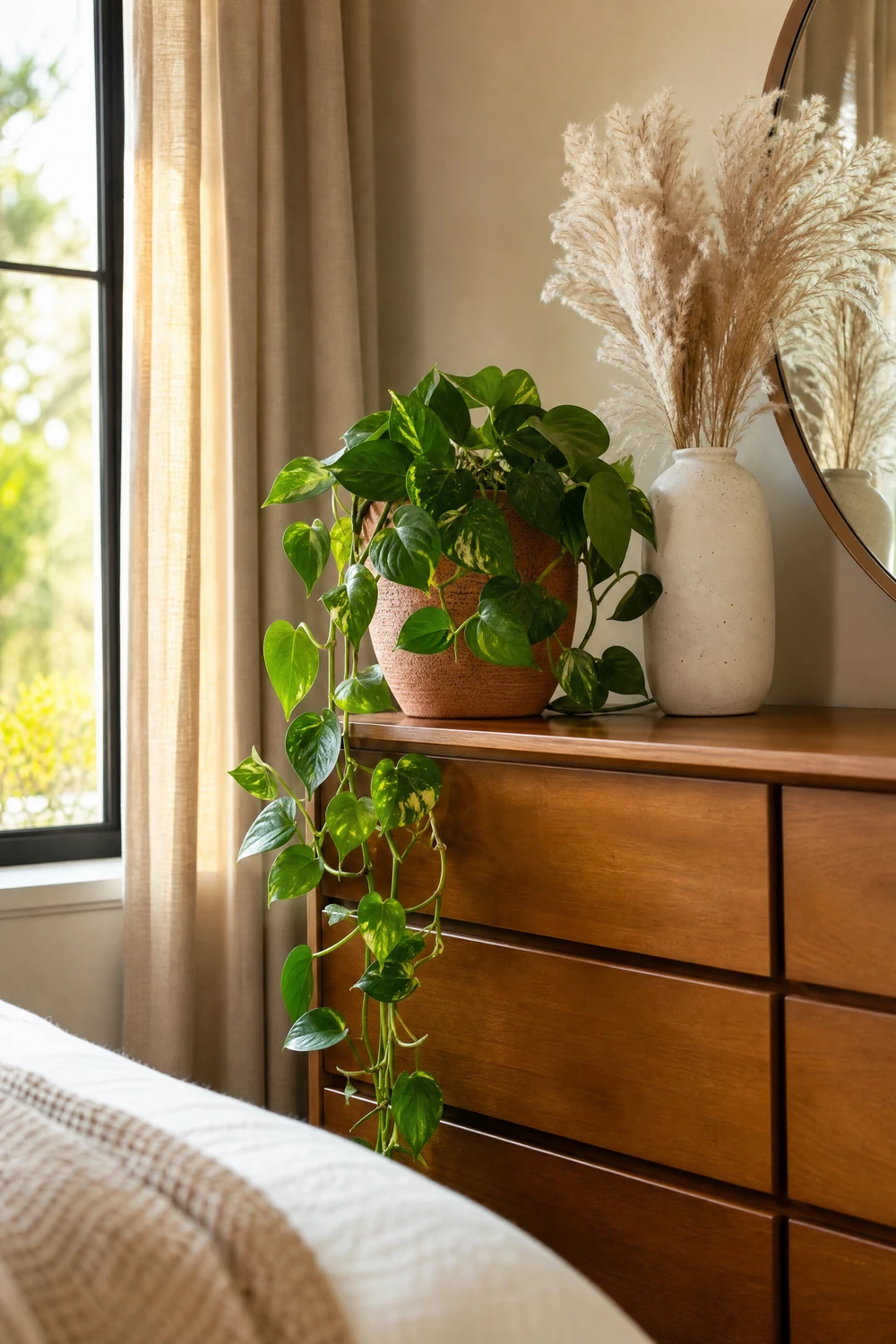
A bedroom with no organic material in it, no plant, no natural fiber, no wood, no dried stem in a vase, tends to feel slightly clinical regardless of how well-styled everything else is. Plants in particular do something that decorative objects cannot: they signal life and care, and rooms with healthy, well-kept plants read as genuinely inhabited rather than merely furnished. The bedroom is not the easiest room for plants because it often has lower light levels, but a pothos, a snake plant, a ZZ plant, or a peace lily will thrive in most bedroom conditions and each has a different growth habit that suits different parts of the room. A trailing pothos on the dresser, a tall snake plant in a corner, or a peace lily on the nightstand all read beautifully without requiring significant maintenance.
Dried botanicals are a lower-maintenance alternative that has become a genuine design choice rather than a compromise. Dried pampas grass in a tall ceramic vase, a bunch of dried lavender tied with linen ribbon, or a cluster of dried eucalyptus hanging from a hook on the wall each add organic texture and a muted, earthy color that fresh plants provide only seasonally. The key with dried botanicals is scale: a small wispy bunch in a thin vase reads as an afterthought, while a generous arrangement in a vessel with visual weight reads as a considered design choice. Go larger than feels comfortable and the result will almost always be better.
Reality Check: One large, healthy plant in a good pot does more for a bedroom than three small plants in mismatched containers. The pot matters as much as the plant. A terracotta pot, a matte ceramic, or a woven basket planter all read as considered. A plastic nursery pot, even holding a beautiful plant, reads as temporary.
Zone 9: Scent as the Final Layer
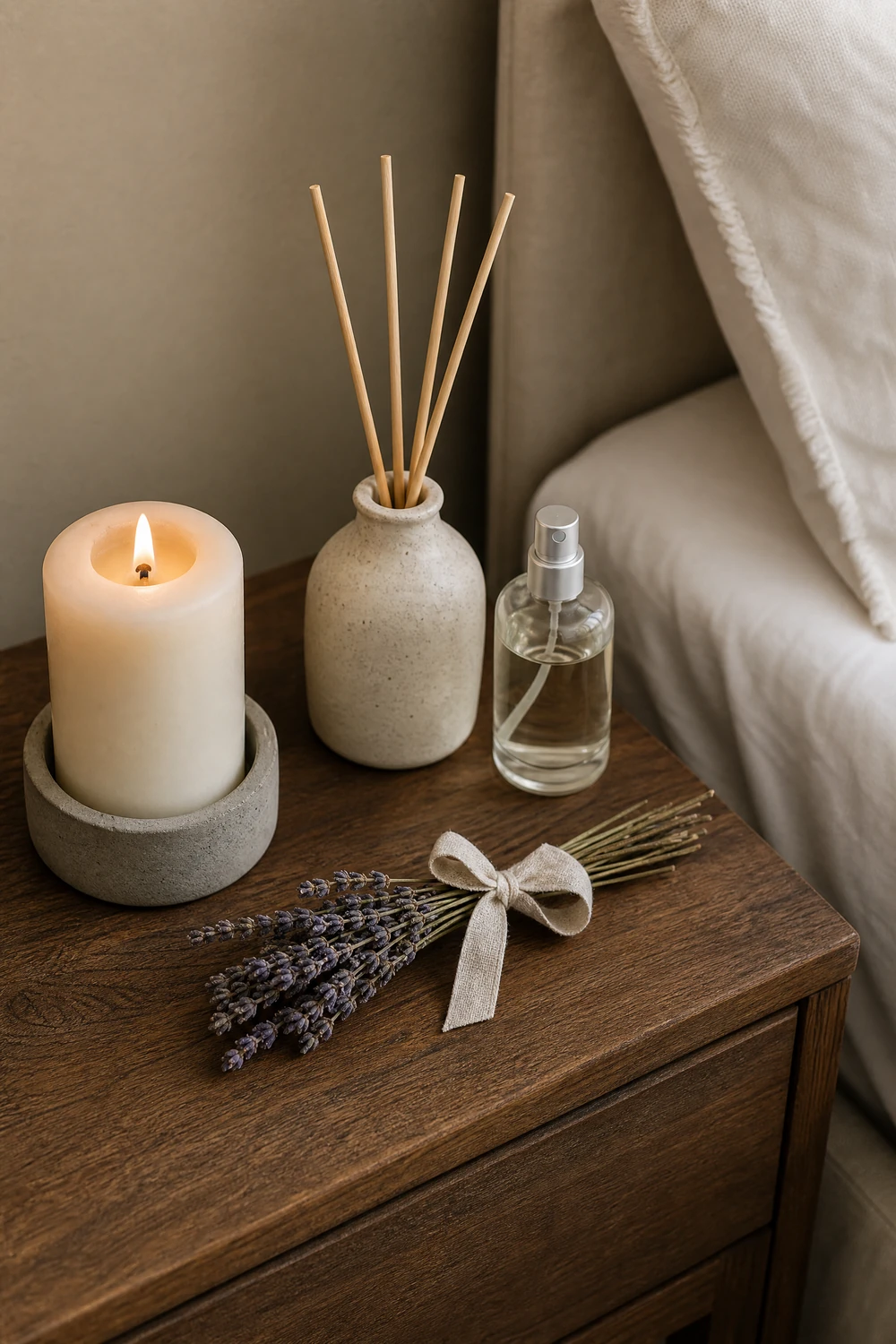
Scent is the accessory that does not photograph and therefore does not appear in mood boards or shopping guides, which is exactly why most bedrooms are missing it. Walking into a room that smells like something specific and pleasant is an immediate signal of care and intention, and it changes the experience of the space before you have consciously registered anything else. In a bedroom, the best approach is a quality candle or reed diffuser in a scent that promotes calm rather than stimulation: warm sandalwood, clean linen, soft amber, white musk, dried lavender, or a quiet cedarwood note. These scents work with the bedroom’s purpose rather than against it, and they become associated over time with rest and relaxation in the same way that a familiar pillow or blanket does.
The placement of scent matters as much as the choice. A candle on the dresser, a reed diffuser on the nightstand, or a linen spray applied to the pillowcase before bed each deliver the scent at a different point in the room and the evening. Linen sprays in particular are underused in most bedrooms and are worth incorporating as a nightly ritual. A few spritzes on the pillows before you get into bed takes five seconds and makes a tangible difference to how quickly and easily the room shifts into sleep mode. It is the kind of small, consistent detail that separates a room that is styled from one that is genuinely lived in well.
Pro Move: Never burn a candle in the bedroom for more than two hours at a stretch, and always trim the wick to a quarter inch before relighting. A candle that is well maintained burns cleanly, lasts longer, and smells significantly better than one that is neglected. It is also the difference between a candle that looks beautiful on a nightstand and one that looks like it belongs in a garage.
Zone 10: The Mirror You Are Probably Missing
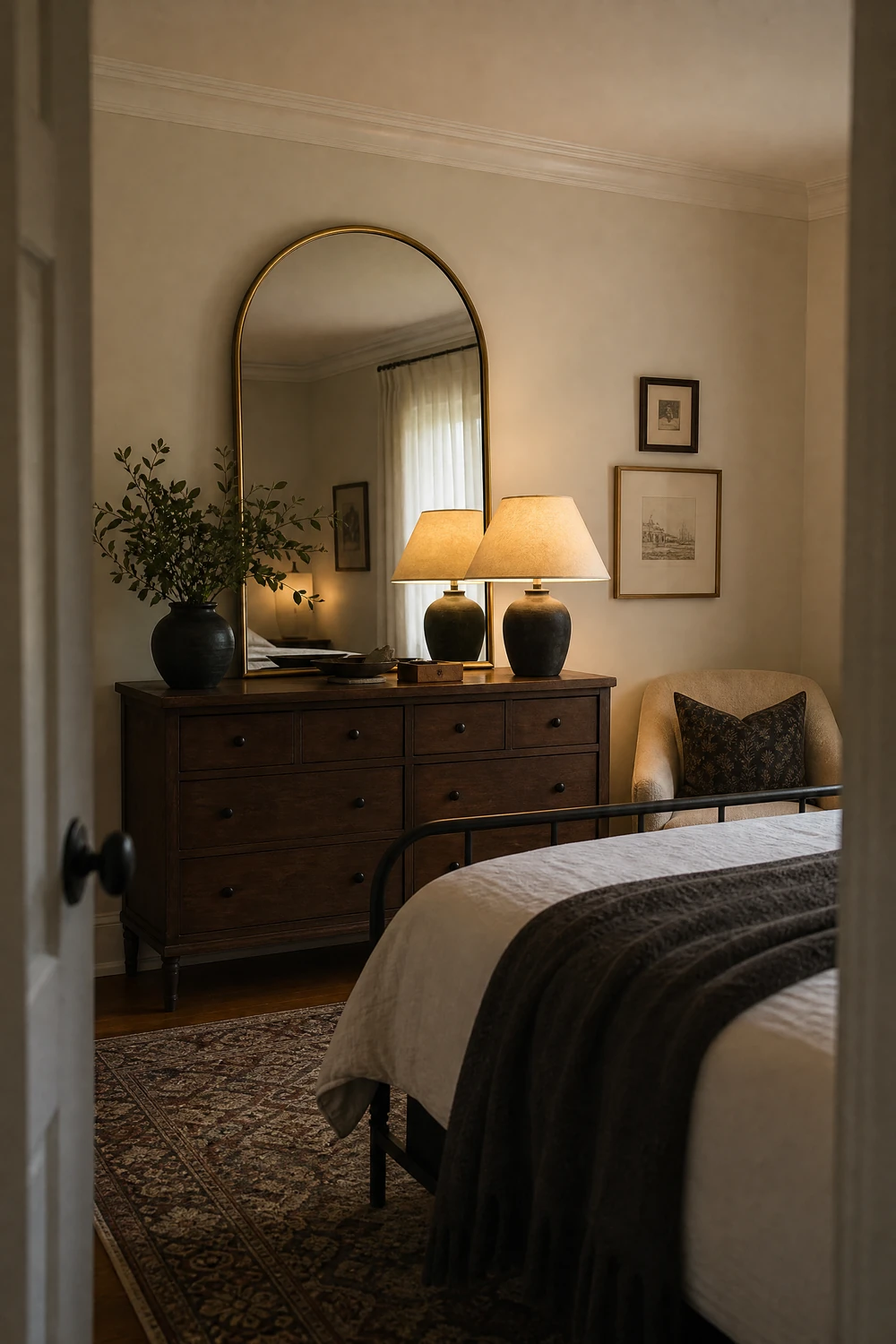
Most bedrooms have either no mirror or a full-length mirror propped behind a door where it does nothing for the room visually. A well-placed mirror is one of the most useful accessories in any bedroom because it does three things simultaneously: it reflects light, it creates a sense of depth and space, and it functions as a decorative object in its own right. A round mirror with a rattan, brass, or wood frame hung above the dresser or leaned against the wall creates a focal point that the dresser alone cannot. A set of two or three smaller mirrors grouped on a wall beside the window catches and bounces morning light in a way that makes the room feel brighter without any changes to the actual light source.
The frame of the mirror carries almost as much design weight as its placement. A plain frameless mirror reads as functional. A mirror with a sculptural frame reads as intentional decor. The most versatile bedroom mirror frames are round or arched in rattan, brass, or a matte-painted wood, because these shapes soften the typically rectangular geometry of bedroom furniture and walls. An arched mirror in particular has become one of the most widely used accessories in contemporary bedroom styling because its shape is interesting enough to read as a design choice without being so specific that it only works in one kind of room.
Heads Up: Avoid placing a mirror directly opposite the bed if you find it disruptive to sleep. A mirror on the wall beside the dresser, or leaning in a corner, delivers the same reflective and decorative benefits without the sightline issue.
Zone 11: The Corner Nobody Uses
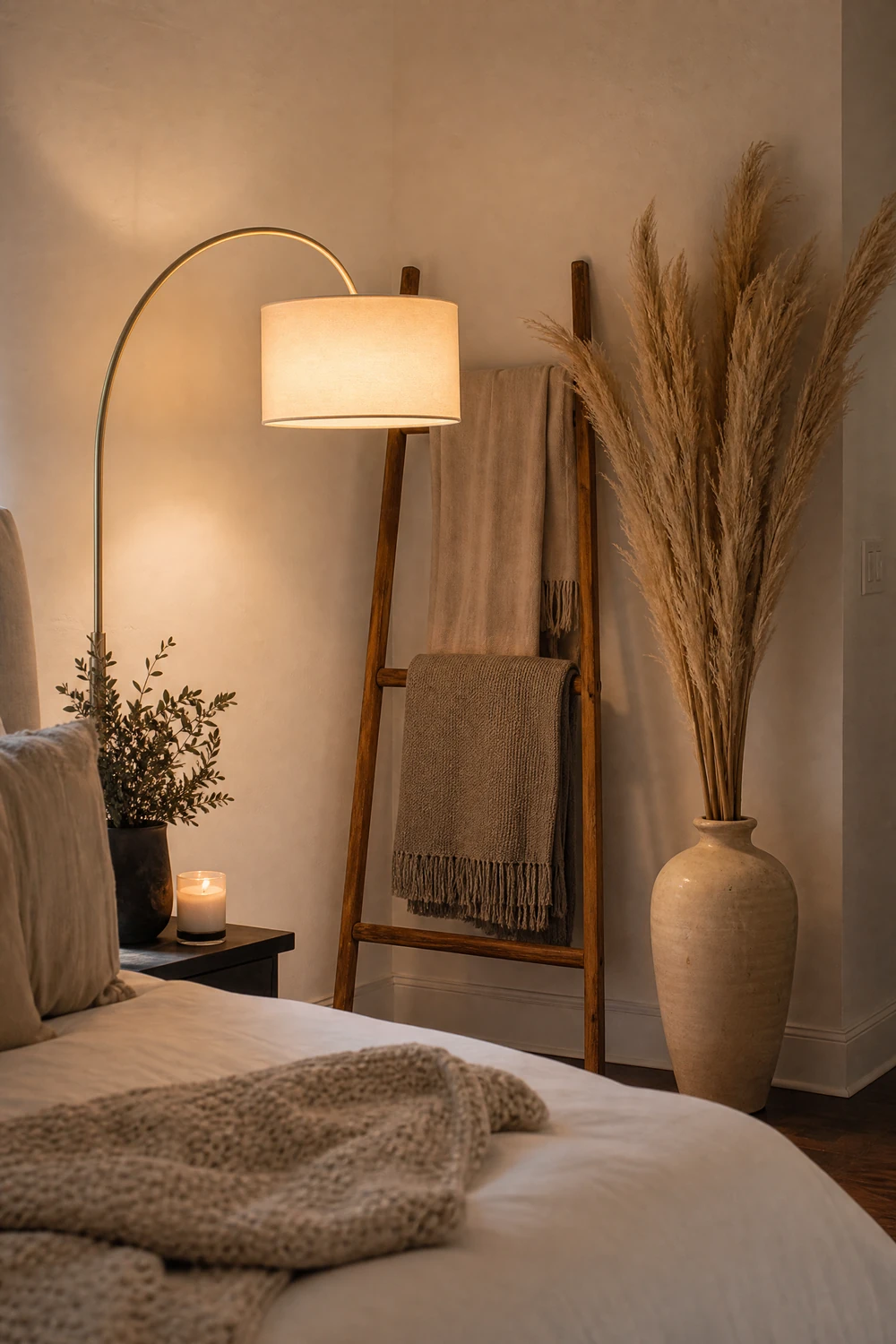
Every bedroom has at least one corner that is doing nothing, and it is almost always the corner diagonally opposite the bed, the one you see when you first walk in and the one that sits in your peripheral vision from the pillow. Leaving this corner empty is a missed opportunity because it is prime visual real estate. A floor lamp in a corner immediately makes the room feel more layered and more lit, and it draws the eye to a part of the room that would otherwise be dark and dead. An arc floor lamp is particularly effective because its arm extends the light source out into the room rather than up against the wall, which gives the corner a sense of reach and generosity.
If a floor lamp already exists elsewhere in the room, the corner can earn its place with a chair, a blanket ladder with two or three throws draped over the rungs, a large architectural plant in a statement pot, or a slim floor vase with dried pampas or tall dried grasses. Any of these options turns a dead corner into a moment without requiring structural changes or significant expense. The blanket ladder in particular solves a practical problem simultaneously, since it gives throws and extra blankets somewhere to live that is visible and beautiful rather than folded in a drawer or piled on a chair.
Designer Advice: A corner reading chair with a floor lamp beside it and a small side table in front is the bedroom addition most people say they wish they had added sooner. Even in a smaller bedroom, a chair creates a zone within the room that makes the space feel larger and more purposeful rather than just a place where a bed lives.
Zone 12: Edit Before You Add Anything Else
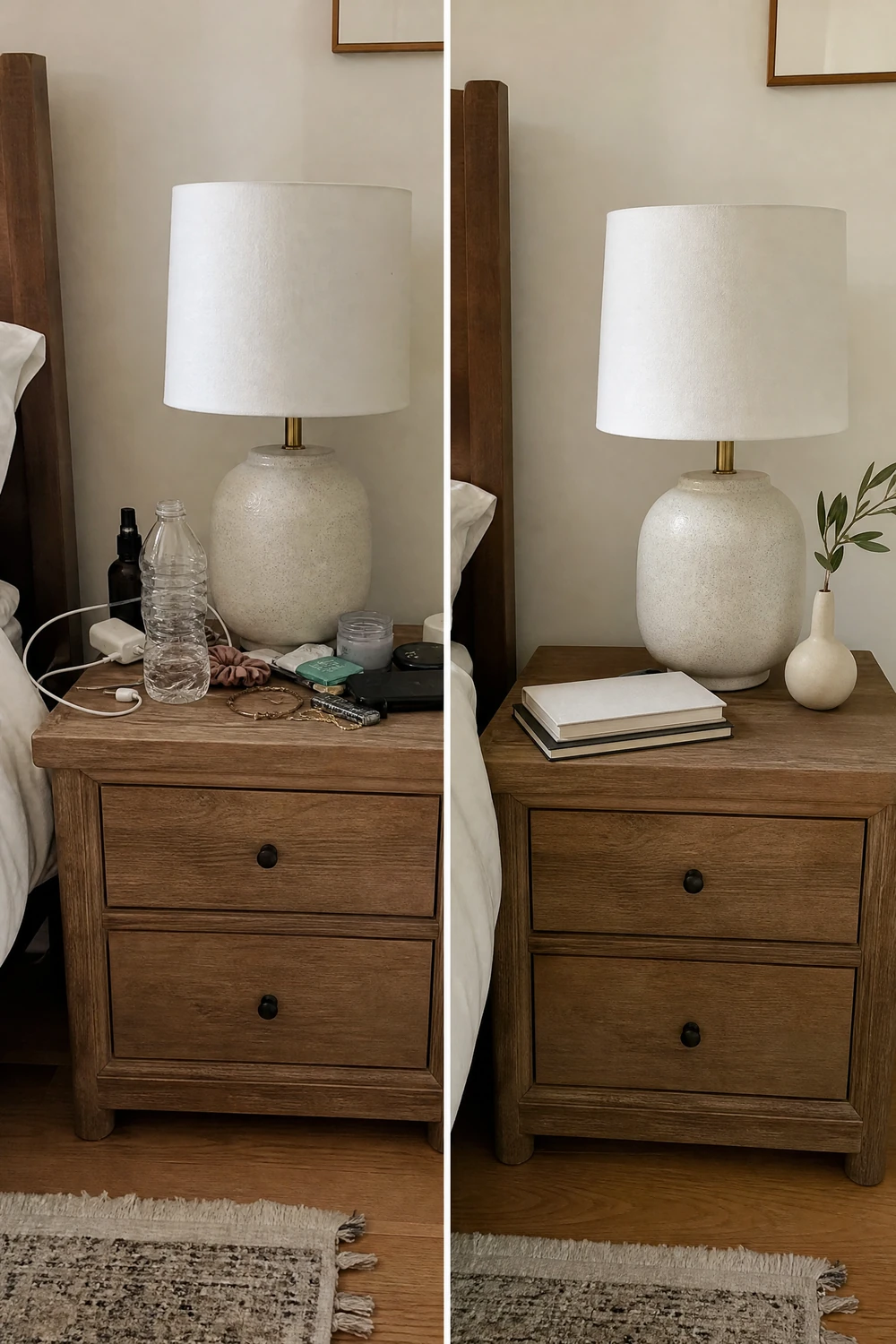
The most consistently overlooked step in any bedroom refresh is the one that costs nothing and makes every other change more effective: editing down what is already there. A bedroom that feels boring is sometimes not missing accessories but drowning in the wrong ones, ones that have accumulated without intention and are now competing with each other for attention without any of them winning. Before adding a single new object, go through every surface in the room and remove anything that does not contribute color, texture, visual interest, or genuine function. What remains will almost always be more interesting than the full collection, because the objects that earn their place finally have space to be seen.
The same editing principle applies to the wardrobe and any open storage in the bedroom. Visible clutter on shelves or a chair piled with clothes creates background noise that prevents even beautiful accessories from reading properly. It is the visual equivalent of trying to hear a single conversation in a loud room. Matching hangers in the wardrobe, a single basket for laundry, and a hook for tomorrow’s outfit are not design details but they create the conditions under which design details can actually be appreciated. The most beautifully accessorized bedroom in the world looks unfinished if there is a pile of clothes on the chair in the corner.
Reality Check: Spend twenty minutes removing things before you spend any money adding them. In almost every bedroom, this single step, combined with rearranging what remains, does more than any new purchase. The room you already have is often better than you think. It just needs editing.
Bedroom Zone Styling at a Glance
| Zone | The Problem | The Fix | Key Rule |
| The Bed | Flat, one-layer, matching pillows | Layer duvet, throw at foot, mixed accent cushions | Odd number of accent pillows, mix textures |
| Nightstands | Functional clutter, plain lamp | Styled vignette: tall, low, living | Three objects maximum per nightstand |
| Dresser Top | Landing zone for clutter | Mirror + tray + curated objects | Everything on the tray; nothing scattered |
| Walls | Art too small or too high | Large piece or gallery grouping at correct height | 6-8 inches above headboard, 57-60 inches to center |
| Floor | No rug or undersized rug | Large rug extending beyond bed on all sides | Queen: 8×10 minimum. King: 9×12 minimum |
| Window | Short curtains, underdressed | Floor-length curtains hung near ceiling | Rod extends 8-12 inches beyond frame each side |
| Lighting | Overhead only, no bedside lamps | Sculptural table lamps or plug-in sconces | Warm white bulbs 2700K only |
| Plants | No organic material | One large plant in a good pot, or dried botanicals | Pot matters as much as plant |
| Scent | No scent layer at all | Candle, reed diffuser, or linen spray | Calming scents only: lavender, sandalwood, linen |
| Mirror | Missing or behind a door | Framed mirror above dresser or leaned in corner | Frame shape matters: round or arched reads best |
| Dead Corner | Empty, underlit | Floor lamp, blanket ladder, or statement plant | Arc floor lamp extends light into the room |
| Editing | Too much competing for attention | Remove two-thirds, add back selectively | Edit before adding. Always. |
The Real Reason Bedrooms Feel Boring
A bedroom feels boring when no single zone of it has been given proper attention. The bed is half-styled, the nightstand is functional but lifeless, the walls have one small piece of art hung too high, the corner is empty, and the lighting comes from a single overhead source that flattens everything it touches. None of these problems require new furniture or a renovation to fix. They require looking at each part of the room separately, understanding what it needs, and making one deliberate choice for each zone. That is what this guide is for. Work through the zones in any order that makes sense for your room, edit before you add, and the bedroom you already have will start to feel like something worth coming home to.