Big Results, Small Budget: The Smart Way to Fix a Small Space

The advice for small spaces on a budget is almost always the same: use mirrors, add light, declutter, go vertical. That advice is not wrong, but it skips the most important question: in what order do you spend your limited money for the most impact? Buying a rug before fixing the lighting, or adding accessories before solving the layout, means spending real money on changes that cannot do their job properly yet. This guide is organized by cost tier, from free through to a modest mid-range investment, so you can work through the changes that cost nothing first, then the ones that cost a little, then the ones worth saving for. Each step makes the next one more effective. That compounding is the actual reason small-space makeovers on tight budgets end up looking better than people expect.
TIER ONE: FREE CHANGES THAT MAKE AN IMMEDIATE DIFFERENCE
Rearrange the Furniture Before You Buy Anything
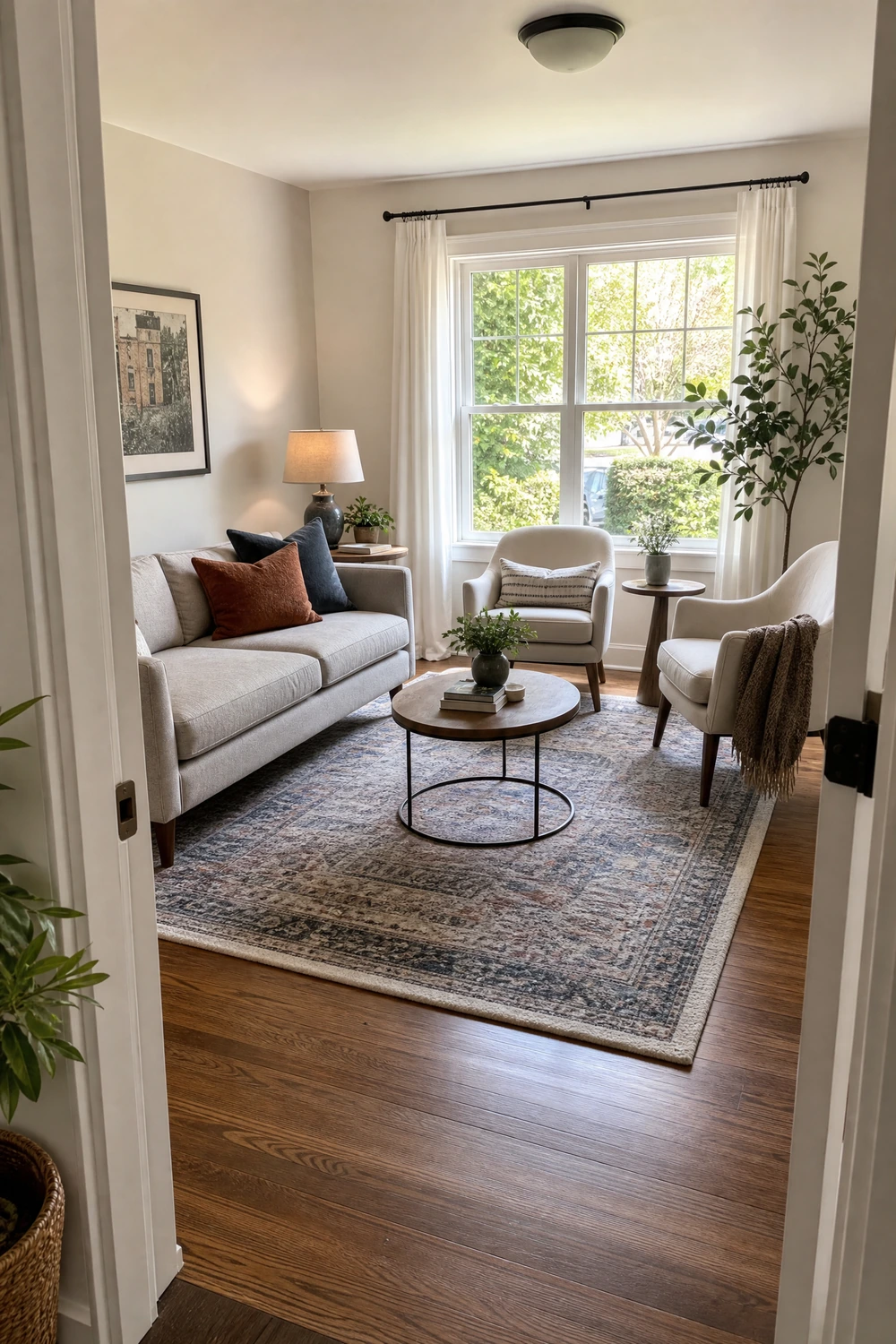
Most people have never tried more than one furniture arrangement in their home, and the first arrangement is almost never the best one for a small space. The instinct is to push furniture against every wall to create floor space in the center, but this is exactly what makes small rooms feel like waiting rooms. Pulling the main seating piece slightly away from the wall and angling it toward the room’s focal point, whether that is a window, a fireplace, or the television, creates visual depth that makes the space feel larger without removing a single item. In a studio or one-room apartment, floating a sofa to subtly divide the living and sleeping zones adds function and makes the space feel more like a considered home than a single cramped room.
Before moving anything heavy, sketch the room on paper with rough measurements and try at least two or three different configurations. Look at where the natural light enters the room and arrange seating to take advantage of it rather than block it. Identify the room’s focal point and make sure the arrangement faces it clearly. In most small rooms, the arrangement that keeps pathways clear and the central floor area as open as possible will feel significantly more spacious than the one that lines everything up against the walls. This costs nothing and is frequently the highest-impact single change available to a small space.
Pro Move: Use masking tape on the floor to map out furniture footprints before you move anything. It saves your back and lets you test arrangements visually before committing to the physical work.
Declutter Down to What You Actually Use and Love
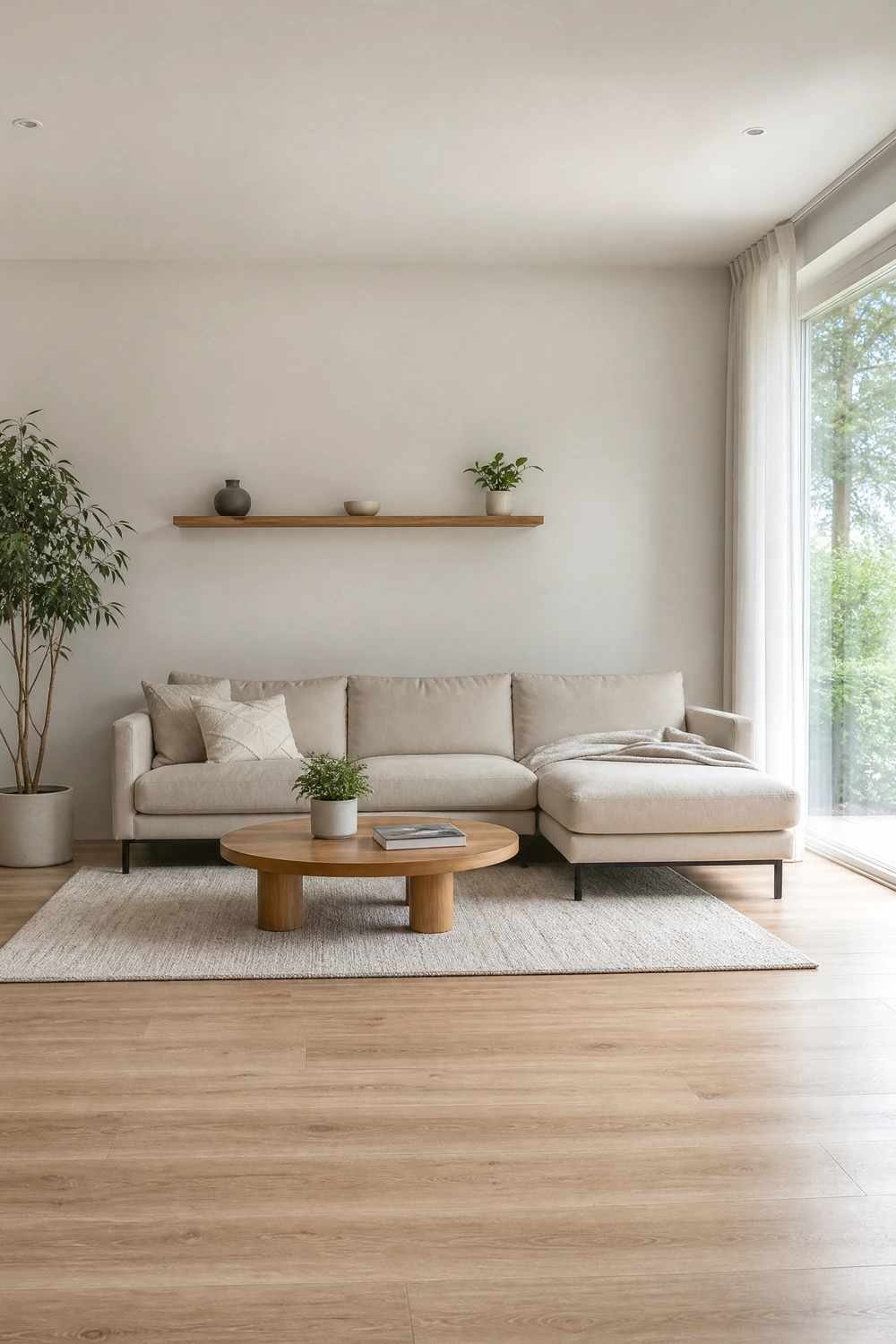
Clutter is the primary enemy of a small space, not the square footage. A room with less furniture and fewer objects than it could technically hold will always feel more spacious, more expensive, and more liveable than one that is filled to its practical limit. The starting point is removing everything that does not serve a clear function or bring genuine visual pleasure. In a small space this is not a lifestyle philosophy but a spatial necessity, because every object that sits without purpose competes for the limited visual real estate the room offers and makes the space feel smaller than it is. The goal is not minimalism for its own sake but clarity, the kind of room where every surface has breathing room and the eye can move freely without snagging on clutter.
Go through the room surface by surface and remove at least a third of what is there. Box everything up and store it for two weeks. If you do not reach for something in that time, it does not belong in a small space. What goes back in should earn its place through function, visual contribution, or personal meaning. The furniture itself deserves the same scrutiny. A small room with five pieces of well-chosen furniture will almost always feel larger and more functional than the same room with eight pieces that are individually inoffensive but collectively overwhelming. If a piece of furniture cannot earn its floor space, it is working against the room.
Reality Check: In a small space, empty floor is not wasted space. It is the design choice that makes every other choice look better. Resist the urge to fill it.
Restyle Every Surface With What You Already Own

Before buying a single new accessory, go through the objects you already own and restyle every surface with them as if you were seeing them for the first time. Group objects in odd numbers. Vary heights so there is always something tall, something medium, and something low in each arrangement. Remove anything that does not contribute a specific color, texture, or form to the grouping. In practice, taking the same twelve objects that are currently scattered across three surfaces and arranging them thoughtfully on one or two surfaces will make the room look more designed and more spacious than it did before, at zero cost. This is the same technique professional stylists use on photo shoots, and the difference between a restyled surface and an unstyled one is significant.
Pay particular attention to bookshelves and open storage in a small room, because these surfaces hold the most visual noise and are the most consistently understyled. Remove two-thirds of what is on any open shelf, then arrange what remains with books both vertical and horizontal, interspersed with one or two objects of different heights. Leave deliberate gaps rather than filling every inch. A shelf with breathing room reads as a design choice. A shelf packed to capacity reads as storage that ran out of space elsewhere in the house. The discipline required to maintain a well-edited open shelf in a small room is real, but the visual payoff is equally real.
Quick Tip: Rotate objects from room to room. Something that looks tired in one context often reads as fresh and interesting in another. A candle from the bathroom on the coffee table, a book from the bedroom on the kitchen shelf. It costs nothing and keeps the space feeling considered rather than static.
TIER TWO: LOW-COST CHANGES UNDER $50
Swap Every Bulb to Warm White

Cool or daylight bulbs above 4000K are among the most common and most correctable reasons a small space feels cold, flat, and institutional rather than warm and inviting. Replacing every bulb in the room with warm white LEDs in the 2700K to 3000K range costs under twenty dollars for most rooms and takes under fifteen minutes, and the difference to the atmosphere of the space is immediate and significant. Warm light makes walls look richer, makes furniture look more intentional, and creates the kind of ambient glow that small, expensive hotel rooms invest heavily in. It is the cheapest change on this list relative to the impact it delivers.
Beyond bulb temperature, think about the number and placement of light sources in the room. A small space lit by a single overhead fixture will always feel smaller and flatter than the same space lit by two or three sources at different heights. A floor lamp in a corner, a table lamp on a sideboard, and a clip-on reading light near the sofa together create layered light that adds visual depth and makes the room feel like it has more dimension than it does. In a small room, layered lighting is not a luxury upgrade. It is one of the most effective spatial tools available.
Quick Tip: Replace bulbs in lamps you already own before buying any new lighting. The transformation in how the existing lamp performs with a 2700K bulb versus a 4000K one is often dramatic enough that new lighting becomes unnecessary.
Add a Mirror in the Right Place

Mirrors in small spaces are one of the most widely given and most widely misapplied pieces of advice in home decor. The mistake is placing a mirror purely for function, on the back of a door or hung wherever there is space, rather than for strategic visual effect. A mirror placed opposite or adjacent to a window bounces natural light back into the room and creates the impression of a second window, which makes the space feel significantly brighter and larger. A mirror on a wall at the end of a narrow corridor or studio apartment makes the room appear to continue beyond where it actually ends, adding perceived depth that is not architecturally there.
The frame of the mirror matters as much as its placement in a small room, because the mirror is functioning as a decorative object as well as a spatial tool. A round or arched mirror with a rattan, brass, or matte wood frame does double duty: it opens the space visually and reads as an intentional piece of decor rather than a functional afterthought. Large mirrors can be found secondhand at thrift stores and online marketplaces for well under fifty dollars, and a large plain mirror with an inexpensive frame update, a coat of spray paint in matte gold, black, or white, reads as far more expensive than it cost. In a small space, few single purchases deliver more visual return per dollar than a well-placed, well-framed mirror.
Heads Up: Avoid placing multiple large mirrors on different walls of a small room. One mirror in the right place reads as a design decision. Multiple mirrors on different walls reads as a gym. Pick the single most strategic position and commit to it.
Use Curtains to Fake Height and Width

Curtains in a small space are not just window dressing. They are a visual architecture tool that can make a room feel taller, wider, and more deliberately designed without any structural changes. The technique is straightforward and universally applicable: hang the curtain rod as close to the ceiling as possible, not just above the window frame, and extend the rod 8 to 12 inches beyond the frame on each side. This makes the window appear larger than it is, tricks the eye into reading the ceiling as higher, and makes the wall itself feel wider and more proportional. A small window treated this way reads as a generous architectural feature. The same window with a curtain hung two inches above the frame reads as the small window it actually is.
For a small room, curtains in a light fabric and a neutral color are almost always the right choice, because they maximize the perception of light and height without adding visual weight. Sheer linen or voile panels in white or off-white filter natural light beautifully and make the room feel airy rather than enclosed. If privacy is a concern, layer a practical roller blind behind the sheer panel so the blind handles the functional work while the curtain handles the aesthetic. Budget-friendly curtain options from high street stores and online retailers are widely available in the correct lengths, and the key investment is not the curtain itself but the curtain rod and the height at which it is hung.
Designer Advice: In a small room, floor-to-ceiling curtains on a single window can visually expand the entire wall they sit on. The rod does not need to span the whole wall to achieve this effect, but if your budget allows for it, a wall-width curtain rod with panels drawn to each side creates the impression of a full bank of windows rather than a single one.
Introduce One Accent Color With Accessories

A small space decorated entirely in neutral tones is safe but often flat. The eye has nothing to move to and the room tends to read as unfinished rather than calm. Introducing one clear accent color through accessories, without buying new furniture, gives the room a visual anchor and a personality it previously lacked. The most effective approach is to pick one color and repeat it in three or four small objects across the room: a cushion on the sofa, a ceramic vase on the shelf, a candle on the coffee table, and a small plant pot on the windowsill. The repetition is what makes it read as intentional rather than accidental, and it costs very little because the objects themselves are small.
The color you choose for a small space should be warm rather than cool if the room lacks natural light, and muted rather than saturated if you want the space to feel calm rather than busy. Terracotta, dusty sage, warm ochre, soft rust, and muted teal all work well as accent colors in small rooms because they add warmth and personality without visually advancing toward the viewer in the way that bright, saturated colors do. Bright red or electric blue in a small room makes the walls feel closer. A dusty terracotta or a muted olive in the same space adds color without creating the impression of enclosure.
Reality Check: One accent color repeated three or four times reads as a designer’s choice. Two different accent colors in a small room read as indecision. Pick one and use it consistently until it feels like the room’s signature rather than an addition.
TIER THREE: MID-RANGE INVESTMENTS WORTH SAVING FOR
Buy a Rug That Is Bigger Than Feels Right

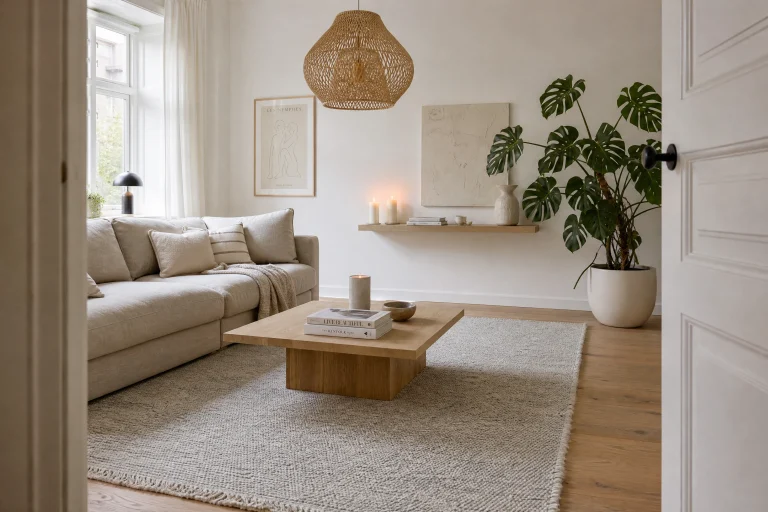
An undersized rug is one of the most common reasons a small room never quite looks finished, and it is a mistake that is almost always made in good faith. The logic of buying a smaller rug for a smaller room feels sound but is spatially counterproductive. A rug that is too small creates an island in the center of the room that makes the floor look like it has shrunk and the furniture look like it is floating disconnected above it. A properly sized rug that extends under the front legs of the main seating pieces, or ideally under all of them, creates a visual boundary that defines the room’s living zone and makes the overall space feel intentionally organized. This optical effect is significant and consistent regardless of room size.
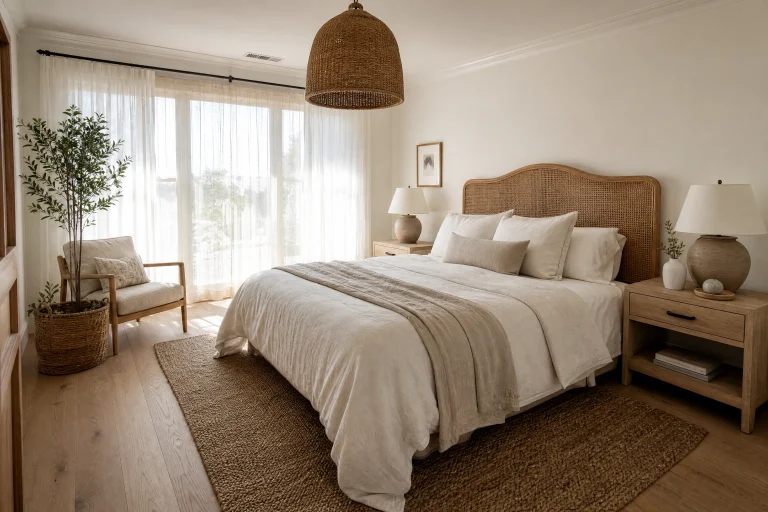
For a small living room, the minimum effective rug size is typically 6 by 9 feet, and 8 by 10 is often better. For a small bedroom, the rug should extend at least 18 inches beyond the sides of the bed. Natural fiber rugs in jute, sisal, or wool are the most visually versatile because their texture adds warmth and depth without competing with the other elements in the room, and they are available at a wide range of price points including very affordable options at high street homeware stores. A flatweave or low-pile rug in a warm neutral, an ivory, a warm grey, a faded terracotta, reads as intentional in almost any small room regardless of the existing color scheme.
Pro Move: If the rug you want is out of budget at its full size, look for a runner version of the same design and layer it over a larger, cheaper natural fiber rug. The layered rug look reads as considered and adds texture without requiring a single large investment.
Paint One Wall a Deeper, Richer Color

The received wisdom is that small rooms need light, neutral paint to feel larger. This is partially true but overstated, and it keeps people from making the one paint decision that often transforms a small space most dramatically. A single accent wall in a deeper, more saturated tone does something that a pale neutral room cannot: it creates visual depth. The wall recedes optically, which makes the room feel like it has more dimension than it does. The remaining three walls can stay light, which preserves the brightness of the space, while the single dark or rich wall adds the layer of personality and depth that flat neutrals cannot deliver. This effect is particularly powerful on the wall at the end of a narrow room or the wall behind the main seating or sleeping surface.
The colors that work best for this purpose in small rooms are deep, slightly muted tones rather than bright or primary colors: a warm terracotta, a deep sage, a soft navy, a smoky plum, a dark forest green, or a warm charcoal. These colors add depth without making the wall feel oppressive, and they photograph beautifully against lighter furniture. A single can of paint costs between twenty and fifty dollars and covers most accent walls in a single coat. If painting is not permitted in a rental, peel-and-stick wallpaper in a textured or subtly patterned design delivers a comparable effect with no permanent changes and no deposit risk.
Designer Advice: Paint the ceiling of a small room the same color as the accent wall to create a cocooning effect that makes the room feel intimate and designed rather than small. This works particularly well in bedrooms and reading corners, and it costs nothing extra beyond the same can of paint.
Invest in Multi-Functional Furniture
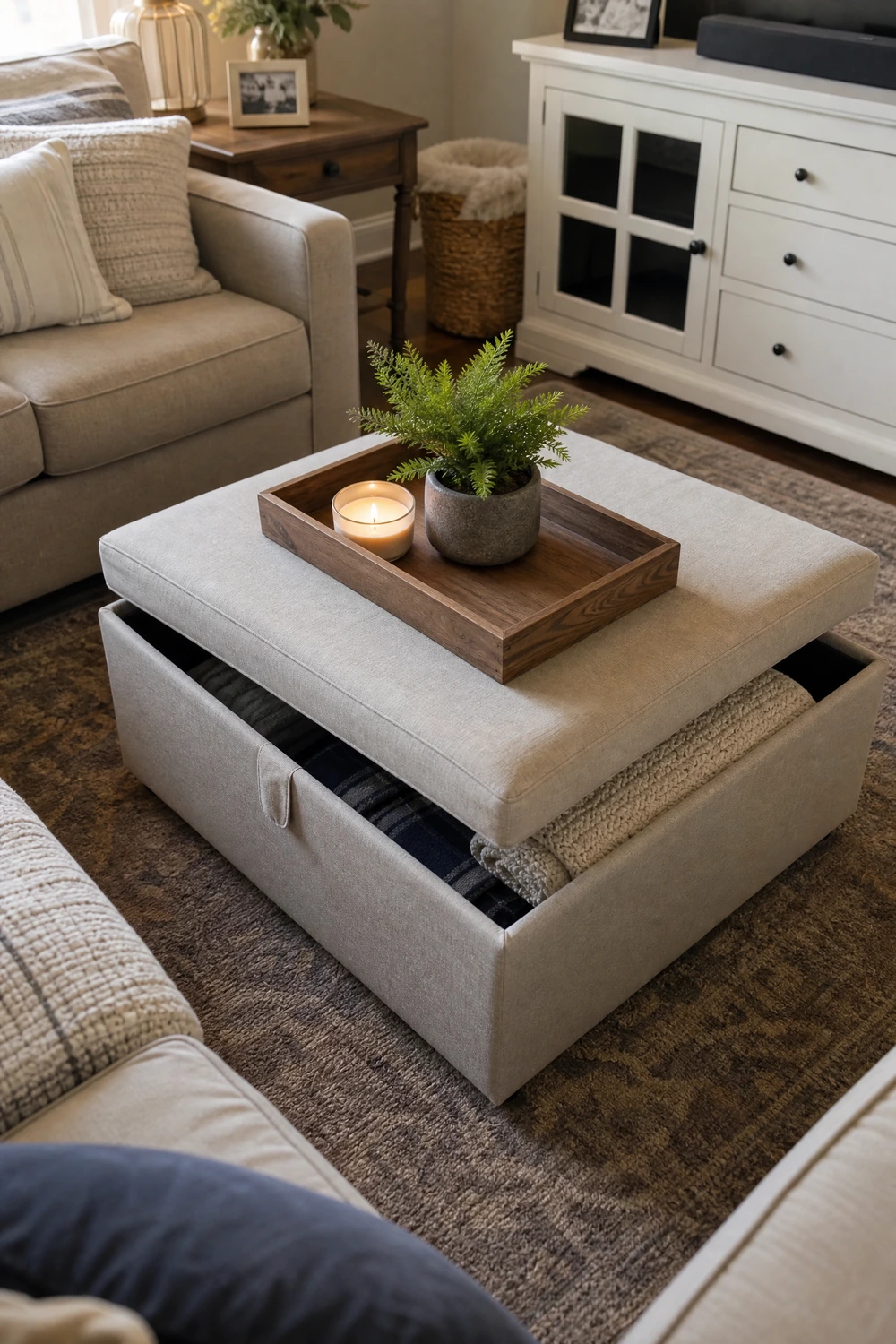
In a small space, every piece of furniture needs to justify its floor footprint by doing more than one job. A storage ottoman at the foot of a bed or in front of a sofa provides seating, functions as a coffee table with a tray on top, and hides blankets, cables, or seasonal items inside. A slim console table behind a sofa serves as a surface for lamps and display while also functioning as a room divider in an open-plan studio. A bench at the foot of the bed holds bags and coats and provides occasional extra seating without taking up the floor space a chair would require. These are not compromises or budget substitutes. They are the furniture choices that make a small space genuinely liveable rather than just visually manageable.
Nesting tables are worth particular mention because they are one of the most consistently underused pieces of multi-functional furniture in small homes. A set of two or three nesting tables beside a sofa or chair provides surface area when needed and disappears when it is not, unlike a fixed side table that occupies the same floor area permanently. Foldable dining tables mounted to a wall or freestanding are equally valuable in small apartments where a full dining table would take up floor space that cannot be spared. The key principle with multi-functional furniture is that each piece should solve at least two problems simultaneously. If it only does one thing, a small room probably cannot afford to keep it.
Heads Up: Multi-functional furniture is worth spending a little more on than purely decorative pieces, because it is used constantly rather than occasionally. A storage ottoman that falls apart after six months, or nesting tables that wobble, become a frustration rather than a solution. Buy the best version you can afford of the pieces that work hardest.
Go Vertical With Shelving

Small rooms almost universally underuse the wall space above eye level, which is some of the most valuable real estate in a tight floor plan. Tall shelving that reaches toward the ceiling draws the eye upward and makes the room feel taller, while simultaneously providing storage and display space that keeps the floor clear. The difference between a room with a low bookshelf and a room with a floor-to-ceiling shelving unit is not just the storage capacity but the entire vertical impression of the space. A tall unit makes the ceiling feel higher. A low unit makes the ceiling feel closer.
When shelving is not fixed but freestanding, it can also function as a room divider in a studio apartment, creating a visual separation between the sleeping and living zones without closing off light or air. Open shelving in a kitchen used decoratively as well as practically, with a good mix of dishware, plants, and a few well-chosen objects alongside the functional items, makes a small kitchen feel like a designed room rather than a utility space. The rule for styling any open shelf in a small room is the same as for any surface: remove two-thirds, arrange what remains with variety in height and material, and leave deliberate breathing room between groupings.
Quick Tip: Paint the back panel of a freestanding shelving unit in your accent color before filling it. The colored back makes the shelf read as a piece of furniture rather than storage, adds depth to the wall behind it, and costs only the price of a small sample pot of paint.
Choose Furniture With Legs

Furniture that sits directly on the floor, with no visible gap between the base and the floor plane, makes a small room feel heavier and more enclosed than it needs to be. The reason is visual weight: a sofa or cabinet that appears to float above the floor allows the eye to travel beneath it, which creates the impression of continuous floor space and makes the room feel more open. Furniture with legs does the opposite of what you might expect in a small room. Rather than adding visual bulk, it subtracts it, because the visible floor beneath the piece extends the floor plane and makes the room feel larger than its actual dimensions. This is why professionally designed small rooms almost always feature furniture with exposed legs rather than floor-level bases.
When replacing furniture or shopping for new pieces for a small space, prioritize pieces with legs over pieces without them at every price point. A sofa on tapered wooden legs, a side table on slim metal legs, a bed frame on visible wooden or metal legs rather than a platform base. Even raising existing furniture on furniture risers, which cost under twenty dollars for a set of four, can change the visual weight of a heavy piece and open up the floor plane beneath it. In a small room, the floor is one of the most important surfaces because it determines how spacious the room feels. Every inch of it that is visible contributes to that impression.
Designer Advice: When choosing a coffee table for a small living room, consider glass or acrylic. A transparent surface occupies the floor plan without blocking the sightline across it, which makes the room feel significantly more open than a solid wood or upholstered ottoman of the same size.
Small Space Budget Plan at a Glance
| Tip | Cost | Impact | Do This First If… |
| Rearrange the furniture | Free | High | You haven’t tried more than one layout |
| Declutter ruthlessly | Free | Very High | Surfaces and floors feel crowded |
| Restyle surfaces with existing items | Free | Medium-High | You have objects but no cohesion |
| Swap bulbs to warm white 2700K | Under $20 | Very High | The room feels flat or clinical at night |
| Add a mirror opposite a window | Under $50 | High | The room lacks light or depth |
| Hang curtains near the ceiling | Under $50 | High | Windows look small or walls feel low |
| Introduce one accent color | Under $30 | Medium | The room feels bland or unfinished |
| Buy a properly sized rug | $80-$200 | Very High | Furniture looks disconnected from the floor |
| Paint one wall a deeper color | $20-$50 | High | The room feels flat and personality-free |
| Add multi-functional furniture | $60-$200 | High | Storage is the primary problem |
| Go vertical with shelving | $50-$150 | Medium-High | Floor space is limited but walls are bare |
| Choose furniture with legs | Varies | Medium | The room feels heavy and enclosed |
Start Free, Then Spend Smart
The most expensive mistake in a small space is spending money before exhausting what costs nothing. Rearranging the furniture, editing the clutter, and restyling the surfaces with objects you already own will change the room more than most purchases will. When you are ready to spend, do it in order of impact: bulbs first, then a mirror, then curtains, then a rug. These four changes, costing well under two hundred dollars combined, address the four biggest visual problems in any small space: flat light, no depth, low ceilings, and disconnected furniture. Everything after that is refinement. A small space that has been given proper attention at every cost tier will feel intentional, personal, and spacious in all the ways that matter, without a renovation and without a large budget.