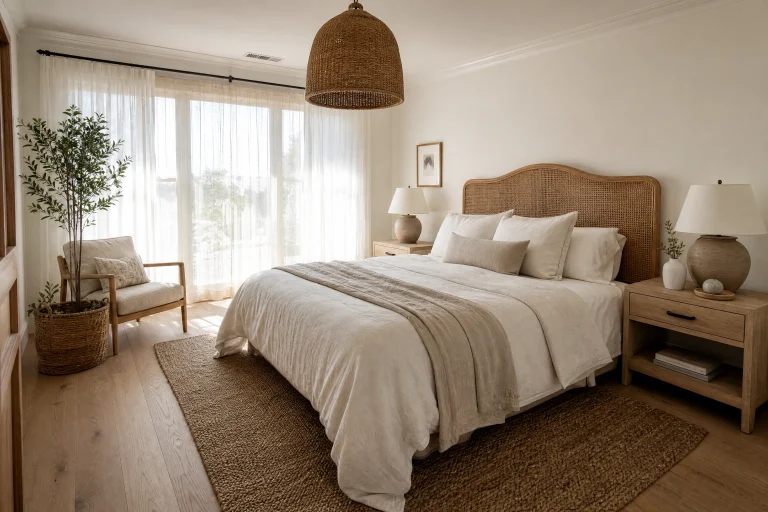
Apartment Bedroom Looks That Feel Like Home

Most apartment bedrooms start the same way: white walls, beige carpet, one overhead light, and a layout that was not designed with your furniture in mind. The good news is that none of those constraints are as fixed as they feel on day one. The room works, technically. It just does not feel like yours.
These 24 ideas are built around the real constraints renters face every day, and every single one works within them.
1. The Blank White Wall Problem: Use Peel-and-Stick Wallpaper on One Wall

When you cannot paint, a single accent wall in peel-and-stick wallpaper does everything paint would do and then some. Choose a fabric-backed version in a textured linen, a warm geometric, or a soft botanical print, and apply it only behind the bed so the room has a clear focal point without the whole space feeling covered.
Quick Tip: Fabric-backed peel-and-stick wallpaper removes far more cleanly than vinyl-only versions, especially on older rental walls. Budget $35 to $55 for a single accent wall and keep the leftover pieces in case you need to patch.
2. The No-Closet Situation: Build a Wardrobe Wall with a Clothing Rack and Curtain

Apartments with no built-in closet or a closet too small to be useful are extremely common, and the solution that works best in practice is a freestanding clothing rack paired with a ceiling-mounted tension rod and floor-length linen curtain to hide it. The curtain closes off the storage visually, the rack holds everything a standard closet would, and the whole setup dismantles in under an hour.
Designer Advice: Mount the curtain rod as high as possible and let the fabric pool slightly at the floor. This draws the eye up and makes the ceiling feel higher than it is, which matters enormously in a small apartment bedroom.
3. The One Overhead Light Issue: Layer Three Light Sources Instead

A single overhead fixture is the fastest way to make a bedroom feel like a hospital room. In an apartment where you cannot rewire, the fix is layering: a warm plug-in sconce on each side of the bed, a floor lamp in the corner for ambient fill, and warm 2700K LED bulbs swapped into any existing fixtures. Three sources at different heights change the entire feel of the room.
Heads Up: Plug-in wall sconces with adhesive mounting strips or a command hook for the cord are widely available now and look exactly like hardwired versions from across the room. No electrician, no drilling, no deposit loss.
4. The Tiny Square Footage Challenge: Choose a Bed with Built-In Storage

In an apartment bedroom where floor space is the most valuable thing you have, a bed frame with built-in drawers underneath does the work of a full dresser without using any additional square footage. A platform bed with two or four deep drawers on either side replaces a four-drawer chest and keeps the room open for other pieces.
Reality Check: Measure your ceiling height before buying a storage bed. In apartments with low ceilings, a tall mattress on a storage platform can make the room feel compressed. Keep the total bed height, frame plus mattress, under 28 inches for rooms with standard 8-foot ceilings.
| Bed Storage Type | Best For | Drawer Capacity |
| Platform with side drawers | Most apartment layouts | 2 to 4 drawers |
| Ottoman bed with lift base | Small rooms, single occupants | Large single compartment |
| Headboard with shelves | No floor space for drawers | Books, lighting, small items |
| Bed risers with baskets | Existing bed frame | Flexible, moveable storage |
5. The Beige Carpet Reality: Anchor the Room with a Large Area Rug

Beige or grey carpet is the default in most rentals, and the most effective single move you can make is laying a large area rug directly over it. The rug should be big enough that the front legs of all the bedroom furniture sit on it, which visually defines the space and makes the room feel designed rather than furnished by accident.
Pro Move: A rug that ends at least 18 inches from each wall makes the room feel larger. A rug that stops short of the furniture legs makes the room feel smaller. Size up rather than down, even in tight spaces.
6. The No-Headboard Situation: Use a Mix or Fabric Panel Behind the Bed
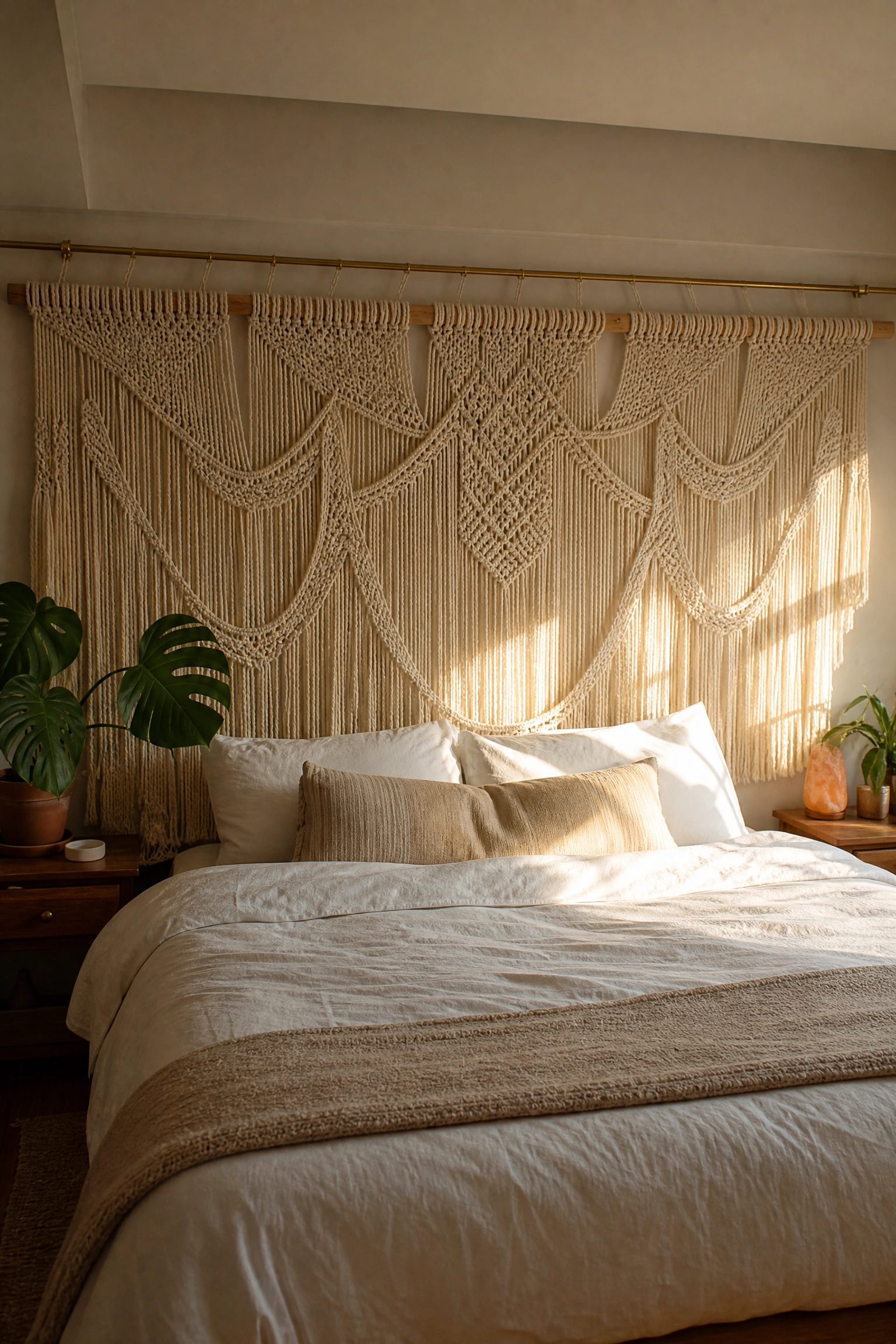
A large woven mix or an oversized piece of fabric hung behind the bed using a tension rod or adhesive strips functions exactly like a headboard in terms of visual weight and room anchoring. In practice, it works better than many headboards because it fills more wall height, adds texture, and costs a fraction of the price.
Designer Advice: For the most convincing headboard effect, choose a mix or panel that is at least as wide as your mattress plus 12 inches on each side. The extra width keeps it from looking like an afterthought.
7. The No-Natural-Light Problem: Use Mirrors Strategically

A bedroom with one small window or windows that face a brick wall needs mirrors placed across from whatever light source exists to double the perceived brightness. A large leaning mirror on the wall opposite the window, or a gallery of smaller mirrors clustered together, bounces light back into the room in a way no amount of white paint can replicate.
Quick Tip: Leaning a large mirror against the wall rather than hanging it means no drilling and no deposit risk. A 60-inch leaning mirror positioned at a slight angle toward the window will reflect light across the widest possible area of the room.
8. The Generic Furniture Problem: Paint or Reline the Inside of a Dresser

If you own a builder-grade or IKEA dresser and it reads as generic, painting the interior drawer faces or relining the inside of each drawer with patterned paper transforms the piece into something that looks considered and personal. This is a change that shows every time a drawer is opened and costs almost nothing.
Heads Up: Use removable contact paper inside drawers rather than wallpaper paste. It peels out cleanly, protects the drawer surface, and can be changed as easily as swapping out a throw pillow.
9. The Sad Rental Curtains: Replace Them with Floor-to-Ceiling Panels
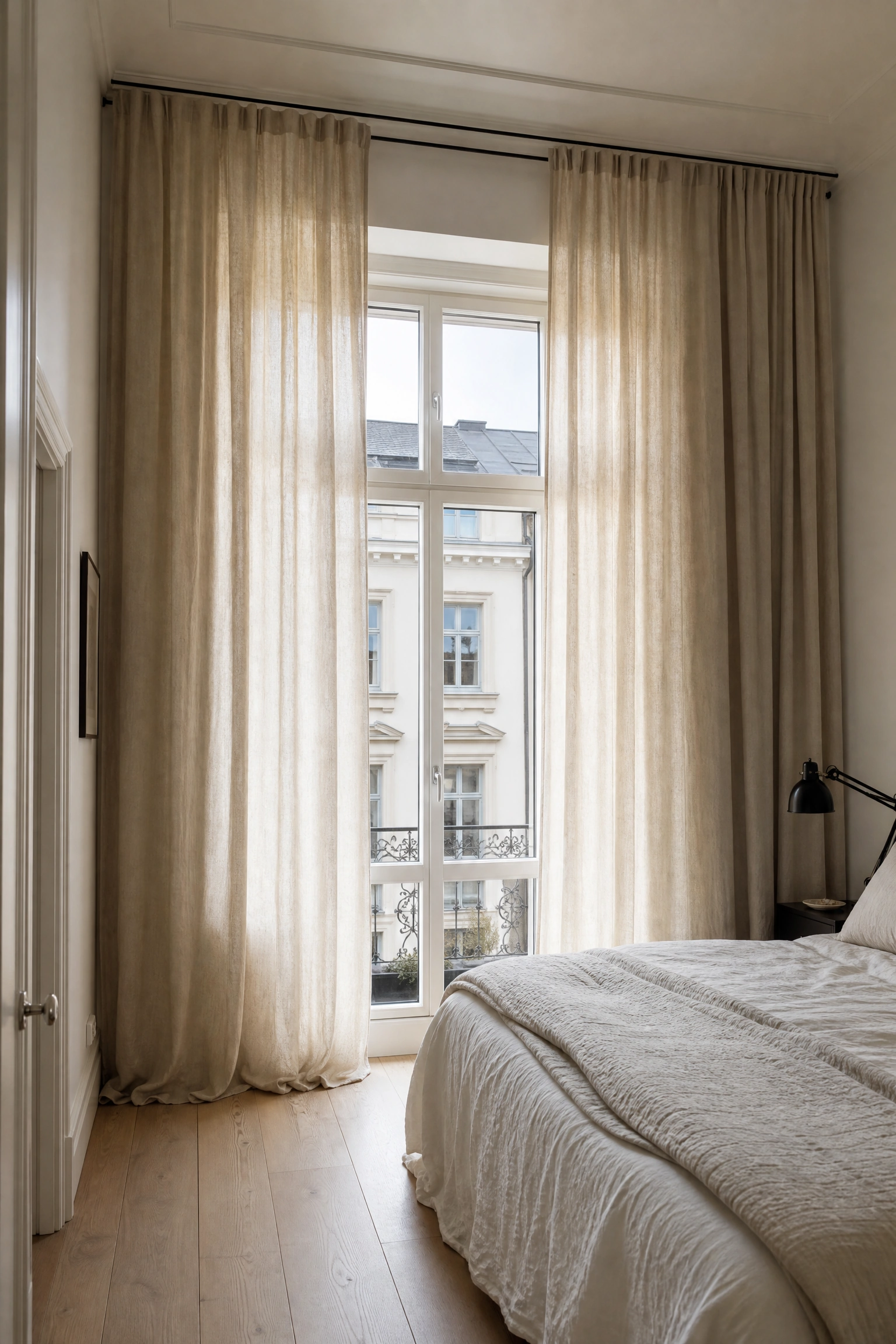
The curtains that come with most apartments, short, thin, and hung mid-window, are one of the easiest things to fix and one of the highest-impact changes you can make. Replacing them with long linen or velvet panels that hang from ceiling height to the floor makes the windows look taller, the ceilings look higher, and the entire room look more intentional.
Pro Move: You do not need a new curtain rod. A tension rod installed inside the window frame, or command hooks rated for the weight of your panels, works well for lighter linen curtains. For heavier velvet, use a ceiling-mounted tension track rod that spans the full wall width.
10. The No-Character Space: Add Architectural Detail with Peel-and-Stick Molding

Peel-and-stick chair rail molding, panel molding kits, or wood slat panels applied to one wall add the kind of architectural detail that makes a room feel like it was designed rather than assembled. Applied in a classic grid pattern above a bed, they read as real molding from a few feet away and remove without any wall damage.
Reality Check: The key to making peel-and-stick molding look real is using a level obsessively and painting over the molding in the same color as the wall, or in a contrasting tone if your lease allows painting. The painted finish is what makes it convincing.
11. The Open-Plan Studio Bedroom: Define the Space with a Bookcase Divider

In a studio apartment where the bed sits in the same room as everything else, a tall open bookcase placed perpendicular to the wall creates a visual boundary between the sleeping area and the living area without using a permanent wall. The back of the bookcase becomes the headboard wall, and the shelves face outward toward the living space.
Designer Advice: Use the bookcase shelves on the living side for display and on the bedroom side for practical storage like folded clothes, books, and small baskets. A bookcase between 5 and 6 feet tall provides separation without making either side feel boxed in.
12. The Lack of Storage: Go Vertical with Floor-to-Ceiling Shelving

In an apartment bedroom where the floor is already fully occupied, the only direction left is up. Floor-to-ceiling shelving using freestanding units that brace against the wall, rather than anchoring into it, gives a bedroom storage that rivals a built-in without touching the walls permanently. Style the upper shelves with objects, the middle with books and decor, and the lower with baskets for practical storage.
Quick Tip: Freestanding bookcases that brace against the ceiling using adjustable pressure poles are available from several Scandinavian furniture brands and are specifically designed for apartment use. They are far more stable than standard freestanding shelves and look completely intentional.
13. The Cold Minimal Look: Layer Textiles to Add Warmth and Depth
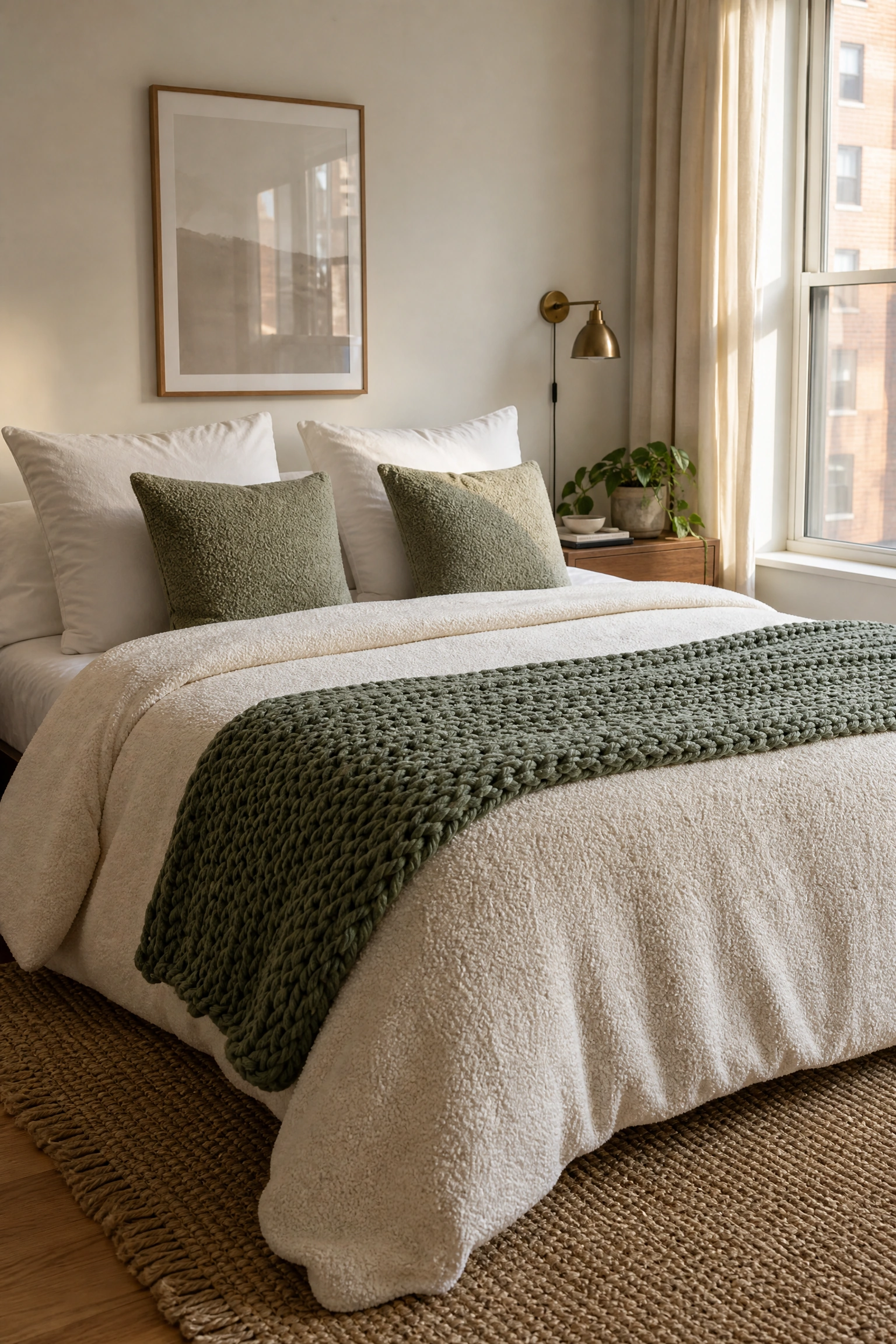
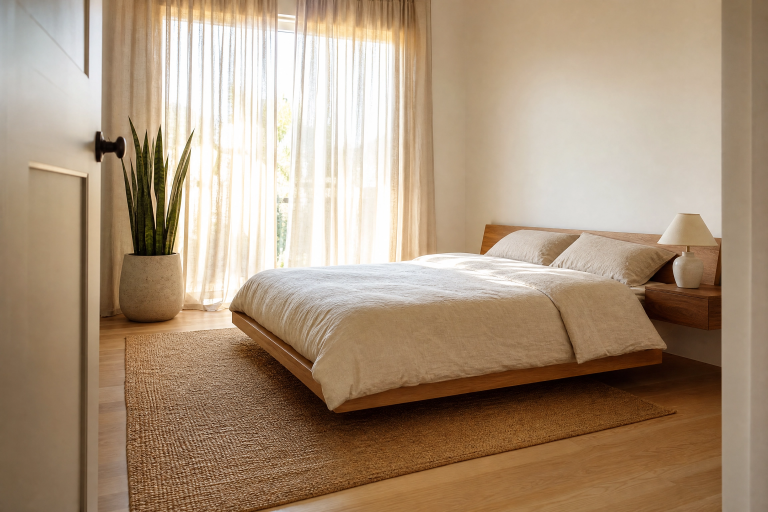
An apartment bedroom that feels cold or empty almost always lacks textile layering. A fitted sheet, a duvet, two Euro shams, two standard pillows, and a folded throw across the foot of the bed create a bed that looks like it was styled rather than slept in. Add a jute or wool rug, linen curtains, and a knitted blanket over the chair and the room reads as genuinely warm.
Reality Check: The single biggest visual upgrade in any bedroom is a well-made bed. In an apartment where structural changes are off the table, what sits on the bed is doing most of the decorating work.
14. The Awkward Corner: Turn It into a Reading Nook

Corners in apartment bedrooms are usually wasted, occupied by a pile of laundry or pushed-in furniture. A small armchair or papasan chair, a floor lamp positioned over the shoulder, a small side table, and a footstool turn the corner into a reading nook that makes the bedroom feel larger by giving it a secondary function beyond sleeping.
Pro Move: Choose an armchair with legs rather than a skirted base. Visible legs make furniture read as lighter and less space-consuming in a small room, which keeps the nook from feeling like it is eating the corner.
15. The Builder-Grade Door Problem: Hang a Full-Length Mirror on the Back of the Closet Door

The inside face of a closet door is almost always blank and wasted. A full-length mirror mounted with adhesive strips or over-the-door hardware turns it into a functional dressing mirror, adds the illusion of depth to the room when the door is open, and frees up floor space that would otherwise go to a freestanding mirror.
Designer Advice: An over-the-door mirror that spans the full height of the door, typically 48 to 60 inches, works better than a narrow one. The larger the mirror, the more light and space it creates when the door is open.
16. The Harsh Overhead Light at Night: Add a Dimmer Plug-in Adapter

Most apartment bedrooms have a ceiling fixture on a wall switch with no dimmer. A plug-in dimmer adapter, available for under $20, goes between the wall plug and any lamp cord and allows full dimming control without any electrical work. Pair it with a warm 2700K or even amber 2200K bulb and the bedroom goes from harsh to genuinely restful in under five minutes.
Quick Tip: If your apartment has a ceiling fixture that takes a standard bulb, a smart bulb with a companion app gives you full dimming and color temperature control from your phone, no electrician needed, and the bulb comes with you when you move.
17. The Impersonal Rental Vibe: Build a Gallery Wall with Adhesive Strips

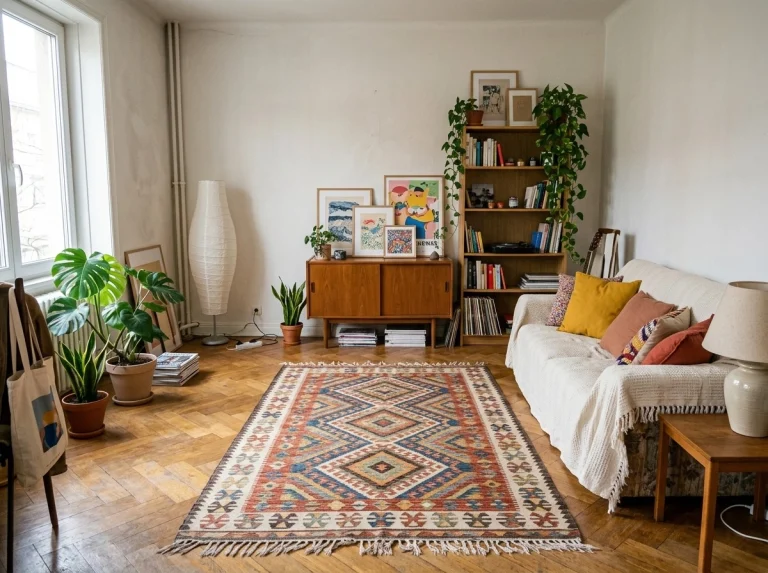
A gallery wall of framed art, photographs, and prints built entirely with picture-hanging adhesive strips looks identical to a nailed gallery wall and removes cleanly. The key to making it look intentional rather than scattered is laying the whole arrangement out on the floor first, deciding on the spacing and composition before a single strip goes on the wall.
Heads Up: Command strips hold reliably up to the listed weight per pair and fail when that limit is exceeded. Weigh every frame before hanging, double-check the strip rating, and you will not have a single thing fall.
18. The No-Space-for-Nightstands Problem: Use Wall-Mounted Shelf Alternatives

In a bedroom where the space between the bed and the wall is too narrow for standard nightstands, a small floating shelf mounted at mattress height with a command hook for a plug-in sconce does the same job in about 4 inches of depth rather than 18. One shelf can hold a lamp, a book, a phone, and a glass of water, which is everything a nightstand is actually used for.
Reality Check: Adhesive-mounted floating shelves rated for 20 pounds or more are sturdy enough to hold a lamp and bedside essentials without any drilling. The key is applying them to a clean, flat section of wall and waiting the full 24 hours before loading them.
19. The Rental Bathroom Bleed: Create a Visual Boundary with a Room Divider Screen

In some studio and one-bedroom apartments, the bedroom is visible from the hallway or directly adjacent to the bathroom with no visual break. A folding screen or a bamboo room divider placed across that opening creates privacy, adds a layer of texture and visual interest to the bedroom, and defines the sleeping zone without permanent changes.
Designer Advice: A three-panel folding screen works best at 5 to 6 feet tall and should be chosen in a material that echoes something already in the room, such as a rattan screen to match woven baskets, or a lacquered wood screen to match a dark bed frame.
20. The Boring Ceiling: Make It a Fifth Wall with a Statement Light or Wallpaper

Apartment ceilings are almost universally ignored. A plug-in pendant lamp hung from a ceiling hook, a canopy of fairy lights, or even a peel-and-stick wallpaper applied to the ceiling above the bed turns the fifth wall into a genuine design feature. In a small bedroom this is the single most unexpected thing you can do and it makes the room instantly memorable.
Pro Move: A ceiling hook rated for 15 to 20 pounds will hold a plug-in pendant lamp in almost any apartment ceiling without structural damage. Run the cord along the ceiling to the nearest wall and clip it with adhesive cord clips to keep the installation looking intentional.
21. The Lack of Personal Style: Use Bedding as the Primary Color Statement

In an apartment where painting is not an option and peel-and-stick feels like too much commitment, the bedding is doing the entire color and style job. A duvet cover in a deep terracotta, a rich forest green, a graphic indigo block print, or a textured boucle cream sets the entire palette for the room and everything else can be built around it.
Quick Tip: Start with the duvet cover you actually love, then pull one accent color from it for the curtains or rug. Working outward from the bed is the approach most professional stylists use when decorating a bedroom with a neutral backdrop.
22. The No-Natural-Wood Problem: Bring Warmth with Secondhand Furniture

Apartments furnished entirely in flat-pack white or black furniture feel cold and temporary, and the fastest fix is one piece of real or vintage wood. A secondhand oak dresser, a cane-back chair from a thrift store, or a wooden ladder shelf from a marketplace buy adds warmth and organic texture that no amount of new flat-pack can replicate.
Reality Check: One genuine vintage or secondhand wood piece lifts an entire room out of feeling like a furnished rental. It does not need to be expensive. A $40 thrift store dresser sanded and left in its natural wood tone reads as a $400 design choice in the right room.
| Item | Where to Find It | Budget Range |
| Solid wood dresser | Facebook Marketplace, thrift stores | $30 to $120 |
| Cane or rattan chair | Vintage shops, eBay | $25 to $80 |
| Wooden ladder shelf | IKEA, Marketplace | $20 to $60 |
| Oak side table | Estate sales, Etsy | $40 to $100 |
23. The Cluttered Small Bedroom: Use Baskets as Visible Storage

In a bedroom where there is simply not enough hidden storage, open baskets used intentionally become part of the decor rather than evidence of clutter. Woven seagrass or rattan baskets in two or three sizes, placed on shelves or on the floor beside the bed, hold extra blankets, charging cables, books, and anything else that would otherwise pile up on surfaces.
Designer Advice: The trick is choosing baskets that match in material even if they vary in size. A set of seagrass baskets in three different heights reads as a considered collection. Three different styles in three different materials reads as things you could not find a home for.
24. The Temporary Feeling: Treat Plants as Structural Decor

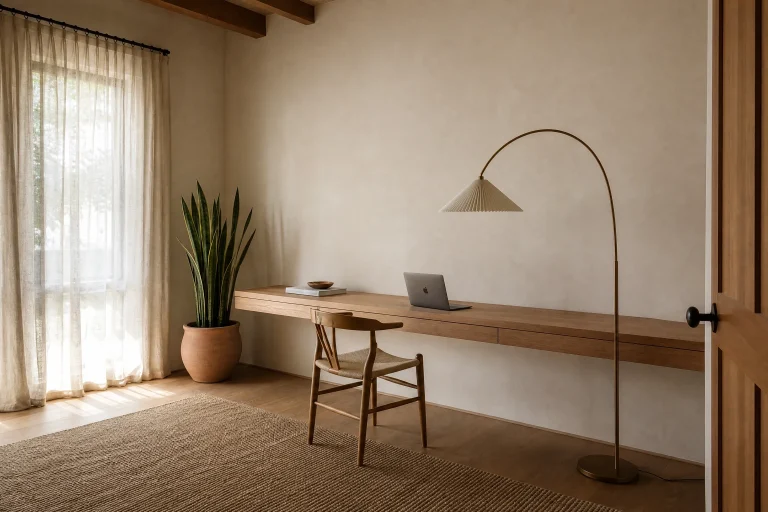
The single detail that most consistently makes an apartment bedroom feel permanent and lived-in rather than temporary is plants. Not a small succulent on the windowsill, but a large statement plant like a fiddle leaf fig, a monstera, or a tall snake plant placed in a ceramic or terracotta pot in a floor-level corner. A large plant at floor level gives the room visual weight and warmth that no purchased object can fully replicate.
Pro Move: A plant in a heavy ceramic pot does not need to be anchored or installed. It is completely renter-friendly, it moves with you, and it gets better with time, which is more than most apartment decor can claim.