Summer Home Decor Looks Worth Living In Right Now

Refreshing a room for summer costs a lot less than most people think, mostly because the changes that make the biggest difference are not the expensive ones. Most of what works is either free, very cheap, or involves swapping something you already have for something you like better. It is lighter, airier, and somehow more alive than it was a few months ago. A few swapped-out textiles, a shift in the color palette, and a smarter approach to light can completely change how a space feels to live in. The good news is that getting that feeling does not require a full renovation or a designer budget. It mostly comes down to knowing which changes actually make a difference and which ones just look nice in photos.
This collection of summer decorating ideas covers everything from whole-room transformations to small, specific swaps you can do on a Sunday afternoon. The ideas are organized by theme so you can focus on one area at a time or mix and match across categories. Whether you are starting from scratch with a new space or just looking to shake things up before the hottest months of the year, there is something here that will work for your home and your budget.
Color and Light
1. Build Your Base Around Warm White Walls
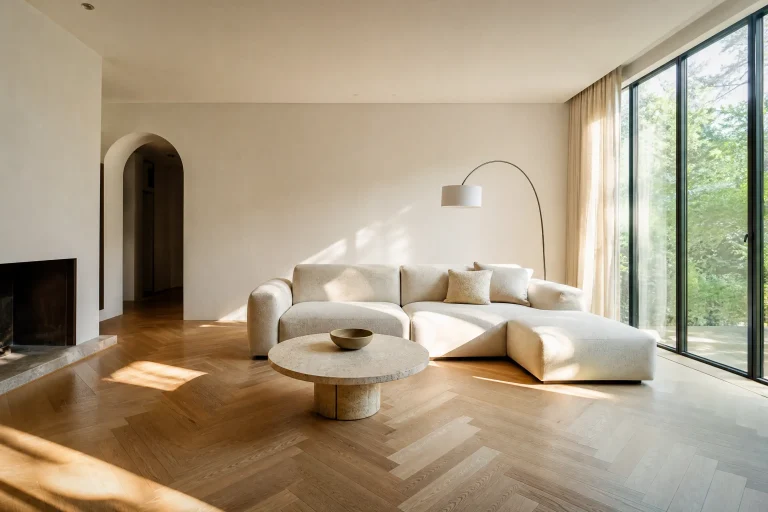
If you have been living with stark, cool white walls, summer is the right time to warm them up. The difference between a blue-toned white and a creamy, warm white is surprisingly dramatic in person, especially once natural light starts flooding in through open windows. Warm whites like Benjamin Moore’s White Dove or Sherwin-Williams Alabaster read soft and inviting without going all the way into beige territory. Pair warm white walls with natural linen curtains, a light oak coffee table, and woven rattan accessories to create a cohesive base that feels clean without feeling cold. One thing that works really well here is adding a single terracotta or dusty rose accent through a throw blanket or a pair of cushions, which pulls warmth into the room without overwhelming the palette. Keep in mind this repaint is an investment worth doing properly since cheap wall paint tends to look chalky in strong summer light.
Designer Note: Warm whites have a color temperature around 2700K to 3000K. Ask your paint store to help you identify undertones before committing to a gallon.

2. Go Bold with a Single Terracotta or Coral Accent Wall
An accent wall does not have to mean a full repaint of an entire surface. In practice, the most effective approach is often a single wall behind a sofa or bed, painted in a warm terracotta, deep coral, or sun-kissed peach. These shades pull in summer energy without making a room feel heavy or dark, especially when the remaining walls stay light. Terracotta in particular has held strong across multiple design cycles because it works with nearly every material, including white plaster, raw linen, dark walnut, and even polished concrete. Style the accent wall with minimal, intentional accessories, a simple woven wall hanging, a single large framed print, or a row of ceramic wall sconces. Avoid cluttering the wall with too many pieces since the color itself is doing a lot of the work. This idea is mid-range in cost if you hire a painter, or very affordable if you do it yourself.
Designer Note: Terracotta reads differently in natural versus artificial light. Always test a large swatch on the actual wall and observe it at multiple times of day before painting the full surface.
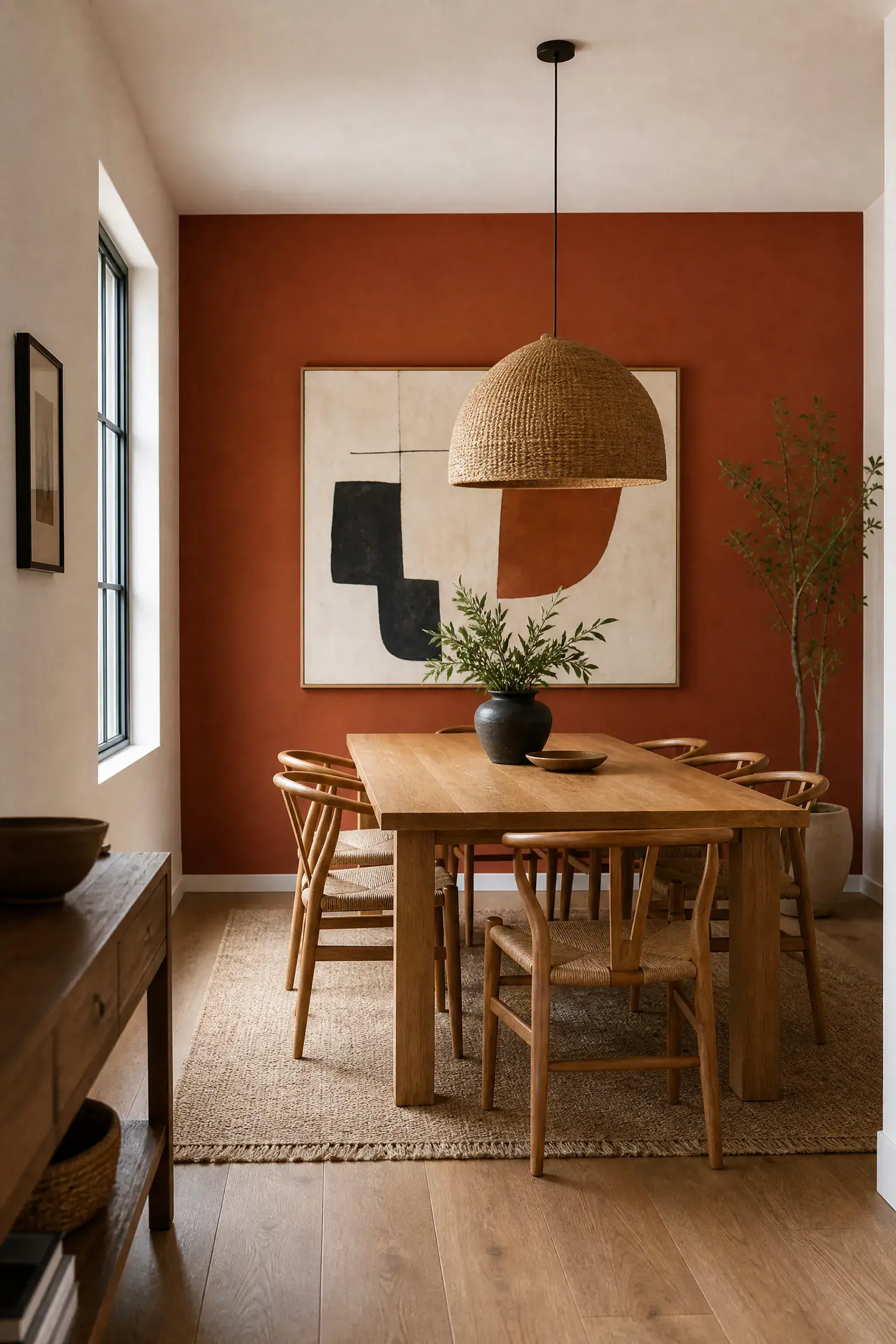
3. Layer Your Lighting for a Sun-Soaked Evening Glow
One of the most underestimated changes you can make for summer is adjusting your lighting plan. Most rooms run on a single overhead light source, which creates a flat, institutional look that feels wrong for the season. Layered lighting, which combines ambient overhead fixtures with task lighting and accent sources, gives you control over how a room feels at different times of day. For summer specifically, this means leaning into warm-toned bulbs around 2200K to 2700K, which mimic the golden hour light that makes everything look better. Add a floor lamp with a linen shade in a seating corner, a cluster of pillar candles on a coffee table, and a plug-in sconce near a reading chair to build depth. String lights on an outdoor patio or draped along an indoor bookshelf are affordable and surprisingly effective. The goal is a room that looks intentional by day and genuinely warm and relaxed by night.
Designer Note: Swap any cool daylight bulbs (5000K and above) out of your main living areas for the summer months. The color temperature shift alone makes a noticeable difference in how cozy a room feels after dark.

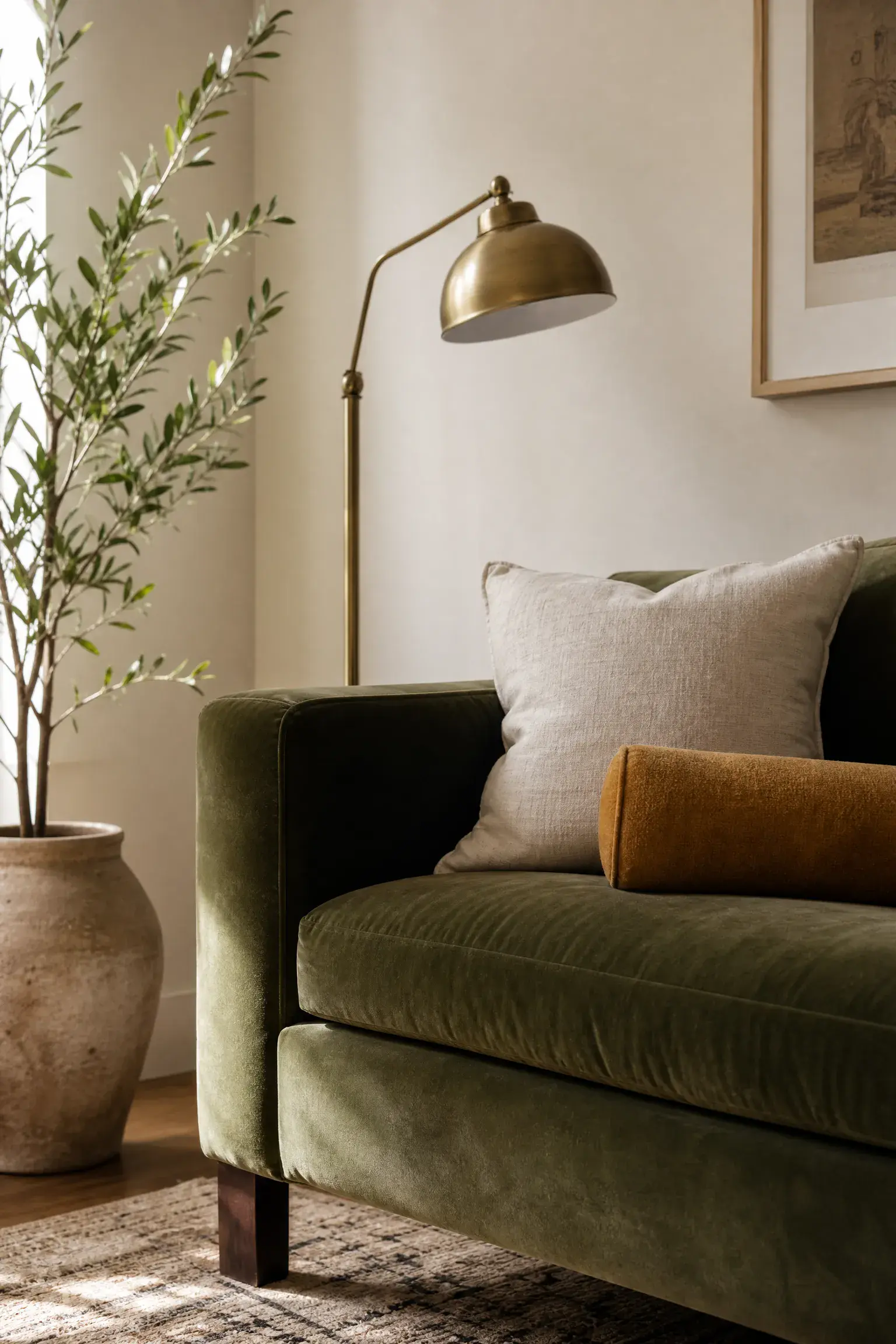
4. Introduce Moss Green as a Grounding Color
Moss green has become one of those shades that professional designers keep reaching for because it bridges the gap between earthy and fresh without tipping into either extreme. In summer, it works especially well because it echoes the lush, saturated greenery happening outside. The key is using it as a grounding color rather than a dominant one. A moss green velvet sofa against warm white walls, for example, feels considered and rich. Alternatively, bring it in through a large area rug in a sage or olive tone, which defines a seating area while keeping the floor plane interesting. Complement moss green with natural wood tones, off-white ceramics, and brass or aged gold hardware for a palette that feels pulled together but not overdone. This is a more investment-level idea if you are going for a sofa or large rug, though you can test the color story with cushions first before committing.
Designer Note: Moss green and terracotta are a particularly strong pairing because they are naturally complementary tones, one cool and rooted, the other warm and rich.
Texture and Materials
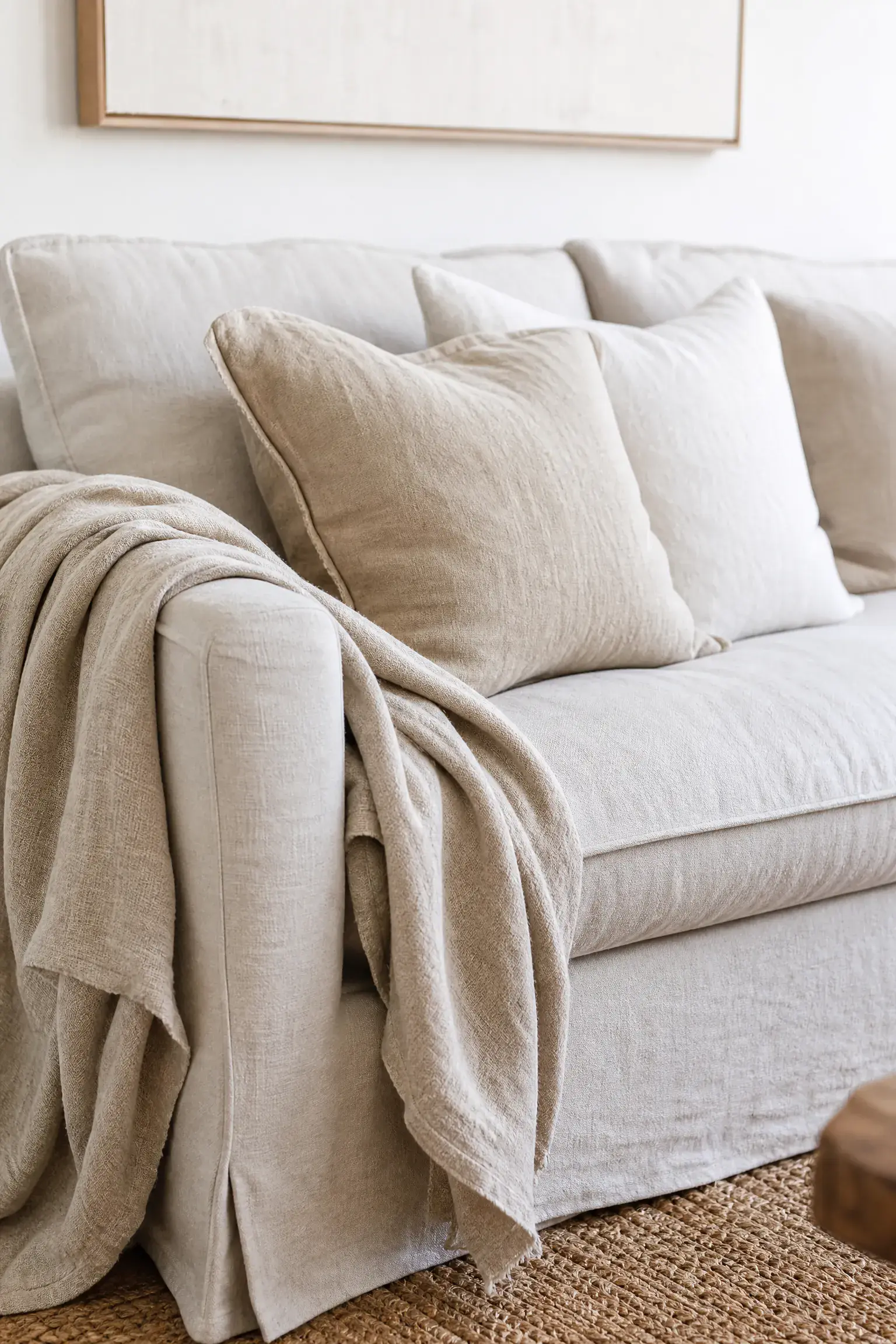
5. Swap Heavy Upholstery for Lightweight Linen and Cotton
This is one of those changes that makes an immediate, physical difference in how your home feels to live in. Heavy velvet cushion covers, thick wool throws, and dense upholstered pieces hold heat and visual weight in a way that works against the breezy feeling most people want in summer. Swapping to lightweight linen or washed cotton on your sofa cushions, dining chair pads, and throw blankets instantly makes a room breathe better. Stonewashed linen in particular has a softly rumpled texture that looks effortless and expensive without requiring much styling. It also handles casual everyday life well since it only looks better the more it is used and washed. Budget-wise, buying linen cushion covers rather than whole cushions is the most cost-effective route. You can find quality stonewashed linen covers from smaller online retailers for a fraction of what you would pay at major home stores.
Designer Note: Pre-washed linen has already been through the shrinkage process, so it holds its shape and softens immediately. Avoid stiff, unwashed linen for cushions since it can feel scratchy and takes time to break in.
6. Bring in Rattan and Wicker for Relaxed Structure
Rattan and wicker are not a passing trend. They have been part of warm-weather decorating for decades because they genuinely work well in that context. The open weave of these materials lets light pass through them, which keeps a room feeling open even when it contains a fair amount of furniture. A rattan side table next to a sofa, a wicker pendant light over a dining table, or a woven storage basket in the corner of a living room all add texture and warmth without adding visual weight. The key to making rattan feel current rather than dated is pairing it with clean-lined, modern furniture pieces. A rattan dining chair looks fresh when placed alongside a simple white oak dining table. A woven pendant looks well-resolved over a modern concrete or marble dining surface. Avoid going all-rattan since the look tips into casual territory quickly and can feel inconsistent.
Designer Note: Natural rattan is more durable and ages better than synthetic resin wicker. For outdoor use, however, all-weather synthetic wicker is a more practical choice since natural rattan deteriorates in prolonged moisture.

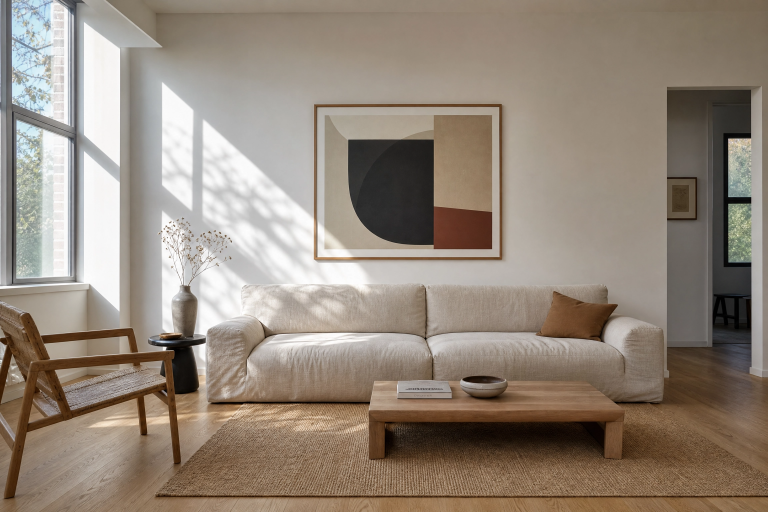
7. Layer Organic Textures with a Jute or Seagrass Rug
A natural fiber rug is one of the simplest ways to anchor a summer room without adding color. Jute and seagrass rugs have a coarse, tactile quality that looks grounded and organic, and they work with almost any color scheme from bright coastal palettes to muted Japandi-inspired neutrals. In practice, a jute rug is slightly softer underfoot than seagrass, which is notably more rigid and scratchy. If the rug will be in a high-traffic living area where people sit on the floor or have children playing, jute or a jute-cotton blend is the better call. Seagrass is better suited to lower-traffic areas like a study or bedroom. Both are affordable, widely available, and much easier to style than a patterned rug since the texture itself provides all the visual interest. One honest limitation is that natural fiber rugs do not respond well to moisture, so avoid them in bathrooms or humid sunrooms.
Designer Note: Layer a smaller patterned or solid rug over a jute base rug for a collected, layered look that is popular in eclectic and coastal interiors right now.

8. Add Sculptural Ceramic Vases as Focal Point Objects
Ceramics have become one of the most talked-about accessory categories in interior design over the past few years, and for good reason. A well-chosen ceramic vase or bowl has the visual weight to anchor a shelf, a console table, or a dining surface without requiring anything placed inside it. For summer, look for organic, hand-formed shapes in warm tones like sandy beige, dusty white, ochre, or matte terracotta. The slight imperfections in handmade ceramics are what make them feel alive and personal rather than catalog-generic. Group odd numbers of pieces together, three vases in varying heights, for example, rather than symmetrical pairs. This asymmetrical arrangement follows the design principle of negative space, where the gaps between objects are as intentional as the objects themselves. Small handmade ceramics from independent makers are often surprisingly affordable and can be found at local markets or on small online shops.
Designer Note: Matte-glazed ceramics work better in summer rooms than high-shine finishes, which can feel cold and reflective. The matte surface absorbs light softly and feels more in harmony with organic materials like linen and rattan.

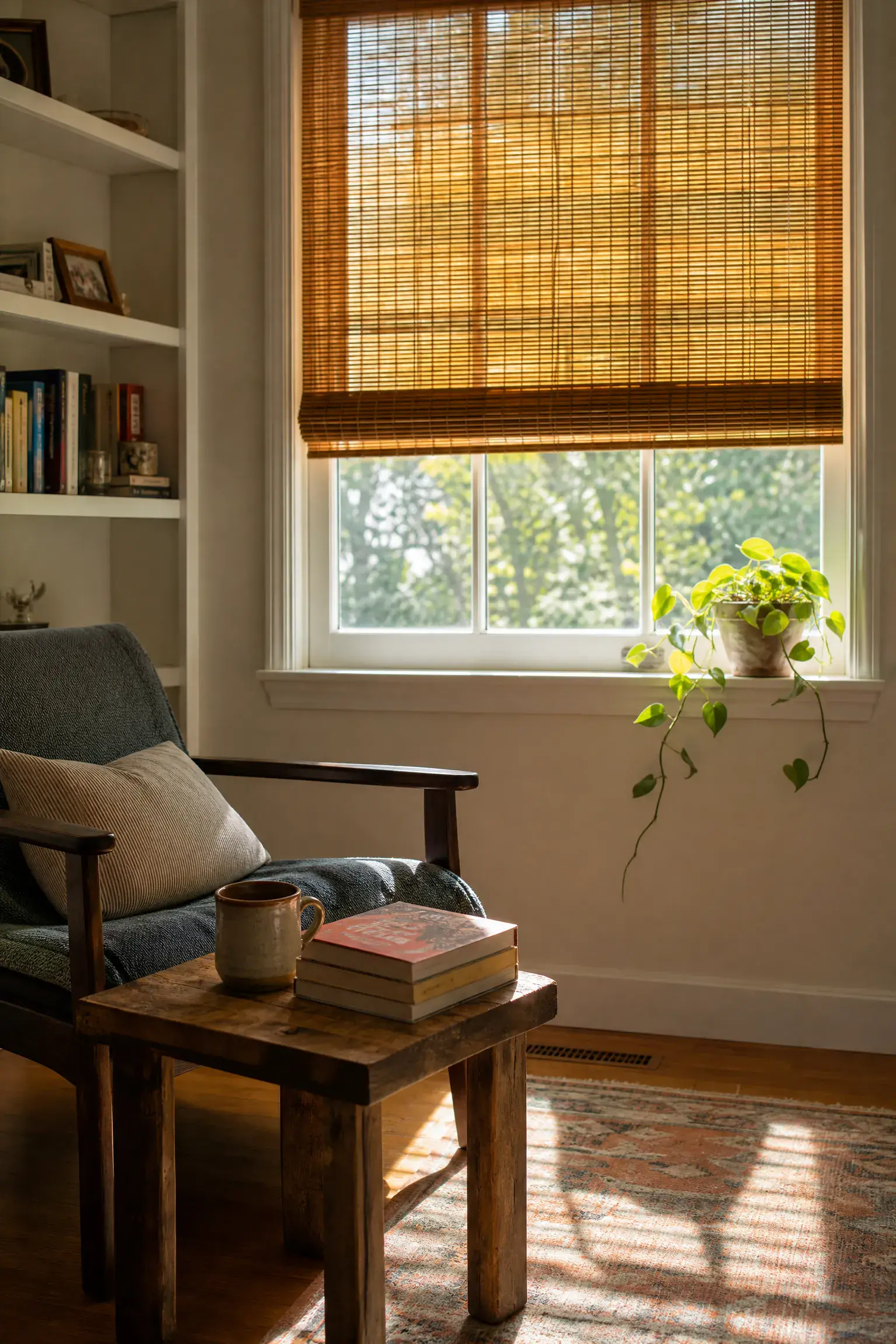
9. Use Bamboo and Reclaimed Wood for Sustainable Summer Style
Sustainable materials have moved well beyond being a niche concern and are now a central part of how forward-thinking designers approach interiors. Bamboo in particular is having a strong moment because it grows incredibly fast, requires no pesticides, and has a clean, linear grain that looks genuinely beautiful. Bamboo blinds are an excellent summer choice, they filter light softly, look polished, and are widely available at a low price point. Reclaimed wood brings a different kind of character, history, texture, and imperfection that no new material can replicate. A reclaimed wood shelf, side table, or picture frame adds depth to a room that feels too polished or new. Pair either of these materials with white walls and stone or concrete accessories to create a palette that reads as naturally modern. One thing to note is that bamboo can warp slightly in very humid environments, so it is less ideal for rooms that lack good air circulation.
Designer Note: Carbonized bamboo has a darker, richer tone than natural bamboo and works better in rooms with a warmer color story. Natural bamboo suits cooler, more minimal aesthetics.
Room-by-Room Refresh
10. Rethink Your Living Room Around a Coastal Calm Palette
Coastal decor gets a bad reputation for being cliché, but the version that professional designers return to again and again is much more refined than the shell-and-anchor aesthetic. The coastal calm approach uses a palette of soft sea glass green, warm sand, faded navy, and natural white, applied with restraint. In a living room, this might mean a sand-toned sofa, linen curtains in a soft off-white that pools slightly on the floor, a weathered driftwood coffee table, and a single large abstract painting in washed blues and greens. The furniture arrangement should feel open and generous with clear sightlines through the room. Avoid overcrowding the space with too many pieces since coastal interiors rely on breathing room and negative space to feel genuinely serene. This is an achievable look at most budget levels since the palette is neutral and forgiving.
Designer Note: Avoid using too much navy blue in a living room since in larger quantities it can feel more nautical than coastal. Use it as an accent only, in a cushion, a lampshade, or a single artwork.

11. Create a Cool, Airy Summer Bedroom
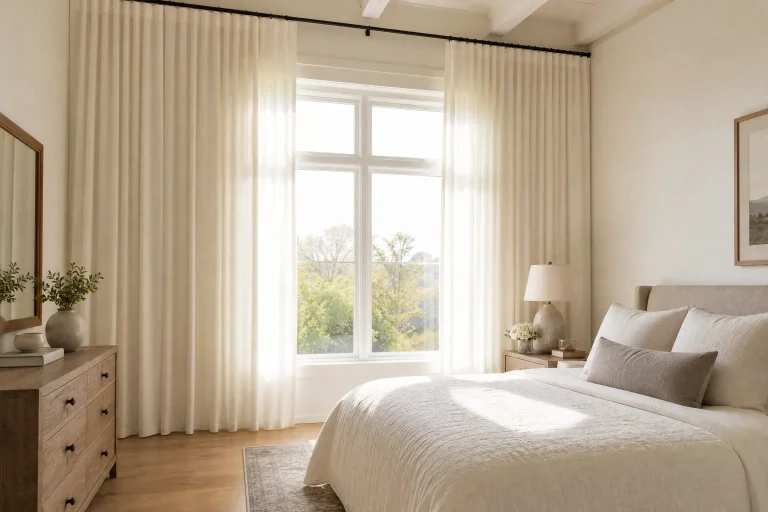
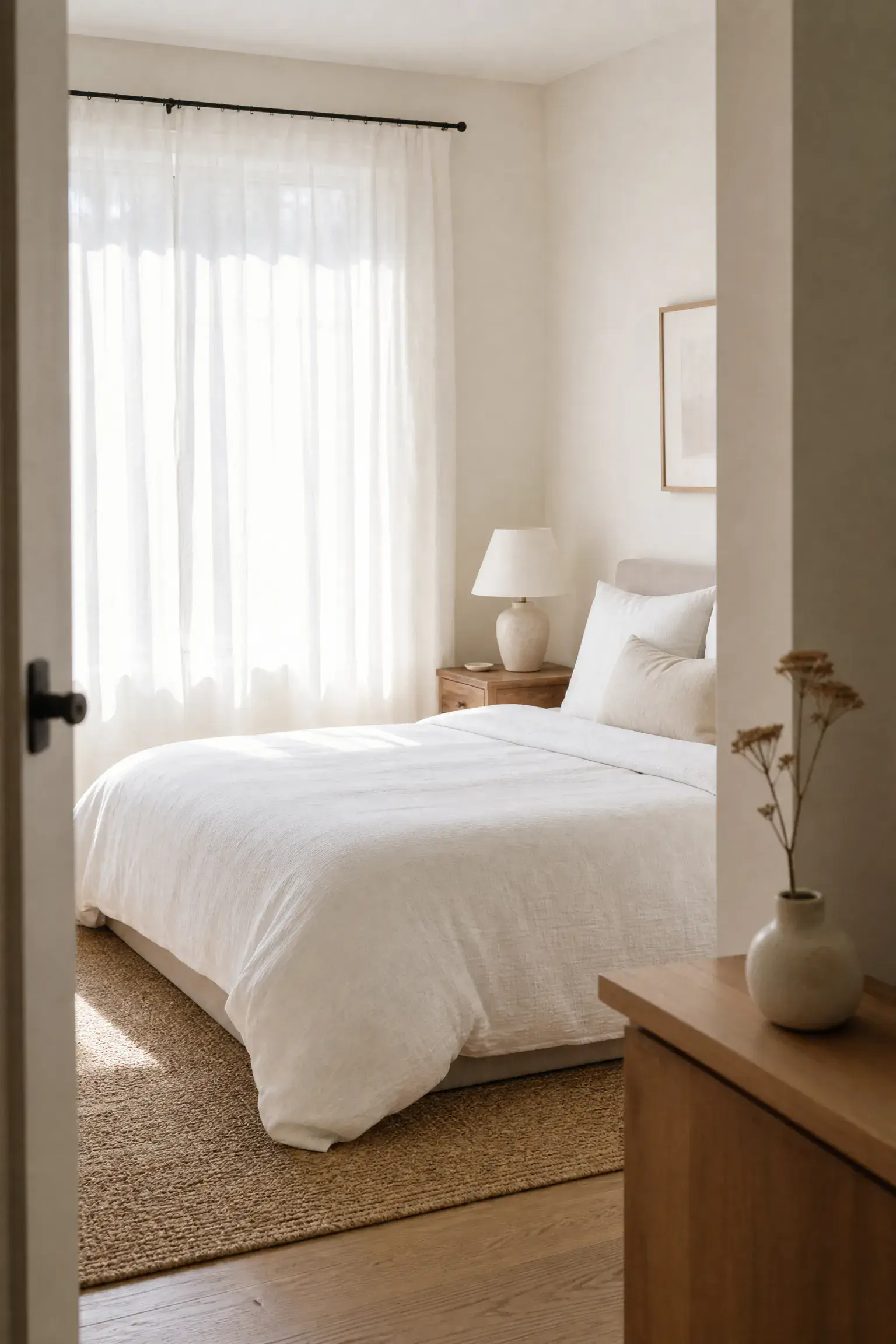
The bedroom is where summer decor has one of the most direct impacts on quality of life because sleeping in a hot, heavy room is genuinely uncomfortable. Start by switching your duvet to a lightweight cotton or linen coverlet in white, pale grey, or a soft sage green. These breathable fabrics regulate temperature far better than heavier alternatives and also tend to photograph beautifully for those who care about that. Replace any dark or blackout curtains with sheer white linen panels that let morning light filter through without fully waking you up at sunrise. On the nightstands, keep accessories minimal: a single ceramic lamp with a warm bulb, a small bud vase, and one personal object. The bedroom in summer should feel like a calm exhale. A cooling visual weight is achieved by keeping the floor visible and the furniture proportions slender rather than boxy.
Designer Note: A linen duvet cover is more expensive than cotton but worth the investment if you tend to sleep hot. Linen becomes softer and more breathable the more it is washed, so it genuinely improves over time.
12. Refresh Your Kitchen with Open Shelving and Fresh Herbs
Kitchens are often left out of seasonal decorating conversations, but a few well-placed changes can make the space feel genuinely summery and more functional at the same time. If you have upper cabinets that feel heavy or closed off, consider removing a door or two to create a section of open shelving. Style these shelves with a mix of everyday items you are not embarrassed to display, white or terracotta ceramics, a row of matching glass jars with dried goods, and a small potted herb like basil, thyme, or rosemary near the window. A windowsill herb garden is one of those ideas that sounds like a cliché until you actually have one and realize how much you use the herbs in cooking. It also adds a living, organic element to what is often the most hard-edged room in the house. Replace any heavy valances or window treatments with nothing, or with a simple bamboo roller shade that lets maximum light in.
Designer Note: Open kitchen shelving looks great in photos but requires ongoing effort to keep tidy. Be honest with yourself about whether you will maintain it before removing cabinet doors permanently.

13. Turn Your Entryway into a Light-Filled First Impression
The entryway sets the tone for the entire home, and in summer it should feel welcoming, light, and organized. Start by clearing any clutter that has accumulated through spring and replacing heavy winter accessories with something seasonal. A simple ceramic bowl on an entry console table for keys and mail, a slim-profile coat hook for light summer bags and hats, and a low bench or stool for removing shoes are the functional basics. For decor, a large simple mirror on one wall is one of the highest-impact changes you can make since it doubles the visual depth of the space and bounces light from the front door. Hang it at eye level and keep the frame material natural, rattan, light wood, or simple brushed gold all work well. Add a single tall vase with eucalyptus, dried pampas grass, or fresh seasonal flowers for a living element that guests notice immediately.
Designer Note: Entryways in older homes often have limited natural light. A mirror opposite the door or window is the single most effective fix, as it reflects available light back into the space without requiring any electrical work.

14. Make Your Bathroom Feel Like a Garden Spa
Bathrooms are one of the easiest rooms to shift seasonally because the changes are mostly accessory-level and do not require any permanent modifications. For summer, swap dark or patterned towels for white, stone, or pale sage green terry cloth. Hang them neatly folded or loosely rolled in a woven basket on the floor for a relaxed spa look. Add a small trailing plant like a pothos or string of pearls on the windowsill or a high shelf since these varieties handle the humidity well. Replace any synthetic or plastic soap dispensers with stone or ceramic vessels, a simple detail that reads as much more considered. A bundle of dried lavender hung from the showerhead hook or a small diffuser with eucalyptus oil completes the sensory picture. The idea is to make the bathroom feel like a private, restoring space rather than a purely functional one. This is a low-cost refresh that makes a disproportionately large impact.
Designer Note: Not all plants handle bathroom conditions equally. Pothos, ferns, and peace lilies do well in low light and humidity. Succulents and cacti, which are often suggested for bathrooms, actually struggle in high-humidity environments.

Outdoor Living
15. Build a Proper Outdoor Seating Area with Weather-Resistant Upholstery
A proper outdoor seating arrangement is one of the most life-changing summer investments because it genuinely extends how much usable living space your home has. The biggest mistake people make is buying patio furniture that is attractive but not built for real outdoor use, then being disappointed when cushions fade or frames rust after one season. Look for powder-coated aluminum frames, which are lightweight, rust-proof, and strong, and pair them with cushions covered in Sunbrella or similarly rated outdoor fabric, which is UV-resistant and water-repellent. Arrange the furniture around a defined focal point, an outdoor dining table, a fire pit, or a low coffee table, to create a sense of intentional space rather than chairs scattered randomly around a patio. Add an outdoor rug in a flatweave or low-pile indoor-outdoor material to anchor the seating zone and define the area visually. This is one of the higher-investment ideas on this list, but the return in daily use throughout summer is significant.
Designer Note: Outdoor furniture needs to be proportional to the space just as indoor furniture does. Oversized sectionals on a small patio make the space feel cramped rather than generous. Measure carefully and leave clear walkways of at least 30 inches.

16. Hang String Lights to Create Evening Atmosphere
There are very few outdoor lighting solutions that match string lights for the combination of cost, impact, and ease. Hung correctly, they turn an ordinary patio or backyard into something that actually gets used after dark. The key word here is hung correctly, since drooping, low-hanging cables at inconsistent heights look messy. The most effective approach is to create a canopy effect by stringing lights between a series of hooks installed at a consistent height across the perimeter of the space. Use heavy-duty outdoor-rated bulbs in a warm amber tone around 2200K to achieve that golden, candlelit atmosphere. Avoid blue-toned or white LED versions since they look cold and clinical outdoors. Edison-style filament bulbs are the current gold standard for this effect and are widely available and affordable. Add battery-powered lanterns on a side table and a few pillar candles in hurricane glasses for layered outdoor lighting at multiple heights.
Designer Note: Solar-powered string lights are a convenient option but tend to lose charge on cloudy days and can flicker inconsistently. For reliable performance on entertaining nights, hardwired or plug-in versions are more dependable.

17. Create a Container Garden for Instant Summer Color
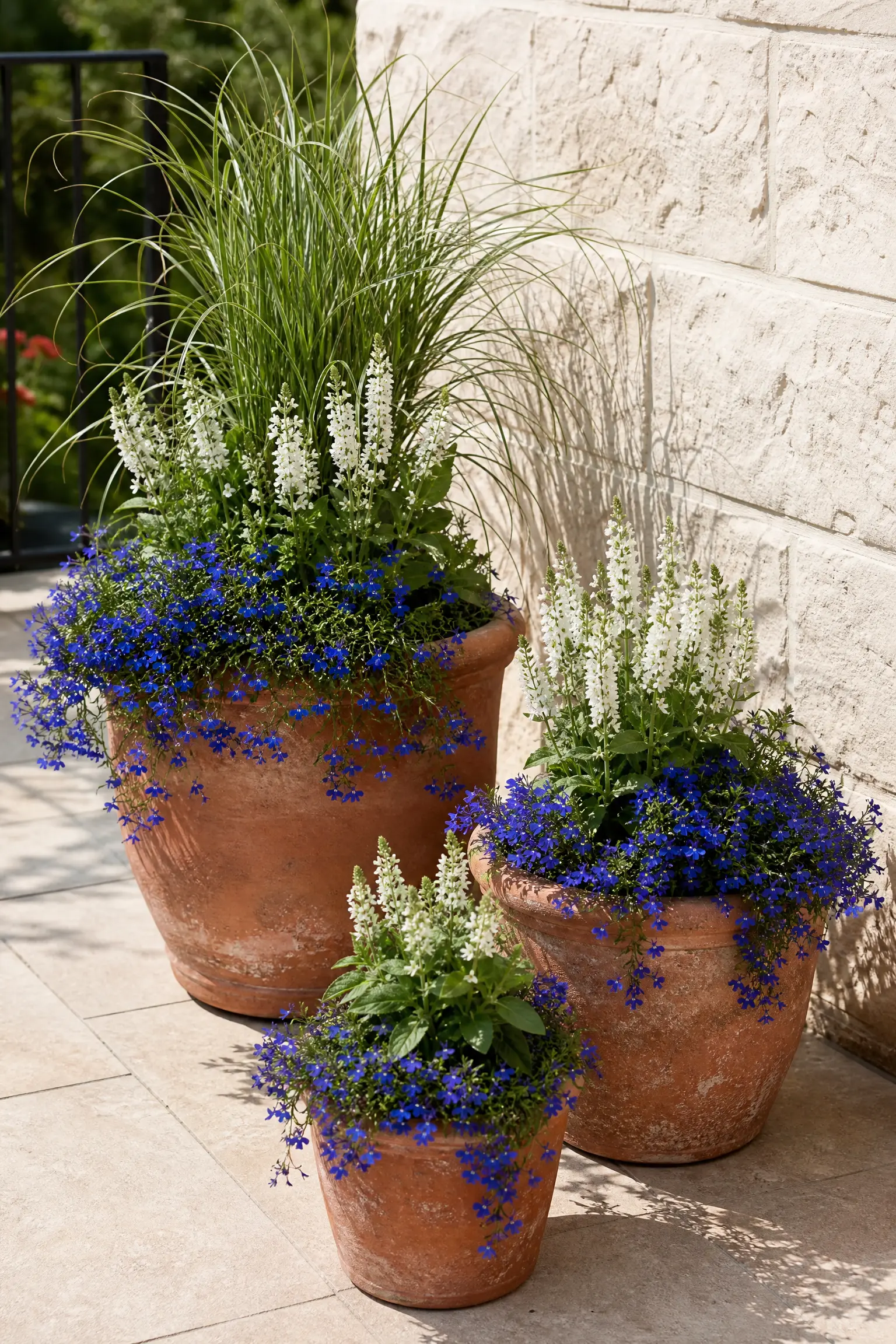
Container gardening is one of the most satisfying and visually impactful things you can do for an outdoor space in summer, and it works regardless of whether you have a full backyard or a narrow apartment balcony. The design principle that makes it look considered rather than random is grouping containers in odd numbers and varying their heights. Three terracotta pots of different sizes, for example, planted with trailing lobelia, upright salvia, and a structural grass or agave, create a natural layered arrangement that looks professional without requiring horticultural expertise. For color palettes, bold monocolor groupings, all white flowers, all coral, all cobalt blue, often look more considered than a mixed rainbow of different hues. Terracotta is the most versatile container material for summer because it breathes, which helps prevent overwatering, and its warm orange-brown tone works with nearly every planting palette.
Designer Note: Large containers look more impressive than small ones and require less frequent watering. If budget allows, invest in one or two generously sized pots rather than many small ones.
18. Define an Outdoor Dining Space with a Shade Structure
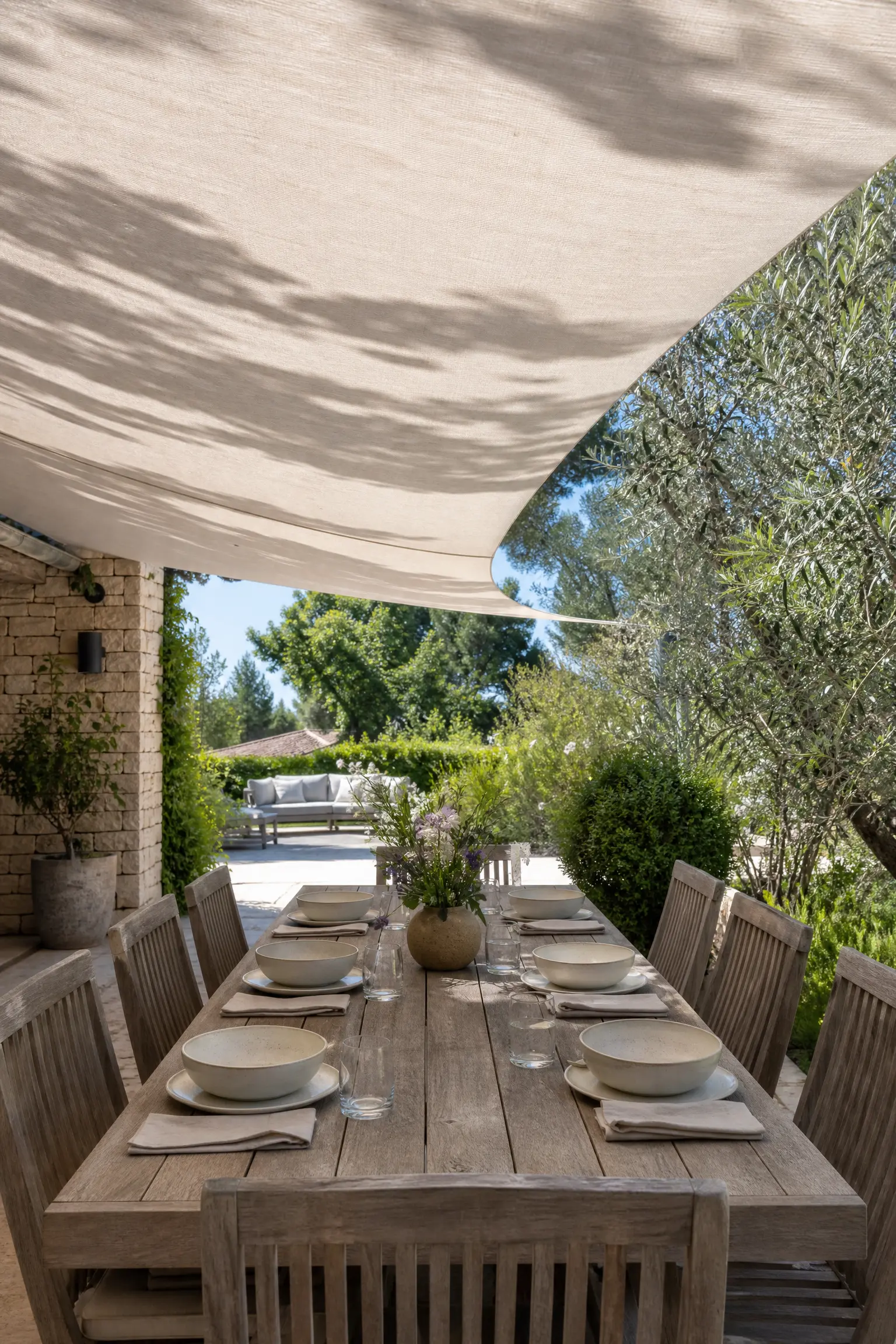
Eating outdoors is one of the great pleasures of summer, but doing it comfortably in direct midday sun is another matter. A defined shade structure above an outdoor dining area makes the space genuinely usable during the hottest hours and also adds significant visual structure to a patio or garden that might otherwise feel undefined. Options range from a large cantilever umbrella, which is affordable and flexible, to a permanent pergola covered with climbing plants, which is more of an investment but adds real architectural character. A shade sail in a neutral linen or sand tone is a middle-ground option that looks contemporary and provides excellent coverage. Whatever you choose, make sure it is appropriately sized for the table below. A standard 10-foot umbrella works for a four-person table, but a six-person dining setup really needs something larger to feel properly covered. Add string lights to any overhead structure for instant evening atmosphere.
Designer Note: Pergolas add significant value to a property and are worth the investment if you plan to stay in your home long term. Climbing plants like wisteria or jasmine take a few seasons to establish but create a genuinely beautiful overhead canopy.
Finishing Touches
19. Style a Summer Coffee Table with Intention
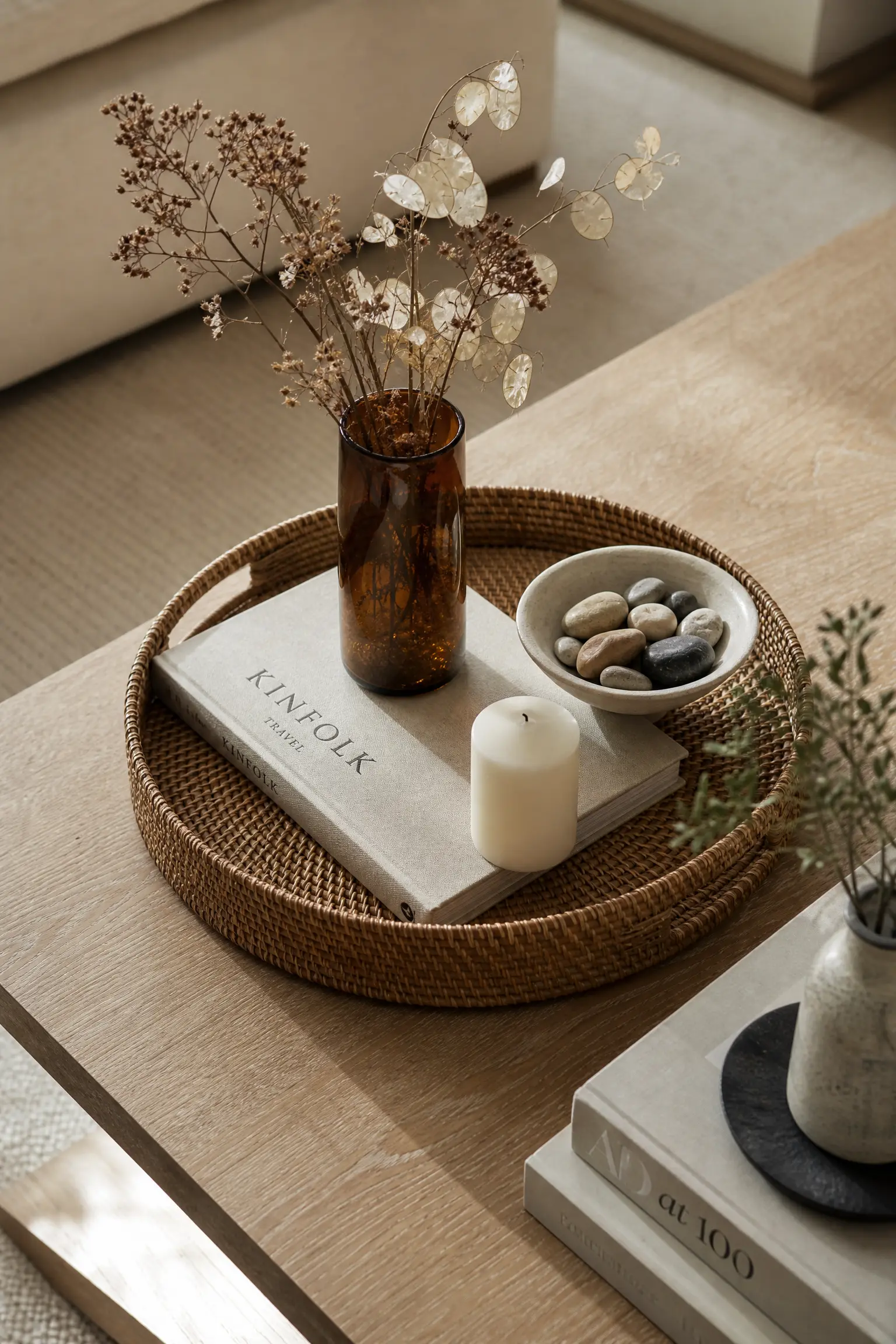
The coffee table is the most visible surface in a living room and one of the easiest places to bring summer in without spending much. A well-styled coffee table follows a simple framework: one tray to corral loose items, one tall element, one low element, and one organic piece. For summer, this might mean a low woven tray holding a small linen-covered book, a tall amber glass vase with a few stems of dried botanicals, a low ceramic bowl with smooth pebbles or dried citrus slices, and a single pillar candle in a natural wax tone. The arrangement should feel casual and curated at once, like someone with genuine taste lives here rather than like a display in a showroom. Avoid matching sets of identical accessories since identical objects look staged rather than lived-in. The organic piece, whether it is a piece of driftwood, a coral fragment, or a cluster of seed pods, is often what makes the arrangement feel genuinely personal.
Designer Note: Edit ruthlessly. A coffee table with four or five intentional items almost always looks better than one with eight or ten things competing for attention.
20. Bring Large-Scale Plants Indoors as Living Architecture
A large indoor plant placed correctly in a room does the same work as a piece of furniture. It defines a corner, adds visual weight, and changes the feel of the entire space. For summer, there are a few varieties that are genuinely worth the investment. A fiddle-leaf fig in a large ceramic pot brings a bold architectural silhouette. A bird of paradise plant fills a corner with tropical drama without requiring direct sunlight. A monstera in a woven basket adds a lush, layered quality that is difficult to achieve with any other single object. The key is scale: a small plant on a shelf is decorative, but a plant that reaches above waist height and fills a corner becomes structural. Avoid the common mistake of placing a large plant in a dark corner where it will struggle. In a real home, most tropical indoor plants need bright, indirect light to stay healthy, not necessarily direct sun, but not full shade either.
Designer Note: A large healthy plant in a beautiful pot is often more impactful than expensive furniture. A fiddle-leaf fig in a matte terracotta pot at floor level costs a fraction of what a statement armchair does but has a similar visual impact.

21. Update Your Throw Pillow Color Story for the Season
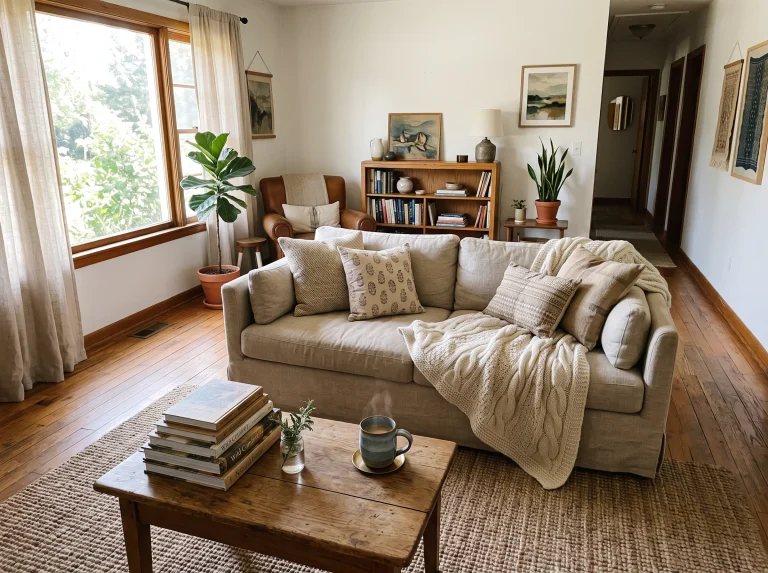
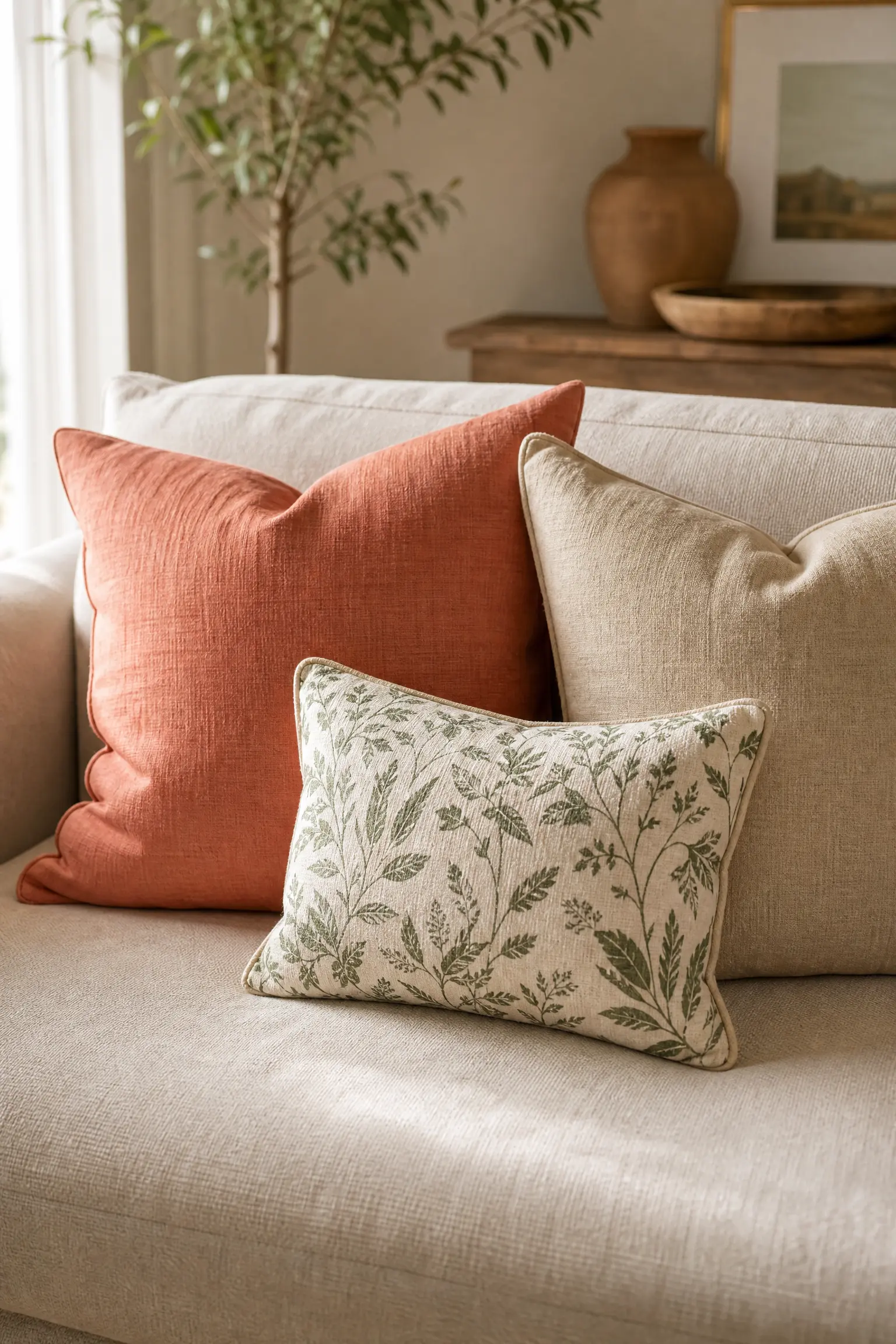
Throw pillows are the most affordable and reversible way to shift a room’s color story between seasons, which is exactly why designers rely on them so heavily. For summer, the goal is to swap dark, saturated winter tones for something lighter, warmer, or more energized. A sofa that spent winter dressed in deep charcoal and burgundy pillows is immediately refreshed with a combination of dusty coral, warm sand, and a single printed botanical cushion in green and cream. The rule of mixing cushions is to vary texture and scale rather than trying to match prints and colors too precisely. A solid linen cushion, a subtle stripe, and a small botanical print in a similar palette feel collected and natural. A set of matching cushions, all same size, same fabric, same color, looks like it came from a chain store display and lacks visual interest. Aim for an odd number of cushions, typically three or five, for the most natural-looking arrangement.
Designer Note: Buy good-quality pillow inserts rather than using the ones that came with the cushion covers. A properly filled insert with feathers or a high-density foam makes cushions look much more expensive and stay in shape better.
22. Display Fresh or Dried Botanicals as Living Art
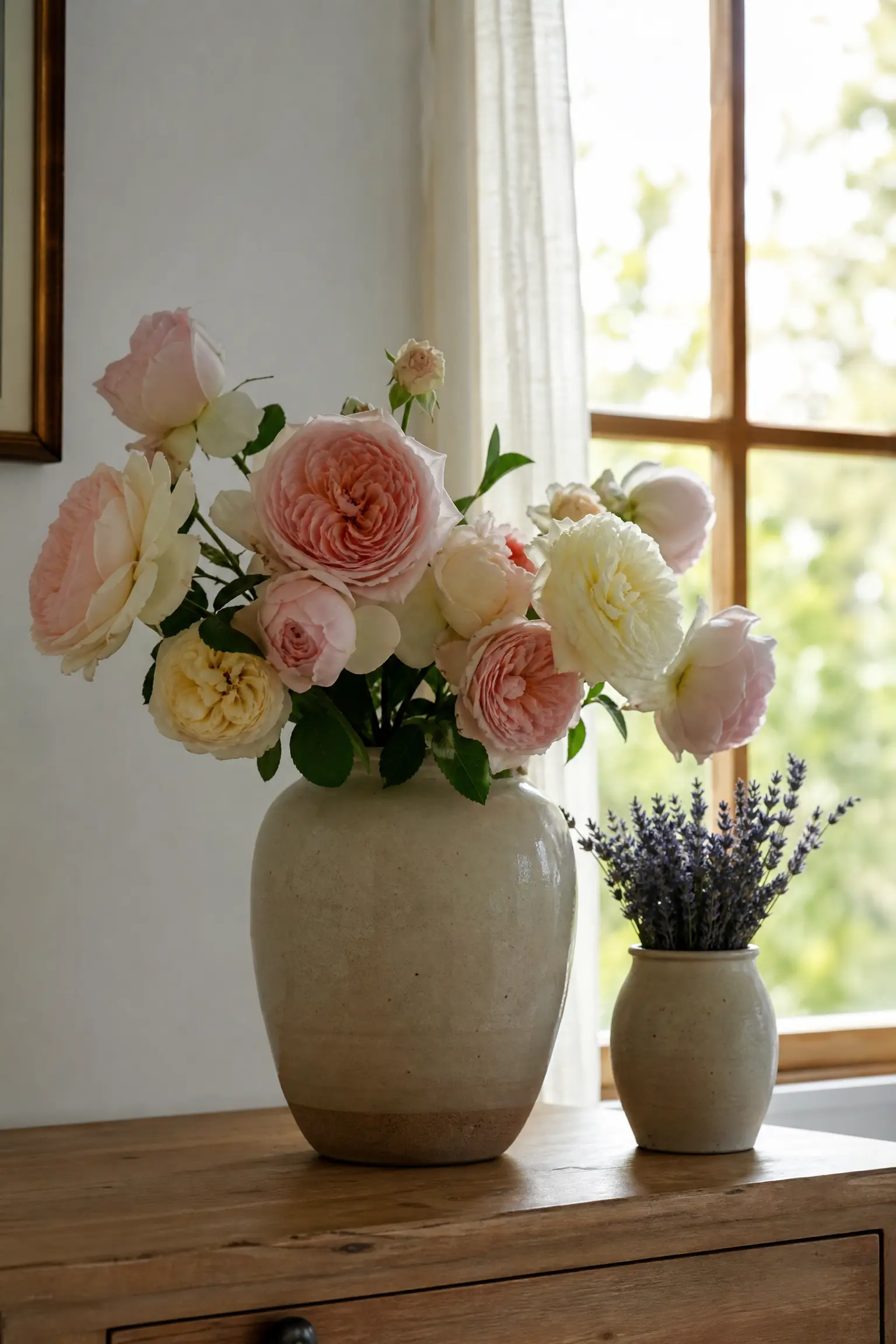
Fresh flowers are a small, weekly luxury that significantly changes the feeling of a home during summer months. More than just decoration, they signal that someone is paying attention, that the home is being actively cared for rather than simply maintained. For a consistent approach that does not require a florist budget, choose three or four reliable seasonal stems and rotate between them throughout the season. In early summer, peonies and garden roses are widely available and relatively affordable. Later in the season, sunflowers, zinnias, and dahlias take over and tend to last well when cut properly. Dried botanicals, pampas grass, dried lavender, bundles of eucalyptus, offer a lower-maintenance alternative that still adds organic texture and a natural, seasonal scent. Display dried arrangements in simple ceramic vases or hang small bundles from hooks in a kitchen or bathroom. This is one of the most genuinely affordable ideas on this list since seasonal flowers from a farmers market or grocery store cost very little.
Designer Note: Change flower water every two days and re-cut the stems at an angle to extend vase life. Most summer flowers last five to seven days when maintained properly.
23. Rethink Your Scent Story with a Summer-Specific Diffuser or Candle
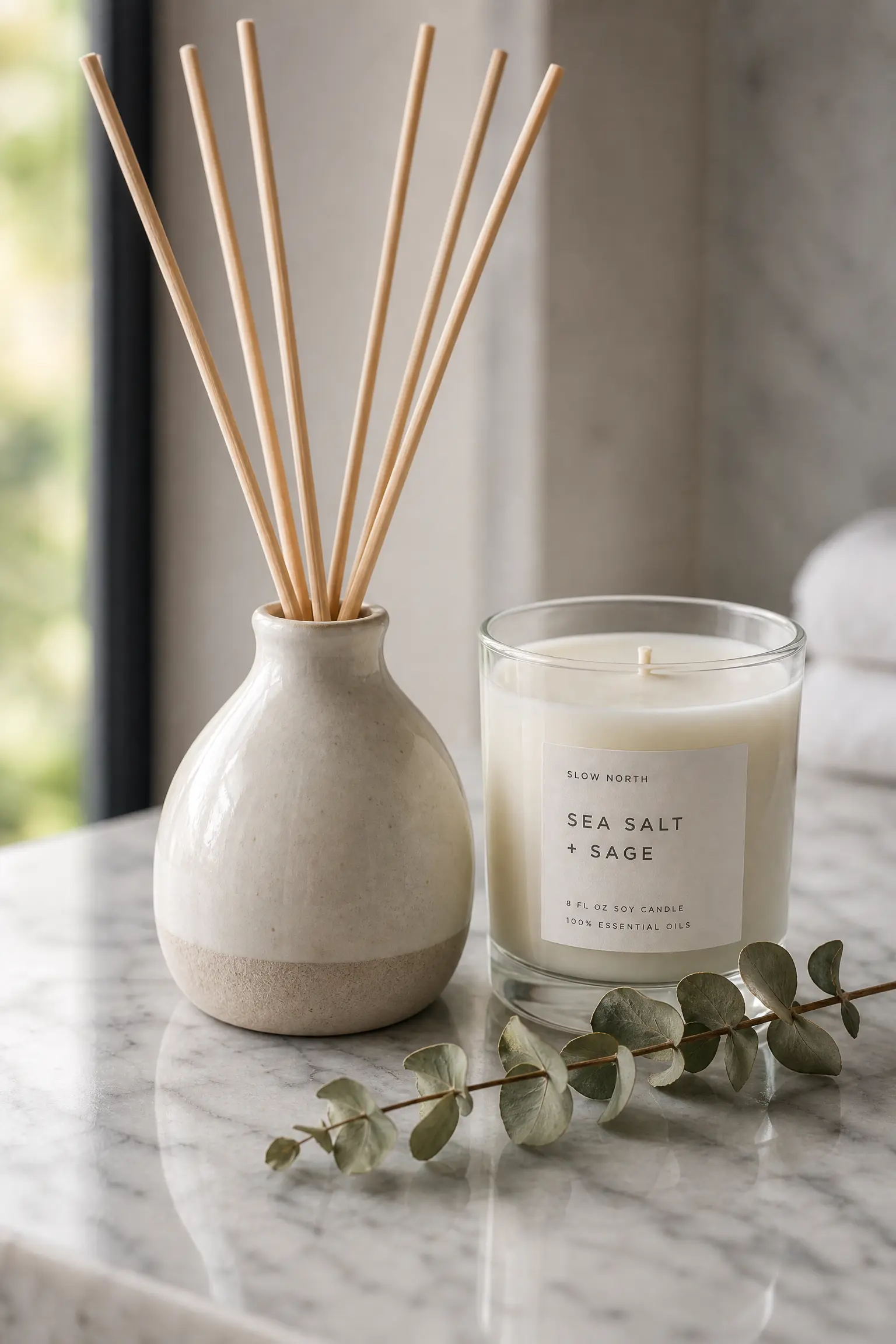
Scent is the most underused tool in home decorating despite being one of the most powerful. The way a room smells affects how you feel in it, and shifting your home’s scent story for summer is a small change that has a surprisingly significant impact on the overall atmosphere. Heavy, woody, or spiced scents that work well in winter feel heavy and out of place in warm weather. Summer calls for lighter, cleaner profiles: fresh citrus, white flowers like jasmine or neroli, clean green notes like cut grass or cucumber, or aquatic accords that evoke coastal air. Reed diffusers are the lowest-maintenance option and provide consistent background fragrance. Soy candles are warmer and more atmospheric but require attention. Avoid synthetic air fresheners entirely since they tend to produce an artificial quality that undermines a carefully decorated space. A quality reed diffuser from a reputable brand is a modest investment that pays off in daily sensory enjoyment throughout the season.
Designer Note: Less is more with home fragrance. A subtle background scent that someone notices pleasantly is far more effective than an overpowering one that dominates the room.
Wrapping It Up
Getting your home ready for summer does not have to mean spending a lot of money or tackling everything at once. The ideas in this collection range from a simple throw pillow swap to a more involved outdoor seating arrangement, so you can start with whatever feels most manageable and build from there. The common thread across all of them is intentionality. Summer decorating that works is not about following every trend that shows up on social media. It is about making deliberate choices that suit the way you actually live in the warmer months, how you like to feel when you walk through your front door, how you want your outdoor space to function when friends come over, and how your bedroom helps you sleep through a warm night.
Start with one room and one category. Change the lighting or swap the cushions or bring in a large plant and see how much the space shifts before moving on. Good decorating is rarely about big overhauls. It is almost always about a collection of small, considered decisions that add up to something that feels genuinely good to live in. This summer, give yourself permission to make your home feel exactly the way you want it to.
Frequently Asked Questions
What are the best colors to use for summer home decor?
The most versatile summer palettes build around warm neutrals as a base: creamy whites, warm sand, and soft stone tones work in almost any room. From there, you can layer in seasonal accent colors depending on your personal style. Coastal rooms do well with sea glass greens and washed navy. Warmer, more earthy spaces benefit from terracotta, dusty coral, and olive green. The key is choosing a palette with three or four tones that feel genuinely related rather than trying to include every summer color at once.
How do I make a small room feel bigger and lighter for summer?
There are a few approaches that consistently work well. First, clear out anything that does not belong in the room since visual clutter is the single biggest reason small rooms feel smaller than they are. Then address the light: replace heavy window treatments with sheer linen panels that allow maximum daylight in. A large mirror on one wall creates the impression of depth and doubles the available light. Choose furniture with slender legs and light-toned upholstery, and keep the floor as visible as possible since the amount of floor visible directly influences how spacious a room feels.
What summer decor changes give the most impact for the least money?
The highest-impact, lowest-cost changes are swapping cushion covers for lighter summer tones, changing lightbulbs to warm amber alternatives, adding fresh flowers or a bunch of dried botanicals, and clearing away clutter to let the space breathe. After those basics, replacing heavy curtains with sheer linen panels makes a dramatic difference for a relatively modest cost. A natural fiber rug like jute or seagrass can often be found on sale and anchors a room beautifully without a large investment.
When is the best time to start decorating for summer?
Most designers suggest beginning your summer refresh in late May so the changes are in place before the hottest months of the year. That said, some of the ideas in this collection, particularly the textile swaps and lighting changes, can be done at any point through June or July with equally good results. The outdoor living pieces are best tackled as early in the season as possible so you get maximum use from them throughout the warmer months.
How do I make outdoor decor look as good as indoor decor?
The main principles are the same: choose materials that work together, define the space with an anchor piece like a rug or a shade structure, layer in lighting, and bring organic elements like plants or flowers. The difference outdoors is that you need to be more deliberate about material selection since not everything that works inside can handle sunlight, moisture, and temperature changes. Look for outdoor-rated textiles, weather-resistant frames, and UV-stable materials. Apply the same design thinking you would indoors and the space will look equally considered.
Can I mix different summer decor styles in the same home?
Absolutely, and Day to day the most interesting homes are rarely one single style. The key to mixing successfully is finding a consistent thread that runs through the different spaces. This might be a shared color palette, a consistent material like natural wood or rattan, or a shared level of formality. A coastal living room and a boho-influenced bedroom can coexist happily in the same home if both spaces share warm whites as a base color and natural textures as a common material language. The problems arise when rooms feel completely disconnected, with nothing tying them together visually.