Living Room Lamp Placement That Actually Works
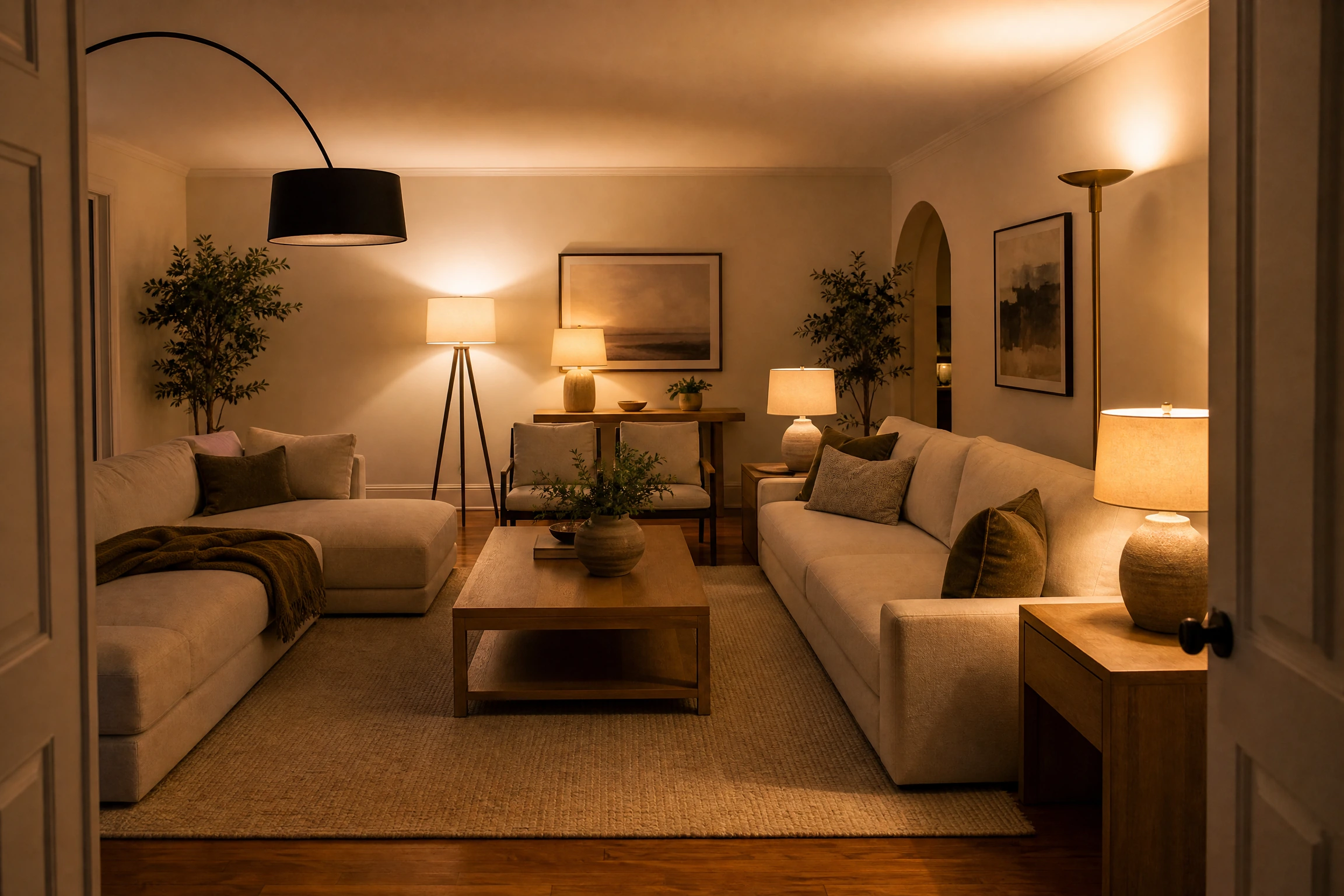
Most living rooms are under-lit in all the wrong ways: one overhead light doing everything, lamps placed wherever there was a spare outlet, and dark corners that no amount of ceiling brightness will fix. Placement is the whole game. The same lamp can make a room feel dramatic and cozy in one spot and flat and useless in another. Here is how to get every one right. The principles are simple; the application is mostly about being deliberate rather than reactive.
1. Place a Floor Lamp Just Behind and to One Side of the Sofa

The single most impactful lamp placement in any living room is a floor lamp positioned behind the sofa, slightly off to one side rather than centered, so the light falls forward across the seating area and upward toward the ceiling simultaneously. This creates what designers call fill light, an ambient glow that removes the flat, shadowless look of overhead-only lighting and makes the seating area feel anchored and warm rather than like furniture sitting under a spotlight.
Pro Move: The lamp base should sit approximately 6 to 12 inches behind the sofa back, never so far back it reads as a wall lamp, and never so close it gets bumped. A slim-profile torchiere or a narrow column floor lamp works best here.
2. Use an Arc Lamp to Extend Light Over a Sectional Sofa
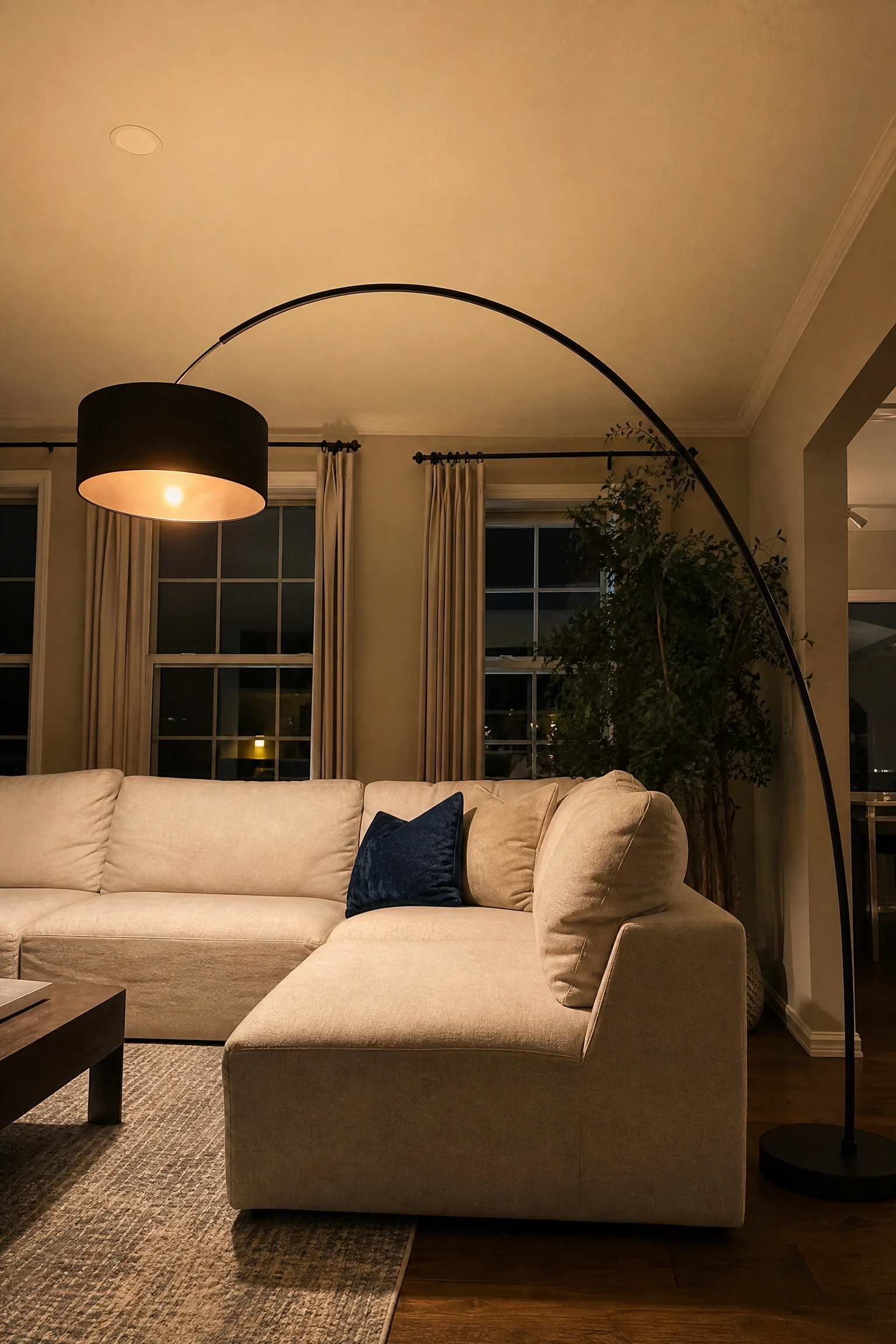
A large sectional sofa creates a lighting problem that a standard floor lamp cannot solve: the seating area is too wide to be lit from one side without leaving the other side in shadow. An arc lamp, with its sweeping arm that extends out over the seating area from a base tucked behind or beside the sofa, solves this by placing the light source directly over the center of the conversation zone rather than at its edge.
Heads Up: Always check the arc clearance before buying: the bottom of the shade should hang at least 6 feet from the floor when the arm is fully extended, or people will duck under it. Most quality arc lamps range between 72 and 84 inches total height.
3. Flank the Sofa With Matching Table Lamps on Side Tables

Two matching or complementary table lamps on side tables at either end of the sofa is the most classically correct and visually balanced lamp placement in a living room, and it works for a simple reason: the symmetry frames the sofa as a deliberate furniture arrangement rather than just a piece placed against a wall. The lamps should sit at a height where the bottom of the shade is roughly at shoulder level when you are seated, so the light falls across you rather than into your eyes or over your head.
Quick Tip: Table lamps do not need to be identical to work as a pair. Matching shade shape and size with different base materials, one ceramic and one brass for example, creates a collected look that feels more intentional than two exact duplicates from the same set.
| Lamp Position | Best Lamp Type | Ideal Shade Height When Seated | Effect Created |
| Behind sofa, off-center | Slim torchiere or column floor lamp | N/A, upward throw | Warm ambient fill light |
| Arc over sectional | Arc lamp with wide shade | 6ft+ clearance beneath arc | Overhead zone light without wiring |
| Sofa side tables, both ends | Matching table lamps | Shade bottom at shoulder height | Symmetrical framing, warm glow |
| Single side table, one end | Taller table lamp or small floor lamp | Shade bottom at eye level seated | Asymmetric, casual, relaxed feel |
4. Position a Reading Lamp 15 to 20 Inches From the Chair Edge

A reading lamp placed beside an armchair needs to be close enough to illuminate the page without shadows but far enough back that the shade does not occupy the same visual space as your head when seated. The correct distance is 15 to 20 inches from the side edge of the chair, with the bottom of the shade sitting roughly at shoulder height, so the light angle falls forward and down across the reading material rather than casting a harsh downward pool on your lap.
Designer Advice: An adjustable swing-arm floor lamp is the most versatile option for a reading chair because you can angle the head precisely without moving the base. Fix the base position first, then adjust the arm to the correct reading angle before committing to a permanent location.
5. Fill a Dark Corner With an Upward-Facing Torchiere
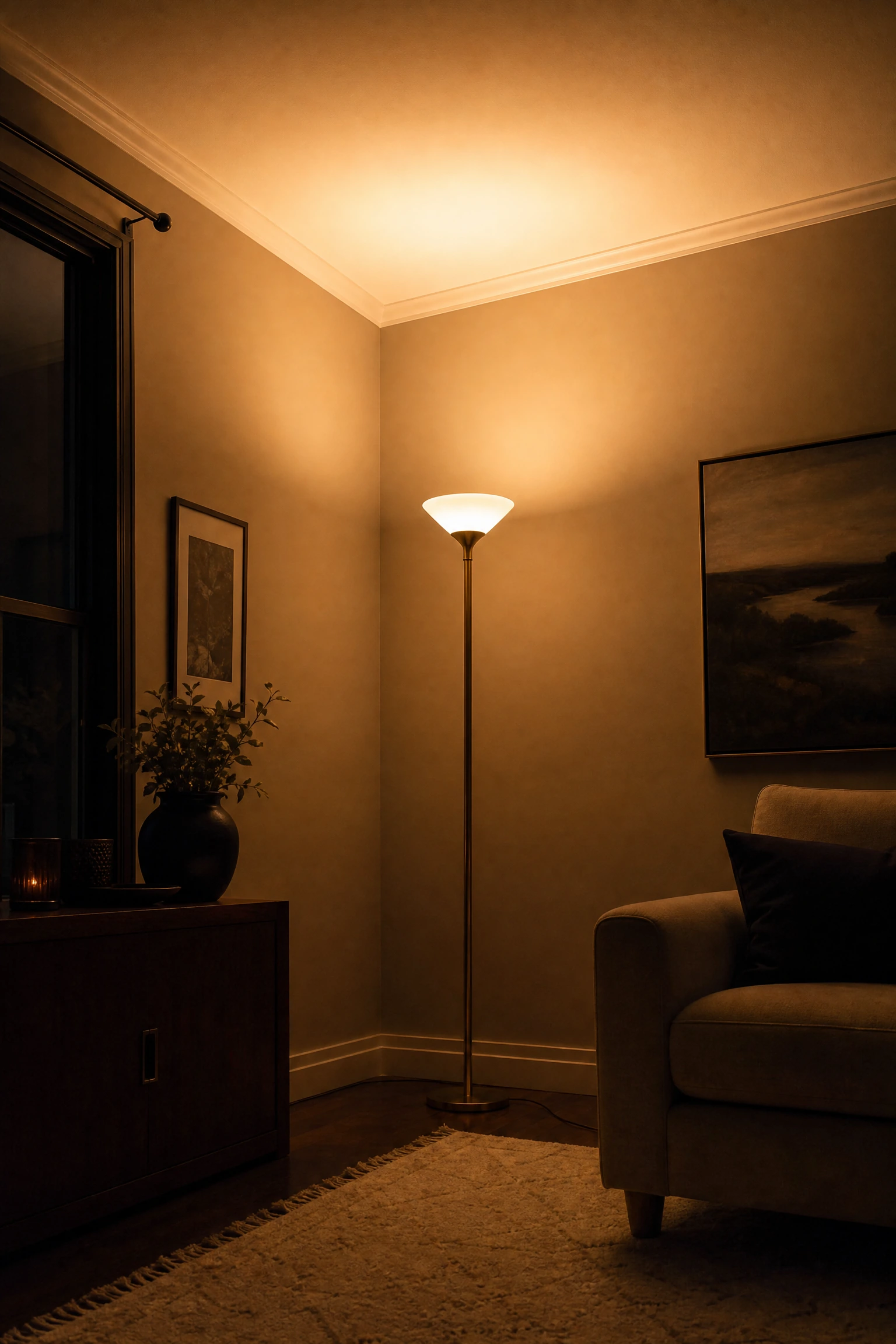
Dark corners are one of the most common reasons a living room feels smaller and less welcoming than it should, and the correct fix is a torchiere, a floor lamp with an upward-facing bowl or cone shade that bounces all its light off the ceiling and down into the corner rather than trying to push light outward. This indirect ceiling-bounce technique removes the dark patch entirely and raises the perceived height of the room, which is why it is a standard move in rooms with low or standard-height ceilings.
Reality Check: A torchiere needs a ceiling to bounce from, so it works best in rooms with white or light-colored ceilings. A dark or dramatically painted ceiling absorbs the upward light rather than reflecting it back down, and the effect is largely lost.
6. Place a Lamp Beside the TV, Not in Front of It
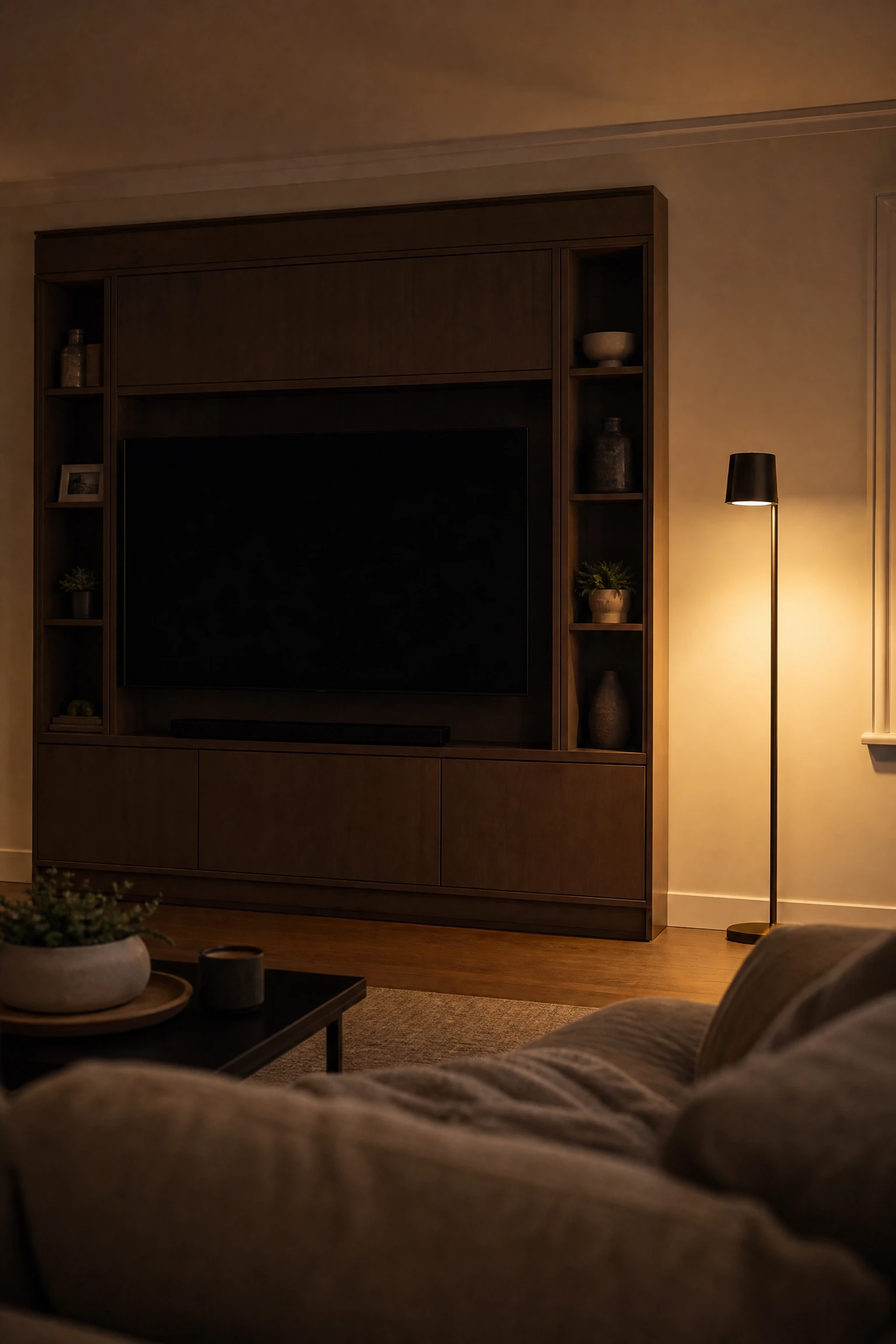
Lighting near the television is one of the most misunderstood placement decisions in a living room. Placing a bright lamp directly in front of or behind the TV creates glare on the screen, but having no lamp near the TV means your eyes are constantly adjusting between a bright screen and a dark room, which causes fatigue and headaches over a long viewing session. The correct placement is a floor lamp or table lamp off to one side of the TV unit at a 45-degree angle to the screen, providing soft ambient light without any direct reflection on the screen surface.
Pro Move: Use a dimmable bulb in any lamp placed near the TV and set it at 20 to 30 percent brightness during viewing. This technique, called bias lighting, reduces eye strain significantly compared to watching in full darkness or with a lamp at full brightness.
7. Use a Table Lamp to Anchor a Console Table Against the Wall

A console table placed behind a sofa or against an entry wall is one of the best lamp platforms in a living room because the table height lifts the lamp into the mid-height zone of the room, creating a warm pool of light at waist height that fills the space between floor level and ceiling level. One table lamp centered on a console table, or two smaller lamps flanking a mirror, makes the console read as an intentional design moment rather than a surface where things get left.
Quick Tip: The lamp on a console table behind the sofa should be at least 6 inches taller than the sofa back so the shade is visible above the sofa and the light spreads forward into the room rather than being blocked by the furniture.
8. Set a Small Table Lamp on a Bookcase Shelf for Accent Lighting

Placing a small table lamp on a bookcase shelf, either on the top shelf or on a middle shelf with space above it, introduces light inside the vertical plane of the bookcase rather than shining light onto it from outside. This internal illumination makes books, objects, and art displayed on the shelves glow warmly and turns a storage piece into an architectural light feature. A plug-in lamp with a short cord managed with a cord clip or channel along the shelf edge is the most practical approach.
Designer Advice: Use a lamp with a small opaque shade that directs light downward and forward onto the shelf below rather than a clear or translucent shade that allows the bulb to be seen directly, which creates uncomfortable glare inside the bookcase.
9. Put a Floor Lamp Behind a Statement Chair for a Halo Effect

A single statement armchair or accent chair placed in a corner or away from the main seating group gains enormous presence when a slim floor lamp is positioned directly behind it, slightly off-center, so the lamp creates a subtle halo of warm light behind the chair and makes it read as a deliberate focal point rather than an orphaned piece of furniture. This placement is one of the fastest ways to make a living room feel designed and intentional from the first glance.
Pro Move: The lamp base should be close enough to the chair that the shade sits at roughly the same height as the top of the chair back, so the light source and the chair form a single visual unit from across the room.
10. Pair a Floor Lamp With a Low Coffee Table for Zone Lighting

In an open-plan living space where the sofa and coffee table define the living zone within a larger room, a single tall floor lamp placed at one corner of the seating arrangement pulls the zone together visually and marks it as a complete, defined space. The lamp does not need to provide all the light: its purpose is partly functional and partly territorial, signaling where the living area begins and ends in a space that has no walls to do that job.
Heads Up: In open-plan rooms, the lamp should be tall enough, at least 60 inches, to be visible above the sofa back from the adjacent kitchen or dining area, so it anchors the zone from a distance as well as from within it.
| Room Type | Problem Lamp Solves | Best Lamp Style | Placement Rule |
| Open-plan living room | Define the seating zone | Tall arc or column floor lamp | Corner of seating group, visible above sofa |
| Small square living room | Prevent flat, overhead-only feel | Two table lamps + one floor lamp | Opposite corners from each other |
| Long narrow living room | Prevent dark end zones | Floor lamp at each end | One near sofa, one near opposite focal point |
| Large formal living room | Prevent cavernous feel | Multiple lamp pairs symmetrically placed | Mirror placement on both sides of room |
11. Use a Swing-Arm Wall Lamp Instead of a Table Lamp to Save Surface Space
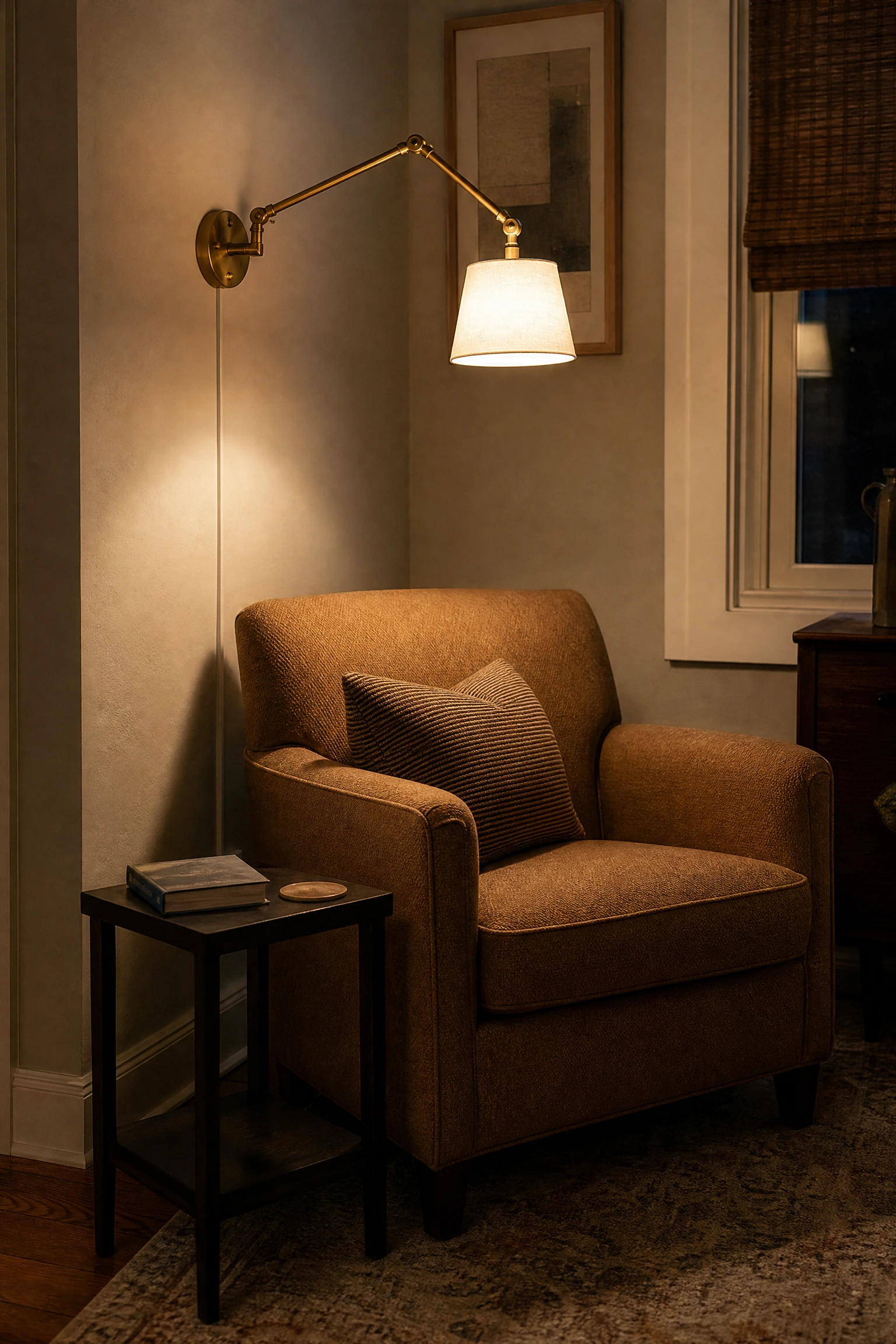
Where a side table is too small to hold a table lamp or a tight seating arrangement leaves no floor space for a floor lamp, a hardwired or plug-in swing-arm wall sconce at the height a table lamp shade would occupy does the same lighting job while freeing up the surface entirely. The arm swings out to position the light precisely over the shoulder of whoever is sitting below and can be angled back against the wall when not in use.
Reality Check: Plug-in swing-arm sconces are the practical alternative for renters or anyone unwilling to hire an electrician. The cord runs down the wall and plugs into a standard outlet, and with a cord cover painted the wall color it becomes nearly invisible.
12. Place Table Lamps on Either Side of a Fireplace

A fireplace is the natural focal point of a living room, and placing a pair of table lamps on the mantelpiece or on small accent tables flanking the fireplace base reinforces that focal status with warm light that frames the firebox whether or not the fire is actually lit. When the fireplace is off, the lamps carry the visual warmth of the focal wall on their own; when the fire is on, the lamp light and the firelight layer together in a way that makes the room feel genuinely cozy rather than just warm.
Quick Tip: Mantelpiece lamps should be smaller in scale than main room lamps, roughly 18 to 22 inches total height, so they sit at a comfortable scale relative to the mantel without towering above the fireplace surround.
13. Add a Tall Floor Lamp in the Opposite Corner From the Sofa

One of the most consistently overlooked lamp positions in a living room is the corner diagonally opposite the sofa, which is typically the darkest point in the room and the point that most affects how large and open the space feels. A tall floor lamp in this position throws light across the room diagonally, covering the maximum possible floor area from a single source, and eliminates the dark patch that shrinks the perceived size of the room when viewed from the sofa.
Designer Advice: A tripod floor lamp with a wide drum shade works particularly well in this position because its three-legged stance gives it visual stability in an empty corner and the wide shade disperses light broadly rather than in a narrow column.
14. Create a Reading Nook With a Clip-On or Shelf Lamp
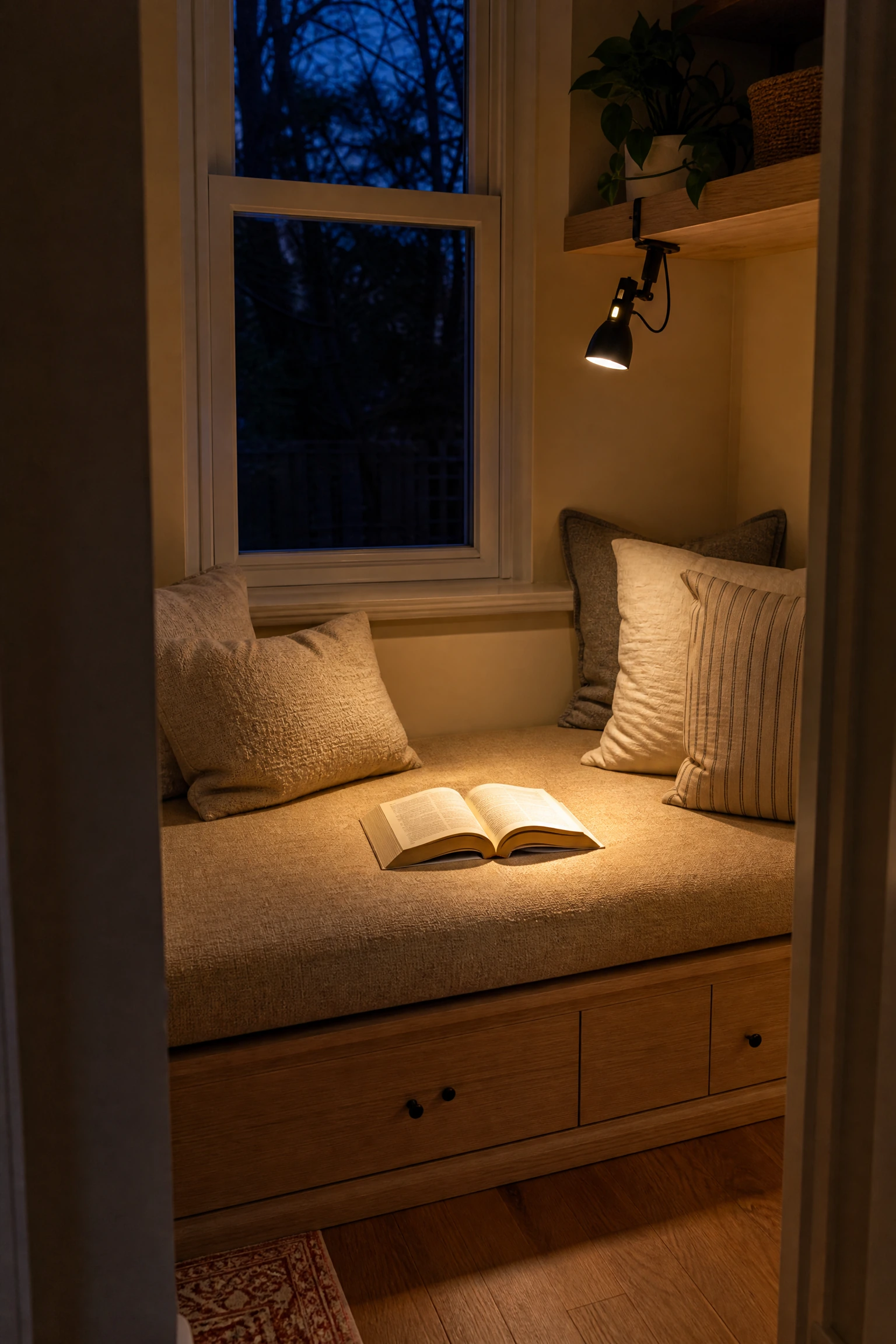
A window seat, built-in bench, or small armchair tucked into an alcove becomes a genuinely functional reading nook when lit from above or to the side with a clip-on task lamp attached to the shelf or alcove wall. This localized approach places the light exactly where it is needed without requiring a floor lamp that would crowd the tight space or a table lamp that would take up the surface where books and drinks naturally go.
Pro Move: A rechargeable, cordless clip-on lamp is the easiest solution for an alcove or window seat where there is no convenient outlet nearby. Quality rechargeable lamps now offer 8 to 12 hours of warm-toned light on a single charge, which covers several evenings of reading.
15. Use Two Lamps of Different Heights on the Same Side of the Room
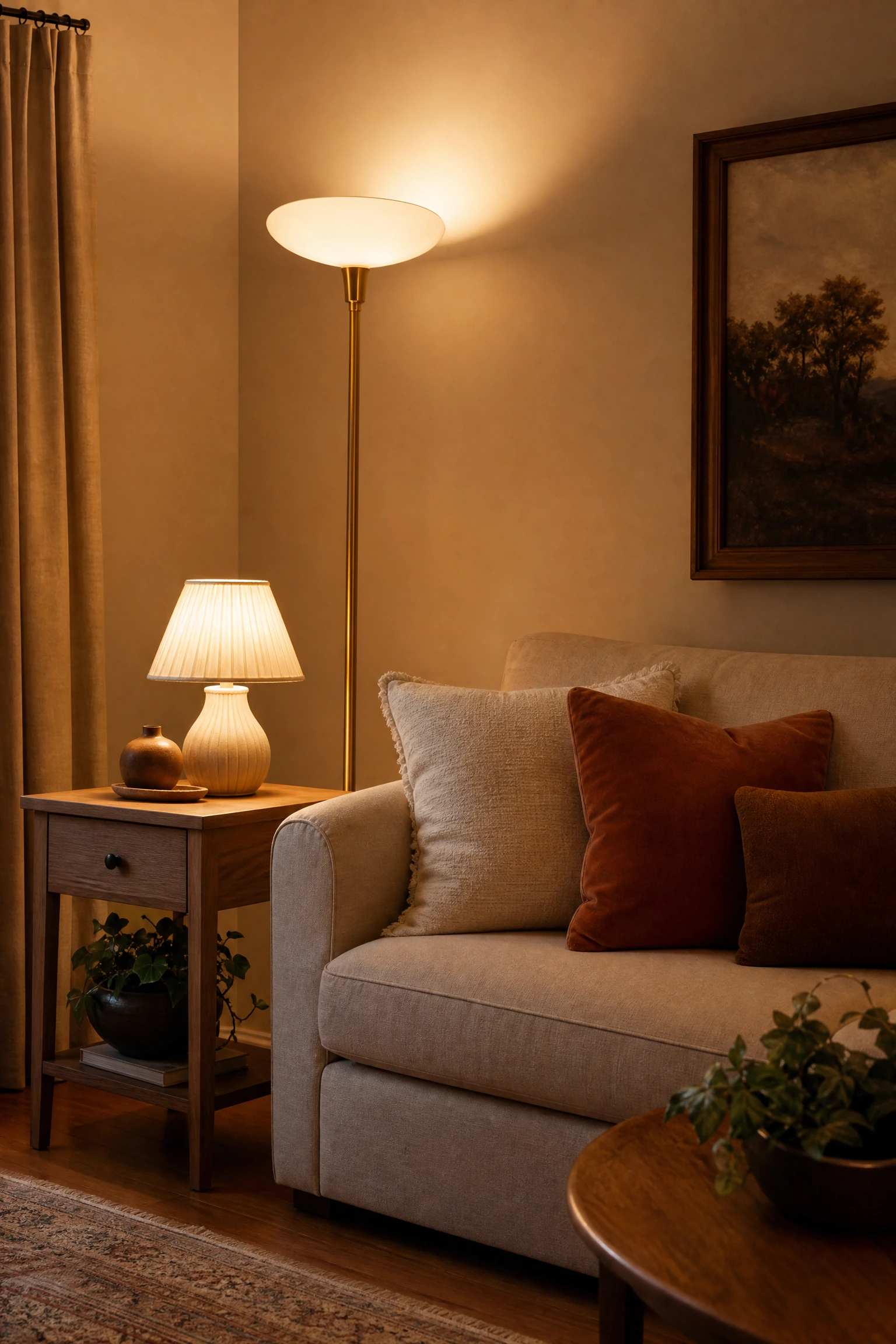
Placing two lamps at different heights on the same side of the room, such as a tall floor lamp behind the sofa and a shorter table lamp on the side table at the sofa arm, creates a layered vertical light composition that reads as professionally considered rather than randomly placed. The taller lamp provides fill light from above while the shorter one adds a warm glow at eye level, and the two together eliminate the mid-height dark zone that single-source lighting almost always creates.
Reality Check: For this technique to work the two lamps must share a consistent design language: the same metal finish, the same shade material, or the same color family. Two lamps in clashing styles at different heights reads as clutter rather than layering.
16. Position a Floor Lamp to Graze an Artwork or Gallery Wall

A floor lamp placed at a 30-to-45-degree angle from an artwork or gallery wall, close enough that the directed light grazes the surface of the wall rather than hitting it straight on, creates a dramatic effect called wall washing that emphasizes texture, adds depth to the wall surface, and makes artwork look better-lit than any dedicated picture light. In a living room, a narrow-shade or directional floor lamp aimed at the gallery wall behind the sofa turns the artwork into a lit feature rather than decoration that disappears into the background after dark.
Designer Advice: The lamp shade should be positioned so the light direction hits the wall at an angle, not head-on. Straight-on light flattens artwork; angled light reveals texture and makes colors more vivid.
17. Place a Lamp Inside an Empty Alcove or Fireplace Recess

An unused fireplace or empty alcove is a natural spot for a candle lantern, a small table lamp, or even a single pillar candle grouping that fills the recess with warm light and turns a potentially dead architectural feature into a glowing focal point. In practice, a small table lamp with a warm amber shade placed inside a non-working fireplace chamber creates a more atmospheric effect than the best decorative logs or dried flower arrangement in the same space.
Quick Tip: Confirm the fireplace flue is closed before placing any lamp inside the chamber. A closed flue and a small LED lamp produce no heat or fire risk. Leave at least 6 inches of clearance between the lamp and any painted, tiled, or brick surface inside the recess.
18. Avoid Placing Any Lamp Directly Opposite a Window

Placing a lamp directly opposite a window creates a glare problem during the day: the lamp shade becomes a bright object competing with the natural light from the window, and the combination of two light sources from opposite directions creates flat, shadowless illumination that removes all sense of depth and dimension from the room. The correct placement is always to the side of a window, never facing it directly, so the lamp light and the natural light come from related rather than opposing angles.
Heads Up: This rule also applies to mirrors. A lamp placed directly opposite a large mirror creates a brightness doubling effect that feels harsh and can expose the bare bulb in the mirror reflection. Angle any lamp within 45 degrees of a mirror rather than directly in front of it.
19. Use a Cordless Table Lamp for Flexible Placement on Any Surface

The single biggest constraint on lamp placement in most living rooms is the location of wall outlets, and the rise of high-quality rechargeable cordless table lamps has eliminated this constraint entirely. A good cordless lamp, fully charged, can sit on a coffee table, a low shelf, a window seat ledge, or in the center of a console table with no cord in sight, enabling lamp placement decisions based entirely on where the light is actually needed rather than where the nearest socket happens to be.
Pro Move: Cordless lamps work best when used as accent or ambiance lamps rather than primary light sources, since most currently top out at around 150 to 200 lumens. Pair one on the coffee table with a wired floor lamp elsewhere in the room for a complete lighting scheme.
20. Layer Three Lamps at Three Different Heights for Full Depth
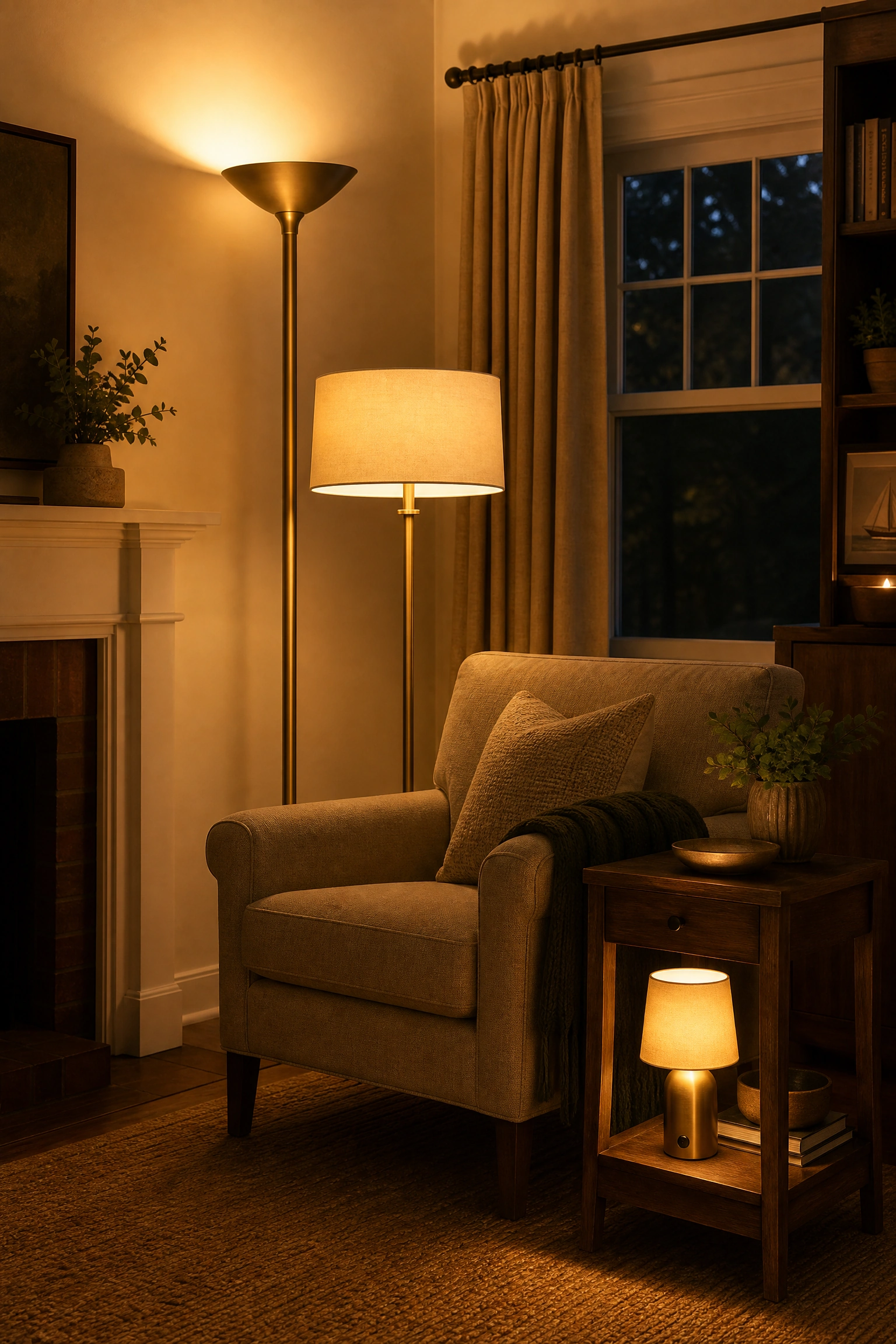
The difference between a living room that feels flat and one that feels rich and layered almost always comes down to this: a flat room has one or two light sources all at the same height, and a layered room has light operating at three distinct vertical levels simultaneously. In practice, this means a torchiere or tall arc lamp at the high level (60 to 72 inches), a standard table lamp or short floor lamp at the mid level (48 to 54 inches), and a small shelf lamp, candle group, or low cordless lamp at the low level (24 to 36 inches).
Designer Advice: You do not need expensive lamps to achieve this. Three budget lamps placed at three heights with warm bulbs will outperform two expensive lamps placed at the same height every single time.
| Height Level | Lamp Type | Approx. Height | Function |
| High level | Torchiere or tall arc lamp | 60 to 72 inches | Ambient ceiling bounce and room fill |
| Mid level | Standard table lamp or short floor lamp | 48 to 54 inches | Eye-level warmth and task light |
| Low level | Shelf lamp, cordless lamp, or candle group | 24 to 36 inches | Accent glow, coffee table warmth |
21. Match the Lamp Height to the Side Table Height

One of the most common and most avoidable table lamp mistakes is choosing a lamp that is either too tall or too short for the side table it sits on. The correct rule is that the total height of table plus lamp, measured from floor to the top of the shade, should be between 58 and 64 inches for a standard-height side table and sofa combination. Too tall and the shade sits above eye level and creates uncomfortable upward glare; too short and the lamp disappears behind the sofa arm and provides no useful light to the room.
Reality Check: Always measure your side table height before buying a table lamp, and look for lamps that specify both the overall height and the shade bottom height rather than just the overall measurement. The shade bottom height is the number that actually determines whether the lamp works in the space.
22. Place a Lamp to Define the Far End of a Long Living Room

In a long or rectangular living room, the end of the room farthest from the main seating area tends to fall into darkness after sunset, which makes the room feel as though it stops where the light ends rather than where the wall is. Placing a floor lamp or a lit surface like a console table lamp at the far end of the room draws the eye along the length of the space and makes the room read as its full size rather than only as far as the ambient light reaches.
Quick Tip: The far-end lamp does not need to be powerful. Its job is presence and depth, not function. Even a single low lamp or a cluster of candles at the far end of a long room extends the perceived length of the space significantly after dark.
23. Use All Warm White Bulbs Across Every Lamp in the Room

The single most common reason a living room with multiple lamps still does not feel warm or cohesive is that the bulbs across different lamps are different color temperatures. One lamp with a 3000K bulb, one with a 2700K bulb, and one with a 4000K bulb creates a room that looks like it cannot make up its mind, with patches of warm and cool light competing visually rather than blending. The fix is simple: use 2700K warm white bulbs in every single lamp in the living room without exception.
Heads Up: 2700K is the color temperature of traditional incandescent bulbs and is the standard that interior designers use for living room lamps. Anything above 3000K starts to read as cool-white in a residential setting and is better suited to kitchens and work areas.
24. Put Every Lamp in the Room on a Dimmer or Smart Plug

Lamp placement determines where light goes; dimmers determine how much light goes there, and the combination of correct placement with adjustable brightness is what separates a genuinely flexible, atmospheric living room from one that is either too bright or too dark depending on the time of day. Smart plugs with app-controlled dimming allow you to set different brightness levels for different moods, daytime use, TV watching, and entertaining, without rewiring a single lamp or installing hardwired dimmers.
Pro Move: Set up three saved brightness presets on your smart plug system: full brightness for cleaning and active daytime use, 60 percent for general evening use, and 20 to 30 percent for TV watching and winding down. These three settings will cover 95 percent of what a living room lighting scheme needs to do.