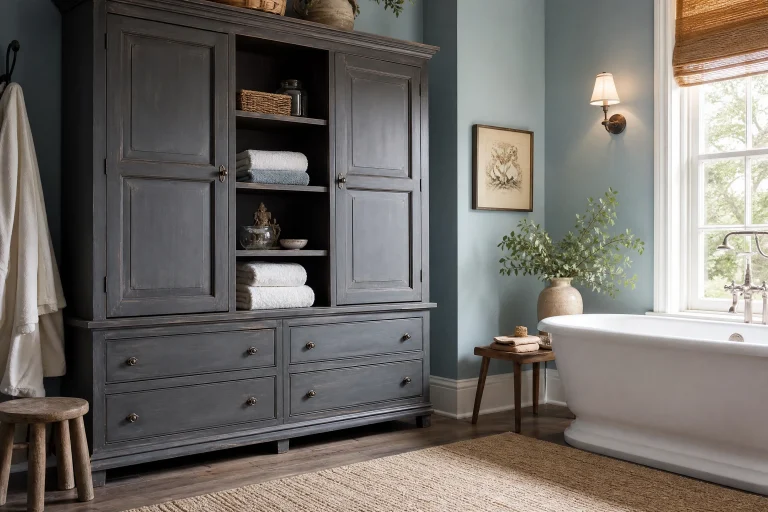
Gray and Green Bathroom Looks That Actually Work

Most people pick a gray bathroom and then wonder why it feels cold and lifeless. The fix is almost always a warmer secondary colour, and green is the most consistently successful one. The fix is almost always green, but the version in your head and the version that actually works in real life are often two very different things.
Here are 28 specific gray and green pairings that hold up in real rooms, not just on mood boards.
1. Sage Green Vanity Against Cool Light Gray Walls

A sage green vanity with flat-panel doors sits beautifully against cool light gray walls, especially when the gray leans slightly blue-green in its undertone. In practice, this combination reads as calm and intentional rather than loud, and it works in both small and large bathrooms because neither color is competing for dominance.
**Pro Move:** Choose a sage vanity with an LRV between 30 and 45 so it reads as a color statement without darkening the room.
2. Forest Green Subway Tile with Warm Charcoal Gray Grout

Running forest green subway tile floor-to-ceiling with warm charcoal gray grout creates a moody, enveloping look that feels far more expensive than it is. The dark grout lines add visual structure and prevent the green from reading as flat or plasticky.
**Designer Advice:** Use a stacked vertical pattern rather than traditional brick offset to add height and a more contemporary edge to a small bathroom.
3. Olive Green Walls with Concrete Gray Flooring

Olive green walls paired with large-format concrete gray porcelain floor tiles bring an earthy, Japandi-influenced calm to a bathroom that feels genuinely grounded. The yellow undertone in olive keeps the gray from going cold, and the two colors share just enough warmth to feel like they were always meant to sit together.
**Reality Check:** Olive reads very differently under cool white light versus warm bulbs, so test a paint sample in your actual bathroom lighting before committing.
| Shade of Olive | Works Best With | Avoid |
| Muted olive (warm, gray-green) | Concrete gray, warm white | Cool blue-gray, stark white |
| Brighter olive (yellow-green) | Mid-tone warm gray | Charcoal, dark gray |
| Deep olive (almost khaki) | Light gray, cream | Cool gray, silver hardware |
4. Soft Sage Paint with Gray Marble Countertops

Painting the walls in a soft sage, something like Sherwin-Williams Softened Green or Benjamin Moore Saybrook Sage, and pairing it with gray-veined white marble countertops is one of the most reliably elegant looks in a primary bathroom. The veining in the marble picks up the gray and quietly ties the whole palette together without any extra effort.
**Quick Tip:** Honed marble in this pairing looks more organic than polished, and it hides water spots far better in a daily-use bathroom.
5. Emerald Green Feature Wall with Mid-Gray Tile

One emerald green painted or tiled feature wall behind the vanity, surrounded by mid-gray wall tiles on the remaining three walls, gives the room a confident focal point without overwhelming the senses. This works particularly well in a narrow bathroom where you want one wall to do all the visual work.
**Pro Move:** Keep the emerald to a single wall only. More than one pulls the look away from bold-but-balanced and into difficult-to-live-with.
6. Gray Shiplap Walls with Eucalyptus Green Accessories

Installing gray-painted shiplap paneling and layering in eucalyptus green through towels, a woven laundry basket, and a trailing pothos plant on a floating shelf creates a farmhouse-meets-biophilic look that feels personal and lived-in. The shiplap adds texture that plain painted drywall cannot, which means the room feels finished even with minimal decor.
**Designer Advice:** Paint shiplap in a warm gray like Agreeable Gray rather than a cool one, as warm grays hold their own against green without turning the room dingy.
7. Green Zellige Tile with Gray Plaster Walls
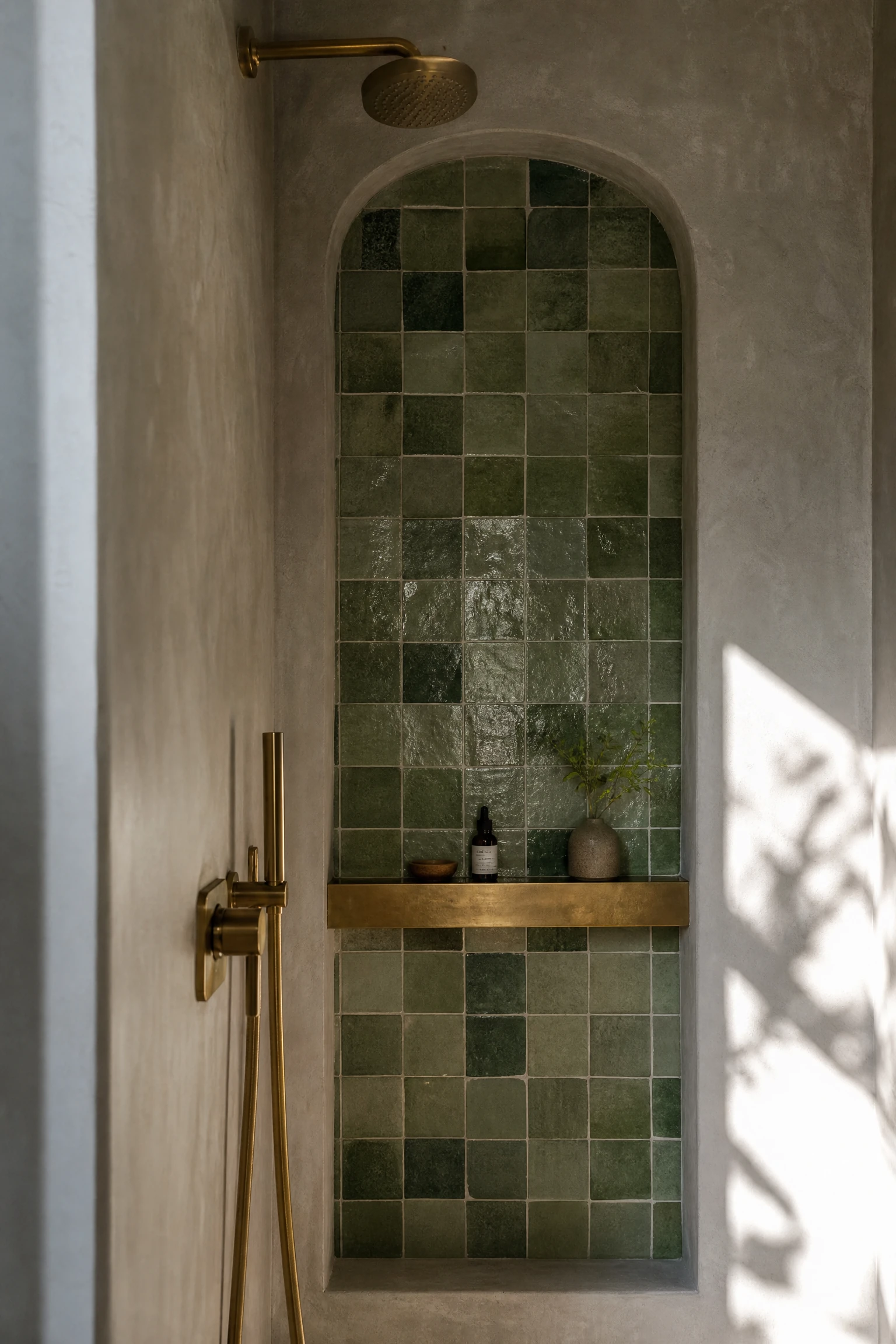
Handmade zellige tile in an irregular green glaze, used on a shower niche or backsplash, against raw gray limewash or Venetian plaster walls is the pairing that keeps showing up in high-end bathroom renovations for good reason. The slightly uneven surface of both materials catches light differently throughout the day, so the room never looks the same twice.
**Reality Check:** Zellige tile is mid-to-investment level, typically ranging from $25 to $60 per square foot installed, so use it as an accent rather than a full wall treatment if budget is a concern.
8. Sage Green Subway Tile Shower with White Gray Grout
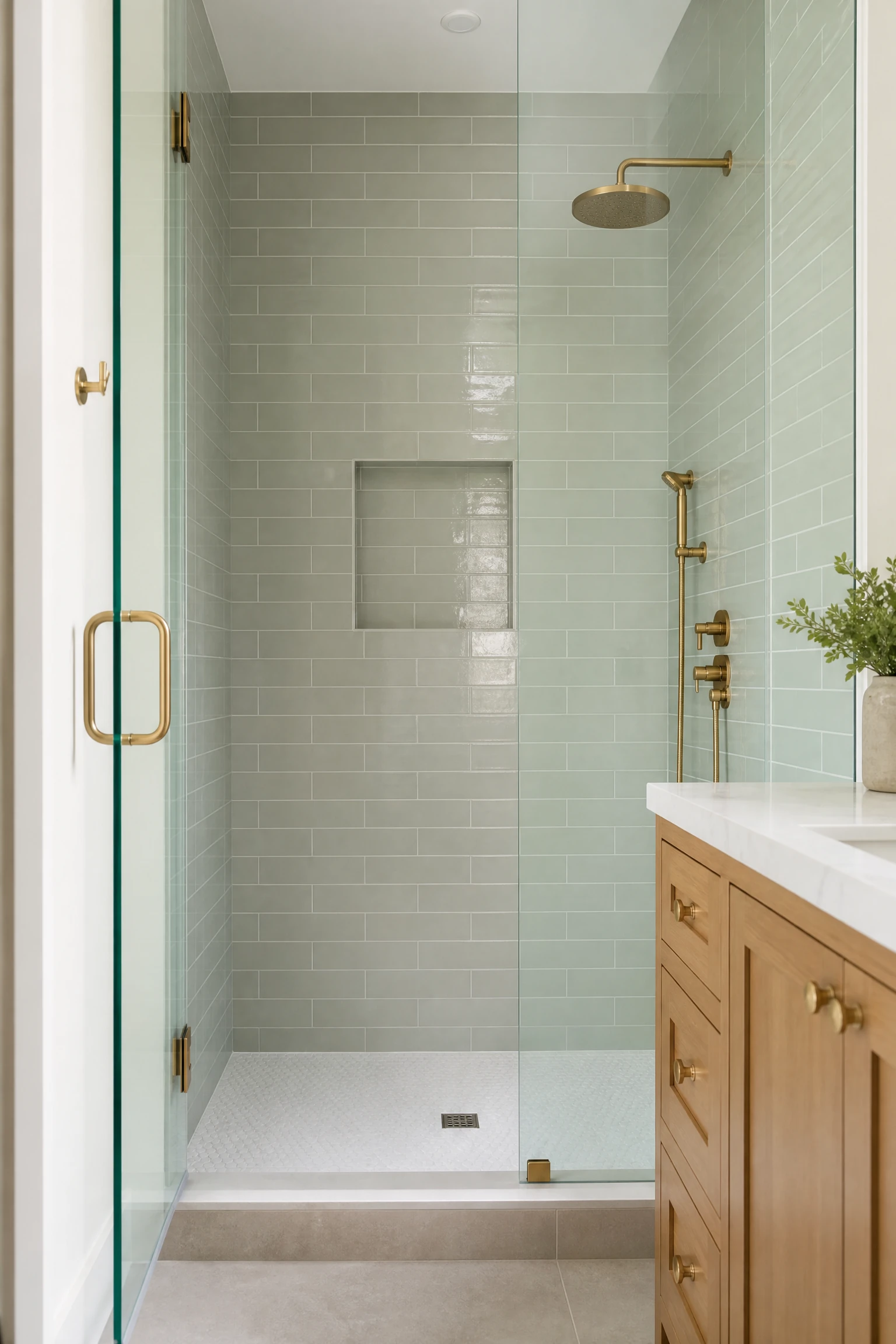
A full shower surround in sage green 3×6 subway tile with white-gray grout is one of the most accessible entry points into this color combination. It photographs beautifully, it reads as fresh rather than trendy, and it pairs with almost every vanity finish, from warm oak to painted white to brushed brass hardware.
**Quick Tip:** Horizontally stacked subway tile in sage green makes a low-ceilinged shower feel wider; vertically stacked makes it feel taller. Choose based on your ceiling height, not just aesthetics.
9. Charcoal Gray Vanity with Sage Green Walls
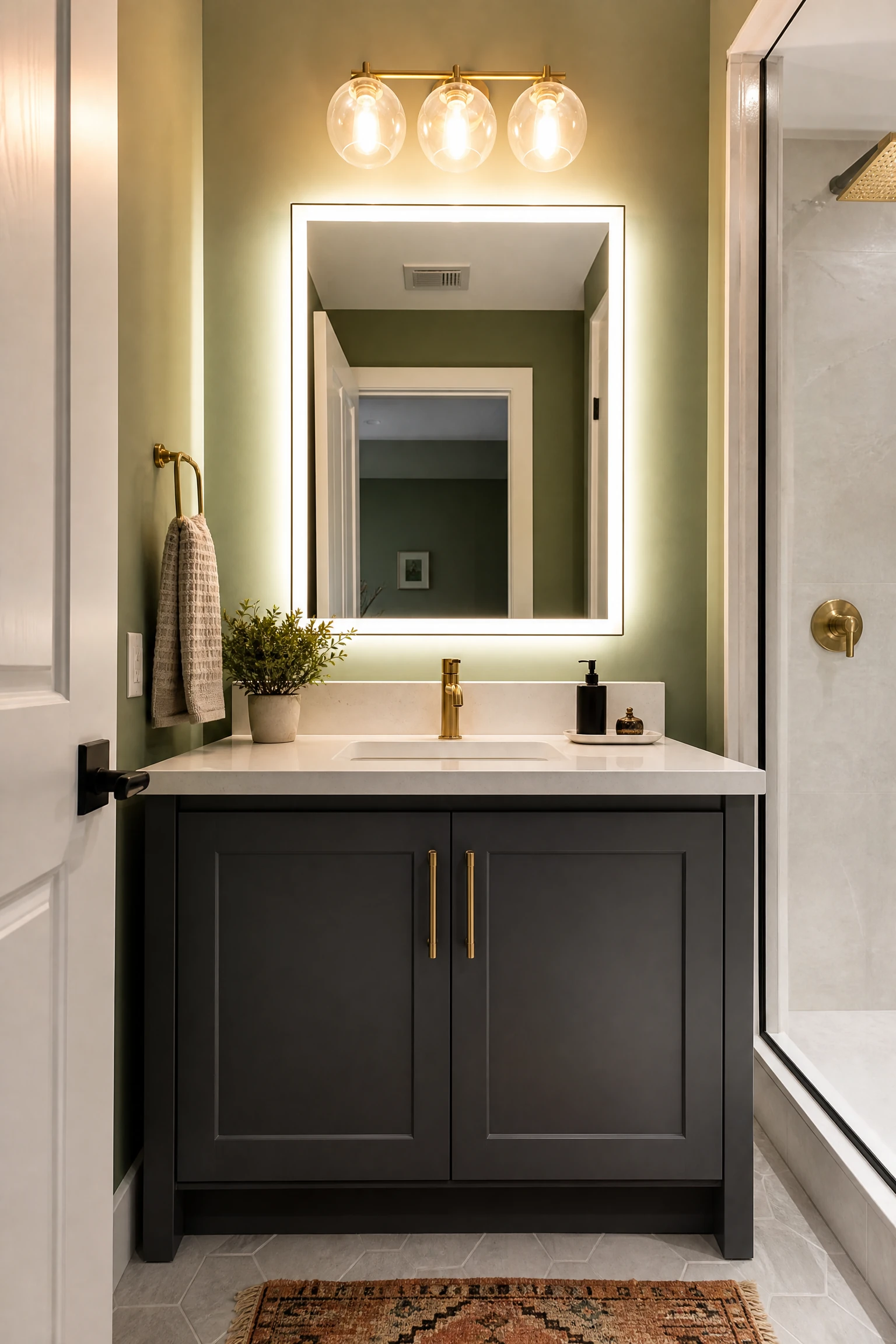
Flipping the more common formula and putting charcoal gray on the vanity while painting the walls sage green creates a grounded, dramatic look that still feels fresh. The dark vanity anchors the room and keeps the sage walls from feeling too light and airy for a primary bathroom that needs to feel substantial.
**Heads Up:** This combo works best with brushed gold or unlacquered brass hardware, not matte black, as black with charcoal gray can read as too heavy.
| Hardware Finish | Works With Charcoal + Sage | Effect |
| Brushed gold | Yes | Warm, rich, spa-like |
| Unlacquered brass | Yes | Lived-in, collected |
| Matte black | Use carefully | Can feel too heavy |
| Polished chrome | Yes | Clean, modern, bright |
| Brushed nickel | Yes | Safe, versatile |
10. Hunter Green Painted Ceiling with Gray Everything Else

Painting only the ceiling in hunter green while keeping walls, tile, and vanity in varying shades of gray is a low-commitment way to introduce serious color to a bathroom without touching a single tile. Interior designers call this a “fifth wall” approach, and in a small bathroom it creates an enveloping, intimate feel that punches well above its cost.
**Pro Move:** Use a flat or matte finish on the green ceiling, as sheen on a ceiling surface catches light unevenly and can make the color look patchy.
11. Green and Gray Encaustic Floor Tile with Neutral Walls
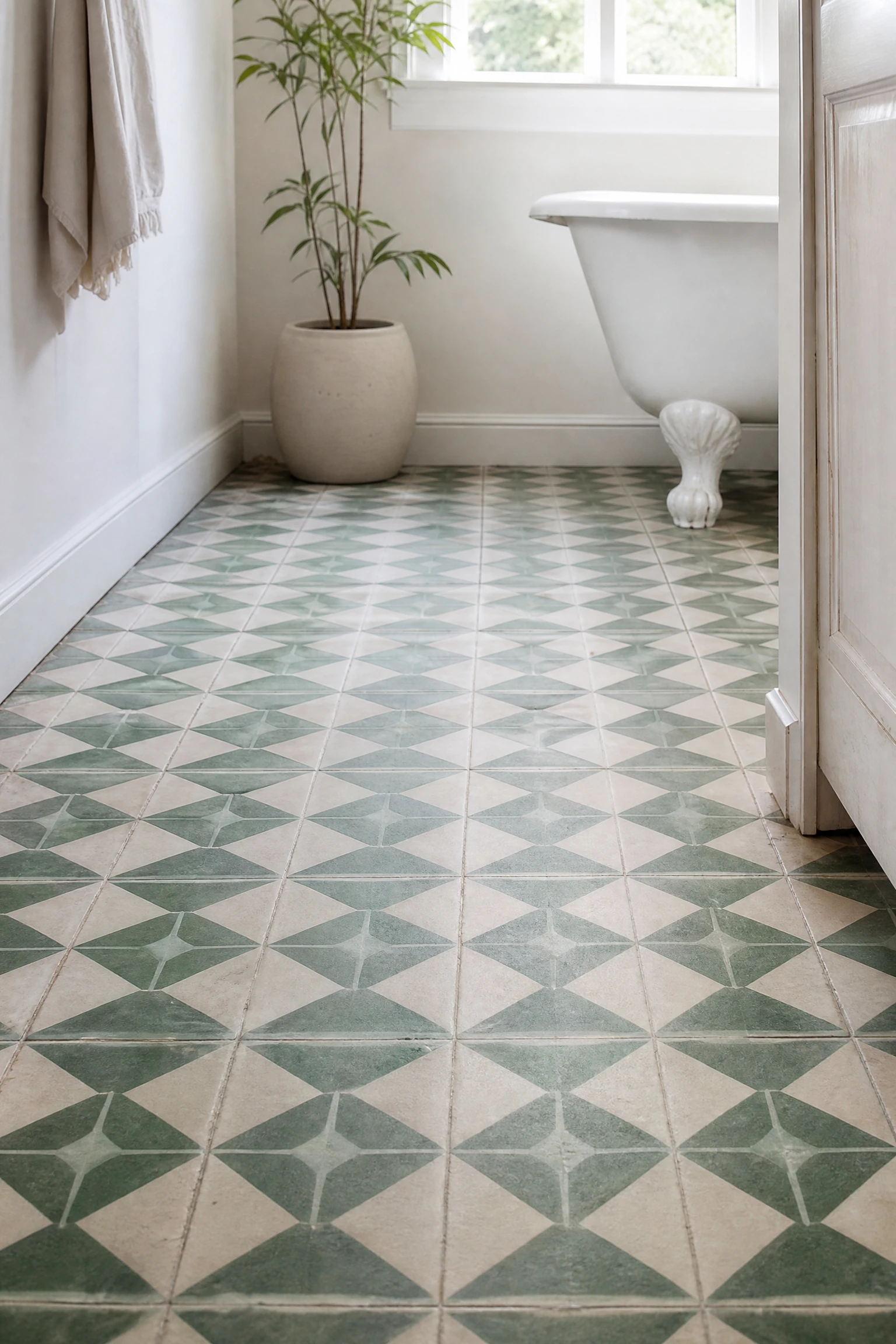
Laying encaustic cement floor tiles in a green and gray geometric pattern and keeping all four walls in plain warm white or light greige lets the floor carry the entire design. This is the right approach for anyone who wants visual interest without the commitment of colored walls, and it works in both period-style and contemporary bathrooms.
**Designer Advice:** Seal encaustic cement tile before grouting and again after installation, as the material is porous and will absorb water and product stains if left untreated.
12. Gray Board and Batten with Sage Green Upper Walls

Installing white-gray board and batten paneling on the lower half of the bathroom walls and painting the upper half in sage green creates a two-tone look with clear visual structure. The paneling adds architectural detail that makes a builder-grade bathroom feel custom, and the color break at chair rail height draws the eye around the room in a way that flat painted walls cannot.
**Quick Tip:** The color transition line should sit at about 36 inches from the floor, which is standard chair rail height and aligns with most vanity tops.
13. Sage Green Freestanding Tub Against Gray Stone Wall
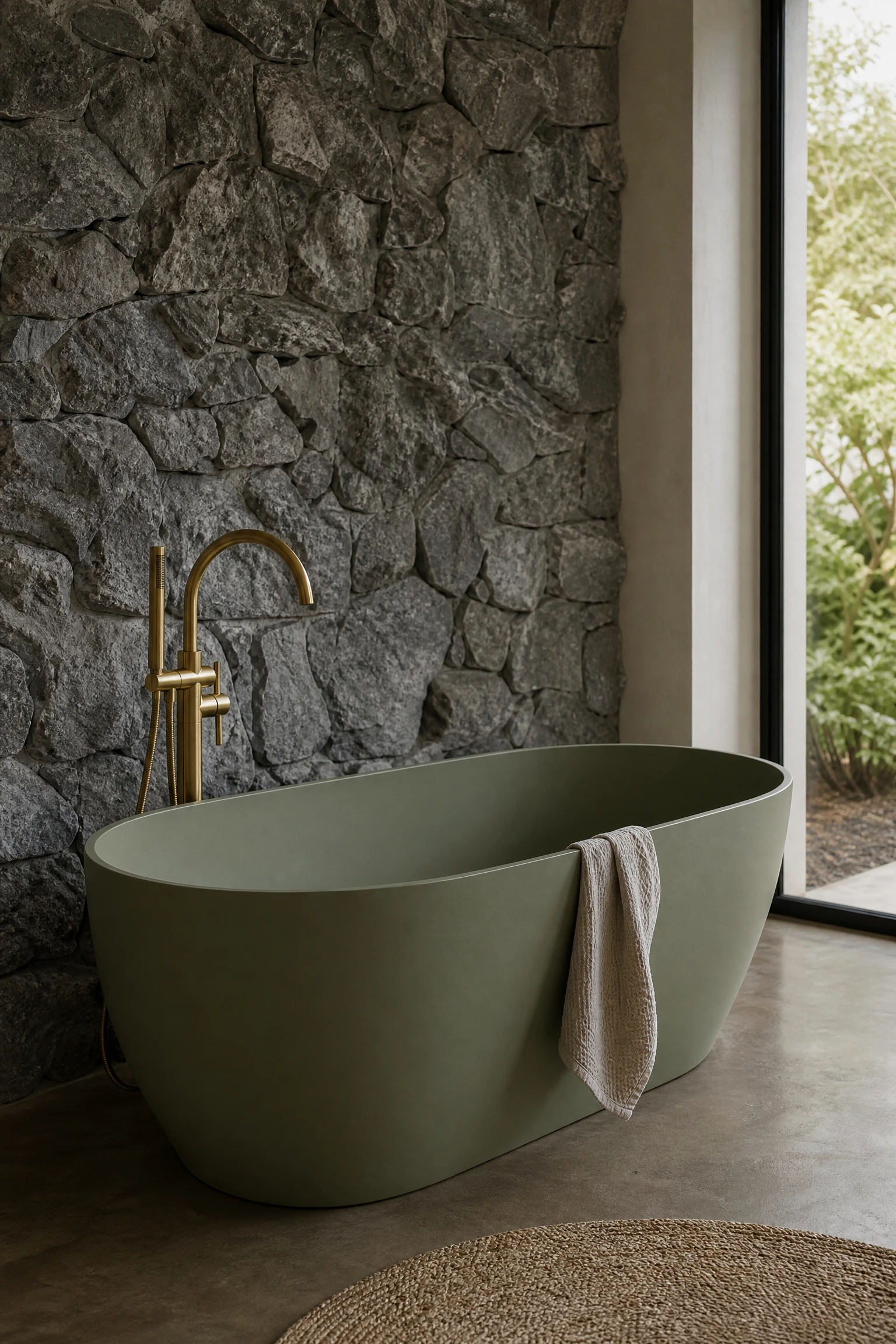
A freestanding soaking tub in sage green, paired with a rough-textured gray stone or concrete-effect tile wall behind it, is the kind of pairing that looks like it was designed by a professional even when it was not. The tub acts as a sculptural object and the textured wall gives it something interesting to sit against.
**Reality Check:** Colored freestanding tubs are typically acrylic or stone resin and range from $800 to $3,500+. Stone resin holds heat better and feels more substantial underfoot.
14. Muted Sage Green Wallpaper with Gray Tile Wainscoting

Using a botanical or textured sage green wallpaper on the upper walls above gray tile wainscoting brings pattern, color, and texture into a bathroom in one move. This works especially well in a powder room where moisture is less of a concern, and it creates a curated, collected look that flat paint simply cannot match.
**Heads Up:** Use a washable, moisture-resistant wallpaper in any bathroom with a shower or bathtub nearby. Standard paste wallpaper will bubble and peel within months.
15. Dark Slate Gray Tile with Trailing Green Plants

Using large-format dark slate gray tile throughout the shower and floor, then introducing green entirely through living plants, such as a peace lily on the vanity, a hanging pothos near the window, and a small fern on a shelf, is the lowest-commitment and most budget-friendly version of this color story. The plants create color, life, and texture without a single renovation.
**Pro Move:** Choose plants suited to low-light and high-humidity environments. Peace lily, pothos, and Boston fern are all reliable bathroom performers.
16. Green Penny Round Mosaic Tile with Gray Grout

Covering a shower floor or a niche interior in green penny round mosaic tile, grouted in medium gray, creates a detailed, jewel-like surface that adds enormous visual interest to a small area. The combination reads as vintage in a warm-toned bathroom and contemporary in a cooler, more minimal one.
**Designer Advice:** Keep penny rounds to one contained surface only. Using them on full walls in addition to the floor crosses from layered into visually overwhelming.
17. Gray Concrete Vanity Top with Green Cabinet Below

Pairing a poured or cast concrete countertop in gray with a custom-painted green cabinet below it is a straightforward way to introduce green as a grounded, structural element rather than an accent. The raw, matte quality of concrete and the slightly chalky finish of cabinet paint in a muted green share a similar visual weight that keeps the look cohesive.
**Quick Tip:** If a real concrete countertop is outside budget, concrete-look quartz delivers the same aesthetic at a lower price point and without the sealing maintenance.
18. Sage and Gray Japandi Bathroom

A Japandi bathroom in this palette uses sage green on a single wall or the vanity, warm gray limewash or textured plaster everywhere else, a natural oak floating shelf, a stone basin sink, and nothing else. The restraint is the point. Every object earns its place, and the result is the kind of bathroom that feels genuinely restorative to be in.
**Reality Check:** Japandi works through rigorous editing. If you tend to keep a lot on the counter, this style will fight you daily.
| Japandi Bathroom Element | Recommended Choice |
| Wall color | Warm gray limewash or plaster |
| Accent color | Muted sage green |
| Vanity material | Warm natural oak |
| Sink | Stone or concrete basin |
| Hardware | Brushed brass or matte bronze |
| Lighting | Warm Edison or soft white bulbs |
| Accessories | One plant, one soap dispenser, nothing else |
19. Deep Teal Green Accents Against Gray Subway Tile

Teal sits at the border of green and blue, and it works especially well as an accent color against classic gray subway tile because it reads as neither fully green nor fully blue. Introduce it through a teal bath mat, towels, a painted stool, and a ceramic soap dish, and the bathroom feels intentional without a single tile change.
**Heads Up:** Teal reads differently under warm versus cool light. Under warm light it leans more green; under cool light it leans more blue. Test a towel or small object in your bathroom before committing to larger teal pieces.
20. Green Grout with Gray Tile

Using sage or olive green grout with gray field tiles is a small change with a genuinely surprising visual impact. It adds color and personality to a straightforward tile installation without changing any of the tile itself, and it is one of the most budget-friendly ways to bring green into a bathroom that already has gray tile.
**Pro Move:** Colored grout fades over time with cleaning. Seal it every 12 months and avoid bleach-based cleaners to keep the color from washing out prematurely.
21. Gray Herringbone Floor with Green Painted Walls

Laying gray porcelain in a herringbone pattern on the floor and painting the walls a medium sage or olive green creates a bathroom with real design depth. The herringbone adds movement and craftsmanship at the floor level, and the green walls keep the room from reading as a cold, monochromatic gray space.
**Designer Advice:** Herringbone with large tiles (4×12 or bigger) reads as contemporary. Herringbone with small tiles (2×4) reads as period or vintage. Choose the scale that fits your bathroom’s overall style.
22. Sage Green Niche Inside a Gray Shower

Painting or tiling a recessed shower niche in a contrasting sage green while keeping the rest of the shower in gray tile creates a small, precise pop of color that functions as both a design detail and a practical storage feature. It is a detail that takes almost no effort but makes the shower look genuinely considered.
**Quick Tip:** Use a waterproof tile rather than paint inside a shower niche. Epoxy or urethane-based grout in a matching green tone finishes the look without the maintenance headache.
23. Warm Gray Walls with Dark Bottle Green Fixtures
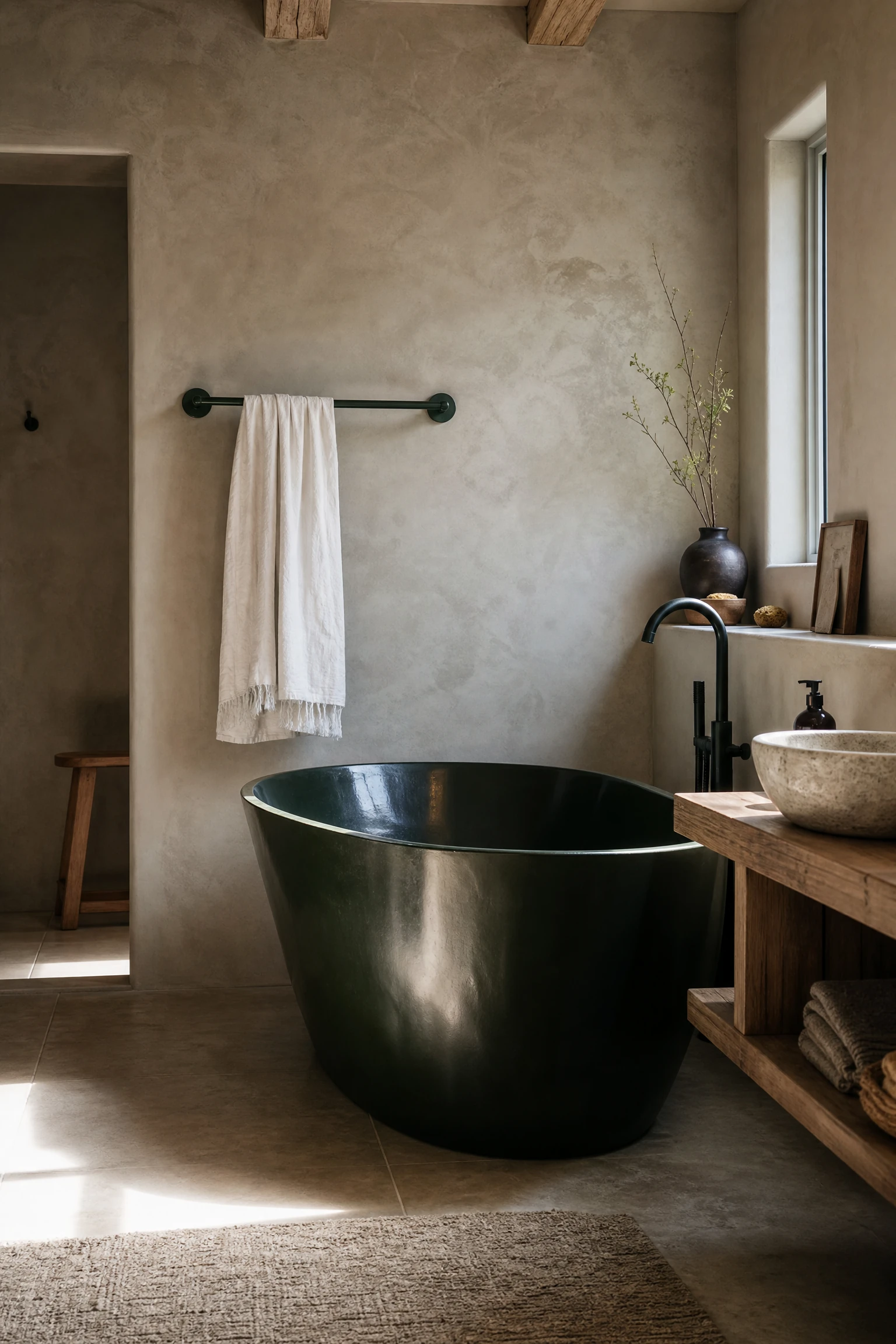
Warm greige-gray walls with dark bottle green fixtures, such as a green-painted freestanding tub, a matte green towel bar, or a verde green stone basin, create a bathroom that feels rich and considered rather than trendy. Dark bottle green has enough depth to stand alone as a statement against a warm neutral background.
**Reality Check:** Matte green fixtures show fingerprints and water marks more readily than polished ones. Budget for a few extra minutes of daily upkeep if you go this route.
24. Soft Green Linen Curtain Against Gray Tile in a Window Bathroom

In a bathroom with a window, a soft green linen curtain adds color, texture, and privacy without touching a single wall or tile. Against a gray tile backdrop, the organic drape of linen in a muted sage or celadon green brings warmth and softness to a material palette that can otherwise feel hard and cold.
**Pro Move:** Choose a linen-cotton blend rather than pure linen for a bathroom curtain. It resists mold and mildew better and holds its shape after repeated washing.
25. Sage Green Limewash Wall with Gray Freestanding Tub

Limewashing one wall in sage green behind a gray stone resin or concrete-finish freestanding tub creates a layered, artisanal look that photographs beautifully and feels genuinely luxurious in person. The variation in depth and tone that limewash produces naturally means no two rooms look identical.
**Designer Advice:** Limewash paint is fully DIY-able and costs roughly $50 to $100 per gallon, covering one wall in two coats. It is one of the highest-impact, lowest-cost upgrades in this entire list.
26. Green and Gray Bathroom in a Rental Without Painting

In a rental, bring this palette in entirely through accessories: a sage green shower curtain on a gray tension rod, gray and green Turkish towels layered on a freestanding ladder shelf, a large fiddle leaf fig or monstera in the corner, and a gray bath mat with a green geometric border. No landlord permission required, and the whole setup can move with you.
**Reality Check:** A sage green peel-and-stick removable wallpaper panel behind the vanity mirror is another renter-friendly option that costs under $60 and removes cleanly.
27. Gray Vanity with Green Painted Interior Shelves

Painting the inside of open vanity shelves or a medicine cabinet in a contrasting sage or hunter green while leaving the exterior gray is a subtle, unexpected detail that adds color exactly where it is noticed most. This works in both a painted wood vanity and a frameless wall-mounted cabinet.
**Quick Tip:** Use a semi-gloss or satin finish on the interior shelf color. It reflects light back into the cabinet, makes the green more rich, and wipes clean easily.
28. Full Monochromatic Green-Gray Bathroom
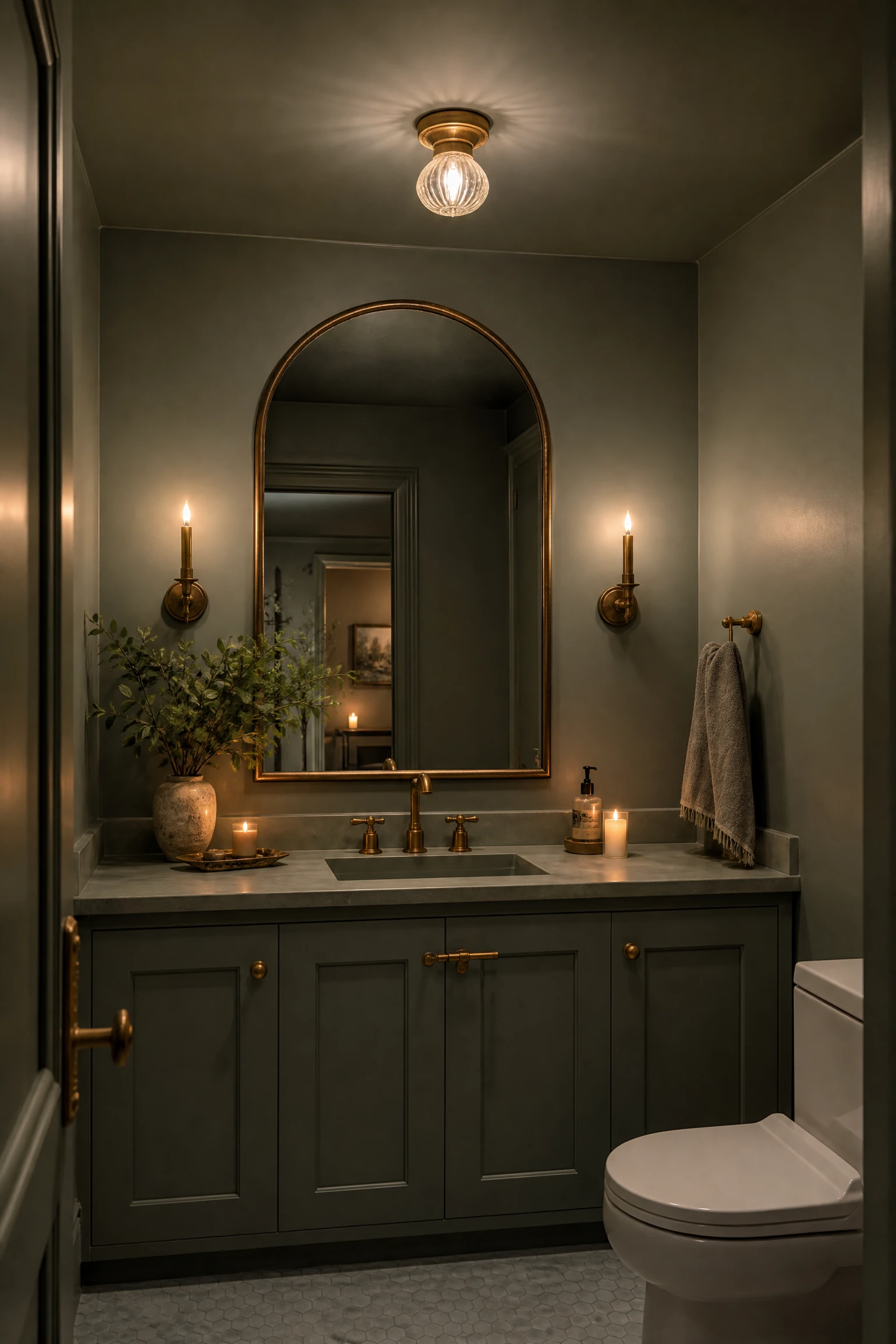
Using a single gray-green tone, something like Benjamin Moore Sea Salt or Farrow and Ball Mizzle, on the walls, ceiling, and even the painted vanity creates a color-drenched, enveloping bathroom that feels like stepping into a forest clearing. This monochromatic approach is the most committing option on this list and also one of the most rewarding when done confidently.
**Pro Move:** In a monochromatic green-gray bathroom, let your hardware do the contrasting work. Polished brass, unlacquered bronze, or aged copper will pop dramatically against a single-tone green-gray backdrop. The version of this palette that works best is the one where the green is muted enough that the two colours feel related rather than contrasting.
Tile and Material Choices for Gray and Green Bathrooms
The tile decision in a gray and green bathroom is more nuanced than in most other bathroom colour schemes, because both colours exist in the same muted tonal range and the wrong tile can make them blend into each other rather than complement each other. The combinations that consistently produce clear, resolved results:
Sage green wall tile with warm grey stone floor. The colour difference between the two surfaces is sufficient to create visual separation without creating a colour clash. The stone floor introduces natural material warmth that prevents the room from feeling like a single-colour installation.
Grey Zellige or handmade tile with green-painted walls. The texture of the Zellige introduces surface variation that a flat tile cannot. Alongside a flat painted wall in sage or hunter green, the textured grey tile reads as the quieter partner and the painted wall reads as the primary colour decision. This combination is one of the most photographed in contemporary bathroom design.
Large-format white porcelain with grey veining against sage green-painted walls. The cleanest version of the combination: the white-grey tile provides relief from the green and prevents the room from reading as too dark. This version is the most flexible in terms of size — it works in bathrooms from 4 square metres upward, where some of the other combinations require more space to read properly.
Plants in a Gray and Green Bathroom
A gray and green bathroom is one of the most naturally hospitable spaces for plants. The colour palette already references the natural world, and adding real plants deepens that reference in a way that no accessory can replicate. Plants that thrive in bathroom conditions: pothos, which tolerates low light and high humidity; monstera, which makes a strong visual statement in a medium or large bathroom; snake plant, which tolerates temperature fluctuation and requires minimal maintenance; and ferns, which genuinely prefer the humid environment of a bathroom and produce a full, lush appearance that slower-growing plants cannot match.
A single large plant in a terracotta or sage green ceramic pot in the corner of a gray and green bathroom does more for the room than a full collection of smaller accessories at the same cost. It adds scale, it adds life, and it adds a third organic colour that makes the gray and green look intentional rather than chosen from a two-colour palette.