Brown Tiles Kitchen Ideas That Match the Right Tile to the Right Spot

Brown is having one of its most significant moments in kitchen design. Pantone named Mocha Mousse as its 2025 Colour of the Year, the latte interiors trend has brought warm browns into kitchens that would have defaulted to white or grey a few years ago, and the return of earthy, nature-connected palettes has made brown tile not just acceptable but genuinely desirable in kitchens that want to feel grounded, warm, and specific rather than generic and neutral. But brown tile is a category that covers an enormous range: sandy terracotta, warm chocolate subway, dark espresso stone, amber zellige, mocha mosaic, and everything in between. And the same brown tile that looks extraordinary in one position in the kitchen can look oppressive or institutional in another.
This article is organized by where the tile goes, because that is the decision most directly affecting which brown tile, which shade, and which format will work best. The right brown tile for a backsplash is rarely the right brown tile for the floor. The right brown tile for a feature wall is rarely the right one for a full kitchen wrap. Find the position you are working with, read through the ideas within that group, and use the honest notes on shade, format, and what to pair each tile with to make the combination work in a real kitchen rather than just in a showroom sample board.
Brown Tiles as a Kitchen Backsplash
The backsplash is the most forgiving and most creative position for brown tile in a kitchen because it is a contained surface with a limited area that allows a bold tile choice to make a significant impact without dominating the entire room. A brown backsplash tile also has the advantage of sitting between the countertop and the upper cabinets, where it mediates between the two dominant horizontal and vertical elements of the kitchen and creates a material transition that connects the worktop zone to the cabinet zone.
1. Warm Brown Zellige Backsplash Tile
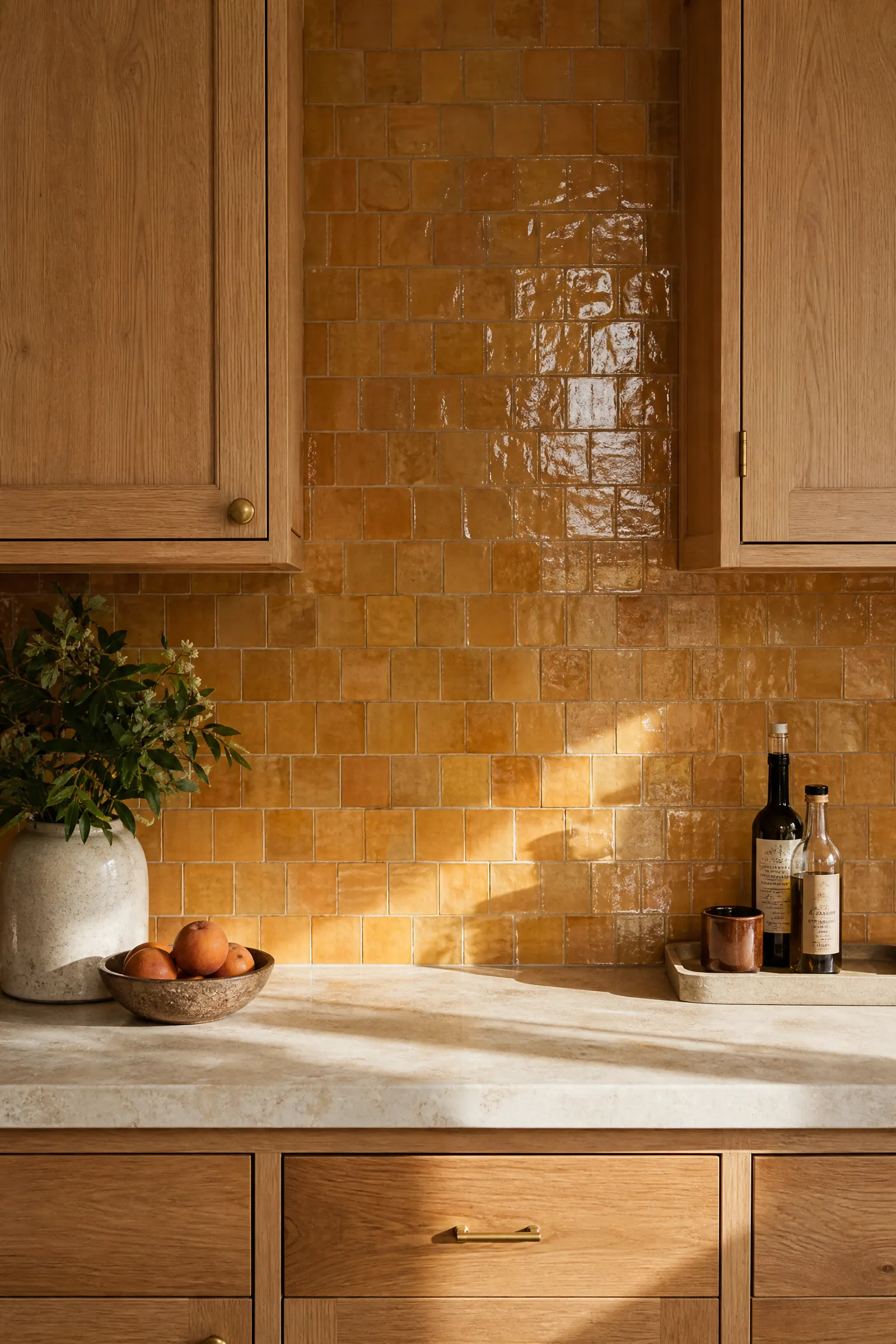
Zellige, the small hand-made Moroccan tile with an irregular glaze surface and slight variation in colour and texture between individual tiles, is the brown tile format that produces the most immediately distinctive and most artisanal kitchen backsplash. Brown zellige is available across a wide range from warm amber and honey through to deep chocolate and dark mocha, and the variation in tone between individual tiles within the same colour family creates a lively, living surface quality that no mass-produced tile replicates. A warm amber or honey brown zellige backsplash above a cream or beige worktop with natural timber cabinets creates a kitchen that reads as warm, crafted, and genuinely distinctive. A darker chocolate brown zellige above a white marble countertop with white shaker cabinets creates the maximum contrast version where the artisanal quality of the tile is the clear focal point. Cream or warm beige grout rather than white grout suits brown zellige in almost every application because it connects the grout tone to the tile colour family rather than creating a sharp white grid around each tile.
Pro Move: Install brown zellige in a full-height backsplash that runs from the countertop all the way to the underside of the upper cabinets without stopping at a mid-height. A full-height zellige backsplash reads as an architectural decision. A half-height zellige backsplash reads as a decorative addition that ran out of confidence at the halfway point.
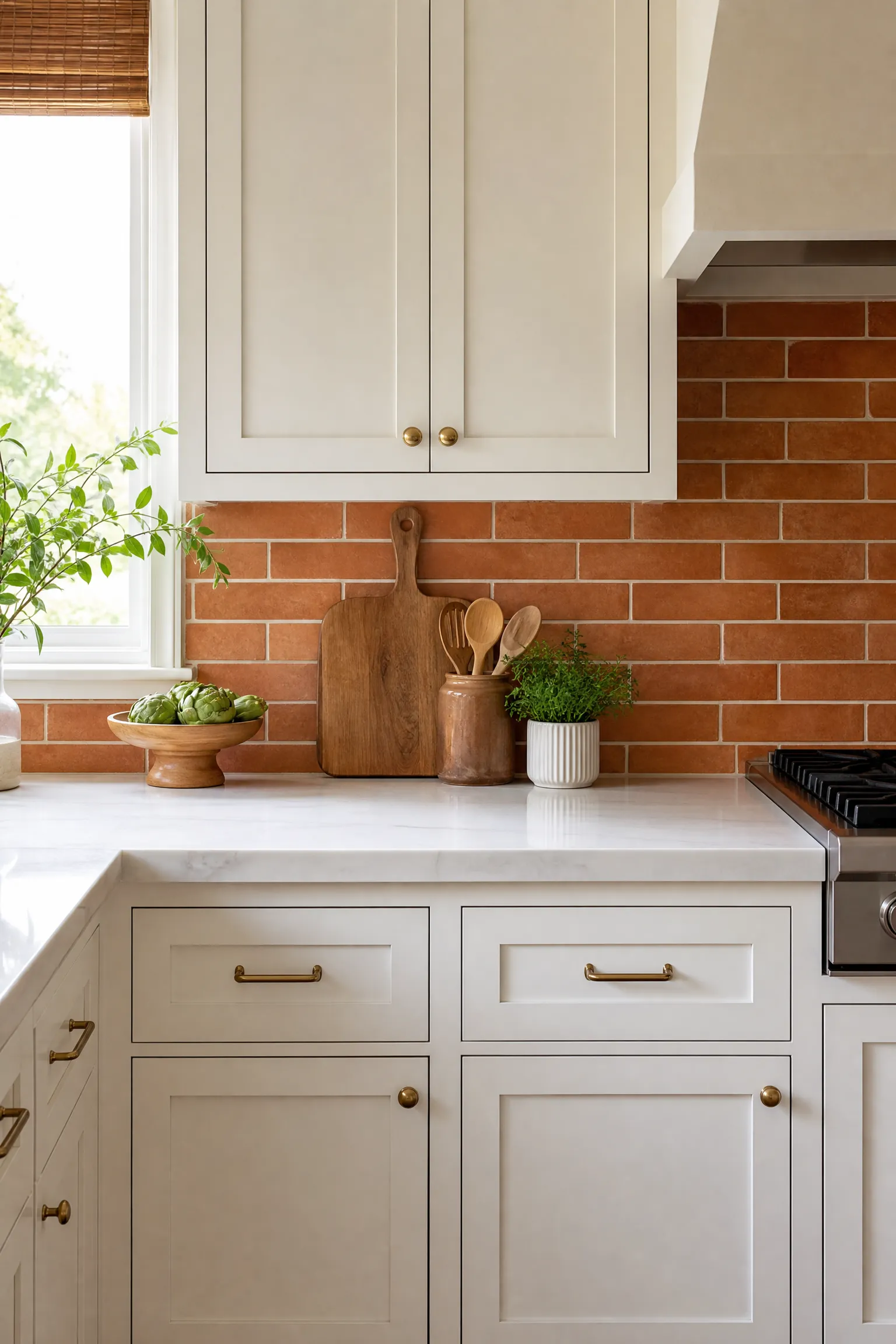
2. Terracotta Subway Tile Backsplash
Terracotta or warm clay-toned subway tiles in a kitchen backsplash bring an immediately Mediterranean and artisanal warmth to the kitchen that white subway tile in the same format never delivers. The warm brownish-orange of genuine terracotta or a high-quality terracotta-toned ceramic subway tile creates a backsplash with an inherently earthy, sun-warmed quality that suits kitchens going for a farmhouse, Italian, Spanish, or broadly warm earthy aesthetic. The classic 3 by 6 inch subway format in terracotta works well in a traditional brick offset pattern, and the warm grout of a cream or sand-toned grout between the terracotta tiles maintains the warmth of the combination. A more contemporary approach uses a stacked or vertical installation of the same terracotta subway tile to create a more graphic, less period-specific result. White cabinets with a terracotta backsplash is the most widely used and most accessible version of this combination, but natural timber cabinets with a terracotta backsplash create a more earthy and more cohesive palette where the warmth of both materials reinforces rather than contrasts with each other.
Designer Advice: Avoid bright white grout with terracotta subway tile in a kitchen backsplash. The bright white of standard grouting creates a strong grid pattern that draws the eye to the grout lines rather than the tile colour, and the cool white next to the warm terracotta creates a slight temperature contrast that reads as slightly uncomfortable rather than crisp and clean. A warm cream, sandy beige, or terracotta-matched grout keeps the eye on the tile rather than the seams.
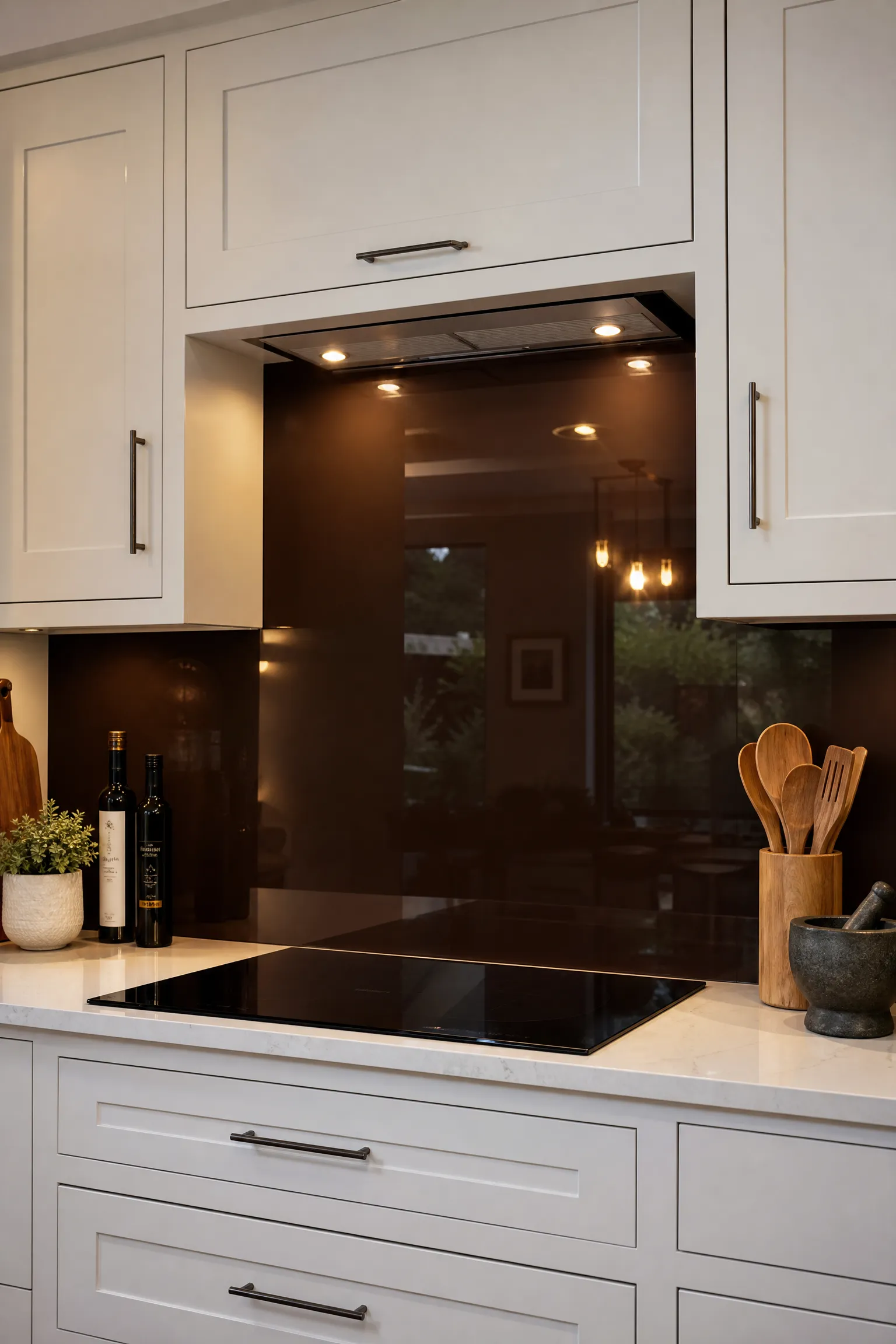
3. Chocolate Brown Glossy Tile Backsplash
A glossy dark brown or chocolate tile backsplash creates the most dramatic and most unexpected version of the brown kitchen backsplash because the reflective surface of a glossy dark tile bounces light back into the kitchen in a way that matte dark tiles do not, preventing the dark colour from making the backsplash zone feel heavy or light-absorbing. Against white or cream cabinets, a chocolate glossy backsplash tile reads as a bold and confident design decision that gives the kitchen a warm, moody quality without the coldness of a black backsplash or the busyness of a patterned one. The size and format of the glossy chocolate tile affects the result significantly: large-format glossy chocolate tiles create the most sophisticated and most contemporary effect. Smaller mosaic-format glossy tiles create a more traditional or spa-like effect. A 4 by 8 or 4 by 12 inch glossy chocolate subway tile in a stacked or herringbone arrangement creates the most versatile result that works across a range of kitchen styles.
Heads Up: Glossy dark brown backsplash tiles show cooking splatter, grease marks, and water marks very clearly because the reflective surface creates visible contrast around every surface deposit. In a kitchen where the backsplash is close to the hob and receives direct cooking splatter, a matte or satin finish in the same brown colour is more practical than a high-gloss version. Reserve the full gloss for backsplash sections away from direct hob splatter.
4. Brown and Cream Encaustic or Patterned Tile Backsplash
A patterned backsplash tile in a combination of brown and cream, whether a classic encaustic pattern, a Moroccan geometric, a Spanish azulejo print, or a more contemporary abstract design, is the most characterful and most personally expressive brown backsplash option because the pattern creates a design story that a solid tile cannot. Brown and cream as the two tones within a patterned tile creates a backsplash that suits the widest range of kitchen cabinet colours: against white or cream cabinets the pattern reads as a warm, organic decorative element; against natural timber cabinets the warm tones of the pattern connect to the wood; against dark or coloured cabinets the cream in the pattern provides the brightness needed to prevent the kitchen zone from becoming uniformly dark. The choice of pattern scale matters: a small, intricate pattern suits a smaller backsplash area and a kitchen that wants texture rather than drama. A large, bold geometric pattern suits a generous backsplash area and a kitchen that wants a clear focal point.
Quick Tip: Keep the grout of a patterned brown and cream backsplash tile in the lighter of the two tile colours. Grout in the cream or off-white tone of the lighter tile colour makes the pattern read as a continuous surface. Grout in a contrasting dark brown or grey creates a third colour element that competes with the pattern rather than receding into it.

5. Handmade Brown Ceramic Tile Backsplash With Texture
Handmade or artisan brown ceramic tiles with a slightly uneven glaze, visible throwing marks, or a relief surface texture create a backsplash with a warmth and personality that no machine-made tile achieves because the handmade quality makes each tile a distinct object rather than a unit in a repeating system. Brown handmade tiles in a warm caramel, chestnut, or warm mocha tone above a natural stone countertop and timber cabinets create a kitchen that feels genuinely artisanal and genuinely collected rather than assembled from a single source. The texture of handmade tiles also changes the way light falls across the backsplash surface through the day: direct morning sunlight raking across a textured brown handmade tile creates a completely different shadow pattern and warmth from the same surface in even afternoon light, giving the backsplash a living quality that makes the kitchen genuinely interesting to be in at different times of the day.
Reality Check: Handmade ceramic tiles with a relief texture require more careful cleaning than smooth-surfaced tiles because grease and cooking residue can accumulate in the texture recesses. A sealed handmade tile surface is significantly easier to clean than an unsealed one. Always specify a ceramic or tile sealer for any handmade or unglazed brown backsplash tile before the kitchen is used, and reseal annually for kitchens with daily cooking.

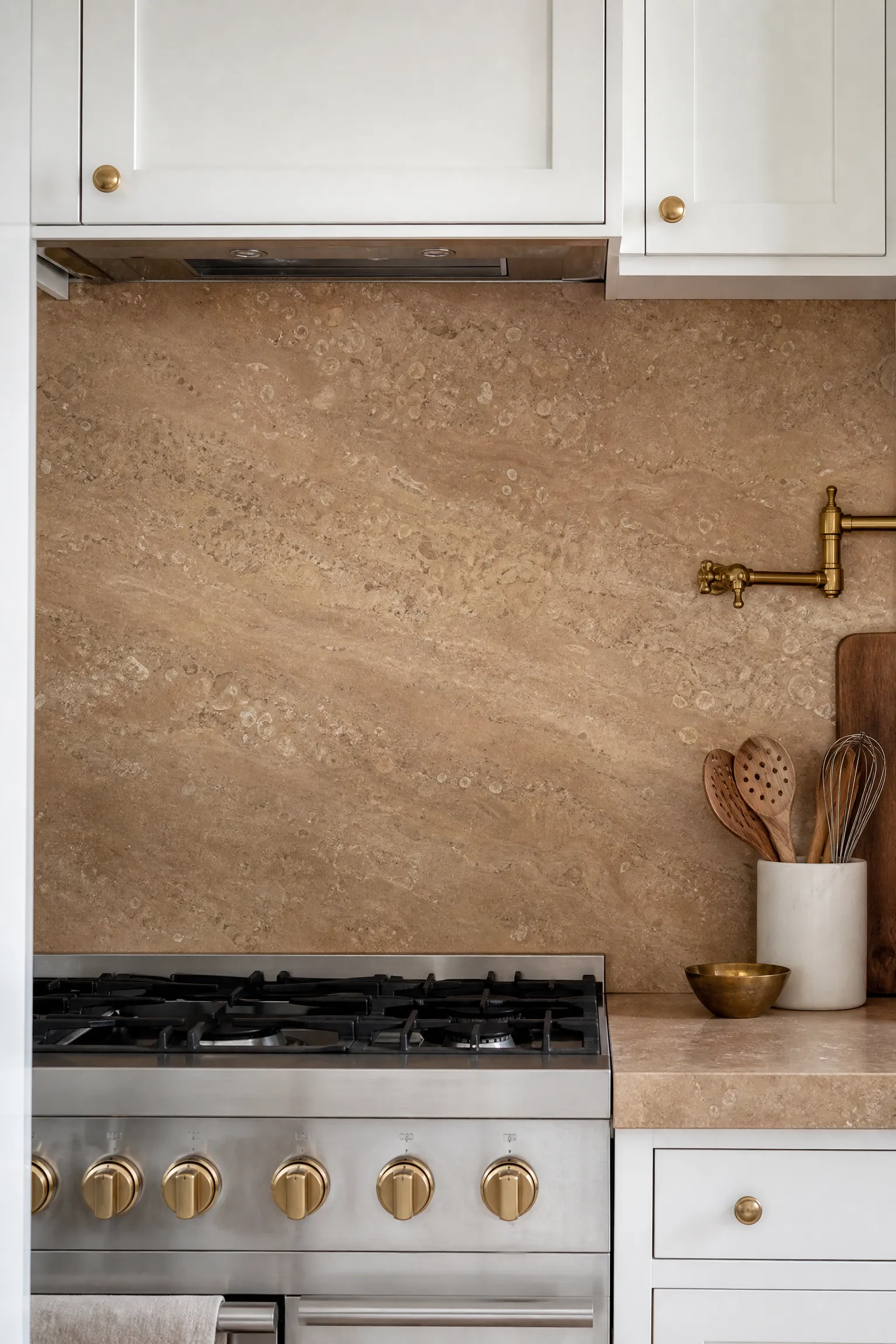
6. Brown Stone or Marble Backsplash Slab
A full-height backsplash in a brown-toned natural stone slab, whether in a warm brown granite, a travertine with honey and brown tones, or a quartzite with warm caramel and cream veining, creates the most luxurious and most materially rich version of the brown kitchen backsplash. A slab backsplash in brown stone runs from the countertop to the base of the upper cabinets in a single continuous piece with no grout lines, and the effect is seamlessly architectural: the brown stone appears to grow directly from the countertop surface and frame the cooking zone as a single continuous natural material. Travertine in its warm honey and caramel tones is the most widely used natural stone for a brown kitchen backsplash because its warm, slightly porous surface creates a texture and depth that both porcelain and ceramic alternatives find difficult to replicate. Sealed travertine in a honed or unfilled finish provides the most practical surface for a kitchen backsplash while maintaining the natural character of the stone.
Designer Advice: When using a brown stone slab as a full-height backsplash, book-match the stone panels so the natural veining mirrors itself across adjacent slab sections. A book-matched brown stone backsplash creates a continuous natural pattern that reads as a deliberate design decision. Adjacent slab sections installed without book-matching can create a visible colour and pattern discontinuity that interrupts the luxurious quality of the full-height stone surface.
| Brown Tile Type | Best Backsplash Position | Cabinet Pairing | Grout Colour | Kitchen Style |
| Warm amber zellige | Full-height above worktop | Natural timber or cream | Warm cream | Artisan, farmhouse, eclectic |
| Terracotta subway | Standard height, full-width | White or natural timber | Sand or cream | Farmhouse, Mediterranean, rustic |
| Chocolate glossy tile | Hob zone feature | White or cream cabinets | Warm white | Contemporary, bold, moody |
| Brown and cream patterned | Feature wall or full width | Any cabinet colour | Lighter of the two tile tones | Global, eclectic, traditional |
| Handmade brown ceramic | Full-height artisan feature | Timber or cream | Cream or matching | Artisan, farmhouse, bespoke |
| Brown stone slab | Full-height seamless | White, cream or timber | None (slab no grout) | Luxury, contemporary, classic |
Brown Tiles on the Kitchen Floor
The kitchen floor is the largest single surface in the kitchen and the one that most affects the overall warmth and atmosphere of the space. Brown floor tiles in any shade create a warmer, more grounded kitchen than grey or cool-toned alternatives, and the specific brown tone chosen for the floor sets the tonal temperature for every other decision in the kitchen above it.
7. Warm Honey Travertine or Stone-Effect Floor Tiles
Warm honey or amber travertine, or a high-quality large-format porcelain tile that replicates the warm fossil tones of natural travertine, creates the most immediately welcoming and most organically warm kitchen floor available in the brown tile family. The honey and amber tones of travertine sit in the warmest part of the brown spectrum and create a floor surface that is warm to look at and warm to be in, particularly in morning natural light when the honey tones of the stone catch the sunlight and the kitchen genuinely glows. Large-format travertine-effect porcelain tiles in a format of 60 by 60 cm or 60 by 120 cm create the most spacious and most spa-like kitchen floor, with fewer grout lines across the floor surface creating a visual continuity that makes the floor appear larger than a smaller tile format. White, cream, or natural timber cabinets all suit a warm travertine floor, as does the combination of white perimeter cabinets with a timber island that echoes the warm tones of the floor.
Pro Move: Choose a warm-beige grout close to the lighter tone of the travertine or stone-effect tile rather than a white grout that creates a high-contrast grid or a dark grout that makes each tile read as individually framed. A tone-matched grout allows the large-format tiles to read as a continuous warm floor surface rather than a collection of individual tiles within visible seams.

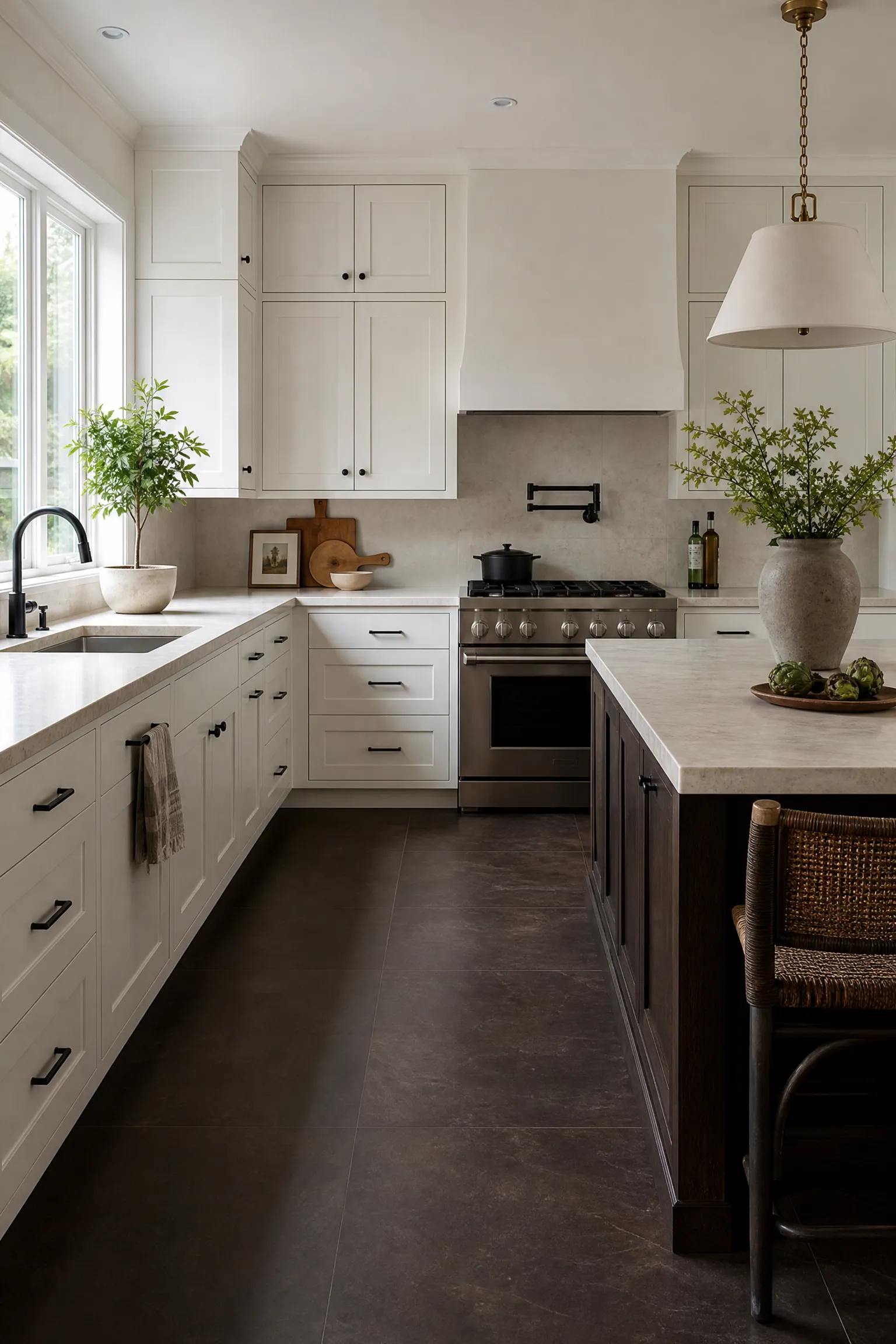
8. Dark Chocolate or Espresso Brown Floor Tiles
A deep chocolate or espresso brown floor tile, whether in a matte large-format porcelain, a honed natural stone like a dark slate or basalt, or a richly toned engineered tile, creates the most grounding and most dramatically atmospheric kitchen floor available in the brown family. Dark brown floors create a visual weight at the base of the kitchen that makes the room feel anchored and considered, particularly effective in kitchens with white or cream cabinets above where the dark floor provides the strong contrast that the pale cabinetry needs. The one honest consideration is light: a very dark brown kitchen floor in a kitchen with limited natural light can make the room feel smaller and darker than it actually is. In a kitchen with generous natural light from one or more large windows or a skylight, a dark chocolate floor reads as luxurious and deeply atmospheric. In a small, dark kitchen, the same floor can feel oppressive. A simple rule is to assess the kitchen at 10am with no artificial lighting: if it already feels dark, a dark floor will make it feel more so.
Heads Up: Dark brown floor tiles in a kitchen show crumbs, dust, and footprints more visibly than mid-tone or light-tone floors because the light deposits against the dark surface create a visible contrast. In a household with children, pets, or high foot traffic through the kitchen, a mid-tone brown or a brown tile with natural variation in its surface tone is significantly more forgiving in daily use than a very uniform, very dark brown floor.
9. Terracotta Floor Tiles in a Kitchen
Terracotta floor tiles in a kitchen create the most inherently warm, most culturally rich, and most historically grounded kitchen floor in the brown tile family. Genuine terracotta, fired clay with its characteristic warm orange-brown colour and slightly porous surface, has been used as a kitchen floor material for centuries across Mediterranean, Mexican, and broadly earthy domestic interiors, and its warmth and organic quality are properties that no ceramic or porcelain imitation fully replicates. In a kitchen, terracotta floor tiles work best with cream or off-white painted cabinets, natural timber elements, warm brass fittings, and a backsplash in a connected warm material, cream zellige, handmade ceramic, or a natural stone in warm tones. The practical requirement for genuine terracotta floor tiles is sealing: unglazed terracotta is porous and will absorb cooking oils, wine, and food stains if left unsealed. A quality penetrating terracotta sealer applied on installation and maintained annually provides the practical protection needed for a kitchen environment without changing the warm, natural surface quality of the material.
Designer Advice: Lay terracotta floor tiles in a traditional staggered brick pattern rather than a straight grid. The brick offset pattern is the historically appropriate installation for terracotta and it also disguises minor size variation between individual tiles, which is a natural characteristic of handmade terracotta that machine-laid tiles in a straight grid would make more visible.

10. Brown and Cream Geometric or Patterned Floor Tiles
A patterned floor tile in a combination of brown and cream or brown and white, whether a Victorian-style encaustic geometric, a Moroccan star and cross pattern, a simple two-colour hexagonal mosaic, or a more contemporary abstract pattern, creates a kitchen floor that is the clear design focal point of the room and that sets the entire colour palette from the ground up. The brown in a brown and cream patterned floor tile keeps the pattern warm and grounded rather than stark and graphic, and the cream or white provides the brightness needed to prevent the pattern from reading as uniformly dark. A brown and cream geometric kitchen floor suits a wide range of cabinet colours: white cabinets above a brown and cream geometric floor create the most graphic and most contemporary result; cream cabinets above the same floor create a warmer and more cohesive tonal relationship; natural timber cabinets pick up the warmth of the brown in the tile and create the most organically unified palette.
Reality Check: A strongly patterned kitchen floor requires very restrained decisions above it. A patterned floor in a kitchen with a patterned backsplash, coloured cabinets, and a busy countertop material creates visual competition at every level of the kitchen simultaneously. Let the floor carry the pattern and keep the cabinets, countertop, and backsplash in simple, plain materials that support the floor rather than competing with it.

11. Large-Format Warm Brown Stone-Look Porcelain Floor
A large-format porcelain tile in a warm brown or dark mocha tone with a subtle stone-look texture, in a format of 60 by 120 cm or 80 by 80 cm, creates the most contemporary and most easily maintained version of the brown kitchen floor. Modern porcelain tiles in warm brown tones have reached a quality level where the best products genuinely replicate the appearance of natural brown stone, warm limestone, and fossil-toned travertine at close range, while providing the practical advantages of porcelain: non-porous, stain-resistant, consistent in size and tone, and significantly lower in maintenance than any natural stone equivalent. The large format of these tiles minimises the number of grout lines visible across the kitchen floor, and in an open-plan kitchen where the floor continues into an adjoining living or dining space, the continuous large-format brown tile creates a warm, unified ground plane for the whole open-plan area.
Quick Tip: Choose a porcelain tile with a rectified edge, meaning it has been precisely cut to exact dimensions after firing, for a large-format kitchen floor. Rectified tiles can be installed with very fine grout joints of 2 to 3 mm that are almost invisible at normal viewing distance, creating the most continuous and seamless floor surface available in a tile format. Non-rectified tiles require wider grout joints that are more visible and that interrupt the sense of a continuous floor surface.

12. Brown Hexagonal Mosaic Floor Tiles
A kitchen floor in small brown hexagonal mosaic tiles creates the most pattern-rich and most visually interesting floor surface available in the brown tile family, and the hexagonal format is particularly effective at disguising size variations in the room geometry because the interlocking tiles can be adjusted more naturally around awkward corners, thresholds, and fixtures than larger format tiles. Brown hexagonal mosaic tiles in a warm caramel or chestnut tone with a cream grout create a floor with both warmth and pattern that reads as both vintage and completely contemporary, referencing the Victorian and Edwardian bathroom and kitchen floor tradition while sitting comfortably in a modern kitchen. Pairing a brown hexagonal mosaic floor with white or cream cabinets, simple brass hardware, and a plain white or cream backsplash is the combination that most consistently produces the refined, considered kitchen that this floor tile is capable of anchoring.
Pro Move: Extend brown hexagonal mosaic floor tiles into an adjacent utility room, hallway, or back entrance if the kitchen opens onto one. The continuous hex tile floor across multiple functional spaces reads as a deliberate architectural decision and makes smaller secondary rooms feel part of a considered whole rather than an afterthought. The cost of extending a mosaic floor into a small adjoining space is modest and the visual return is significant.
“Brown tile in a kitchen is not a neutral choice. It is a warmth choice. Every shade of brown, from pale sand to deep espresso, brings a specific quality of earth, sun, and material that cooler or paler tiles simply cannot replicate.”

Brown Tiles on Kitchen Walls
A full kitchen wall in brown tile, whether an accent wall, a feature wall behind the cooking range, or all four walls in a smaller kitchen or utility space, creates the most immersive and most committed version of the brown tile kitchen. The wall position in a kitchen allows brown tile to be seen from a distance rather than simply as a close-range working surface, and the design decisions that work at wall scale are different from those that work at backsplash or floor scale.
13. Brown Tile Feature Wall Behind the Range or Hob
A brown tile feature wall behind the cooking range, from the countertop to the ceiling or to the underside of an overhead extractor hood, creates the most dramatically focused and most culinary version of the brown tile kitchen feature because it places the warmest and most expressive material in the kitchen at the position associated with cooking itself. A warm brown tile range feature wall, whether in a handmade zellige, a relief textured ceramic, a classic subway, or a large-format stone tile, frames the range as the centrepiece of the cooking zone and gives the kitchen a specific character that a plain painted wall above the range cannot deliver. The height of the feature wall matters: a tile feature that stops at the height of the extractor hood leaves the space above the hood as a plain painted surface that reads as unresolved. A tile feature that continues to the ceiling or to the underside of an overhead cabinet creates a complete vertical statement that reads as an architectural decision.
Designer Advice: Choose a brown tile with some visual complexity for a feature wall behind the range: a tile with surface texture, glaze variation, or a relief pattern will catch the light from the range hood lighting and create a warm, dynamic surface that rewards close attention. A flat, uniform brown tile in this position can read as simply a brown painted wall rather than a considered tile feature.

14. Full-Height Brown Wall Tiles in a Small Kitchen or Galley
In a small galley kitchen or a compact enclosed kitchen, tiling all four walls in a consistent brown tile creates an enveloping, cohesive atmosphere that makes the room feel intentional and complete rather than simply small. The key to making this work rather than oppressive is the specific shade of brown: warm honey, warm amber, light terracotta, or sandy brown all create an enveloping warmth that makes a small kitchen feel like a genuinely cosy room. Very dark espresso or chocolate brown on all four walls of a small kitchen absorbs too much light and makes the room feel like a container rather than a kitchen. In a small kitchen where all-over tiling is the goal, a warm mid-tone brown, a sandy clay, a warm cafe au lait, or a light mocha tone at a scale that creates texture rather than mass is the right starting point.
Heads Up: When tiling all the walls of a small kitchen in brown, the ceiling becomes the most important decision for maintaining the feeling of height and openness. A white or very pale cream ceiling above full-height brown wall tiles creates a clear visual lift that prevents the room from feeling enclosed. A brown ceiling above brown walls in a small kitchen creates a genuinely cave-like effect that most homeowners find uncomfortable in a kitchen regardless of how warm the brown tone is.

15. Brown Tile Accent Wall in an Open-Plan Kitchen
In an open-plan kitchen where the cooking zone is one part of a larger shared living or dining space, a single brown tile accent wall behind the kitchen zone, typically the wall behind the hob or the wall at the end of an island run, creates a visual boundary between the kitchen and the adjoining space that reads as deliberate and designed rather than simply functional. The brown tile accent wall in this context serves the same organizational function as a different flooring material in the kitchen zone: it defines the kitchen spatially and gives it a clear material identity within the open-plan arrangement. A warm brown tile accent wall in an open-plan kitchen with otherwise white or light walls and cream or timber cabinetry reads as both the warmest and the most characterful element in the larger space and anchors the kitchen zone as a genuinely designed destination rather than a functional area that happens to be in the same room as the living space.
Reality Check: A brown tile accent wall in an open-plan kitchen will be visible from the living and dining areas of the open plan at all times, including when the kitchen is not being actively used. Choose a tile that reads as attractively and as thoughtfully from across a 5 to 6 metre space as it does at close range. Tiles with surface texture or glaze variation tend to look more interesting at distance than perfectly flat, uniform tiles of the same colour.
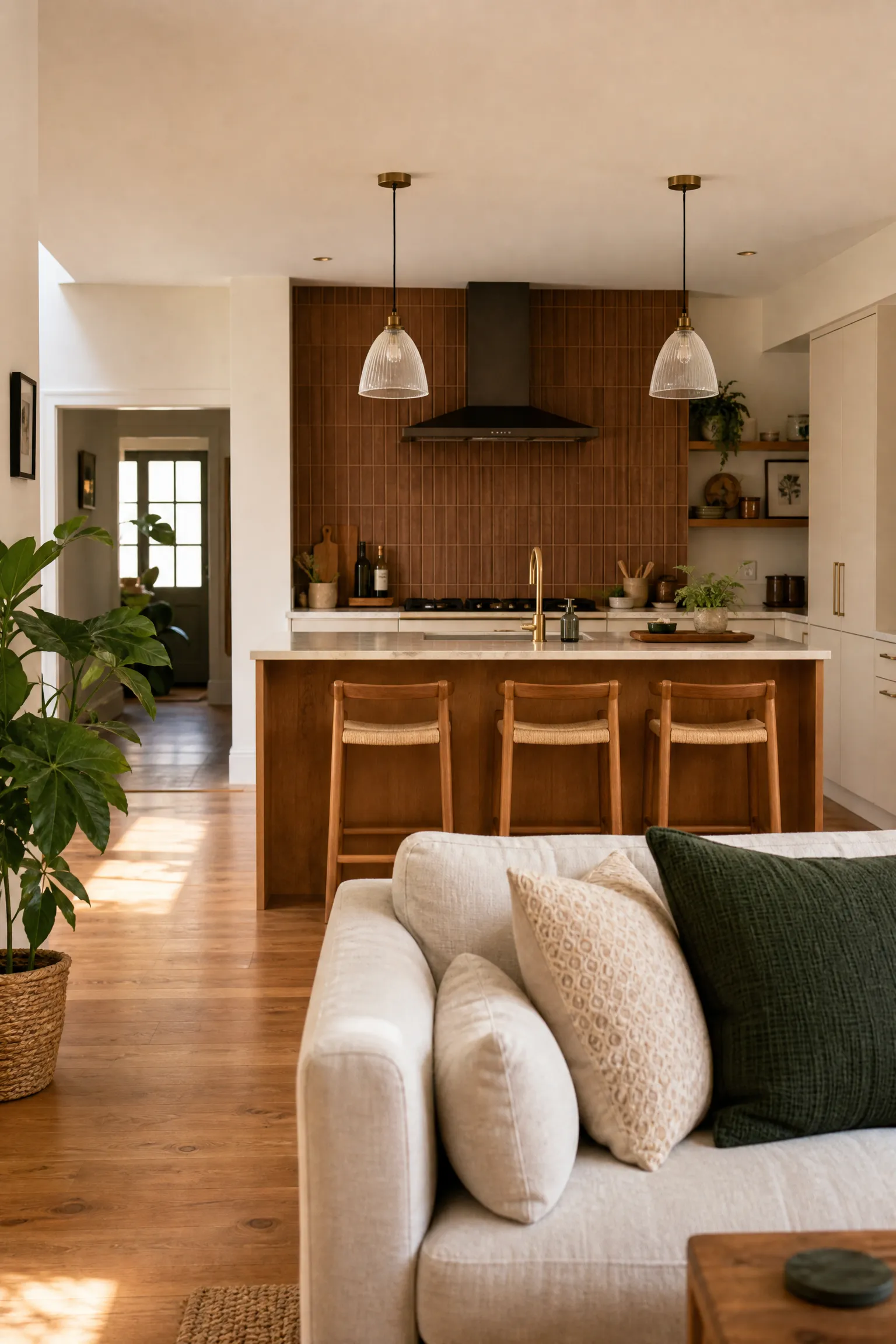
16. Brown Textured Relief Tile Wall
A wall covered in brown relief or embossed tiles, where the tile surface has a three-dimensional pattern pressed or cast into it before glazing, creates the most sculptural and most architecturally distinctive version of the brown tile kitchen wall. Brown relief tiles catch light across their raised and recessed surfaces in a way that creates a continuous shadow pattern that changes through the day and under different artificial light sources. A warm mocha or chocolate brown relief tile on the cooking zone wall of a kitchen, lit from below by a range hood or from above by pendant lights, creates a surface with genuine visual depth and drama that flat tiles of any colour cannot replicate. Relief tiles in geometric, botanical, or abstract patterns are available from numerous suppliers at a range of price points, and even a relatively affordable relief tile in a warm brown glaze creates a kitchen feature wall of genuine design quality.
Pro Move: Mount a single warm light source (a directional spot or a pendant) to the side of or at an angle to a brown relief tile wall rather than directly in front of it. Raking light from the side emphasises the three-dimensional quality of the relief surface and creates the most dramatic shadow pattern across the tile face. Light directed straight at a relief tile surface flattens the texture and reduces much of the three-dimensional quality that makes the tile visually interesting.
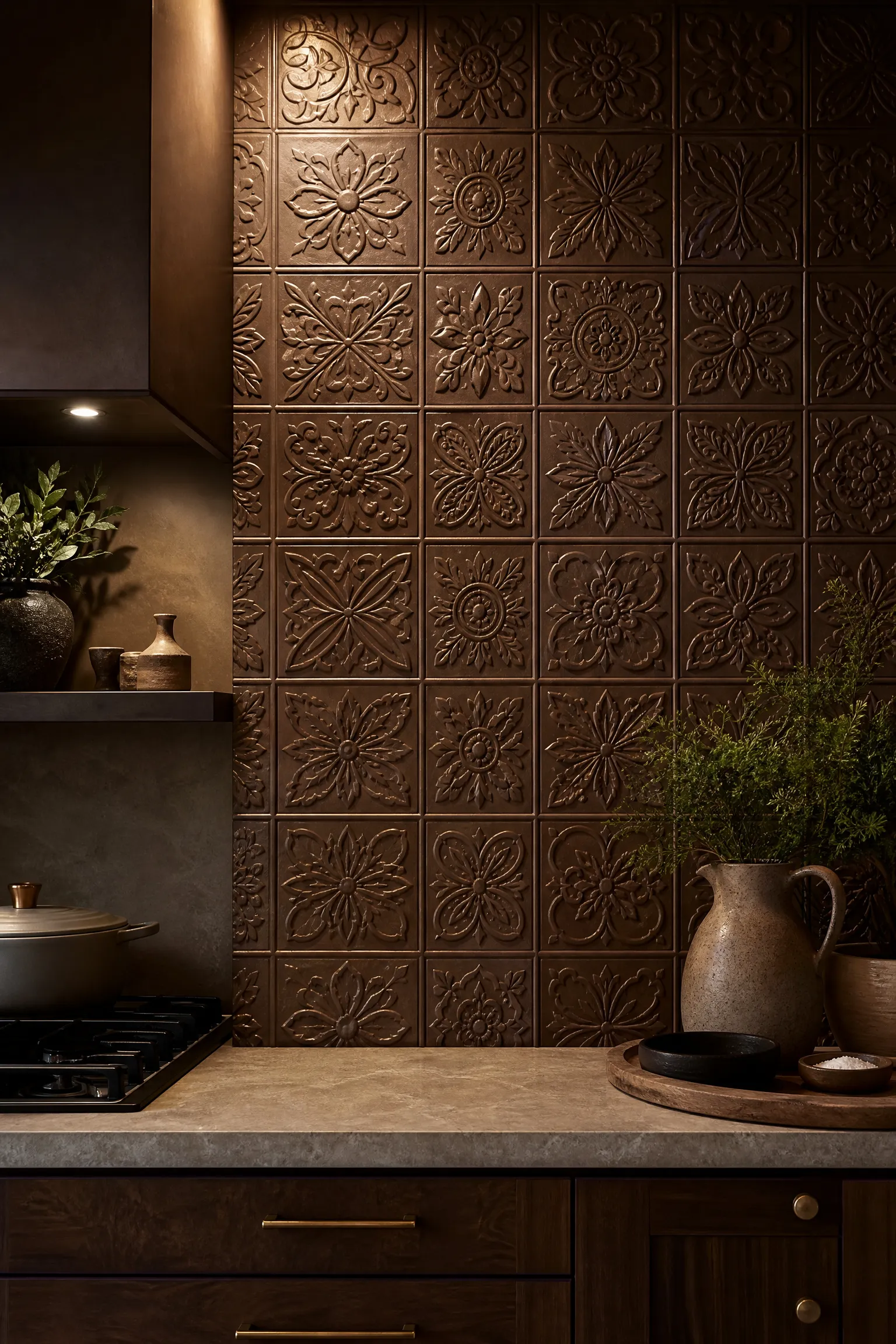
17. Brown Tile Splashback Running to Ceiling in Kitchen Alcove
A kitchen alcove or recess, whether a cooking alcove framed by cabinetry or an architectural niche in an older property, tiled from the floor to the ceiling in a warm brown tile creates one of the most resolved and most beautiful small-scale brown tile applications available in a kitchen because the complete tiling of the alcove surfaces turns a functional recess into a material feature that reads as a deliberate, jewel-like moment within the overall kitchen. A cooking range sitting within a fully tiled brown alcove, with the tile running from the countertop level to the ceiling above the range hood, creates the kind of professional, considered kitchen feature that most people associate with high-specification kitchen design. The containment of the tile within the alcove geometry makes the scale of the brown tile area a complete, resolved composition rather than a tile section that starts and stops in positions that read as arbitrary.
Quick Tip: Choose a tile for the full-height alcove tiling that has some visual interest at ceiling height as well as at worktop level. Large plain tiles can read as empty or flat at the upper reaches of a tall alcove. A tile with a glaze variation, a textural surface, or a subtle pattern reads as equally interesting at head height and above as it does at eye level during cooking.

Brown Tiles Across Multiple Surfaces: Mixed and Full-Wrap Kitchen Ideas
Using brown tiles across more than one surface in a kitchen, whether combining a brown floor with a brown backsplash, or creating a fully wrapped brown tile kitchen, requires the most careful management of shade, texture, and format to prevent the warmth of brown from becoming an overwhelming monotony. These ideas address the specific combinations that work when brown tile appears at more than one level of the kitchen simultaneously.
18. Warm Brown Floor With Cream Backsplash Tile
Combining a warm brown floor tile with a cream or off-white backsplash tile creates the most naturally graduated version of the brown and cream kitchen because the warmest and darkest tone is at the floor level where it grounds the room, and the lightest and brightest tile surface is at the backsplash level where it provides the kitchen zone with the brightness needed for food preparation. This graduation from warm brown at floor level through neutral or cream at counter and wall level to white or pale at cabinet and ceiling level mirrors the natural tonal arrangement of the landscape: warm dark earth below, warm light sky above. It is an instinctively comfortable arrangement that reads as completely natural rather than designed, which is the quality that makes the combination so broadly appealing across a range of kitchen styles.
Designer Advice: Choose a cream backsplash tile that picks up a warm undertone from the brown floor rather than a cool or grey cream that fights the floor warmth. A cream backsplash with a yellow or amber undertone sits in the same warm colour family as the brown floor and makes the two surfaces read as part of the same palette. A cream backsplash with a pink or grey undertone creates a slight temperature conflict with the warm brown floor that is visible in the room even if it is difficult to articulate specifically.
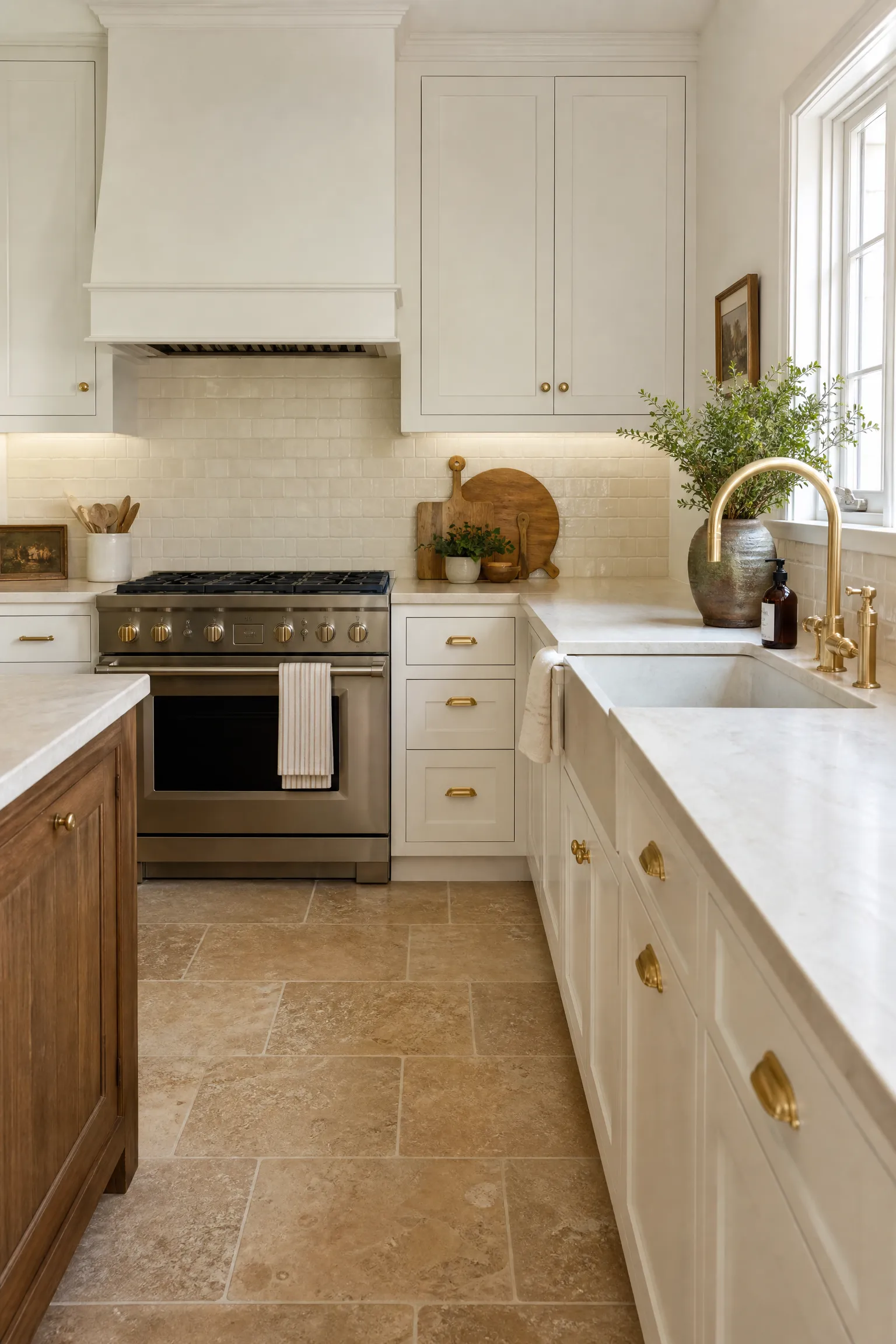
19. Brown Floor With White Cabinets and Brown-Toned Countertop
A brown floor tile with white or cream cabinets and a brown-toned stone or engineered countertop, whether a warm brown granite, a veined quartzite with caramel tones, or an engineered stone with a warm mocha surface, creates a kitchen where brown appears at the two horizontal surfaces of floor and countertop and the white cabinet faces provide the vertical brightness between them. This arrangement has a specific architectural quality that makes the kitchen look wider and more grounded than the same kitchen with white countertops because the warm tones at floor and counter level create a warm horizontal envelope below the white cabinet doors. The backsplash in this combination is the key decision: a warm cream or sandy backsplash connects the brown floor and the brown countertop through the wall zone between them. A white backsplash maintains the crispness of the white cabinet doors. A patterned brown and cream backsplash creates the most complex and most layered version of this palette.
Reality Check: A brown-toned countertop alongside a brown floor in a kitchen with white cabinets requires the two brown tones to be from the same warm colour family rather than one warm and one cool. A cold-toned brown granite countertop above a warm honey-toned brown floor creates a visible undertone conflict at the level where the countertop meets the cabinet base, which is one of the most-looked-at junctions in a kitchen. Test the countertop sample directly on the floor tile sample before purchasing either.
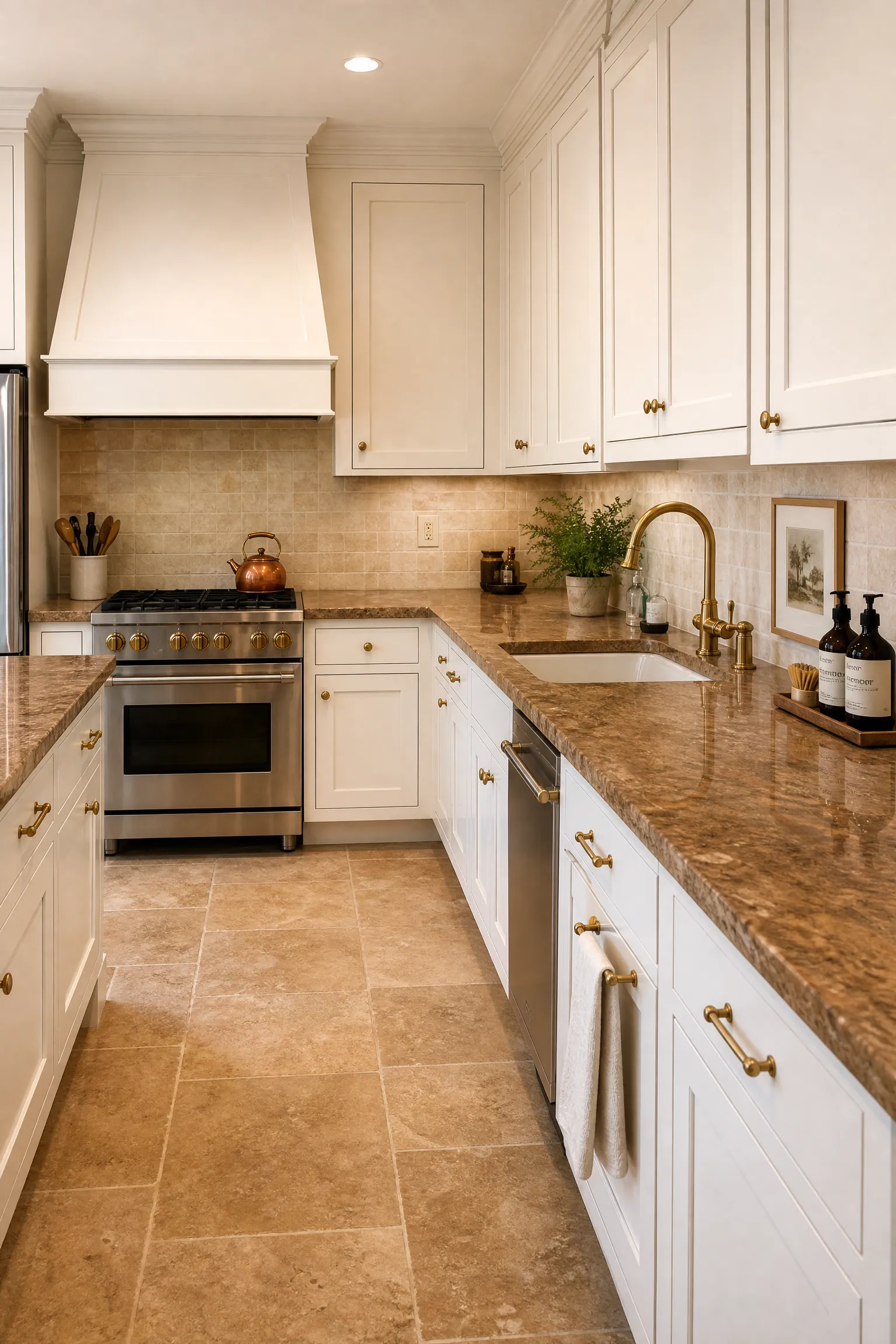
20. Brown Tile Backsplash and Brown Stone Countertop
A brown tile backsplash above a brown stone or brown-toned engineered countertop creates the cooking zone of the kitchen as a continuous warm material surface from the countertop through the backsplash, and the visual effect is of a kitchen that is deeply grounded in material warmth at its working core. The success of this combination depends on using different materials and different tones of brown for the two surfaces rather than two identical brown tones in different materials: a warm amber zellige backsplash above a darker chocolate brown granite countertop, or a light honey travertine backsplash above a warm mocha engineered stone countertop, creates the depth and tonal graduation that makes the combination read as layered and considered. Two surfaces in exactly the same brown tone in different tile formats reads as a repetition rather than a deliberate combination.
Pro Move: When combining a brown backsplash tile with a brown countertop, use a countertop with a lighter or warmer brown than the backsplash tile rather than a darker one. A lighter countertop below a darker backsplash creates a visual compression at the back of the worktop zone that makes the kitchen feel lower. A lighter countertop below a similar or darker backsplash maintains the visual openness of the working surface while the backsplash adds depth and warmth behind it.

21. Tone-on-Tone Brown Kitchen: Floor, Wall, and Backsplash
A fully tone-on-tone brown kitchen, where the floor, backsplash, and wall tiles are all in the same broad brown family at slightly different depths of tone and different material textures, creates the most immersive and most specifically atmospheric version of the brown tile kitchen. The success of the tone-on-tone approach depends entirely on the variation in material texture and tile format between each surface: a warm terracotta floor in a handmade format alongside a sandy brown zellige backsplash alongside a smooth mocha large-format wall tile creates three surfaces that share the same colour family but differ enough in material quality, surface texture, and format to read as a layered, considered composition. Three brown tiles of the same tone, size, and format on different surfaces creates an effect closer to a monotone painted room than a material-rich kitchen.
Designer Advice: In a tone-on-tone brown kitchen, let the floor tile be the largest format and the roughest texture, the backsplash be the most varied in surface or the most patterned, and the wall tiles be the smoothest or most refined. This material hierarchy from rough and large at the base through to refined and detailed at eye level creates a natural graduation that reads as architecturally considered rather than simply decorated.
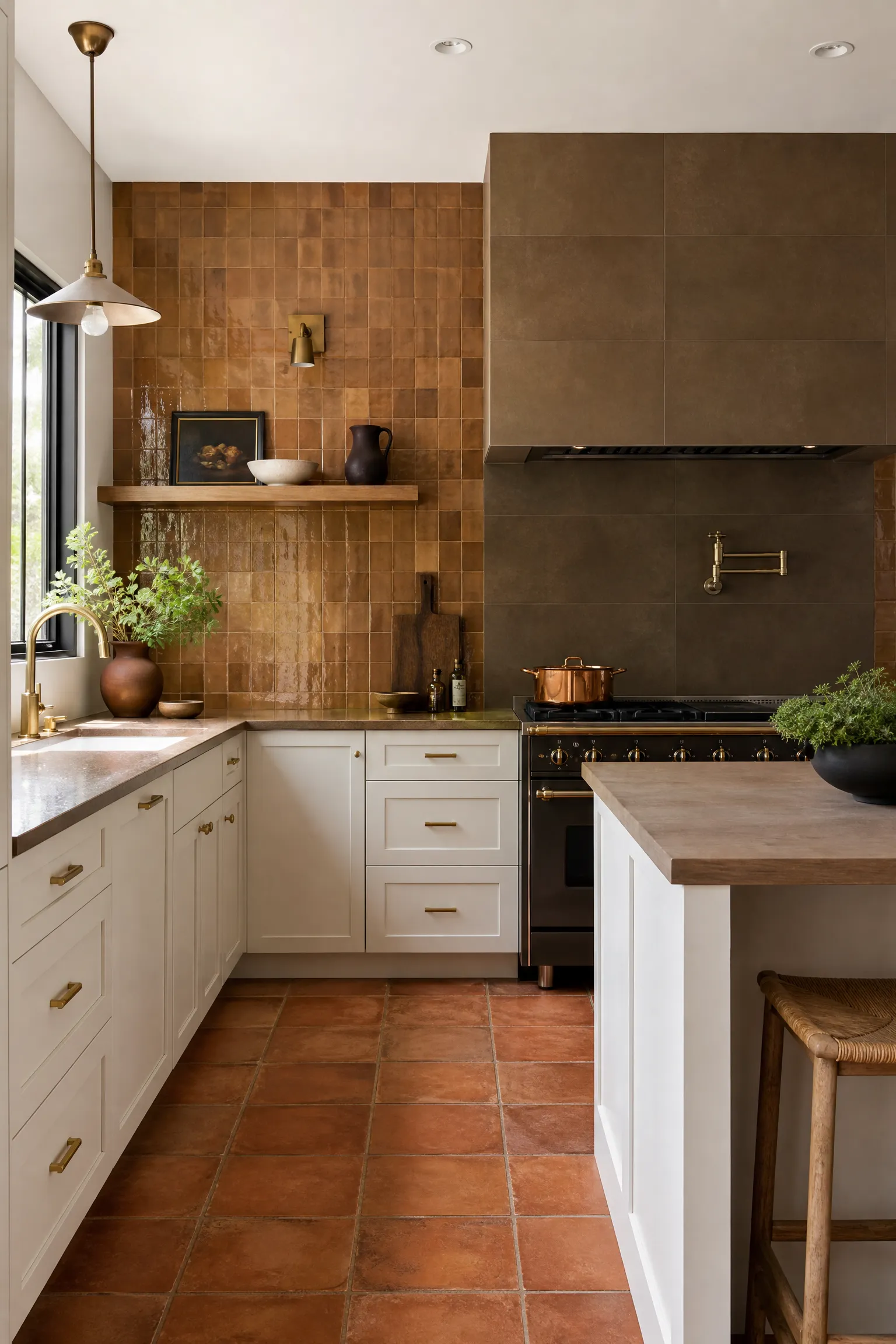
22. Brown Tile Kitchen With Green Cabinets
Brown tile, whether on the floor, backsplash, or both, alongside forest green, sage green, or olive green painted cabinets creates one of the most nature-connected and most genuinely distinctive kitchen palettes available, because the specific relationship between brown earth tones and green foliage tones is one of the most fundamental colour relationships in the natural world. A warm honey or amber tile floor with sage green cabinets creates a kitchen that reads as organic, botanical, and warmly grounded. A terracotta backsplash with forest green island cabinets against white perimeter cabinets creates a kitchen with a strongly Mediterranean and artisanal character. The shared warmth of both brown and green prevents the combination from reading as too cool or too graphic, and brass or aged gold hardware connects the metallic element to both the green and the brown through its own warm golden tone.
Quick Tip: Brown tile and green cabinets work most naturally when the green has a warm, slightly earthy undertone rather than a cool, blue-toned green. A sage green with a slight grey-green quality or a forest green with a slightly warm botanical quality suits warm brown tile most naturally. A very cool, blue-toned green or a fresh lime green alongside warm brown tile creates a slight temperature conflict that makes the combination read as slightly uncomfortable rather than organically connected.

23. Brown Tile Kitchen With Navy or Deep Blue Cabinets
Brown floor or backsplash tile alongside navy or deep blue cabinets creates one of the most unexpected and most visually sophisticated kitchen combinations available in the brown tile category, because the contrast between the warm earth of brown and the cool depth of navy creates a visual tension that is simultaneously grounding and dramatic. A warm honey travertine floor with navy shaker cabinets creates a kitchen with a naval, traditional quality that is both classic and completely contemporary in its material combination. A chocolate brown tile backsplash with navy lower cabinets and white upper cabinets creates the most graphic and most hotel-like version of this combination. The connective hardware between the two tones is important: brass bridges the warm brown and the cool navy through its own warm metallic tone, while chrome or matte black maintains the cooler, more graphic quality of the navy without introducing warmth.
Heads Up: Brown and navy is a colour relationship that works best when the brown is genuinely warm and the navy is genuinely deep. A muted, slightly grey-brown alongside a muted, slightly grey-navy creates a combination that reads as simply two different neutrals rather than a deliberate and considered colour pairing. The warmth of the brown and the depth of the navy both need to be present and specific for the contrast to register as designed.
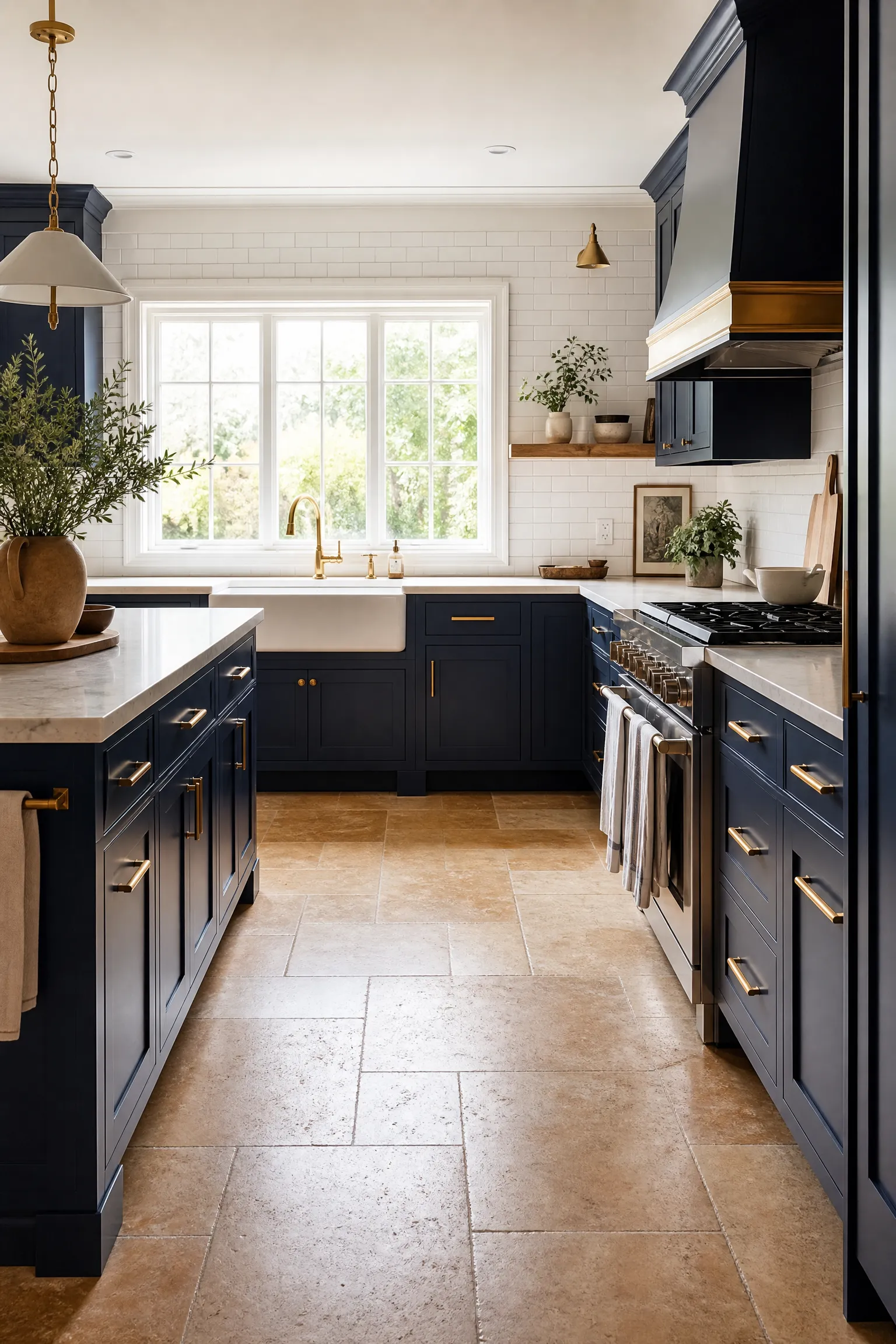
24. Brown Tile With White Cabinets and Black Hardware
Warm brown tile, whether on the floor, backsplash, or both, with white or cream cabinets and matte black hardware creates the most graphic and most contemporary version of the brown tile kitchen because the combination uses brown as the warm material anchor, white as the brightening neutral, and matte black as the precise graphic detail that makes the whole arrangement read as a deliberate design system rather than a collection of warm materials. The matte black hardware on white cabinets against a warm brown tile backsplash or floor creates a kitchen with a specific aesthetic quality, farmhouse contemporary, artisan modern, or warm minimalist, that is different from what brass hardware or chrome hardware in the same arrangement would produce. The black hardware introduces a precision and a graphic quality that prevents the warmth of the brown tile from reading as simply cosy or rustic.
Pro Move: Use matte black fixtures throughout the kitchen in this combination, not just the cabinet hardware: the tap fitting, the pot filler if there is one, the range hood trim, and the light fixtures above the island should all be in matte black. The consistency of the matte black across every metallic element in the kitchen is what makes the brown, white, and black combination read as a complete design system rather than individual choices.

25. Brown Tile Utility or Scullery Kitchen
A utility kitchen, butler pantry, or back kitchen, a separate functional space adjacent to the main kitchen that handles messier preparation, laundry, and storage, is one of the most natural environments for a full brown tile treatment because the material robustness and the warm grounding quality of brown tile suits a working, practical room where the emphasis is on function and a sense of cheerful utility rather than on precision and performance. A full-height terracotta tile or a dark chocolate floor tile in a utility kitchen or scullery alongside cream painted cabinetry and open timber shelving creates a room with a genuine domestic warmth and an honest, unfussy character that the main kitchen, often designed with a higher level of finish and a more self-conscious aesthetic, rarely achieves. The utility kitchen is also the room where a bolder or more specific brown tile choice can be made with less design risk, because the smaller scale of the room and its less visible position in the home make it the ideal place to experiment with a tile that is too specific or too characterful for the main kitchen.
Designer Advice: Style a utility kitchen or scullery with brown tile specifically to feel different from the main kitchen rather than trying to replicate it at a different finish level. Different tile colour, different cabinet style, different hardware finish: the contrast between a more formal main kitchen and a more relaxed, material-rich utility kitchen creates a domestic progression through the back-of-house spaces that is one of the hallmarks of genuinely considered home design.
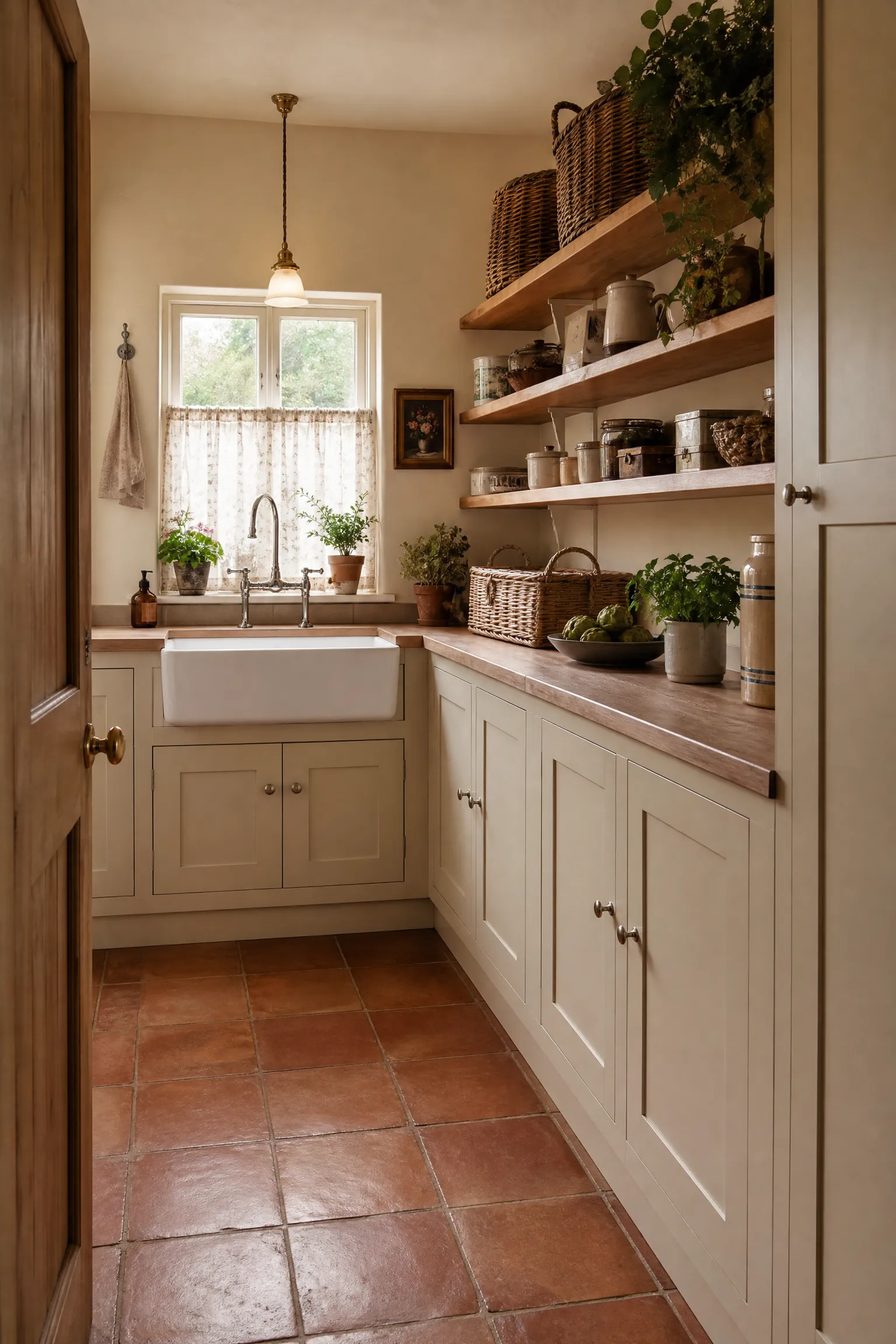
26. Brown Tile Kitchen Island as a Feature
Tiling the base of a kitchen island in a brown tile, while keeping the perimeter cabinetry in a painted or timber finish, creates the most contained and most visually defined version of the brown tile kitchen feature because the island base is a specific, freestanding element that can hold a more specific material treatment than the full perimeter cabinetry without requiring the same material decision to be applied across the whole kitchen. A kitchen island base in a warm chocolate brown tile, whether in a classic 2 by 4 inch brick tile, a hexagonal mosaic, a large-format porcelain tile, or a natural stone slab, alongside white or cream perimeter cabinets creates an island that reads as a piece of furniture in the kitchen rather than a built-in cabinet: warm, tactile, and genuinely distinctive. The tile on the island base also provides a visual connection between the brown tile on the floor below and the warm tones of the countertop above, making the island feel like a cohesive material object rather than a cabinet unit placed in the middle of the kitchen.
Reality Check: Tiling a kitchen island base requires the tile to be installed on a substrate that can support the tile weight and the adhesive bond without flex or movement. An island base in standard MDF or particleboard cabinetry needs to be cladded with cement board or a similar tile-appropriate substrate before tiling. Tiling directly onto MDF creates a bond that will fail as the board expands and contracts with temperature and humidity changes in a kitchen environment.
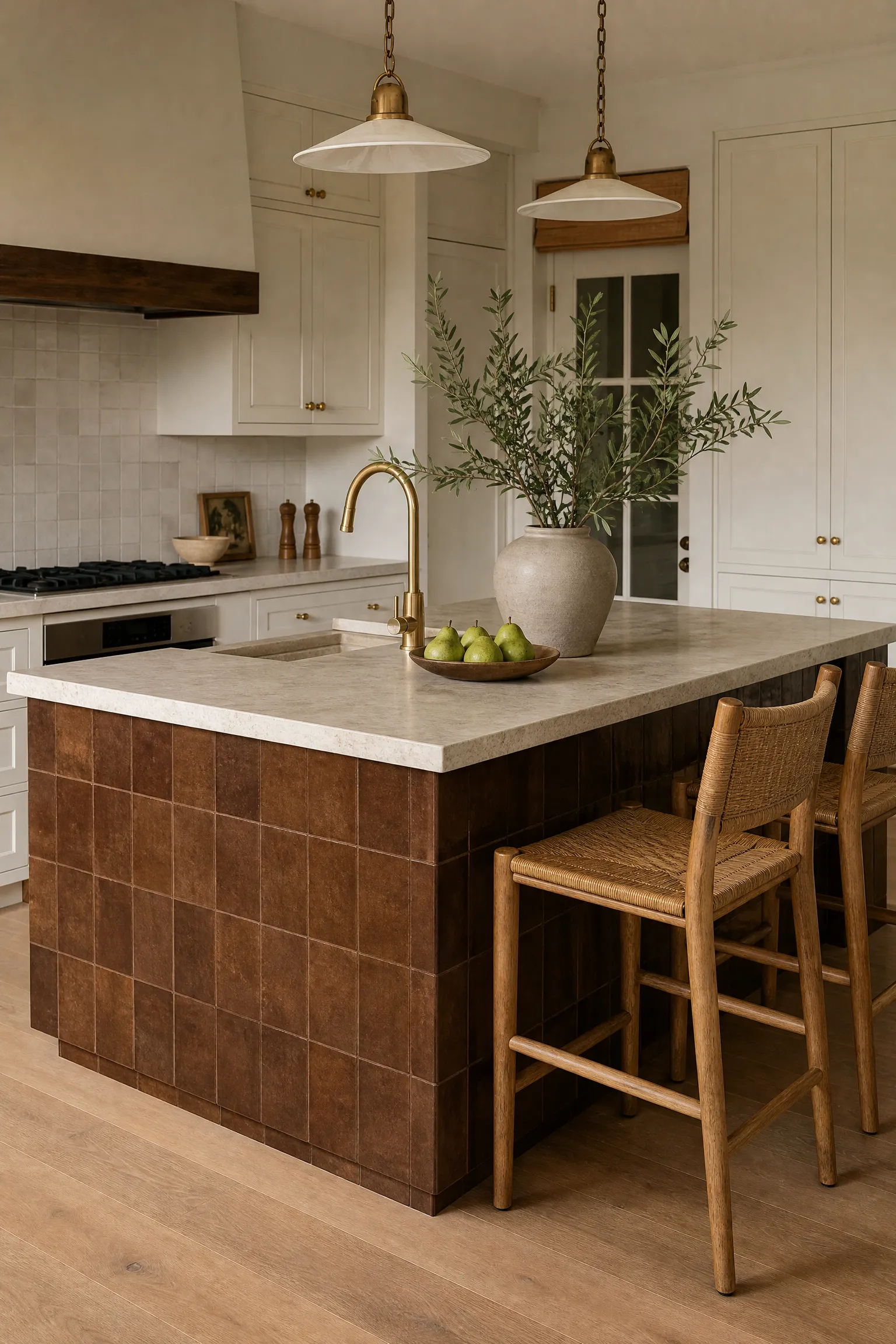
27. Brown Tile Kitchen in a Period or Traditional Home
In a Victorian, Edwardian, Georgian, or broadly period-style home, brown tile in the kitchen has a historical authenticity that it lacks in a modern build because earth-toned ceramic and terracotta tile was one of the standard kitchen and utility room materials of the late nineteenth and early twentieth century. A deep chocolate brown or warm terracotta tile floor in an older property kitchen, alongside cream painted shaker cabinets, a traditional butler sink, period-appropriate tap fittings in polished nickel or antique brass, and open timber shelving, creates a kitchen that feels genuinely connected to the history of the house rather than imposed on it. The specific tile format for a period kitchen matters: rectangular tiles in a classic brick pattern, square tiles in a standard grid, and encaustic patterned tiles in traditional geometric motifs are all historically appropriate and architecturally honest choices. Very large format modern tiles in a period kitchen can feel as incongruous as entirely contemporary furniture in an otherwise original-feature room.
Quick Tip: In a period kitchen with original features including exposed brick, original timber, or original plasterwork, choose a brown tile that is in conversation with those existing materials rather than competing with them. The tile and the original feature should share a warmth of tone and an honesty of material that makes them read as belonging to the same domestic tradition.

28. The Complete Brown Tile Kitchen: Making All the Surfaces Work Together
A kitchen that uses brown tile on more than one surface simultaneously, combining a brown floor with a brown backsplash, or a brown wall tile with a brown-toned countertop, creates the most material-rich and most atmospherically warm version of the brown tile kitchen, but requires the three decisions that every multi-surface brown tile kitchen depends on to read as designed rather than accidentally muddy. The first is tone graduation: the brown surfaces need to be at different depths of tone rather than the same tone repeated, moving from lighter or warmer browns at the upper levels of the kitchen through to deeper or darker browns at the floor or cooking zone levels. The second is material variation: each brown surface should be in a different material, format, or texture from the others, so the surfaces read as distinct design elements within the same colour family rather than the same tile repeated at different heights. The third is a bright relief element: in any kitchen where brown tile covers more than one surface, at least one significant surface should be in a light or bright tone, whether white or cream cabinets, a white ceiling, a pale countertop, or a cream backsplash section, to provide the visual relief that prevents the warm brown surfaces from making the kitchen feel cave-like.
Pro Move: Before tiling any surface of a brown tile kitchen, arrange physical samples of all the planned materials together in the actual kitchen, at the heights and proportions in which they will appear, and photograph them in both natural daylight and evening artificial lighting. The combination that looks warm, layered, and balanced in both light conditions is the right one. A combination that reads well in daylight but looks flat or muddy under artificial evening light will be the daily reality of the kitchen for anyone who cooks in the evening.

Final Thoughts
Brown tile in a kitchen is one of the warmest, most material-rich, and most atmospherically distinctive decisions available in kitchen design, and the Pantone 2025 Colour of the Year and the broader latte interiors trend have given it a moment of mainstream endorsement that reflects a genuine shift in how people want their kitchens to feel: grounded, organic, genuinely warm, and specific rather than generic. The difference between a brown tile kitchen that achieves all of this and one that simply looks dated or muddy comes down to the specific shade, the specific position, and the specific combinations that allow the warmth of brown to be the quality that defines the kitchen rather than the quality that overwhelms it.
Start with the position in this article that matches the surface you are working with, choose the shade of brown that most closely matches the atmosphere you want the kitchen to create, and pair it with the cabinet colour, the countertop material, and the hardware finish that allows the brown tile to be the warm, grounding presence rather than the dominant one. Brown tile does its best work when it is the material that makes everything else in the kitchen feel more considered, more connected to the natural world, and more genuinely warm. Give it that role rather than asking it to carry the whole room alone.
“Which position in your kitchen are you considering brown tile for, and which shade are you drawn to? Drop it in the comments below.”
Frequently Asked Questions
Is brown tile too dated for a modern kitchen?
Not at all. Brown tile in its earthy, organic, and material-specific forms, warm honey travertine, amber zellige, warm chocolate subway, handmade terracotta, is very much at the centre of current kitchen design trends rather than at the edge of them. The Pantone 2025 Colour of the Year Mocha Mousse specifically validated warm brown as a significant design direction, and the broader shift toward earthy, nature-connected kitchen palettes away from the grey and white dominance of the previous decade has made warm brown tile one of the most forward-looking choices available in a kitchen. The dated version of brown tile is the dark reddish-brown or orange-brown tile of the 1970s and 1980s, not the warm amber, honey, chocolate, and mocha tones of current brown tile applications.
What cabinet colour works best with brown kitchen tiles?
The most widely successful and most consistently beautiful cabinet colour alongside brown kitchen tile is cream or warm white, because it provides the maximum contrast and the maximum brightness that prevent the warm brown from reading as heavy while sharing the warm undertone family of the tile. Natural timber cabinets are the second most successful pairing because the warmth and organic quality of timber connects directly to the warmth of brown tile without creating a colour contrast. Sage green and forest green cabinets create the most nature-connected combination. Navy blue creates the most sophisticated contrast. White with matte black hardware creates the most graphic and contemporary version. The combinations to avoid are cool grey cabinets, which fight the warmth of brown tile by introducing a cool temperature conflict, and very dark brown cabinets in the same tone as the tile, which creates a flat, undifferentiated dark environment.
What countertop works best with brown floor or backsplash tiles?
A warm cream or white countertop in quartz or marble provides the most universally successful contrast with any brown tile because it is bright, warm, and neutral. A natural stone countertop in a warm travertine, a cream quartzite with warm veining, or a fossil-toned limestone connects the countertop material to the tile material family in a way that reads as cohesive and considered. A butcher block or warm timber countertop creates the most organic and most materially unified combination with a warm brown floor tile. Avoid very cool grey countertops alongside warm brown tile, which creates an uncomfortable temperature contrast between the warm floor and the cool working surface.
What grout colour works best with brown tiles?
A warm cream or sand-toned grout works best with most brown tile applications because it connects the grout colour to the tile colour family rather than creating a contrasting grid. Bright white grout with warm brown tile creates a strong grid pattern that draws attention to the seams rather than the tile surface and introduces a cool element between warm tiles. Matching or tone-on-tone brown grout almost invisibilises the grout lines and makes the tiled surface read as more continuous and more material-rich. Dark brown or charcoal grout with lighter brown tiles creates the most graphic result and suits contemporary and Mediterranean tile applications where the grid pattern is part of the visual effect.
Can you use brown tiles in a small kitchen?
Yes, with attention to the specific shade of brown. Very dark chocolate or espresso brown tile in a very small kitchen with limited natural light can make the room feel smaller and darker than it already is. Warm honey, amber, sandy beige, or light terracotta tones reflect enough light to maintain the brightness of a small kitchen while delivering the warmth that makes brown tile so appealing. In a small kitchen, using brown tile on the floor while keeping the walls and cabinets in light cream or white maximises the brightness of the kitchen while grounding it with the warm brown floor. The key rule for brown tile in small kitchens is to keep the tile tone lighter than the cabinets if the cabinets are in a mid or deep colour, or to keep the tile at the floor level only if the cabinets are already in a warm mid-tone.
What is the best brown tile material for a kitchen floor?
High-quality rectified porcelain tile in a warm brown or travertine-effect tone in a large format (60x60cm or 60x120cm) is the most practical and most design-forward kitchen floor tile choice for most households because it combines the warm visual quality of natural brown stone with the practical advantages of porcelain: non-porous, stain-resistant, consistent in size, and low in maintenance. For households who want genuine natural stone, honed travertine in a large format with proper sealing is the most beautiful and most material-rich option. Terracotta is the most characterful and most culturally specific option but requires the most ongoing maintenance with annual sealing. Genuine encaustic cement tiles create the most patterned and most decorative floor but require specific maintenance and are more vulnerable to kitchen use than porcelain or stone alternatives.