Industrial Bedroom Looks That Actually Work
Industrial style is one of those aesthetics that looks effortlessly cool but takes a bit of thought to pull off well. At its core, it is all about celebrating raw materials, honest construction, and the kind of lived-in character that polished interiors often try too hard to hide. Think exposed brick, metal bed frames, concrete finishes, weathered wood, and Edison bulbs doing real work rather than just looking the part. The trick is knowing how to balance all that visual weight with enough warmth and softness so the room actually feels like somewhere you want to sleep, not a converted warehouse that forgot to add a bed.
What makes industrial bedrooms so appealing right now is how flexible they have become. You do not need to live in a loft apartment or knock out a wall to get the look. Whether you are working with a small spare room, a master suite, or a rental you cannot structurally alter, there are ideas here for you. The following 24 ideas cover a wide range of approaches, from deep moody color palettes and reclaimed wood headboards to pipe shelving and soft textile layering that keeps the whole thing from feeling cold. Pick a few that speak to your space and your budget, and let them do the talking.
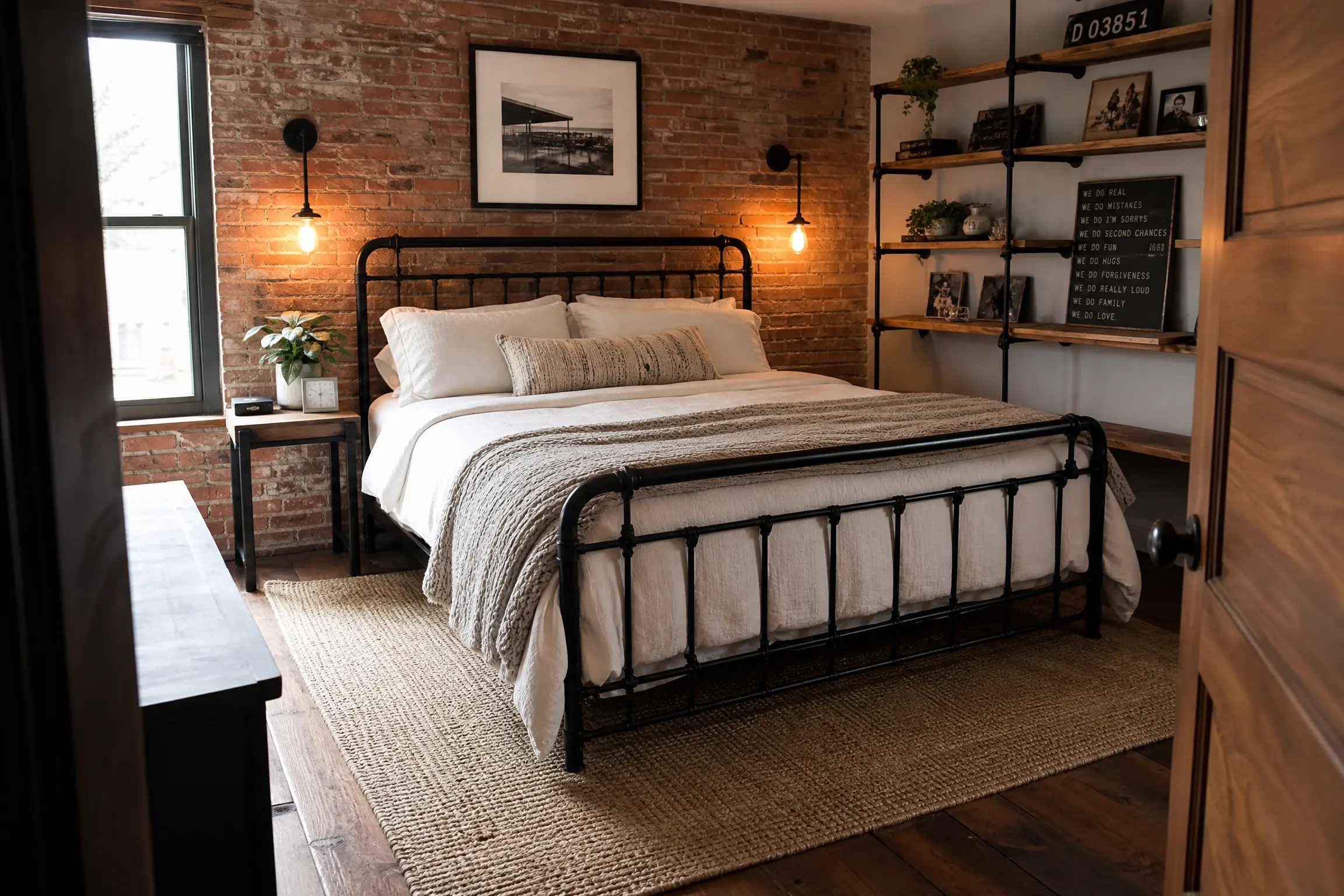
1. Exposed Brick Feature Wall with Leather Accents
An exposed brick wall behind the bed is probably the most recognizable move in industrial bedroom design, and there is a reason it keeps showing up. The raw texture and warm terracotta tones of real brick add instant visual depth that no paint color can fully replicate. In practice, this look comes together best when you pair the brick with leather accents rather than fabric ones. A dark espresso leather headboard or even a leather bench at the foot of the bed picks up the natural warmth of the brick without competing with its texture. Keep the remaining walls in a soft warm white or aged plaster tone so the brick stays the clear focal point. For lighting, a pair of black iron wall sconces with Edison bulbs mounted directly on the brick creates that perfect factory-meets-bedroom mood. One honest note: if your brick is painted or in poor condition, a brick-effect panel or limewashed brick finish gives a very convincing result at a fraction of the cost of real restoration work.
Designer Note: Seal any real exposed brick with a matte masonry sealer to prevent dust and crumbling. This is a step most DIY guides skip and it makes a big difference to how the wall holds up over time.

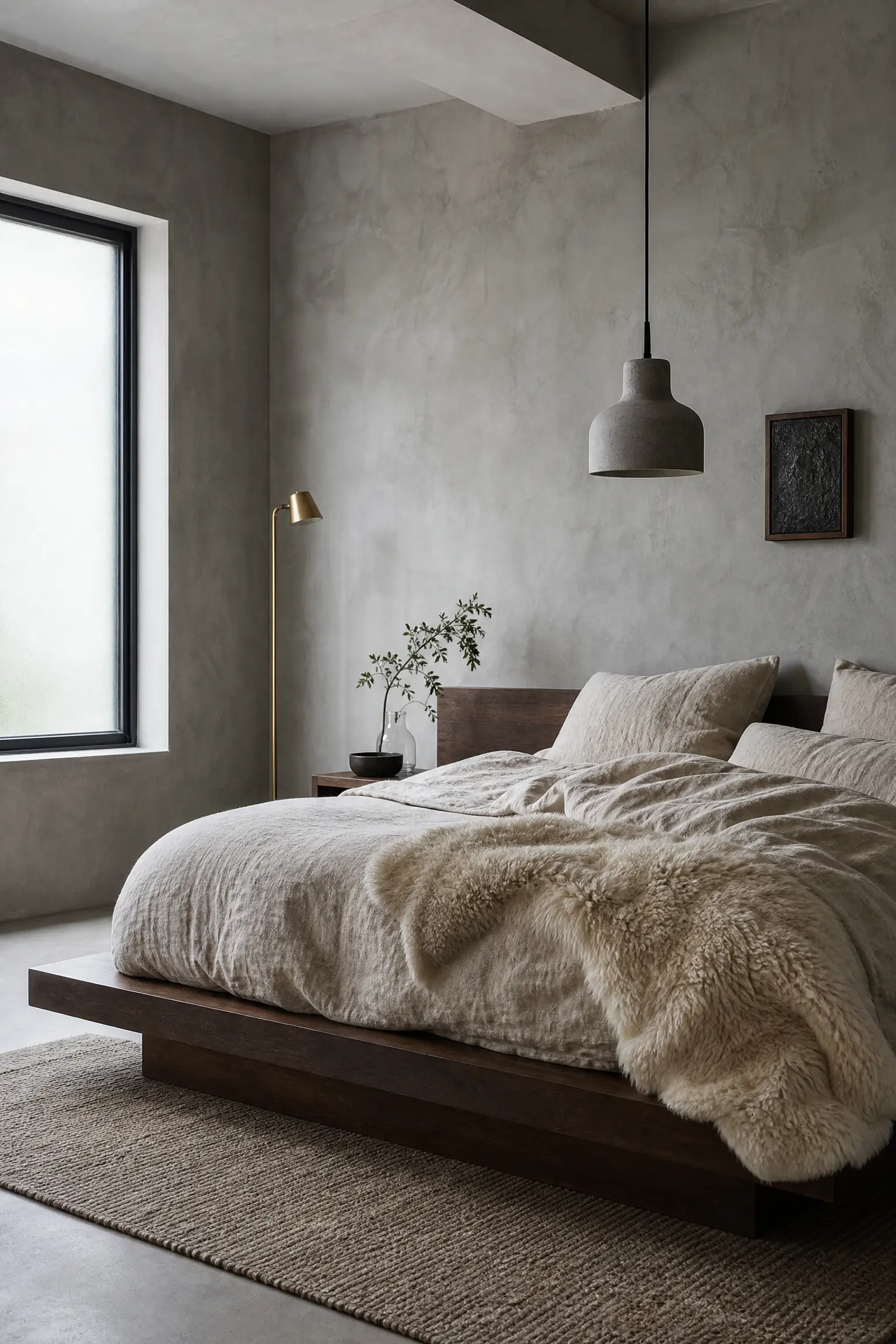
2. Concrete Walls with Warm Wool Textiles
Concrete walls or concrete-effect plaster finishes have become a go-to move for industrial bedrooms that want a slightly cooler, more contemporary feel than brick delivers. The cool gray tone of concrete works beautifully against warm wool textiles like chunky knit throws, oatmeal-colored linen bedding, and a cream shearling rug underfoot. The contrast between the hard, cold surface of concrete and the softness of natural fiber creates a satisfying tension that makes the room feel considered rather than accidental. A low-profile platform bed in dark walnut or blackened oak anchors the space without competing with the wall finish. For lighting, try a concrete pendant light over the bed combined with a slim brass floor lamp in the corner. Brass is one of those metals that bridges the gap between industrial rawness and a slightly warmer, more refined finish. This setup works well in medium to large rooms. In very small rooms, full concrete walls can feel heavy, so limit it to one accent wall.
Designer Note: Concrete microtopping applied over existing plaster is a budget-friendly way to get this look without tearing walls back. It is a thin coating that adds genuine texture and can be applied over most existing surfaces.
3. Pipe Shelving and Open Storage
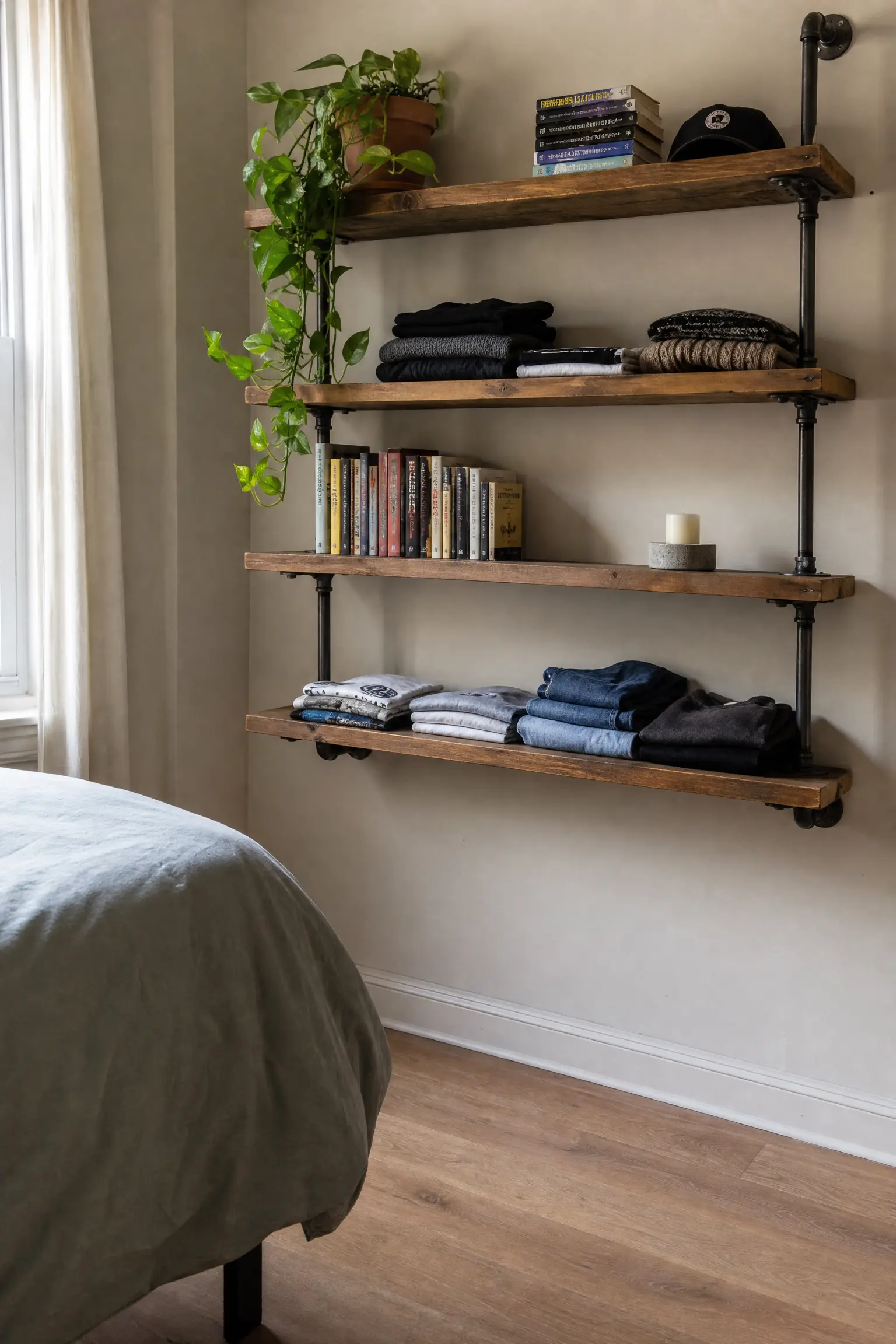
Pipe shelving, which uses black iron plumbing pipes as the structural support for wooden shelves, is one of the most practical and visually effective ideas in industrial bedroom design. In a bedroom, it works especially well when used to replace a traditional wardrobe or bedside table. A set of pipe shelves running along one wall can hold folded clothing, books, plants, and bedside lighting without the visual bulk of a built-in unit. Reclaimed pine or rough-sawn oak planks cut to size make the most convincing shelves, especially if they still show saw marks or knots. The iron pipe hardware is widely available in DIY stores and can be assembled at home with basic tools, making this one of the more affordable options on this list. Style the shelves with a restrained hand. Industrial design values negative space, so resist the urge to fill every inch. A few carefully chosen objects, a small trailing plant, and a couple of books always look better than a crowded shelf.
Designer Note: Make sure pipe shelving is anchored into wall studs rather than just the plasterboard, especially if you plan to store anything heavy. The industrial look loses its charm quickly if a shelf comes off the wall.
4. Dark Charcoal Walls with Matte Black Hardware
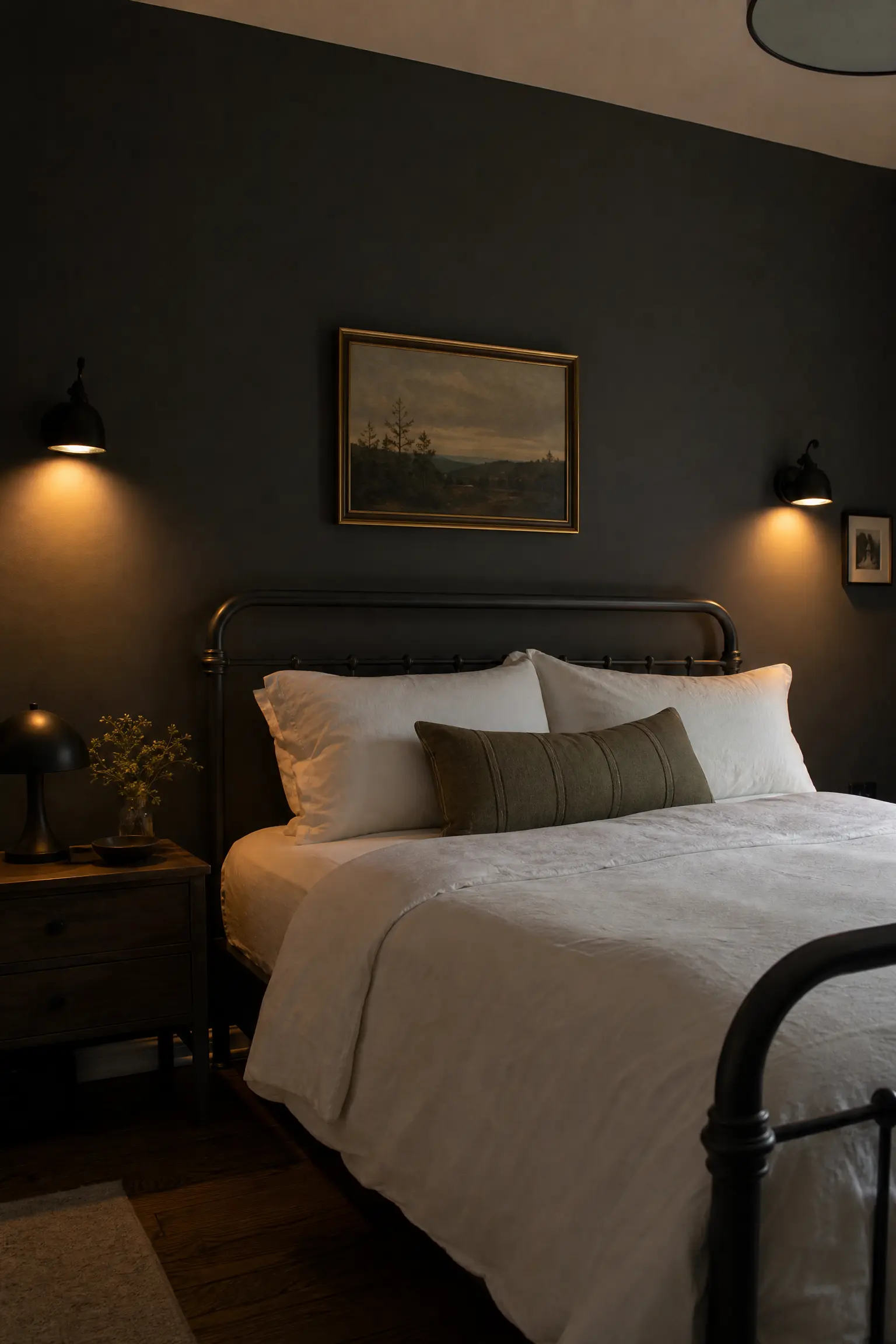
A deep charcoal wall color, something in the range of graphite or dark slate, is one of the boldest moves you can make in an industrial bedroom and one of the most rewarding when it lands well. The key is committing to the depth of the color rather than going halfway with a mid-gray that ends up looking like an undercoat. Deep charcoal walls read as both moody and sophisticated, especially when paired with matte black hardware on light switches, door handles, and bed frame fixings. A metal bed frame in gunmetal or charcoal sits almost seamlessly against the wall, which shifts the visual attention to the bedding and lighting. For bedding, go with crisp white or off-white linen so the contrast does the work. Layered lighting matters more in dark-walled rooms. A statement pendant, wall sconces, and a small lamp on each bedside table give you enough warmth to prevent the room from feeling oppressive at night.
Designer Note: Dark walls absorb light, so invest in bulbs with a warm color temperature around 2700K to keep the room feeling cozy rather than clinical after dark.
5. Reclaimed Wood Headboard as the Room’s Anchor
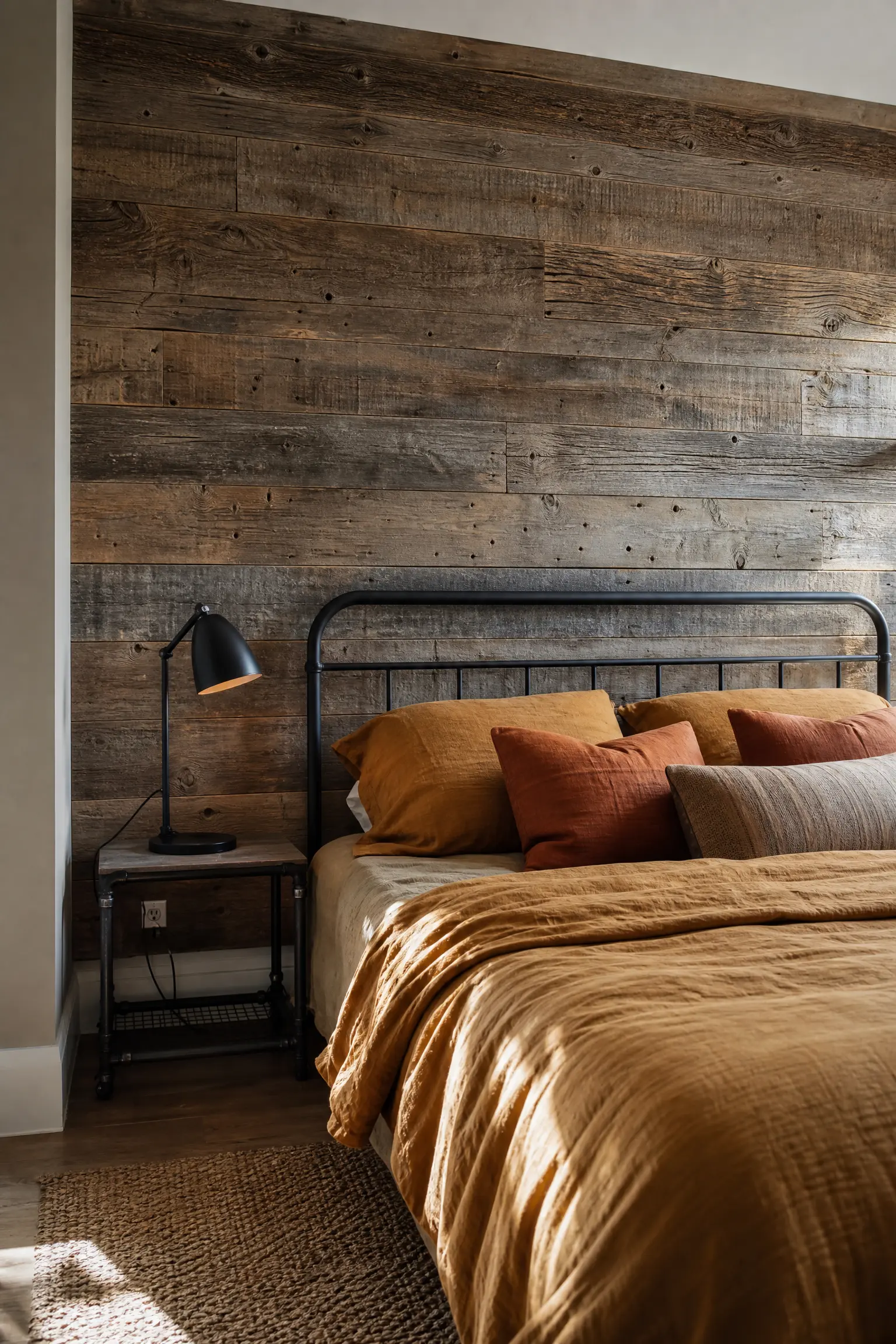
A headboard made from reclaimed or barn wood planks is one of those design choices that immediately gives a bedroom a sense of history and personality that new materials simply cannot fake. The character comes from the imperfections, knots, color variations, and rough grain that each plank carries from its previous life. Floor-to-ceiling reclaimed wood headboards have been popular in boutique hotels and design-forward homes for a reason. They draw the eye upward, making ceilings feel higher, and they give the whole room a clear focal point to design around. Pair this headboard with bedside tables made from industrial pipe or hairpin-leg steel to keep the raw material story consistent. Warm amber linen bedding or deep rust-toned throw pillows complement the natural tones of the wood without making the room feel rustic rather than industrial. This idea works especially well in rooms with neutral, light-toned walls that let the texture of the wood do all the talking.
Designer Note: Sand reclaimed wood lightly and finish it with a clear matte wax rather than a glossy varnish. A high-shine finish kills the raw, honest quality that makes reclaimed wood so appealing in this context.
6. Edison Bulb Pendant Cluster Over the Bed
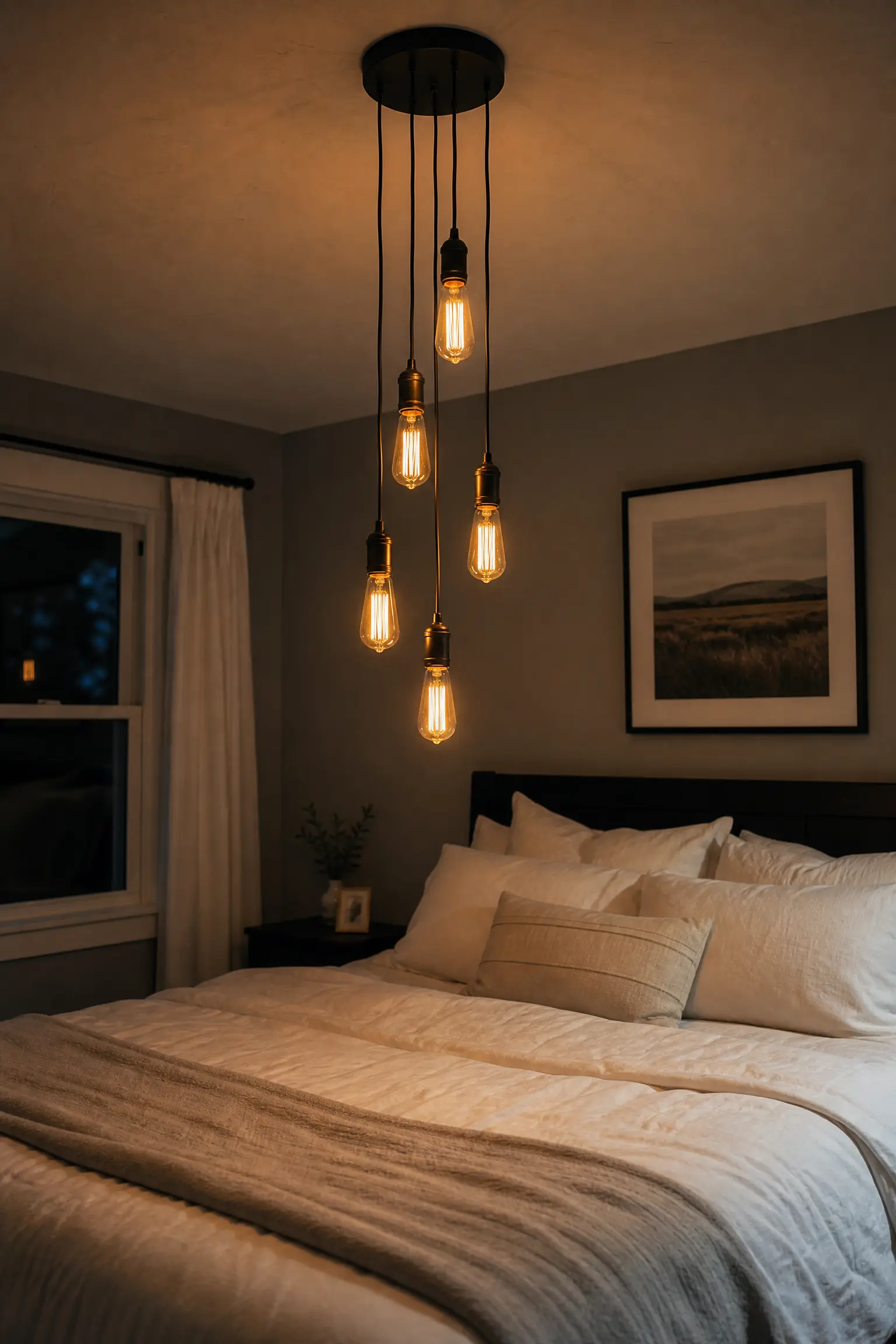
Pendant lighting in industrial bedrooms does more work than in most other styles because the fixture itself is part of the visual identity of the room. A cluster of Edison bulb pendants hung at staggered heights above the bed is one of the most effective ways to introduce that warm, amber factory glow that defines the industrial look. The filament inside the bulb becomes as decorative as any piece of art. In practice, this arrangement looks best when the pendants are hung from a ceiling rose or canopy that allows you to set each cord at a slightly different length, creating an organic grouping rather than a rigid row. A black fabric cord or aged brass hardware keeps the aesthetic consistent. One thing to be honest about here is that bare Edison bulbs do not provide a lot of usable reading light. They are excellent for ambient mood lighting in the evening but you will want a directed task light on your bedside table if you read before sleeping.
Designer Note: Install a dimmer switch for pendant clusters. The ability to shift from a bright functional level to a low amber glow transforms how the room feels in the evening with minimal effort.
7. Metal Bed Frame in a Minimalist Layout
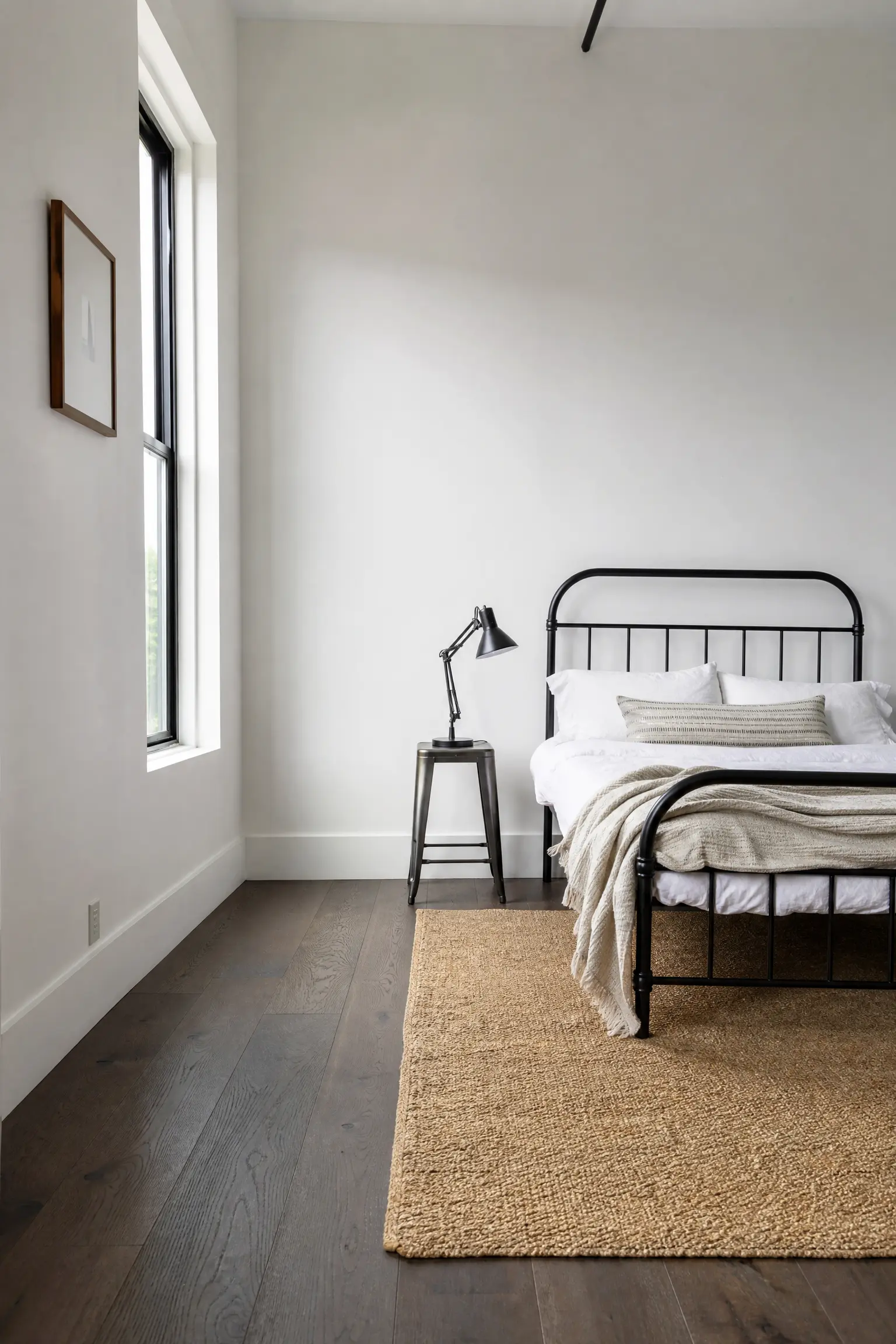
A simple metal bed frame, whether in black powder coat, raw iron, or brushed steel, is often the most important furniture decision in an industrial bedroom. The frame sets the tone for everything else. A straightforward rectangular frame with clean vertical bars or a slightly arched headboard works far better than anything ornate or overly decorative. What makes a metal bed frame work in industrial design is partly about what surrounds it. Push the bed toward one wall and leave generous open space on the opposite side. Industrial design consistently favors open, breathable floor plans over furniture-heavy layouts. A jute or wool rug in a natural tone grounds the bed without closing off the floor. Keep the bedside tables simple, either a small wooden crate, a bare metal stool, or a single floating shelf. The overall composition should feel intentional but unhurried, like the room came together gradually rather than being bought as a set.
Designer Note: A metal bed frame can sometimes feel cold in winter months. A thick woolen or faux sheepskin rug on each side of the bed solves this immediately without disrupting the aesthetic at all.
8. Exposed Ceiling Beams with Industrial Track Lighting
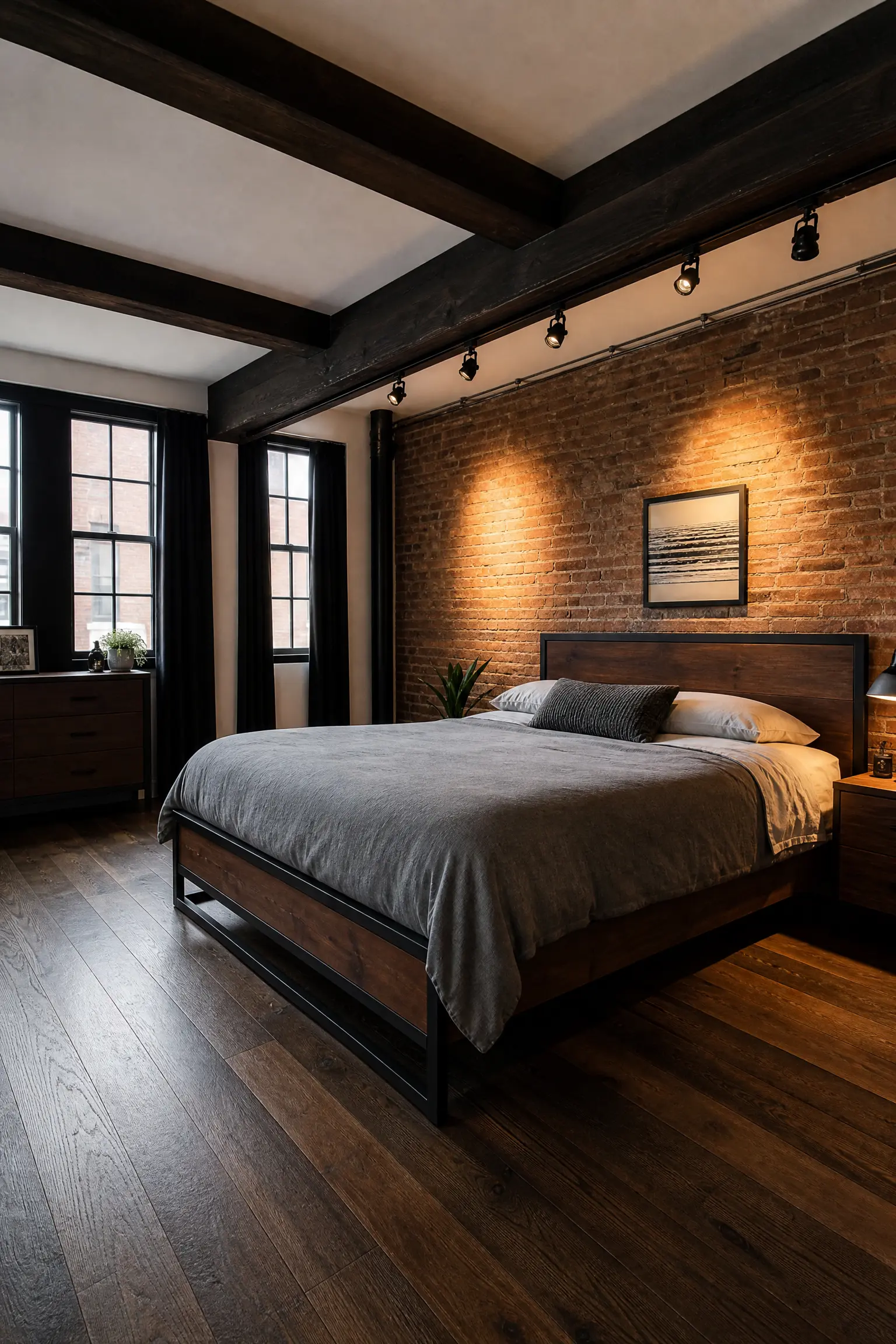
If your bedroom has structural ceiling beams, exposing and darkening them is one of the easiest ways to introduce an industrial character without touching a single wall. Paint or stain the beams in a dark walnut, ebony, or charcoal tone and let them run the length of the ceiling to draw the eye horizontally across the room, which also has the effect of making narrow rooms feel wider. Track lighting mounted along a beam in matte black gives you a flexible, directional lighting system that suits the industrial look and provides far more practical light than most pendant arrangements. You can aim individual track heads at different areas of the room, the wardrobe, a reading chair, or a piece of artwork on the wall, making the lighting both atmospheric and genuinely useful. This combination of dark beams and track lighting is frequently seen in converted barn homes and urban loft conversions, and it translates surprisingly well to conventional bedrooms when the scale is right.
Designer Note: If you do not have real ceiling beams, decorative faux beams in MDF or polyurethane are available and can look convincing when painted and properly installed. The weight difference from real timber also makes them easier to fix to ceilings without structural work.
9. Warehouse Loft Style with High Ceilings and Large Windows
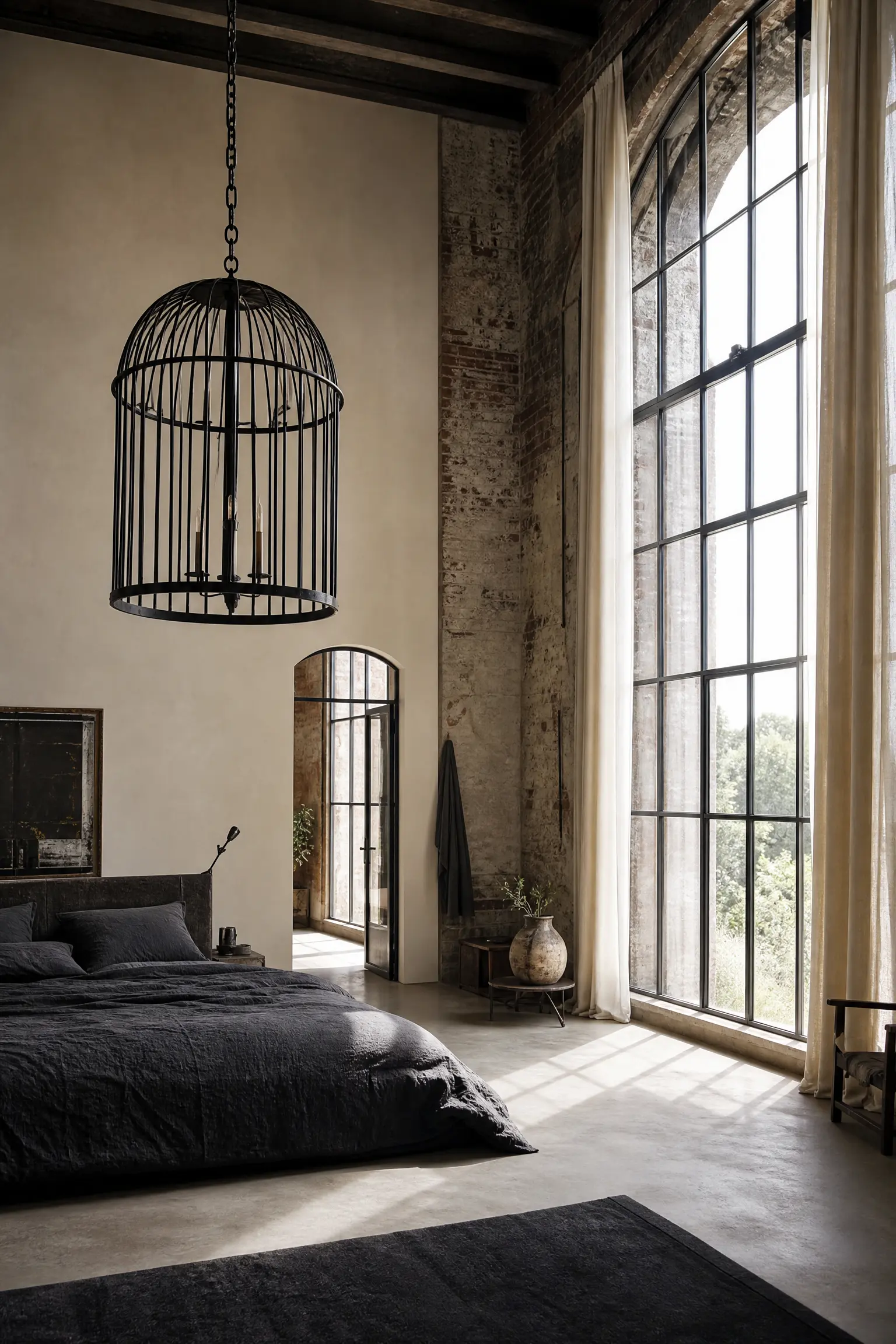
Rooms with high ceilings and large windows already have the bones of a great industrial bedroom. The design challenge here is not adding character but knowing what to leave alone. Floor-to-ceiling steel-framed windows, or crittall-style window dividers added to existing windows, immediately push the space into loft territory. Keep window treatments simple. Raw linen curtains in off-white or pale flax, hung from black iron rods, filter light gently without blocking it. In a high-ceilinged room, scale is everything. An oversized pendant chandelier in black iron or cage wire hangs beautifully from a lofty ceiling and fills vertical space that would otherwise feel empty. The furniture should follow suit. A broad, low bed, a wide industrial dresser in dark steel and wood, and an oversized vintage mirror leaning against the wall rather than hung on it all help to anchor the room and prevent the space from feeling underfurnished.
Designer Note: In very high-ceilinged rooms, acoustic panels wrapped in fabric or a large canvas print can help reduce echo and add a layer of visual softness that these rooms often need.
10. Japandi-Industrial Crossover with Wabi-Sabi Principles
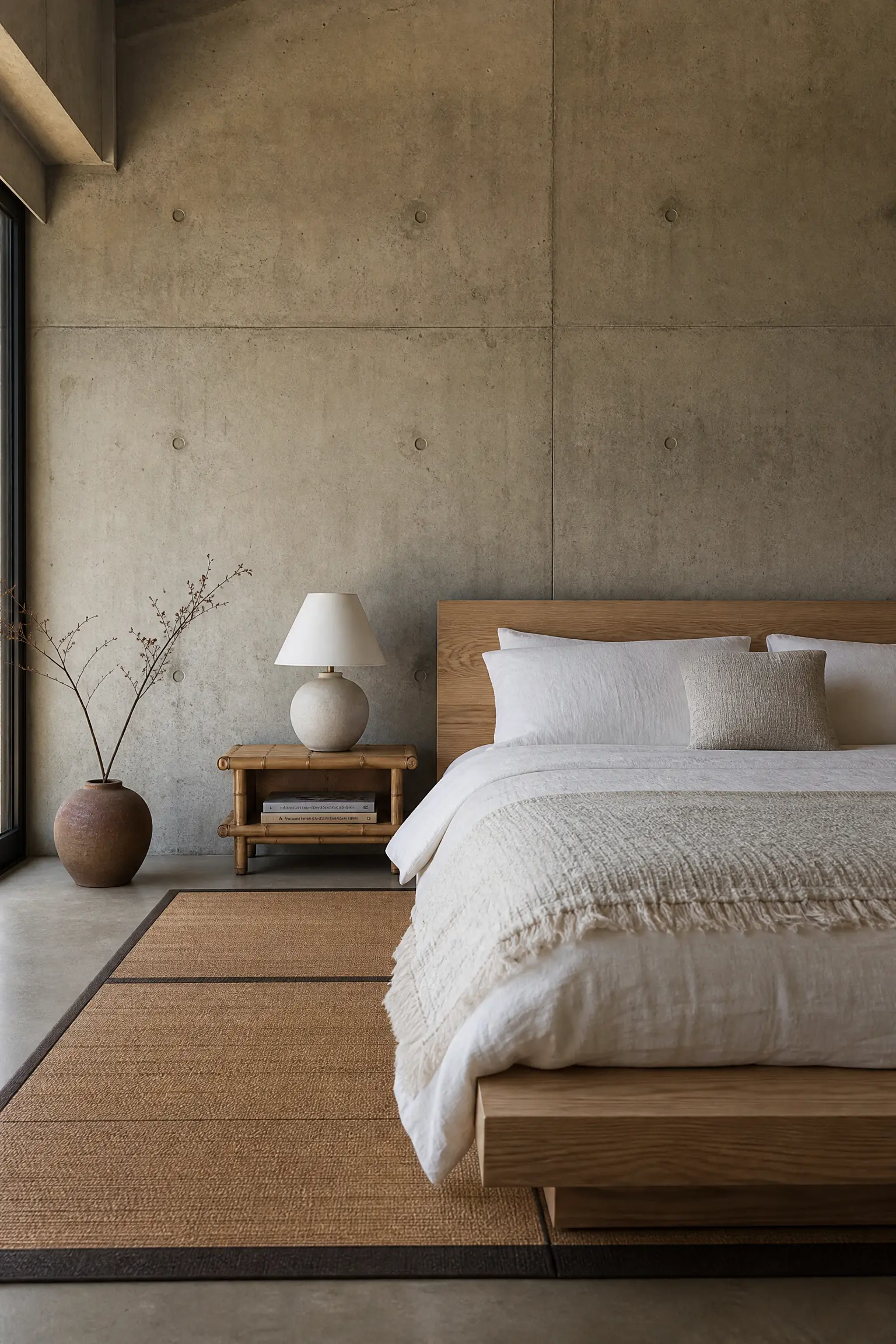
One of the most interesting evolutions in industrial bedroom design right now is how it is crossing over with Japandi aesthetics. Japandi, the blend of Japanese minimalism and Scandinavian functionality, shares industrial design’s commitment to honest materials and uncluttered spaces, but it softens the harder edges with a quieter, more meditative quality. In practical terms this means pairing raw iron and concrete with natural bamboo accessories, a tatami-inspired low platform bed, and a restrained palette of warm sand, ash gray, and charcoal. The wabi-sabi philosophy, which finds beauty in imperfection and natural aging, fits perfectly here. A ceramic bedside lamp with an irregular form, a small branch arranged simply in a clay vase, or linen bedding that is deliberately unironed all bring this sensibility into the room. The result is an industrial bedroom that feels genuinely calm and restorative rather than just visually striking.
Designer Note: The Japandi-industrial crossover works best when you resist the temptation to add too many decorative pieces. Edit ruthlessly. Three objects that earn their place are worth more than a shelf full of things you are not sure about.
11. Dark Wood and Steel Dresser Combination
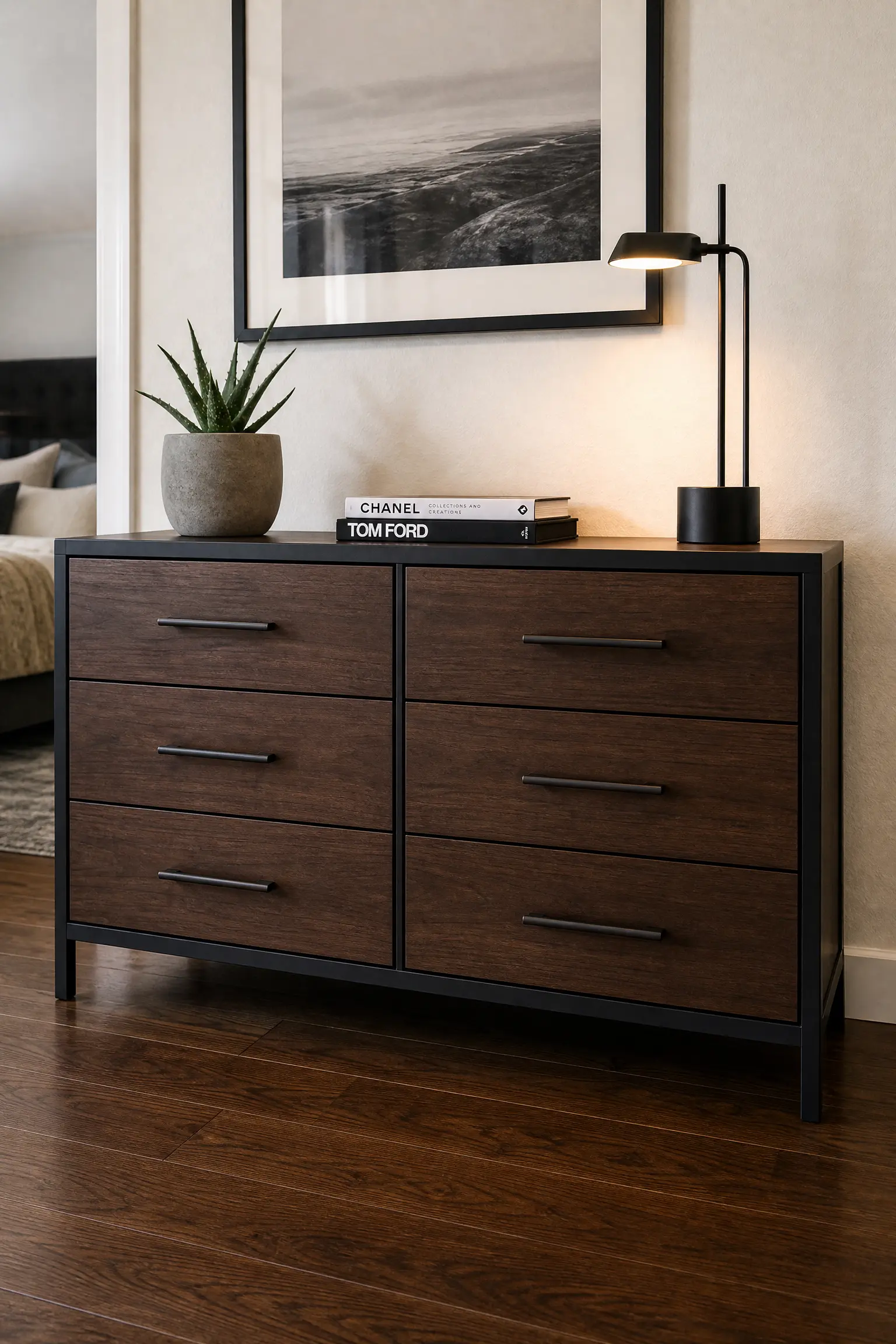
Storage furniture in industrial bedrooms should feel like it was built for purpose rather than chosen from a catalogue. A dresser or wardrobe that combines dark-stained oak or walnut drawers with a steel frame and bar handles delivers exactly that feeling. These pieces have a utilitarian honesty about them that flatpack furniture in painted MDF simply cannot match. In a bedroom where the bed and walls are doing a lot of visual work, the dresser should be straightforward and slightly understated. A six-drawer dresser in a dark wood and matte black steel sits well against a lighter wall and provides generous storage without becoming the main event. Top it with one or two objects rather than a row of decorative items. A good industrial-style mirror, a small plant in a terracotta or concrete pot, and a single lamp is about all the dresser surface needs. Mid-range options in this style from furniture makers like West Elm and Article are genuinely good quality and hold up well over time.
Designer Note: Look for solid wood and steel construction rather than veneer over MDF. The weight and solidity of real materials is noticeable and the piece will last decades rather than years.
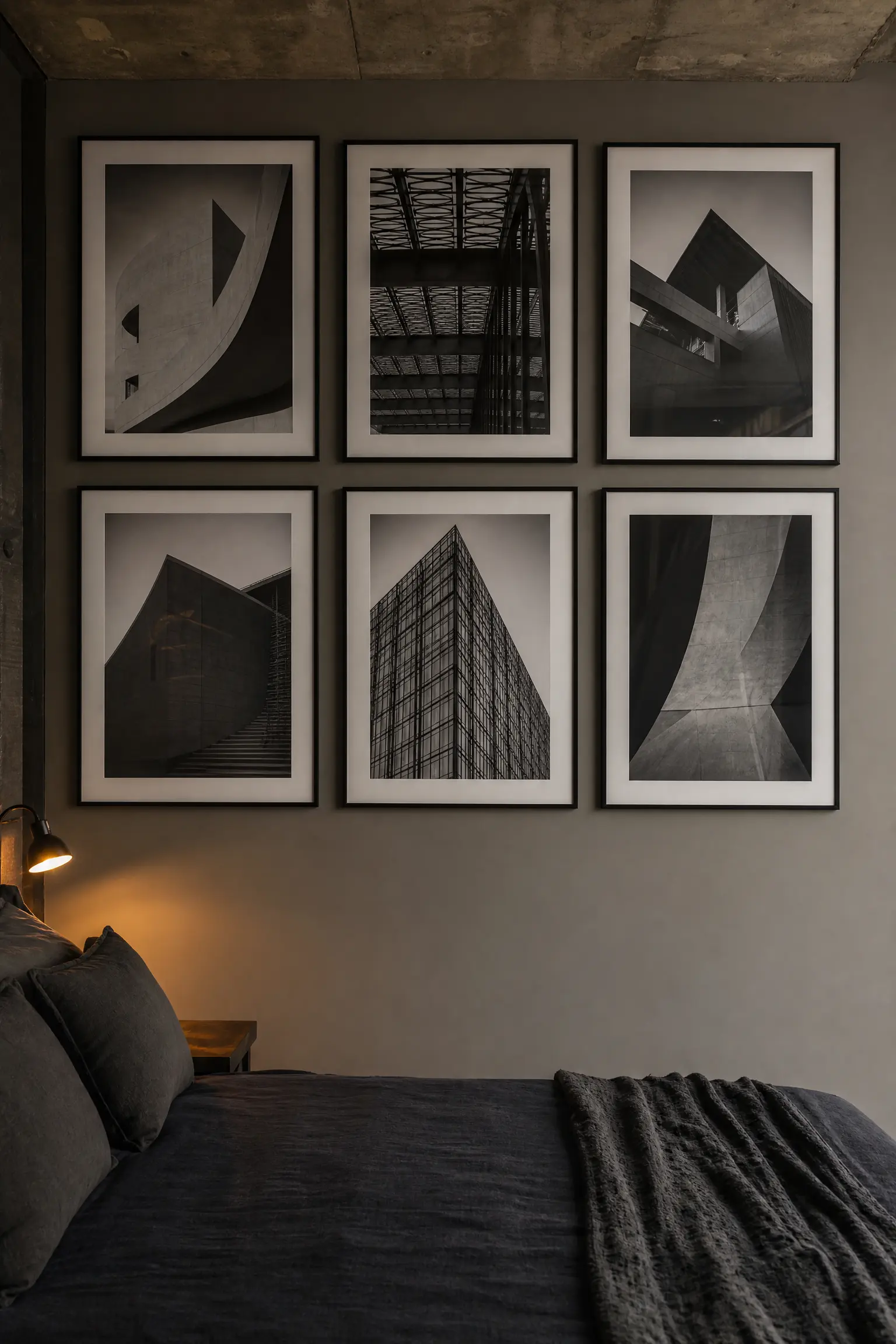
12. Black and White Photography Gallery Wall
Art in industrial bedrooms tends to work best when it reinforces the raw, documentary quality of the style rather than fighting against it. A gallery wall of large-format black and white photography, framed in simple thin black metal frames, is one of the most consistent choices interior designers reach for in industrial spaces. The monochromatic quality of black and white images keeps the wall feeling bold without introducing competing colors, and the subject matter can range from architectural photography and industrial landscapes to portraiture or abstract shapes. The arrangement matters. A grid format, where all frames are the same size and spaced evenly, has a precise, structured quality that suits industrial design well. One large print of 60 by 90 centimeters can also hold its own on a wide wall without needing companions. Printing large-format photography at home or through online print services is affordable and allows you to choose images that have genuine personal meaning.
Designer Note: Mount art at eye level from a standing position, which usually means the center of the frame sits at around 145 to 150 centimeters from the floor. Art hung too high is one of the most common mistakes in bedroom decoration.
13. Industrial Reading Nook with a Wing Chair and Arc Lamp
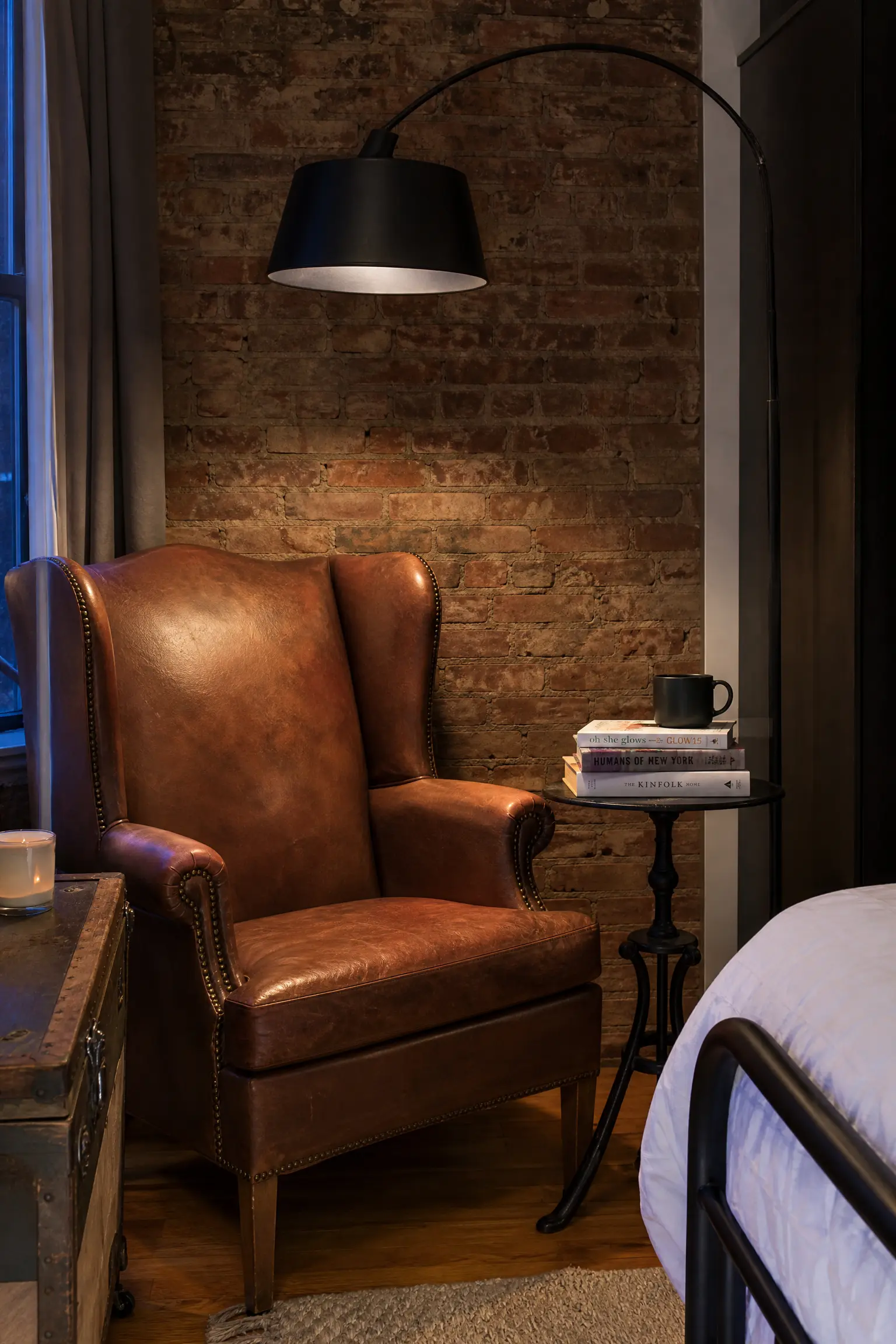
A bedroom that has space for a dedicated reading corner becomes significantly more livable, and in industrial design this area is a great opportunity to introduce a warmer, slightly more eclectic mood. A leather or worn canvas wing chair in cognac, dark teal, or forest green placed in a corner with a black arc floor lamp positioned overhead creates a self-contained reading zone that feels genuinely inviting. A small side table in cast iron or hairpin-leg steel holds a drink and a stack of books without fuss. Bare brick or a textured plaster wall behind the chair amplifies the character of the space. A small industrial bookcase, something narrow with open shelves and a black metal frame, can sit beside the chair and hold reading material, a plant, and a small vintage object or two. In practice, a reading nook works best when it is slightly separated from the bed, either in a different corner or beside a window where natural light makes daytime reading comfortable.
Designer Note: A small plug-in wall sconce mounted beside the reading chair is a useful alternative to a floor lamp in tight spaces. It frees up floor space and keeps the area from feeling cluttered.
14. Rust and Terracotta Tones for a Warmer Industrial Feel
Industrial bedrooms are often associated with cool gray and black tones, but introducing rust, terracotta, and burnt sienna creates a version of the style that feels significantly warmer and more welcoming. These earthy, oxidized shades mimic the natural patina that develops on aged metal and are deeply complementary to the raw materials industrial design relies on. A terracotta-toned duvet cover paired with rust-colored cushions and a deep amber throw over a simple metal bed frame can shift the whole emotional register of the room from cool and austere to warm and enveloping. The walls work best in a warm off-white, aged plaster, or very light sand tone so the terracotta bedding reads as the primary color statement. A matte black metal bedside lamp and a small concrete or clay pot with a trailing plant on the shelf complete the look. This is a particularly good approach for north-facing rooms that receive limited natural light, where cool industrial tones can sometimes feel a little bleak.
Designer Note: Terracotta and rust tones fade in direct sunlight over time, so if your bedroom is south-facing and very bright, choose bedding described as fade-resistant or in slightly deeper shades to account for this.

15. Vintage Industrial with Mid-Century Modern Furniture
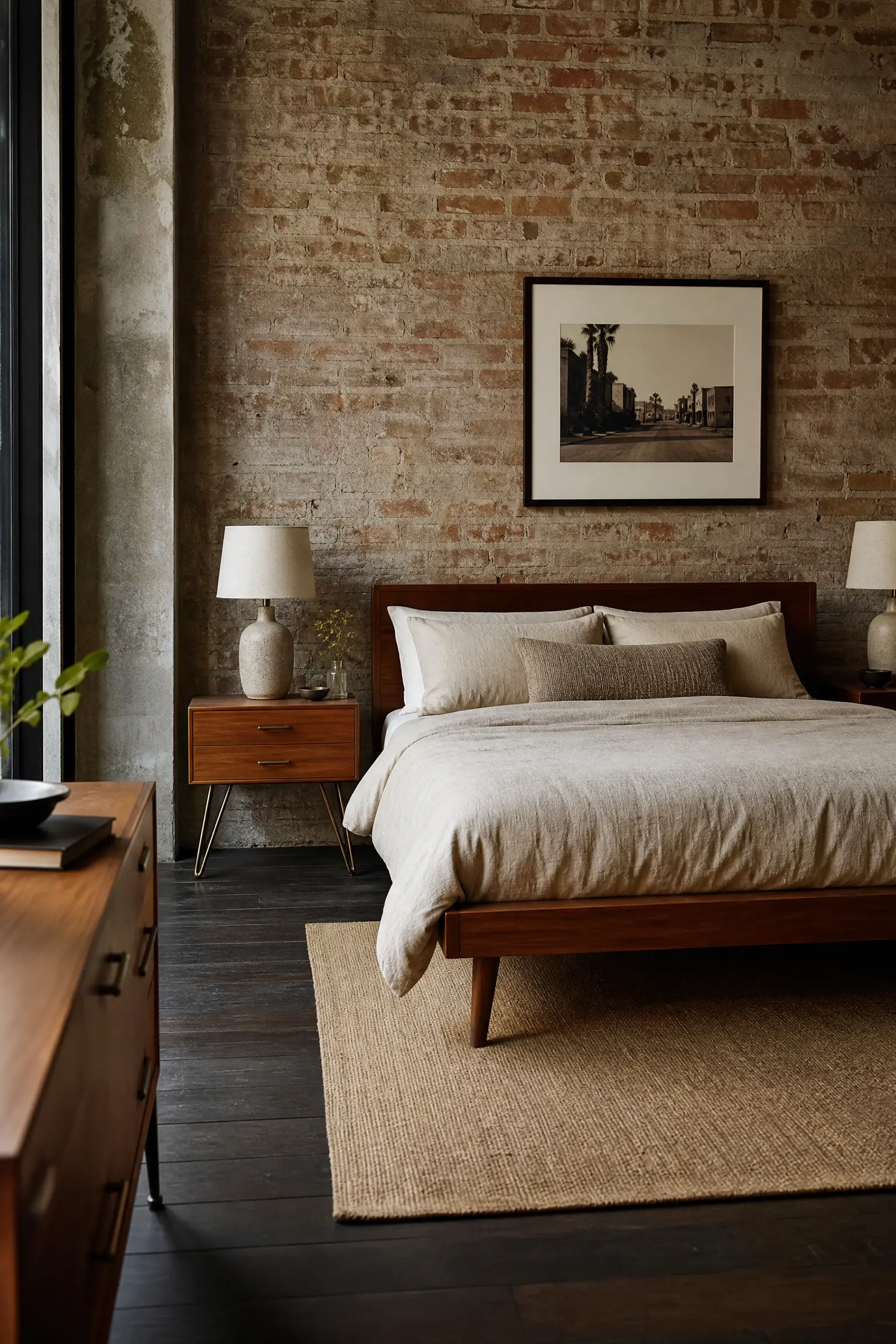
Pairing industrial design elements with mid-century modern furniture is one of the more sophisticated approaches to this style and one that professional interior designers consistently reach for. Mid-century modern pieces, think tapered walnut legs, clean geometric lines, and warm teak surfaces, bring a refined elegance that softens the rougher edges of industrial materials without abandoning their character. A low-profile mid-century bed in walnut or teak sits comfortably in front of an exposed brick wall. A pair of mid-century bedside tables in walnut with a single drawer and tapered legs replace the need for bulkier metal options. For lighting, a ceramic table lamp with a simple drum shade bridges the two styles effectively. The result is a room that feels both rooted in design history and current, drawing on the best of both movements without being a pastiche of either. This approach works across a wide range of room sizes and budgets, as vintage mid-century pieces are widely available at flea markets and second-hand furniture stores.
Designer Note: When sourcing vintage mid-century pieces, check the joinery carefully. Solid wood with dovetail joints is a sign of quality and longevity. Avoid pieces where the veneer is lifting at corners as this is difficult to repair convincingly.
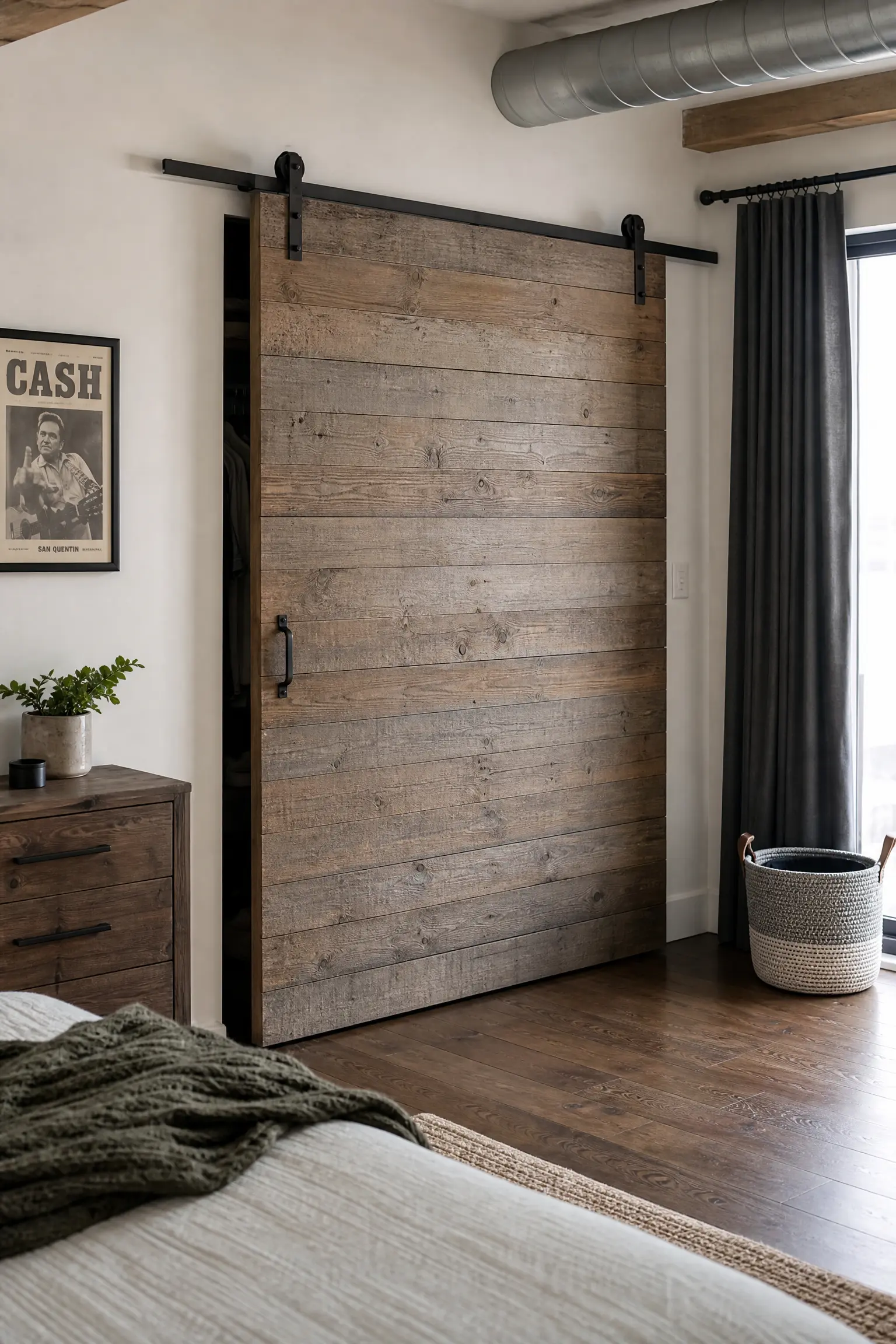
16. Sliding Barn Door as a Space-Saving Wardrobe Solution
A sliding barn door in front of a wardrobe or walk-in closet is one of those details that immediately signals industrial intent while also being genuinely practical in rooms where a swinging door would eat into usable floor space. The door itself, typically made from reclaimed or rough-sawn planks in a horizontal or vertical arrangement, rides on an exposed black iron track system mounted to the wall or ceiling. The exposed hardware is a deliberate feature rather than something to hide, and it contributes significantly to the industrial character of the room. From a practical standpoint, sliding barn doors are easier to install than most built-in solutions and do not require a carpenter in most cases. They work best covering a full wall of storage rather than a single standard-width wardrobe opening, as they look slightly undersized when used for smaller openings. The wood used for the door should complement other wooden elements in the room so the overall material story feels cohesive.
Designer Note: Make sure the wall where you mount the barn door track is solid enough to bear the weight of the door. Hollow partition walls may need a timber batten fixed behind the plasterboard to provide a secure fixing point.
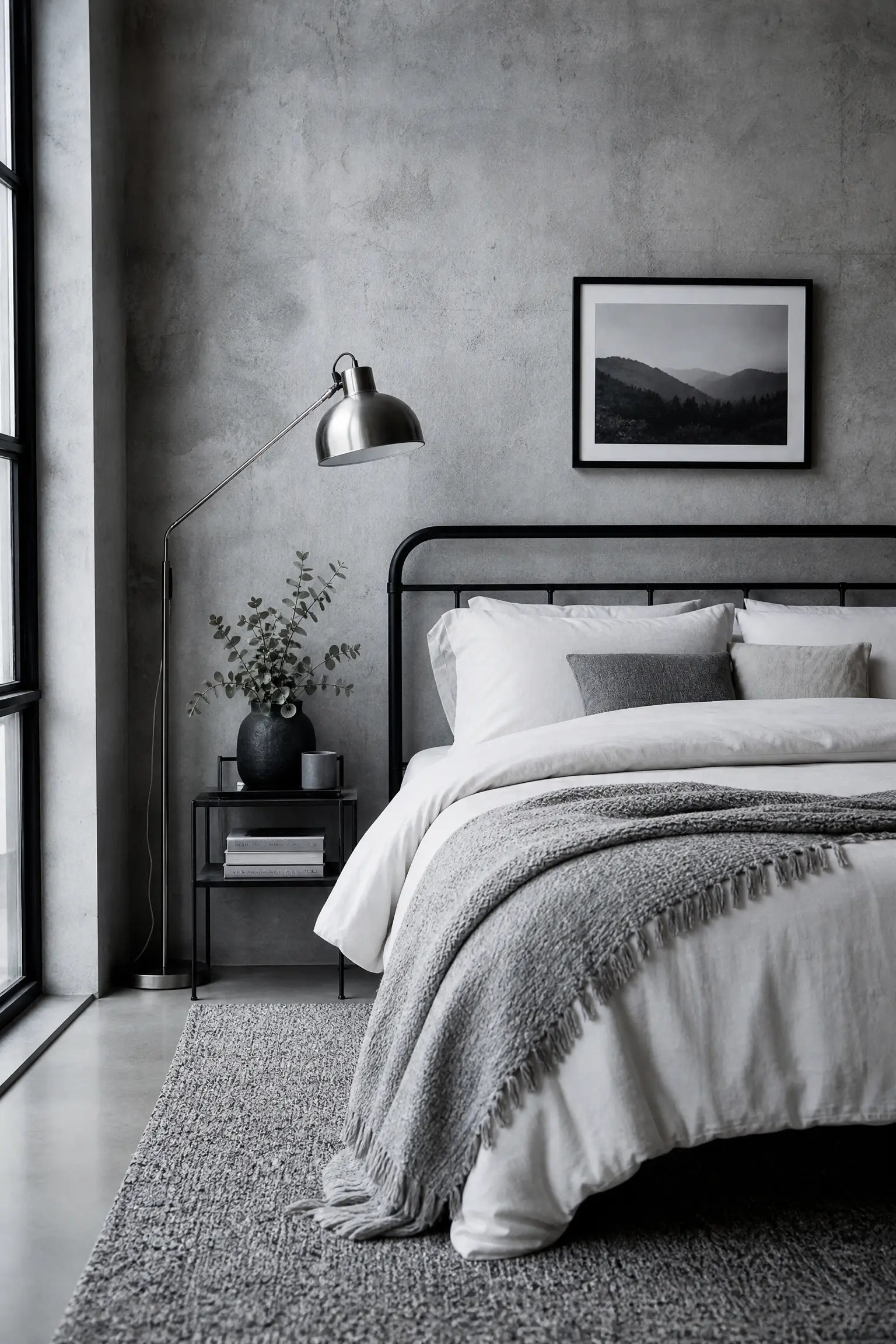
17. Monochrome Palette with Texture as the Design Driver
A monochrome industrial bedroom built entirely around shades of gray, charcoal, white, and black is one of the most photogenic approaches to this style and also one of the most satisfying to actually live in. The key to making a monochrome room feel rich rather than flat is treating texture as seriously as color. When the palette is restricted, every surface needs something to offer. A concrete-effect wall, a linen duvet with visible weave, a wool rug with a low pile, a brushed steel lamp, a woven cotton throw, and a matte-painted metal bed frame all read as variations of gray but each one offers a different tactile quality that keeps the eye moving and the room feeling layered. In practice, this is a harder look to achieve than it appears in design magazines because the temptation is to stop at the colors without thinking about how each surface reflects or absorbs light differently. Take that extra step and the result is a bedroom that feels architecturally considered and deeply restful.
Designer Note: Introduce one warm accent, even something as small as a wooden tray on the bedside table or a small plant, to prevent a fully monochrome room from tipping into feeling sterile. It is a small addition but it matters a great deal.
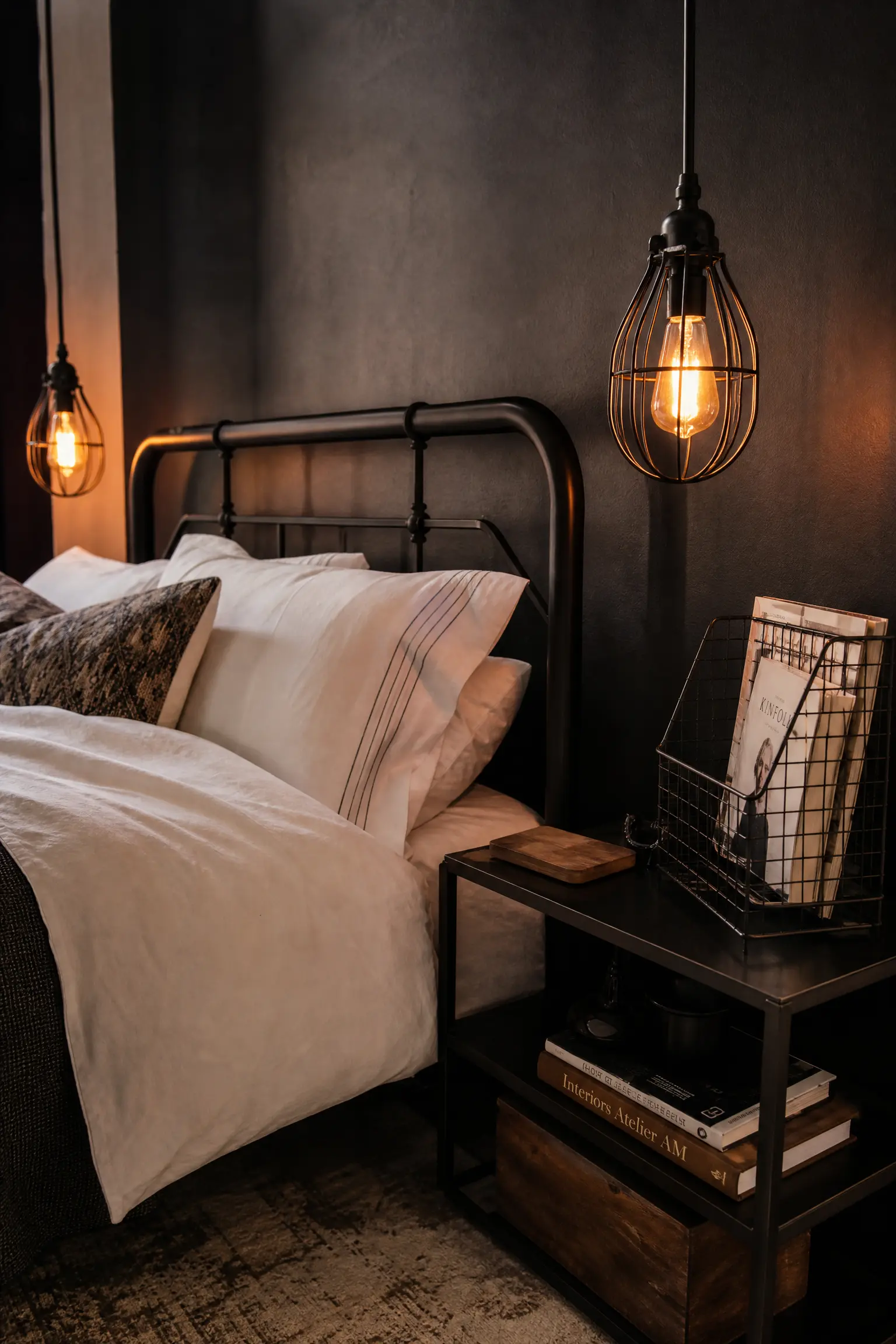
18. Cage Pendant Lights and Wire Mesh Accents
Cage pendant lights, where the bulb sits inside a black iron or brass wire cage, are one of the signature lighting fixtures in industrial design and for good reason. They look visually interesting both lit and unlit, they scale well to different ceiling heights, and they come in a wide price range from affordable replicas to genuinely crafted originals. A single large cage pendant centered above the bed is a clean, confident choice. Two smaller cage pendants hung at reading height on either side of the bed serve both function and form. Beyond lighting, wire mesh as a design material appears naturally in industrial spaces in other ways too. Mesh backing panels in storage units, a wire mesh magazine holder, or a pegboard panel above the desk with small hooks for hanging items all carry the same utilitarian spirit without feeling contrived. The visual consistency of a shared material across different elements of a room is one of the things that separates a thoughtfully designed industrial bedroom from one that simply has a metal bed and some exposed brick.
Designer Note: Choose cage pendant lights with a canopy or shade in the same metal finish as your other hardware. Mixing black cage lights with brass sconces and chrome handles fragments the look. Pick one metal and use it consistently throughout the room.
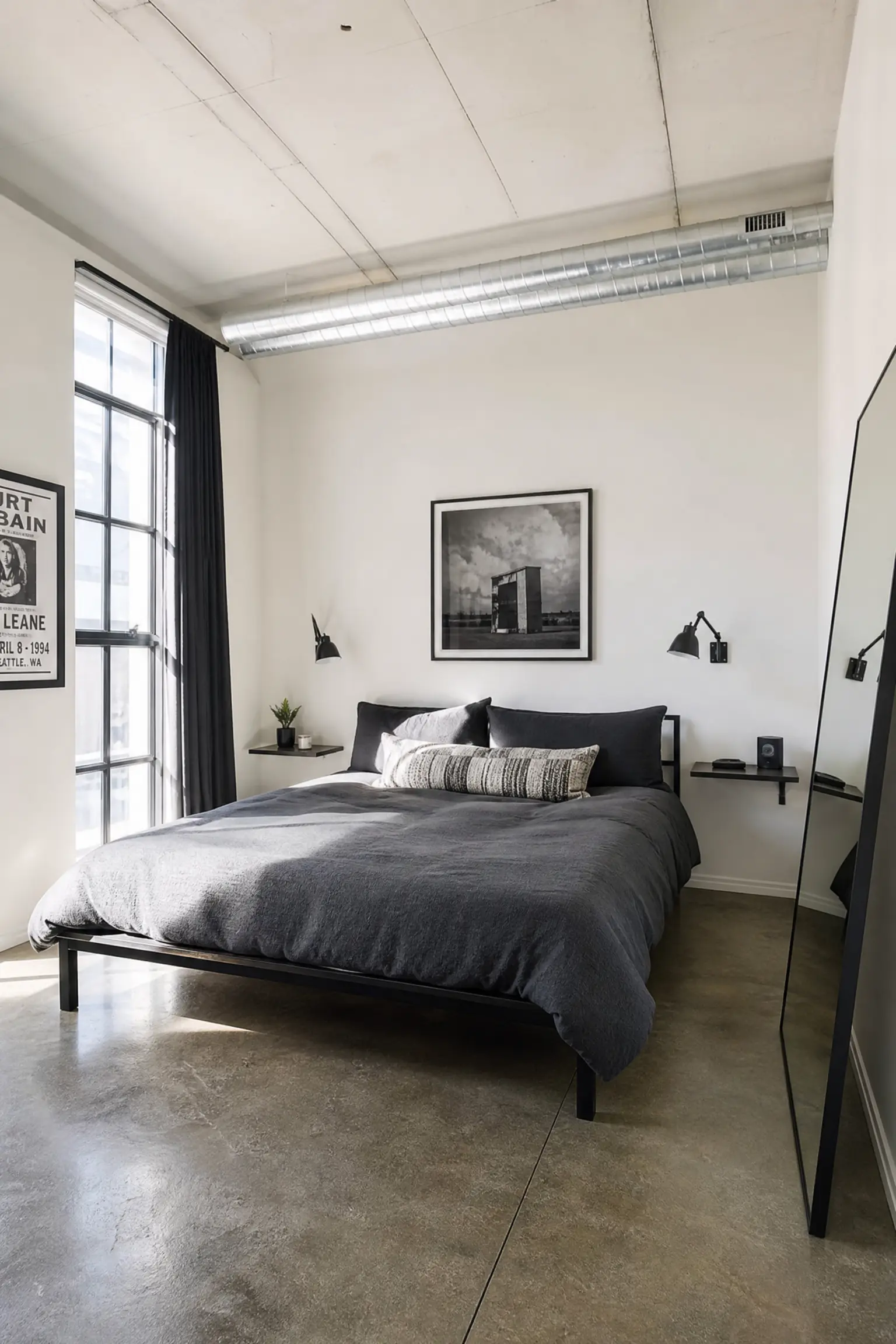
19. Industrial Bedroom for Small Spaces
Industrial design is actually very well suited to small bedrooms because the style already prioritizes openness, function, and minimal clutter over decorative density. In a small room, a metal bed frame with a low profile keeps the visual weight of the largest piece of furniture to a minimum. Wall-mounted bedside shelves in dark iron replace bulky bedside tables and free up meaningful floor space. A single pipe shelf above the bed serves as both storage and headboard, holding a lamp, a small plant, and a book or two. Mirror placement matters more in small industrial rooms than large ones. A large leaner mirror in a thin black frame propped against one wall reflects light and makes the room feel genuinely larger, a trick that works in any style but looks particularly at home in an industrial setting. Keeping the palette simple, off-white walls, black accents, natural wood, avoids the visual noise that makes small rooms feel cramped. This is one of the most budget-friendly approaches on this list because restraint is the whole point.
Designer Note: In a small industrial bedroom, every piece of furniture should earn its place. Before buying anything, ask whether it serves a genuine function in the room. If the answer is no, leave it out. The discipline is what makes small industrial spaces feel intentional rather than cramped.
20. Oxidized Metal and Aged Copper Accents
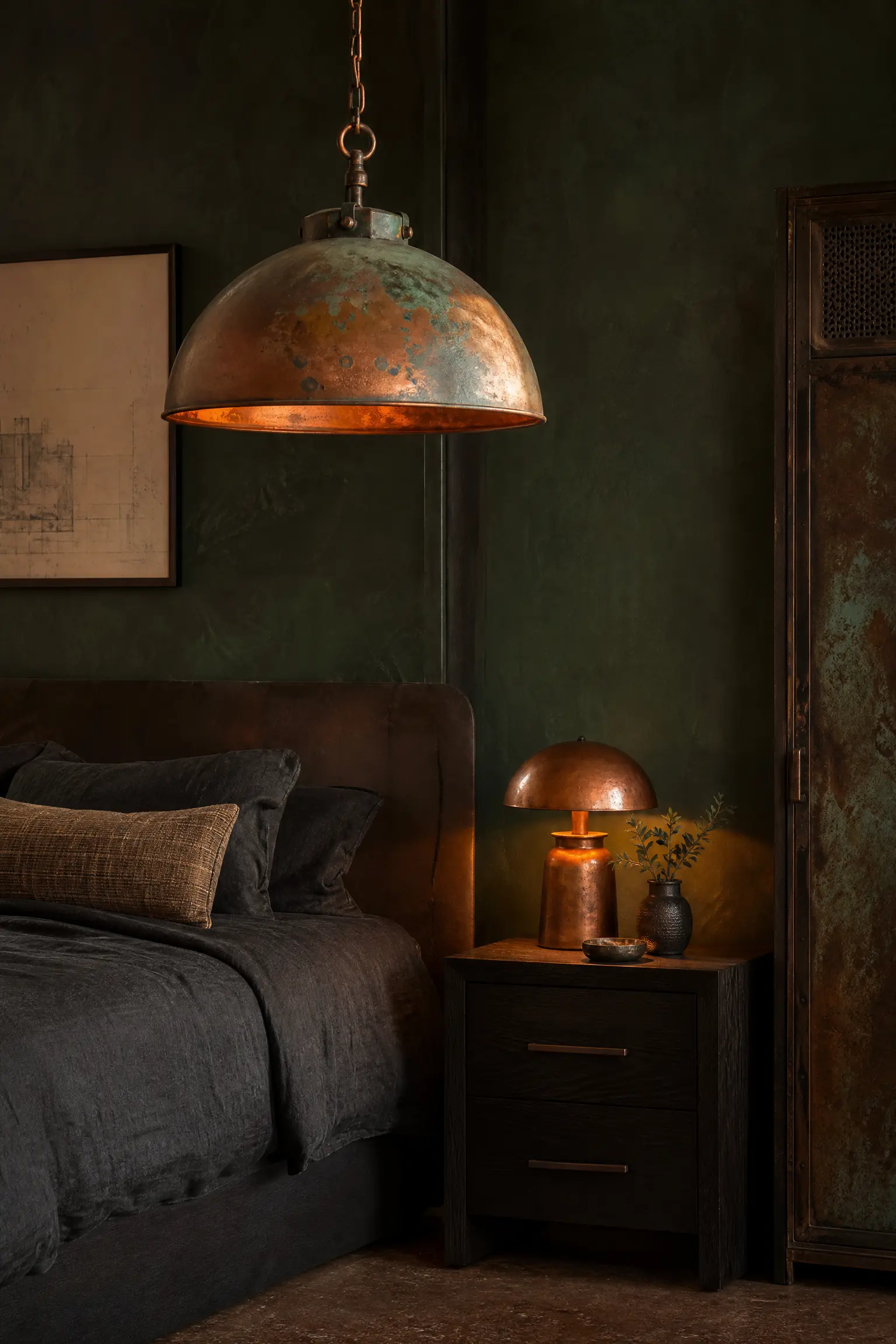
Oxidized metal and aged copper bring a different kind of industrial character than the more common black iron and steel. Where matte black feels modern and graphic, copper and oxidized bronze read as warmer, more aged, and slightly more romantic. This is a good direction if you want an industrial bedroom that feels sophisticated and a little unexpected. Copper pendant lights with a naturally patinated finish, aged brass drawer handles on a dark wood dresser, and a copper or bronze bedside lamp create a warm metallic story without the room feeling precious or over-decorated. The walls in this kind of room work best in a deep, warm neutral. A warm putty tone, a deep terracotta plaster, or even a very dark forest green provides the right kind of backdrop for copper to glow against. Oxidized metal accents are increasingly common in well-designed homes right now and are appearing in design publications as one of the key material directions for interior design. Be aware that real copper finishes do continue to oxidize over time, which is part of their charm, but they do require occasional maintenance.
Designer Note: Copper accessories are widely available at mid-market price points now and the quality has improved significantly. You do not need to invest in expensive artisan pieces to get this look. A good copper pendant and two matching lamp bases go a long way.
21. Layered Textile Approach for a Softer Industrial Mood
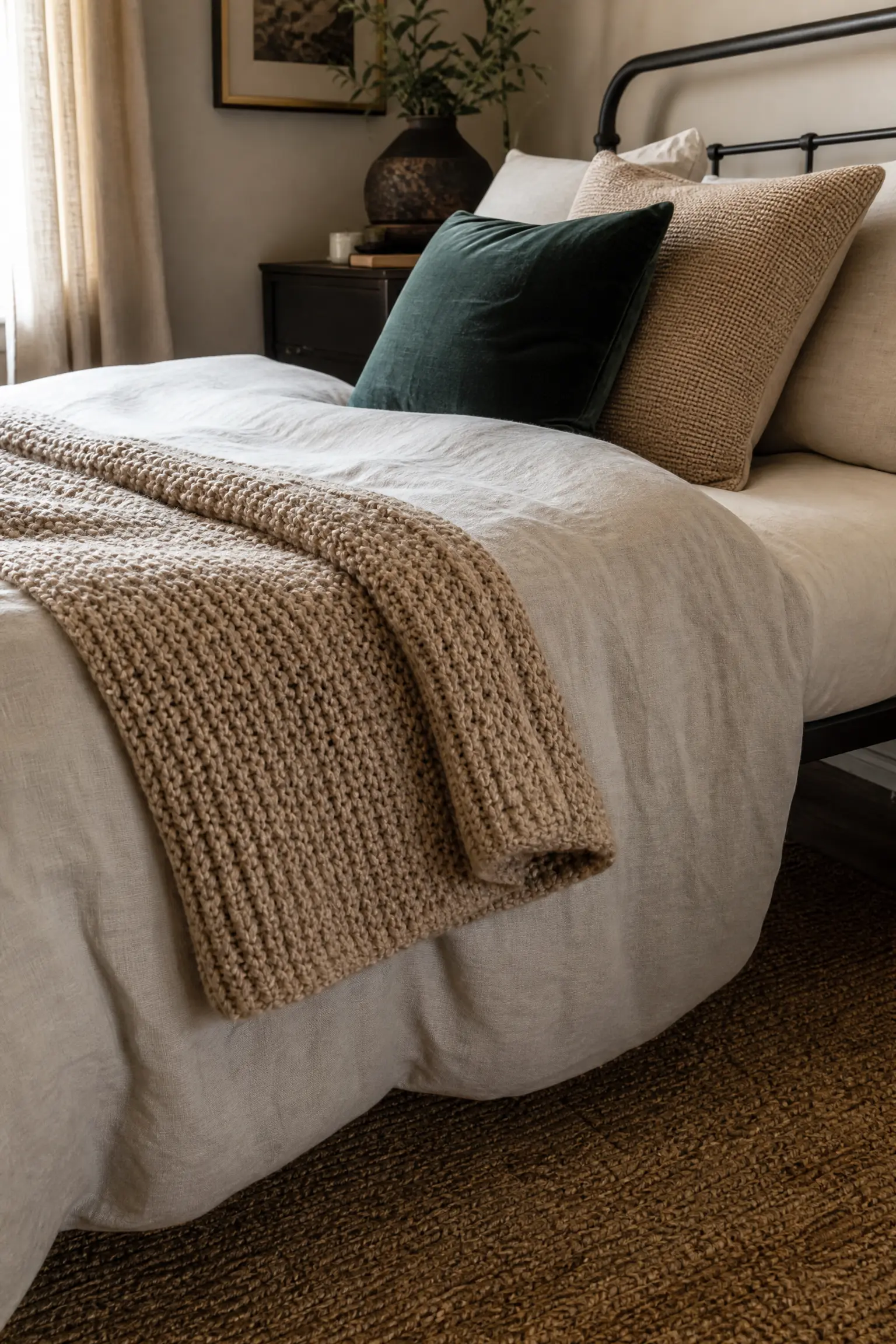
One of the most common complaints about industrial bedrooms, especially from people who share a bedroom with a partner who is less enthusiastic about the style, is that they feel hard and cold. The solution is not to abandon the industrial elements but to layer textiles in a way that brings genuine warmth and tactile comfort to the space. Start with a quality linen duvet cover in a warm neutral, ivory, flax, or pale stone. Add a chunky knit throw folded across the foot of the bed. Layer in two or three different cushion sizes and materials, perhaps a woven cotton cover, a velvet cushion in a deep rust or forest green, and a plain linen cushion in the same tone as the duvet. A wool or jute rug beside the bed adds warmth underfoot for when you get out of bed on a cold morning. Curtains in a heavyweight linen or cotton canvas rather than a sheer fabric add to the sense of softness. The industrial bones of the room remain completely visible, but the textile layering ensures the room feels comfortable and genuinely inviting rather than like a design exercise.
Designer Note: Natural fibers like linen, wool, jute, and cotton are the right choice for industrial bedrooms. Synthetic fabrics, particularly anything shiny or very smooth, undercut the raw, honest material story the style depends on.
22. Industrial Bedroom with a Dedicated Workspace
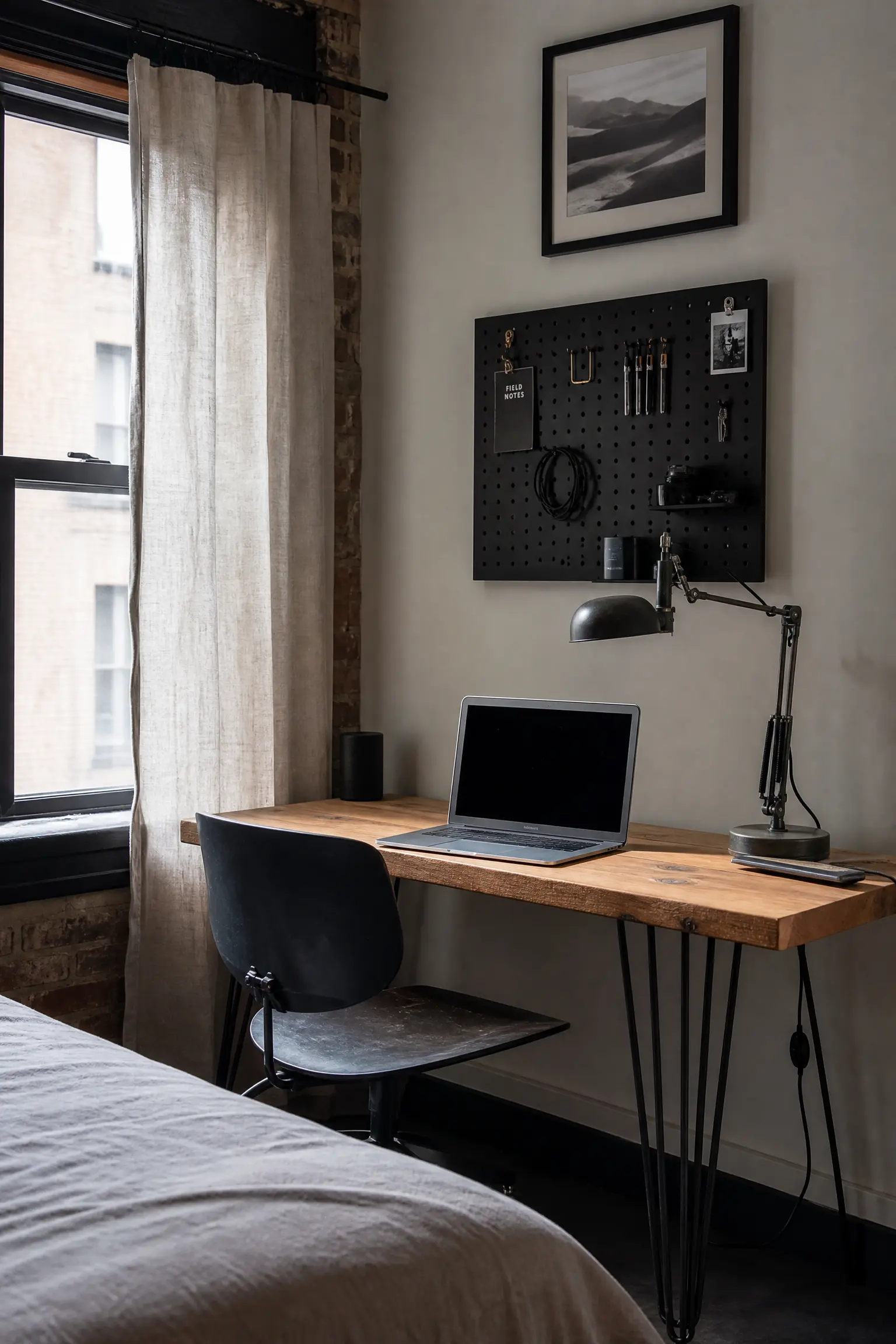
Industrial design and a home workspace are an extremely natural pairing because the style already leans on utilitarian values, purposeful furniture, and the idea that everything in a room should have a function. A dedicated desk setup in one corner of an industrial bedroom can be genuinely beautiful as well as practical. A solid wood desk top on a pair of steel hairpin-leg trestles is both inexpensive and visually strong. Pair it with a vintage-style industrial task lamp, the kind with an adjustable arm and a metal shade in black or gunmetal, and a basic wire organizer for cables and stationery. A pegboard mounted above the desk in natural pine or painted black is endlessly useful for organizing tools, cables, notes, and small accessories. One honest consideration: visual separation between the sleeping and working areas matters for sleep quality. If the room is large enough, position the desk so it is not in your direct line of sight from the pillow. If the room is small, a lightweight curtain on a simple track can screen the desk area at night.
Designer Note: Cable management is especially important in an industrial bedroom workspace. Exposed power strips and tangled cables are not the same as intentional industrial rawness. A cable raceway in black or a simple tray under the desk solves this cleanly.
23. Steampunk-Inspired Industrial with Vintage Mechanical Details
Steampunk, which draws on the aesthetic of Victorian-era industrial machinery, gears, pipes, and brass fittings, offers a more theatrical and character-rich version of industrial bedroom design. This is a maximalist corner of the industrial world, but when done with care it produces rooms that are genuinely one-of-a-kind. A statement bedside lamp made from repurposed clockwork parts, a headboard that incorporates industrial pipe and vintage gauges, or a wall display that features framed technical drawings alongside authentic vintage tools creates a sense of collected history that no off-the-shelf interior can match. The color palette in steampunk-inspired rooms tends toward deeper, richer tones. Deep burgundy, dark olive, aged gold, and dark walnut work well together and give the room a sense of richness that standard industrial palettes in gray and black do not offer. This is an investment-level approach that takes time to source the right pieces, but the result is a bedroom with a story and a personality that is entirely its own.
Designer Note: Flea markets, antique fairs, and architectural salvage yards are the best places to source authentic steampunk-style objects. Patience pays off here because the found quality of a real vintage object is the entire point of this direction.

24. Plants and Greenery in an Industrial Bedroom
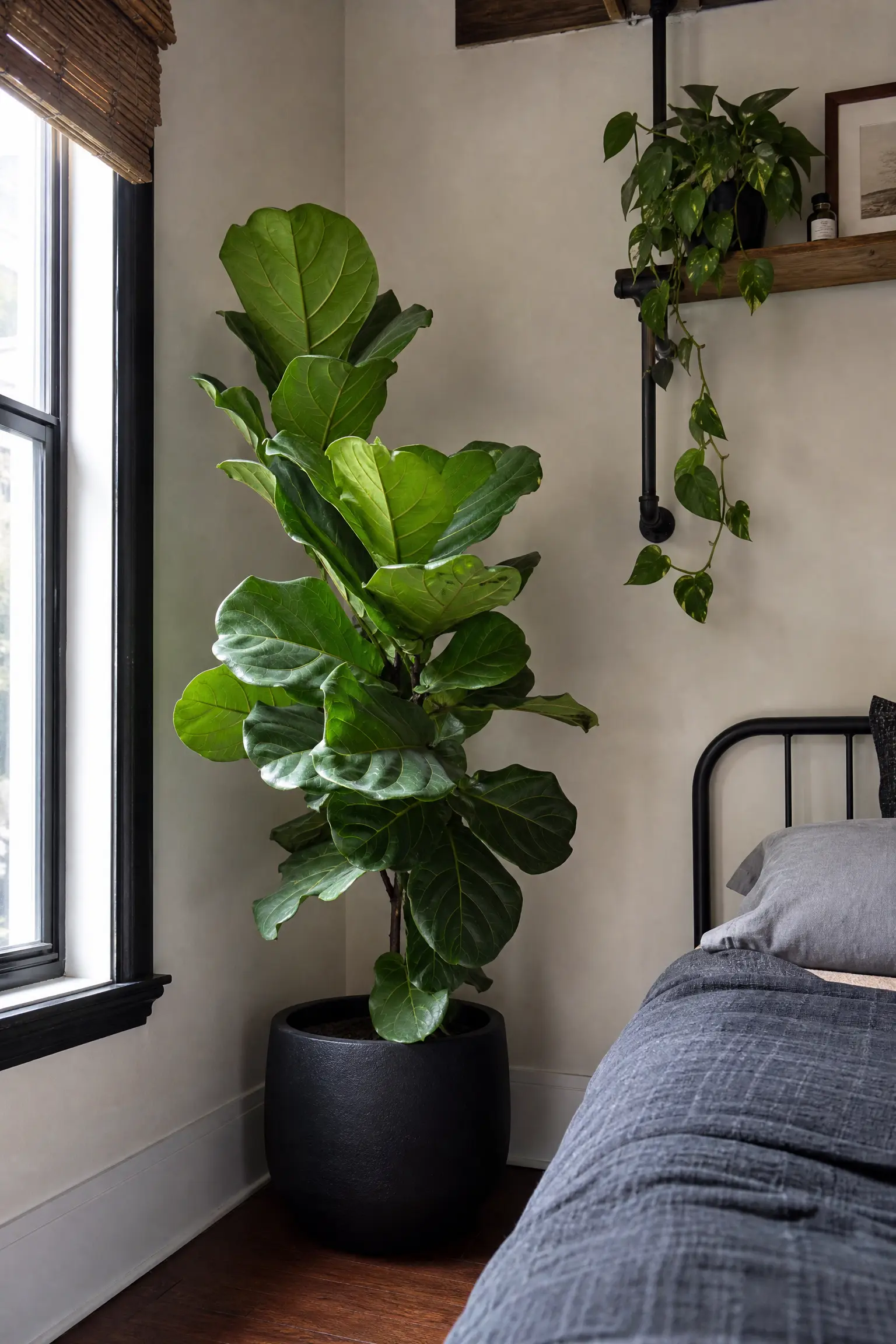
Adding plants to an industrial bedroom is one of the most effective ways to soften the overall mood without compromising the design direction. The contrast between living green foliage and the raw, man-made materials of industrial design creates a natural tension that makes rooms feel more dynamic and alive. Trailing plants work especially well in this context. A pothos or string of pearls trailing from a high pipe shelf, a large fiddle leaf fig in a concrete or black ceramic pot in the corner, or a small collection of succulents arranged on a wooden shelf all contribute warmth and organic texture without requiring significant maintenance. Industrial bedrooms, particularly those with large windows, often have the light levels that make indoor plants thrive. The containers matter here as much as the plants themselves. Concrete, matte black ceramic, terracotta, or rough-hewn wooden planters all align with the material language of the style. Avoid glazed, shiny, or decorative pots that feel inconsistent with the aesthetic. One statement plant in the right container can have more impact than a dozen smaller ones scattered around the room.
Designer Note: For industrial bedrooms with limited natural light, snake plants and ZZ plants are highly tolerant of low-light conditions and both have a structural, architectural quality that suits the aesthetic beautifully.
Final Thoughts
Industrial bedroom design is one of those styles that rewards a thoughtful, unhurried approach. The rooms that do it best are usually not the ones where everything was bought on the same day from the same place. They are the rooms where a reclaimed wood headboard was found at a salvage yard, the bedside lamp came from a second-hand shop, and the pipe shelving was built on a weekend with materials from the hardware store. That accumulation of choices, each one considered on its own terms, is what gives industrial bedrooms their authenticity.
Do not feel pressured to implement every element at once. Start with the one or two ideas that feel most natural to your existing space and budget. A great metal bed frame and a single exposed brick accent wall can establish the direction clearly. From there, the room can evolve gradually as you find pieces that genuinely fit. The 24 ideas in this article cover a wide range of approaches, moods, and price points so that there is genuinely something here for every kind of bedroom and every kind of budget. Industrial design, at its heart, is about being honest with materials and making spaces that work as hard as they look good. That is a principle worth building any bedroom around.
Frequently Asked Questions
What colors work best in an industrial bedroom?
The most common palette is built around charcoal, black, white, and warm gray tones, which reflect the raw materials the style relies on. However, industrial design also works well with warmer accent colors like rust, terracotta, forest green, and deep teal. The key is to let the raw material tones, exposed brick, concrete, dark wood, and aged metal, anchor the palette and then choose an accent color that complements rather than competes with them.
Can industrial style work in a small bedroom?
Yes, and in some ways it works better in small bedrooms than many other styles because the emphasis on open space, minimal furniture, and functional storage aligns naturally with what small rooms need. Wall-mounted shelves and floating bedside tables free up floor space. A metal bed frame with a low profile reduces visual weight. A leaner mirror helps the room feel larger. The discipline that industrial design requires, every piece must earn its place, is exactly the mindset that small bedroom decorating calls for.
How do I make an industrial bedroom feel warmer and more comfortable?
The most effective approach is layering textiles. Linen bedding, a wool or chunky knit throw, a jute or wool rug, and curtains in a heavyweight natural fabric all add warmth without undermining the industrial aesthetic. Switching to warmer bulb tones, around 2700K, makes a significant difference after dark. Adding plants and choosing warm accent colors like rust and terracotta also shift the emotional register of the room without requiring any structural changes.
What furniture materials are most authentic to industrial design?
The most authentic materials in industrial design are raw or minimally processed ones. This means solid steel, cast iron, reclaimed or rough-sawn timber, concrete, and natural stone. The guiding principle is that you should be able to see and understand what the material is and how it was made. Veneers, high-gloss finishes, and highly processed composites read as out of place in genuinely industrial spaces. When budget is a concern, furniture that uses these materials for the most visible elements, the frame, the top surface, the handles, and a simpler material behind the scenes is a perfectly reasonable approach.
Is industrial design only suitable for apartments and lofts?
Not at all. Industrial design originated in urban loft conversions but it has long since moved beyond that specific setting. It translates well into conventional houses, semi-detached homes, and rental apartments because the key elements, the furniture, lighting, textiles, and surface treatments, can be introduced without structural work. You do not need exposed brick to get the look. A brick-effect wallpaper or limewashed concrete paint achieves a convincing result in almost any room.
How is industrial style different from modern farmhouse or rustic style?
All three styles share an appreciation for natural materials and imperfection, but they come from different places. Rustic design draws on rural traditions and tends toward softer, cozier, and more decorative expressions. Modern farmhouse blends clean contemporary lines with country charm and often includes shiplap, whitewashed wood, and vintage-inspired accessories. Industrial design is rooted in urban manufacturing environments. It is less decorative, more architectural, and more focused on structural honesty. Where farmhouse feels warm and welcoming from the start, industrial design earns its warmth through careful layering.