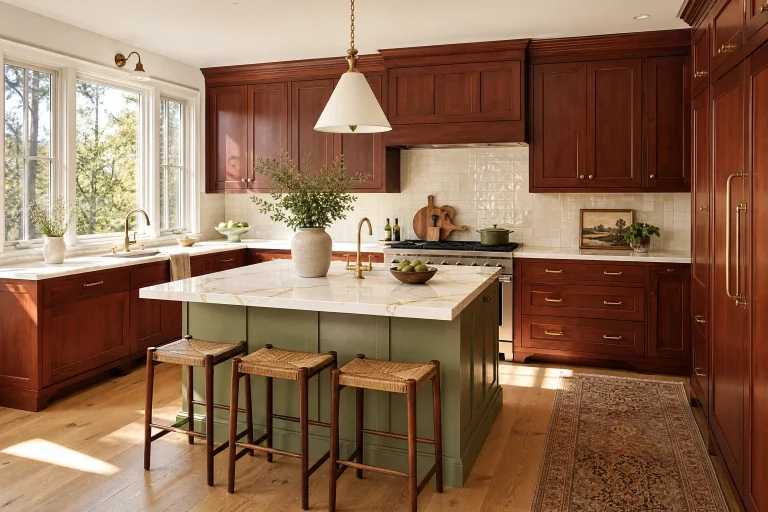
Autumn Living Room Ideas Worth Actually Trying This Season
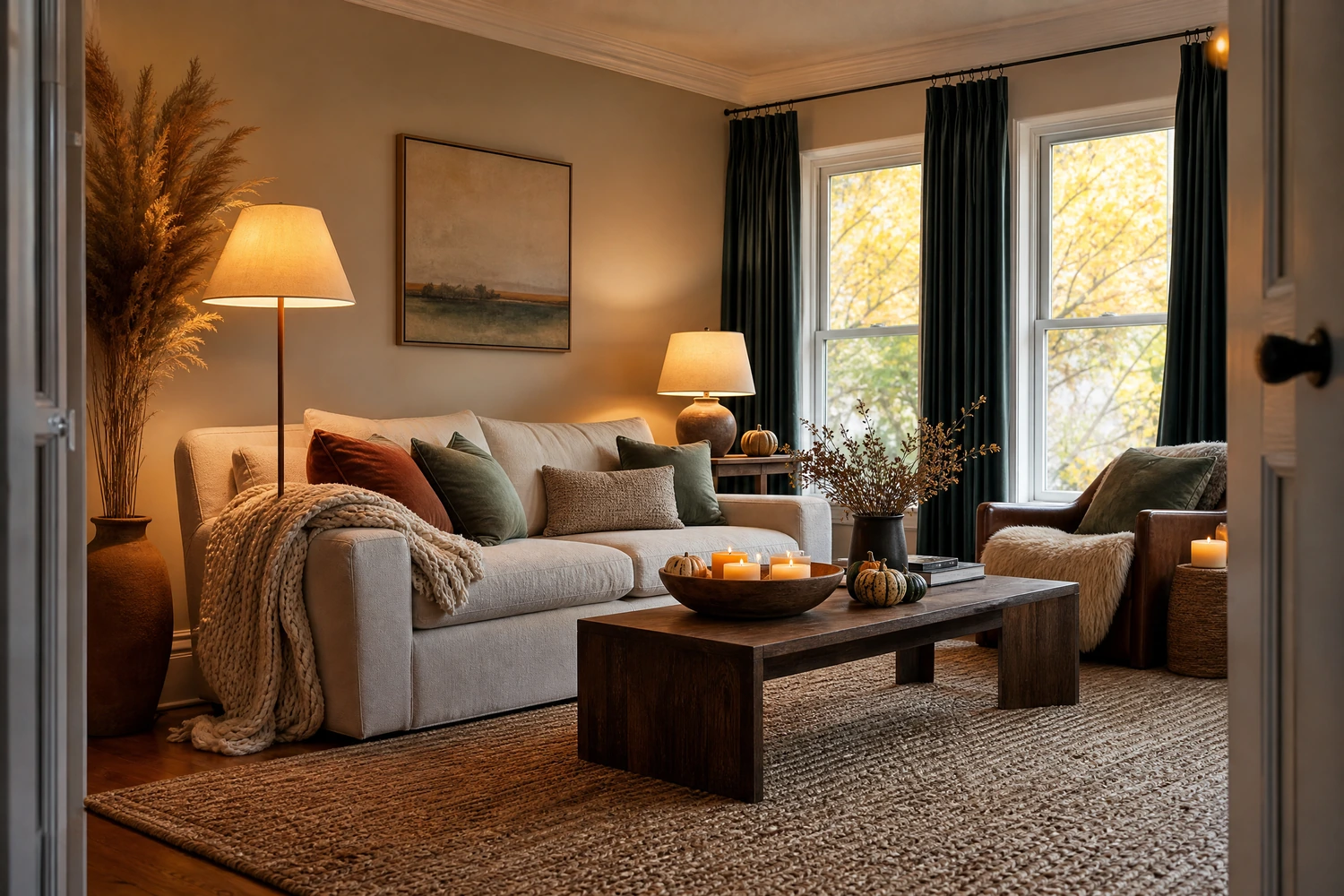
Autumn decorating does not have to mean pumpkins on every surface and orange everything. The season’s real palette is far richer: warm chestnuts and dark sage, dusty plum and aged gold, the deep rust of a turning oak leaf rather than the bright orange of a supermarket display. The ideas here are organized by category, from color and textiles through to lighting, botanicals, surfaces, scent, and statement changes, so you can identify exactly what your room is missing and work from there. Autumn decorating done well leaves no trace of effort, just a room that feels noticeably better to be in for the next three months.
CATEGORY ONE: COLOR AND PALETTE
1. Build an Autumn Palette Around One Unexpected Color
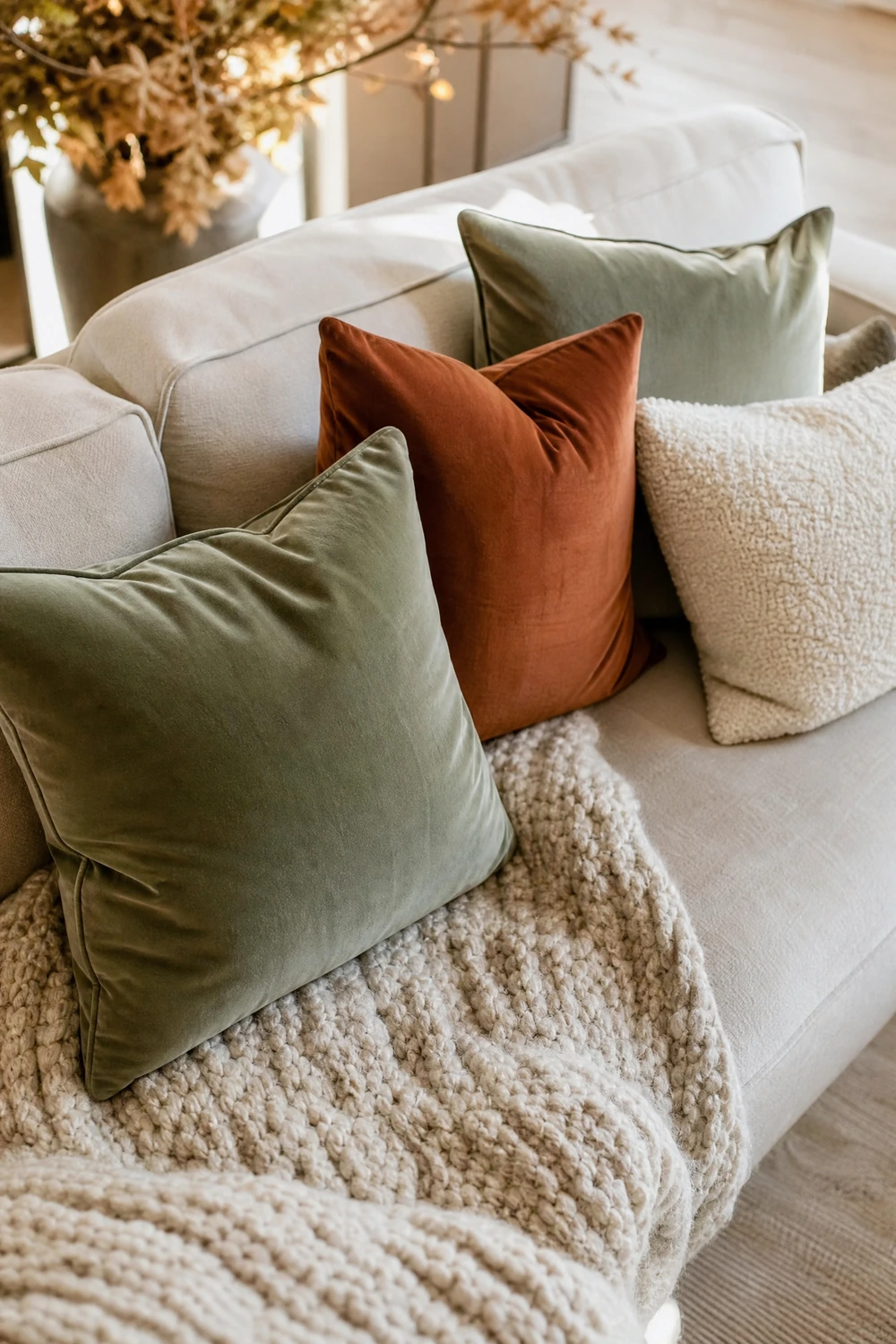
The most interesting autumn palettes skip burnt orange entirely and anchor on something less expected: a deep dusty sage, a warm plum bordering on aubergine, a faded terracotta closer to clay than pumpkin, or a dark teal that brings the depth of autumn nights rather than autumn leaves. Pick one as your anchor, add warm neutrals like linen and cream around it, and carry it across the room in two or three small objects, a candle, a vase, a cushion, so the color reads as deliberate rather than accidental.
Designer Advice: Sage green paired with rust and cream is one of the most considered autumn palettes available and one of the least used. It is warm without being heavy and seasonal without being obvious.
2. Layer Warm Neutrals Through Texture Instead of Color
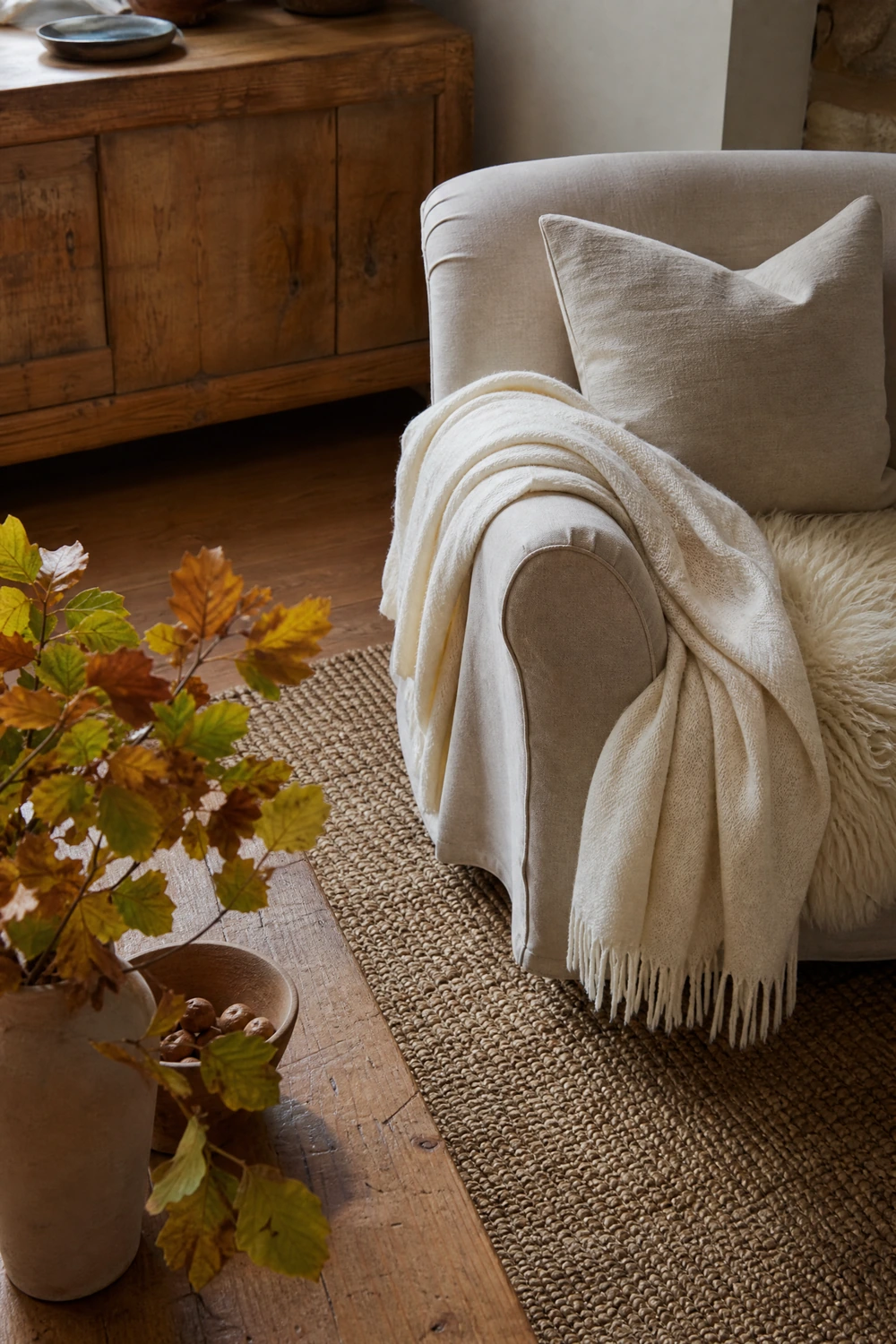
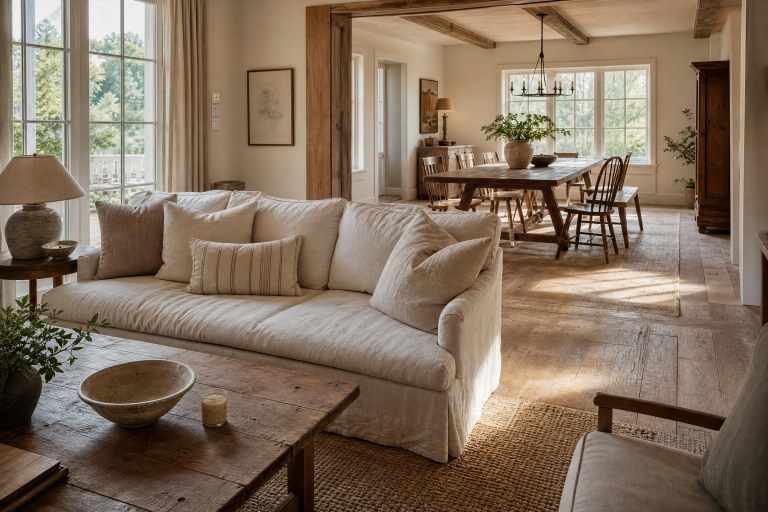
Not every room suits a full autumn color story. A subtler approach is to shift the room’s textiles from summer weights to autumn ones without changing the palette at all. Cream linen gives way to undyed wool, lightweight cotton to boucle, thin throws to chunky knits. The room reads as warmer and more seasonal purely through the density and texture of the materials, and it works in any room regardless of the existing color scheme.
Quick Tip: Store your summer textiles in vacuum bags labeled by season. Thirty minutes in September saves the same time in April and means you always know exactly what you have.
3. Introduce Deep Jewel Tones as Accent Colors
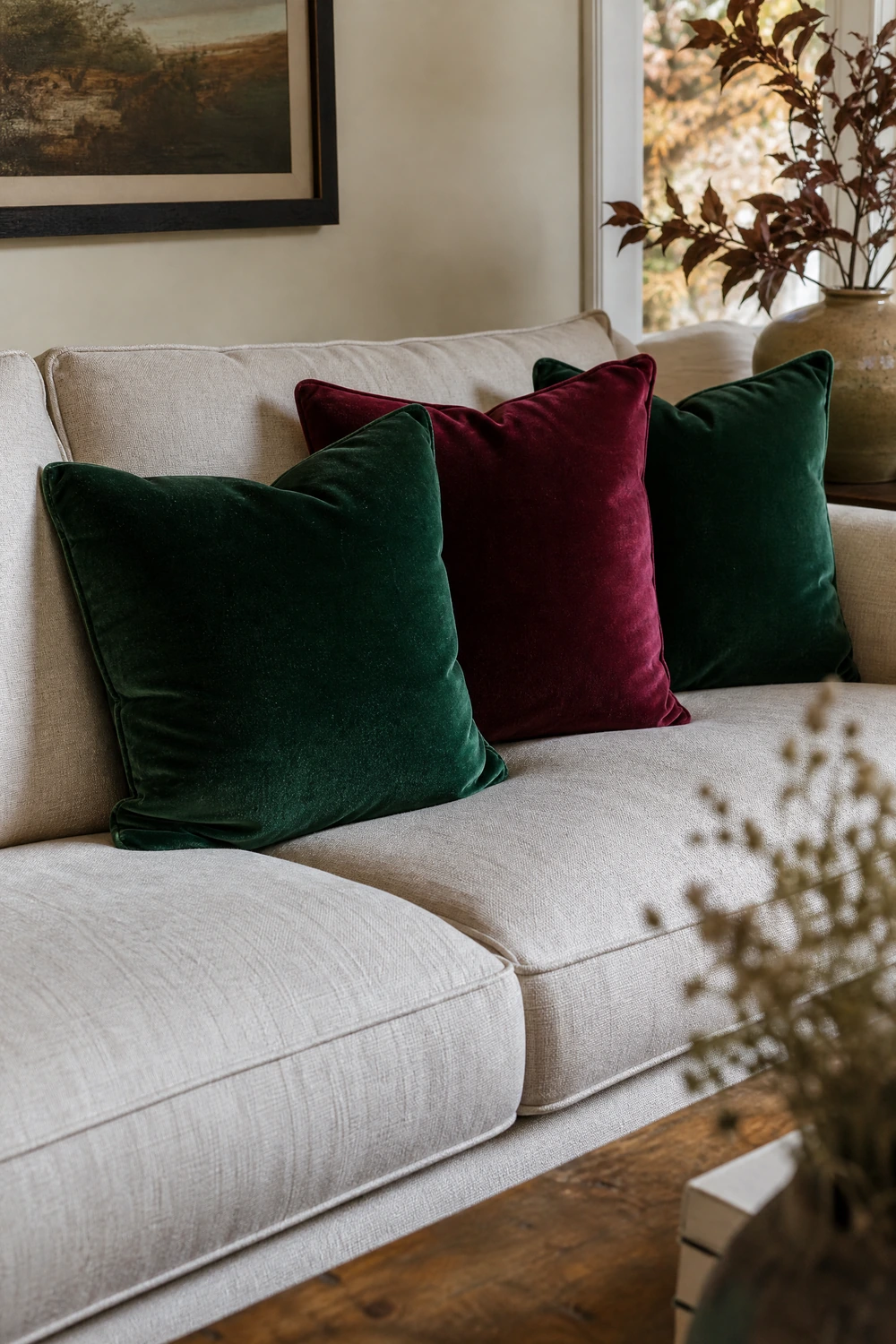
Deep emerald, rich burgundy, warm amber, and dark plum bring the depth and richness of autumn without the literal associations of pumpkins and leaves. A single velvet cushion in deep emerald on a cream linen sofa, or a pair of cushions in burgundy on an oatmeal chair, introduces the season’s mood in a way that feels considered and current. Jewel tones work in autumn specifically because of contrast: they need a quiet neutral background to read properly, and most living rooms already have exactly that.
Reality Check: A burgundy cushion on a beige sofa reads as rich and seasonal. The same cushion on a brown sofa disappears. Contrast is what makes the color do its job.
4. Swap the Rug for One in a Deeper, Warmer Tone
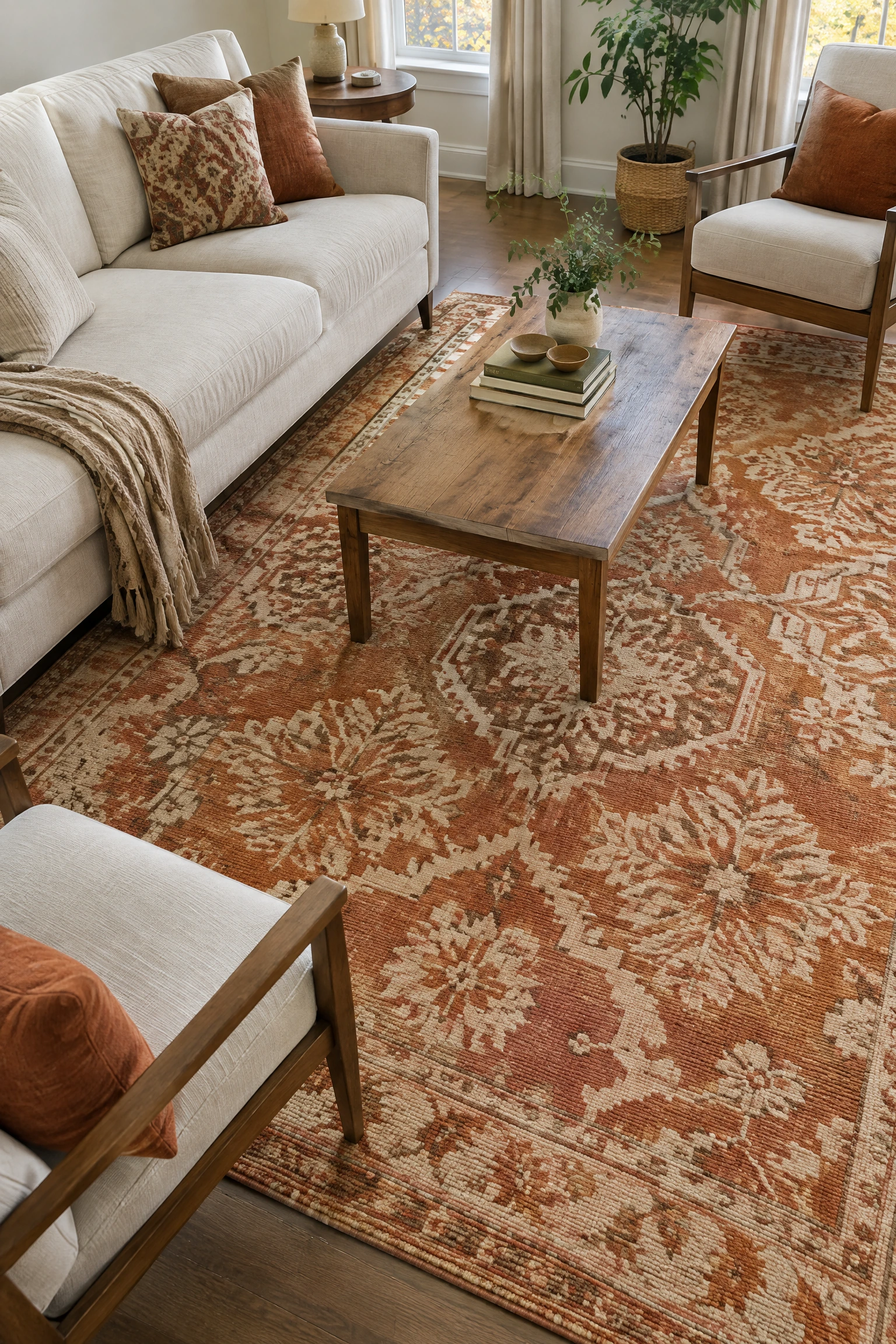
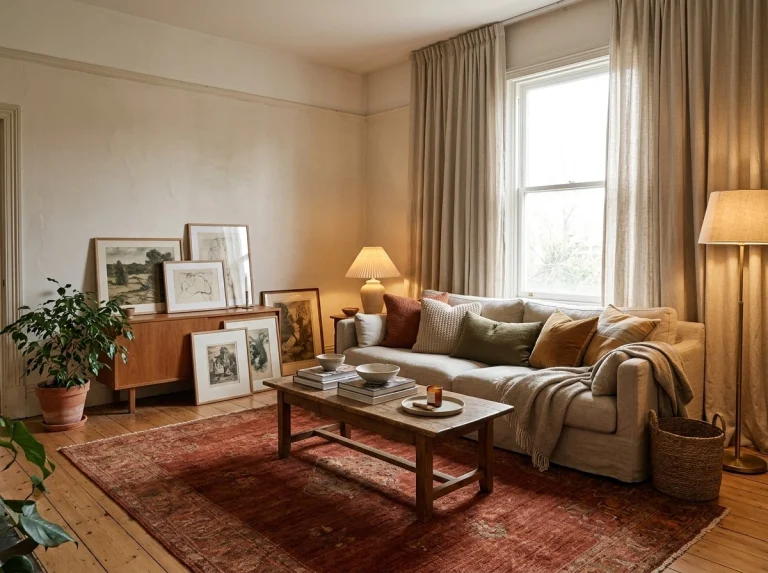
A rug anchors every element sitting above it, which makes swapping it one of the highest-impact single changes available. A rug in faded terracotta, warm caramel, a dusty burgundy, or a pattern that incorporates autumn tones shifts the entire room’s atmosphere downward into warmth in a way that no amount of cushion-swapping fully achieves. If a second rug is out of budget, layer a smaller patterned piece in an autumn tone over the existing neutral rug: it reads as a design choice and adds seasonal warmth at a fraction of the replacement cost.
Pro Move: Choose a rug pattern that includes both the seasonal tones and the room’s existing neutrals. A Moroccan-style piece in rust, cream, and charcoal bridges the gap without the two feeling disconnected.
CATEGORY TWO: TEXTILES AND LAYERING
5. Swap Cushion Covers, Not the Cushions
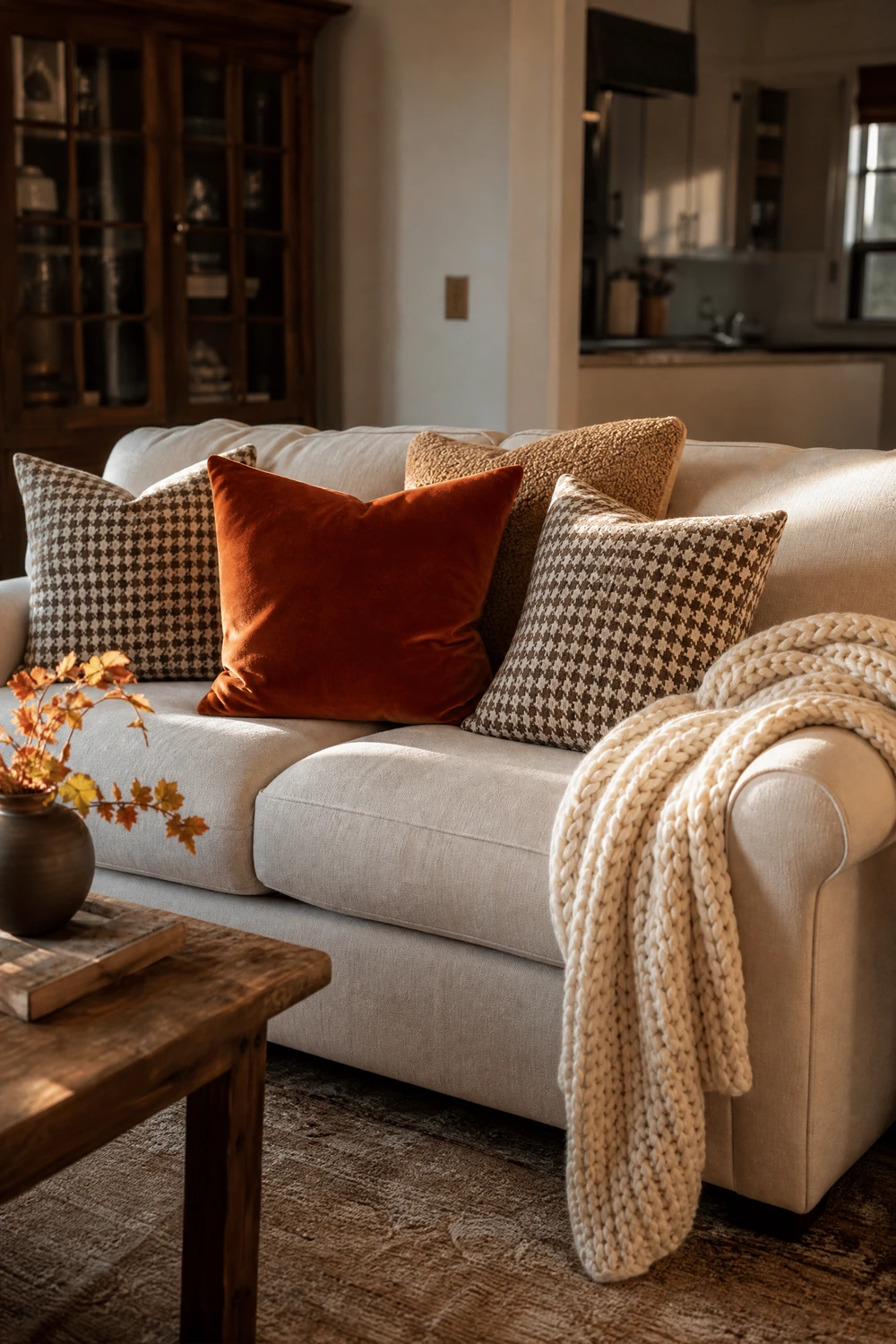
Cushion inserts are an unnecessary seasonal expense. A well-filled insert reused year after year with covers swapped in and out is the most cost-effective approach to seasonal textile updating in any living room. For autumn, the most effective covers are in materials with seasonal weight: deep velvet in a jewel tone, a wool blend in a check or houndstooth, a boucle in warm caramel, or an embroidered linen with a botanical motif. A mix of two or three textures in the same color family reads as layered and considered rather than matched and bought-as-a-set.
Heads Up: Buy cushion inserts one size larger than the cover. A 20-inch cover over a 22-inch insert looks plump and expensive. The same cover over a matching insert looks flat.
6. Layer a Chunky Knit Throw Over One Arm of the Sofa
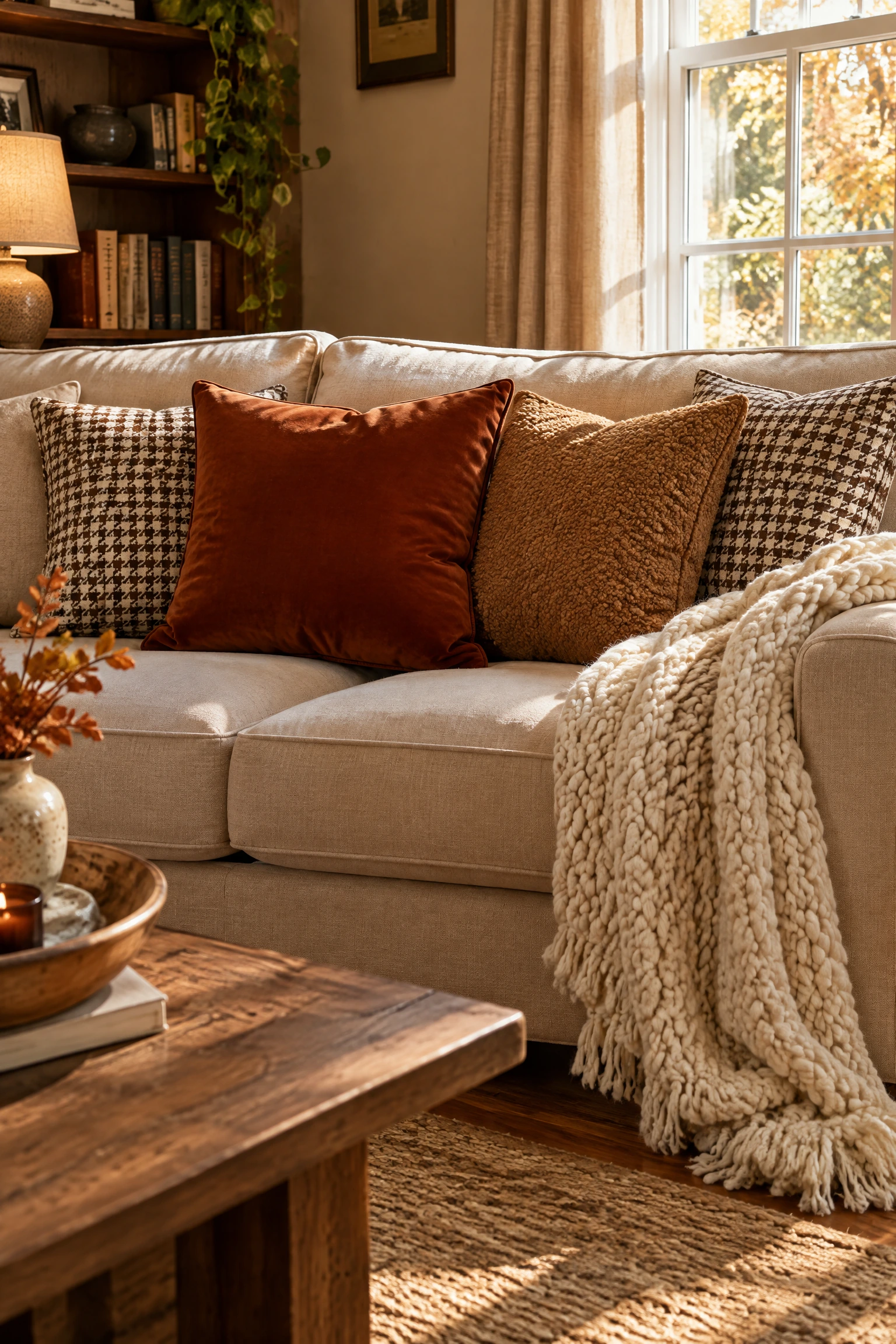
A chunky knit throw communicates warmth through texture before anyone has touched it. The visual weight of a thick cable or basketweave pattern draped loosely over one arm of the sofa, in warm cream, natural grey, caramel, or deep rust, is the single most immediately effective autumn addition to a living room. The draping matters: a neatly folded throw placed symmetrically looks arranged rather than lived-in. One casually draped corner, slightly unfolded as if someone just used it, is what makes a room feel genuinely welcoming rather than staged.
Designer Advice: One large, generous throw does more for a sofa than two smaller ones. A throw too small to wrap around a person looks decorative rather than functional and loses the cozy quality that makes it seasonally effective.
7. Add a Plaid or Check Pattern to the Mix
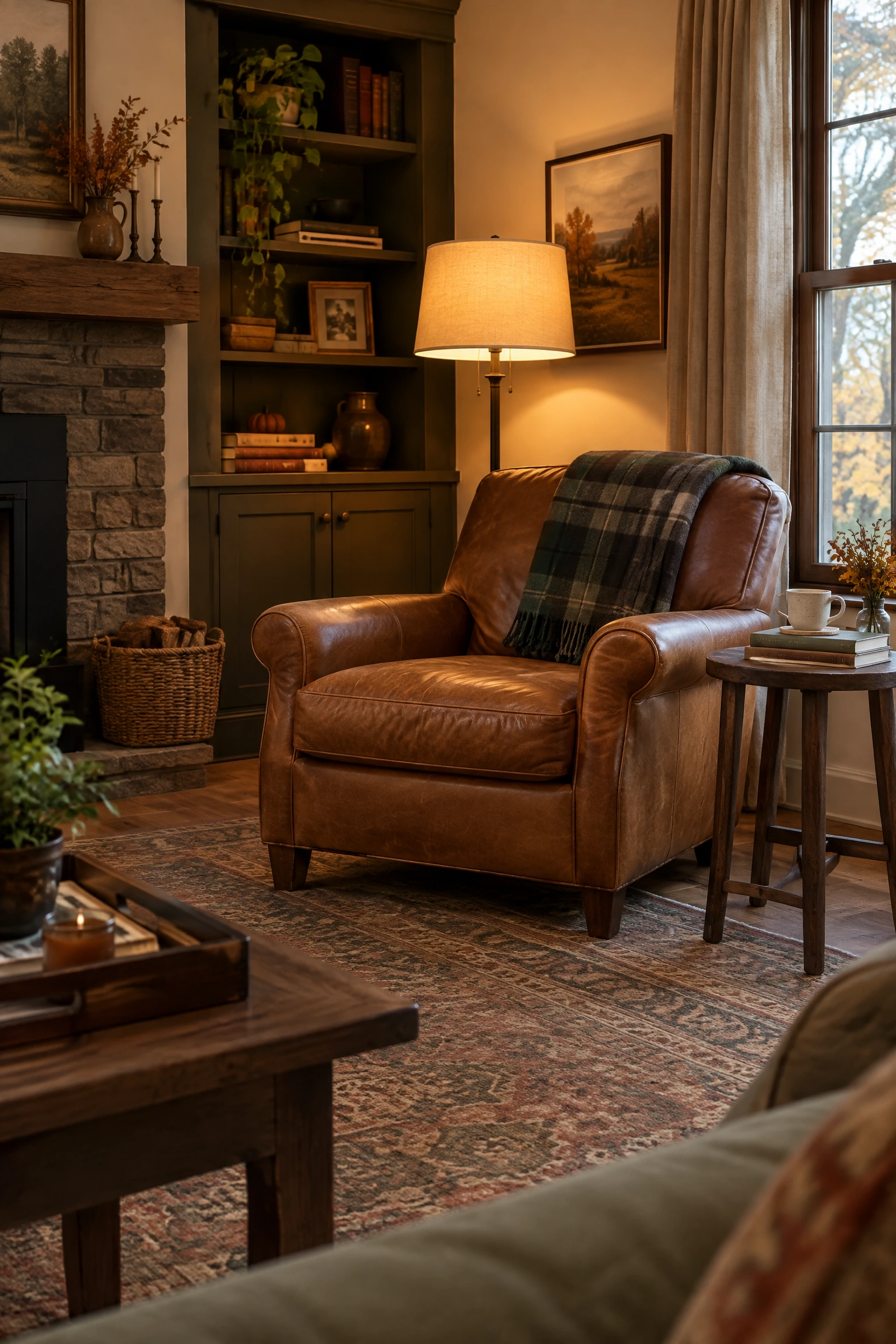
Plaid and check patterns are among the most reliably seasonal textile motifs available, functional and decorative simultaneously. A plaid blanket on a reading chair, a houndstooth cushion cover, or a tartan throw brings the pattern into the room without making it a theme, provided it appears in one or at most two places. The most wearable plaid palettes for autumn interiors are muted and heathered: dark green and charcoal, rust and cream, dusty blue and warm brown, rather than the primary-colored plaids that read as festive rather than seasonal.
Reality Check: If the room already has a patterned rug or upholstery, keep plaid to one piece only. Two strong patterns compete rather than complement, and the result reads as busy regardless of how attractive each piece is individually.
8. Bring in a Sheepskin or Faux Fur for Tactile Warmth
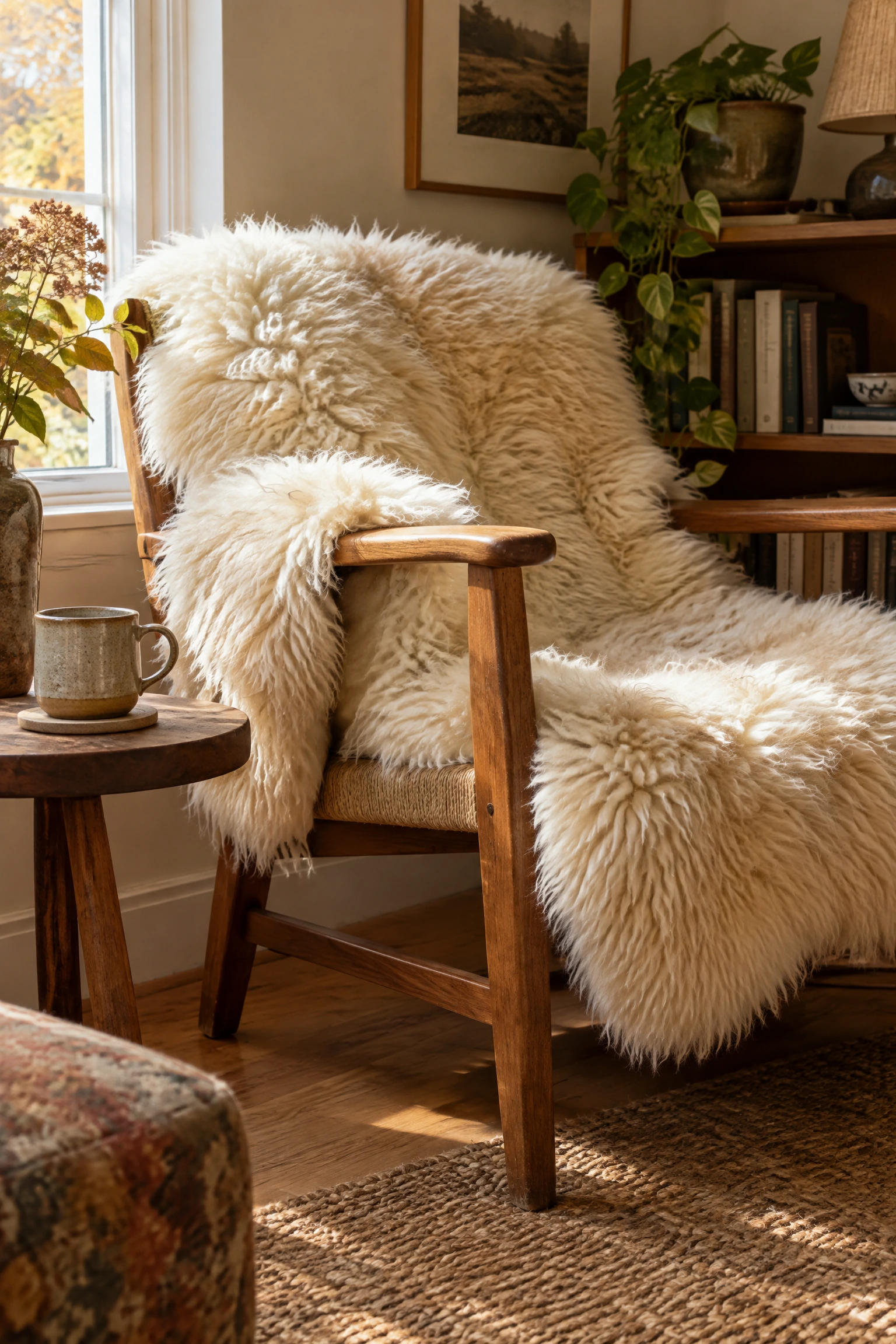
A sheepskin or high-quality faux sheepskin draped over the seat of a reading chair or placed on the floor beside the sofa adds a layer of tactile warmth that no other material quite replicates. The fluffy, organic texture catches light differently throughout the day and softens whatever surface it is placed on, making a wooden or rattan chair feel like an invitation to sit rather than a piece of furniture that is merely present. Real sheepskin in natural cream or grey ages beautifully over multiple seasons. A small sheepskin placed on top of the existing rug in front of the sofa adds seasonal softness without a full rug swap.
Quick Tip: Shake out a sheepskin or faux fur weekly through the season. A flattened, matted pile loses the textural quality that makes it work and reads as tired rather than cozy.
9. Swap to Heavier, Lined Curtains
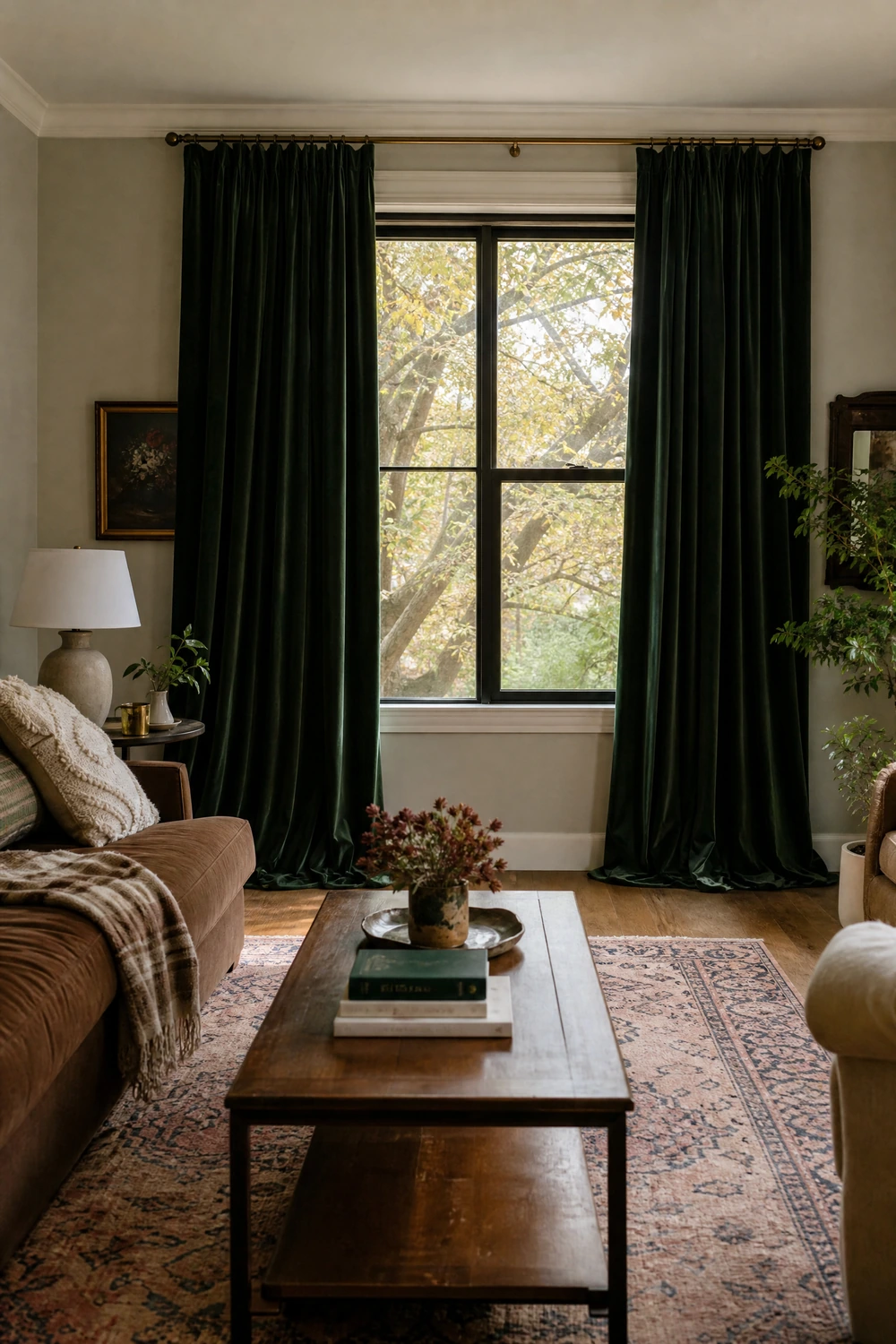
Moving from lightweight linen or cotton to a heavier, lined curtain in autumn immediately changes how the room feels: warmer, more enclosed, more cocooning. Velvet curtains are the most dramatic option: a dusty blush, deep forest green, warm caramel, or dark teal panel absorbs light rather than reflecting it, making the room feel more intimate and suited to shorter, darker days. Thermal lining added to any curtain improves both insulation and drape simultaneously, making the panel hang with more weight and a cleaner fall regardless of the outer fabric.
Pro Move: Velvet curtains earn their place in autumn because this is when curtains are actually closed for several hours every evening. Unlike summer, when curtains are open and essentially invisible for most of the day, autumn curtains are a featured element of the room worth investing in.
CATEGORY THREE: AUTUMN LIGHTING
10. Switch to Warm White Bulbs Across Every Lamp
Any bulb above 3000K produces light that works against autumn’s warm mood and makes the room feel flat and slightly blue even when the textiles and colors are doing everything right. Replacing all bulbs with warm white LEDs in the 2700K range is a ten-minute change that immediately shifts the room’s evening atmosphere. It is the lighting equivalent of swapping a thin cotton throw for a chunky knit: the difference is immediate and felt throughout the season every time the lamps go on after dark.
Quick Tip: Dimmable bulbs are worth the small additional cost in a living room used through autumn and winter evenings. Lowering the light level by 30 to 40 percent ultimately shifts the room from active to restful without switching anything off.
11. Style the Coffee Table With a Cluster of Candles
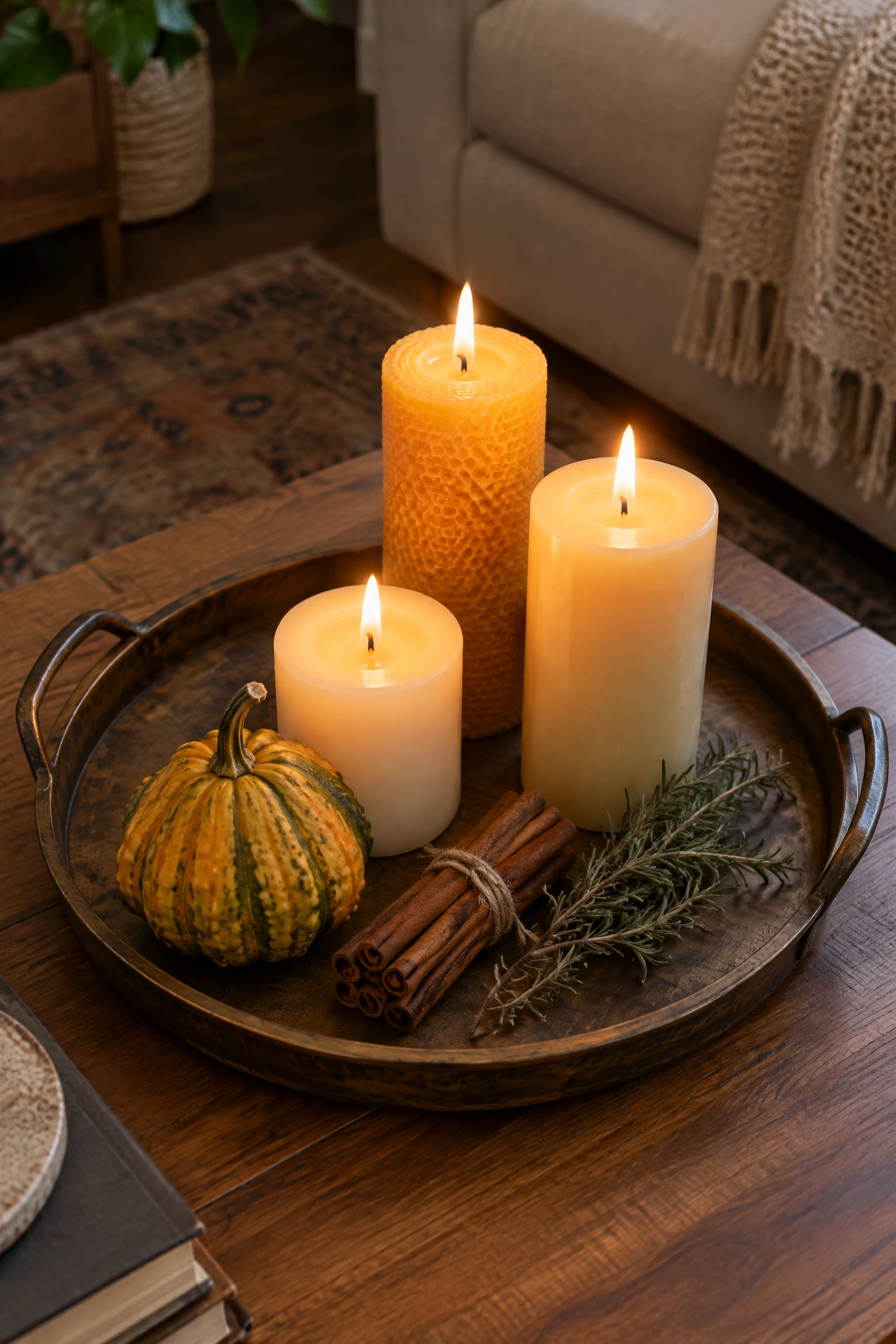
Candles on a coffee table produce light that is qualitatively different from any electric source: it moves, flickers, and casts warm, shifting pools that make the room feel like it is breathing rather than statically lit. Three pillar candles of different heights grouped on a tray, in warm cream, beeswax, or amber, create a focal point on the coffee table that works both decoratively and atmospherically. For scent, avoid sweet pumpkin spice and choose warm, complex base notes instead: cedarwood, amber, dark musk, or spiced black tea are more effective in a living room over an evening.
Heads Up: Always trim wicks to a quarter inch before relighting. An untrimmed wick produces a large, sooty flame that burns the candle unevenly and smells significantly worse than a well-maintained one.
12. Add String Lights Into a Botanical or Shelf Display
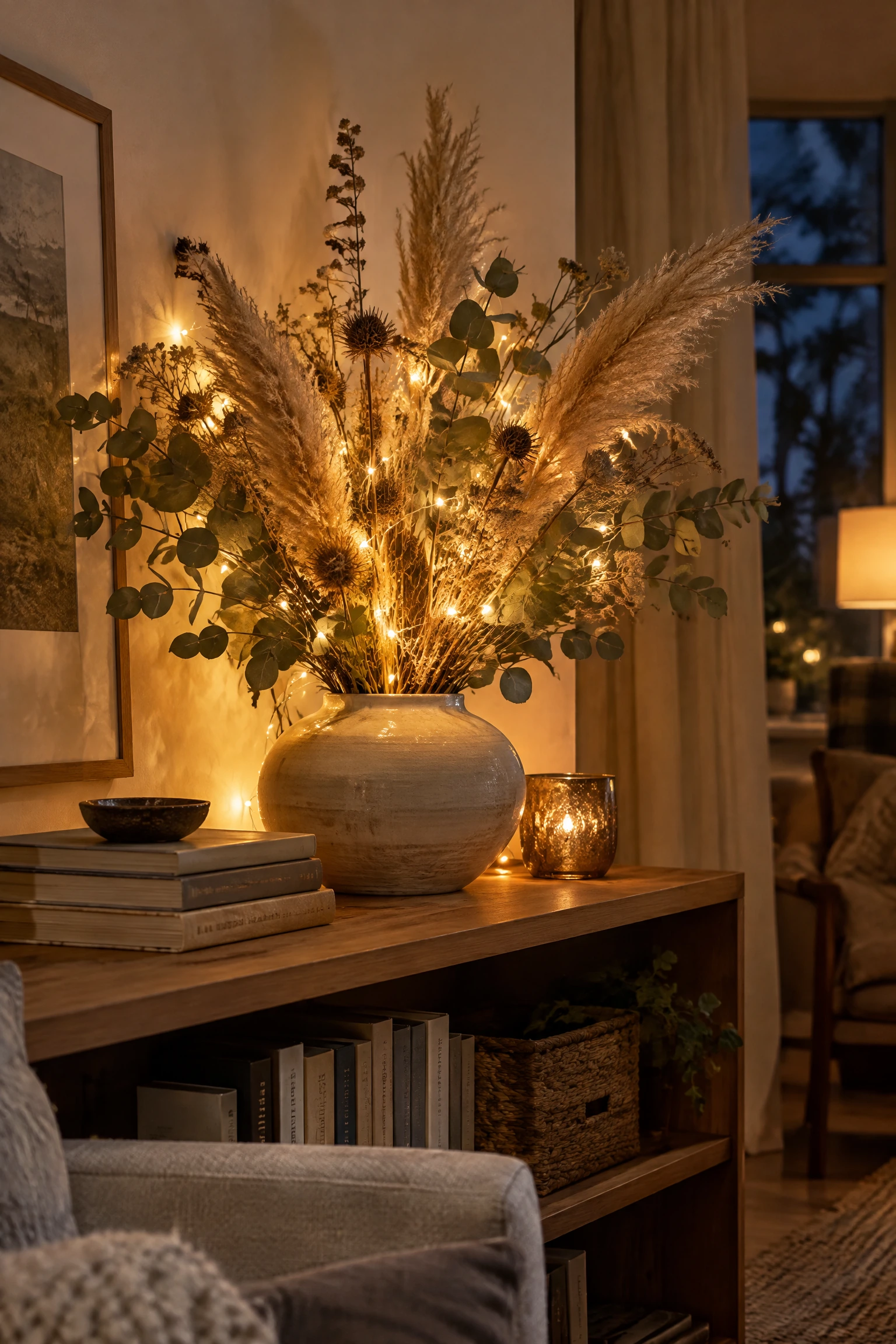
Warm white fairy lights woven through a dried botanical display, coiled inside a large glass vase, or draped along a mantel shelf add a soft, multi-point glimmer that no single lamp can replicate, and in the darker months of autumn they make a meaningful difference to how warm the room feels after sundown. The placement is everything: string lights integrated into a styled arrangement, threading through dried pampas behind a row of objects on a shelf, read as a design element. The same lights drooped from a curtain rail read as a decoration left up from a party.
Designer Advice: Use plug-in string lights rather than battery-operated ones for arrangements that will run regularly through the season. The light quality is more consistent and they do not run out at inconvenient moments.
13. Style a Lantern or Hurricane Glass With a Candle Inside
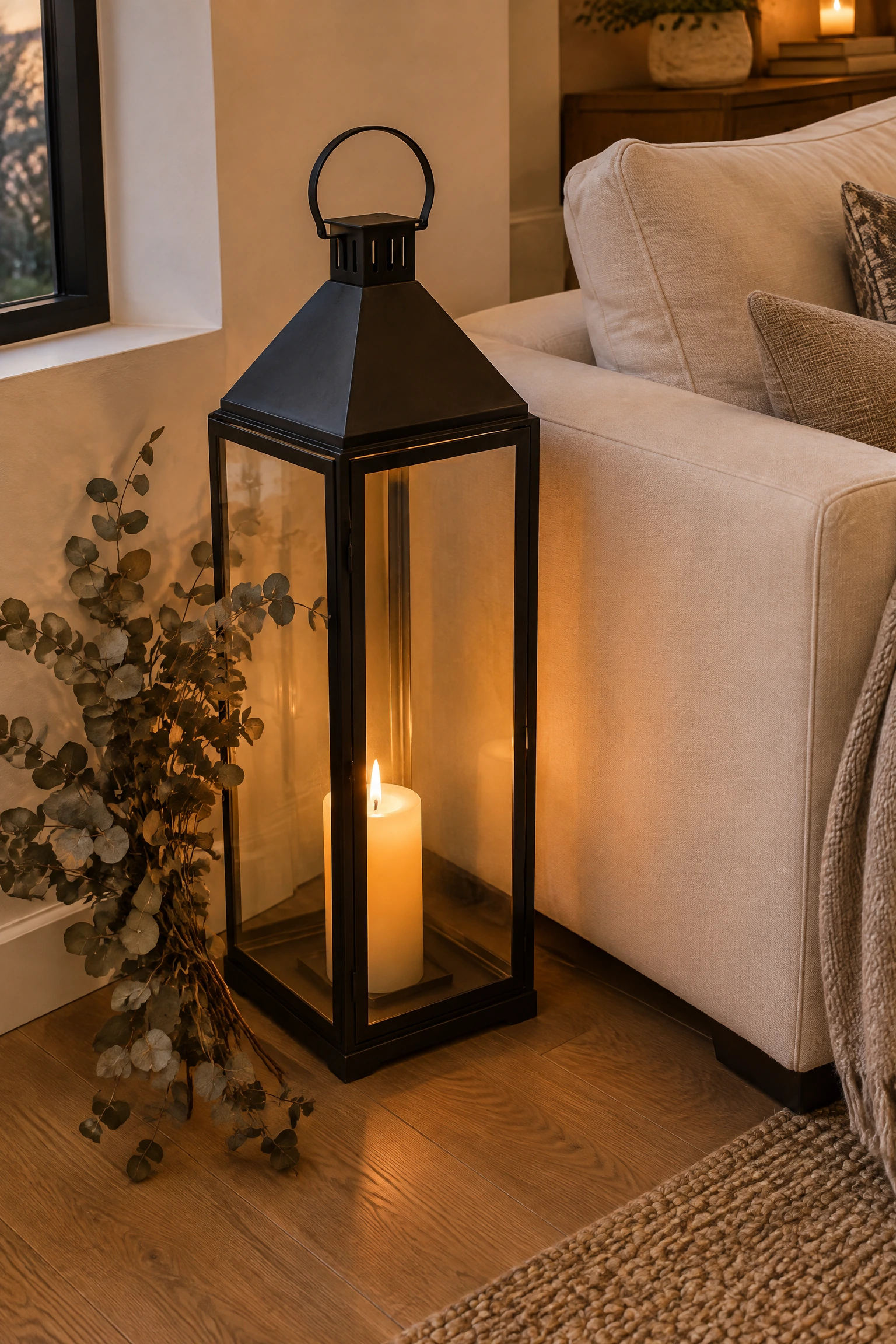
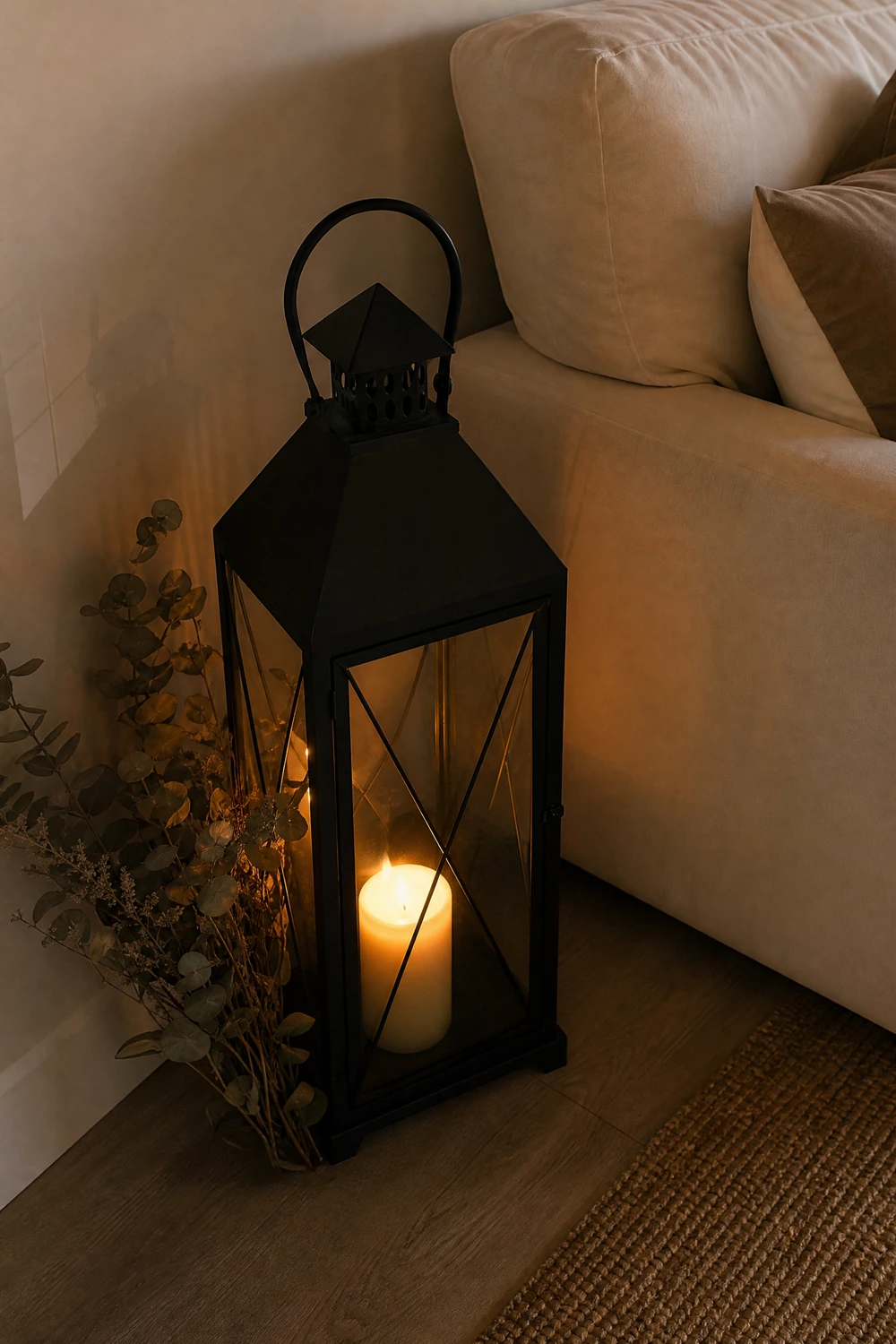
A large glass lantern or hurricane vase with a single pillar candle inside combines the warmth of candlelight with the visual presence of a decorative object. The glass disperses the candle’s light and makes the flame visible from across the room, and the container gives the arrangement a sculptural quality that a bare candle on a plate does not have. The interior of the lantern can be dressed seasonally without replacing it: cinnamon sticks and dried leaves in early autumn, small pine cones and seed heads through the season, dried orange slices as it deepens toward winter.
Reality Check: A large floor-standing lantern reads as a design statement. A small one reads as an accessory. In a living room, the floor version is the more impactful choice because it occupies vertical space at a height that creates warmth when you are seated.
CATEGORY FOUR: BOTANICALS AND NATURAL ELEMENTS
14. Build a Dried Botanical Display in a Large Floor Vase
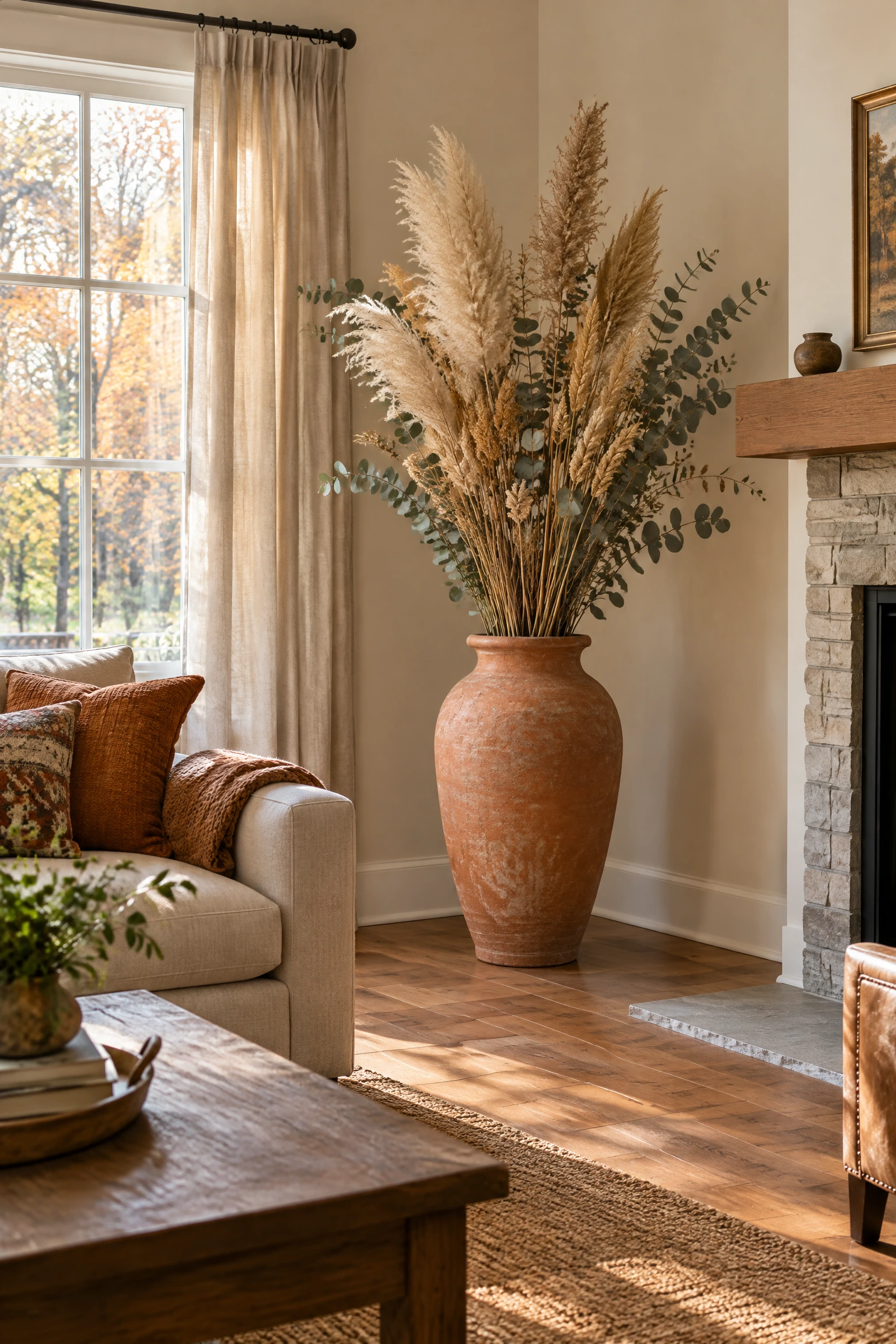
A tall floor vase, at least 24 inches, filled with dried pampas grass, dried wheat stems, preserved eucalyptus, and dried lunaria arranged generously rather than sparingly, is one of the most striking autumn additions available to a living room. It provides vertical interest that no other seasonal object offers, and it improves as the season progresses because the materials continue to dry and deepen in color. The vessel matters as much as the arrangement: a wide-mouthed ceramic, a substantial terracotta pot, or a dark stoneware jug gives the arrangement the visual weight it needs to read as intentional rather than incidental.
Pro Move: Mix heights and textures within the arrangement: full pampas heads at the top, dried wheat at mid-height, shorter seed heads below. The layered, gathered quality is what makes it look put-together rather than bought as a bunch and dropped in a vase.
15. Arrange Seasonal Branches in a Wide-Mouthed Vase
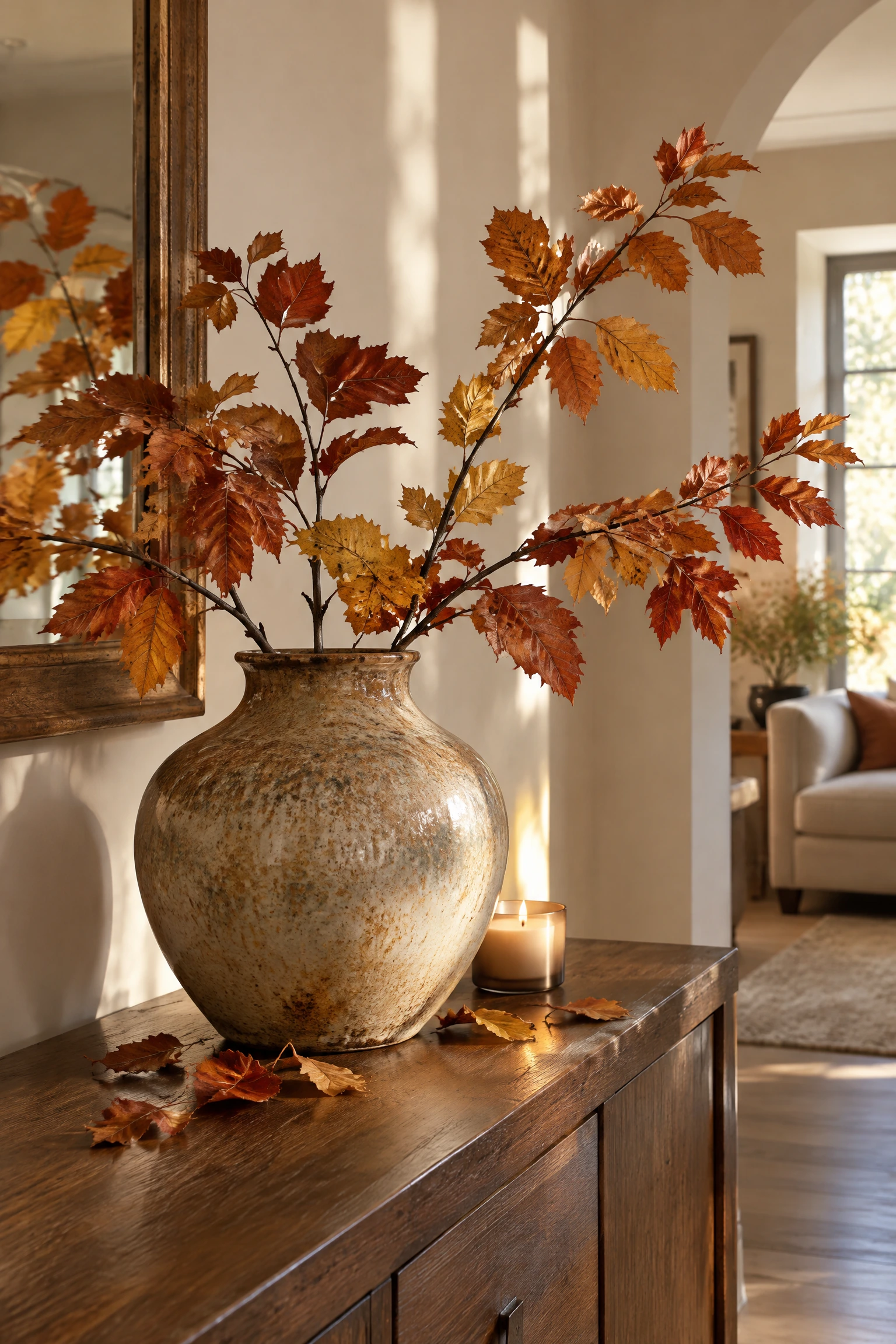
Five or six branches of autumn-turning beech, oak, hornbeam, or copper-leaved Japanese maple arranged in a wide ceramic vessel large enough to hold them without crowding creates a nature-installation quality that is deeply autumnal without any formal staging. The leaves will fall over the arrangement’s life and the bare branches that remain are equally beautiful in a different way, giving the piece a second seasonal life through late autumn and into early winter without any additional investment. Preserved branches in copper and rust tones are widely available where cutting is not possible.
Heads Up: Change the water every two days in a fresh branch arrangement and cut an inch from each stem at a 45-degree angle when you do. This extends the life significantly and keeps the water from becoming cloudy.
16. Style with Heritage Pumpkin and Gourd Varieties
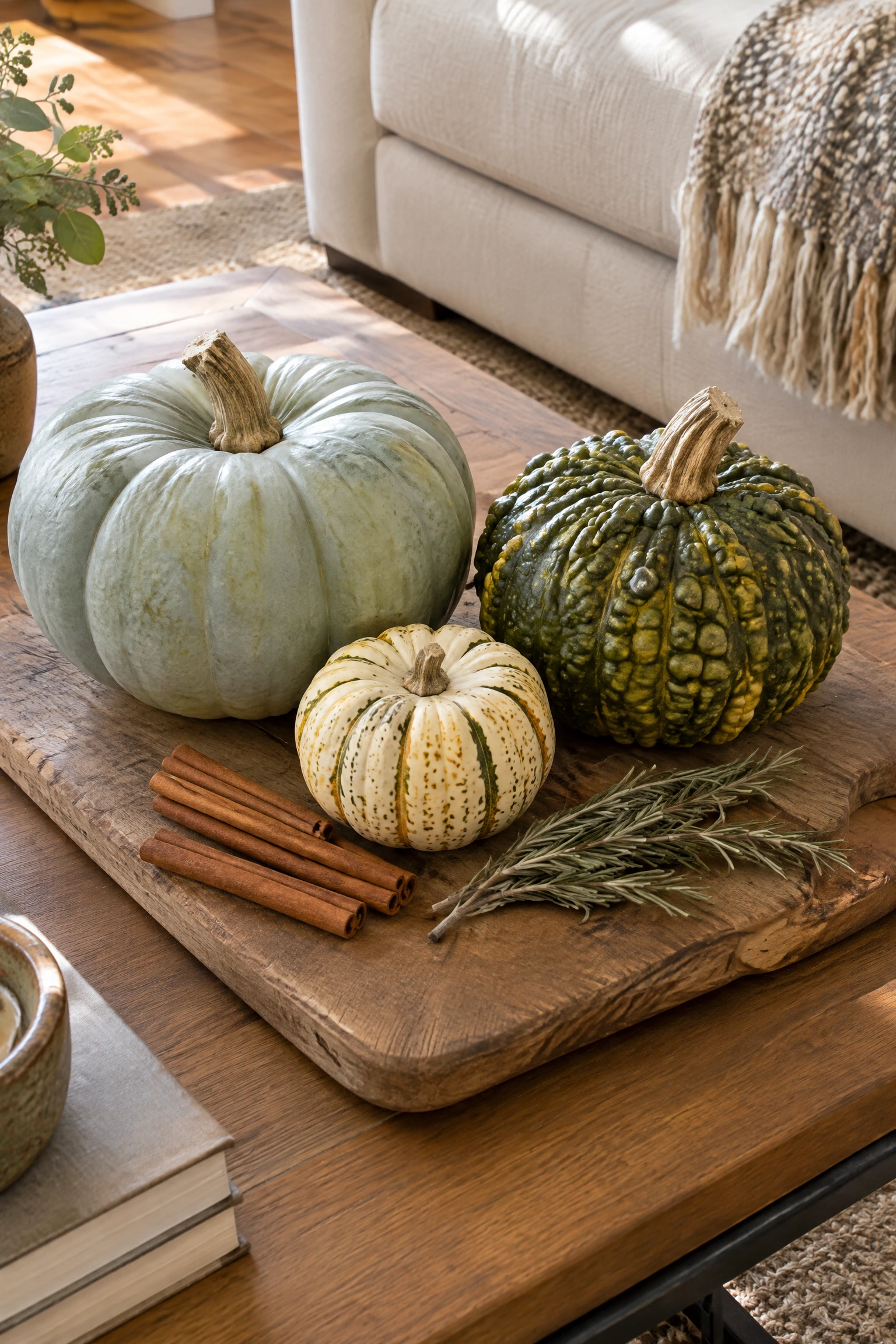
The category of gourds and heritage pumpkin varieties is far more interesting than the standard orange sphere. Crown Prince in pale blue-green, Knucklehead in warty green and orange, Midnight Beauty in almost black, and small cream and green speckled Casperitas each bring a different texture and palette to a seasonal arrangement. Styled together in a shallow bowl on the coffee table or arranged on a wooden board, mixed with cinnamon sticks and dried rosemary, they read as a considered seasonal vignette rather than a produce display.
Designer Advice: Avoid artificial pumpkins and gourds. The quality is rarely convincing in person and the real versions, which are inexpensive, are always more beautiful. Replace them mid-season rather than using faux alternatives.
17. Fill a Bowl With Foraged Seasonal Materials
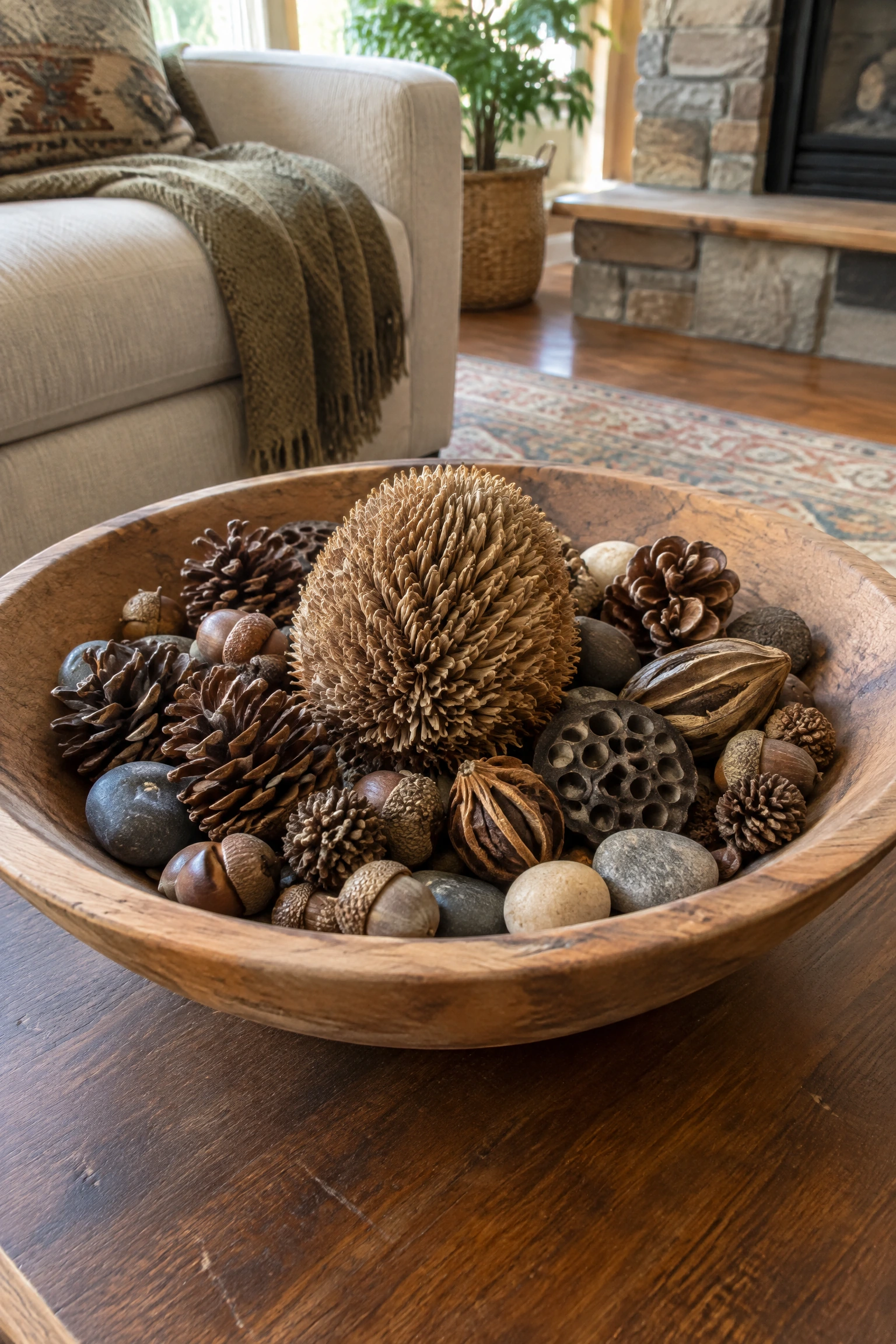
A wide, shallow bowl or wooden tray filled with pine cones of different sizes, acorns still in their caps, dried seed pods, smooth stones, and a handful of dried moss creates a nature-table quality that feels deeply autumnal at minimal cost. The bowl itself should be substantial, a wide ceramic, a turned wooden vessel, or a shallow rattan tray, and the contents should be generous enough to have visible depth rather than scattered thinly across the surface. One larger focal element, a piece of textured bark or a single large dried seed head, gives the arrangement a hierarchy that prevents it reading as simply things picked up from the ground.
Quick Tip: Bake pine cones collected from the ground at 200 degrees Fahrenheit for thirty minutes before bringing them indoors. They open up beautifully, smell wonderful, and are ready for display without concerns about insects or moisture.
18. Add a Statement Plant in a Dark or Textured Pot
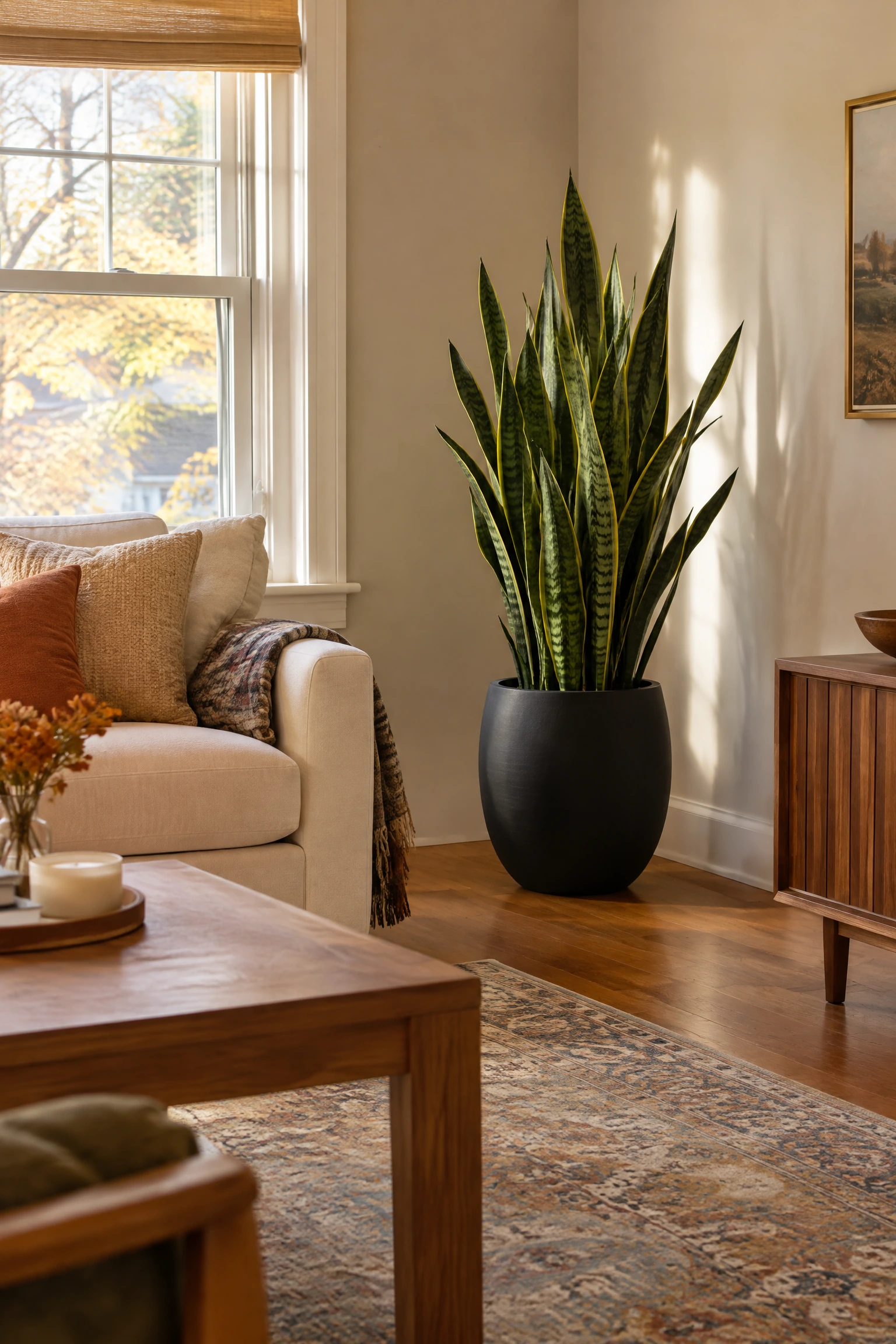
Autumn is when a living room plant in a dark, textured pot reads most beautifully, because the depth of a matte black ceramic, a dark charcoal planter, or a ribbed terracotta sits naturally within the season’s palette. Any well-kept indoor plant in a well-chosen pot reads as part of an autumn arrangement: a large snake plant or ZZ plant in dark ceramic, a fiddle leaf fig in a wide ribbed terracotta, or a monstera in a hand-thrown stoneware piece each add organic scale and grounded warmth. Reduce watering frequency by roughly a third from summer levels as the growing season ends.
Reality Check: One large, healthy plant in a good pot does more for a room than four small ones in mismatched containers. The pot matters as much as the plant itself.
CATEGORY FIVE: SURFACES AND VIGNETTES
19. Create an Autumn Mantel Arrangement
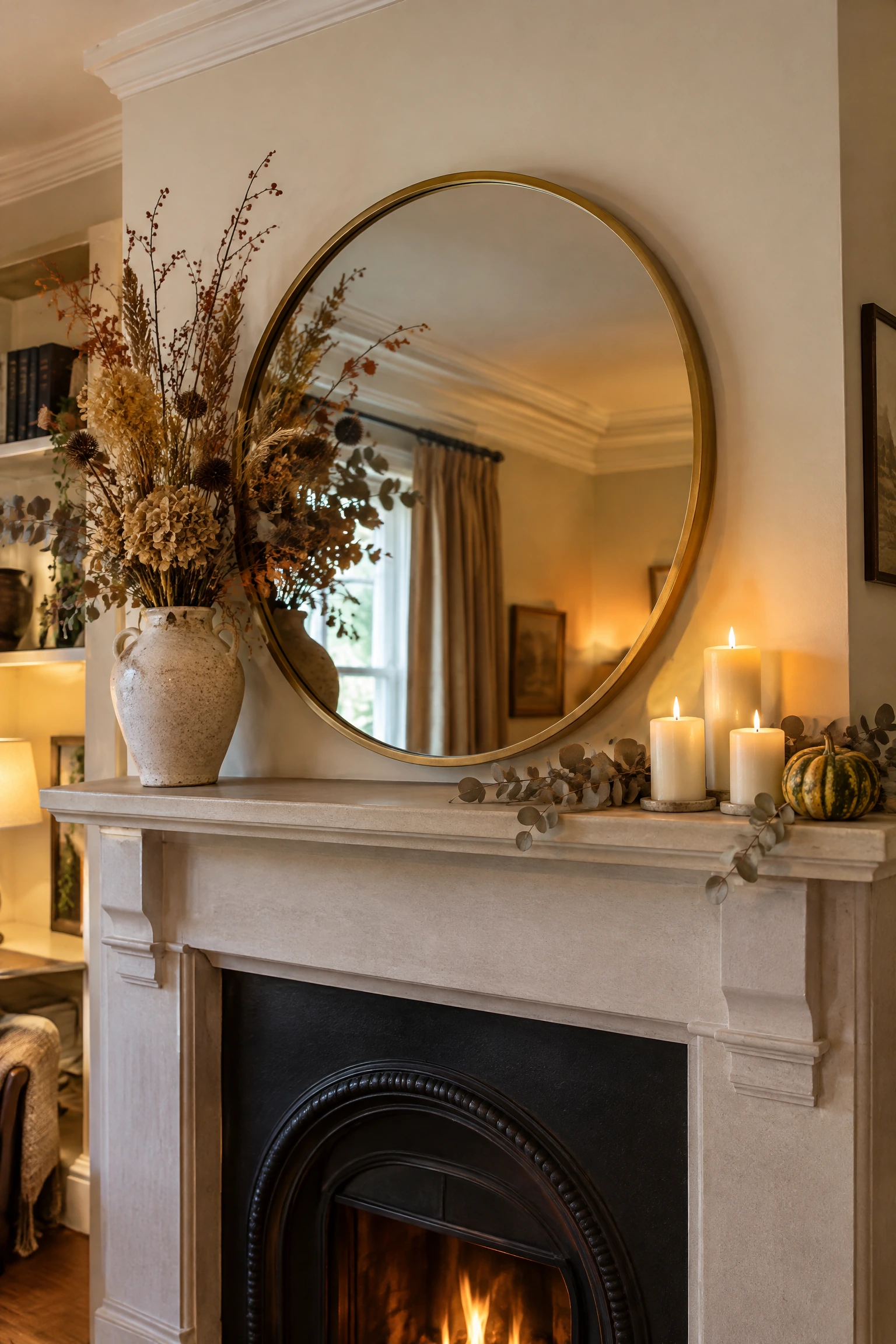
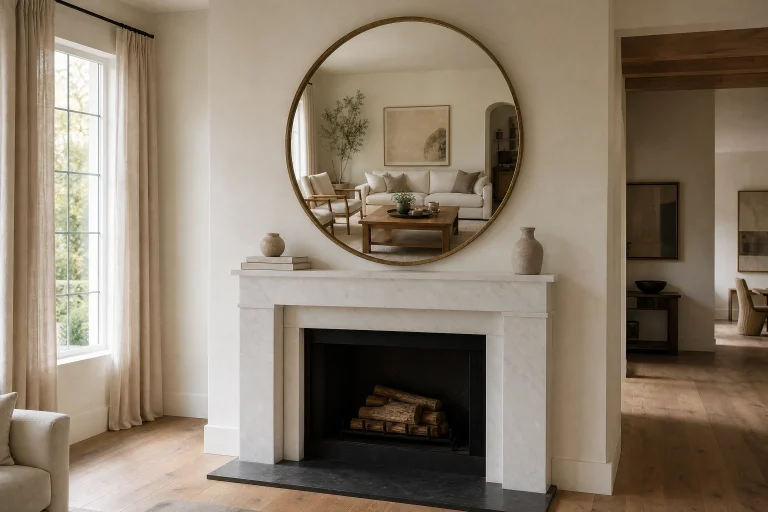
The mantel is the most naturally suited surface in a living room for seasonal decoration: positioned at eye level, centered on the primary focal point, with visual depth to hold a layered arrangement without cluttering. An effective autumn mantel has a clear central element, a large mirror or art piece leaning against the chimney breast, flanked by an asymmetrical grouping of objects, a cluster of candles on one side, a dried botanical arrangement on the other, with one or two smaller objects, a small gourd, a sprig of dried eucalyptus, a piece in warm metal, bridging the arrangement at the front.
Pro Move: Build a mantel arrangement from back to front: the tallest pieces against the wall first, medium objects in front of those, the smallest pieces at the front. This layering creates depth that a flat, single-plane arrangement cannot achieve.
20. Style the Coffee Table as a Seasonal Centerpiece
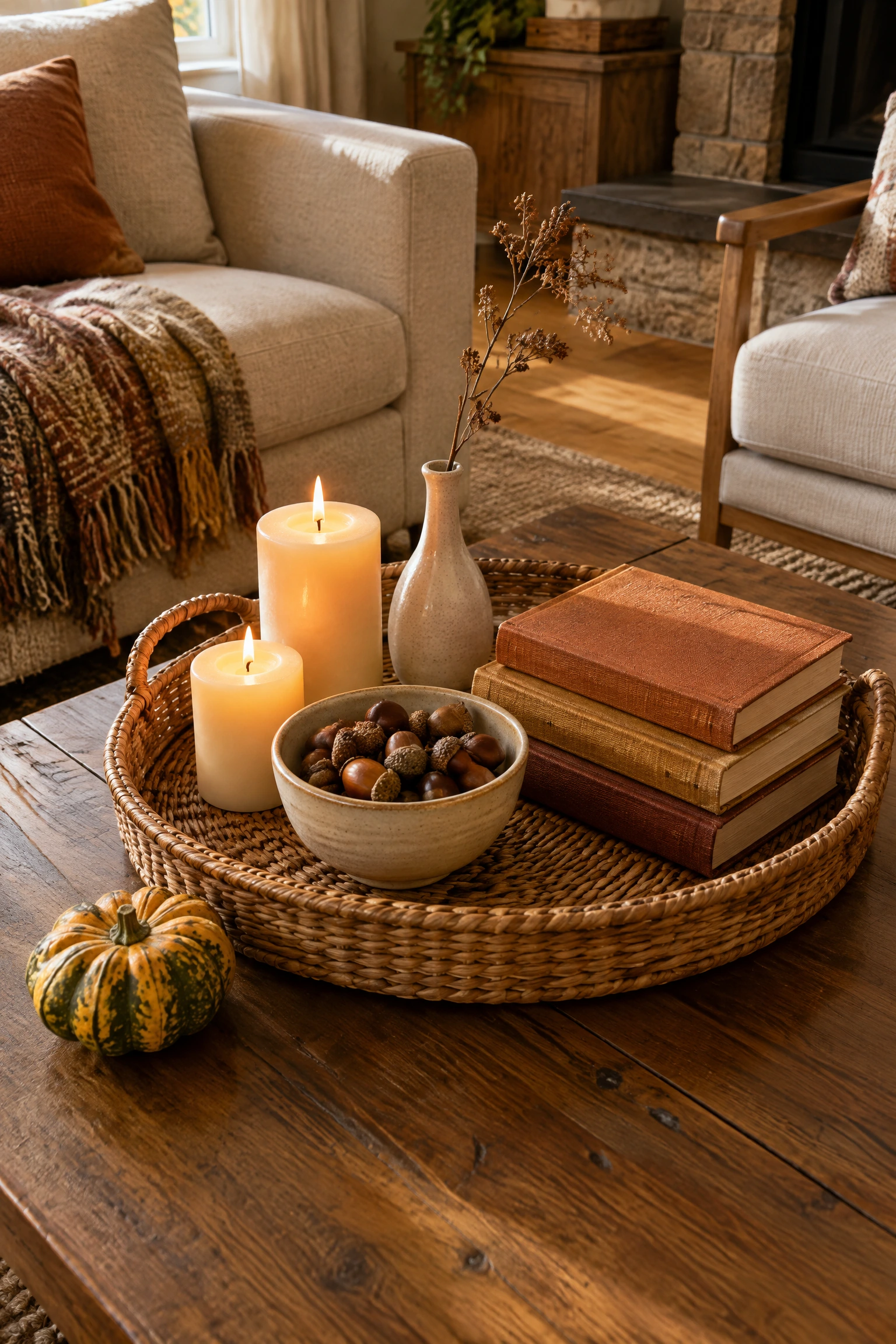
A tray is the organizing element that separates a styled coffee table from a cluttered one. An autumn coffee table works with a tray holding a cluster of candles or a small lantern, one organic element like a small gourd or a sprig of dried rosemary, and one or two stacked books with attractive spines. Outside the tray, a wide bowl of pine cones, a narrow bud vase with a single stem, or a small ceramic dish of chestnuts adds visual rhythm without creating clutter. Every object should earn its place through beauty, function, or both.
Quick Tip: Change the coffee table arrangement at least once mid-season. A single swap, replacing the gourds with pine cones or adding a new candle, refreshes the surface in ten minutes and makes the room feel current rather than stale.
21. Dress the Bookshelves for the Season
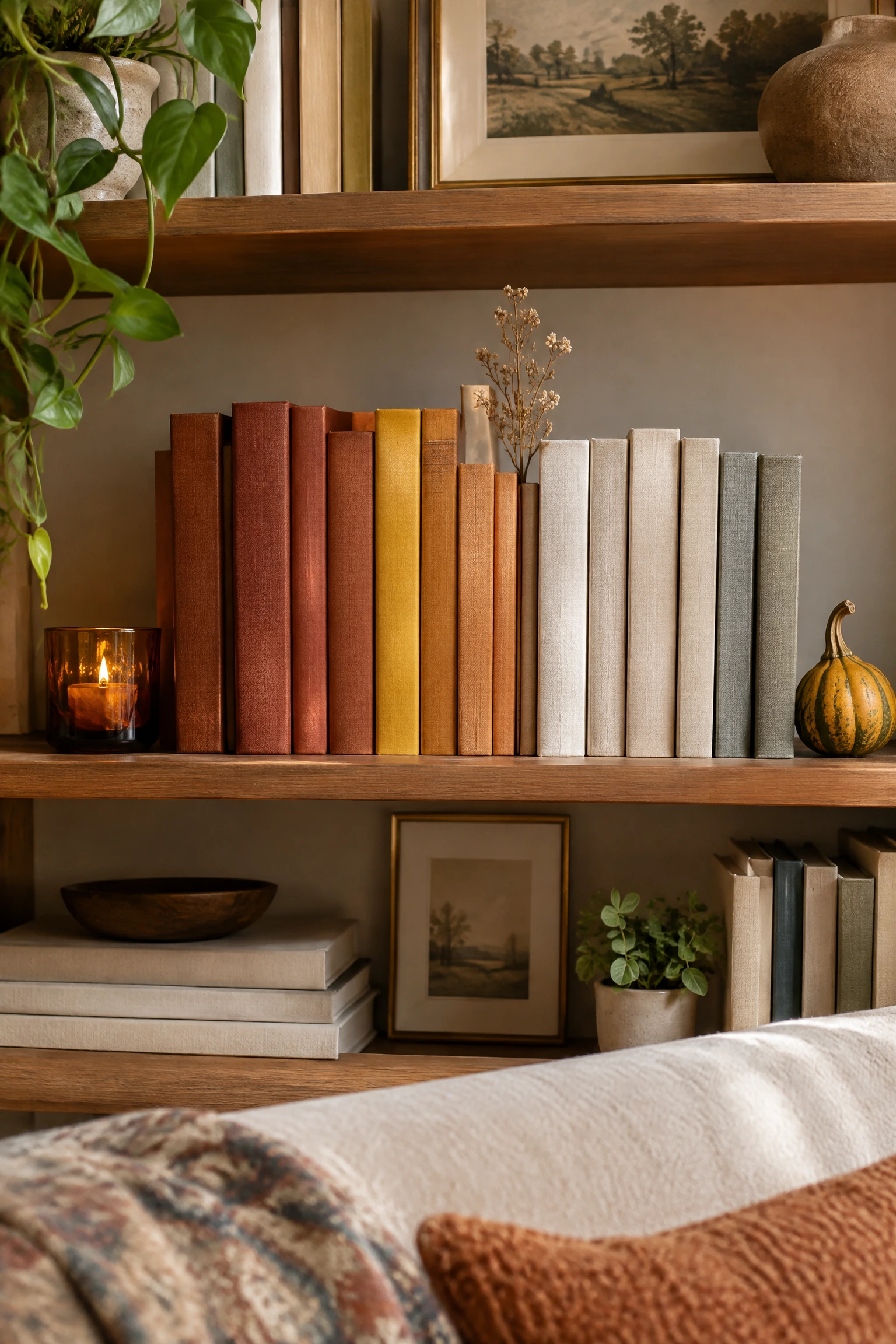
The autumn-specific layer on a bookshelf comes from grouping warm-toned spines together, gathering the reds, oranges, golden yellows, and dark browns, and interspersing them with neutral-spined books, then adding one or two small seasonal objects per shelf: a small amber glass votive, a dried sprig tucked between books, a tiny gourd at the end of a row. The color grouping alone, which costs nothing and takes twenty minutes, changes the visual presence of the bookshelf more dramatically than most people expect.
Designer Advice: Distribute warm-spined books across two or three shelves rather than concentrating them on one. This creates a rhythm that draws the eye across the full height of the bookshelf rather than pulling all the visual interest to a single spot.
22. Create a Reading Corner With a Lamp, Chair, and Throw
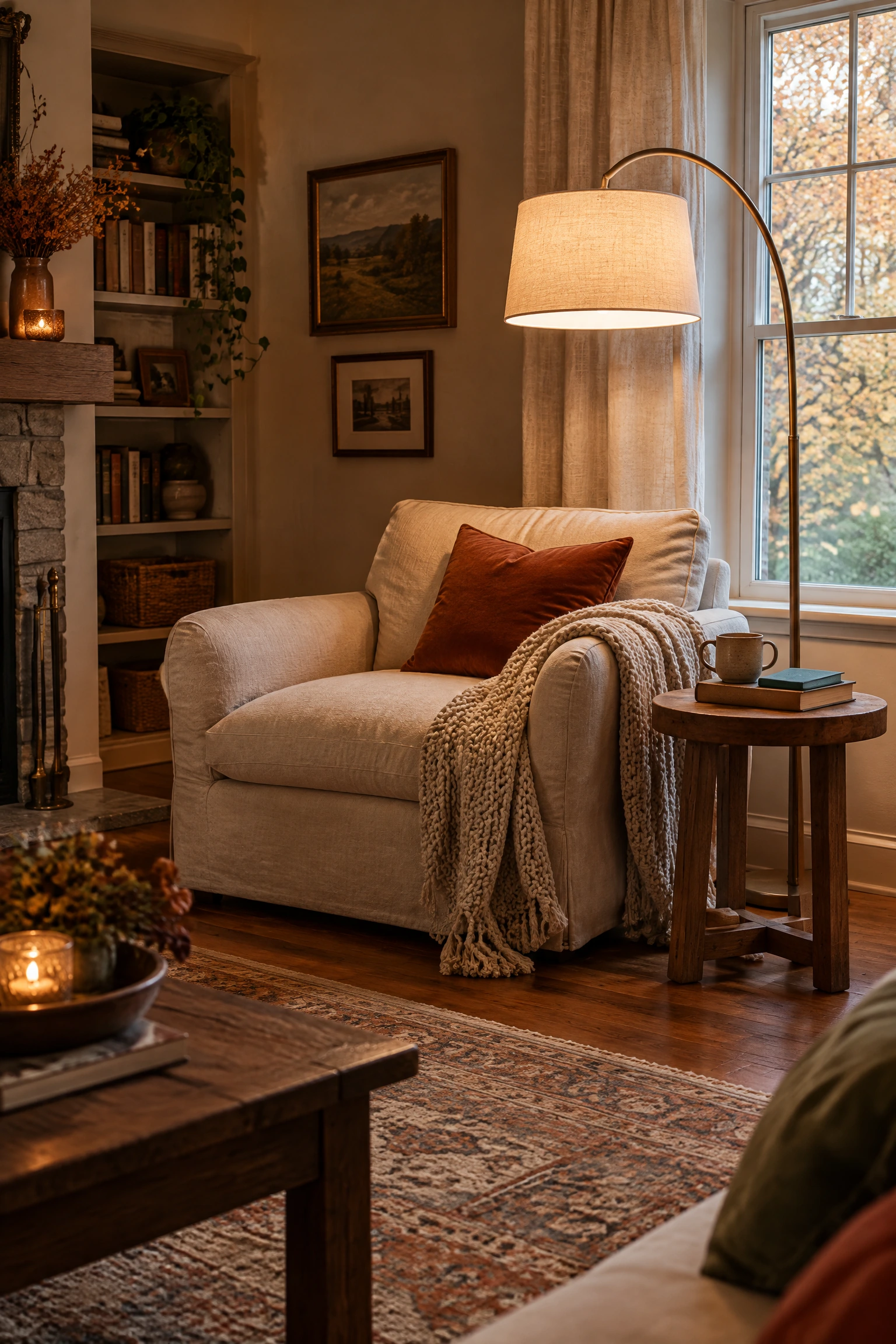
A dedicated reading corner is one of the most specifically autumnal additions to a living room because autumn is when people naturally retreat indoors and the desire for a contained, cozy space within the larger room becomes acute. A comfortable chair with a floor lamp positioned over the shoulder, a small side table for a drink and a book, and a throw draped over the arm creates a zone within the room that reads as inviting even when unoccupied. Test the chair position, the lamp height, and the table reach before committing: the corner should work as well in use as it looks in theory.
Reality Check: A reading corner that looks beautiful but is not actually comfortable to read in is a styling exercise rather than a design solution. The chair should be deep enough to sit with legs curled up, which is how most people actually sit in autumn.
CATEGORY SIX: SCENT AND ATMOSPHERE
23. Choose an Autumn Signature Scent for the Room
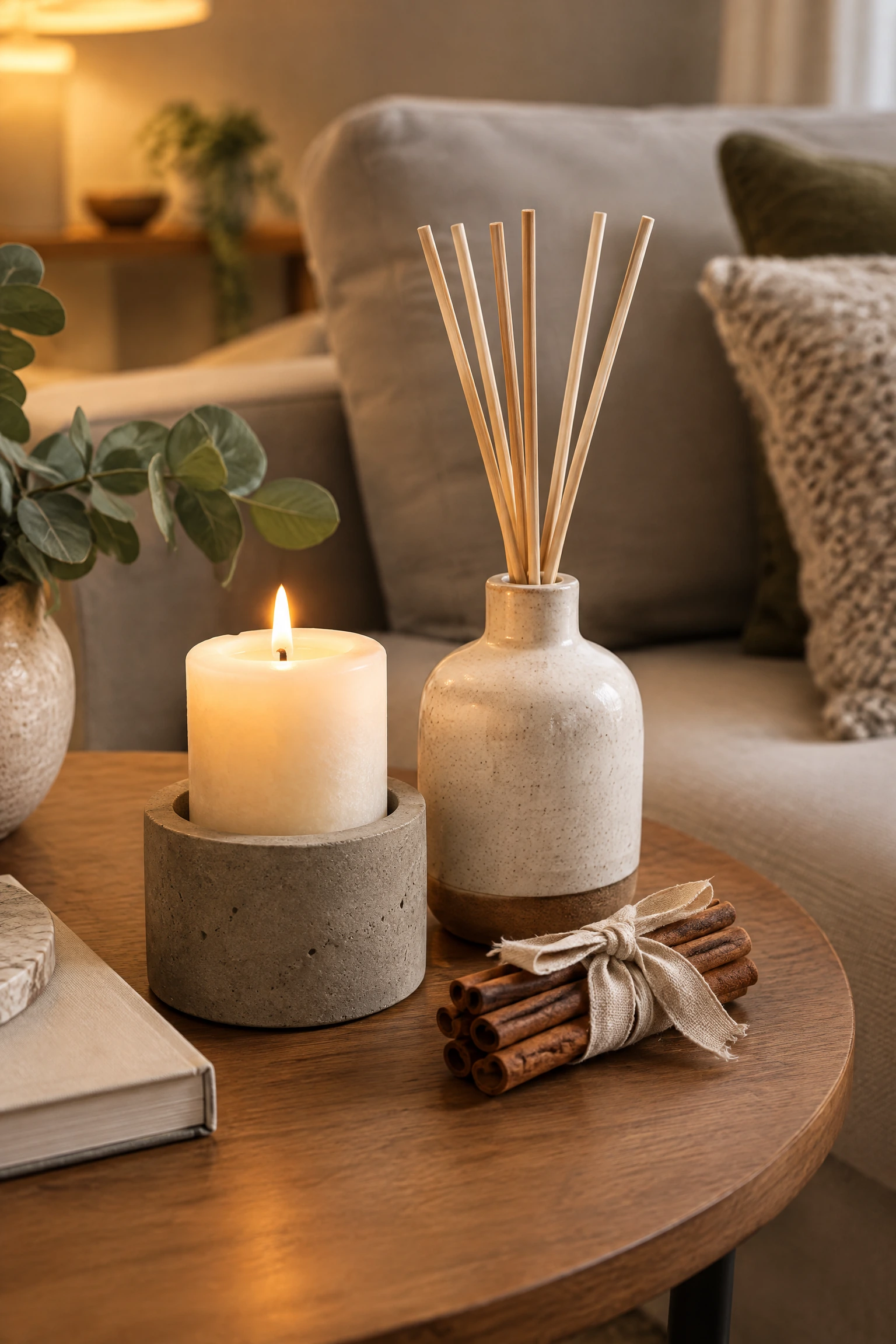
A living room that smells like autumn triggers a seasonal response before the eye has registered a single decorative element. The most effective approach is to choose one signature scent and commit to it through the season in candles, a reed diffuser, and a room spray, so the scent becomes associated with the room and the season. The most wearable autumn scents for a living room are warm and complex without being sweet: cedarwood, sandalwood, vetiver, amber, oud, or incense with optional mid-notes of leather or spice. Pumpkin spice and apple cinnamon are sweet-dominant and work better in a kitchen context.
Pro Move: Layer your scent rather than relying on a single source. A reed diffuser at a low continuous level supplemented by a candle in the same fragrance family creates a richer, more consistent scent experience than either source alone.
24. Simmer a Stovetop Potpourri on Autumn Evenings

A small pot of water simmered at the lowest possible heat with cinnamon sticks, sliced orange, whole cloves, rosemary sprigs, and a star anise fills the entire ground floor with a scent that is unmistakably seasonal, genuinely warming, and made entirely from edible materials rather than synthetic fragrance. It smells like cooking rather than like fragrance, which gives it a warmth and domesticity that no candle or diffuser fully replicates. The ingredients cost almost nothing, can be composted after each use, and the scent reaches the living room within minutes of starting.
Quick Tip: Set a timer every thirty minutes and check the water level. A pot that runs dry produces an unpleasant smell and is a fire hazard. Add water as needed and let it run for as long as the room is in use.
CATEGORY SEVEN: STATEMENT CHANGES
25. Apply Peel-and-Stick Wallpaper to a Fireplace Alcove
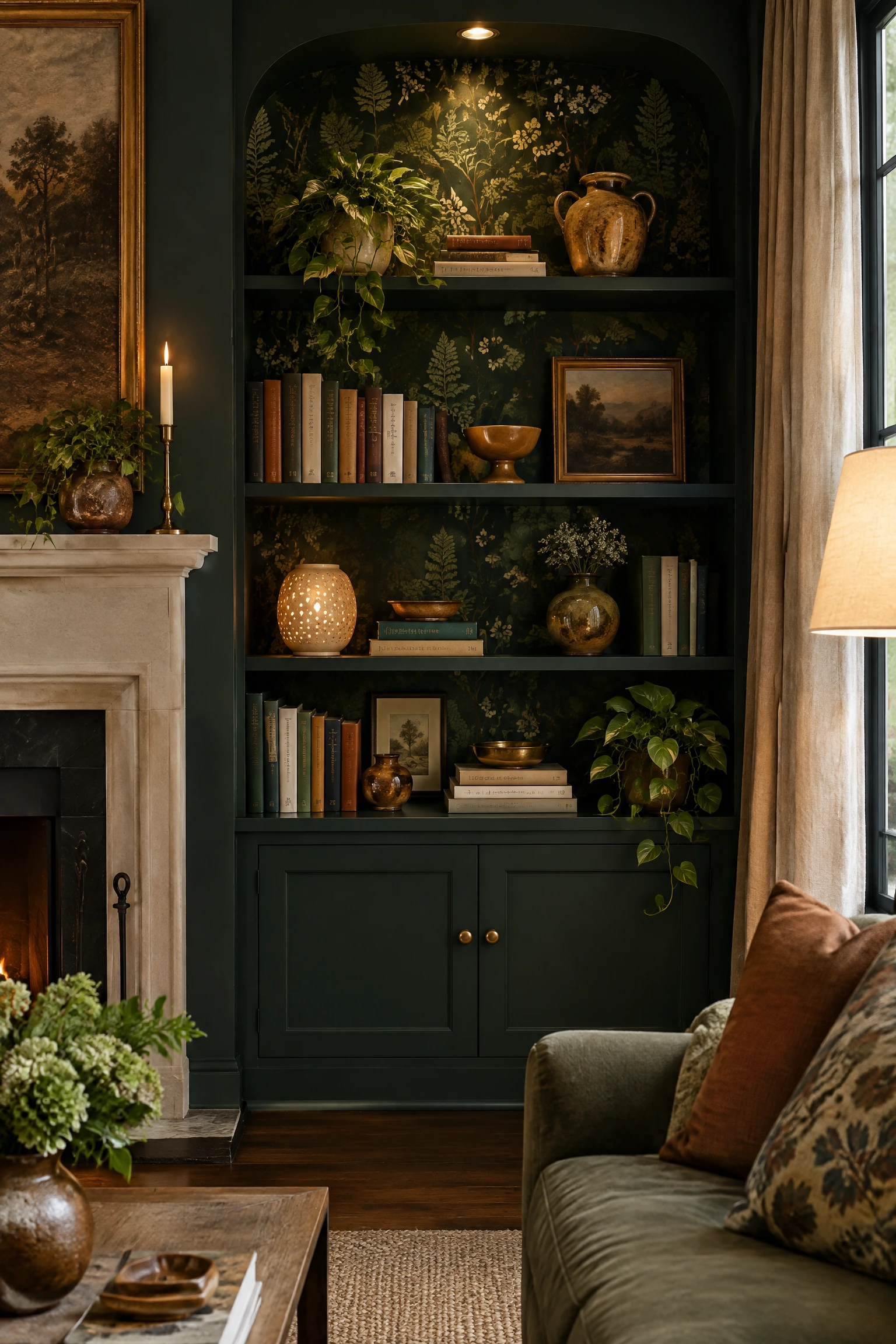
Autumn is the season when the case for a single accent wall or alcove treatment is strongest, because shorter days and longer evenings mean interior surfaces are more visible and more central to the experience of the room. A peel-and-stick wallpaper in a warm, textured design, a dark botanical, a grasscloth-look, or a subtle geometric in earth tones, applied inside a fireplace alcove or to the main focal wall, changes the room’s personality as dramatically as paint and comes down cleanly when preferences change. Lined with shelves or books in front of a dark-background wallpapered alcove, the result looks professionally designed.
Designer Advice: Pick a wallpaper that shares at least one color with an element already in the room. A design that introduces an entirely new palette disrupts the room’s cohesion. One that echoes an existing cushion, rug, or curtain ties the new addition into what is already there.
26. Hang a Mix or Large Textile as a Wall Feature

A woven mix or large-format textile hung above the sofa functions as the room’s primary piece of art while also acting as a textile element that contributes to the seasonal warmth of the space. Woven textiles absorb sound, add visual texture, and bring warmth to a wall in a way that a framed print or canvas cannot. A mix in terracotta and cream, rust and sage, or warm grey and caramel, hung from a wooden dowel at substantial scale, changes the focal wall as decisively as paint would, at no permanent commitment and at a fraction of the renovation cost.
Heads Up: Hang a mix from a wooden dowel rather than nailing it directly to the wall. The dowel adds a natural, intentional element to the top of the piece and allows the textile to hang flat without distortion.
27. Bring in an Upholstered Ottoman or Pouffe
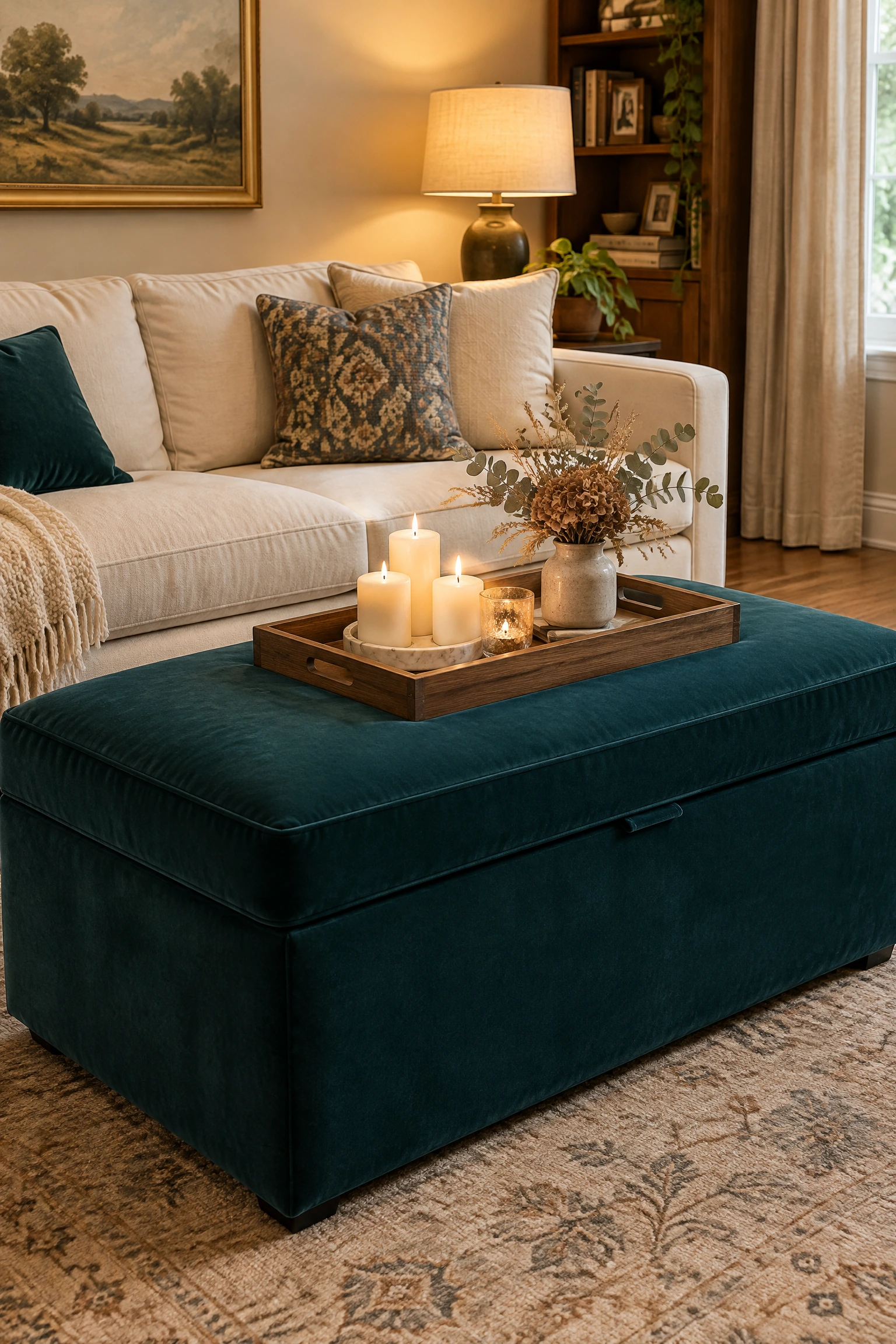
An upholstered ottoman adds something cushions and throws cannot: a surface at seated height that functions simultaneously as extra seating, a footrest, and a coffee table alternative. In autumn, when the impulse is to curl up and occupy a contained space within the larger room, an ottoman placed in front of the sofa gives the room a layered, occupied quality that makes it feel more generously furnished. A storage ottoman with a lift-off lid solves the practical autumn problem of where to store seasonal throws and cushion inserts while keeping them accessible, covered with a tray it becomes a full coffee table alternative.
Reality Check: An ottoman without a tray is not a reliable coffee table. Drinks will not sit stably on an upholstered surface and stains are inevitable. A well-chosen tray makes an ottoman as practical as a table for most purposes.
28. Rearrange the Furniture to Face the Fireplace
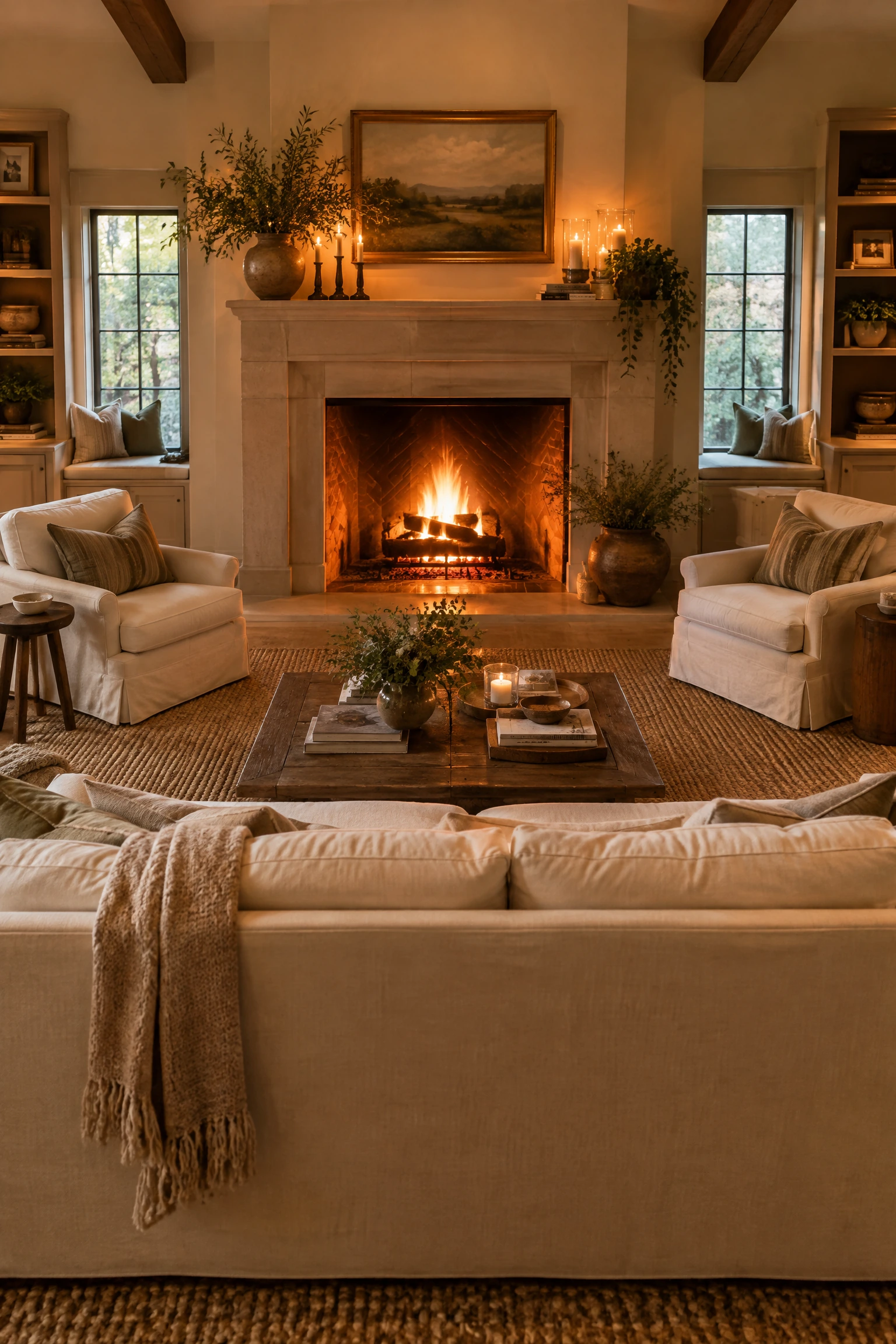
If the living room has a fireplace that is not currently the primary focal point, autumn is the best season to change that. The fireplace is the natural gathering point of an autumn and winter living room, and a seating arrangement that faces a television while the fire burns in the periphery has its priorities reversed. The television can be incorporated at a slight angle on an adjacent wall while the seating faces the hearth: a room arranged around a fire invites occupants to sit and stay in a way that a screen-centric room rarely does through the colder months. A decorative fireplace can be staged with candles, a log basket, and a large lantern to create warmth even without a real fire.
Pro Move: A fireplace that is actively styled with candles, logs in a woven basket, and a lantern reads as a focal point. An empty, unstaged fireplace reads as a hole in the wall.
Autumn Living Room Ideas by Category and Effort
| Category | Ideas | Effort | Best For |
| Color and Palette | 1-4 | Low | Rooms that feel flat or too summery |
| Textiles and Layering | 5-9 | Low-Medium | Rooms that feel cold or uncomfortable |
| Autumn Lighting | 10-13 | Low | Rooms that feel clinical in the evenings |
| Botanicals and Nature | 14-18 | Low-Medium | Rooms that feel lifeless or undecorated |
| Surfaces and Vignettes | 19-22 | Low | Rooms where surfaces are bare or cluttered |
| Scent and Atmosphere | 23-24 | Very Low | Any room missing the sensory layer of autumn |
| Statement Changes | 25-28 | Medium-High | Rooms ready for a more committed seasonal update |
Where to Start
Autumn decorating is most effective when it works with what the room already has. Start in the category where the room is weakest, address that one area completely, then move on. A room that is beautifully lit with warm layered sources, has a properly draped chunky throw and cushions in a warm tone, and carries one clean botanical arrangement will feel more genuinely autumnal than a room covered in seasonal objects that has none of those foundations in place. The season is not in the pumpkins. It is in the warmth, the texture, and the care given to every surface.