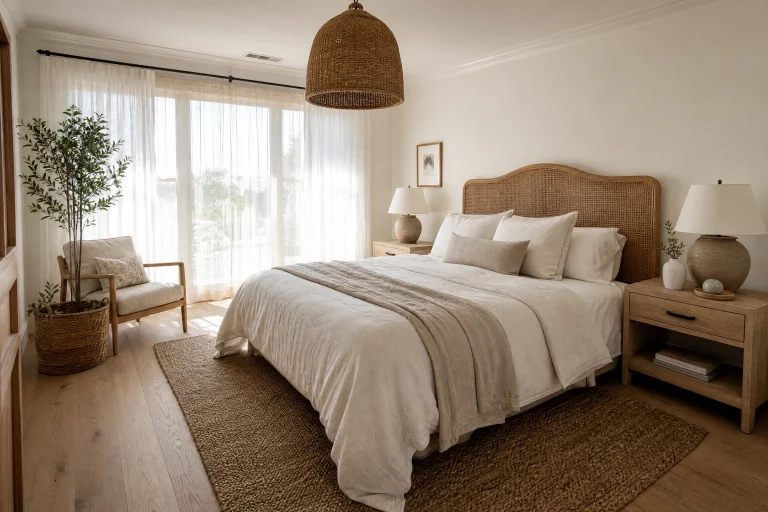
How to Make Your Bedroom Look More Expensive Without Buying New Furniture

Have you ever looked at a beautifully styled bedroom online and wondered why your own room doesn’t feel quite as inviting, even though you already have a decent bed, a wardrobe, and a bedside table?
I’ve noticed that the difference between a bedroom that looks ordinary and one that feels thoughtfully designed often comes down to the smallest details. The bed might be made neatly, the curtains might hang properly, and the lighting might be soft enough to make the room feel comfortable. Nothing necessarily looks expensive on its own, but everything seems to belong together.
That’s the part many people overlook.
When a bedroom feels dated or unfinished, buying new furniture can seem like the obvious solution. A new bed frame, matching nightstands, or a stylish dresser might look tempting, especially after scrolling through interior design photos. But replacing perfectly usable furniture is rarely the first thing I’d recommend.
In many cases, the furniture isn’t the real problem. The room may simply need better lighting, more coordinated bedding, less clutter, or a more intentional arrangement of the things you already own.
You can make an ordinary wooden bed look more refined, give an older dresser a fresh appearance, and make inexpensive bedding feel more inviting without replacing the main pieces in your room.
The trick is to focus on presentation rather than price.
In this guide, we’ll explore practical ways to make your bedroom look more expensive without buying new furniture. You’ll learn how to style your bed, improve lighting, work with your existing color scheme, organize visible clutter, refresh old furniture, and make better use of curtains, rugs, mirrors, and accessories.
We’ll also look at common decorating mistakes that can make a room feel less polished, even when you’ve spent money trying to improve it.
The goal isn’t to turn your bedroom into a hotel suite or copy a photograph that doesn’t reflect how you actually live. It’s to create a comfortable, well-organized space that feels intentional, looks beautiful, and works with your existing budget.
1. Start by Looking at Your Bedroom With Fresh Eyes
Before buying anything, take a few minutes to look at your bedroom as if you were seeing it for the first time.
This might sound simple, but it’s surprisingly useful. When we use the same room every day, we stop noticing the details that make it look untidy or unbalanced.
Perhaps the bedside table has accumulated chargers, receipts, water bottles, and skincare products. Maybe the curtains are slightly too short, the bedding has several unrelated colors, or the wardrobe top has become a storage area for everything that doesn’t fit elsewhere.
Individually, these things may seem harmless. Together, they can make the entire room feel busier than it needs to be.
Take a photograph before making changes
Use your phone to take a picture of the bedroom from the doorway.
Then take another picture from the side of the bed and, if possible, from the opposite corner.
A photograph can reveal things that are easy to miss when you’re standing in the room. You may notice that one side of the bed looks crowded, that a pile of clothing is visible from the entrance, or that the curtains and bedding compete for attention.
You don’t need a professional camera or a special interior design app. A regular smartphone is enough.
If you enjoy planning room layouts, tools such as Pinterest can help you collect reference images, while room-planning apps may help you experiment with furniture placement. Just remember that photographs and digital mockups can make colors and proportions look different from how they appear in your actual room.
Use inspiration as a guide, not a strict template.
Identify the three things that bother you most
Instead of trying to improve everything at once, write down three specific problems.
For example:
- The bed looks messy even after I make it.
- The lighting feels harsh at night.
- The dresser and bedside table are covered with small items.
These are more useful than a vague goal such as making the room look luxurious.
Each problem suggests a practical solution. The bedding may need a better arrangement, the lighting may need another source, and the surfaces may need a little organization.
You might discover that the wardrobe, bed frame, and dresser are perfectly fine.
Decide what should stay
Look at your existing furniture and separate the pieces you genuinely use from the things that are simply taking up space.
A slightly older wooden bedside table may look lovely once the surface is cleared and the hardware is cleaned. A simple dresser may work well with a lamp and a small tray. Even a basic bed frame can become the foundation for a polished bedroom.
Don’t assume that older furniture automatically needs to be replaced.
Sometimes, keeping the original pieces and improving their surroundings creates a more cohesive result than introducing several new items.
2. Make Your Bed Look Like the Centerpiece of the Room
The bed usually occupies the largest visual area in a bedroom. That makes it one of the most important places to focus your attention.
If the bedding looks wrinkled, the pillows are scattered, and several unrelated patterns compete with each other, the room may feel unfinished even if everything else is in good condition.
On the other hand, a neatly arranged bed can make a modest bedroom look more considered.
You don’t need expensive sheets or a large collection of decorative pillows. You need a clean, coordinated arrangement that suits the size of your bed.
Start with the fitted sheet
A fitted sheet that constantly comes loose can make the entire bed look untidy.
Check that the sheet fits your mattress depth and that the corners are properly secured. Smooth the surface before adding the duvet or top sheet.
If the sheet has become stretched, faded, or badly pilled, you may eventually want to replace it, but you don’t need to replace the entire bedding set.
Use what you already have in the best possible condition.
Choose a simple bedding color scheme
One common mistake is trying to make the bed interesting by combining too many colors and patterns.
A floral duvet, striped pillowcases, a brightly colored throw, and several patterned cushions may each look attractive separately. Together, however, they can make the bed feel visually crowded.
Try limiting the main bedding arrangement to two or three related colors.
For example, white bedding with beige accents creates a soft, neutral appearance. Gray bedding with white pillowcases can look clean and understated. Cream bedding with muted green details introduces color without overwhelming the room.
You don’t have to follow a neutral palette to achieve a polished look. Navy, rust, dusty blue, olive, and other deeper shades can work beautifully when they’re used consistently.
The important thing is to make the combination feel deliberate.
Use the pillows you already own more thoughtfully
You don’t need a hotel-style stack of ten pillows.
Start with the pillows you sleep on and arrange them neatly against the headboard or wall. If you have a couple of decorative cushions, place them in front.
For a double or queen-size bed, two sleeping pillows and one or two decorative cushions may be enough, depending on their size.
If you prefer a minimalist look, skip the decorative cushions altogether.
The arrangement should be comfortable to maintain. If you have to move a large pile of pillows every night and find somewhere to store them, the setup may not suit your routine.
Add a throw blanket for texture
A throw blanket can make a bed look more layered without requiring new furniture.
Fold it across the lower third of the bed or drape it neatly along one side. A textured throw can add interest to plain bedding, while a simple neutral throw can calm a busier pattern.
Pay attention to proportion. A small throw may look lost on a king-size bed, while a very thick blanket can overwhelm a compact bed.
You can also use a blanket you already own. The goal is to create a clear visual finish, not to purchase a decorative item simply because it’s popular.
Smooth the duvet without making the bed look stiff
A perfectly flat hotel bed isn’t essential, but an untidy duvet can make the whole room feel less organized.
Pull the duvet into position, smooth the main surface, and straighten the edges. If you use a top sheet, fold it evenly over the duvet.
A little natural softness is fine. In fact, a bed that looks too rigid can feel less welcoming than one with gently textured bedding.
What matters is that the arrangement looks intentional.
A practical example
Imagine you have a basic dark wooden bed frame, white sheets, and a faded beige duvet cover.
Rather than replacing the bed frame, start by making the bed neatly and adding the pillows you already own in a coordinated arrangement. Fold a soft gray or olive throw at the foot of the bed if you have one.
Clear the items from the floor around the bed and place a bedside lamp where it can be used comfortably.
The bed frame hasn’t changed, but the room may look noticeably more organized because the surrounding details work together.
3. Use Color to Make the Room Feel More Refined
Color can influence the entire atmosphere of a bedroom, but expensive-looking rooms don’t necessarily rely on expensive colors.
What matters more is how the colors relate to one another.
A room with a simple, consistent palette often looks more polished than one filled with beautiful objects in unrelated shades.
Work with the colors already in your room
Before choosing a new color scheme, look at the largest permanent or difficult-to-change elements.
These might include the bed frame, wardrobe, flooring, wall color, and curtains.
If your furniture is dark brown, for example, you might work with warm white, cream, muted green, or soft beige. If you have pale wooden furniture, you could introduce dusty blue, white, or warm gray.
If your room has cool gray flooring, warmer textiles can help balance the appearance. If the floor is reddish brown, natural cream tones and muted green may complement it.
These are starting points, not rigid decorating rules. The room’s natural light and the undertones of the materials can change how the combination looks.
Follow a simple color formula
A useful approach is to choose one main neutral, one supporting color, and one smaller accent.
For instance:
- Main neutral: warm white.
- Supporting color: beige.
- Accent color: muted olive green.
The neutral can appear in the bedding or curtains. Beige might appear in the rug or throw. Olive green could be repeated in a cushion, a small decorative object, or a plant pot.
You don’t need every item to match perfectly. Repeating the colors in a few different places is enough to make the room feel connected.
Use contrast carefully
Contrast helps important elements stand out.
White bedding on a dark wooden bed can look crisp and balanced. A darker throw on a pale duvet can create a clear focal point. Dark bedside accessories may also look attractive against light walls.
But too much contrast can make the room feel harsh.
If your furniture, bedding, curtains, and accessories all use strong contrasting colors, the eye may not have anywhere to rest.
Try one or two deliberate contrasts and keep the remaining elements relatively calm.
Don’t overlook the colors of small accessories
A room’s color scheme can be disrupted by small items that are visible all the time.
Bright plastic storage boxes, mismatched hangers visible inside an open wardrobe, colorful charging cables, and unrelated decorative objects can introduce colors you never intended to include.
You don’t need to hide every practical item. However, grouping similar belongings or storing small objects in coordinated containers can help the room look more organized.
This is a particularly useful improvement because it doesn’t require buying new furniture or changing the walls.
Test colors in both daylight and artificial light
A beige cushion might look warm and creamy in daylight but turn yellow under a particular lamp. Gray bedding can look blue in a room with cooler light.
Before making a larger purchase, place fabric samples or existing items together in your bedroom.
Look at them in the morning and again in the evening.
If you’re considering a new bulb, check its color temperature and how it renders colors. The same bedding can look noticeably different under different light sources.
It’s much easier to adjust a color scheme before you’ve spent money on several matching accessories.
4. Improve Your Bedroom Lighting Without Changing the Ceiling Fixture
Lighting is one of the most overlooked parts of bedroom decorating.
A room can have attractive furniture, clean bedding, and a beautiful color scheme, yet still feel uncomfortable because the only light comes from a harsh ceiling fixture.
The opposite can happen, too. A room with fairly ordinary furniture can feel warm and inviting when the light is positioned thoughtfully.
You don’t necessarily need to replace the existing fixture. In many bedrooms, adding or repositioning one or two lamps is enough to make a difference.
Move away from relying on one overhead light
Think about how you use your bedroom during the day.
You might need bright light when cleaning, getting dressed, or finding something in the wardrobe. At night, you may prefer softer lighting for reading or winding down.
One ceiling light doesn’t always serve both purposes well.
A bedside lamp can create a comfortable pool of light beside the bed. A desk lamp can provide focused illumination if you work or study in the bedroom. A floor lamp may help brighten a dark corner, provided you have enough space for it.
You don’t need to use every type of lamp. Start with the lighting that would be most useful in your daily routine.
Choose warm light for a relaxed atmosphere
Many people prefer warm white lighting in bedrooms because it creates a softer evening atmosphere.
Bulbs around 2700K to 3000K are common starting points for this purpose. However, your preference, the shade of the lamp, and the room’s other light sources will influence the final effect.
If you read in bed, make sure the light is bright enough for comfortable reading without shining directly into your eyes.
A lamp with an adjustable shade can help direct light toward the book rather than across the entire room.
Always check the bulb’s wattage limits and the fixture’s compatibility before making changes.
Match the lamp to the furniture you already have
You don’t need matching bedside tables or identical lamps to create a coordinated look.
If your bedside tables are different, you can use lamps with related shapes or shades to establish some visual consistency. Alternatively, you could use a lamp on one side and a small stack of books or another useful object on the other.
The key is to consider the height and visual weight of each item.
A very tall lamp beside a low bed can look disproportionate. A tiny lamp on a large bedside table may appear lost.
Try moving your existing lamps around before deciding that you need different ones.
Use lampshades to soften the appearance of a room
A lampshade affects both the look of the lamp and the quality of the light it produces.
A light-colored shade may help distribute light more softly, while a darker or more opaque shade can direct more of the light upward or downward, depending on its design.
If you already own a lamp that works well, a compatible replacement shade might be an option, but check the dimensions and fitting before purchasing anything.
You can also clean an existing shade if it has accumulated dust. Follow the manufacturer’s care instructions and avoid wet cleaning materials that could damage the fabric or electrical components.
Keep lighting practical and safe
Don’t place lamps where they can be easily knocked over when getting into bed.
Keep electrical cords away from walking paths, and don’t hide cords beneath rugs or bedding.
Avoid covering lamps with fabric or placing them too close to curtains, pillows, or other materials that could become hot. Use bulbs and fixtures according to their instructions.
A polished bedroom should be comfortable and safe to use, not simply attractive in photographs.
5. Make Your Curtains Look More Expensive
Curtains are one of those details that can make a bedroom feel finished or leave it looking slightly awkward.
They frame the windows, soften the walls, and affect how much natural light enters the room. If the curtains are too short, poorly fitted, or heavily wrinkled, they can distract from otherwise attractive furniture.
Fortunately, improving their appearance doesn’t always mean buying a new set.
Check the length first
One common issue is curtains that stop several inches above the floor without a clear reason.
Depending on the style of the room, this can make the window area look disconnected from the rest of the space.
If your curtains are long enough, adjust their position on the existing rod or track where possible. Make sure the hooks and rings are correctly placed so the fabric hangs evenly.
If the curtains are genuinely too short, you may be able to repurpose longer curtains from another room, adjust a suitable hem, or look for an affordable replacement later.
Avoid adding complicated fabric extensions unless you are confident they will look neat.
Hang them evenly
Uneven curtain panels can make the entire window look untidy.
Check that both panels reach a similar height and that the fabric falls in reasonably consistent folds.
If your curtains have been stored for a long time, they may have creases that need attention. Follow the fabric’s care label before steaming, ironing, or washing them.
Some fabrics can shrink or become damaged when exposed to excessive heat, so don’t assume that every curtain can be treated the same way.
Let the fabric frame the window
When space allows, opening the curtains fully during the day can help the window feel larger and allow more natural light into the room.
If the curtains are very bulky, make sure they don’t cover a large portion of the glass when pulled back.
In a small bedroom, this can make a noticeable difference to the amount of daylight reaching the space.
However, privacy and sunlight control still matter. If the window faces a neighboring building or receives strong direct sun, choose an arrangement that suits your needs.
Coordinate curtains with the bedding
Your curtains and bedding don’t have to be identical.
In fact, using exactly the same fabric or pattern for everything can sometimes make the room look overly coordinated.
Instead, choose colors that complement each other.
For example, white bedding with a beige throw might work well with warm gray curtains. A muted green duvet could look attractive with cream curtains and natural wooden furniture.
Repeating one color in two or three places is often enough.
Keep the window area uncluttered
Avoid using the windowsill as a permanent storage area if you can help it.
A few carefully chosen objects may look lovely, but a collection of miscellaneous items can make the room feel messy.
If you use the windowsill for plants, make sure they receive appropriate light and that water doesn’t damage the surface.
The aim is to let the curtains and window contribute to the room rather than compete with clutter.
6. Declutter Visible Surfaces for an Instantly More Polished Look
You can have attractive furniture and coordinated bedding, but clutter can still make the room feel less expensive.
This doesn’t mean your bedroom needs to look empty or that every personal belonging should be hidden. It simply means that everyday items need a place to live.
When small objects spread across every surface, the eye has to process too many details at once.
Clearing those surfaces can make the furniture itself look better.
Start with the bedside tables
Bedside tables tend to collect items because they’re convenient.
You might keep a phone charger, water glass, book, skincare products, medicines, hair accessories, and other essentials beside the bed.
Some of these items are genuinely useful, so the goal isn’t to remove everything.
Instead, decide what needs to remain within reach overnight.
Keep the essentials nearby and relocate items that belong elsewhere. A small tray or suitable container can help group frequently used objects together.
If you need several items beside the bed, use a drawer or a small organizer to keep them accessible without spreading them across the surface.
Clear the top of the dresser
A dresser can become an unofficial storage shelf for bags, folded clothes, paperwork, perfume bottles, and decorative objects.
Once the surface becomes crowded, even an attractive dresser can look untidy.
Remove everything and clean the surface according to the furniture’s care instructions.
Then put back only the items you use regularly or genuinely want to display.
A lamp, a tray, and one personal object might be enough. If you need the dresser for everyday storage, prioritize function over decoration.
Give clothing a proper place
A chair covered with worn clothes is a familiar bedroom problem.
You may intend to put everything away later, but the pile grows until the chair becomes unusable.
If this sounds familiar, create a practical alternative.
A laundry hamper can hold clothes that need washing. A designated hook or hanger can hold an item you plan to wear again, provided it can be kept clean and dry. Drawers or shelves can accommodate folded clothing.
Choose a solution that fits your habits rather than expecting yourself to follow an unrealistic organizing system.
The best organization method is the one you’ll actually use.
Deal with cables and chargers
Charging cables can make a bedside table look cluttered, especially when several devices are connected at once.
Where practical, route the cables neatly along the back of the table and keep chargers in one accessible place.
Cable clips or organizers may help, but check whether their adhesive is suitable for the furniture finish. You can also use a small freestanding cable box if it allows adequate ventilation and doesn’t create a heat hazard.
Don’t coil or cover charging equipment in a way that causes overheating, and avoid using damaged cables.
Use the wardrobe as part of the solution
If the wardrobe is overcrowded, it becomes harder to put clothing away consistently.
You don’t need to buy a new wardrobe to improve the situation.
Start by removing items that no longer fit, are damaged, or haven’t been used in a long time. If you have seasonal clothing, store it appropriately so the most frequently worn items remain accessible.
Use the existing shelves and drawers more deliberately.
If you want additional organizers, measure the interior first. There is little value in buying boxes that are too large for the available space.
Why decluttering changes the entire room
Imagine a bedroom with a wooden dresser, a basic bed frame, and simple bedding.
The furniture may look ordinary because every surface is covered with small items. Once the dresser is cleared, the bedside table is organized, and the floor is free of loose clothing, the shapes and finishes of the furniture become easier to appreciate.
Nothing new has been purchased.
The room simply feels calmer because there is less visual noise.
7. Refresh Old Furniture Without Replacing It
Old furniture can be one of the most attractive parts of a bedroom when it is maintained and styled well.
A wooden dresser may have a finish that is no longer fashionable, but it could still be sturdy and useful. A bedside table might look dull because of dust, fingerprints, or a loose handle rather than because it needs replacing.
Before shopping for new furniture, look at what you already own.
Clean the furniture properly
Dust can make furniture look dull, particularly when it has a dark or glossy finish.
Start with a soft cloth and a cleaning method suitable for the material.
For finished wood, avoid soaking the surface or using abrasive cleaners that could remove the finish. For laminate, follow the manufacturer’s cleaning recommendations and avoid excessive moisture around the edges.
Glass surfaces may need a suitable glass cleaner, while metal handles may require a different approach depending on their finish.
If you aren’t sure what a surface can tolerate, test the cleaning method in a discreet area first.
The aim is to remove everyday grime without creating new damage.
Tighten loose handles and hardware
A loose dresser handle or wobbly bedside table can make otherwise good furniture feel neglected.
Check whether the screws can be tightened safely and whether the furniture is stable.
Use the correct tool and avoid overtightening screws, which can damage the material.
If a handle is missing, you may be able to find a compatible replacement, but measure the existing screw spacing and check the fitting before buying one.
Small maintenance tasks can make a surprisingly useful difference to the way furniture feels and functions.
Consider whether the finish actually needs changing
It can be tempting to paint every old furniture piece as soon as you begin decorating.
But a mixture of wood tones and finishes can work beautifully if the pieces are balanced.
A dark dresser may provide useful contrast against light bedding. A natural wooden bedside table may add warmth to a room with white walls and gray textiles.
Before changing the finish, try styling the furniture with a lamp, a simple tray, or a framed photograph.
If you own the furniture and want to refinish it, research the material and preparation requirements carefully. Some surfaces require specific primers or finishes, while others may not be suitable for the method you have in mind.
If the furniture belongs to the landlord, don’t sand, paint, drill, or alter it without permission.
Make mismatched furniture feel intentional
Your bedside tables don’t have to be identical.
Perhaps one is an older wooden table and the other is a small cabinet. You can make them feel connected by using similar lamps, repeating colors, or keeping the surfaces similarly organized.
If the heights differ, consider whether the arrangement still works comfortably for reaching your phone, water glass, or book from bed.
Visual balance matters, but everyday usability matters just as much.
Avoid decorative repairs that create more work
Adhesive furniture coverings and contact papers can be useful in certain circumstances, but they are not suitable for every finish.
They may lift at the edges, leave residue, or damage a surface during removal.
Before applying anything, consider the furniture’s material, whether you own it, and how easily the covering could be removed later.
Sometimes, cleaning and rearranging are the better options.
8. Use Mirrors to Make the Bedroom Feel Brighter
A mirror can be both practical and decorative.
It helps with everyday tasks such as getting dressed, but it can also reflect natural light and create a greater sense of openness when positioned thoughtfully.
You don’t need a large designer mirror to get these benefits.
Choose a mirror that suits the space
A full-length mirror may be useful beside a wardrobe or on an available wall. A smaller mirror can work above a dresser, provided there is enough room for the arrangement.
Consider the scale of the furniture underneath it.
A very small mirror above a wide dresser can look unbalanced, while an oversized mirror may dominate a compact wall.
Before purchasing anything, measure the available space and check how the mirror will be supported.
Think about what the mirror reflects
A mirror doesn’t automatically make a room look better. Its effect depends on what appears in the reflection.
If it reflects a bright window, an attractive part of the room, or a clear area of wall, it may help the space feel brighter and more open.
If it reflects a cluttered wardrobe, a laundry pile, or a crowded corner, it may draw attention to the very thing you want to improve.
Stand where you plan to position the mirror and consider what will appear in it.
Use existing mirrors more effectively
If you already own a mirror, try moving it to another suitable location before buying a new one.
A mirror that currently sits in a dark corner might work better where it receives more daylight.
Make sure it remains secure and doesn’t obstruct a doorway or walking route.
Be careful with heavy mirrors
A large mirror can be dangerous if it falls.
Use a suitable support system for its weight and the type of wall or floor arrangement. If wall mounting requires drilling, check your rental agreement and obtain permission.
A properly designed freestanding mirror may be an alternative, but it still needs to be stable and placed where it cannot easily be knocked over.
Avoid leaning a heavy mirror unsecured against a wall, particularly in a room used by children or pets.
9. Add Texture Instead of Filling the Room With Decorations
When people want a bedroom to look more expensive, they sometimes assume they need more accessories.
They add decorative boxes, candles, vases, cushions, framed prints, and small ornaments until nearly every surface contains something.
The room may look more decorated, but not necessarily more refined.
Texture can often create the layered appearance people want without introducing lots of additional objects.
Combine a few different materials
Think about the materials already present in your bedroom.
You might have a wooden bed frame, cotton bedding, metal lamp bases, and a smooth wardrobe finish.
Adding a knitted throw, woven basket, or textured cushion can create variety without making the room feel busy.
You don’t need to include every material. Choose one or two textures that complement what you already own.
Let plain fabrics do some of the work
Plain bedding doesn’t have to look boring.
A duvet with a subtle woven texture, crisp pillowcases, and a soft throw can create a layered appearance without relying on bold patterns.
Similarly, simple curtains can add texture through the way the fabric hangs.
When the major textiles are coordinated, the room may feel more polished even if the furniture is basic.
Use natural materials thoughtfully
Wood, cotton, linen, wool, and woven materials can introduce visual warmth.
If you already have a wooden dresser, a small woven basket may complement it. If your room contains mostly smooth surfaces, a textured throw or fabric lampshade can soften the overall appearance.
You don’t need expensive natural materials to achieve a balanced look. What matters is the quality of the arrangement and whether the items suit the room.
Avoid making everything look identical
A room filled with perfectly matching accessories can sometimes feel less personal.
Mixing a few different textures and finishes gives the space character.
For example, a simple ceramic tray, a wooden bedside table, and a woven basket can work together without sharing the same material.
The combination should feel connected rather than uniform.
10. Make the Floor Work Harder With a Well-Placed Rug
A rug can change how the bed relates to the rest of the room.
It introduces texture, softens the floor visually, and can help create a clear focal point around the bed.
However, size and placement matter more than choosing the most fashionable pattern.
Choose a rug that fits the bed
A rug that is too small may look disconnected from the furniture.
Depending on your room layout, a larger rug placed partly under the bed can create a more cohesive arrangement. Alternatively, two smaller rugs beside the bed may work when there isn’t enough space for a larger one.
Measure the available floor area before buying.
Make sure the rug doesn’t interfere with doors, wardrobe drawers, or the route you use to get out of bed.
Use the rug to connect the color scheme
If your bedding is white and your furniture is dark wood, a rug with warm beige and muted brown tones may help connect them.
A rug containing soft green details could repeat an accent color used in the cushions or curtains.
You don’t need to match every color exactly. A subtle relationship between the rug and other textiles is enough.
Consider pile height and maintenance
A thick, fluffy rug can feel comfortable underfoot, but it may be harder to vacuum or keep clean.
A low-pile rug may be more practical in a room where you frequently move furniture or open wardrobe doors.
Choose a material that suits your household and cleaning routine.
Protect the original floor
If you’re renting, make sure the rug and any underlay are suitable for the existing floor material.
Some backing materials can discolor certain finishes, particularly when moisture becomes trapped underneath.
Follow the manufacturer’s instructions and check the floor periodically, especially if the room is humid.
A rug should improve the bedroom without creating a maintenance problem for you or the property owner.