The Renter’s Guide to a Home That Feels Genuinely Expensive
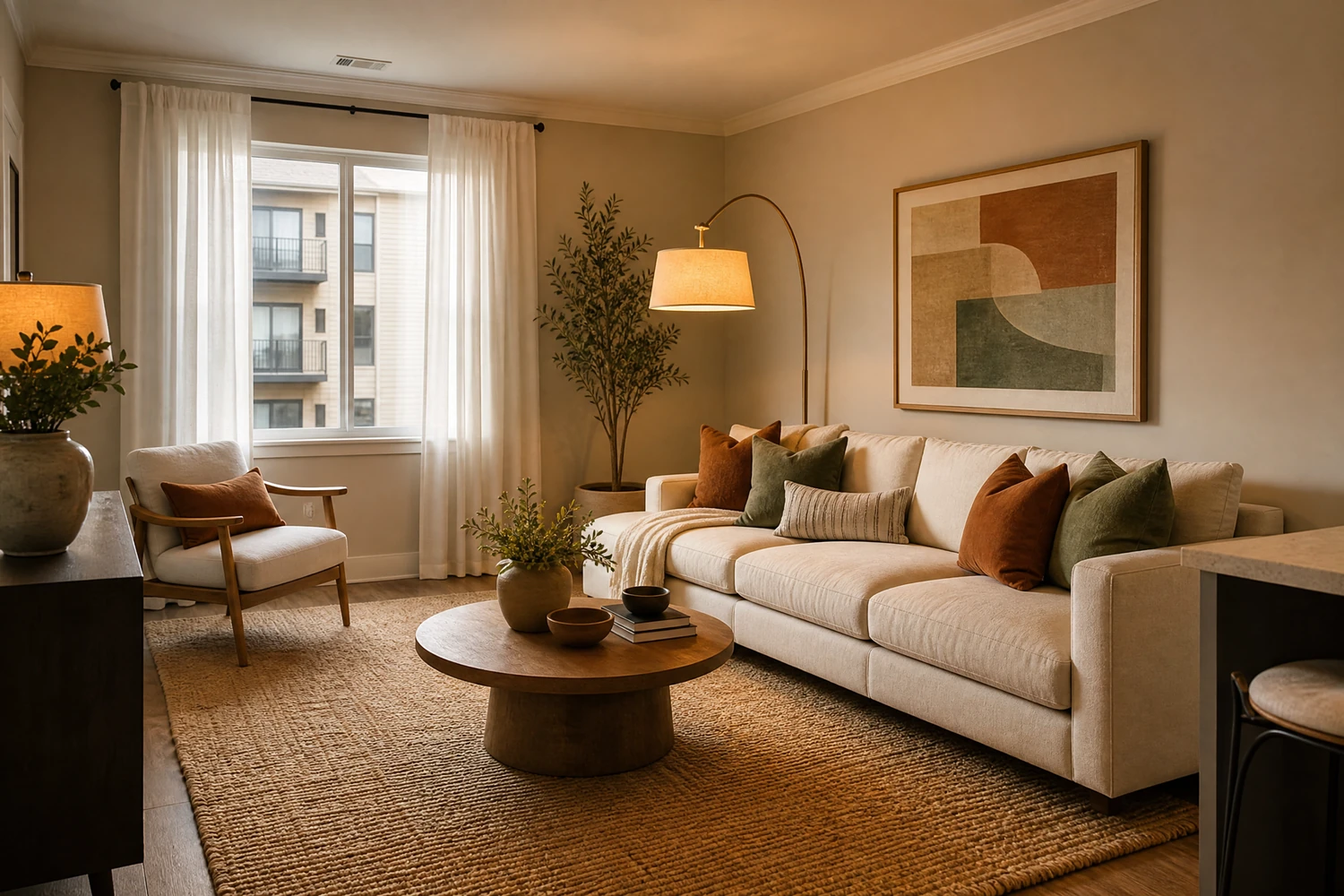
Renting does not mean settling. The builder-grade light fixtures, the scuffed beige walls you cannot touch, the hollow-core doors and cheap vinyl flooring are real limitations, but none of them are as permanent as they feel. Every eyesore in a rental has a fix that costs less than you think, leaves no permanent trace, and in most cases looks better than whatever the landlord installed. This guide goes through the most common rental-grade problems one by one and gives you the exact solution designers use to make a temporary space feel like a considered, expensive home. The result is a home that looks like you chose everything deliberately, even when you could not change anything.
The Overhead Light That Makes Everything Look Flat
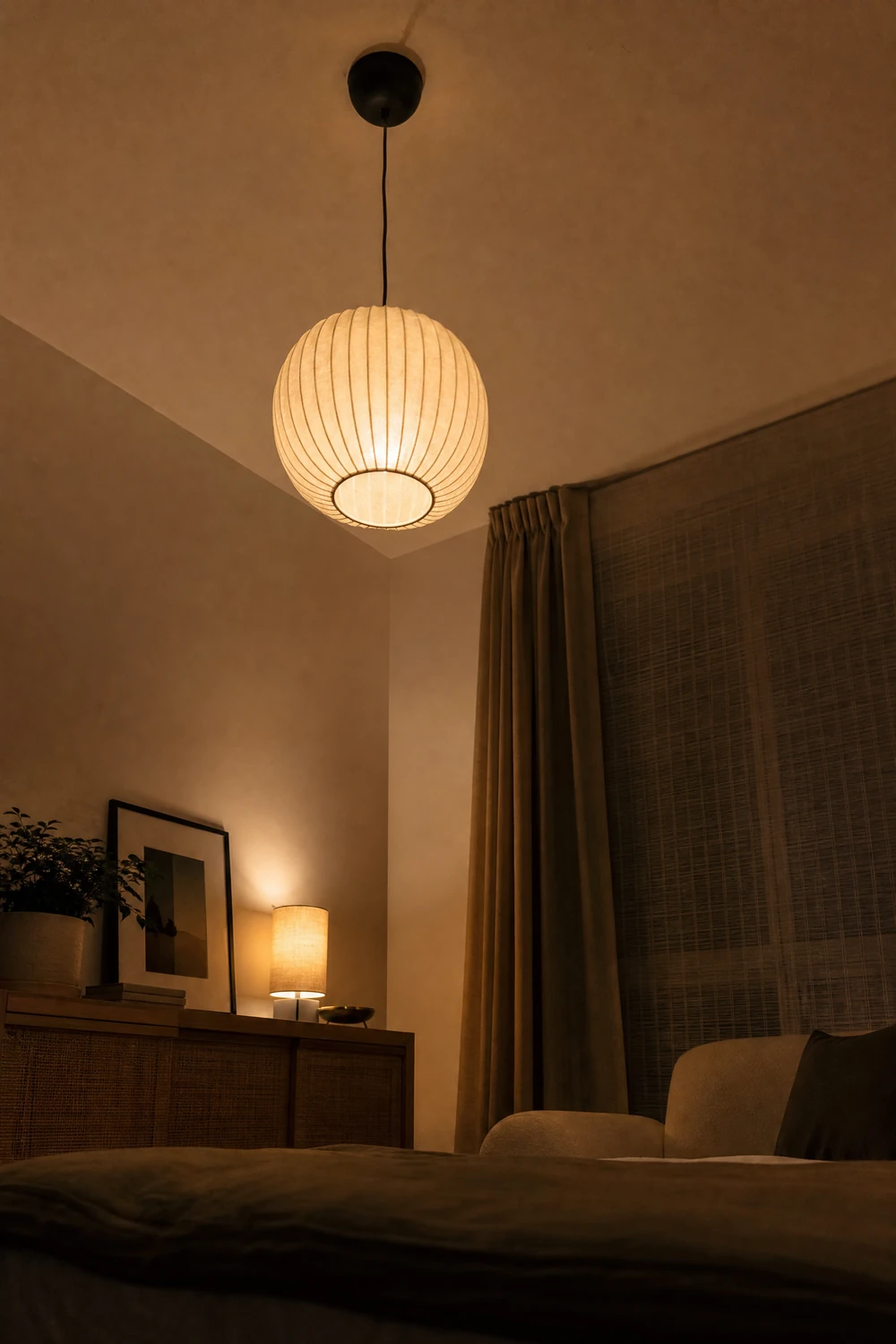
Almost every rental comes with the same builder-grade flush-mount ceiling light, a frosted glass disc or a bare bulb that casts flat, unflattering light and makes even beautiful furniture look cheap. The fix is not to replace the fitting, which most leases prohibit, but to stop using it entirely. Plug-in pendant lights and plug-in wall sconces have become genuinely good in recent years and can be hung with a single adhesive hook, with the cord running neatly down the wall and tucked behind furniture. A plug-in pendant above a dining table or bedside, combined with two floor or table lamps in warm 2700K bulbs, creates the kind of layered light that signals a designed room rather than a furnished one.
The bulb temperature inside your existing fittings matters just as much. Cool white or daylight bulbs above 4000K are the single biggest reason rental spaces feel cold and uninviting, and swapping them for warm white LEDs in the 2700K to 3000K range takes ten minutes and costs under twenty dollars. Warm light flatters skin tones, makes colors look richer, and creates the ambient glow that expensive hotels spend considerable money engineering.
Quick Tip: Keep the original bulbs when you move in. Swap them out on day one and put yours in. When you leave, swap back. It costs nothing, takes five minutes, and the difference in how the space feels is immediate.
The Walls You Cannot Paint
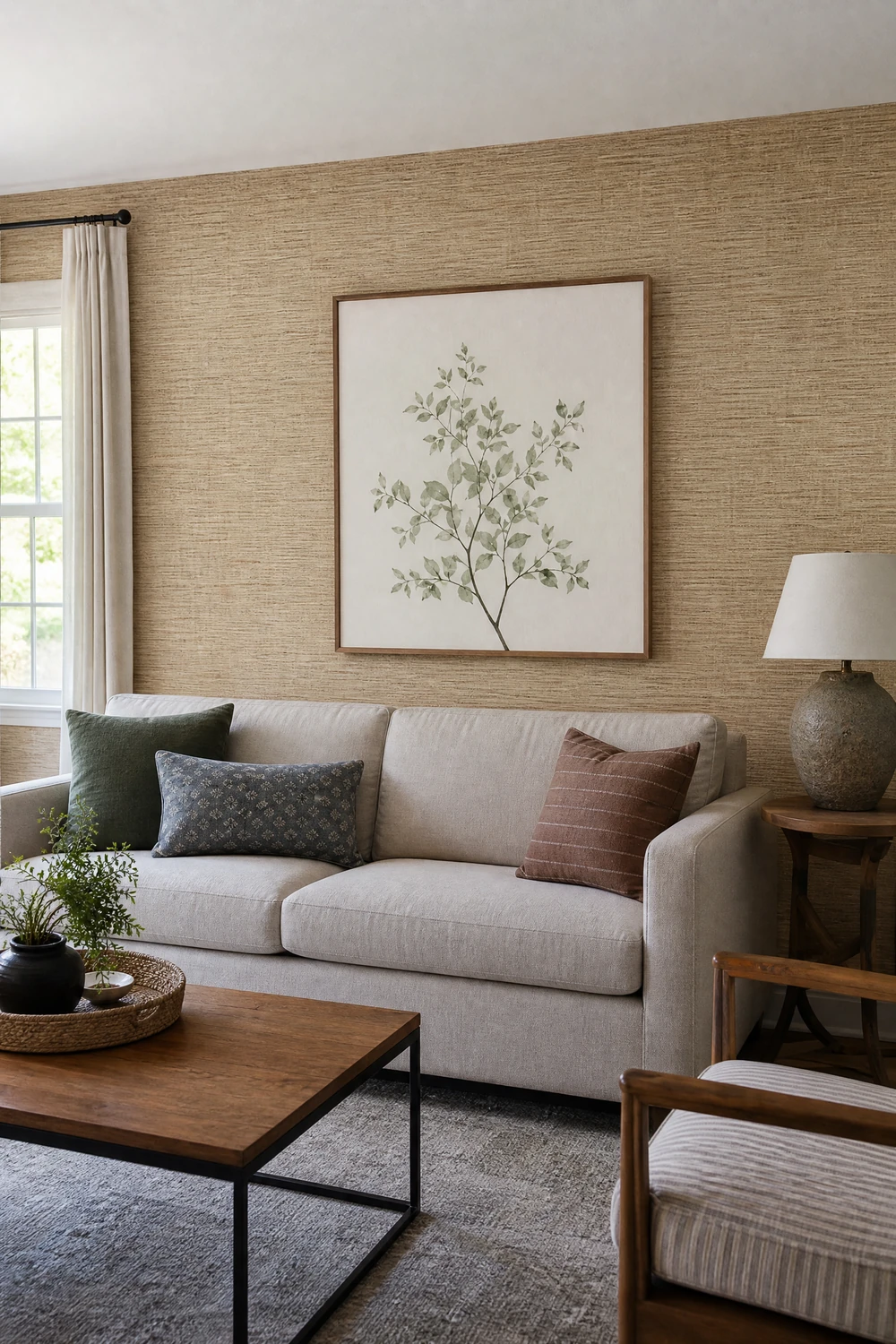
Beige walls are the default canvas of the rental world, and while they are inoffensive, they are also completely personality-free. Removable peel-and-stick wallpaper has improved so significantly over the past few years that it now reads as real wallpaper in photographs and in person. Applied to a single accent wall behind the sofa or bed, a textured grasscloth-look or a subtle geometric pattern adds the depth and personality that paint would deliver, and it comes down cleanly without damaging the plaster. Brands like Chasing Paper, Tempaper, and Walls Need Love make designs that look deliberate rather than a rental workaround.
Large-scale art is the other wall solution worth taking seriously. A single oversized canvas or framed print hung correctly at 57 to 60 inches to center can anchor an entire wall and make the beige behind it irrelevant. The mistake most renters make is buying artwork that is too small for the wall it goes on, which makes the beige more visible rather than less. In a living room, lean toward pieces at least 36 by 48 inches for full visual impact. Command strips now hold up to 16 pounds securely, which covers most framed prints and lighter canvases without a single nail hole.
Designer Advice: One large piece of art always looks more considered than a cluster of small ones. If budget is the concern, Ikea frames with free downloadable prints from sites like Unsplash or the Rijksmuseum collection look genuinely good at a fraction of what gallery art costs.
The Floors That Date the Entire Apartment

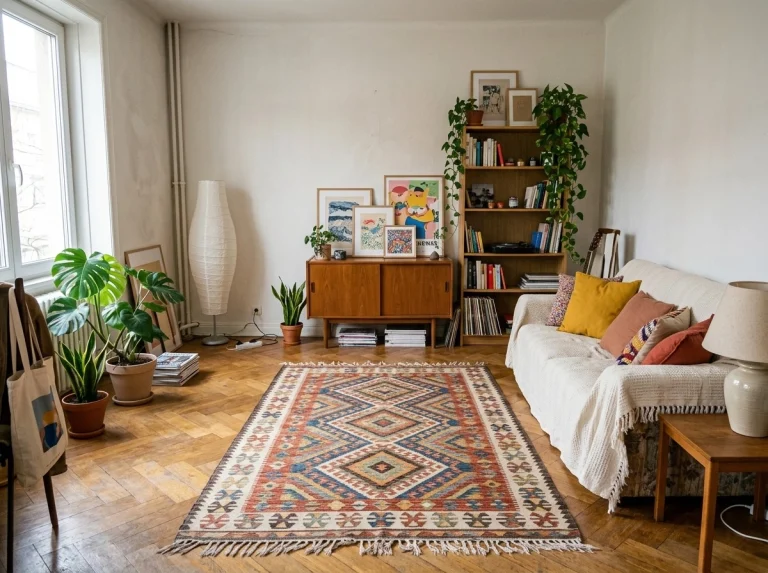
Cheap vinyl plank flooring in grey or beige, or wall-to-wall carpet in a color that has no name, is one of the hardest rental limitations to work around because it covers so much visual real estate. The solution is not to replace it but to cover as much of it as possible with a large area rug. In a living room, the rug needs to be large enough for the front legs of every seating piece to sit on it, which in most rooms means going no smaller than 8 by 10 feet. A properly sized rug in a natural material like wool, jute, or cotton effectively removes the floor from the equation and replaces it with something that looks intentional and expensive.
In rooms where a rug is impractical, such as kitchens or bathrooms, peel-and-stick floor tiles offer a deposit-safe option for covering dated lino or vinyl. The quality varies significantly by brand, so it is worth spending a little more on thicker tiles that lie flat and have a matte finish rather than a shiny one, since shine reads as cheap in a way that a matte texture does not. Geometric patterns and encaustic cement-look designs in particular can make a rental kitchen or bathroom look renovated rather than covered up.
Heads Up: When buying a rug, size up from what feels right. Most people’s instinct is to go smaller than they should, and an undersized rug floating in the center of a room makes the space feel smaller and the flooring more visible, not less.
The Kitchen That Looks Like Every Other Rental Kitchen
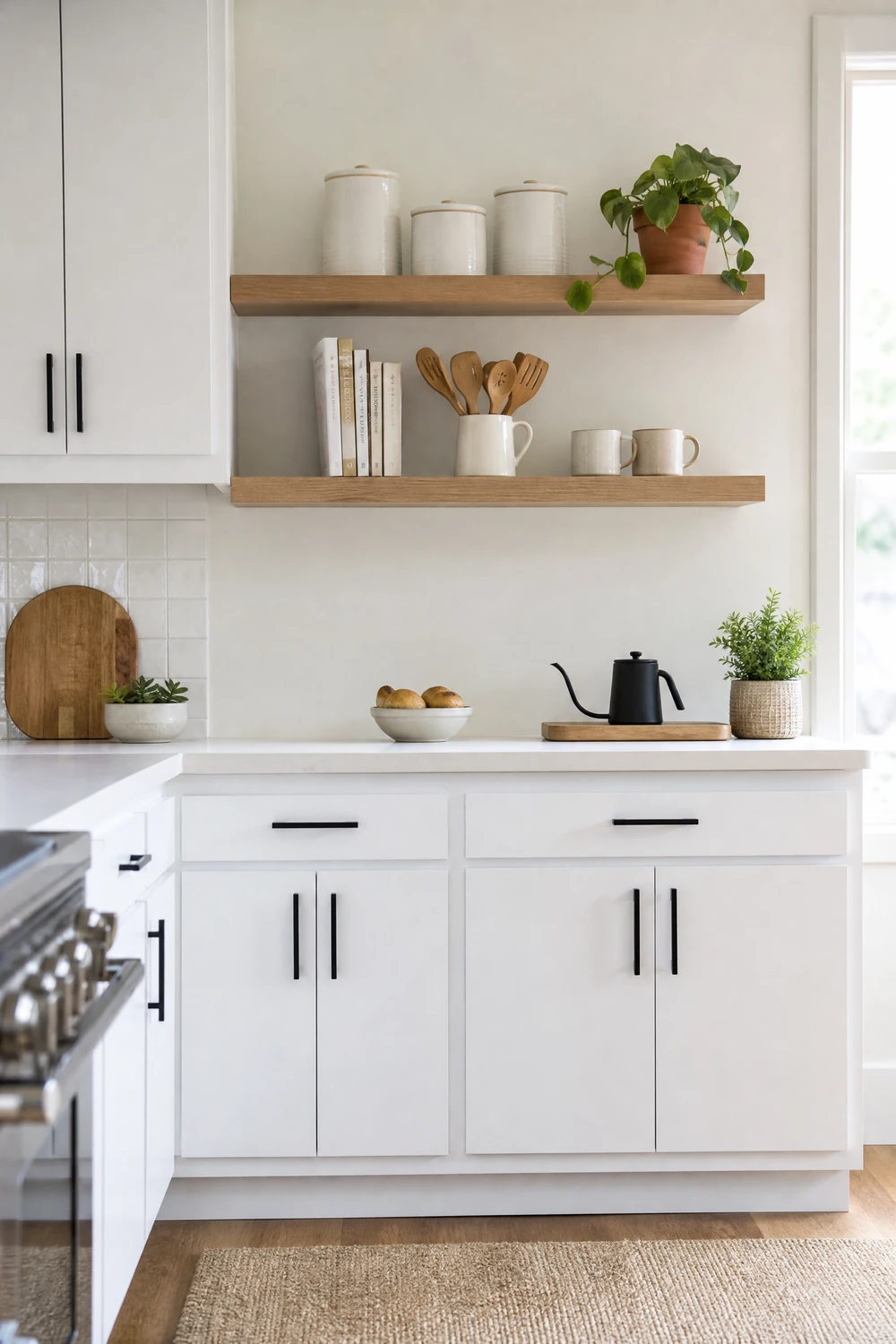
Rental kitchens tend to share the same DNA: flat-front cabinets in a wood-effect laminate or tired off-white, brass or chrome hardware that belongs to a different decade, and counters that have been wiped down by a hundred tenants before you. The quickest high-impact fix is replacing the cabinet hardware, which requires only a screwdriver and costs between thirty and a hundred dollars for a full kitchen. Matte black, brushed brass, or brushed nickel pulls in a simple bar or cylindrical shape immediately update the look of cabinets without touching the finish. When you move out, reinstall the originals and take your hardware with you.
Open shelving styled with intention does more for a rental kitchen than almost any other change. A considered arrangement of matching canisters, a small stack of cookbooks, a ceramic jug with wooden utensils, and one or two plants in terracotta pots creates a visual moment that reads as designed. The key word is matching: a set of three or four canisters in the same material and color does more than a shelf full of individually attractive but visually competing objects. Consistency is what reads as expensive in a kitchen.
Pro Move: Replace the kitchen faucet if your lease allows it. A quality faucet in matte black or brushed brass costs between sixty and a hundred and fifty dollars, swaps out in under an hour, and makes the entire kitchen look updated. Keep the original and reinstall it before you leave.
The Bathroom That Feels Like a Budget Hotel
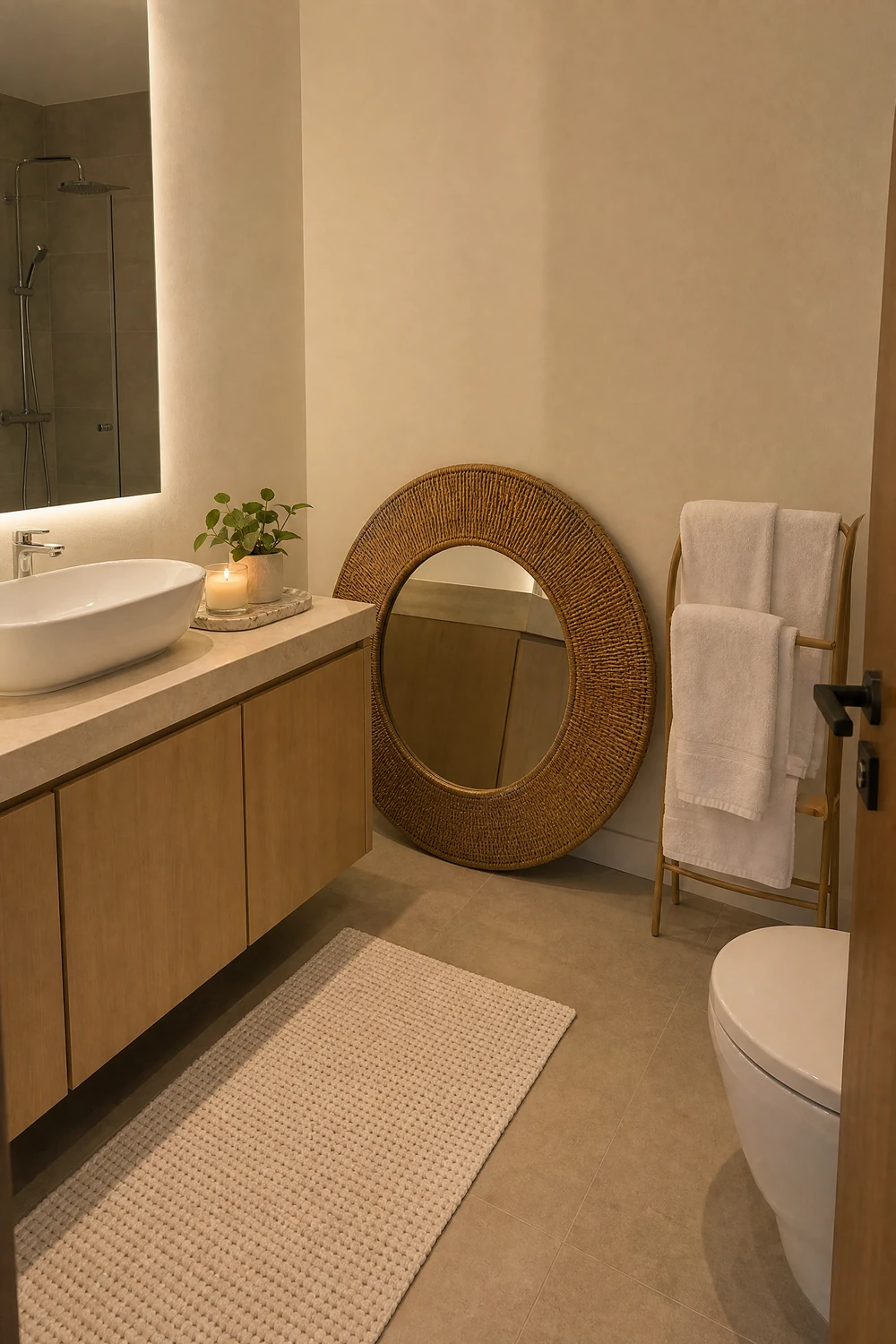
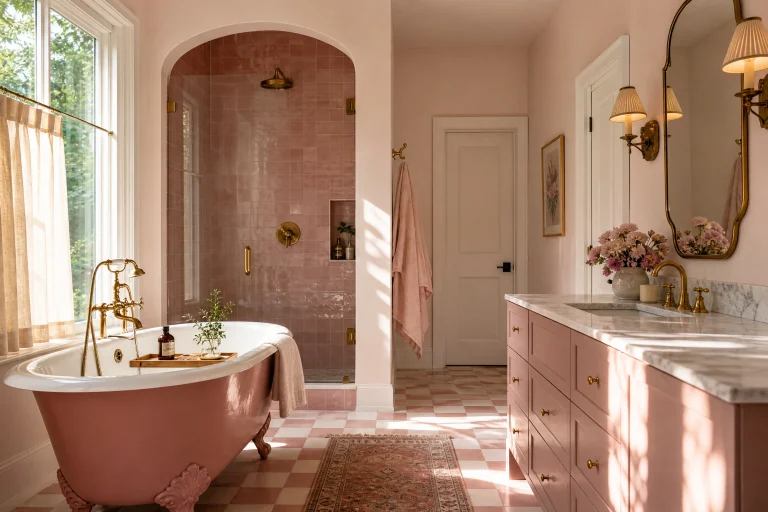
Rental bathrooms are functional and almost never beautiful. The single most effective upgrade is adding a framed mirror over or beside the plain rectangle glued to the wall. A round rattan or wood-framed mirror leaning against the wall or hung with adhesive strips next to the vanity changes the entire register of the space from functional to considered. Pair it with a linen or weighted cotton shower curtain in white or off-white, with brushed metal rings, and the room immediately steps up a level. A cheap plastic liner or a flimsy polyester curtain is doing more visual damage than most renters realize.
Textiles do the rest of the work in a bathroom because they are entirely portable and entirely within a renter’s control. Hotel-quality towels in a single color, a waffle-weave bath mat, and a simple tray on the counter holding a candle, a small plant, and a glass decanter will make a builder-grade bathroom feel like a boutique hotel room. None of these items are fixed, all of them travel with you when you move, and together they cost less than a single piece of furniture.
Reality Check: The shower curtain is doing more visual work than you think. A weighted linen or textured cotton curtain in white or off-white, paired with brushed metal rings, costs around forty dollars and changes the room entirely.
The Windows That Make Rooms Feel Unfinished
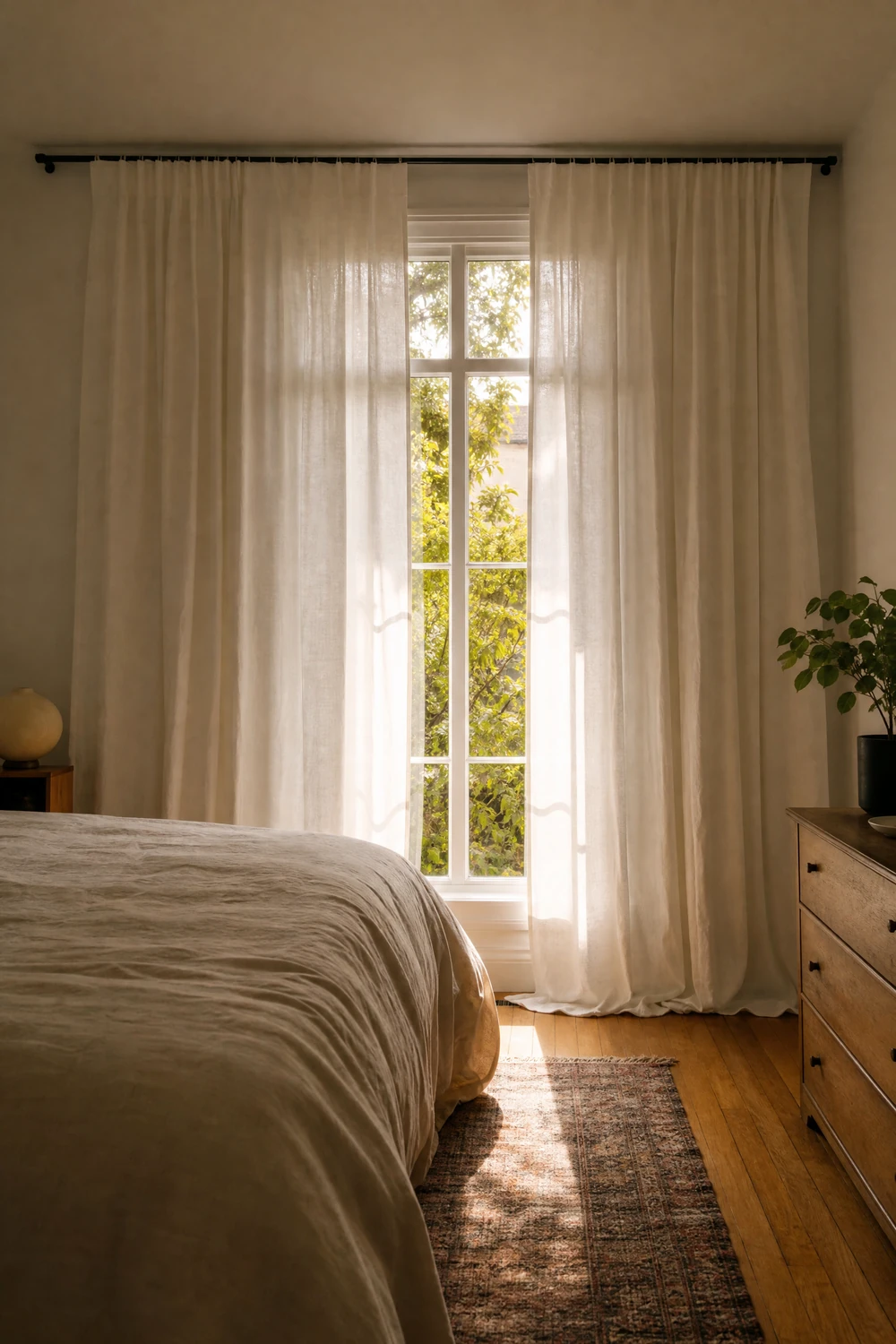
Rental windows typically come with either nothing, a basic roller blind, or venetian blinds that have seen better days. Curtains are one of the highest-impact changes you can make to any room, not because of their fabric or color but because of how they are hung. The rod should go as close to the ceiling as possible, not just above the window frame, and it should extend 8 to 12 inches beyond the frame on each side. This makes the ceiling feel taller, the window feel larger, and the entire room feel more architectural, all without any permanent changes.
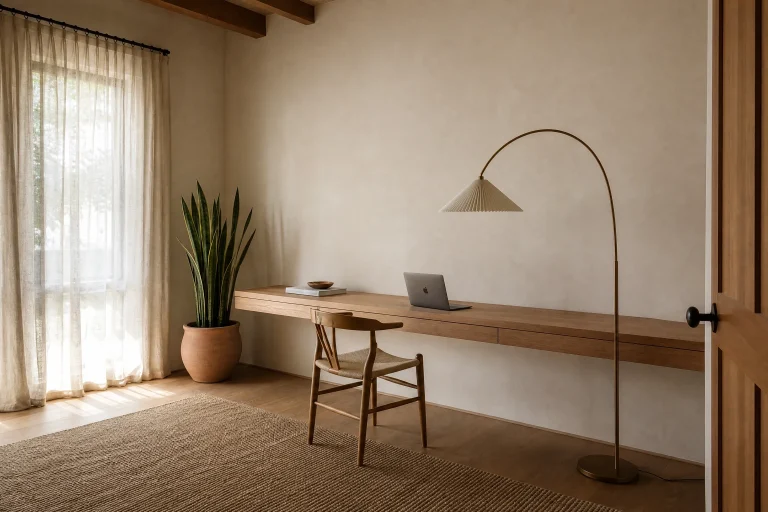
Linen or linen-look curtains in white, off-white, or a warm neutral work in virtually any rental regardless of the existing color scheme, and they soften the hard edges of a room in a way that blinds never can. If the existing blind is functional and you want to keep it for privacy, layer the curtains in front of it so the blind handles the practical work while the curtains handle the aesthetic. Floor-length curtains that puddle very slightly at the bottom, by about an inch or two, read as intentionally rich rather than impractically long.
Designer Advice: Curtains that hover above the floor, or fall exactly to the floor with no give, always look slightly off. Aim for a one to two inch puddle at the base for a look that feels genuinely considered rather than measured to the millimeter.
The Furniture That Came With the Place
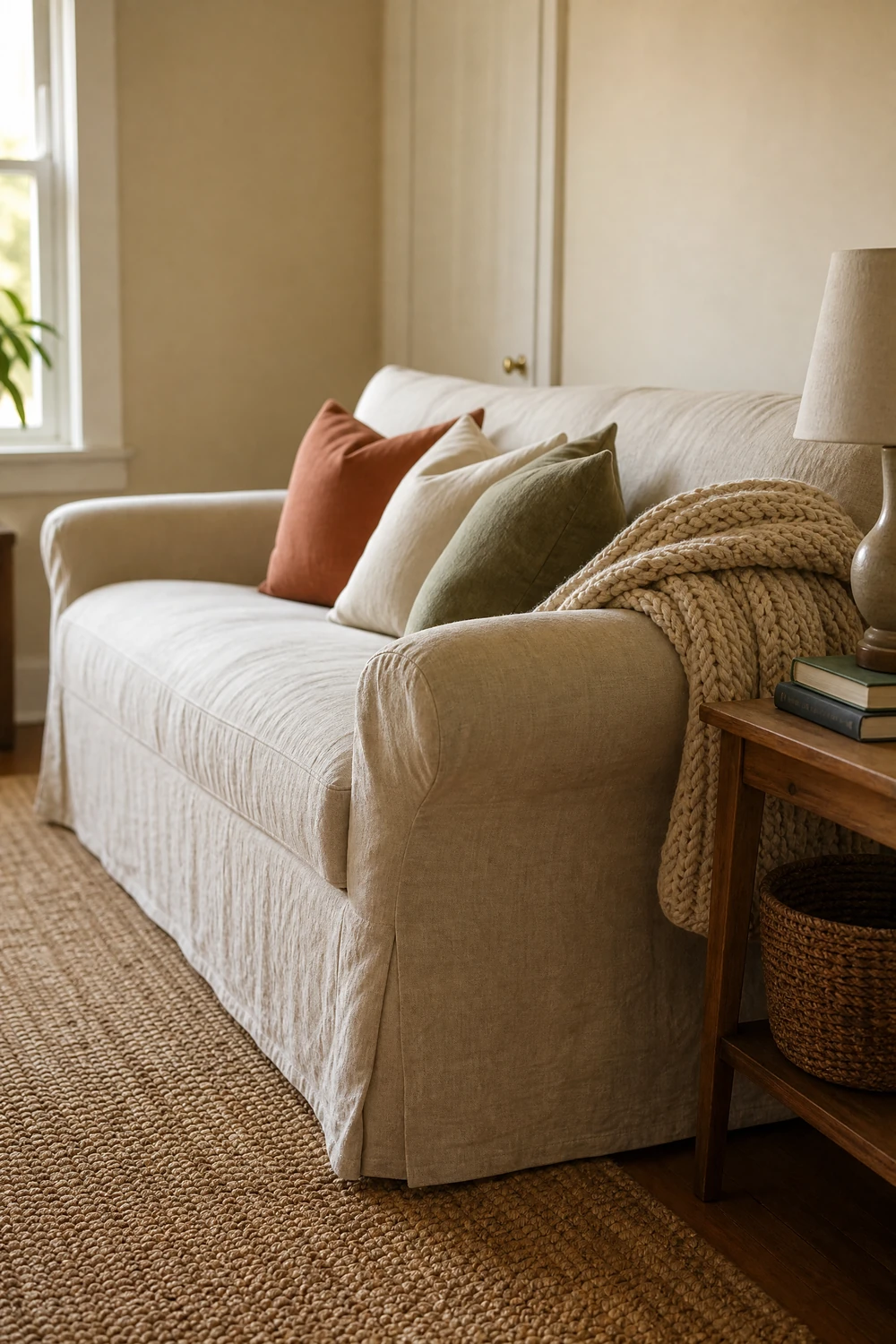
Some rentals come furnished, and the furniture is usually the weakest part of the deal. Functional, beige or brown, and chosen for durability rather than aesthetics, landlord furniture tends to undermine everything else you try to do with a space. The solution is not to remove it but to cover and redirect attention away from it. A well-fitted sofa cover or slipcover in a linen or cotton fabric takes a tired sofa in an afternoon. Throw blankets draped deliberately over the arm or back of a chair, and a consistent set of cushions across the seating, pull mismatched pieces into a coherent visual story.
Bringing in one or two pieces of your own furniture, even in a furnished rental, shifts the room significantly because it introduces something with actual design intention. A side table, a floor lamp, a vintage wooden stool used as a plant stand, or a rattan tray on the coffee table are all small additions that read as personal and considered rather than generic. The psychological effect of having even a few things in a space that you chose and own is real. Rooms feel more like home when they contain something that reflects a deliberate point of view.
Heads Up: Sofa covers are worth spending money on. Cheap ones bunch, slip, and look worse than the sofa underneath. Brands like Comfort Works and Bemz make fitted slipcovers for most standard sofa models that look like upholstery rather than a cover-up.
The Scent and Atmosphere Nobody Talks About
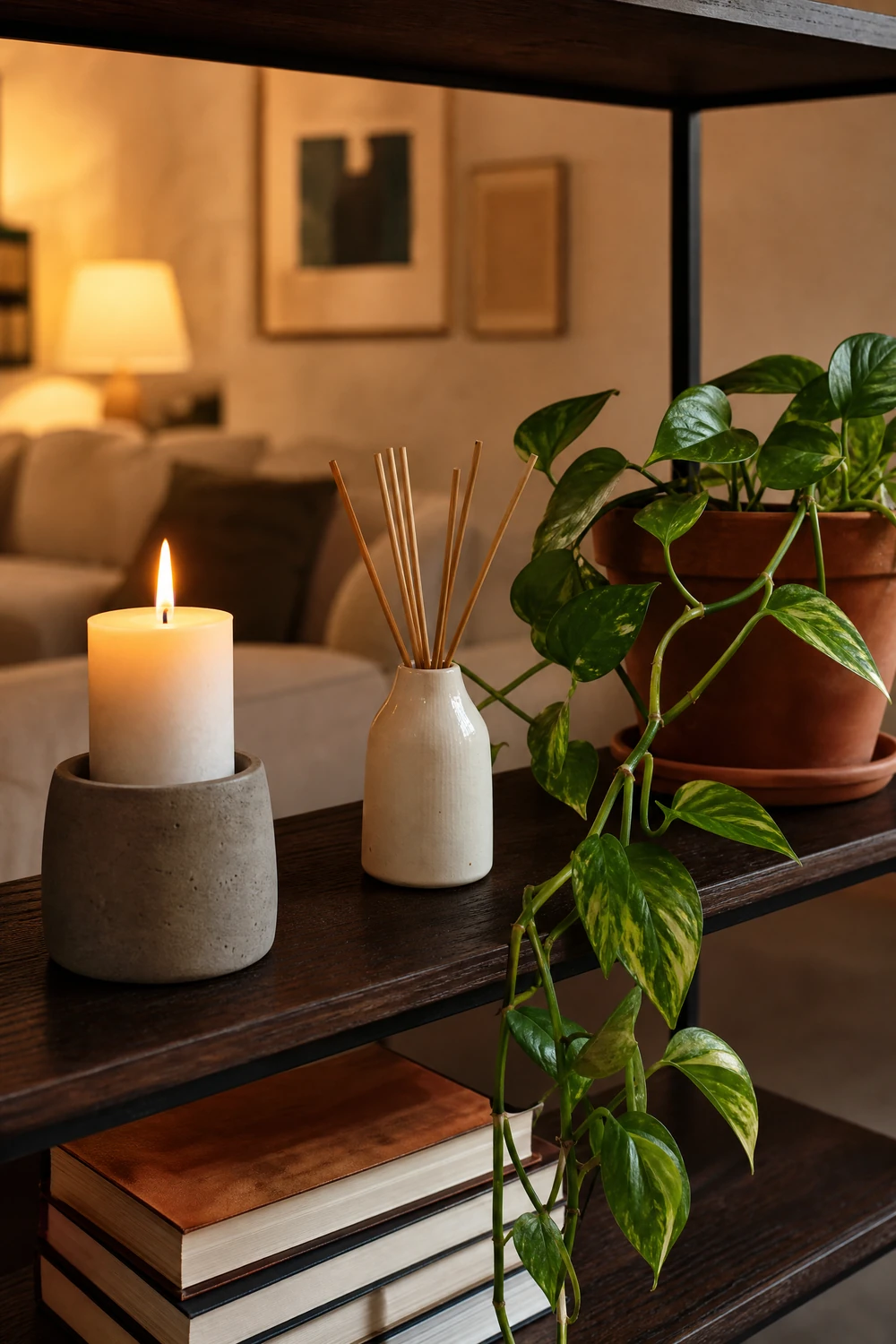
Luxury spaces smell like something specific and pleasant. It is one of the first things you notice walking into a well-designed hotel room or a beautifully kept home, and it is almost never discussed in rental decor guides because it does not photograph. A quality candle, a reed diffuser, or an essential oil diffuser running with a considered scent, warm woods, sandalwood, white tea, fig, or a clean linen note, adds a layer of sensory richness that changes how the space feels before you have even looked at it properly. Scent is one of the most direct routes to making a space feel considered and personal rather than temporary and generic.
The same principle applies to plants and air quality. A few well-placed plants that genuinely thrive indoors, such as a pothos, a snake plant, or a peace lily, add life to a rental in a way that purely decorative objects cannot. Plants do something no amount of art or cushions can fully replicate: they signal that someone cares about this space. A room with healthy, well-kept plants reads as a loved home regardless of how generic the finishes around them are.
Pro Move: Match your candle or diffuser scent to the season. A warm amber or cedarwood note in autumn and winter, a lighter citrus or green tea scent in spring and summer. It sounds like a small detail but it makes your home feel seasonally intentional in the way that genuinely well-kept spaces always do.
The Entryway That Sets the Wrong First Impression
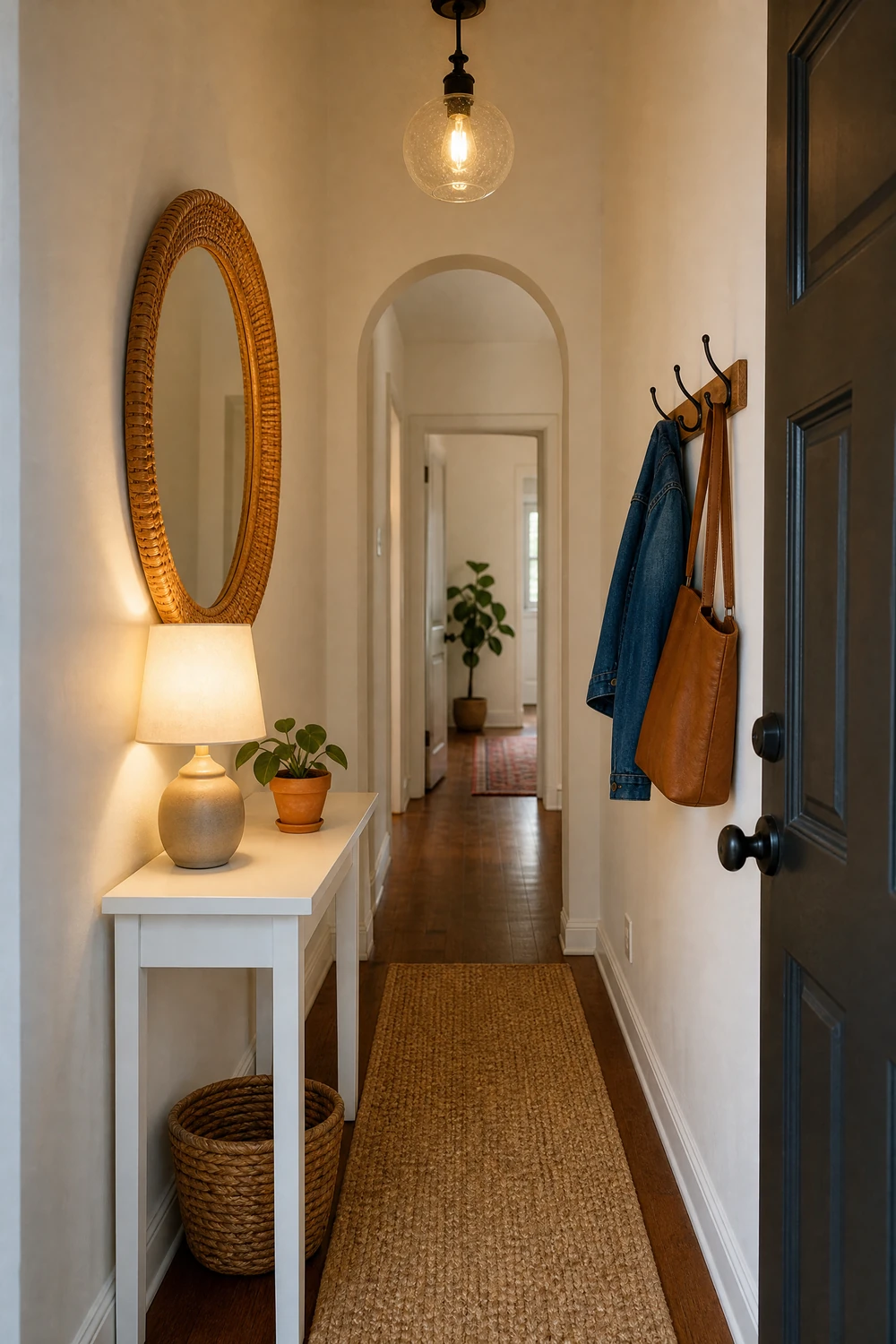
Most rental entryways are afterthoughts: a patch of floor between the front door and the living space with nothing to suggest that what lies beyond is worth entering. A narrow console table or a slim shelf with a small lamp, a bowl for keys, and one plant immediately takes a blank corridor into a moment of arrival. It does not need to be large or expensive. A secondhand console painted in a single matte color, a rattan mirror above it, and a simple wall hook for coats create an entry that feels designed rather than defaulted to. In practical terms, it also solves the functional problem of having nowhere to put things when you walk in.
Flooring in entryways tends to be the most worn and visually tired surface in any rental. A small runner in a natural fiber or a patterned flatweave defines the space and covers the damage simultaneously. Even a 2 by 4 foot rug in front of the door changes the entry from a bare transition zone into a room with edges and intention. The mirror above the console serves double duty: it reads as a decorative choice and makes a narrow entry feel wider and brighter by reflecting whatever light comes through the door or from the lamp beside it.
Quick Tip: A hook rail mounted with removable adhesive strips, rather than screws, handles coats, bags, and keys while keeping the entry clear. It is one of the most functional additions a renter can make and one of the first things guests notice.
The Bedroom That Feels Like a Guest Room
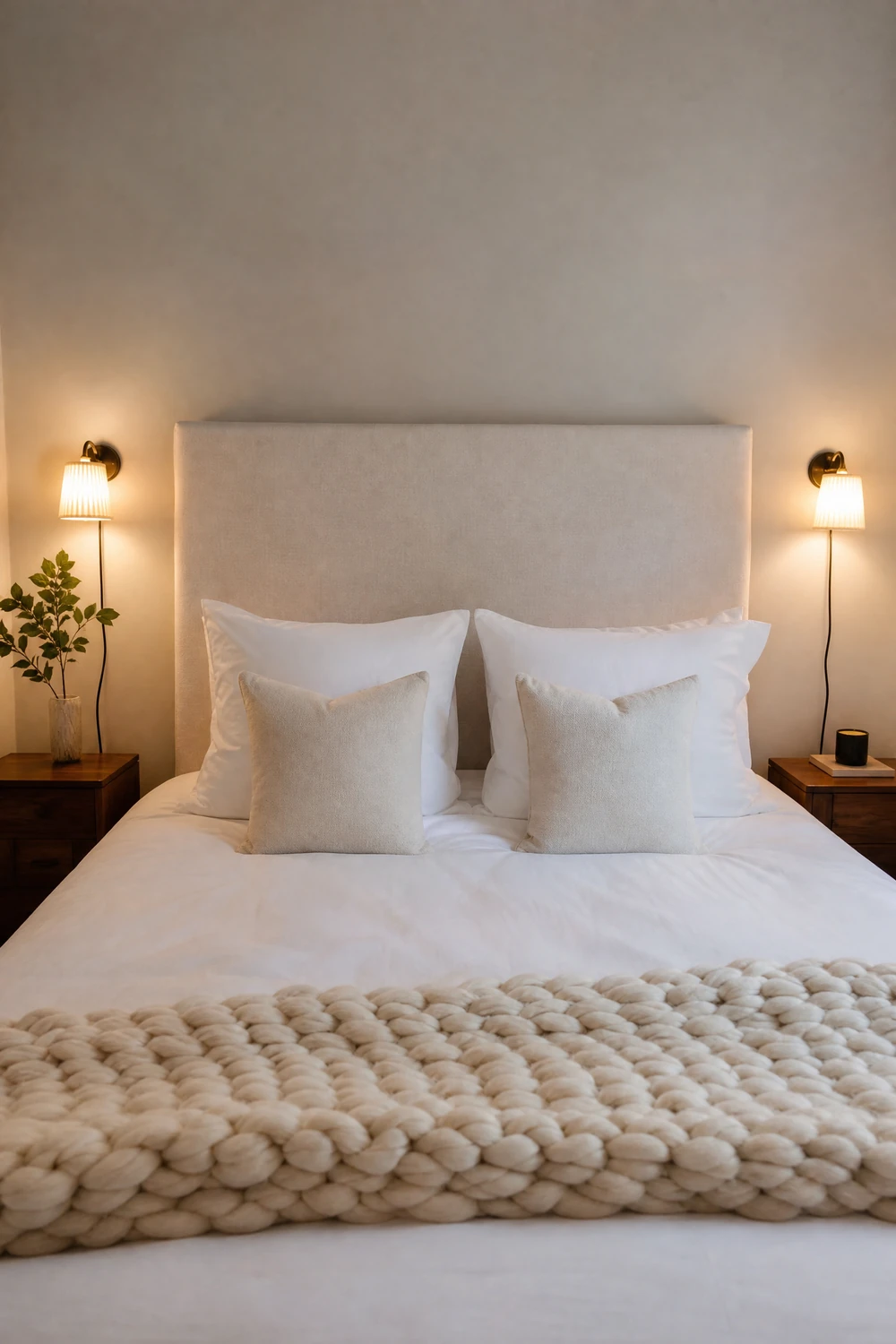
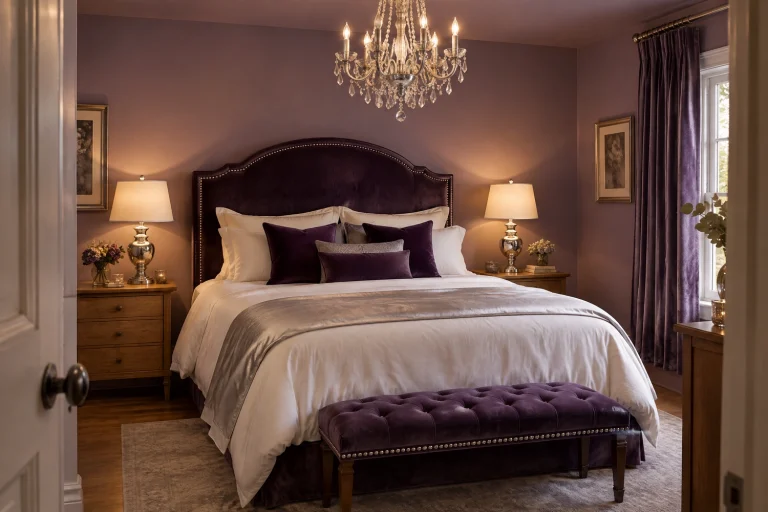
Rental bedrooms tend to feel generic in a specific way: a bed, a flat-pack wardrobe, and nothing on the walls. The fastest route to a bedroom that feels like a boutique hotel is investing in the bed itself, not the frame but what is on it. High thread-count cotton or linen bedding in a single clean color, a properly filled duvet with a high tog rating, and at least four pillows layered in two sizes transform the bed from a place to sleep into a visual anchor for the entire room. Hotels spend disproportionately on bedding because they understand that how a bed looks and feels determines how the whole room is experienced.
Bedside lighting is the other change that makes a rental bedroom feel considered rather than functional. The overhead light in a bedroom should almost never be used in the evening. A small table lamp or a plug-in wall sconce on each side of the bed at a height that allows comfortable reading, in a warm bulb, creates the kind of intimate atmosphere that no ceiling fixture can replicate. If there is no bedside table, a small floating shelf mounted with removable brackets gives you a surface for the lamp, a book, and a glass of water without taking up floor space.
Designer Advice: Make the bed every morning, even in a rental. It sounds obvious but the visual difference between a made bed and an unmade one accounts for roughly half of how rich or otherwise a bedroom feels at any given moment.
The Storage That Makes Everything Look Cluttered

Rentals rarely have enough storage, and what they do have is usually poorly designed: a single wardrobe with a hanging rail, kitchen cabinets that are too high or too shallow, and no linen closet to speak of. The visible result is clutter, and clutter is the single fastest way to make any space feel smaller and cheaper than it actually is. The solution is not more storage in the conventional sense but better-looking storage that does not fight the room visually. A set of matching baskets on an open shelf, a linen storage ottoman at the foot of the bed, and a row of matching hangers in the wardrobe cost very little and create the impression of order that expensive homes project.
Visible wires, chargers, and cables are part of the same problem. A cable management box on a desk or sideboard, a charging station tucked inside a drawer, and cord clips that route cables along the back edge of furniture eliminate the visual noise that clutters even well-furnished spaces. In a rental where you cannot build in cable channels, these surface-level solutions are the practical equivalent and they cost under twenty dollars in total. The discipline of keeping surfaces clear, with only intentional objects in view, is what separates a room that looks expensive from one that looks lived-in in the wrong way.
Reality Check: Matching storage containers make a bigger difference than most people expect. A shelf of mismatched boxes and bags reads as chaos. The same shelf with three identical baskets in natural rattan reads as a considered design choice. The contents are identical. Only the containers changed.
The Details That Quietly Signal Quality
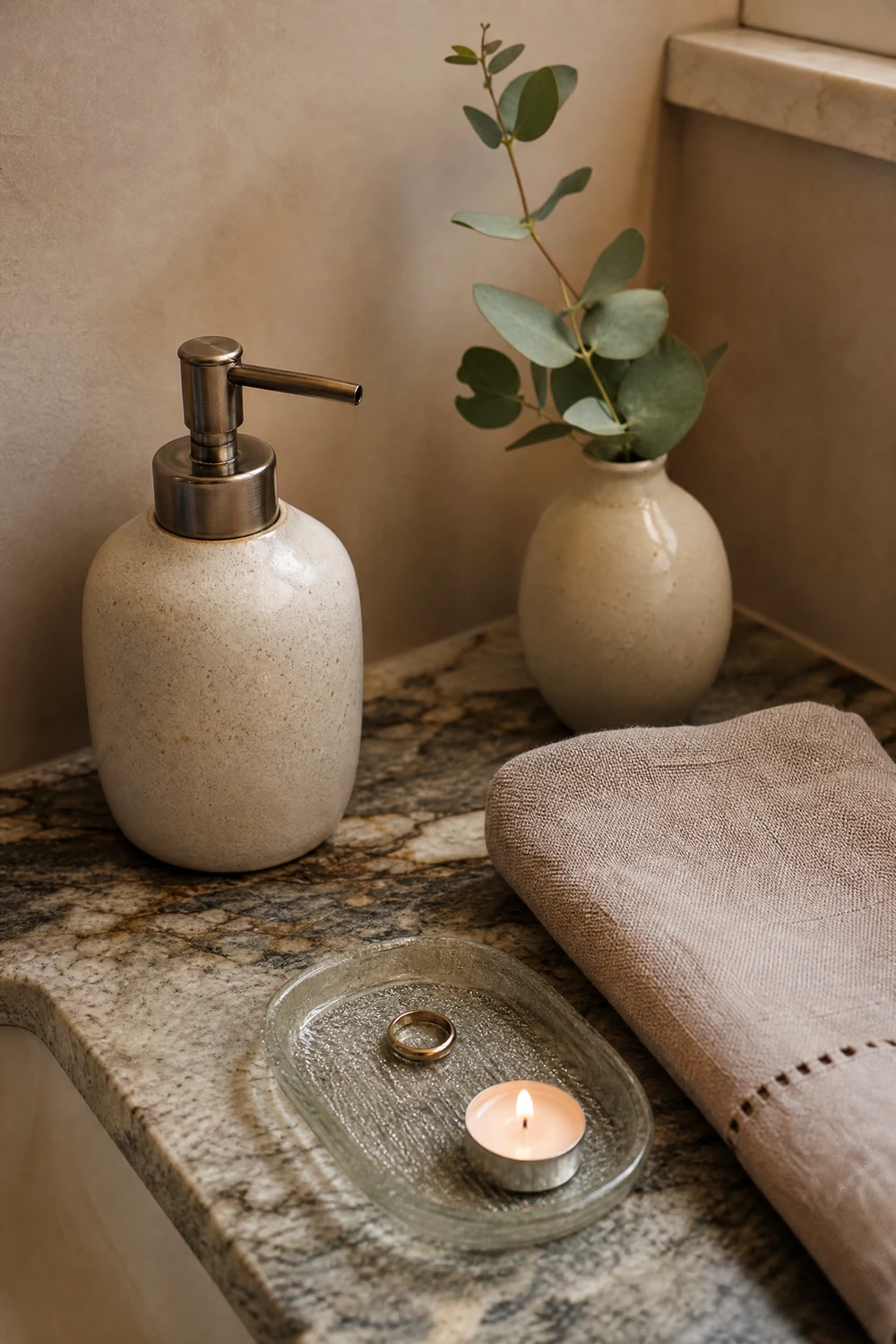
Luxury is not one big gesture. It is an accumulation of small details that together create a feeling of care and intention that generic spaces never quite achieve. In a rental, these details are almost entirely within your control even when the bigger picture is not. Swapping plastic light switch covers for brushed brass or matte black alternatives costs under five dollars per switch and takes three minutes with a screwdriver. Replacing a basic toilet roll holder or towel ring with a brushed metal version in the bathroom does the same. These are not changes anyone will consciously notice, but they are changes that contribute to an overall impression of quality that people feel without being able to explain.
The same principle applies to the objects you choose to display. A ceramic soap dispenser instead of a plastic pump bottle, a linen hand towel instead of a paper roll, a tray corralling the items on a bathroom or kitchen counter rather than leaving them scattered. None of these things are expensive individually. Together they create the kind of considered, consistent aesthetic that is the actual definition of a luxury space, not price tags or square footage but the evidence of someone paying attention to every detail.
Pro Move: Walk through your rental and look for every piece of plastic. Plastic reads as temporary and cheap in a way that ceramic, glass, wood, and metal never do. Replacing visible plastic items with natural or metal alternatives, one at a time, is one of the most cost-effective ways to raise the perceived quality of any space.
Rental Eyesore Quick-Fix Reference
| The Problem | The Fix | Deposit Safe? | Approx. Cost |
| Flat builder-grade ceiling light | Plug-in pendant + warm bulb swap | Yes | $30-$80 |
| Beige walls you cannot paint | Peel-and-stick wallpaper or large-scale art | Yes | $40-$150 |
| Cheap vinyl or carpet floors | Large area rug covering most of the floor | Yes | $80-$300 |
| Dated cabinet hardware | Swap for matte black or brushed brass pulls | Yes (reinstall originals) | $30-$100 |
| Plain rental bathroom | Framed mirror, quality towels, linen shower curtain | Yes | $50-$120 |
| Unfinished windows | Floor-length curtains hung near ceiling | Yes | $40-$120 |
| Landlord furniture | Fitted slipcover + personal cushions and throws | Yes | $60-$200 |
| No atmosphere or scent | Quality candle or diffuser + indoor plants | Yes | $20-$60 |
| Blank entryway | Console table, mirror, small lamp, runner rug | Yes | $50-$150 |
| Generic bedroom | Quality bedding + plug-in bedside lamps | Yes | $80-$200 |
| Visible clutter and cables | Matching baskets, cable box, clear surfaces | Yes | $20-$60 |
| Cheap plastic details | Swap for ceramic, metal, wood alternatives | Yes | $10-$40 per item |
The Bigger Point
The difference between a rental that feels cheap and one that feels expensive is almost never the architecture or the fixtures. It is the quality of the decisions made on top of them. Warm light, considered textiles, properly hung curtains, one piece of meaningful art, hardware that does not look like it was chosen from a builder’s catalogue, and surfaces that are clear rather than cluttered are all things entirely within a renter’s control. None of these changes require permission, most of them cost less than a single piece of furniture, and all of them travel with you when you leave. The space you live in shapes how you feel every single day. It is worth the effort regardless of how temporary the lease is.