How to Transform Your Living Room in a Weekend

Most living room makeovers fail not because of bad ideas, but because of bad order. Fixing the order costs nothing and makes every subsequent decision easier. You move the sofa, realize the rug looks wrong, buy a throw, notice the lighting is off, and by Sunday evening you’re surrounded by half-finished changes and a room that somehow looks worse. This guide fixes that with a realistic, sequenced two-day plan where every step builds on the last, so by Sunday night the room feels genuinely different.
Saturday Morning: Empty the Room and See What You Actually Have

Before you spend a dollar or move a single piece of furniture, spend Saturday morning clearing the room completely. Pull everything away from the walls, take down all art and decor, roll up the rug, and set it all in the hallway or center of the room. Then stand in the doorway and look. You’ll spot things you stopped noticing months ago: a scuff that needs addressing, a corner that gets beautiful morning light but is blocked by a chair, a floor that actually looks warm and lovely under the clutter.
While the room is empty, give it a proper clean. Wipe down skirting boards, clean the windows, vacuum the corners. Then take a photograph from the doorway before anything goes back in. You’ll use it at the end of the weekend to see how far you’ve come, and the comparison will be more dramatic than you expect.
Pro Move: Sort everything you remove into three groups: definitely back in, maybe, and probably not. By Sunday, the “probably not” pile almost always becomes a donation run, which is one of the highest-impact things you can do for any room.
Saturday Midday: Solve the Layout Before Anything Else

Furniture layout is the highest-impact, zero-cost change you can make, and it has to happen before any decorative decision. The most common mistake is pushing everything against the walls, which creates a stiff, waiting-room feel rather than the spaciousness it’s meant to deliver. Float your sofa at least 12 to 18 inches from the wall and pull the seating inward to form a natural conversation zone around a central coffee table or rug. Rooms where furniture floats always feel warmer and more intentional than rooms where everything lines the perimeter.
Scale matters just as much as arrangement. A rug that is too small is one of the most common reasons a living room never quite looks finished, even when everything else in it is attractive. The front legs of every major seating piece should sit on the rug. In most living rooms that means going no smaller than 8 by 10 feet. Once the layout feels right, stop adjusting it. Everything decorative that comes after is built on this foundation, and changing it later undoes everything on top.
Reality Check: If the room feels smaller after rearranging, it’s almost always the rug being too small, not the layout being wrong. A rug that’s too small visually shrinks a room far more than a floating sofa ever does.
Saturday Afternoon: The Focal Wall and What to Do With It
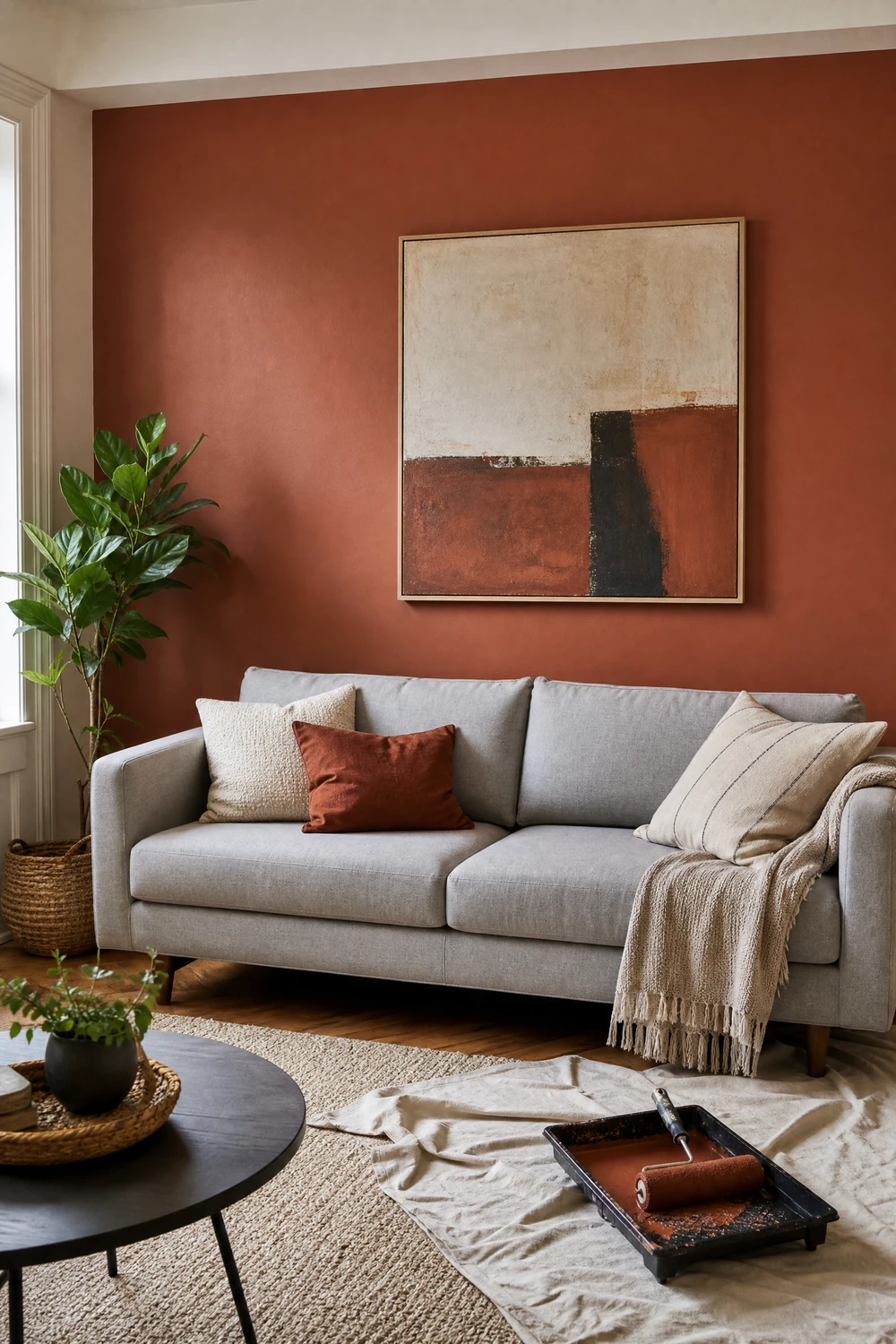
With the layout locked, address your focal wall, the one your sofa faces or the one visible the moment you enter. This wall carries most of the room’s visual personality and sets the color direction for every decorative decision that follows. A single accent wall in a warm terracotta, deep navy, forest green, or soft sage does more for a room than repainting all four walls, at a fraction of the time and cost. If you’re renting, quality peel-and-stick wallpaper is a genuine option now, not a compromise. Brands like Chasing Paper and Tempaper read as proper wallpaper in person and come down cleanly.
If you’re not painting, this is still the time to decide what the focal wall is doing. A large-scale piece of art, a gallery arrangement, or a statement mirror all work. What to avoid is leaving this wall as an afterthought, because a focal wall that doesn’t draw the eye means the rest of the room has no clear place to land. Before you commit to any paint color, sample it on the actual wall and check it in both daylight and lamp light. Colors shift dramatically between morning and evening, and a tester pot costs almost nothing.
Designer Advice: Dark paint on one wall does not make a room feel smaller. It makes the room feel deeper. This myth stops people from making the bold, high-impact choices that actually transform a space.
Saturday Evening: Fix the Lighting and Fix Everything

Lighting is the most overlooked change in any living room makeover and the one that makes everything else look better or worse. Turn off your overhead light and look at the room. If it feels dim, that’s a sign the room relies too heavily on one source. The goal is layered light: multiple sources at different heights that together produce a warm, even atmosphere. A floor lamp behind the sofa, a table lamp on a console, and a picture light over your focal wall art create three distinct layers that make a room feel rich without any structural changes.
Bulb temperature is the other fix that costs almost nothing and delivers an outsized result. Replace every bulb in the room with warm white LEDs between 2700K and 3000K. Cool or daylight bulbs above 4000K make even beautiful rooms feel flat and slightly clinical. Spend Saturday evening sitting in the room with only lamps on and note any areas that feel too dim or too bright. You’ll fine-tune those once the textiles and accessories are in on Sunday, because the balance shifts once there’s more material in the room to reflect and absorb light.
Quick Tip: A dimmer switch on your overhead light costs around fifteen dollars and thirty minutes to install. It gives you instant control over the room’s atmosphere and is one of the best-value changes you can make in any living room.
Sunday Morning: Textiles Are the Color Story
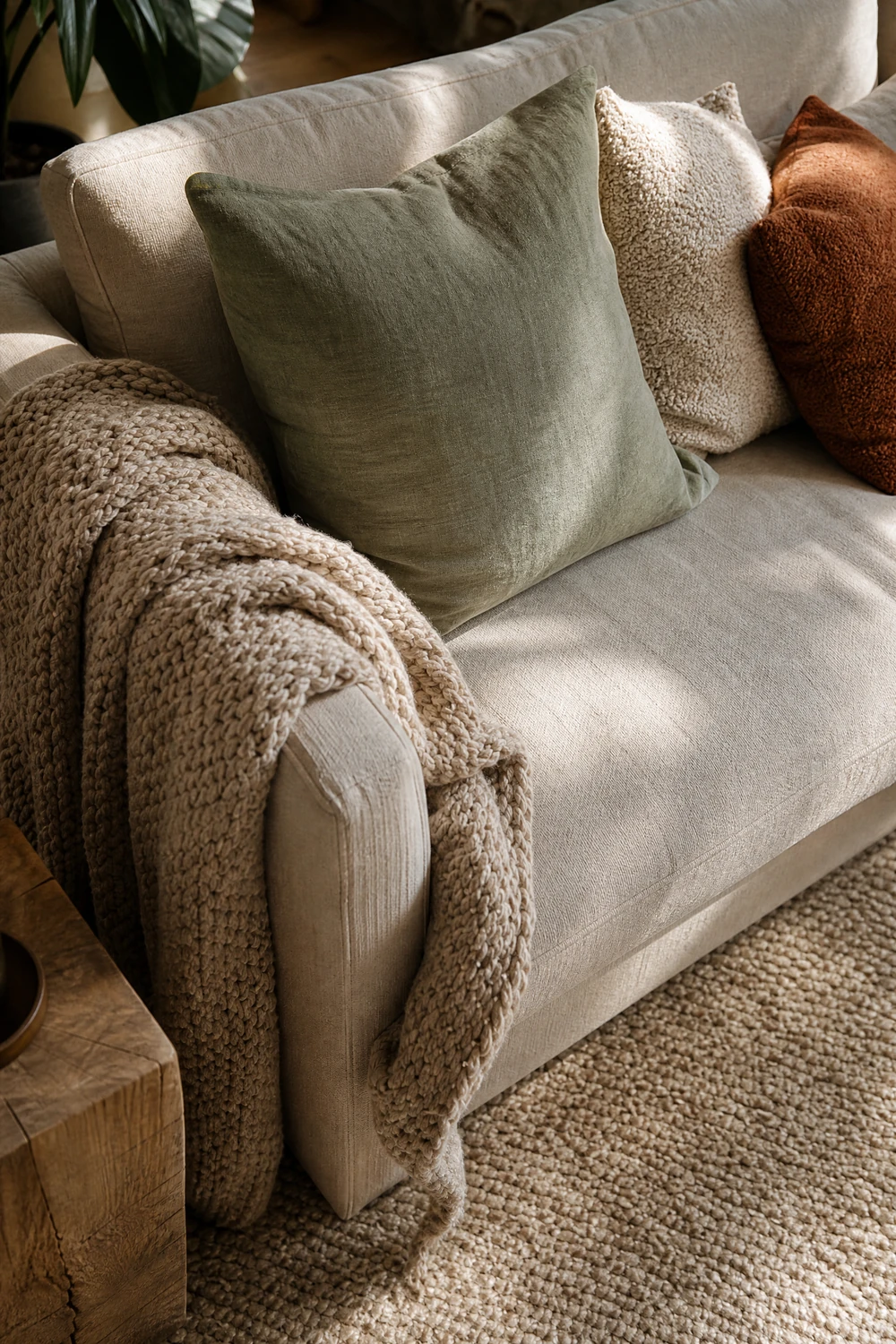
Textiles are how you introduce color, texture, and warmth into a room without replacing furniture, and Sunday morning is when they go in. The most reliable approach is to pick two quiet anchor colors and one bolder accent. The anchors, think warm cream, natural linen, soft olive, or dusty blue, go into the largest pieces: the rug and the curtains. The accent, terracotta, rust, forest green, or deep burgundy, goes into the throw pillows and smaller details. When the same colors repeat across the room in different materials, the space starts to feel coordinated rather than assembled.
Curtains are where most people lose the most impact without realizing it. Hang the rod as close to the ceiling as possible, not just above the window frame, and extend it 8 to 12 inches beyond the window on each side. This makes the windows look larger, the ceilings feel taller, and the whole room feel more architectural. For pillows, mix scales and textures rather than buying matching sets. One large solid, two medium textured, one smaller graphic accent in odd numbers always reads more natural and more expensive than a perfectly matched pair.
Heads Up: Buy pillow inserts one size larger than the cover. A 20-inch cover filled with a 22-inch insert looks noticeably fuller and more expensive, and it costs almost nothing extra to do.
Sunday Midday: Edit Everything Back Down to Almost Nothing

This is the step that separates rooms that look styled from rooms that just look decorated, and it’s the one most people skip. After textiles are in, go through every surface and remove roughly two-thirds of what’s there. A single coffee table book, a sculptural bowl, and a small plant on a coffee table look considered and intentional. The same table with seven items looks cluttered, even if every single piece is attractive. The eye needs somewhere to rest, and when every surface is busy, it can’t settle anywhere.
When deciding what goes back, apply one question: does this object add something specific that the room actually needs? A color it’s short on, a texture not represented elsewhere, a scale that works with its surroundings, or a personal meaning worth displaying. Anything that fails that test goes back in the box. Books work best displayed horizontally in small stacks of two or three rather than packed vertically across an entire shelf. It looks more deliberate and gives the shelf breathing room.
Pro Move: Live with the edited-down version for a few days before adding anything back. Most people find they prefer the quieter room and bring back far less than they removed.
Sunday Afternoon: Hang Your Art at the Height It Actually Belongs

Art hung too high is the most universal mistake in residential living rooms, and it makes even beautiful pieces feel disconnected from the room. The center of any artwork should sit at 57 to 60 inches from the floor, which is average standing eye level. Above a sofa, leave 6 to 8 inches between the top of the sofa back and the bottom of the frame. More than that and the art floats. Less and the two elements compete. This one adjustment, more than almost any other, is what distinguishes a room that was thoughtfully arranged from one that was just filled with things.
For a gallery wall, lay everything out on the floor first and test the arrangement before committing to a single nail hole. Use painter’s tape on the wall to map the dimensions of the grouping before you start hanging. Mirrors are worth considering here too because they do something art cannot: a large mirror opposite a window bounces natural light back into the space and makes the room feel significantly larger. A round mirror in particular softens the angular geometry of most living rooms and works well above a console where a rectangular piece would feel too expected.
Designer Advice: If you’re unsure where a piece belongs, lean it against the wall and live with it there for a day before hanging. You’ll know quickly whether it’s right, and you won’t have unnecessary holes to fill.
Sunday Evening: The Two-Perspective Check
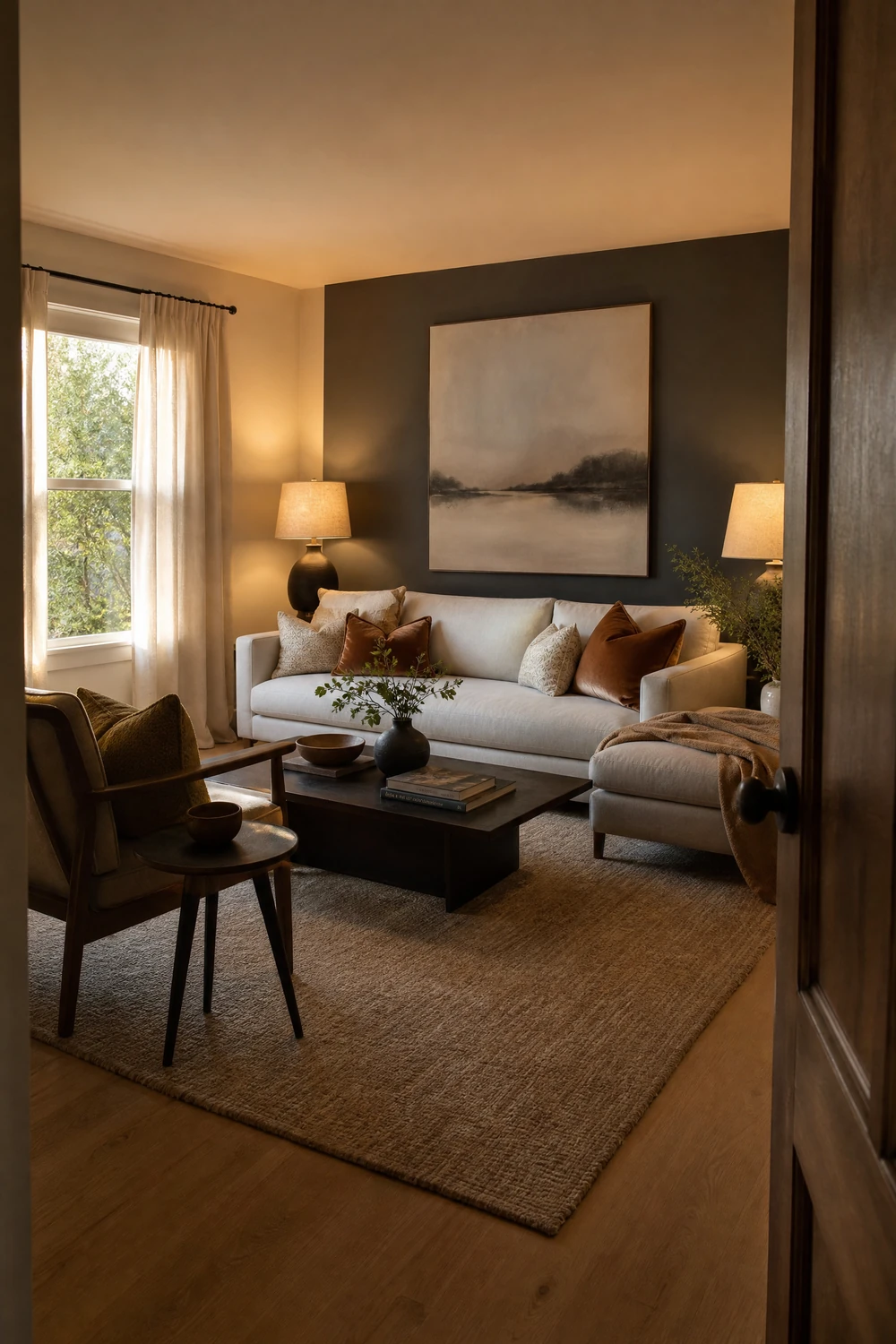
Stand in the doorway and look at the room as if you’ve never seen it before. Is there a clear focal point? Do the colors feel connected? Is any surface noticeably busier or emptier than everything around it? This entrance view reveals compositional issues that are invisible when you’re moving around inside the space. Then sit in your usual spot on the sofa and look again, because that’s where the room is actually lived in. Lamp heights, art angles, and surface arrangements all read differently from a seated position than they do from standing.
Make small adjustments from both perspectives, move a lamp a few inches, shift a pillow, remove or add one object from a surface, then look again. When both views feel right, turn off the overhead light, switch on all the lamps, and look at the room in the warm evening light it will live in most days. This is the truest test of whether the room works. If something still feels off, it’s almost always the lighting balance or the rug size. Both are fixable in under an hour.
Reality Check: If you’re unsure whether a change helped, pull up the Saturday morning photograph. The comparison will make the answer obvious and show you exactly how much ground you’ve covered in two days.
The Full Weekend at a Glance
| When | What to Do | Why This Order Matters |
| Saturday Morning | Clear the room, clean, photograph | You can’t make good decisions around clutter and arrangements you’ve stopped seeing |
| Saturday Midday | Solve the furniture layout completely | Every decorative choice depends on this. Changing it later undoes everything built on top |
| Saturday Afternoon | Address the focal wall: paint, wallpaper, or art | Sets the color direction before you buy or arrange anything decorative |
| Saturday Evening | Add lamps, swap bulbs to warm white | Warm layered light makes every subsequent change look better |
| Sunday Morning | Add textiles: rug, curtains, pillows, throws | Ties the color story together once the structural decisions are locked in |
| Sunday Midday | Edit accessories down, add back selectively | Negative space is what makes a room feel finished |
| Sunday Afternoon | Hang art correctly, style shelves and surfaces | Art at the right height anchors the furniture beneath it |
| Sunday Evening | Doorway check, then sofa check | These are the two angles where the room is actually experienced |
The Order That Makes Everything Work
Weekend living room projects fail at the sequencing stage more often than the idea stage. The right order is: layout first, lighting second, colour and texture third, accessories last. Reversing this produces a room where you spend Sunday afternoon moving cushions around a layout that still does not work.
Layout is first because it is the most physically demanding step and the one that reveals what the room actually needs. Pull every piece of furniture away from the wall before deciding where anything goes. A room where all the furniture is pushed against the perimeter almost never works; furniture needs to anchor a central zone rather than border an empty one.
Lighting is second because it changes how you see everything else. Before buying anything new, replace every bulb in the room with a warm white 2700K equivalent. Add one lamp to the darkest corner. These two steps take thirty minutes and cost under twenty pounds. The room will look materially different, and you will make better decisions about colour and accessories in that light.
Colour and texture are third because they layer onto a fixed layout rather than determining it. A throw, a rug, or a few cushions in a new colour are the changes most people make first. Done in the right room with the right layout, they are transformative. Done in a room where the layout is still wrong, they are invisible.
Accessories are last and should be edited rather than added to. Most living rooms improve more from removing three things than from adding one new one. Walk through the room with fresh eyes and identify anything that does not serve an aesthetic or practical purpose. Remove it for a week. If you do not miss it, it was clutter rather than decoration.
Budget Allocation: Where the Money Goes Furthest
If the weekend project has a budget, these are the categories ranked by return on investment for most living rooms.
A rug is almost always the highest-return purchase in a living room that lacks one. It defines the seating zone, adds warmth underfoot, and changes the acoustic quality of the room in a way that nothing else at a similar price can replicate. The correct size is almost always larger than the one people initially consider: the front legs of all major seating should rest on the rug, not sit in front of it.
Curtains in the right length are the second highest-return change for rooms where the curtains are currently the wrong length or the wrong material. Curtains that pool slightly on the floor or break cleanly at it make a room look more considered than curtains that hover above the floor by several centimetres, which is the default positioning of most ready-made sets.
A single statement lamp is the third. Not a lamp set, not two matching lamps — one lamp with a shape and base that reads as a design choice rather than a functional necessity. Position it in the dimmest corner of the room and use a 2700K warm white bulb. That corner will become the most interesting part of the room after dark.
Paint, if the budget allows and the weekend includes drying time, is the highest-impact change of all. One wall painted in a considered colour — not neutral — does more for a room than any combination of accessories. The key is choosing a colour for how it behaves in the room rather than how it looks on the chip, which requires testing a A4 patch and observing it across a full day before committing.
What to Photograph Before You Start
Before moving anything, photograph the room from the doorway, from both corners, and from where you normally sit. These photographs serve two purposes. First, they give you a reference point to return to if a change does not work. Second, and more importantly, photographs reveal things about a room that you stop seeing when you live with it: the lamp that is too small for its table, the gap between the sofa and the wall that has slowly accumulated three coats, the art that is hung three inches too high. Fresh eyes come from a photograph, not from walking in for the hundredth time.
Take the same photographs at the end of the weekend, from the same angles. The before-and-after comparison is useful beyond the satisfaction it provides: it shows which changes had the most visible effect, which is the information you need for the next room.
Final Thought
A weekend is enough time to genuinely change a living room, not because two days is long, but because the changes here are not superficial. Solving the layout, fixing the lighting, and bringing in deliberate color and texture are the same moves a professional designer would make in the same room with a much larger budget. The difference is that when you do it yourself, in the right order, you also learn how the room works and what it actually needs. That knowledge is what every future change you make to this space will be built on.