How to Decorate a Living Room with Earthy Colors Without Making It Look Dark
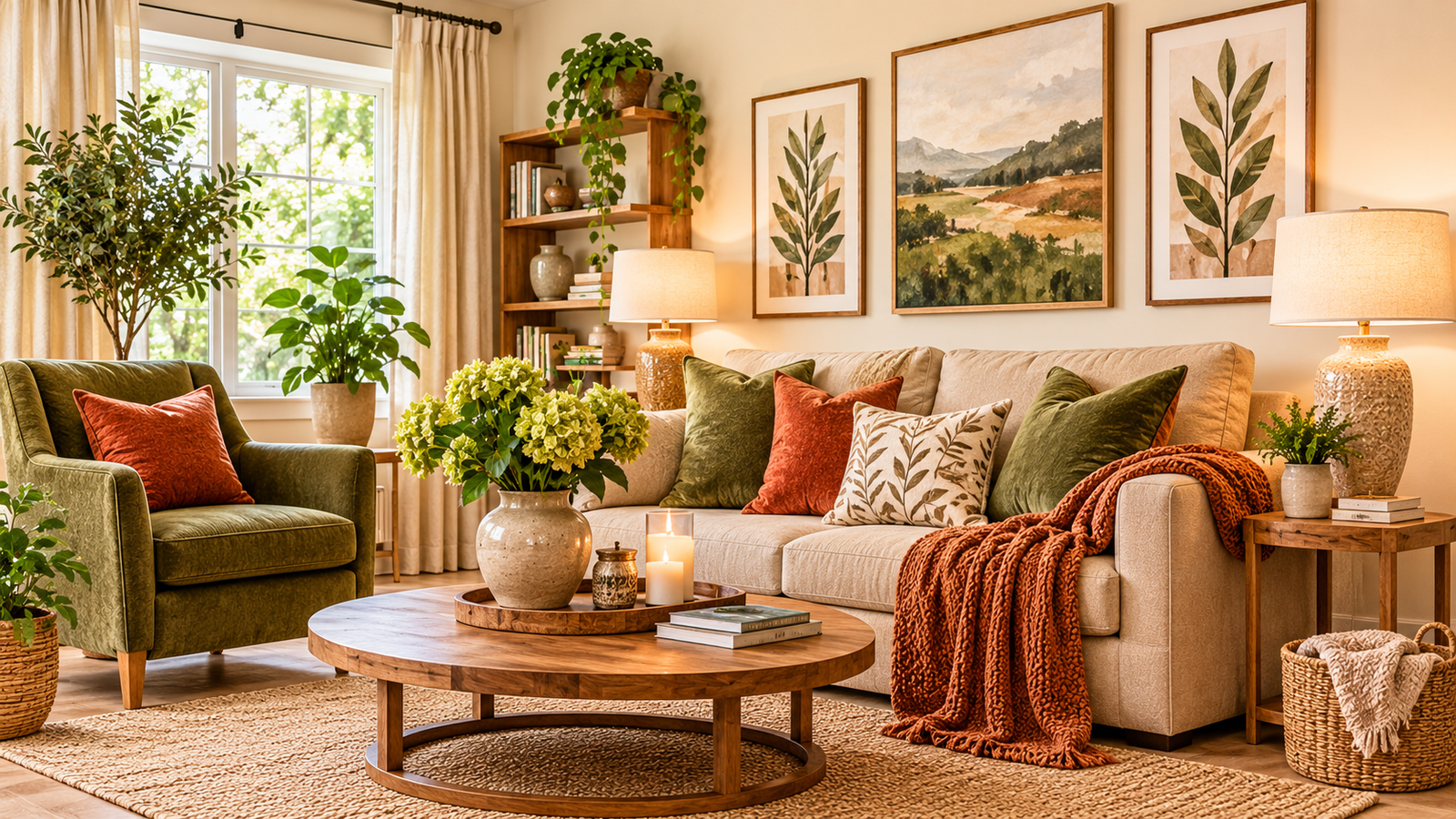
Have you ever saved a picture of a beautiful living room with warm brown furniture, olive green walls, terracotta cushions, and natural wood accents, then wondered why the same colors might look completely different in your own home?
It happens more often than you might think.
Earthy interiors have a particular kind of warmth. They feel relaxed, natural, and comfortable without looking overly decorated. A living room with soft beige walls, a few olive green accents, warm wooden furniture, and textured fabrics can feel like a place where you actually want to sit down at the end of a long day.
But there is one problem: earthy colors can make a room look darker than expected.
A deep brown sofa, dark wood coffee table, rust-colored curtains, and olive green walls might look beautiful individually. Put them all together in a room with limited daylight, though, and the result can feel heavy. Instead of creating a cozy atmosphere, the room may start to look smaller, duller, and less inviting.
The solution is not to avoid earthy colors. It is to understand how to balance them.
You can enjoy rich shades such as terracotta, chocolate brown, olive green, and warm taupe while keeping enough lightness in the room. The trick is to think about where each color goes, how much of it you use, and what materials surround it.
This guide walks through the process step by step. We will look at wall colors, sofas, rugs, curtains, lighting, natural textures, furniture finishes, and accessories. You will also find practical color combinations, ideas for rooms with limited daylight, and mistakes worth avoiding before you spend money on a makeover.
The goal is simple: create a living room that feels connected to nature, looks thoughtfully decorated, and still feels bright enough for everyday life.
1. Understand What Makes an Earthy Living Room Feel Dark
Before choosing paint or buying new cushions, it helps to understand why some earthy interiors look warm and inviting while others feel gloomy.
The difference usually comes down to a combination of color depth, lighting, furniture size, and the amount of contrast in the room.
Earthy colors are inspired by natural materials and landscapes. Think of soil, clay, tree bark, stones, dried leaves, sand, and plants. The palette can include very light shades, such as oatmeal and warm cream, as well as much deeper colors, such as espresso brown and forest green.
That range is important.
Not every earthy color is dark, and not every dark color makes a room feel gloomy. A room can have a deep olive feature wall and still feel beautiful if the rest of the space has enough light surfaces, balanced furniture, and suitable lighting.
Too many dark shades competing with one another
One common decorating problem is choosing several rich colors at the same time without giving the eye a lighter place to rest.
Imagine a living room with dark brown flooring, a charcoal-brown sofa, deep green curtains, a rust-colored rug, and dark wooden furniture. Every major surface has a strong visual presence.
Even if each item is attractive, the overall room may feel crowded.
A better approach is to choose one or two deeper earthy shades and surround them with lighter colors. For example, an olive green sofa can look lovely against warm ivory walls, a light natural rug, and a pale oak coffee table.
The darker color still gives the room character, but it does not dominate every corner.
Not enough natural light
A color that looks soft and warm in a bright showroom may appear much darker in a room with a small window.
Natural daylight changes throughout the day. A living room that receives strong morning sunlight may look quite different from one that gets only a little afternoon light.
The direction of the windows, nearby buildings, curtains, and even the size of the glass all affect the way colors appear.
This is why it is risky to choose paint from a small color card alone. A shade that looks like a gentle beige on a sample may appear noticeably darker on a full wall.
Heavy furniture and thick fabrics
Color is only part of the picture.
A large dark sofa, thick velvet curtains, an oversized wooden cabinet, and a bulky coffee table can make a living room feel visually heavy, even when the walls are light.
The same colors may look much lighter when used on slimmer furniture, open shelving, lighter upholstery, or smaller decorative details.
For a balanced earthy room, pay attention to the visual weight of the furniture as well as its color.
Poorly planned artificial lighting
A single ceiling light often does not provide enough comfortable light for an entire living room.
You may notice this most in the evening. The room looks pleasant during the day, but once the sun goes down, the brown furniture and green accents seem to merge into one dark area.
Instead of relying on one bright bulb, think about lighting the room in layers. A ceiling light, floor lamp, table lamp, and smaller accent light can work together to make the space feel more welcoming.
The important thing is to distribute light around the room rather than leaving the corners in shadow.
2. Start with a Light Earthy Base Color
If you want an earthy living room that does not look dark, begin with the largest surfaces.
Walls usually cover more visible space than any other decorative element. Their color has a strong influence on how the entire room feels.
For most small or moderately lit living rooms, a light earthy wall color is a sensible starting point. It creates warmth without making the room feel enclosed.
Warm beige
Warm beige is one of the easiest colors to use in an earthy interior.
It works with natural wood, cream upholstery, terracotta accessories, olive green, and many shades of brown. It can also make a room feel softer than a stark white wall.
The important part is choosing the right undertone.
Some beige paints have a yellow appearance, while others lean pink, gray, or slightly green. These differences become more noticeable when the paint covers an entire wall.
If you have warm wooden floors or furniture, a beige with a gentle warm undertone may help everything feel connected.
If the room already has yellow-toned wood, test the paint carefully. Too much yellow in the same space can make the overall palette look muddy.
Cream and warm off-white
Cream is useful when you want the room to feel light but do not like the sharp appearance of bright white.
It creates a soft background for earthy furniture and accessories. It also works well in rooms where you want terracotta, rust, or olive green to stand out.
A warm off-white can be particularly helpful if you have a darker sofa. It gives the sofa a lighter background without creating a harsh contrast.
Try pairing cream walls with natural oak, woven baskets, linen curtains, and a few muted green accents.
Pale taupe
Taupe sits somewhere between beige and gray, although its exact appearance varies from one shade to another.
A pale warm taupe can create a slightly more sophisticated look than a standard beige. It works well with chocolate brown, muted olive, natural stone, and cream.
Be careful with cool gray-taupe shades if your room already feels cold. Some can look flat beside warm wood or terracotta.
Soft greige
Greige combines gray and beige. It can be a useful choice if you want an understated wall color that works with several furniture finishes.
For an earthy look, choose a greige that still has enough warmth. A very cool version may make terracotta and brown accessories look disconnected.
How to test a wall color before painting
This is one of the simplest ways to avoid an expensive decorating mistake.
- Choose two or three paint shades that you like.
- Get sample pots or sample boards from the paint brand.
- Apply the samples to separate areas or movable boards.
- Look at them in the morning, afternoon, and evening.
- Check how they appear beside your sofa, flooring, curtains, and wooden furniture.
- Make your decision only after seeing them in the actual room.
You can also use a digital paint visualizer to get a rough idea of how a color might look. Many paint manufacturers offer these tools on their websites or through their apps.
However, digital previews are only a starting point. Screen brightness, camera settings, and the way a phone processes colors can change the appearance of a shade.
Always trust a real sample in your room more than a perfect-looking online picture.
3. Build Your Palette Around Three Color Levels
One practical way to decorate with earthy colors is to divide your palette into three levels: light, medium, and deep.
This prevents the room from becoming a collection of equally strong colors.
You do not need a complicated color theory lesson to use this approach. Just decide which shades will create the background, which will provide warmth, and which will add depth.
Light colors: The background
Light shades should usually cover the largest surfaces in a room that needs to stay bright.
Examples include:
- Warm ivory
- Cream
- Oatmeal
- Pale beige
- Light sand
- Soft greige
These colors can appear on walls, larger rugs, curtains, and some of the bigger upholstery pieces.
Medium colors: The main character
Medium earthy shades bring the room to life.
Examples include:
- Muted olive
- Clay
- Dusty terracotta
- Warm caramel
- Mushroom brown
- Muted sage
Use them in sofas, accent chairs, cushions, rugs, artwork, and other noticeable pieces.
Deep colors: The finishing details
Deep shades provide contrast and prevent a light earthy palette from looking washed out.
Examples include:
- Chocolate brown
- Deep olive
- Rust
- Espresso
- Dark bronze
- Forest green
Use these colors more selectively in a room with limited light. They can appear in picture frames, lamp bases, small accessories, cushion details, or one statement piece of furniture.
This does not mean you must follow an exact percentage. The purpose is to avoid using deep shades on every large surface.
A practical example
Suppose you have a cream sofa and light wooden flooring.
You could build the room around:
- Warm beige walls as the background
- Olive green cushions and a muted green throw
- A terracotta vase or a few rust-colored cushions
- A natural jute or wool rug
- A chocolate brown wooden frame or lamp base
Each color has a role. None has to compete with everything else.
This approach is also useful if you already own furniture and do not want to replace it. You can adjust the smaller pieces to create a more coordinated palette.
4. Choose the Right Earthy Sofa Color
The sofa is often the largest piece of furniture in a living room, so its color can influence the entire decorating scheme.
If you are buying a new sofa, think about the room’s natural light, floor color, wall shade, and how much visual weight the sofa will add.
If you already have one, you do not need to replace it just to create an earthy look. Cushions, throws, a rug, and nearby furniture can help connect it to the rest of the room.
Beige and oatmeal sofas
A beige or oatmeal sofa is a flexible choice for an earthy living room.
It provides a light surface that works with terracotta, olive green, brown, and natural wood. It can also make a room feel more open than a very dark sofa, especially when the walls are a similar light shade.
The downside is that pale upholstery may show marks more easily, depending on the fabric.
If the sofa will be used every day by children, pets, or a busy household, look for a fabric that is practical to clean. Check the manufacturer’s care instructions rather than assuming every beige sofa is easy to maintain.
You can also use removable covers if the design allows them.
Olive green sofas
An olive green sofa can become the main feature of an earthy living room.
It brings color into the space without looking as bright as a strong emerald or lime shade. It also works beautifully with cream, natural oak, warm beige, and muted terracotta.
The key is to give the sofa a lighter background.
If you place an olive sofa against a deep brown wall and add dark curtains, the entire area may feel heavy. Against warm ivory or pale beige walls, the same sofa can look rich and balanced.
For an easy combination, add two cream cushions, one textured rust cushion, and a soft oatmeal throw.
Brown leather sofas
Brown leather is a classic choice for warm interiors.
It can bring depth and a natural material quality to the room, particularly when paired with linen, wool, wood, and greenery.
However, dark brown leather can become visually dominant if the rest of the furniture is also dark.
If you already own a chocolate brown leather sofa, consider placing it against a lighter wall. Add a pale rug underneath and use lighter cushions to break up the large dark surface.
A cream throw can soften the appearance without hiding the character of the leather.
Terracotta and rust upholstery
Terracotta sofas and accent chairs can make an earthy room feel warm and distinctive.
These colors are especially attractive with cream walls, pale wood, and muted green accents.
However, a large rust-colored sofa may be too strong for a small room if the rest of the palette is already warm and saturated.
If you love terracotta but are unsure about using it on a large piece of furniture, start with an accent chair or a few cushions.
This lets you see how the color behaves in the room before making a bigger commitment.
What if your sofa is gray?
You can still create an earthy living room around a gray sofa.
A gray sofa does not automatically mean the room needs to follow a cool or modern color scheme.
Try adding:
- Warm beige cushions
- Olive green textiles
- A rust or clay-colored throw
- Natural wood side tables
- A cream or oatmeal rug
- Artwork with brown, sand, and muted green tones
If your sofa has a cool gray undertone, introduce warm colors gradually. Too many strongly yellow or orange accessories may look disconnected from the upholstery.
A mixture of muted shades usually feels more natural than trying to force every item into the same color family.
5. Use Natural Wood to Add Warmth Without Adding More Dark Color
Wood is one of the easiest materials to use in an earthy living room.
It introduces natural texture and warmth, and it works with almost every shade in the earthy palette. But not all wood finishes have the same visual effect.
A room filled with dark walnut furniture, dark flooring, and brown upholstery can feel quite heavy. Lighter wood finishes may provide a better balance.
Light oak
Light oak is a useful option for coffee tables, side tables, shelving, and TV units.
It pairs well with cream, beige, sage green, and terracotta. It also helps create a relaxed look without making the room feel overly rustic.
If your existing furniture is darker, you do not have to replace everything. A light oak coffee table or a natural wood side table can introduce a different tone and make the furniture arrangement feel less uniform.
Natural pine and pale wood
Pine and other pale wood finishes can work well in casual, relaxed interiors.
They look especially good with linen, woven baskets, simple ceramics, and soft neutral upholstery.
One thing to watch is the undertone. Some pine finishes have a strong yellow or orange appearance, which may not work with every beige or gray paint color.
Test finishes together before buying several pieces.
Medium walnut
Walnut adds richness and contrast.
It can look beautiful in an earthy living room, particularly when used in a coffee table, picture frames, shelves, or a sideboard.
The trick is to give it enough lighter surroundings.
A medium walnut table on a pale rug with cream upholstery can look elegant. Several large walnut furniture pieces on a dark floor may create a much heavier effect.
Mix wood finishes carefully
You do not need every wooden item in the room to match.
In fact, using the exact same finish everywhere can sometimes make the room feel like a furniture showroom.
A combination of light oak, medium walnut, and natural woven materials can look more relaxed.
To keep the mix intentional, repeat each finish or material somewhere else. For example, if you have a walnut coffee table, you might use walnut picture frames or a small wooden accessory nearby.
Avoid introducing too many unrelated wood tones at once. The aim is a collected look, not a collection of competing finishes.
6. Bring in Olive Green Without Turning the Room Into a Dark Space
Olive green is one of the most recognizable earthy colors, and it can work in many types of living rooms.
It has a natural connection to plants, foliage, and outdoor landscapes. Depending on the shade, it can look soft and muted or deep and dramatic.
The important thing is deciding how much green the room can comfortably handle.
Use olive green on cushions and throws
If you are new to earthy colors, textiles are a low-commitment way to experiment.
Try a pair of olive green cushions on a beige sofa. Add a smaller cushion in cream or terracotta to create contrast.
You can also use an olive throw over a chair or sofa arm.
The benefit of starting with accessories is that you can change them easily if the color looks too dark or too strong.
Add green through plants
Plants are a natural fit for earthy interiors.
Their different leaf shapes and shades can make a room feel more lively, especially when the rest of the palette is made up of beige, brown, and cream.
You do not need a large collection of plants. One medium-sized floor plant, a smaller plant on a shelf, or a simple arrangement on a side table may be enough.
Choose plants according to the light and conditions in your home. A plant that needs strong sunlight may struggle in a dark corner, no matter how attractive it looks in a decorating photograph.
If you have limited daylight, research plants that can tolerate the conditions you can actually provide. No plant should be expected to thrive without suitable care.
Try a green accent chair
An olive or sage green accent chair can add personality without requiring a large change to the room.
Place it near a window or beside a small side table and lamp.
If the chair is deep green, use lighter textiles and a pale wall behind it to keep the arrangement balanced.
Consider a green feature wall
A green feature wall can look beautiful, but the exact shade matters.
Muted sage is generally softer than a deep forest green. Olive can vary considerably, so test the specific paint before committing.
If your living room is small or receives limited daylight, consider using the green on one wall rather than all four.
You can also keep the wall behind the sofa lighter and use green in artwork, textiles, or accessories.
The goal is to enjoy the color rather than letting it take over the room.
7. Add Terracotta and Rust in Small, Thoughtful Amounts
Terracotta is inspired by clay and fired earth. It has a warm, slightly muted quality that can make a living room feel welcoming.
It works particularly well with cream, beige, olive green, natural wood, and soft brown.
But terracotta can become overpowering if you use it across too many large surfaces.
Start with small decorative pieces
Try terracotta through:
- Ceramic vases
- Cushion covers
- Small planters
- Artwork
- Table accessories
- A patterned rug
- A decorative bowl
These details add warmth without requiring a full room makeover.
Pair terracotta with muted green
Terracotta and green are a natural combination because they create contrast without feeling overly artificial.
A rust-colored cushion beside an olive green cushion can look attractive on a cream sofa.
You can also use a terracotta vase beside a green plant, or choose artwork that contains both shades.
Keep the rest of the arrangement relatively simple so the two colors have room to stand out.
Be careful with orange undertones
Some terracotta shades look more orange than others.
If your living room already has yellow-toned wood and warm beige walls, a strong orange terracotta may make everything look too warm.
Try a more muted clay or dusty rust shade instead.
The best color is the one that works with the actual finishes in your room, not necessarily the one that looks most attractive in a styled photograph.
8. Choose a Rug That Keeps the Room Feeling Light
A rug can connect the furniture, introduce texture, and help establish the room’s color palette.
It is also one of the easiest ways to bring earthy colors into a living room without painting the walls or replacing large furniture pieces.
However, a rug can make a room feel darker if its colors are too deep or its pattern is too busy.
Try a natural neutral rug
A rug in oatmeal, ivory, sand, or warm beige can provide a light foundation for darker furniture.
This is especially useful if you have an olive sofa, a brown leather couch, or a dark wooden coffee table.
A light rug creates contrast underneath the furniture and helps prevent the room from becoming one continuous dark area.
Consider jute and natural woven textures
Jute and other natural woven rugs are popular in earthy interiors because they introduce texture without relying on strong colors.
They work well with wooden furniture, linen upholstery, and muted green accents.
Before choosing one, consider the way the room is used. Some natural fiber rugs have a rougher texture than wool or soft synthetic rugs, which may not be comfortable for every household.
Also check the care requirements, particularly if the living room is a high-traffic area.
Use a subtle pattern
A patterned rug can bring several colors together.
Look for designs that combine cream, muted brown, soft green, and small touches of rust. A gentle pattern may be more forgiving of everyday marks than a plain pale rug.
If your sofa and curtains already have noticeable patterns, choose a quieter rug.
If the furniture is plain, a little pattern can make the room feel more interesting.
Get the rug size right
A rug that is too small can make a living room look disconnected.
In many seating arrangements, it works well to place at least the front legs of the sofa and accent chairs on the rug. This helps connect the furniture into one group.
Measure the seating area before buying. Do not choose a rug based only on the empty floor space.
A larger rug in a suitable light shade may make the room feel more organized than several small rugs scattered around it.
9. Use Curtains That Let Natural Light Into the Room
Curtains have a surprisingly strong effect on an earthy living room.
They can add warmth and texture, but heavy dark curtains may block daylight and make the walls appear even deeper in color.
If your room does not receive much natural light, choose window coverings carefully.
Choose light linen-look curtains
Linen and linen-look fabrics can create a soft, relaxed appearance.
Cream, warm white, oatmeal, and pale beige are useful choices for earthy interiors.
They work with wood, terracotta, olive green, and brown furniture without creating a strong visual block beside the window.
Some fabrics are more transparent than others, so check how much light they allow through.
Try layered window treatments
If you need privacy but still want daylight, consider layering a light curtain with a suitable blind.
A sheer or semi-sheer layer can soften incoming light, while a blind can provide additional privacy when needed.
The right combination depends on your windows and how close nearby buildings are.
Hang curtains thoughtfully
Curtains that are hung close to the ceiling and extend down toward the floor can create a sense of height.
The curtain rod can also be wider than the window frame, where the wall space allows it. This lets the curtains sit more to the sides when open, leaving more of the glass uncovered.
Make sure the arrangement does not block radiators or interfere with doors and windows.
When dark curtains can work
Dark curtains are not automatically a bad choice.
Deep olive, warm brown, or muted rust curtains can look attractive in a bright room with plenty of lighter surfaces.
If your room already has limited daylight, though, lighter window coverings are often a safer starting point.
You can still introduce deeper colors through smaller accessories.
10. Use Lighting to Keep Earthy Colors Warm, Not Gloomy
Lighting is one of the most important parts of this decorating style.
Earthy colors often look beautiful in daylight, but they can become flat or muddy when the room is poorly lit at night.
The solution is not necessarily to install a very bright ceiling light. A comfortable living room usually benefits from several sources of light working together.
Start with the main ceiling light
Your main ceiling light should provide enough general illumination for everyday activities.
A pendant or ceiling fixture with a shade can help soften the light, but make sure the design does not block too much of it.
If your current fixture leaves the room dim, consider whether the bulb, shade, or fixture itself is limiting the light.
Check the manufacturer’s recommendations for suitable bulbs and maximum wattage.
Add a floor lamp near the sofa
A floor lamp can make a big difference in the evening.
Place it beside a sofa or reading chair where it provides useful light without taking up too much walking space.
A lamp with a fabric shade can create a softer effect than a bare bulb.
For reading, make sure the lamp provides enough focused light. For general atmosphere, a diffused glow may be more comfortable.
Use table lamps to brighten darker corners
A table lamp on a side table, console, or shelf can help distribute light around the room.
This is particularly useful when a single ceiling light leaves the corners looking dark.
A pair of lamps does not have to be identical. They can share a similar finish or shape while still looking like separate pieces.
Understand warm and cool light
Bulb color temperature is measured in Kelvin.
A warm white bulb around 2700K to 3000K is commonly used for relaxed living spaces. It produces a softer light that often works well with cream, brown, wood, and terracotta.
Cooler bulbs can look sharper and may suit certain task areas, but they can make an earthy living room feel less cozy if used throughout.
The best choice depends on your wall colors, furniture, and personal preference.
Use dimmers where practical
A dimmer gives you more control over the atmosphere.
You may want brighter lighting for cleaning, reading, or doing a puzzle, then a lower setting when watching television or relaxing.
Make sure the dimmer and bulbs are compatible. If electrical work is needed, have it carried out by a qualified electrician.
Avoid relying on decorative candles alone
Candles can add a pleasant glow, but they should not be treated as the room’s main lighting.
Use them safely, keep them away from curtains and other flammable materials, and never leave burning candles unattended.
If you prefer a decorative glow without an open flame, consider suitable LED candles.
The aim is to make the room comfortable and usable, not simply atmospheric.
11. Add Natural Textures So the Room Does Not Depend on Dark Colors
An earthy living room should feel interesting even when the color palette is simple.
One way to achieve this is by combining different textures. Natural materials can give the room depth and warmth without requiring dark paint or bold patterns.
This is particularly useful if you prefer a neutral interior but do not want it to look plain.
Use linen for a relaxed appearance
Linen and linen-look fabrics have a soft, slightly textured finish.
They work well on cushion covers, curtains, and throws. Their natural-looking surface can make a beige or cream living room feel more layered.
You can combine linen with smoother upholstery, knitted blankets, and woven accessories to create contrast.
Introduce wool and knitted fabrics
A wool rug, knitted throw, or textured cushion can make the seating area feel comfortable.
These materials are especially useful during colder months, but they can work throughout the year if you choose lighter weights and colors.
Try combining an oatmeal throw with an olive cushion and a rust-colored accent. The variation in texture will make the arrangement more interesting without needing additional colors.
Use rattan and wicker in moderation
Rattan baskets, woven lampshades, and small storage pieces can bring a natural quality to the room.
They are useful for organizing blankets, magazines, and everyday accessories.
However, too many woven items can make a room feel overly rustic. If you already have a jute rug and wooden furniture, one or two rattan details may be enough.
Add ceramics and stone-like finishes
Ceramic vases, clay planters, and stone-look accessories are simple ways to introduce earthy materials.
A handmade-looking vase in a warm cream or muted terracotta shade can become a subtle focal point on a coffee table.
You do not need to cover every surface with decorative objects. A few well-chosen pieces usually look more intentional.
Balance rough and smooth surfaces
A room made entirely of rough, natural textures can feel unfinished.
Try mixing them with smoother materials such as glass, polished wood, or a simple metal finish.
For example, a woven basket can sit beside a smooth ceramic vase, while a glass coffee table can balance a textured wool rug.
The contrast makes the room feel layered without becoming busy.
12. Decorate the Walls Without Making Them Look Heavy
Wall decoration can help bring an earthy palette together, but it needs some thought.
Large dark artwork, heavy frames, and crowded gallery walls may add too much visual weight to a small or dim living room.
You can still display interesting artwork while keeping the space light.
Choose artwork with colors already in the room
Artwork is an easy way to connect your palette.
Look for prints or paintings that include shades of beige, olive, brown, cream, or terracotta.
The artwork does not need to contain every color. Even a small reference to the sofa or rug can help the room feel coordinated.
Try nature-inspired prints
Botanical artwork, landscapes, abstract organic shapes, and nature photography all work well with earthy interiors.
A simple landscape print with muted greens and warm sandy colors can create a calm focal point.
If you prefer a more modern look, choose abstract artwork with soft shapes and restrained colors.
Be thoughtful about frame color
Frames can change how artwork feels.
Light oak or natural wood frames often suit relaxed earthy rooms. Dark walnut frames provide more contrast and can look attractive against cream walls.
Black frames can create a sharper, more contemporary appearance.
Choose a finish that relates to something else in the room, such as the coffee table, lamp base, or other wooden details.
Avoid overcrowding the wall
A gallery wall can look attractive, but it needs enough breathing room.
Lay the frames on the floor first and experiment with the arrangement before hanging them.
You can use paper templates to mark the positions on the wall. This makes it easier to adjust the spacing without repeatedly making holes.
Keep the arrangement connected through a shared color, frame finish, or overall theme.
Consider one larger piece instead
If the living room is small, one well-sized artwork may look more balanced than several small pictures.
A large landscape or abstract print above the sofa can create a clear focal point without making the wall feel cluttered.
Make sure the artwork is proportionate to the sofa and is hung securely using suitable fixings.
13. Use Plants to Bring the Earthy Palette to Life
Plants are a natural addition to an earthy living room, but their value is not only about color.
They introduce different shapes, leaf textures, and a connection to nature that can make a neutral interior feel more lively.
Choose plants based on the room’s light
Before buying a plant, consider where you want to put it.
A bright windowsill, a corner beside a window, and a darker area behind a sofa have different growing conditions.
Check the light requirements of each plant rather than assuming that any indoor plant will survive in any room.
If your living room receives limited daylight, choose a plant that tolerates lower-light conditions and follow its care instructions. Even low-light-tolerant plants need suitable conditions.
Use different heights
A room can look more natural when plants are placed at different levels.
For example:
- A taller floor plant beside a sofa
- A medium-sized plant on a low cabinet
- A small plant on a shelf or side table
This creates visual movement without adding a large number of decorative items.
Choose planters that support the color palette
Cream, sand, terracotta, and natural woven planters work beautifully with earthy interiors.
You can also use dark ceramic pots as small contrast details.
If the room already contains several shades of brown, try a lighter planter to keep the arrangement from feeling too heavy.
Do not overfill every corner
A plant collection can quickly become another form of clutter.
Instead of placing a plant on every surface, choose a few locations where greenery improves the room’s appearance.
Leave some empty space around larger plants so their shapes can be appreciated.
If you prefer not to care for live plants, realistic artificial greenery can be an alternative. Choose good-quality pieces and keep them clean so they do not become dusty decorations.
14. Make a Small Living Room Feel Open with Earthy Colors
Earthy colors can work particularly well in small living rooms, but the layout and scale of the furniture matter.
A compact room has less visual space to work with, so large dark objects can have a stronger effect.
The goal is to create warmth without making the room feel crowded.
Keep the largest surfaces relatively light
For a small living room, consider warm cream or beige walls, a light rug, and a sofa in a medium or light tone.
You can still use olive green, terracotta, and chocolate brown, but introduce them through smaller elements.
This creates contrast while keeping the overall room bright.
Choose furniture with visible legs
Sofas, chairs, and cabinets with visible legs allow more of the floor to be seen.
This can make the room feel less visually blocked than furniture that sits directly on the floor.
A slim wooden coffee table can also feel lighter than a large solid block.
Use a round or oval coffee table
A round coffee table can make movement easier in a compact seating area because it has no sharp corners.
An oval design may work well if the sofa is long and the room is narrow.
Choose a size that leaves comfortable space around the seating. A coffee table should be useful without becoming an obstacle.
Use mirrors carefully
A mirror can reflect daylight and create a sense of depth.
Place it where it reflects a window, light source, or attractive part of the room.
Avoid positioning it where it simply reflects clutter or an area you would rather not draw attention to.
Keep the floor visible
Do not feel that every empty corner needs furniture.
A clear walkway can make a small room feel more comfortable than adding another side table, basket, or chair.
If you need storage, look for pieces that serve more than one purpose, such as a storage ottoman or a coffee table with a useful shelf.
15. Decorating an Earthy Living Room with Limited Natural Light
Some living rooms simply do not receive much daylight.
Perhaps the window faces another building, a balcony blocks the sun, or the room is positioned toward the back of the home.
This does not mean earthy colors are off-limits. It just means the palette and lighting need to be planned more carefully.
Choose lighter versions of earthy shades
Instead of deep chocolate brown, consider caramel or warm taupe.
Instead of forest green, try muted sage.
Instead of a dark terracotta, look at a dusty clay shade.
These colors retain an earthy character without absorbing as much visual attention.
Avoid using the darkest shade on every wall
A deep feature wall can look attractive, but in a poorly lit room, painting every wall a dark color may make the space feel enclosed.
Keep most of the walls light and use the deeper shade in a smaller area.
If you really want a dark room, consider how much artificial lighting you will need and whether the result will suit your everyday use.
Use reflective surfaces thoughtfully
Glass, mirrors, and certain metal finishes can help distribute light around a room.
A glass coffee table may feel less visually bulky than a solid wooden design. A mirror can reflect a window or lamp.
However, shiny surfaces can also create glare. Choose finishes that feel comfortable in the room rather than adding reflective objects everywhere.
Light the corners
A room with a bright center and dark corners can still feel gloomy.
Use a floor lamp or table lamp in an area that needs additional light. This helps create a more even and welcoming appearance.
Avoid overly heavy curtains
If privacy allows, choose window coverings that let daylight through.
Keep the area around the window relatively clear so the room receives as much available light as practical.
16. Five Earthy Living Room Color Combinations Worth Trying
If you are unsure how to combine earthy colors, start with a palette that already has a clear balance.
Here are five combinations that can work in different living rooms.
Combination 1: Warm beige, olive green, and natural oak
<AsyncImage query=”warm beige living room olive green cushions natural oak furniture cream sofa” aspectRatio=”16:9″ width=”100%”/>
This is a good starting point if you want an earthy look without too much darkness.
Use warm beige on the walls, natural oak for the coffee table or shelving, and olive green for cushions or an accent chair.
A cream rug can keep the room light, while a small amount of dark brown adds definition.
Best for: Small living rooms, neutral interiors, and people who prefer a calm color scheme.
Combination 2: Cream, terracotta, and muted sage
<AsyncImage query=”cream living room terracotta cushions muted sage green accessories natural textures” aspectRatio=”16:9″ width=”100%”/>
This combination feels warm but still has a fresh quality.
Cream provides the background, terracotta adds warmth, and muted sage balances the stronger orange tones.
Try terracotta cushions with sage artwork or a green plant.
Best for: Rooms that need a little more personality without using very dark colors.
Combination 3: Oatmeal, chocolate brown, and soft ivory
<AsyncImage query=”oatmeal neutral living room chocolate brown wooden furniture ivory textiles warm interior” aspectRatio=”16:9″ width=”100%”/>
This palette creates a richer, more traditional appearance.
Use oatmeal upholstery or walls, then introduce chocolate brown through wood furniture, frames, or a smaller accent piece.
Soft ivory textiles help prevent the deeper brown from taking over.
Best for: Rooms with good daylight and people who enjoy classic, warm interiors.
Combination 4: Sand, dusty rust, and warm white
<AsyncImage query=”sand beige living room dusty rust cushions warm white walls natural wood furniture” aspectRatio=”16:9″ width=”100%”/>
This combination has a soft, relaxed look.
Sand and warm white create a light background, while dusty rust adds a little color.
It works well with woven baskets, linen curtains, and simple wooden accessories.
Best for: Minimalist interiors that feel too plain and need a warmer accent.
Combination 5: Pale taupe, forest green, and walnut
<AsyncImage query=”pale taupe living room forest green accent chair walnut wood coffee table cream rug” aspectRatio=”16:9″ width=”100%”/>
This is the richest palette in the list.
Pale taupe keeps the walls relatively light, while forest green and walnut add depth.
Use the darker shades selectively, particularly if the room is small or has limited daylight.
Best for: Larger or brighter living rooms where a more dramatic earthy style is welcome.
17. A Step-by-Step Earthy Living Room Makeover Without Replacing Everything
You do not have to buy a complete furniture set to create this look.
In many homes, the most practical approach is to work with what is already there and change the elements that have the biggest effect.
Here is a straightforward way to approach the makeover.
Step 1: Look at what you already own
Start by taking a proper look around the room.
Note the color of the sofa, floor, curtains, coffee table, TV unit, and any large storage furniture.
Ask yourself which pieces you want to keep and which ones make the room feel too dark or disconnected.
You may discover that the sofa is perfectly suitable but the rug and curtains are making the room feel heavy.
Step 2: Choose your main palette
Pick one light background color, one medium earthy color, and one deeper accent.
For example:
- Light: warm beige
- Medium: olive green
- Deep: chocolate brown
You can add small amounts of terracotta or cream if needed, but avoid introducing too many unrelated colors at once.
Step 3: Decide where the main color will appear
Choose one or two places where the main earthy color will be most noticeable.
It could be the sofa, an accent chair, a rug, or the curtains.
Then repeat that color in smaller details elsewhere.
For example, if you choose olive green for an accent chair, add a little olive in the cushions or artwork.
Step 4: Lighten the largest dark surfaces where possible
If the sofa is dark, add lighter cushions and a cream throw.
If the rug is dark, consider a lighter replacement.
If the curtains block too much daylight, explore a lighter window treatment.
You do not need to change every item. Focus on the pieces that have the greatest visual effect.
Step 5: Introduce natural materials
Add a wooden tray, ceramic vase, woven basket, or textured throw.
These details make the room feel more connected to nature without requiring more color.
Try not to buy everything at once. Add one or two pieces, then see how they work with the existing furniture.
Step 6: Improve the lighting
Check whether the room has enough light for the way you use it.
Add a floor lamp beside the sofa or a table lamp in a darker corner.
Choose suitable bulbs and make sure the light is comfortable for reading, relaxing, and everyday activities.
Step 7: Edit the accessories
Remove items that do not contribute to the room’s appearance or practical use.
Keep the pieces you genuinely like, especially those that have personal meaning.
An earthy living room should feel lived in, not like a shop display.
Step 8: Give the arrangement time
Live with the changes for a few days.
Look at the room in daylight and in the evening. Notice whether the colors feel balanced and whether the furniture arrangement is comfortable.
If the room still feels too dark, try changing one element at a time rather than making several expensive purchases.
18. Common Mistakes to Avoid When Decorating with Earthy Colors
Earthy colors are flexible, but certain decorating choices can make them difficult to balance.
These are some of the most common problems to watch out for.
Mistake 1: Using too much chocolate brown
Brown is a beautiful earthy color, but several large brown surfaces can make a room feel heavy.
If you have dark wooden floors, a brown sofa, and a walnut coffee table, consider keeping the walls, curtains, and rug lighter.
You can still enjoy brown without making it the dominant color everywhere.
Mistake 2: Choosing paint without testing it
A paint shade that looks perfect online may appear completely different in your living room.
Always test samples in the actual space and look at them at different times of day.
Pay attention to how the color works with your flooring and furniture.
Mistake 3: Matching every item exactly
A room does not need an identical shade of beige on every surface.
In fact, too much matching can make the space feel flat.
Use related shades with slightly different textures and undertones. Cream, oatmeal, pale taupe, and warm beige can work together when chosen carefully.
Mistake 4: Buying dark furniture because it looks luxurious in photographs
A large dark coffee table or oversized cabinet may look impressive in a spacious showroom.
In a smaller living room, it may take up too much visual space.
Consider the furniture’s size, shape, and finish as well as its color.
Mistake 5: Ignoring the floor color
Flooring has a major effect on the overall palette.
A warm wooden floor may look beautiful with beige and terracotta, while a cool gray floor may require a slightly different combination.
Always consider the floor before selecting large furniture or wall colors.
Mistake 6: Using too many accent colors
Terracotta, olive, rust, mustard, burgundy, chocolate, and forest green can all be attractive earthy shades.
But using every one of them in equal amounts may make the room feel busy.
Choose a few main colors and let the others appear only in small details if they are needed.
Mistake 7: Forgetting practical lighting
A room can look beautiful in a daytime photograph but feel uncomfortable at night.
Plan enough light for your everyday activities.
Do not rely on a single decorative pendant or a few candles to illuminate the entire room.
Mistake 8: Filling every empty corner
It can be tempting to add a plant, basket, lamp, or side table to every unused space.
But empty space is part of good design.
Leave room for movement and allow the larger furniture pieces to stand out.
Mistake 9: Choosing fabrics that are difficult to maintain
Pale upholstery, textured rugs, and natural materials all have different cleaning requirements.
Before buying, check how the material should be cleaned and whether it suits your household.
A beautiful fabric that is difficult to maintain may become frustrating in a busy living room.
Mistake 10: Trying to copy a photograph exactly
A decorating photograph may have professional lighting, carefully positioned furniture, and a room with completely different proportions.
Use inspiration images to understand color combinations and textures, not as exact instructions.
Your living room should work with its own windows, furniture, dimensions, and everyday needs.
19. Realistic Earthy Living Room Ideas for Different Budgets
An earthy makeover does not have to involve replacing expensive furniture.
The right changes depend on your budget and what the room needs most.
If you have a very small budget
Start with items that are easy to change.
You might:
- Replace a few cushion covers.
- Add a cream or oatmeal throw.
- Rearrange existing furniture.
- Introduce one plant in a suitable location.
- Remove unnecessary accessories.
- Use a wooden tray or ceramic vase as a small focal point.
- Change a lampshade if the existing one makes the room feel too dark.
These changes can help create a more connected look without requiring a major purchase.
If you have a moderate budget
You may be able to update one or two larger elements.
Consider:
- A new light-colored rug.
- Better curtains that allow more daylight.
- A small natural wood coffee table.
- A comfortable accent chair in olive or muted terracotta.
- A floor lamp and table lamp.
- A fresh coat of wall paint.
Choose the changes that solve the biggest problem first.
If you are planning a larger makeover
If the room needs more substantial work, plan the design before buying furniture.
Create a simple mood board with your preferred wall color, sofa fabric, flooring, rug, and lighting.
You can use a tool such as Pinterest to collect inspiration images, or a basic layout program to test furniture arrangements.
A digital mood board is particularly useful for comparing finishes before purchasing them.
Do not rely on the screen colors alone. Keep physical samples of paint, fabric, and flooring nearby when making final decisions.
20. How to Keep an Earthy Living Room Looking Good Throughout the Year
One of the advantages of an earthy color palette is that it can work across different seasons.
You do not have to redesign the entire room whenever the weather changes.
A few small adjustments can make the space feel appropriate throughout the year.
Spring and summer
During warmer months, introduce lighter fabrics and fresh-looking accents.
You could:
- Use lighter cushion covers.
- Replace a thick throw with a lightweight one.
- Open curtains to allow more daylight.
- Add fresh flowers or suitable indoor plants.
- Keep the coffee table arrangement simple.
Cream, pale sage, and sand-colored details can make the room feel fresh without losing its earthy character.
Autumn
Autumn is a natural time to introduce richer tones.
Consider:
- Rust or terracotta cushions.
- A warmer knitted throw.
- A deeper brown decorative bowl.
- More textured fabrics.
- Warm table or floor lighting.
You do not need to change the sofa or rug. A few small details can shift the atmosphere.
Winter
During colder months, comfort becomes especially important.
Layer a wool or knitted throw over the sofa, add a soft rug if needed, and make sure the lighting is comfortable in the evening.
A deeper olive or chocolate cushion can add warmth while the rest of the palette remains light.
The room should still feel practical. Do not cover every surface with seasonal accessories.
Frequently Asked Questions
1. What are the best earthy colors for a living room?
Some popular choices include warm beige, cream, terracotta, olive green, muted sage, taupe, caramel, and chocolate brown. The best combination depends on the room’s natural light, furniture, and flooring. For a brighter appearance, use light earthy shades as the background and reserve deeper colors for accents.
2. How do I decorate with earthy colors without making my living room dark?
Start with light walls, a pale rug, and suitable window coverings. Add deeper shades through cushions, artwork, plants, and smaller furniture pieces. Make sure the room has enough artificial lighting, especially in the corners and seating areas.
3. What wall color works best with earthy furniture?
Warm beige, cream, pale taupe, and soft greige are useful choices. These colors can work with olive green, brown, terracotta, natural wood, and many neutral upholstery shades. Test paint samples in your room before making a final decision.
4. Does olive green make a living room look smaller?
Not necessarily. Olive green can work beautifully in a small living room when balanced with lighter colors. Use it on cushions, an accent chair, or one wall, and pair it with cream, warm beige, and natural wood. A very dark green used across every wall may feel more enclosed in a room with limited light.
5. Can I use dark brown furniture in an earthy living room?
Yes. Dark brown furniture can add depth and character. Balance it with lighter walls, soft upholstery, a pale rug, and suitable lighting. You can also use lighter wooden accessories to create contrast.
6. What colors go with terracotta in a living room?
Terracotta works well with warm white, cream, beige, olive green, muted sage, natural wood, and some shades of brown. For a balanced look, use terracotta as an accent rather than covering every large surface with it.
7. How can I make a beige living room look more interesting?
Add texture and a few carefully chosen accent colors. Combine linen, wool, wood, ceramics, woven materials, and plants. Olive green or dusty terracotta can provide contrast without making the room feel too busy.
8. Are earthy colors suitable for a small living room?
Yes. Small living rooms can look very inviting with earthy colors. Use lighter shades on the largest surfaces, choose appropriately sized furniture, and introduce deeper tones through smaller details. Keeping the walkways clear is just as important as choosing the right colors.
9. What type of lighting looks best with earthy interiors?
Warm white lighting around 2700K to 3000K is often a comfortable starting point for a living room. Combine general ceiling lighting with floor lamps and table lamps to avoid dark corners. Choose bulbs and fixtures that suit your activities and preferences.
10. Can I create an earthy living room without buying new furniture?
Absolutely. Start with your existing sofa, tables, and cabinets. Introduce earthy colors through cushions, throws, artwork, plants, and smaller accessories. Rearranging furniture and improving lighting can also make a noticeable difference.
11. What flooring looks good with earthy living room colors?
Natural wood tones, warm wood-look flooring, stone-inspired finishes, and some neutral tiles can work well. The best choice depends on the undertones of your furniture and wall colors. If the floor is already dark, lighter rugs and upholstery can help balance it.
12. How do I mix different shades of brown without making the room look muddy?
Choose browns with related undertones and vary their depth and texture. For example, combine medium walnut furniture with caramel accessories and cream upholstery. Introduce lighter shades between darker pieces so that the room has enough contrast.
Final Thoughts: Let Earthy Colors Make the Room Feel Comfortable
A beautiful earthy living room does not need dark walls, heavy furniture, or a long list of expensive accessories.
The most successful spaces usually have a simple balance. Light colors create the background, medium earthy shades bring personality, and deeper tones add just enough contrast to make the room feel complete.
If you are starting from scratch, warm beige, cream, or pale taupe walls provide a flexible foundation. From there, you can introduce olive green, terracotta, natural wood, and textured fabrics in ways that suit your room.
If you already have furniture, work with it rather than assuming everything needs to be replaced. A few well-chosen cushions, a lighter rug, better curtains, or an additional lamp may solve more problems than buying an entirely new sofa.
Most importantly, pay attention to how the room looks throughout the day. A color that feels warm in the morning may appear much deeper in the evening, so give yourself time to test combinations before making permanent changes.
The best earthy living room is not the one that follows every decorating trend. It is the one that feels comfortable, works for your household, and looks welcoming when you walk through the door.
You should be able to sit down, put your feet up, enjoy the natural textures around you, and feel that the room belongs to you. That is what a thoughtful earthy color scheme should achieve.