Nordic Living Room Ideas That Feel Like a Deep Breath
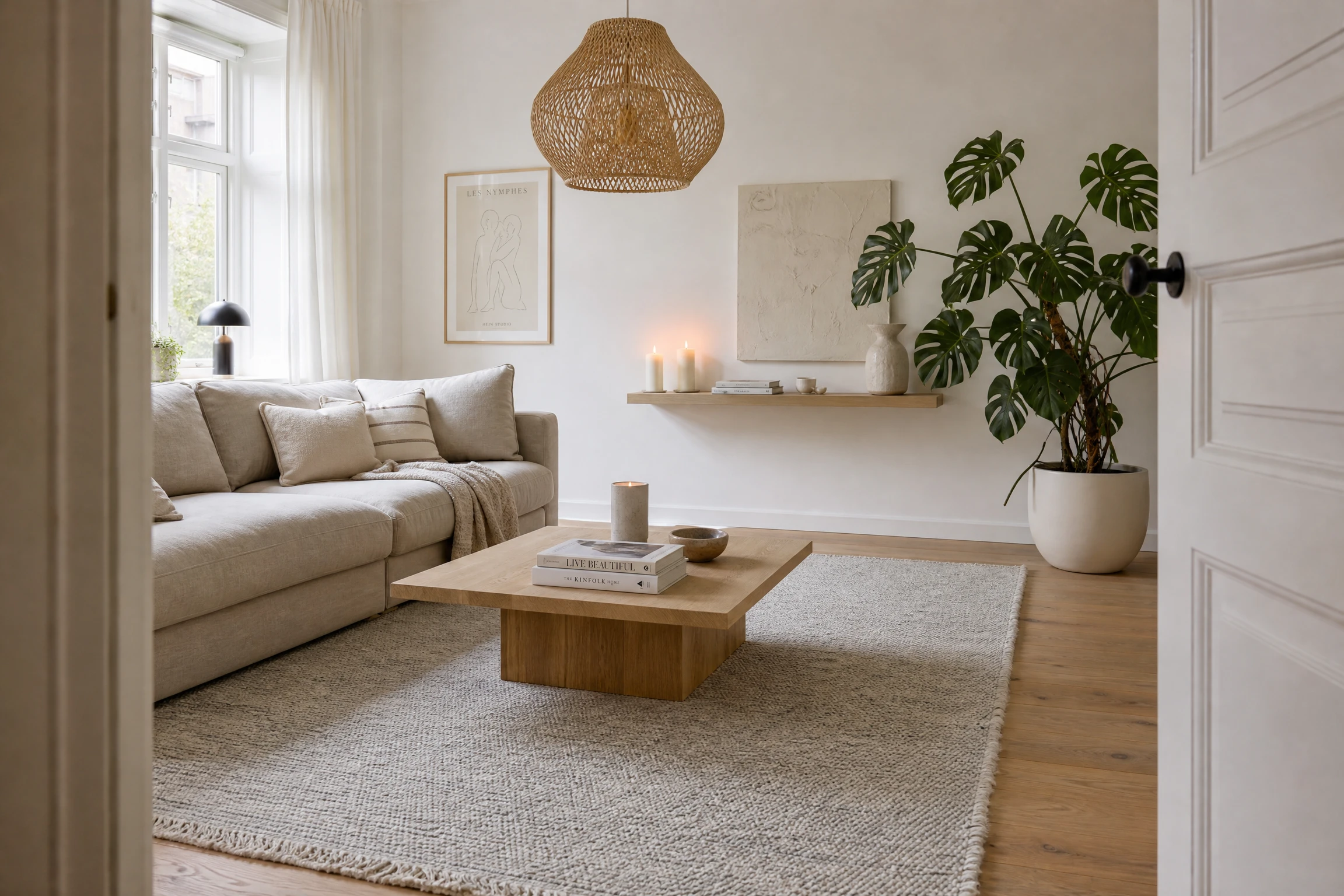
There is a reason Scandinavian living room design has captured the imagination of interior designers and homeowners around the world for decades. It is not simply about minimalism or white walls, though those are part of the story. It is about a deeply considered relationship between form, function, comfort, and nature, a design philosophy that emerged from the long Nordic winters, where the home needed to be a genuinely restorative place. The Danish concept of hygge, which roughly translates to a feeling of coziness and contented wellbeing, sits at the heart of every great Scandinavian living room.
In practice, creating a Scandinavian living room is less about following a strict rulebook and more about making thoughtful choices that prioritize quality, calm, and warmth over quantity and visual noise. It is worth noting that the style has evolved considerably in recent years: while white walls and blond wood remain foundational, the 2026 version of Scandinavian interior design is more layered, warmer, and increasingly open to careful color use than the stripped-back aesthetic that became a cliche a decade ago. These ideas reflect that evolution.
1. White Walls as a Living Canvas
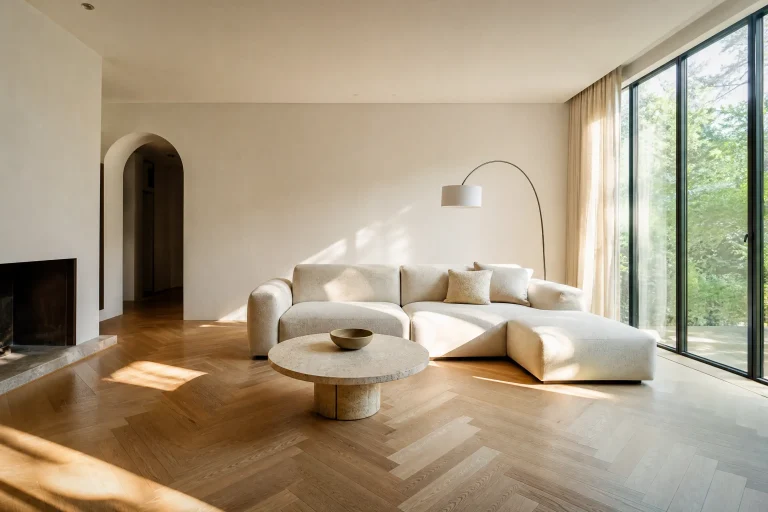
The foundation of most great Scandinavian living rooms is a wall color that maximizes perceived light. In the Nordic countries, where winter daylight is genuinely limited, this is a functional decision as much as an aesthetic one. Warm whites, those with cream or very slightly yellow undertones, are almost always a better choice than stark cool whites, which can read as clinical and cold in a domestic setting. Benjamin Moore’s White Dove, Farrow and Ball’s All White, and Dulux’s Natural Calico are professional favorites that hit the right balance. In practice, the wall color should feel like a quiet background that makes your furniture and textiles look better, not something that demands attention itself.
Designer Advice: Paint the ceiling and walls the same warm white. The seamless result makes smaller living rooms feel significantly taller and more spacious, which is especially valuable in apartment settings.
2. Light Wood as the Material Backbone
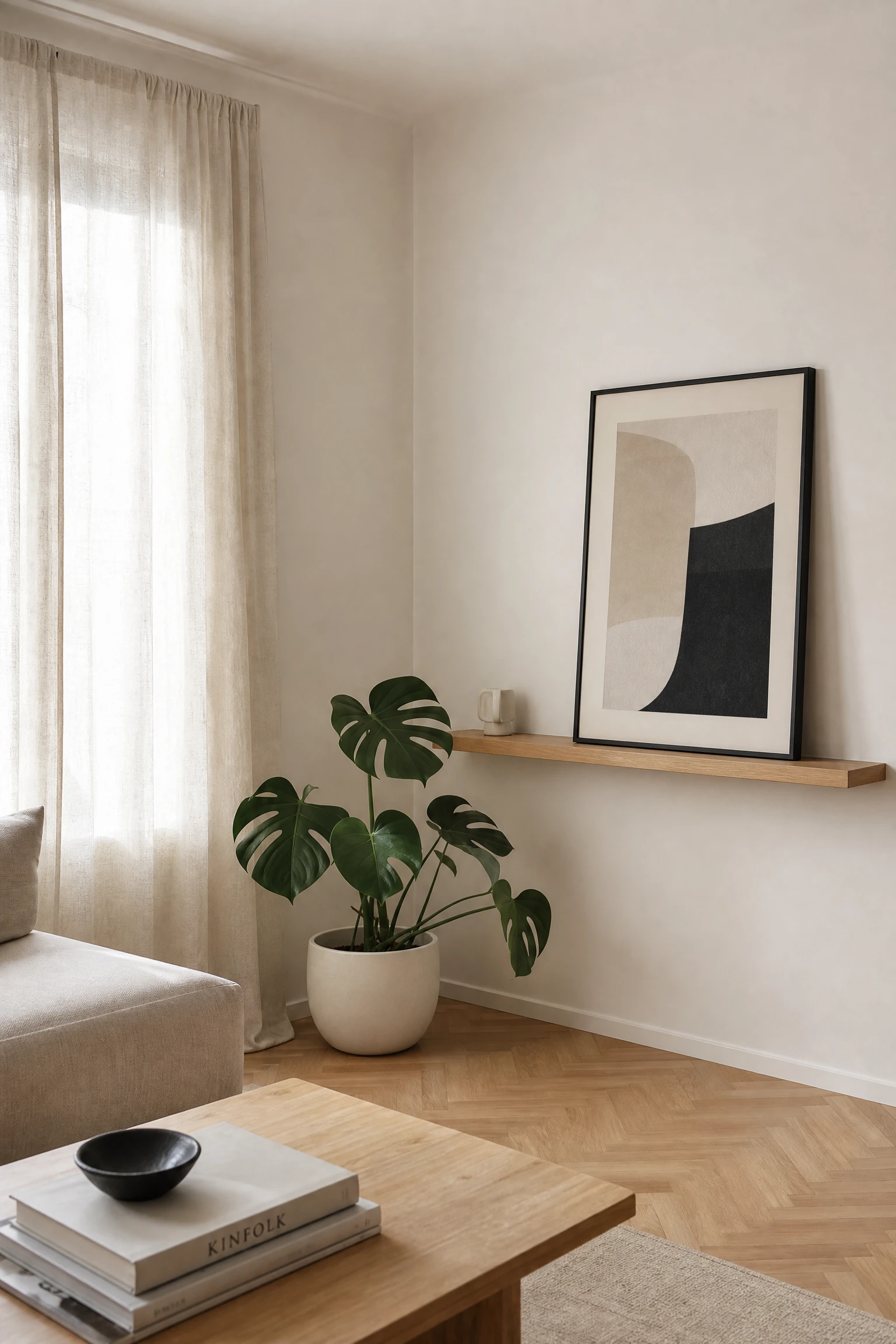
Blond wood, particularly oak, birch, and pine, is the material signature of Scandinavian living rooms. Unlike darker woods such as walnut or mahogany, which anchor a room with weight, light wood reflects warmth and keeps the space feeling open. A light oak coffee table, a birch-veneer shelving unit, and solid oak side tables create a cohesive material language throughout the room without any single piece drawing excessive attention. The grain of the wood itself provides all the visual texture you need. One thing to keep in mind: mixing different tones of light wood, say a slightly golden oak with a very pale ash, can create a disjointed look. Either commit to a single wood species or choose pieces close enough in tone that they read as unified from across the room.
Designer Advice: Introduce light wood tones to your living room through smaller pieces first, such as a side table or a lamp base, before investing in larger furniture. This lets you calibrate the tone against your existing wall color and flooring without a major financial commitment.
3. Layering Textiles for Hygge
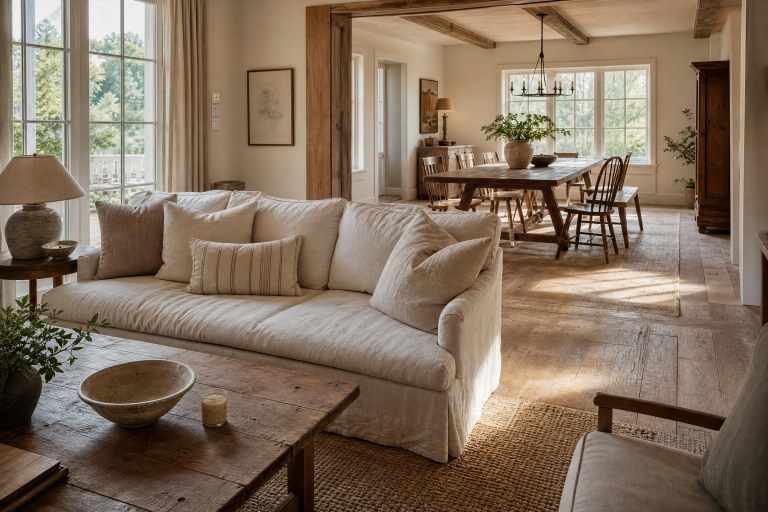
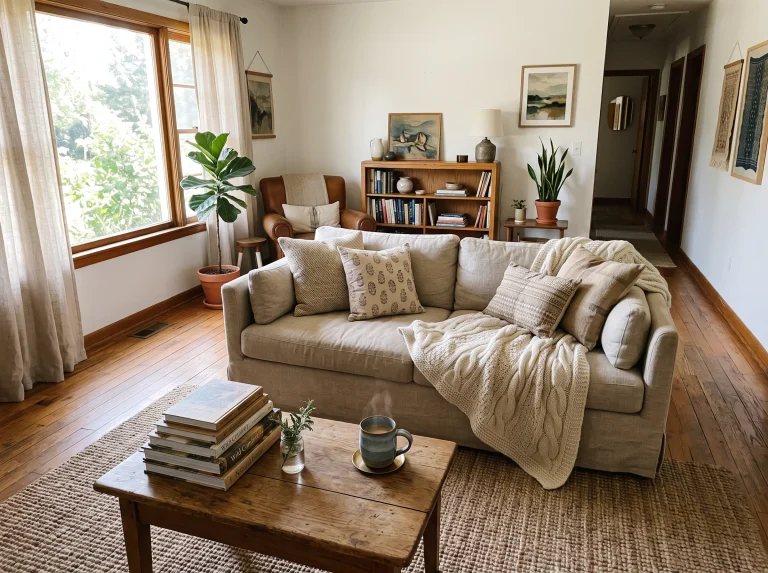
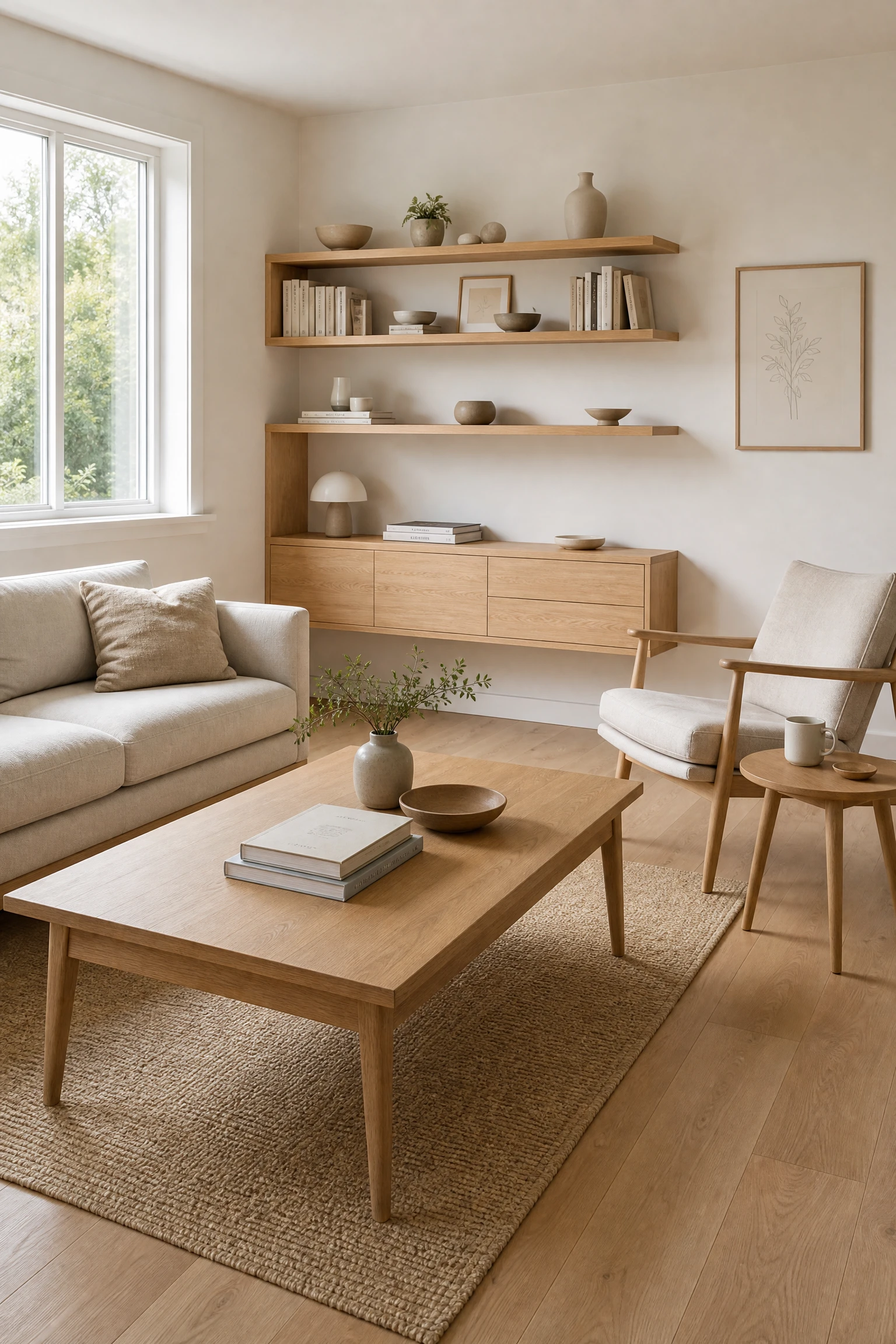
A Scandinavian living room without layered textiles is like a hygge checklist with the most important box left unchecked. Textiles are the primary tool for adding warmth, color, and tactile comfort to a space that might otherwise feel sparse. Start with a neutral linen sofa in warm greige or cream, then layer a chunky knit throw over the back or arm. Add two to three cushions in different textures: perhaps a wool cushion in dusty sage, a linen cushion in natural cream, and a smaller velvet accent cushion in deep dusty blue. The cushions should share a color palette but vary in texture, which creates depth without visual noise. A large area rug in a flat-weave or low-pile wool anchors the seating group and adds another layer of warmth underfoot.
Designer Advice: The rule of odd numbers applies perfectly to Scandinavian cushion styling: three or five cushions almost always looks more natural than two or four. And always include at least one lumbar pillow in the mix.
4. Functional Shelving as Decor
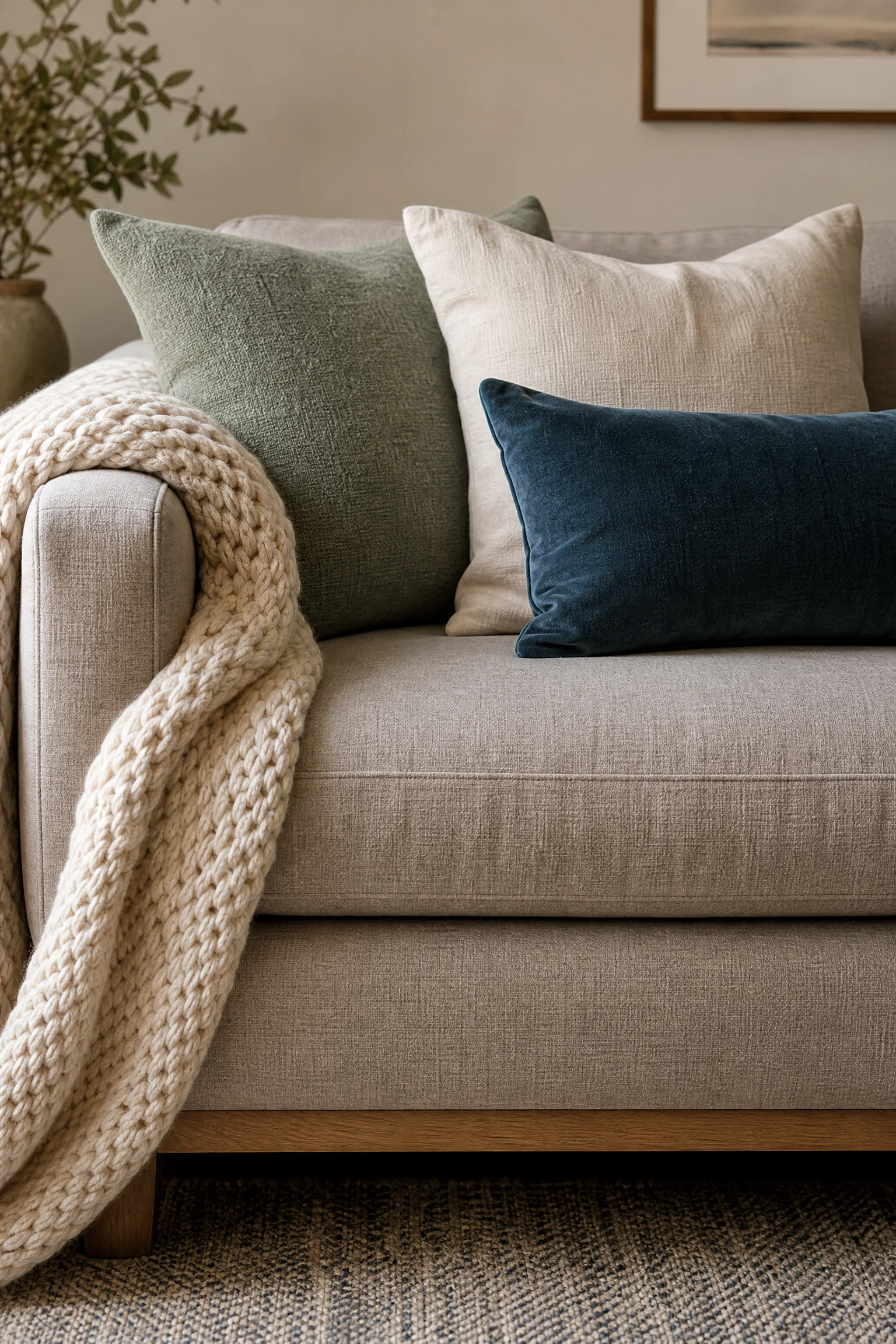
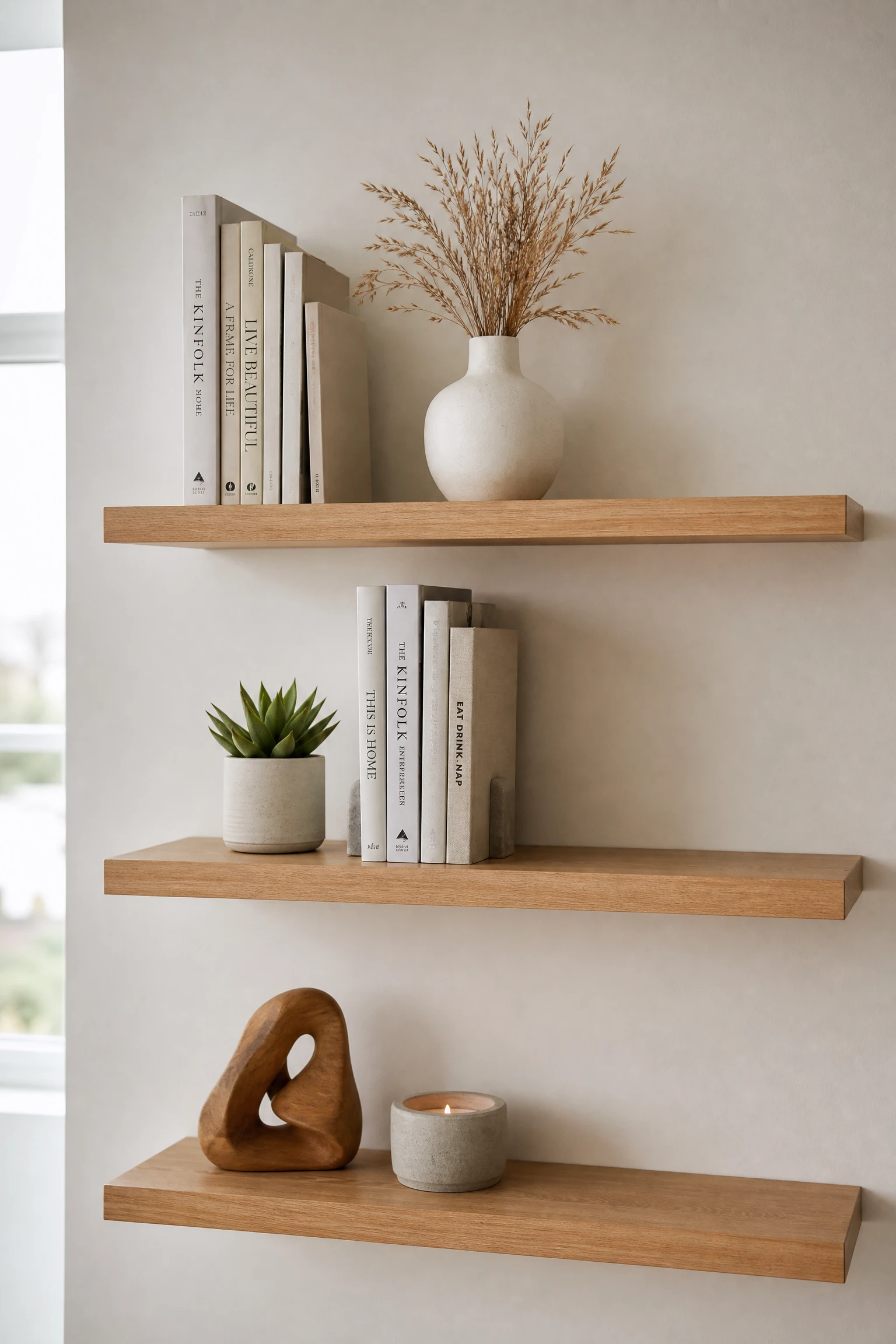
In Scandinavian design, a shelf is never just a shelf. It is a composition, a carefully curated selection of objects that are both useful and beautiful. Open shelving in a Scandinavian living room typically mixes books arranged by height or color, simple ceramic vessels, a small potted plant or two, and perhaps one piece of sculptural decor. What it does not include is clutter, random collections, or objects without a clear reason for being there. The shelving unit itself should be simple and linear, either a freestanding unit in light oak or a series of wall-mounted floating shelves, the latter being particularly good for smaller rooms where floor space is precious.
Designer Advice: Before styling your shelves, remove everything and start fresh. Group objects in threes, leave 20 to 30 percent of the shelf surface empty, and arrange from largest to smallest within each group. The empty space is as important as the objects.
5. A Statement Sofa in a Considered Neutral
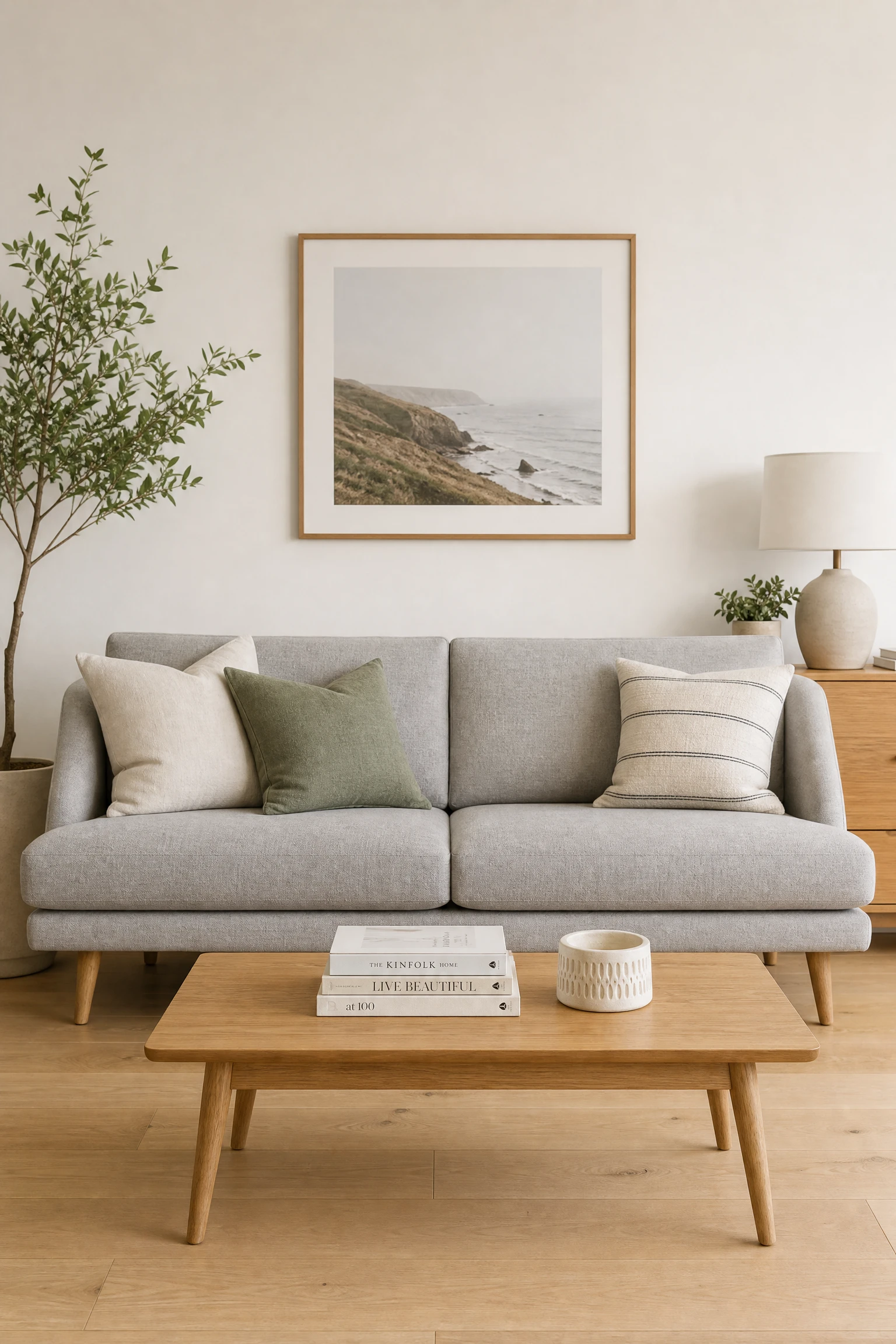
The sofa is the most important single purchase in any living room, and in a Scandinavian context, the selection criteria are specific. Look for clean, low-profile lines, tight upholstery without excessive tufting or ornamentation, and legs in a light wood or brushed metal finish that keeps the visual footprint of the sofa light. Mid-century modern silhouettes work beautifully in Scandinavian interiors because the two styles share a commitment to functional, clean-lined design. A three-seater in warm greige, pale gray, or even a dusty sage performs the double duty of being the visual anchor of the room while staying quiet enough not to compete with carefully chosen accessories. Avoid oversized, sink-in-forever sofas here; proportionality and clean lines matter far more than maximum cushion depth.
Designer Advice: If you want to add a bolder color to your Scandinavian living room without committing to a full re-upholster, an accent chair in a single stronger tone, perhaps mustard yellow or terracotta, adds exactly the warmth and character the space needs without overwhelming the neutral base.
6. Natural Light as the Primary Design Element
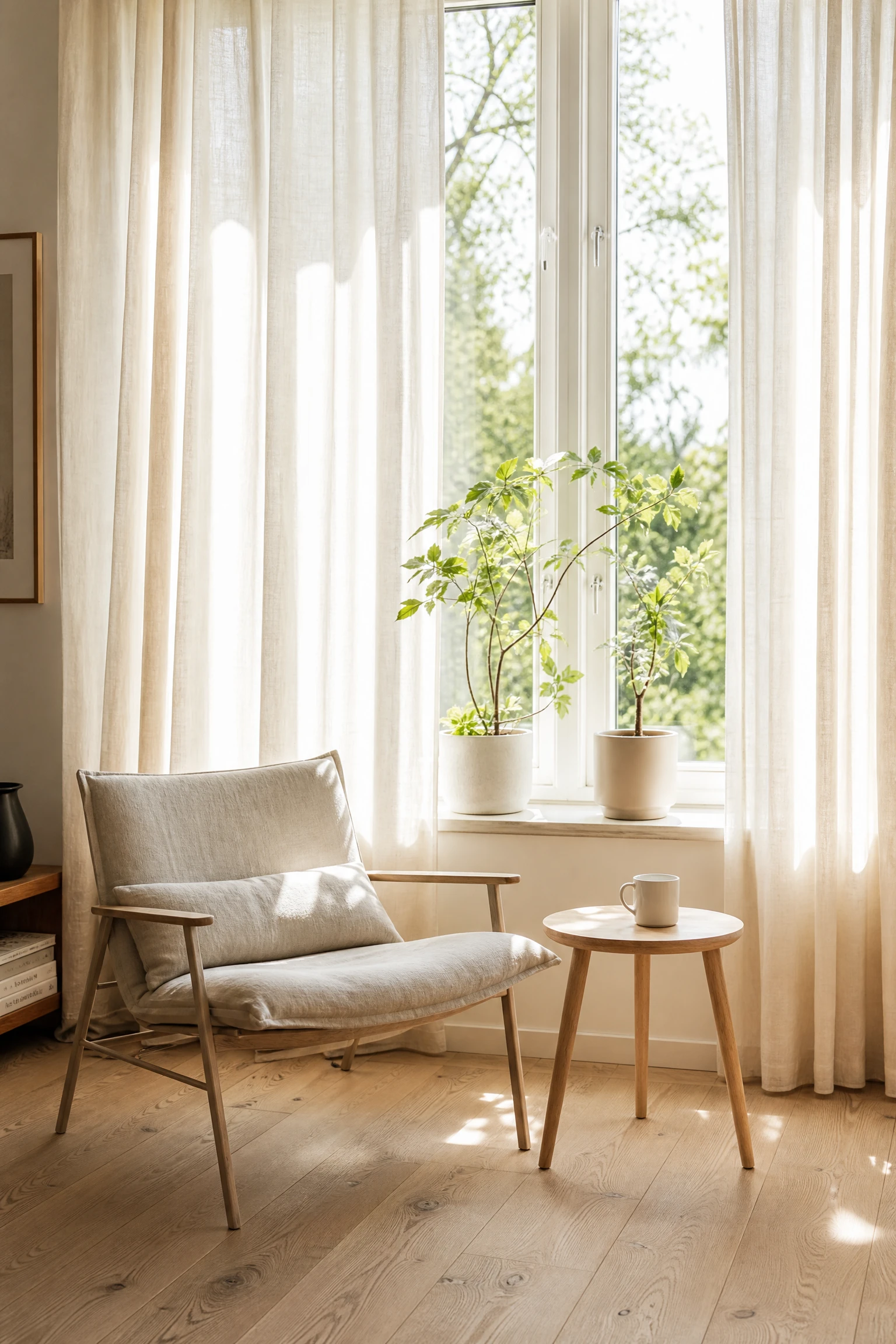
Light, or specifically the management of natural light, is treated differently in Scandinavian interiors than in most other design traditions. Rather than blocking it with heavy drapes or positioning furniture in ways that interrupt its path through the room, Scandinavian design works with light as an active, changing element of the interior. Floor-to-ceiling linen curtains in warm white or very pale sand allow light to filter through while providing privacy, and the slight luminosity of the fabric itself adds warmth to the room even on gray days. Keep windows free of obstructions, and if your living room has limited natural light, position mirrors strategically to bounce what light there is deeper into the space.
Designer Advice: Hang curtains as close to the ceiling as possible, not just above the window frame. This is one of the most effective ways to make any room, and particularly a lower-ceilinged living room, feel taller and more dramatic.
7. Layered Lighting for Every Mood
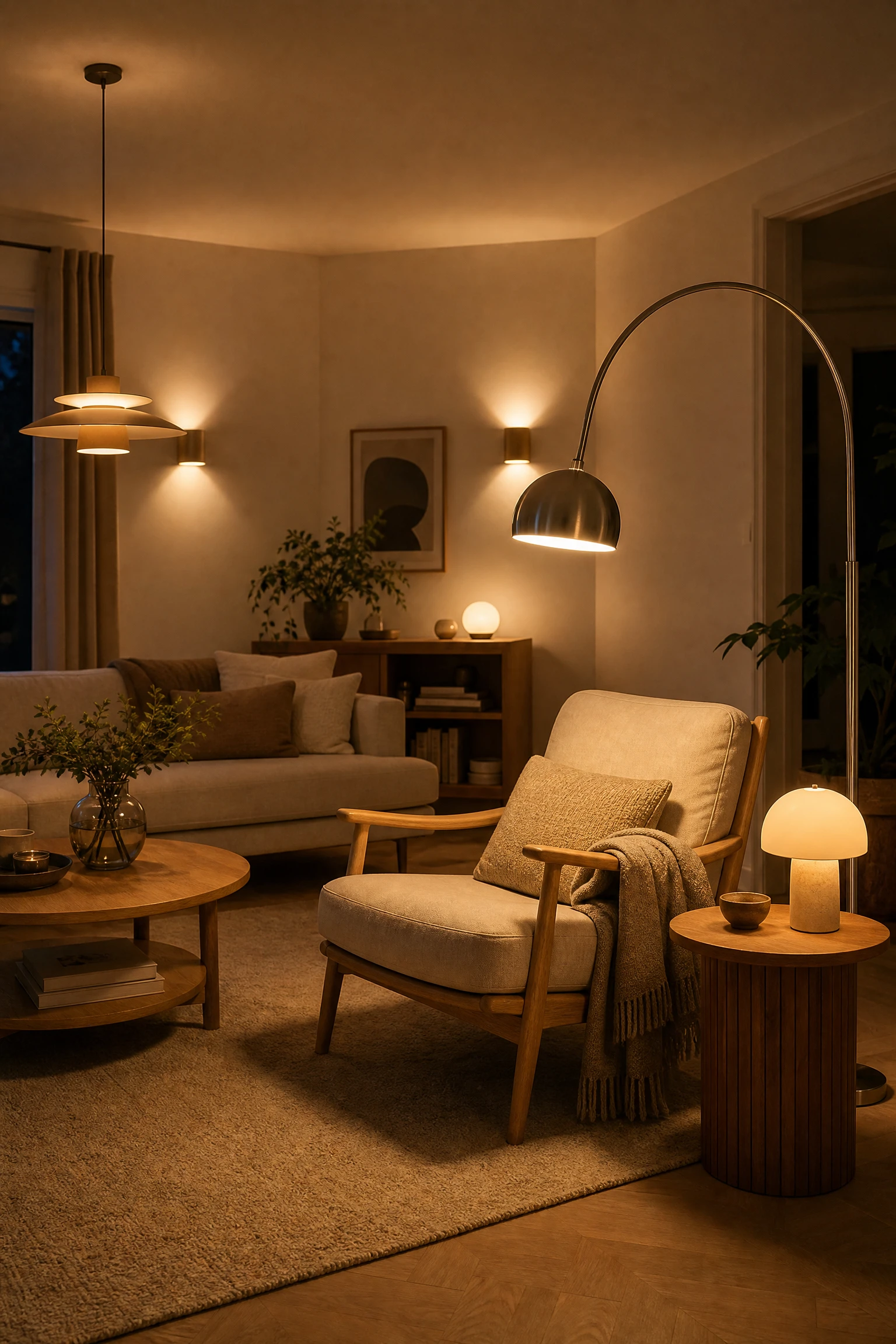
Natural light is wonderful, but the evening hours are when a Scandinavian living room really needs to deliver. Layered artificial lighting, a combination of ambient, task, and accent light sources, is what creates the warm, intimate atmosphere associated with Nordic interiors at night. Start with a sculptural floor lamp beside the sofa for reading, add a pendant light over the coffee table or seating group for ambient overhead light, and include two or three small table lamps and perhaps a wall sconce to create pools of warm light across the room. Every light source should use warm-toned bulbs at 2700K or below. The result is a room that feels genuinely warm and inviting after dark, not a room that feels like a showroom.
Designer Advice: Dimmer switches on all overhead lighting in a Scandinavian living room are not optional. The ability to drop the overhead light low and let the floor and table lamps carry the evening is essential to creating the hygge atmosphere the style is famous for.
8. Bringing the Outdoors In with Plants
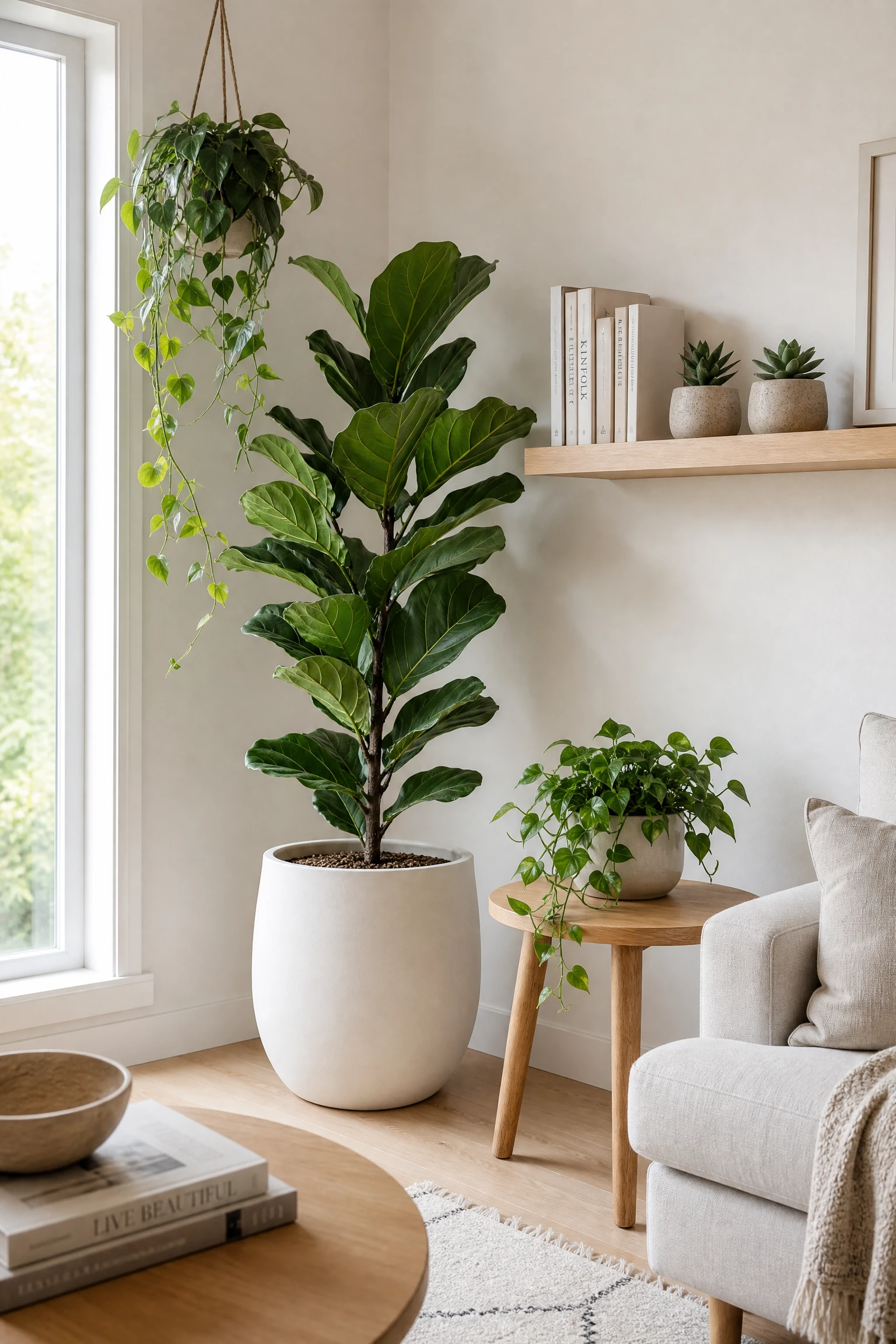
Scandinavian interiors have always used living plants not just as decoration but as a philosophical connection to the natural world outside. In the context of a clean-lined, mostly neutral living room, a well-placed plant provides color, organic shape, and life that no decorative object can fully replicate. A large fiddle-leaf fig or monstera in a simple matte white ceramic pot makes a dramatic statement in a corner. Smaller plants on shelves and windowsills, such as pothos, succulents, or small ferns, add quiet life throughout the room. The pot matters as much as the plant: choose vessels in matte ceramics, natural stone, or textured concrete rather than anything shiny or plastic.
Designer Advice: Group plants in odd numbers and vary their heights dramatically, placing a tall floor plant beside a low shelf arrangement and a hanging plant near the window. This vertical layering of greenery creates an almost forested quality that is deeply evocative of Nordic landscapes.
9. A Thoughtful Color Accent Strategy
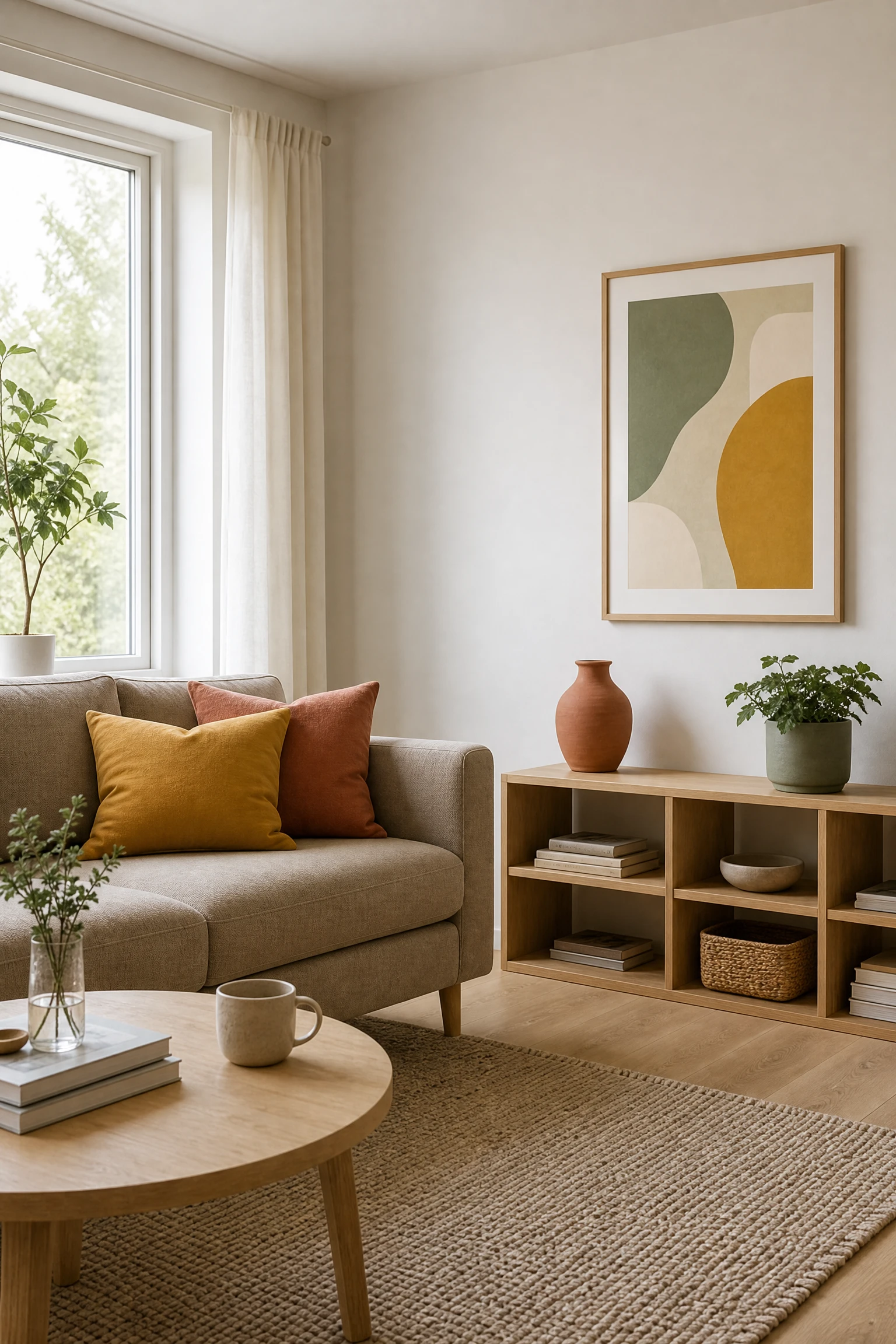
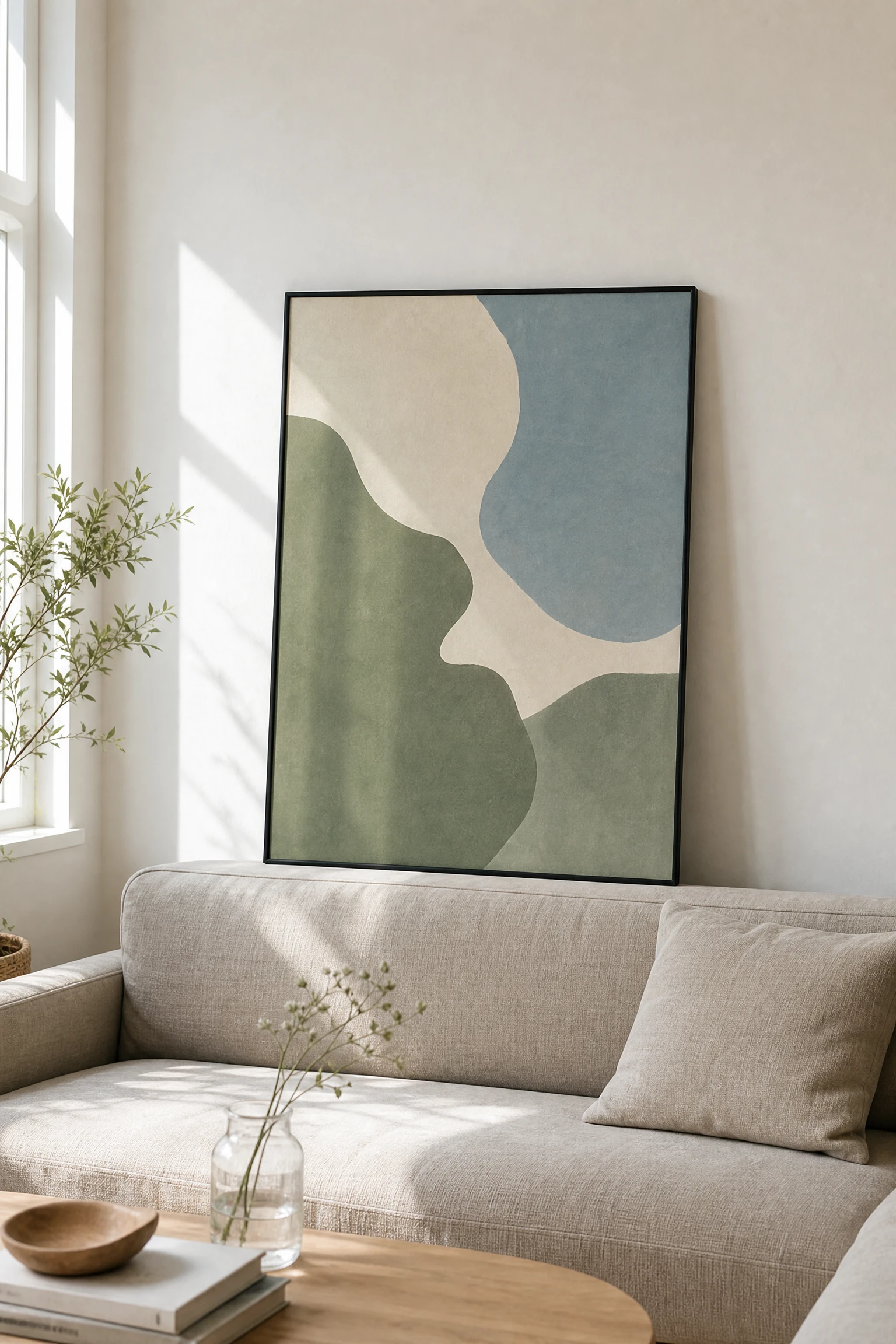
The contemporary Scandinavian living room is no longer restricted to white and gray. In 2026, design leaders in Denmark and Sweden are incorporating much more intentional color, and the results are some of the most beautiful interiors currently being published. The key is proportion: keep walls and large upholstery in neutral tones, and introduce color through smaller, replaceable pieces. Mustard yellow, dusty terracotta, deep sage green, and dusty blue are all strong current choices. A single mustard yellow throw pillow, a terracotta ceramic vase, and a sage green plant pot can add enormous warmth and personality without destabilizing the neutral base. The art on the walls is another great place for color: a bold abstract print in complementary tones ties the accent colors together and gives the room a focal point.
Designer Advice: Before committing to a color accent scheme, pull together all the pieces you are considering, even if you have to shop online and reference screenshots, and check them against your existing neutrals in natural light. Colors that look harmonious on a screen or in a magazine can clash badly in the actual room.
10. Minimalist Decor That Earns Its Place
Every object in a Scandinavian living room should earn its place. This is not about having nothing; it is about having less but better. A beautiful ceramic bowl on the coffee table is far more effective than three inexpensive trinkets. A single large art print in a simple frame is more powerful than a scattered arrangement of small pictures. A candle in a heavy glass holder is more atmospheric than a collection of cheap tealights in plastic cups. This selectivity applies to furniture too: if a piece does not serve a clear functional or aesthetic purpose, it does not belong in the room. The discipline of the approach is what makes Scandinavian interiors so visually restful and so compelling to spend time in.
Designer Advice: The most practical way to implement this principle is a regular edit: every few months, remove everything from your shelves and surfaces and only put back the pieces that still feel right. You will always find at least two or three things that were there out of habit rather than intention.
11. The Coffee Table as a Composition
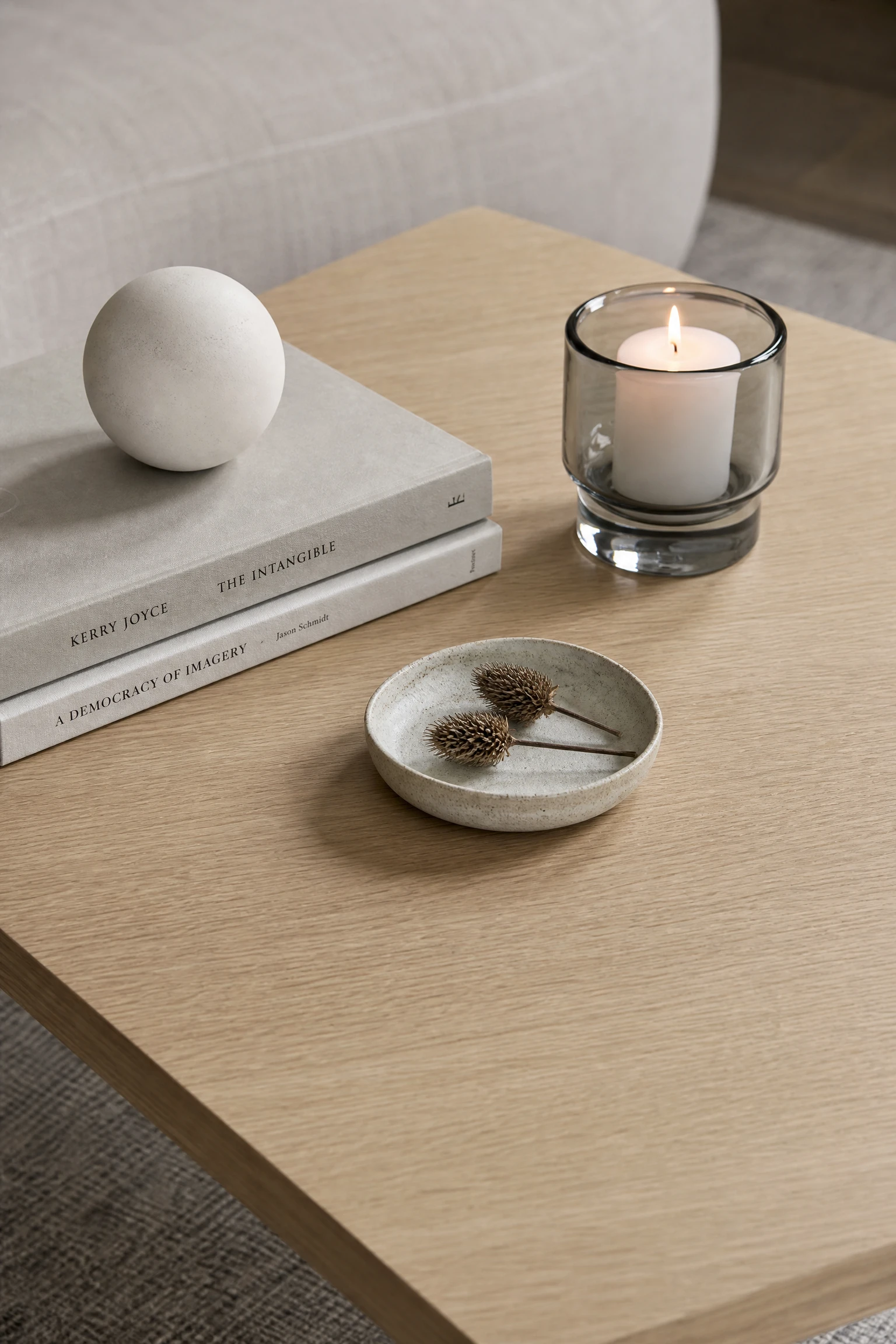
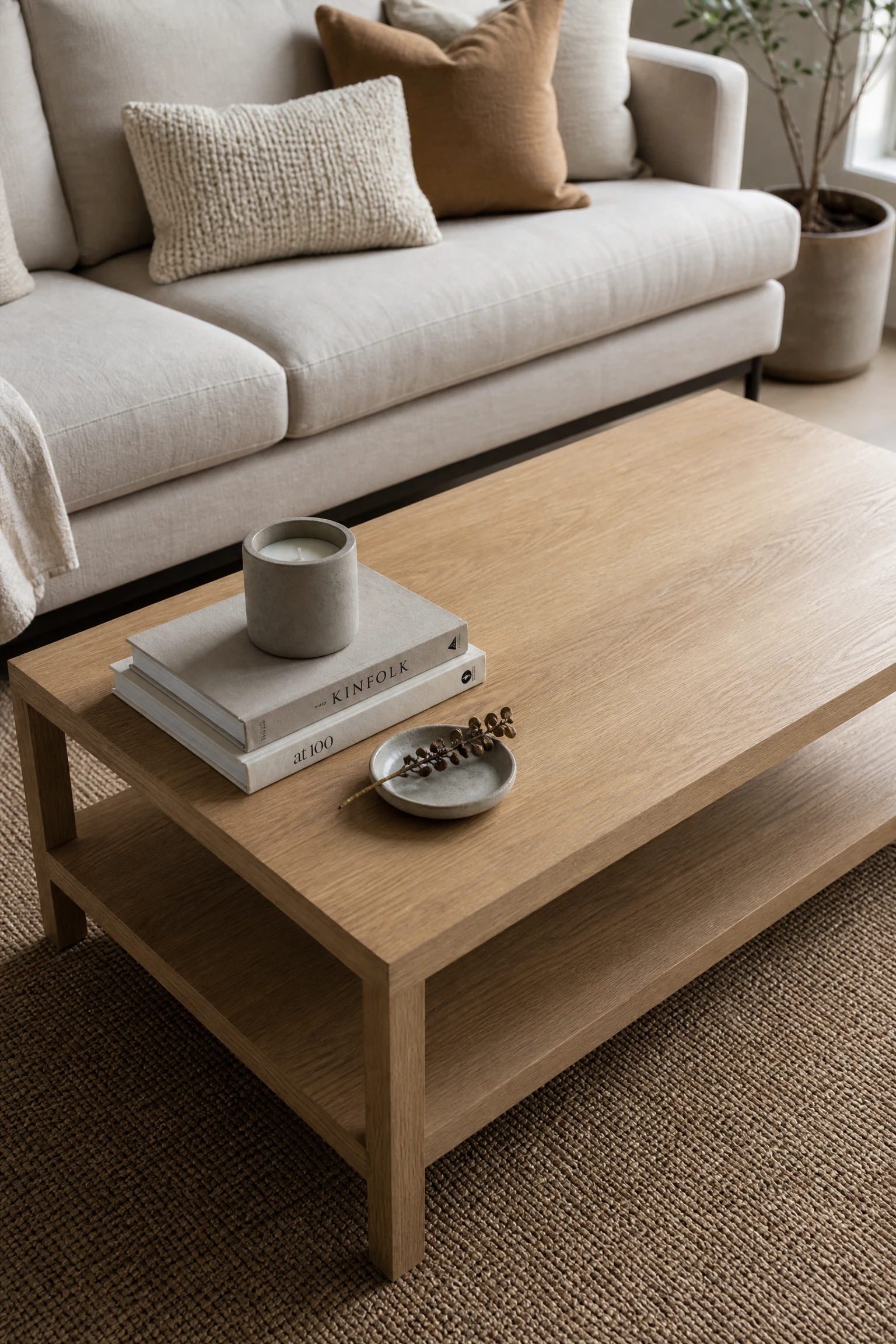
In a Scandinavian living room, the coffee table is a stage for a very considered vignette. The table itself should be simple: light wood, stone, or a combination of the two, with clean lines and no ornamental detail. On the surface, a classic Nordic arrangement might include a stack of two or three design books with a small ceramic object on top, a simple candle in a heavy glass or concrete holder, and perhaps a small low bowl with a few dried botanicals. The arrangement should feel effortless, as though it happened naturally, even though it was very deliberately composed. Nothing should feel too symmetrical or too precious; asymmetry and organic shapes are more in keeping with the Scandinavian ethos than perfectly mirrored arrangements.
Designer Advice: Leave one corner of your coffee table completely empty. It sounds counterintuitive, but the unoccupied space actually makes the styled portion look more intentional and gives the eye a place to rest.
12. Nordic Art and Wall Decor
Art in a Scandinavian living room tends to be either graphic and minimal, think bold black-and-white geometric prints or clean typographic posters in the tradition of Swedish and Danish design studios, or abstract and nature-inspired, referencing the Nordic landscapes of birch forests, fjords, and winter skies. Both approaches work beautifully; the choice depends on whether you want the wall to feel graphic and modern or organic and warm. What does not work in this aesthetic is overly decorative or heavily ornamental art, which conflicts with the clean-lined spirit of the space. A single large-format piece in a simple frame is usually more effective than a gallery wall, though a very tightly curated gallery wall in uniform frames with consistent spacing can work well in larger rooms.
Designer Advice: When hanging art in a Scandinavian living room, try leaning a framed piece against the wall on a shelf or console rather than hanging it. This immediately relaxed feel is more in keeping with the Nordic interior aesthetic than rigidly centered and hung artwork.
13. Concrete, Stone, and Industrial Accents
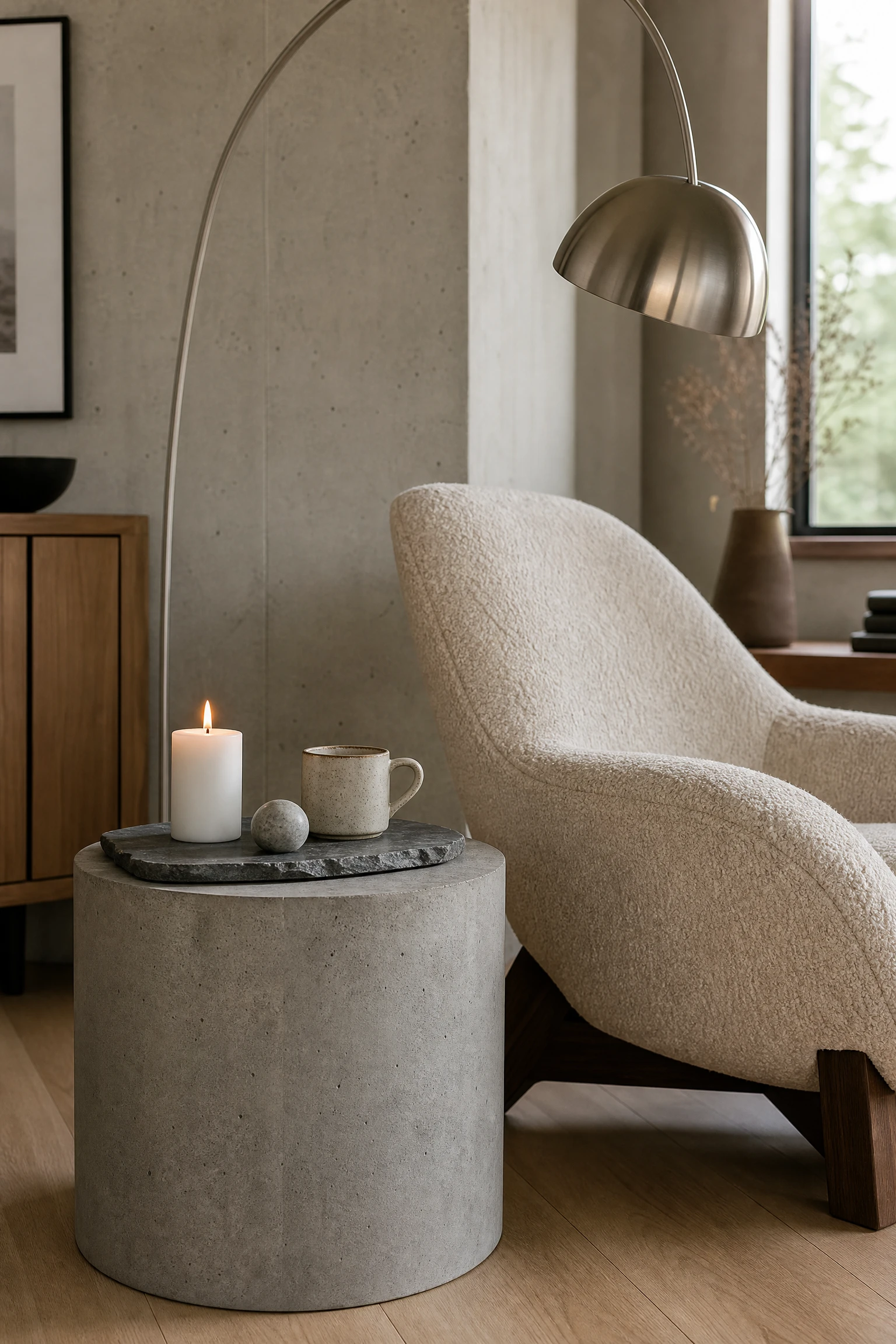
One of the most interesting directions in contemporary Scandinavian living room design is the integration of industrial materials alongside the warmer natural ones. A concrete side table, a stone candle holder, a brushed steel lamp base, or a raw edge slate tray can all add beautiful textural contrast in a room that might otherwise risk feeling too soft. This approach is sometimes called Scandinavian Industrial and has been particularly popular in urban loft settings, but it works in any context where the bones of the room are sufficiently neutral. The key is not to overload the room with hard, cold materials; one or two industrial elements are plenty in a space that is otherwise warm and textural.
Designer Advice: Concrete accessories are widely available and often very affordable, making them one of the easiest ways to introduce an industrial edge to a Scandinavian living room without a significant investment. Start with a concrete planter or a concrete candle holder before committing to larger pieces.
14. A Reading Nook That Beckons
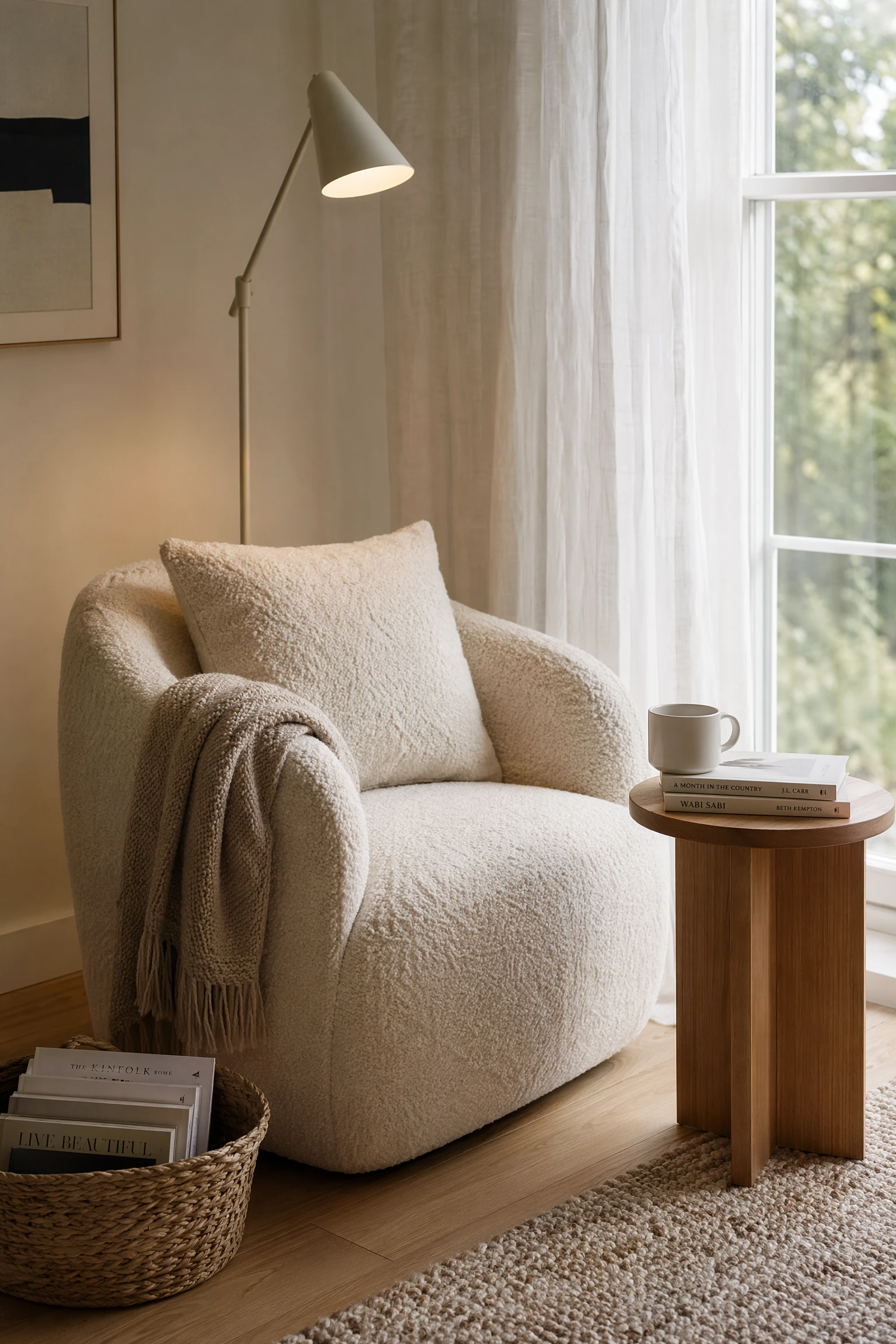
A dedicated reading nook within a Scandinavian living room is the ultimate expression of the hygge philosophy: a small, cozy corner designed entirely for quiet pleasure. Position a comfortable lounge chair, preferably with a slightly higher back and a foot ottoman, beside the best window in the room. Add a tall, slender floor lamp that puts light exactly where you need it for reading. A small side table for a cup of tea and a woven basket for the current reading pile complete the setup. The chair should be upholstered in something soft and appealing, a bouche fabric, a linen weave, or a warm wool, and it should be just slightly different from the main sofa to give the nook its own identity within the room.
Designer Advice: A reading nook works best when it is slightly separated from the main seating group, even in a small room. Angling the chair away from the sofa by 45 degrees or using a slim bookshelf as a partial divider creates the sense of a distinct zone without requiring any architectural changes.
15. Candles as Essential Decor
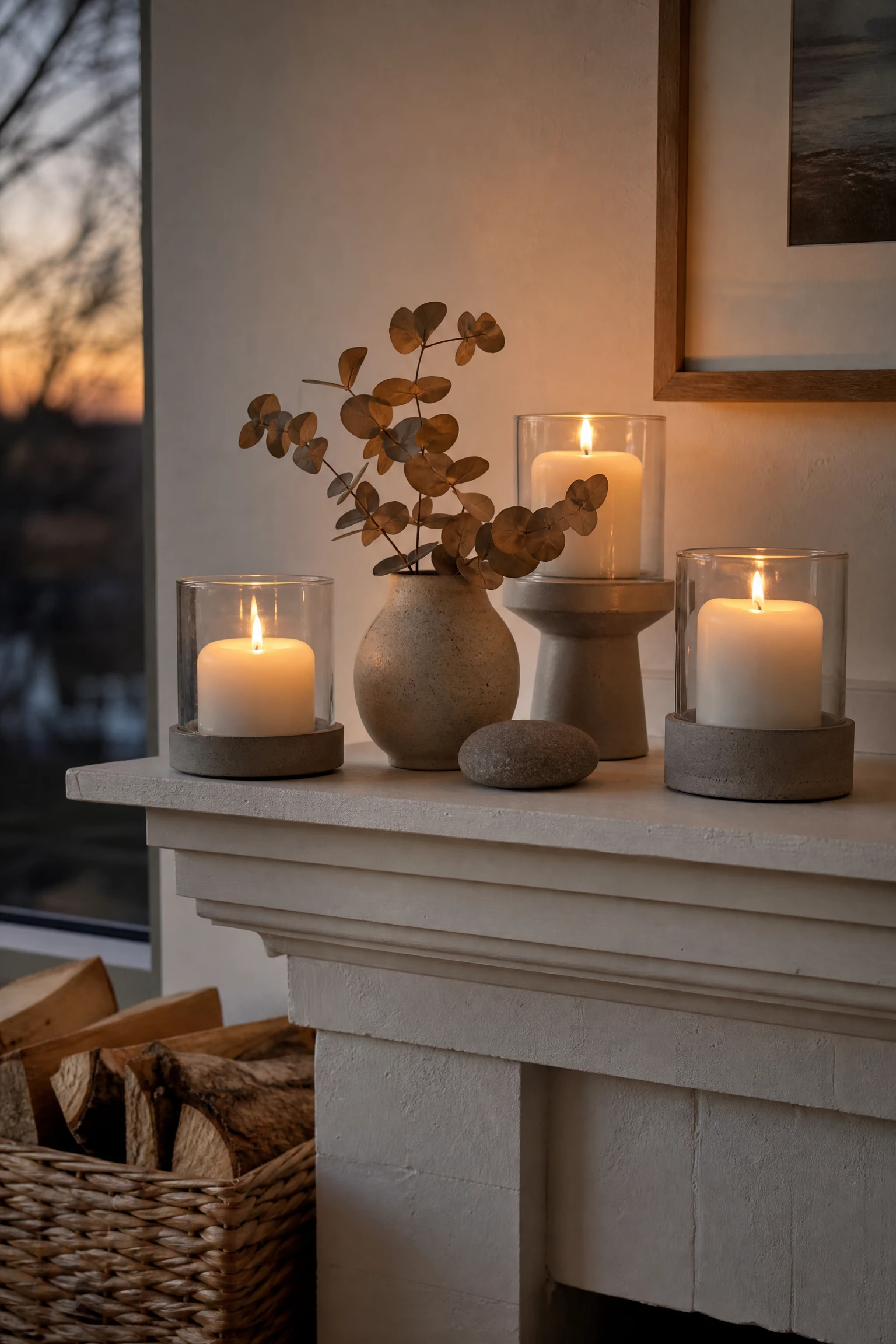
In Scandinavian countries, candles are not decorative extras; they are a fundamental part of how people live in their homes, particularly through the long, dark winter months. In a Scandinavian living room, candles should be present in multiple forms and multiple locations: tall pillar candles in simple glass or ceramic holders on the mantle, small tea lights in clusters on the coffee table, a cluster of taper candles in a matte black or natural wood candle holder on the dining table if the room connects to a dining area. The warm, flickering light of real candles creates an atmosphere that no electrical light source has yet successfully replicated. It is the most affordable and most effective way to create authentic hygge in your living room, and it works every single time.
Designer Advice: Use unscented candles in rooms where you already have a diffuser or scented candle, to avoid clashing fragrances. For Scandinavian interiors, simple white or cream pillar candles look most appropriate, though a deep forest green or warm rust candle can introduce a beautiful seasonal accent in autumn and winter.
Conclusion
A truly Scandinavian living room is not something you assemble in a weekend. It is something you grow into, refining over time as your understanding of the aesthetic deepens and as you develop the discipline to be selective rather than accumulative. The ideas in this guide give you a roadmap for getting there, from the foundational choices of white walls and blond wood through to the finer points of how to style a shelf and where to place a reading lamp. The common thread running through all of them is intention: every element in a Scandinavian living room is there for a reason, and the absence of the unnecessary is just as important as the presence of the beautiful.
What makes this style so enduring is that it is genuinely livable. It is not a museum aesthetic; it is a human one. The rugs are soft underfoot, the throws are there to be used, the candles are lit and enjoyed rather than preserved. If you take only one thing from this guide, let it be that: a Scandinavian living room should feel as good to live in as it looks to photograph.
FAQ
Q: How do I add warmth to a Scandinavian living room without making it look cluttered?
Focus on warm-toned textiles, candles, and warm-bulb lighting rather than adding more objects. A chunky knit throw, a wool rug, and warm-toned lamps will do more for warmth than any additional decor.
Q: Can I use color in a Scandinavian living room?
Yes, especially in 2026, which has seen a significant shift toward more intentional color use in Nordic interiors. Keep walls and large furniture neutral, and introduce color through cushions, ceramics, plants, and art.
Q: What is the difference between Scandinavian and Japandi design?
Japandi is a blend of Scandinavian minimalism and Japanese wabi-sabi philosophy. Both prioritize simplicity and natural materials, but Japandi tends to be slightly darker, incorporating more charcoal, deep clay, and bamboo, while Scandinavian design stays lighter and warmer.
Q: Do I need a fireplace for a Scandinavian living room?
Not at all. While a fireplace is a wonderful addition, candles and layered warm lighting create the same intimate atmosphere. A console with a cluster of candles and a decorative stack of logs in a woven basket achieves the same visual and emotional effect.
Q: What flooring works best for a Scandinavian living room?
Light wood flooring, particularly oak or birch, is the most authentic choice. Wide-plank formats look especially good. If you have darker flooring, a large light-toned area rug in a natural fiber like wool or jute will serve a similar brightening function.
Q: What brands are good for Scandinavian living room furniture?
Established Scandinavian brands include IKEA for accessible entry-level pieces, HAY, Muuto, Menu, and String Furniture. For ceramics and smaller accessories, Royal Copenhagen, Iittala, and independent Nordic ceramicists produce beautiful work.