How to Create a Cozy Reading Corner in Your Bedroom Even If You Have Very Little Space
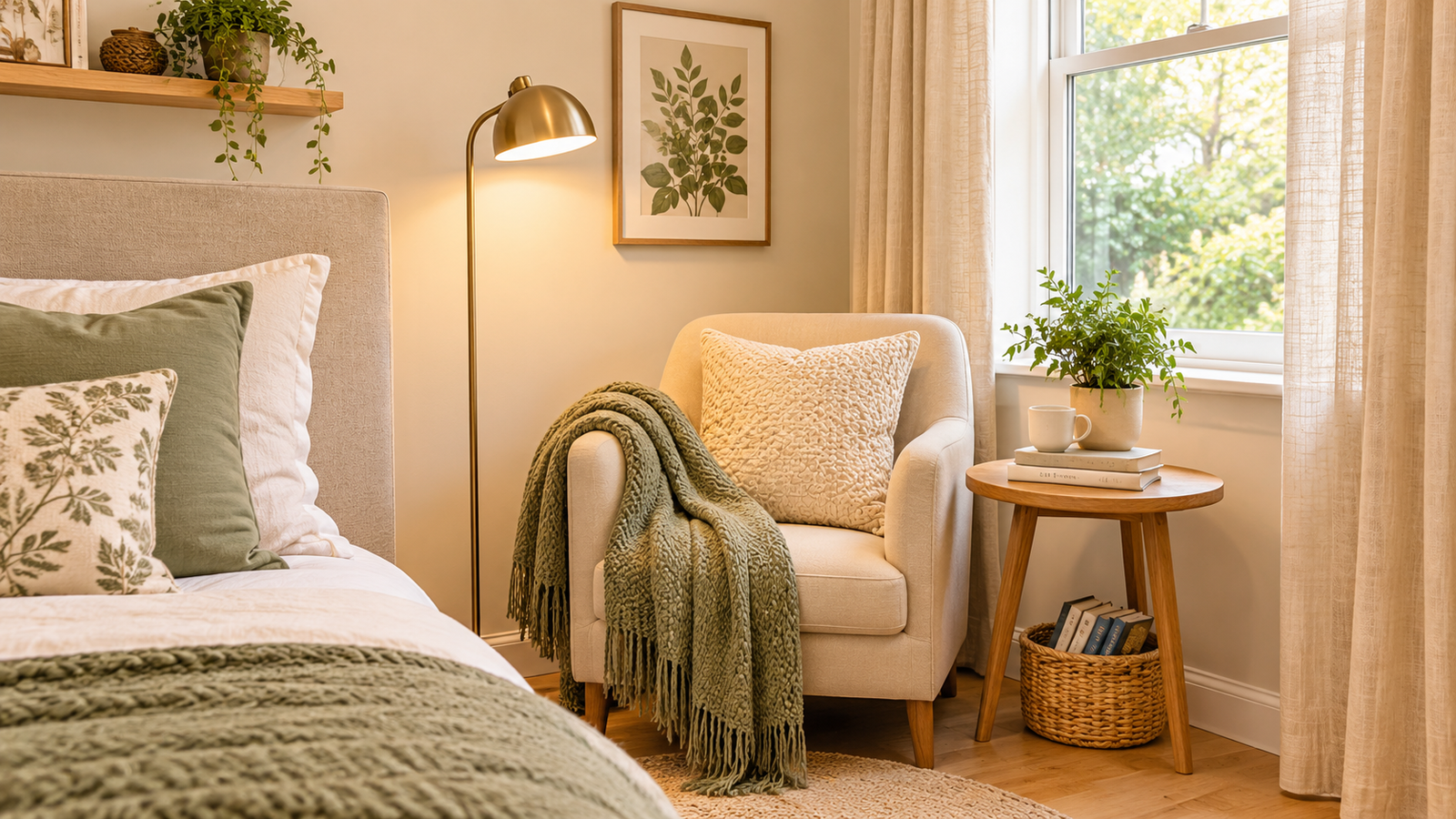
Have you ever picked up a book, made yourself comfortable on your bed, and then spent the next twenty minutes trying to find a position that does not leave your neck aching? I have seen this happen in bedrooms of all sizes. The bed becomes the place for everything: sleeping, reading, scrolling through a phone, folding laundry, and sometimes even working. It is convenient, but it can make it difficult to enjoy a quiet moment without feeling surrounded by everyday clutter.
A separate reading corner sounds lovely, but there is one obvious problem: not every bedroom has room for an armchair, a bookshelf, and a decorative floor lamp. In a small bedroom, even moving a chair away from the wall can make the walkway feel uncomfortably narrow.
The good news is that a cozy reading spot does not need to look like a miniature library. It does not even need a traditional reading chair. A comfortable corner can be created beside a window, at the foot of the bed, in an unused alcove, or in a space that currently holds a pile of things you rarely use.
The secret is to make a small area feel intentional. You need somewhere comfortable to sit, lighting that makes reading easy, a place to keep your current book, and just enough personal touches to make the spot inviting. Everything else is optional.
Whether your bedroom is a compact apartment room, a shared space, or simply a room where every inch already seems occupied, these ideas can help you create a reading corner without making the rest of the bedroom feel crowded.
1. Start by Finding Space You Are Not Really Using
Before buying a chair or browsing through pretty reading nook pictures, take a closer look at your bedroom. The most useful space may already be there, but it might not be obvious.
Small bedrooms often contain awkward areas that are difficult to use for large furniture. A narrow strip beside the bed, an empty corner near the window, or the space under a sloping ceiling may seem unimportant. However, these areas can work surprisingly well for a compact reading spot.
Walk around the room and look at it from different angles. Notice where you naturally have a little extra floor space. Also pay attention to the routes you use every day. You should be able to open drawers, walk around the bed, reach the wardrobe, and get to the door without squeezing past your reading furniture.
Here are a few places worth checking.
The corner beside your bedroom window
A window corner is often one of the most pleasant places for reading. Natural daylight makes the space feel open during the day, and looking outside can make a short reading break feel more relaxing.
You do not need a wide window seat. A small upholstered chair, a compact stool with a cushion, or a narrow bench may be enough. If the window is close to the corner, position the seat so you can enjoy the light without blocking the curtains.
Check how the window opens before arranging furniture. A chair that looks perfect in a photograph may become annoying if you have to move it every time you want to open the window.
Also consider the temperature. A window can be drafty in winter or surprisingly warm in direct afternoon sunlight. A comfortable reading spot should feel pleasant in the seasons when you are most likely to use it.
The space beside your bed
If there is a little room between the bed and the wall, you may be able to fit a small chair or a narrow floor cushion there.
This arrangement is especially useful if you like reading for fifteen or twenty minutes before sleeping. You can keep your book close to the bedside area without making your bed the only place to sit.
Measure the available width first. Do not assume that a chair will fit just because its advertised width looks small. Allow enough room to pull it out, sit down, and stand up comfortably.
If the gap is too narrow for a chair, consider a small upholstered floor cushion. It can be moved under the bed or into a closet when you need the floor space for something else.
The foot of the bed
The foot of the bed is often treated as a decorative area, but it can be useful in a small bedroom.
If you have enough clearance, a slim bench with a comfortable cushion can create a simple reading spot. Choose one with a narrow profile rather than a deep storage bench that takes up too much room.
A bench may not offer the same back support as an armchair, so think about how you prefer to read. If you like sitting upright with a book in your lap, it may work well. If you prefer to lean back for a long reading session, a compact chair is likely to be more comfortable.
An unused alcove or awkward corner
Some bedrooms have a small alcove beside a wardrobe, a recessed wall, or an area under a staircase or sloped ceiling. These spaces can be difficult to decorate with standard furniture.
That is exactly why they can be useful for a reading corner.
A narrow seat, a cushion, and a wall-mounted reading light may be all you need. You can also use a small floating shelf to hold a few books without taking up floor space.
Avoid filling every inch of an alcove with furniture and accessories. Leaving a little empty space around the seat helps the corner feel like a place to relax rather than a storage cupboard.
A corner that currently collects clutter
Sometimes the easiest place to create a reading nook is the area where miscellaneous items tend to gather.
Perhaps there is a basket of clothes, a stack of old magazines, or a small table covered with things that do not have a proper home. Clearing this area may reveal enough room for a compact seat.
Before moving anything, decide where those belongings should go. Otherwise, the clutter may simply move to another corner of the bedroom.
The first step is not buying something new. It is making room for something you actually want to use.
2. Measure Before You Buy Anything
This is one of the least exciting parts of decorating, but it can save you from a frustrating purchase.
A chair can look compact in an online photograph and feel enormous when it arrives. Product pictures often show furniture in spacious rooms, where there is plenty of room around every piece.
In a small bedroom, a difference of a few inches can affect whether you can comfortably open a wardrobe or walk past the bed.
Measure the area where you want the reading corner to go. Write down the width, depth, and height available. If you plan to use a floor lamp, measure the space needed for its base as well.
Think about the entire furniture arrangement rather than just the seat itself.
For example, a chair may be 25 inches wide, but you may need additional room to pull it away from the wall. A side table might only be 12 inches across, yet its position could interfere with a drawer or door.
A simple measuring tape is enough for this job. You can also use a free room-planning app or a basic drawing on paper to test different arrangements. Apps such as Planner 5D and Room Planner can help you experiment with furniture placement, although you should still check the manufacturer’s actual dimensions before ordering.
Make a simple floor plan
You do not need professional design software.
Draw the bedroom as a rectangle and mark the main features:
- The bed and its position
- Wardrobes and drawers
- Bedroom and closet doors
- Windows and radiators
- Existing bedside tables
- The proposed reading corner
Then draw a small rectangle where the chair or bench might go.
This quick exercise can reveal problems before you spend money. You may discover that the chair fits physically but blocks the wardrobe door. Or you may realize that moving a bedside table slightly creates a much better space near the window.
Remember that a reading corner should improve the room, not make everyday movement more difficult.
3. Choose Seating That Fits the Room and Your Reading Habits
The seat is usually the main feature of a reading corner. It is also where people often make their biggest mistake.
A beautiful chair is not automatically a comfortable reading chair. Some styles look inviting but have shallow seats, stiff backs, or arms positioned too high for relaxed reading.
Think about how you actually sit when reading. Do you prefer to sit upright with your feet on the floor? Do you like curling up with your legs tucked underneath you? Do you lean back with a cushion behind your shoulders?
Your answer should guide the type of seating you choose.
A compact accent chair
<PRIVATE_PERSON> A small accent chair can make a bedroom reading corner feel like a separate little destination.
Look for a chair with a relatively narrow frame, a supportive back, and a seat deep enough for comfortable sitting. Rounded designs can work particularly well in small bedrooms because their softer outlines may feel less bulky than large square furniture.
Pay attention to the armrests. Wide arms can take up valuable space, while a slim or armless design may fit more easily.
A compact accent chair is a good option if you plan to read regularly and want a proper place to sit.
Before buying, check:
- Overall width and depth
- Seat height
- Seat depth
- Back support
- Whether the arms make it difficult to get in and out
- Fabric cleaning instructions
- Whether the chair needs assembly
If possible, try a similar chair in a furniture store. Sit in it for a few minutes rather than judging it by appearance alone.
A small slipper chair
A slipper chair has a low profile and usually does not have arms. Because it takes up less visual and physical space than many traditional armchairs, it can be useful in a narrow bedroom corner.
Its simple shape also makes it easier to place beside a small table or under a window.
The main thing to check is back support. Some slipper chairs have fairly upright backs, while others are designed more for occasional seating than extended reading.
If you choose one, add a supportive cushion behind your lower back if needed. A soft throw can make it feel warmer without taking up extra space.
A floor cushion
A floor cushion is one of the most flexible choices for a very small bedroom.
It can be placed in a corner when you want to read and stored under the bed when you need the floor space. This makes it useful for renters, students, and anyone who does not want another permanent piece of furniture.
Choose a cushion with enough thickness to keep you comfortable. A very thin decorative cushion may look attractive but offer little support on a hard floor.
A large square floor cushion, a round meditation cushion, or a supportive backrest cushion can work depending on your preferred sitting position.
If you plan to use the cushion regularly, consider a removable cover that can be washed. Bedroom floors collect dust, hair, and small bits of everyday dirt, so easy cleaning matters.
A bean bag chair
A compact bean bag can create a relaxed, informal reading area. It is particularly useful if you enjoy sitting in different positions rather than remaining upright.
However, not every bean bag is comfortable for reading. Some have so little structure that you gradually sink down, leaving your back unsupported.
Look for a design that holds its shape reasonably well. A bean bag with a supportive back or a more structured lounge shape may be a better choice than a loose sack.
Also consider where you will store it. Even a small bean bag can take up more space than expected when it is not being used.
A narrow bedroom bench
A narrow bench can be a practical option when there is no room for a full chair.
Place it beneath a window or near the foot of the bed, then add a comfortable seat cushion and one or two small pillows.
A bench is often easier to use for short reading sessions, journaling, or browsing through magazines. It may not be ideal if you want to spend an entire evening reading.
If you choose a storage bench, be careful not to let it become another place for hiding clutter. A small amount of useful storage is helpful; a pile of forgotten belongings is not.
A small rocking or swivel chair
If you have a little more room, a compact swivel chair can be an enjoyable option. It allows you to turn toward a window, a bedside table, or the rest of the room without moving the entire chair.
Some small rocking chairs also create a gentle movement that people find relaxing.
However, these designs need enough clearance to move safely. A swivel base may extend beyond the seat, and a rocking chair needs space behind and in front of it.
Measure the full footprint, not just the cushion.
Make comfort the deciding factor
It is easy to become distracted by upholstery colors and stylish shapes. But a reading corner is supposed to be used, not simply photographed.
A useful way to test a seat is to imagine reading for thirty minutes. Can you rest your back? Are your feet supported? Can you hold a book without feeling cramped? Does the seat encourage you to relax rather than constantly change position?
If you cannot try the chair in person, read customer reviews carefully. Look for comments about seat firmness, back support, size, and long-term comfort rather than relying only on appearance.
4. Use a Window Seat Without Building a Permanent Window Seat
A built-in window seat is lovely, but it is not necessary for a cozy reading corner.
If your bedroom has a low window ledge or a wide sill, you may be able to create a similar feeling with a narrow bench or a padded seat placed nearby.
Start by checking the height of the window and the available floor space. A bench that is too tall may block part of the window, while one that is too deep can make the room feel smaller.
A simple arrangement might include:
- A slim bench or storage-free seat
- A thick cushion
- One supportive back pillow
- A small basket for books
- A nearby reading light
If the window has a radiator underneath it, do not block the radiator with furniture or heavy fabric. Leave the clearance recommended by the radiator manufacturer so heat can circulate properly.
Curtains also need room to move. A chair pushed tightly against the window may catch the fabric or make it difficult to close the curtains.
For a softer look, choose a cushion that complements your bedding. Cream, warm beige, muted green, soft blue, and dusty rose can all work well depending on the room’s existing colors.
You can add a small throw over one end of the bench, but avoid piling on too many pillows. The purpose is to create a comfortable seat, not a display that needs rearranging every time you use it.
5. Get the Lighting Right
Lighting can make or break a reading corner.
A space may look warm and inviting during the day but become uncomfortable once the sun goes down. If the only light comes from a bright ceiling fixture, you may find yourself squinting or moving back to the bed.
A good reading corner needs light that makes the page easy to see without making the rest of the room feel harsh.
Use a focused reading lamp
A small adjustable reading lamp is often the most useful lighting choice.
It directs light toward your book rather than illuminating the entire room. This is especially helpful if you share a bedroom and do not want to disturb someone who is sleeping.
A compact table lamp can work if you have a side table. If there is no room for one, consider a wall-mounted reading light.
Choose an adjustable head so you can move the light to suit your sitting position.
The lamp should illuminate the page from a comfortable angle. If it shines directly into your eyes or creates a strong shadow across the book, reposition it.
Try a wall-mounted lamp
Wall-mounted lighting is useful when floor and table space are limited.
A swing-arm wall lamp can be moved closer when you are reading and pushed back against the wall when it is not needed.
Before installing one, check the mounting requirements and whether the wall can support it. If you rent, look for a plug-in design that can be fitted without major electrical work, provided it can be installed safely and in line with the manufacturer’s instructions.
Avoid running cables across walkways. A loose cable beside a chair can become a tripping hazard.
Choose a comfortable light color
Bulb color can change how a bedroom feels.
Warm white light, often around 2700K to 3000K, creates a softer atmosphere that many people enjoy in bedrooms. It can make neutral fabrics and wood furniture look warm and inviting.
However, comfort is personal. Some readers prefer a slightly cooler neutral white because it makes printed pages look clearer.
If you are unsure, try a dimmable bulb with a comfortable color temperature. That gives you more control over the atmosphere.
Brightness matters too. A very dim decorative lamp may look beautiful but make reading difficult. Check the lamp’s recommended bulb type and choose an appropriate brightness for the task.
Do not rely on decorative fairy lights alone
Fairy lights can make a reading corner feel charming, but they are not usually enough for reading.
They are designed more for atmosphere than focused illumination. You may end up leaning closer to the page or straining your eyes because the light is too weak.
Use them as an optional decorative detail, not as the main reading light.
A small reading lamp combined with a softer ambient light is a more practical arrangement.
Consider rechargeable lamps
If you do not have an outlet near your reading corner, a rechargeable lamp may solve the problem.
Portable lamps are available in small sizes and can be moved around the bedroom. Some offer adjustable brightness and different light settings.
Check battery life, charging time, and the manufacturer’s instructions before purchasing. A lamp that needs charging after every short session may become inconvenient.
A rechargeable lamp can also be useful if you rearrange your bedroom frequently.
6. Add a Small Surface for Your Book and Drink
A reading corner becomes more convenient when you have somewhere to place the things you use.
You might want to put down your book, glasses, phone, reading notes, or a cup of tea. Without a nearby surface, you may end up balancing everything on the chair or placing it on the floor.
Fortunately, the surface does not need to be large.
Choose a small round side table
A compact round table is often easier to fit beside a chair than a large rectangular one.
Its curved edges can make movement around the seat feel easier, especially in a tight corner.
Look for a table with a stable base and enough room for your essentials. A small tabletop may be all you need.
Do not choose a table that is so tall or low that you have to reach awkwardly. Ideally, it should be close to the height of the chair’s arm or seat, depending on how you plan to use it.
Use a narrow C-shaped table
A C-shaped side table slides partly under a chair or sofa, allowing the tabletop to sit close to you.
This is a useful design for bedrooms where there is not enough room for a traditional side table.
Check the base dimensions before buying. Some C-shaped tables have a wide floor base that may interfere with your feet or nearby furniture.
Install a floating shelf
If the floor area is extremely limited, a floating shelf can provide a small surface without taking up floor space.
Install it at a convenient height near the seat. It can hold a book, a small lamp designed for shelf use, or a decorative object.
Do not overload a narrow shelf. Follow the manufacturer’s fixing instructions and use appropriate wall fixings for your wall type.
If you are unsure about drilling or the wall construction, ask a qualified person for help.
Use a small basket
A basket can hold a few books, a magazine, a reading journal, or a spare pair of glasses.
Choose one that fits beneath the side table or beside the chair. A soft fabric basket can be particularly useful because it is lightweight and easy to move.
The important thing is to keep the basket selective. If you fill it with every book you own, it may quickly become another source of clutter.
Keep only the books you are currently reading or genuinely want close at hand.
7. Keep Books Nearby Without Adding a Large Bookshelf
A reading corner does not need a full bookcase.
In fact, a large bookshelf can overwhelm a small bedroom, especially if the room already has a wardrobe and bedside tables.
Instead, use one small storage solution that suits the space.
A narrow vertical bookshelf
A slim vertical bookshelf makes use of height rather than width.
It can fit beside a chair or in a narrow corner where a wider cabinet would not work.
Choose a stable design and avoid placing heavy objects on the top unless the manufacturer allows it. If the shelf is tall or narrow, secure it to the wall according to the safety instructions.
A small bookshelf can hold your current reading list, a few favorite titles, and perhaps a small decorative object.
You do not need to fill every shelf. Leaving some open space keeps the arrangement from looking crowded.
Floating book ledges
Floating book ledges are another space-saving option.
They are particularly attractive when you want to display a few books with their covers facing outward. This makes the reading corner feel personal without requiring a large storage unit.
Keep the number of books limited. Too many ledges or too many items can make a small wall feel busy.
Make sure the ledges are installed securely and are suitable for the weight of the books.
An under-chair basket
If there is room beside or beneath your chair, a basket can hold a handful of books.
This is one of the simplest options because it does not require wall installation or additional furniture.
A basket with handles is easy to move when you need to clean the floor.
A small bedside shelf
If the reading corner is close to your bed, you may be able to share the bedside storage area.
For example, a narrow bedside table could hold your current book, while a small basket underneath stores two or three others.
This works well when you want the reading corner to feel connected to the rest of the bedroom rather than like a completely separate area.
Keep a realistic number of books
It is tempting to treat a reading nook as an excuse to display every book you own.
But a small bedroom benefits from editing.
Keep your current book, the next one you plan to read, and a few favorites nearby. Store the rest on a larger bookshelf elsewhere or in another suitable location.
The aim is to make reading easier, not to create another storage problem.
8. Make the Corner Feel Connected to the Bedroom
A reading nook should feel like part of the bedroom rather than a random collection of furniture.
One easy way to achieve this is to repeat colors and materials that already appear in the room.
If your bedroom has cream bedding, light wood furniture, and sage green accents, use one or two of those elements in the reading corner.
A cream chair with a sage cushion may be enough to create a visual connection. You do not need to match every item exactly.
Repeat two or three colors
Choose a simple color combination.
For example:
- Warm white, natural wood, and muted green
- Beige, soft brown, and dusty blue
- Cream, terracotta, and olive
- Pale gray, white, and warm oak
- Soft pink, cream, and light wood
Using a limited palette helps a small reading corner feel calm.
You can introduce color through the seat cushion, throw, lamp shade, book basket, or a small piece of artwork.
If the rest of the bedroom is already colorful, keep the reading corner quieter. It can be a visual resting point.
Use similar materials
Natural textures can make a small space feel warm without requiring lots of decoration.
Consider a woven basket, a cotton cushion cover, a wooden side table, or a soft knitted throw.
You do not need to use all of them. One or two textural details are often enough.
For example, a simple upholstered chair can look more inviting with a woven basket beside it. A plain wooden stool can feel softer with a thick fabric cushion.
Add one personal detail
A reading corner should reflect the person who uses it.
You might display a small framed photograph, a favorite print, a meaningful object, or a little plant.
Choose something that makes you happy when you look at it.
Avoid filling the area with decorative pieces simply because they look good in a magazine. Every extra object needs a place, collects dust, and may make the corner less practical.
9. Use Soft Textiles to Make the Space Comfortable
Textiles can make a small reading corner feel warmer almost immediately.
A chair with a simple frame may look a little plain on its own. Add a cushion and a soft throw, and it can become a place where you actually want to spend time.
The trick is to choose textiles that add comfort without taking over the seat.
Add a supportive cushion
A cushion can improve the comfort of a chair that has a firm or slightly shallow back.
If you need lower-back support, choose a cushion that fits the natural curve of your back rather than one that pushes your shoulders forward.
A lumbar cushion can be useful for upright chairs. A softer square cushion may work better if you like to lean back.
Try different positions before deciding where it belongs.
Keep a throw within reach
A throw blanket is a simple way to make the reading corner feel cozy.
Drape it over one arm of the chair or fold it neatly into a nearby basket.
Choose a fabric that suits the season. Cotton and lightweight woven materials can work well in warmer weather, while a soft knitted or fleece throw may feel more comfortable during colder months.
A very thick blanket can overwhelm a small chair, so consider the size of the seat before buying.
Use a small rug if it makes sense
A small rug can help define the reading area, especially if the chair is placed away from the bed.
It creates a visual boundary without requiring a wall or divider.
However, a rug is not essential. If the bedroom already has a large rug, adding another one may make the floor look busy.
Choose a rug that fits beneath the chair or extends slightly beyond it. Make sure it lies flat and does not create a tripping hazard.
A non-slip backing or suitable rug pad can help keep it in place.
10. Bring in a Little Nature
A small plant can make a reading corner feel more alive.
You do not need a large indoor tree or a collection of pots. One small plant on a shelf or side table can add a pleasant natural touch.
If your bedroom gets good daylight, consider a plant suited to the amount of light available. If the corner is dim, choose a plant that tolerates lower-light conditions rather than buying one simply because it looks attractive.
Remember that low-light tolerant does not mean no-light. All living plants need suitable conditions.
If caring for a plant is not practical, a small vase with dried flowers or a simple botanical print can create a similar visual effect without ongoing maintenance.
Avoid placing water-heavy pots directly on wooden furniture without a protective saucer or tray.
The best reading corner is one you can maintain easily. A plant that constantly needs moving, watering, or cleaning may become another chore rather than a relaxing detail.
11. Make Use of Vertical Space
When the floor is full, look upward.
Small bedrooms often have more usable wall space than floor space. A few carefully chosen wall-mounted features can make a reading corner feel complete without adding furniture.
Add one small art print
A framed print above the chair can help distinguish the reading area from the rest of the bedroom.
It could be a landscape, an abstract design, a botanical illustration, or a quote from a favorite book.
Keep the size appropriate for the wall. A very large frame may make a tiny corner feel cramped.
Install a narrow wall shelf
A wall shelf can hold a small collection of books or a decorative item.
Position it where you can reach it without stretching uncomfortably while seated.
Avoid placing heavy objects directly above the chair unless the shelf and wall fixings are designed to support them securely.
Use a wall-mounted book holder
A simple book holder or ledge can keep your current book within reach.
This is useful if you do not have room for a side table.
Choose a design that supports the book properly and does not require you to balance several objects on a narrow ledge.
Consider a wall-mounted lamp and shelf combination
Some designs combine a small shelf with a reading light.
This can be a useful way to reduce the number of separate items in the corner.
Check the dimensions carefully. A combined unit should still leave enough space for your head and shoulders when sitting.
12. Create a Reading Corner Without a Chair
Not every bedroom has room for a chair, and that is perfectly fine.
You can create a comfortable reading spot using furniture and accessories you already own.
Turn a section of the bed into a dedicated reading area
If the bed is the only place where you can comfortably sit, make a small arrangement that supports reading.
Use two or three pillows to support your back and a firm cushion beneath your arm if needed. Keep a book basket or bedside shelf nearby.
You can also place a small lap desk or book stand on the bed if you like to read for longer periods.
However, try not to make your bed the only place for every activity. If you have another suitable seat in the room, using it occasionally can help separate reading time from sleeping time.
Use a large floor cushion
A floor cushion can turn an unused corner into a flexible reading area.
Add a supportive backrest pillow and a small side table if space allows.
This is a good choice if you want a reading nook that can disappear when guests visit or when you need more floor space.
Use an existing ottoman
A small ottoman can work as a temporary reading seat if it has a comfortable height and enough stability.
Add a firm cushion if the surface is too hard.
An ottoman without back support may not be ideal for long reading sessions, but it can be useful for shorter breaks.
Use a wide window ledge carefully
If you have a deep, structurally suitable window ledge, you may be able to sit there with a cushion.
Before doing so, make sure the ledge is designed to support sitting and that the window itself is safe and secure.
Never assume that a decorative sill can hold a person’s weight. If you are unsure, use a separate bench or chair instead.
13. Make a Very Small Reading Corner Feel Bigger
A reading nook does not need to be hidden behind a screen or separated with a large piece of furniture.
In a small bedroom, visual openness is usually more helpful.
Here are some ways to make the area feel spacious.
Choose furniture with visible legs
A chair with exposed legs allows more of the floor to remain visible.
This can make the furniture feel lighter than a bulky design that reaches all the way to the floor.
The same idea applies to side tables and small benches.
Use light colors thoughtfully
Pale colors can help a compact reading corner feel open.
Cream, warm white, light gray, pale wood, and soft green are easy to work with.
But do not assume everything must be white. A darker chair can look beautiful if the surrounding area remains visually simple.
For example, a deep olive chair with a cream cushion may create a lovely focal point without making the room feel heavy.
Avoid oversized accessories
A large floor lamp, wide basket, bulky side table, and oversized chair can quickly consume a small corner.
Choose accessories according to the space rather than the photograph that inspired you.
One well-sized lamp is more useful than three decorative lights. A small basket is more practical than a large storage trunk.
Leave some empty space
This is an important detail.
A reading corner does not need to be filled from floor to ceiling. A little empty space around the seat makes it easier to move and helps the area feel calmer.
If you have a chair, a lamp, and a small table, you may already have everything you need.
Keep the floor visible
Try not to place several baskets, boxes, and decorative objects around the chair.
Use vertical storage where practical and keep the floor clear.
A simple floor area is easier to clean and makes the bedroom feel less crowded.
14. Create a Cozy Reading Corner on a Small Budget
You do not need to buy a complete furniture set to make a reading corner.
In many cases, the best starting point is to use what you already own and spend money only where it makes a real difference.
Start by checking your home for a spare chair, stool, cushion, basket, lamp, or small table.
A dining chair may not be the most comfortable option for long reading sessions, but it could work temporarily with a supportive cushion. A small wooden stool might become a useful side table. An old basket may be perfect for holding books.
Once you know what you already have, make a short list of the items that are genuinely missing.
Spend money on comfort first
If you are choosing between a decorative cushion and a supportive chair, prioritize the seat.
If the chair is comfortable but the lighting is poor, prioritize a reading lamp.
Decorative extras can be added later.
A practical order of spending might be:
- Comfortable seating or a supportive cushion
- Suitable reading light
- Small surface or book storage
- A throw or additional cushion
- Decorative details
This approach prevents you from spending most of your budget on accessories while the actual reading experience remains uncomfortable.
Shop secondhand
Secondhand furniture can be a good option for a small reading corner.
Look at local furniture resale groups, charity shops, community marketplaces, and secondhand stores.
A small wooden chair or side table may only need cleaning or a new cushion.
Before buying used upholstered furniture, inspect it carefully. Check the fabric, frame, joints, and any signs of dampness, pests, or unpleasant odors.
A bargain is not worth bringing a damaged or unsuitable item into your bedroom.
Refresh what you already own
Sometimes a small change makes an old piece feel new.
You could:
- Replace an old cushion cover
- Add a washable seat pad
- Clean and polish a wooden side table
- Repaint a suitable small stool
- Add a new lampshade compatible with the lamp
- Use a spare throw from another room
Make sure any paint, adhesive, or cleaning product is suitable for the material and used according to its instructions.
Avoid buying a matching set
A chair, table, lamp, and bookcase from the same furniture collection can look coordinated, but it is rarely necessary.
Mixing a few simple pieces can make the corner feel more personal.
For example, a neutral chair, a secondhand wooden table, and a simple metal lamp can work beautifully together.
The goal is a comfortable corner, not a showroom display.
15. Make the Reading Corner Work for Different Times of Day
A reading corner should be useful when you actually want to read.
Think about the time of day you are most likely to use it.
If you read in the morning, natural light may be the most important feature. If you read before bed, a focused lamp and a quiet position away from the television or other distractions may matter more.
For morning reading
Place the seat where it can receive comfortable daylight.
Keep a light throw nearby if the room feels cool in the morning.
A small table can hold a notebook or a cup of tea, making the corner useful for journaling as well as reading.
If direct sunlight falls on the page, adjust the chair or use a curtain to soften the glare.
For afternoon reading
Afternoon sunlight can be strong, particularly through an unshaded window.
Use curtains, blinds, or a different seat angle to reduce glare.
If the room becomes warm, avoid placing a thick upholstered chair directly in a hot patch of sunlight for long periods. Some fabrics can fade over time when exposed to strong sunlight.
For evening reading
Evening reading usually depends on artificial lighting.
Use a focused lamp with a comfortable brightness. If the rest of the room is very dark, a small ambient light can help make the transition between the page and the surroundings feel less harsh.
Keep the lighting controls within reach. Having to get up every few minutes to switch something on or off can make the corner less enjoyable.
16. Design a Reading Corner for a Shared Bedroom
Sharing a bedroom can make it harder to find a quiet place to read.
You may not want to switch on a bright ceiling light while someone else is resting. You may also have less freedom to move furniture because both people need access to the same space.
A compact reading corner can still work.
Use focused lighting
A directional reading lamp is a practical choice because it can illuminate the book without lighting the entire room.
Choose a lamp with an adjustable head and position it so that the light does not shine toward the other person’s side of the bed.
A small rechargeable reading light may also help, depending on your needs.
Choose a quiet corner
If possible, place the reading spot away from the bedroom door and shared storage areas.
This reduces interruptions from people entering the room or opening wardrobes.
Keep the arrangement compact
A floor cushion, small chair, or narrow bench may be easier to accommodate than a large armchair.
If the reading spot is used by both people, choose a seat that can be adjusted with cushions rather than a design that only suits one sitting position.
Agree on how the space will be used
A shared bedroom works better when both people know what the corner is for.
If one person likes reading late at night, agree on a suitable light and noise level.
A small reading spot should make the room more comfortable for everyone, not create a new source of frustration.
17. Make a Reading Nook Work in a Rental Bedroom
Renting does not mean you have to give up on creating a comfortable corner.
You may not be able to install built-in seating, add permanent shelves, or change the lighting. But there are plenty of ways to create a reading spot without making major alterations.
Choose freestanding furniture
A compact chair, small bench, or floor cushion can be moved when you relocate.
Look for pieces that are easy to transport and do not require complicated installation.
Use removable wall solutions carefully
Some removable hooks and adhesive products can hold lightweight items, but they are not suitable for every surface or weight.
Follow the manufacturer’s weight limits and wall preparation instructions. Test the product in an inconspicuous area if appropriate, especially on delicate paint or wallpaper.
Do not use adhesive strips to support heavy shelves or objects unless the product is specifically designed and rated for that purpose.
Choose plug-in lighting
A plug-in wall lamp or compact table lamp may be more practical than changing the room’s electrical fittings.
Keep the cable tidy and away from walking paths.
Use portable storage
A basket, small book crate, or lightweight shelf can be moved easily.
Portable items also make it simpler to change the layout if you discover that the first arrangement does not work.
18. Add Technology Without Letting It Take Over
A reading corner can be a good place to enjoy both printed books and digital reading.
There is no need to avoid technology completely. The trick is to choose devices that support the activity rather than create more distractions.
Use an e-reader
An e-reader can be useful if you have limited storage space.
Instead of keeping a large collection of physical books beside your chair, you can carry many titles on one lightweight device.
Devices such as the Kindle and Kobo e-readers are designed for reading and may offer adjustable front lighting, font-size controls, and other reading features depending on the model.
An e-reader can also be convenient if you like reading in different places around the home.
Before buying one, think about screen size, battery life, supported file formats, and the digital book stores or libraries you use.
Keep your phone out of reach
A phone can be useful for looking up a word, checking a reading list, or listening to an audiobook.
But it can also interrupt a quiet reading session with notifications.
If you often find yourself switching between a book and social media, try placing your phone on the side table with notifications silenced.
On many phones, Focus mode or Do Not Disturb can reduce interruptions during a reading session.
You do not need a complicated productivity system. A simple setting that limits unnecessary notifications may be enough.
Use a small Bluetooth speaker for audiobooks
If you enjoy audiobooks, a small Bluetooth speaker may be useful.
It can be more comfortable than holding your phone near your ear, particularly during longer listening sessions.
However, if you share a bedroom, headphones may be more considerate.
Choose a speaker with controls that are easy to reach and keep its charging cable organized.
Try a reading or library app
If you borrow digital books, your local library may offer an app or digital lending service. Availability depends on your location and library membership.
Apps such as Libby are used by participating libraries, while Kindle and Kobo have their own reading ecosystems.
Check which services are supported in your area before relying on a particular app.
You can also use a simple notes app to keep a list of books you want to read. A paper notebook works just as well if you prefer something away from screens.
Keep charging accessories simple
A reading corner does not need a collection of cables.
If you use an e-reader or phone, a small charging spot nearby may be helpful. Keep cables secured and avoid running them under rugs or across walkways.
Do not overload extension cords or power strips. Follow electrical safety instructions and use suitable equipment.
19. Use the Reading Corner for More Than Books
A small reading nook can become one of the most flexible parts of your bedroom.
It can be a place to read novels, but it can also support other quiet activities.
For example, you might use it for:
- Writing in a journal
- Planning the week
- Reading magazines
- Listening to an audiobook
- Reviewing study notes
- Sketching or drawing
- Enjoying a few quiet minutes before bed
This flexibility can make the space more worthwhile, particularly if your bedroom is small and every piece of furniture needs to serve a purpose.
If you plan to use the corner for writing or studying, make sure the seat and lighting are suitable for those activities too.
A small side table can hold a notebook, while a firm cushion can help you sit comfortably.
Do not try to turn the corner into a full home office, however. If you need a large desk and several devices, a separate workspace may be more practical.
20. Common Mistakes That Make a Small Reading Corner Uncomfortable
A reading corner can look beautiful in a photograph and still be frustrating to use.
Most problems come from choosing furniture for appearance rather than everyday comfort.
Here are some common mistakes worth avoiding.
Buying a chair before measuring
This is probably the easiest mistake to make.
You see a chair online, imagine it beside your window, and order it without checking the measurements.
When it arrives, it blocks the wardrobe or makes the walkway too narrow.
Always measure first. Check the full dimensions and consider the room needed to use the furniture, not just the space it occupies when pushed against the wall.
Choosing a seat that looks comfortable but is not
Deep, soft chairs can look inviting, but they may not support your back well.
A seat that is too low can make standing up difficult. A chair with a very short back may leave your shoulders unsupported.
Think about your reading habits and choose a seat that suits the way you actually sit.
Using only decorative lighting
A string of fairy lights or a tiny table lamp may create a lovely atmosphere, but it may not provide enough light for reading.
Make sure you have a suitable focused light source.
You can still use decorative lighting as an extra layer, but it should not replace functional reading light.
Filling the corner with too many pillows
Pillows make a seat look cozy, but too many can leave little room for you.
A reading chair usually needs one supportive cushion and perhaps one smaller decorative cushion.
If you constantly have to move pillows onto the floor before sitting down, the arrangement is not working.
Adding too much furniture
A chair, side table, bookcase, floor lamp, storage trunk, and plant may sound like a complete reading nook.
In a small bedroom, that combination can quickly become overwhelming.
Start with the essentials. Add only what makes the space more comfortable or useful.
Ignoring the walkway
A reading corner should not block the route to your bed, wardrobe, or door.
Even a small obstruction can become irritating when you use the room every day.
Try walking through the room after arranging the furniture. Open drawers and doors. Pull out the chair. Check that you can move around without turning sideways.
Placing the chair in an awkward lighting position
A chair may fit perfectly but leave you reading in your own shadow.
Sit in the proposed position during the day and evening. Notice where the light comes from and whether it reaches the page comfortably.
A small adjustment in the chair’s angle can make a big difference.
Choosing storage that becomes a clutter magnet
A large basket or storage bench can seem useful, but it may encourage you to collect things you do not need.
Keep your reading storage limited to current books, magazines, and a few essentials.
If the basket is overflowing, remove some items rather than adding another basket.
Forgetting about cleaning
A reading corner can collect dust, especially if it sits beside a window or under a shelf.
Choose furniture that is easy to clean and textiles that can be washed according to their care instructions.
A basket with an open top is usually easier to maintain than one filled with small compartments.
Leave enough space around the chair to vacuum or sweep underneath it.
Making the corner too decorative to use
This happens when the arrangement is designed mainly for photographs.
The throw is folded too perfectly, the chair is covered with cushions, and the table is filled with objects.
Everything looks lovely until you want to sit down.
A useful reading corner should be easy to use without rearranging half the room.
Keep the essentials within reach and let the space look lived in.
21. Three Practical Reading Corner Layouts for Different Bedroom Sizes
It can be easier to plan a reading nook when you have a real arrangement to work from.
Here are three examples that can be adapted to different bedrooms.
Layout A: The very small bedroom
<PRIVATE_PERSON> If your bedroom has barely enough space for a bed and wardrobe, a floor cushion may be the most practical choice.
Place a supportive floor cushion in an unused corner. Add a backrest pillow and a small basket for books.
Use a wall-mounted reading light if installation is possible and safe. Otherwise, choose a compact rechargeable lamp.
When you are finished reading, move the cushion and basket beneath the bed or into a closet.
What this layout includes:
- One supportive floor cushion
- One backrest pillow
- A small book basket
- A rechargeable or wall-mounted light
- No permanent side table
This arrangement is especially useful for students, renters, and people who need their bedroom floor space for other activities.
Layout B: The small bedroom with a window
If you have a little space near a window, use it to create a more traditional reading nook.
Place a compact chair at a slight angle to the window. Add a narrow round side table and a small lamp.
A single cushion and a light throw can make the chair feel comfortable.
Keep the window accessible and avoid blocking curtains or radiators.
What this layout includes:
- A compact accent chair
- A small round side table
- An adjustable reading lamp
- One cushion
- One throw blanket
- A small plant or framed print
This arrangement works well when you want a permanent reading spot without adding a large bookshelf.
Layout C: The bedroom with an unused alcove
An alcove can become a cozy little retreat.
Place a narrow bench or slipper chair inside it. Add a cushion and a wall-mounted reading light.
Install one or two narrow shelves above or beside the seat if the wall and available space allow.
Keep the decoration simple so the alcove does not feel like a storage cupboard.
What this layout includes:
- A narrow bench or compact chair
- A seat cushion
- A small lumbar cushion
- One wall-mounted light
- One or two book ledges
- A small personal decorative detail
This is a good option when the bedroom has an awkward corner that is difficult to use for anything else.
22. A Step-by-Step Plan to Create Your Reading Corner
If you are unsure where to begin, follow this simple process. You can complete it gradually rather than trying to decorate everything in one afternoon.
Step 1: Decide how you want to use the space
Think about your reading habits.
Do you read for ten minutes before bed, spend an hour with a novel on weekends, or use the corner for studying and journaling?
The answer will affect your choice of seating, lighting, and storage.
A short evening reading session may only require a comfortable cushion and a lamp. Longer sessions usually need better back support.
Step 2: Choose the location
Look for an unused corner, window area, alcove, or narrow space beside the bed.
Make sure the location does not block doors, drawers, or normal movement.
If you cannot find enough room for a permanent chair, consider a flexible floor cushion.
Step 3: Measure the available space
Measure the width and depth of the area.
If you are buying a chair, check its seat dimensions and full footprint.
Allow enough space to sit down, stand up, and move around it.
Step 4: Choose your seat
Select the most comfortable option that fits.
Do not choose a chair simply because it looks good in a photograph.
Think about back support, seat height, upholstery, and how easy it will be to clean.
Step 5: Plan the lighting
Check whether natural light is enough during the day.
For evening reading, choose a suitable reading lamp.
Position it so the page is illuminated without shining directly into your eyes.
Step 6: Add a place for your book
Choose a small table, wall shelf, or basket.
Keep it close enough to reach comfortably.
Only store a few books and essentials in the corner.
Step 7: Add comfort
Use one supportive cushion and a throw blanket.
If you have a hard floor, consider a small rug with a non-slip backing.
Keep the arrangement simple enough that you can sit down immediately.
Step 8: Connect the colors
Choose one or two colors already used in the bedroom.
Repeat them in the cushion, throw, lamp, or basket.
This helps the reading corner feel like a natural part of the room.
Step 9: Add one personal detail
A favorite photograph, small artwork, or plant can make the area feel special.
Choose something meaningful rather than adding decoration just to fill an empty surface.
Step 10: Test the corner for a few days
This is the step people often skip.
Use the reading corner several times before deciding that it is finished.
Notice whether the chair is comfortable, the lamp is bright enough, and the table is within easy reach.
You may discover that the chair needs to face another direction or that the basket is better placed under the table.
Make small adjustments based on how the space works in real life.
23. How to Keep Your Reading Corner Organized
A reading corner does not need a strict cleaning routine, but a little maintenance helps it stay inviting.
The easiest approach is to give everything a clear place.
Keep the current book on the table or in the basket. Put your glasses in one consistent spot. Fold the throw when you are finished if it is likely to fall onto the floor.
Once a week, take a minute to remove anything that does not belong there.
You may find that receipts, charging cables, random papers, and spare clothing gradually collect around the chair. Move them to their proper locations before the corner becomes another clutter zone.
Clean the chair and cushions according to the care labels. Vacuum beneath the seat and wipe down the table.
If you have a plant, check its watering and light requirements rather than following a fixed schedule that may not suit its needs.
A little regular attention is easier than trying to reorganize the entire corner after several months.
24. Seasonal Ways to Refresh Your Reading Nook
You do not need to redesign the reading corner every season.
A few small changes can make it feel comfortable throughout the year.
Spring
Use lightweight fabrics and fresh colors.
A cotton cushion cover, a pale throw, or a small vase with flowers can make the space feel brighter.
If you have a plant, check whether it needs a different position as daylight changes.
Summer
Choose breathable textiles and avoid heavy blankets.
If the window receives direct sunlight, use suitable curtains or blinds to reduce glare and heat.
A lightweight cushion cover can also be more comfortable than thick upholstery during warmer weather.
Autumn
This is a good time to introduce warmer textures.
A knitted throw, a rust-colored cushion, or a warm-toned lamp shade can make the corner feel cozy.
You might also keep a small basket nearby for books you want to read during the cooler months.
Winter
Use a soft blanket and make sure the lighting feels comfortable during darker evenings.
If the reading corner is near a drafty window, adjust the seat or use suitable window coverings to improve comfort.
Keep portable heaters away from curtains, blankets, and upholstered furniture, and follow all safety instructions if you use one.
25. Small Reading Corner Ideas for Different Decorating Styles
Your reading nook does not have to follow one particular decorating trend.
It should fit the bedroom and reflect the atmosphere you enjoy.
A warm neutral reading corner
Choose a cream or beige chair, a light wood side table, and a soft textured throw.
Add a woven basket for books and a simple warm-white lamp.
This look works particularly well in bedrooms with natural wood furniture and neutral bedding.
A sage green reading corner
Use a sage cushion or a muted green chair with cream textiles.
A small wooden table and botanical artwork can add a natural feeling.
Keep the other accessories simple so the green remains a gentle accent rather than competing with the rest of the room.
A modern minimalist reading corner
Choose a compact chair with a clean shape, a simple lamp, and a small side table.
Avoid unnecessary decoration.
A single framed print or a neatly arranged book basket can be enough.
This style is useful when you want the bedroom to feel open and uncluttered.
A cozy cottage-inspired reading corner
A small upholstered chair, a floral cushion, a soft throw, and a wooden side table can create a welcoming cottage feel.
You might add a small framed landscape or a fabric-covered basket.
Use patterns in moderation. One floral cushion can be charming, while several competing patterns may make a tiny corner feel busy.
A modern dark-accent reading corner
If your bedroom has a neutral palette, a darker chair can create a little contrast.
Try charcoal, deep olive, navy, or warm brown.
Balance the darker seat with lighter textiles and good lighting so the area does not feel too heavy.
26. What to Do If Your Reading Corner Still Feels Uncomfortable
Sometimes the furniture fits, the lighting works, and the decoration looks good, but the corner still does not feel right.
Instead of buying more accessories, look at how you use the space.
If your back feels uncomfortable, try a different cushion or seating position.
If you keep reaching for your phone or book, move the side table closer.
If the light creates glare, change its angle or move the seat.
If the corner feels cramped, remove one item rather than adding something else.
You can also try changing the chair’s position slightly. A seat placed at an angle may feel more inviting than one pushed tightly into a corner.
Pay attention to the first few minutes of using the space. Do you have to move things before sitting down? Is the lamp difficult to reach? Is there nowhere to put your book?
These small inconveniences often explain why a reading nook goes unused.
The best solution is usually a practical adjustment rather than a complete makeover.
27. Frequently Asked Questions
How much space do I need for a bedroom reading corner?
There is no fixed minimum size because it depends on the type of seating.
A floor cushion can work in a very small unused area, while a compact chair needs more room for its full footprint and for you to sit down comfortably.
Measure the available space and make sure the arrangement does not block doors, drawers, or walkways.
Can I create a reading corner without buying a chair?
Yes. You can use a floor cushion, an existing ottoman, a suitable window seat, or a comfortable arrangement on your bed.
A supportive backrest cushion can make floor seating more comfortable.
If you already own a chair from another room, you can also move it into the bedroom temporarily to see whether the layout works.
What is the best chair for a small bedroom reading nook?
A compact accent chair, slipper chair, or armless upholstered chair can be a good choice.
The best option depends on the available dimensions and how long you usually read.
Look for a supportive back, comfortable seat depth, and a frame that does not take up more room than necessary.
Is a floor cushion comfortable for long reading sessions?
It can be, especially if it is thick enough and paired with a supportive backrest.
However, some people find floor seating uncomfortable after a while.
If you regularly read for long periods, test the cushion before relying on it as your main seat.
What kind of lighting is best for a reading corner?
An adjustable reading lamp is a practical option.
A wall-mounted swing-arm lamp, compact table lamp, or rechargeable reading lamp can all work.
Choose lighting that illuminates the page comfortably without shining directly into your eyes.
Should a reading corner be near a window?
A window can provide pleasant natural light, but it is not essential.
If the best available space is in another corner, use a suitable reading lamp.
A comfortable seat and practical lighting matter more than having a window nearby.
How do I make a reading corner cozy without making it cluttered?
Start with a comfortable seat, a reading light, and a small place for books.
Add one cushion, a throw, and perhaps one personal detail.
Avoid filling the area with too many decorative objects or large pieces of furniture.
Can a bedside table double as a reading corner table?
Yes. If the reading seat is close to the bed, you may be able to use the bedside table for your book, glasses, and drink.
Just make sure the table is easy to reach from the seat and does not become overloaded with unrelated items.
How can I create a reading nook in a rental?
Use portable furniture such as a small chair, floor cushion, basket, and freestanding lamp.
A plug-in reading light may be more suitable than changing the electrical fittings.
If you use removable wall products, follow their weight limits and installation instructions.
Is a reading corner worth creating in a very small bedroom?
It can be, as long as it does not make the room difficult to use.
A reading corner does not have to be a permanent furniture arrangement. A floor cushion, a small lamp, and a basket of books can create a flexible spot that can be moved when needed.
Even a simple, comfortable place to sit for a few minutes can make the bedroom feel more personal.
Final Thoughts: Make a Small Corner Feel Like Your Own
Creating a cozy reading corner in a small bedroom is less about finding the perfect chair and more about making thoughtful use of the space you already have.
You might have a little room beside the window, an awkward alcove, or a corner that currently collects things you rarely use. With a comfortable seat, suitable lighting, and a small place for your books, that area can become a pleasant spot to slow down for a while.
Do not feel that you need to copy a large reading nook from a decorating magazine. Those spaces often have generous floor areas, built-in shelves, and room for furniture that would not fit in an ordinary bedroom.
A simple arrangement can be just as enjoyable.
Start with the basics. Measure the area, choose seating that suits your habits, and make sure the lighting is comfortable. Add a cushion or throw if needed, then bring in a personal detail that makes the corner feel like yours.
Most importantly, use the space before deciding that it needs more decoration. Sit there with a book, spend a little time reading, and notice what would make the experience better.
You may discover that you do not need a large armchair, a floor-to-ceiling bookshelf, or an elaborate makeover. You just need a small, comfortable place where you can settle down, open a book, and enjoy a little quiet time without feeling that your bedroom has become more crowded.