Practical Cabinet Door Bumpers Ideas for Quiet Home Cabinets
Cabinet door bumpers are one of those small fixes that most people do not think about until they have been listening to a cabinet slam for six months. Done right, they make every single kitchen and bathroom interaction quieter, and they protect the finish on doors and frames that are otherwise getting hit hundreds of times a week. Here is what actually works to make your kitchen and bathroom storage quiet and durable. Most of the solutions cost under a pound per cabinet and take about ten minutes to fit.
Install Clear Hemispherical Silicone Bumpers on White Shaker Kitchen Cabinets

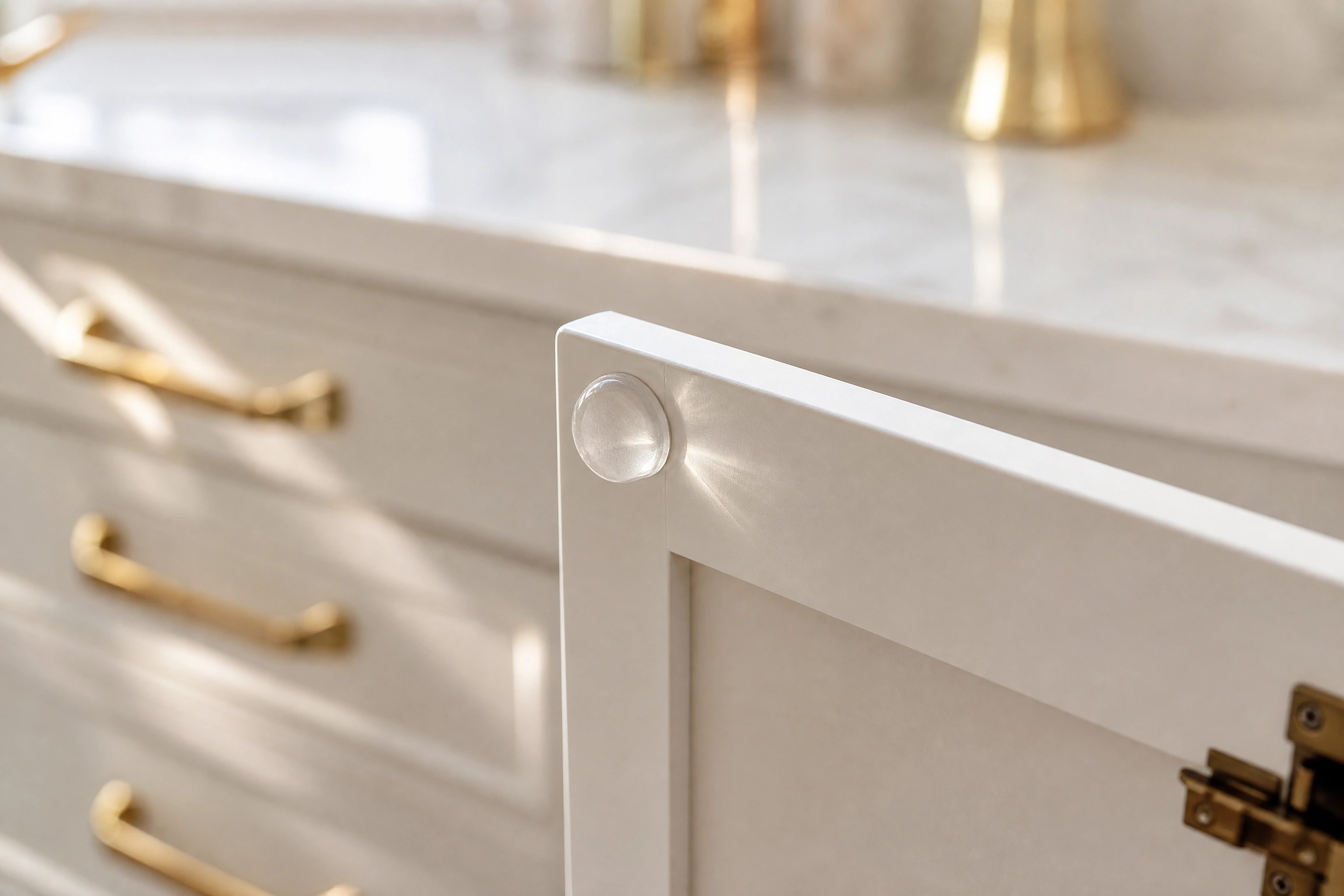
Applying clear self-adhesive hemispherical silicone bumpers to the top and bottom corners of white shaker cabinet doors creates a soft cushion that silences slamming. The rounded dome shape absorbs closing impact efficiently, while the transparent silicone material blends into painted wood surfaces without showing. This simple installation protects white cabinet paint from chipping.
DESIGNER ADVICE: Clean cabinet frame corners with rubbing alcohol before applying adhesive silicone dots to ensure a long-lasting bond.
Use Self-Adhesive Brown Felt Pads on Dark Walnut Pantry Doors

Placing soft brown felt adhesive pads on the inner frame corners of dark walnut pantry doors provides gentle, whisper-quiet door closures. The dark brown felt fibers blend into rich walnut timber stains, making the protective bumpers virtually invisible when doors stand open. The dense felt prevents heavy wood doors from rebounding.
QUICK TIP: Select dense wool felt pads over synthetic felt for superior sound dampening and longer wear on heavy pantry doors.
Apply Soft Recessed Rubber Stem Bumpers into Pre-Drilled Cabinet Frame Holes
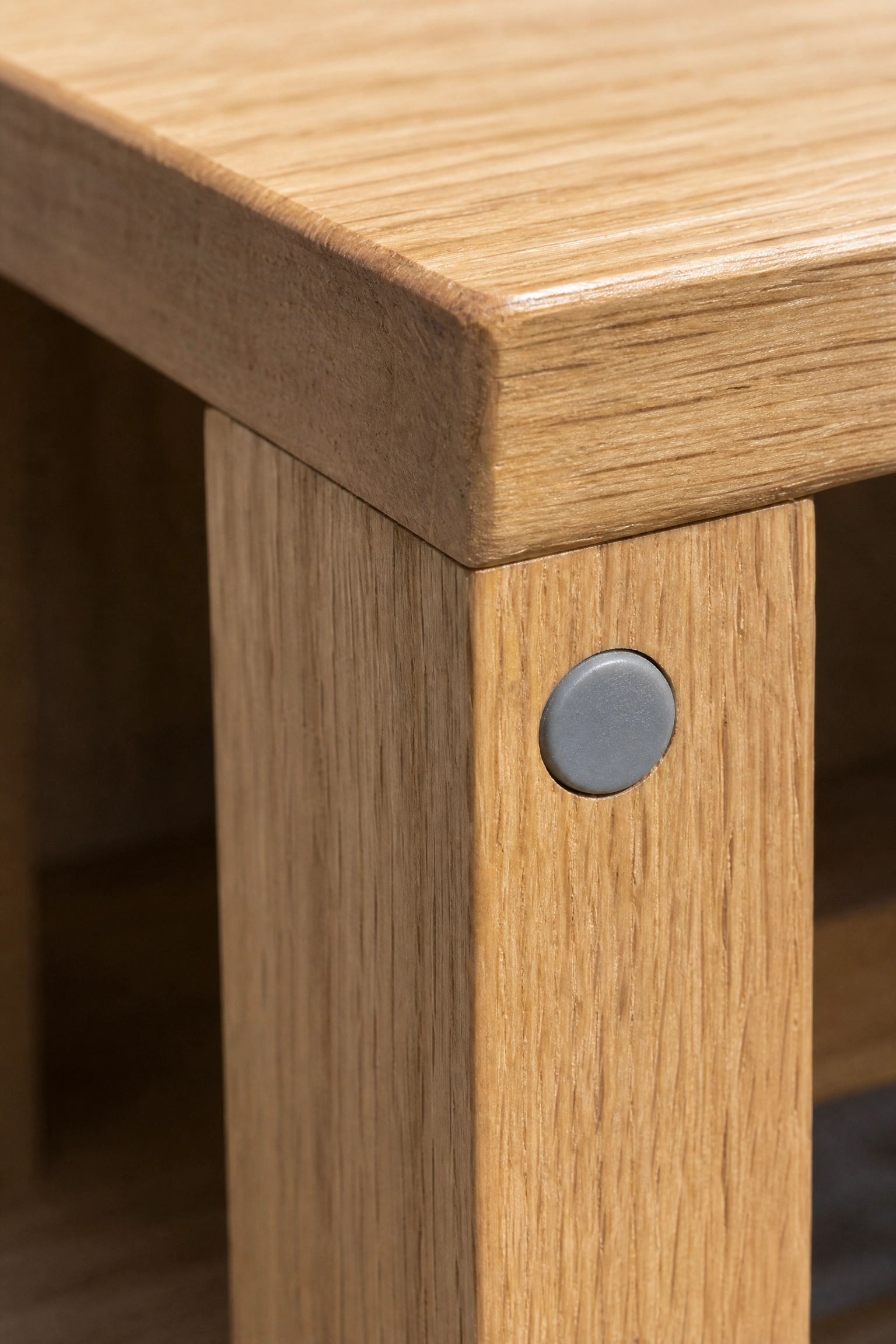
Inserting recessed rubber stem bumpers into five-millimeter pre-drilled holes in custom cabinet frames yields a permanent, flush-fitted bumper stop. Unlike stick-on pads that can slip off over time, push-in rubber stems stay locked in place for decades of daily use. They offer superior impact absorption for heavy kitchen doors.
MAINTENANCE RULE: Use a five-millimeter drill bit with a depth stop collar to drill clean, uniform holes for recessed rubber stem bumpers.
Place Square Clear Polyurethane Bumpers on Heavy Glass Cabinet Doors
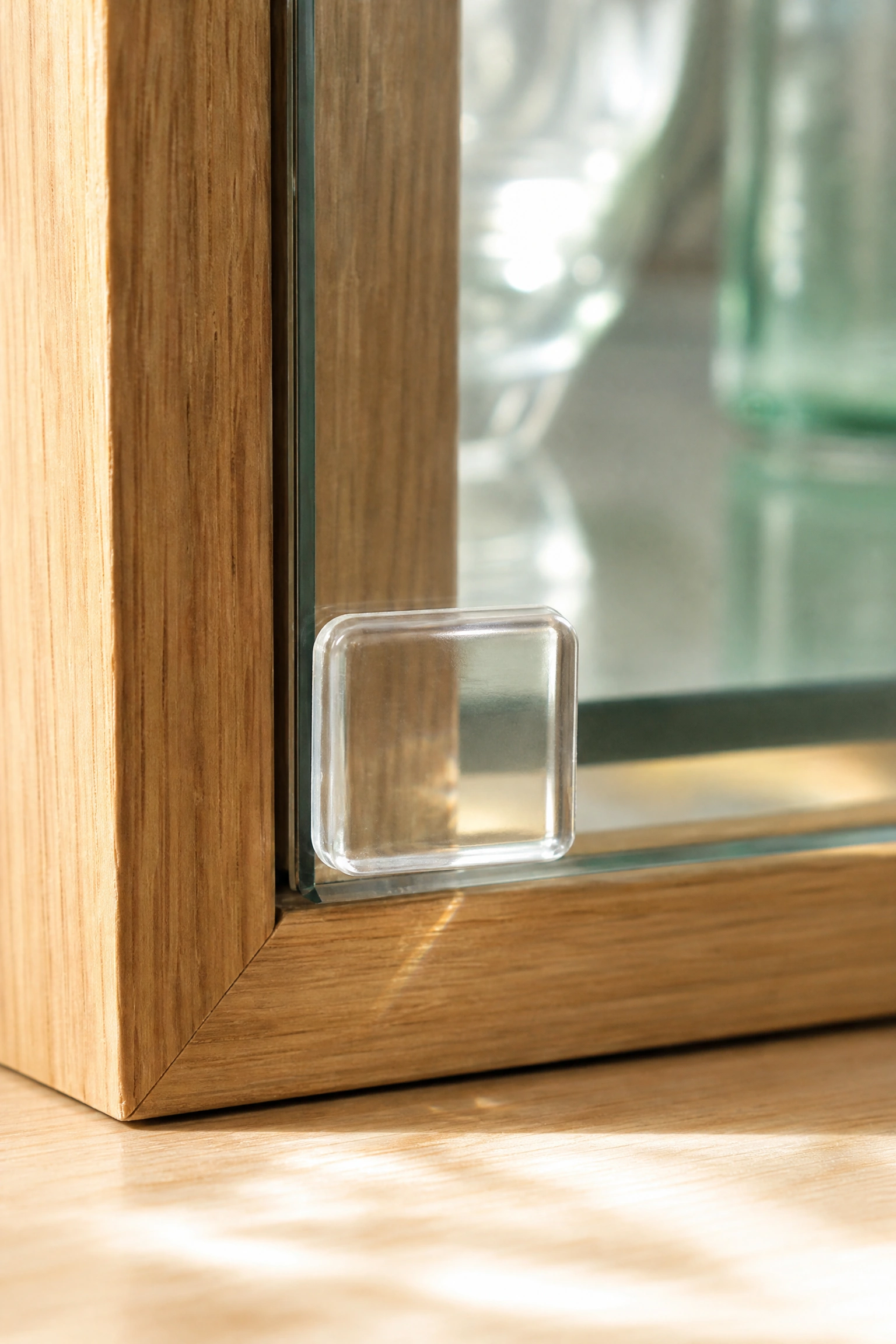
Sticking square clear polyurethane bumpers onto glass-front display cabinet doors provides a flat, stable contact surface that prevents glass rattling. The firm polyurethane material resists flattening under continuous pressure, maintaining a consistent gap between glass doors and wood frames. The clear square profile looks modern.
SAFETY WARNING: Place bumpers on both top and bottom glass door corners to prevent uneven stress that could crack glass panels.
Use Cylindrical Sound Dampening Felt Bumpers inside Bedroom Wardrobe Doors

Attaching cylindrical felt bumpers along the inner frame of bedroom wardrobe doors dampens hollow closing sounds during early morning routines. The thick cylindrical profile absorbs impact energy over a wider surface area, keeping sleeping partners undisturbed when grabbing clothes. The soft felt protects wardrobe frames.
QUICK TIP: Place three felt bumpers vertically along full-length wardrobe doors to ensure even sound dampening across tall doors.
Apply Clear Concave Soft-Stop Silicone Dots to Bathroom Vanity Drawers

Applying concave soft-stop clear silicone dots to vanity drawer fronts cushions rapid drawer closures in humid bathroom environments. The concave center creates a mini suction cup effect that slows down moving drawers right before contact, preventing loud thuds. Transparent silicone withstands steam exposure without yellowing.
DESIGNER ADVICE: Use water-resistant clear silicone dots in bathrooms to guard against moisture lifting adhesive backing.
Use Natural Cork Adhesive Bumpers for Rustic Wood Kitchen Cabinets
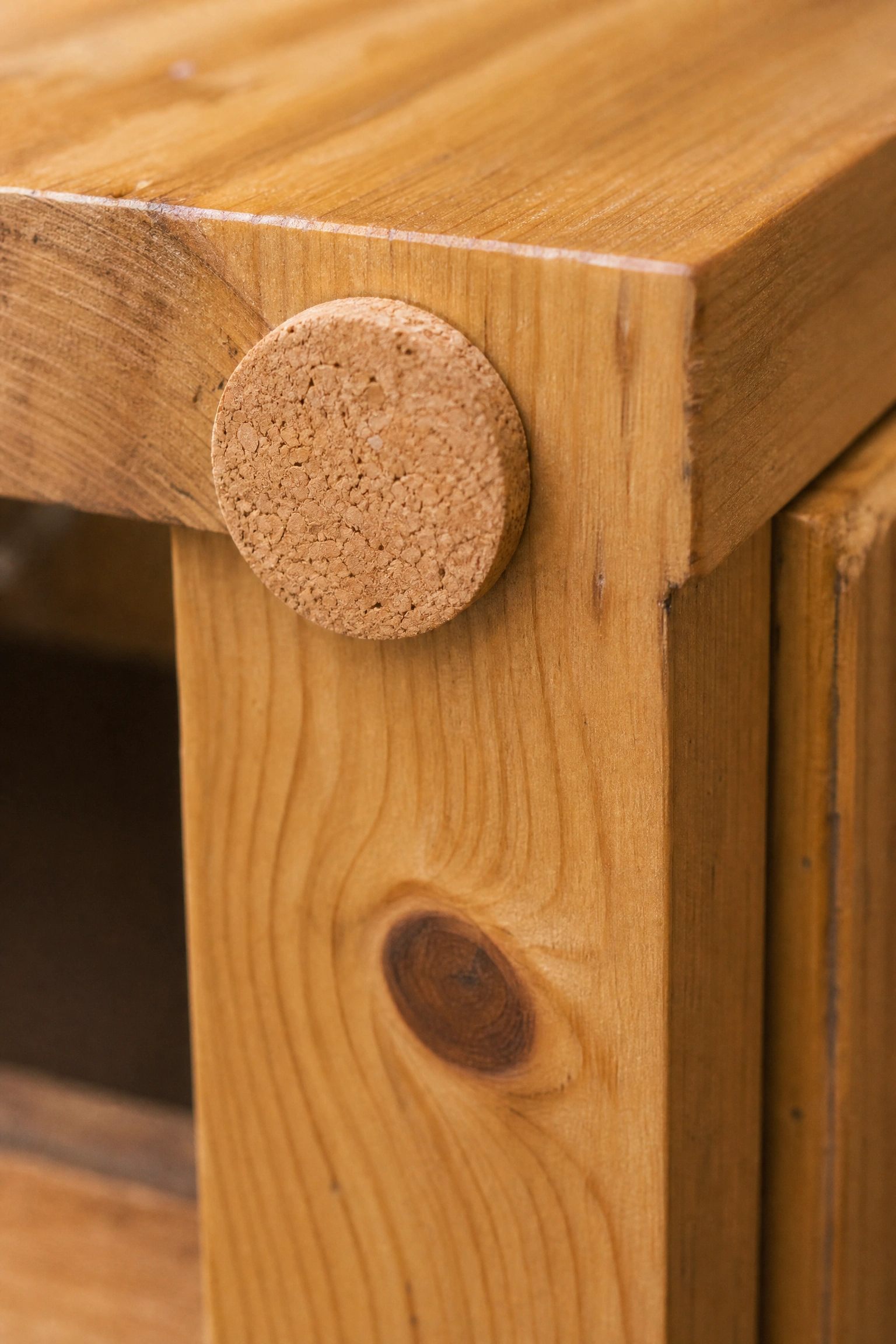
Sticking natural cork adhesive disks onto rustic pine or knotty alder cabinet doors complements natural wood aesthetics with eco-friendly cushioning. The natural tan cork color matches warm timber tones while offering resilient shock absorption when doors slam shut. Cork naturally resists moisture and decay.
BUDGET HACK: Cut custom cork bumper dots from thin sheet cork using a hole punch for an economical DIY natural bumper solution.
Install Transparent Low-Profile Disk Bumpers on Frameless European Cabinets

Applying ultra-thin transparent disk bumpers to frameless European-style cabinets maintains sleek narrow reveal gaps between doors. The thin one-millimeter profile provides sufficient cushion without forcing cabinet doors to stick out unnaturally from adjacent drawers. It maintains clean minimalist lines.
QUICK TIP: Select one-millimeter low-profile bumpers for frameless cabinets to ensure push-to-open latches engage properly.
Place Heavy Duty Black Rubber Bumpers on Utility Room Metal Cabinets

Attaching heavy-duty black rubber bumpers to utility room steel storage cabinets prevents loud metal-on-metal clanging during home maintenance. The thick black rubber absorbs heavy impact from metal doors, shielding powder-coated finishes from scratches and denting. The durable rubber handles rough use.
SAFETY WARNING: Use industrial-strength acrylic adhesive bumpers on metal cabinets to prevent oil and solvent fumes from loosening pads.
Apply Soft Clear Gel Cushion Dots to Glass Front Display Cabinet Doors
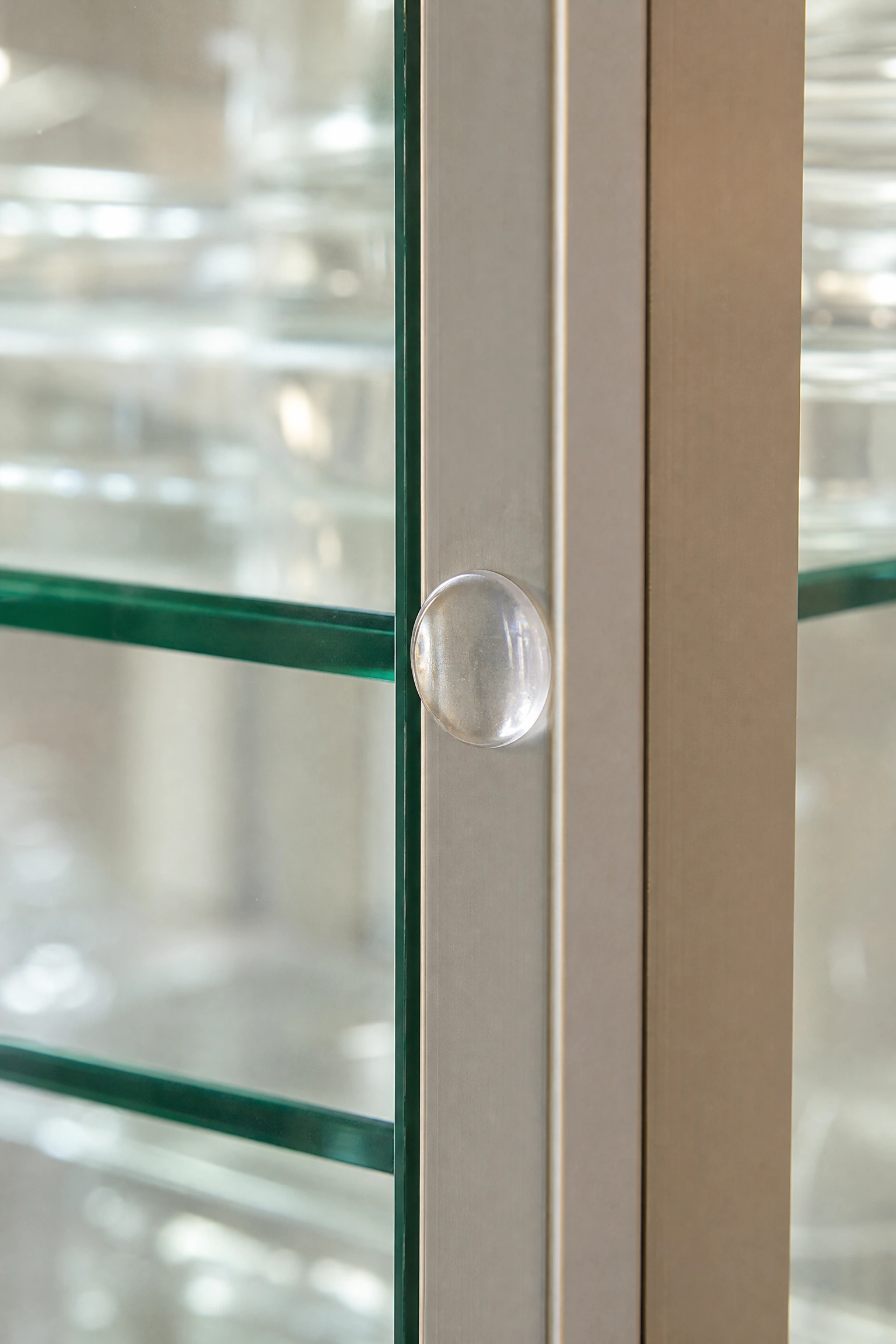
Sticking soft clear gel cushion dots on glass-front china cabinet doors provides flexible shock absorption that protects delicate stemware inside from vibration. The soft gel material absorbs closing jolts before vibrations travel through glass shelves to fragile crystal glasses. The gel remains crystal clear.
MAINTENANCE RULE: Replace gel cushion dots every two years if they feel sticky or show dust accumulation around outer edges.
Use Felt Strip Tape Along the Inner Edge of Sliding Closet Doors
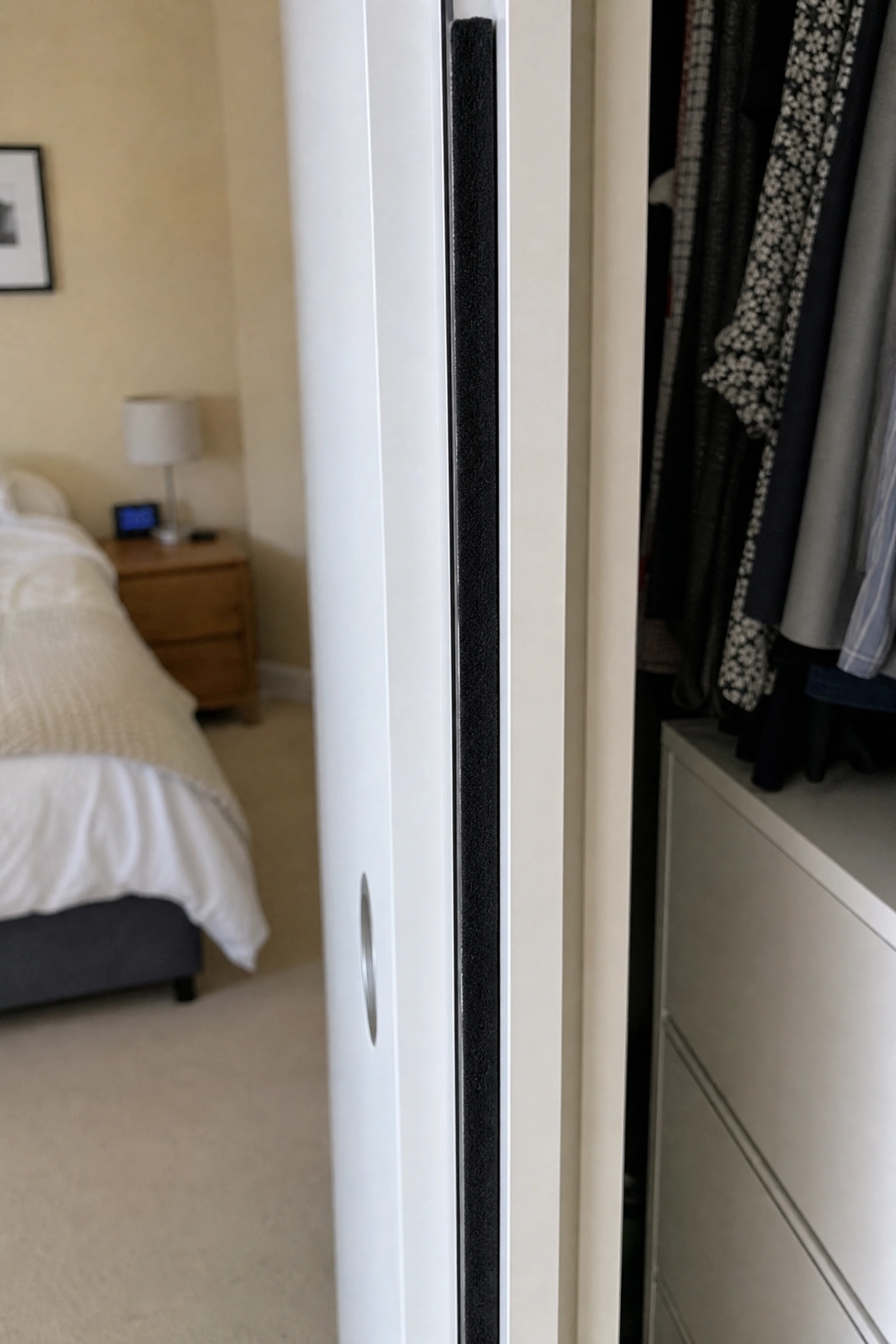
Applying continuous felt strip tape along the vertical inner stile of sliding closet doors eliminates harsh banging when doors slide fully open or closed. The long felt strip provides a continuous cushioned barrier that dampens sound along the entire door height. It also blocks light gaps.
QUICK TIP: Clean sliding door tracks and stiles thoroughly before applying felt tape to ensure full adhesive contact.
Install Spring-Loaded Magnetic Touch Latch Bumpers for Push-to-Open Cabinets
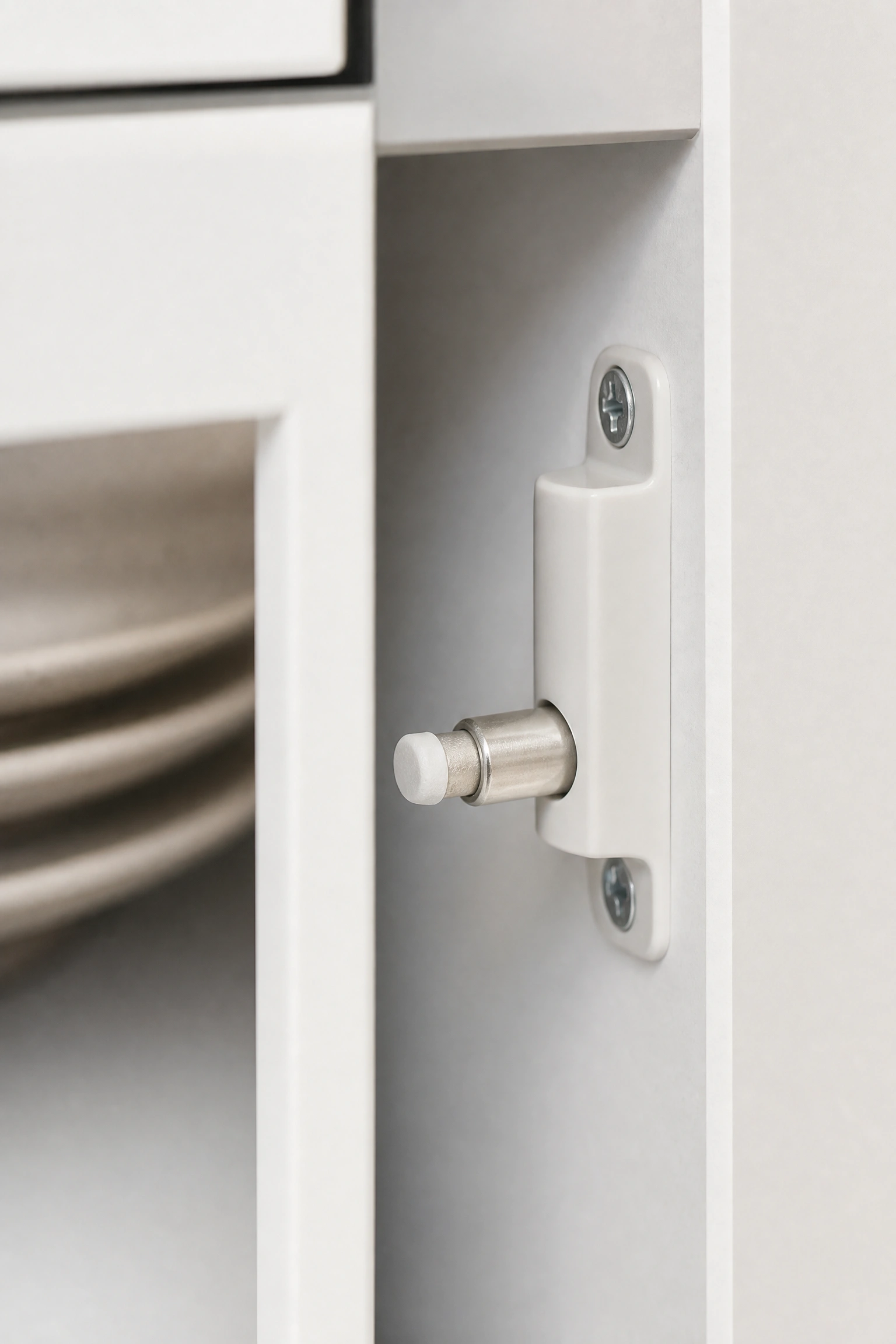
Mounting spring-loaded magnetic touch latch bumpers inside handle-less kitchen cabinets enables effortless push-to-open door operation. A simple gentle press releases the internal spring bumper to pop the door open smoothly, eliminating the need for exterior handles. The built-in magnet holds doors closed.
DESIGNER ADVICE: Adjust magnetic plunger depth by twisting the bumper tip to align handle-less cabinet doors perfectly flush with frames.
Apply Clear Flat-Top Silicone Pads to Upper Corner Kitchen Drawers

Placing flat-top clear silicone pads on top inner corners of upper kitchen drawers prevents drawer faces from marring adjacent cabinet frames when opened wide. The wide flat surface spreads impact load evenly, preventing denting on painted corner trim. The clear material stays discreet.
QUICK TIP: Install flat-top pads on both left and right drawer sides to keep drawer faces aligned when closed.
Use Soft Grey Foam Adhesive Dots for Children’s Toy Storage Cabinets

Applying soft grey foam adhesive dots inside playroom toy storage cabinets cushions heavy, frequent door slams from busy kids. The forgiving closed-cell foam absorbs high-energy impacts safely while protecting small fingers from painful pinches. The soft grey color matches light furniture.
BUDGET HACK: Buy multi-packs of high-density foam bumper dots to outfit entire playroom storage units affordably.
Place Extra-Thick Rubber Stem Plug Bumpers on Heavy Solid Oak Cabinet Frame Corners
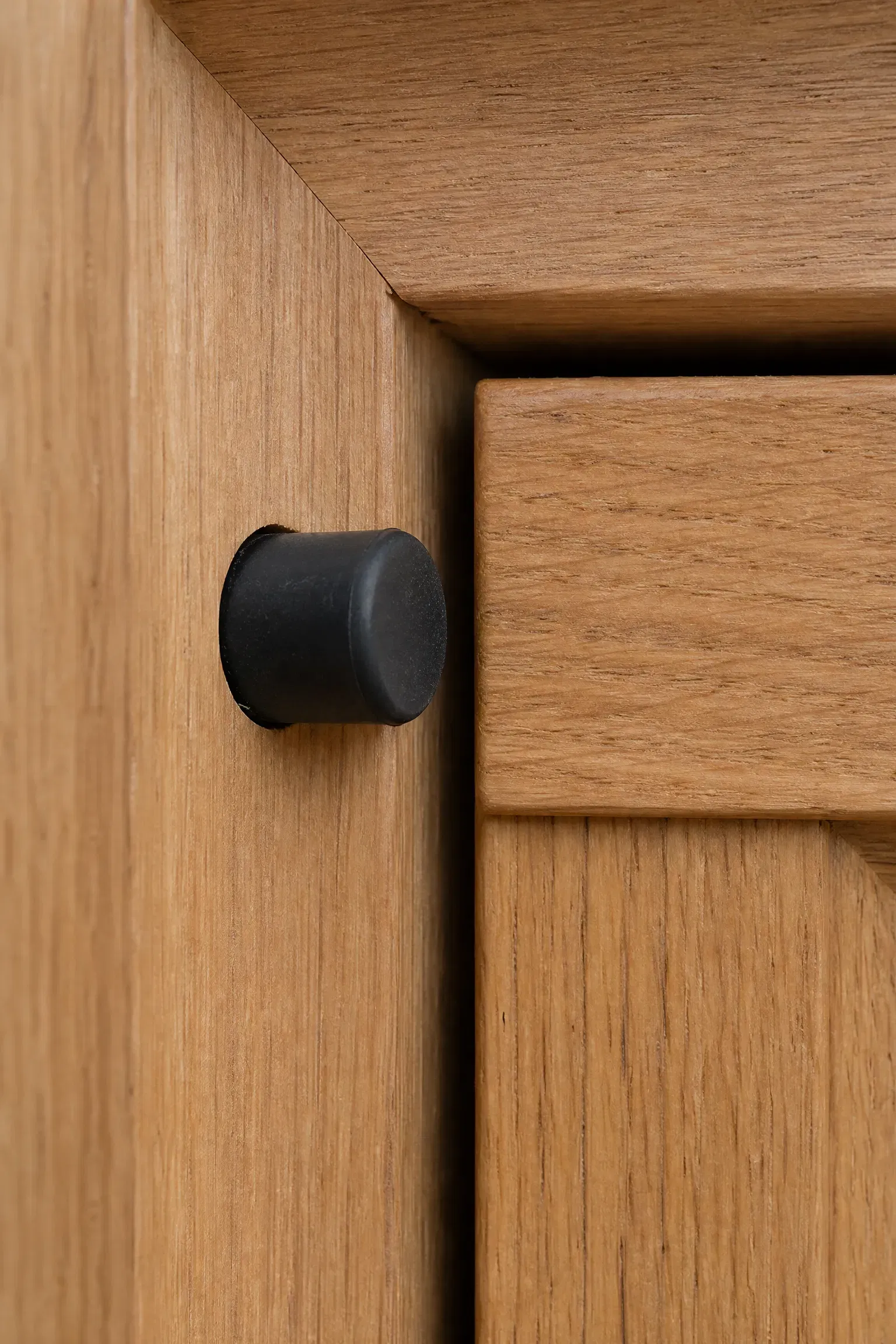
Inserting extra-thick rubber stem plug bumpers into solid oak cabinet frame corners absorbs heavy momentum from thick solid wood doors. The dense black or grey rubber stem withstands repeated forceful slams without splitting or compressing permanently over time. It provides maximum cabinet protection.
MAINTENANCE RULE: Inspect rubber stem plugs annually and press firmly back into frame holes if daily door impacts loosen them slightly.
Use Ultra-Thin Transparent Mylar Bumper Dots on Minimalist Touch Cabinets

Sticking ultra-thin transparent Mylar bumper dots onto sleek modern touch-open cabinets provides basic scratch protection without altering reveal gaps. The hard Mylar film prevents paint-on-paint friction wear on cabinet corners while keeping door faces virtually flush against frames. It maintains razor-sharp lines.
QUICK TIP: Use Mylar dots on cabinets equipped with soft-close hinges where sound dampening is handled by hinges rather than pads.
Install Screw-In Rubber Bumper Stops on Heavy Laundry Room Overhead Cabinets
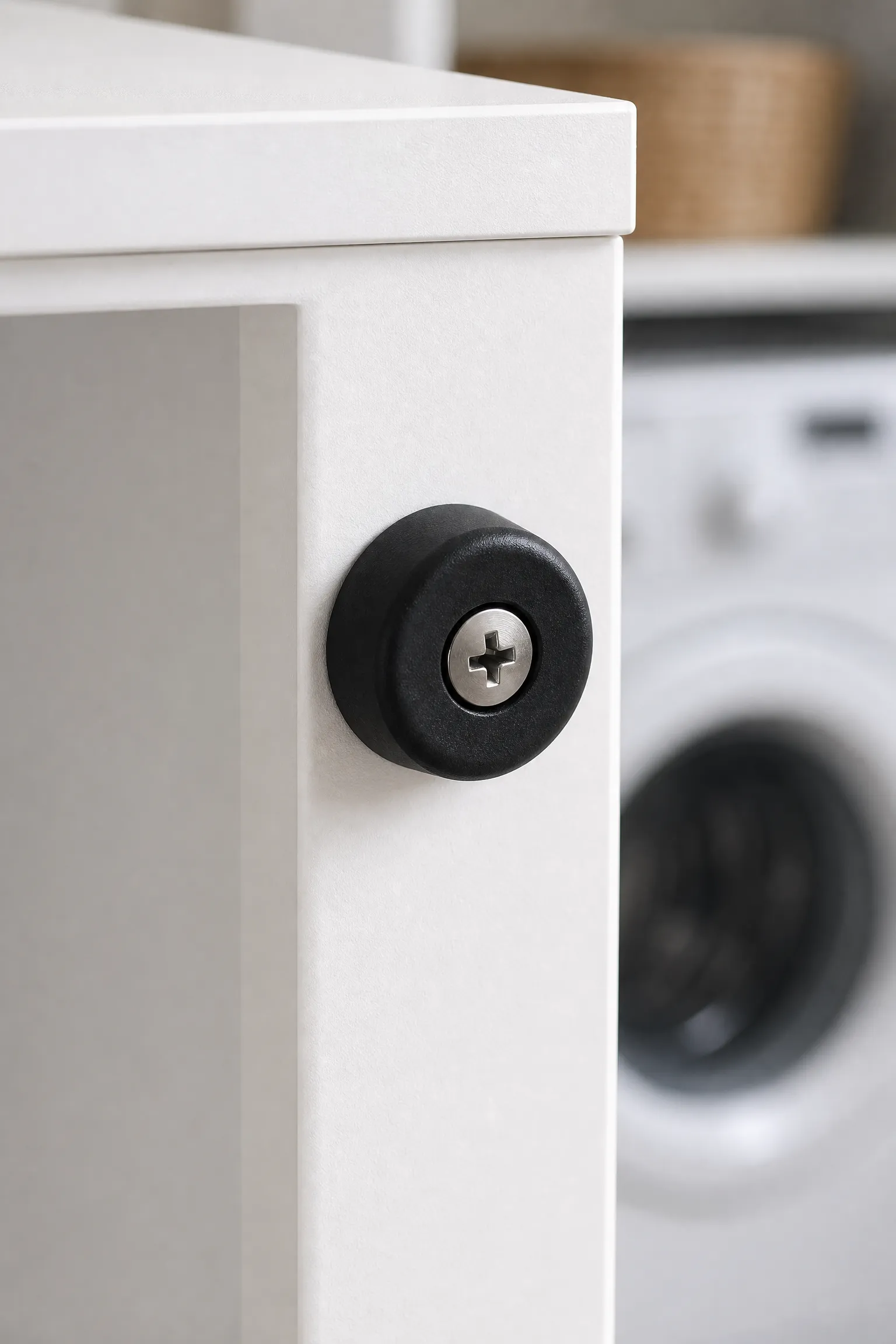
Mounting heavy-duty screw-in rubber bumper stops to overhead laundry room cabinet frames ensures maximum physical holding strength against vibration. The central steel screw prevents heavy rubber stops from pulling away when exposed to dryer heat and laundry humidity. It offers industrial-grade longevity.
SAFETY WARNING: Pre-drill pilot holes before driving screws into solid wood cabinet frames to avoid splitting cabinet face frames.
Apply White Adhesive Felt Disks inside Painted Off-White Kitchen Cabinets

Sticking white adhesive felt disks onto painted off-white kitchen cabinet frames creates a soft, color-matched cushion that blends into light paintwork. The white wool felt fibers absorb closing noise quietly while preventing dark rubber transfer marks on pale cabinet frames. It keeps white kitchens pristine.
DESIGNER ADVICE: Select white felt pads for light-painted cabinets to prevent dark rubber or clear silicone from casting dark shadows.
Use Clear Octagonal Cushion Pads on Glass Medicine Cabinet Doors

Placing clear octagonal silicone cushion pads on bathroom glass medicine cabinet doors provides non-slip, shock-absorbing corners. The faceted octagonal shape reflects vanity light neatly, while soft clear silicone protects thin mirror glass from shattering against metal medicine boxes. It ensures safe daily grooming.
QUICK TIP: Clean glass mirror corners thoroughly with glass cleaner before sticking octagonal silicone pads to maximize clarity.
Install Soft-Closing Hydraulic Hinge Buffer Arms Alongside Rubber Corner Bumpers

Combining soft-closing hydraulic hinge buffer arms with corner rubber bumpers delivers complete dual-action cabinet protection. The hydraulic hinge arm slows down fast-moving doors automatically, while the corner rubber bumper catches the final contact point silently. It completely eliminates cabinet door slamming.
DESIGNER ADVICE: Install clip-on hydraulic hinge buffer attachments on existing concealed hinges for a fast soft-close upgrade.
Place Clear Silicone Bumper Strips on Pull-Out Trash Can Cabinet Frames

Sticking long clear silicone bumper strips along the frame opening of pull-out trash can cabinets absorbs heavy forward momentum when kicking doors shut. The continuous silicone strip spreads impact load along the entire cabinet height, protecting heavy drawer slides from bending. It keeps kitchen cleanup quiet.
MAINTENANCE RULE: Wipe silicone bumper strips with kitchen degreaser monthly to keep trash cabinet frames clean and stick-free.
Apply Self-Adhesive Beige Felt Dots on Warm Honey Oak Vanity Drawers

Placing self-adhesive beige felt dots on the inside corners of honey oak vanity drawers offers soft, color-matched noise reduction. The natural tan beige felt fibers harmonize with golden oak wood tones, concealing protective pads discreetly. The felt cushions daily bathroom drawer closures.
BUDGET HACK: Buy multi-size felt pad kits containing beige, brown, and white dots to outfit every room in your house economically.
Use Transparent Conical Silicone Bumpers for Slanted Cabinet Corner Doors

Attaching tall transparent conical silicone bumpers to angled or slanted corner cabinet doors ensures reliable point-contact cushioning. The pointed cone tip hits flat frame surfaces first, compressing gradually to absorb door velocity smoothly regardless of closing angle. It prevents corner doors from binding.
QUICK TIP: Place conical bumpers at the furthest outer corner point of angled doors for maximum lever-arm sound dampening.
Apply Heavy-Duty Cork Strips to Sliding Barn Door Cabinet Frame Stile Edges
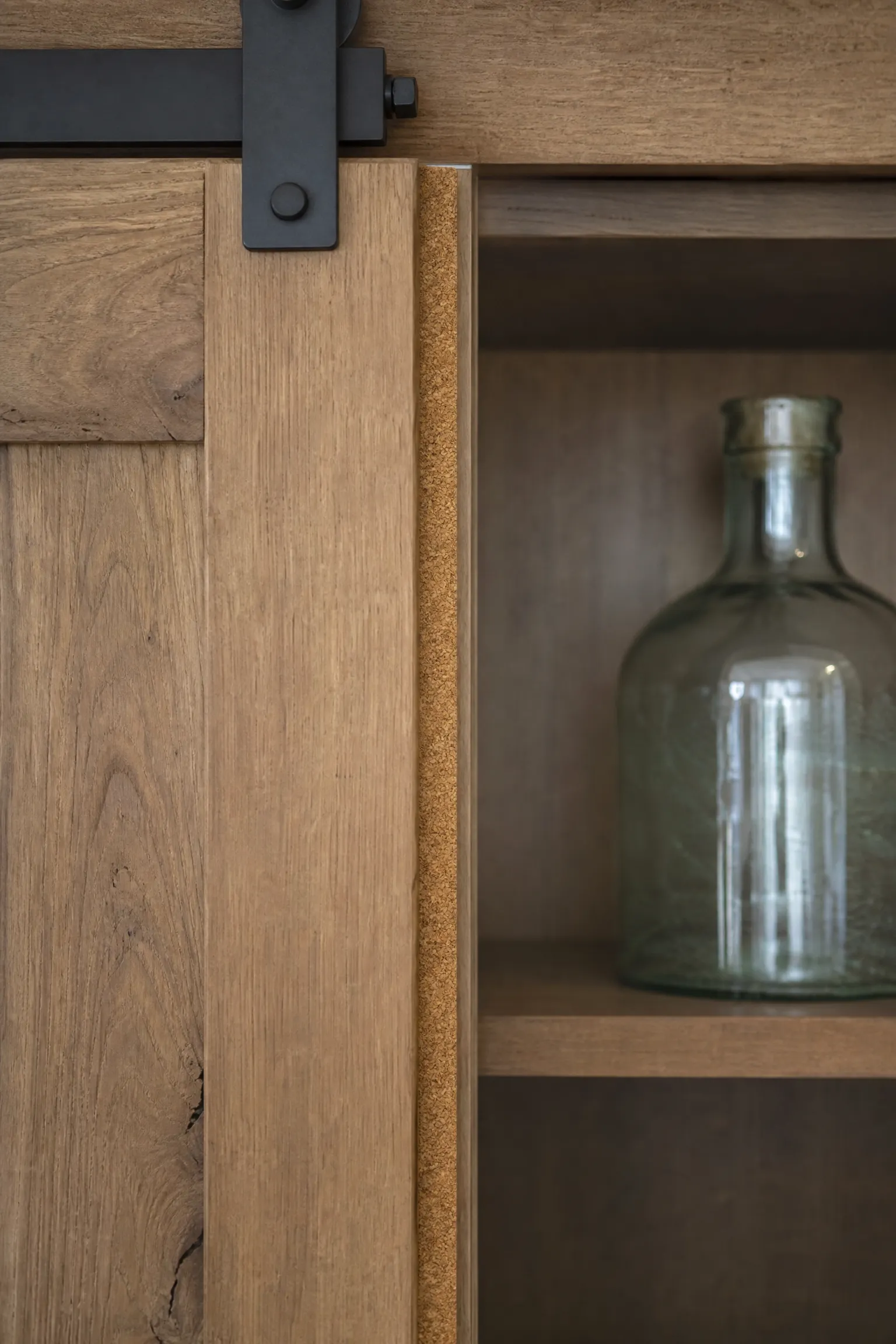
Lining the vertical stile edges of sliding barn door cabinets with heavy-duty natural cork strips creates a quiet, rustic bumper stop. The natural cork absorbs impact when heavy sliding doors hit end stops, protecting rustic wood frames from denting or cracking. The earthy cork matches timber aesthetics.
DESIGNER ADVICE: Stain cork strips with light wood stain to match custom barn door finishes cleanly.
Install Recessed Rubber Plug Bumpers in Dark Mahogany Office Cabinets
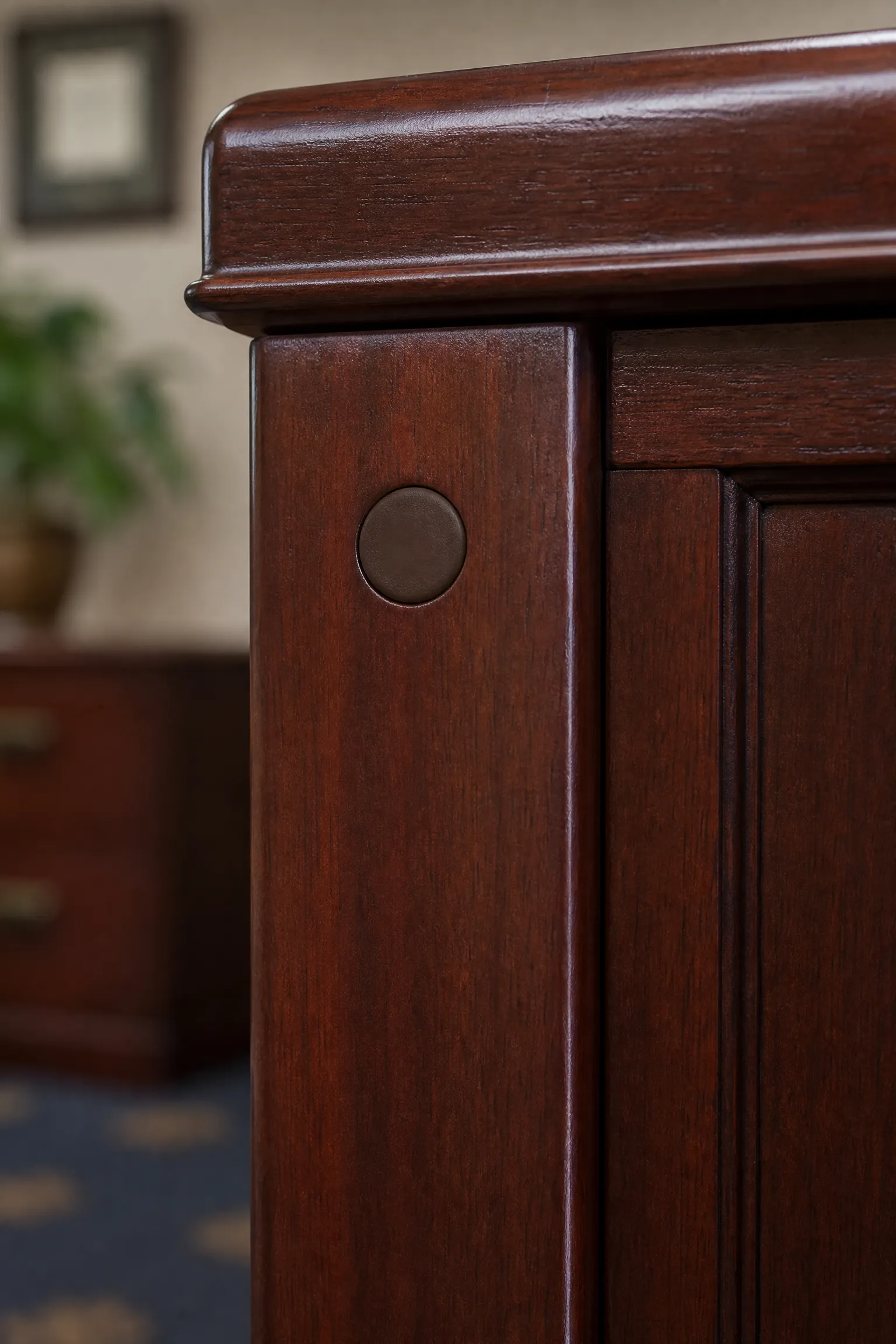
Inserting dark brown recessed rubber plug bumpers into office credenza cabinet frames maintains an executive, high-end appearance. The recessed installation hides hardware bodies inside wood frames, showing only a subtle dark rubber cushion dot when doors open. It silences heavy office file doors.
QUICK TIP: Select dark brown rubber plugs over black for mahogany or cherry wood cabinets to blend with red-brown wood tones.
Use Clear Soft-Touch Gel Dots on Acrylic Makeup Vanity Drawers

Sticking clear soft-touch gel dots on transparent acrylic makeup vanity drawers prevents loud plastic clicking when closing drawers quickly. The ultra-clear gel material stays invisible through transparent acrylic, preserving clear modern vanity aesthetics while dampening sharp plastic noise. Gel pads won’t scratch acrylic.
QUICK TIP: Clean acrylic drawer surfaces with isopropyl alcohol before applying gel dots to remove oil and ensure permanent hold.
Apply White Rubber Corner Guards and Bumper Pads to Under-Sink Cabinet Doors
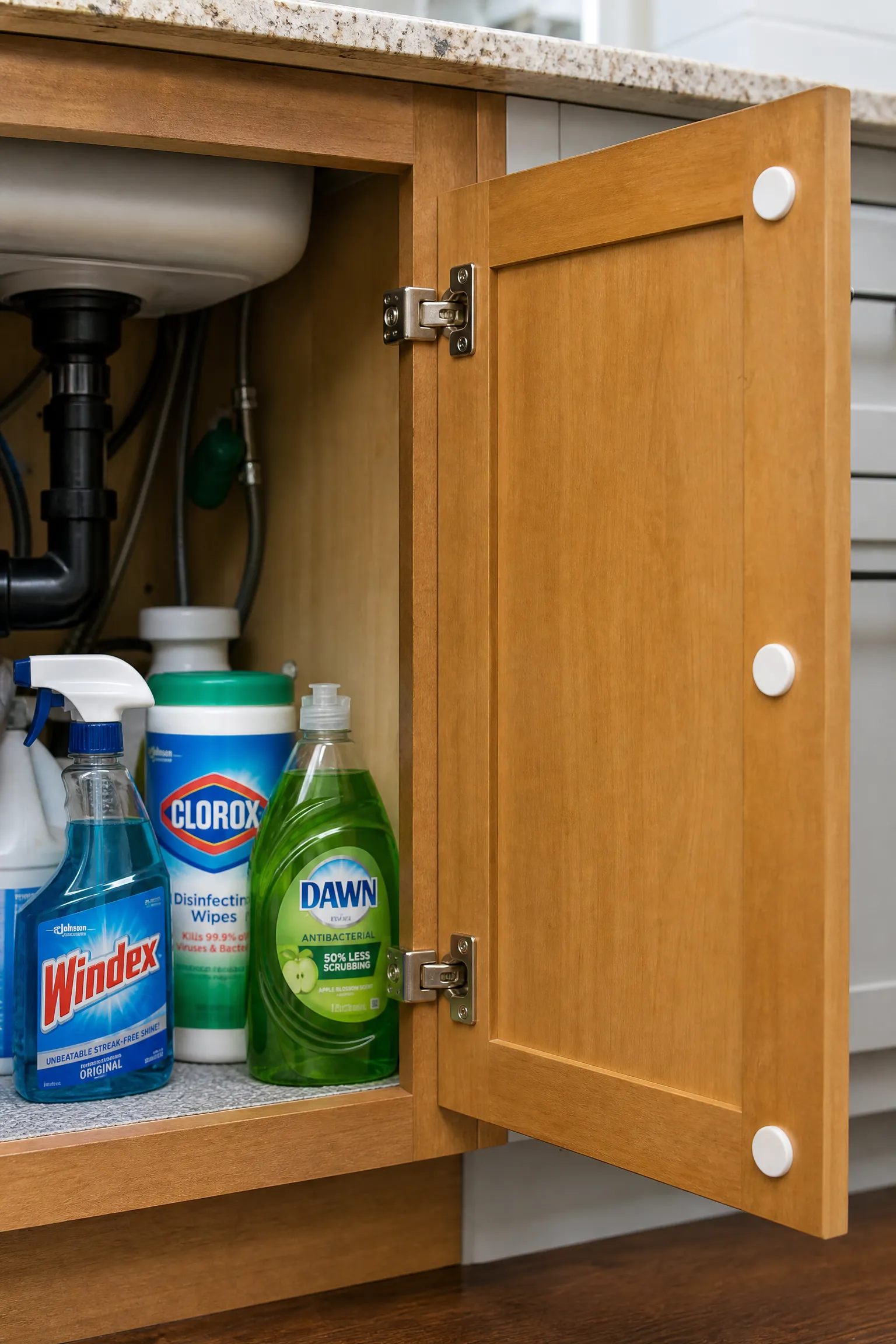
Installing white rubber corner guards and bumper pads inside under-sink cabinet doors shields painted cabinet frames from damp cleaning bottle impacts. The flexible white rubber covers vulnerable door edges, preventing paint chipping and moisture intrusion into wood fibers. It keeps under-sink storage clean.
MAINTENANCE RULE: Inspect under-sink cabinet bumpers regularly to ensure plumbing leaks haven’t loosened adhesive backings.
Installation: What Actually Goes Wrong
Cabinet bumper installation looks simple and mostly is, but three mistakes account for most failed fittings. First: not cleaning the surface before applying adhesive bumpers. Any grease, cleaning product residue, or dust on the cabinet surface prevents the adhesive from bonding properly. Wipe with isopropyl alcohol and let it dry completely before pressing the bumper into place. This step is skipped most often and blamed least often when bumpers start falling off within a month.
Second: placing bumpers in only one corner of a door. A single bumper at the bottom corner creates a pivot point: the door stops at the corner with the bumper and swings on that point, creating a new impact point at the uncushioned corner. Four bumpers per door, one at each corner, is the correct configuration. Two bumpers at the top and bottom of the closing edge is the minimum effective option for taller doors.
Third: using too thick a bumper on frameless cabinets. Frameless European-style cabinets close completely flush. A bumper that is too tall prevents a full close, which means the door rests slightly open and the magnetic catch cannot engage. For frameless cabinets, stay with 1.5 to 2mm bumpers. For face-frame cabinets with a natural gap, 3 to 4mm is standard.
Bumper Type by Cabinet Location
Not every cabinet in a home has the same requirements, and using the same bumper throughout produces inconsistent results. Upper kitchen cabinets close gently by gravity with most handles and rarely need heavy-duty bumpers. Lower base cabinets take more force and benefit from a slightly denser silicone. Bathroom vanity doors and under-sink cabinets get damp and benefit from silicone over felt, which can absorb water and compress permanently over time.
Wardrobe and bedroom cabinet doors that are pushed closed rather than guided closed are the hardest-wearing application. These benefit from a recessed cup bumper rather than a flat adhesive pad, since the recessed design absorbs impact at the centre rather than at the edge of the bumper, which extends service life considerably.
Drawer bumpers are a separate consideration. The most effective drawer bumper is fitted to the inside of the cabinet carcass rather than to the drawer itself, which means the drawer can be removed and replaced without taking the bumper with it. Peel-and-stick silicone dots at the two rear corners of the drawer recess are the simplest and most durable solution.
How Long Bumpers Last and When to Replace Them
Quality silicone bumpers in a low-use location, such as a guest bathroom or a spare room wardrobe, can last ten years or more without replacement. In a busy kitchen with doors opening and closing dozens of times a day, two to three years is realistic before the bumpers compress enough to lose their cushioning effect. The sign that replacement is due is not a visible change in the bumper itself but a return of the noise: when the cabinet starts sounding harder on closing, the bumpers have compressed past their useful life.
Self-closing hinges that have lost their tension are sometimes mistaken for failed bumpers. If replacing the bumpers does not resolve a slamming cabinet, the hinge tension screw is usually the actual cause. Most concealed cup hinges have a small adjustment screw that controls closing speed. A quarter turn tightened is usually enough to slow a slamming door back to a gentle close.
Soft-Close Hinges vs. Bumpers: When to Use Each
Soft-close hinges and cabinet bumpers solve the same problem in different ways and at different price points. Soft-close hinges use a hydraulic mechanism inside the hinge itself to slow the door in the final few centimetres of closing, eliminating impact entirely. Cabinet bumpers absorb the impact after it happens. Both produce a quiet cabinet; the difference is in cost, installation, and longevity.
Soft-close hinges cost roughly five to fifteen pounds each depending on brand and quality, and require removing the existing hinge and drilling or adjusting the mounting holes. For a kitchen with forty doors and drawers, the upgrade can run to several hundred pounds in hardware alone, plus fitting time. For brand-new cabinetry, soft-close as standard is worth the premium. For existing cabinetry that is otherwise in good condition, bumpers are the faster and less invasive solution.
The two solutions are also compatible. A cabinet with soft-close hinges that has lost its tension will benefit from bumpers at the corners until the hinge is readjusted. A particularly heavy or frequently used door — a pantry door, a corner cabinet door — can have both for belt-and-braces quietness. The bumper acts as a final backstop if the soft-close fails to slow the door completely under heavy use.
For rental properties, bumpers are the clear choice: they require no drilling, no hinge removal, and no permanent alteration to the cabinetry. They can be removed cleanly at the end of a tenancy and the surface shows no evidence they were ever there.
The Bottom Line
Selecting the right cabinet door bumpers is a small decision with an outsized effect on how a kitchen or bathroom feels to use every day. The right material for the location, the right placement, and a clean surface on installation are the three factors that determine whether bumpers last two years or ten. The total cost for a full kitchen is rarely more than a few pounds. The reduction in background noise is immediate and permanent.