Black and Cream Kitchen Ideas That Balance Warm and Cool
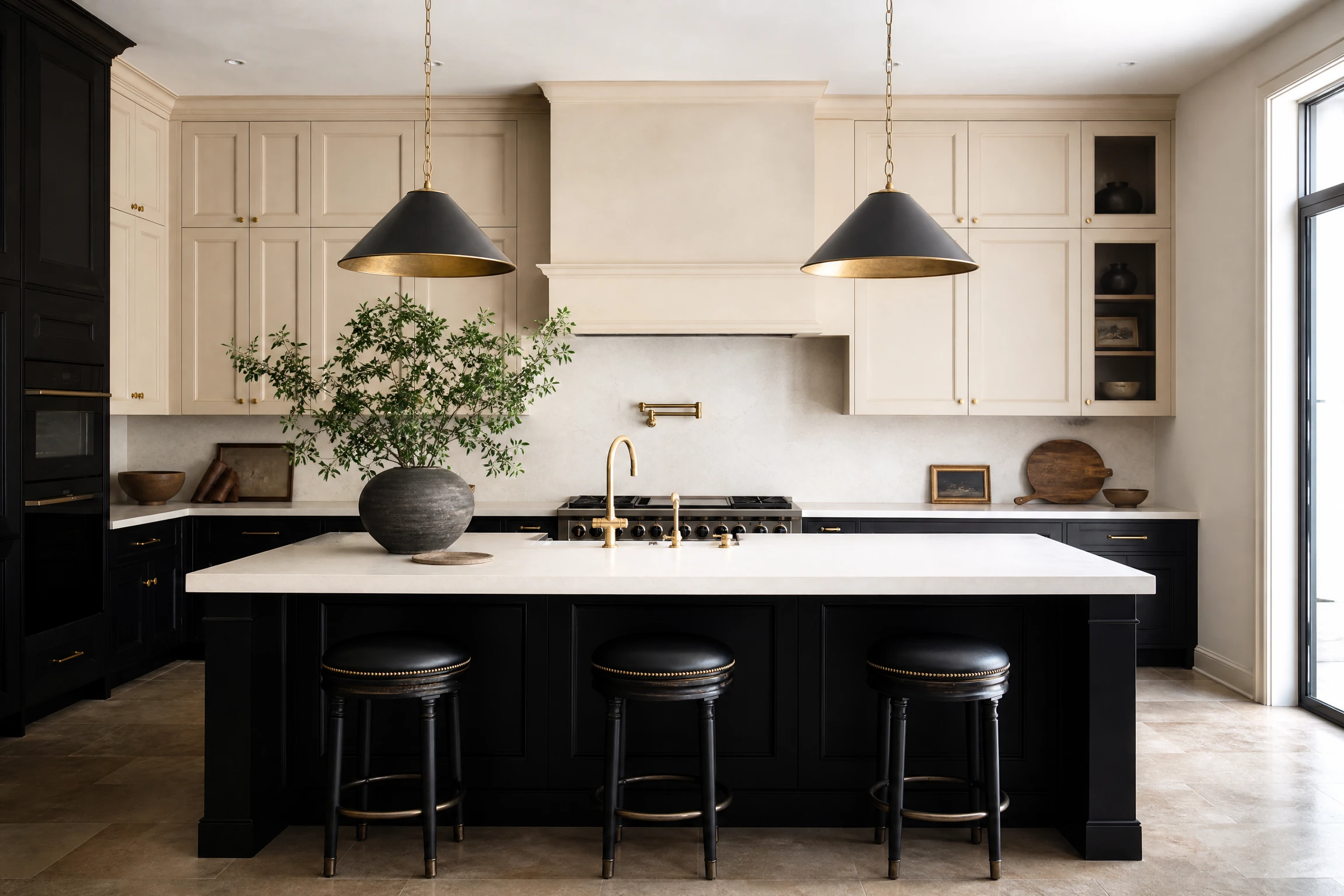
Cream is not white. That single misunderstanding explains most of the black and cream kitchens that look wrong despite having all the right elements. Once you treat them as distinct colours with different undertone behaviours, the whole thing starts to make sense. True cream carries yellow and brown undertones that interact with black very differently from the way white does, and getting the balance right requires treating them as the distinct colours they actually are. If you execute this combination poorly, the heavy black will completely crush the delicate cream, making the kitchen look like a dirty, stained checkerboard. True luxury design requires treating this color combination as a strict exercise in temperature control.
To ensure your kitchen feels flawlessly balanced, we have completely abandoned the standard interior design list format. Instead, this article is strictly governed by The Temperature Modulation Guide. We have organized twenty-four strong architectural ideas into four highly specific thermal categories: The Sub-Zero Balance (heavy black dominance), The Ambient Neutrality (the perfect fifty-fifty split), The High-Heat Infusion (cream dominance with fiery metallics), and The Textural Friction (using heavy materials to generate visual heat). By rigorously applying these thermal rules and using our execution checklists, you will create a high-contrast kitchen that feels considered and genuinely inviting.
Phase 1: The Sub-Zero Balance
This phase relies heavily on the cold, brutalist gravity of black, using very pale, stark cream purely as an architectural palate cleanser to prevent the room from feeling like a dark cave.
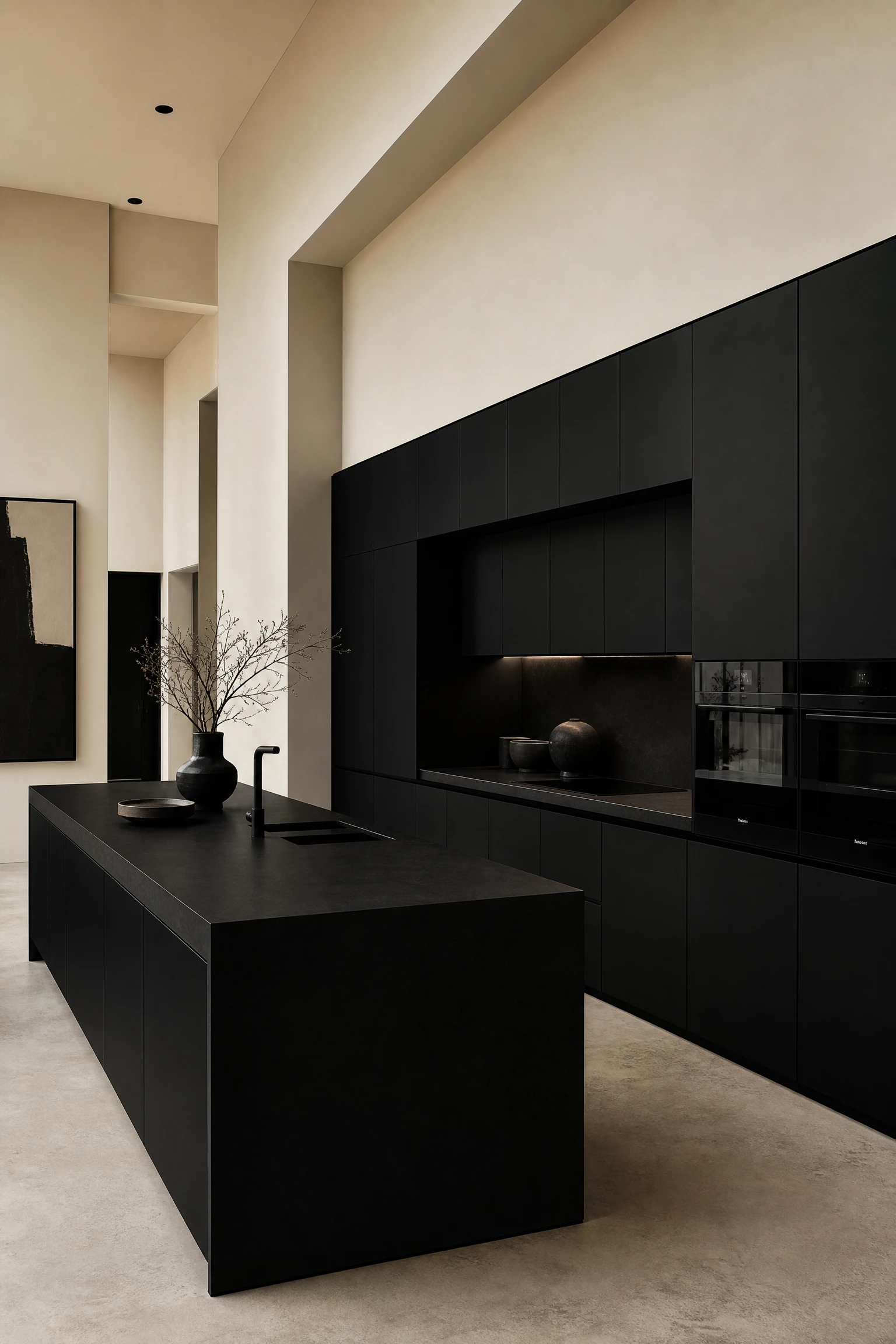
The Monolithic Black Perimeter
For a fiercely modern, highly aggressive aesthetic, paint every single perimeter base and upper cabinet in a completely flat, light-absorbing matte black. This massive block of heavy darkness instantly grounds the entire kitchen. To stop the room from feeling oppressive, you must sharply break the black void by painting all the walls, the ceiling, and the window trims in a stark, pale cream. The pale cream acts as a massive negative space, allowing the monolithic black cabinetry to stand out as a sharply tailored, brutalist architectural sculpture.
Undertone Warning: You must explicitly use a pale cream with a ‘green’ undertone when pairing with massive amounts of black. If you use a cream with a heavy yellow undertone, the sheer volume of black will sharply force the cream to look like dingy, nicotine-stained drywall.
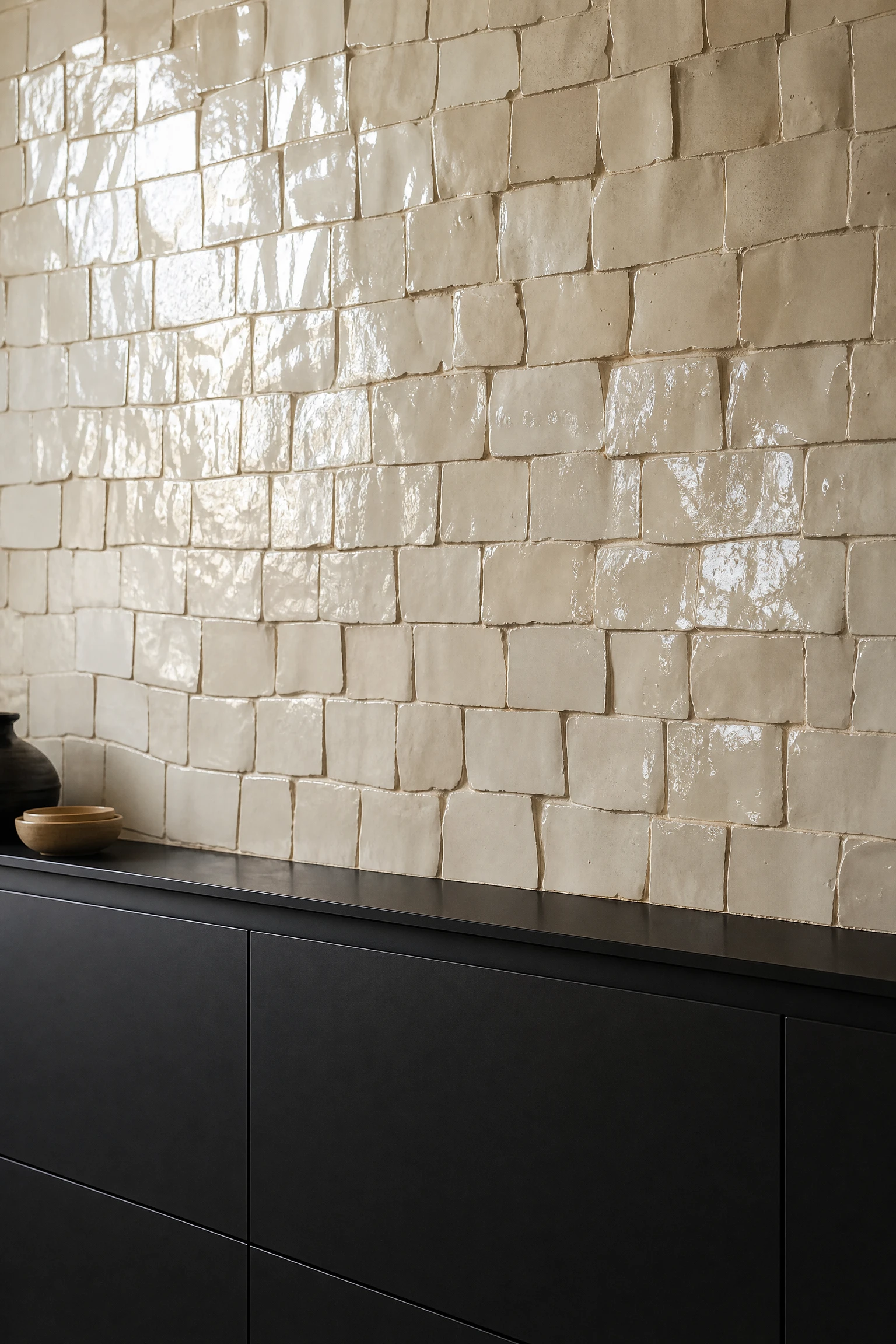
Cream Zellige Tile against Black Cabinetry
A massive block of flat black cabinetry can feel incredibly sterile. You must introduce highly reflective, chaotic texture. Install a massive backsplash made entirely of handmade Moroccan Zellige tiles in a soft cream glaze. Because these tiles are physically baked in ancient wood-fired kilns, every single tile is warped, highly uneven, and completely unique. When placed directly against the stark, perfect black cabinets, the glossy, bumpy cream tiles sharply catch the ambient light, creating incredible architectural tension and massive visual heat.
Zellige Installation Rules:
- You absolutely must install Zellige tiles without a standard grout joint; they must be physically butt-jointed tightly together to maintain the historic aesthetic.
- Never use a contrasting dark grout; it will aggressively outline every single crooked tile, making the backsplash look terrifyingly messy.
- Ensure your tile setter is highly experienced with handmade tile, as the extreme thickness variations require a massive amount of thinset manipulation.
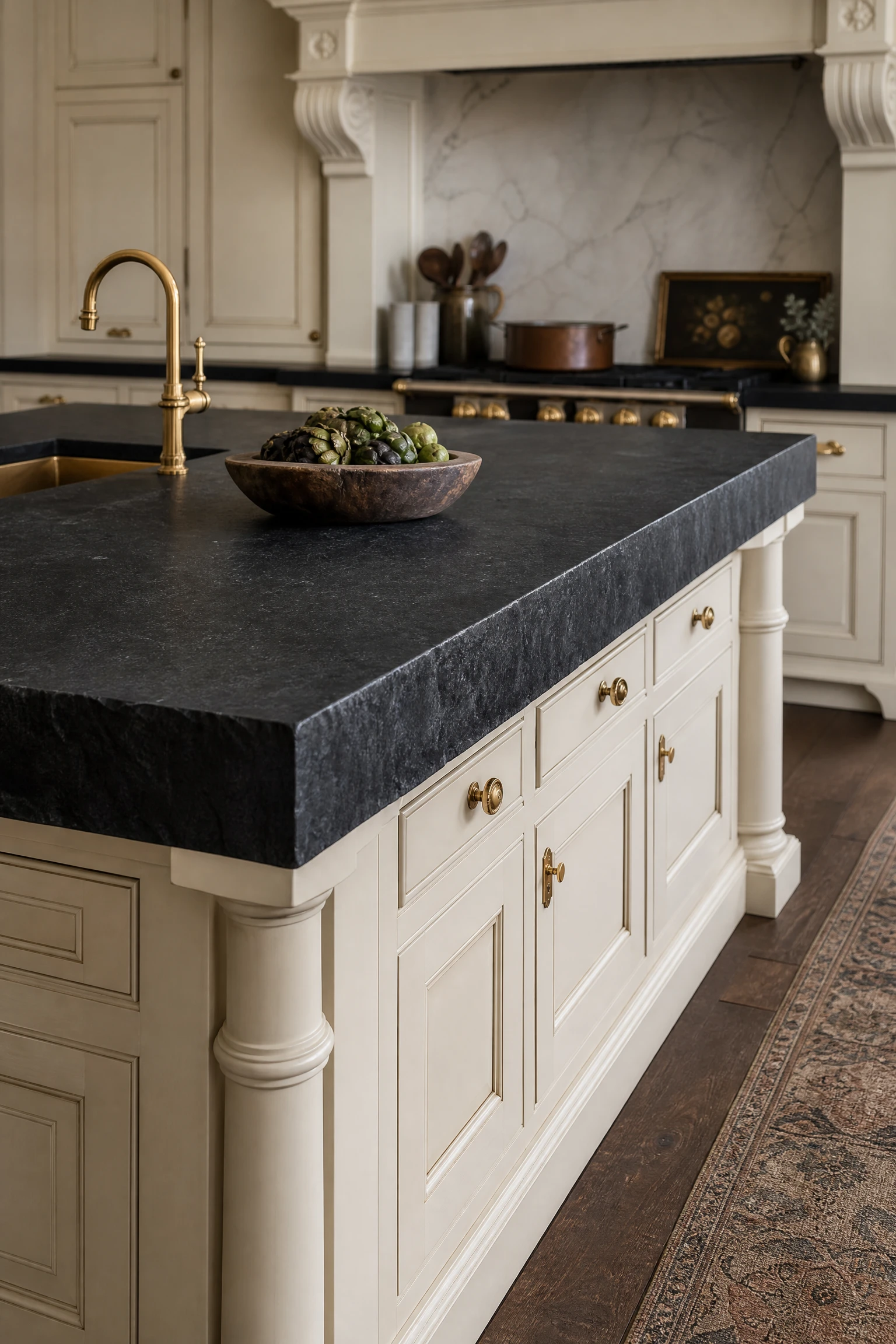
Black Soapstone on Pale Cream Islands
If you want a massive cream island but fear it will look too soft and feminine, you must aggressively cap it with heavy black stone. Install a massively thick slab of authentic black soapstone. Soapstone is a deeply historic, incredibly dense metamorphic rock that naturally features a flat, chalky matte finish and subtle white veining. Dropping this heavy, dark, masculine stone directly onto a delicate, buttery cream wooden island creates a violent collision of aesthetics, instantly making the kitchen feel incredibly historic and highly bespoke.
Maintenance Reality: Soapstone is incredibly soft and will absolutely scratch if you drag a heavy cast-iron pan across it. You must embrace the scratches as ‘patina,’ or aggressively oil the stone every single month to hide the marks.
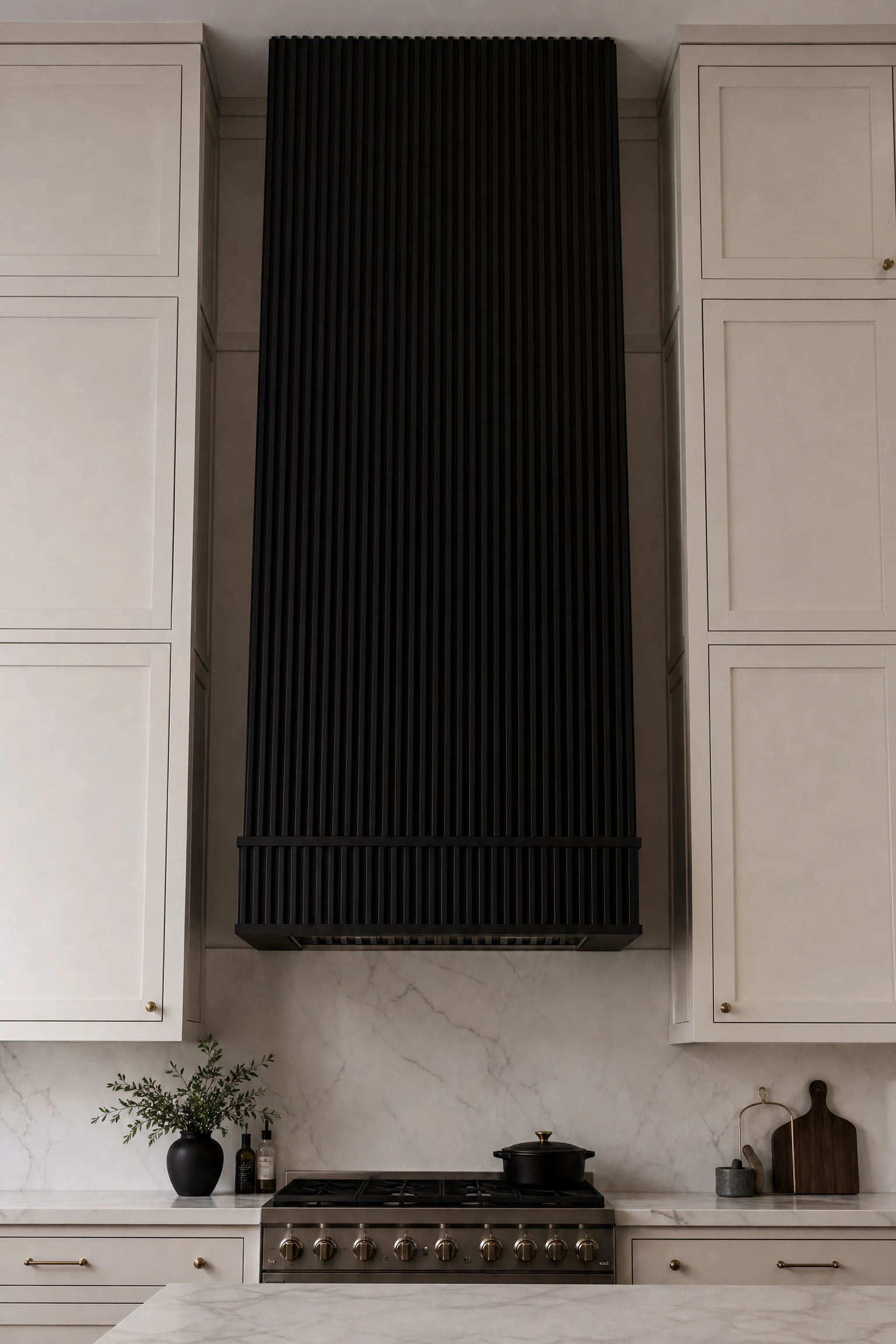
The Black Fluted Range Hood
In a kitchen completely dominated by cream cabinetry, the range hood must serve as a massive, gravity-heavy focal point. Hire a carpenter to build a massive, floor-to-ceiling range hood cover completely clad in vertical, fluted wooden dowels. Paint the entire massive structure in a deep, highly saturated matte black. The repetitive vertical grooves cast incredibly heavy shadows, turning the functional appliance cover into a highly dramatic, expensive-looking architectural column that sharply commands the entire room.
Fluted Hood Execution:
- You must build the hood cover exactly the same width as your stove; if the heavy black hood is narrower than the stove, the kitchen will look completely top-heavy.
- Ensure the commercial exhaust insert is heavily insulated to prevent the massive heat of the stove from warping the custom wooden fluting.
- Paint the wooden dowels before attaching them; spraying them after installation will sharply miss the deep crevices between the curves.
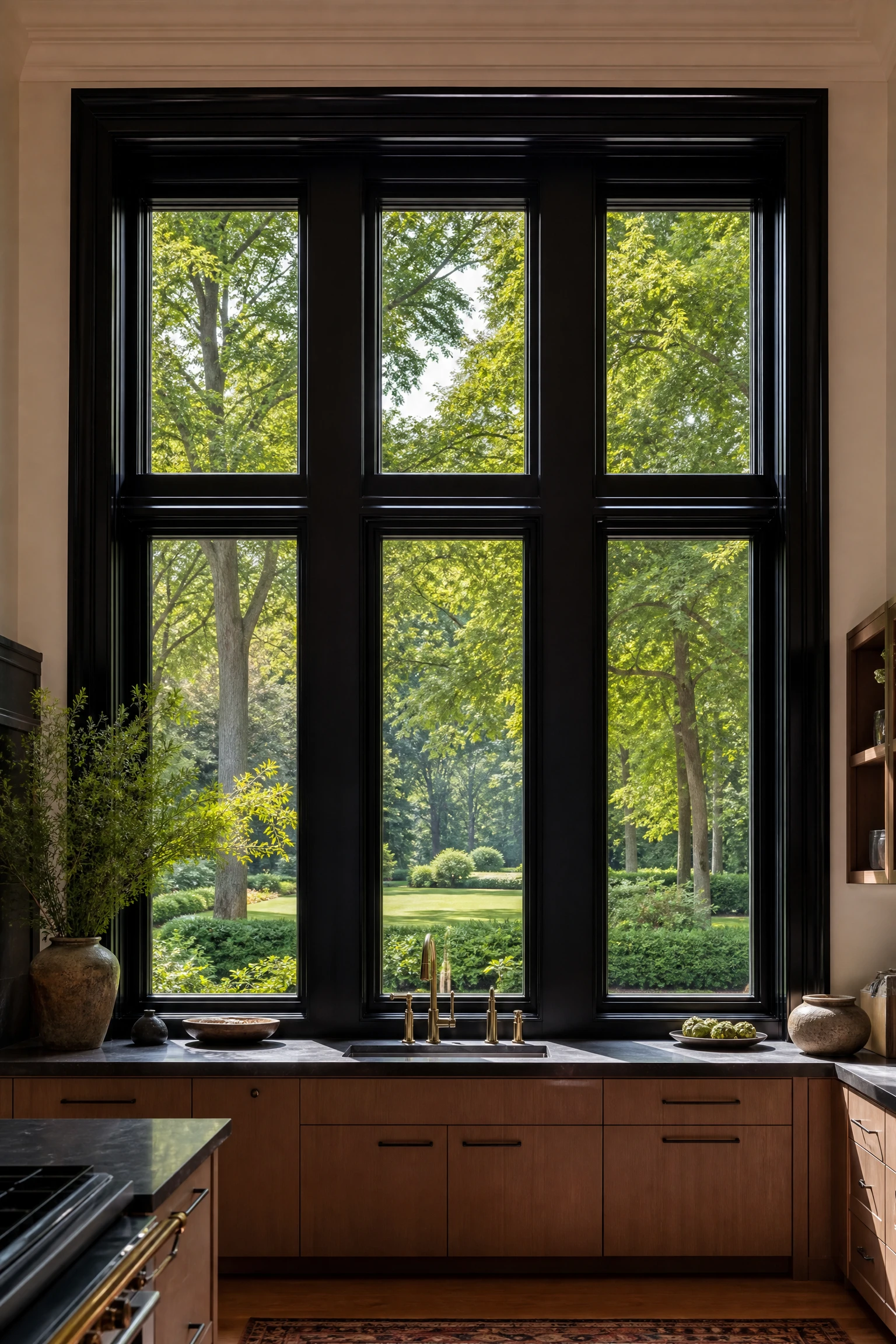
Steel Window Mullions
If your kitchen features massive windows, painting the wooden window frames cream will completely wash them out against the natural sunlight. You must aggressively frame the view. Paint the thick wooden window mullions in a stark, contrasting high-gloss black. The sharp, aggressive black grid sharply frames the bright green outdoor landscaping, turning the window into a massive, heavy piece of architectural art that perfectly grounds a soft cream wall.
Design Q&A: Window Trims
Question: Do I paint the surrounding window casing black or cream? Answer: You must strictly paint the internal mullions and sashes black, but paint the heavy exterior casing cream. This highly specific technique mimics the look of expensive-looking, custom steel architectural windows.
The Brutalist Matte Black Sink
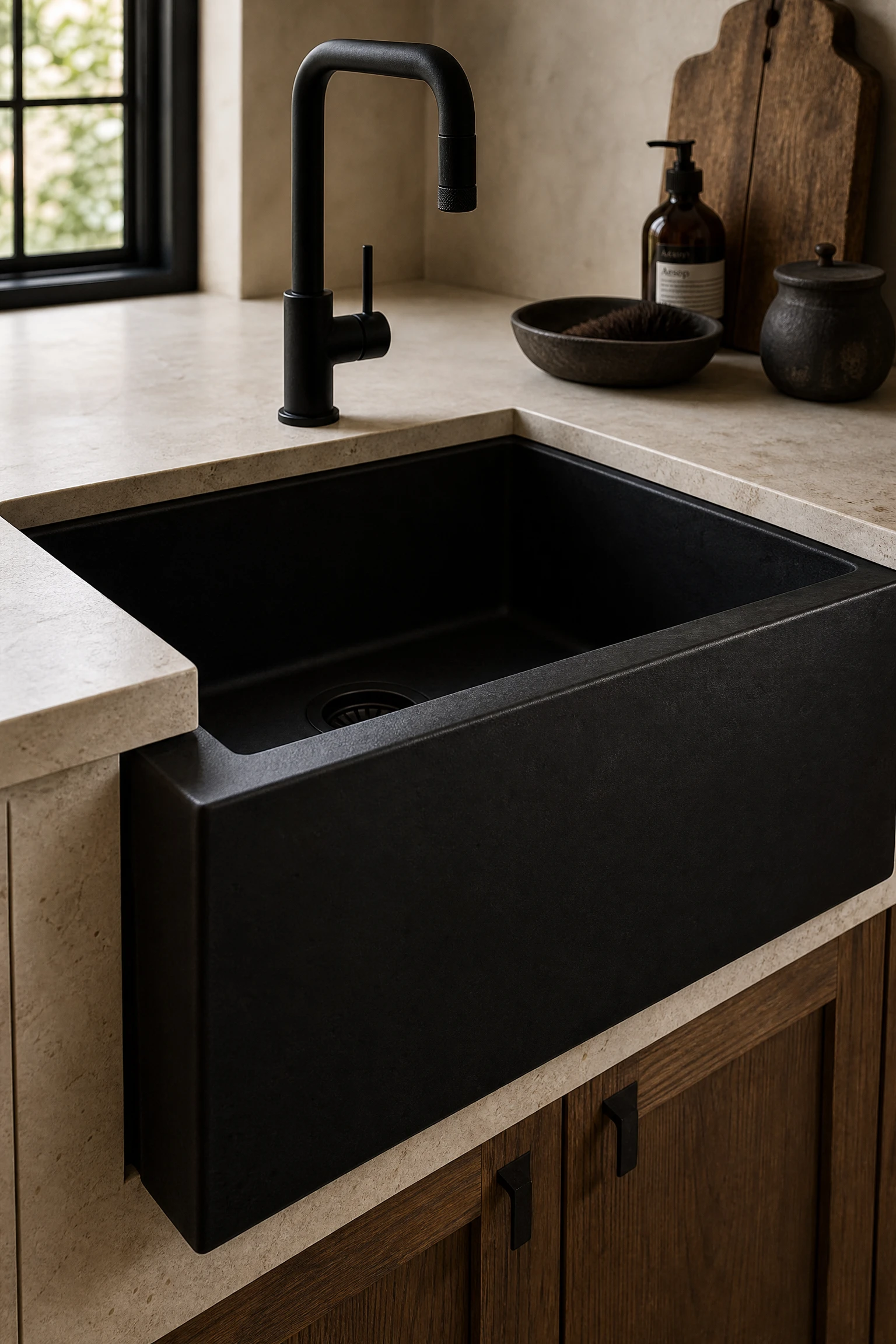
A traditional white porcelain farmhouse sink sitting in a cream kitchen looks incredibly predictable and slightly boring. To sharply inject modern brutalism, install a massive, deep-basin apron-front sink made entirely of solid matte black fireclay or engineered black granite. This massive, heavy black void sitting right at the edge of the cream countertop aggressively breaks up the continuous pale line, establishing a fierce, highly masculine focal point exactly where you prepare food.
Cleaning Warning: If you live in an area with ‘hard water,’ the heavy calcium and magnesium deposits will sharply dry into stark white, highly visible crusty rings on a matte black sink. You must religiously wipe the sink completely dry after every single use.
Phase 2: The Ambient Neutrality
This phase executes a flawless fifty-fifty split between the heavy black and the warm cream. The architectural goal is absolute, rigid balance, ensuring neither color completely dominates the visual temperature of the room.
The Tuxedo Kitchen Split
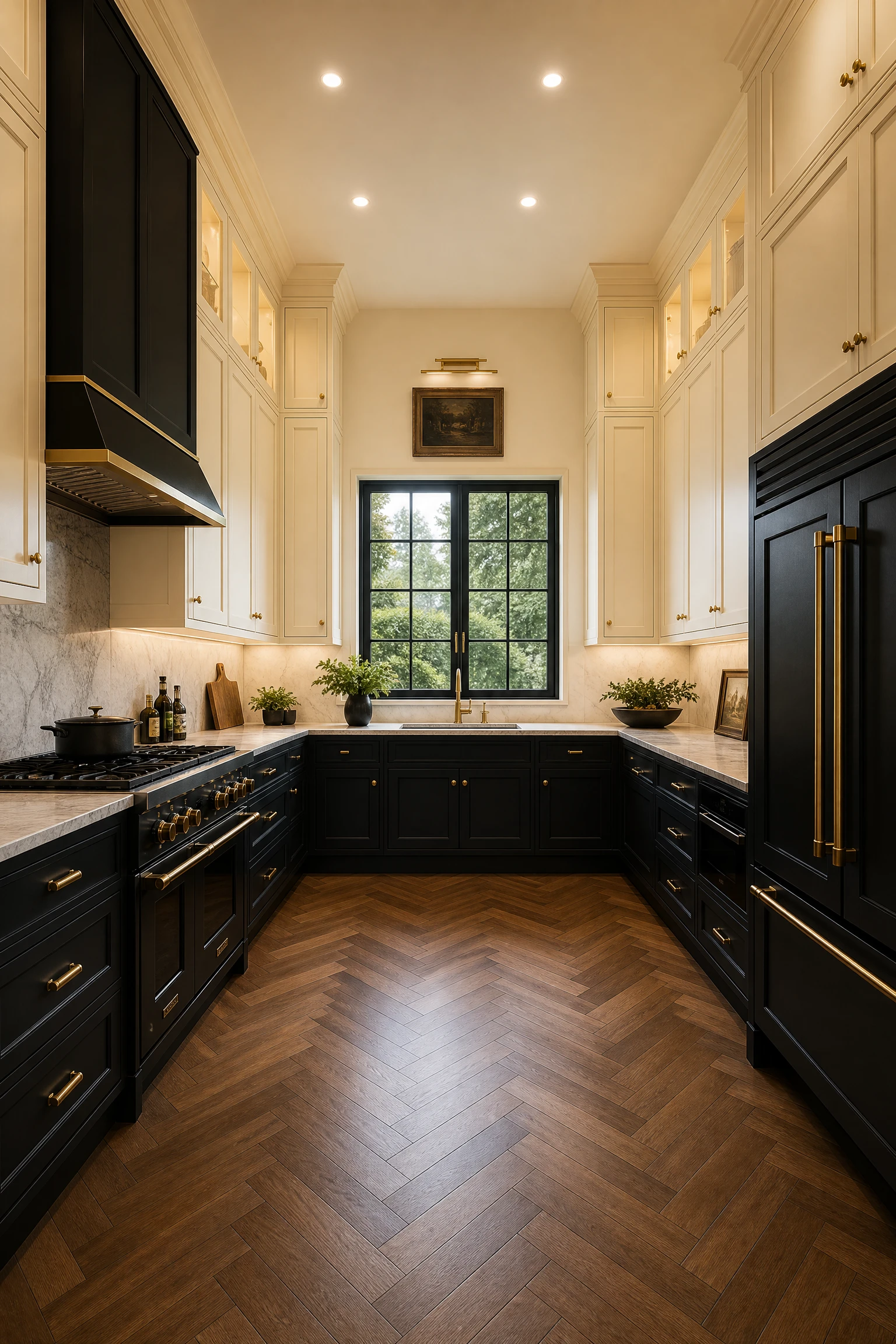
The absolute most classic method of achieving ambient neutrality is the Tuxedo Split. You must rigorously paint every single base cabinet in a deeply saturated black, and paint every single upper cabinet in a warm, buttery cream. The heavy black aggressively grounds the floor, physically anchoring the massive appliances, while the pale cream upper cabinets completely blend into the cream drywall, making the ceiling feel infinitely tall. This precise fifty-fifty distribution creates flawless architectural harmony.
Hardware Rules: You must use the exact same hardware finish on both the black bases and the cream uppers. If you use black knobs on top and brass on the bottom, you sharply sever the two halves of the kitchen. A unified hardware finish forces the two zones to fiercely communicate.
Checkerboard Marble Flooring
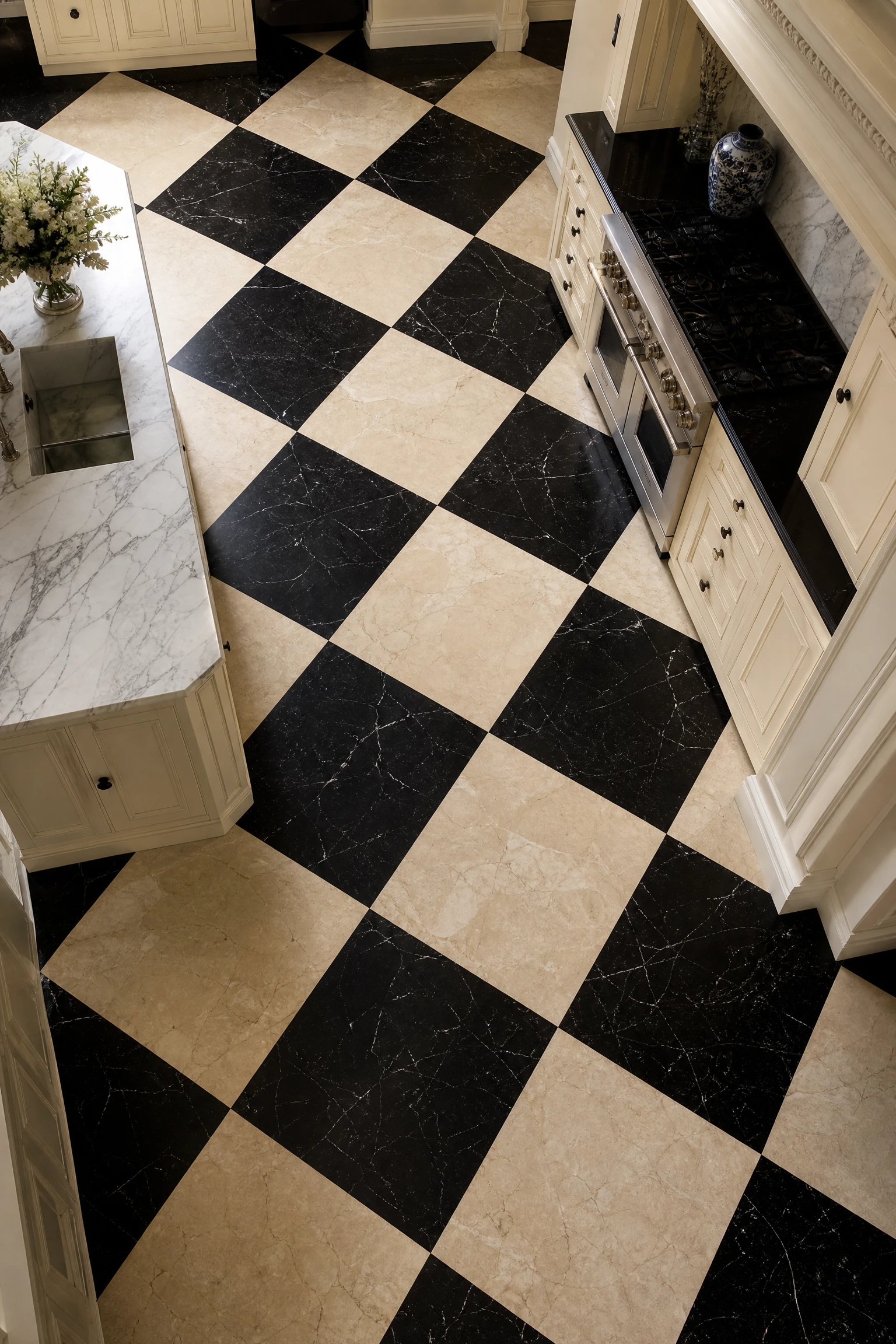
To instantly transport your kitchen into a deeply historic, European chateau aesthetic, you must completely abandon modern hardwood. Install a massive, diagonal checkerboard floor using solid square slabs of stark black Nero Marquina marble and warm cream Crema Marfil marble. Because the floor is exactly fifty percent black and fifty percent cream, it provides the ultimate, highly aggressive neutral foundation. Keep all the surrounding cabinetry stark cream to let the massive, heavy stone floor dominate the entire architectural narrative.
Marble Flooring Rules:
- You absolutely must install the checkerboard pattern on a ‘diamond’ diagonal; a straight, square grid will visually shrink the kitchen and look like a cheap diner.
- Ensure the stone is heavily honed to a matte finish; high-gloss polished marble becomes completely lethal and sharply slippery when wet.
- Seal the highly porous cream marble aggressively, or a single drop of red wine will permanently stain the expensive stone.
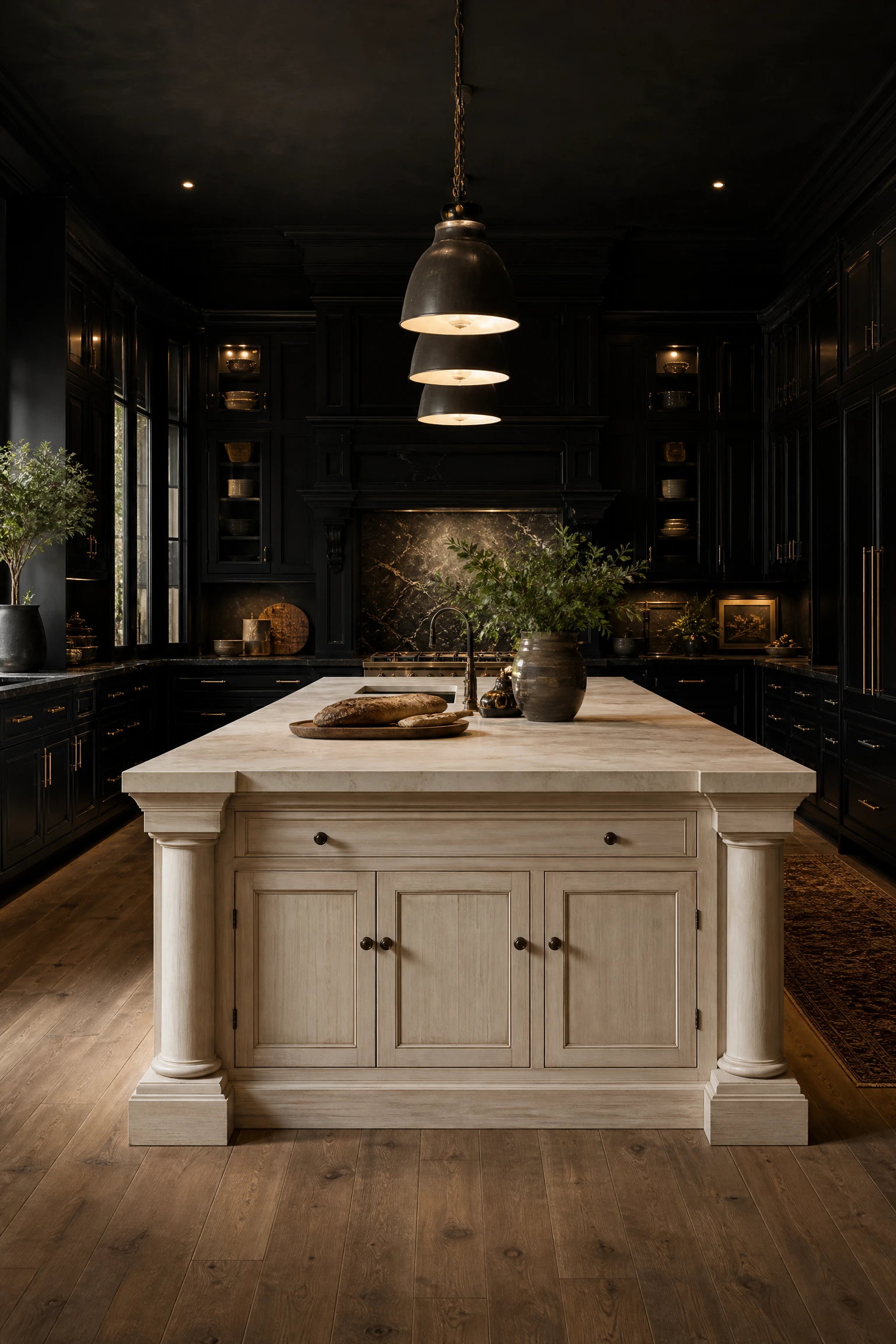
The Cream Island against a Black Perimeter
If you want a highly dramatic, moody kitchen but fear it will feel like a tiny closet, you must execute the reverse anchor. Paint the entire U-shaped perimeter of the kitchen in solid matte black. Then, place a massive, oversized cream wooden island perfectly in the dead center of the room. The dark perimeter aggressively recedes into the shadows, making the walls feel further away, while the massive bright cream island sharply jumps forward, serving as a heavily illuminated, highly inviting culinary stage.
Reverse Anchor Execution:
- You must cap the bright cream island in a heavily veined black stone to tie it back to the dark perimeter.
- Cap the dark black perimeter cabinets in a bright white quartz to tie them back to the cream island.
- This fierce ‘cross-pollination’ of materials is exactly what prevents the kitchen from feeling like two completely unrelated rooms smashed together.
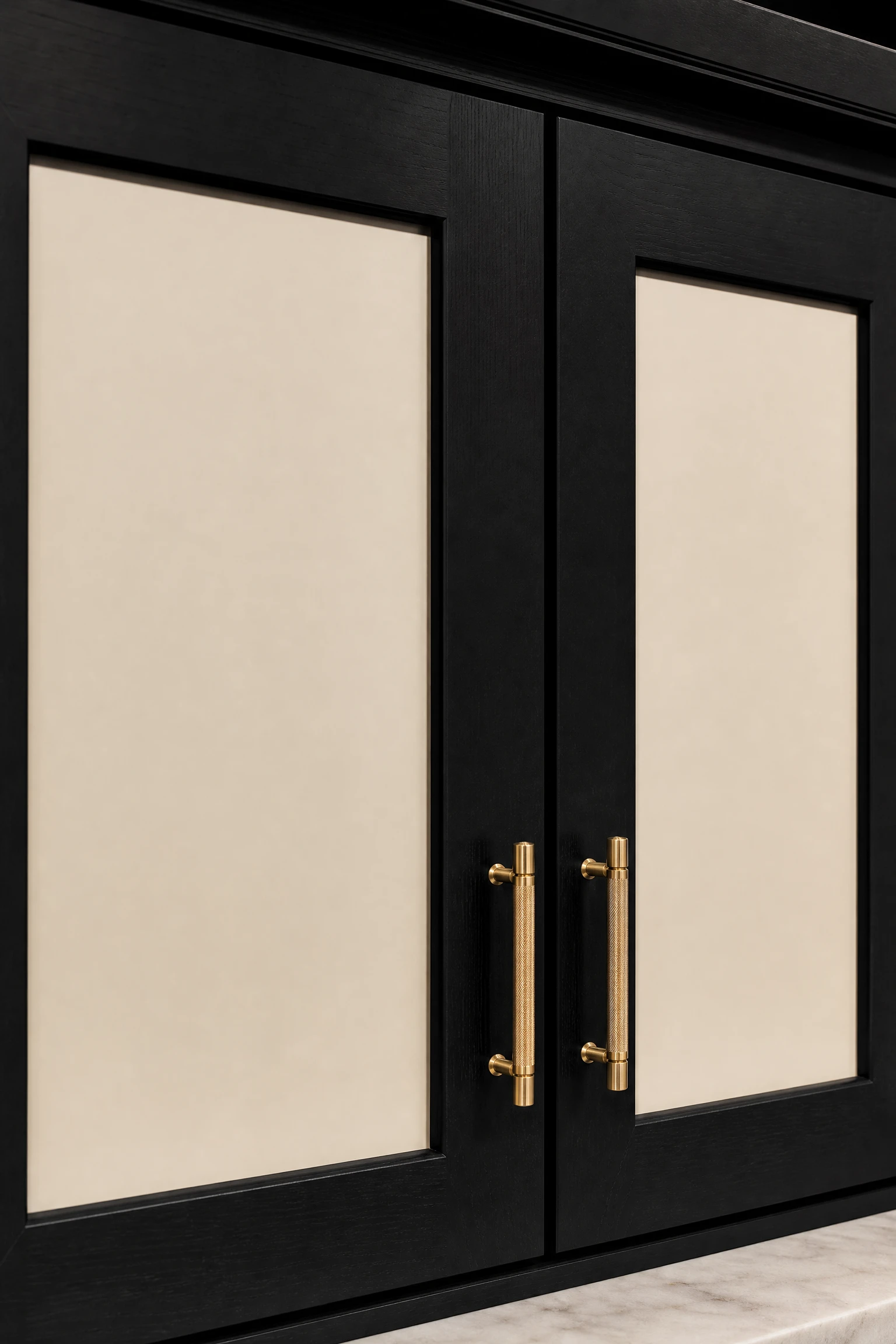
Black Shaker Frames with Cream Panels
For a highly custom, fiercely tailored aesthetic, you must build dual-tone cabinetry. Instruct your cabinet maker to build heavy Shaker-style cabinet doors where the thick, outer wooden frame is painted solid black, but the flat, recessed center panel is painted stark cream. This strong technique physically forces the black and cream to occupy the exact same square footage. The heavy black frame sharply outlines the soft cream center, making the kitchen look exactly like a fiercely expensive, highly tailored tailored suit.
Carpenter Requirement: This technique is incredibly expensive because the painter should carefully mask the interior corners with tape. If the black paint bleeds even one millimeter onto the cream panel, the entire expensive door looks completely ruined.
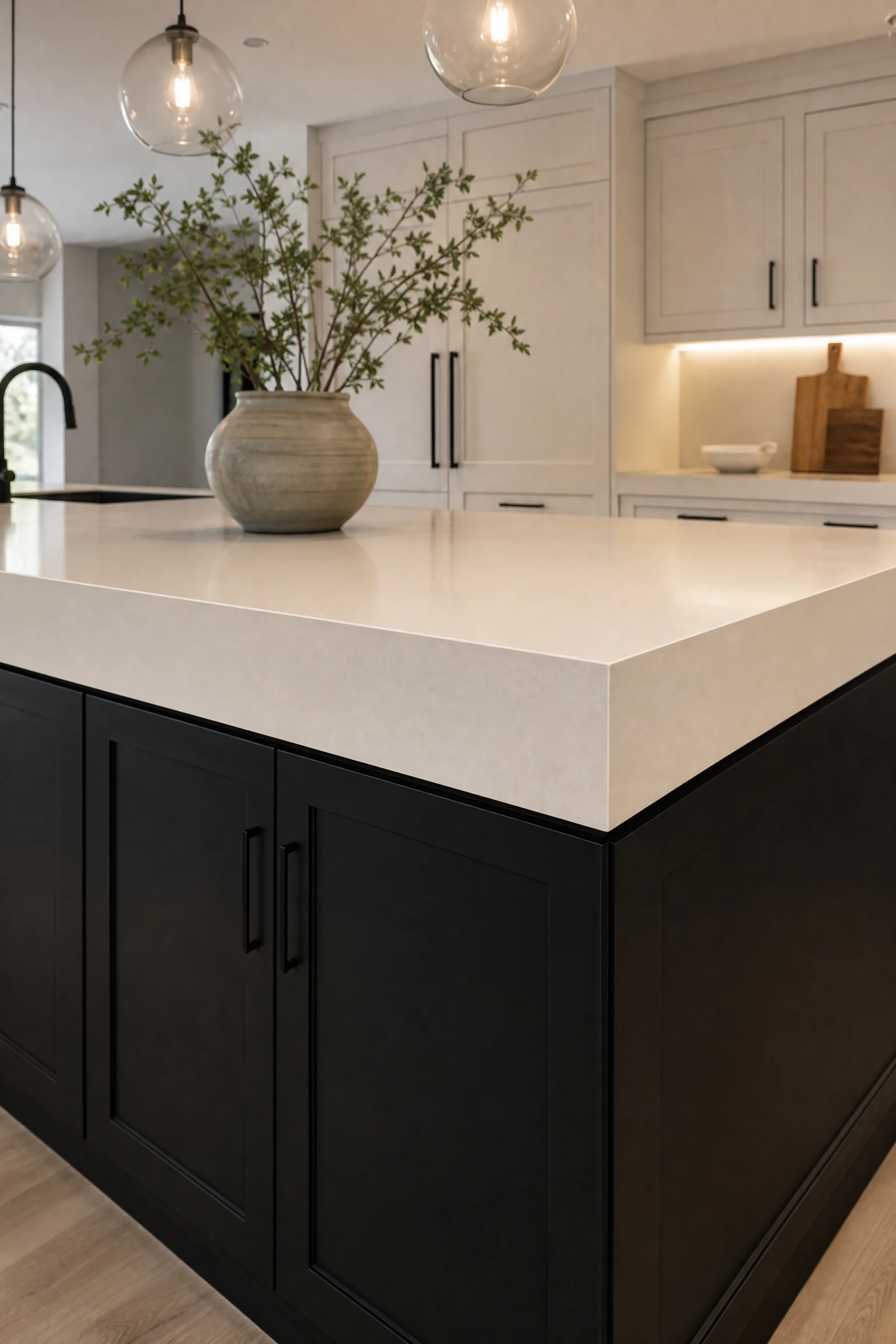
The Seamless Cream Countertop Slab
When balancing a heavily black kitchen, the countertops cannot be chaotic or heavily veined. You must provide a massive, visually silent resting place for the eye. Install an incredibly thick, two-inch slab of pure, completely solid cream quartz or Corian across the entire kitchen perimeter. The complete lack of veins or speckles in the stone acts as a massive architectural palate cleanser, perfectly dividing the heavy black lower cabinets from the surrounding elements with a stark, flawless, highly engineered horizontal line.
Design Q&A: Solid Stone
Question: Does solid cream stone look like cheap plastic? Answer: Not if you strictly order an ‘eased’ or ‘square’ edge profile. A heavily rounded bullnose edge will absolutely make the solid stone look exactly like cheap 1980s laminate. The sharp, ninety-degree edge proves the heavy, expensive nature of the solid slab.
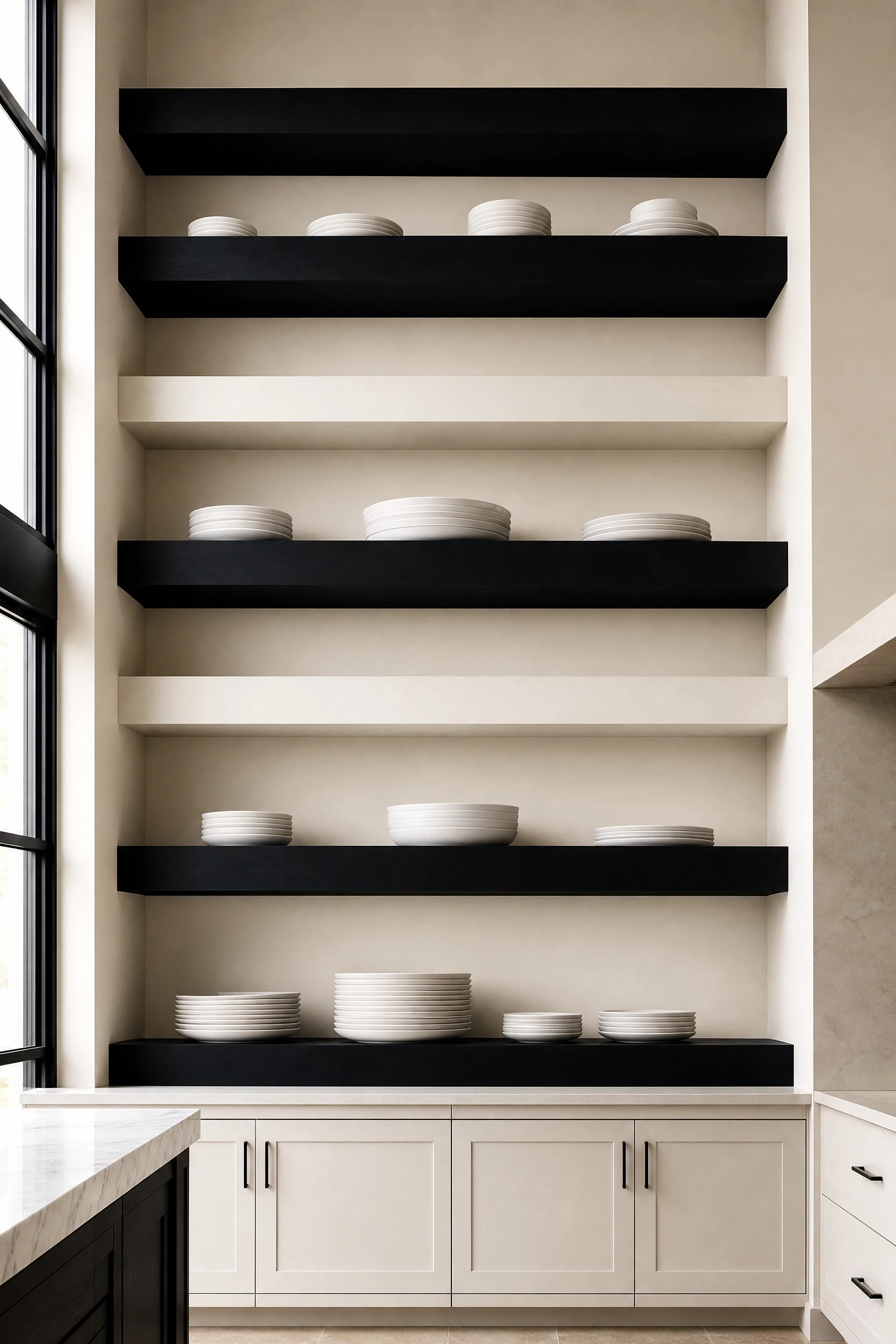
Alternating Open Shelving
If you want to maintain a strict fifty-fifty split on a large, blank wall, install floating shelves in an alternating pattern. Mount a heavy, thick black wooden shelf, followed by a thick cream-painted shelf directly above it. This aggressive, striped architectural pattern creates massive visual tension. To execute this flawlessly, you must strictly curate the items on the shelves, placing stark white ceramic plates exclusively on the black shelves, and heavy cast-iron pots exclusively on the cream shelves, creating strong, high-contrast vignettes.
Pro Move: You must use heavy, hidden internal steel rods to support the shelves. Ugly metal L-brackets will sharply ruin the strict, clean geometric lines of the alternating color pattern.
Phase 3: The High-Heat Infusion
This phase allows the warm, buttery yellow undertones of the cream to completely dominate the kitchen. Black is used strictly as a fierce, tiny accent to sharply sharpen the soft architecture and provide necessary gravity.
Cream Cabinetry with Black Hardware
If you want an incredibly soft, highly romantic, traditionally English kitchen, you must paint every single cabinet door in a rich, buttery, heavily saturated cream. To prevent the kitchen from looking too soft, sweet, or historically dated, you must sharply puncture the cream canvas. Install heavy, flat matte black hardware on every single door and drawer. These tiny, aggressive black metal dots physically stop the eye, providing massive, fierce architectural contrast that instantly modernizes the traditional cream paint.
Hardware Puncturing Rules:
- You absolutely must use substantial, heavy hardware; tiny, delicate black knobs will look like terrifying bugs crawling on your cabinets.
- Use long, heavy black bar pulls on all the lower drawers to aggressively emphasize the horizontal width of the kitchen.
- Strictly pair the black hardware with a matching matte black kitchen faucet to establish a highly deliberate metallic theme.
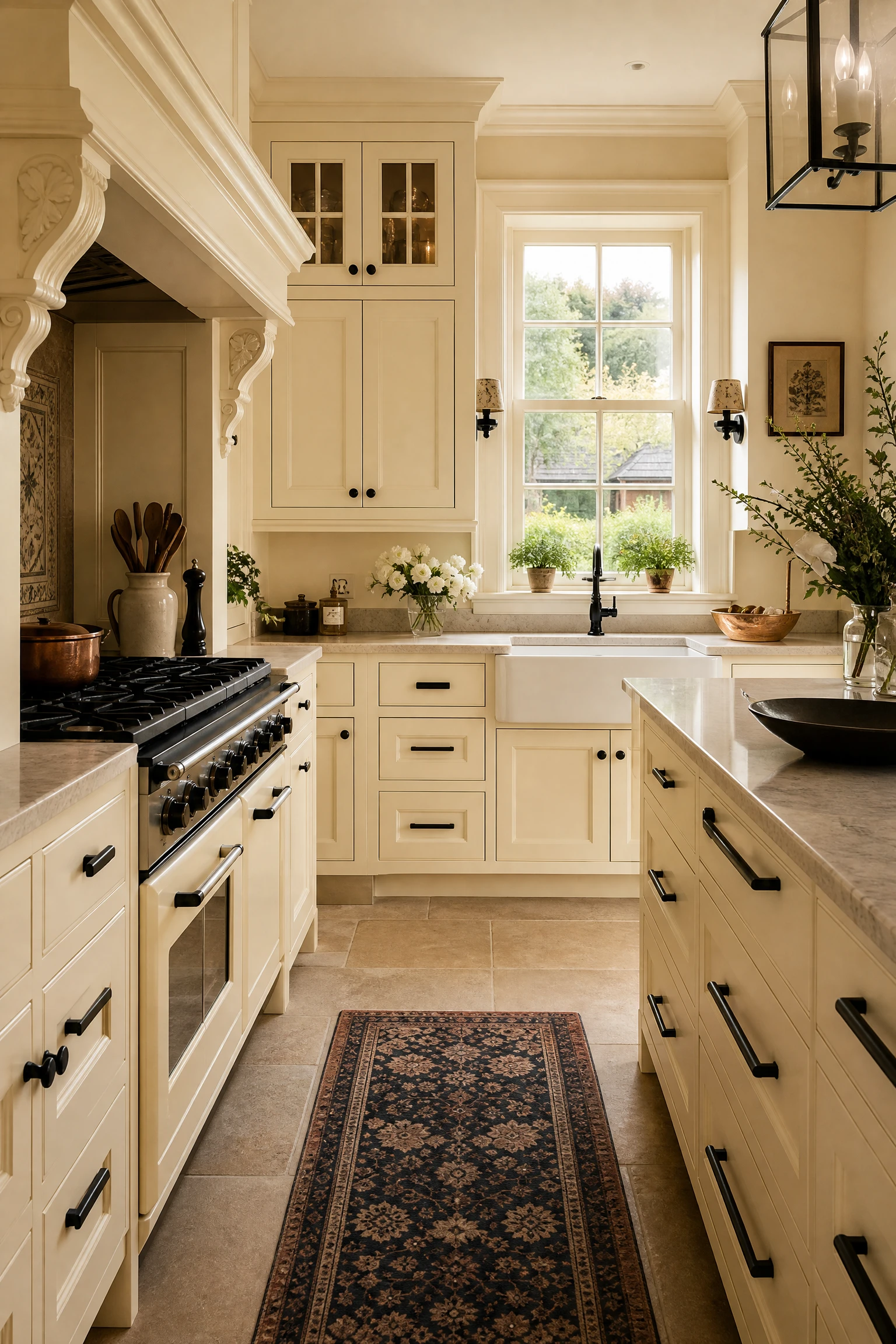
The Unlacquered Brass Bridge
When a kitchen is dominated by warm cream and punctuated by stark black, you absolutely must introduce a third, bridging element to balance the visual thermodynamics. You must heavily inject unlacquered brass. Hang massive, heavy brass pendant lights over the island and use a raw brass faucet at the sink. The fiery, deeply golden-orange warmth of the brass sharply pops against the cold black accents, while perfectly harmonizing with the warm yellow undertones of the cream cabinetry, creating a flawless, highly expensive triad of colors.
Metal Living Finish: You must explicitly demand ‘unlacquered’ brass. It is a living finish that will aggressively tarnish, scratch, and turn dark brown over time. This heavy, historic patina is exactly what prevents the kitchen from looking like a cheap, shiny showroom.
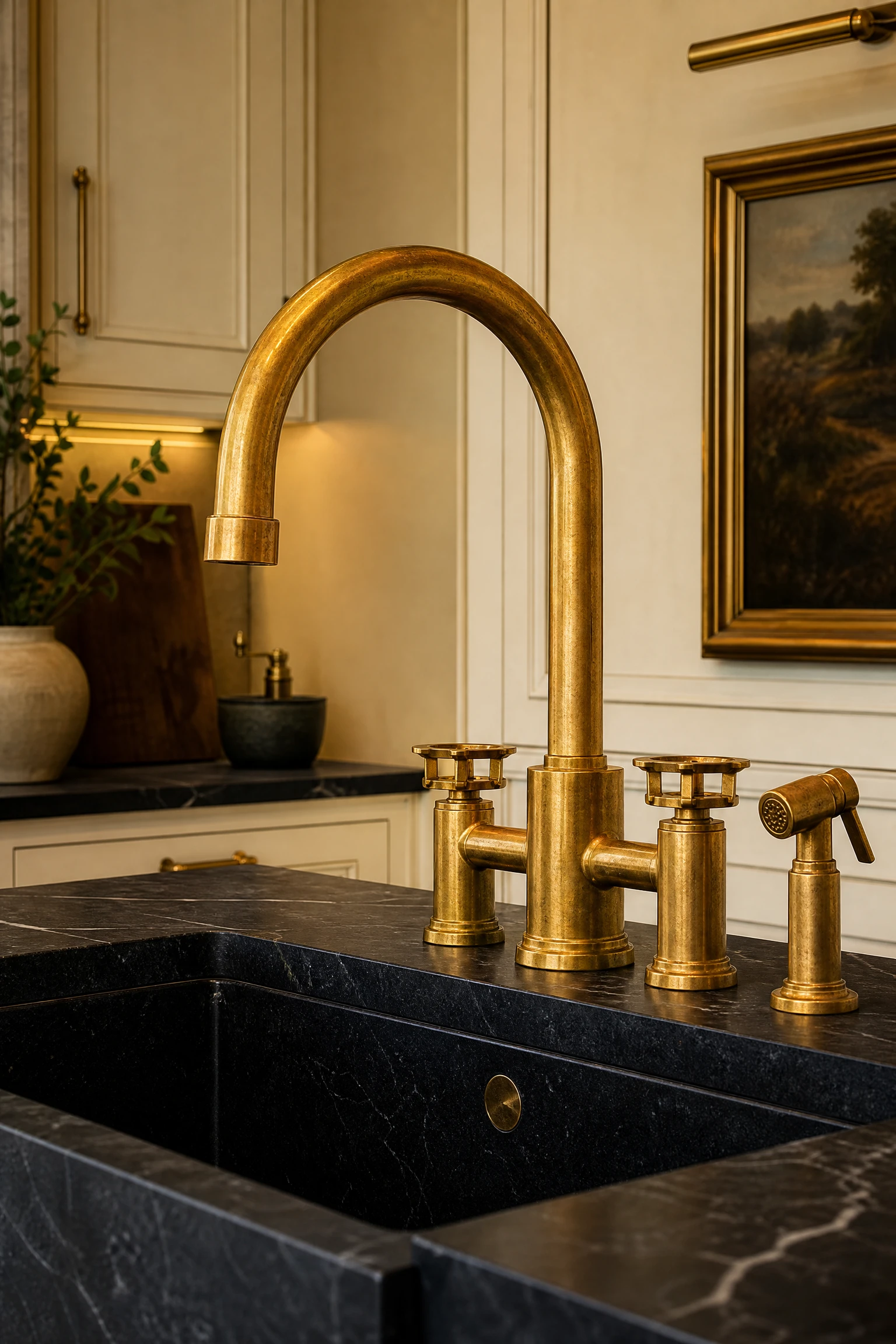
Black Steel Lighting Suspensions
In a kitchen entirely enveloped in soft cream walls and warm wooden floors, you must introduce a sharp, brutalist element from the ceiling. Hang incredibly structural, highly geometric black steel chandelier or pendant fixtures. The harsh, thin black metal lines sharply slice through the soft, airy cream atmosphere above the island. Because the metal is so thin, it does not physically block the sightlines across the kitchen, but it provides the exact aggressive, high-contrast focal point needed to heavily ground the upper half of the room.
Executing Steel Suspensions:
- You must use warm, 2700K amber Edison bulbs inside the stark black fixtures to sharply warm up the cold steel.
- Hang the black steel fixtures at least thirty-six inches above the countertop so they do not sharply crowd your face while prepping food.
- Ensure the black metal features a matte, slightly textured powder coat; glossy black steel looks incredibly cheap and plastic.
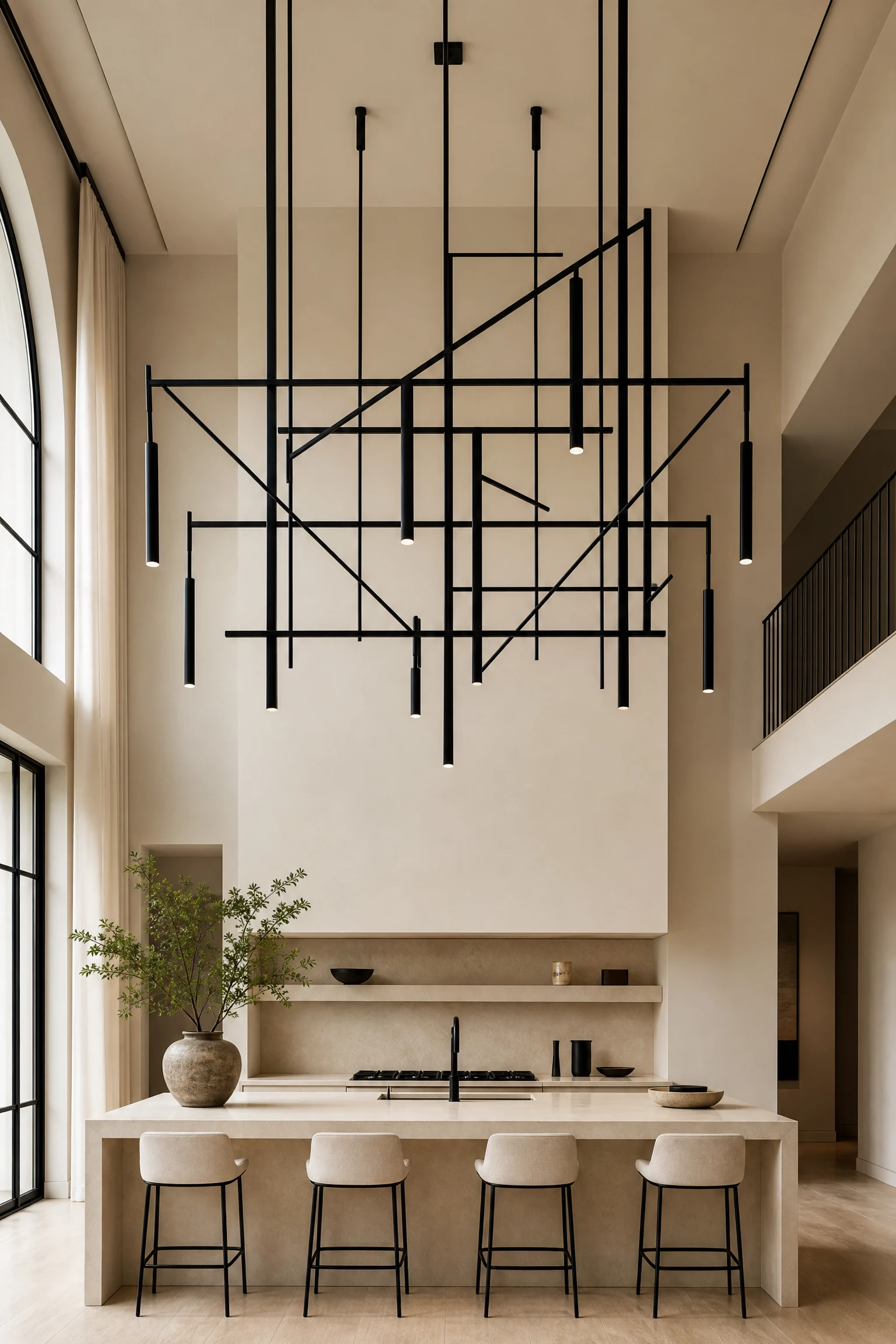
The Painted Black Interior
For a strong, highly hidden architectural surprise, keep all your upper cabinets painted in a soft, welcoming cream. However, order the cabinets with custom glass-front doors, and have the cabinet maker paint the entire physical interior of the cabinet boxes in a solid, deeply saturated pitch black. When you display pristine white or cream ceramic dishes inside these specific cabinets, the heavy black background sharply pushes the dishes forward, turning everyday plates into an intentional display.
Cabinetry Q&A: Glass Display
Question: Will the dark black interior make the glass cabinet look like a terrifying black hole? Answer: Yes, unless you aggressively light it. You absolutely must install hidden, high-powered LED strip lighting inside the top of the dark cabinet to illuminate the displayed dishes.
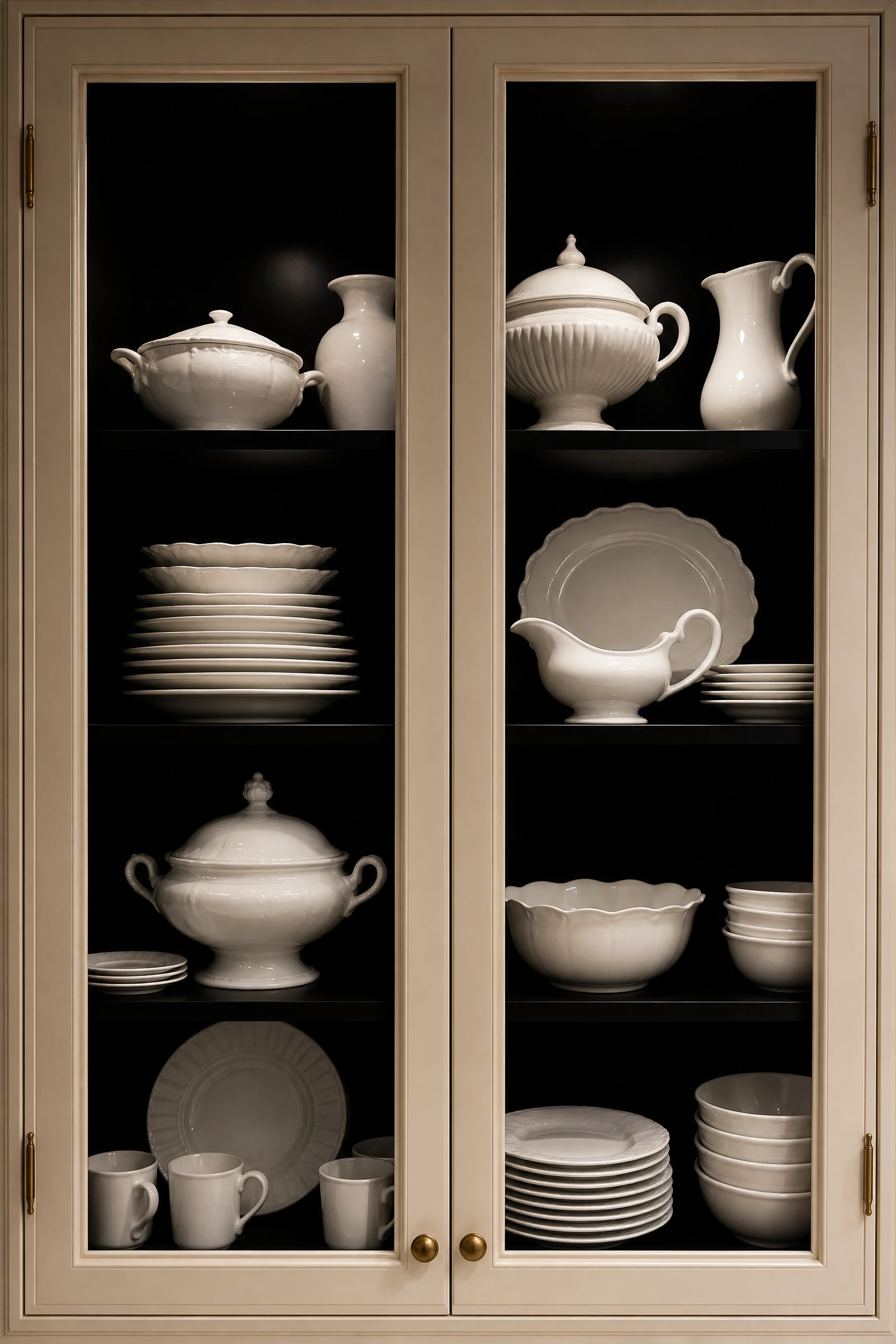
Cream Plaster Walls with Black Sconces
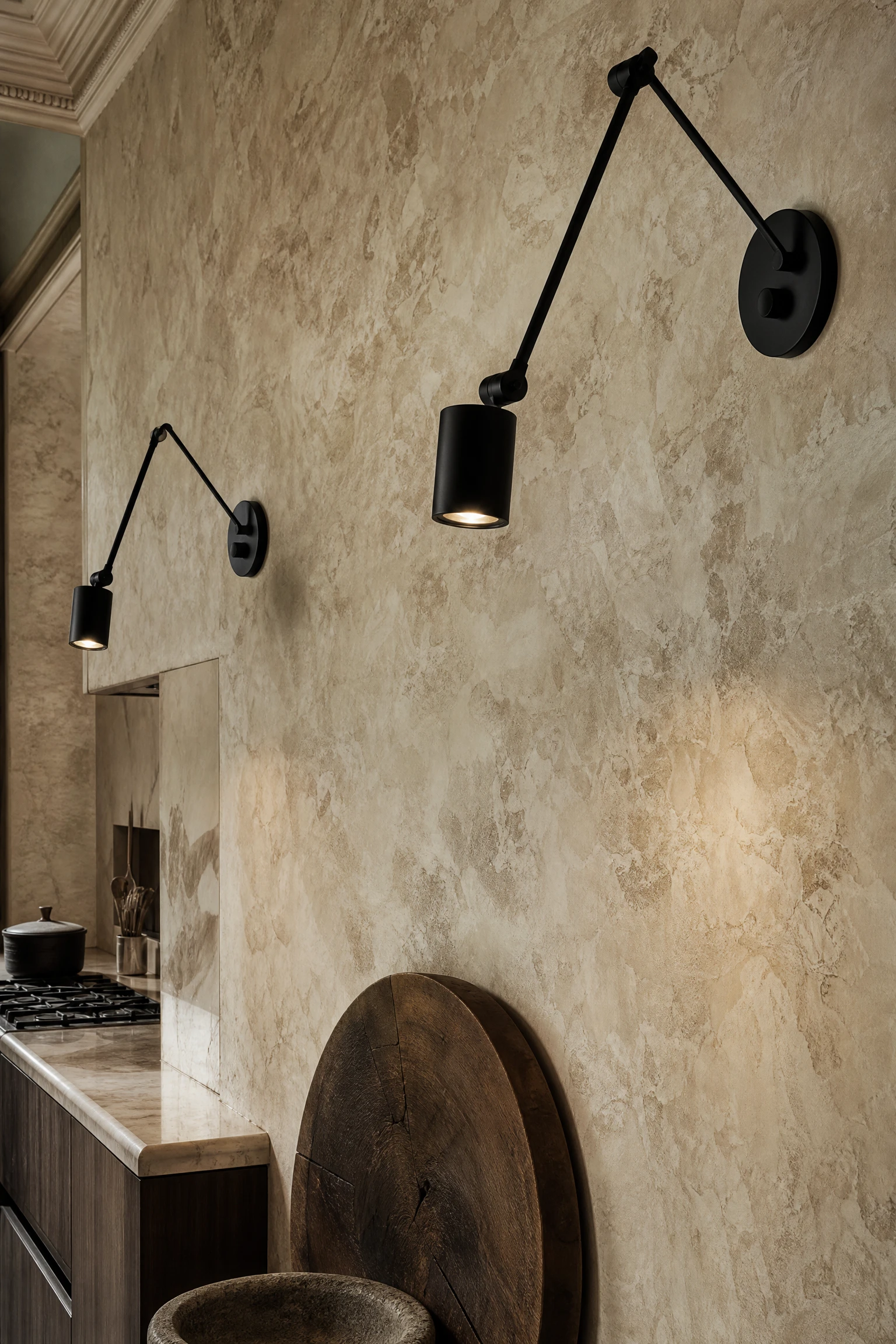
Standard drywall painted cream is completely flat and boring. You must hire a highly specialized artisan to physically hand-trowel traditional Roman clay or Venetian plaster across the entire kitchen walls in a warm cream tone. The heavy, cloudy, heavily mottled texture of the plaster creates massive, historic visual heat. To sharply interrupt this soft, ancient texture, mount fierce, hyper-modern matte black articulating wall sconces directly into the plaster. The collision of centuries-old cream plaster and brutalist black steel creates the ultimate high-end aesthetic.
Artisan Reality: True Venetian plaster is expensive-looking and highly porous. You must aggressively seal the plaster near the stove and sink with a matte wax, or boiling tomato sauce will sharply stain the expensive wall forever.
The Ebonized Oak Flooring Contrast
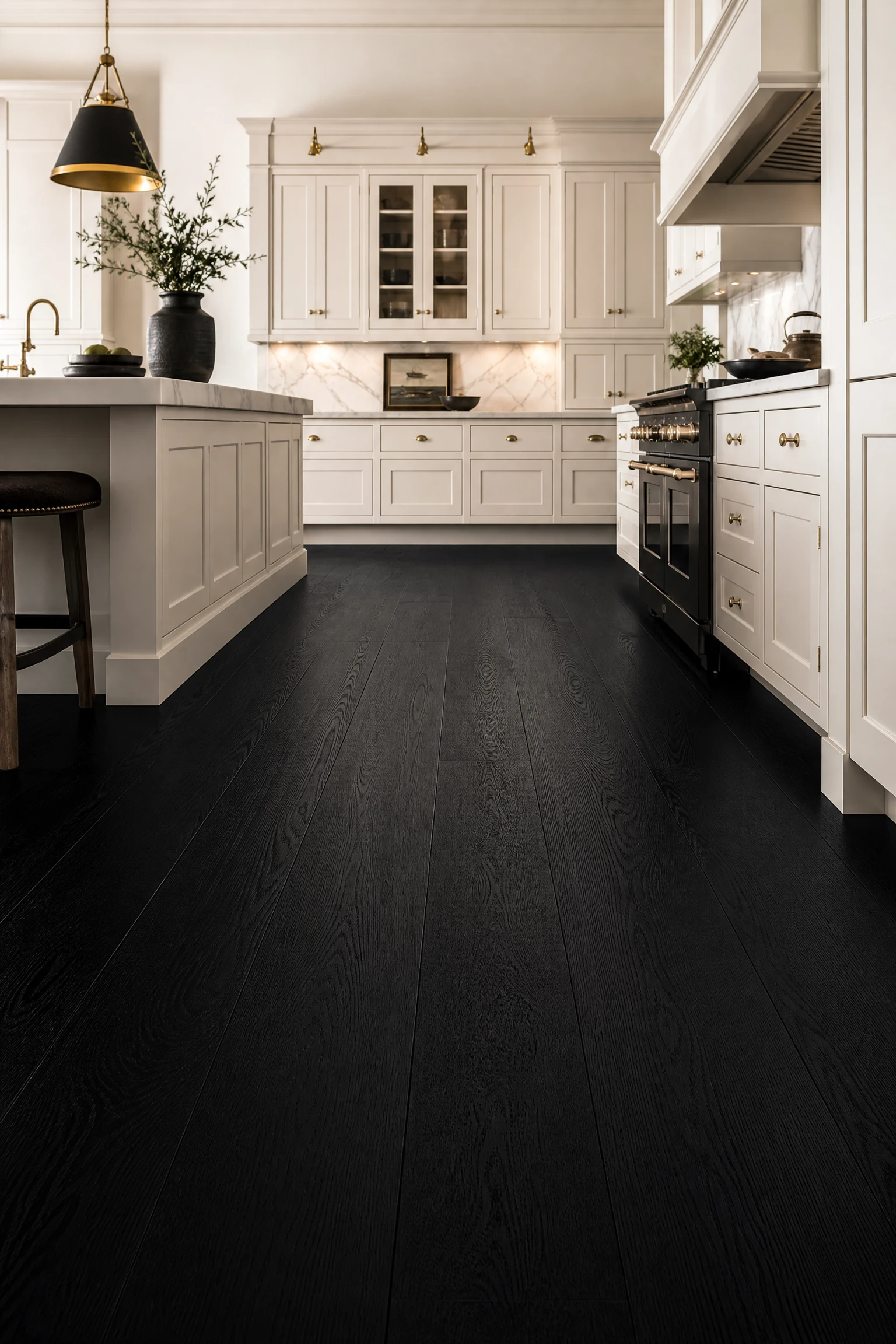
If you absolutely demand floor-to-ceiling cream cabinetry, you must completely anchor the room with an incredibly aggressive floor. Install wide-plank white oak flooring, but have it professionally stained in a deep, pitch-black ebonizing stain. The heavy black floor acts as a massive visual black hole, fiercely absorbing the ambient light. This extreme gravity sharply pushes the soft cream cabinets upward, making them look incredibly light, airy, and delicately floating above the dark, brutalist foundation.
Black Flooring Rules:
- Black floors will sharply expose every single spec of white dust, flour, and pet hair; you must embrace daily vacuuming.
- Strictly use a flat matte polyurethane sealant; a glossy black floor will show every single terrifying micro-scratch when the sun hits it.
- Layer a thick, warm vintage runner rug in front of the sink to soften the brutalist black wood.
Phase 4: The Textural Friction
When dealing with a highly restrictive two-color palette, the kitchen can quickly feel flat and cartoonish. You must introduce massive textural friction, ensuring the black and cream materials physically react to each other through opposing tactile finishes.
High-Gloss Black Subway Tile
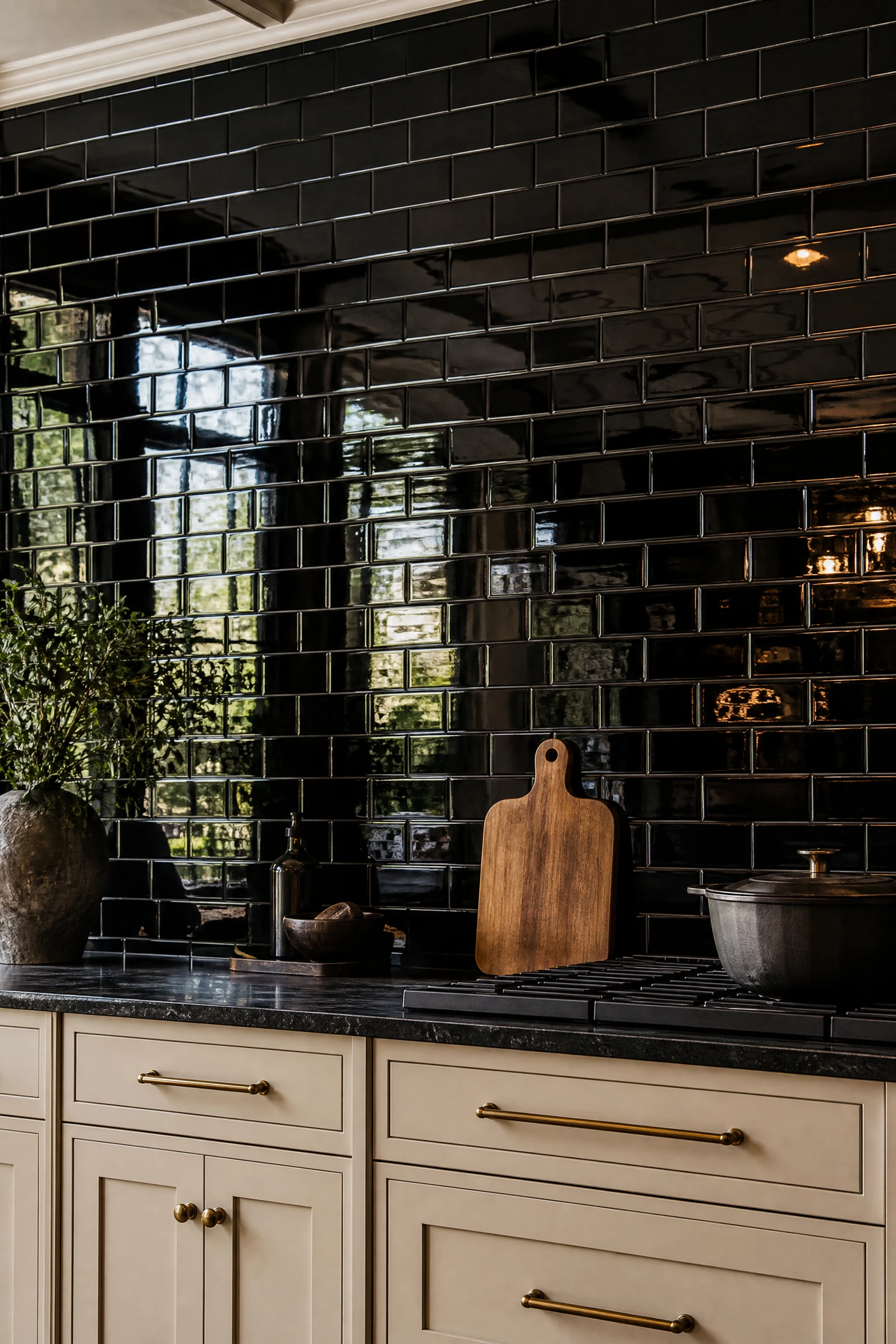
Standard matte black paint absorbs light, creating a dead, heavy void. You must introduce wet, liquid texture. Install a massive kitchen backsplash using traditional subway tiles, but specify a high-gloss black glaze. When installed directly above warm, matte cream base cabinets, the black tiles act exactly like a dark, moody mirror. They aggressively bounce the ambient light from the room, creating an incredibly deep, watery, highly dynamic architectural feature that feels expensive-looking and fiercely glamorous.
Grout Warning: You must explicitly use a dark charcoal or matching black grout. If you use bright white grout with glossy black tiles, the kitchen will sharply look exactly like a cheap 1950s public restroom.
The Heavily Veined Calacatta Marble
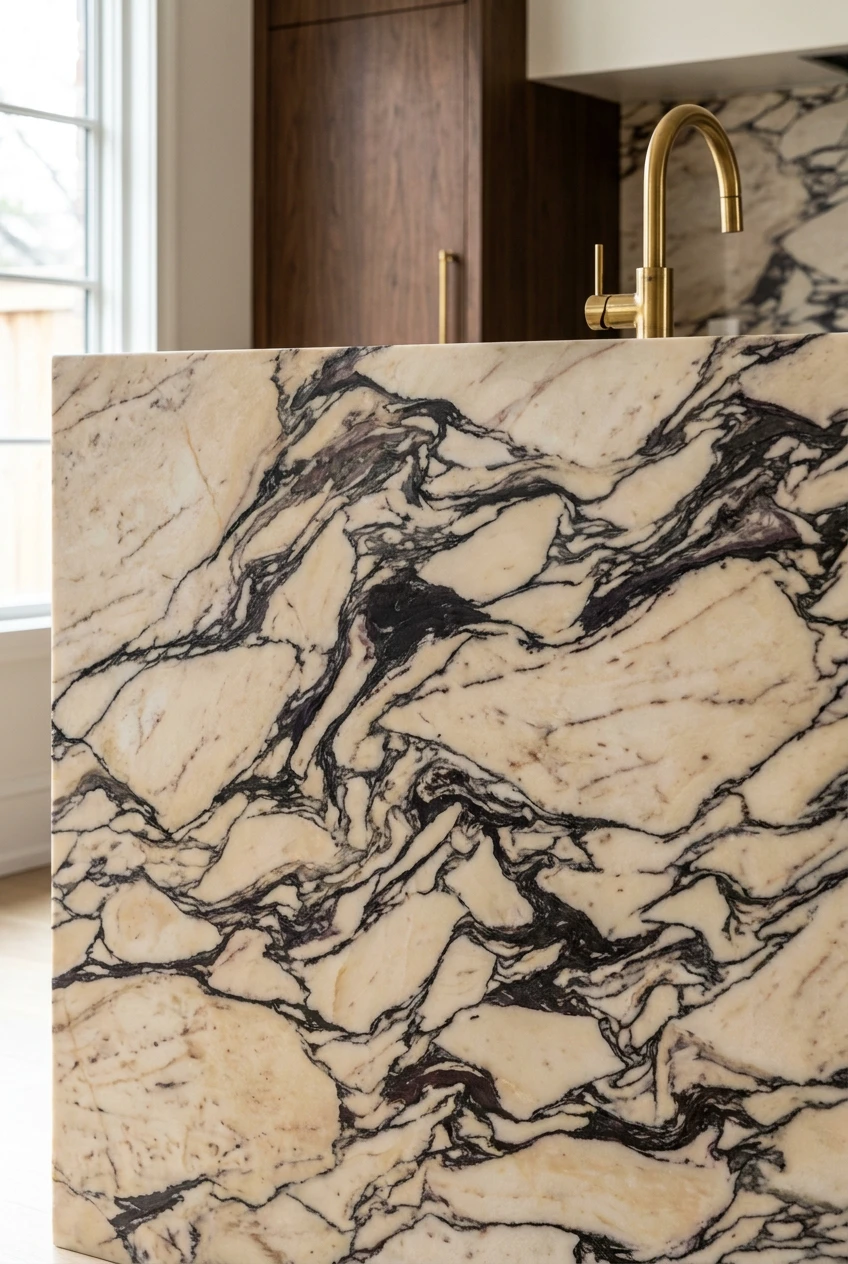
To perfectly merge black and cream without painting a single cabinet, you must use the ultimate natural stone. Install a massive slab of expensive-looking Calacatta Corchia or Calacatta Viola marble. These specific, highly prized stones feature a warm, buttery cream background sharply shattered by massive, chaotic, aggressive veins of dark charcoal and black. Using this stone for both the countertops and a massive backsplash cleanly integrates the two colors through highly chaotic, completely organic natural texture, proving billionaire-level luxury.
Marble Execution:
- You must personally go to the massive stone yard and physically pick the exact slab; leaving this to a contractor is a massive, tragic mistake.
- Instruct the fabricator to strictly ‘book-match’ the seams so the violent black veins flawlessly continue across the massive kitchen island.
- Hone the marble to a matte finish to bring out the warm, chalky cream undertones rather than making it look like a shiny hotel lobby.
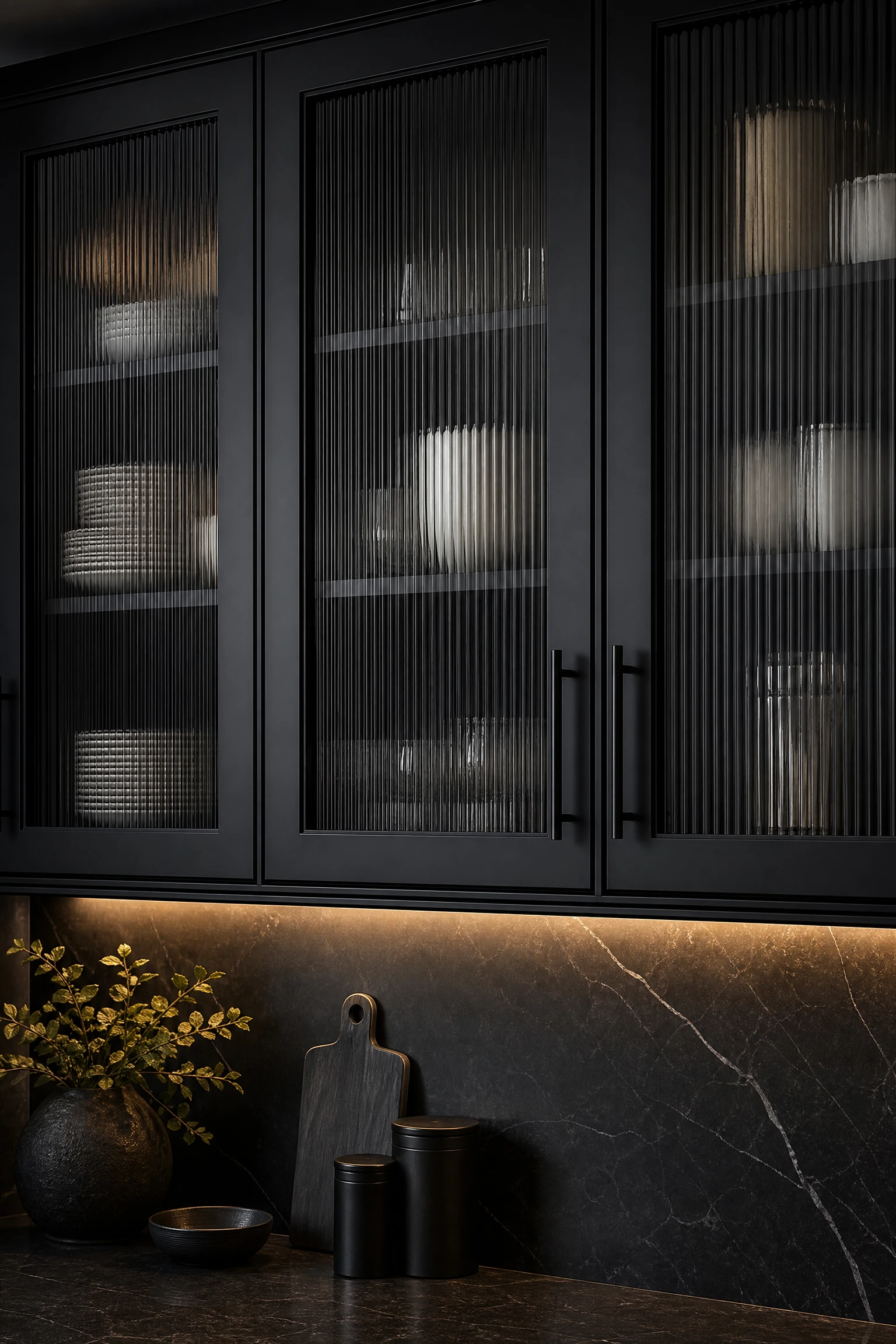
Black Fluted Glass Cabinet Doors
Solid black upper cabinet doors can feel like massive, heavy bricks hanging on the wall. To sharply lighten the visual weight while maintaining the dark color, you must replace the solid wood center panels with custom black fluted glass. The deep, heavy vertical ridges in the glass physically distort the items inside the cabinet, turning them into soft, blurred shapes. This introduces highly considered, ribbed texture that aggressively catches the light, making the heavy black cabinets look incredibly delicate and highly engineered.
Design Hack: If you cannot afford custom black glass, buy standard clear fluted glass and paint the entire interior of the cabinet box solid black. The dark interior makes the glass appear tinted from outside the cabinet.
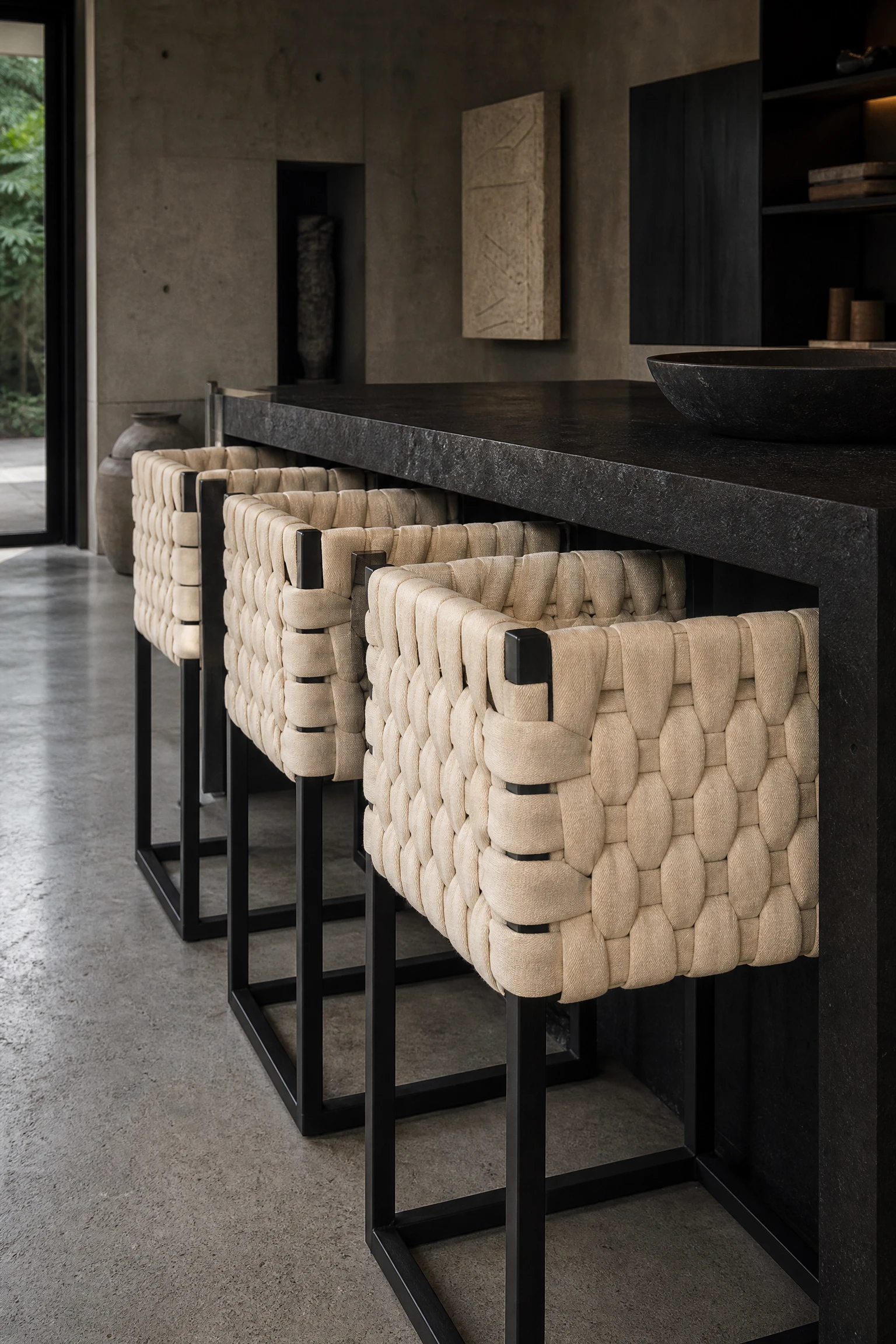
The Woven Leather Bar Stools
If your kitchen island is painted stark cream and capped with a black stone countertop, you must introduce a heavily tactile bridging material. Push three highly architectural bar stools under the counter, featuring stark matte black steel frames completely wrapped in heavy, thick cream woven leather straps. The tight, aggressive weaving of the thick leather introduces massive, expensive organic friction. It physically warms up the cold steel frames and heavily improves the seating area from basic furniture to high-end architectural jewelry.
Seating Q&A: Leather Durability
Question: Will cream leather get stained by blue jeans? Answer: Yes, raw cream leather will sharply absorb indigo dye. You absolutely must ensure the woven leather is heavily treated with an industrial top-coat sealant, allowing you to easily wipe away terrifying blue dye transfers.
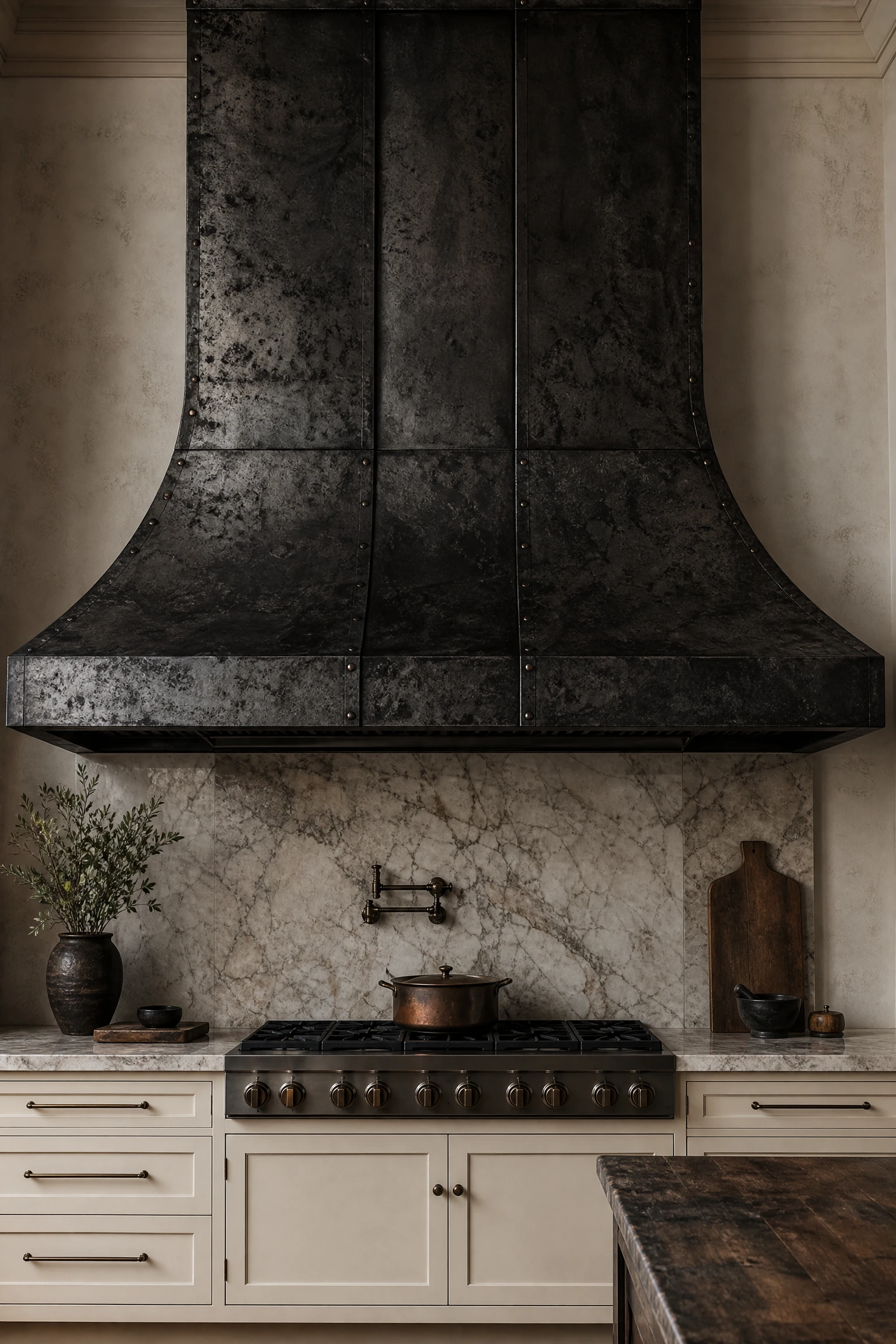
Blackened Steel Range Hoods
Instead of building a wood range hood and painting it black, you must use raw, brutalist metallurgy. Have a custom metal fabricator build a massive range hood out of raw hot-rolled steel. The fabricator then applies a heavy chemical acid wash that sharply oxidizes the metal, turning it into a deeply mottled, heavily textured, wildly imperfect ‘blackened steel.’ This massive, heavy, industrial metal beast sitting directly above soft, buttery cream cabinets creates the ultimate, fiercely aggressive textural collision in the room.
Steel Hood Reality:
- A massive custom steel hood easily weighs over two hundred pounds; your ceiling joists must be aggressively reinforced by a structural engineer.
- The blackened steel must be heavily sealed with clear lacquer to stop the violent rusting process from bleeding orange dust into your food.
- Keep the surrounding backsplash completely neutral; a busy tile will sharply clash with the chaotic, mottled texture of the raw steel.
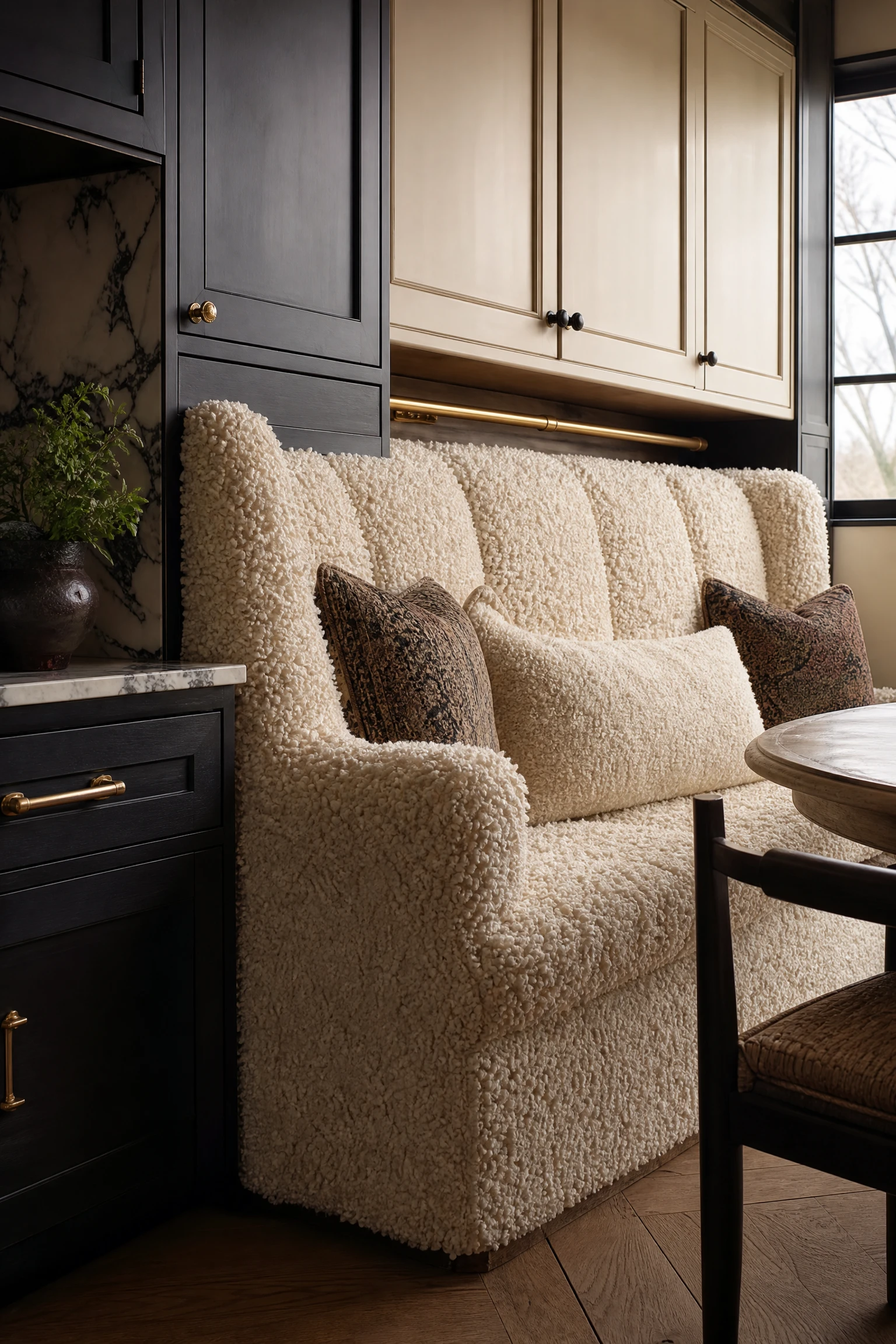
The Cream Bouclé Banquette
If your black and cream kitchen features a built-in breakfast nook, you must aggressively soften the hard architectural lines of the wooden cabinets. Upholster the massive custom seating bench entirely in heavy, thick cream bouclé fabric. Bouclé is sharply textured, featuring thousands of tiny, knotted loops of yarn that perfectly mimic the heavy texture of a winter sheepskin coat. This massive, soft tactile cloud fiercely contrasts against the hard, rigid black and cream cabinetry, creating an incredibly inviting, deeply cozy culinary corner.
Fabric Performance Warning: Standard bouclé in a kitchen is a terrifying disaster waiting to happen. You absolutely must explicitly order 100% synthetic, ‘performance-grade’ bouclé engineered for outdoor patio furniture, or a single drop of red wine will sharply destroy the expensive seating forever.
Conclusion
Mastering a black and cream kitchen is not a simple exercise in picking paint swatches; it is a highly rigorous, intensely architectural exercise in managing visual thermodynamics. If you treat cream like standard white, the heavy black will sharply crush the delicate undertones, resulting in a terrifyingly muddy disaster. By strictly adhering to The Temperature Modulation Guide, you forcefully command the aesthetic. Whether you execute the brutalist gravity of The Sub-Zero Balance, demand the architectural perfection of The Ambient Neutrality, inject the fiery brass warmth of The High-Heat Infusion, or force materials to sharply collide in The Textural Friction, you are engineering absolute luxury. When you treat these two colors with the extreme respect they demand, the kitchen gains the kind of balance that looks considered rather than accidental.
Frequently Asked Questions
What is the difference between pairing black with white versus black with cream?
Black and bright white is an incredibly harsh, sterile, highly modern pairing that often looks like a freezing hospital or a cheap diner. Cream is heavily saturated with deep yellow and brown undertones. Pairing black with cream introduces massive visual warmth, creating a warm, historically rooted aesthetic.
What undertone of cream is best with heavy black cabinetry?
You must explicitly hunt for a cream with a very subtle green or neutral undertone. If you select a cream that is too heavily saturated with yellow, the massive volume of the dark black cabinets will sharply force the cream to look exactly like dingy, filthy, nicotine-stained walls.
Should I use black or cream for my kitchen island?
If your kitchen perimeter is dark black, you must use a massive cream island to sharply jump forward and provide an illuminated culinary stage. If your kitchen perimeter is entirely cream, you must use a heavy black island to aggressively anchor the floor plan and stop the kitchen from feeling floaty and cavernous.
Is a black kitchen sink a bad idea?
It is a strong, highly brutalist design choice, but it requires massive maintenance. If you have hard water, the calcium deposits will sharply dry into stark white, highly visible crusty rings against the matte black finish. You must religiously wipe a black sink completely dry after every single use.
What metal hardware looks best with black and cream?
You must strictly use heavy, unlacquered brass or warm gold. The fiery, deeply golden-orange warmth of the brass sharply pops against the cold black accents, while perfectly harmonizing with the warm buttery undertones of the cream cabinetry, establishing a flawless triad of color.
Can I use black and cream checkerboard floors?
Yes, but you absolutely must install the square tiles on a ‘diamond’ diagonal pattern. If you install them in a straight, square grid aligned with the walls, the kitchen will sharply visually shrink and look exactly like a cheap 1950s fast-food restaurant. The diagonal aggressively stretches the room.