How to Style a Luxury Bedroom Without Spending Much

Luxury bedrooms are not expensive rooms. They are edited rooms, and hotels are simply the best editors, working to a formula they repeat in every property they own.
This article steals that formula in the order hotels apply it: the bed first, then the light, then the surfaces, then the quiet finish. Almost none of it needs buying. Where the accessories route adds things, and our guide to refreshing a bedroom with accessories alone covers that well, this route mostly rearranges, matches and removes.
Read each move’s bold line before you start it. That line is the whole trick, the rest is housekeeping.
What hotels know that shops will not tell you
A hotel room is restyled by strangers every single day, so everything in it has to survive being remade fast, by someone who does not care about it. That is why hotel luxury is all systems: layers that can be rebuilt in order, lamps in pairs so the room balances from the door, surfaces kept nearly empty so nothing can look out of place. Expensive is not the material. Expensive is that nothing in the room is accidental, and that part is free to copy.
The Bed, Where Hotels Spend First
1. Make the Bed in Layers, White at the Base
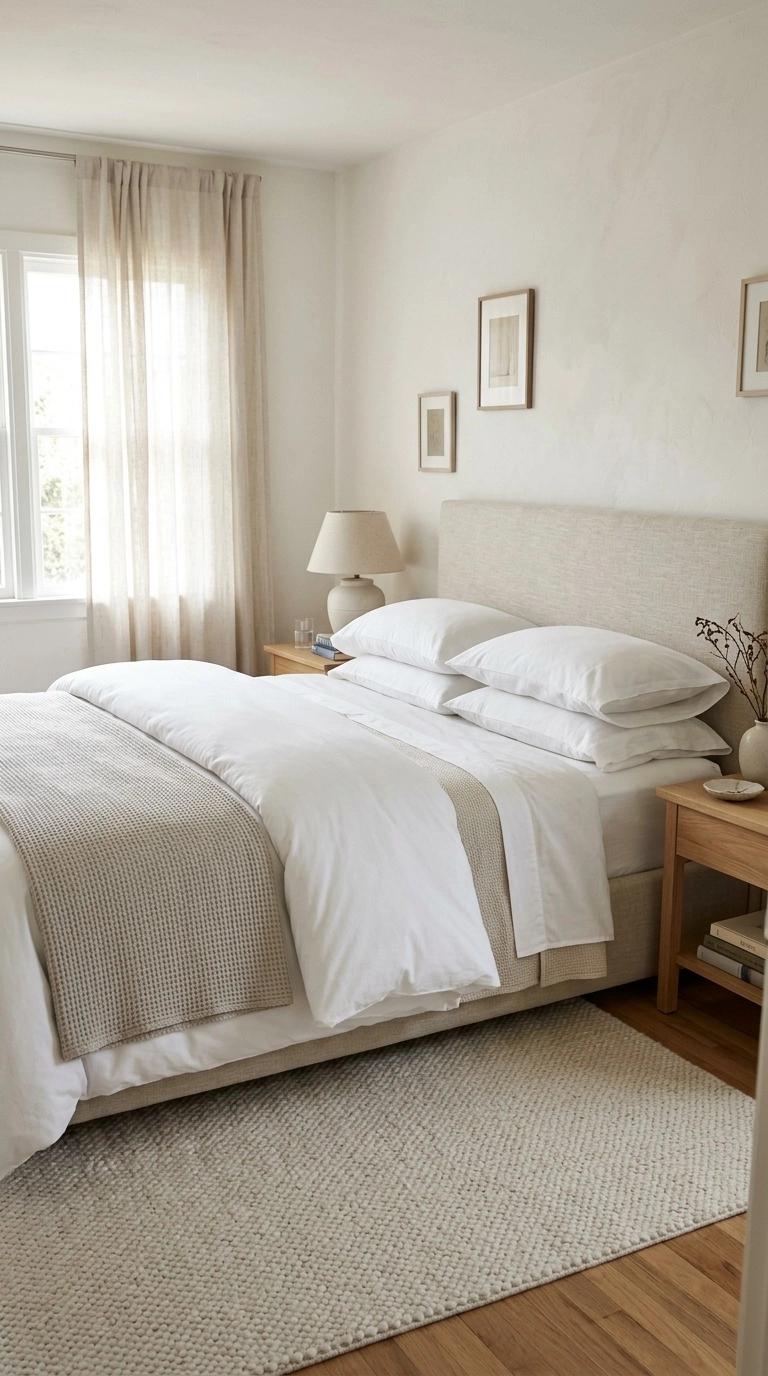
Sheet, duvet, then a folded-back top layer, built in that order every time. White or near white at the base is what makes the bed read as a hotel bed before any colour arrives.
Why It Reads Expensive: Layers signal staff. A bed with visible layers looks serviced, and serviced is the feeling luxury actually sells.
2. Add One Folded Throw Line Across the Foot
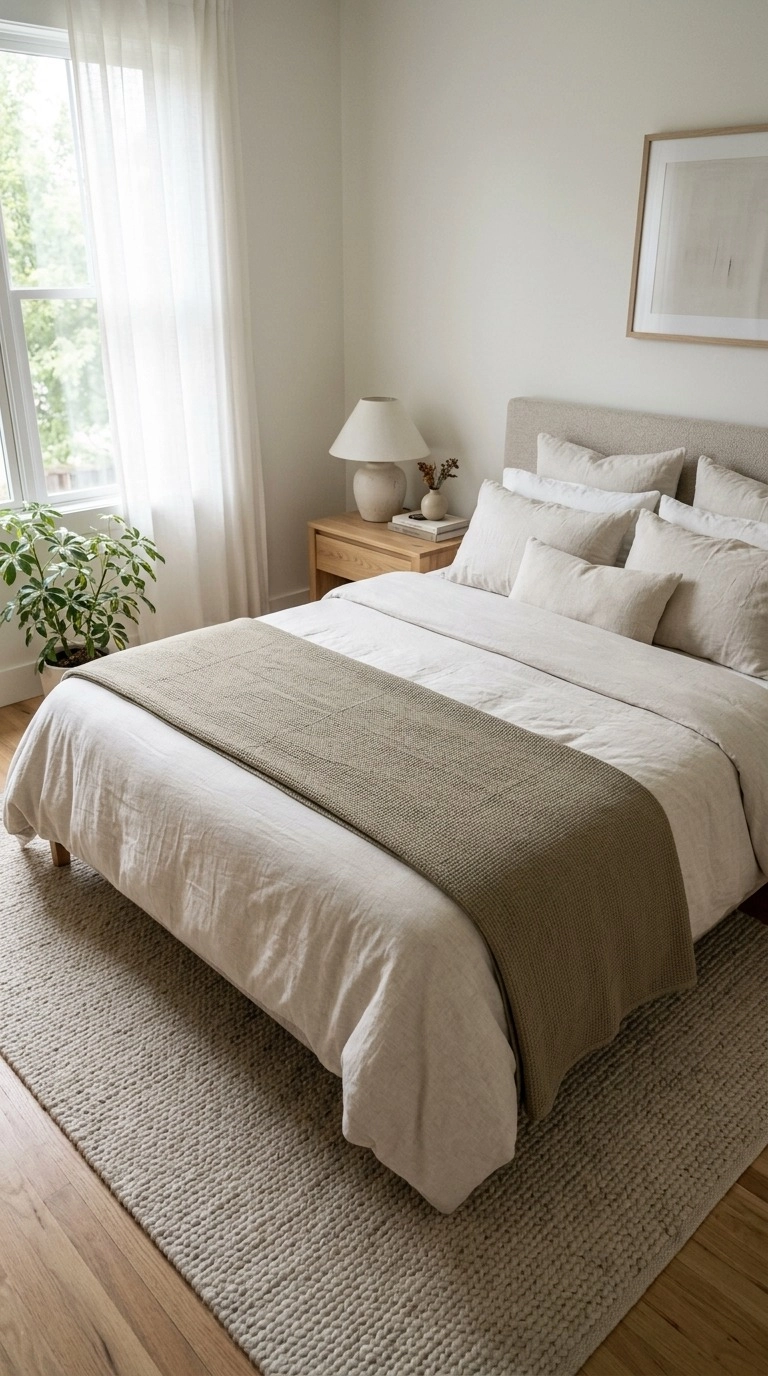
Fold a throw long and narrow and lay it straight across the foot of the bed, edges aligned. It is the single horizontal line in every hotel photograph you have ever saved.
Why It Reads Expensive: It is a deliberate line with no function, and things with no function except looking right are the definition of a styled room.
3. Stand the Pillows Up, Two Rows Deep
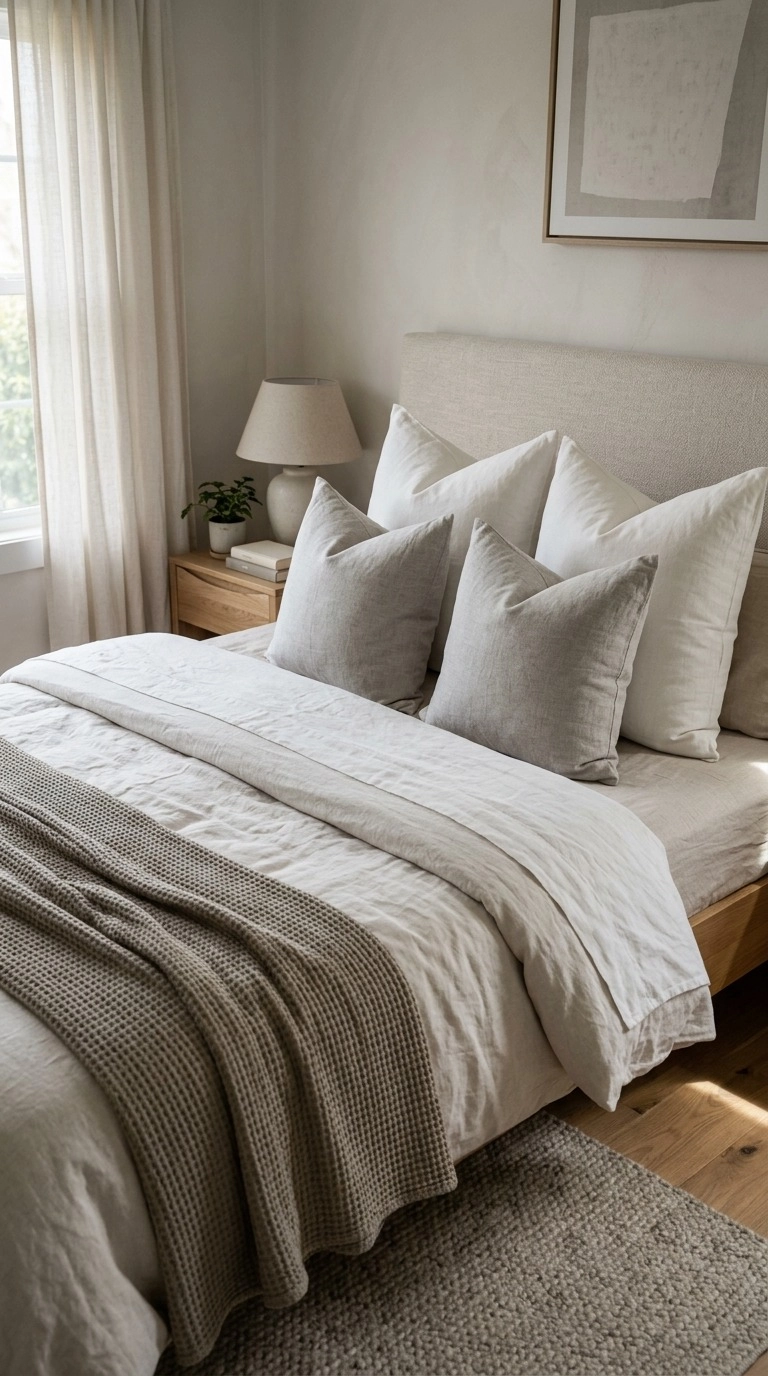
Sleeping pillows standing against the headboard, a second row in front, nothing slumped. Hotels do this because a standing pillow shows its clean face, and clean faces read as new.
Why It Reads Expensive: Depth. Two rows make the bed look upholstered rather than slept in, and it costs one extra pillow sham you probably own.
The Light, Where Hotels Hide The Budget
4. Put Two Matching Lamps, One Each Side
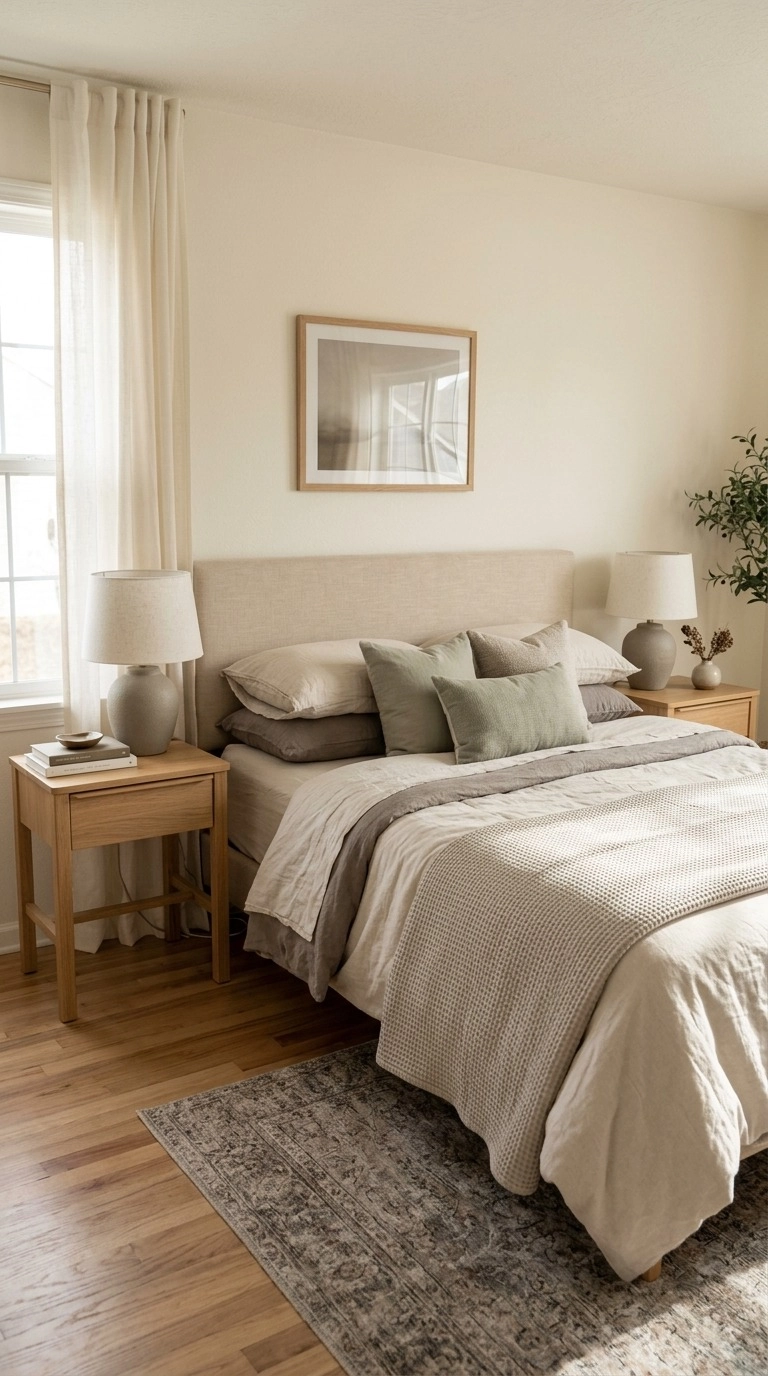
A pair of lamps, matched or near enough, balances the bed from the doorway. If your lamps do not match, swap their shades or move the odd one to another room and borrow its partner.
Why It Reads Expensive: Symmetry is the cheapest form of order. The eye reads a balanced room as a designed room, and designed reads as luxury.
5. Warm Bulbs Only, at One Temperature
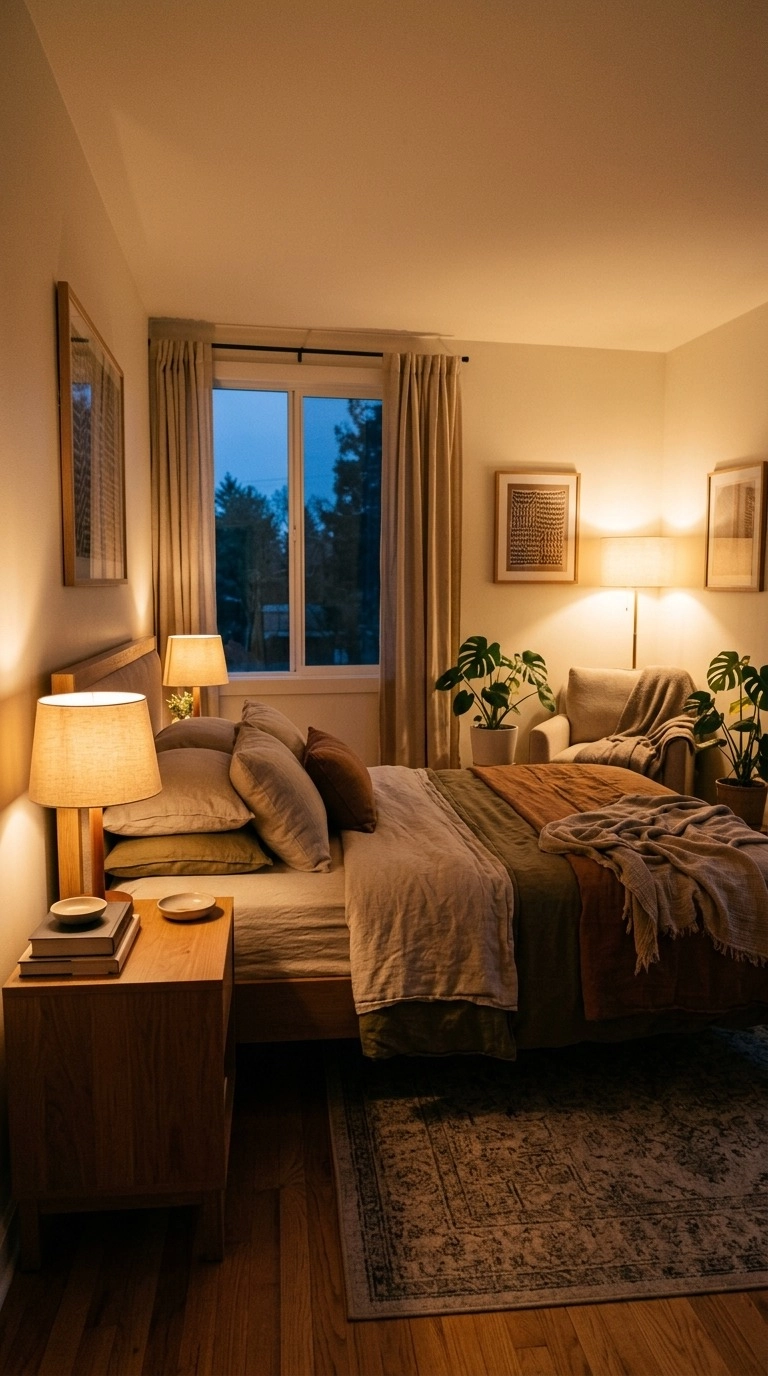
Check every bulb in the room and make them all the same warm temperature. Mixed light, one white and one yellow, is the single most common reason a bedroom looks cheaper than its furniture.
Why It Reads Expensive: Hotels light like cinemas, one warm cast over everything. Uniform light flattens flaws and makes ordinary bedding glow.
6. Keep One Low Light for the Last Hour
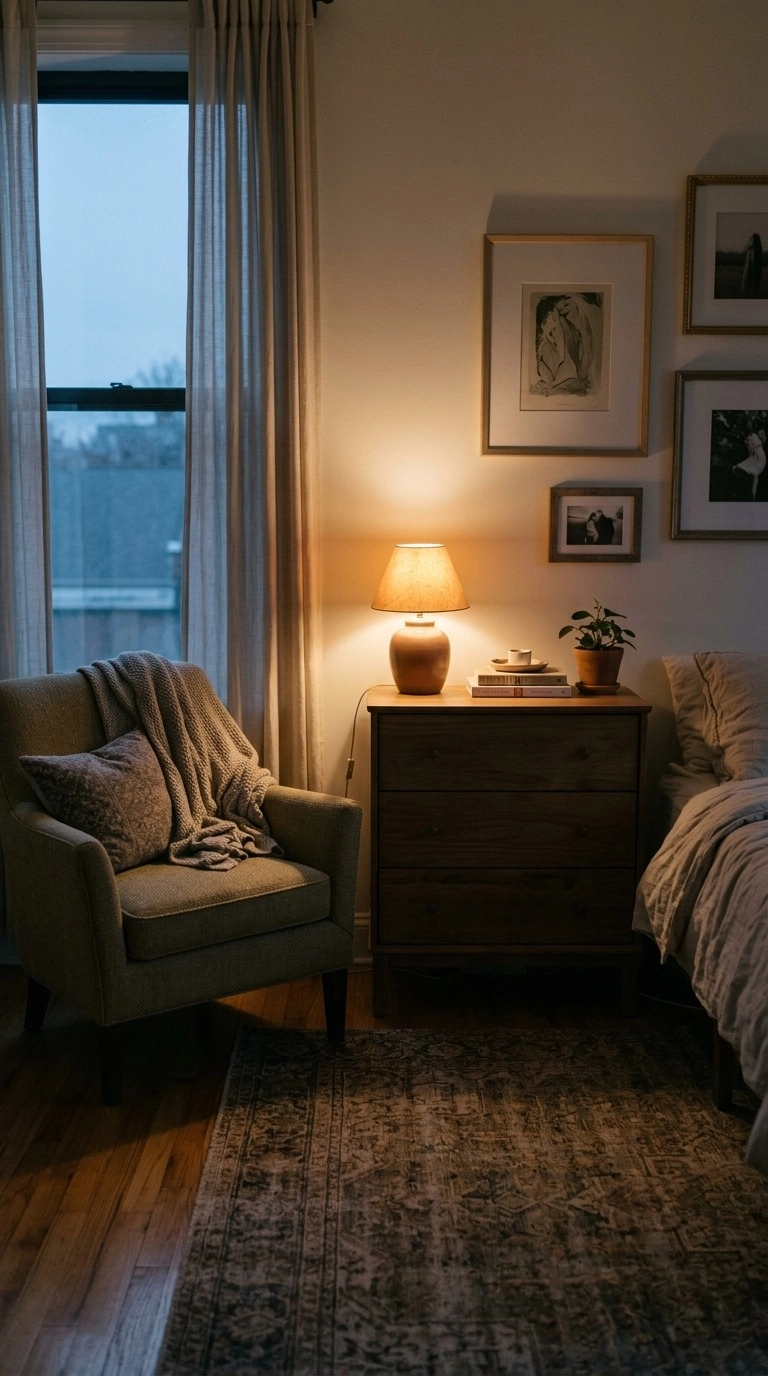
One small lamp low down, on a dresser or by a chair, for the evening wind down. It pulls the room’s light down to sitting height, which is where luxury is actually experienced.
Why It Reads Expensive: Layers of light let the room change mood, and rooms that change mood feel staffed, like someone is tending them.
The Surfaces, Where Hotels Edit Hard
7. Clear the Nightstands to Three Things
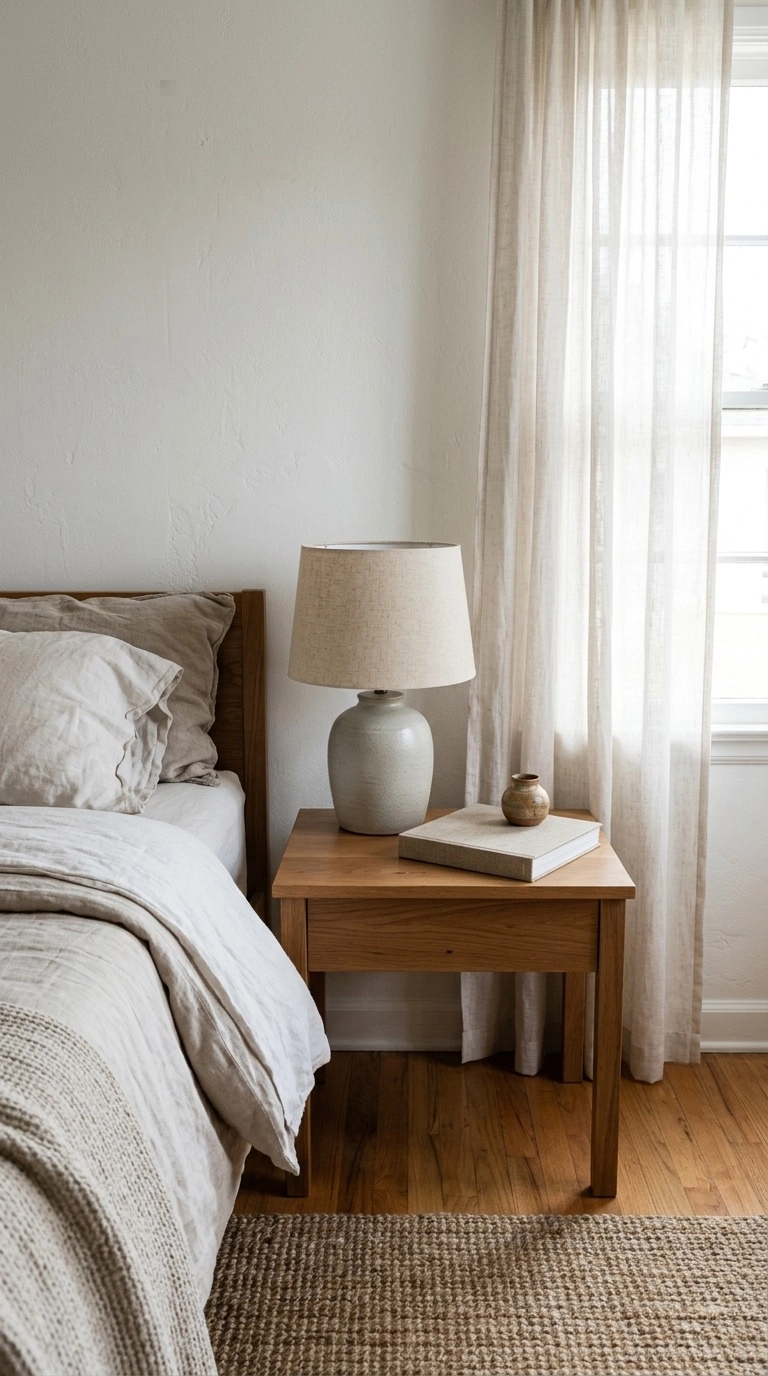
A lamp, a book, one beautiful small object. Everything else goes in the drawer or leaves the room, and the cleared surface becomes the loudest luxury signal in the space. This is also the quickest win in the one day bedroom reset.
Why It Reads Expensive: Empty surface is the one thing money genuinely buys in hotels, space with nothing on it. Copy the emptiness and you copy the price tag.
8. Give Every Small Thing One Tray
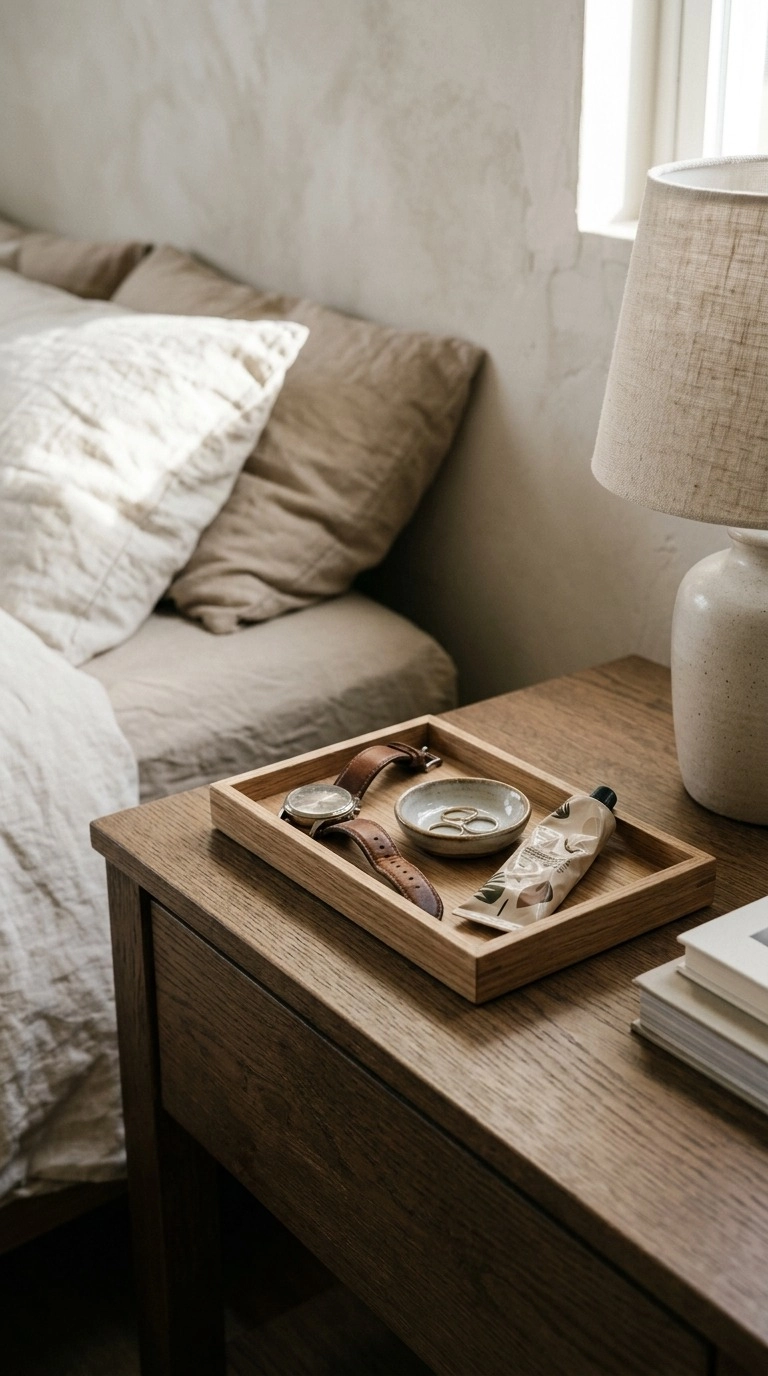
Watch, ring, glasses, hand cream: one small tray or dish holds them all. A tray turns clutter into a collection, and it makes the daily tidy a ten second job.
Why It Reads Expensive: Contained things look curated. The same objects loose on the surface look like a bedside that gave up.
9. Hide the Cables and the Chargers
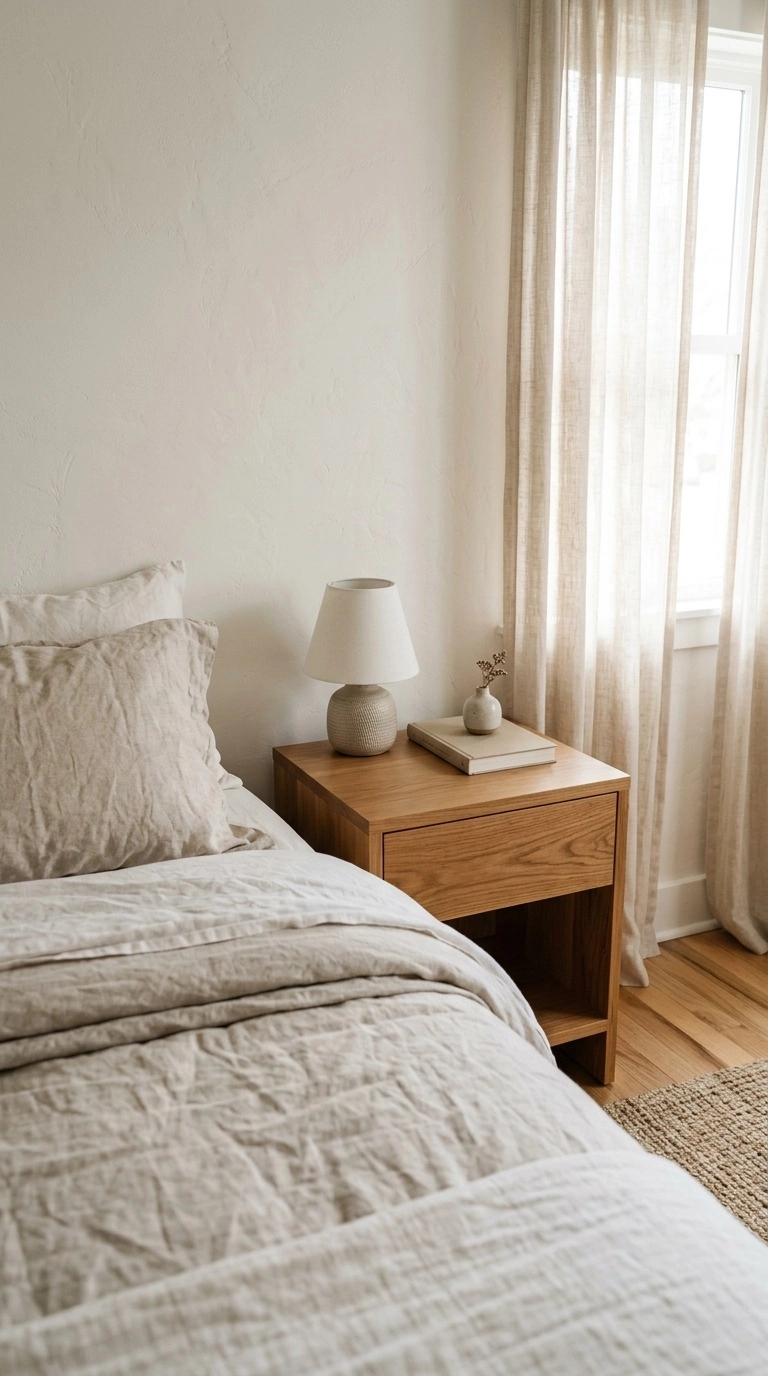
Route charging cables behind the nightstand and charge the phone in the drawer or the hall. Visible cables are modern life leaking into the one room that is supposed to feel like an escape.
Why It Reads Expensive: Hotels hide every wire because wires say backstage. A room with no visible cables looks finished in a way guests feel but cannot name.
The Finish, Where Hotels Cheat Quietly
10. Hang the Curtains High, Wide and to the Floor
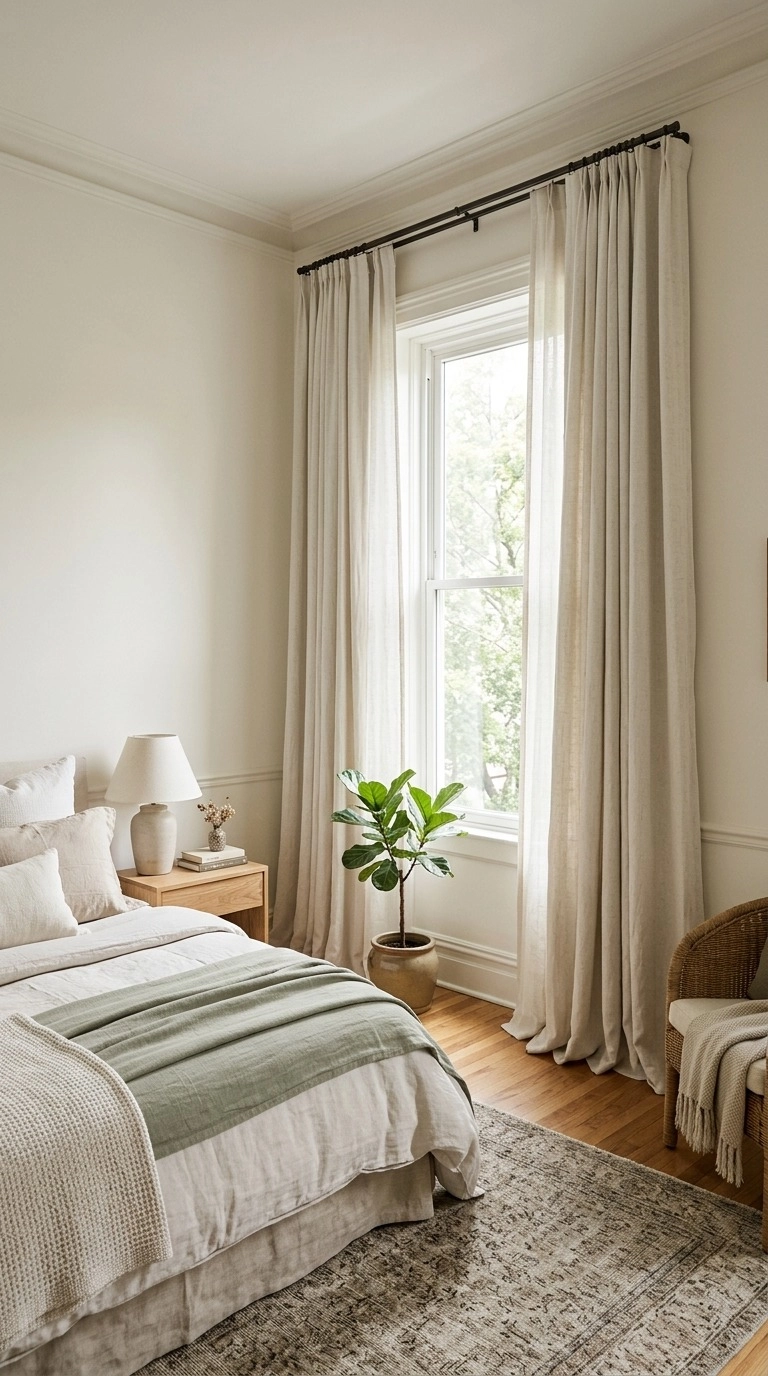
Curtains near the ceiling, wider than the window, just touching the floor. The window grows, the wall grows, and the bed underneath them sits in a taller room than the one you rent or own. Our favourite shapes are in these bedroom curtain ideas.
Why It Reads Expensive: Height is architecture, and architecture is the one thing that cannot be bought at a home store. Borrowing it with fabric is the cheat.
11. One Large Piece Over the Bed, Nothing Else on That Wall
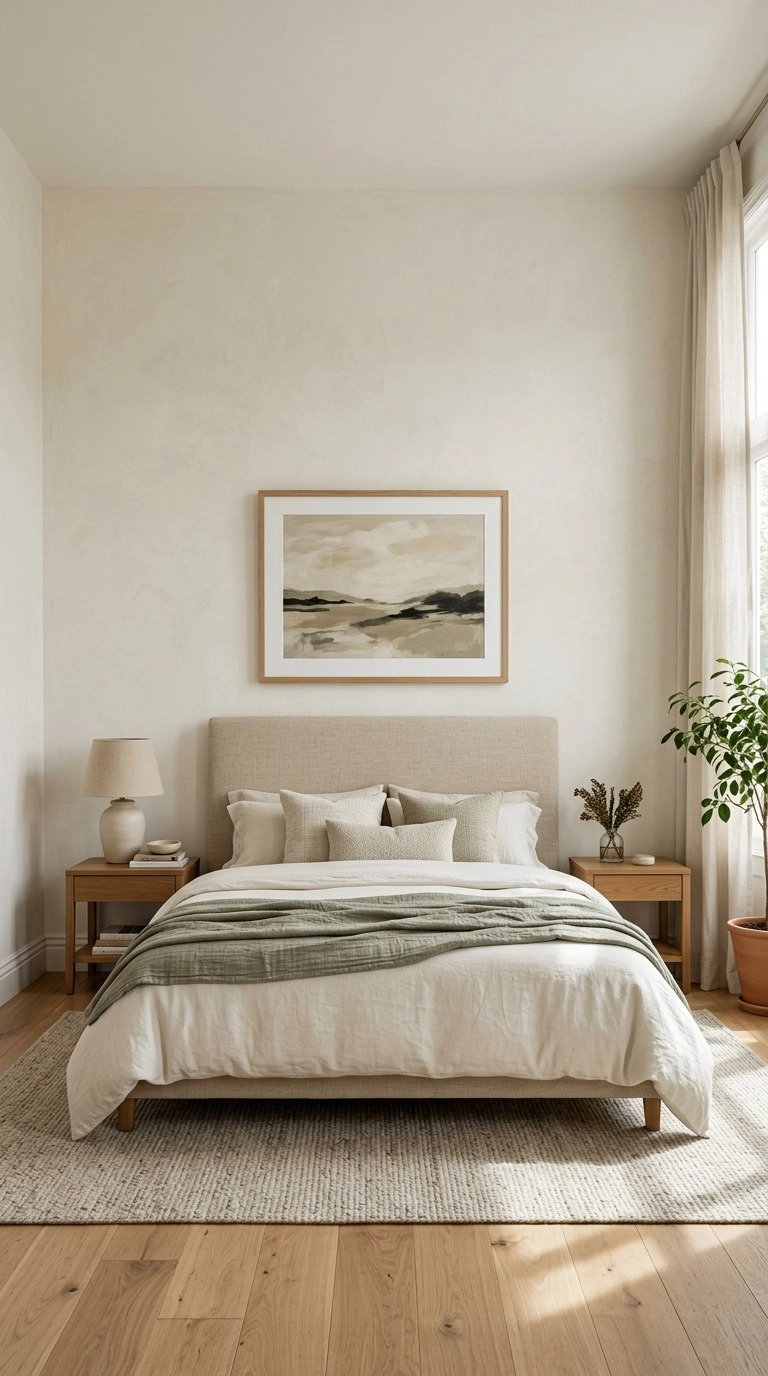
One large frame or textile centred over the headboard, and the rest of the wall left completely bare. Hotels never scatter small frames over a bed; the single piece does the whole job.
Why It Reads Expensive: Restraint around one good thing reads as confidence. A wall of small pieces reads as indecision, whatever they cost.
12. Finish With a Scent and One Rich Texture
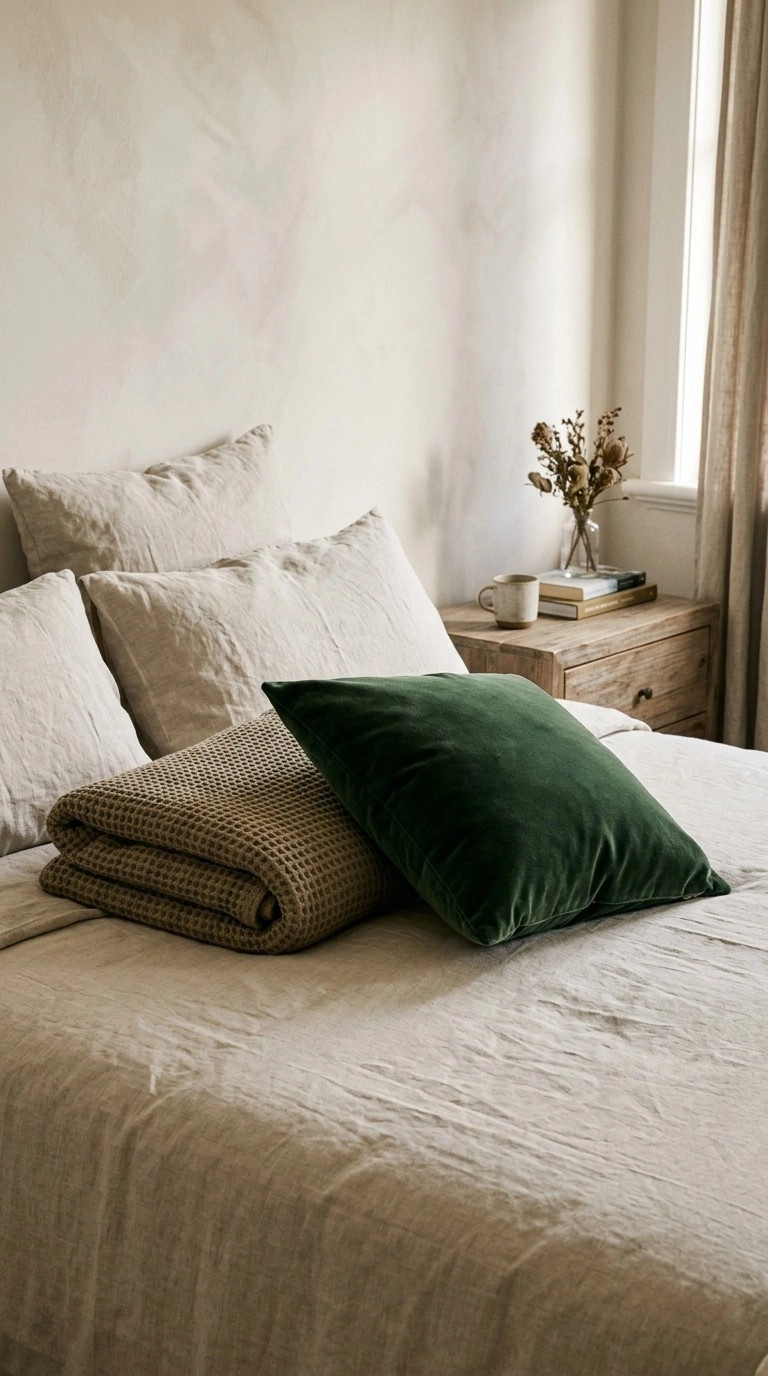
Linen spray on the bedding, or a scented candle on the tray, and one piece in a rich texture, velvet, wool or washed linen, against the plain bed. Two senses hotels manage and homes forget.
Why It Reads Expensive: Luxury is remembered by smell and touch more than by sight. One rich texture against plain layers is the whole boutique hotel trick.
If you do spend a little, spend it here first
- If the room feels cold: spend on two warm bulbs before anything else. Light temperature outperforms new bedding at a tenth of the price.
- If the room feels messy: spend on one tray and a drawer organiser. Containment beats decoration when the problem is clutter.
- If the room feels flat: spend on the throw for the foot of the bed, in the room’s one accent colour. It is the most photographed square metre of the room.
- If the room feels small: spend on curtain length, not furniture. Panels that reach the floor make the wall taller and the room grander.
The Takeaway
Build the bed in layers, pair the light, empty the surfaces, then stop. Hotels do not have better taste than you, they have a shorter list, and now it is yours.