Designing Cozy and Inviting Kitchen Breakfast Nooks for Daily Living
A kitchen breakfast nook provides an intimate, casual dining retreat for morning coffee, family meals, and afternoon work. The version that actually gets used every day looks slightly different from the one that photographs well, and that difference is worth understanding before you build or buy anything. Whether you install an L-shaped built-in banquette bench with hidden storage, pair a tulip pedestal table with curved seating, or soften a window nook with performance linen cushions, space-smart seating makes every corner functional. Here is what works to style kitchen breakfast nooks.
Install an L-Shaped Built-In Storage Bench with Custom Navy Blue Upholstery
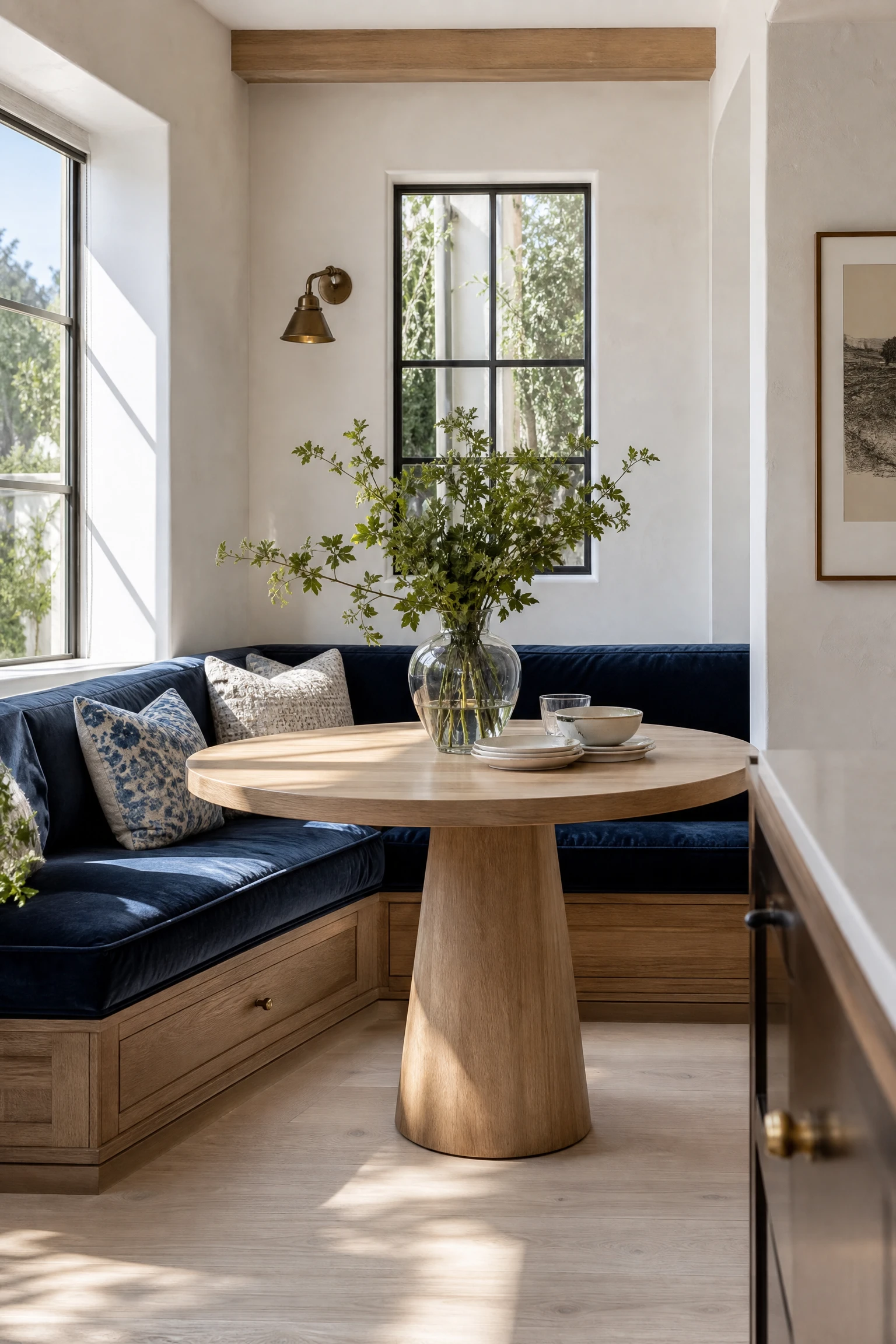
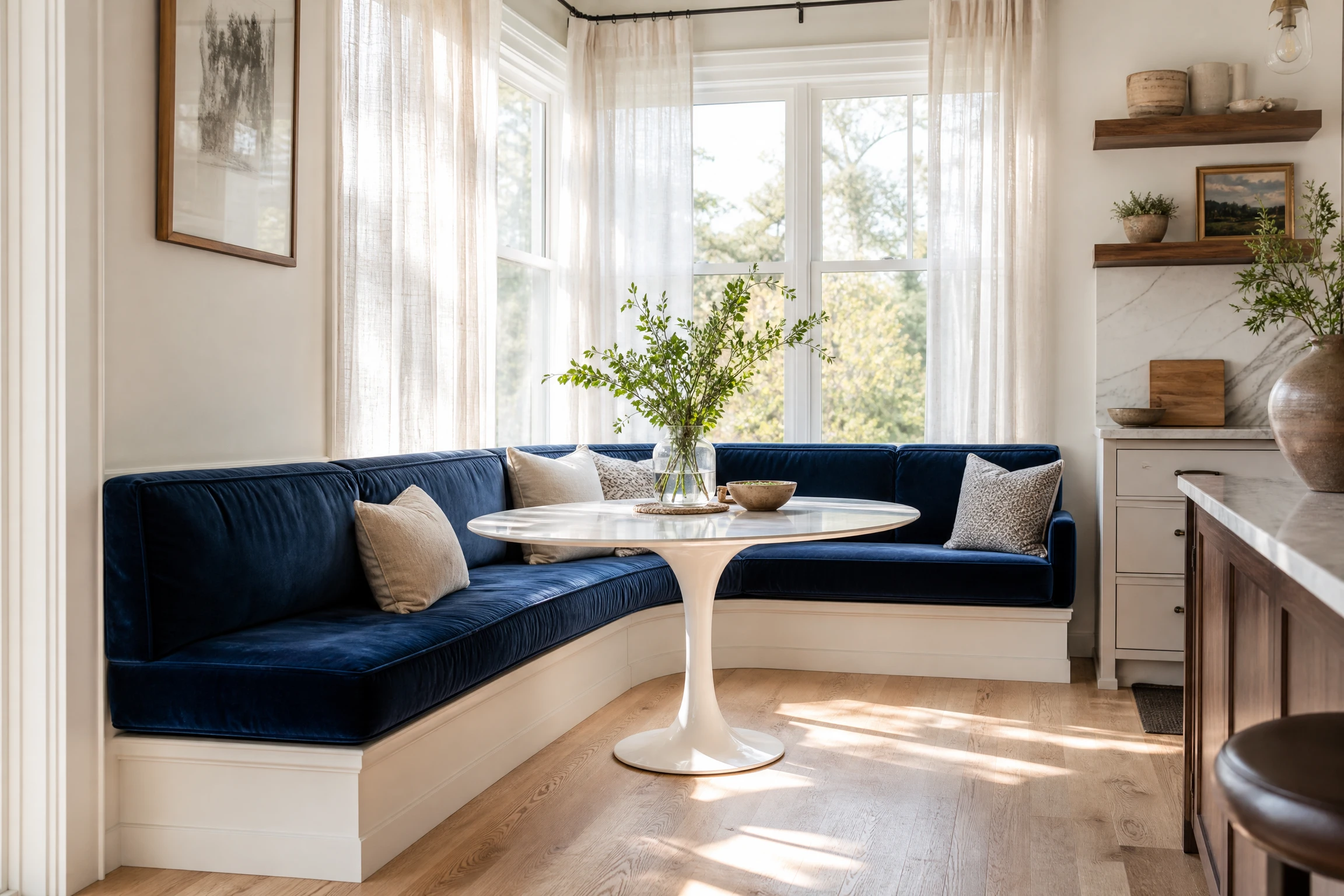
Installing a custom L-shaped built-in bench fitted with navy blue performance velvet upholstery turns tight kitchen corners into functional dining nooks. Deep lift-top storage lids inside the bench keep extra table linens and appliances organized, while dark navy fabric grounds light walls. Pair with a round pedestal table.
DESIGNER ADVICE: Choose stain-resistant performance velvet upholstery for high-traffic breakfast nooks to prevent daily food spill marks.
Pair a Round Tulip Pedestal Table with Curved Banquette Seating
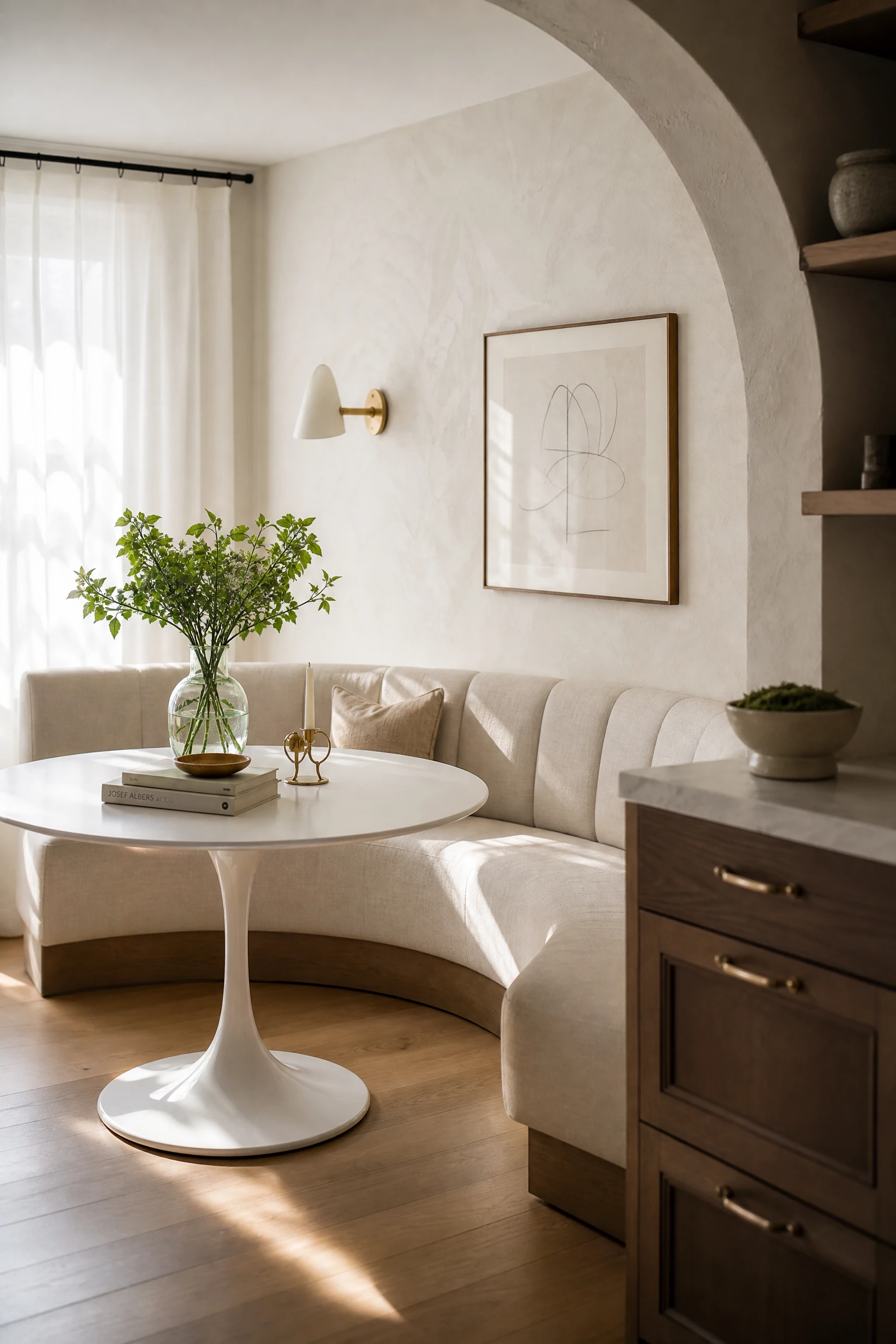
Combining a sleek white tulip pedestal table with a curved banquette bench allows easy leg movement into tight corner seating. The single central pedestal base eliminates obstructive table legs, maximizing seating capacity while maintaining clean modern lines. Accentuate with round throw pillows.
QUICK TIP: Select round pedestal tables rather than four-legged tables to make sliding in and out of banquette benches effortless.
Anchor a Sunlit Window Nook with Striped Linen Bench Cushions
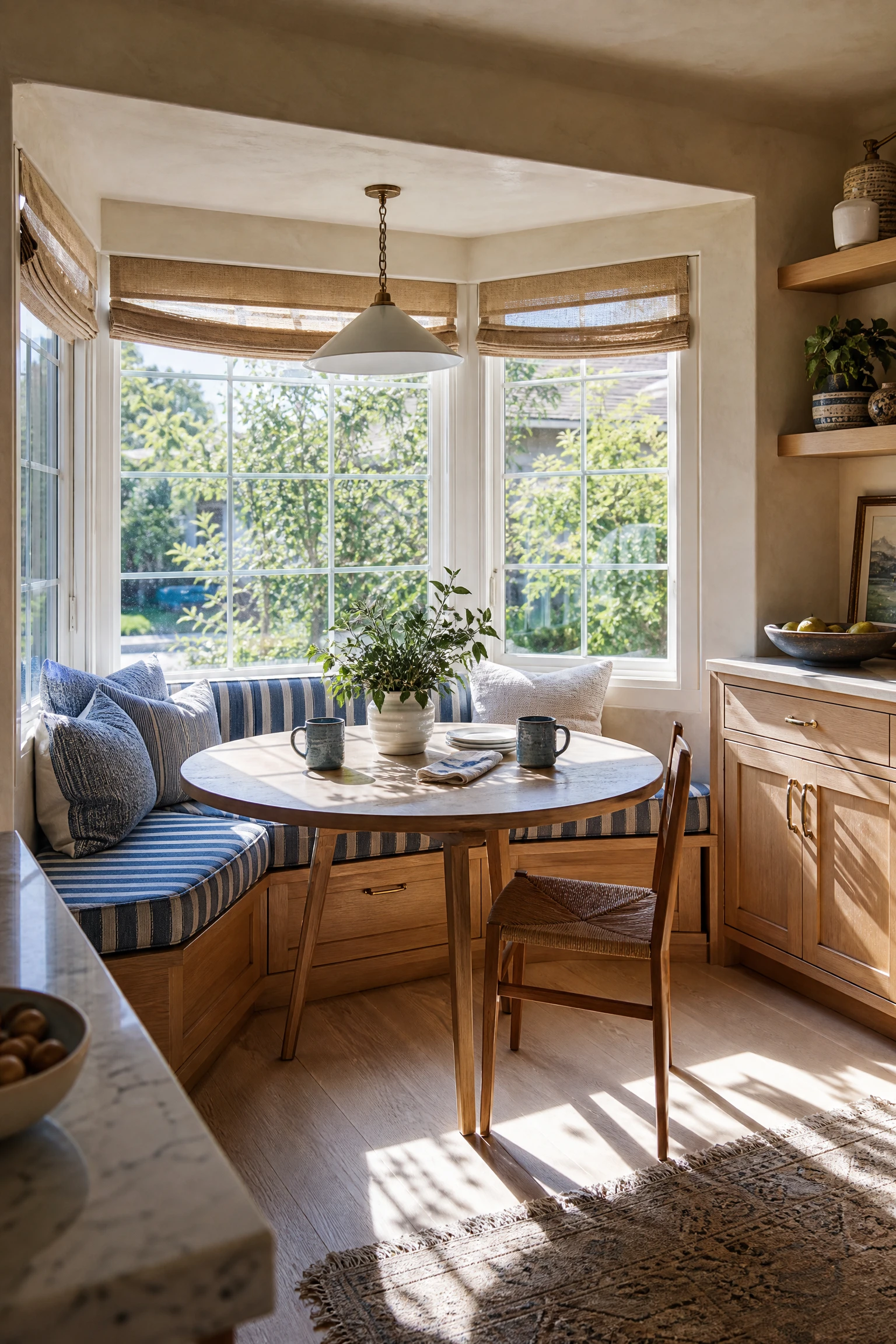
Dressing a sunlit bay window bench in tailored blue and white striped linen cushions introduces casual coastal charm to morning dining areas. The vertical fabric stripes draw the eye toward window views, while natural sunlight brightens pale blue fabric tones. Add a simple wooden dining table.
STYLE SECRET: Use zipper-backed cushion covers so striped linen fabrics can be removed and machine washed easily.
Combine a Rustic Teak Wood Dining Bench with Rattan Wishbone Chairs
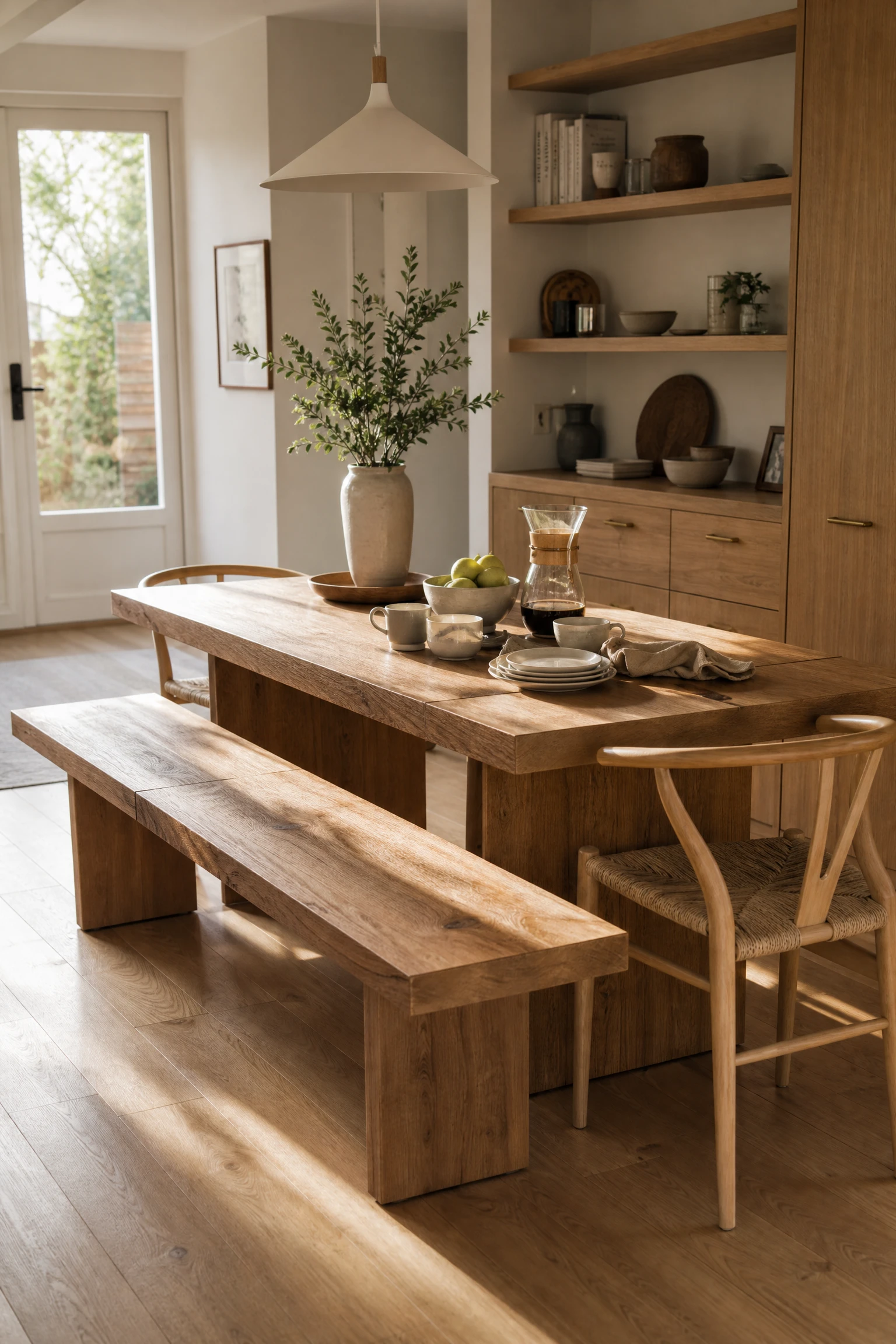
Pairing a solid teak wood bench along one wall with woven rattan wishbone chairs creates an organic, Scandinavian-inspired breakfast setting. The warm honey wood grain of the teak bench balances light rattan seating, offering relaxed dining options for guests. Add a flat-weave wool rug underfoot.
DESIGNER ADVICE: Mix bench seating with open-back wishbone chairs to keep small breakfast nooks from feeling visually crowded.
Add Under-Bench Storage Drawers to Keep Table Linens Organized

Integrating deep pull-out storage drawers into the base of built-in nook benches creates accessible storage for tablecloths and board games. Smooth drawer slides allow quick access without requiring guests to stand up, transforming unused bench cavity space into utility drawers. Use flush wood pulls.
BUDGET HACK: Install drawer dividers inside bench drawers to keep napkin sets and placemats neatly separated.
Frame a Corner Nook with Vertical Off-White Beadboard Paneling
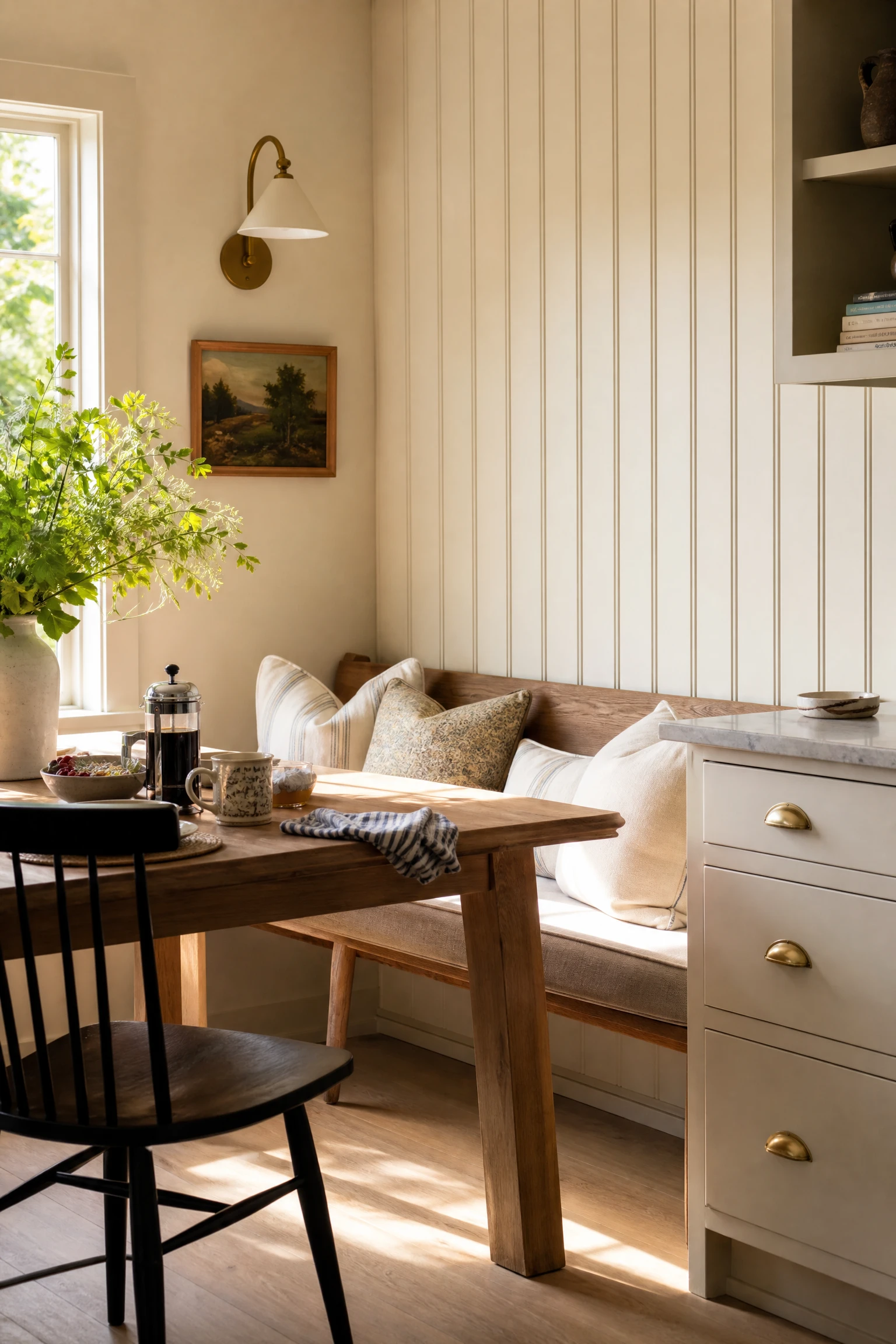
Lining corner nook walls with vertical beadboard paneling painted in soft off-white adds classic cottage character behind bench seating. The vertical grooves draw shadow lines that protect drywall from chair scuffs while adding warm texture to breakfast walls. Top with a thin wood ledge cap.
QUICK TIP: Paint beadboard paneling in satin or semi-gloss enamel for easy wiping behind dining benches.
Hang a Brass Dome Pendant Light Low Over a Round Nook Table

Suspending a wide brushed brass dome pendant light thirty inches above a round breakfast table creates a cozy, golden focal point overhead. The warm metallic shade directs ambient light downward, framing the table surface in a warm glow during dark morning hours. Dimmers allow light control.
QUICK TIP: Hang pendant lights thirty inches above tabletop height to ensure clear sightlines across the table.
Pair Cognac Leather Banquette Seating with a White Marble Tabletop
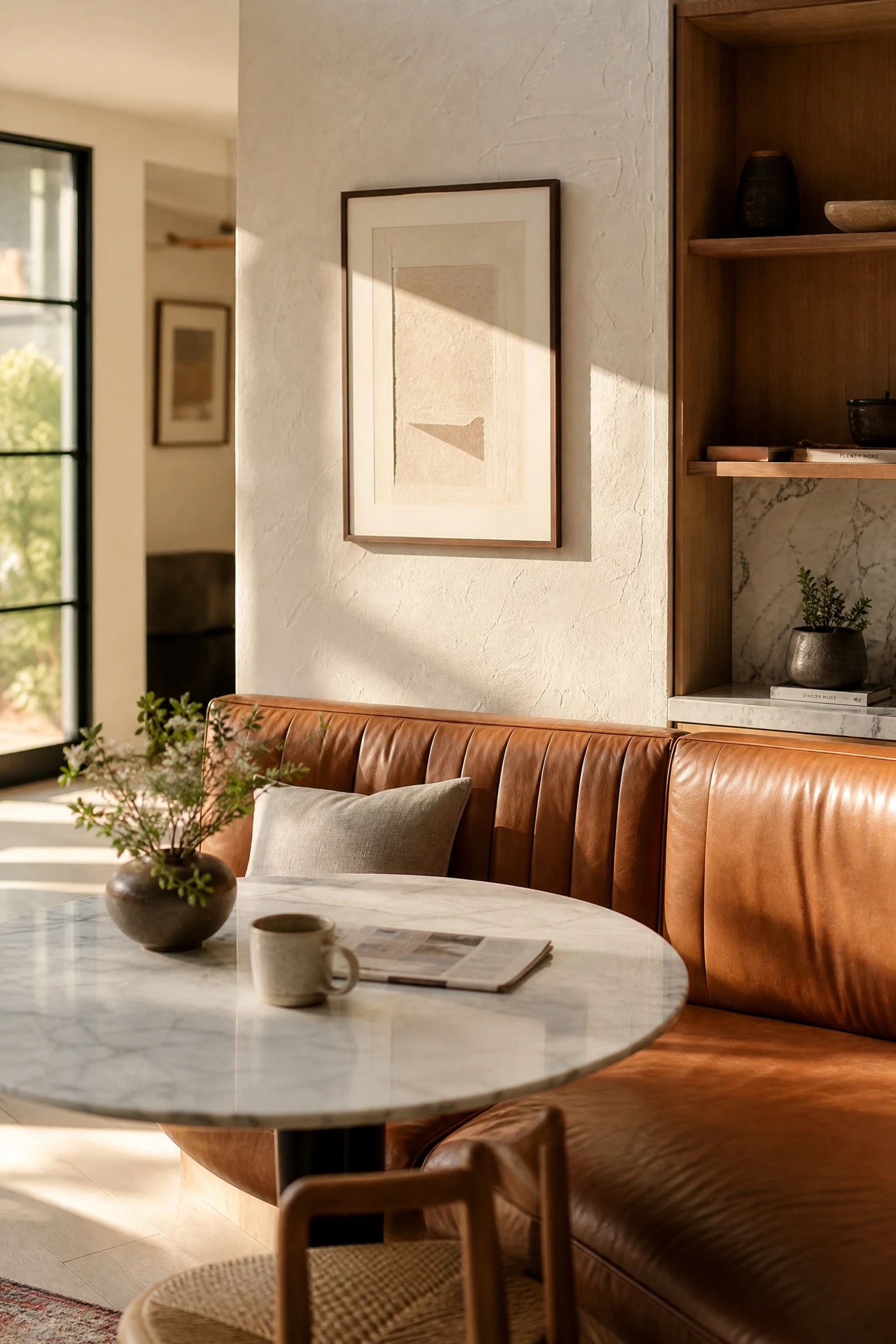
Upholstering a built-in banquette bench in warm cognac leather beside a polished white Carrara marble tabletop establishes an executive cafe aesthetic. The supple tan-brown leather cushions develop a rich patina over time, while bright white marble stone bounces light around dark corners. Add brass accents.
MAINTENANCE RULE: Apply leather conditioner annually to cognac leather banquettes to maintain soft flexibility and prevent cracking.
Install Soft Sage Green Built-In Benches in a Sun-Drenched Bay Window
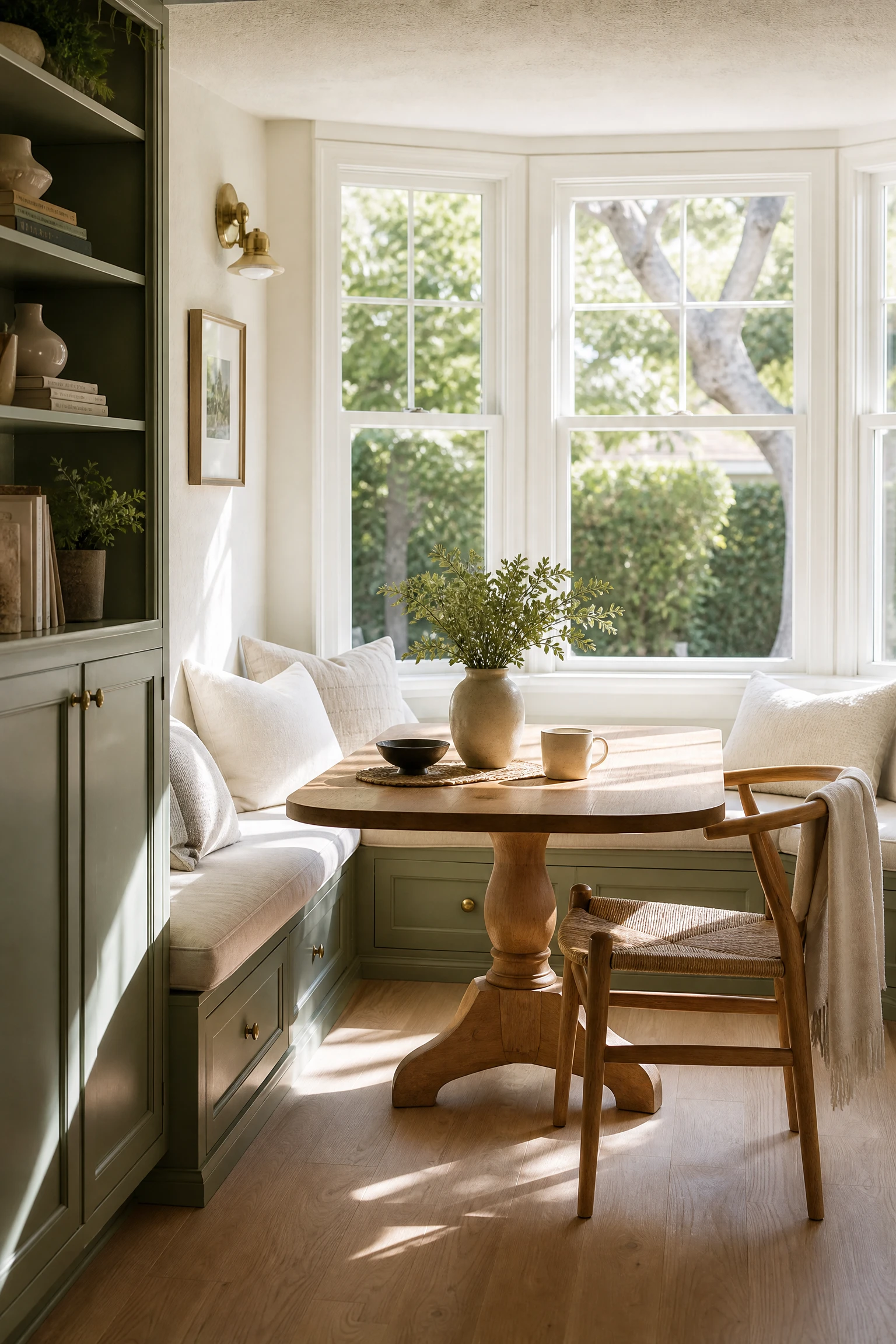
Coating built-in bay window benches in soft sage green paint brings nature-inspired tranquility into sunny breakfast corners. The muted green paint harmonizes with outdoor garden views, creating a soothing spot for reading and drinking coffee. Top with off-white cotton seat cushions.
DESIGNER ADVICE: Pair sage green painted benches with natural light oak tables to emphasize organic material harmony.
Combine Muted Olive Green Painted Wall Paneling with Woven Seagrass Chairs

Lining breakfast nook walls with muted olive green wainscoting paneling beside woven seagrass dining chairs builds an earthy, organic retreat. The rich olive wall paint sets a calm background, while natural plant-fiber seagrass weaving introduces tactile warmth under window daylight.
STYLE SECRET: Choose woven seagrass chairs with removable linen seat pads for easy cleaning after meals.
Add Tufted Velvet Backrest Cushions Behind Built-In Wooden Bench Seats
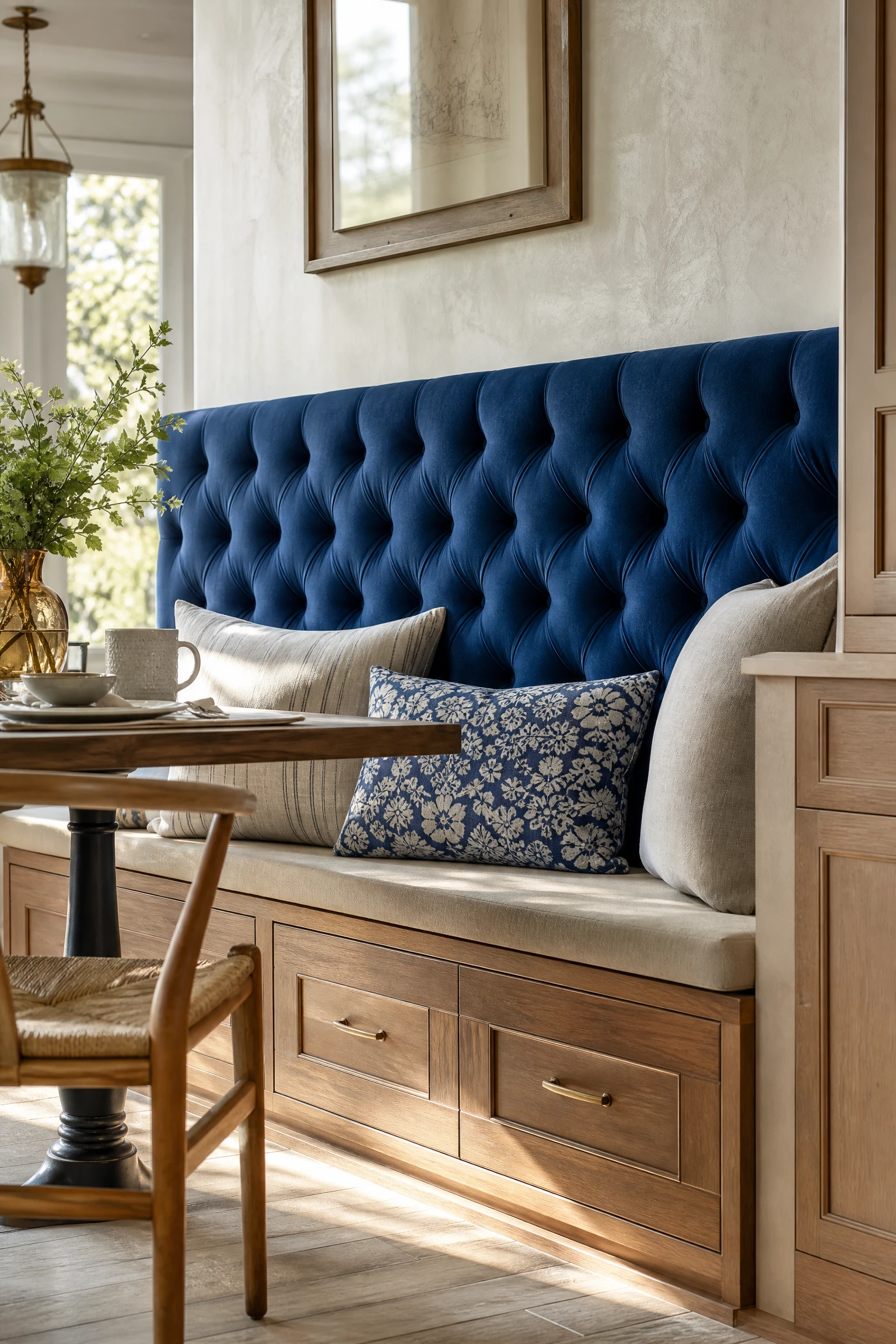
Mounting button-tufted velvet backrest cushions directly onto walls behind wooden bench seats adds plush ergonomic back support. The deep button tufting catches room light, elevating simple wooden bench boxes into luxurious upholstered banquettes. Choose warm jewel tones like sapphire.
QUICK TIP: Hang backrest cushions on concealed french cleats for easy removal during deep cleaning.
Pair a Compact Oval Pedestal Table with French Bistro Chairs

Positioning a narrow oval pedestal table with woven French bistro chairs maximizes seating space in tight rectangular kitchen alcoves. The curved ends of oval tables allow smooth traffic flow around corners, while lightweight bistro chairs move easily as needed. Use woven cane seats.
QUICK TIP: Select oval tables for narrow alcoves to gain surface length without blocking side walkways.
Frame Nook Windows with Sheer Off-White Roman Linen Shade Blinds
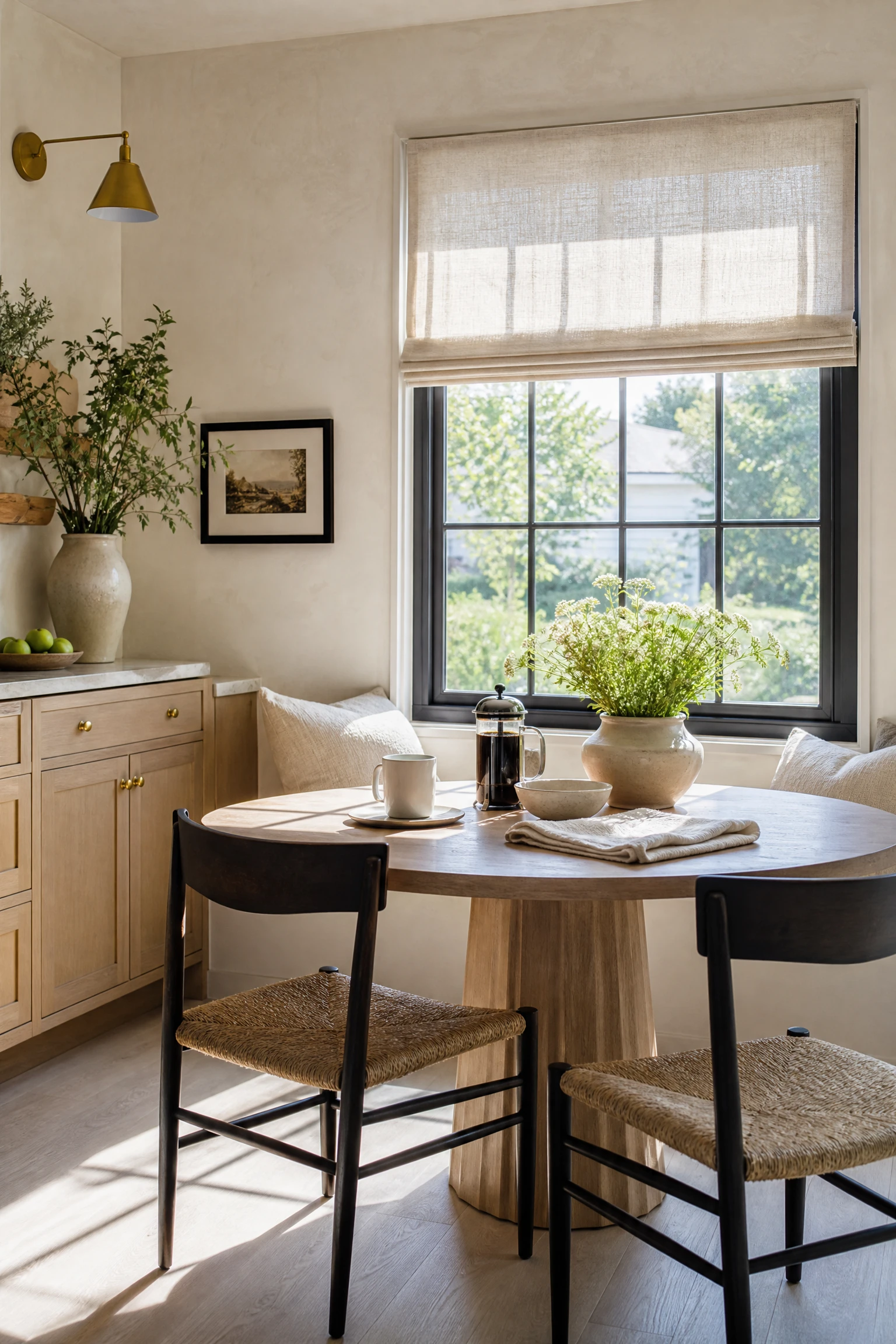
Installing tailored Roman shade blinds in sheer off-white linen over breakfast nook windows filters harsh morning glare into a soft golden glow. The structured fabric folds stack neatly overhead when raised, keeping window sills open for small potted herbs. The linen drapes softly.
MAINTENANCE RULE: Vacuum linen Roman shades periodically with brush attachments to remove dust from fabric folds.
Add Stain-Resistant Performance Fabric to Family Nook Bench Cushions
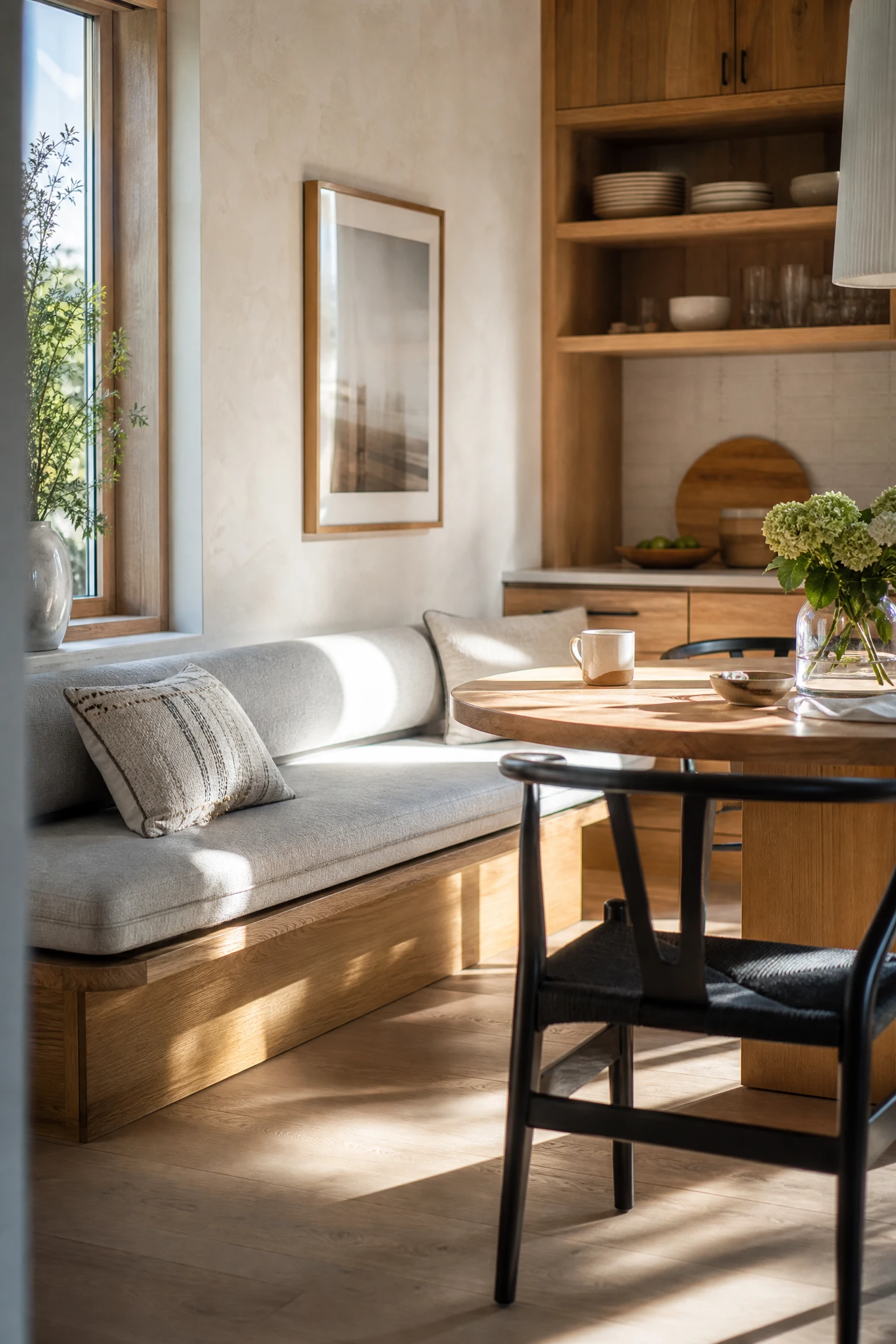
Upholstering family breakfast nook bench cushions in Crypton or Sunbrella performance fabric guards against liquid spills and food stains. The liquid-repellent fabric weave allows accidental coffee or juice spills to bead on the surface for easy wiping. It withstands heavy daily use.
MAINTENANCE RULE: Blot spills immediately with clean microfiber cloths to maintain liquid repellency on performance fabrics.
Hang a Gallery Wall of Gold-Framed Botanicals Above Corner Banquettes

Arranging a symmetrical gallery wall of small gold-framed botanical art prints above a corner banquette turns empty walls into a focal point. The metallic gold frames reflect room light, while green botanical illustrations bring natural garden motifs indoors. Space frames evenly.
STYLE SECRET: Maintain two inches of space between picture frames to keep gallery walls looking organized.
Combine Dark Walnut Bench Seating with a Chunky Cream Wool Area Rug

Anchoring a rich dark walnut wood bench on a thick cream wool area rug establishes a cozy, high-contrast dining nook base. The plush off-white wool loops cushion feet underfoot, while dark chocolate walnut timber brings grounded elegance. Use low-pile wool rugs for easy vacuuming.
MAINTENANCE RULE: Vacuum wool rugs using suction-only settings to avoid pulling loop fibers near dining chairs.
Pair a Powder Blue Painted Built-In Bench with Honey Oak Tables

Coating built-in nook benches in soft powder blue paint creates a cheerful pastel retreat beside warm honey oak tables. The light blue paint shade brightens compact alcoves, while golden honey oak wood brings organic warmth to morning breakfast routines. Add white pillows.
BUDGET HACK: Repaint existing wooden benches in powder blue sample paint for an instant, budget-friendly nook update.
Install Hidden Electrical Outlets inside Nook Bench Bases for Laptops

Installing pop-up or flush-mounted electrical power outlets inside the lower base of built-in nook benches creates a modern work-from-home station. Hidden power ports keep laptop chargers and phone cords organized under the table, allowing the nook to function as a home office.
SAFETY WARNING: Ensure electrical outlets installed inside wooden benches are fitted with tamper-resistant covers for safety.
Pair a Pedestal Table with Rattan Barrel Armchairs for Coastal Style
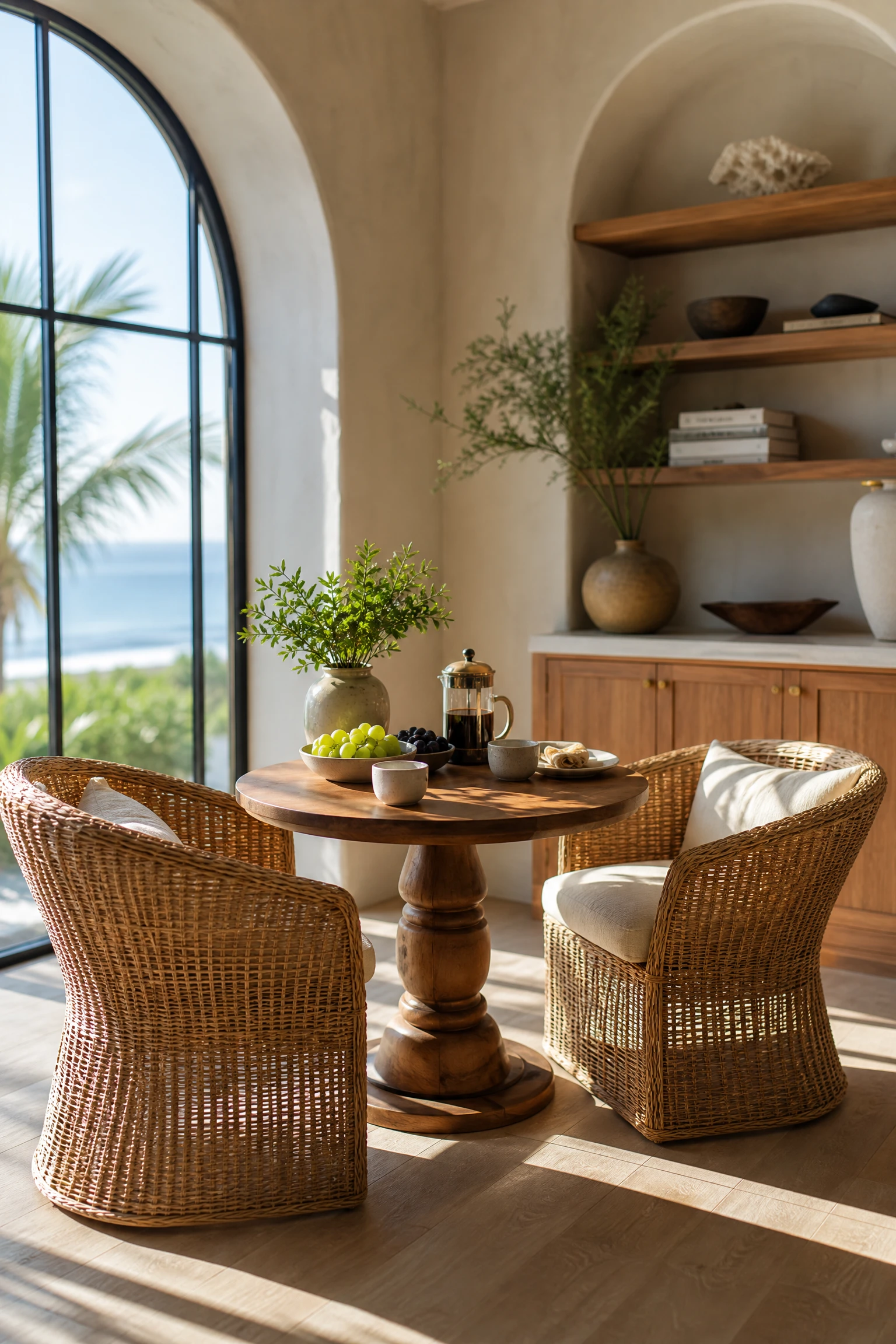
Flanking a round wooden pedestal table with woven rattan barrel armchairs brings relaxed beach resort style to kitchen dining corners. The curved rattan backrests cradle guests comfortably, while open plant-fiber weaving allows light to filter through. Add soft linen cushions.
DESIGNER ADVICE: Use rounded barrel chairs in small nooks to soften square architectural wall lines.
Add Plaid Woven Throw Pillows Across a Rustic Cottage Bench

Arranging textured plaid wool throw pillows across a wooden cottage bench introduces cozy tartan patterns and seasonal warmth. The rustic woven plaid fabric adds tactile comfort for long morning conversations over coffee. Swap pillow covers seasonally.
BUDGET HACK: Swap throw pillow covers seasonally to refresh breakfast nook colors without buying new furniture.
Combine a Midnight Blue Banquette Bench with Brushed Brass Sconces

Flanking a dark midnight blue velvet banquette bench with wall-mounted brushed brass arm sconces builds an opulent evening dining nook. The golden brass sconces direct warm light down onto dark blue velvet cushions, creating a dramatic restaurant lounge mood. Use warm 2700K bulbs.
DESIGNER ADVICE: Install sconce lights with adjustable swing arms to direct light precisely where needed.
Frame Nook Seating with Light Oak Floorboards and Pale Plaster Walls
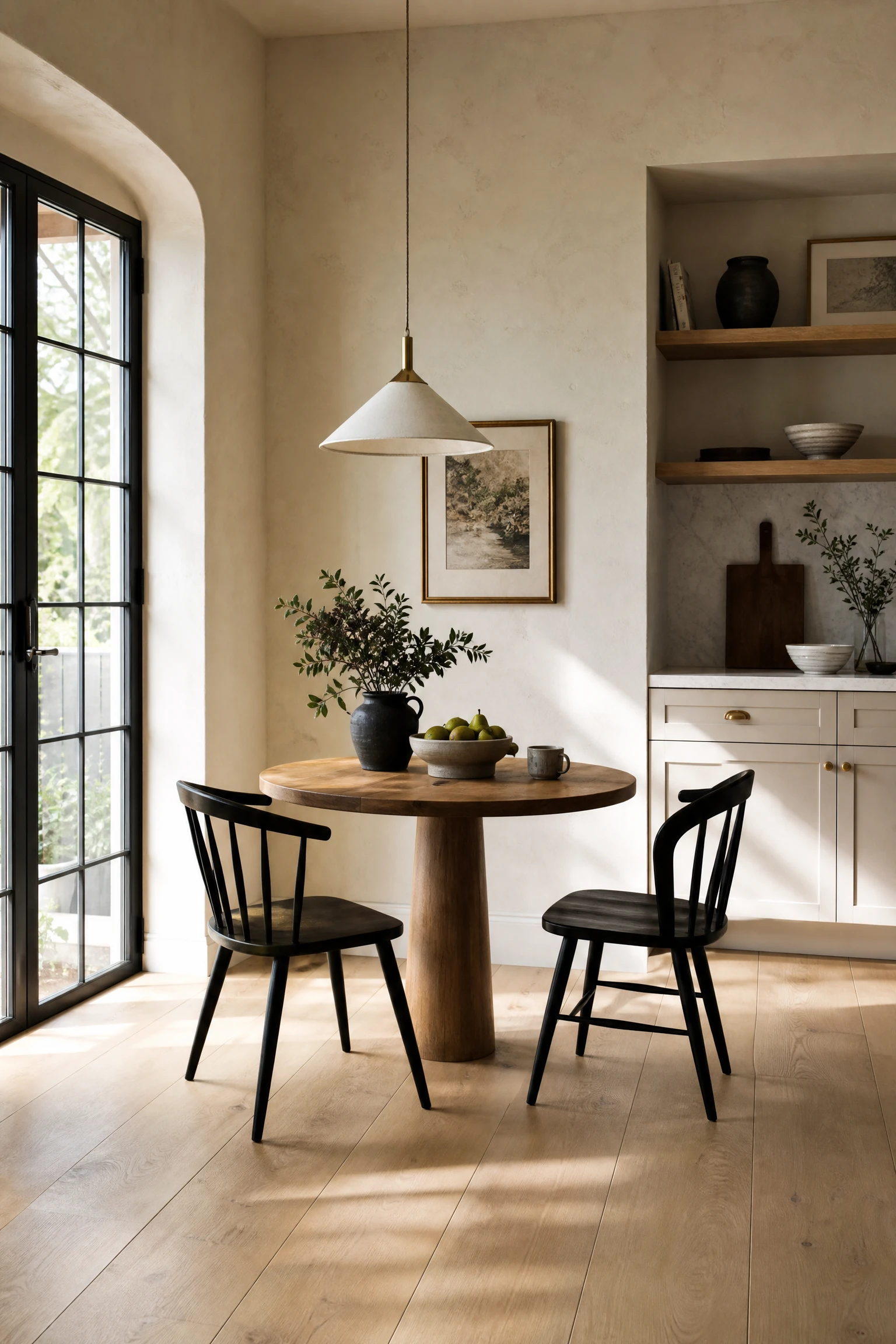
Setting breakfast nook furniture over wide-plank light oak floors beneath pale lime-wash plaster walls establishes a Scandinavian foundation. The light wood floors bounce natural sunlight upward, illuminating simple wooden tables and keep small spaces feeling airy. Add simple ceramic decor.
MAINTENANCE RULE: Apply clear matte polyurethane to light oak floors to protect wood from dining spills.
Install Fluted Wood Slat Paneling Around Curved Nook Walls

Lining curved breakfast nook walls with vertical fluted oak slat paneling introduces architectural texture and warm acoustic damping. The vertical wood slats draw subtle shadow lines around banquette seating, elevating plain drywall with modern Scandinavian warmth. Finish in clear matte varnish.
QUICK TIP: Use flexible acoustic felt backing behind fluted wood slats to absorb kitchen echo.
Pair a White Marble Pedestal Table with Black Spindle-Back Chairs
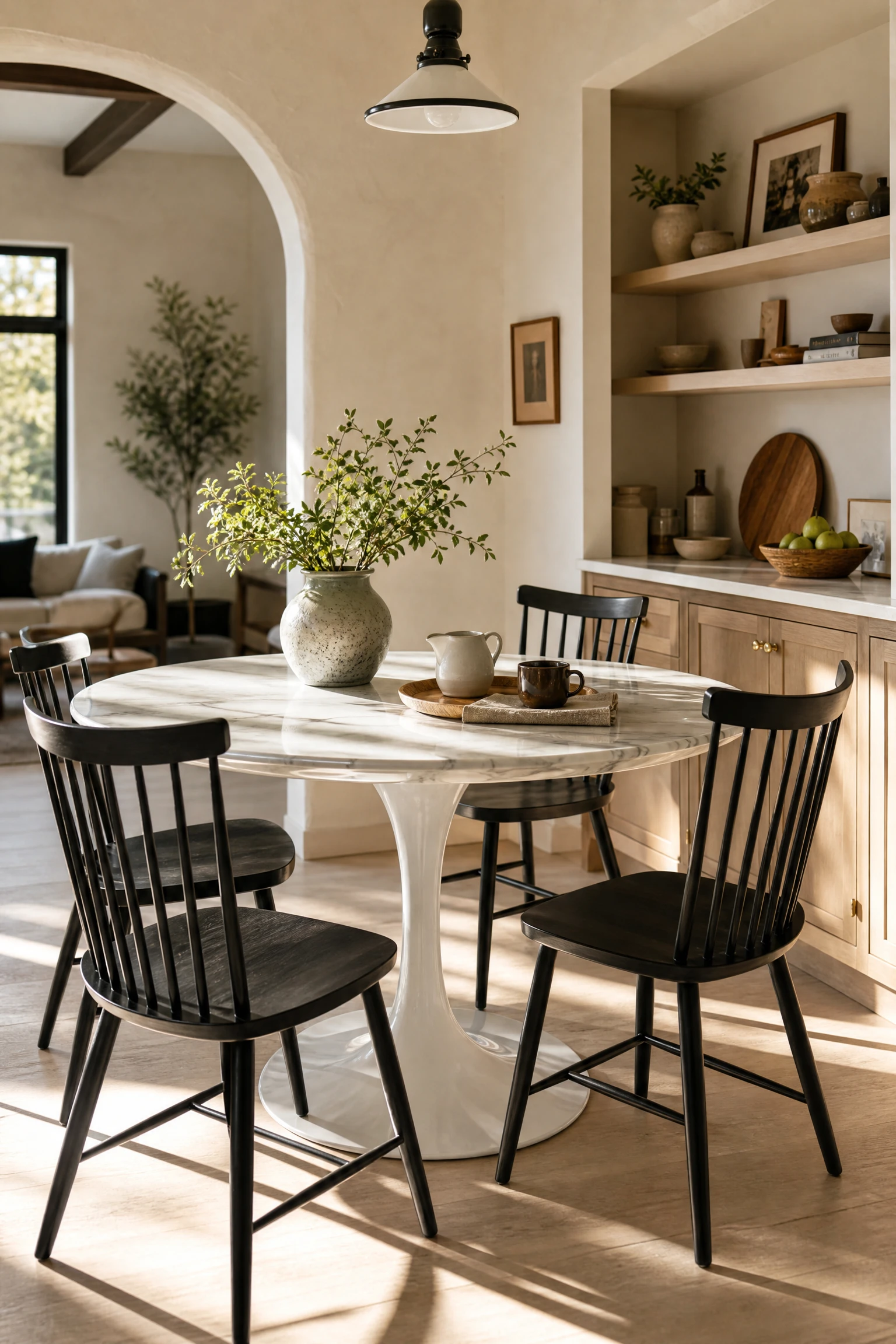
Pairing a round white Carrara marble pedestal table with traditional black wood spindle-back chairs creates a crisp, high-contrast dining layout. The slim black spindle chair backs add graphic vertical lines, while the white marble table top reflects morning sunlight. Add a simple vase.
DESIGNER ADVICE: Use black spindle chairs to ground light white marble tables without blocking light.
Add a Folding Drop-Leaf Table Top for Space-Saving Small Nooks
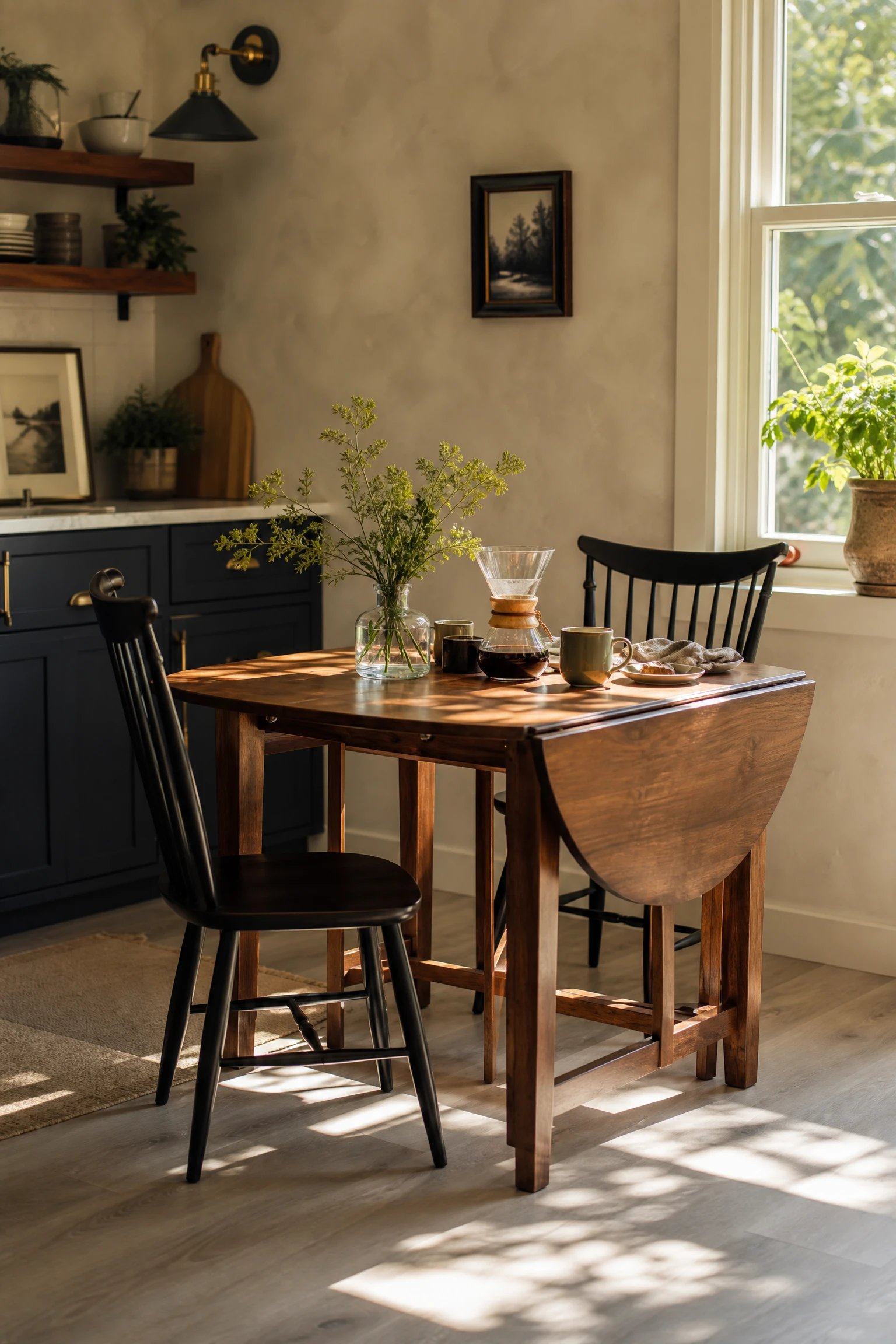
Installing a solid wood drop-leaf table in compact kitchen nooks allows the tabletop to expand for meals and fold down flat when finished. The collapsible side leaves free up valuable floor space in small apartments while offering full dining capacity when raised. Use sturdy hinges.
BUDGET HACK: Mount drop-leaf tables directly to walls in ultra-compact kitchens to eliminate table legs completely.
Combine Terracotta Floor Tiles with Cream Banquette Cushions

Laying down rustic square terracotta clay floor tiles beneath cream banquette seat cushions creates a warm Mediterranean breakfast retreat. The rusty red-orange clay tiles echo natural earth tones, while soft cream cushions lighten the lower room space. Add brass lighting.
SAFETY WARNING: Seal terracotta floor tiles with clear masonry sealer to guard clay against food grease.
Hang a Woven Rattan Drum Pendant Light Above a Country Cottage Nook
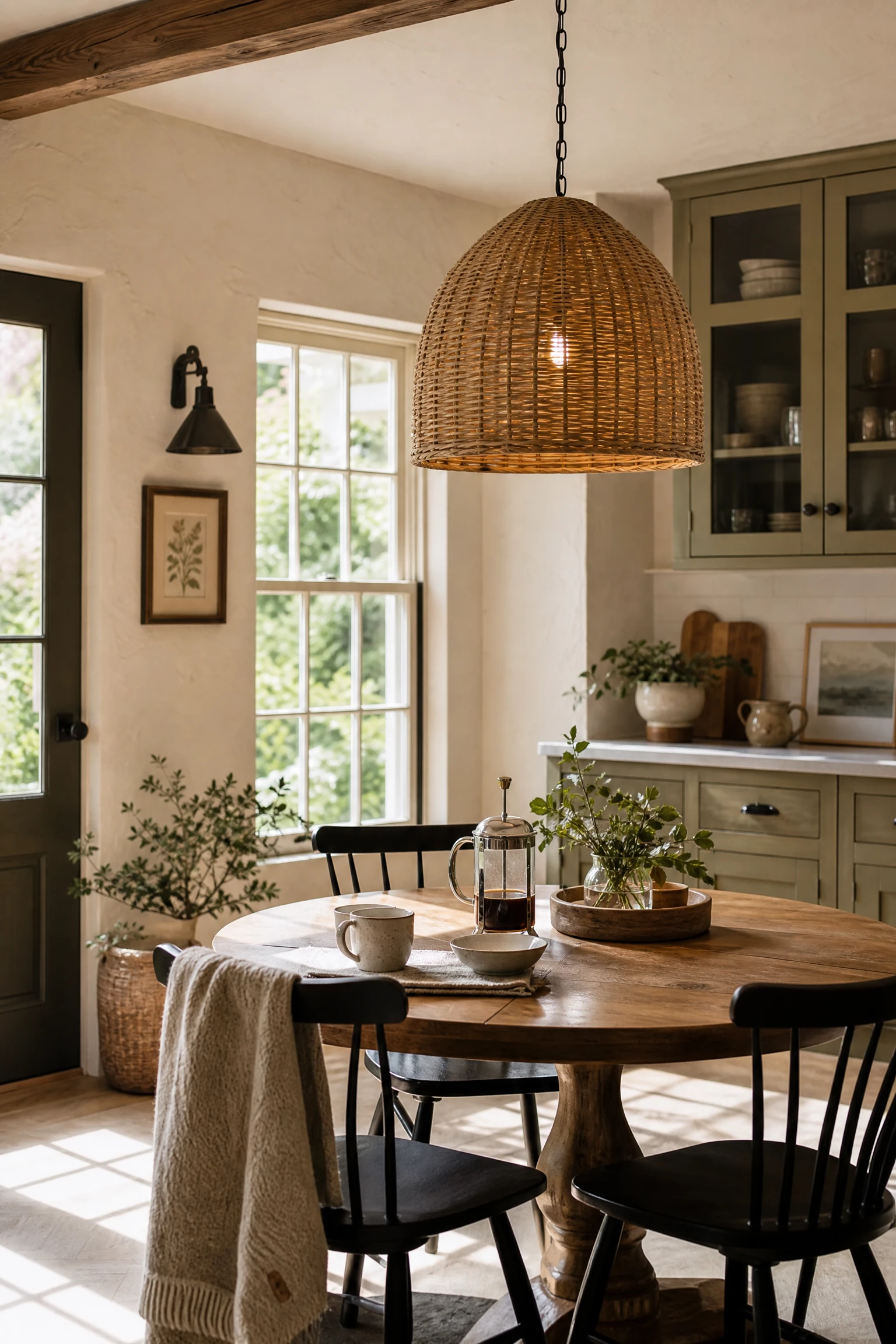
Suspending a wide woven natural rattan drum pendant light over a wooden cottage nook table adds casual plant-fiber texture. The open rattan weaving casts warm patterned light shadows across the tabletop, creating a relaxed atmosphere for family breakfasts. Use warm LED bulbs.
QUICK TIP: Choose dimmable LED bulbs inside rattan pendant lights to control evening light ambiance.
Pair Charcoal Grey Leather Bench Seating with Light Ash Wood Tables
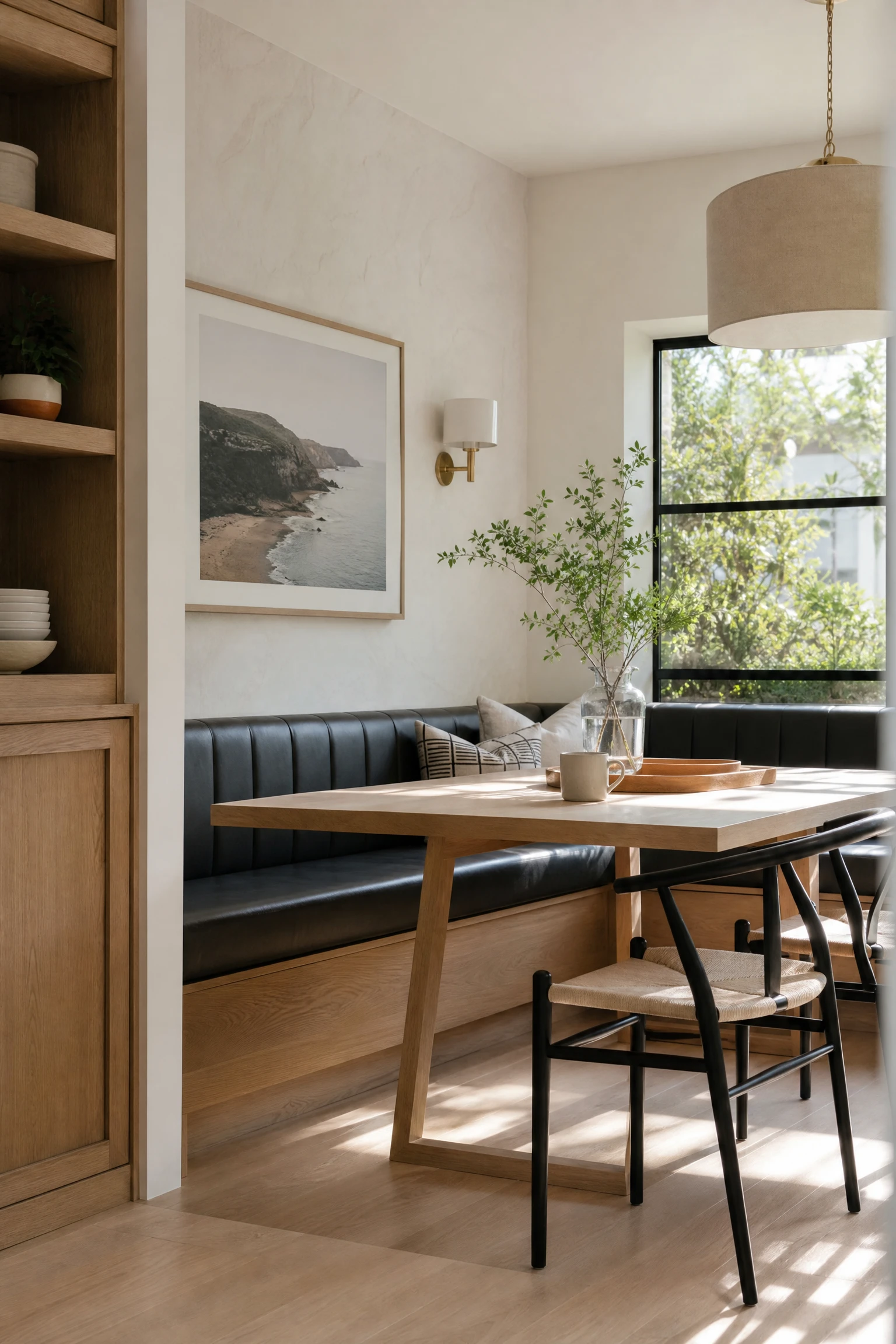
Combining a dark charcoal grey leather banquette bench with a pale ash wood table yields a sleek modern executive nook. The dark charcoal leather offers durable, wipe-clean seating, while pale honey ash wood brings light organic balance. Add matte black sconces.
MAINTENANCE RULE: Wipe leather banquette seats with damp microfiber cloths to clear food crumbs easily.
Add Under-Bench LED Strip Lights to Illuminate Nook Floor Planks
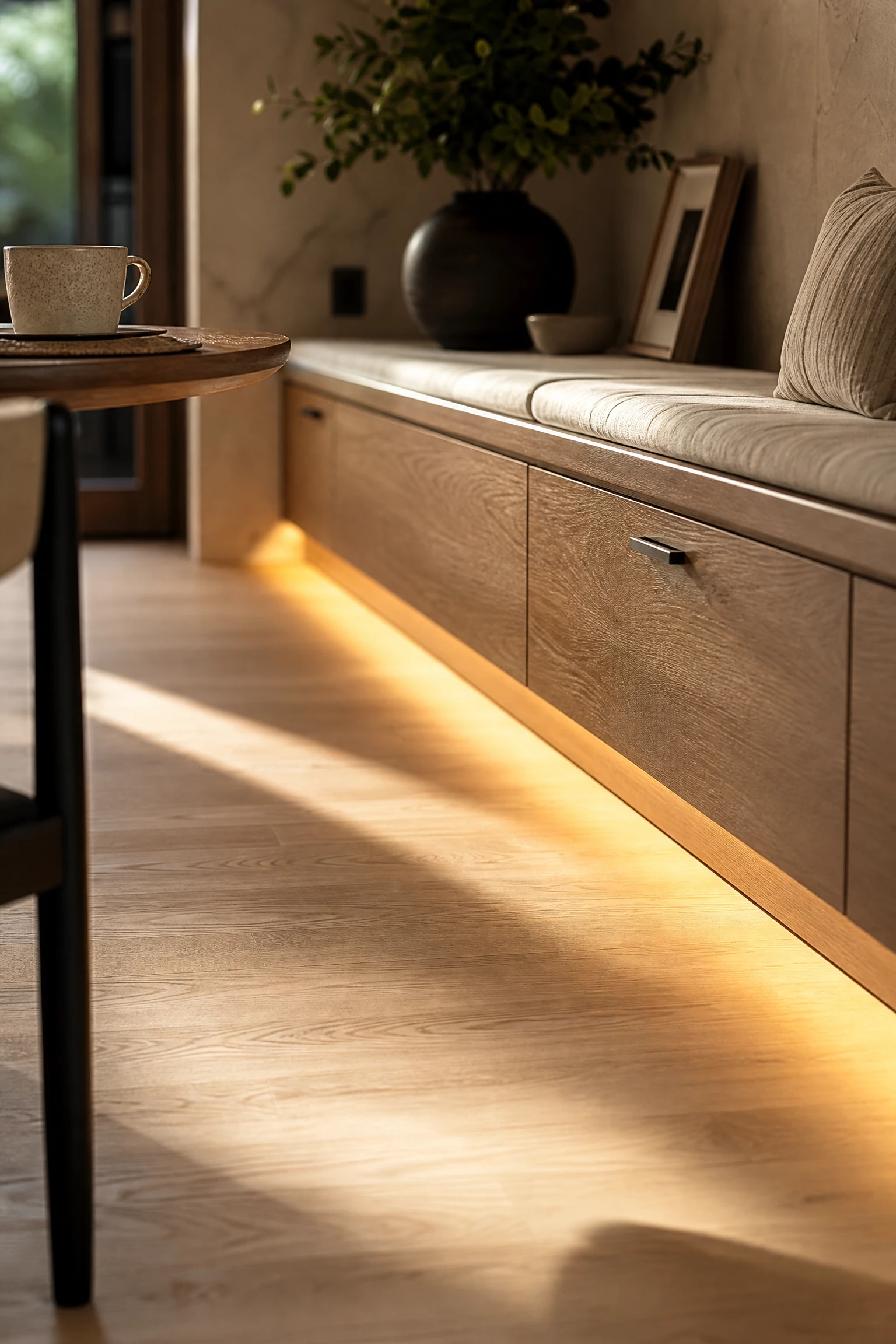
Mounting concealed warm 2700K LED strip lights under the overhang of built-in nook benches casts a soft glow across floorboards. The low-level illumination highlights hardwood floor grain while serving as a subtle nightlight for late-night kitchen trips. Use aluminum channels.
QUICK TIP: Install motion-sensor switches on under-bench LED lights for automatic nighttime illumination.
Combine a Mustard Yellow Velvet Bench Cushion with Muted Slate Blue Walls

Placing a rich mustard yellow velvet bench cushion against muted slate blue painted nook walls establishes an artistic complementary palette. The warm golden-yellow velvet cuts through cool slate grey-blue wall paint, filling compact corners with energetic color contrast. Add brass pulls.
STYLE SECRET: Use mustard yellow accessories to pull out warm golden undertones in slate blue paint.
Pair a Square Quartz Pedestal Table with Corner Banquette Benches
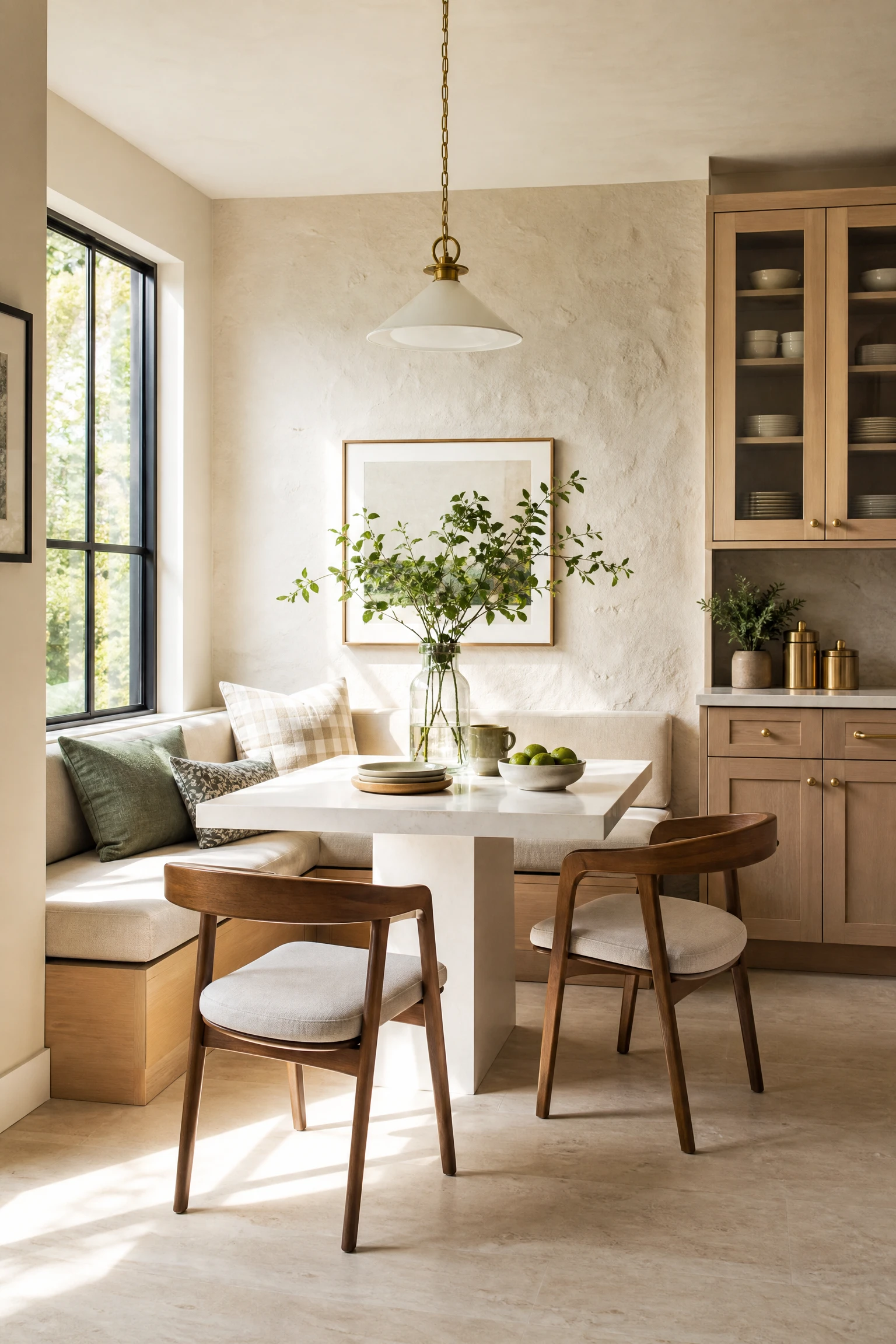
Setting a square white quartz pedestal table inside an L-shaped banquette bench offers clean geometric symmetry for family dining. The durable non-porous quartz tabletop resists juice stains and hot coffee cups, while central pedestal legs ensure unobstructed seating. Add plush cushions.
MAINTENANCE RULE: Clean quartz tabletops with non-abrasive pH-neutral soap to preserve polished stone factory finish.
Install Floating Corner Bench Seats for a Modern Open-Floor Nook
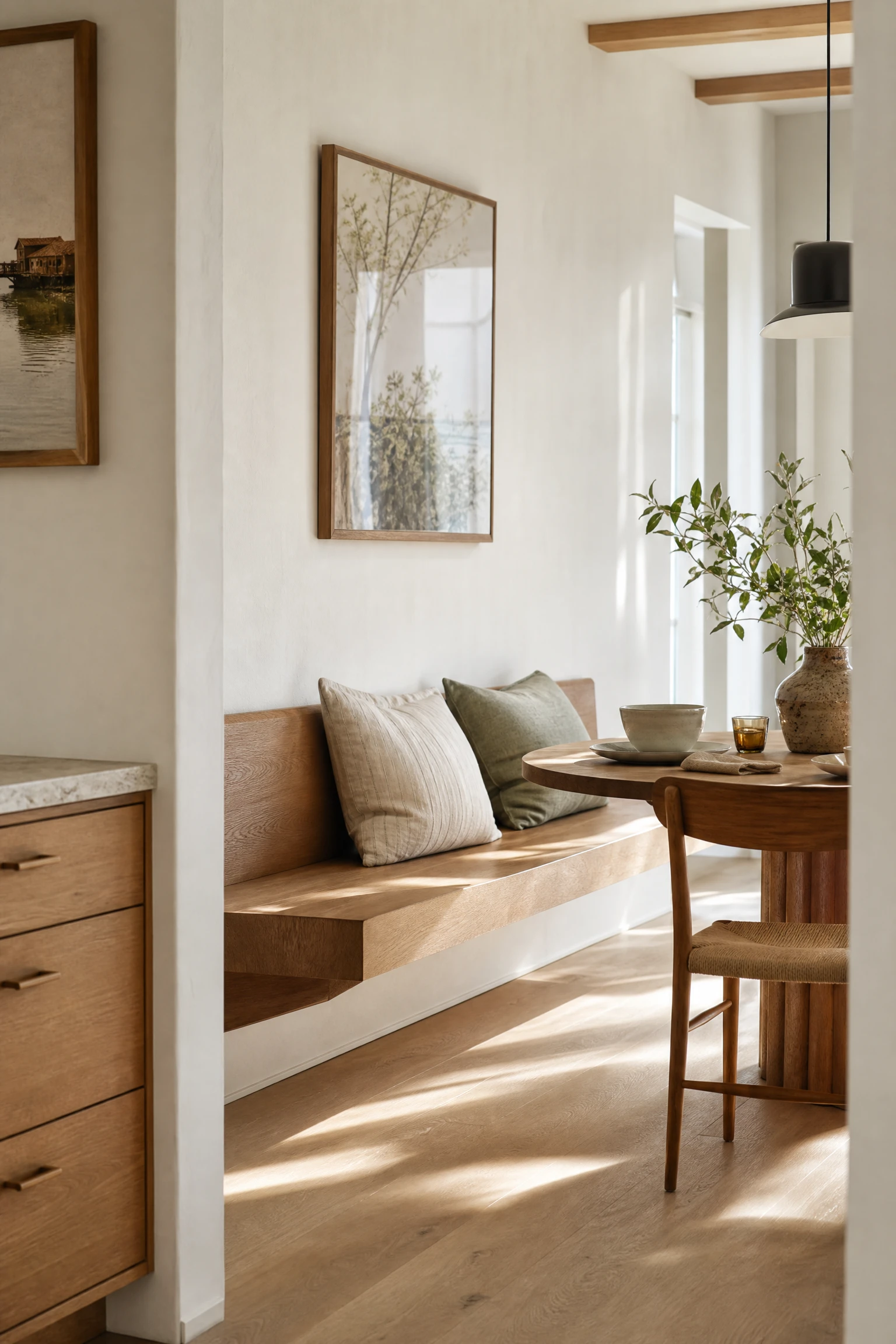
Cantilevering a floating wooden bench seat directly off corner walls creates a minimalist, leg-free breakfast nook layout. The open space beneath the floating bench allows floorboards to run unobstructed, making small dining areas feel spacious and easy to clean. Use heavy steel brackets.
SAFETY WARNING: Anchor floating benches to internal wall studs using heavy-duty steel brackets rated for proper weight loads.
Conclusion
Designing a kitchen breakfast nook allows you to transform unused corners into a comfortable, functional retreat for daily living. Whether choosing built-in banquette benches with hidden storage, round pedestal tables, or performance linen cushions, thoughtful space planning ensures your nook remains inviting. A breakfast nook works best when it earns its keep across every kind of morning: rushed weekdays, slow Sundays, homework sessions, and quiet cups of tea. Build it around those uses first, and the aesthetics will follow.
Seating and Cushion Choices That Make a Nook Actually Comfortable
A breakfast nook that looks beautiful in photographs but nobody wants to sit in for more than ten minutes is a design failure that happens more often than it should. The cause is almost always seating that prioritises appearance over posture. Built-in bench seating with insufficient back support, seat cushions that are too soft and collapse under a person of average weight, or a table height that is incompatible with the seat height are the three most common problems.
The standard table-to-seat height differential for comfortable dining is 28 to 30cm: if the seat cushion surface sits at 46cm from the floor, the table surface should sit at 74 to 76cm. For built-in bench seating, the depth from front edge to back wall should be at least 50cm for comfortable single seating and 45cm minimum for seating against a wall with a back cushion. These numbers sound technical but translate directly into whether someone sits in the nook for breakfast every day or uses the dining table instead.
Back cushions are as important as seat cushions for built-in benches. A lumbar cushion positioned at the small of the back extends comfortable sitting time from twenty minutes to as long as needed. Use bolster-style cushions in durable, washable fabric: wool, heavy linen, or a performance fabric that resists staining. Seat cushions should be at least 8cm in compressed thickness; anything thinner bottoms out within a few months of regular use.
Lighting a Breakfast Nook Correctly
Nook lighting is handled badly in most kitchens because the nook is treated as an extension of the main kitchen lighting scheme rather than as a separate zone that needs its own light source. A pendant hung directly above the nook table, at a height of 75 to 85cm above the table surface, creates a pool of light that defines the zone and makes the space feel like a dedicated room within the room.
The pendant should be warmer in colour temperature than the task lighting used elsewhere in the kitchen. Kitchen work lighting is typically 3000 to 4000K for visibility and clarity. Nook lighting at 2700K creates a different mood in the same room, which is exactly the point of a breakfast nook: it should feel like a retreat from the kitchen, even when it is physically inside it.
The Materials That Make a Breakfast Nook Feel Permanent
A breakfast nook that uses furniture-grade materials rather than flatpack alternatives reads as a designed space rather than an assembled corner. The distinction in practice: a solid wood table with a genuine finish versus a veneer-wrapped table from a flatpack kit; a bench with joinery rather than screwed-together panels; cushions in natural fabric rather than polyester. None of these upgrades requires bespoke joinery. They require choosing better versions of the same basic shapes.
The table is the most important investment in a nook. It is the surface that takes the most use, is touched most often, and is looked at directly every time someone sits down. A solid timber table in oak, walnut, or pine, even a simple one, gives the nook a quality that flatpack alternatives cannot match regardless of how well they are styled around it. Secondhand solid wood tables in the right size are one of the most reliable bargains in home furnishing and are available in most cities for under fifty pounds.