Dark Brown Floors in the Living Room: Designs That Actually Work
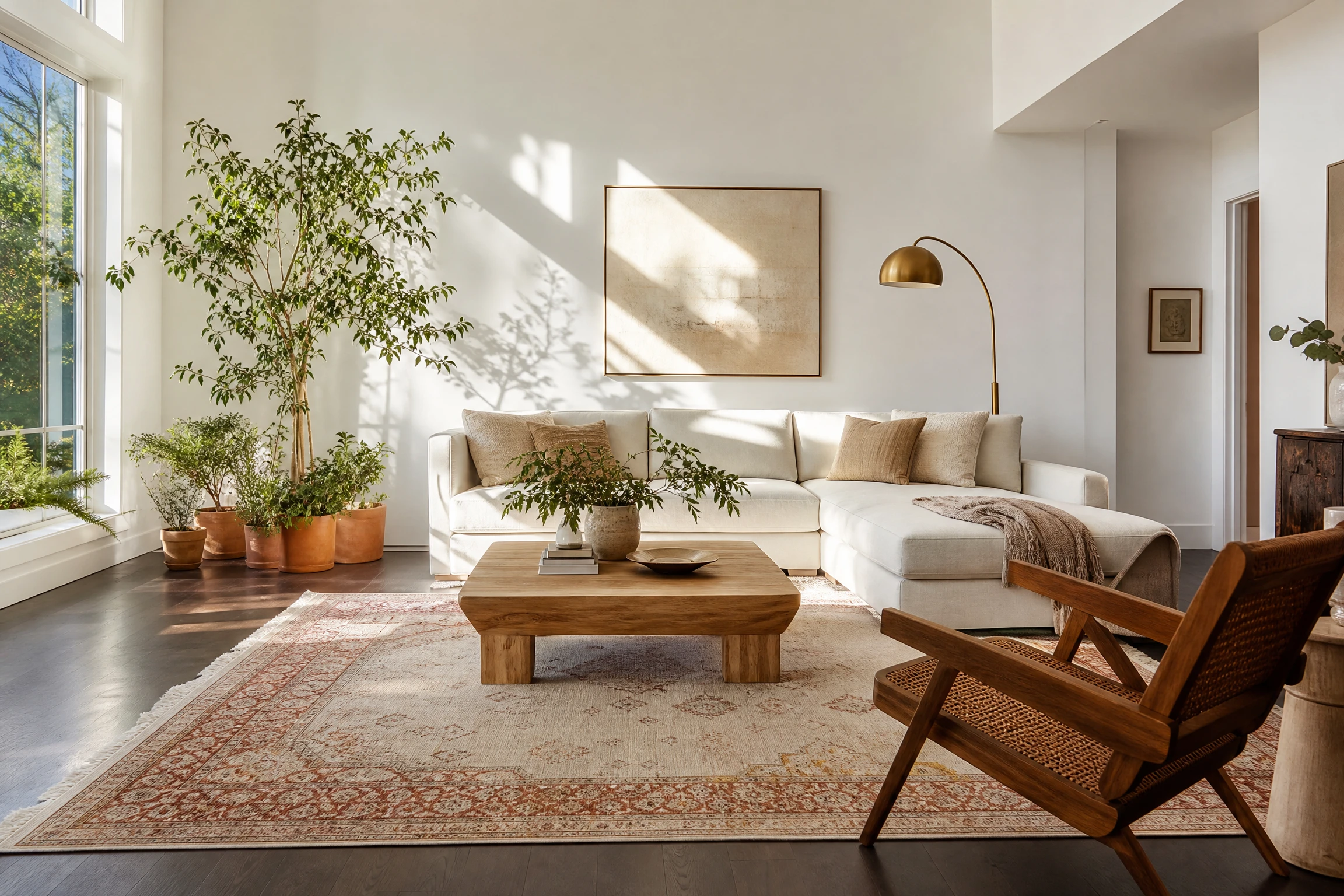
Dark brown floors are one of those things that can either anchor a living room beautifully or make the whole space feel like a cave. The difference between those two outcomes rarely comes down to luck. It comes down to understanding what dark flooring actually does to a room and then making deliberate choices to work with it, not against it. Most people who feel stuck with their dark brown floors are not working with a bad foundation. They are just missing a few specific moves that change everything about how the space reads.
This guide is built around real design challenges that dark brown floors create, and the concrete solutions that professional designers and experienced decorators reach for again and again. Whether your floors are espresso hardwood, dark walnut laminate, or rich mahogany wood-look tile, these ideas will help you pull the whole room together in a way that feels intentional, layered, and genuinely livable. Every idea here has been chosen because it solves a real problem, not just because it looks nice in a photo.
1. The Room Feels Too Dark: Go High-Contrast With Crisp White Walls
When dark brown floors meet walls in a similar deep or mid-tone shade, the room can start to feel like it is closing in. The solution that works the most reliably is a sharp jump in value: go with a true white or a warm off-white on the walls, something in the family of Benjamin Moore White Dove or Sherwin-Williams Alabaster. The contrast created between the deep floor and the bright wall essentially lifts the ceiling visually, bounces daylight around the room, and allows the floor’s rich grain and color to read as a feature rather than a weight. The key is to commit to the contrast rather than hedging with a mid-tone greige that sits uncomfortably between the two. In practice, the lighter the walls, the more the floor becomes the star of the room, which is exactly what you want.
Designer Advice: Add a wide white baseboard to deepen the contrast between wall and floor, as it creates a clean visual “frame” around the room at ground level.
Wall Color Comparison for Dark Brown FloorsWall Color Comparison for Dark Brown Floors
| Wall Color Option | Effect on the Room | Best For |
| Crisp White (e.g., White Dove) | Maximum contrast, airy, bright | Low-light rooms, modern or classic styles |
| Warm Off-White (e.g., Alabaster) | Soft contrast, cozy but open | Traditional, farmhouse, transitional |
| Pale Sage Green | Organic, calm, earthy | Biophilic or Japandi-inspired rooms |
| Dusty Blue-Gray | Cool contrast, sophisticated | Contemporary or coastal living rooms |
| Deep Navy (accent wall) | Moody, dramatic, high-impact | Rooms with strong natural light |
2. Furniture Blends Into the Floor: Choose Lighter Upholstery Tones
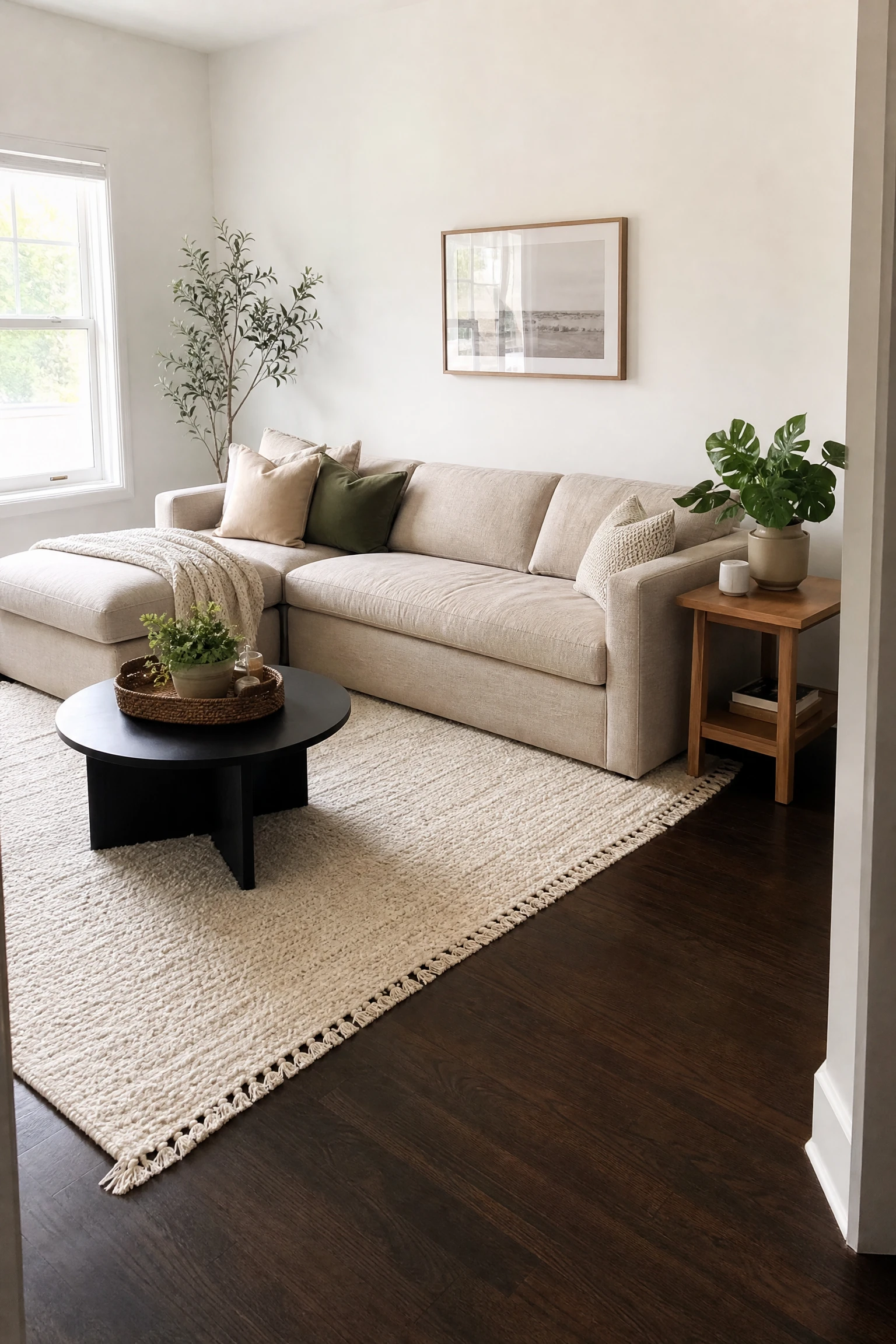
One of the most common complaints from people with dark brown floors is that dark sofas and armchairs seem to disappear into the floor, flattening the entire room into one undifferentiated mass of brown. The fix is not to ban warm tones from the room. It is to build contrast at the furniture level. A sofa in oatmeal, warm cream, or light taupe will sit distinctly above the floor rather than merging with it. This gives the seating arrangement a visual lift and creates the kind of layered tonal separation that makes a room feel designed. Linen and cotton blend upholstery work especially well here because their texture adds visual interest without competing with the floor. If you are committed to a darker sofa, a chunky light-colored area rug between the furniture and the floor creates enough separation to solve the same problem.
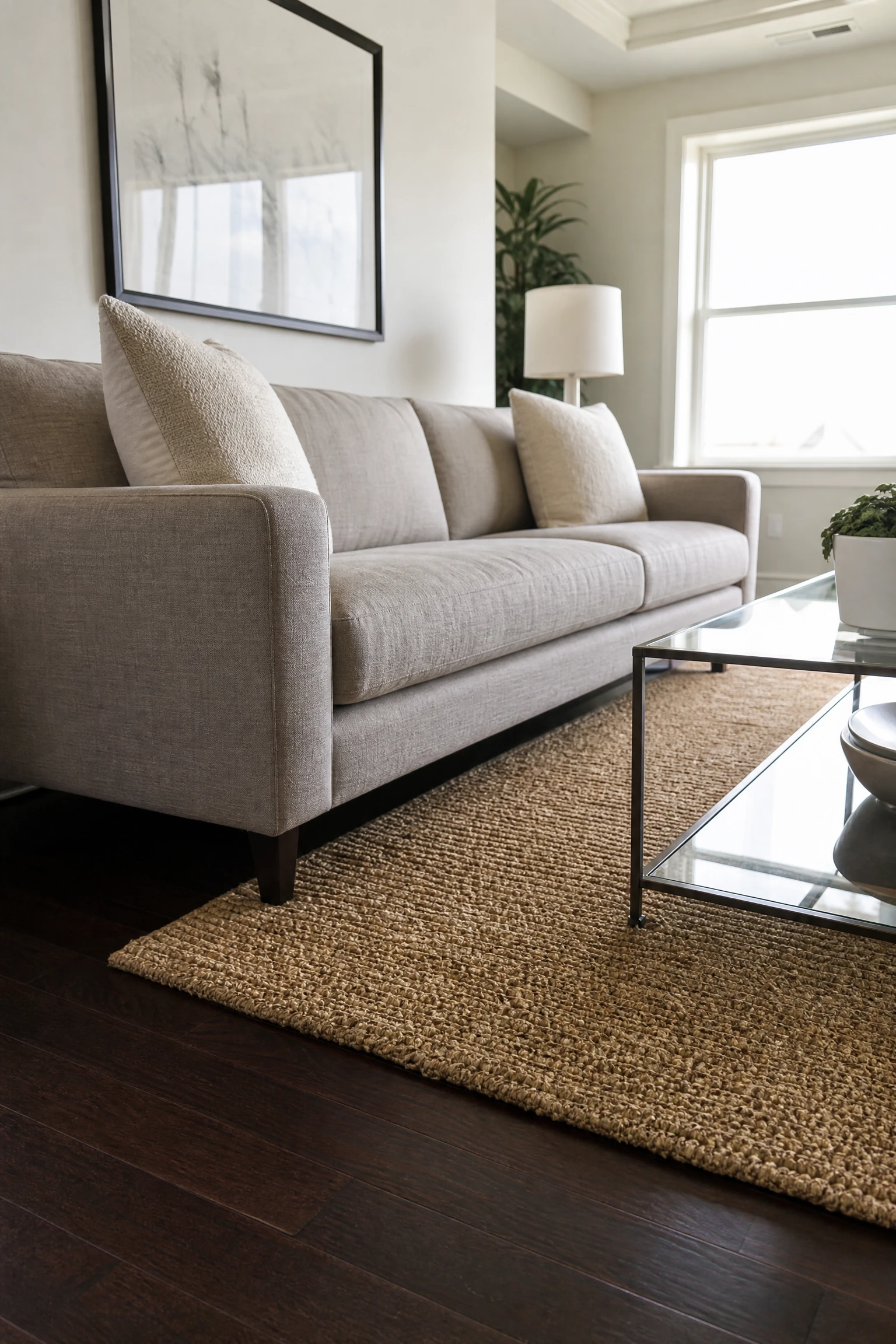
Pro Move: A natural jute or sisal rug in a honey or sand tone creates a tonal bridge between dark floors and light furniture without making the transition feel stark.
3. The Floor Shows Every Speck of Dust: Use Rugs Strategically
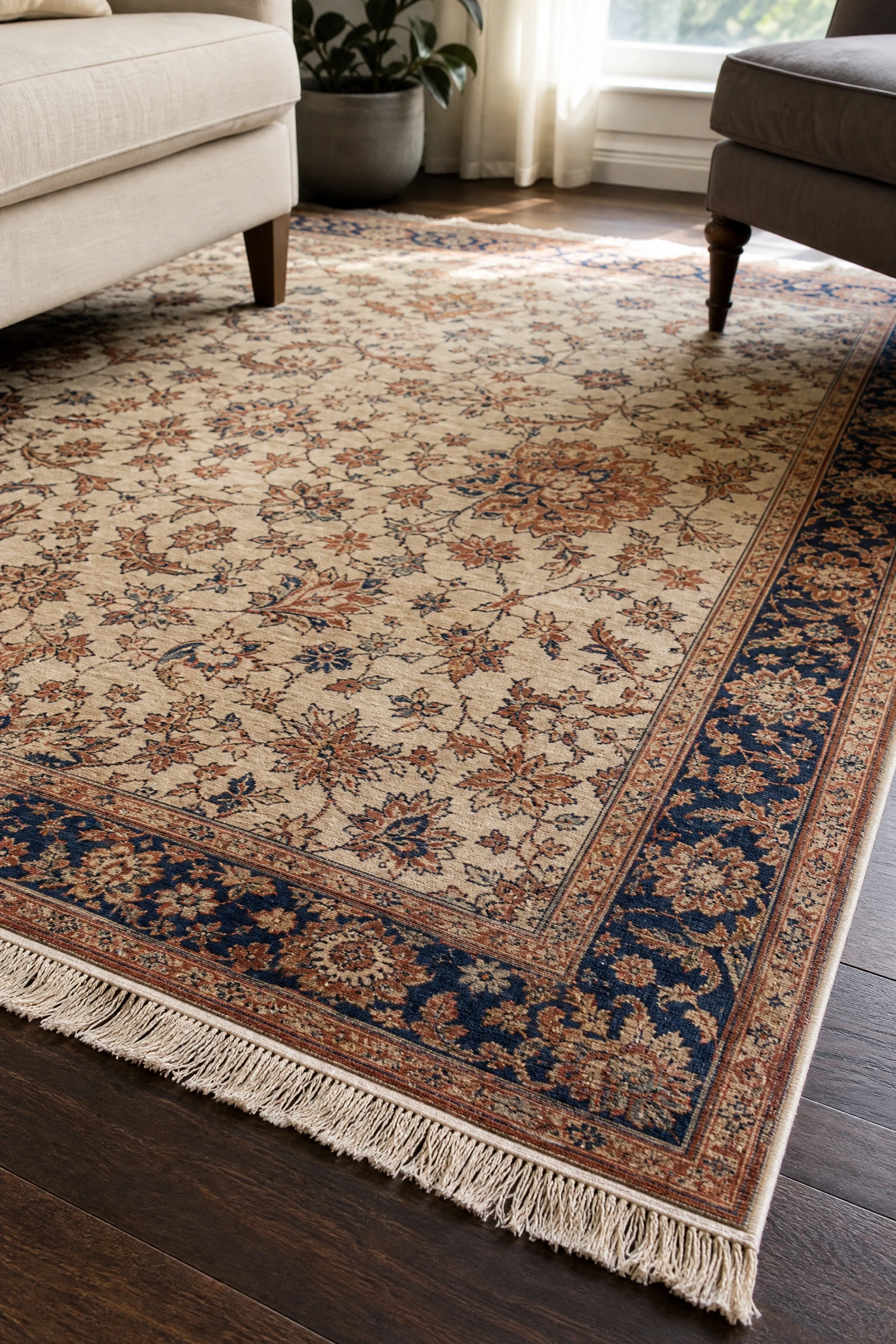
Here is the honest truth about very dark brown floors that most articles skip over: they show dust, pet hair, and fine debris more readily than mid-tone floors do. This is not a dealbreaker, but it is worth designing around. A well-placed area rug in the main seating zone solves two problems at once. It reduces the amount of dark floor surface that is exposed and regularly visible, and it adds a layer of softness and acoustic comfort that hard floors cannot provide on their own. For a living room with dark brown floors, a rug in a medium tone with some pattern or texture works best because it hides everyday debris while also keeping the room from feeling too visually heavy. Persian-style rugs, flatweave kilims, and low-pile geometric rugs in cream, rust, and navy are all strong choices that layer well over dark wood.
Heads Up: Avoid rugs with a very dark or black ground color, as they will merge visually with the floor and eliminate the contrast you are trying to create.
4. The Space Reads as Cold at Night: Layer Warm Artificial Lighting
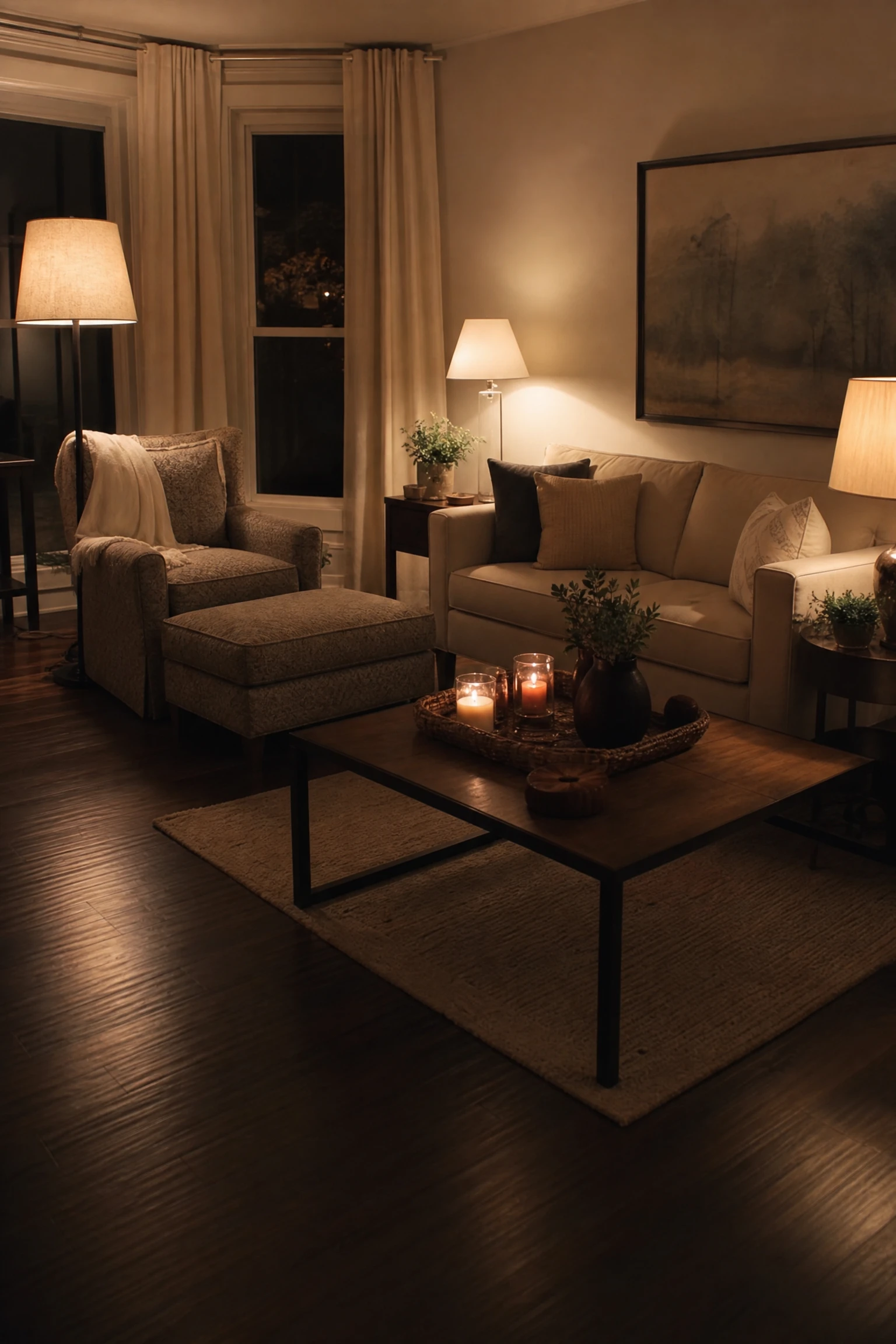
Dark brown floors absorb light rather than reflecting it, which means that in the evening when natural light drops away, a room with dark flooring can feel noticeably colder and flatter than it did during the day. The solution is a layered lighting scheme that compensates for what the floor is soaking up. Floor lamps with warm-toned bulbs (2700K to 3000K color temperature) placed near seating areas create pools of amber light that warm up the floor’s surface and make the grain visible in a way overhead lighting cannot. A combination of table lamps, sconces, and at least one uplight or floor lamp will serve this room far better than a single central ceiling fixture. Candles or LED candle alternatives on a coffee table add another layer of warm ambient glow that brings the whole room to life in a way that feels genuinely cozy rather than compensatory.
Quick Tip: Choose lamp shades in linen, cream, or amber rather than white to keep the light warm and prevent it from reading as clinical against the dark floor.
5. The Room Feels Dated: Introduce a Japandi-Inspired Palette
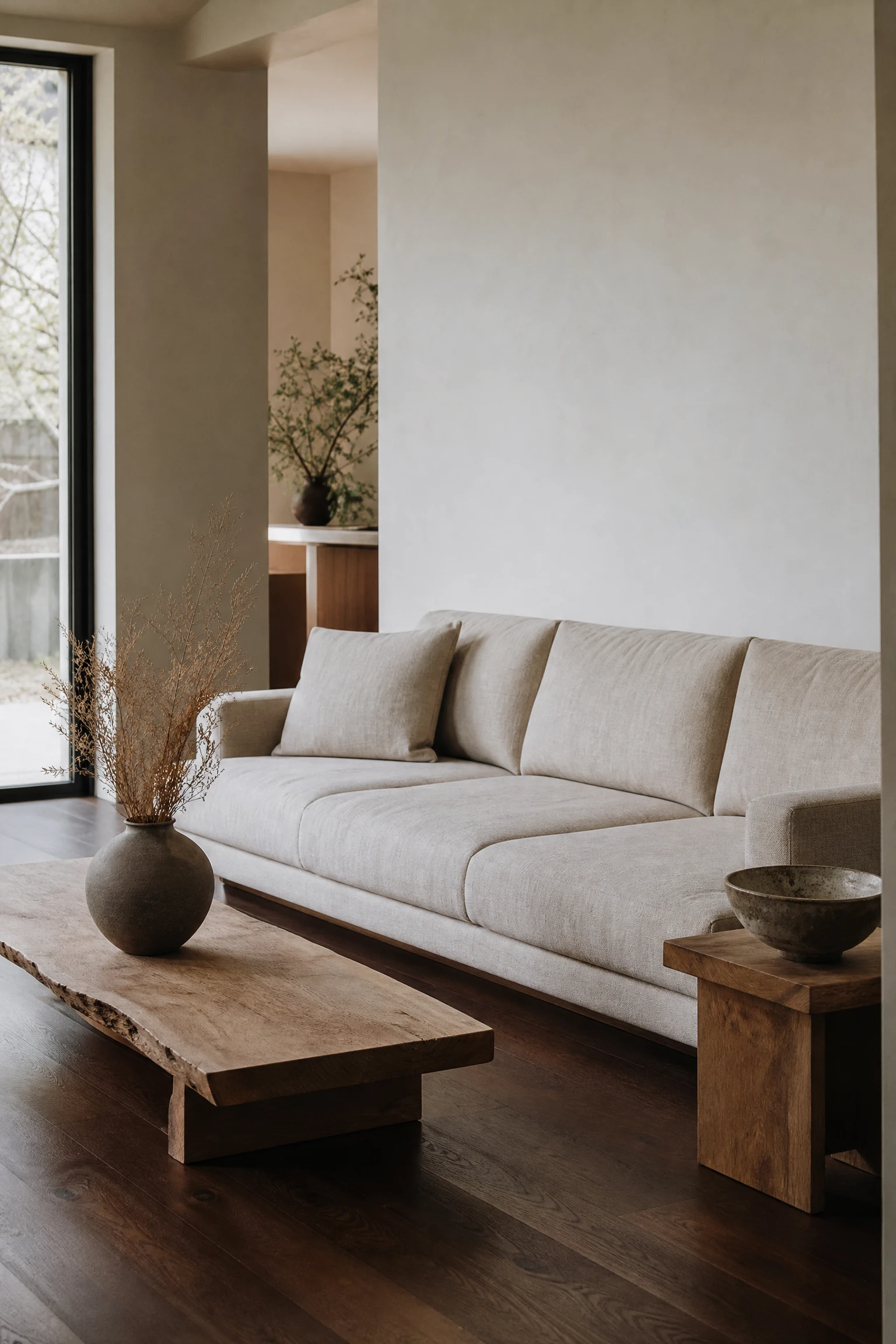
Dark brown floors have a reputation for feeling heavy or old-fashioned, particularly in rooms that still have the furniture and accessories from the mid-2000s era of matching brown suites. The most effective way to modernize the space without touching the floor is to shift the palette toward a Japandi sensibility: natural linens, muted sage, warm stone, and black accents used sparingly but deliberately. This design approach, which blends Scandinavian minimalism with Japanese wabi-sabi principles, leans into natural materials and imperfect textures in a way that makes dark wood flooring feel current rather than dated. A sofa in undyed linen, a raw-edge oak coffee table, a ceramic vase in matte clay, and a single low-profile black floor lamp can completely reframe the floor as an asset. This works particularly well in spaces where the dark floor has visible grain, as Japandi design celebrates the natural character of materials rather than hiding it.
Designer Advice: Keep the furniture low to the ground and the lines clean and uncluttered. The negative space around pieces is just as important as the pieces themselves in this style.
6. Nothing Feels Cohesive: Anchor the Room With a Statement Rug
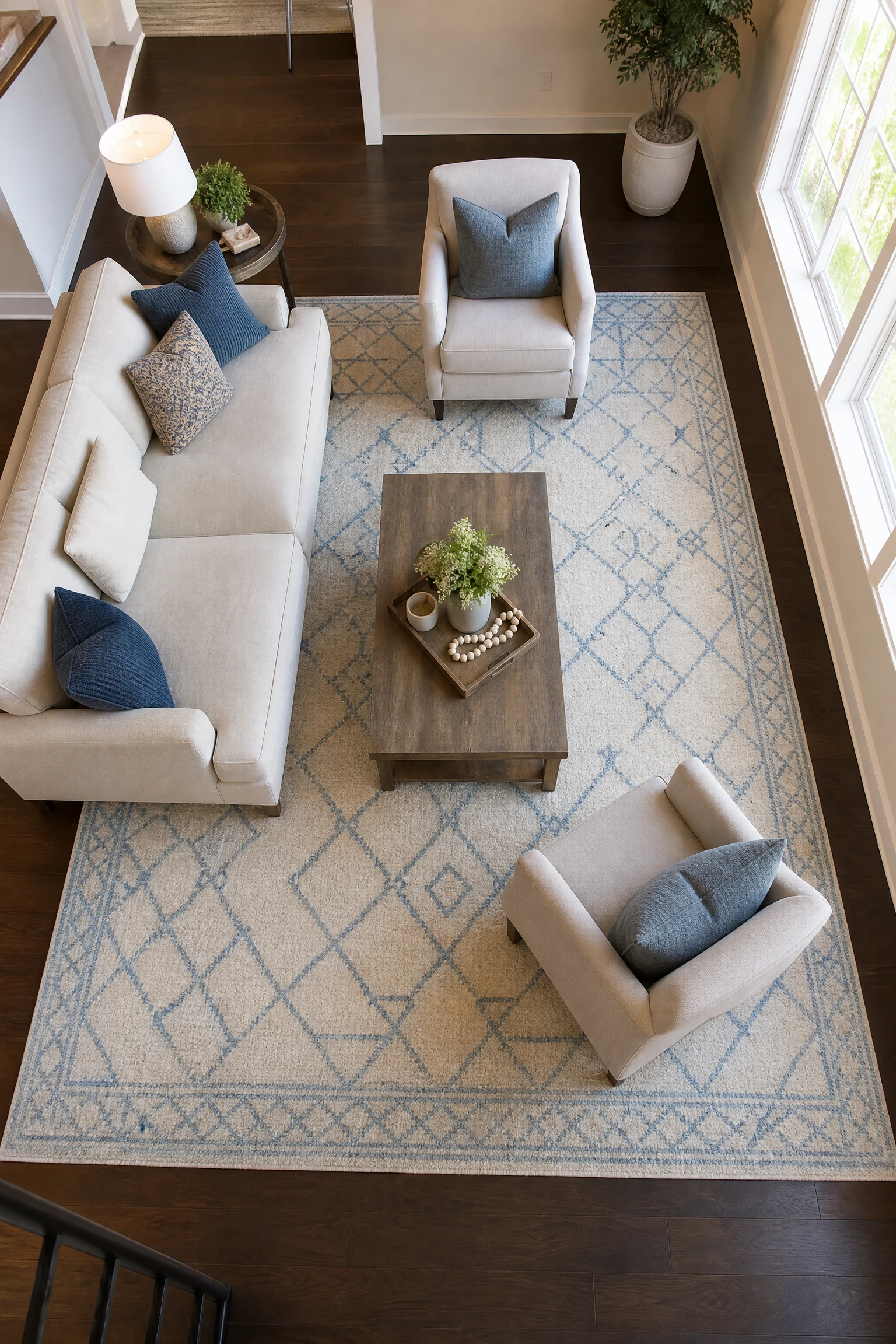
When a living room with dark brown floors feels disjointed, with furniture that does not seem to belong together or a palette that wanders, the missing ingredient is almost always a rug that ties everything together. The rug functions as the room’s central organizing element, a piece that borrows colors from the walls, the furniture, and the floor and combines them into one visual anchor. For dark brown floors, a rug with a cream or ivory ground and a pattern that includes warm terracotta, dusty blue, or sage green will pull the most common living room color schemes together effectively. Size matters enormously here. A rug that is too small will make the furniture look like it is floating in space rather than sitting on a defined zone. At minimum, the front legs of all seating pieces should sit on the rug, and ideally all four legs should be fully on it.
Reality Check: If your living room rug looks small now, it probably is. Most people undersize their rugs, and going up one size (typically 8×10 to 9×12) is one of the fastest ways to make a room feel more polished.
Rug Size Quick-Reference Guide for Living Rooms
| Room Size | Recommended Rug Size | Furniture Placement |
| Small (up to 12×12 ft) | 6×9 ft | Front legs on rug only |
| Medium (12×15 ft) | 8×10 ft | All legs on rug preferred |
| Large (15×18 ft+) | 9×12 ft or 10×14 ft | All legs fully on rug |
| Open-plan zone | Custom or 10×14 ft+ | Rug defines the seating zone |
7. Walls Feel Bare but Artwork Looks Wrong: Build a Gallery Wall With Light Frames
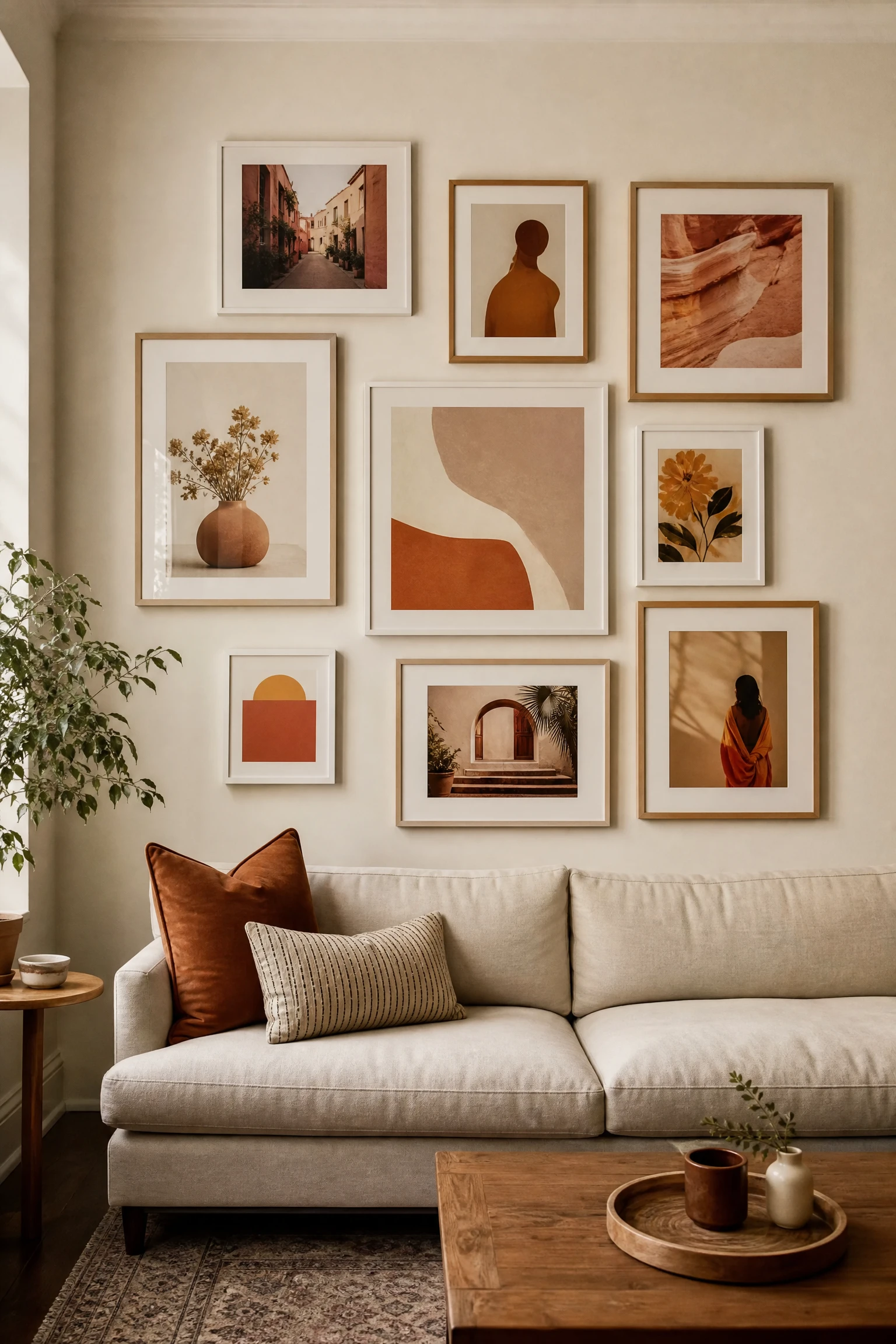
Dark brown floors create a strong visual base, and when the walls above them are empty or sparse, the top half of the room can feel unfinished in a way that puts the floor and the wall in competition rather than in conversation. A gallery wall is one of the most effective ways to bring the upper half of the room into balance with a rich floor below. The key detail for dark-floored rooms is to use light-colored or metallic frames, specifically white, raw oak, light ash, or brushed brass, as these keep the wall arrangement feeling airy rather than adding more visual weight to a room that already has a lot of it at ground level. Mix print sizes but keep the matting consistent across frames. A cluster of five to nine pieces arranged asymmetrically above a sofa will draw the eye upward, balance the floor’s visual pull, and make the room feel considered and layered.
Pro Move: Include one or two pieces with warm amber, terracotta, or cream tones in the artwork itself to echo the warmth of the brown floor and create a visual thread running through the room.
8. The Room Lacks Personality: Add Jewel-Toned Accent Pieces
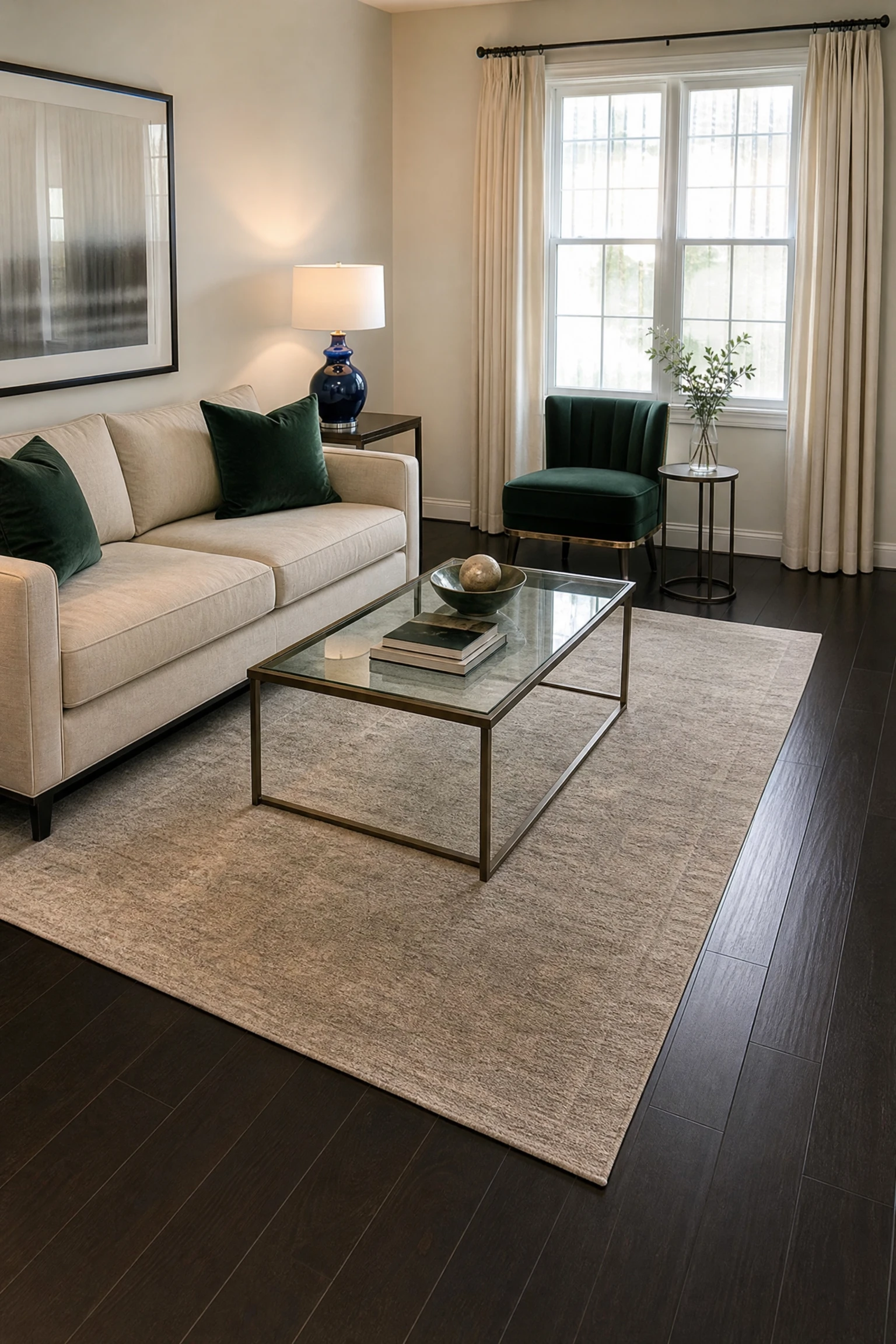
One of the advantages of dark brown flooring that people underuse is how well it grounds rich, saturated colors. Emerald green, sapphire blue, dusty plum, and burnt amber all look remarkably strong against a dark wood floor because the floor’s depth prevents those bold colors from feeling garish or overwhelming. In practice, this means you can bring in a jewel-toned velvet accent chair, a pair of deep teal throw pillows, or a sapphire blue ceramic lamp base and have them read as sophisticated rather than loud. Start with one accent color and use it in at least three places in the room: a cushion, a small decorative object, and one larger piece like a chair or vase. This repetition is what makes the color feel like a design decision rather than an afterthought. Investment-level move: a bespoke velvet armchair in forest green or cognac amber is the single piece most likely to transform how a dark-floored living room photographs and feels.
Quick Tip: Emerald green in particular is having a sustained moment in interior design right now and pairs exceptionally well with dark walnut and espresso tones.
9. The Space Feels Monotonous: Introduce Contrasting Textures
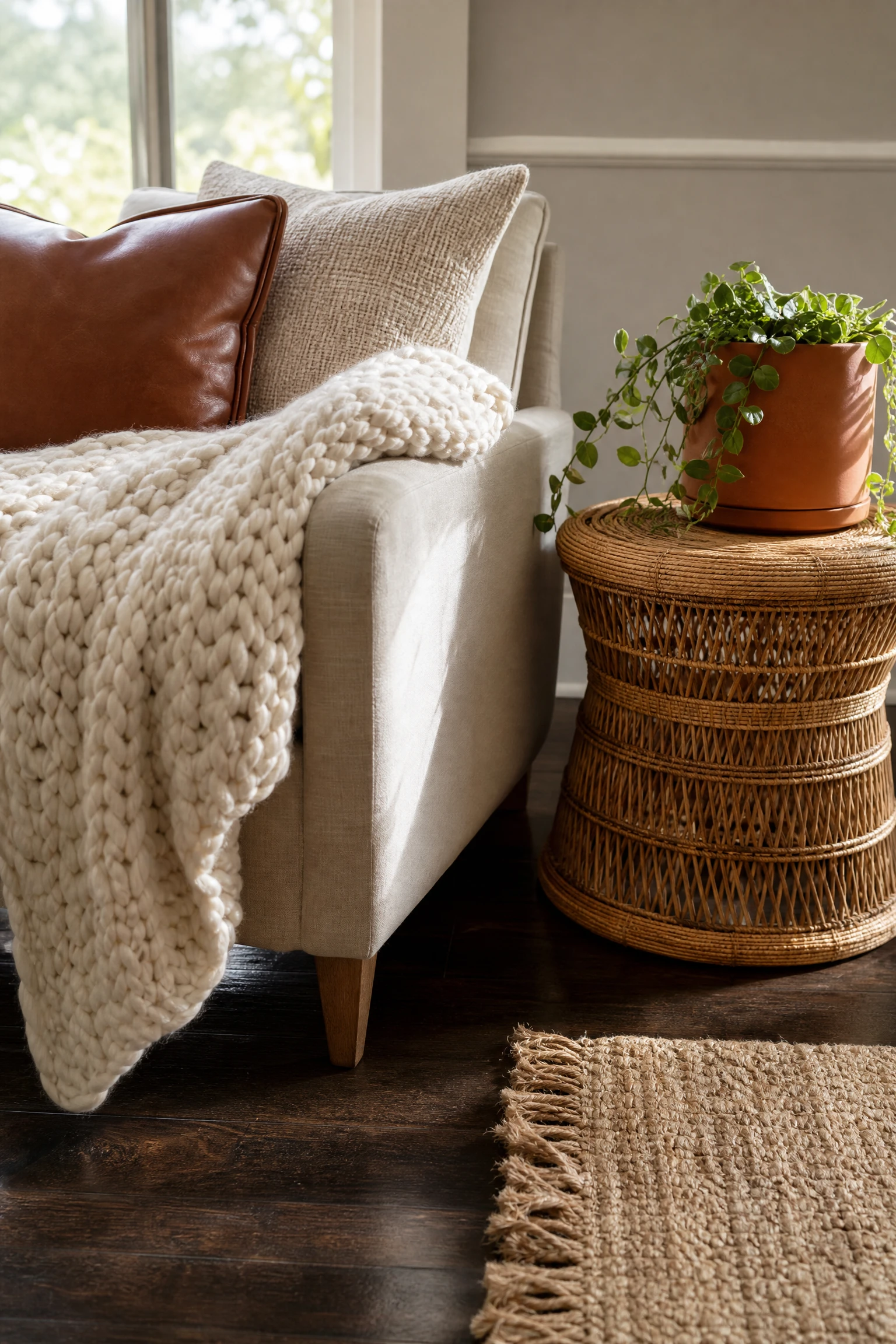
When everything in a room has a similar surface quality, whether it is smooth, polished, or flat, the room tends to feel dull regardless of how well-chosen the colors are. Dark brown floors, especially if they are a polished hardwood or high-sheen laminate, benefit enormously from the introduction of matte, rough, and soft textures elsewhere in the room. A chunky knit throw over the arm of a sofa, a woven rattan side table, a linen cushion beside a leather one, and a terracotta pot holding a large leafy plant will create the kind of textural conversation that makes a room feel alive and layered. This approach works at every budget level because texture is largely about material choice rather than price. A $30 chunky throw from a homeware store can add as much textural depth as a $300 designer cushion if it is placed with intention.
Designer Advice: Aim to have at least five distinct textures visible in a single glance across the room: one smooth, one soft, one rough, one woven, and one organic or natural.
10. The Floor Makes Small Rooms Feel Smaller: Use Mirrors Strategically
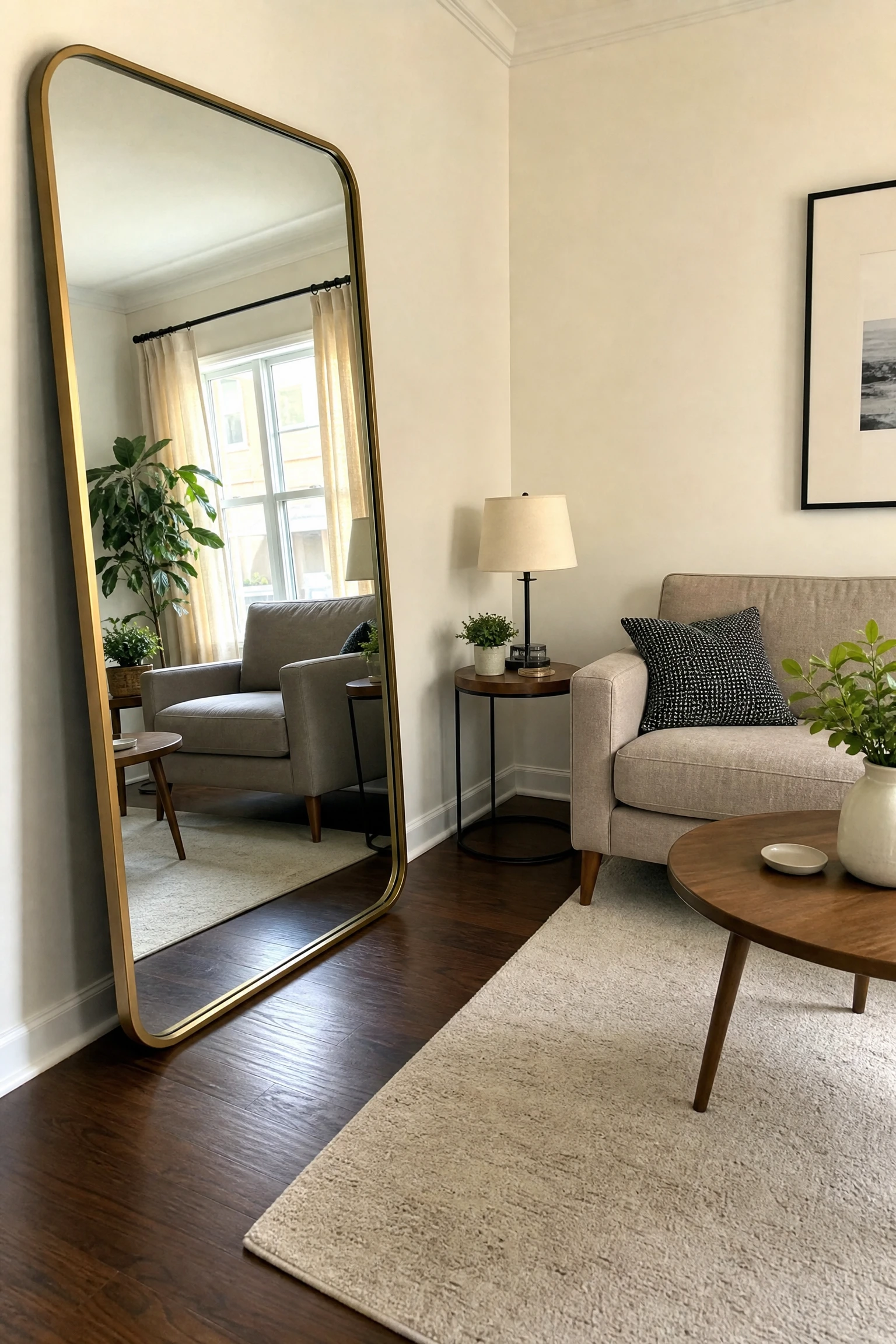
Dark flooring in a compact living room can make the space feel more enclosed than it actually is, particularly if the walls are not very light and the ceiling height is modest. Mirrors are the most practical tool available for solving this without renovation. A large floor mirror leaned against one wall, or a full-length mirror hung vertically, creates a perceived doubling of the space and bounces light back across the floor in a way that lifts the room’s overall brightness. For best results, position the mirror so it reflects either a window (capturing natural light and bouncing it back into the room) or the most decorated and visually interesting corner of the space (so the reflection adds richness rather than just copying a blank wall). A gold or brass-framed mirror also introduces a warm metallic accent that reads beautifully against dark wood flooring.
Heads Up: Avoid positioning a mirror so it reflects the back of furniture or a cluttered area, as it will amplify that visual noise rather than the open space you are trying to suggest.
11. The Room Looks Flat: Create a Focal Point With a Fireplace Surround
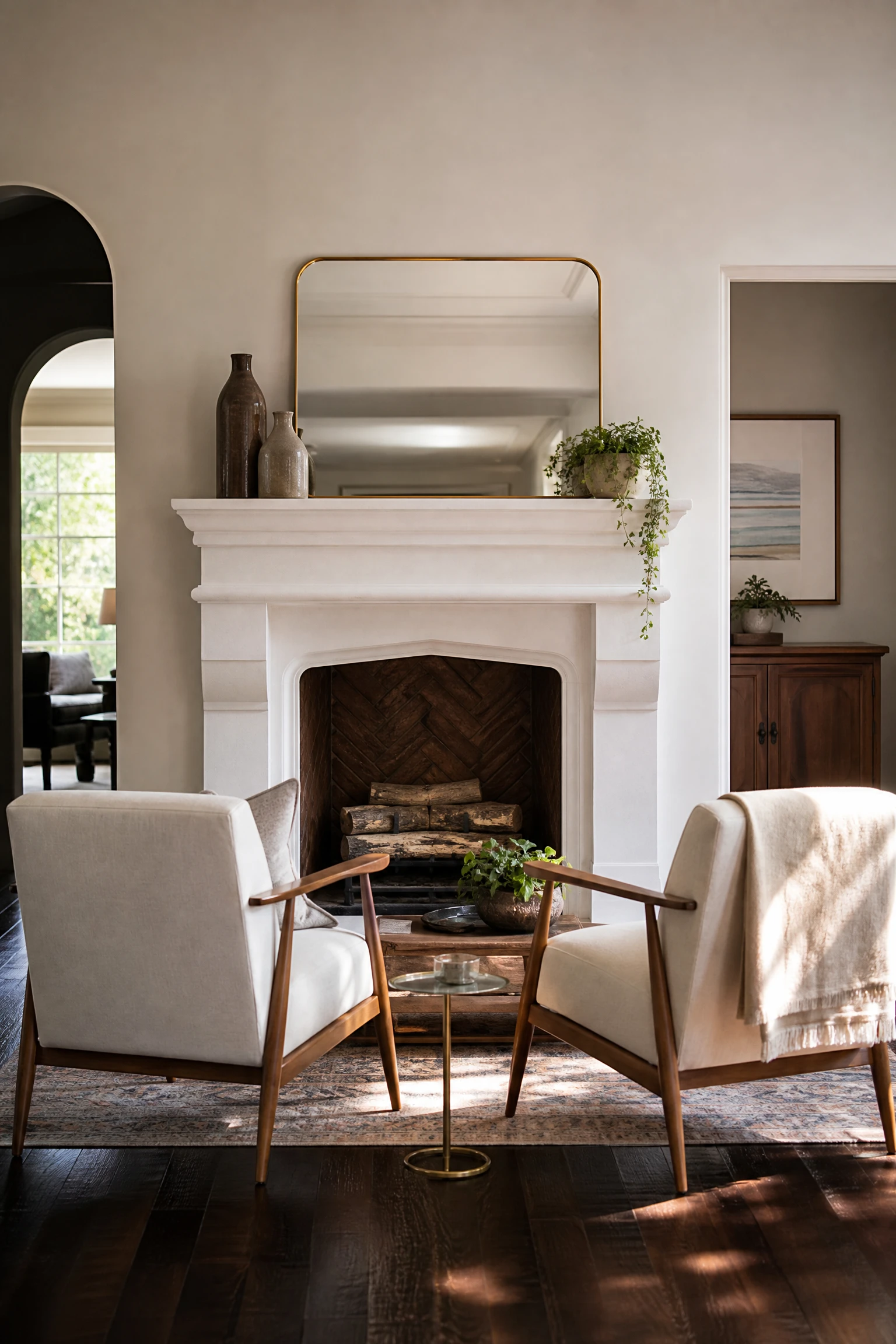
Dark brown floors need a visual focal point to organize the room around. Without one, the eye does not know where to land and the space can feel directionless even when it is well-furnished. A fireplace with a stone or painted brick surround is the most powerful focal point available in a living room, and it works especially well with dark floors because the contrast between the textured surround material and the smooth floor surface adds dimension and drama. If the surround is already a dark material, painting it a crisp white or a warm putty color will create the contrast needed to make it pop against the floor rather than blend into the room’s lower tonal range. Decorate the mantle with a mix of heights: a large mirror or artwork above it, flanked by two or three objects of varying scale, and you have a complete focal wall that anchors the entire room.
Reality Check: A stone surround in a lighter material like limestone or cream travertine works particularly well with dark brown floors because the natural veining in the stone echoes the grain pattern in the wood.
12. Curtains Look Wrong: Hang Them High and Wide in Warm Neutrals
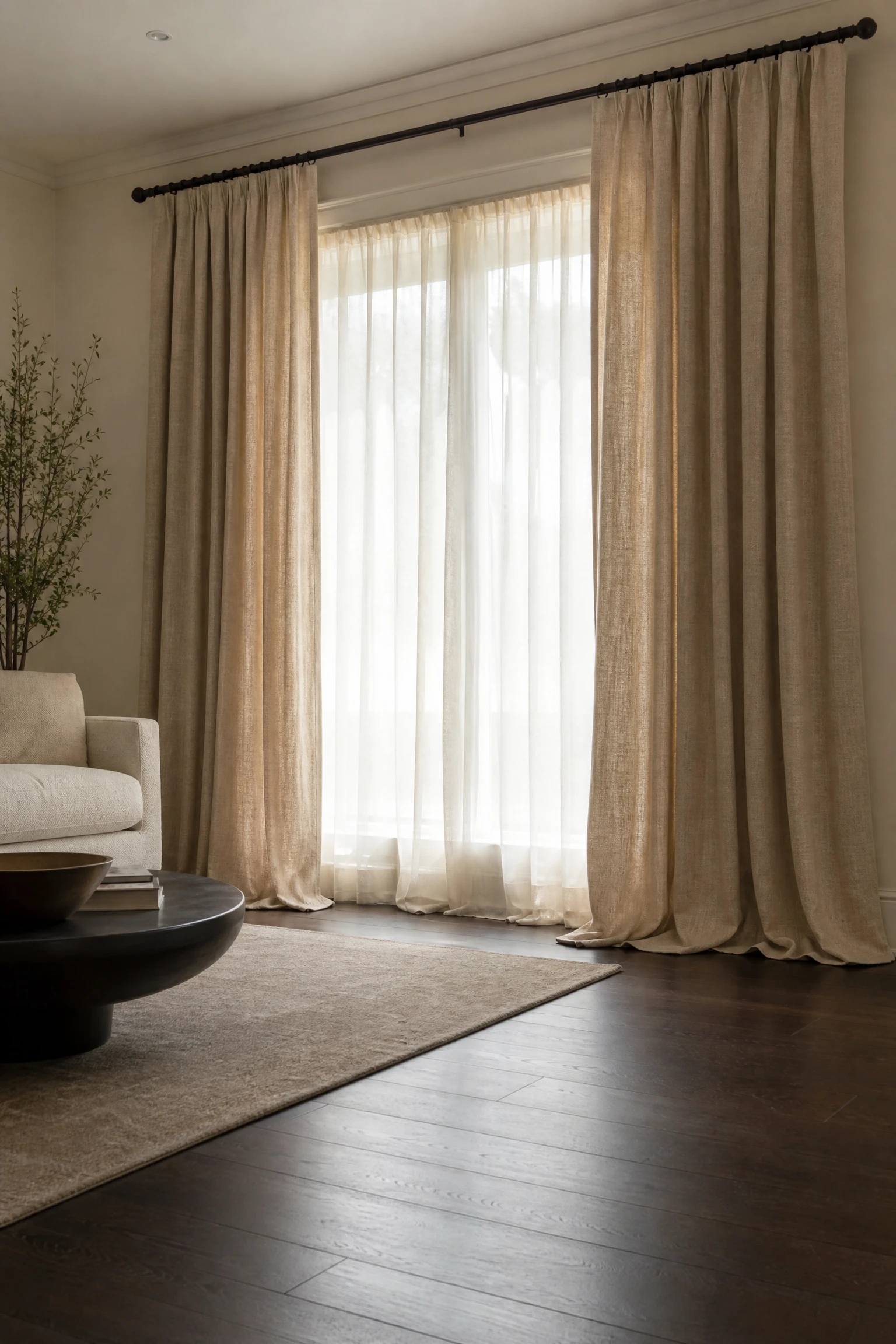
Window treatments are one of the most underestimated tools for adjusting how a room with dark brown floors reads, and getting them wrong is easy. Curtains that stop at the window frame, hang too low, or are in a fabric that competes with the floor can make an otherwise well-put-together room feel off without anyone being able to say exactly why. For dark-floored living rooms, the rules are simple: hang curtains as close to the ceiling as possible and extend the rod well beyond the window frame on both sides, ideally 12 to 16 inches past each edge. This lengthens the wall, lets in more light when the curtains are open, and makes the room feel taller. In terms of color, warm neutrals in linen or velvet textures, think warm white, soft camel, or warm stone, will complement the floor without competing with it. Heavy, dark curtains in a similar tone to the floor will drag the room down further and are best avoided unless you are intentionally going for a moody, cocooning look.
Pro Move: Sheer linen panels layered behind heavier curtains let you maximize natural light during the day while still having the option of a fully dressed window at night.
13. The Room Feels Cold in Tone: Bring in Natural Wood Accents in Mid-Tones
Dark brown floors sometimes make a room feel tonally one-note, especially if the walls are cool-white and the furniture is very light. The solution is not to add more dark pieces but to introduce natural wood accents in mid-tones, think oak, ash, or light walnut finishes, in coffee tables, side tables, shelving, or decorative objects. These mid-tone wood pieces act as a tonal bridge between the very dark floor and the lighter walls and furniture, softening the contrast so the transition feels gradual and natural rather than abrupt. In Scandinavian and Japandi-influenced interiors, this kind of tonal layering through different wood tones is a deliberate technique used constantly by professional designers. A raw oak coffee table on a cream rug sitting over a dark espresso floor is one of the most visually balanced combinations available in contemporary living room design, and it works at almost every furniture budget.
Designer Advice: Keep wood tones within two stops of each other on the light-to-dark scale. More than three different wood tones in one room can start to feel chaotic rather than layered.
Wood Tone Layering Guide for Dark Brown Floor Living Rooms
| Floor Tone | Mid-Tone Bridge Piece | Light Accent Wood | Overall Effect |
| Espresso / Near-Black | Dark Walnut coffee table | Raw Oak shelving | Rich and layered |
| Dark Mahogany | Medium Teak side table | Light Ash frame | Warm and organic |
| Deep Chestnut | Honey Oak console | Natural Pine accents | Rustic but refined |
| Dark Walnut | Smoked Oak TV unit | Blonde Birch decor | Contemporary warmth |
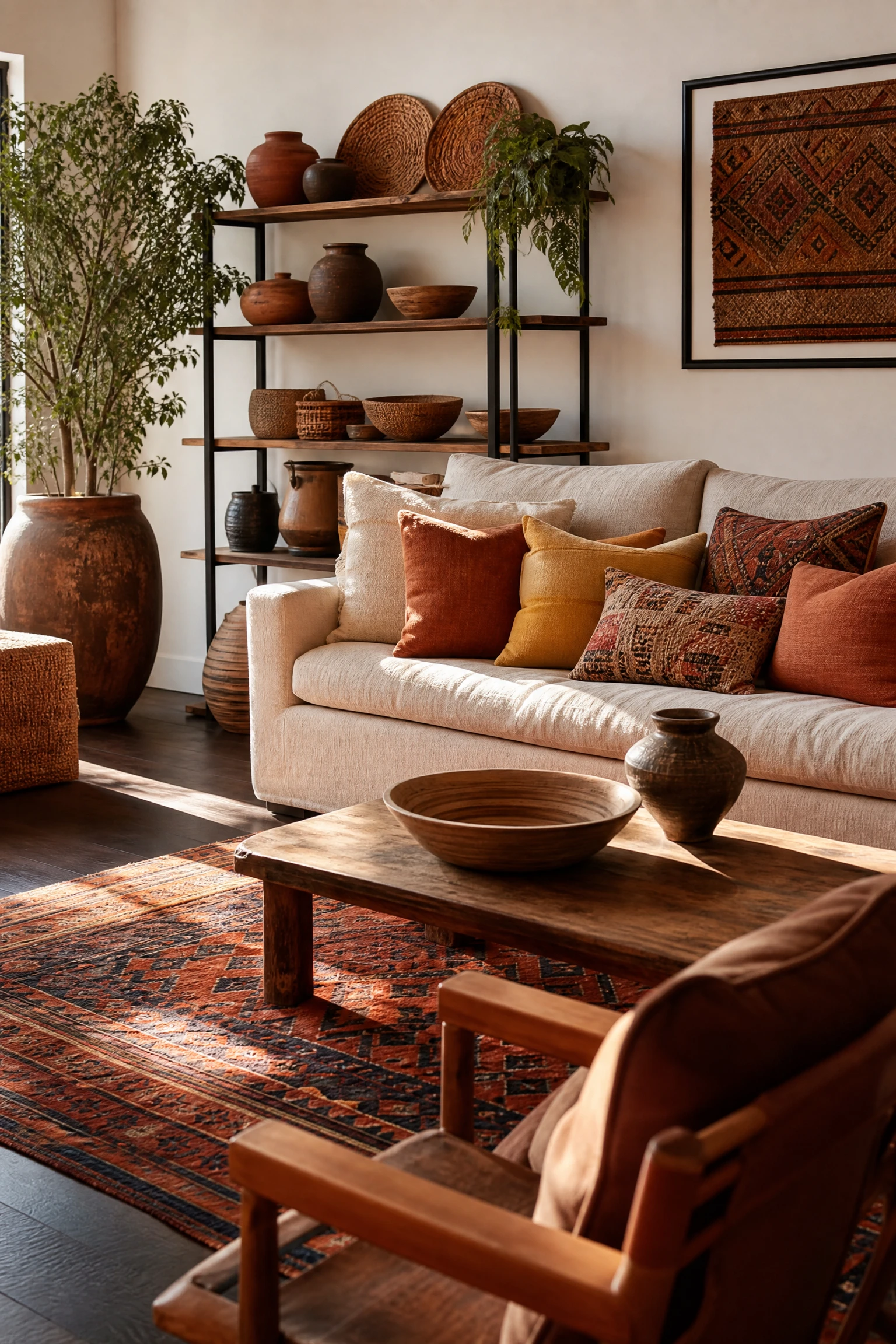
14. The Style Feels Generic: Try an Earthy Maximalist Approach
Most living room guides for dark floors default to the same safe territory: white walls, neutral sofa, green plant. If that formula feels too predictable for your taste, dark brown floors are actually one of the best bases for a richer, more layered approach. The earthy maximalist direction, which draws on warm terracotta, deep rust, mustard, olive, and brick red layered across cushions, ceramics, woven textiles, and art, can look spectacular against a dark floor because the floor provides a grounding base that stops the richness from tipping into chaos. The key difference between maximalism that works and maximalism that overwhelms is restraint within categories: keep the palette warm and earthy rather than mixing warm and cool, limit the pattern repeat so not every piece is patterned, and always anchor the arrangement with at least one large neutral element, typically the sofa or the rug, to give the eye somewhere to rest.
Quick Tip: A terracotta pot, a rust-colored throw, and a mustard cushion used together over a neutral sofa is all it takes to start pulling this look together affordably.
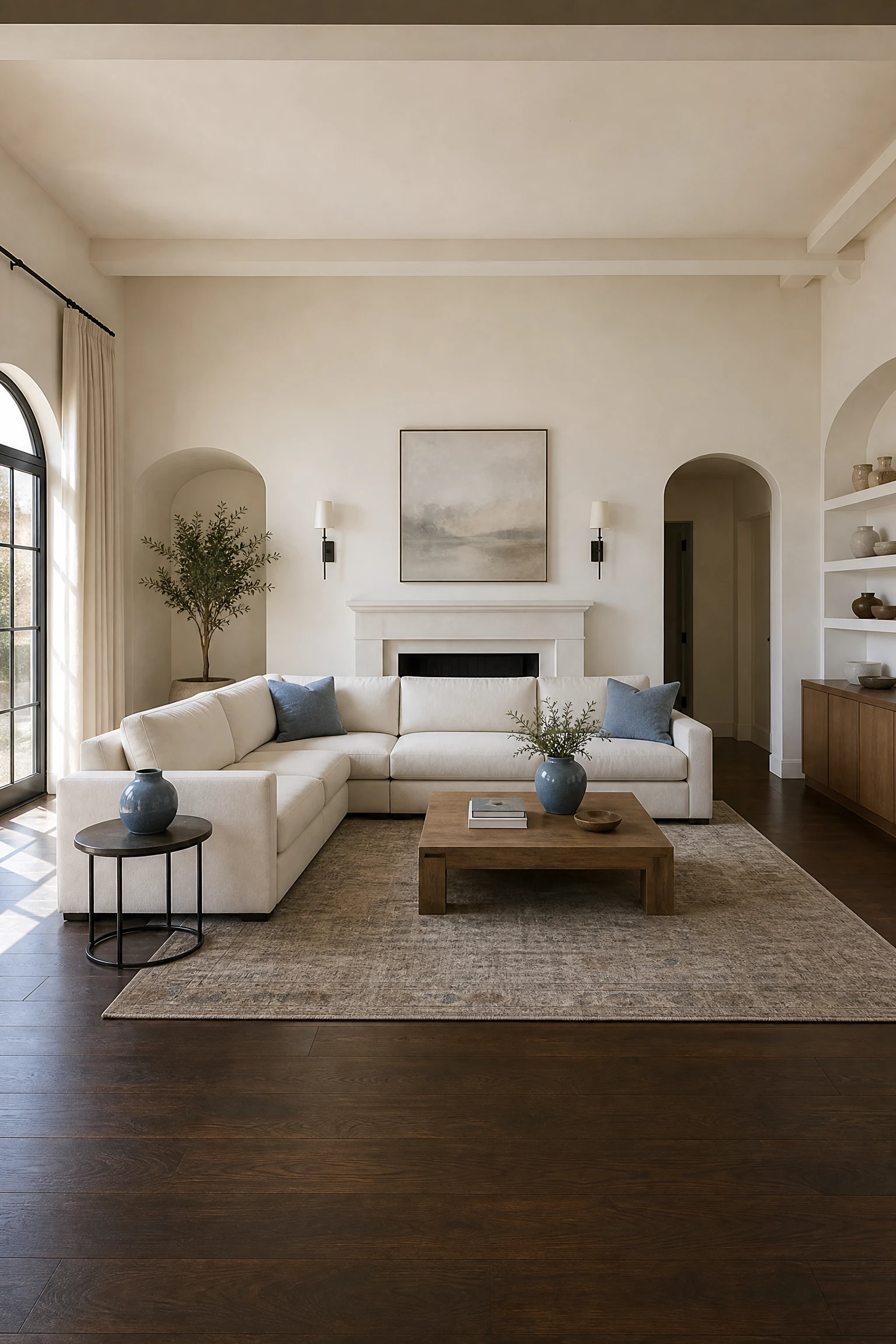
15. The Floor Gets Overwhelmed by Dark Furniture: Use the “60-30-10” Rule
One of the most useful frameworks for decorating a living room with dark brown floors is the classic 60-30-10 color rule, and it is particularly helpful for preventing the room from becoming too dark and heavy. In this context, 60 percent of the room’s color should be the dominant neutral, usually the walls and largest furniture pieces, in a light or mid tone. Thirty percent should be the secondary color, which could be the floor, the rug, and mid-tone accents. Ten percent is the accent color, which comes in through cushions, art, and small decor. What this prevents is the situation where dark floors, dark sofas, dark curtains, and dark furniture all add up to a room that feels heavy and airless. The floor already claims a significant visual percentage of the room, so the 60 percent dominant element should work hard to be light, otherwise the balance tips toward heavy and the room loses its sense of openness.
Designer Advice: Write down the actual colors in your room and estimate their percentage presence. Most rooms with dark floors that feel too heavy have accidentally given 50 percent or more of their visual space to dark tones.
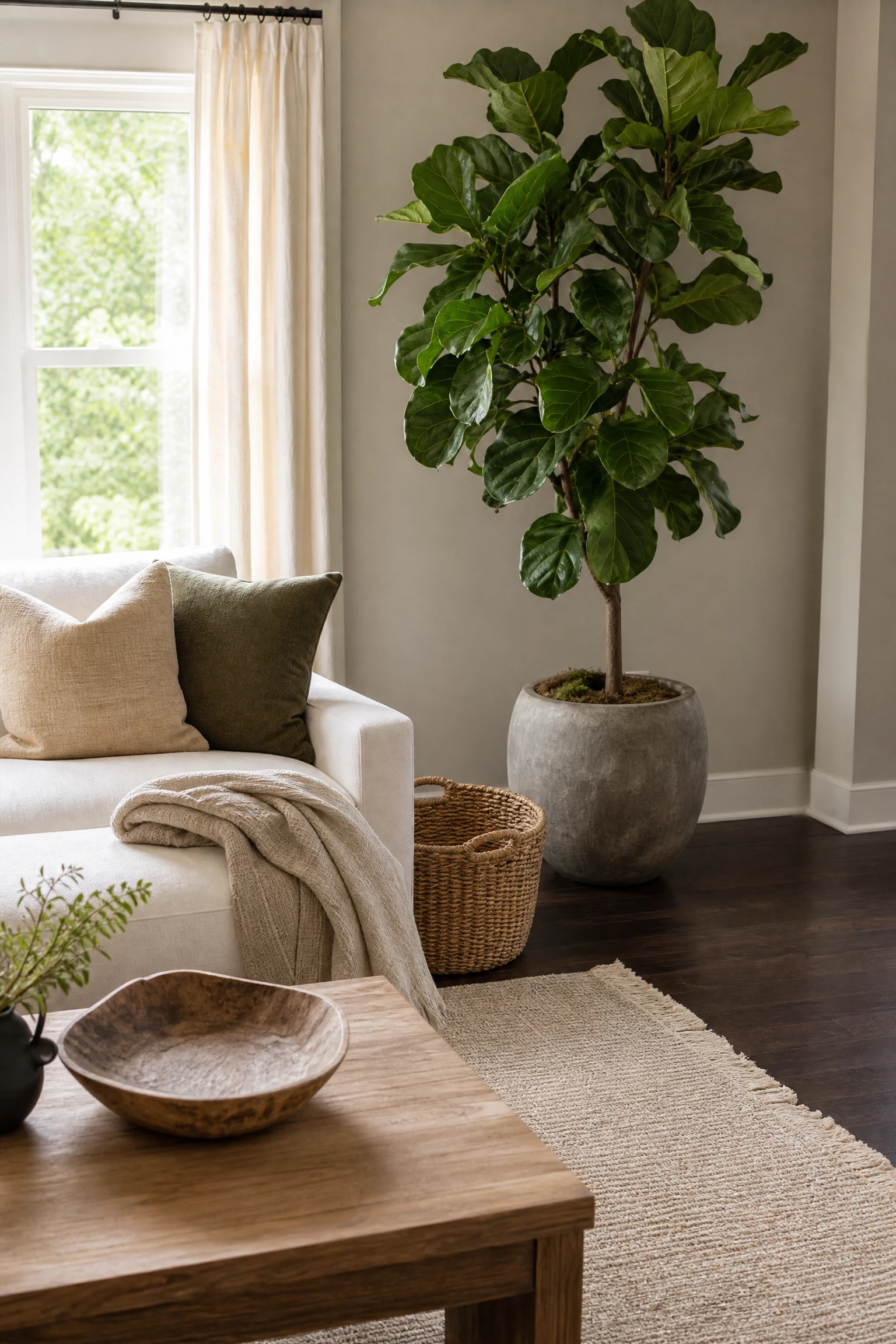
16. The Living Room Lacks Warmth: Add Organic and Biophilic Elements
Dark brown floors have a natural connection to the outdoors, to wood, earth, and bark, and one of the most effective ways to build on that connection is through biophilic design: the deliberate introduction of living plants, natural materials, and organic forms into the space. A large fiddle leaf fig or monstera in a matte terracotta or stone pot placed in a corner will do more for the warmth and vitality of a dark-floored living room than almost any piece of furniture can. The deep green of large-leafed plants contrasts beautifully with dark brown wood, and the vertical height of a tall plant draws the eye upward, which helps counter the floor’s visual weight. Beyond plants, woven baskets, rattan furniture pieces, linen throws, and wooden bowls all contribute to the organic warmth that makes a room with dark flooring feel earthy and inviting rather than heavy and oppressive. This approach works at any budget level, since a well-chosen plant is one of the most affordable design investments available.
Heads Up: Dark floors can be difficult to see pet or pest damage on, so keep plant pots on saucers and check underneath regularly if you have large indoor plants near your flooring.
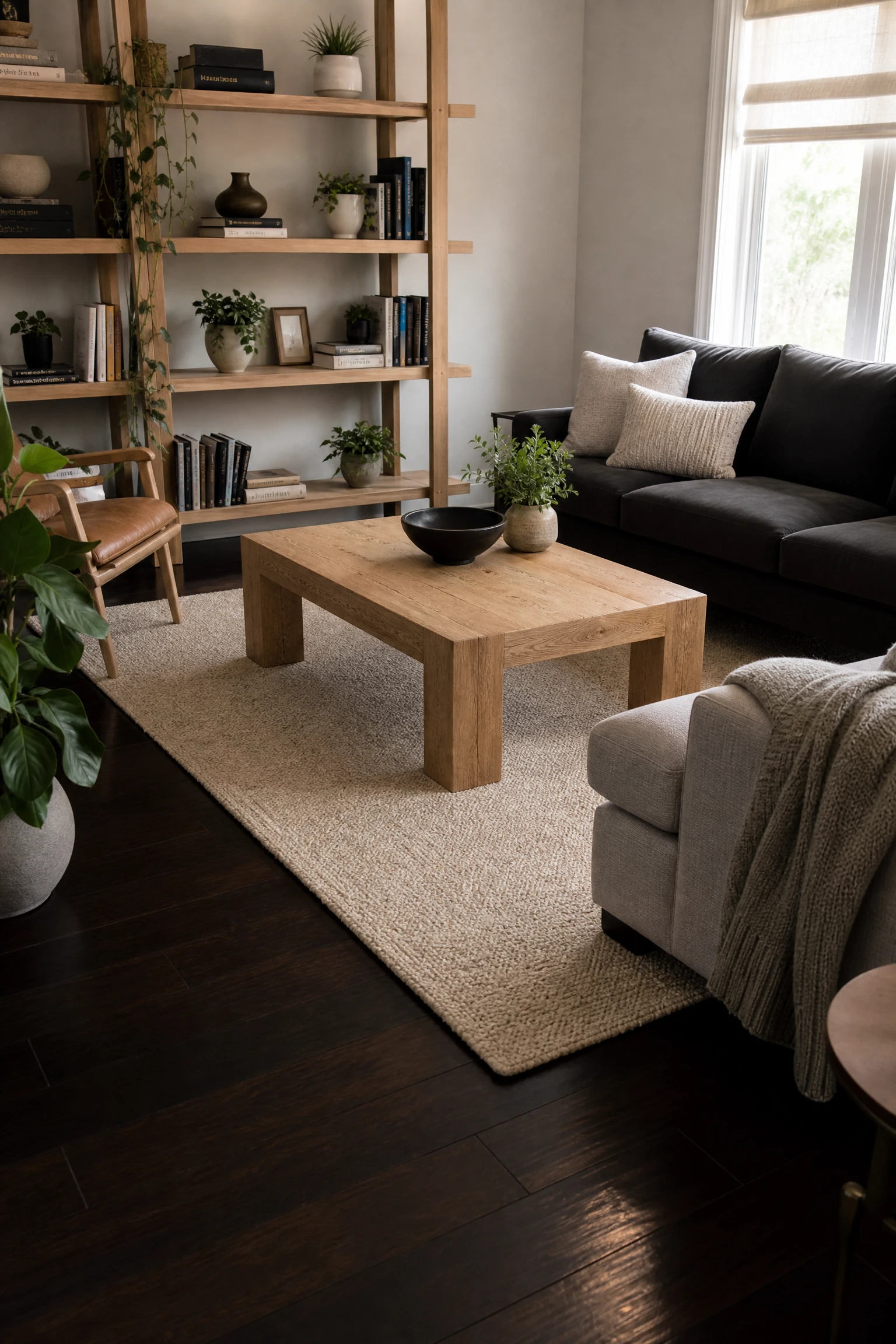
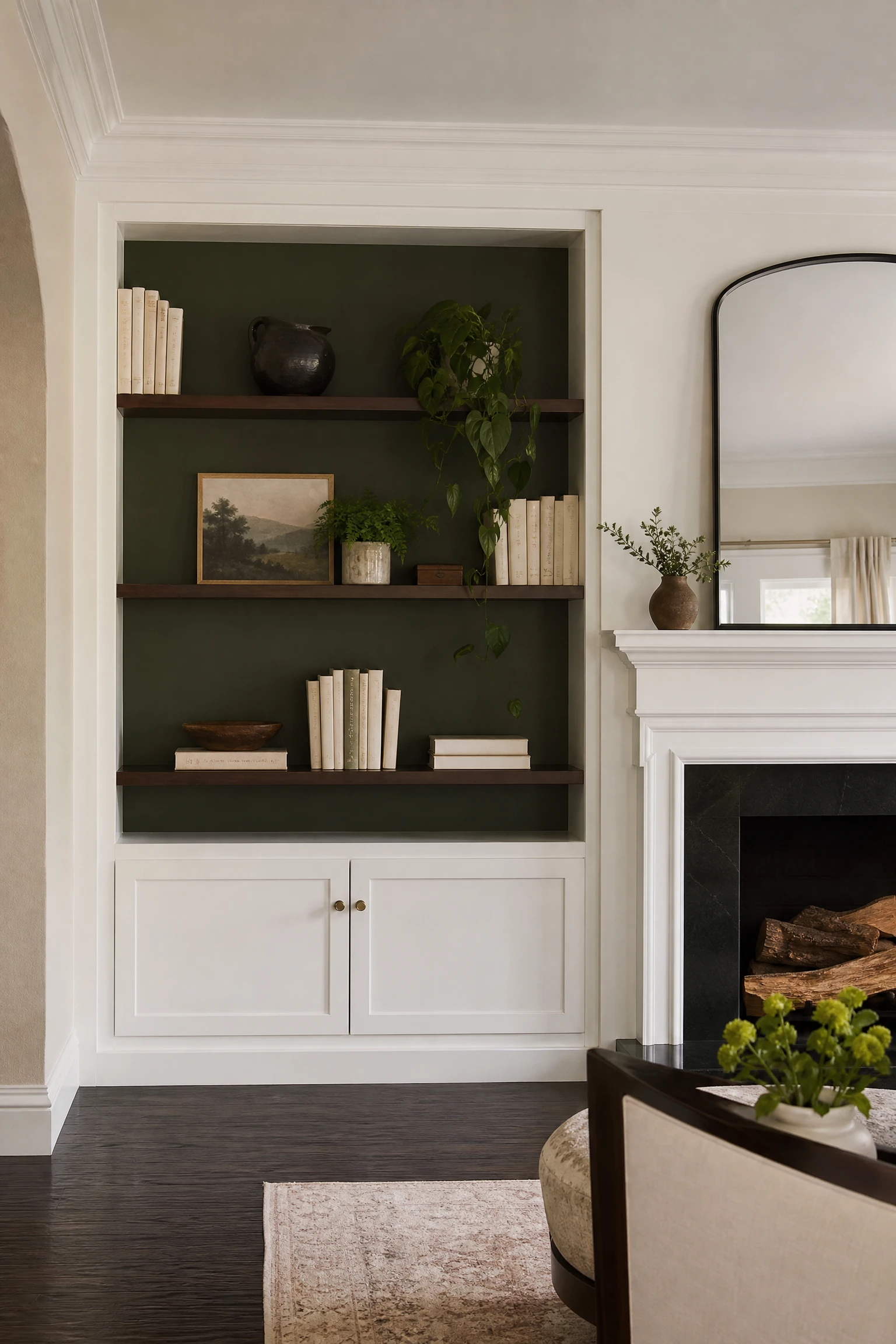
17. Floating Shelves Look Disconnected: Ground Them With a Dark-Toned Display
When a living room has dark brown floors, floating shelves or a bookcase on a lighter wall can sometimes feel disconnected from the rest of the room, as if they belong to a different space. The solution is to use the display on those shelves to create a visual reference back to the floor, without simply putting dark objects on every shelf. A mix of dark-spined books, one or two dark ceramic pieces, and some trailing or sculptural plants alongside lighter objects will pull the shelving into the room’s overall tonal story. Alternatively, painting the back panel of a bookcase or alcove shelf unit in a deep, warm color, terracotta, forest green, or even a near-black navy, creates a backdrop that anchors the shelving to the floor’s depth while making objects displayed against it pop. This is a paint-only move that costs very little and changes the visual weight of the entire wall.
Pro Move: Paint the interior back panel of a built-in or freestanding bookcase in a deep, warm shade to visually connect it to the dark floor and transform ordinary shelving into a design feature.
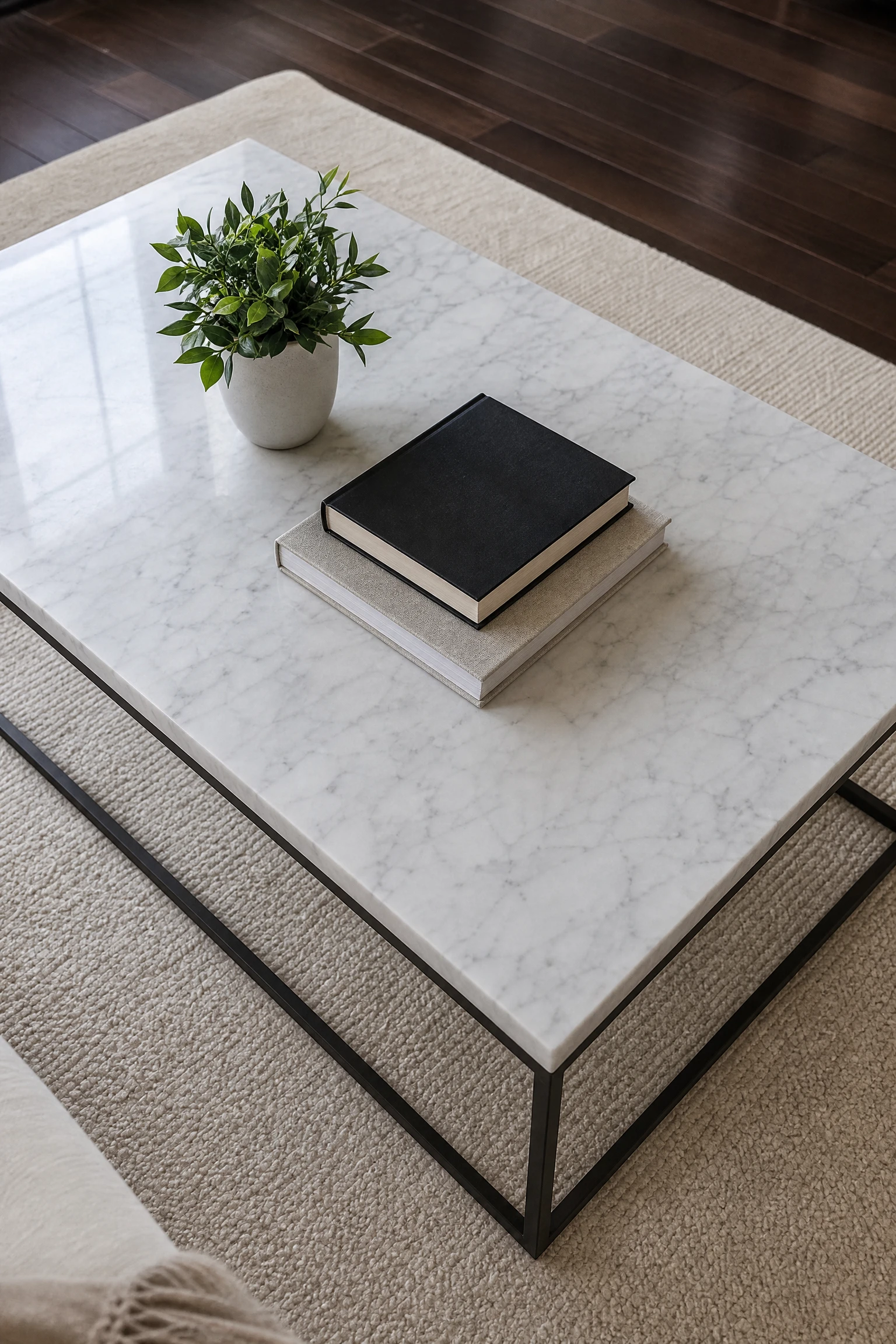
18. The Coffee Table Disappears: Choose Glass, Marble, or Light Wood
A dark brown coffee table in front of a sofa sitting over a dark brown floor is one of the most common mistakes in rooms with rich flooring, and it is easy to understand why: the table simply vanishes. Coffee tables are a central visual anchor in the living room, meant to pull the seating arrangement together and provide a surface at eye level when seated. When the table blends into the floor, that function is lost aesthetically even if it still works practically. For dark brown floors, a glass-topped coffee table is the most elegant solution because it lets the floor show through while defining the zone. Alternatively, a marble-topped table in white or cream veined marble will sit beautifully above the dark floor and introduce a hard, cool surface texture that contrasts with the warmth of the wood. Light or raw oak coffee tables work well in more relaxed, natural interiors where glass or marble would feel too formal.
Reality Check: Glass coffee tables require consistent cleaning and show fingerprints readily, which is worth factoring in if you have children or pets.
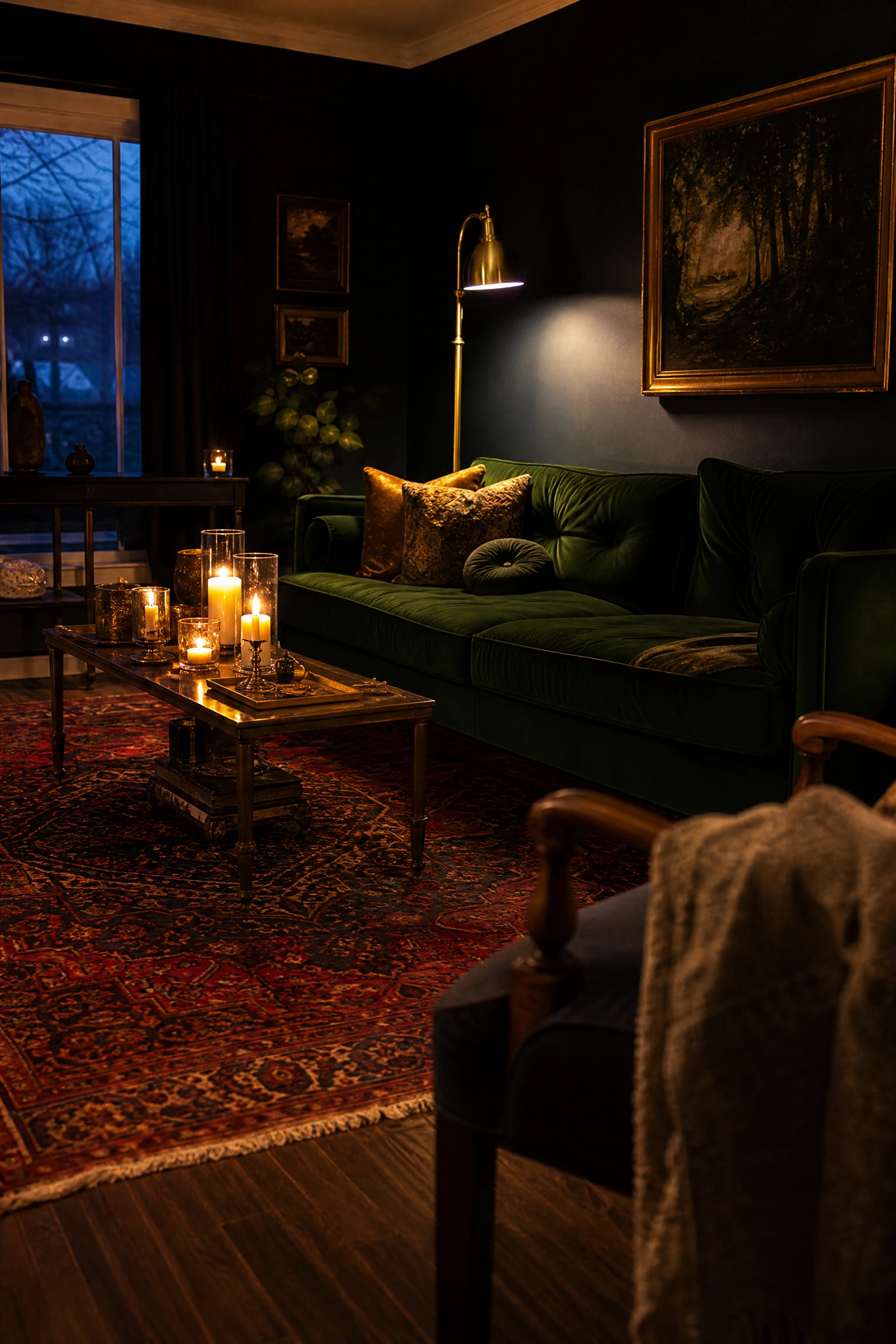
19. The Room Lacks Drama: Lean Into a Moody, Layered Aesthetic
Not every dark-floored living room needs to be brightened and lightened. For some spaces and some personal styles, the right answer is to lean fully into the depth the floors provide and build a room that is deliberately moody, rich, and enveloping. This approach works best in rooms with at least one generous source of natural light, so the dark palette does not tip into oppressive. The recipe involves deep-toned walls in navy, forest green, or charcoal, anchored by the dark floor and warmed through with rich textiles, brass or bronze hardware and lighting, and layered lighting at multiple levels. A dark green velvet sofa, a brass floor lamp, a Persian rug in deep reds and blues, gallery art in dark frames, and candles on every surface: this is a living room that reads as intentional, sophisticated, and confident rather than dark by default. It is investment-level in terms of furniture cost, but the wall paint and lighting elements can start the mood shift at a lower price point.
Designer Advice: This look requires strong, deliberate lighting design. Without layered warm lighting at low and mid levels, a dark-palette room will feel like a basement rather than a sanctuary.
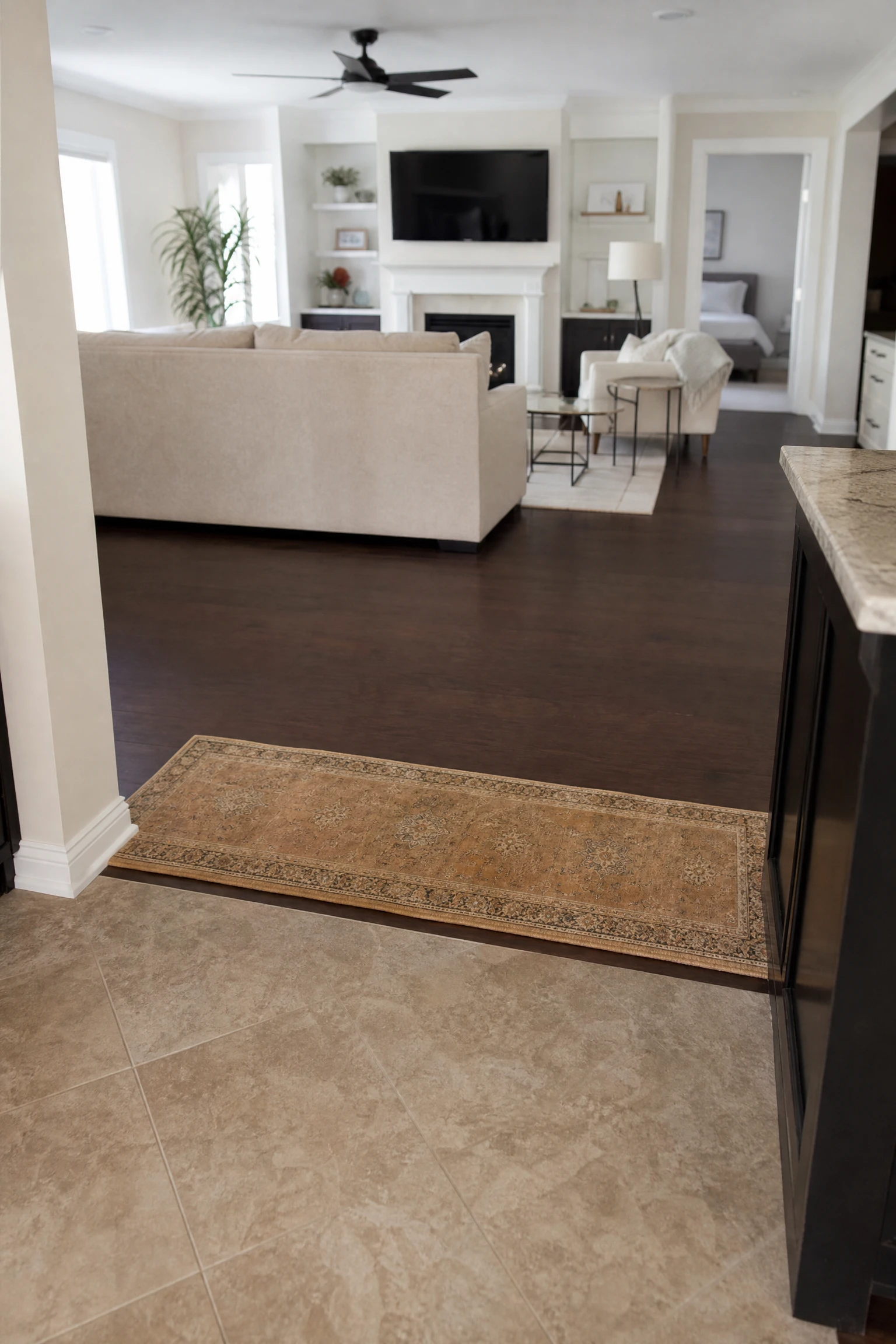
20. The Transition to Other Rooms Looks Awkward: Use a Threshold Rug
In open-plan spaces or where a dark-floored living room transitions into a hallway or kitchen with lighter flooring, the boundary between the two can look abrupt and unresolved. A runner or threshold rug placed at the transition point softens the visual jump between floor tones and defines the living room zone without the need for walls. Choose a rug that borrows at least one color from each flooring material to function as a visual connector rather than a hard stop. In rooms where the dark floor transitions to pale tile or light-toned wood, a warm-toned runner in rust, caramel, or cream will ease the shift without drawing attention to the junction. This is a modest investment, runners start at affordable prices from most homeware stores, but it makes a disproportionate difference to how a connected space reads as a whole.
Quick Tip: In open-plan spaces, use the rug’s position to define where the living room “starts” rather than relying on furniture placement alone to mark the boundary.
21. The Ceiling Feels Low: Keep Furniture Legs Visible
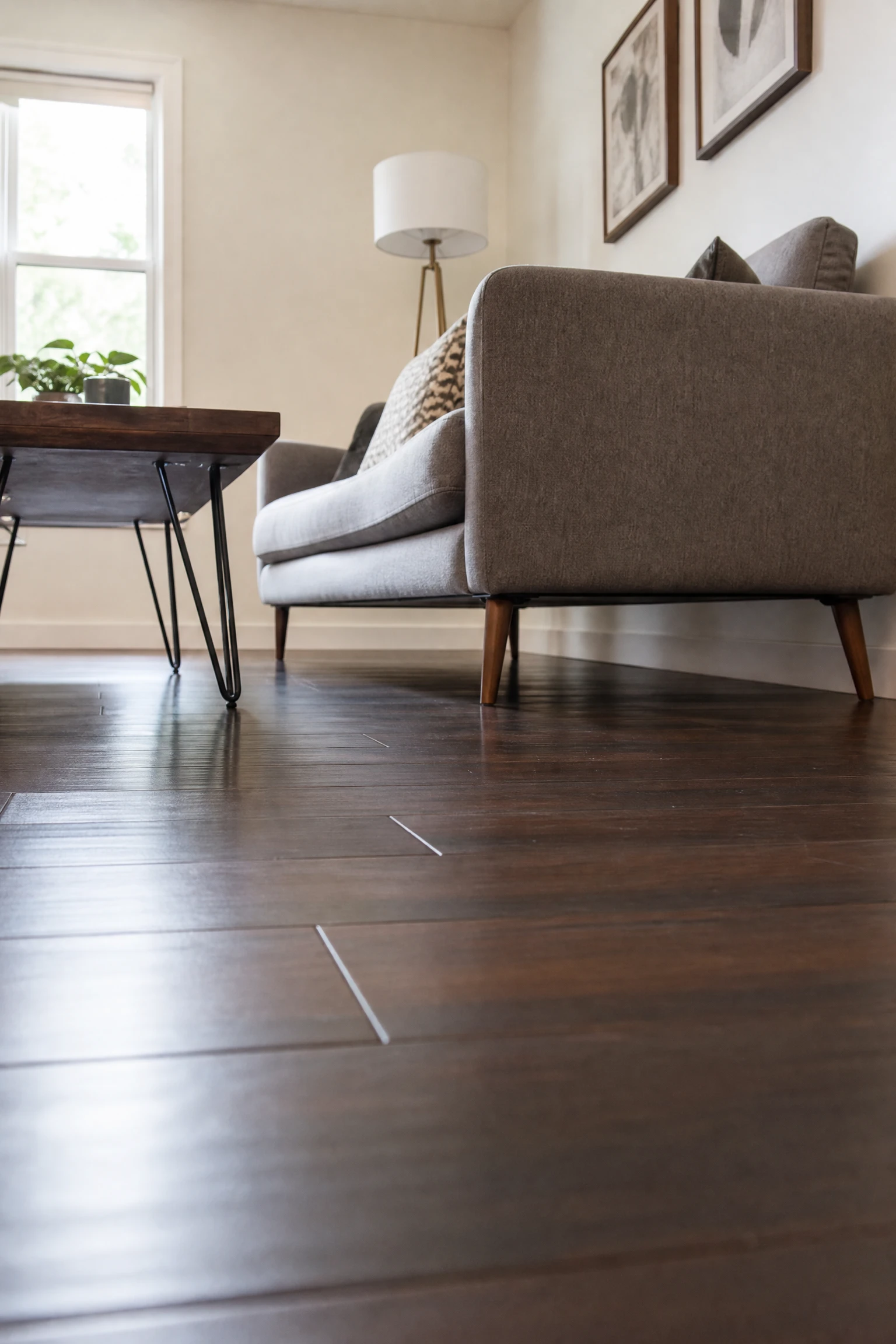
In living rooms with dark brown floors and standard or lower ceiling heights, visual heaviness can accumulate quickly if all the furniture sits solidly on the floor with no visible leg clearance. The trick used by designers in exactly this situation is to prioritize furniture with exposed legs, thin tapered mid-century modern legs, slim hairpin legs, or raised wooden legs in a lighter finish, so the floor remains partially visible beneath the seating and tables. This “visual breathing room” between furniture and floor is what prevents a room from feeling squat and heavy. A sofa with legs rather than a fully skirted base, a coffee table that sits raised rather than flat on the floor, and side tables on slender frames all contribute to the sense that air moves through the room at ground level. This is a furniture-selection consideration, not a renovation, and it makes a measurable difference in how roomy a room feels.
Heads Up: Low platform sofas look striking in design photography but can make rooms with dark floors feel heavier at ground level. Raised-leg options generally serve dark-floored spaces better.
22. Seasonal Decorating Feels Hard: Use the Floor as a Constant and Swap Accents
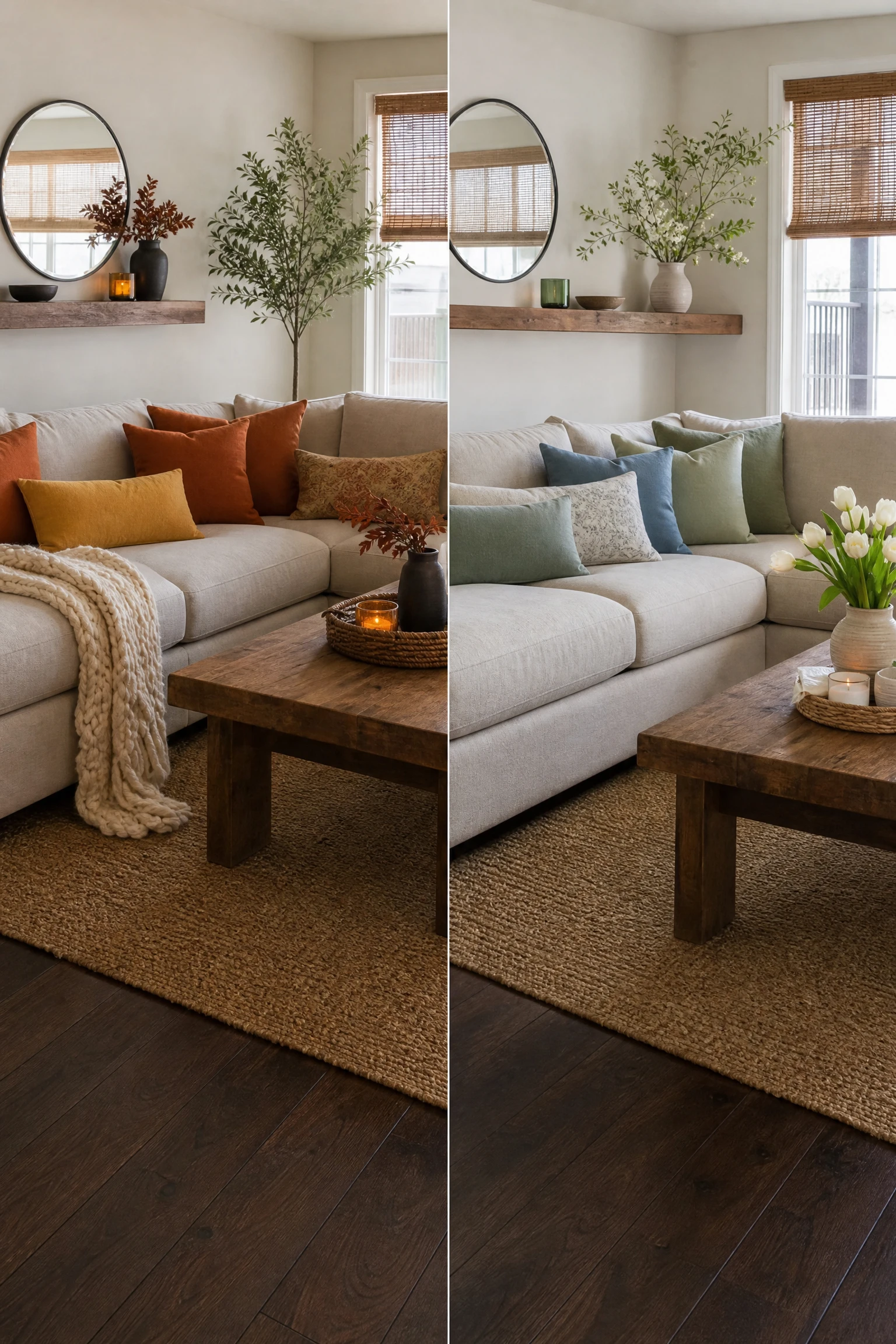
One of the genuinely practical advantages of dark brown floors is that they serve as a stable, year-round foundation that makes seasonal decorating easy. Because the floor is always there as a warm, rich constant, the work of shifting the room’s mood from season to season can be done entirely through swappable soft furnishings and accessories. In autumn and winter, lean into the floor’s warmth with rust-toned cushions, chunky wool throws in caramel and cream, and warm amber candlelight. In spring and summer, shift to pale linens, sage green or dusty blue accents, and light rattan or wicker accessories. The floor never changes and never clashes, because its earthy warmth is compatible with both warm and cool seasonal palettes. Budget for a “capsule” set of cushion covers and one seasonal throw in each palette and the room can feel genuinely different twice a year without significant cost.
Pro Move: Invest in high-quality cushion insert pads and simply swap covers seasonally rather than buying complete new cushions. The savings over a few years are significant.
23. The Room Feels Incomplete: Finish With Layered Metallic Accents
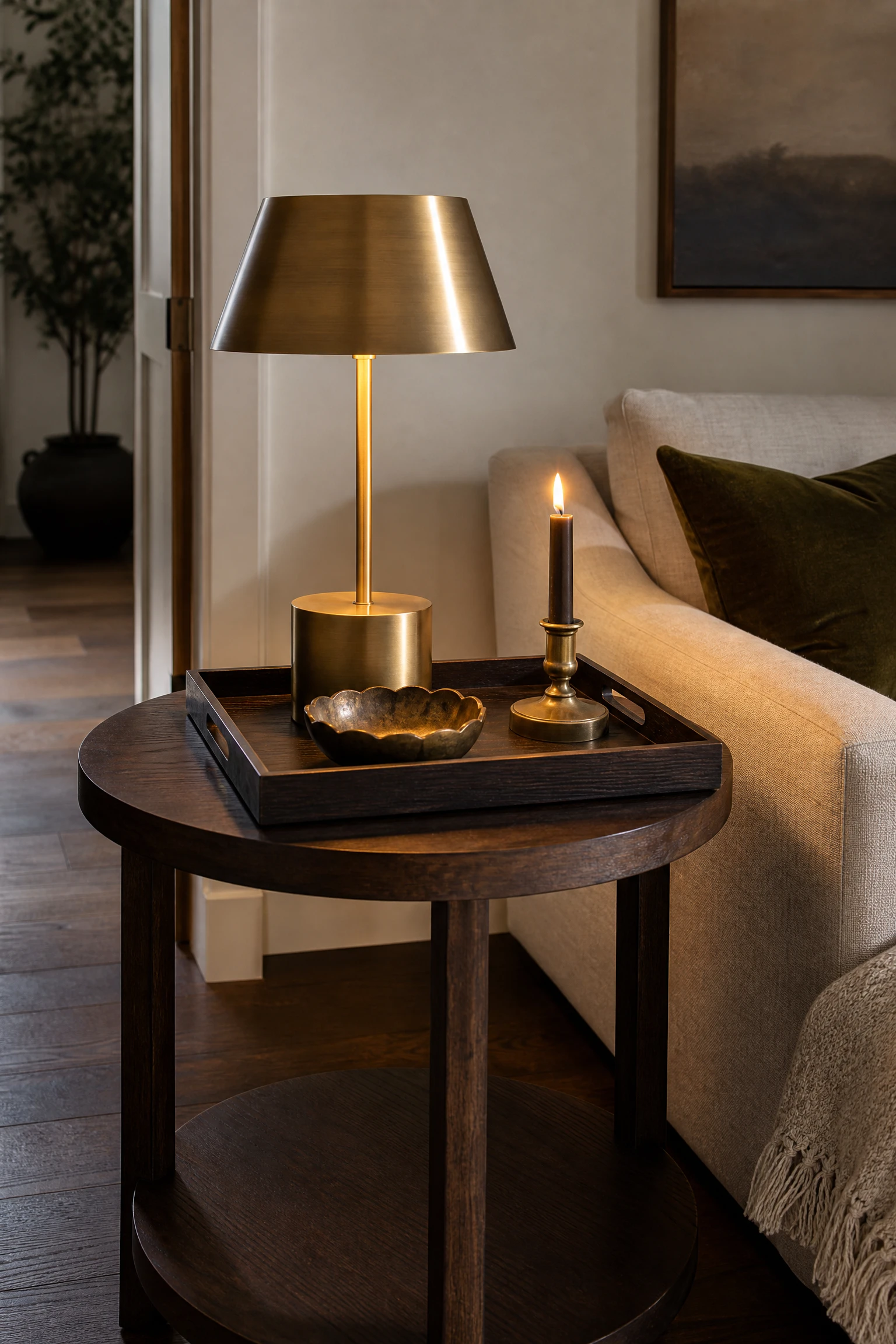
Dark brown floors and metallic accents have a relationship that is worth understanding clearly. Warm metals, specifically brass, bronze, antique gold, and copper, look exceptional against dark wood because they echo the warm red and yellow undertones present in most brown floor finishes. Cooler metals like chrome and bright silver can work but tend to feel slightly at odds with the warmth of the floor unless the overall room palette is deliberately cool. In practice, brass and bronze accents show up in table and floor lamps, drawer pulls and door hardware, picture frame borders, candle holders, and small decorative objects. You do not need a lot of them for the effect to register. Three to five brass or bronze pieces distributed across the room will create a warm, cohesive thread that ties the room together and gives it the kind of finished quality that stops visitors and makes them feel the room was professionally designed rather than put together gradually over time.
Designer Advice: Keep all metals in the same family across a room. Mixing warm brass with cool chrome creates a feeling of visual inconsistency that is hard to pinpoint but easy to feel.
24. The Room Works but Does Not Feel Special: Add an Architectural Detail
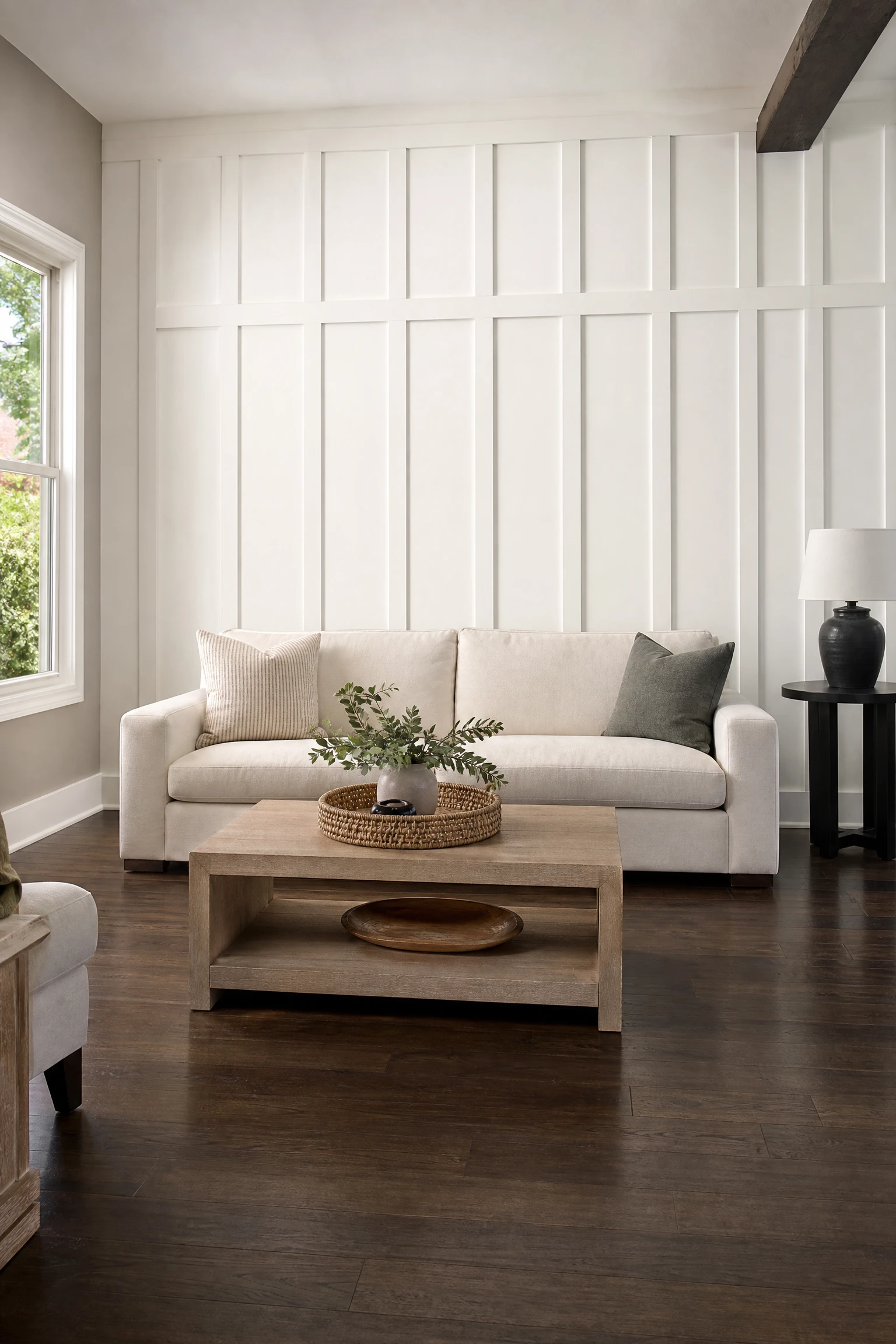
Sometimes a dark-floored living room has all the right pieces but still feels like something is missing. What is often missing is an architectural detail that gives the room character independent of its furnishings. This could be a picture rail along the upper third of the wall, painted the same color as the wall so it reads as texture rather than contrast. It could be board-and-batten paneling on the lower half of a feature wall, painted white to sharpen the contrast with the floor. It could be a simple plaster or wooden ceiling rose around a central light fixture, or crown molding at the ceiling line to frame the room’s upper boundary and give it a sense of proportion. These details work particularly well in rooms with dark floors because the floor already provides a strong base, and architectural details at mid and upper wall levels create the full-room presence that furnishings alone cannot always achieve. Most of these can be achieved with a weekend’s work and paint, which keeps them in the affordable category.
Reality Check: Board-and-batten paneling on a single feature wall, painted white, is one of the highest-impact, lowest-cost architectural upgrades available and it looks particularly striking above dark brown flooring.
Finding Your Own Version of This Look
Dark brown floors are not a design problem to be solved. They are one of the warmest, most grounding materials available in residential design, and they respond well to a wide range of styles, palettes, and personalities. The ideas here cover everything from quick, low-cost fixes like swapping cushion covers and repositioning a lamp, to longer-term investments like re-painting walls or choosing new upholstery. Not every idea will suit every room or every aesthetic, and that is the point. The best approach to a dark-floored living room is the one that works with the light you actually have, the furniture you actually own, and the way you actually want to feel when you sit down in the space.
Start with the ideas that address your most pressing pain points, whether that is a room that feels too dark, furniture that disappears into the floor, or a space that simply lacks cohesion. Build from there. Dark brown floors reward deliberate, layered decorating in a way that few other floor finishes do. Give the space the attention it deserves and it will give you a living room that feels genuinely rich, warm, and lived-in in the best possible way.
Which of these design moves would actually change your dark-floored living room? Drop your answer in the comments below.
Frequently Asked Questions
What wall color works best with dark brown floors?
The most reliable option is a warm white or off-white, such as Benjamin Moore White Dove or Sherwin-Williams Alabaster. These shades create strong contrast with the floor, prevent the room from feeling heavy, and let the floor’s warmth come forward as the room’s main visual feature. Pale sage green, dusty blue-gray, and warm putty tones are also strong choices depending on the style you are going for. The one color to avoid is a mid-tone gray, which can make the space feel flat and cold rather than warm and grounded.
Should I match my furniture to my dark brown floors?
In most cases, no. Matching dark furniture to dark floors tends to flatten the room and remove the contrast that makes both the floor and the furniture look intentional. The better approach is to choose upholstery and larger furniture pieces in lighter or contrasting tones, specifically cream, oatmeal, warm taupe, or dusty blue, and use a rug to create visual separation between the furniture and the floor. Mid-tone natural wood pieces work as a bridge between the very dark floor and the lighter furniture without looking mismatched.
How do I make a living room with dark brown floors feel bigger?
The most effective strategies are: keep walls light (white or near-white), use mirrors to reflect light and create the perception of space, choose furniture with visible legs rather than solid skirted bases, use a well-sized area rug to define the seating zone without choking the floor space, and maximize natural light by keeping window treatments light and hung high. Decluttering also plays a significant role. Dark floors absorb light, so any visual noise from too many objects on surfaces will amplify the sense of heaviness.
What color rug should I put on dark brown floors?
A rug in a medium to light tone with some pattern or texture works best. Good choices include cream or ivory grounds with a geometric or Persian pattern, natural jute or sisal in a honey tone, low-pile flatweave kilims in terracotta and navy, and wool rugs in warm gray or camel. Avoid very dark rugs, as they will merge visually with the floor and eliminate the contrast that makes the room feel layered. The rug should be large enough so that at minimum the front legs of all seating pieces rest on it.
Can I use dark furniture with dark brown floors?
Yes, but it requires more deliberate handling. If you want to use dark furniture, create contrast through lighter walls, a light-toned area rug beneath the furniture grouping, and carefully placed lighting that illuminates the furniture and the floor separately. A dark sofa can work over a dark floor if there is a pale rug between them and light walls behind the sofa. Without those contrasting elements, the furniture and floor will merge and the room will feel heavy and poorly lit.
Are dark brown floors going out of style?
No. Dark brown floors have had periods of being perceived as dated, largely because of their association with the matching brown furniture suites popular in the early 2000s. But the floors themselves are not the issue. What has changed is the way designers and homeowners decorate around them. Paired with contemporary palettes, natural materials, and intentional lighting, dark brown floors look completely current. The popularity of Japandi design, earthy maximalism, and warm-toned interiors has actually renewed interest in rich, dark wood flooring, and interior design publications regularly feature dark floors in aspirational home tours.