Scandinavian Furniture Looks That Are Worth Every Penny
There is something genuinely refreshing about Scandinavian furniture. It does not try too hard. It does not shout for attention or pile on decoration just for the sake of it. What it does instead is show up in your home and quietly make everything feel calmer, more considered, and surprisingly cozy, all at the same time. In practice, this style works well because it was never designed with aesthetics as the starting point. It was built around real Nordic life, where winters are long, spaces are modest, and every piece in a room needs to earn its place.
Whether you are starting from scratch, refreshing one room, or just looking for a few pieces that will actually last you a decade, Scandinavian furniture gives you a lot to work with. The ideas below cover every room in the house and every kind of budget, from genuinely affordable finds to a few investment pieces that are worth saving up for. Each one comes with specific guidance on what colors, materials, and lighting to pair it with, plus an honest note on what works in theory versus what actually works when you live with it.
Scandinavian Furniture Ideas for the Living Room
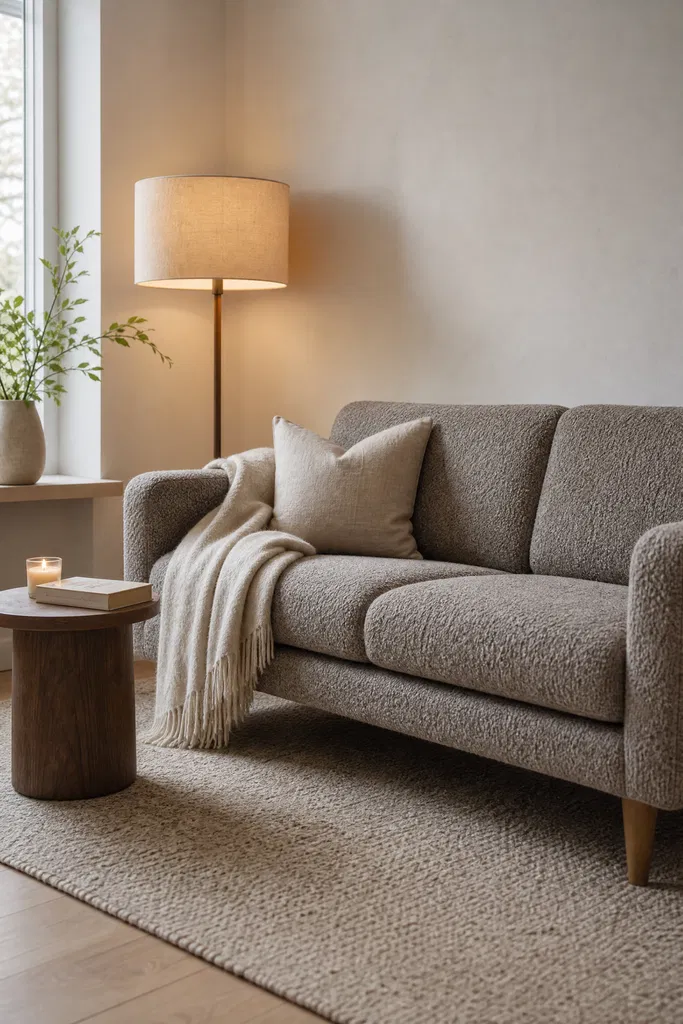
1. The Low-Profile Sofa in Warm Grey Boucle
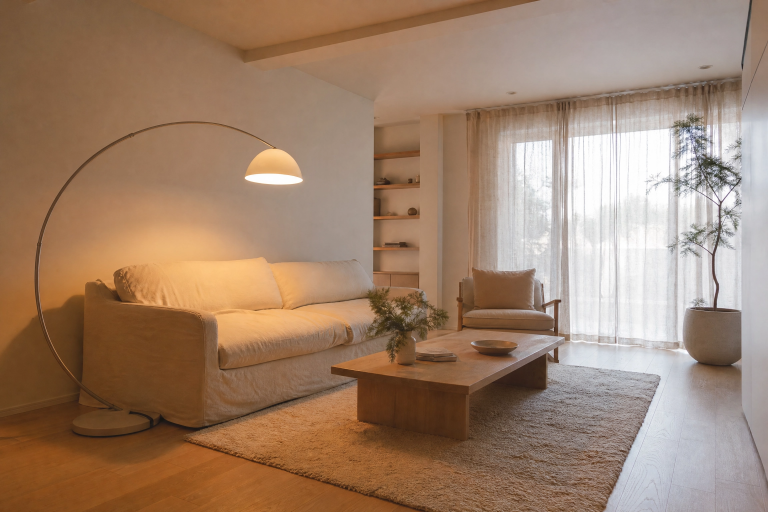
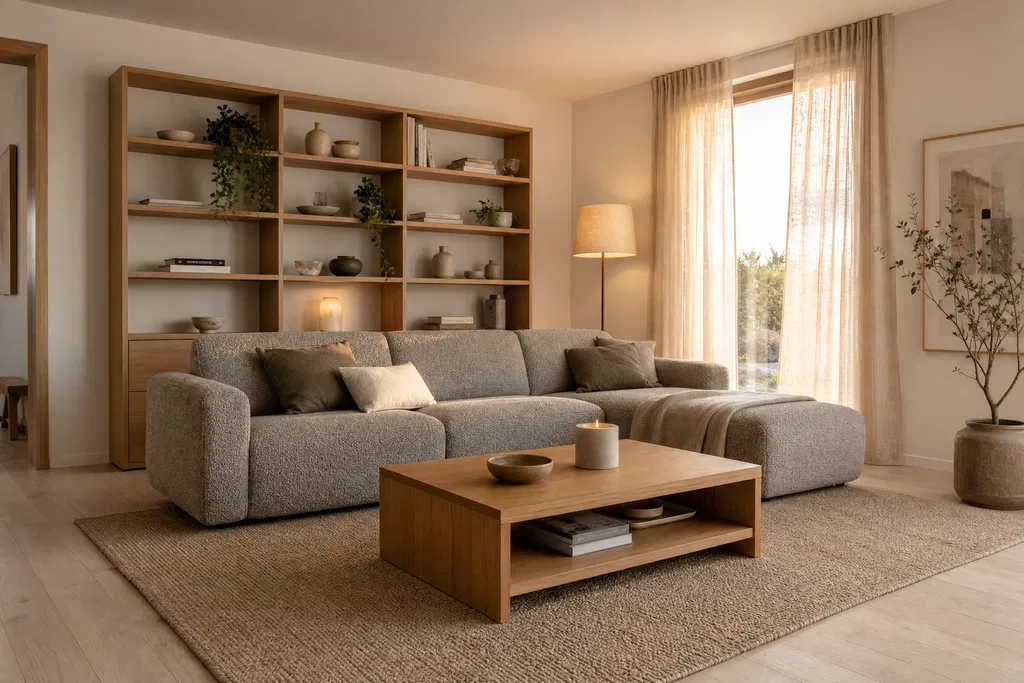
A low-slung sofa with clean, straight arms and tapered solid ash or birch legs is one of the most recognizable pieces in Scandinavian design, and for good reason: it manages to look minimal without feeling cold. Pair it in warm grey boucle fabric, which adds just enough visual texture to keep the room from feeling flat, and layer a cream wool throw over one armrest for that lived-in quality that separates good Scandi rooms from sterile ones. Keep the wall behind it a soft white or warm off-white, and float the sofa on a low-pile wool rug in natural oatmeal or sand to anchor the seating zone. For lighting, a floor lamp with a linen shade positioned just behind one end of the sofa will cast the kind of warm, indirect glow that defines hygge. One thing to be honest about here: boucle fabric does attract pet hair, so if you have animals, a performance boucle blend is the smarter call.
Designer Advice: Keep the sofa legs in the same wood tone as your other furniture. Mixing ash and walnut in the same room can make a well-planned space feel accidental.
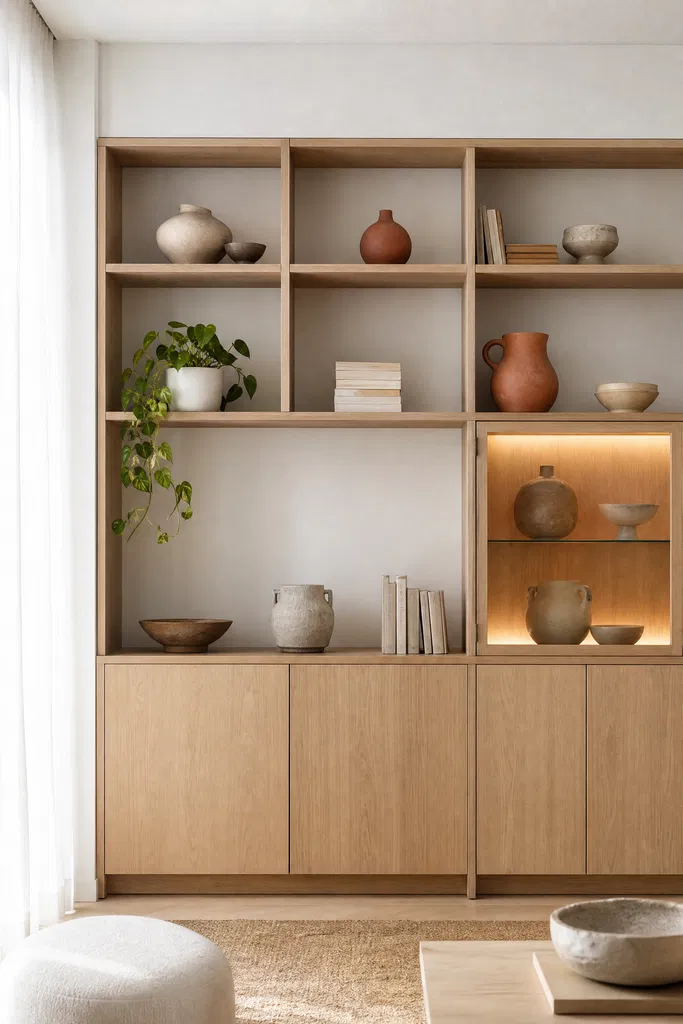
2. The Modular Shelving Wall
Open shelving is a cornerstone of Scandinavian interiors, but the versions worth replicating are not the chaotic, everything-goes kind. The right approach is a modular wall unit in light oak or whitewashed pine, with a mix of open shelves and closed cabinets below. This gives you display space above and hidden storage below, which is a very Nordic way of thinking about a room. Style the open shelves with a carefully edited selection of ceramic vessels in muted terracotta and stone tones, a few paperback books stacked horizontally, and one or two small plants like a trailing pothos or a compact fiddle-leaf fig. The negative space between objects matters as much as the objects themselves, so resist the urge to fill every shelf. In smaller rooms, a wall-mounted version frees up floor space and makes the room feel taller. Budget note: IKEA’s Billy and Kallax systems are genuinely good starting points, and they are designed to be customized with aftermarket fronts.
Designer Advice: Use warm-toned LED bulbs around 2700K inside any glass-fronted cabinet sections. It makes ceramics and glassware glow in a way that cool white light simply does not.
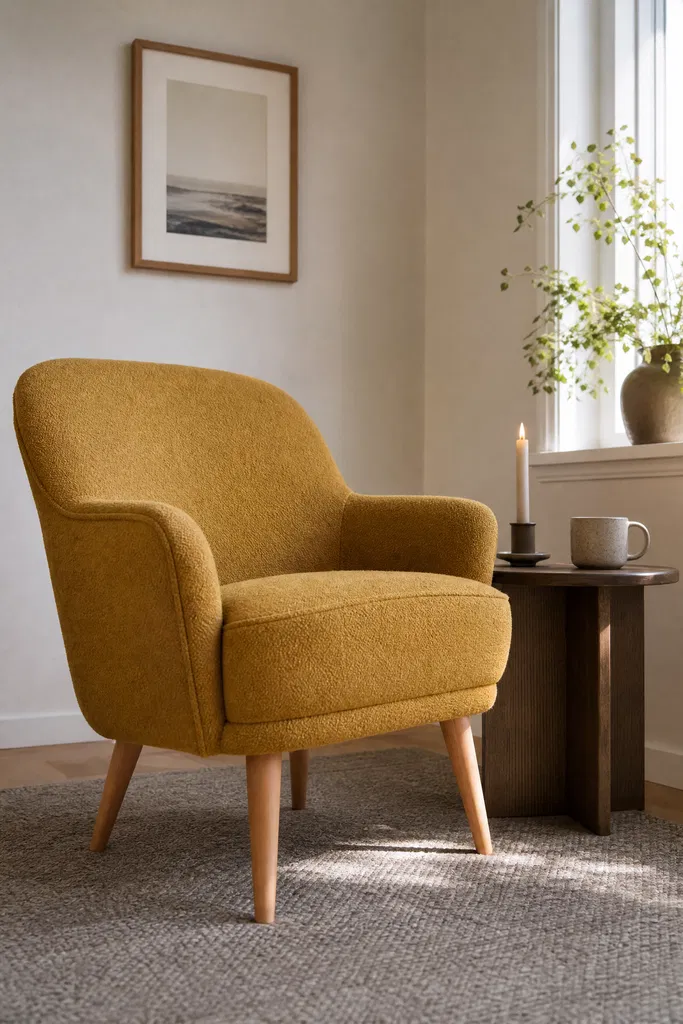
3. The Accent Armchair in Mustard or Forest Green
A single accent armchair is where most Scandinavian living rooms introduce their one pop of color, and it works because everything else is intentionally restrained. Look for a chair with a slightly curved back, a tight seat cushion, and solid wooden legs, shapes that reference mid-century modern roots while staying well within the Scandi aesthetic. Mustard yellow and deep forest green are the two colors that show up most often in Nordic interiors right now, and both read as grounded rather than bold because the tones are muted rather than saturated. Position the chair at a slight angle to the sofa rather than directly facing it, which creates a more natural conversational layout and avoids the showroom look. Pair it with a small side table in smoked oak and a pendant light above if ceiling height allows. This is a mid-range investment: expect to spend between $300 and $700 for a well-made version that holds its shape over several years.
Designer Advice: If you are unsure between mustard and green, look at what your existing rug and cushions lean toward. Warm-toned rooms suit mustard. Cooler-toned rooms suit forest green.
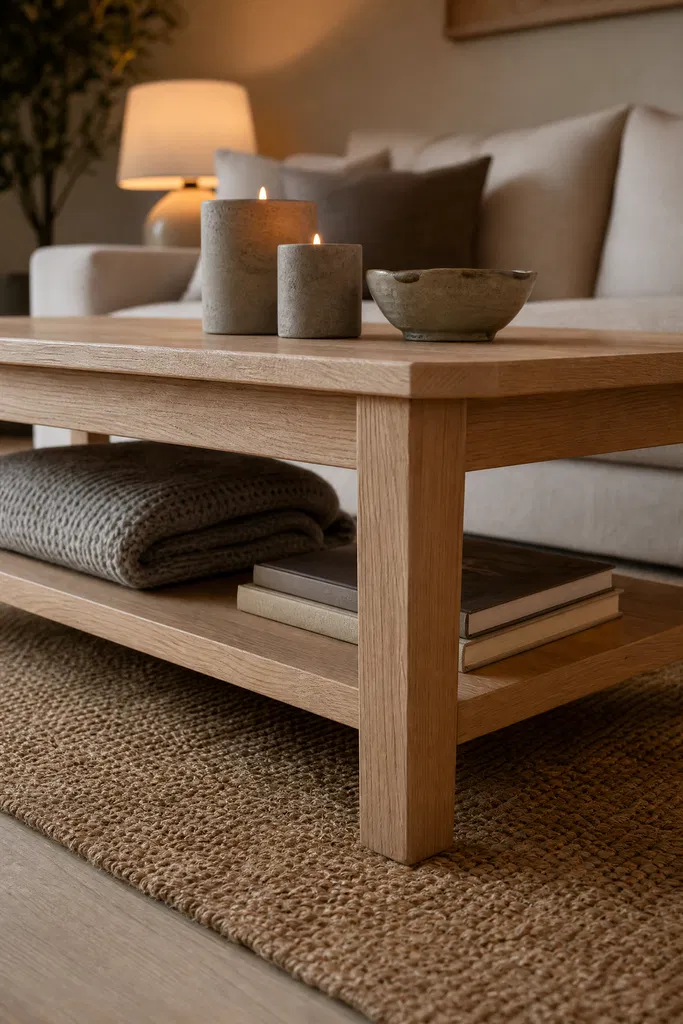
4. The Solid Wood Coffee Table with Storage
In Scandinavian design, a coffee table does not just sit there looking nice. It works. The ideal version has a solid wood top, often in ash or white oak, with a lower shelf for storing books, blankets, or a tray of candles, and clean, unadorned legs that keep the visual weight low. Avoid glass-topped versions in this style as they tend to look more contemporary Italian than Nordic, and skip anything with heavy ornate hardware. The table should sit close to the sofa, roughly 14 to 18 inches away, so it is genuinely within reach. Style the top simply: a small ceramic bowl, a candle or two in raw concrete holders, and one hardcover book with an interesting spine. One real-world note: solid ash and oak are both durable but will dent and scratch over time, which is fine because a well-worn Scandinavian coffee table usually looks better with age than it did new.
Designer Advice: Look for tables where the legs are mortise-and-tenon jointed rather than screwed in. They last significantly longer and feel noticeably sturdier underfoot.
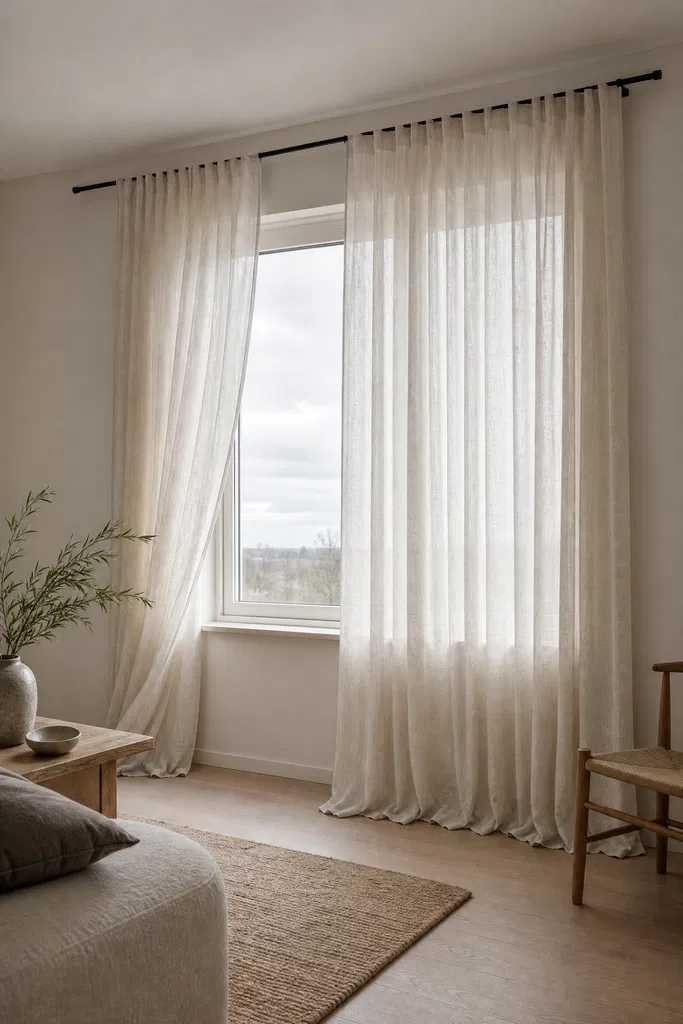
5. Linen Curtains from Ceiling to Floor
Curtains are technically furniture-adjacent, but in a Scandinavian room they function like a piece of furniture because they shape the whole volume of the space. The rule in this style is always to hang curtains as high and as wide as possible: mount the rod at ceiling height and extend it at least 6 inches beyond the window frame on each side. This makes windows look significantly larger and floods the room with more natural light, which is a fundamental value in Nordic design. Choose unlined linen in off-white, warm ivory, or a soft cloud grey. The slight texture of linen softens the room without adding pattern, which keeps the look cohesive. Avoid blackout linings in living rooms where light is the priority. Budget-friendly tip: IKEA’s linen curtain ranges are consistently good and available at a price point that leaves room in the budget for other pieces.
Designer Advice: Steam your linen curtains after hanging and let them drop naturally. The slight wrinkle that remains is intentional in this style. Perfectly pressed linen actually looks wrong in a Scandinavian room.
Scandinavian Furniture Ideas for the Bedroom
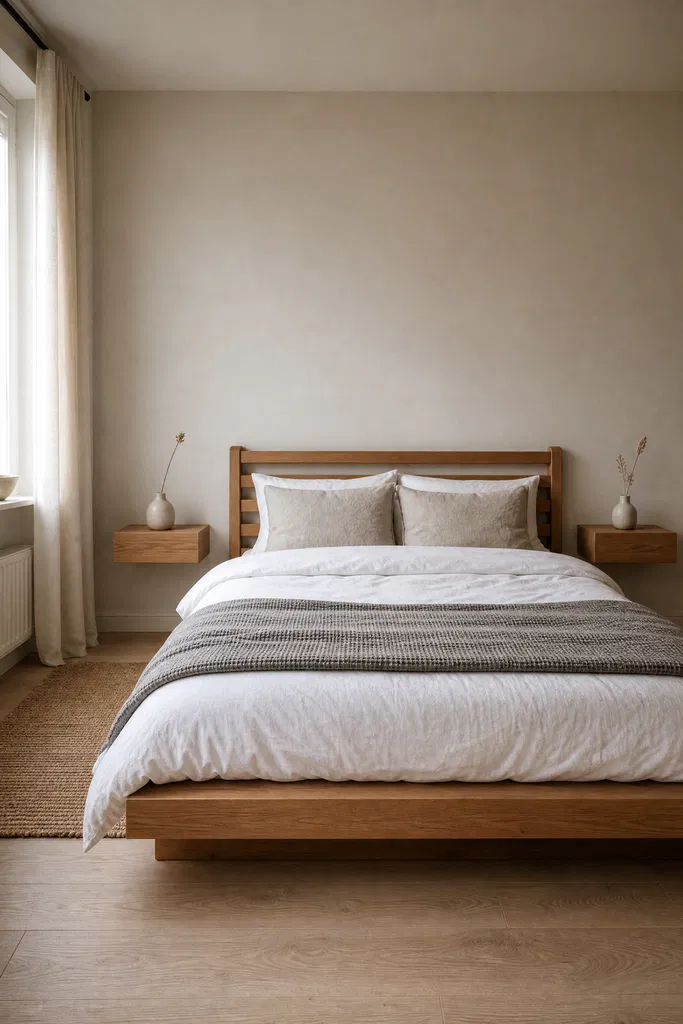
6. The Platform Bed in Solid Oak
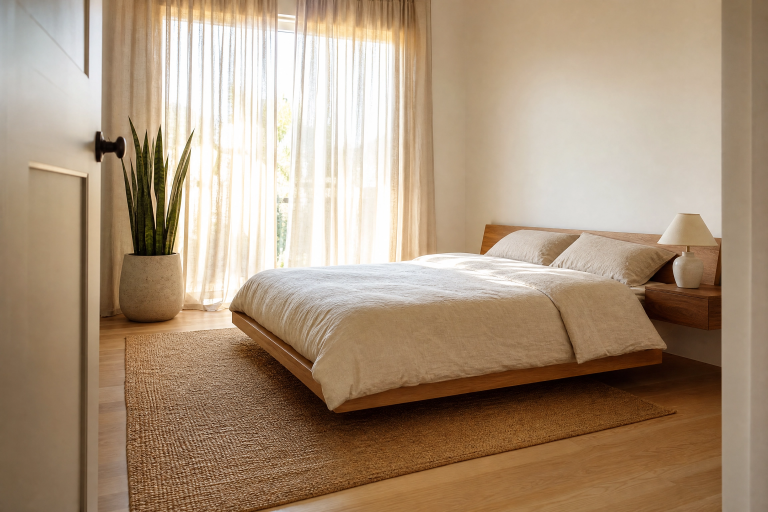
The platform bed is the defining furniture piece in a Scandinavian bedroom, and it works because it sits close to the ground, keeping the room visually calm and avoiding the bulky, top-heavy look of taller bed frames. Look for a version in solid oak or ash with a simple headboard, either a low slatted panel or a minimal upholstered version in oatmeal linen. Keep the bedding in the same family of soft neutrals: layered white cotton duvet covers, a waffle-weave blanket in warm grey, and two or three linen pillowcases in natural flax tones. Leave the nightstands low and simple, ideally wall-mounted to keep the floor clear, which makes the room feel larger than it is. One honest note: platform beds can be harder to get in and out of if you have mobility concerns, so it is worth sitting on the mattress height before committing.
Designer Advice: Choose a headboard height that is proportional to your ceiling. In rooms with standard 8-foot ceilings, a headboard over 40 inches tall will overpower the room. Keep it modest.
7. The Japandi-Influenced Dresser
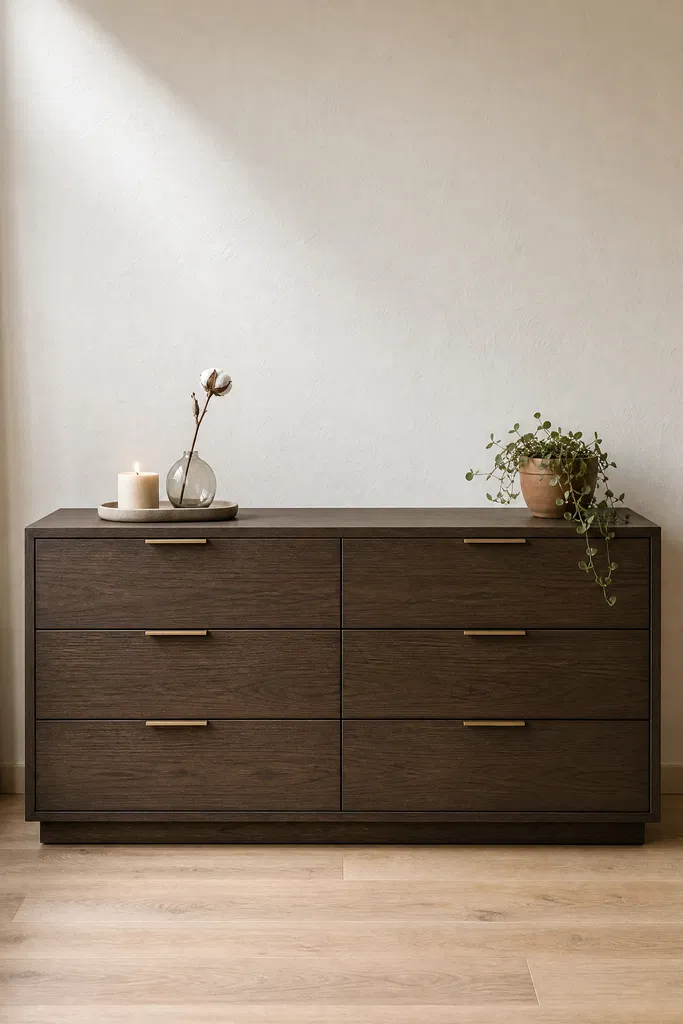
Japandi, the design movement that blends Scandinavian minimalism with Japanese wabi-sabi sensibility, has produced some of the most quietly beautiful bedroom furniture available right now. A low Japandi-influenced dresser in smoked oak or dark walnut, with thin bar pulls in brushed brass or matte black and clean recessed lines, brings a warmth to the bedroom that pure white Scandi furniture sometimes lacks. Place it on the wall opposite the bed so it anchors that side of the room without competing with the headboard as a focal point. Keep the top surface styled with restraint: a small tray holding a candle and a single stem in a thin glass vase is more than enough. This style works particularly well in bedrooms that already have white or light grey walls, since the darker wood provides grounding contrast. Note that smoked oak finishes vary widely in quality, so check that the finish is applied consistently before purchasing.
Designer Advice: Brass hardware on dark wood dresser fronts is a combination that interior designers return to again and again. It adds warmth without being decorative in a way that dates quickly.
8. Woven Pendant Lighting over the Bed
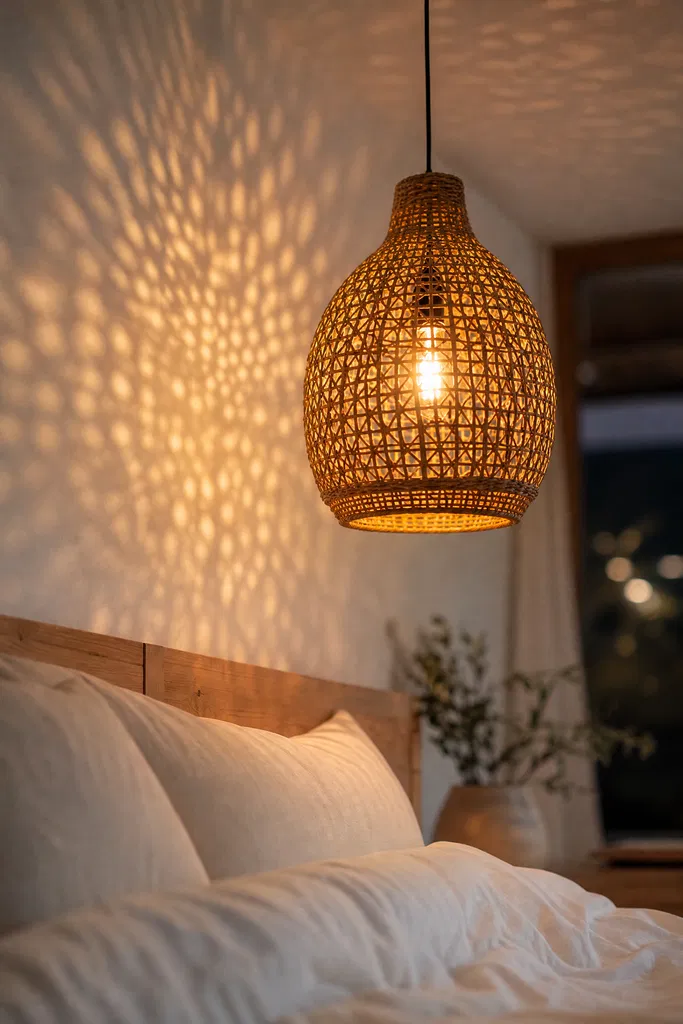
Overhead lighting in a Scandinavian bedroom should always feel soft and intentional, not functional in the way a kitchen light is. A woven rattan or seagrass pendant hanging on either side of the bed, in place of traditional table lamps, is a look that has been popular in Nordic interiors for several years and continues to feel right rather than trendy. The material choice is important: natural fiber shades cast a warm, dappled light pattern on the ceiling that no frosted glass shade can replicate. Hang them low, with the bottom of the shade at approximately shoulder height when seated in bed, so the light source stays close to where you actually use it. Pair with Edison-style LED bulbs at 2200K for the warmest possible color temperature. Good quality woven pendants from brands like HAY or Menu start around $80 to $120 each.
Designer Advice: Install your pendants on dimmer switches. Scandinavian bedrooms rely on light level as much as light color to create atmosphere, and a fixed-brightness pendant defeats the purpose.
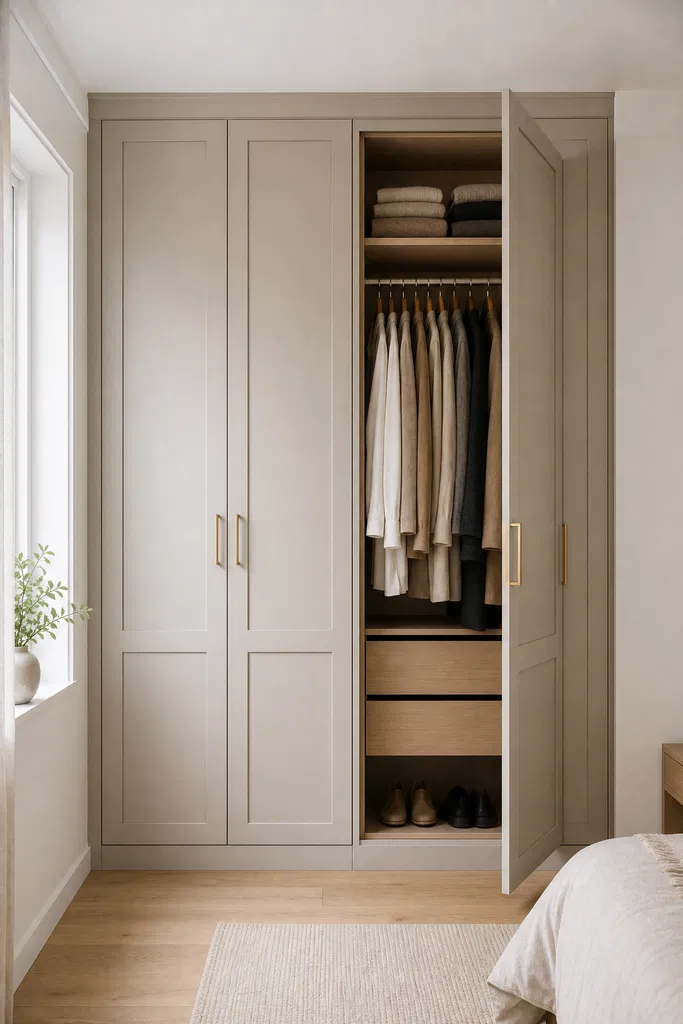
9. The Built-In Wardrobe with Shaker-Style Fronts
Storage is taken seriously in Nordic design, and the bedroom wardrobe is where that philosophy shows up most clearly. A built-in wardrobe with flat or simple shaker-style fronts in matt white or soft greige paint eliminates the visual clutter of freestanding pieces and makes any bedroom feel more considered. The key is proportion: the wardrobe should run floor to ceiling, which draws the eye upward and increases the perceived height of the room, but the doors should stay simple with only minimal hardware, either a slim recessed groove or a thin bar handle in matte brass. Inside, a mix of hanging space, shelf sections, and a few deep drawers will serve most people far better than a wardrobe that is all hanging rail. If a full built-in is out of budget, IKEA’s PAX system with upgraded fronts is an excellent and genuinely popular workaround that interior designers regularly recommend.
Designer Advice: Paint the inside of your wardrobe a shade or two darker than the exterior fronts. It creates a subtle depth effect when the doors are open and looks far more deliberate than a plain white interior.
10. The Sheepskin Throw Over a Reading Chair
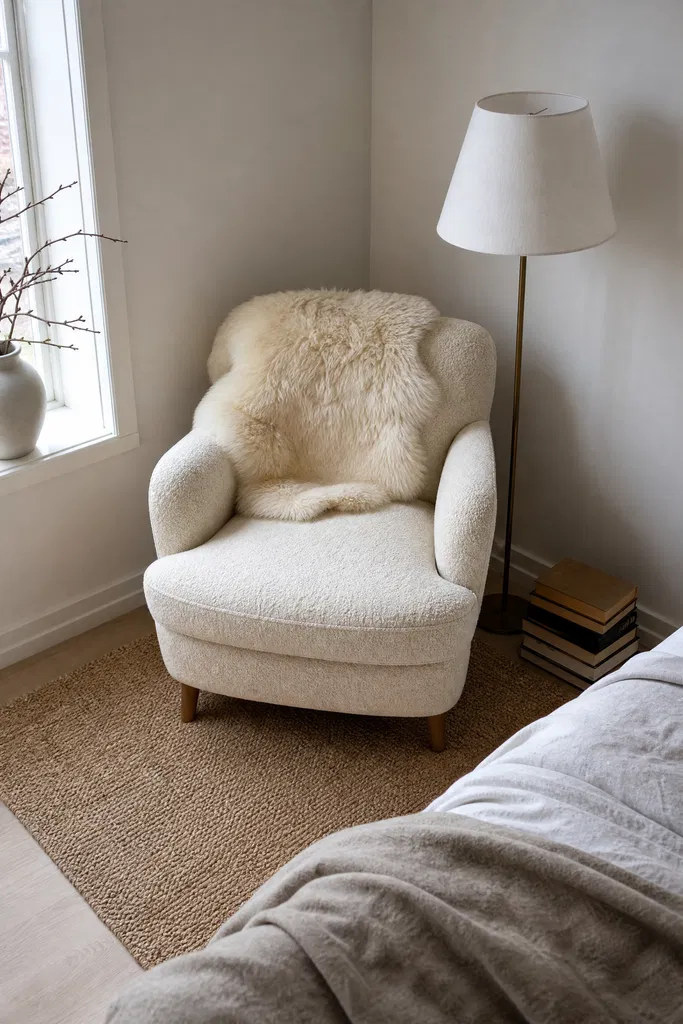
Every well-designed Scandinavian bedroom benefits from a dedicated reading corner, even if the space available is quite small. A compact armchair with clean lines in a natural fabric, such as a light boucle or a textured wool blend, placed in a corner with a floor lamp angled over it and a genuine sheepskin throw draped over the back, is one of those combinations that looks exactly as good in real life as it does in photographs. The sheepskin is the key element here: it adds texture, warmth, and that authentic Nordic quality that no synthetic version replicates convincingly. If the chair will be used regularly, look for a version with a removable and washable seat cushion. A genuine Icelandic sheepskin is an investment piece, but it will outlast almost any other textile in the room.
Designer Advice: Position the reading chair where it catches natural daylight in the morning or early afternoon. Good light makes a reading nook feel genuinely inviting rather than decorative.
Scandinavian Furniture Ideas for the Dining Room
11. The Extendable Dining Table in White Oak
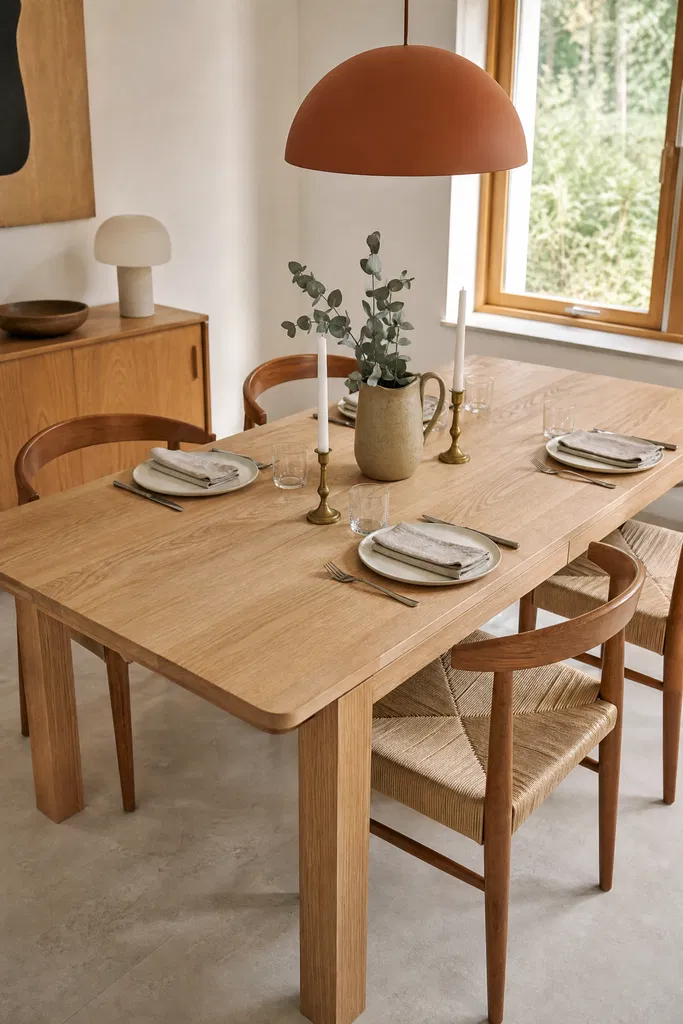
An extendable dining table in white oak or light ash is one of the most practical pieces of furniture in the Scandinavian design canon, and it also happens to be one of the most beautiful. The appeal is in the honesty of it: the grain of the wood is visible, the form is simple, and there is no surface decoration distracting from the quality of the material. Look for a version with a butterfly leaf or a concealed extension mechanism that keeps the table looking seamless when extended. A table that seats four normally but extends to seat eight is a realistic size for most homes. Pair it with chairs that are a slightly different wood tone or material to avoid the matching-set look that makes dining rooms feel more like showrooms. Leave at least 36 inches between the table edge and any wall or furniture piece so there is comfortable circulation.
Designer Advice: Treat a solid wood dining table with a food-safe oil finish rather than lacquer. Oil penetrates the wood rather than sitting on top of it, which means scratches are far easier to repair and the table looks better with use rather than worse.
12. The Wishbone-Style Dining Chair
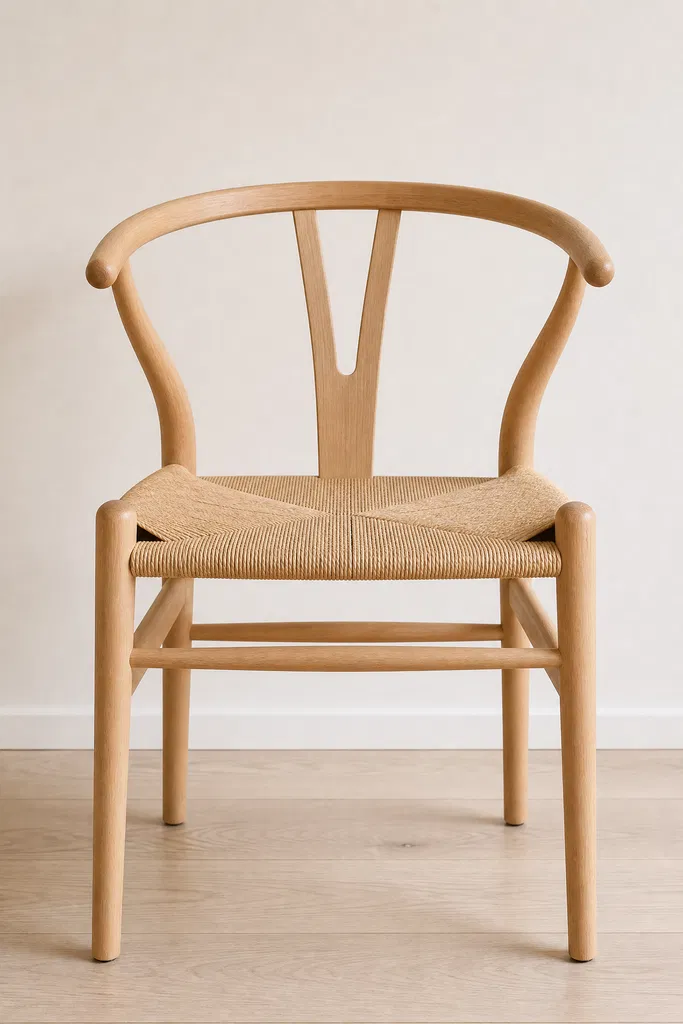
Hans Wegner’s CH24 Wishbone Chair is one of the most copied and referenced pieces in Scandinavian design history, and there is a good reason for that: the proportions are close to perfect. The Y-shaped back splat, the curved top rail, and the handwoven paper cord seat all work together to create a chair that is simultaneously lightweight and structurally sturdy. Original versions are a serious investment, but there are quality reproductions available for considerably less if you know what to look for. The chair works well in both solid beech and darker walnut finishes, and the paper cord seat comes in natural and black. One practical note: the seat is firm rather than plush, which most people find comfortable for a dining setting but may not suit very long dinner parties without cushions.
Designer Advice: Mix the wood tone of your Wishbone-style chairs with your dining table rather than matching them exactly. A light ash table with walnut chairs creates a layered, collected look that feels less like a purchased set.
13. The Dome Pendant Light Above the Table
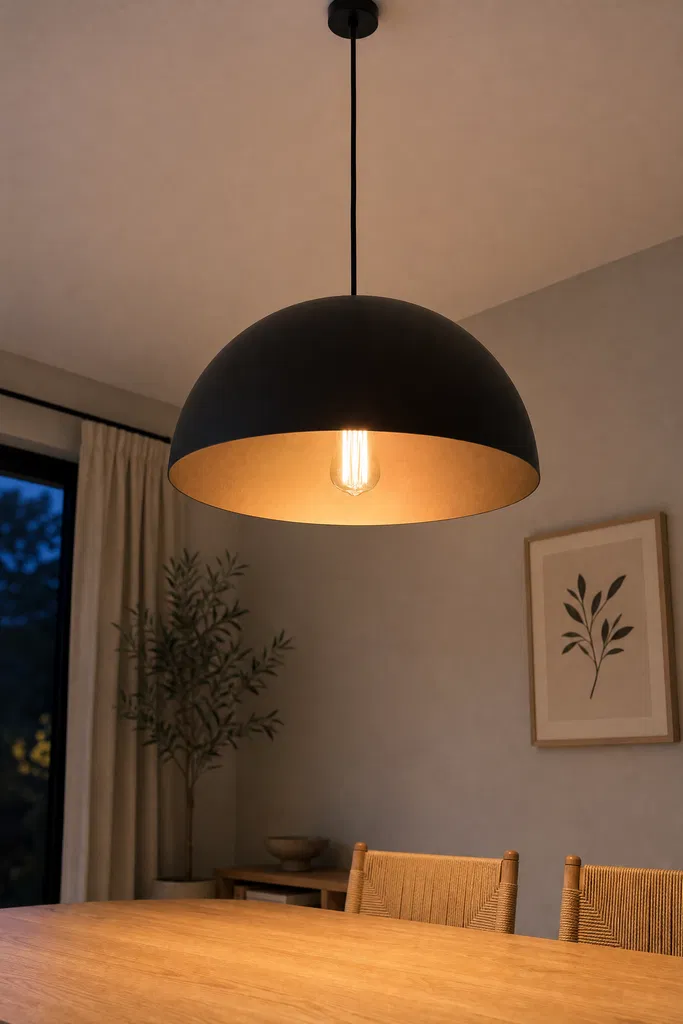
Lighting over a dining table in a Scandinavian home is almost always a single, well-chosen pendant, and the dome shade is the shape that appears most consistently in Nordic interiors. A dome pendant in coated aluminum or spun steel, in matte black, warm white, or terracotta, should hang so that the bottom of the shade sits approximately 30 to 36 inches above the tabletop. This keeps the light source within the visual frame of the seating area without obstructing eye contact across the table. If you are working with a longer table, consider two smaller pendants rather than one large one, hung at the same height and spaced evenly over the table length. Keep the cord length long and deliberate rather than bundling excess, as a well-proportioned drop is part of the composition.
Designer Advice: Always buy a pendant with a fabric-covered cord rather than a plastic one. The difference in the final look is significant, and it is the kind of detail that separates a good room from a great one.
14. The Sideboard in Smoked Pine
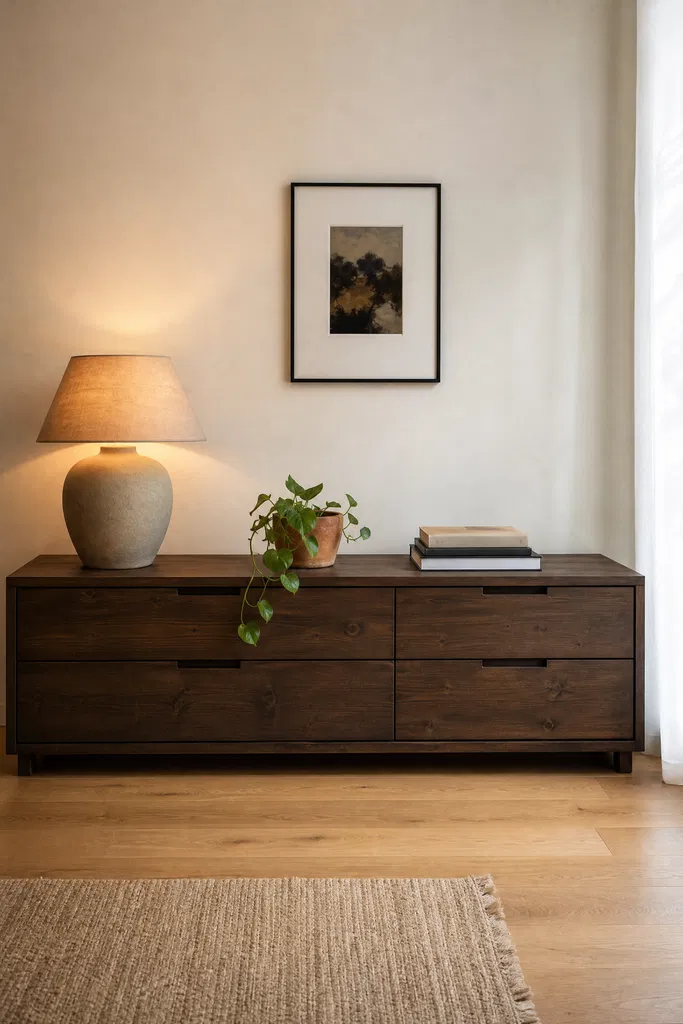
A low sideboard is one of those pieces of furniture that Scandinavian rooms handle better than almost any other style. The best versions sit below 32 inches in height, have clean fronts without decorative molding, and come in smoked or treated pine, which has a grey-brown quality that feels distinctly Nordic rather than generically modern. Use the top surface as a display area: a ceramic table lamp, two or three objects of varying heights, and perhaps a small trailing plant in an unglazed pot. The inside storage is genuinely useful for table linens, serving pieces, and anything else you want accessible but out of sight. In a smaller dining room or open-plan space, a sideboard also functions as a visual room anchor, giving the dining area a defined boundary. Smoked pine finishes tend to be mid-range in price, making this one of the better value pieces in the Scandinavian furniture category.
Designer Advice: Keep the objects on top of your sideboard at odd numbers: one, three, or five pieces. Even numbers create symmetry that reads as formal, while odd numbers feel more natural and curated.
15. The Folding or Nesting Side Table
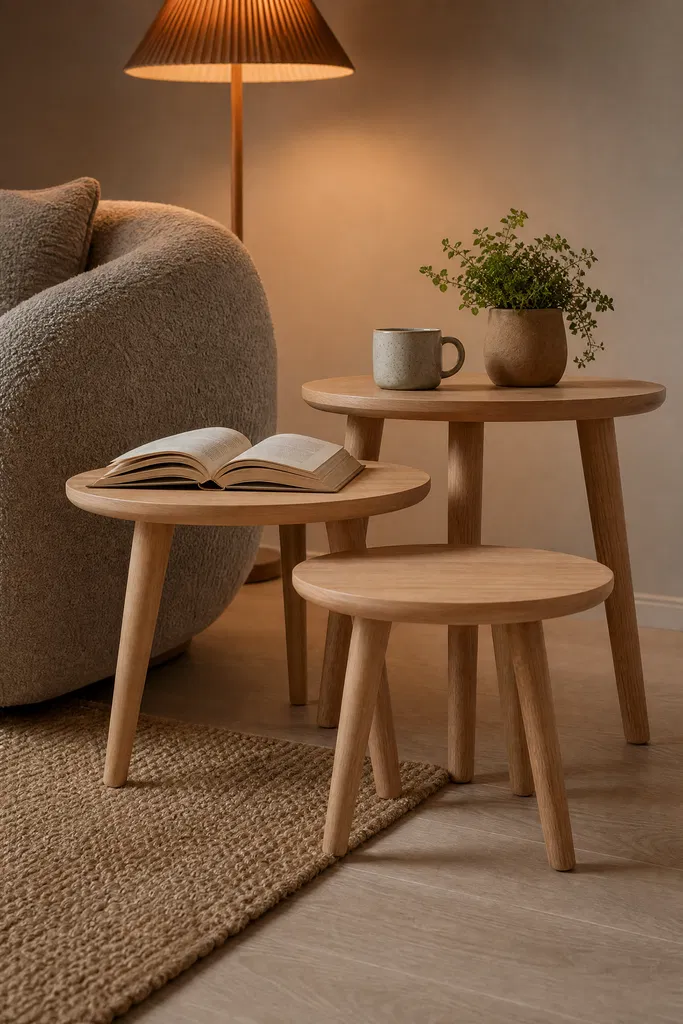
In smaller apartments or rooms that pull double duty, a set of nesting side tables in birch plywood or light beech is a Scandinavian design staple for good reason. They take up almost no space when stacked, pull apart effortlessly when needed, and in a well-chosen design they look genuinely attractive even when nested together. Look for versions where the tabletops are solid rather than hollow and the leg joints are tight, as cheaper versions tend to wobble. A set of two or three in graduating sizes works well beside a sofa, where the smallest can hold a drink, the medium can hold a book, and the largest can double as a footstool with a cushion on top. This is one of the most accessible price points in Scandinavian furniture: good quality nesting tables are available for $80 to $200 for a set of two or three.
Designer Advice: If you use nesting tables beside a sofa, vary the height you pull each one out to rather than lining them up in a uniform row. The staggered look is more interesting and feels more intentional.
Scandinavian Furniture Ideas for the Entryway and Hallway
16. The Hallway Bench with Under-Seat Storage
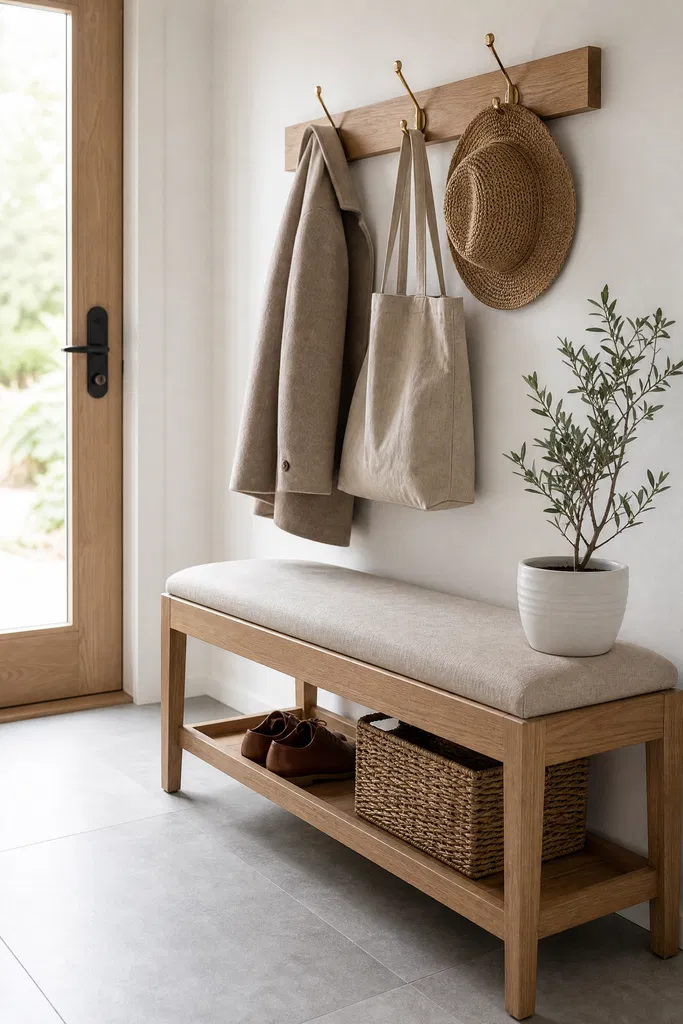
The Scandinavian entryway is one of the most functional spaces in Nordic interior design, largely because Nordic life genuinely demands it. A simple hallway bench in solid pine or oak, with either a hinged seat for under-seat storage or a lower shelf for shoes, solves the entryway problem without adding visual noise. The bench should be upholstered in a durable, easy-to-clean fabric if possible, something like a tight-woven wool or a performance fabric in grey or natural linen, so it handles the reality of daily use without looking worn after a season. Mount a row of solid wood or brass hooks directly above it for coats, bags, and hats. Keep the palette here very simple: a coir doormat, one small plant, and a mirror to bounce light into what is usually the darkest part of the home.
Designer Advice: Mount your coat hooks at two heights, a higher row for adults and a lower one if you have children. It looks considered rather than merely functional when done in matching materials.
17. The Leaning Floor Mirror in Natural Wood
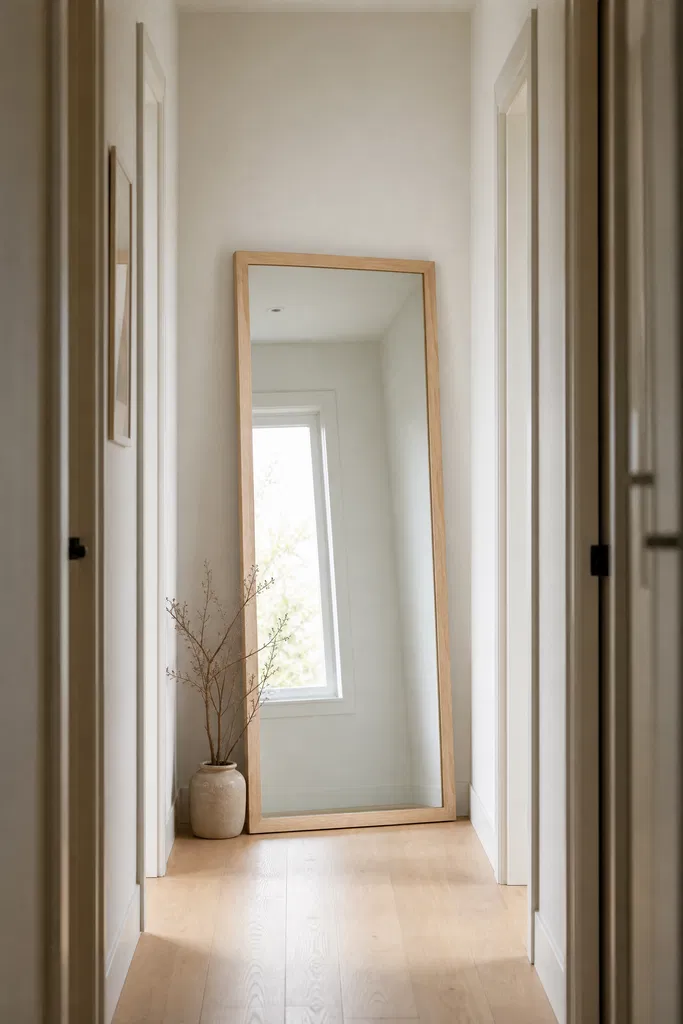
A leaning mirror with a solid wood frame, ideally in natural ash or whitewashed pine, is one of the best things you can put in a narrow hallway or entryway. It bounces natural light further into the space, makes the hallway feel roughly twice as wide as it is, and in a natural wood frame it looks genuinely attractive rather than purely functional. The key is scale: in a hallway, go as large as the space will allow, typically at least 60 inches tall, so the mirror has visual presence rather than looking like it was placed there as an afterthought. Lean it against the wall rather than hanging it for a more relaxed, Nordic feel. One practical note: a leaning mirror needs to be secured to the wall for safety, particularly in homes with children or pets.
Designer Advice: Position a leaning mirror so it reflects something worth seeing, a window, a plant, or a well-styled console table. Mirrors that reflect a blank wall or a cluttered space make the problem worse, not better.
18. The Floating Console Table
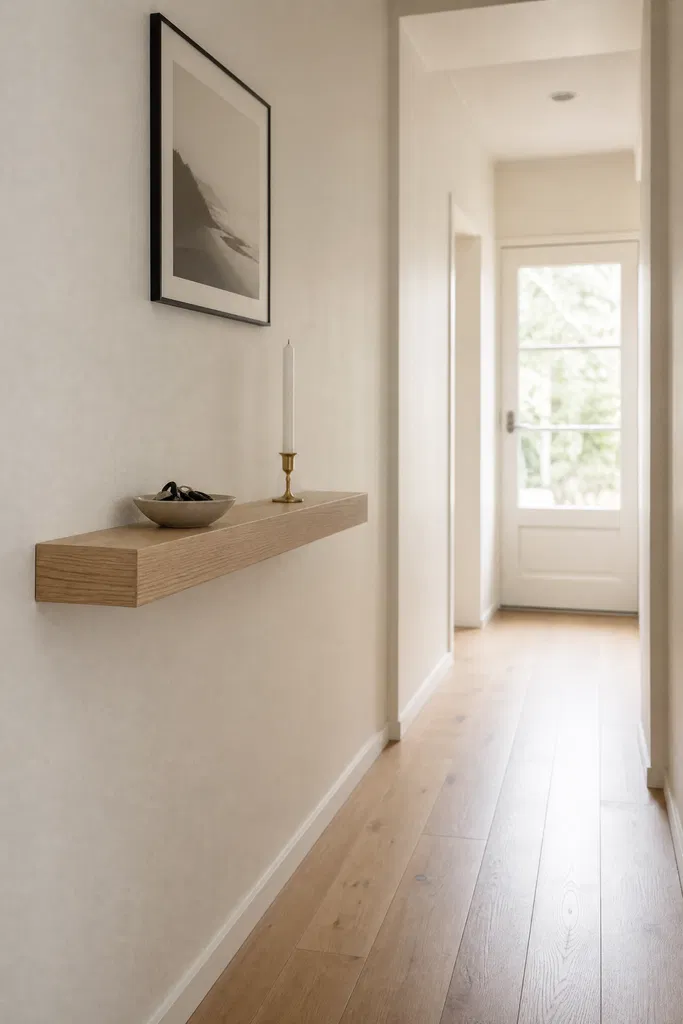
A wall-mounted console table in the entryway is a Scandinavian idea that solves two problems at once: it provides a surface for keys, mail, and everyday objects, and because it is wall-mounted with no legs, it keeps the floor clear, making even the narrowest hallway feel open rather than blocked. Look for a version in solid oak or ash with a thin profile, around 10 to 12 inches deep, so it does not take up more space than necessary. Mount it at approximately 30 to 32 inches from the floor, which is roughly the right height for comfortable access and keeps it proportional to a standard doorway. Above it, hang a simple framed print or a small mirror. The wall-mounted nature of this piece means installation matters: always anchor into wall studs or use the appropriate fixings for your wall type.
Designer Advice: Choose a console table that is at least two-thirds the width of the wall it sits on. A table that is too small for its wall looks like it was placed there by accident.
Scandinavian Furniture Ideas for the Home Office
19. The Solid Wood Standing Desk
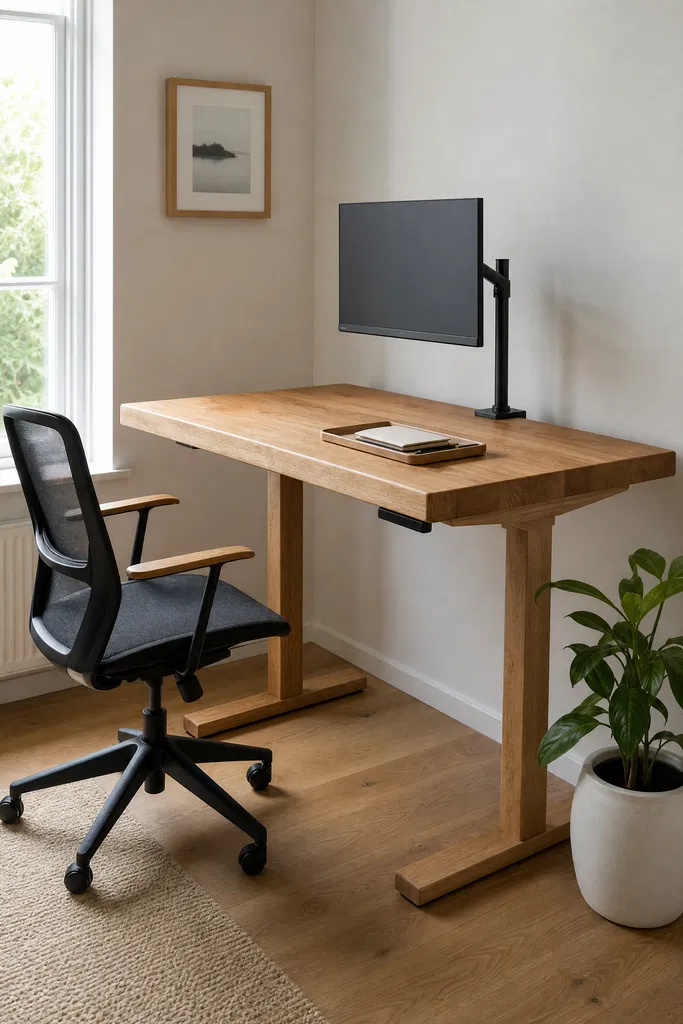
A solid oak or bamboo standing desk with a height-adjustable mechanism brings Scandinavian functionality into a home office setting in a way that most dedicated office furniture does not. The best versions have a desktop surface that is genuinely solid, at least 25mm thick, so it does not flex under the weight of monitors, and a mechanism that adjusts smoothly with minimal effort. Keep the desk surface clean: a monitor arm to raise the screen to eye level, a small tray for pens, and a compact cable management box to keep cords from undermining the clean visual. Pair the desk with a task chair in mesh or natural leather rather than a fabric office chair, to maintain the Scandinavian aesthetic. One honest point: height-adjustable standing desks are an investment, typically ranging from $400 to $800 for a well-made version, but the health and productivity benefits make them one of the better long-term investments in home furniture.
Designer Advice: If budget is tight, a fixed-height solid wood desk at standing height, around 36 to 38 inches, achieves a similar look at a fraction of the price. Pair it with a counter-height stool for seated work.
20. The Pegboard Organization Wall
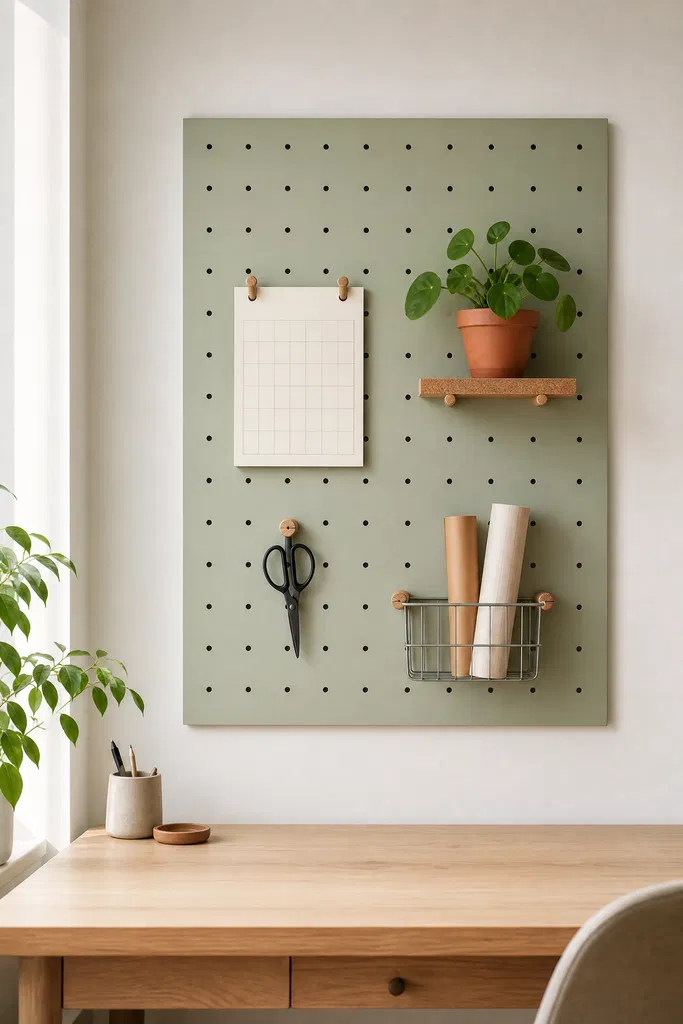
A painted pegboard in matte white or soft sage mounted directly above a desk is a Scandinavian solution to the universal problem of desk clutter. Unlike generic office pegboards, the Scandinavian version uses accessories in consistent materials, wooden hooks, small cork shelves, and slim metal baskets, to create a display that is both functional and visually intentional. The key is restraint: only put on the pegboard what you actually use daily, and leave negative space between elements so it reads as a considered installation rather than a cluttered tool wall. Paint the pegboard in a color that is close to but not identical to the wall behind it, which gives it subtle visual depth. For a home office with limited wall space, a narrow pegboard is more effective than a wide one that is sparsely populated.
Designer Advice: Group your pegboard accessories by function rather than by size. Keeping writing tools together, papers together, and tech accessories together makes the board genuinely useful rather than decorative.
21. The Modular Bookshelf as Room Divider
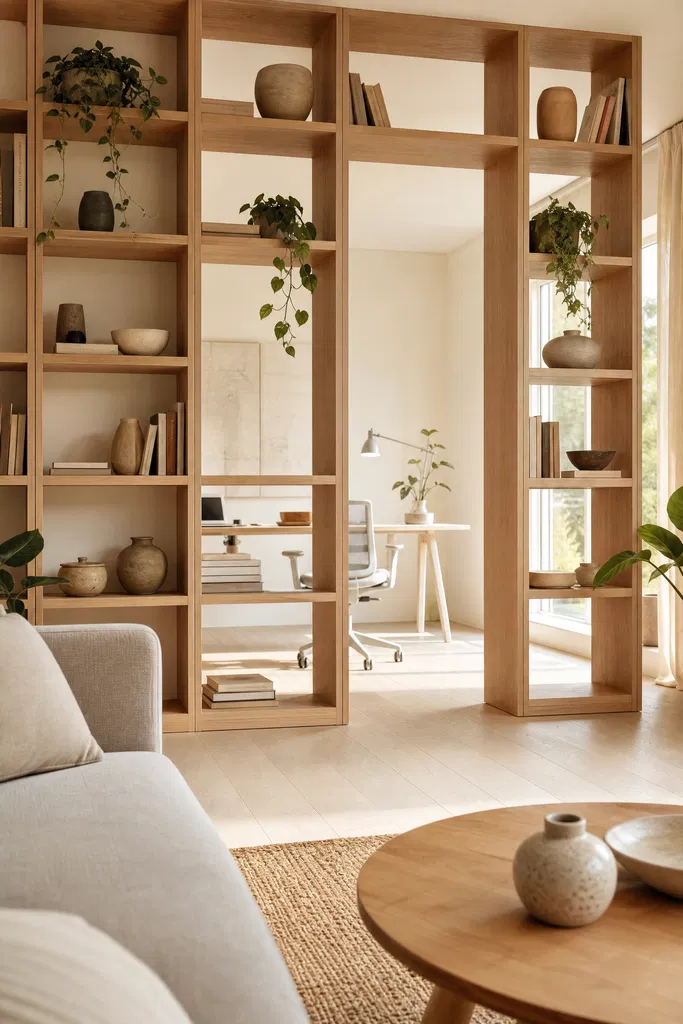
In open-plan homes or larger rooms that serve as both a living space and a home office, a modular bookshelf used as a room divider is a Scandinavian approach that creates visual separation without blocking light or making the space feel closed off. Look for a double-sided unit, or use a single-sided version with the back panel removed and replaced with a painted back panel or wallpaper for a more finished look. In natural oak or whitewashed ash, a bookshelf room divider at approximately 72 inches tall creates a clear boundary between zones while remaining open enough to let light through. Style both sides: the living side with books, ceramics, and plants, and the office side with a mix of reference books and functional items. One practical note: a freestanding divider of this size needs to be secured to the ceiling or wall for safety in most homes.
Designer Advice: Vary the orientation of books on your shelves. Mixing spine-out books with stacks of horizontal books and a few small objects breaks the uniform look and makes the shelf feel more personal.
More Scandinavian Furniture Ideas Worth Knowing
22. Bar Stools in Beech with Rattan Seats
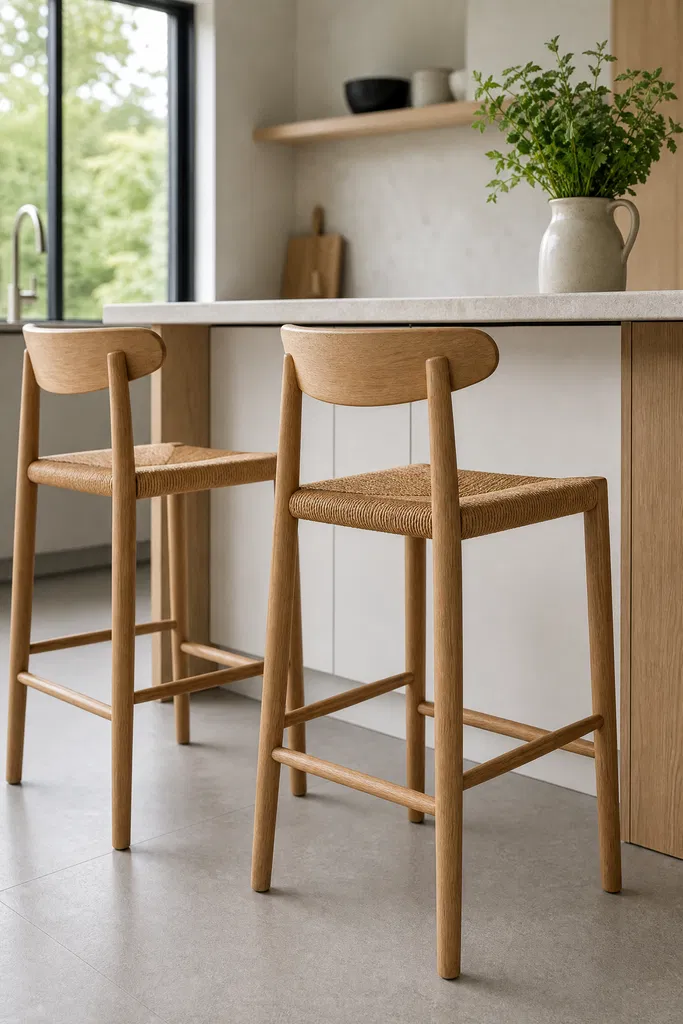
At a kitchen island or a breakfast bar, a set of bar stools in solid beech or ash with woven rattan seats brings warmth and texture to what can otherwise be one of the hardest spaces to make feel Nordic. The rattan seat in particular adds a natural material layer that works well alongside timber kitchen cabinets or a light stone worktop. Look for stools with a slight back for comfort, since backless stools are harder to use at a counter for longer than fifteen or twenty minutes. Height matters: measure your counter carefully before buying and look for stools with adjustable footrests, which make a significant difference to comfort over time. Good quality options from brands like HAY, MUUTO, and Skagerak are available between $80 and $200 per stool.
Designer Advice: If you have three stools, space them evenly and ensure each has at least 6 inches of clearance on either side. Crowded bar stools are uncomfortable and look awkward regardless of how well the individual stool is designed.
23. The Ceramic-Topped Side Table
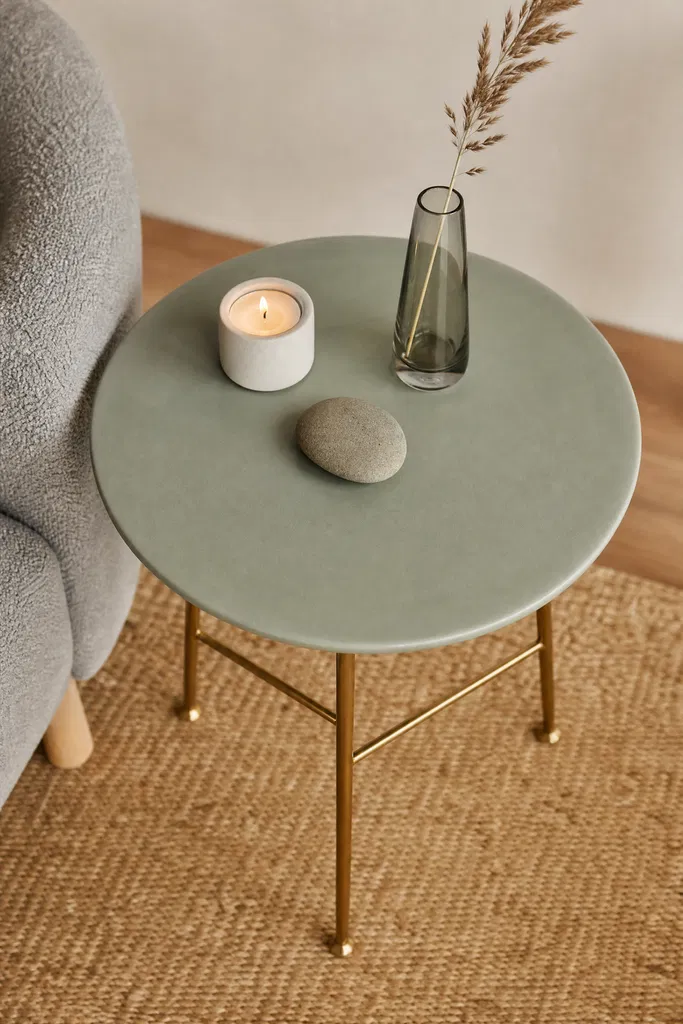
A side table with a ceramic or stone top and slender metal or wood legs is a detail that elevates a Scandinavian living room or bedroom without requiring a large investment. The ceramic top is the key element: it adds a material layer that wood-only rooms sometimes lack, and the weight of it makes the table feel substantial even when the base is deliberately delicate. Look for tops in matte sage green, dusty rose, or warm terracotta, which are the colors showing up most frequently in current Nordic interiors, and pair them with bases in matte black steel or thin solid brass legs. These work particularly well beside a sofa or armchair as a drinks table, or beside the bed as a minimal nightstand. Because the tops are ceramic, they are inherently water-resistant and easy to clean, which makes them a practical as well as a beautiful choice.
Designer Advice: Ceramic-topped tables chip at the edges if knocked hard. Place them where they will not be in a high-traffic path, such as beside rather than directly in front of a sofa.
24. The Upholstered Footstool with Hidden Storage
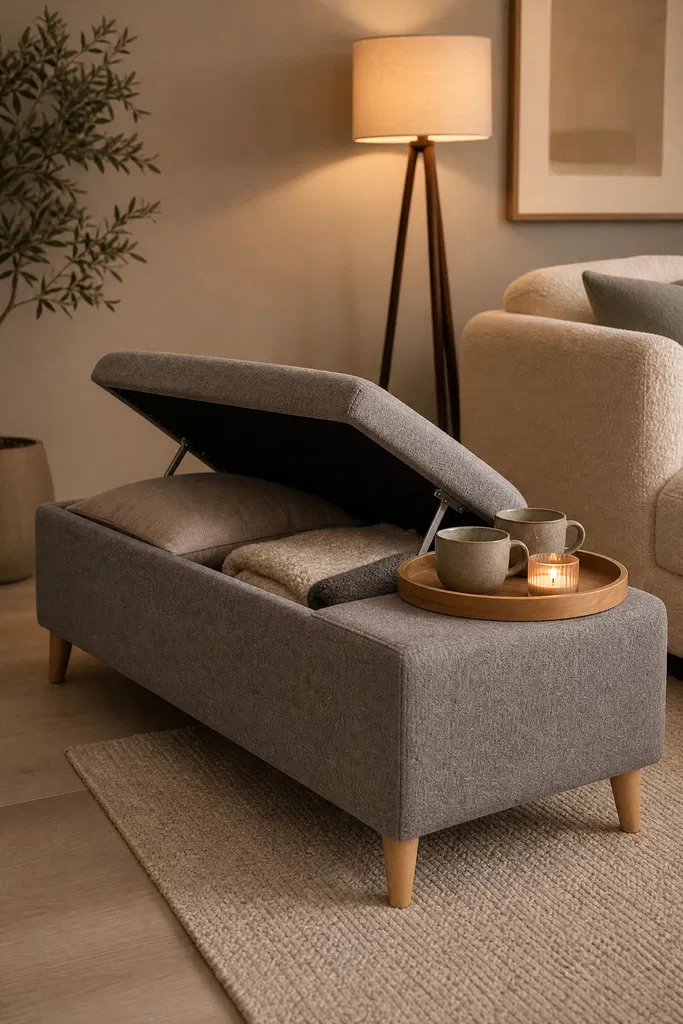
A square or rectangular footstool that doubles as a storage ottoman is a piece of furniture that Scandinavian designers have been doing well for decades, and it remains one of the most genuinely useful things in a living room. The best versions have a solid wood base with tapered legs in oak or beech, a removable lid with a hinge mechanism that holds open safely, and upholstery in a durable fabric, ideally a wool blend or a performance velvet in warm grey, sage, or charcoal. It functions as a footrest, extra seating, a coffee table with a tray on top, and storage for throws, cushions, and remote controls. In a living room with children, this piece does more practical work than almost any other single item. Mid-range versions land in the $250 to $400 range and are generally well constructed.
Designer Advice: Always place a tray on top of a footstool when using it as a coffee table. A tray creates a stable, defined surface and makes the arrangement look deliberate rather than improvised.
25. The Ladder Shelf in White-Painted Pine
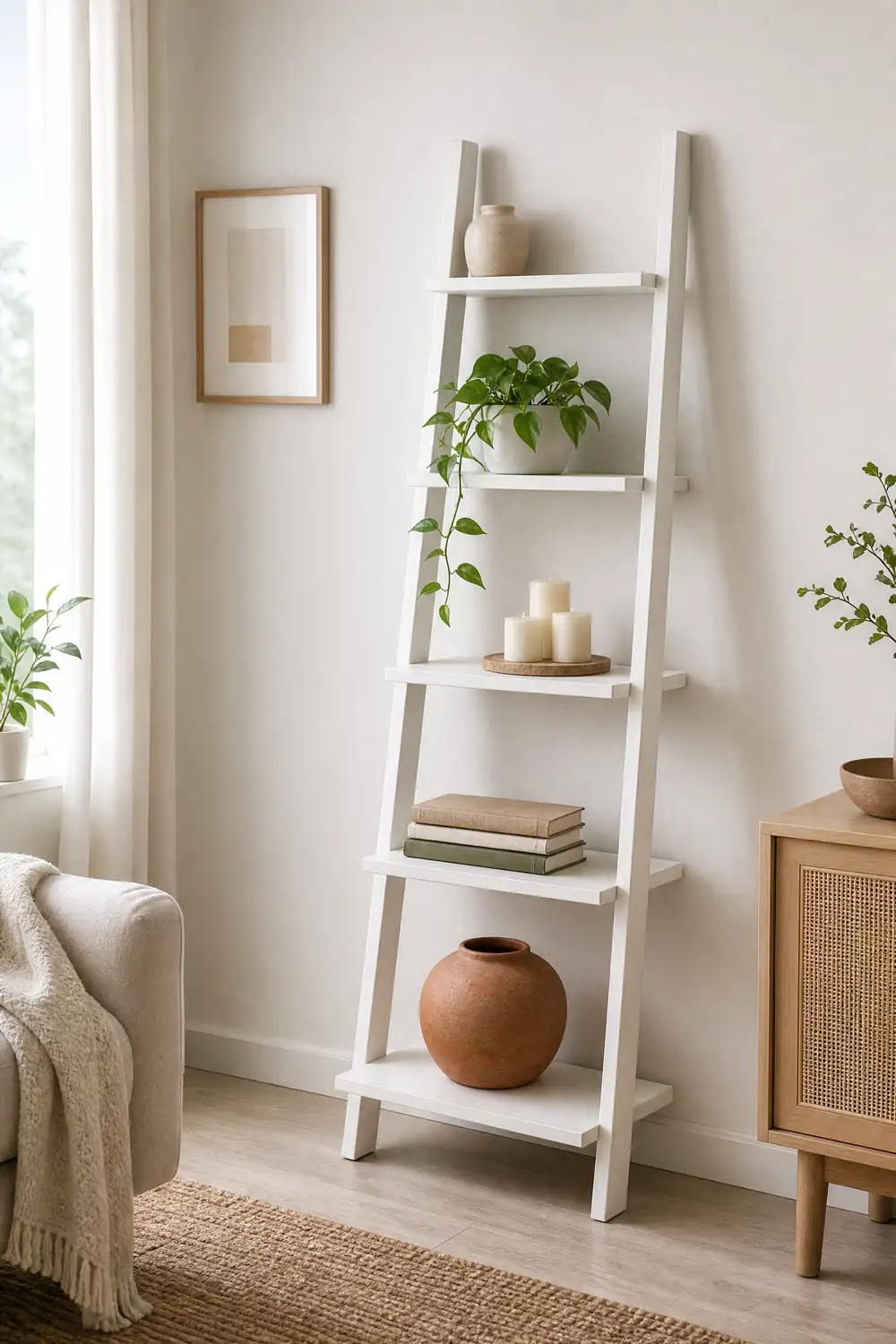
A leaning ladder shelf in white-painted pine or natural solid wood is one of the most versatile pieces in Scandinavian home decor because it works in almost any room without demanding much from the space around it. In a bedroom, it holds blankets and books. In a bathroom, it holds towels and plants. In a living room corner, it provides a display surface for ceramics, trailing plants, and a candle or two. The lean-against-the-wall design means it requires no installation and can move with you if your living situation changes, which is particularly relevant for renters. Keep the styling consistent across all shelves: alternate between plants, a ceramic object, and a book or two on each level rather than crowding one shelf and leaving others bare. White-painted versions work particularly well in rooms where you want to add storage without adding the visual weight of dark wood.
Designer Advice: The bottom shelf of a ladder shelf is the most visible and should hold your most interesting object. Think of it the way a display window works: lead with the best piece and build upward from there.
Final Thoughts
What makes Scandinavian furniture different from other design styles is not just how it looks, it is how it functions in a real home over real time. The pieces described in this guide are not chosen because they photograph well, though many of them do. They are chosen because they solve genuine problems: rooms that feel cluttered, spaces that lack warmth, lighting that is either too harsh or too flat, and homes that have never quite found a consistent visual thread to hold everything together.
The most important thing to take away from Scandinavian design is the principle of choosing less but choosing well. One solid oak coffee table that you genuinely love is worth more to a room than three cheaper pieces that you feel neutral about. Natural materials, warm lighting, and a restrained color palette of whites, soft neutrals, and muted accents are the foundation, and every piece in this guide works within that framework. Start with the room you spend the most time in, choose one or two pieces from the ideas above, and build from there. The style rewards patience and intentionality more than almost any other.
Whether your budget is tight or flexible, there is a version of Scandinavian furniture that works for where you are right now. Some of these ideas are genuinely affordable, others are investments worth planning for. All of them will make your home feel calmer, more considered, and more like somewhere you actually want to spend time in, and that is really the whole point of it all.
Frequently Asked Questions
What is the difference between Scandinavian and Japandi design?
Scandinavian design prioritizes warmth, function, and coziness, often called hygge in Danish culture. Japandi blends Scandinavian minimalism with Japanese wabi-sabi, which means finding beauty in imperfection and impermanence. Japandi tends to be slightly darker, using more smoked oak, black accents, and asymmetry, while Scandinavian rooms lean warmer and lighter overall. Both share a commitment to natural materials and clean lines, but the emotional tone is different: Scandinavian feels inviting and cozy, while Japandi feels more contemplative and still.
Is Scandinavian furniture good for small apartments?
Yes, genuinely so. The style’s emphasis on light colors, low furniture profiles, and multi-functional pieces makes it particularly well suited to smaller spaces. A platform bed does not overwhelm a small bedroom the way a tall bed frame does. A wall-mounted console table keeps the floor clear. A modular shelving unit replaces multiple separate storage pieces. The key principle is visual weight: Scandinavian furniture tends to be lighter on the eye than most other styles, which makes rooms feel larger than they are.
What wood tones work best in Scandinavian interiors?
Light ash and white oak are the most traditional choices and remain the most versatile. They pair well with white and soft grey walls and add warmth without darkening a room. Birch is another classic option, slightly more golden in tone. Smoked oak and darker walnut are increasingly common in more contemporary Nordic interiors and work well as accents alongside lighter pieces. The main thing to avoid is mixing too many different wood tones in one room: stick to two at most, and make sure they are clearly different rather than similar but slightly off.
How do I make a Scandinavian room feel cozy rather than cold?
The answer is almost always layered textiles and warm lighting. Hard white rooms with minimal furniture look cold because there is nothing soft or warm to break the visual. Add a wool or boucle throw to the sofa, layer a jute or wool rug over the floor, hang linen curtains that pool slightly, and replace cool overhead lighting with warm floor lamps and table lamps at 2700K or lower. Candles are also a non-negotiable in Nordic interiors and do something for the atmosphere of a room that no electric light fully replicates.
Can Scandinavian furniture work with color, or does it have to be all white and grey?
It absolutely works with color, and the most interesting Scandinavian rooms always include it. The difference is in how color is used: rather than across large surfaces like walls or sofas, color appears as accents in a single chair, a set of ceramic vessels, a throw pillow, or a piece of artwork. The muted versions of colors work far better in this style than saturated ones. Think dusty rose rather than hot pink, sage green rather than bright green, warm terracotta rather than orange. The neutral base is what allows these accents to feel considered rather than chaotic.
What should I buy first if I am starting to build a Scandinavian-style room?
Start with the piece that will have the most impact on the room you use most, and in most homes that is the sofa or the dining table. Get that one piece right in terms of scale, material, and color, and then build around it. Buying a rug second is generally good advice because it anchors the whole seating area and helps you see what the room is becoming. Lighting third, since the right light makes everything else look better. Accessories and textiles last, when you have a clear sense of the palette and the feel of the room.