Minimalist Dining Room Looks That Actually Work
There is something quietly satisfying about a dining room that does not try too hard. No cluttered shelves, no mismatched pieces that somehow ended up staying, no artwork that was never really loved but just filled a wall. A minimalist dining room, done properly, is one of those spaces that feels noticeably better to be in, and most people cannot immediately explain why. The answer, in practice, is that everything in it was chosen on purpose. The table earns its spot. The lighting does real work. The chair feels right. Nothing is filler.
What follows are 21 ideas that cover the full range of what a minimalist dining room can actually look like, from warm and wood-heavy to sleek and architectural, from compact city apartments to larger open-plan homes. Each idea comes with specific details on color, furniture, lighting, and materials, because the whole point of this list is to give you something you can actually act on. These are not mood board fantasies. They are real looks that work in real homes.
When the Table Is the Whole Point
1. Solid Oak with Visible Grain and Nothing Competing With It
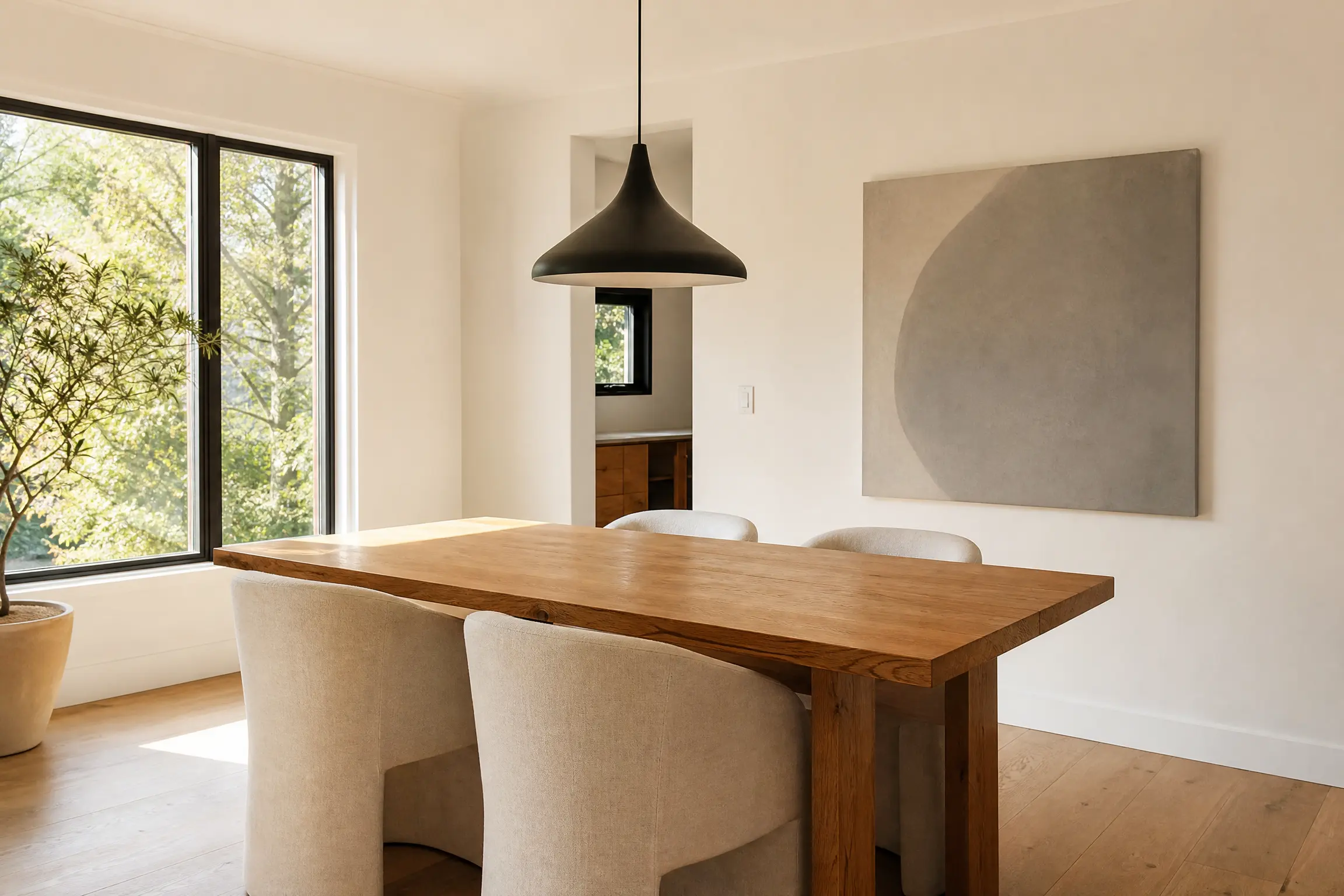
One of the most reliable minimalist moves in a dining room is to let one good piece of solid wood furniture carry the whole space. A solid oak table with a light natural finish and visible grain does exactly that. The grain itself provides all the visual texture the room needs, which means walls can stay completely bare and chairs can be simple and unpainted without the room feeling cold or unfinished. Pair the table with linen-upholstered chairs in warm off-white or oatmeal, and hang a single matte black pendant light centered directly overhead. Keep the floor clear of rugs if the floorboards are good quality, or use a flat-weave wool rug in a sand or light taupe tone to define the zone without adding visual weight. One practical note: oak with an oil finish rather than a lacquer develops a warm patina over time that only improves the look, though it does require occasional re-oiling every year or two.
Designer Note: Resist the urge to center a bowl or vase on the table. A truly minimal oak table looks best completely clear.

2. A Sintered Stone Table That Reads Like Quiet Luxury
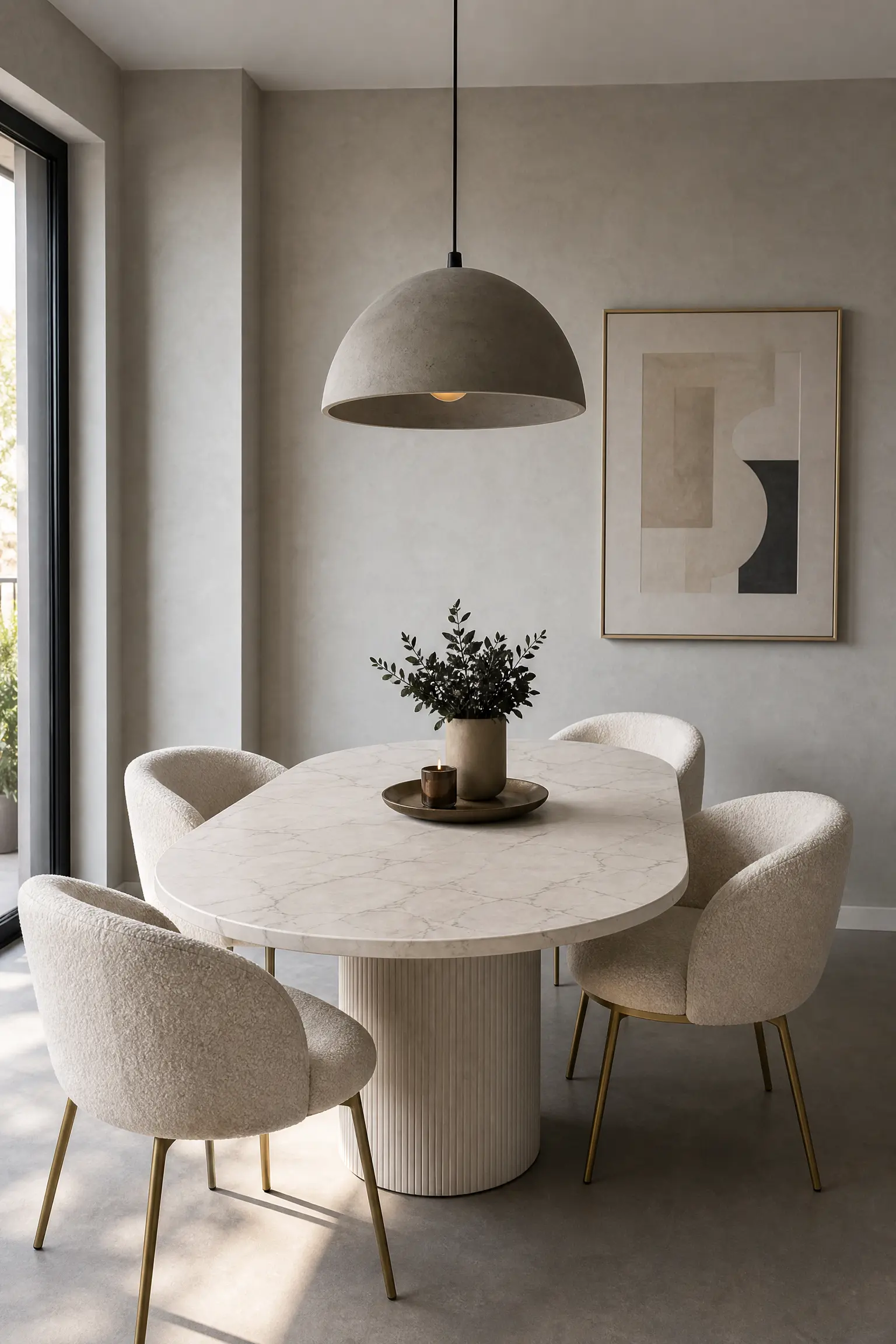
Sintered stone is one of those materials that earns its cost, and in a minimalist dining room it is particularly at home. A sintered stone tabletop in a warm grey or soft ivory with subtle veining gives the room a polished, almost architectural quality without feeling sterile. The material is virtually indestructible, heat-resistant, and easy to clean, which is genuinely worth noting if you actually use your dining room every day. Pair it with chairs that have upholstered seats in boucle or a soft wool blend, keeping the legs slender and in brushed brass or matte black metal. The lighting above a sintered stone table works well when it is a sculptural pendant in concrete or ceramic, something with weight and texture that balances the smoothness of the stone below. This is a mid-to-investment level setup, but the table itself could last decades without dating.
Designer Note: Sintered stone shows fingerprints less than polished marble, making it genuinely more practical for everyday dining.
3. A Round Table in a Square Room That Opens Everything Up
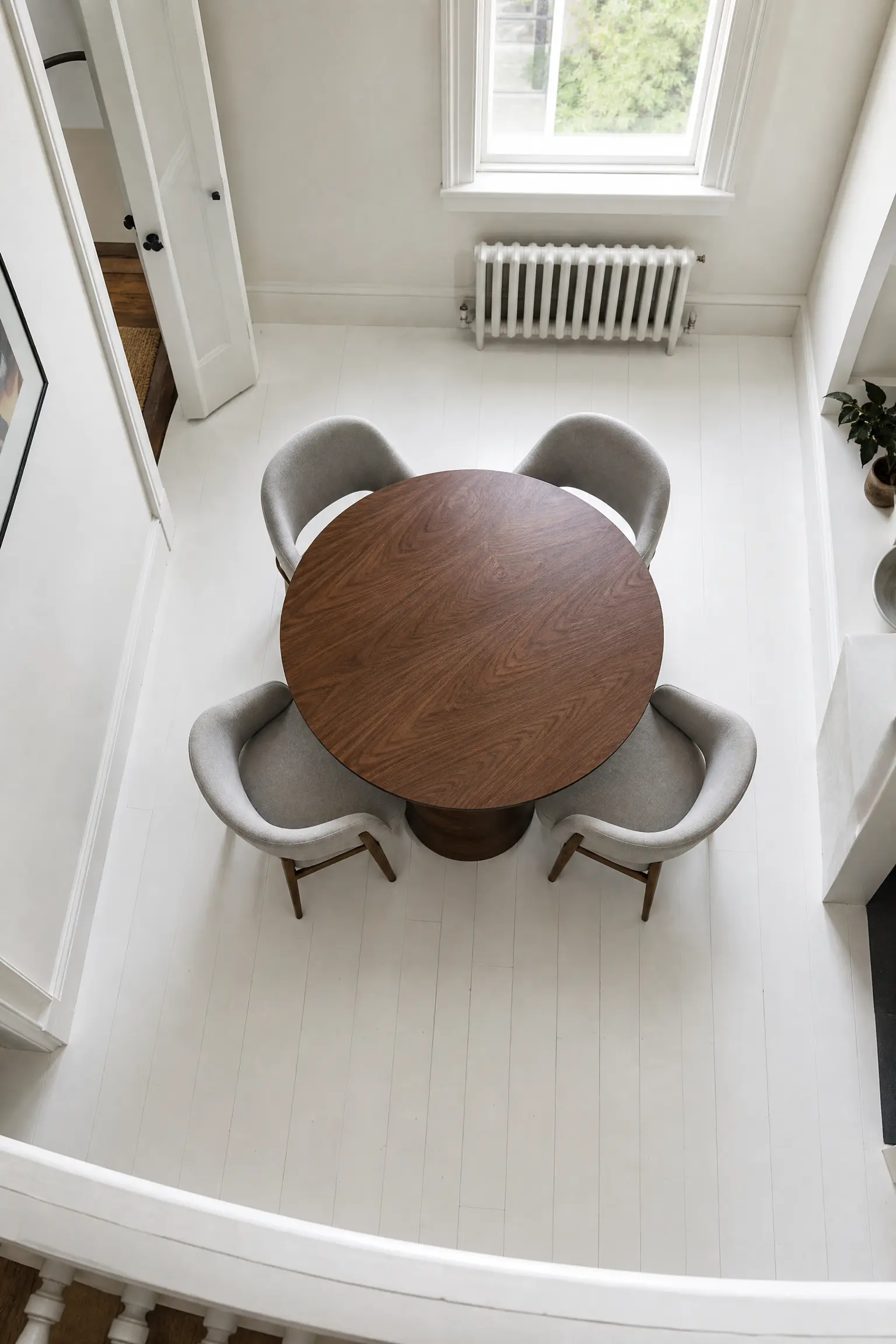
Interior designers frequently reach for round tables in minimalist dining rooms for a reason that goes beyond aesthetics: a round table removes the dominance of a rectangular piece and lets the room breathe more evenly. In a square dining room especially, this works beautifully because neither the table nor the walls compete for attention. A round pedestal table in walnut or a matte white lacquer finish, seating four comfortably, fits well in smaller dining rooms without crowding. Use chairs with a slight curve to their back, echoing the table shape, and keep them in the same color family as the walls so they recede slightly. This trick, matching chair color to wall color, is one of the simplest ways to make a small dining space feel more open. Overhead lighting should be a drum shade or a wide, low-hanging pendant to fill the visual space above the round surface without pointing.
Designer Note: A round table genuinely seats more people comfortably than a same-sized rectangle because no one is stuck at a corner.
Warm Minimalism: Where Simple Meets Cozy
4. Japandi-Inspired Layering With Low-Profile Furniture
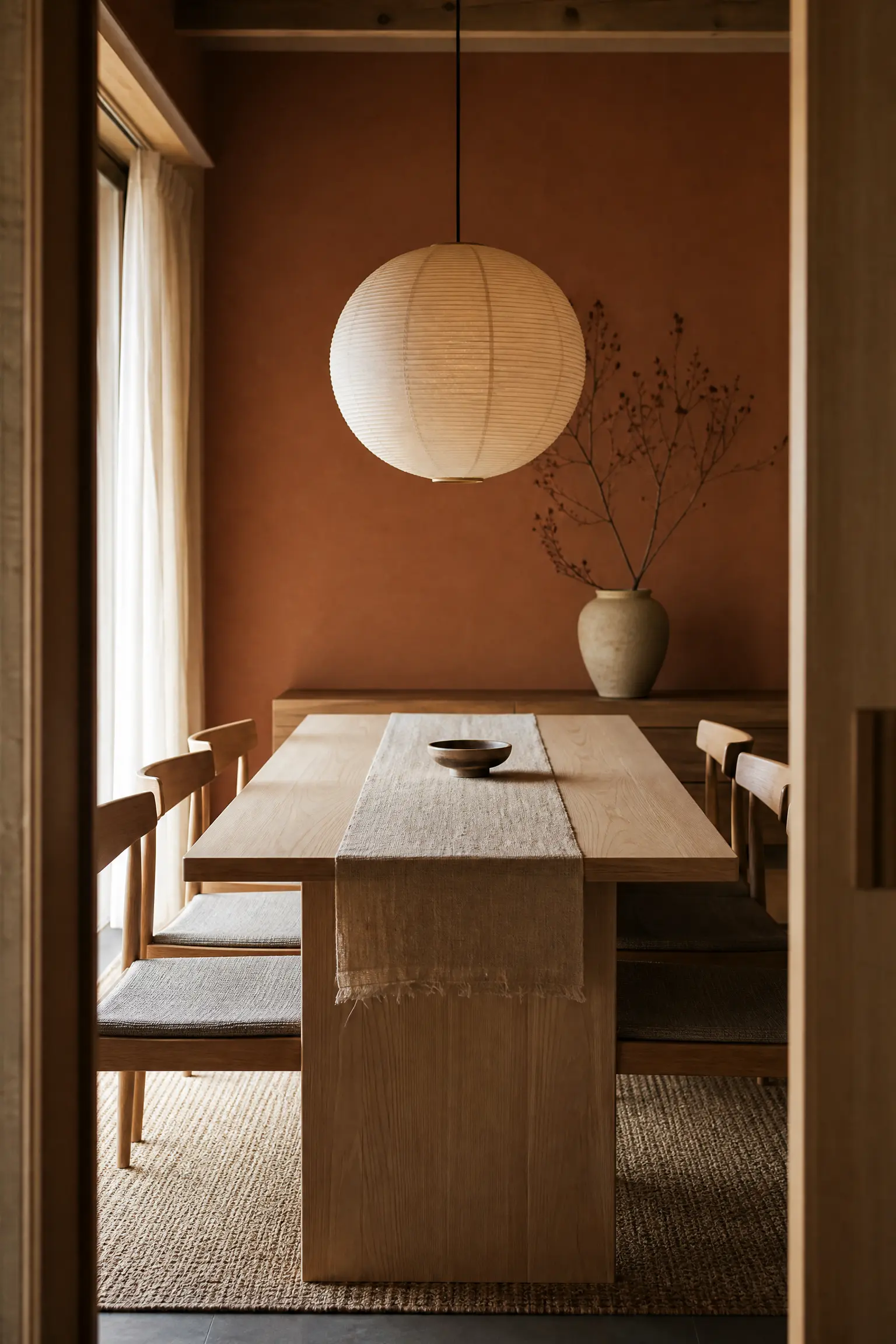
Japandi, the design movement that blends Japanese wabi-sabi sensibility with Scandinavian warmth, is one of the most livable versions of minimalism available right now. In a dining room, this translates to a low-profile table in pale ash or light maple, with chairs that sit slightly lower than average and prioritize clean silhouettes over decorative detail. The color palette leans into warm greiges, dusty terracottas, and soft sage greens rather than stark white or grey. A washi paper pendant light or a rattan globe shade in a warm tone does excellent work here, casting soft, diffused light that feels genuinely inviting. One texture to include is a chunky-weave linen table runner left on the table as a semi-permanent piece rather than set out only for meals. It adds warmth without clutter and looks good whether the table is set or completely empty.
Designer Note: Japandi works best with handmade ceramics or one piece of visible natural craft. A single ceramic vase counts.
5. Warm White Walls With Timber Accents and Soft Textile Layers
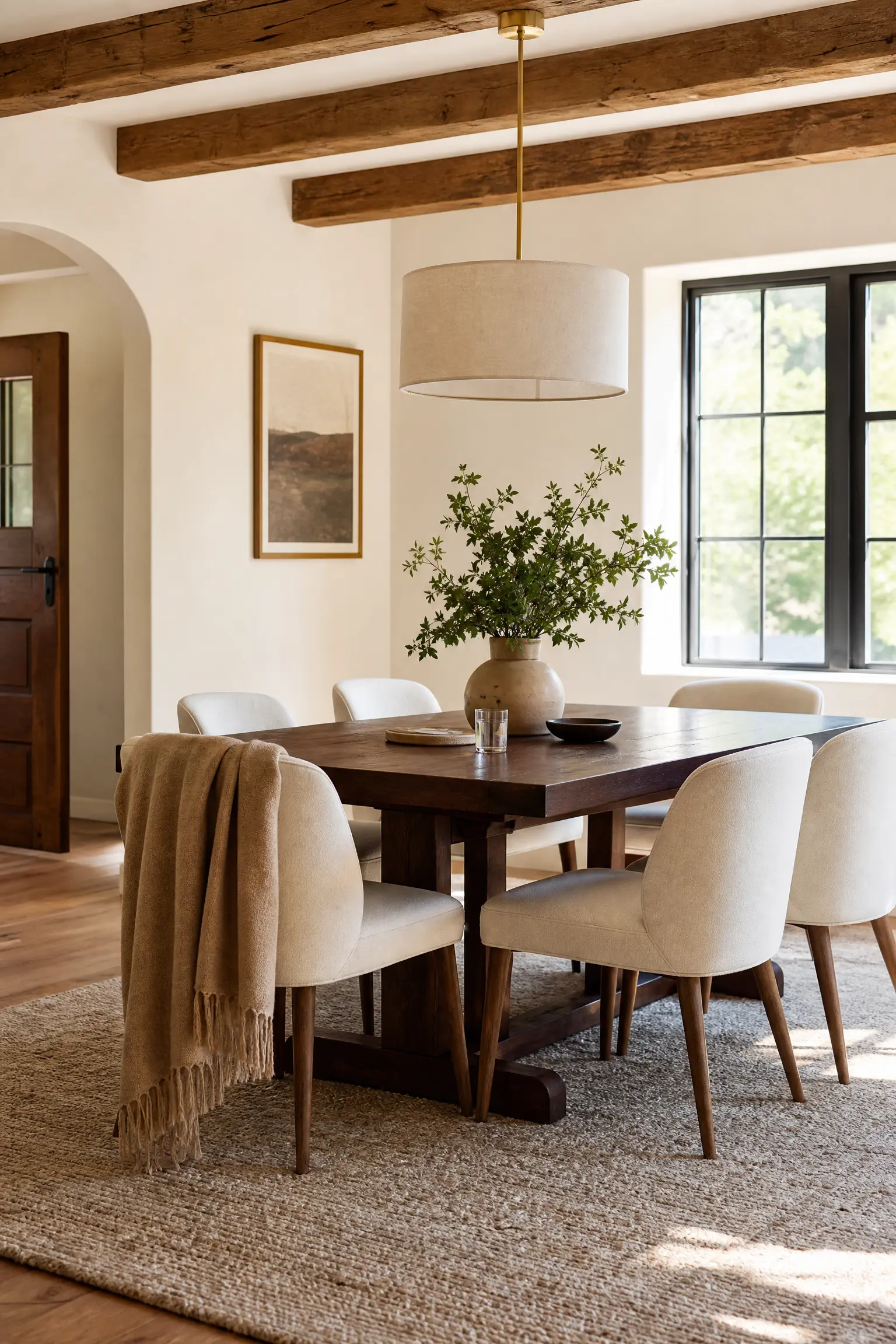
Pure white is often the default minimalist wall choice, but warm white, meaning whites with a hint of cream, sand, or blush undertone, does something pure white cannot: it makes the room feel actually warm rather than clinical. Paired with timber accents, whether that is a solid wood sideboard, exposed ceiling beams, or timber-framed windows, warm white creates a dining room that feels edited and intentional without feeling cold. Add a single wool or cotton throw draped over one chair if you want a touch of softness that also reads as real and lived-in. Keep the table itself in a contrasting tone, perhaps a darker walnut or an aged oak, to give the room some visual weight at its center. This approach is budget-friendly because the walls do most of the work, and you can build the timber elements in gradually.
Designer Note: Benjamin Moore’s White Dove or Farrow and Ball’s Pointing are reliable warm white choices that avoid going yellow in artificial light.
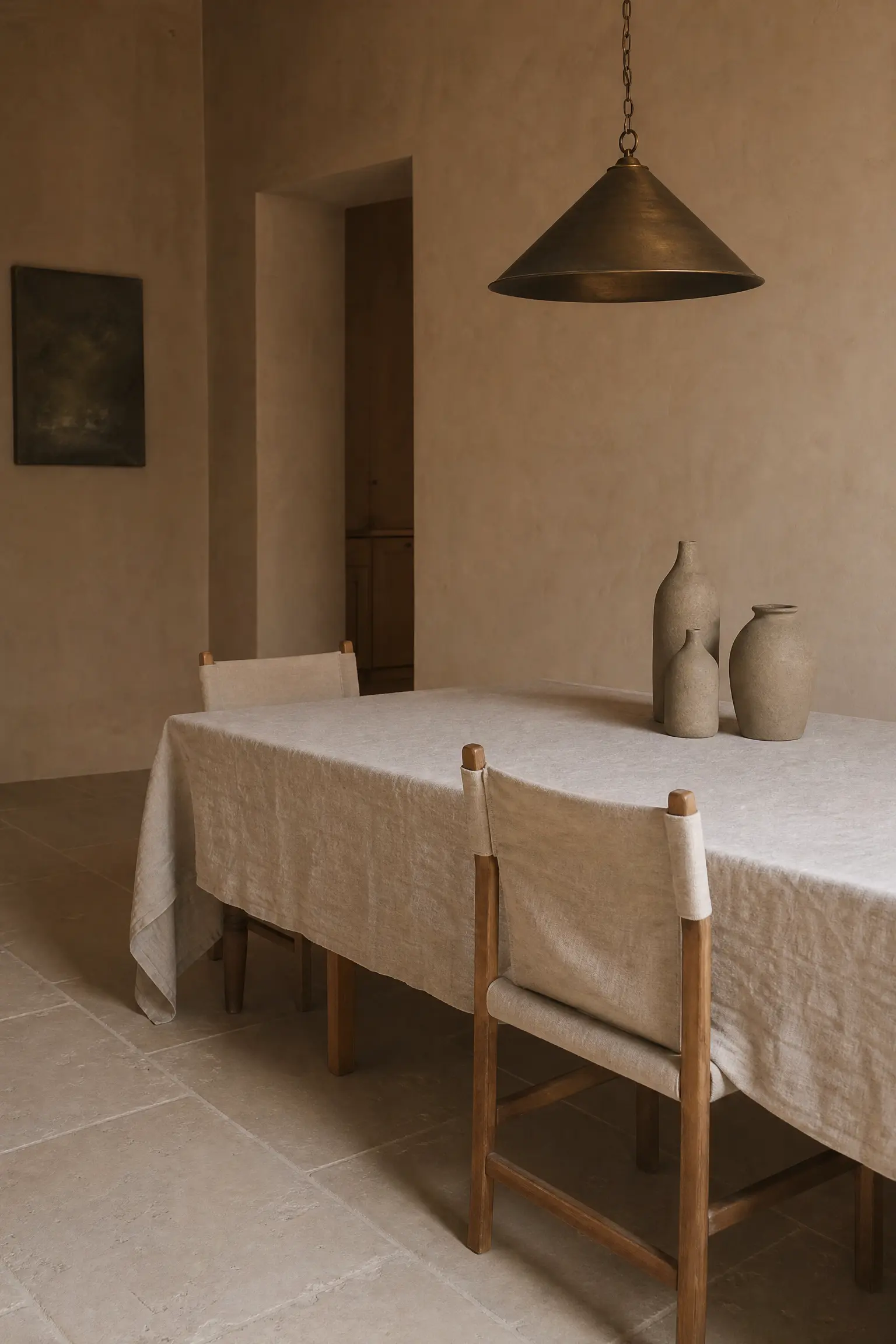
6. Clay and Sand Tones With Linen and Unglazed Ceramics
This is a look that has been appearing more frequently in designer homes over the past year, and it is one that works particularly well in rooms with decent natural light. The color palette pulls from earthy clay, sandy beige, and raw linen tones, keeping the room in one warm, harmonious family of shades. A clay-colored wall, a linen tablecloth left on the table, and a handful of unglazed ceramic pieces as the only table decor creates a space that feels grounded and organic. Chairs in a raw canvas or natural hemp fabric sit comfortably in this palette, and pendant lights in terra cotta or aged brass complete the look. One honest note about this approach: it requires commitment to the palette. Bringing in a piece that is too cool or too polished breaks the spell quickly, so editing purchases carefully matters here.
Designer Note: Unglazed ceramics in neutral tones are widely available at affordable price points from brands like H&M Home and IKEA’s FARGKLAR range.
7. Muted Sage Green Walls With Natural Wood and Brass
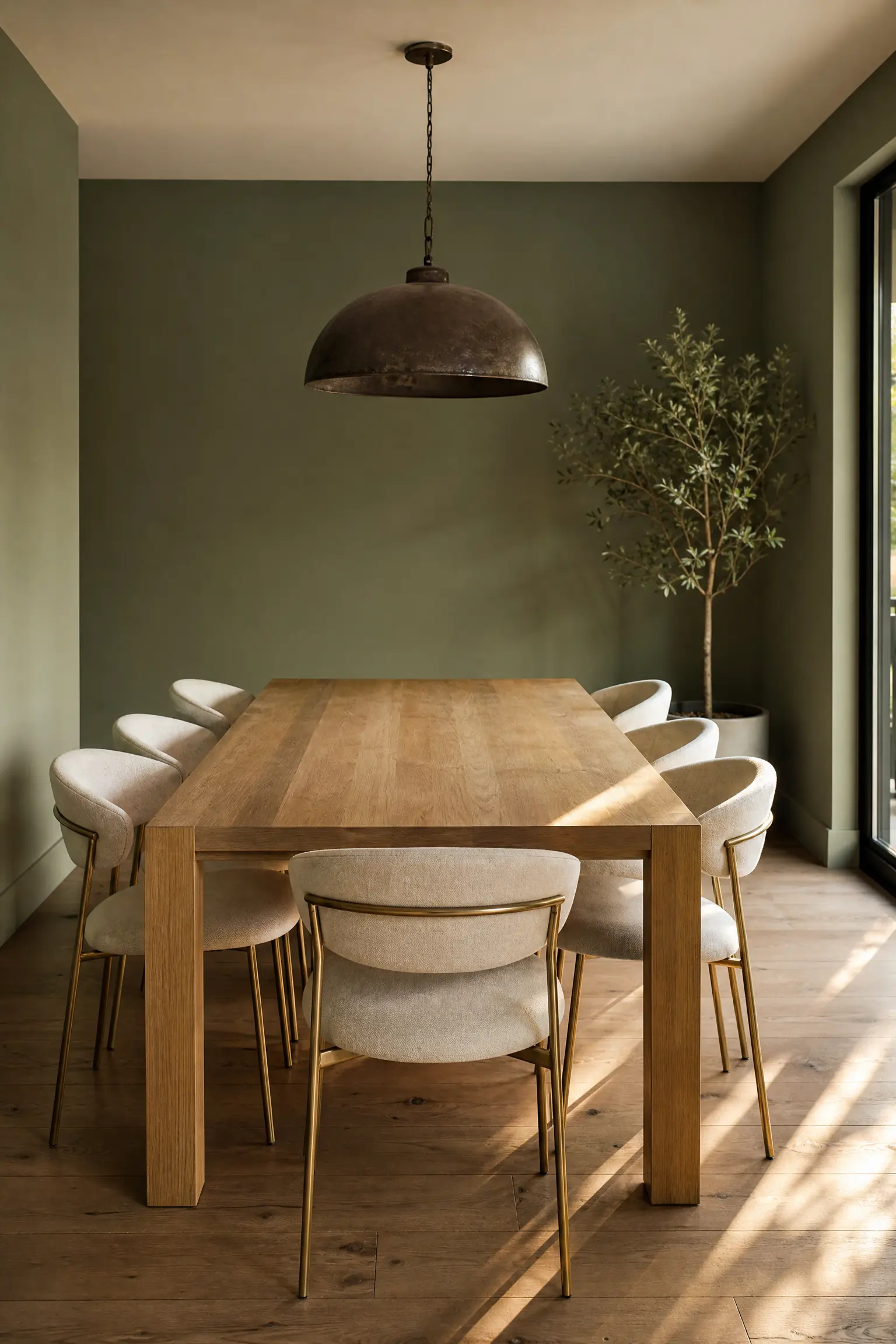
Sage green has been firmly in the conversation for a few years now, but the version that works in a minimalist dining room is a muted, dusty sage rather than the brighter or more saturated alternatives. This particular tone sits comfortably alongside natural wood and ages brass hardware without either competing or clashing. Paint the walls and leave them otherwise bare. Bring in a solid wood table with a light finish, add dining chairs with slender metal legs in brushed brass, and use a single hanging light in an aged brass or patinated bronze tone. The room immediately has warmth, a sense of nature, and a quiet character that does not rely on accessories or artwork to feel complete. This is one of the more approachable starting points because sage paint is available at every price point and the rest can be built around it gradually.
Designer Note: This palette works in both north-facing and south-facing rooms but looks especially good when natural light hits it in the late afternoon.
Clean and Architectural: Minimalism With an Edge
8. Monochrome With One Material Done Really Well
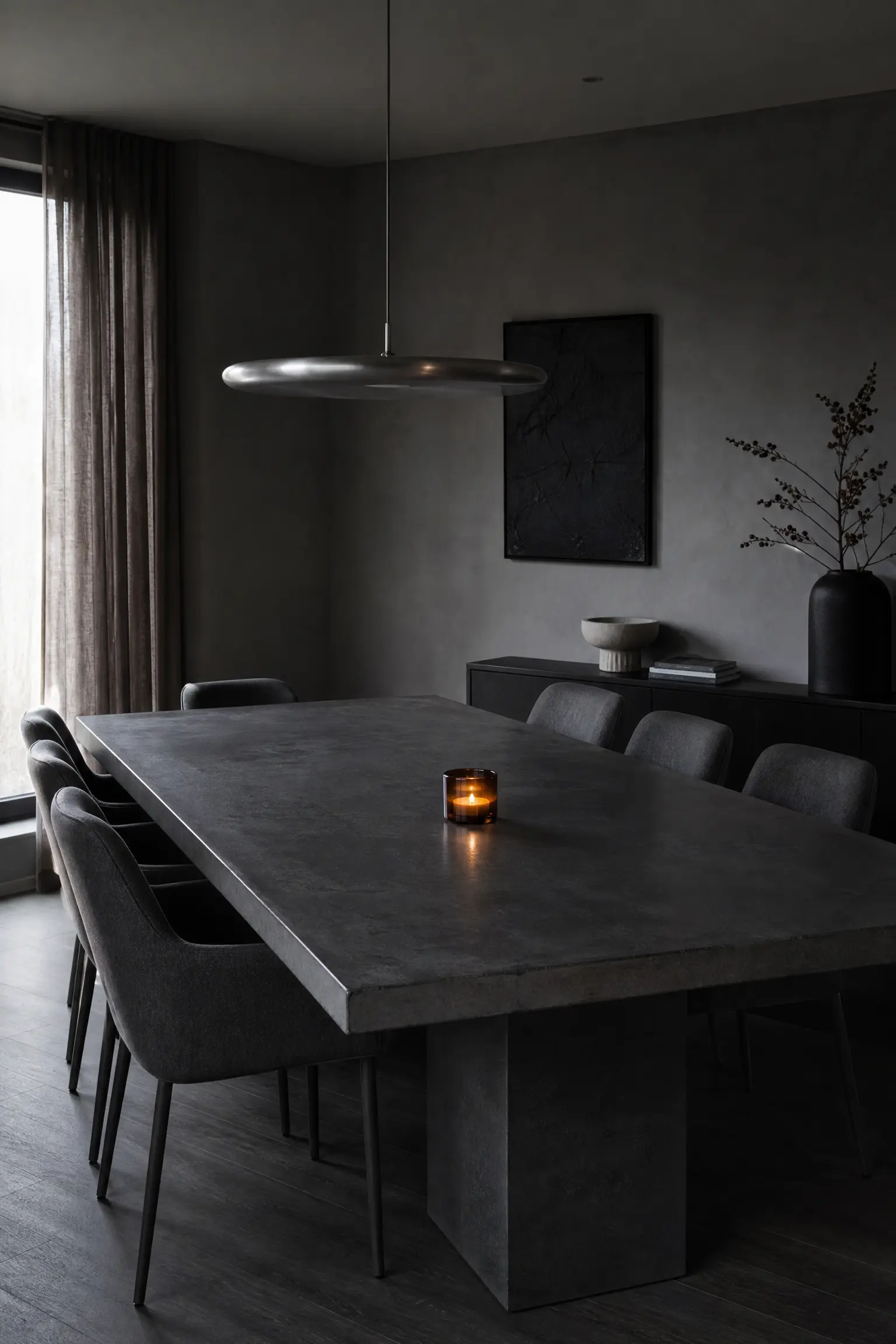
A monochrome dining room in shades of grey or charcoal is an approach that either works completely or falls flat, and the difference is almost always the quality and texture of the single material you lead with. When it works, it is because the dominant material, perhaps a raw concrete dining table, a matte plaster wall, or a deep charcoal linen upholstery, has enough inherent texture to carry visual interest on its own. Pair a concrete or poured-stone table with chairs upholstered in a slightly lighter charcoal fabric, keep the walls in a mid-toned grey, and use a brushed steel or gunmetal pendant. The room will feel architectural and intentional rather than cold, provided the lighting is warm-toned. This is not the right approach for a dining room with very limited natural light, as it can slide from moody to gloomy without enough daylight to balance it.
Designer Note: Add one warm accent, a slim candle in amber glass or a small timber tray, to keep a monochrome room from feeling office-like.
9. White and Black With a Single Sculptural Light Fitting
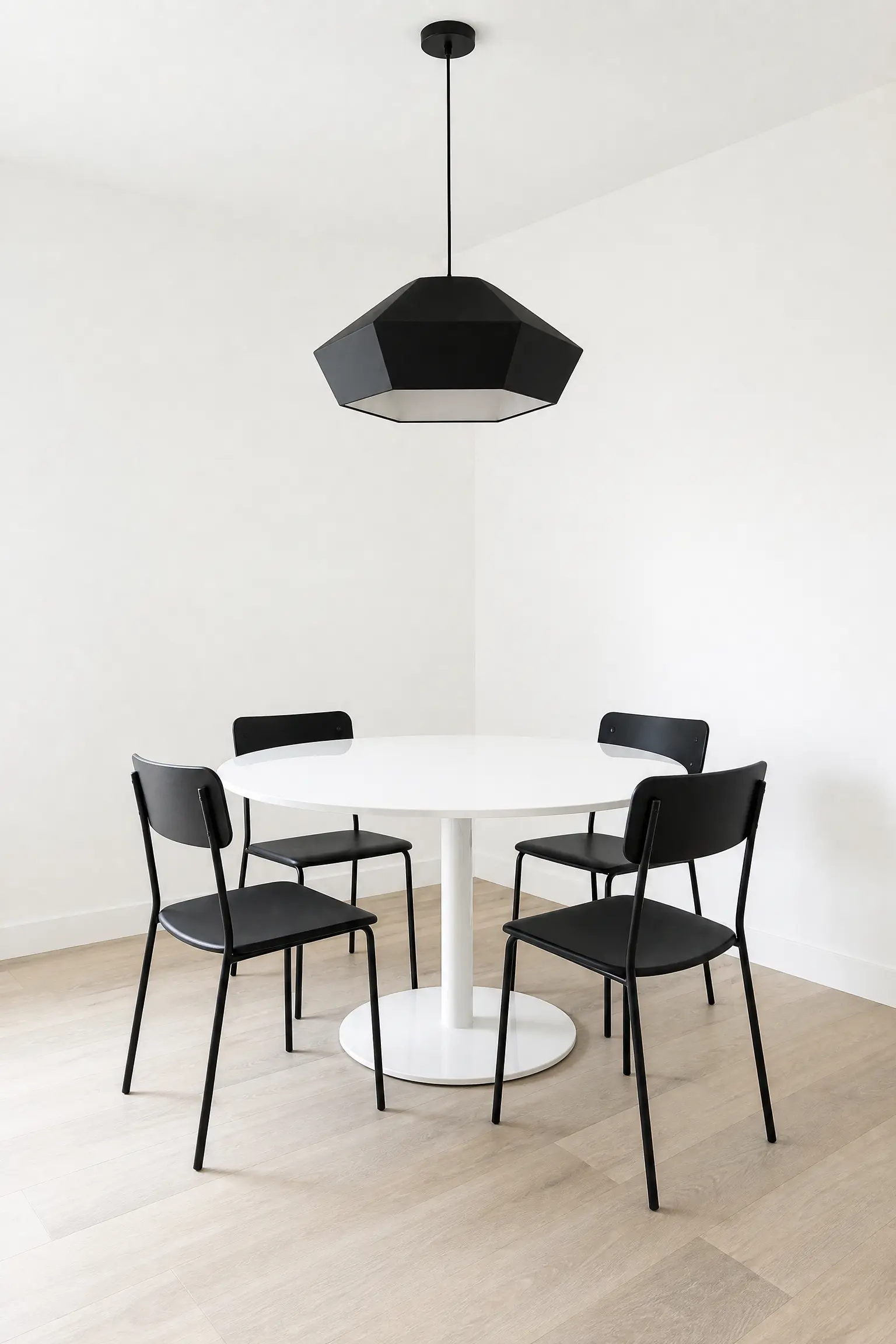
The classic black and white dining room is perhaps the most recognizable version of minimalism, but it reads as current and deliberate rather than dated when it centers on one statement piece of sculptural lighting. Think of a large, geometric pendant in matte black, a cluster of glass globes in a range of sizes, or a flat disc light with a simple paper or linen shade. Everything else in the room then exists to support that single moment overhead: a white or light grey table, black powder-coated metal dining chairs with simple profiles, white walls, and bare wooden floors. The absence of color becomes a design choice rather than a lack of imagination. For anyone working with a limited budget, this is one of the most achievable looks because white walls and basic furniture are easy to find affordably, and the investment goes into one good light fitting.
Designer Note: Position the pendant so its lowest point sits 70 to 75 cm above the table surface for the most flattering light at seated height.
10. A Floating Sideboard and Floor-to-Ceiling Storage That Disappears
In a minimalist dining room, storage is not an afterthought. It is what makes minimalism possible on a daily basis. A wall-mounted or floating sideboard in the same tone as the wall, perhaps a matte white or light ash in a room with pale walls, does something almost invisible: it stores everything that would otherwise end up on the table or the floor, while barely registering as a piece of furniture because it blends with the wall. Floor-to-ceiling built-in storage with flat-fronted doors and no visible hardware takes this a step further, effectively hiding an entire wall’s worth of dining essentials, spare chairs, and linens. In practice, this look does require either a renovation budget for built-ins or a commitment to painting existing furniture to match the wall. The payoff is a dining room that can reset to a completely calm state in minutes.
Designer Note: Touch-latch doors, which open with a gentle push rather than a visible handle, are the cleanest solution for built-in storage in a minimalist room.

11. Exposed Concrete and Raw Plaster in a Modern Setting
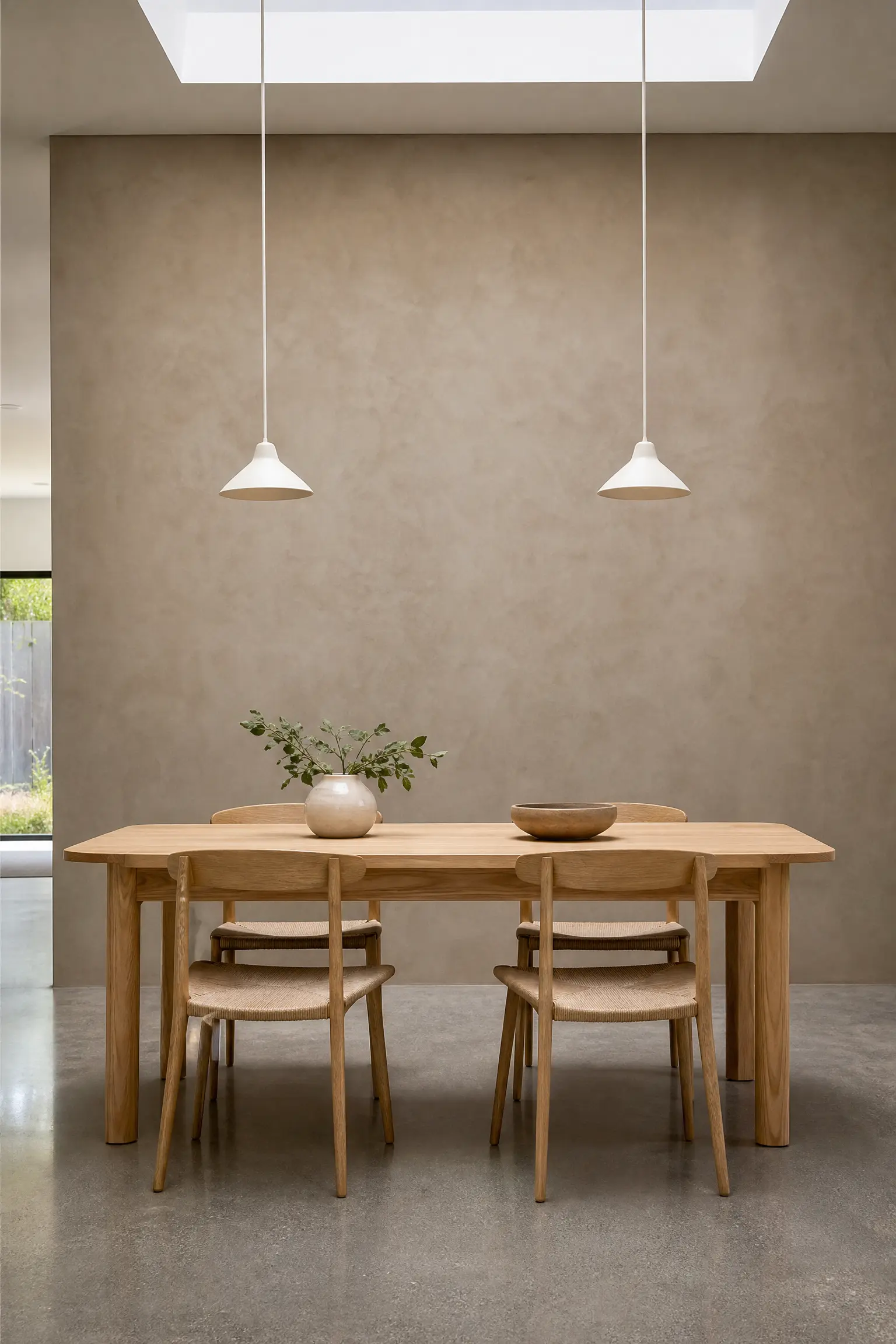
Raw materials used with genuine intention, rather than as a styling choice applied over perfectly smooth surfaces, give a minimalist dining room a sense of authenticity that is genuinely hard to fake. A single wall of exposed concrete or a warm limewash plaster finish acts as a natural focal point without requiring any art or decoration to justify its existence. The material itself does the work. Pair raw plaster in a warm mushroom or putty tone with simple furniture in pale timber, add slim pendant lighting on long textile cables, and keep the floor in polished concrete or wide-plank timber. This works best in rooms with decent ceiling height, as raw surfaces at lower heights can feel heavy. Budget note: limewash paint is a fraction of the cost of real plaster and achieves a very similar visual result in most lighting conditions.
Designer Note: Lick Paint’s Limewash range and Portola Paints both offer accessible limewash finishes that require no professional application.
Getting the Light, Space, and Proportion Right
12. Layered Lighting Instead of One Overhead Source
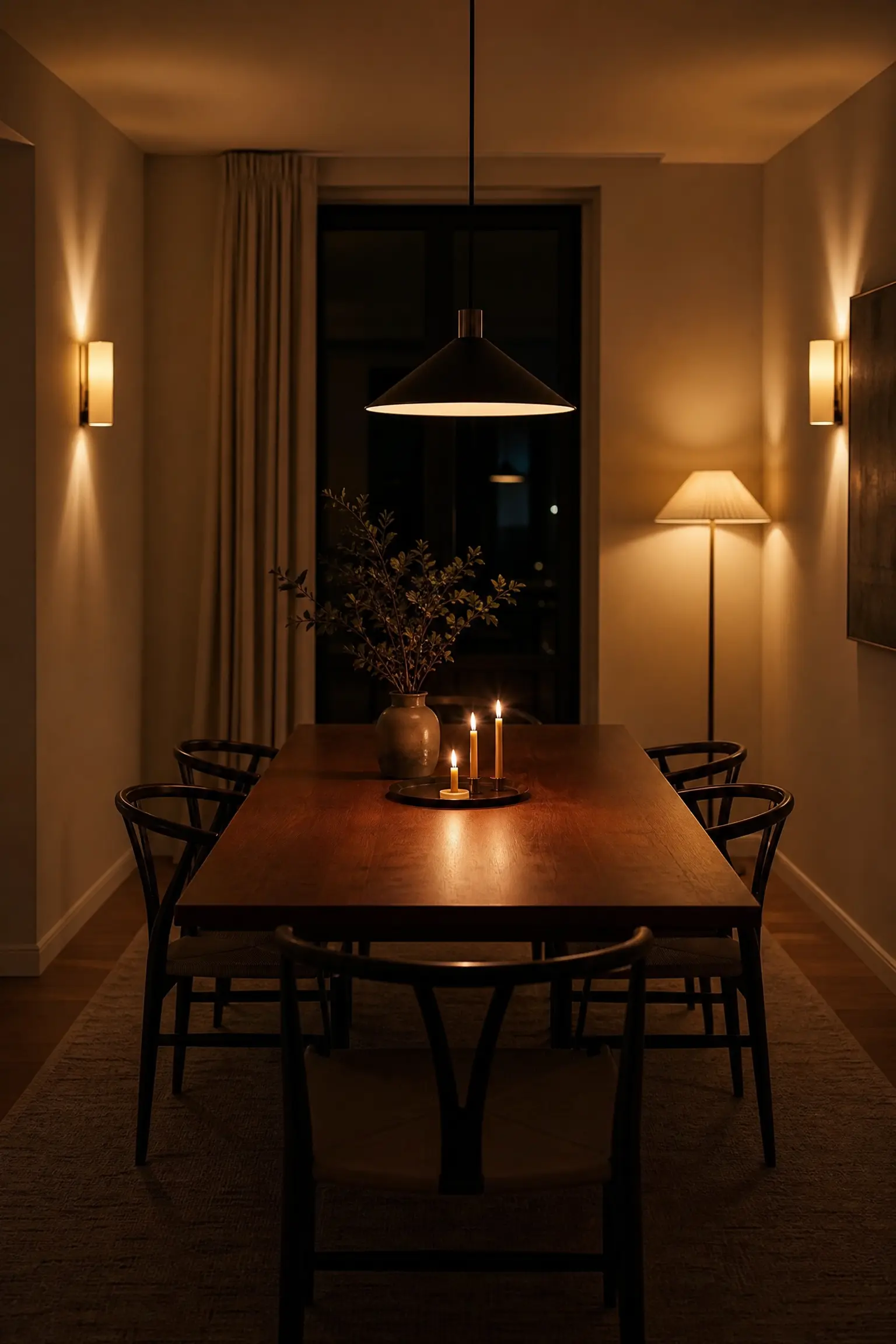
One of the biggest mistakes in dining room design, minimalist or otherwise, is relying on a single overhead light to do everything. Layered lighting, meaning a combination of ambient, task, and accent sources, is what makes a dining room feel genuinely good to be in after dark. In a minimalist setting, this does not need to be complicated. A pendant directly above the table handles task lighting. A floor lamp in one corner at lower wattage handles ambient fill. Wall-mounted sconces on a dimmer switch handle accent lighting and can make the room feel entirely different depending on the setting. The key is warm-toned bulbs across all sources, ideally in the 2700K range, which replicates the quality of candlelight without the impracticality. This is one of the highest-impact, relatively affordable upgrades you can make to an existing dining room.
Designer Note: Every light source in the room should be on a dimmer. The ability to lower light levels is what makes a dining room feel intimate rather than functional.
13. A Mirror as the Only Wall Decoration
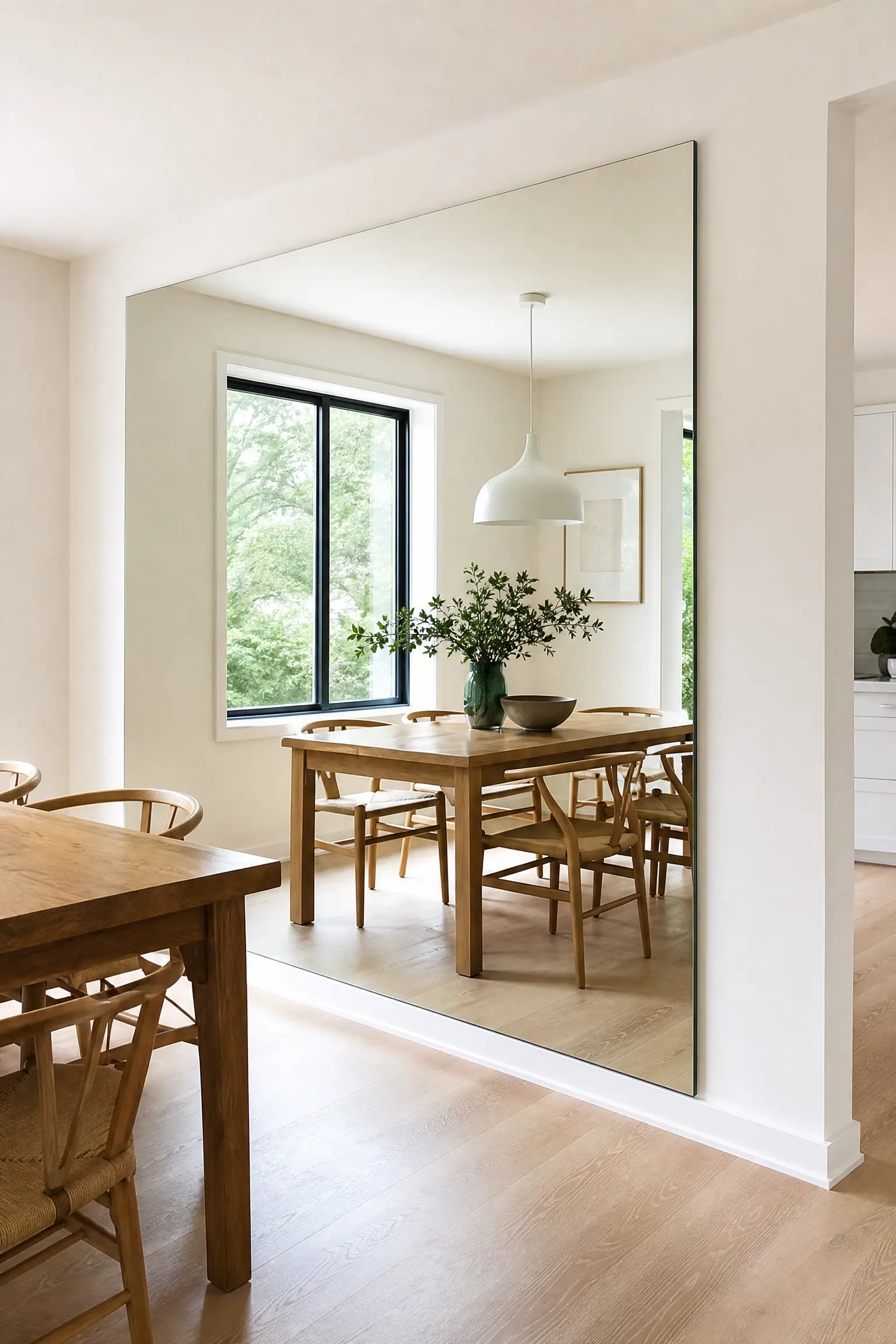
A single large mirror on one wall of a minimalist dining room does multiple things simultaneously: it bounces light around the space, it adds depth to the room, and it creates a visual point of interest without cluttering the walls with art or collections. The right mirror for a minimalist dining room has a very simple frame, ideally in slim metal, thin wood, or completely frameless, and is large enough to read as intentional rather than incidental. A mirror that runs from approximately waist height to just below ceiling height on a narrow wall does the most work in terms of perceived space. In smaller dining rooms, this single addition can make the difference between a room that feels cramped and one that feels genuinely open. Avoid ornate or heavily styled frames, as they work against the clean aesthetic the rest of the room is trying to maintain.
Designer Note: Position the mirror opposite or adjacent to a window to maximize how much natural light it reflects back into the room.
14. Negative Space as a Design Element, Not a Gap to Fill
Negative space, which is simply the empty area around and between objects, is one of the most consistently misunderstood concepts in home decor. Most people feel an instinct to fill it. In a minimalist dining room, resisting that instinct is the actual design decision. A stretch of bare wall beside a dining table is not incomplete. A clear floor with no rug, no side tables, and no plant pots is not unfinished. These open areas give the pieces that are present room to exist properly, and they make the room significantly easier to live in day to day because there is less to clean around, less to move when people pull chairs out, and less visual noise while eating. This approach takes confidence to commit to, especially in a room where guests will be sitting for extended periods, but the result is a space that genuinely feels calm rather than just tidy.
Designer Note: If empty walls feel uncomfortable, allow yourself one piece of art, maximum. Choose something large enough to stand on its own rather than a cluster of small pieces.

15. Bench Seating Along One Side to Open Up Circulation
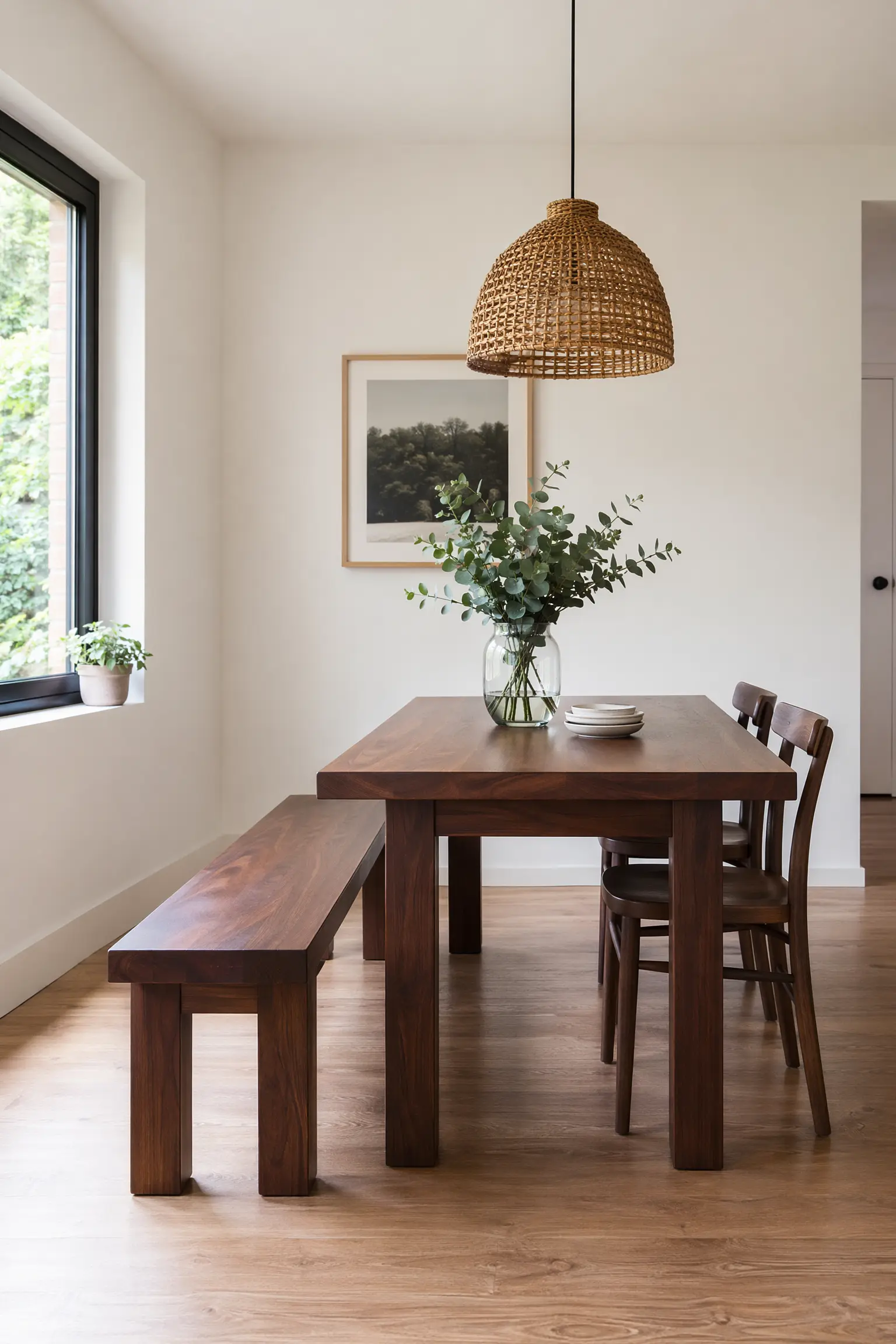
Replacing two or three dining chairs on one side of the table with a single bench is a practical minimalist move that reduces visual clutter while also making the room easier to move around. A bench takes up less visual weight than three individual chairs, keeps the lines of the room cleaner, and often feels more relaxed for everyday dining. Choose a bench in the same material or finish as the table for a cohesive look, or opt for an upholstered bench in a solid, neutral fabric if comfort is a priority. Keep the opposite side with matching dining chairs so the arrangement remains balanced. One honest limitation worth mentioning: benches are not ideal for young children or older guests who need the support of a chair back, so consider your regular dining group before committing.
Designer Note: A bench with hidden storage underneath, accessed by a lift-top lid, is one of the most practical pieces of furniture in any small dining room.
Texture and Material in a Restrained Palette
16. Natural Rattan or Wicker Chairs Against a Pale Wall
Natural rattan or wicker dining chairs bring texture into a minimalist dining room without introducing color, pattern, or visual complexity. Against a pale plaster or warm white wall, they look grounded and organic rather than boho or busy, especially when they have a simple silhouette and are kept in their natural undyed finish. Pair rattan chairs with a timber dining table in a contrasting darker tone, like walnut or smoked oak, to give the room some contrast while staying in an earthy natural palette. Keep the rest of the room deliberately plain: no rug, no sideboard styling, just the table and chairs doing their job. Rattan is relatively affordable compared to fully upholstered dining chairs and holds up well in everyday use, though it is not the most comfortable option for long meals and works best for relaxed, shorter dining occasions.
Designer Note: Adding a simple flat seat cushion in undyed linen to each rattan chair adds comfort without changing the look.

17. Mixing Metal Finishes Done Deliberately and Sparingly
The rule about never mixing metal finishes has softened significantly in contemporary interior design, and in a minimalist dining room, mixing two metal tones thoughtfully can add exactly the right amount of subtle contrast. The key word is sparingly, meaning two finishes maximum and used in proportions that make it clear the pairing was intentional. A practical example that works well: matte black pendant lighting paired with brushed brass chair legs. Or warm aged brass hardware on a sideboard paired with a polished steel table base. What makes this feel considered rather than haphazard is repeating each finish at least twice in the room, so neither reads as an accident. This is a detail-level choice that most visitors will not consciously notice but will feel as a sense of refinement in the space overall.
Designer Note: Warm metals like brass and bronze pair well together. Cool metals like chrome and gunmetal work well together. Mixing a warm with a cool requires more care.

18. A Wool or Jute Rug to Define the Zone Without Overpowering It
A rug in a dining room is a commitment, particularly because dining rooms are places where things spill, and a rug under a dining table is much harder to clean than hard flooring. That said, a flat-weave wool rug or a jute rug in a natural undyed tone can add grounding and warmth to a minimalist dining room without creating visual complexity, and in a room that is otherwise very clean and spare, it is sometimes exactly what brings the furniture together as a cohesive grouping rather than individual pieces floating on a floor. The sizing rule for dining rooms is generous: the rug should extend at least 60 cm beyond all four sides of the table when chairs are tucked in, so pulled-out chairs still sit on the rug. A rug that is too small is one of the most common and most visually disruptive mistakes in dining room design.
Designer Note: Flat-weave rugs are significantly easier to clean than pile rugs and are the only practical choice for under a dining table.

The Details That Actually Make the Difference
19. One Plant, Chosen Carefully and Placed With Purpose
A single plant in a minimalist dining room is often more effective than ten plants spread across shelves and windowsills. The choice of plant matters more here than in any other style of room, because in a space with very little else competing for attention, a sad or overly fussy plant will be the first thing anyone notices. In practice, the plants that work best in minimalist dining rooms are those with simple, architectural forms: a fiddle-leaf fig with a single straight trunk, a large-leafed monstera in a plain terracotta pot, a tall snake plant with clean vertical lines, or a single stem of pampas grass in a slim ceramic vase. The pot should be plain, matte, and in a tone that belongs in the room’s existing color palette. Place the plant in one corner or beside the sideboard rather than on the table, where it will block conversation lines.
Designer Note: Faux plants in a minimalist dining room are very hard to hide as fake because there is nothing else in the room to distract the eye. Real is worth it here.

20. Candlelight as the Only Table Decoration Worth Having
Nothing on a dining table does what candlelight does. It changes the temperature of the room, it draws people together, and it makes food and faces look genuinely better. In a minimalist dining room, candles also serve as the one piece of table decor that is completely in keeping with the aesthetic: they are functional, they are beautiful, and when the meal is over and they are blown out, they take up almost no space. Simple taper candles in natural beeswax tones, set in plain ceramic or matte metal holders, or a collection of varying-height pillar candles grouped at the center of the table, both work well. Avoid heavily fragranced candles for dining situations, as scent competes with food. Unscented or very lightly scented beeswax or soy candles are the cleaner choice for a room meant for eating.
Designer Note: Odd numbers of candles, three or five, almost always look more considered than even groupings on a dining table.

21. A Considered Art Piece That Does Not Need Company
Minimalist dining rooms do not need to be art-free, but they do need art that can hold a wall on its own without requiring neighboring pieces to explain it or complete it. A single large canvas or a framed photographic print hung at the right height on one wall is often the finishing touch that moves a dining room from feeling spare to feeling complete. The scale matters enormously: an artwork that is too small for the wall it occupies looks timid rather than minimal. A general guideline is that the artwork should be at least two-thirds the width of any furniture it sits above, whether that is a sideboard or a blank wall. Abstract works in a limited palette, landscape photography, or simple line drawings tend to fit minimalist dining rooms well because they add visual depth without competing with the furniture for attention. Budget does not dictate quality here: a large-scale print from an independent artist on a poster site often does the job just as well as an expensive gallery piece.
Designer Note: Hang art so the center of the piece sits at 145 to 150 cm from the floor, which is eye level for most adults when standing.

A Few Final Thoughts
The ideas in this list cover a wide range of budgets, room sizes, and personal styles, but they share one thing: every piece, finish, and decision in a minimalist dining room has to justify its place. That does not mean every choice needs to be expensive or rare. It means it needs to be chosen, not defaulted to. A basic chair from a flat-pack store can absolutely belong in a minimalist dining room if it is the right chair, placed intentionally, and not surrounded by ten things that do not need to be there.
Getting to a minimalist dining room often involves removing things rather than buying them, and that is a process worth taking slowly. Clear the table first. Take something off the walls. Live with the room for a week and notice what is actually missed versus what just felt like it should be there. Most people find that the room already had better bones than they thought, and that simplifying was more about editing than replacing. Start with the table, the lighting, and the walls. Those three things carry most of the visual weight in a dining room, and getting them right creates a foundation everything else can build from. The rest follows naturally from there.
Frequently Asked Questions
What colors work best in a minimalist dining room?
Warm neutrals tend to work best because they keep the room feeling calm without going cold. Think warm whites, soft greiges, sandy beiges, dusty sage greens, and muted terracottas. Pure grey and bright white are options, but they require careful attention to lighting temperature to avoid feeling clinical. The safest starting point for most rooms is a warm off-white on the walls and a wood-toned anchor piece, either a table or a sideboard, to bring in natural warmth.
How do I make a small dining room feel more minimalist?
Start by removing anything from the table that does not need to be there every single day. Then address the walls: one large mirror or one piece of well-chosen art will do more than a collection of small pieces. Consider a round table, which takes up less visual space than a rectangle and allows more flexibility with seating. Wall-mounted or floating storage keeps the floor clear and makes the room feel larger. Finally, lighting matters: a well-positioned pendant above the table draws the eye to the center rather than the walls, which creates a sense of focused calm even in a compact space.
Can a minimalist dining room still feel warm and inviting?
Yes, and this is probably the most important thing to understand about modern minimalism. The cold, sterile version of minimalism that many people picture is a style that professional designers have largely moved past. What is replacing it is warm minimalism: rooms that are still edited and intentional, but that use natural materials like solid wood, linen, and ceramic, warm-toned lighting in the 2700K range, and a palette of earthy neutrals to feel genuinely welcoming. Adding candles, a single well-chosen plant, and textured fabrics like boucle or chunky linen makes a minimalist room feel very comfortable to be in for a long meal.
What furniture should I prioritize in a minimalist dining room?
The table is the most important piece, so put the majority of your budget there. A well-made table in a good material, solid wood, sintered stone, or a quality lacquer finish, will anchor everything else and last for years. After the table, prioritize lighting, because it affects how the entire room looks and feels after dark. Chairs can be simpler and more budget-friendly than the table without the room suffering, provided their silhouette is clean. A sideboard or floating shelf for storage is worth adding if budget allows, as it is what makes keeping the room tidy actually sustainable day to day.
Is a minimalist dining room practical for a busy family?
It depends heavily on the storage situation. A minimalist dining room without good storage quickly becomes a cluttered dining room because family life generates things, and those things need to go somewhere. Built-in storage, a sideboard with closed doors, or a bench with a lift-top all help maintain the look without requiring constant tidying. Choosing materials carefully also matters: a matte-finish wood table hides daily wear better than a high-gloss one, and performance fabric chair upholstery is much more practical than plain linen if small children are eating at the table regularly. With the right storage and the right materials, a minimalist dining room is genuinely manageable for a busy household.
How much should I spend to get a minimalist dining room right?
There is no single budget required, because minimalist design is more about editing than spending. Some of the most effective minimalist dining rooms come from removing most of what was already there and making one or two considered additions. If you are starting from scratch, the most impactful investments in order are: a good table (this is worth spending on), quality pendant lighting (even one well-chosen fitting transforms a room), and wall color (paint is inexpensive relative to furniture and changes the feel of a room more than almost anything else). Chairs, storage, and decor can come later and be built up gradually. Budget options from IKEA, H&M Home, and similar retailers work well in minimalist rooms because the aesthetic actually suits simpler, cleaner designs.