Minimalist Wall Decor Ideas That Actually Make a Room Feel Complete
There is a moment every decorator knows: the room looks right, the furniture is placed, the colors feel good, and yet something is still off. Most of the time, that something is the walls. Bare walls in a minimalist home do not feel airy and intentional. They just feel unfinished. The good news is that getting your walls right does not mean cluttering them. It means choosing carefully, placing thoughtfully, and understanding how one or two well-chosen pieces can shift the feeling of an entire room.
This guide covers 26 minimalist wall decor ideas grouped by style and approach, so you can find what fits your space rather than scrolling through ideas that have nothing to do with your home. Whether you are working with a small apartment, a modern open-plan living room, a calm bedroom, or a home office that needs a little personality, there is something here that will actually work in your space and not just look good in a photo.
Line Art and Graphic Prints
1. Single-Line Portrait Art
Single-line portraits, where the entire drawing is created with one continuous line, have become one of the most recognized forms of minimalist art for a reason: they communicate sophistication without noise. A framed single-line face or figure in black ink on white linen paper works especially well above a console table in an entryway or behind a sofa in the living room. The trick is scale. In practice, going larger than you think you need, something around 50x70cm for a standard wall, tends to give the piece the visual weight it needs to hold the space. Pair it with a thin matte black frame and leave the surrounding wall completely empty. The negative space is the design.
Designer Note: Single-line art is one of the more affordable ways to add a high-end feel. Prints from independent artists on platforms like Society6 or Desenio typically cost under $40 and look expensive when framed well.

2. Typographic Word Art in Muted Tones
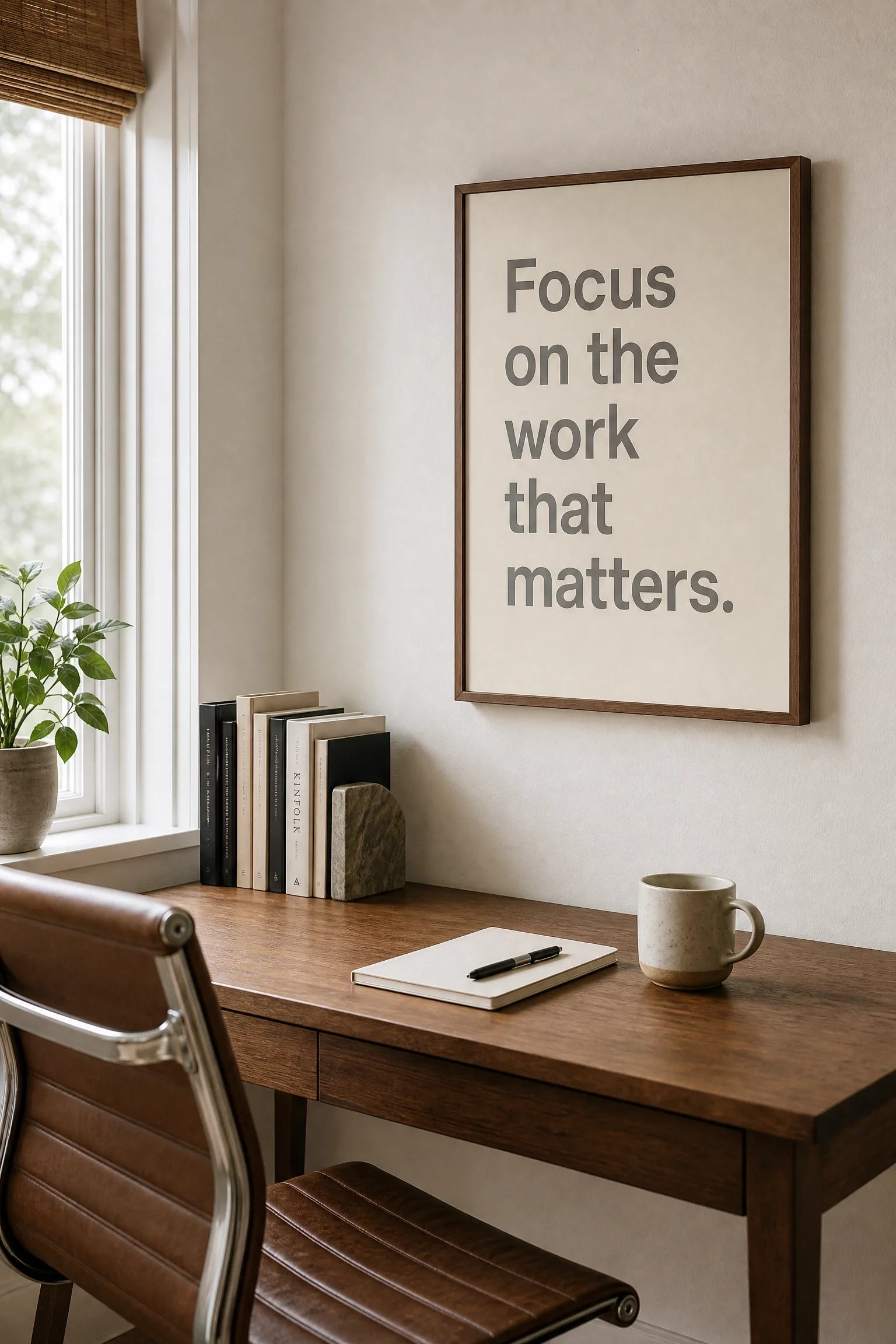
A single word or short phrase printed in a simple serif or sans-serif font can function as both a visual anchor and a personal statement in a minimalist room. The key is restraint: one or two words maximum, printed in warm gray, soft black, or even a deep dusty green on a cream background. Avoid anything that feels motivational or corporate. The best typographic pieces for minimalist homes tend to be quiet, perhaps a place name, a year, or even a botanical term in Latin. Hang it at eye level on a wall that gets natural light, which softens the print and gives it a gallery-like quality. This works particularly well in home offices and reading corners.
Designer Note: Avoid glossy prints for this style. A matte or textured paper finish reads as far more refined in person and does not catch glare.
3. Abstract Geometric Prints
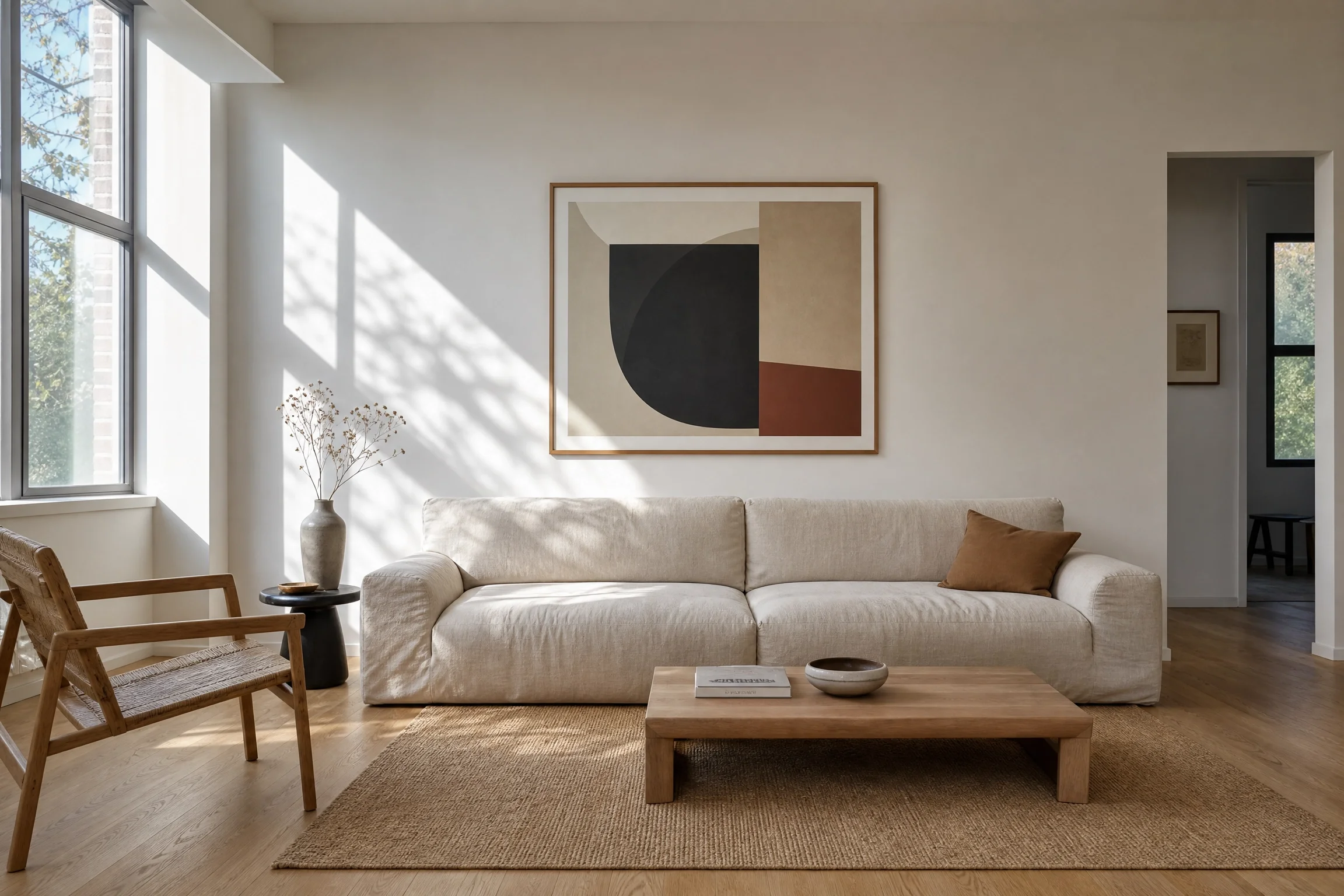
Abstract geometric prints rely on shape, proportion, and a limited color story to do all the work. Think soft arcs on a cream field, or overlapping circles in warm terracotta and off-white. What works really well here is choosing a print that pulls one color already present in your room, a cushion shade, a rug tone, or the warmth of your wood furniture, so the art feels connected to the space rather than dropped into it. These prints look strongest when given room to breathe, meaning no gallery-wall stacking. One print, one frame, centered above a key piece of furniture. Mid-century modern and Japandi interiors are natural homes for this style, but it adapts easily to most calm, neutral rooms.
Designer Note: Geometric prints on warm-toned rooms can feel cold if you pick the wrong palette. Stick to prints with at least one warm color in the composition.

4. Botanical Line Drawings
Botanical illustration has been part of interior design for centuries, and in its minimalist form, it is one of the most versatile wall decor choices available. A simple black-and-white line drawing of a stem, a single leaf, or a dried flower head in a slim black or brass frame adds organic softness to rooms that might otherwise feel too stark. In the bedroom, a pair of matching botanical prints hung symmetrically on either side of the bed creates a balanced, considered look without feeling overly formal. The organic subject matter is naturally calming, which makes it a strong choice for spaces where you want visual interest without stimulation.
Designer Note: Hang botanical prints at exactly the same height on each side of the bed. Even a centimeter of difference reads as careless. Use a level and measure twice.

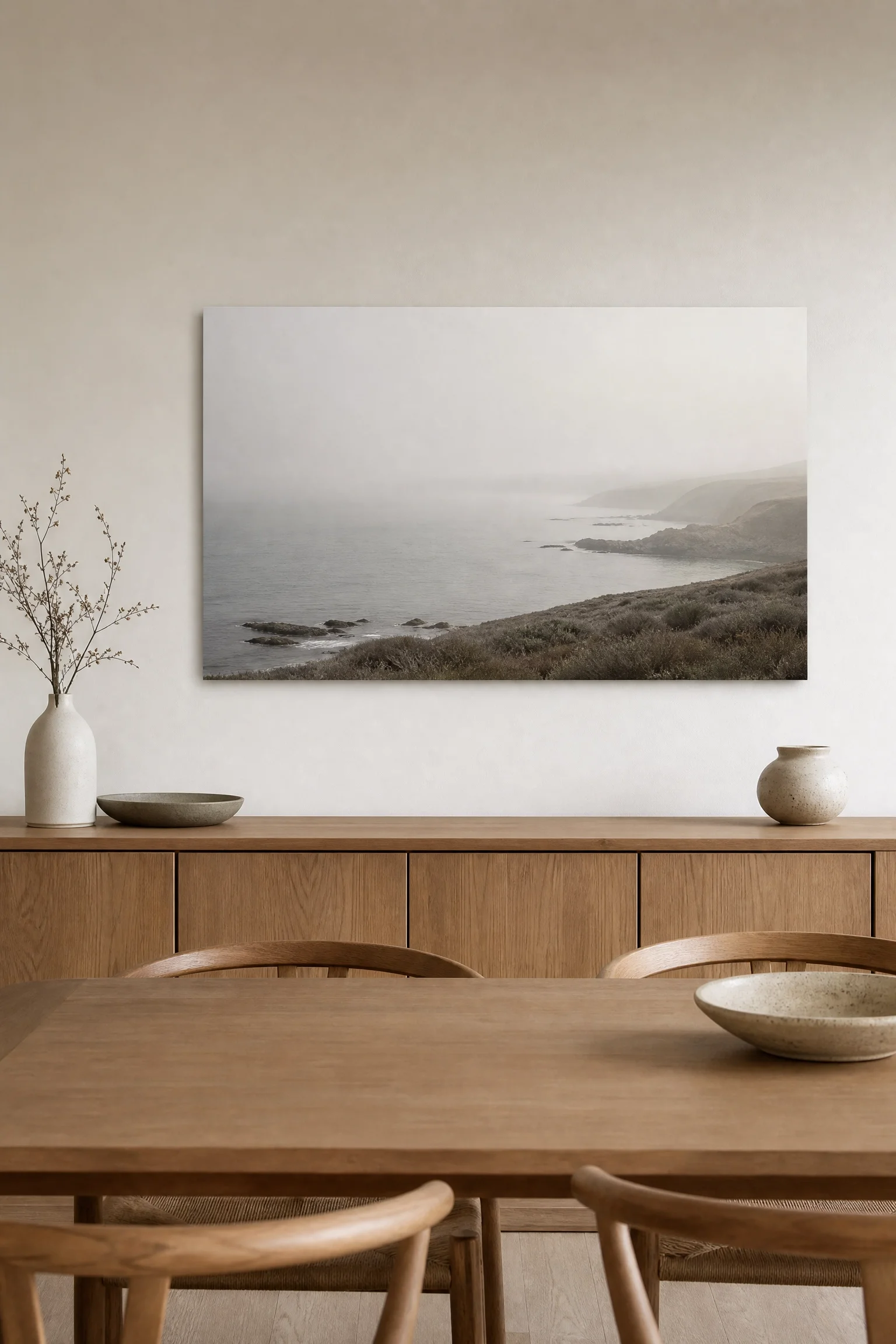
5. Minimal Landscape Photography
A single photograph of an open landscape, think a wide field at dawn, a quiet stretch of ocean, or a foggy hillside, can function as a window in a room that lacks one, visually extending the space and adding calm. The photography should have a limited color palette: pale sky, soft sand, gray water. Avoid anything with strong saturation or busy compositions, as these work against the minimalist feel. A wide-format print, something in a 2:1 or 3:1 ratio, works beautifully on long horizontal walls above low sideboards or credenzas in living rooms or dining areas. This is a mid-range investment: quality art photography prints typically range from $80 to $200 framed, depending on size.
Designer Note: Matte glass or no glass at all, using a float mount, gives landscape photography a much more gallery-like finish than standard glass frames.
Texture, Material, and Dimension
6. Woven Wall Hangings in Neutral Fibers
Woven wall hangings made from natural fibers like cotton, jute, or undyed wool add warmth and texture to a minimalist wall without introducing color or pattern in a distracting way. The best ones for minimalist spaces are simple in construction, a flat weave with minimal fringing or a loosely knotted piece in cream and oatmeal tones. They work particularly well in bedrooms and living rooms where you want the wall to feel cozy without adding more furniture. Hang one from a raw wooden dowel for a clean, unfussy look. One honest note: woven pieces attract dust and are not easy to clean, so factor that into the decision if you have pets or allergies.
Designer Note: Keep the scale generous. Small woven pieces on large walls look awkward. Aim for a width at least half the width of the furniture piece below it.

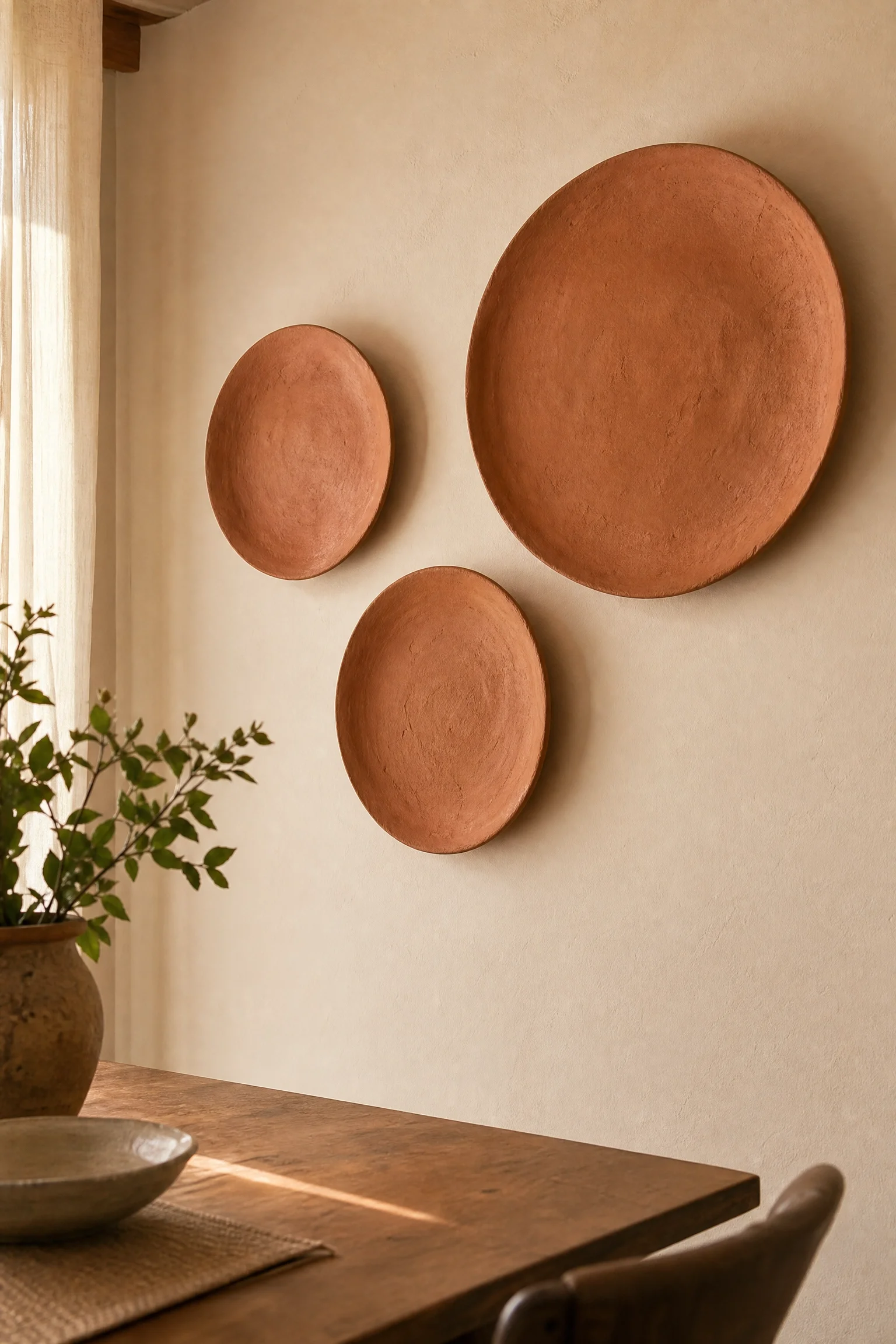
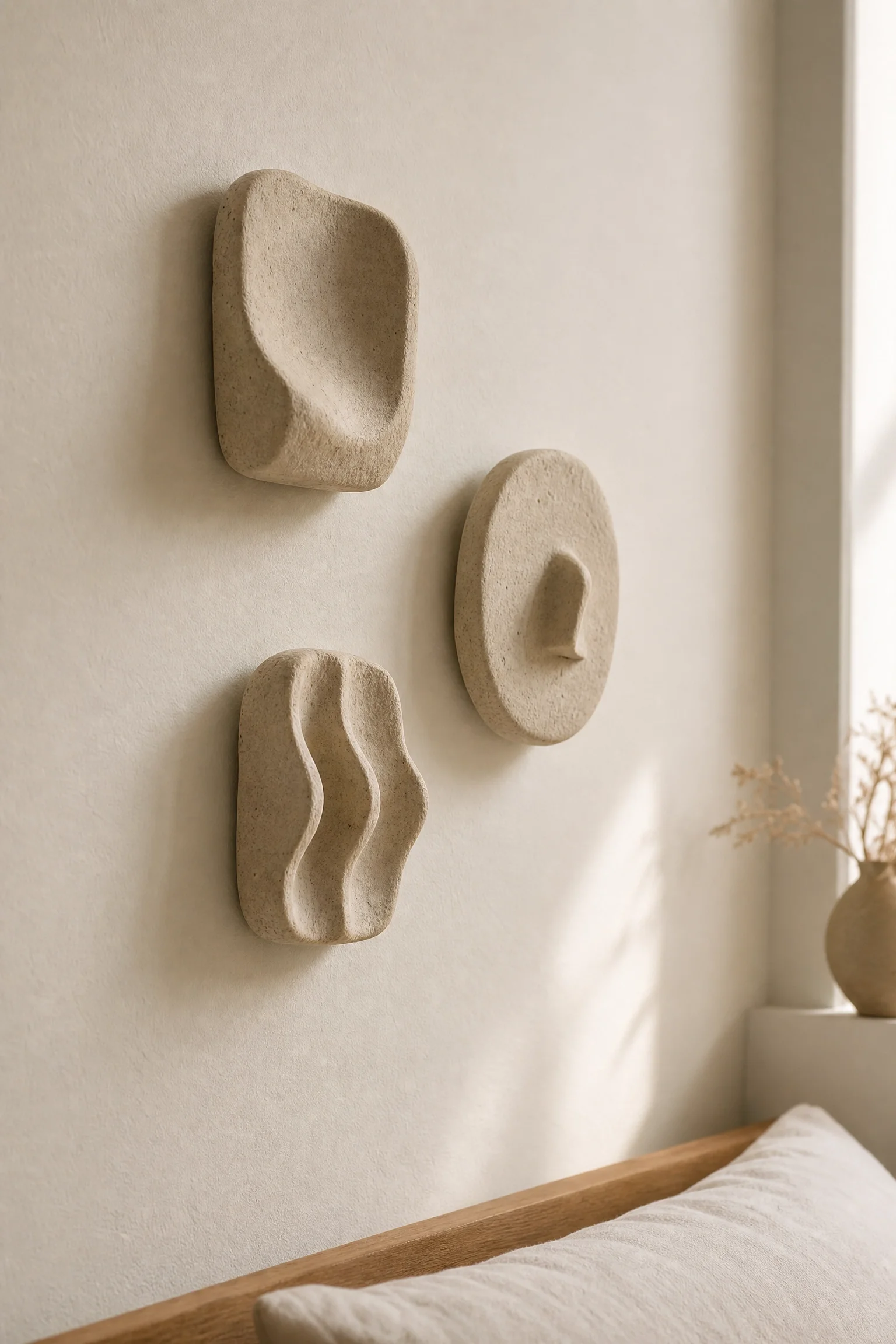
7. Terracotta or Clay Wall Discs
Handmade clay or terracotta wall discs are a quiet but visually interesting alternative to framed art. Their raw, uneven surfaces catch light differently depending on the time of day, and their warm earthy tones complement linen, wood, and stone surfaces that often appear in minimalist interiors. A group of three discs in slightly different sizes, arranged in a loose cluster on a dining room or bedroom wall, reads as intentional without being fussy. This is a relatively affordable decor approach: handmade ceramic wall pieces typically range from $25 to $80 each from independent makers on Etsy or at local markets. The limitation is weight: make sure you are using proper wall anchors.
Designer Note: Odd numbers always read more naturally on walls than even groupings. Three or five pieces together feels organic; two or four can feel static.
8. Plaster or Limewash Accent Panel
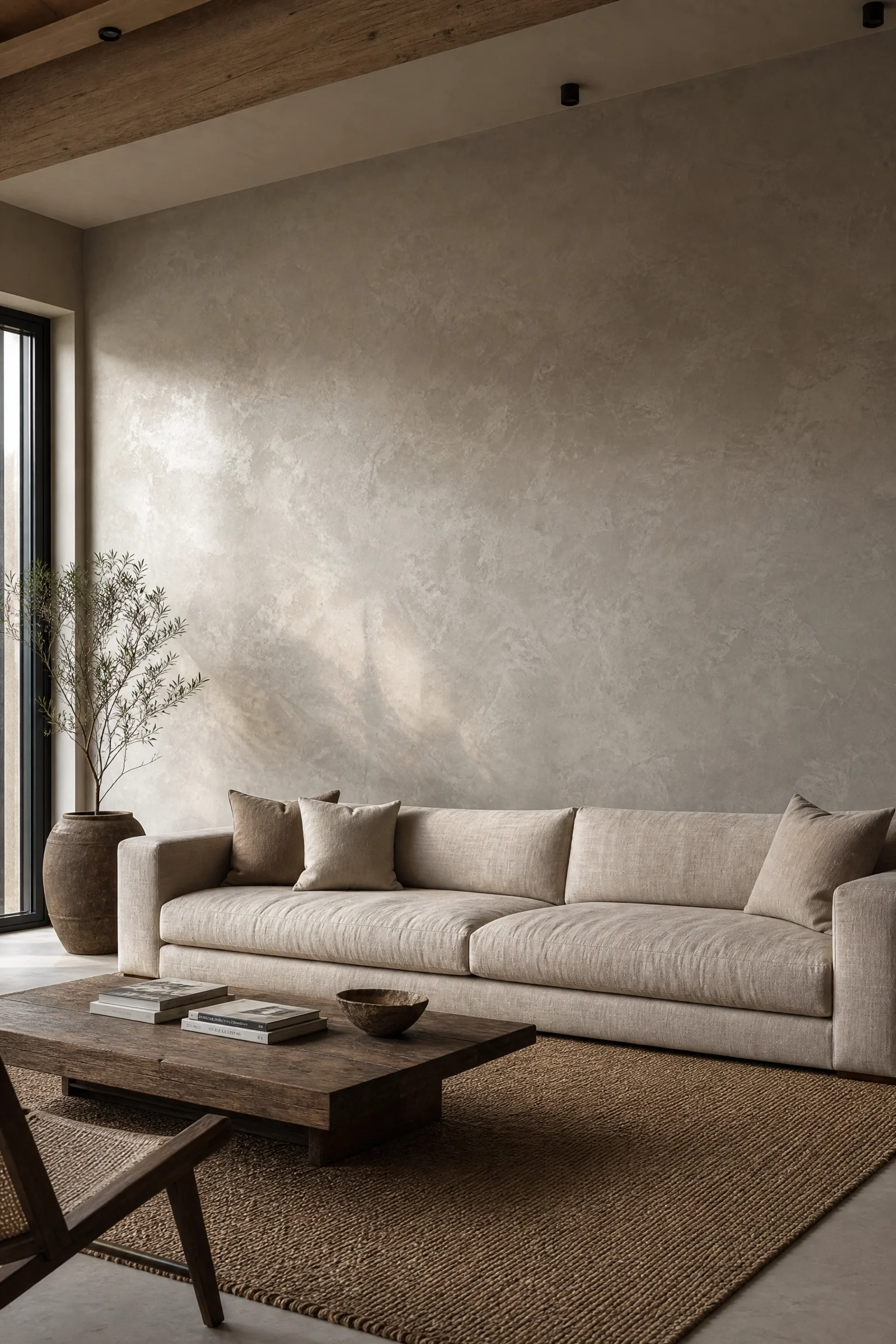
Rather than hanging anything on the wall at all, consider making the wall itself the decor. A section of wall finished in Venetian plaster or limewash paint introduces extraordinary texture and depth without any frames, prints, or accessories. The way these finishes catch natural and artificial light changes the mood of the room across the day, something no framed print can replicate. This is an investment-level choice: professional Venetian plaster application typically costs $5 to $15 per square foot. However, limewash paint is significantly more affordable and can be applied by a confident DIYer using products from brands like Portola Paints or Bauwerk. It works best as a feature wall in living rooms and bedrooms where you want a subtle focal point.
Designer Note: Limewash and Venetian plaster read very differently in artificial versus natural light. Always test a sample panel at different times of day before committing.
9. Rattan or Cane Wall Panel
A framed panel of woven rattan or cane is one of those ideas that looks more expensive than it is and works harder than most wall decor options. The woven surface adds texture, warmth, and pattern all at once, without using a single color that could conflict with your room. A single large panel in a thin natural wood frame works beautifully as a headboard alternative in a Japandi or Coastal Minimalist bedroom. In a living room, two matching narrow panels flanking a window create a sense of architectural framing that makes the whole space feel more composed. Rattan panels are generally affordable, with DIY options available at craft stores for $30 to $60 for standard sizes.
Designer Note: Make sure the rattan weave pattern is consistent across both panels if you are hanging two. Slight variations in weave direction read as mismatched.

10. Leather Strap Art Display
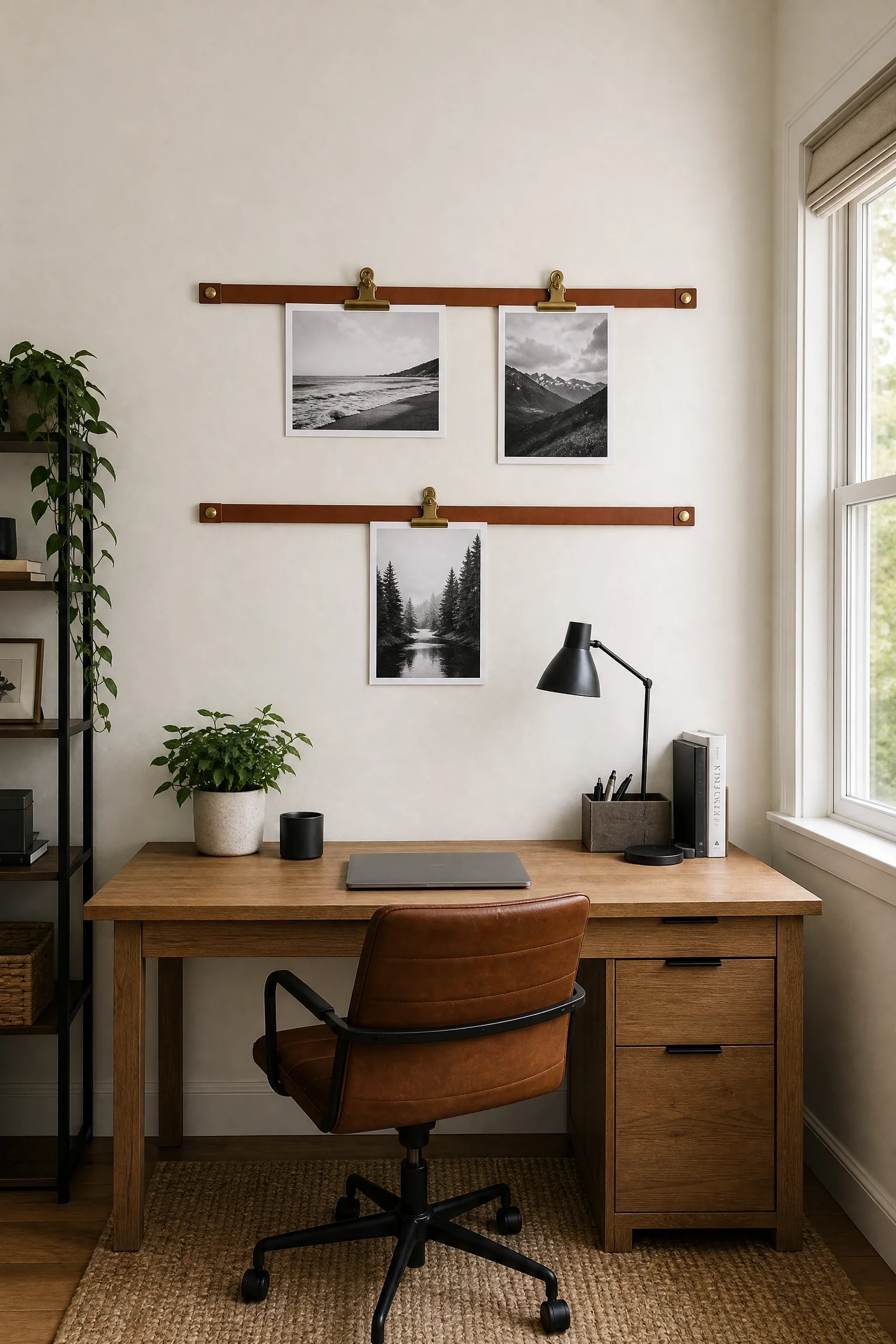
A minimal leather or suede strap display system, where artwork or objects are clipped or hung from a horizontal leather strip mounted to the wall, is one of the most adaptable and personality-rich approaches to minimalist wall decor. It lets you swap in different prints, photos, or flat objects without re-nailing the wall. In a home office or entryway, this functions as both decor and a low-key display tool. Use two parallel straps at different heights for a layered look, or a single centered strap for a cleaner result. Pair with simple black binder clips for a modern feel, or brass clips for a warmer tone. This is a fully budget-friendly solution: a good DIY version costs under $20.
Designer Note: Keep the items displayed in a consistent theme or color story. Random clippings look messy. Monochrome prints or photos of the same subject all displayed together look considered.
Mirrors and Reflective Surfaces
11. Oversized Round Mirror
An oversized round mirror is one of the most reliable focal-point solutions in minimalist interiors, and professional designers return to it again and again for good reason. The circular shape softens the hard angles of modern furniture and architecture, while the reflective surface bounces natural light deeper into the room, making it feel larger and more open. The frame matters enormously here. A thin matte black frame reads as modern and graphic. A slim brass frame leans warmer and more Art Deco adjacent. A frameless or beveled-edge mirror is the most minimal of all. In living rooms, hang above the sofa at center. In entryways, one round mirror at eye level transforms what is often the most neglected space in the home.
Designer Note: Mirrors reflect whatever is directly opposite them. Before you hang one, stand in that position and look at what the mirror would show. It should reflect something worth seeing: a window, a plant, a lamp.

12. Arched Mirror with Slender Frame
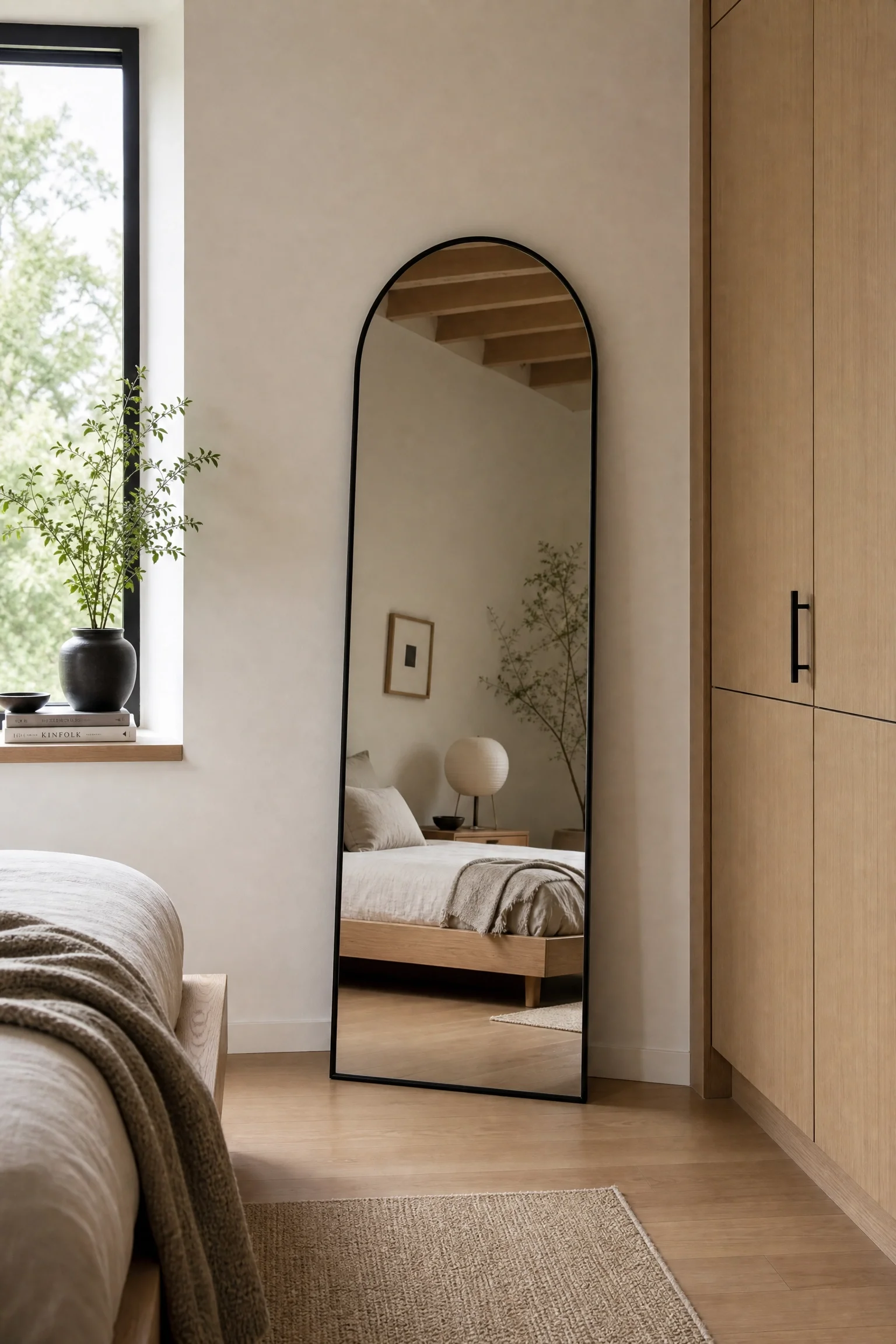
The arch-top mirror has moved firmly from trend to staple in minimalist and Japandi interiors, and for good reason. The softly curved top brings an almost architectural quality to a wall, suggesting a doorway or window without the structural commitment. In a bedroom, a full-length arched mirror leaning against the wall rather than hung creates an effortlessly casual feel that works well in rooms with a natural, organic palette. Slender brass or matte black frames are the most commonly seen finishes, but a raw wood frame gives a warmer, more Wabi-sabi feel. For narrow walls in hallways or beside a wardrobe, a tall slender arch mirror is one of the best choices because it creates vertical emphasis without bulk.
Designer Note: Leaning a mirror rather than hanging it is perfectly valid, but only works when the floor below it is clear. A cluttered floor makes a leaning mirror look like an afterthought.
13. Grid of Small Square Mirrors
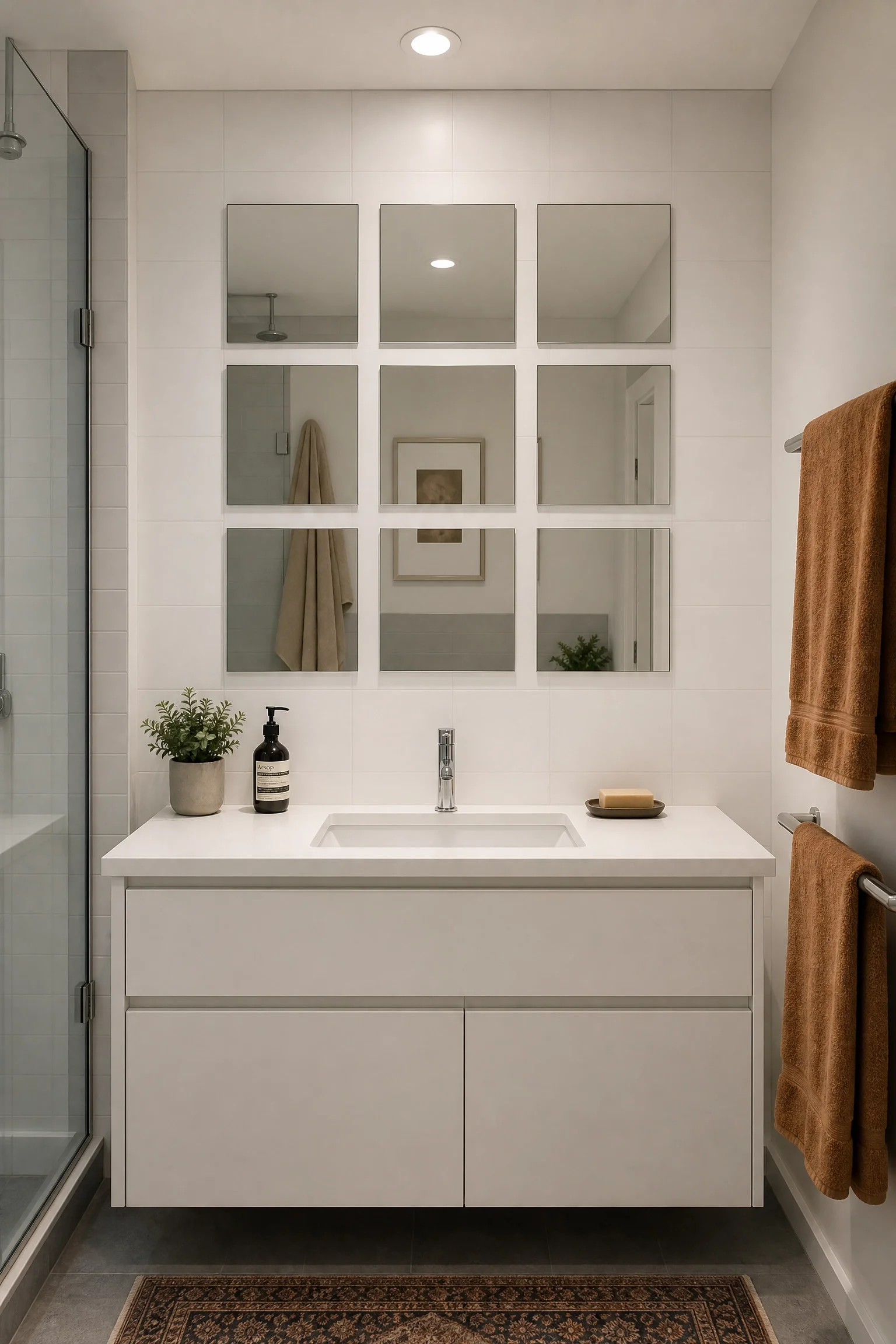
Four to nine small square mirrors arranged in a grid pattern on a single wall create an effect that reads as both intentional and quietly decorative without the weight or cost of one large piece. This works especially well in bathrooms, bedrooms, and dining areas where you want to add light and visual interest without introducing color. Each mirror should be identical in size, with even spacing between them: around 5 to 8 centimeters of gap typically looks right. This arrangement works best when it has something below it as an anchor, a shelf, a console, or a piece of furniture. Without a visual base, a grid of mirrors floating on a wall can feel ungrounded.
Designer Note: Use a grid template cut from craft paper and tape it to the wall before you commit to drilling. What looks right on the floor often looks very different once it is vertical.
Shelves and Functional Wall Decor
14. Single Floating Shelf as a Gallery Ledge
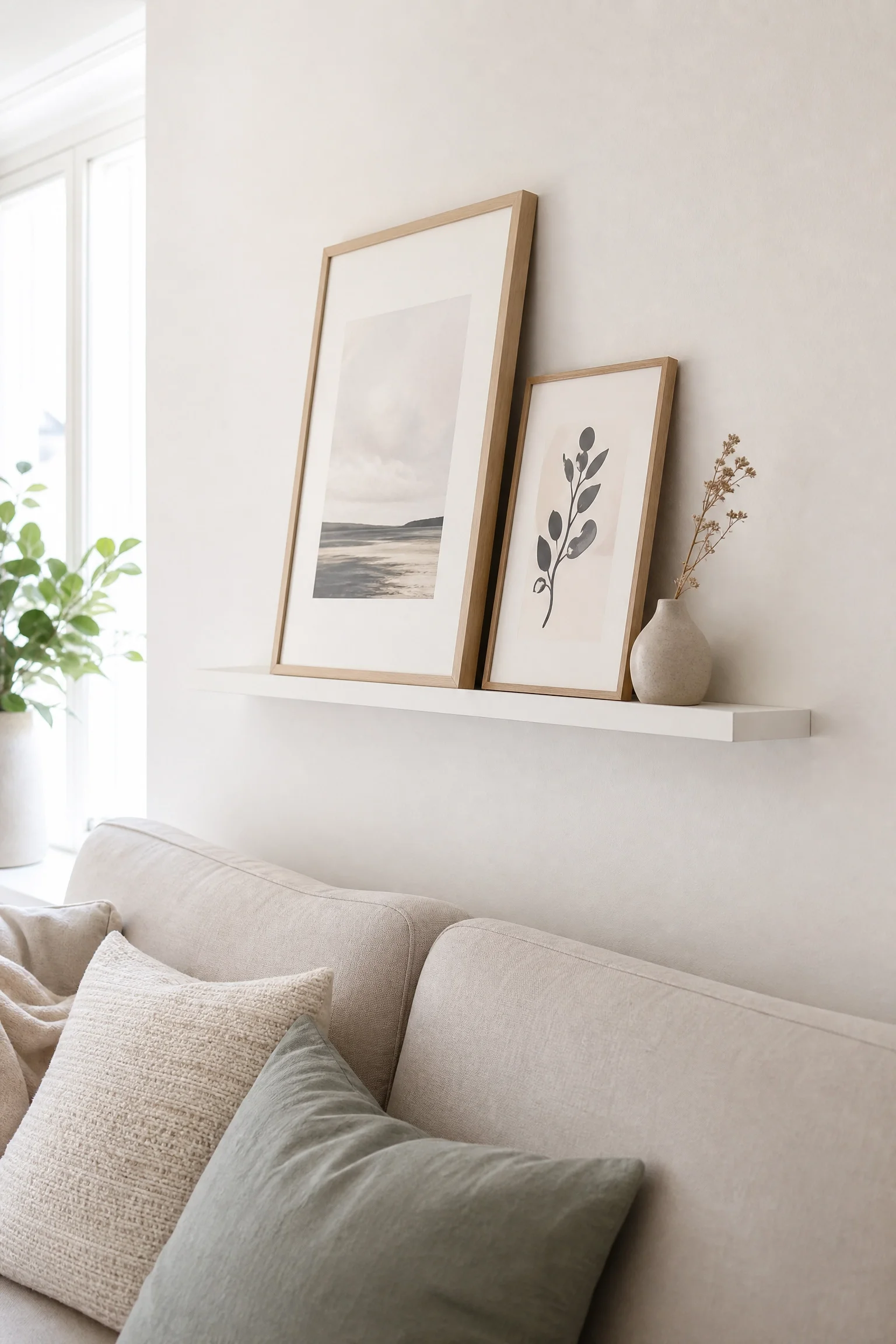
A single slim floating shelf used as a picture ledge, where prints lean rather than hang, is one of the most practical and renter-friendly wall decor approaches in minimalist design. It lets you change out your art without touching the wall again, which is a real advantage for people who like to refresh their space seasonally. Keep the shelf depth narrow, around 10 to 15cm, and limit what you display to two or three items: one print, one small object, and perhaps one dried stem in a simple vase. The rule in practice is that less than you think reads better once everything is on the shelf. Paint the shelf the same color as the wall for a floating effect.
Designer Note: Painting the shelf bracket or support the wall color makes the shelf itself feel like it belongs to the room rather than being attached to it.
15. Minimal Wall-Mounted Wooden Rack
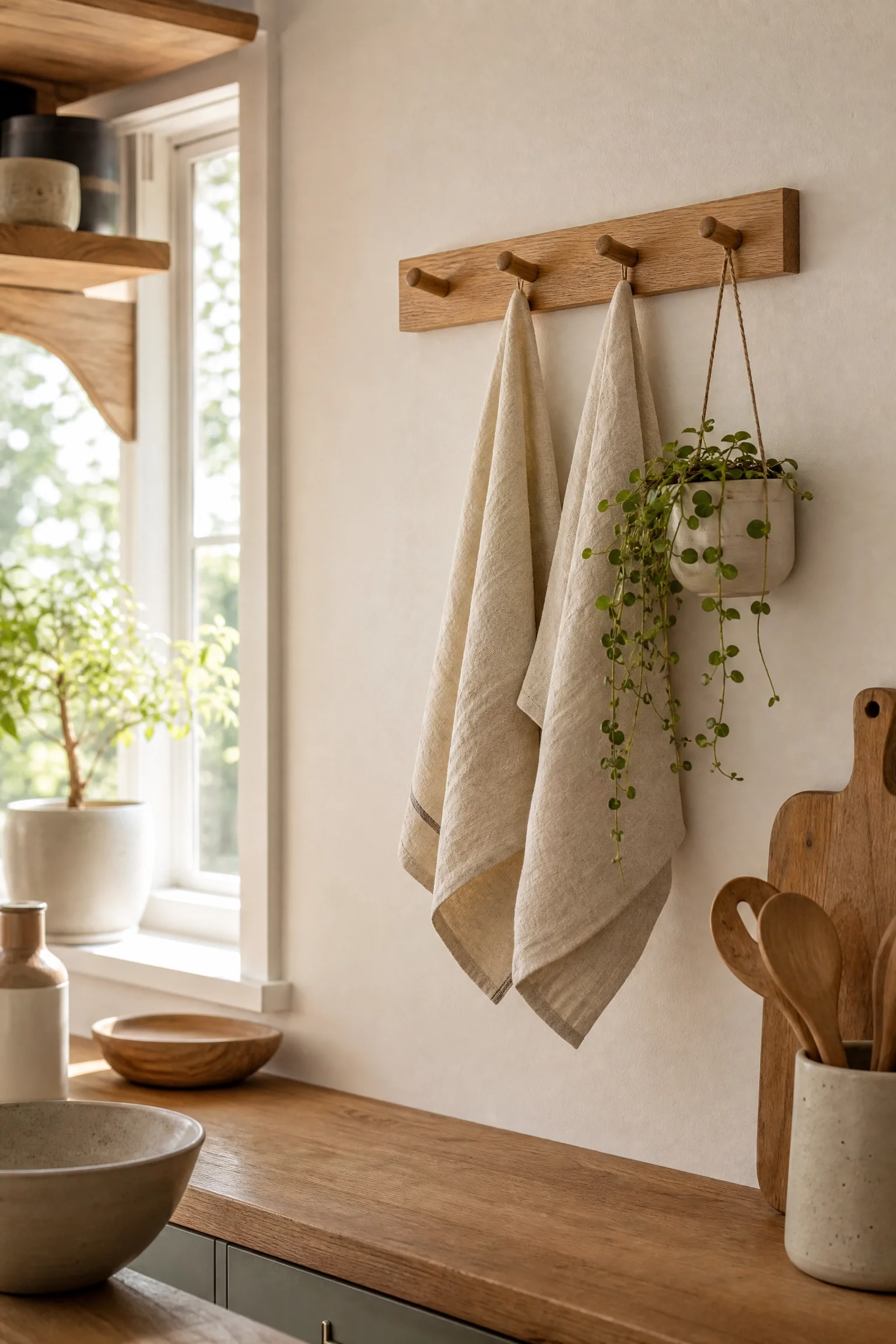
A minimal wooden wall rack with three or four simple pegs serves as both functional storage and quiet wall decor, particularly in entryways, kitchens, and bathrooms. Made from solid oak, ash, or walnut with a light natural oil finish, a well-made peg rack has a warmth and materiality that painted furniture cannot replicate. In a minimalist kitchen, a short rack above the counter holding a few linen towels and a small plant becomes the most considered corner of the room. The key is keeping what hangs from it limited and in a consistent color story. The rack itself should be the feature. Solid wood peg racks from Scandinavian-style brands typically cost between $40 and $120.
Designer Note: Mount the rack at a height that is functional, not just decorative. If it is too high for actual use, it will end up holding nothing and looking pointless.
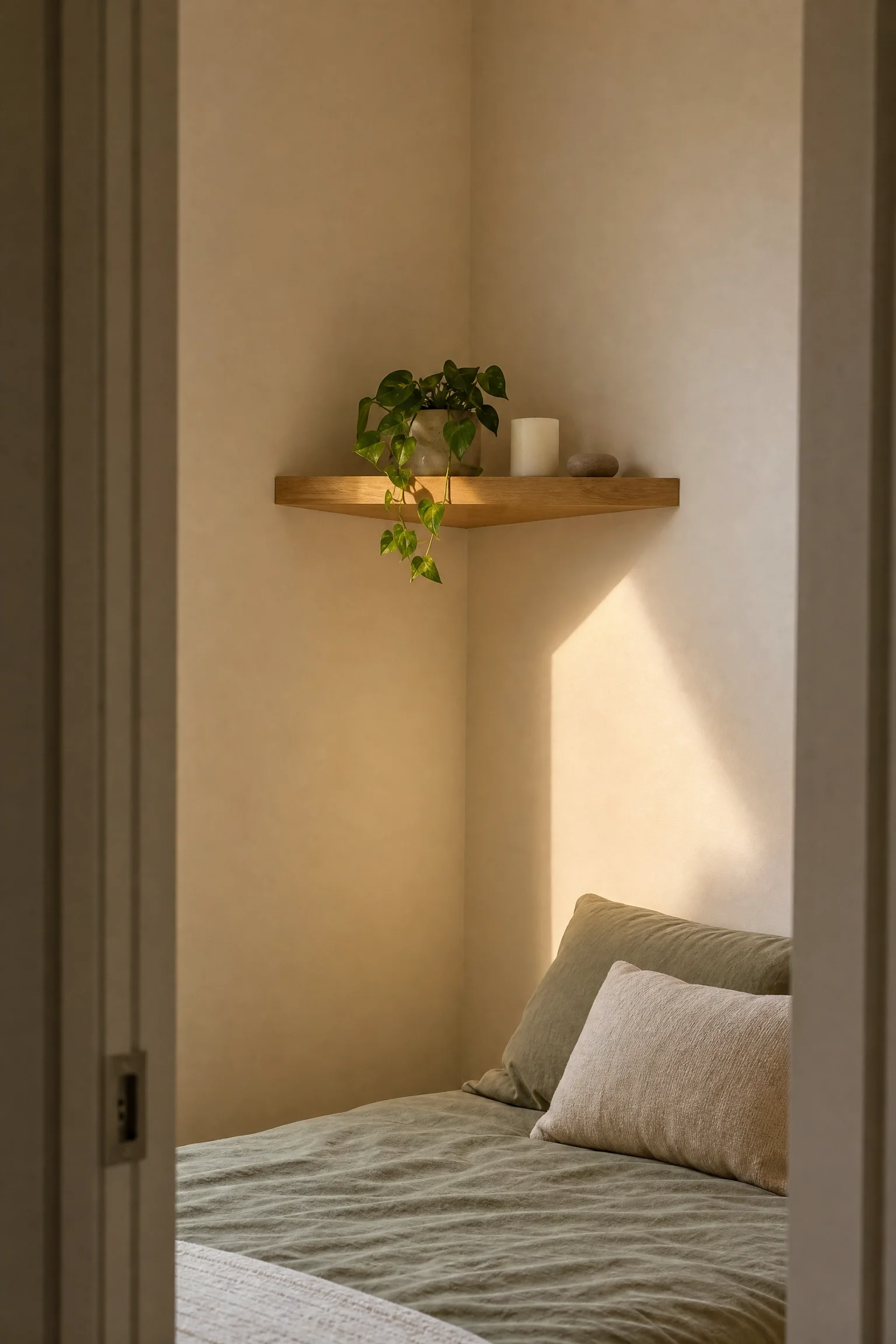
16. Floating Corner Shelf
Corners are the most underused surfaces in any room, and a floating corner shelf is one of the smartest ways to turn dead space into a calm, curated display. A triangular shelf in painted MDF or solid wood, mounted at about 150cm from the floor in a bedroom or living room corner, creates a perch for one plant, one candle, and one small sculptural object without taking up any floor space at all. The visual weight of a corner shelf is low, which makes it particularly well-suited to smaller rooms where you want to add interest without crowding. It is also an affordable project: most corner shelves are available flat-pack for under $30.
Designer Note: Limit the corner shelf to three items maximum. More than three and the principle of calm display is lost.
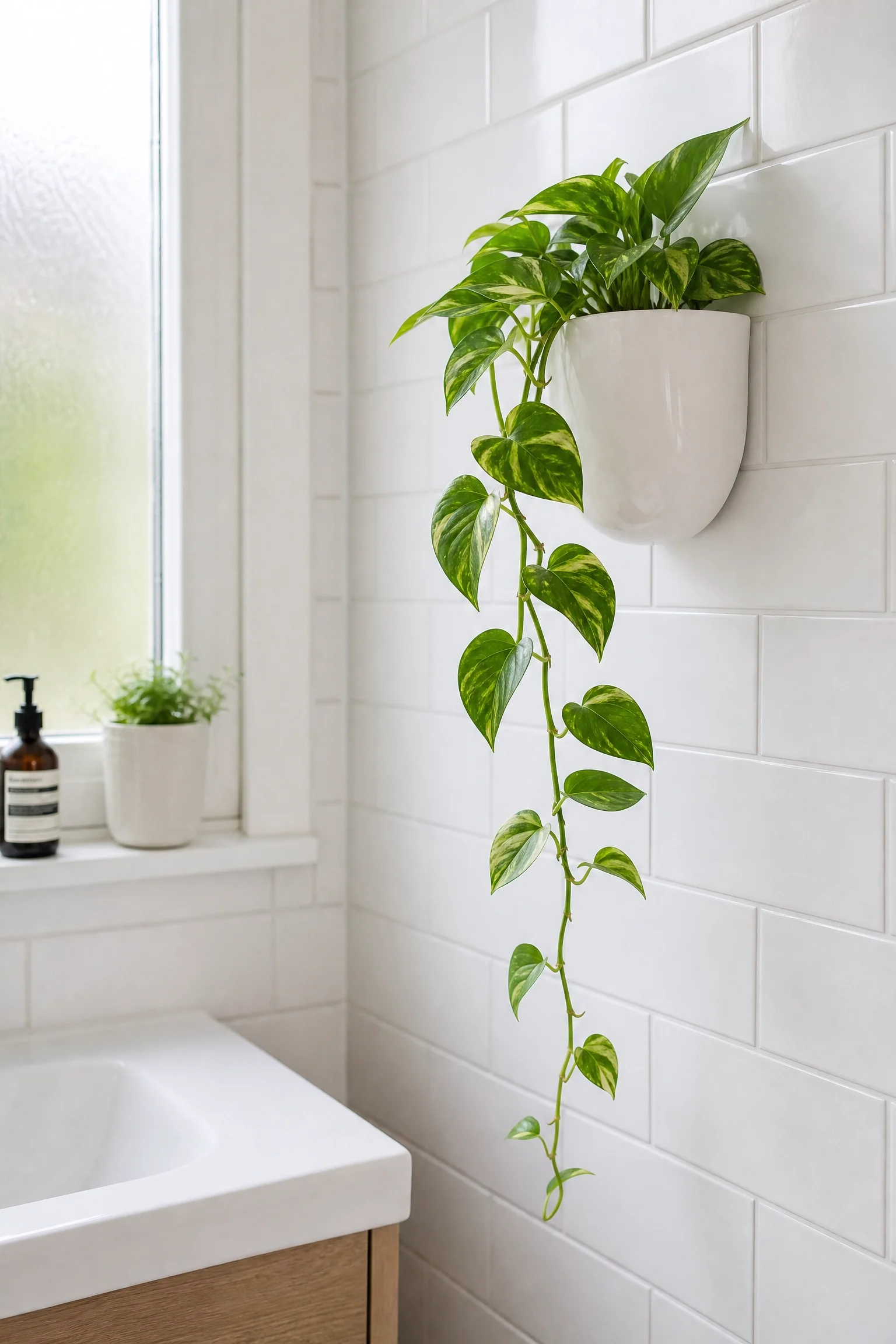
17. Wall-Mounted Planter with Trailing Greenery
A ceramic or concrete wall-mounted planter holding a trailing plant, such as pothos, string of pearls, or tradescantia, brings life and organic movement to a minimalist wall in a way no print can. The combination of the simple geometric planter form and the loose, natural trailing of the plant creates a visual contrast that feels alive and considered at the same time. In a bathroom or bedroom, a single wall-mounted planter positioned to catch indirect light and trail downward draws the eye in a natural, unhurried way. This is one of the more honest recommendations here: trailing plants do require some maintenance and the right light conditions. If your space is dark, choose a low-light-tolerant plant like pothos and accept that the trail will grow slowly.
Designer Note: Use a planter with a built-in drip tray or a waterproof liner. A water mark on a painted wall is far more noticeable than you expect.
Architectural and Surface Treatments
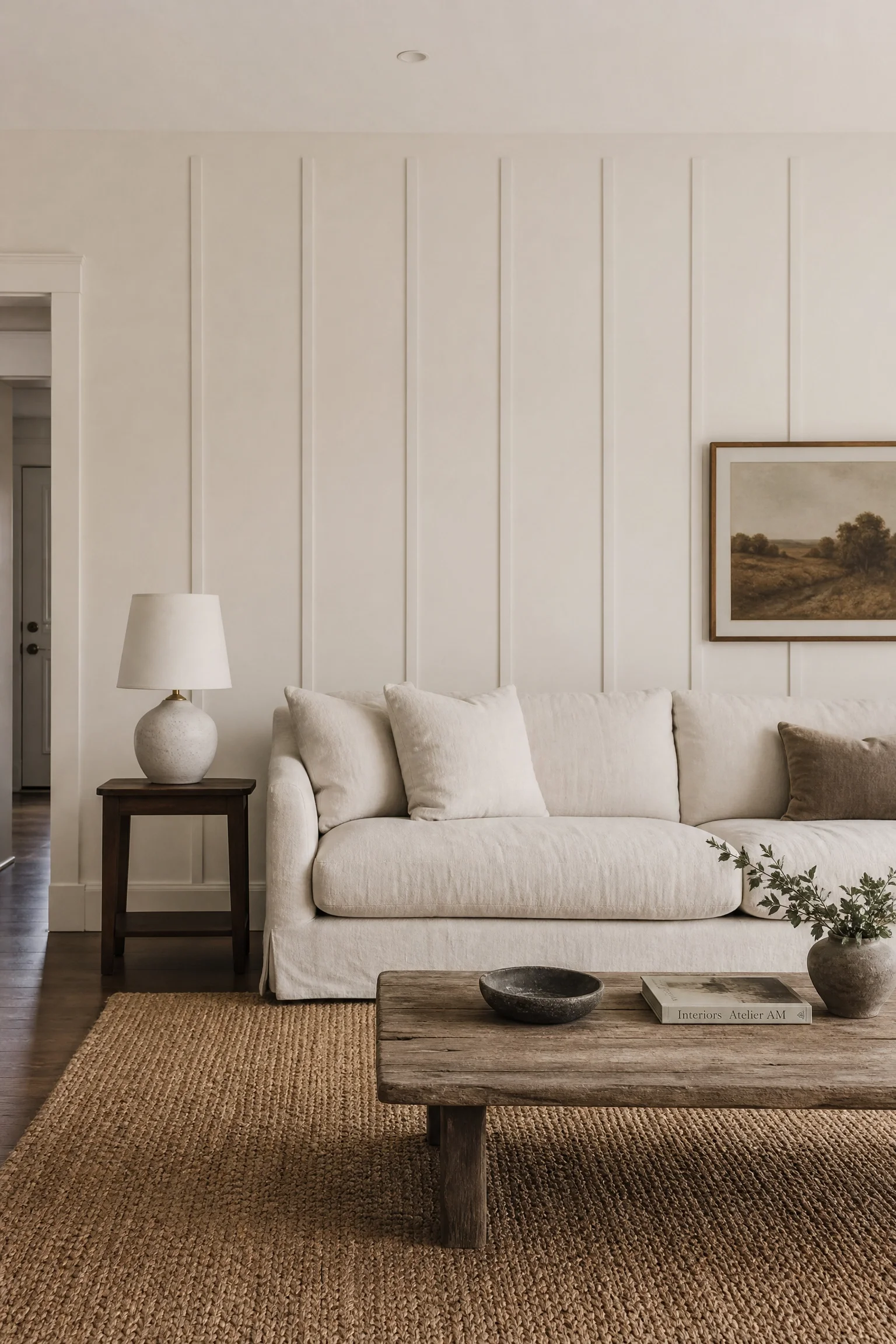
18. Vertical Shiplap or Board-and-Batten Panel
Adding vertical shiplap or a board-and-batten treatment to a single wall is one of the most architecturally satisfying approaches to minimalist wall decor because it becomes part of the room rather than something hung on it. Painted in the same color as the surrounding walls, a paneled feature wall creates visual texture and depth through shadow lines rather than color contrast, which is about as minimal as architecture gets. This approach works well in living rooms behind a sofa or in bedrooms behind the bed, where a furniture piece anchors the base of the treatment. It is an investment: professional installation and painting typically runs $300 to $800 depending on the wall size.
Designer Note: Painting the panels the same color as the wall is what makes this feel minimal rather than traditional. Use a flat or eggshell finish to keep the shadows subtle.
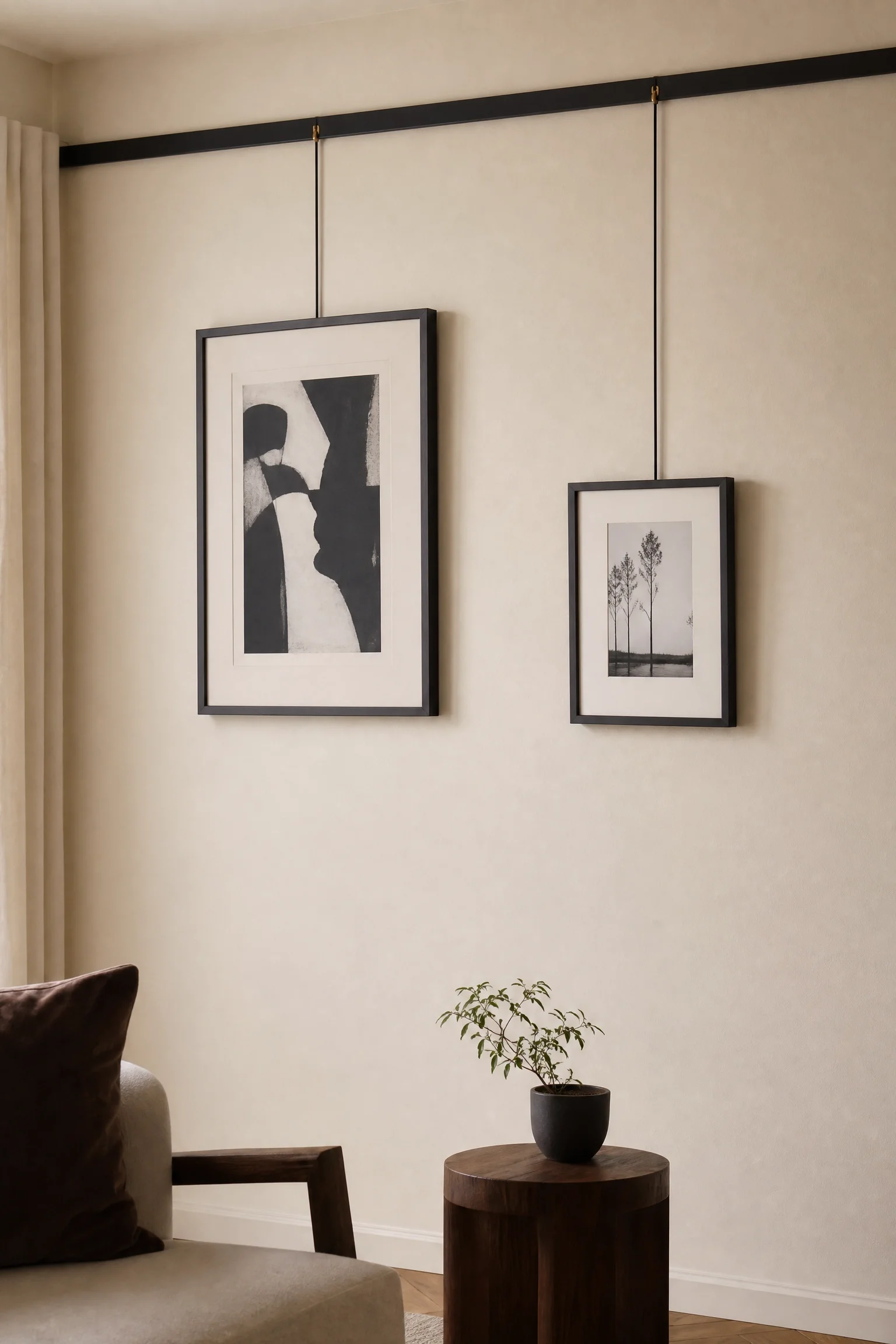
19. Picture Rail with Hanging Prints
A picture rail, a slim molding installed near the ceiling from which art is hung using hooks and cord, is one of the most practical and historically grounded approaches to displaying prints in a minimalist way. It allows you to hang multiple pieces at different heights without a single nail going into the wall below the rail, which is ideal for renters and for anyone who likes to rearrange frequently. The rail itself becomes an intentional part of the room’s architecture. Using black matte cord and simple brass hooks against a white or cream wall creates a clean, gallery-inspired look. For a more layered arrangement, hang two prints at different heights on the same cord.
Designer Note: Picture rails work best in rooms with ceilings of at least 2.7 meters. In lower-ceilinged rooms, the cord can feel cramped rather than intentional.
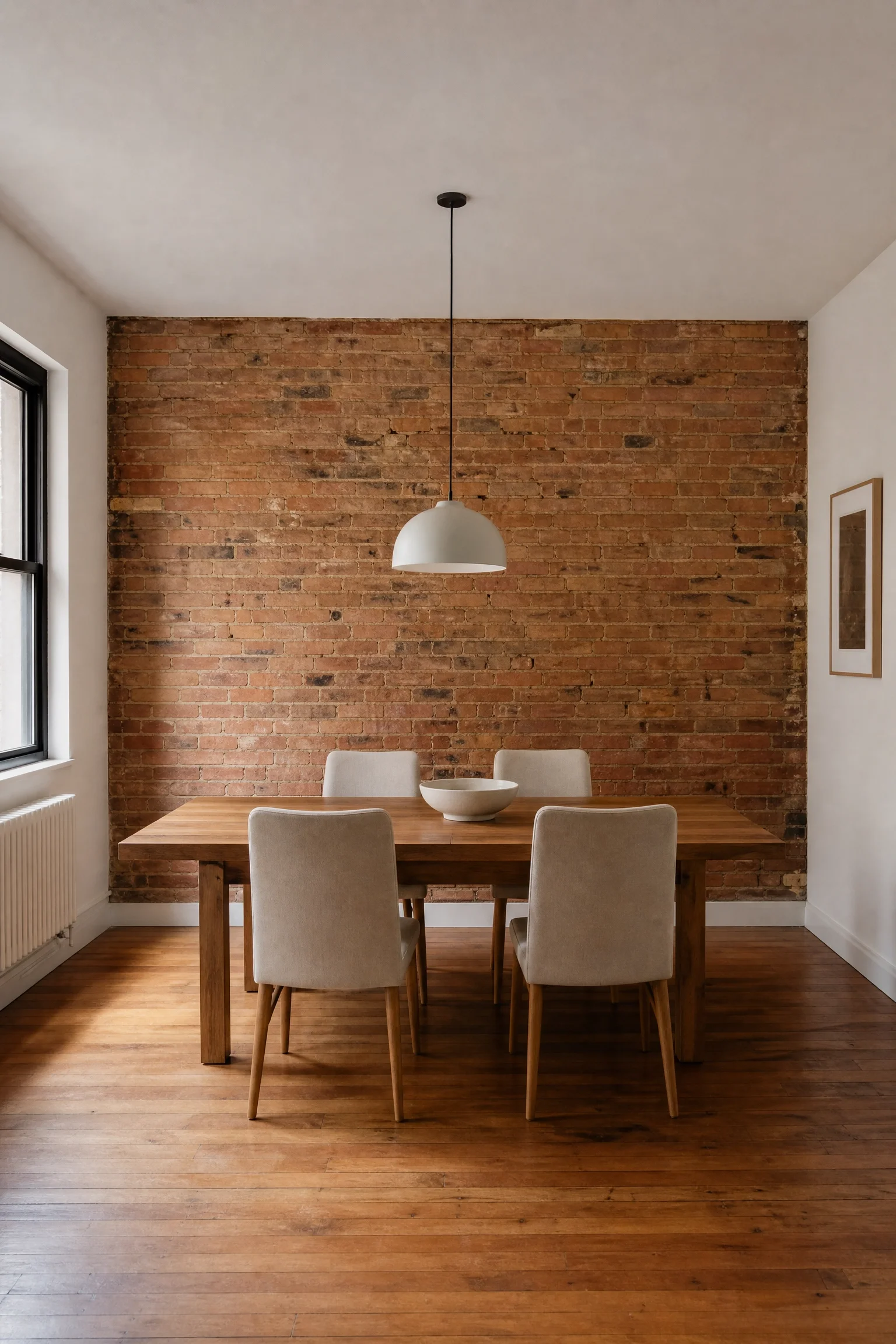
20. Exposed Brick Section as Focal Point
Where an exposed brick wall is already present, the instinct to cover it is often the wrong one. A section of original or faux exposed brick, even just one wall or part of one wall, gives a room a material richness that no applied decor can reproduce. In a minimalist space, it works best when the surrounding walls are left completely plain and the furniture palette is neutral, so the brick becomes the single point of texture and character in the room. If your walls are covered brick and you want to expose them, this is genuinely a renovation-level project and should be assessed carefully, as the quality of the brick underneath is not always what you hope for.
Designer Note: A clear matte sealer applied to exposed brick reduces dust significantly without changing the appearance of the surface.
21. Curved Plaster Niche
A recessed plaster niche, particularly one with a curved or arched top, is a quiet piece of architecture that functions as built-in wall decor. Inside a niche you can place a single sculptural object, a candle, a small vase with one stem, or a ceramic piece, and the niche frames it like a gallery case. This is absolutely an investment-level intervention: cutting and finishing a plaster niche typically costs $500 and above depending on your contractor and location. But in a bedroom or hallway where you want to add something permanent and genuinely special, a niche is the kind of feature that makes a room feel like it was designed rather than assembled. It also photographs beautifully.
Designer Note: Paint the inside of the niche a shade two to three tones darker than the surrounding wall. This creates depth and makes the displayed object feel spotlit.

Sculptural and Object-Based Wall Decor
22. Ceramic Wall Sculptures
Handmade ceramic wall sculptures, typically small organic forms in unglazed stoneware or pale matte glaze, occupy a space between art and craft that feels particularly at home in minimalist and Wabi-sabi interiors. A cluster of three small ceramic forms arranged intuitively on a wall, some with smooth surfaces and some with subtle texture, creates a composition that catches light and shifts in appearance through the day. This is tactile, material-focused decor that does not rely on imagery or pattern, and that restraint is exactly what makes it work in a minimal space. Look for ceramic wall pieces from independent ceramicists on Etsy or at local maker markets. Budget around $40 to $150 per piece.
Designer Note: Leave significant space between each ceramic piece. The gaps are as important as the objects themselves. Crowding removes all the calm.
23. Oversized Wabi-Sabi Brush Painting
A large-scale brush painting in the Wabi-sabi tradition, one broad gestural stroke in black ink on handmade paper, is one of the most striking and spirit-aligned wall decor options for a minimalist room. These pieces communicate movement, intention, and a kind of quiet confidence that framed prints rarely achieve. The key is scale: the painting needs to be large enough to function as the room’s main visual event, typically 80cm or wider. Unframed and mounted directly on the wall with minimal visible hardware, or floated in a thin natural wood frame, this style works beautifully in dining rooms, living rooms, and home studios. Original works from emerging artists are available from $100 to $400, and they are almost always more interesting than printed reproductions.
Designer Note: Hang this piece lower than instinct suggests. Eye level when standing is often too high. Eye level when seated in the main furniture of the room is usually right.

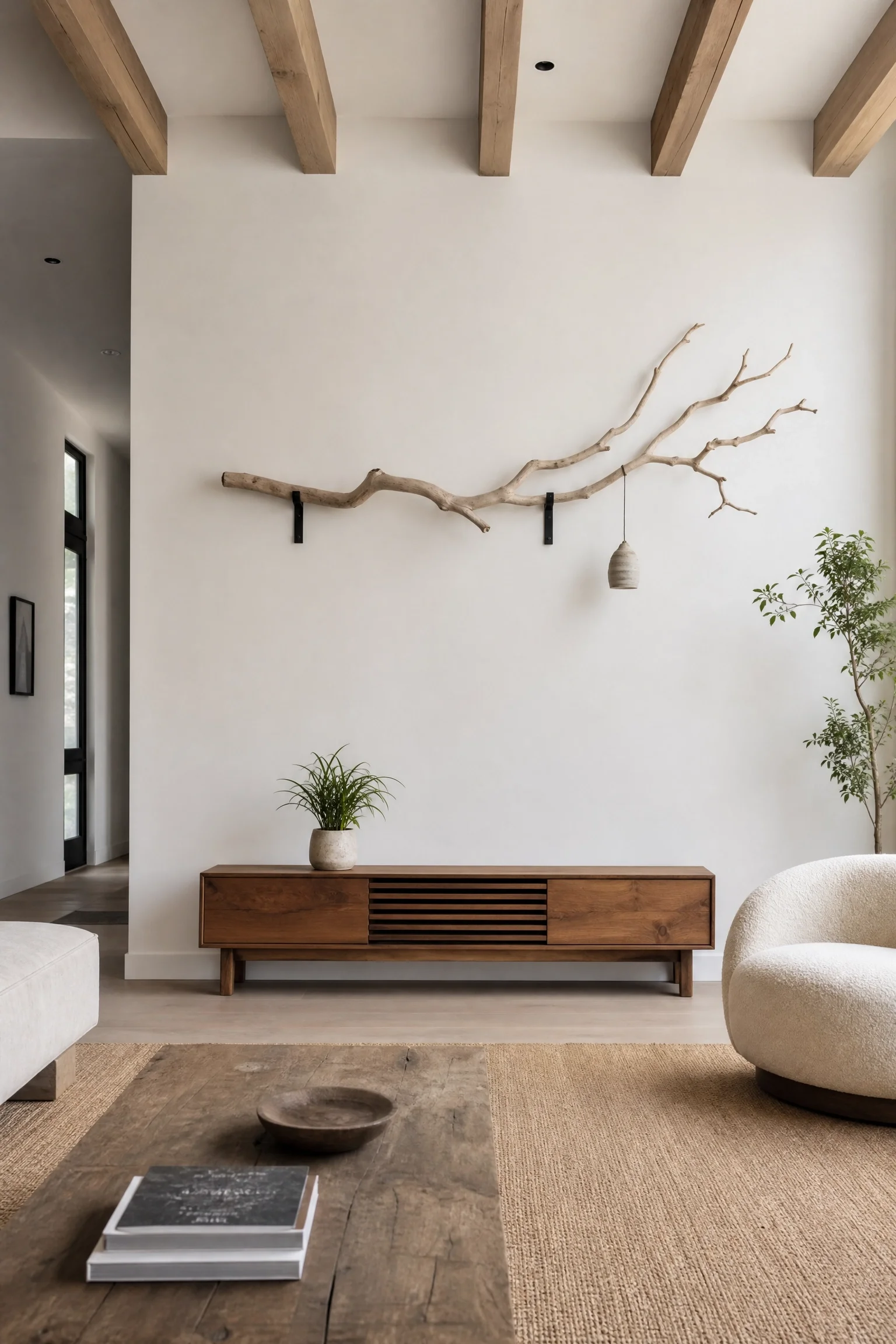
24. Wall-Mounted Sculptural Branch
A single sculptural branch, dried and natural in form, mounted horizontally on a wall with simple metal hardware, is an idea that has appeared in Japanese and Scandinavian interior design for decades and still reads as fresh and intentional when done well. The branch itself is almost always free. The visual effect is of a piece of nature suspended in a gallery. In a living room or bedroom, it works best on a long horizontal wall where the branch can extend without feeling cramped. You can leave it entirely bare, or hang a few lightweight objects from it: a small ceramic pendant, a piece of dried grass, or a length of linen cord. Keep additions minimal or the natural simplicity is lost.
Designer Note: Treat the branch with a clear matte wood sealer to prevent it from shedding bark over time. Sand any rough ends lightly before mounting.
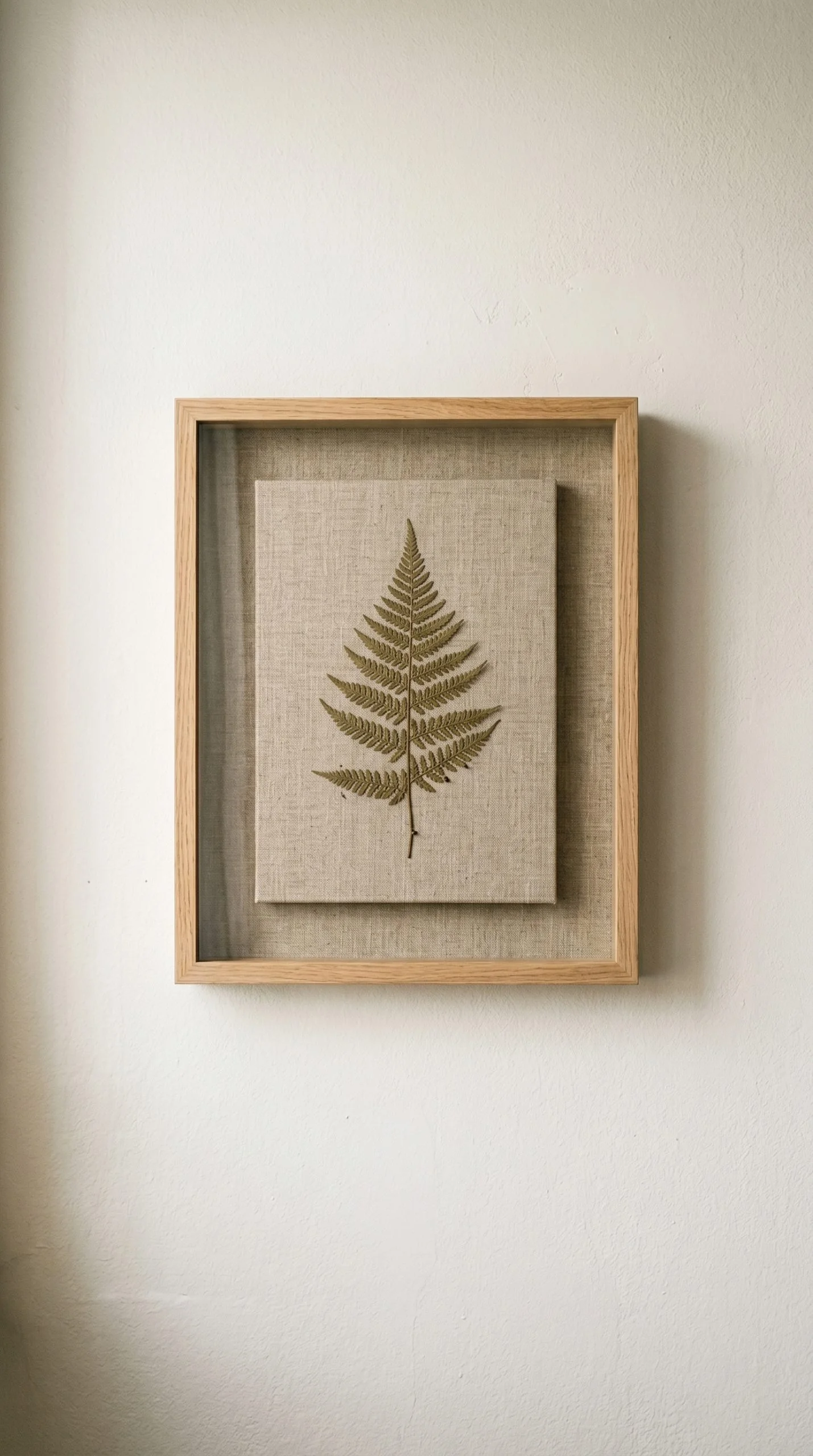
25. Shadow Box with One Meaningful Object
A shadow box, a deep-set frame with enough depth to hold a three-dimensional object, is one of the most personal and considered options in this entire list. Inside it you can place one object: a piece of sea glass, a pressed botanical, a small stone from a meaningful place, a fragment of fabric. The box itself frames the object with space and dignity, and the result is wall decor that is entirely your own. In a minimalist room, one shadow box feels complete. Two can work if they are placed with deliberate spacing. More than two and the personal quality is diluted. This is a budget-friendly option: shadow box frames are widely available from $15 to $50 depending on depth and size.
Designer Note: The background of the shadow box matters as much as the object inside. A linen or Japanese tissue paper backing reads better than the standard black or white that often comes standard.
26. A Single Large-Scale Art Print in an Unexpected Color
After twenty-five carefully restrained ideas, the last one is about giving yourself permission to do one thing with a little more presence. A single large-scale art print, something at least 70x100cm, in a color that you love rather than one you think is safe, can be the most powerful thing you put on your walls. Not a gallery wall. Not a collection. One piece, hung with confidence, framed properly, given space on all sides. The minimalist principle is not about avoiding color or personality. It is about choosing with intention and then not second-guessing yourself. One strong piece of art on an otherwise empty wall says more about a person’s taste than twenty small safe prints ever could.
Designer Note: If the color of the print feels bold, pull it back into the room with one accessory in the same tone, a cushion, a vase, a throw. That single repetition is what makes a bold choice look designed rather than accidental.

Final Thoughts
Minimalist wall decor is not really about what you put on the walls. It is about understanding what a wall needs in order to feel finished, and then providing exactly that, nothing more. The ideas in this guide span materials, styles, price points, and room types because minimalism does not belong to one aesthetic or one budget. What they all share is an underlying principle: make a deliberate choice, give it space to breathe, and trust that one well-placed thing does more for a room than a dozen indifferent ones.
The best place to start is with the wall that bothers you most, the one that feels emptiest or most unresolved. Pick one idea from this list that suits that specific space, and try it. Resist the instinct to immediately add more around it. Live with it for a week. In most cases, you will find that one good idea was all the wall needed. That restraint is not just the principle of minimalist design. It is what separates a room that looks assembled from one that looks considered.
Frequently Asked Questions
What size art looks best on a minimalist wall?
For most living rooms and bedrooms, larger is better than you think. A single piece that is at least 60 to 80cm on its shortest side tends to have the visual weight needed to anchor a wall properly. Small prints on large walls almost always look under-scaled and timid. If budget is a concern, one large affordable print framed well will always outperform several small expensive ones.
How do I stop a minimalist room from feeling cold or empty?
The trick is texture and warmth, not more objects. A woven wall hanging, a linen-backed shadow box, a wood-framed mirror, or a simple ceramic piece all add warmth without clutter. Also consider your lighting: a room with good ambient and accent lighting at lower levels feels significantly warmer than one relying on a single overhead light, regardless of how the walls are decorated.
Is a gallery wall compatible with a minimalist style?
A true gallery wall, with many pieces in varied frames, is generally not compatible with minimalist design because it creates visual noise rather than calm. However, a very curated grouping of two or three pieces in matching frames, hung with generous spacing, can work in a minimalist room as long as the surrounding wall is kept completely clear and the pieces share a consistent theme or color story.
How high should art be hung on a wall?
The standard recommendation is to hang the center of the artwork at approximately 145 to 150cm from the floor, which is roughly average eye level for a standing adult. However, in rooms where you are primarily seated, such as living rooms and dining rooms, you may find that a few centimeters lower looks and feels more natural. Always consider the height from which you will be viewing the piece most often.
Can wall decor work in a rented space where drilling is limited?
Yes, and there are several good options. Picture ledge shelves mounted with Command strips allow you to lean and swap prints freely. Leather strap display systems typically require only one or two small nails at the top. Picture rails, if already present in older buildings, are ideal. Adhesive hooks rated for heavier loads can also support lightweight mirrors and art. The key is to understand the weight limit of whatever adhesive system you use and never exceed it.
What is the most common mistake people make with minimalist wall decor?
Hanging things too high is the most common error, followed closely by choosing pieces that are too small for the wall. The third most common mistake is adding one thing and then immediately adding more before living with the first choice. Minimalist decor is always better edited slowly. Put one thing up, wait a week, and then decide whether it needs a companion or whether it is already complete on its own.