25 Blue Walls Living Room Ideas

Blue walls are not one decision, they are a ladder. Every rung, from powder to midnight, changes what the colour does to light, to furniture and to the size the room appears to be, and most blue wall regrets come from climbing to the wrong rung, not from choosing blue at all.
The 25 ideas below climb the ladder in order: pale blues first, then the friendly mids, then the deep blues, and they end with the five rules that hold at every height. Stand on your rung and look at the rooms built there before you borrow from the others.
Our earlier tour of blue walls and how people live with them covers the colour generally; this page is the shade by shade version, with undertones named.
The ladder at a glance
| Rung | Shades | Undertone to check | Pairs with |
|---|---|---|---|
| 1 to 2 | Powder, ice, sky | Cool, slightly grey | White, chrome, pale wood |
| 3 to 4 | Denim, cornflower, slate | Balanced, denim true | Cream, yellow, tan leather |
| 5 to 6 | Navy, inky, petrol, midnight | Deep, green or purple hints | Brass, cream, dark wood |
Rungs One and Two: The Pale Blues
1. Powder Blue With White Trim and Pale Wood
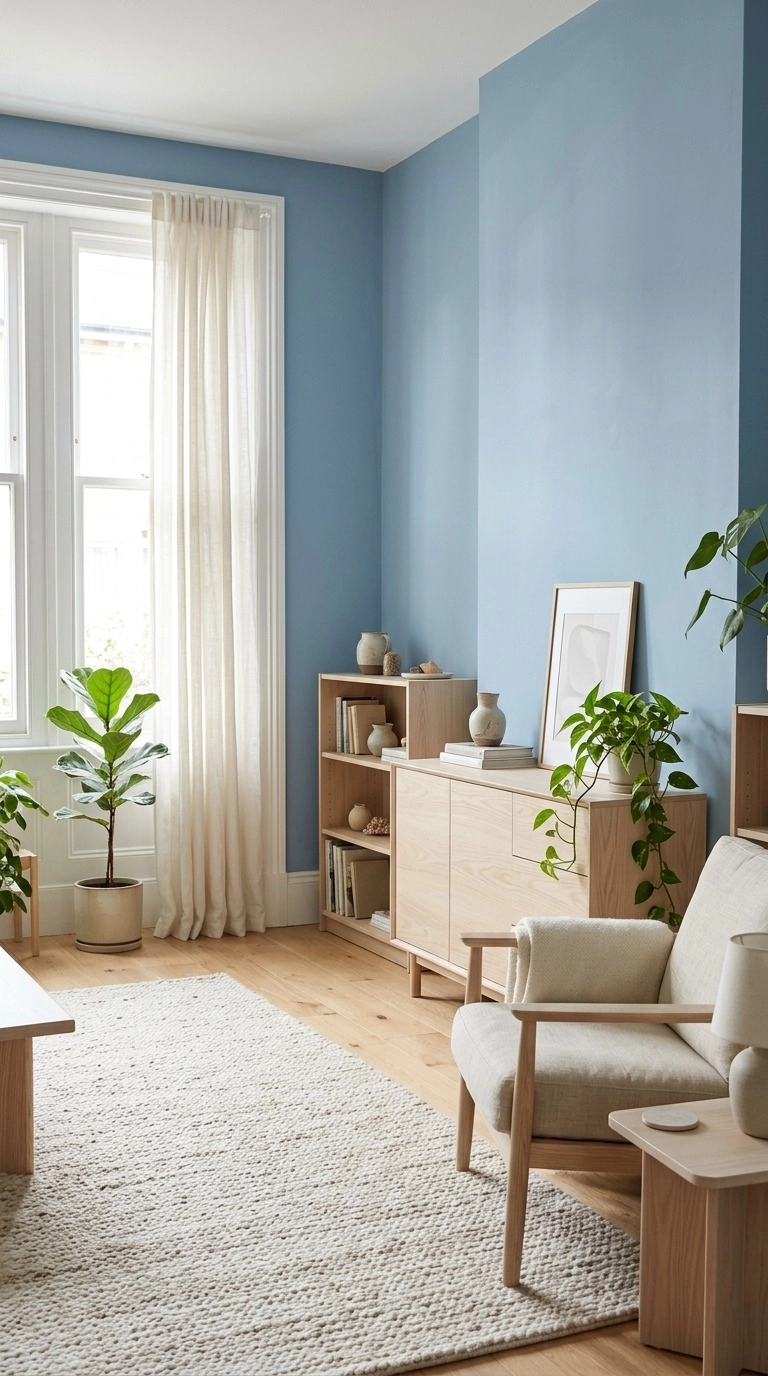
The classic first rung: powder blue walls, bright white trim, pale wood everywhere. It reads fresh in every season and is the easiest blue in this article to sell on to a nervous household.
Ladder Note: Powder is blue at whisper volume. It behaves like a neutral, so it accepts almost any furniture you already own.
2. Ice Blue With Chrome and Glass
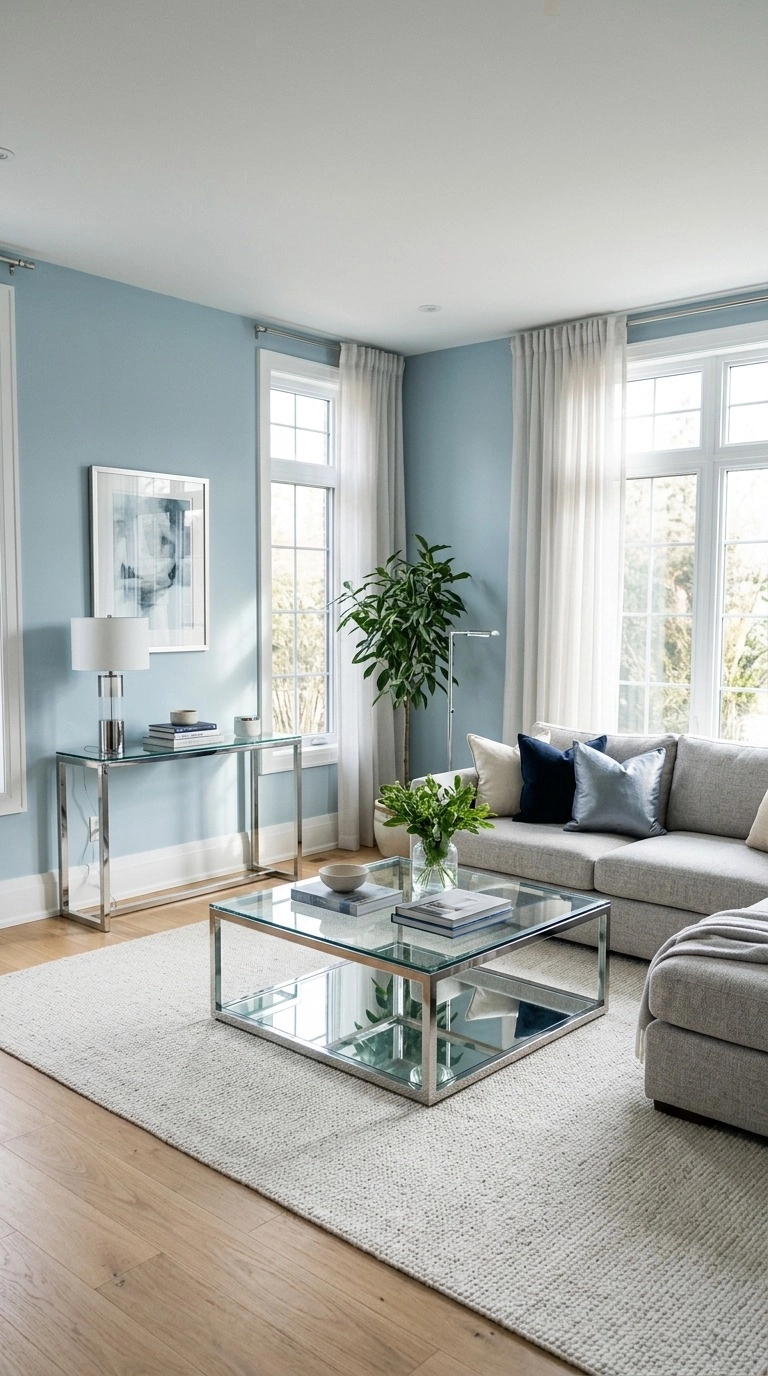
Ice blue is powder with the warmth removed, and it belongs with chrome, glass and white in bright modern rooms. In dull light it can turn clinical, so this rung demands good windows.
Ladder Note: Test ice blue on the wall that gets least light. If it survives there without going grey blue gloom, it survives anywhere.
3. Pale Blue With Blush Furniture

Blush sofas and cushions against pale blue is the softest pairing on the ladder, morning light made permanent. Keep the blush dusty and the wood pale, and the room stays grown up.
Ladder Note: Pale blue plus blush is a pastel scheme, so its contrast must come from texture and wood, not from a third colour.
4. Sky Blue on Walls and Ceiling Together
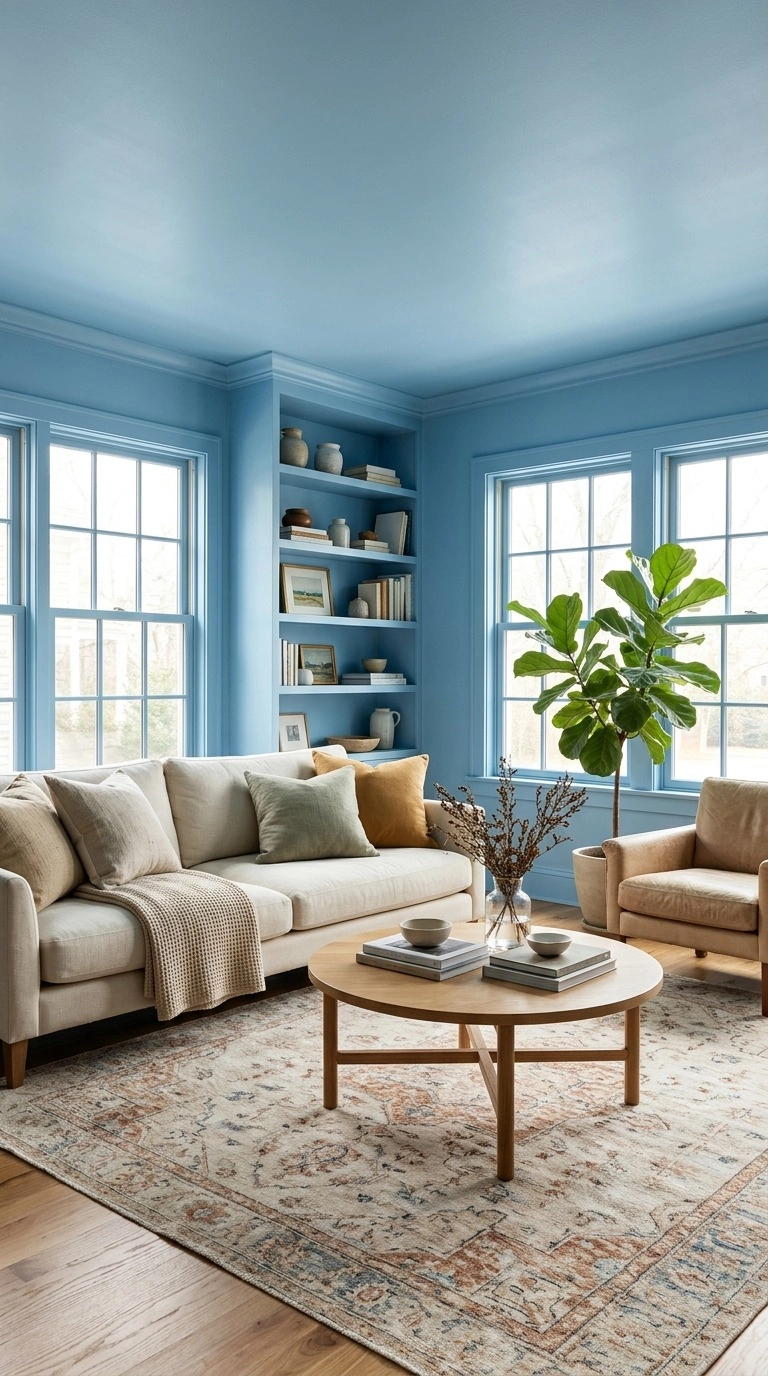
Paint the ceiling the same sky blue as the walls and the room loses its lid, gaining height and air. It works in small rooms with tall windows, where the eye keeps travelling up into weather.
Ladder Note: A painted ceiling lowers the light by a shade, so climb one rung paler than your instinct when the ceiling joins in.
5. Grey Blue With Warm Wood Against It
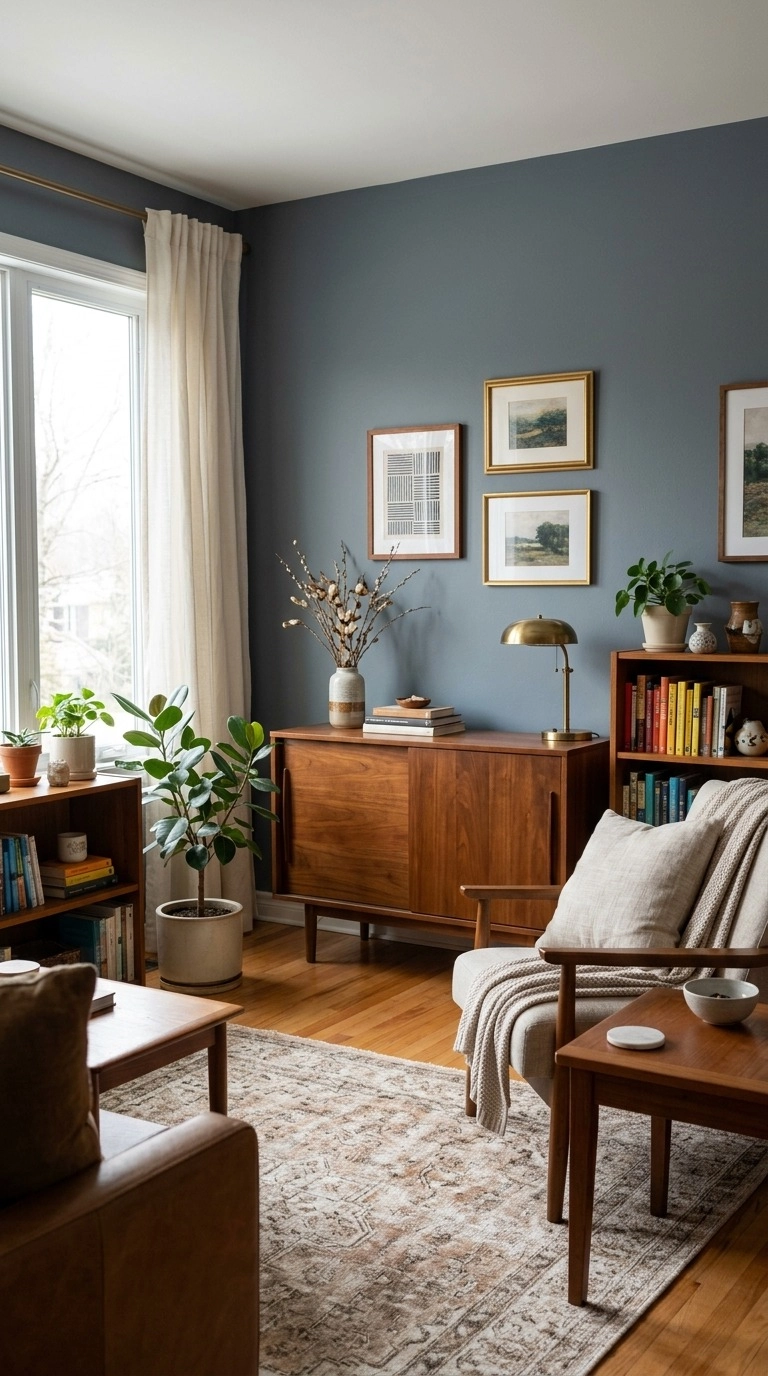
Grey blue, slate’s pale cousin, is the rung for people who fear blue looking like a nursery. Warm wood furniture and floors pull its grey back toward sophisticated.
Ladder Note: Grey blue changes most across a day of any shade here. Paint a big board and live with it through one full day and evening.
6. Pale Blue Panelling for Classic Rooms

Panelled walls painted pale blue give older rooms their architecture back in colour. The shadows in the panelling deepen the blue rung by rung across the wall, so one paint does the work of three.
Ladder Note: Panelling adds depth for free, which means pale rooms can use it to borrow the richness of mid blue without the darkness.
Rungs Three and Four: The Mid Blues
7. Denim Blue With a Cream Sofa

Denim is blue’s most livable mid: the colour of worn jeans, friendly with everything, hiding marks like it was designed for families. A cream sofa against it is the ladder’s most copied room.
Ladder Note: Denim’s undertone is true blue, neither green nor purple, which is why it clashes with almost nothing in a real home.
8. Cornflower Blue With Yellow Accents

Cornflower is the cheerful mid, and yellow is its oldest friend from every cottage garden. Cushions, a lamp and flowers in yellow make a cornflower room feel like late spring all year.
Ladder Note: Keep the yellow in small repeated doses. One big yellow object hijacks the room; five small ones season it.
9. Teal Blue With Tan Leather

Teal brings green into the blue, and tan leather brings the earth up to meet it. Together they are the mid ladder’s warmest room, made for wood floors and evening light.
Ladder Note: Teal shifts green in warm light and blue in cool light. Decide which teal you love by viewing the test patch at the hour you use the room most.
10. Slate Blue With Black Lines

Slate blue walls with black frames, black lamps and black edged furniture is the mid ladder’s tailored room. The black lines draw the architecture and stop the soft blue drifting.
Ladder Note: Slate is the deepest pale blue or the palest deep blue, depending on the light. That borderline nature is its whole charm.
11. A Mid Blue Half Wall With White Above

Half blue, half white, split at dado or picture rail height, gives a room the colour with the ceiling’s brightness intact. It is the renter friendly rung for people who can paint but not commit.
Ladder Note: Paint the blue on the lower half in most rooms. Blue above white feels like weather approaching, which is a mood, but rarely the intended one.
12. A Blue Limewash Wall for Texture

Limewash and cloudy effect blues give mid blue a sky texture, all movement and soft edges. It forgives imperfect walls better than any flat paint on the ladder.
Ladder Note: Texture reads as a shade lighter than the same colour flat, so choose the chip one step deeper than your target.
Rungs Five and Six: The Deep Blues
13. Navy With Cream and Brass

The deep ladder’s classic: navy walls, cream seating, brass lamps and frames. It is the combination behind navy and gold living rooms, and it flatters more skin tones, woods and artworks than any other dark scheme.
Ladder Note: Navy is not one colour. Test the green leaning navies and the purple leaning navies separately; rooms pick favourites.
14. Navy With a Pale Rug and a White Ceiling

If navy on the walls feels like a commitment, frame it: white ceiling above, pale rug below, and the navy becomes a band of night between two lights. The room keeps its height and gains its drama.
Ladder Note: The pale rug is load bearing here. Deep walls plus a dark floor is a cellar; deep walls plus a pale floor is a salon.
15. Inky Blue With Dark Wood

Inky blue, a step past navy toward black, with dark wood furniture is the ladder’s library room. It asks for lamplight, books and leather, and it rewards them like no other rung.
Ladder Note: At this depth, undertone is invisible and texture is everything. Velvet, wood grain and paper do the decorating.
16. Petrol Blue With Velvet Furniture

Petrol is blue with green and grey in equal service, the most changeable deep shade there is. Velvet furniture in cream or rust holds its own against it and catches the light it moves through.
Ladder Note: Petrol can read teal at noon and navy at nine. Choose it only if you love both of its personalities.
17. Deep Blue With a Gallery in Gold Frames

Art hung in gold frames on deep blue is the gallery combination: the frames glow, the pictures float, the wall recedes. It turns a collection into the room’s light source.
Ladder Note: On deep blue, frame size matters less than frame finish. Dull gold and gilt work; shiny yellow gold shouts.
18. Midnight Blue Lit in Warm Pools

Midnight blue is the last rung before black, and it lives on lamplight: pools of warm light at seating height, darkness held politely above and between. It is the evening room perfected.
Ladder Note: Budget the lamps before the paint at this rung. Midnight blue with one ceiling light is a cave; with four lamps it is a salon.
19. Deep Blue Behind a Shelving Wall

Paint the wall behind open shelves deep blue and everything you own becomes a display: pale books advance, brass glints, ceramics float. It is the hardest working deep blue in the article.
Ladder Note: Shelves break the blue into a pattern of shadow and object, so this rung tolerates deeper shades than a flat wall could.
The Ladder Rules: Five Ideas That Hold At Every Height
20. Two Blues in One Room: Walls and Sofa Apart

Blue walls with a blue sofa in a clearly different shade builds the tonal room, depth without a second colour. Keep one of them patterned or textured so the eye can separate the layers. The couch building rules from the blue sofa anchor guide apply inside this room too.
Ladder Note: Separate wall blue and sofa blue by at least two rungs. Neighbouring shades just look like a matching mistake.
21. The Ceiling Rule: White, or One Rung Paler

Whatever rung the walls sit on, the ceiling stays white or climbs down to the palest version of the same blue. The ceiling is the room’s sky and its light reflector; colour it carefully.
Ladder Note: A white ceiling over deep blue is not a failure of nerve. It is the frame that lets the deep blue read as chosen.
22. The Trim Rule: Colour Drenched or Bright White

Paint the skirting, architraves and doors the same blue for the drenched modern look, or bright white for the classic framed look. The one forbidden option is a near miss off white that looks like an accident.
Ladder Note: Drenched trim deepens a room by about half a rung without new paint on the walls. Count it in your ladder maths.
23. The Light Rule: Warm Bulbs at Every Rung

Blue plus cool light equals blue grey gloom, at every height of the ladder. Warm bulbs are not a preference in blue rooms; they are the mechanism that keeps blue blue after dark.
Ladder Note: Carry a warm bulb to the paint shop test if you can. Chips chosen under shop light lie about the evening.
24. The Test Rule: One Wall, One Week

Paint the wall behind the sofa first and live with it for a week of mornings and evenings. One wall at the right rung teaches more than a dozen tester pots on a white wall.
Ladder Note: If the single wall delights you, the room will. If it merely pleases you, stay one rung paler for the full room.
25. The Exit Rule: Blue Grey for the Regret Averse

For anyone who loves this page and fears the paint tin: blue grey. It reads blue in daylight, grey in lamplight, and neutral in photographs, and it is the easiest rung to paint over if the affair ends.
Ladder Note: Every ladder needs a ground floor. Blue grey is this one’s, and plenty of beautiful rooms never climb higher.
– Do sample on the least lit wall, not the window wall; the worst light makes the honest choice
- Do check the undertone against your floor: blue walls over orange toned wood need green leaning blues to stay calm
- Don’t put a blue couch against a blue wall within two rungs of it; near shades read as errors
- Don’t use cool white bulbs anywhere in a blue room, at any rung, ever
- Do keep one warm material in view at all times, wood, leather, brass or cream wool, to hold the blue’s temperature
The Takeaway
Find your rung, learn its undertone, and let the rules carry the rest: pale ceiling, warm bulbs, one wall tested for a week. Blue walls are not risky; unladdered blue walls are, and now yours have a ladder.